Tour of the Solar System: The Moons of Pluto

I was thinking the other day about things that seem to drag on: The Fast and the Furious franchise, election cycles, accident and emergency wait lists, time between Saga issues, and Some Geek Told Me’s Tour of the Solar System. It’s still chugging along, like the little engine that has no right to exist.

Roughly every nine weeks, another chapter is added to the tour, which is the equivalent of vomiting and having diarrhoea at the same time. So, with that rosy image in your heads, you can visit previous chapters of this magical tour.

1.) Meet the Family

2.) The Sun

3.) Planets vs. Dwarf planets

4.) Mercury

5.) Venus

6.) Earth

7.) The Moon

8.) Mars

9.) The Asteroid Belt

10.) Ceres

11.) Jupiter

12.) The Galilean moons

13.) Saturn

14.) Titan

15.) The Moons of Saturn

16.) Uranus

17.) Titania

18.) The Moons of Uranus

19.) The Literary Moons of Uranus

20.) Neptune

21.) Triton

22.) The Moons of Neptune

23.) The Kuiper Belt

24.) Pluto

25.) Charon

As you can see, the last tour stop was Charon, the largest of Pluto’s moons, but we need to meet the other members of Pluto’s children. Without delaying this highly popular blog post any longer, may I present to the academy’s pleasure, the Moons of Pluto.


This image, taken by NASA’s Hubble Space Telescope, shows five moons orbiting the distant, icy dwarf planet Pluto. The newly discovered small moon, Styx (initially designated P5), is the innermost of the moons found by Hubble over the past seven years. The diagram shows that Styx is in a 58,000-mile-diameter circular orbit around Pluto that is assumed to be co-planar with the other satellites in the system. Though Charon (discovered in 1978) is an even closer moon to Pluto, some astronomers consider the Pluto-Charon pair a “double planet” because Charon’s mass is 12 percent of Pluto’s mass (by comparison, our Moon is 1.2 percent Earth’s mass). This image was taken with Hubble’s Wide Field Camera 3 on July 7. Other observations that collectively show the moon’s orbital motion were taken on June 26, 27, and 29, 2012 and July 9, 2012. The new data will help scientists in their planning for the July 2015 flyby of Pluto by NASA’s New Horizons spacecraft.

Even though the International Astronomical Union kicked Pluto out of the planetary club, it still belongs to another club; a club that only has seven known members: planets and dwarf planets in our Solar System that have moons. For the record, Pluto had five moons, and since we met Charon last time, it’s time to meet the other four. I’ll present them in the largest diameter size after Charon, of course.

Hydra

Hydra is the second-largest moon of Pluto, with a diameter of about 51 km, which, in the scale of the solar system, is practically nothing. It orbits Pluto at around 64,738 km, which is quite close. It is not tidally locked to Pluto, and I can only imagine the relief for tourists and such.

The rotation period of Hydra is only 10.3 hours, and it has an axial tilt of 110°. In dating terms, Hydra is a hot mess. It’s very interesting and mysterious, but very unstable. Its rotation is chaotic, while it flips and tumbles, because of Pluto and Charon’s gravitational influences.

Hydra was discovered on 15th May 2005, by the Hubble Space Telescope, after the New Horizons team wanted to investigate the region. So, when the New Horizons spacecraft did its flyby in 2015, it sent back some astounding images. As for its name, it sadly is not named after the terrorist group from Marvel Comics, but from Greek Mythology, where else? The Lernaean Hydra is a multi-headed monster from the 12 Labours of Hercules. Spoilers, it was the second one, and Hercules, along with his nephew, Iolaus, kicked its collective arse.

Hydra is quite small, with an elongated, non-spherical body. Scientists believe Hydra is covered in water ice, which has a 83% reflectivity, so it is one of the most reflective objects in the Kuiper Belt.

Near true-color image of Hydra, taken by New Horizons on 14 July 2015. Credit: NASA

Nix

Keeping with naming celestial objects from Greek or Roman mythology, Nix was named after the Greek goddess of darkness and night, Nyx. She was also the mother of Charon, Hades’ (Pluto) ferryman. And just because I can, Nix is not named after Nyx, the character from Spawn, who is now the Queen of Hell. Yes, yet another comics reference!

Like Hydra, Nix is small and has a diameter of only 42 km, making it the third-largest moon of Pluto. Coincidentally, this is the distance of a marathon, though technically, it’s 42.2 km. Facts matter, people, facts matter. Nix is the third-farthest moon from Pluto, orbiting at an average distance of 48,694 km, which is a lot less than the Moon’s orbital distance from the Earth of 385,000 km. Nix’s orbital period is about 24 hours and 20 minutes, and it has a near-circular orbit to boot.

It was discovered by Max Mutchler and Andrew Steffl, members of the Pluto Companion Search Team. They used photos of Pluto taken in 2002, as well as images from the Hubble Space Telescope, to identify Nix in May 2005, but it wasn’t announced to the public until October 2005.

The average distance from Earth to Nix is roughly the same distance as Pluto, at 5.9 billion km, with New Horizons being the only spacecraft that has been able to complete a flyby and send images back in 2015. During the flyby, it was discovered that the moon was in a retrograde rotation, every 43.9 hours with a 132° axial tilt, flipping and tumbling like Hydra. Since its discovery, Nix’s spin rate has increased.

Nix’s surface is similar to Hydra’s, but it does have a unique red patch. It also has two craters, named Gleti and Metztli, named after moon goddesses from Dahomean and Aztec mythology. Science is so cool!

Enhanced color image of Nix, taken by New Horizons. Credit: NASA

Kerberos

Kerberos was discovered on the perfect day, 28th June, and confirmed on 20th July 2011 by Mark Showalter and a team of researchers, using the Hubble Space Telescope. Ironically, they were not looking for moons, but rather to see if Pluto had any rings. Kerberos has a diameter of 19 km, making it the fourth-largest moon of Pluto. This distance is so minuscule that it’s a distance that I can run. Badly, I might add, but I can still do it.

The moon is named after Pluto’s (Hades), loyal and large three-headed dog, Cerberus, who famously guards the gates to the Underworld. He had two functions: to allow the souls of the dead to enter the Underworld, but also to prevent living souls from entering, as well as to prevent dead souls from leaving. The immortal story of Orpheus, Eurydice and Cerberus is a classic bedtime story for children.

Kerberos orbits Pluto at about 57,780 km, and it cuts an orbital path between Nix and Hydra, making it the fourth-farthest moon from the dwarf planet. For its rotation, Kerberos completes one about every 32.167 Earth days, which is 772.008 hours. 

And just like Hydra, Nix, and a gymnast, Kerberos spends a lot of time flipping and tumbling. One leading theory for its creation is that Kerberos is a contact binary. This means it could have been formed from combining two objects, since Kerberos has two lobe-like features. The smaller lobe is roughly 5 km across, but the bigger lobe is 8 km across.

This image of Kerberos was created by combining four individual Long Range Reconnaissance Imager (LORRI) pictures taken on July 14, approximately seven hours before New Horizons’ closest approach to Pluto, at a range of 245,600 miles (396,100 km) from Kerberos.
Credit: NASA/JHUAPL/SwRI

Styx

We have now moved onto the final known moon of Pluto, Styx. It is the smallest of all of Pluto’s moons, with a diameter of 16 km, which again, is within the realms of a running distance for me. It was discovered in June 2012 by Showalter and a team of researchers again. The discovery was later verified in July 2012.

Styx is a popular name in pop culture, considering there’s a band, a video game, and yet another Marvel character that shares the name. The moon’s name has two sources, though it depends on who you ask. The first reference is the River Styx, which is one of the rivers that run through the Underworld, and the same river that Charon ferries the souls of the dead across; and the second reference is the Greek goddess, who was the personification of the River Styx, and possibly the daughter of Nyx (Nix). It’s not like her parents filed a birth certificate as such.

Styx is actually the closest moon to Pluto, averaging a distance of 42,650 km, which in cosmic terms is a coat of paint. Like Styx’s siblings, it is not a sphere, but elongated and lumpy, as well as flipping and tumbling. It takes about 20 days to complete a rotation.

Pluto’s moon Styx, as seen by the New Horizons spacecraft on 13 July 2015, from a distance of 632,000 km. Credit: NASA

I have to add two things as general statements about the Plutonian system.

Firstly, the information, data, and knowledge gained from Voyager 2′s 1989 flyby of the outer planets and moons significantly enhanced humanity’s understanding of these cosmic objects. This understanding can also be applied to New Horizons’ flyby of Pluto and its moons in 2015

Standing on the shoulders of giants.

I remember when the information was being released to the public, and, being me, I was explaining it to other staff members, because they made the mistake of asking me a question about it.

Secondly, a very basic observation has been made; Pluto is a hobbit. It is about 20% times smaller than the Earth, as you could fit 170 Plutos inside it. Pluto is also smaller than seven moons in the Solar System, which includes the Moon. So that being the case, why does something like Pluto, a dwarf planet, have five moons, when its much larger sibling, Earth, only has one?

It’s a fair question. Since no one was present, or at least not communicating with scientists, when the Solar System was formed, scientists must rely on observable and detectable evidence to prove their answers.

The leading hypothesis is that since Pluto is located inside the Kuiper Belt, it’s not out of the realm of possibility that either one or multiple collisions of Kuiper Belt Objects (KBOs) have resulted in three things:

1.) KBOs have been smashed into each other and produced smaller objects.

2.) These new objects have been disturbed and knocked out of their orbit, and left drifting within the Kuiper Belt.

3.) These objects have been caught in Pluto’s gravity well, as small as it is, and have settled into a stable orbit around Pluto.

Clearly, the time frame for these events to occur is longer than it will take for New Zealand to win the FIFA World Cup. Maybe.

With advancements in technology, scientists may discover that Pluto could still have some hidden children out there. Who knows? However, what I do know is that this week’s 6-7 minute lecture is finished. What’s your favourite moon of Pluto? Do you have any awesome facts about Charon, Hydra, Nix, Kerberos, or Styx? As always, please let me know.

Thanks again for reading, following, and subscribing to Some Geek Told Me. My Twitter and Mastodon accounts are still ticking over with content that will surely bore you, so you should definitely check them out and dazzle your family, friends, and enemies with the information.

As I’m packing up, I need to give you a heads-up about three things. The FIFA World Cup is starting next month, so don’t be surprised if you notice some increased posts about the World Cup across my three accounts. I also have a few movie previews/reviews planned soon, which will include Star Wars: The Mandalorian and Grogu, Supergirl, The Odyssey, and Spider-Man: Brand New Day. I haven’t decided about Masters of the Universe, or Disclosure Day, but my bank account could make that decision.

The final point is that some new amazing followers and readers don’t already know that we are slowly reaching the first of my two holidays from running New Zealand’s 5th least favourite website. Basically, it will be my mid-Winter break, which is around the end of June-start of July, which is followed by the mid-Summer break, also widely known as the Christmas holidays.

Please don’t forget to walk your dog, read a banned book, thank the bus driver, and I’ll see you next week for the Star Wars: The Mandalorian and Grogu Preview. Cool bananas and take care!


New Zealand Music Month

We are deep in Autumn, with Winter trying to show its ugly face now and then. This means the calendar is getting a great workout. Free Comic Book Day, Star Wars Day, Sir David Attenborough’s birthday, the FA Cup Final, the Champions League Final, Spider-Noir, and Star Wars: The Mandalorian and Grogu are all in May, which, to someone like me, is pretty gnarly.

And speaking of May, there’s another reason it’s quite rad: it’s New Zealand Music Month. Now, I am fully aware there will be a tiny fraction of my reader base who will either a.) know what I’m talking about or b.) be able to quote some songs. For the sake of convenience, I’m going to explain what I’m talking about in a way that does not make me look like the Swedish Chef.

I believe it was established in 2000, when May was recognised in New Zealand as New Zealand Music Month. What that means is that during May, local and national musicians are heavily promoted via television, radio, social media, and just about anywhere else. It’s the time when the country and the New Zealand music industry can celebrate current artists, as well as honour past musicians.

In May, many radio stations will feature songs by New Zealand artists, and numerous gigs will take place. This month is an opportunity for our country to showcase local and national musical talent. New singles are being played, new tours are being announced, and fresh music videos are premiering—all aimed at promoting and celebrating the New Zealand music community.


Credit: Music NZ

Over the years, New Zealand Music Month has grown in popularity, but it also remembers the classic Kiwi songs that we’ve grown up listening to, whether on the radio, your parents’ record collection, school, or at pubs and nightclubs. So in the spirit of New Zealand Music Month, I’ve searched the land of YouTube for 20 of my favourite New Zealand songs.

As always on this account, there are rules and exceptions for those rules. Yes, I have found 20 New Zealand songs that I love, but that doesn’t mean they are my top 20. Oh no, because to make this list, I decided only one entry per band or artist. That means Split Enz, Shihad, The Dance Exponents, or The Feelers, only get one entry each. However, there is one expectation.

There is one artist, Sir Dave Dobbyn, who appears in a band, but later on as a solo artist with a song; however, the solo song is really a duet with another group. Apart from that, the list is sound as a pound.

If the list were to look like my all-time New Zealand song list, regardless of multiple entries of bands or artists, then it would look different. However, that list is for another day. Some of these songs stretch back to the early 1980’s to about 2010, but they still get me singing when I’m alone. So sit back and enjoy some of God’s Own Country’s best songs, according to one of its least favourite sons. The list has been put together in a random order, because that’s what happens here.

Also, if you’re at a party or a bar, somewhere out in the big old world, and you want to find a New Zealander, play one of these songs, and I promise you they won’t be able to resist singing, especially Bliss, New Zealand’s unofficial drinking song.

And lastly, this song gets played at a lot of weddings.

And that’s it. What do you think of my list? Do you know of any New Zealand songs? What songs would you recommend? As always, please let me know.

Thanks again for reading, following, and subscribing to Some Geek Told Me. Please don’t forget to walk your dog, read a banned book, remember to charge your batteries, and I’ll see you at the week, where the most unhelpful tour returns. Sounds like a plan, Stan.


Happy 100th Birthday to Sir David Attenborough

Welcome to this brief and special blog post! It’s a Friday, which is quite uncommon for me to post on, but today is a celebration of the 100th birthday of Sir David Attenborough. In my opinion, he is one of the greatest science communicators of all time.

Since 1954, this broadcaster has brought fantastic content into our homes, educating us about the natural world, ourselves, and the responsibilities that come with that knowledge. Over the years, I have learned so much from him that I would genuinely enjoy listening to him narrate even the most mundane activities, like paint drying on a bathroom wall.


Sir David Attenborough with a black lion tamarin Credit: Photo: BBC/Emily Garner

Just like many of my other heroes, I have never met David, but his animal and plant education, coupled with advocacy for animal welfare and the protection of the planet, have had a huge impact on me and how I view the world, and the non-human residents who live on it.

The man is a national treasure to the United Kingdom, but also a treasure to the world.

Essentially, what I’m saying is, Happy 100th Birthday, David! My birthday wish for you would be for more people, companies, and governments to not just listen to you but actively change and bring about environmental reforms. You are amazing.

And after this short blog post, I’ll return you to your scheduled programme on Monday. See you then.


Happy Star Wars Day 2026!

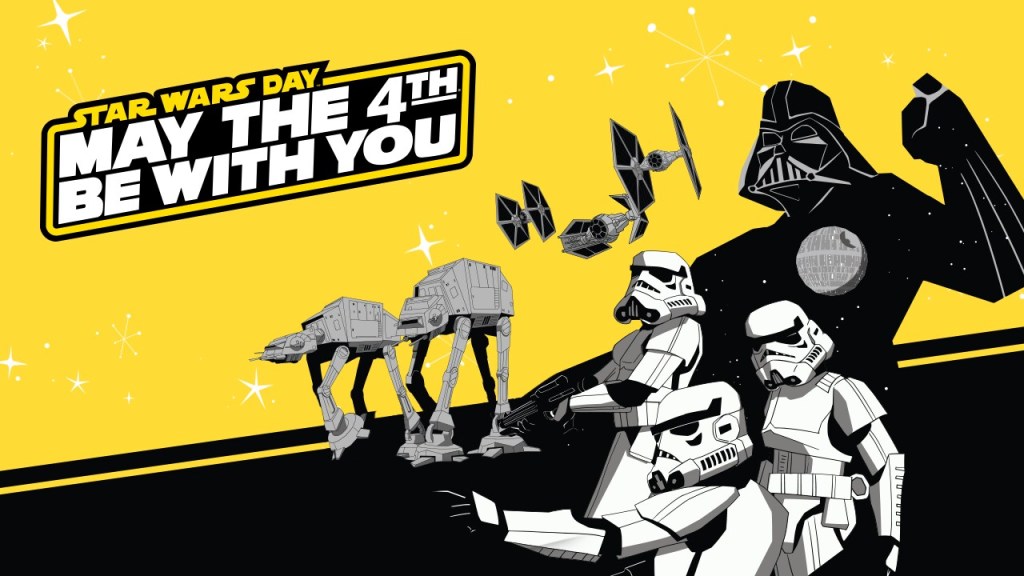
I find your lack of celebrating Star Wars disturbing. I’m kidding, but today is the best day to celebrate Star Wars, because it’s 4th May, or for my North American friends, May 4th, Star Wars Day! Once more, we can revel in the adventures of our favourite characters, set a long time ago, in a galaxy, far, far away.

You could be a fan of Star Wars movies, television shows, books, toys, comics, video games, cosplay, board games, and everything in between, but today’s the day you can wear your Star Wars t-shirt with pride. To be honest, you could treat every day like Star Wars Day if you really wanted to.


Credit: Disney

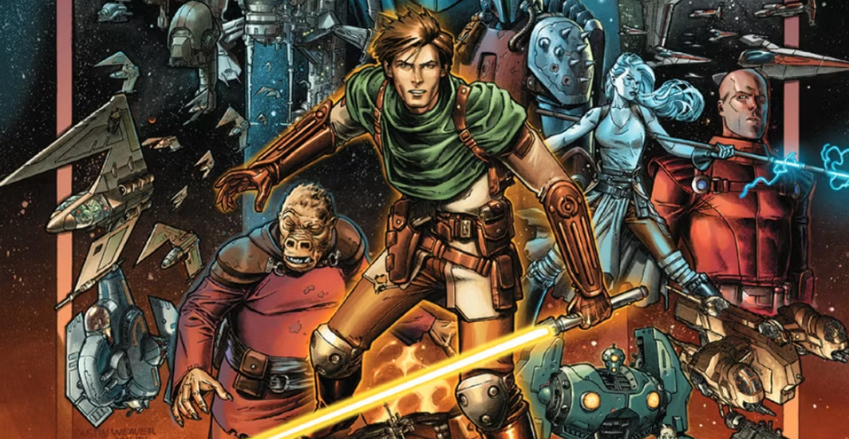
May The 4th Be With You has taken on new meaning this year, because only a few weeks from now, Star Wars: The Mandalorian and Grogu opens in cinemas, as well as new TV shows, books, and comics to be consumed. One day, I’ll get Disney +, so I’ll be able to catch up on all the television shows. Again, maybe.

I’m still waiting for the last five Star Wars: The High Republic books to arrive at our local book shop, so that will keep me off the dark and cold streets when I finally get to read them.


Credit: Dark Horse Comics, now Marvel. I’m not sure!

I’ve mentioned this before, but Star Wars is quite big in our house. My wife and UMC1 enjoy the vehicles, UMC2 is all about the droids, and as for me, I love the aliens. Star Wars has been a massive part of my life, especially now with boxes of Marvel (Canon) and Dark Horse (Non-canon or Legends) Star Wars comics. I could bore with a retelling of my love for Star Wars comics, but I’ll save that for another day.

We also play Star Wars: Risk on Star Wars Day, but only if it lands on the weekend, purely because the game takes hours. It usually ends up with UMC1 (The Rebels) teaming up with UMC2 (The Hutts), against The Empire (me). Oh, the fun and the arguments, I love it.


Image by Bruno from Pixabay

Anyway, it’s rare for Star Wars Day to fall on a Monday, because this is blog day for me. However, I always release a Star Wars blog post on 4th May, and this year is no different.

So, whatever kind of fan you are, and whatever kind of activity you do today, I hope this Star Wars Day is the one you’re looking for. This is short and sharp this week, but I’ll be returning to Star Wars very soon, for my Star Wars: The Mandalorian and Grogu Preview blog post. Two geek events in three days, it’s great to be a geek. Enjoy today, and I’ll see you on Friday for yet another special blog post.


Happy Free Comic Book Day/Comics Giveaway Day 2026!

Welcome, welcome, welcome to arguably the apex event on a geek’s calendar. Yes, it’s Free Comic Book Day, but also the very first edition of Comics Giveaway Day as well. If you’re scratching your head over what that means, then your friendly neighbourhood geek is here to explain it! To understand the unique position we are in, please read this blog post about the situation. Be warned, though, the author is an idiot.


Credit: Diamond Comic Distributors and Penguin Random House

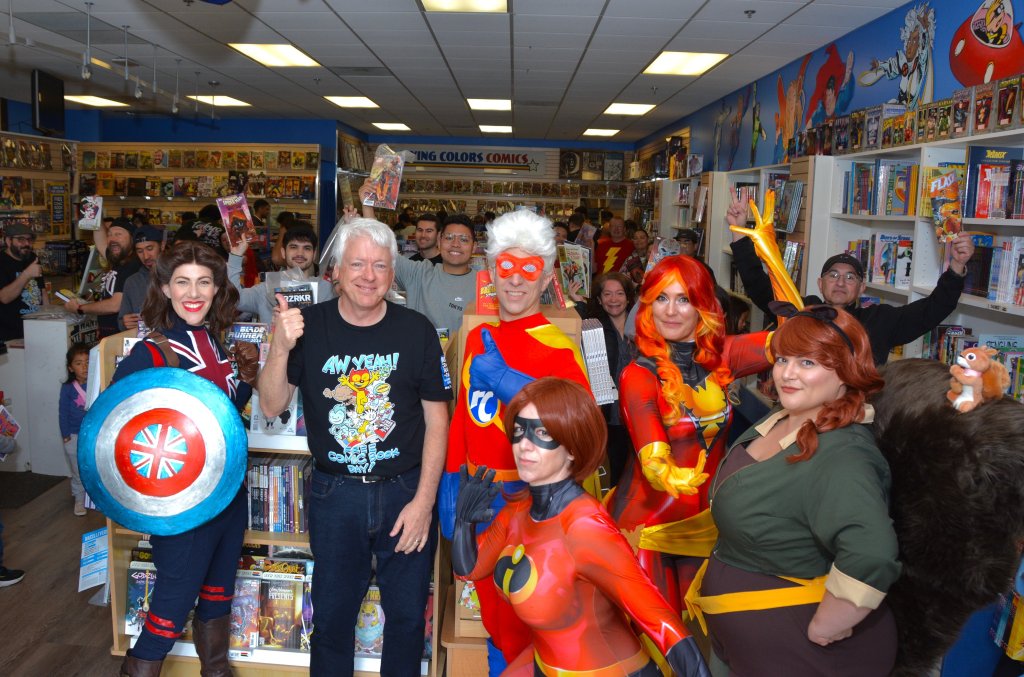
I have said this before, but today’s the day that geek culture gets to celebrate…geek culture. It’s the day where comic book stores give away, wait for it…free comic books! It also celebrates TV shows, movies, video games, cosplaying, and just about anything else that is geek-related!

Credit: Popverse

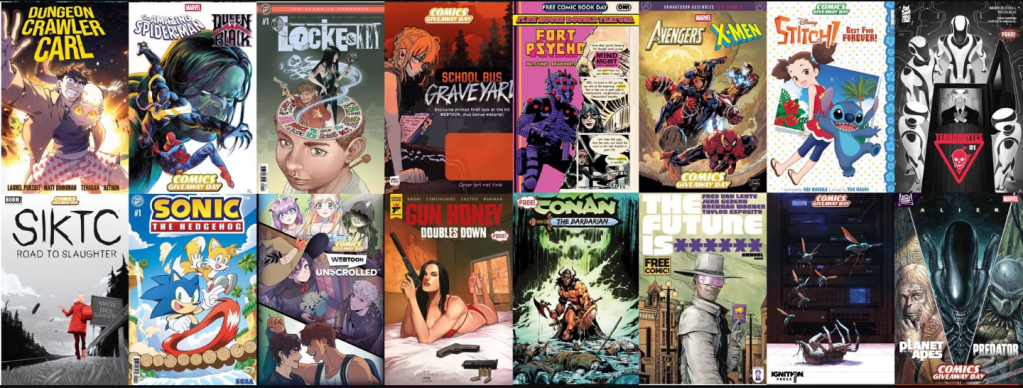
Whether an event is staged at your local comic book store, library or school, check them out, because there will be something for everybody! There are over 45 free comic books to choose from, and since every store is different, you could walk away with 1-3 free comic books, but every store has different rules.

This event is always held on the first Saturday in May, and even with the rival Comic Giveaway Day running parallel to it, all of the comics will have age-appropriate logos: All ages (green logo), Teen (blue or orange logo), and Mature (red logo), which can be identified on the covers.


Credit: Diamond Comic Distributors and Penguin Random House

While you’re at the comic book store, please also purchase something, because even though the comic books are free to us, the retailer pays about $0.10 and $0.50 per issue. Basically, it costs them money to run FCBD and CGD events, so please, please support them.

Even though it’s a global event that’s been running since 2002, every year, the number of comic book stores being involved is decreasing because of the financial burden that comes with it. So, if you are passionate about your geek interests and are planning on visiting an event at a comic book store, please purchase something as well as receiving your free comic books.


Credit: Popverse

The closest physical comic book store is about 140 minutes away from where I live, so I won’t be going, but I have a list of titles that I’ll be interested in receiving via the post. Maybe.

I love Free Comic Book Day, and hopefully you will have a great time, so enjoy your day and your free comic books!

Also, dear readers, I would like to acknowledge the death of Gerry Conway, the prolific writer, who dabbled in screenplays as well as writing comic books. He died on 27th April, aged 73 years old. His career spanned decades, and he created and co-created many heroes and villains across the industry, including:

Killer Frost, Tarantula, Atomic Skull, Jackal, The Punisher, Man-Thing, Ben Reilly, Power Girl, Tombstone, Killer Croc, Demogoblin, Ms Marvel, Secret Society of Super Villains, Jason Todd, Vibe, Vixen, and one of my favourites growing up, Firestorm.

He also worked on G.I. Joe: A Real American Hero and Transformers as a screenwriter, but also wrote Batman, Amazing Spider-Man, Superboy and the Legion of Super-Heroes, The Incredible Hulk, Justice League of America, Thor, Legion of Super-Heroes, and many more.


Gerry Conway speaking at the 2019 Phoenix Fan Fusion in Phoenix, Arizona. Credit: Gage Skidmore

Conway also wrote the famous issues, The Amazing Spider-Man Vol 1 #121–122 (released in 1973), which, to the untrained mind, features the death of Gwen Stacy; one of the biggest deaths in superhero comics, as well as the first crossover between DC and Marvel; Superman vs. The Amazing Spider-Man: The Battle of the Century, released in 1976. These storylines are seared onto my subconscious.

From the bottom of my geek-laden heart and soul, thank you so much, Gerry, for your amazing work.

And with that, I’ll see you on Monday because we are visiting a galaxy, far, far away.


My wife’s reading habits are changing, and it’s becoming hilarious

This title sounds awful, but I have my wife’s permission to write about this. To take a step back, I have written several blog posts about my wife, particularly on the topic of reading, so the idea of me doing this is not new. See here for a reference.

For a condensed version, my wife enjoys reading, but usually only a series she already owns and has read multiple times.

She generally only starts a new series if all of the books have been published; therefore, the story has finished. She likes to read Book one of a series, and work her way through them, until she reaches the final book. She does this by reading them one after another, either through the library or from her own collection. In her mind, reading 3-4 books in a row of a particular series is like reading one very long book.

If she likes a certain series enough after reading them through the library, she will buy them second-hand to complete the set. She often rereads a great deal of content—I’m talking about a significant amount. Some of the series she has deemed worthy of her collection include the Twilight saga, the Harry Potter series, the Fifty Shades of Grey saga, and The Hunger Games series, among others.

This makes her cautious to branch out and try an unknown series, because what would happen if she tried a new book and she didn’t like it? She would have wasted her time, so it’s easier to stick with books and characters that she knows and loves; but also, a completed series has a beginning and an end, so she doesn’t need to wait for future instalments.

This is also because, and this is important, my wife hates waiting for things, as she can be very impatient. Seriously, you don’t know what it’s like. We once read the Image comic series, Saga, together, but she gave up reading it, because…can you guess? Yes, she had to wait a whole month for a new issue, which was far too long for her, let alone when the creative teams went on their 6-18 month hiatus. She didn’t cope well with that.

Ultimately, she would make a terrible comic book reader, as she only wants to read a story that is finished, so waiting a whole month, just so you could read the next chapter, was torture for her. With me so far? Great. So here is where my wife is showing some growth and development. I’m not entirely sure how it happened, but I believe it’s because her friend works at a local book shop and would recommend various book series.

Enter a new genre, at least to me: fairy smut and or fantasy smut. Upon advice from her friend, my wife stepped out of her comfort zone of beloved books and tried a new series, from scratch. She started reading a new series, The Plated Prisoner, but it was still a completed series, with all six books already published. To my amazement, she started looking for more series in that genre, but only completed series. It’s so important to remember that point.

This had led her to devour various completed series in the genre, as well as giving me a detailed update on each story, when I’ve been stupid enough to ask. She’ll describe some physically impossible sex scenes and positions, but since these characters have magical abilities, nothing is off the table. Or on the table, under it, against the wall, flying, and the list goes on.

Books containing plots where sex is a major driving force in the story aren’t something that I look for. I mean, the book with the greatest amount of sex that I have actually read could be The Time Traveler’s Wife, Brave New World, or anything about Greek Mythology, like Mythos.

I don’t know how to interpret that. Is that a positive or negative thing? Am I normal or abnormal? Though, to be fair, what is normal? Whatever it is, I’m properly not it.

Now, here, my wife’s reading habits can relate to mine, to a point. Reading One-Punch Man opened my eyes to the world of manga, and my bookshelf has never been the same. The same can be said with my wife and The Plated Prisoner, because after that series, the veil has been lifted, and she’s reading other completed series now, which are fairy smut or fantasy smut related.


Image by Ana Paula Feriani from Pixabay

Her reading habits have changed so much that it’s now hilarious to see what she’s become.

She now tries new series, not stand-alone books, of course, that’s just crazy. However, these series have a catch: some of them are incomplete, as in, they are not finished. There are still more books to be published in the different series, and she has now become someone she tried in vain to avoid, but fate had a plan for her. My impatient wife now has to wait for books to be published and released, and the consequences of this are far too funny to describe.

She has preordered certain books from the local book shop and checks in once a week, just in case her books have arrived. She follows particular authors on Instagram and Facebook for updates, as well as receiving monthly newsletters from the publishers, in a desperate attempt to gain new information about future books. She has even taken to making requests through the library to persuade them to purchase the upcoming books, just to get her hands on them faster.

She has multiple series on the go now, and my support and empathy for her can only go so far. When a much-anticipated book finally arrives, she is stoked and so happy, and I’m happy for her. In saying that, when she discovers a book from a series that will be released in 2027 or even 2028, she does not take the news well. When this happens, I play the nice and supportive role of her loving spouse, but internally, I’m doing everything I can, not to laugh.

She usually goes through the five stages of grief when receiving bad news about the publication of her desired upcoming books.

  • The first stage is that she will deny the information as real, believing the publishers have just gotten the titles confused. It couldn’t possibly be my title they are discussing! It can’t be coming out in 2027, it’s not true!
  • Anger is the second stage. She’ll point out that she can’t wait that long, and that she wishes she had never started reading that series in the first place. She may suggest that the series wasn’t that great to begin with.
  • The next stage is all about bargaining. This takes the form of rereading all of the current series, several times, as well as any spin-offs and prequels, before the new book is released.
  • Depression sets in now, when the publication date has been worked out in years, months, weeks, or days. She will mention how old she’ll be when she gets to read it, in addition to the ages of the boys, for some unknown reason.
  • This, of course, brings us to acceptance, where she knows that nothing that she can do, absolutely nothing, will alter the timeline of the publication of the book.

As a monthly comic book reader, I understand that delays can happen for various reasons. However, the common practice seen with titles like Saga, where creators go on hiatus to regroup, teaches you patience. Additionally, I can’t help but be frustrated by the release schedules for manga titles, but that’s life.

But considering that, I’m the Patron Saint of Patience compared to my impatient wife.

And that’s it for another week. Thanks again for reading, following, and subscribing to Some Geek Told Me. Please don’t forget to walk your dog, read a banned book, and go and watch some of the Women’s Six Nations Championship. I’ll see you at the weekend for a rare Saturday post. See you then.


Flat Earthers and Space deniers vs Artemis II Mission

Since this beautiful planet has an axial tilt of about 23.5°, the Northern Hemisphere is currently roughly halfway through Spring. In contrast, in the Southern Hemisphere, we are in the middle of autumn, and it’s really starting to show. The winter pyjamas and slippers have come out, but we haven’t lit the fire; yet. It will happen, you can count on it.

There’s something else you can count on: the Artemis II mission upsetting our favourite conspiracy theorists: the Flat Earthers, and their wayward siblings, Space deniers. I know the last few weeks have been chaotic, with Eastern European elections, AI Trump/Jesus images, cyclones, blockades getting blocked, and of course, conspiracy theorists becoming very upset. The last time we discussed Flat Earthers, it was concerning the Midnight Sun, but they brushed that off like Daredevil brushes off the Hand.

Just to briefly clarify and to make sure we are all on the same page, Artemis II refers to the second mission of the Artemis lunar program, and its first crewed mission. The four astronauts orbited the Moon, which was the first time humans have done this since 1972, with the Apollo 17 mission.

Their flyby of the Moon resulted in the astronauts setting the record for the greatest distance humans have been away from Earth, at a distance of 406,771 km, which broke the previous record set by Apollo 13 in 1970, of 400,171 km. That was a quick outline of it, but you get the idea.

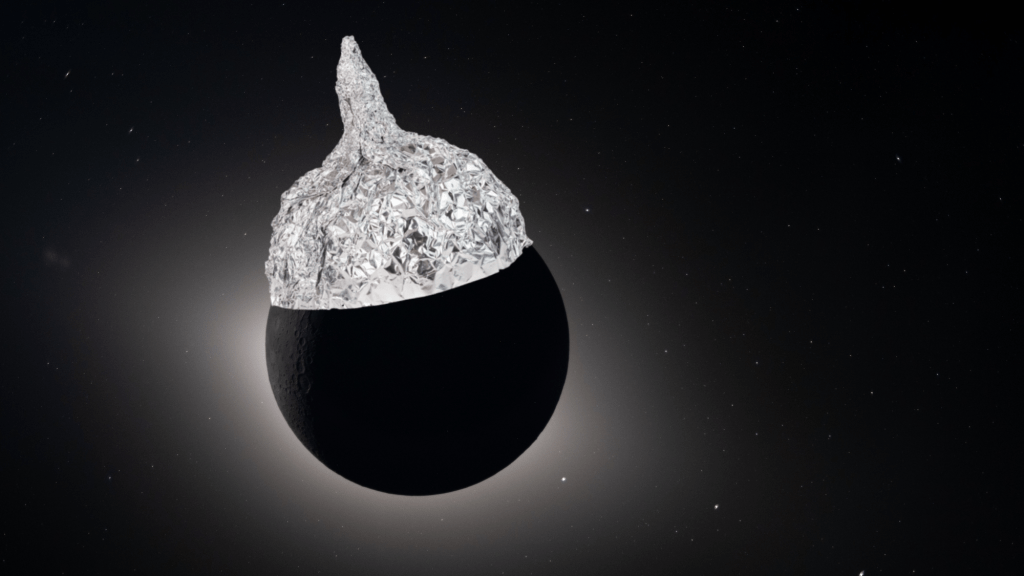
So, you can imagine that the launch of Artemis II has ruffled the delightful feathers that Flat Earthers and Space deniers wear in their tin foil hats. Call it tantrums or meltdowns, call it desperation, call it mental gymnastics, but the people who believe that space is a hoax, coupled with the ones who believe the Earth is flat, are having a very hard time defending their theories; but at the same time, they are trying to tear the Artemis II mission apart.

Why are they doing this? At least to me, it comes down to various points. It could be that the job of promoting Flat Earth and Space disbelief is a lucrative one, so they need to keep doing it; it’s how they make a living.

Another idea is that they believe they are helping the public to see the truth, because they are honestly trying to look out for people. They don’t like the idea of governments and companies lying to the public, so they believe they are helping us, by exposing the lies.

And finally, they believe they are special because they think they have discovered a truth about the world, and in their eyes, it makes them smarter than all of the experts.

It could be all of them combined, or none of them. Regardless of the true situation, Flat Earthers and Space deniers are not happy, and I feel like a terrible person reading their statements and watching their videos, struggling in vain to prove that their conspiracy theories are still valid and real. In some ways, I do feel sorry for them, but, as I said before, I also feel terrible that I’m finding it entertaining.


Credit: Vice Magazine

Their problems with the Artemis II mission vary because this mission has also drawn out the Moon Landing deniers, as well, to nobody’s surprise. I swear, like Avatar: The Last Airbender is a gateway drug into anime, Flat Earth is the gateway drug into wider conspiracy theories.

Overall, the evidence provided by conspiracy theorists who have criticised or incorrectly debunked the Artemis II mission includes, but is not limited to:

  • Creating AI images of the Moon to pass off as real images taken by the Artemis II crew.
  • Complaining that Artemis II’s launch was at the wrong angle, therefore it’s fake.
  • Creating AI images of the crew in front of a green screen to prove it’s fake.
  • Talking about the number of edits of the launch, which is supposedly happening live.
  • The capsule is too small to house four people for 10 days.
  • The public filmed the astronauts standing outside a building with their phones, but the astronauts were not on the screen.
  • Creating footage of Artemis II filming some type of vehicle moving on the Moon’s surface, to prove it’s fake.
  • Insisting it was a meta-joke, that Artemis II launched on 1st April, April Fool’s Day.
  • Claiming any glitches in transmission signals proves that the footage is fake.
  • Passing off previous images of the Moon as proof that NASA is reproducing Artemis II’s images.
  • And one of the best excuses was that Artemis II was a balloon.
  • The launch proves a Flat Earth, because the rocket did not keep going straight up; it curved, otherwise it would have hit the dome.

Of course, some of these insane statements clash and contradict each other, but let’s not let a silly thing like reality get in the way of a good conspiracy theory.

I’m not stunned by the quantity of conspiracy theorists moaning and complaining about Artemis II; it’s rather the quality of their shenanigans, mainly through the use of AI. These images, which have been passed off as real, are of such high quality that the media have had to push back on them and correct the disinformation.

That is scary as hell, but at least there is pushback on the “AI slop”; otherwise, we would believe it. Though, to be fair, I think that’s the conspiracy theorists’ point, not to trust anything. The AI images are so convincing that anybody could be fooled by them.

I have found some videos of various people pushing back against the conspiracy theorists, because it needs to be done. I have mentioned him before, but SciMan Dan has made a few videos concerning their Artemis II nonsense, among others like Creaky Binder and Dave McKeegan.

Before I go on, I need to mention that Sciman Dan also reacted to my favourite Flat Earther, CC from New York, Westchester County, and his work van. In my humble opinion, he’s my favourite conspiracy theorist, not because he brings well-thought-out ideas that are logical and researched, but rather because of the opposite. He’s a buffoon, a lovable buffoon, with no evidence to back up anything he says. Also, I think he’s the angriest man on the internet.

So, with that in mind, enjoy some of the best and worst humanity has to offer.

Sadly, there’s so much more, but you get the point. My family loved watching the launch, but also tracking the mission, ogling at the footage and images, and watching the splashdown live. Artemis II was amazing, and it clears the path for Artemis III, which is tentatively planned for mid-2027, where humans will once more walk on the Moon.

If the Midnight Sun or Artemis II haven’t broken the Flat Earth/Space Deniers/Moon Landing disbelievers, then Artemis III will break their minds, bodies, and souls; physically, mentally, and emotionally. That should be entertaining. Did you follow the Artemis II mission? What was your favourite moment from the mission, or the funniest conspiracy theory about it? As always, please let me know.

The clock has struck again, and the veil of sleep is descending, so it is time to visit the Dreaming. Thanks again for reading, following, and subscribing to Some Geek Told Me. Please don’t forget to walk your dog, read a banned book, try not to shed a tear for Viktor Orbán, and I’ll see you next week to discuss my wife’s reading habits. Sound interesting, doesn’t it?


We Didn’t Start the Fire: 1962

There once was a man named Scott,
He thought he was funny, but he was not.
He wrote a blog,
It stunk like a bog,
Because he had the writing IQ of snot.

Just when you thought it was safe to venture online, actually, it’s not very safe, isn’t it? Thanks, Mark and Elon. Anyway, as much as I would love to discuss the world at the moment, I’m not. Why am I not going to do this? Easy, there is something more important, dear reader!

The history project that Philomena Cunk would want nothing to do with is back! Put the baby to bed, turn the jug on, put your feet up, and get ready to be bored, because Some Geek Told Me’s We Didn’t Start the Fire has returned.

I know, this is the gift that keeps on giving, yet here we are again. For previous entries, please check out the following list:

We Didn’t Start the Fire: The Beginning 

We Didn’t Start the Fire: 1948-1949.

We Didn’t Start the Fire: 1950

We Didn’t Start the Fire: 1951

We Didn’t Start the Fire: 1952

We Didn’t Start the Fire: 1953

We Didn’t Start the Fire: 1954

We Didn’t Start the Fire: 1955

We Didn’t Start the Fire: 1956

We Didn’t Start the Fire: 1957

We Didn’t Start the Fire: 1958

We Didn’t Start the Fire: 1959

We Didn’t Start the Fire: 1960

We Didn’t Start the Fire: 1961

When we last left the song, we were well into the seventh verse, having just finished with 1961. So, logic and Spock would be correct, because we are going to look at 1962, which only has five references. So, shall we begin?


Credit: A.M.P.

Lawrence of Arabia 

Back in the 1957 entry, we discussed the movie, The Bridge on the River Kwai. That film was directed by David Lean, and wouldn’t you know it, he’s got another reference in the song. Lean directed Lawrence of Arabia, and it was released in 1962, which was based on the 1926 autobiography, Seven Pillars of Wisdom, by T.E (Thomas Edward) Lawrence.

The film had a budget of $15 million, but earned $70 million at the box office; Lawrence of Arabia was the highest-grossing movie of 1962. It went on to earn ten Academy Awards nominations in 1963, and won seven, as well as four BAFTA Awards and six Golden Globes. Like The Bridge on the River Kwai, Lawrence of Arabia is considered one of the greatest films ever made. I’ve been lucky enough to have seen it, and it’s a film that lives up to its hype.

We have discussed various modern movie equivalents in the past, so instead of revisiting those films, I want to take a different approach. Since Lawrence of Arabia won seven Academy Awards, I thought it would be interesting to list modern films that have also achieved this feat. The films that have won seven Academy Awards include: Dances with Wolves (1990), Schindler’s List (1993), Shakespeare in Love (1998), Everything Everywhere All at Once (2022), and Oppenheimer (2023).

British Beatlemania

I’ll tell you this for nothing: you don’t need to have worked on the Artemis II mission to understand that British Beatlemania is a 1962 documentary by Sir David Attenborough. The documentary…no, I can’t do this.

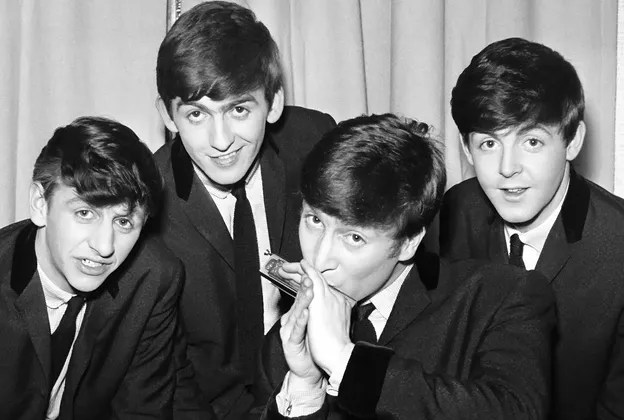
British Beatlemania refers to the British band, The Beatles and their rise to fame and popularity around the United Kingdom, the United States of America, and the world. They were part of what people would eventually call “The British Invasion”, which was the influx of British music “invading” radio stations, television shows, concerts and the record charts in the United States.

They made the list because songs such as Love Me Do, P.S. I Love You, and Please Please Me, helped kick-start Beatlemania. The crux of Beatlemania, at least to me, was having millions of people, mostly women, going crazy over the Beatles’ music, as well as the band members themselves, to the level of obsession or fanaticism. This was obviously aided by the mass media.

The Beatles had broken up before I was born, but I’ve seen footage and read stories about the craziness. My parents played a lot of Beatles’ music at home, so I get it. Some contemporary examples are Swifties (Taylor Swift) and Little Monsters (Lady Gaga), but one aspect of the Beatles’ legacy is that they are considered one of, if not the most popular and successful band ever, in part due to Beatlemania.

Ringo Starr, George Harrison, John Lennon and Paul McCartney of The Beatles. Credit: Harry Hammond/V&A Images/Getty Images

Ole Miss 

Ole Miss would be a great name for a horse, and maybe somewhere on the planet, that horse exists; however, this entry is not about them, but it has a connection to another name in the song. Back in 1957, via the fifth verse, we had the name, Little Rock. If you remember it, great stuff; if not, I’ll give you time to read about it now.

Sorted, you’re good to go? Excellent! Like Little Rock, Ole Miss was another flashpoint in the history of race relations in the United States. Ole Miss has a few different meanings, but in context to the song, it refers to the nickname of the University of Mississippi, located in Oxford, Mississippi, and its race riot in 1962.

I’m not sure if I can do this event justice, but I’ll try. James Meredith, an African-American U.S. Air Force veteran, had enrolled at the University of Mississippi, and when it was discovered that he was not the white man they thought him to be, shit hit the fan, with the university officials, but also the Mississippi Governor, Ross Barnett. At the time, the University of Mississippi was an all-white university.

In an attempt to deny him entry to the university, Meredith was temporarily jailed, then released, with Barnett barring him from attending the university. President Kennedy and Attorney General Robert F. Kennedy got involved to find a way forward without violence, and allow Meredith to attend. Obviously, this incident, like nearly all of them, got out of hand.

Between 30th September and 1st October, a riot broke out on the campus involving federal law enforcement and a mob, consisting of segregationists, white supremacists, and some students. The aftermath of the riot included hijacked vehicles, destruction of buildings, and over 300 people were injured, including 28 U.S. Marshals being shot, as well as two civilians were killed. The next day, President Kennedy sent in over 30,000 troops to keep the peace and ensure Meredith could attend the university, with federal protection.

Meredith went on to graduate with a political science degree. So how does this event relate to the world of 2026? Well, how can it not? Yes, I’m not an American, but the evidence is plain to see. What the Little Rock incident did for the desegregation of high schools, the Ole Miss riot helped to bring about much-needed social reforms in universities within the United States.

Meredith, center with briefcase, is escorted to the University of Mississippi campus by U.S. marshals on Oct. 1, 1962. Credit: Associated Press

John Glenn 

John Glenn was a politician, wartime pilot, test pilot, and astronaut. As you remember from previous entries, 1962 was at the height of the Cold War, but most importantly, the space race had started between the United States and the Soviet Union. Glenn was one of the seven astronauts chosen to fly spacecrafts for Project Mercury. These astronauts are known as the Mercury Seven.

He was included in the song because on 20th February 1962, he became the first American to orbit Earth, but he was not the first American in space. That honour belonged to Alan Shepard in 1961. Facts matter, folks, facts matter.

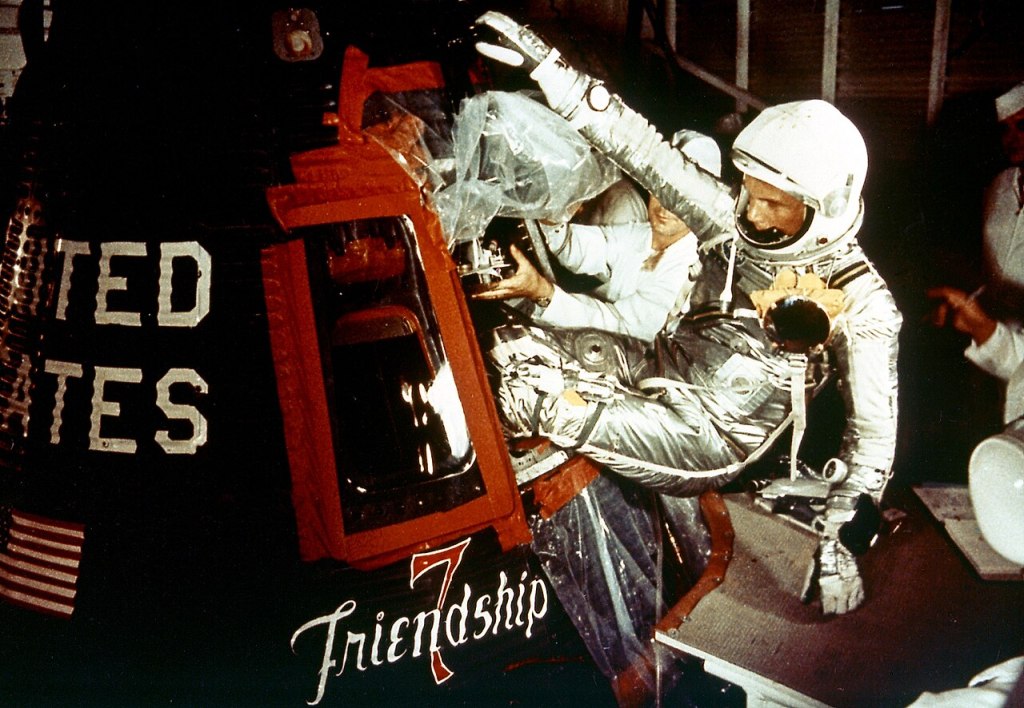
Anyway, Glenn completed three orbits of Earth, flying the Friendship 7 spacecraft for the Mercury-Atlas 6 mission. He completed three orbits in roughly 5 hours, 55 minutes, at speeds of over 28,000 km/ph.

A modern equivalent for a single astronaut achieving something new is sort of difficult, considering the huge advancements in space technology and flight. Instead of this, I could put forward the recent successful Artemis II mission, which is the second time I have mentioned it. I hope there’s not a third.

John Glenn entering his spacecraft, Friendship 7, prior to the launch of Mercury-Atlas 6 on 20 February, 1962. Credit: NASA.

Liston beats Patterson 

It’s been awhile since we discussed boxing, but like Thanos, it was inevitable. The boxers in question were Sonny Liston and Floyd Patterson, and they fought for the undisputed heavyweight world championship on 25th September 1962, at Comiskey Park, Chicago, Illinois.

This was Patterson’s second reign as champion, as he first won the title in 1956, lost it in 1959, and then reclaimed it in 1960. This, of course, made Liston the challenger. Liston was older and heavier than Patterson, but Patterson had started boxing professionally before Liston.

Depending on who you talk to, predictions for the fight were slightly in favour of Liston; it was strange that the champion was not the favourite. Anyway, the fight was memorable because after two minutes in the first round, Liston knocked Patterson out to become the new heavyweight champion of the world.

The story doesn’t end there, because Liston successfully defended his title in a rematch with Patterson in July 1963. Liston then fought to defend the title in February 1964 against Cassius Clay, but he was defeated. Clay changed his name a month later to Muhammad Ali. He then faced Liston for a second time in May 1965, and Liston lost again.

Essentially, Liston made the song for knocking out the world champion in the first round. Some contemporary examples were difficult to cite, mainly because champions continue to be knocked out, but it’s rare for it to happen in the first round in heavyweight fights.

The best I could find was on 29th October 19931, when the WBO Heavyweight Champion Tommy Morrison was knocked down three times in the first round by Michael Bentt, and lost the fight and title.

So for 1962, we covered a film, fanatic fans, a desegregation university riot, an astronaut, and a boxing match. 1963’s blog post is roughly seven weeks away, so I’d better prepare myself! If you’re still enjoying this project, as always, please let me know, because nothing happens in a vacuum.

So that’s it for this week. Thanks again for reading, following, and subscribing to Some Geek Told Me; it means a lot. My Twitter and Mastodon accounts are still ticking over with daily information that someone may find interesting. Maybe.

Please don’t forget to walk your dog, read a banned book, thank the bus driver, and if you ever repeat any of the information I write about, and someone asks you where you discovered it, just say, ‘Some Geek Told Me.‘ I’ll see you next week, when we discuss the Artemis II mission. Third time’s a charm!


1 If you can call 1993 contemporary, of course.

Three Former Failed Fluttering Flags

To the best of my amazing and gorgeous recollection, I have only made two blog posts about flags. That being the case, and unlike Robocop 3, I wanted the third instalment to be fantastic. However, the problem is that I’m the creator, so instead of Star Wars: Episode VI: Return of the Jedi, it will be more like Highlander III: The Sorcerer.

I had previously discussed four countries that had changed their flags because of redesigns and name changes. I wanted to go one step further and talk about countries that no longer exist, thus their flags are no longer in use, as well as new nations and flags that have sprung up from their demise.

So, may I present to you three former failed fluttering flags. Enjoy.


Image by Achim Scholty from Pixabay

Yugoslavia

Flag of the Socialist Federal Republic of Yugoslavia (1946-1992). Credit: Đorđe Andrejević-Kun & SVG

The flag of Yugoslavia, known as the Socialist Federal Republic of Yugoslavia, had been through several small tweaks over the years, since the country was formed in 1918, at the end of the First World War. The largest tweak was adding a red star in the middle of the flag, following the Second World War. This version of the flag survived from 1946 to 1992.

The dissolution of the flag is linked to Yugoslavia itself. Back in 1918, when Yugoslavia was founded, it was built by joining six states or republics to create the country. They were Macedonia, Bosnia and Herzegovina, Croatia, Montenegro, Serbia, and Slovenia.

The colours of the flag represented various things. The equal red, white, and blue horizonal stripes, represent the shared heritage of the Southern Slavs; the red star symbolises communism, socialism, and the fight for freedom and liberation; and finally, the gold outline of the star represents the valor of the state and prosperity. 

After the fall of communism in Eastern Europe, Yugoslavia went through some massive upheaval, during which some republics wanted to have more autonomy, having declared independence. This resulted in the break-up of Yugoslavia in the early 1990s and the horrific Yugoslav Wars, which raged across the region.

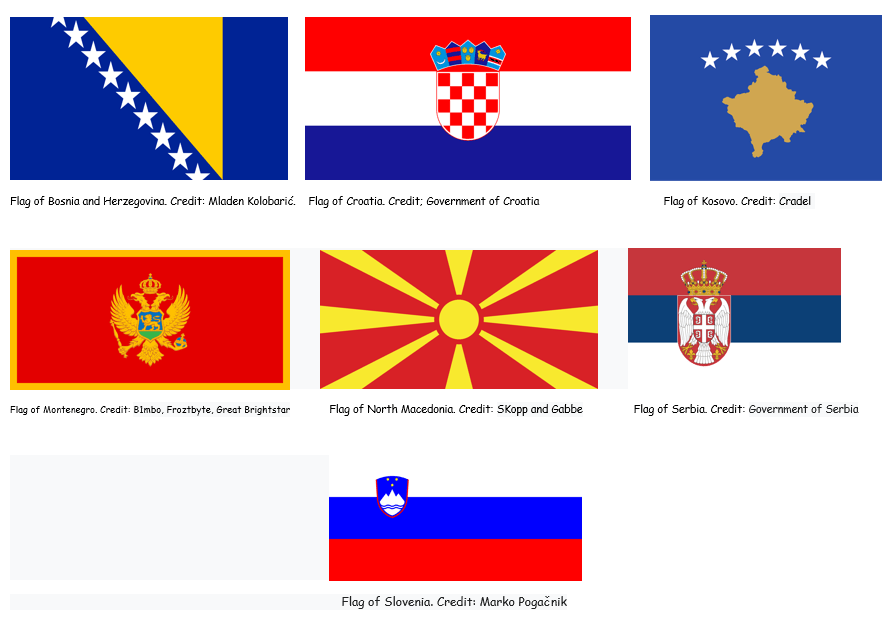
Currently, seven countries have risen from the ashes of Yugoslavia: Bosnia and Herzegovina, Croatia, Kosovo, Montenegro, North Macedonia, Serbia, and Slovenia.

The failure of Yugoslavia’s flag can be attributed to the collapse of Yugoslavia itself. The country ceased to exist and was eventually divided into seven republics, each adopting its own flag. Notably, the flags of Croatia, Serbia, and Slovakia feature horizontal stripes in red, white, and blue.

Soviet Union (Union of Soviet Socialist Republics/USSR)

Flag of the Soviet Union (1955-1991) Credit: СССР

.

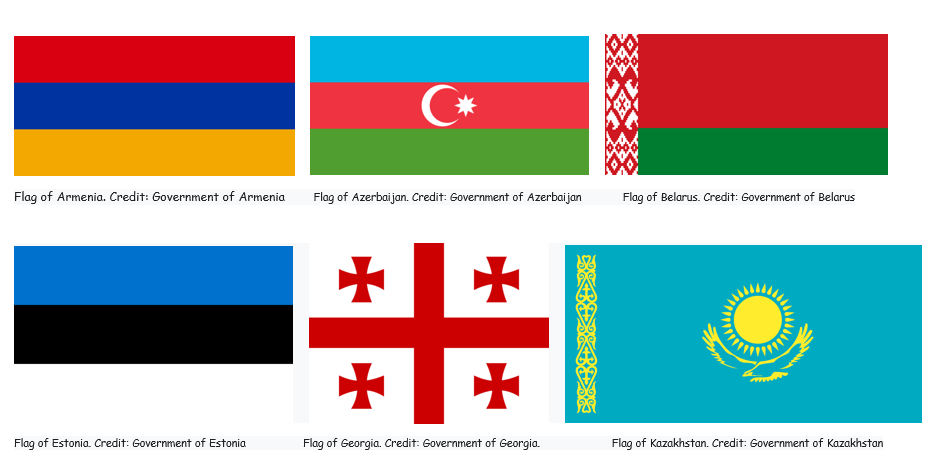
Like the flag of Yugoslavia and many others, the flag of the Soviet Union had been altered since its inception in 1922. The name Union of Soviet Socialist Republics was exactly what you imagined it would be. The nation was a union of various republics that used communism as the driving force behind their governments. These republics totalled 15, which were spread across Eastern Europe, Western Asia, and Central Asia.

They were known as Armenia, Azerbaijan, Byelorussia, Estonia, Georgia, Kazakhstan, Kirgiziya, Latvia, Lithuania, Moldavia, Russian SFSR, Tajikistan, Turkmenistan, Ukraine, and Uzbekistan.

With the colours of the Soviet Union flag, the red represented revolution; the hammer (workers) and the sickle (peasants) were adopted from the Russian Revolution, representing the two factions; and the yellow star symbolised the Soviet Union’s Communist Party.

After years of turmoil and mounting pressure from internal and external forces, the dissolution of the Soviet Union occurred on 26th December 1991. The republics that had made up the Soviet Union were now free and independent again, though some of them had already gained their independence earlier.

The death of the Soviet Union allowed these republics to be reborn, which the world now knows them as: Armenia, Azerbaijan, Belarus, Estonia, Georgia, Kazakhstan, Kyrgyzstan, Latvia, Lithuania, Moldova, Russia, Tajikistan, Turkmenistan, Ukraine, and Uzbekistan, along with their own flags.

It’s interesting to note that Russia has now annexed parts of Georgia and Ukraine, in an attempt, in my humble opinion, to absorb these countries back into the fold.

Gran Colombia

Third Flag of Gran Colombia 1821–1830. Credit: Wikipedia Commons

For this entry, we are bypassing the 20th century entirely and going to hang out in the 19th century, specifically Northern South America. The country was called Gran Colombia, and it only lasted 12 years, which is three World Cup cycles, from 17th December 1819 to 19th November 1831. To explain Gran Colombia, we need to understand why it existed in the first place, which is directly related to why it failed.

At the beginning of the 19th century, the Spanish Empire controlled vast territories extending from the northernmost part of North America to the southernmost part of South America. In 1808, when Napoleon Bonaparte, not Dynamite, invaded Spain, he sparked a series of revolutions and wars of independence throughout South America.

One of the key figures at the time was Simón Bolívar, who envisioned the countries of South America breaking free from Spanish and Portuguese control and becoming a unified South America. Part of this vision included the creation of Gran Colombia, where, after gaining independence from the Spanish Empire, several countries combined their powers and formed Captain Planet…I mean, Gran Colombia.

Asking countries to fight wars of independence was one thing, but asking them, after gaining a hard-fought independence, to join an even larger country, in hindsight, may not have been the best idea, even with the best of intentions. Because of restructuring and resignations, along with internal and external political and economic turmoil and pressure, Grand Colombia collapsed and was finally dissolved in 1831.

Gran Colombia had an original flag, then two redesigns, along with another proposed flag redesign, before the dissolution of the country in its short lifespan. The final flag before dissolution featured yellow, blue, and red horizontal stripes, along with a central coat of arms. The yellow represented Hispanic America, the blue portrayed the Pacific and Atlantic Oceans, while red represented Spain.

The coat-of-arms displayed two cornucopia, which were full of fruit and flowers, as these were symbols of wealth and abundance. In the centre, there is a quiver of arrows and an axe, along with a bow. The quiver has a tricolour (yellow, blue, red) ribbon tied to the bottom of it, which, to the best of my understanding, signifies union and strength. All of these items are inside an oval, which has the words, “República de Colombia,” which translates as “Republic of Colombia.”

The dissolution of Gran Colombia eventually gave South America and geography books the countries of Colombia, Venezuela, Ecuador, and Panama. As you can see in the flags below, Gran Colombia’s legacy is in the tricolours of yellow, blue, and red, along with Ecuador having a central coat of arms. I tell you, history is cool, kids. History is cool.

There are other examples, of course, but as usual, I get far too distracted to make the blog interesting. Well, to be fair, I find them to be interesting; so that could be the problem, among many. If you can think of any flag-related topics I could discuss on this famous and beloved blog, please let me know.

So that’s it. The school holidays are upon us again, which means a lot of pyjama days for UMC1 and UMC2. Yay.

Thanks again for reading, following, and subscribing to Some Geek Told Me. Please don’t forget to walk your dog, go read Supergirl: Woman of Tomorrow, say “Thank you” to the bus driver, and I’ll see you next week, because we are going back to 1962. Yeah, baby, Billy Joel would be disgusted.


Sam Kieth and Chuck Norris: Thank You

So…how is everybody doing? It’s an interesting period in human history right now, and it can seem that things could be getting out of hand. Maybe things are already out of hand. Regardless of the truth, I want to take the time to acknowledge the deaths of two people who were recently announced.

Before I do, I realise I have discussed the deaths of people on this blog before, especially people I have never met, which is somewhat awkward and strange. How do you convey your thoughts and feelings about the matter? Do we have the right to do so? I don’t know what the proper answer or response could or should be; I never have.

I have no stirring speeches about the deaths of people with influence, only that by looking and examining ourselves, we can see that humanity can still shine through in these dire times, but also, understanding and being grateful that we got to experience their gifts that they shared with the world. Because maybe, just maybe, that’s the point.

Anyway, I want to talk about Sam Kieth and Chuck Norris.


Image by Alexa from Pixabay

Sam Kieth died on 15th March, aged 63 years old, and from what I can understand, he died from complications from Lewy body dementia, which is a form of dementia I never knew existed, I’m sorry to say.

For those not in the know, Kieth was a comic book creator who worked with many companies, including Aftershock, Dark Horse, DC, Image, Marvel, and others. Kieth created and co-created memorable characters, including, but not limited to, Cyber, Mr Gone, Mervyn Pumpkinhead, Mad Hettie, Goldie, Zero Girl, Roderick Burgess, Azazel, and Julie Winters, along with the three most well-known: Lucifer Morningstar, The Maxx, and Dream of the Endless.

I can’t tell you what the first Sam Kieth art I saw was, but I can tell you how it made me feel. I always thought just like his characters, Kieth’s art was not conventional; it was kooky, surreal, weird, offbeat, and odd. But that’s why I felt it stood out from the crowd, and that’s why his art worked. I would see his art somewhere and think, “That looks bonkers, it must be Sam Kieth’s. I love it!”, and it usually was. I enjoyed his art and storytelling, so his talents will be missed.

Sam Kieth in 2013 at a retrospective of his work at the Cartoon Art Museum in San Francisco. His bold art aesthetic and exploration of mature themes gave an adult edge to his comic book characters. Credit: Stephen Lam

It’s difficult to believe, but Death finally found the courage to tell Chuck Norris that he was actually dead. His formal death was recorded as 19th March 2026, in Hawaii, aged 86 years. Born Switchblade Killingsworth, Norris changed his name because he believed it didn’t sound tough enough.

Norris was a famous actor, martial artist, author, and screenwriter. Walker, Texas Ranger was one of his most famous roles, along with his scene-stealing cameo in Dodgeball.

He was the most dangerous, courageous, intelligent, and lethal man in the world. Norris managed to achieve some truly mighty feats, which include:

  • He could delete the Recycle Bin.
  • He once won a game of Connect Four in three moves.
  • He counted to infinity. Twice.
  • He could slam a revolving door.
  • He could strangle a man with a cordless phone.
  • He could start a fire by rubbing two ice cubes together.
  • He could divide by zero.
  • He could kill two stones with one bird.
  • He once played Russian roulette with a fully-loaded gun and won.
  • He would drink napalm to fight his heartburn.
  • He could manage to achieve a bachelor’s degree in scheduled time.
  • He didn’t read books. He would stare them down until he got the information he wanted.
  • He once beat paper, rock, and scissors, all at the same time.
  • He never blinked in his entire life. Never.
  • He could speak Braille.
  • He could build a snowman out of rain.

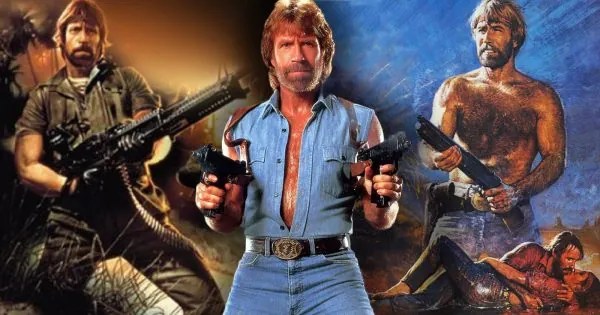
Chuck Norris appeared in the ‘Street Fighter II’ video game, but was removed by Beta Testers because every button caused him to do a roundhouse kick. When asked bout this “glitch,” Chuck Norris replied, “That’s no glitch.”

Chuck Norris did go hunting because the word hunting implies the possibility of failure. Chuck Norris went killing.

The only time Chuck Norris was ever wrong was when he thought he had made a mistake.

There are many more, but my eternal thanks go to Chuck Norris. I read books documenting his feats to UMC1 and UMC2, while they were baking in the womb. It did this for four reasons: to build a connection to them with my voice, to watch my wife suppress her laughter, to educate them on what a roundhouse kick was, and to inform my unborn children of the adventures of the world’s greatest man. Death has a Chuck Norris problem now.

Chuck Norris being Chuck Norris. Credit: Fickeringmyth

Seriously, both Sam Kieth and Chuck Norris have helped me become the geek I am today. Thank you.

This was a short blog post, so it is what it is. Thank you for reading, following, and subscribing to Some Geek Told Me. It wouldn’t be New Zealand’s 5th least favourite website without your support.

Remember to walk your dog, read a banned book, go watch Heated Rivalry, and I’ll see you next week. Look after yourselves and your family.