We Didn’t Start the Fire: 1964-1969

I want to take this moment to assure all of my followers, readers, and haters that Some Geek Told Me is totally committed to providing you with the second-from-the-bottom blog experience this side of an NSYNC Reunion Tour. This includes bringing back one of history’s greatest ever literary projects: We Didn’t Start the Fire. The Bayeux Tapestry has nothing on me.

Yes, awesome readers, even though it’s been MIA since 22nd June 2026, We Didn’t Start the Fire is back with another entry to entice your historical leanings. Because I’m a firestarter, twisted firestarter, I have included a list of the amazing previous entries:

We Didn’t Start the Fire: The Beginning 

We Didn’t Start the Fire: 1948-1949.

We Didn’t Start the Fire: 1950

We Didn’t Start the Fire: 1951

We Didn’t Start the Fire: 1952

We Didn’t Start the Fire: 1953

We Didn’t Start the Fire: 1954

We Didn’t Start the Fire: 1955

We Didn’t Start the Fire: 1956

We Didn’t Start the Fire: 1957

We Didn’t Start the Fire: 1958

We Didn’t Start the Fire: 1959

We Didn’t Start the Fire: 1960

We Didn’t Start the Fire: 1961

We Didn’t Start the Fire: 1962

We Didn’t Start the Fire: 1963

If this project followed the new FIFA World Cup format, we’d be entering the knockout round, like the round of 32. We are deep into the song now, standing at the precipice of the ninth verse, which actually covers multiple years.1 We have not done this since the start of the song with 1948-1949.

Another interesting point to talk about is the song’s time references, because I have seen both Ho Chi Minh and Richard Nixon back again, grouped under different years. When I get to the reference, I’ll go full geek and explain it. So, there’s nothing left to do but to shake what my Mumma gave me and move on.


Credit: Etsy

1964

There is no entry for 1964, sadly.

1965

Birth Control

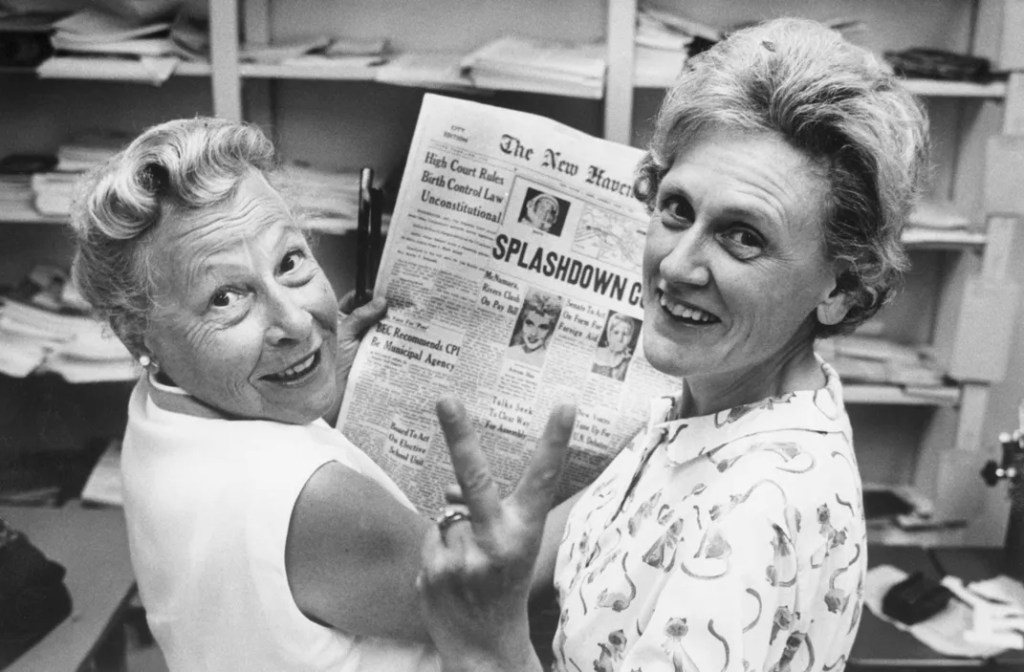
This reference is connected to a court case, Griswold v. Connecticut. On 7th June 1965, a landmark decision was reached by the United States Supreme Court that ruled in favour of the constitutional right for married couples to use birth control. This decision struck down state laws like Connecticut’s that prohibited the use of or recommended contraceptives, and violated the right to marital privacy.

The results of this decision meant that birth control had become legal in the United States for married couples, and eventually, in 1972, it became legal for unmarried people.

The legacy of the 1965 decision is still being played out in courtrooms in the modern setting. The 1973 Roe v. Wade case, which recognised the constitutional right for a woman to choose to have an abortion, was overturned in 2022 by the Supreme Court. The result was that nearly half of the states enacted severe restrictions or total bans on abortions.

On June 7, 1965, the court released its decision. Echoing Estelle Griswold’s comment about policemen under the bed, Justice William O. Douglas asked, “Would we allow the police to search the sacred precincts of marital bedrooms for telltale signs of the use of contraceptives?” (Above, Griswold, left, celebrates with Cornelia Jahncke, president of Planned Parenthood in Connecticut.) Bettman, Getty Images

1965 (or 1969)

Ho Chi Minh


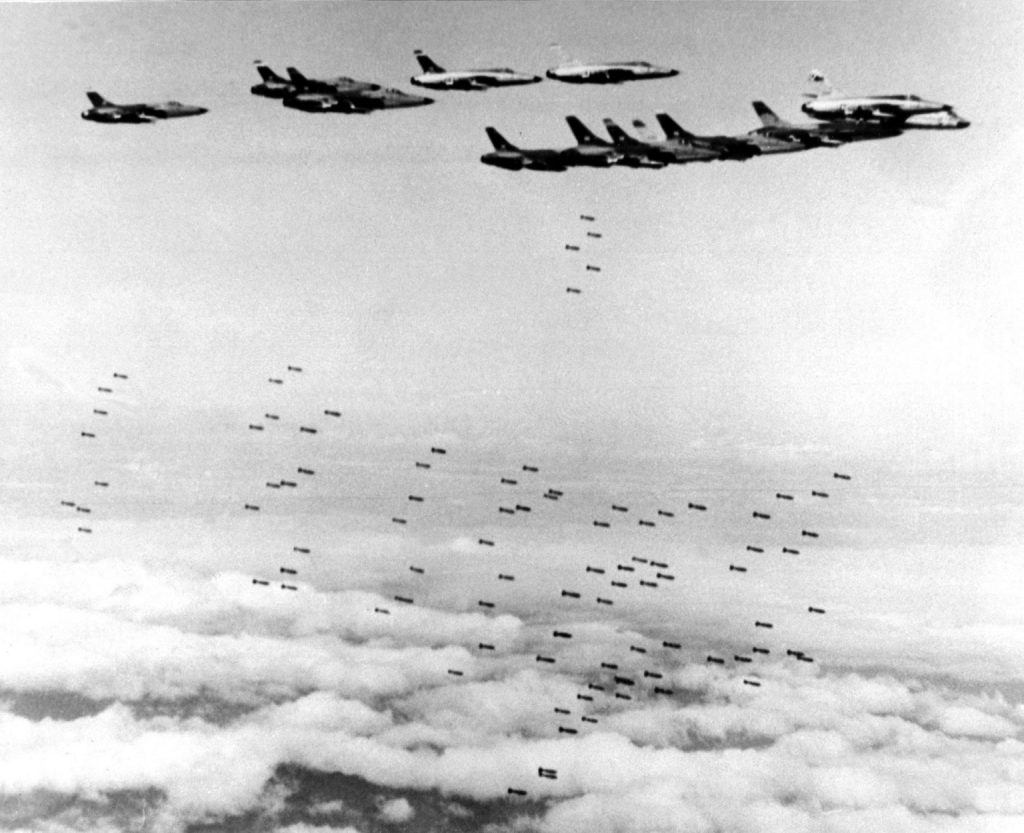
Here is the first of our dual references, with Ho Chi Minh being listed as 1965, as well as 1969. On 2nd March 1965, Operation Rolling Thunder started, which was the sustained and gradual aerial bombardment campaign by US forces against North Vietnam. This foreign policy of trying to bomb the Viet Cong into submission did not work the way they thought it would, as the campaign failed to dampen their resolve or stop the transport of resources across the Ho Chi Minh Trail. This policy dragged and entrenched the United States into deploying more troops into the conflict, which history would later call the Vietnam War.

Air Force F-105 Thunderchiefs conduct a bombing run over North Vietnam in February 1966. The enormous “Thuds” were the Air Force’s workhorse during Rolling Thunder and as a result suffered heavy losses.

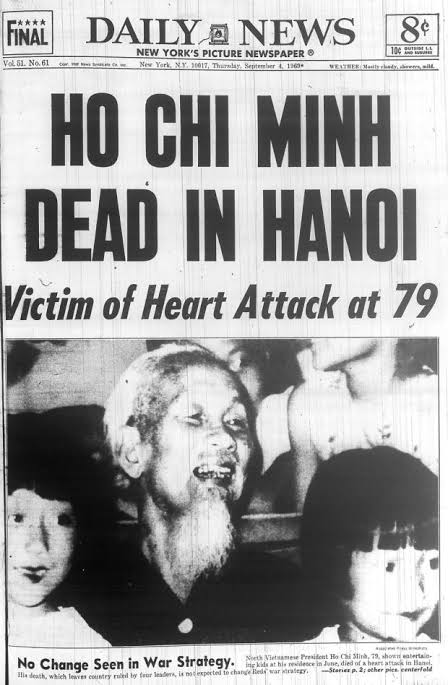
As stated previously, Ho Chi Minh could also serve as a 1969 reference for the President of the Democratic Republic of Vietnam (North Vietnam), Ho Chi Minh. He ruled the country from 1945 to 1969 and was a revolutionary icon who fought against colonial oppression. He died on 2nd September, 1969, which pushed North Vietnam further away from peace with the United States.

Some contemporary examples of Operation Rolling Thunder and the death of a 21st-century revolutionary icon can be seen in Afghanistan, Ukraine, and the air campaign against ISIS, as well as in the lives of Yasser Arafat, Ahmed Ben Bella, Võ Nguyên Giáp, Nelson Mandela, Fidel Castro, and Hugo Chávez.

North Vietnamese President Ho Chi Minh dies, Published September 4, 1969.

1966-1967

Apparently, according to Billy Joel, nothing of note happened in 1966 or 1967. If you listen very carefully, you can hear English football fans screaming about 1966, while in 1967, we had Che Guevara’s death and the Six-Day War, which still influence 2026.

1968 (or 1969)

Richard Nixon back again

We met Richard Nixon back in 1950, and as the lyrics suggest, he’s back! When listing this reference, it can fall under 1968 and/or 1969, and the reasons are connected. With US federal elections, they are held on “the Tuesday next after the first Monday in November.” So with the presidential inauguration, that is held on either 20th or 21st January. Since you get 10 hours of quality sleep, you’ll see where I’m going with this.

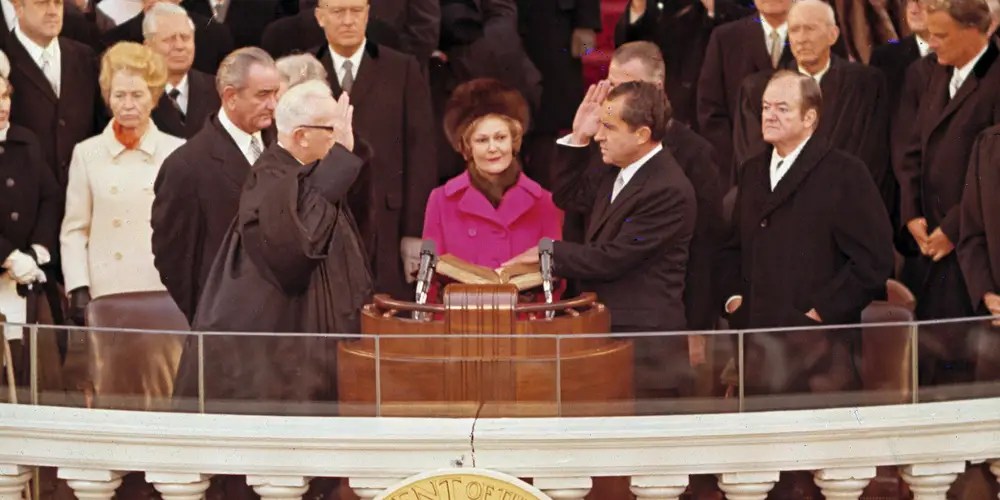
The former United States vice president won the 1968 US presidential election against Hubert Humphrey and George Wallace on 5th November 1968; but he was inaugurated on 20th January 1969, thus putting him under 1968 and 1969.

Its sort of obvious, but 21st century equalivanets of Nixon, would be George Bush, Bill Clinton, George W. Bush, Barack Obama, Donald Trump, Joe Biden, and of course, the return of everybody’s favourite (insert your own word here____________) Trump.

Richard M. Nixon, right, is sworn in as the 37th US president, taking the oath administered by Chief Justice Earl Warren, left, in front of the Capitol in Washington, DC, January 20, 1969. Outgoing President Lyndon B. Johnson is behind Warren. (AP Photo)

1969

Moonshot

I was born after 1969, but I have talked to many people about the Moonshot reference and their memories of it. Being the clever little bees that you are, you would have deduced that Moonshot refers to the events of 16th to 24th July 1969, especially 20th July.

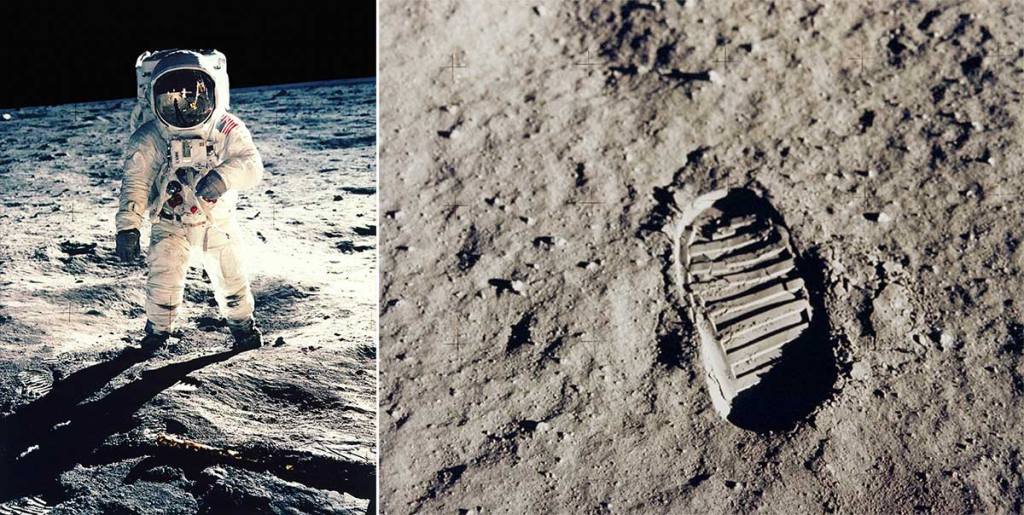
The above dates covered Apollo 11, the fifth crewed mission of NASA’s Apollo program, but more importantly, it was the mission that would land humans on the Moon for the first time. The crew were Neil Armstrong, Buzz Aldrin, and Michael Collins, and on 20th July 1969, the Apollo Lunar Module landed on the Moon, allowing Armstrong and Aldrin to become the first humans to walk on the Moon.

Not to be undone, Collins remained in the Apollo command and service module and set the record for human isolation. He spent roughly 21 hours completely alone in lunar orbit. For 48 minutes during every two-hour orbit behind the far side of the Moon, he was entirely cut off from radio contact with Earth, as well as being over 3,200 km away from his crewmates and over 400,000 km from the rest of the human race.

The legacy of Apollo 11 is the Artemis exploration program, with Artemis IV due to depart for a lunar landing sometime in 2028.

Lunar Module Pilot Buzz Aldrin. Commander Neil Armstrong, who took the photo, and the Lunar Module Eagle are visible as reflections in Aldrin’s helmet visor. Right: Aldrin’s bootprint in the lunar regolith. Credit: NASA/LPI

Woodstock

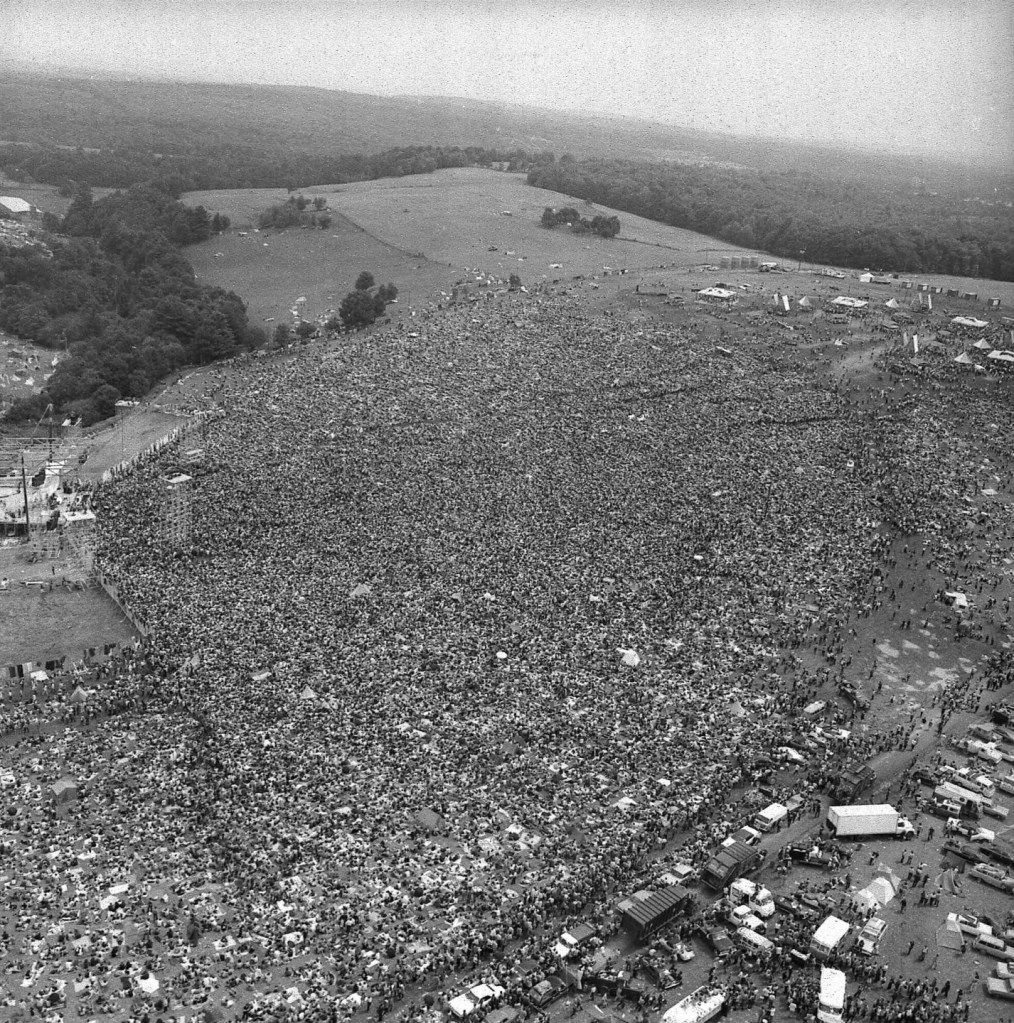
Back in 1969, a music festival was held on a dairy farm in Bethel, New York, which was about 95 km from Woodstock, the town that’s the festival’s namesake. The Woodstock Music and Art Fair, or just Woodstock, was held from 15th to 18th August, and became famous for two main reasons: as it became a focal point for the 1960s counterculture movement, and for having music across various genres.

The first was the size of it; between 460,000 and 500,000 people were estimated to have attended the festival. The second was who actually performed, like Sweetwater; Melanie; Ravi Shankar; Richie Havens; Santana; Quill; Country Joe McDonald; John Sebastian; Canned Heat; Grateful Dead; Creedence Clearwater Revival; Janis Joplin; The Who; Joe Cocker; John Winter; Crosby, Stills, Nash & Young; Sha Na Na; Jimi Hendrix, and many more.

The best examples of modern Woodstocks are annual festivals that draw in hundreds of thousands of people each year. To the best of my geek-influenced mind, these festivals include, in no particular order, Tomorrowland, EDC Las Vegas, Coachella Valley Music and Arts Festival, Lollapalooza, and Glastonbury. To nobody’s shock, Fyre Festival has not made the list.

I have yet to go to any of these festivals, but hope springs eternal.

Aug. 16, 1969 file photo shows a crowd of about 400,000 people attending the Woodstock Music and Arts Festival in Bethel, New York. Woodstock was staged 80 miles northwest of New York City on a bucolic hillside owned by dairy farmer Max Yasgur. It was great spot for peaceful vibes, but miserable for handling the hordes coming in by car. Fifty years later, memories of the rainy weekend Aug. 15-18, 1969, remain sharp among people who were in the crowd and on the stage. Credit: AP

So for 1964-1969, we covered contraceptives, an aerial bombardment campaign, the death of the President of North Vietnam, the former United States vice president becomes president, the moon landing, and a music festival. This was a weird list because of the skipped years, but hold down your flares, because the 1970s are next, and they are going to mess up the order of this blog.

And speaking of messing things up, let us bring another shambles of a historical lesson to a close. The Warriors and the All Blacks have lost, so my heart is very fragile currently; however, there’s hope the Black Ferns can knock over the world champions next week.

Thanks again for reading, following, and subscribing to Some Geek Told Me. If you like pointless daily facts about nearly anything you can think of, my Twitter and Mastodon are for you. Please don’t forget to walk your dog, read a banned book, go talk to a grandparent, and I’ll see you next week, when once again I try to be funny and fail.


1 In reality, its the remainder of the 60’s.

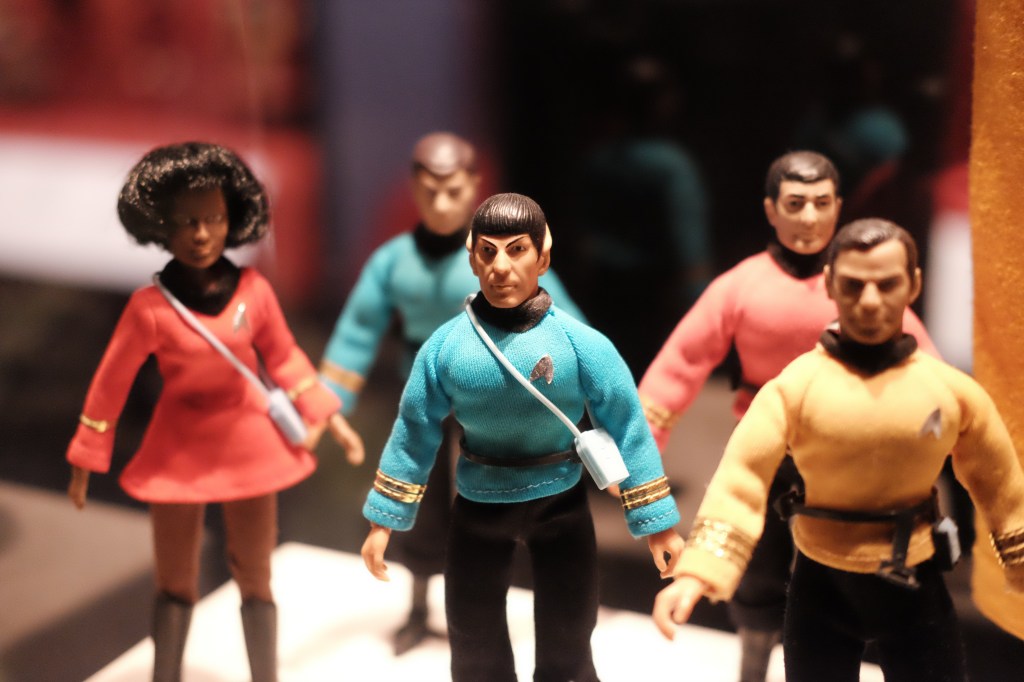
Star Trek: Dammit Jim, I’m a part-time blogger, not a novelist!

Hailing frequencies open.

I was trying to think of a phenomenal way to introduce this blog, but as usual, like my mum has always said, “If there’s a complicated or confusing way of doing something, then I’ll do it.” So, instead of doing something inspiring and meaningful, I’ve done this. Wow. Not at all confusing.

Moving on, I contacted the department heads of Some Geek Told Me and finally got them into the same room for a brainstorming session on this week’s topic. As usual, the director of marketing and the head of HR started clashing; like always. The Social Media consultant started waffling on about We Didn’t Start the Fire, while the head of sports trivia did not want to discuss the All Blacks and Springboks. That one is still raw.

However, in most cases, the man-child who sits in the corner and tries to look busy suggested Star Trek. And since the others were too busy bickering, the deadline passed, and Star Trek was selected. Cool.

I can only imagine that if this were written by a professional writer, the lead-in would have been better, but sadly, Horatio, this fellow has only finite jest. This badly drawn-out and ill-conceived beginning is now at an end, so let us begin the ode to Star Trek.


Image by Adam Evertsson from Pixabay

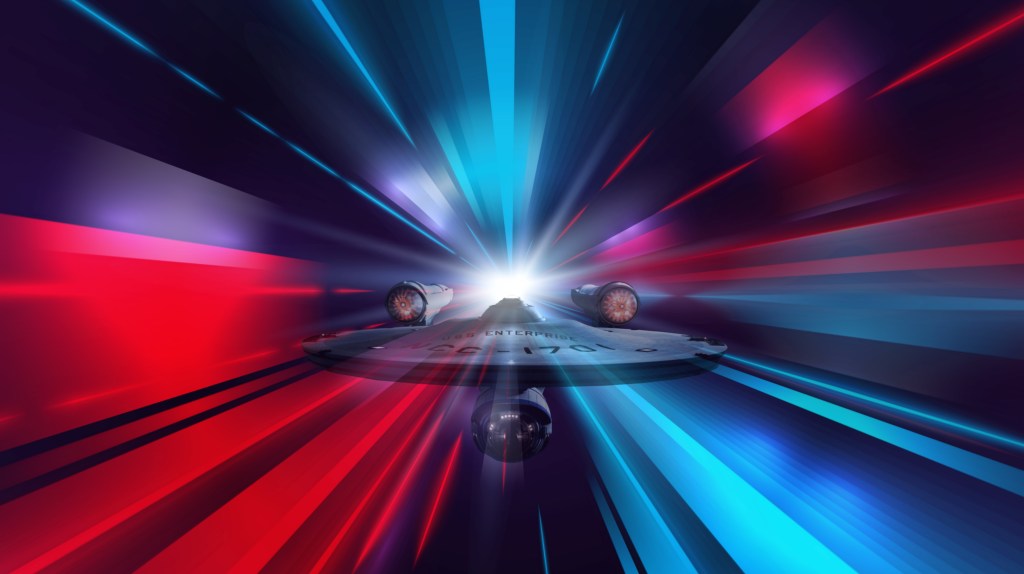
So why is Star Trek the topic of today’s rant? Apart from our resident man-child’s suggestion, it’s the 60th anniversary of the first US broadcast of Star Trek: The Original Series, on 8th September 1966, so what better time to discuss my love of Star Trek? Although it is pretty obvious, I love science fiction. This covers books, comics, movies, computer games, and television shows. And with science fiction franchises, there are many that I like, but I have three main ones: Star Wars, Doctor Who and Star Trek.

It’s funny how society likes to divide us up, as you need to be on one side or the other. In that regard, for personal principles and values, it’s important to take a side. However, there are times when not taking a side is exactly the winning move, like DC vs Marvel, Aliens vs Predator, Coke vs Pepsi, or Star Wars vs Star Trek. For me, I love Star Wars, as unlucky readers of this popular blog will attest to, but I love Star Trek as well. Granted, it’s for different reasons, but the love is still there.

So, why do I love Star Trek? Difficult answer, but I’m up for the challenge. I think it boils down to the scope of it: that hundreds of years into the future, humanity has pulled its socks up and solved many global problems, resulting in an explosion of technology and understanding, as well as meeting our stellar neighbours.

In truth, it’s a nice notion that many of the social barriers we have constructed for ourselves have been/will be torn down to usher in a new age. The world of the United Federation of Planets and Starfleet Academy seems so far removed from 2026, it’s almost laughable. But the intent is there.

I love how the uniforms change for each show and era, yet they remain the same. To demonstrate my love for the uniform, I carried a Star Trek Science Officer badge in the breast pocket of my wedding suit.1


Image by blueprint2015 from Pixabay

I have mentioned this before, but the TV shows Star Trek: Discovery, Star Trek: Picard, and Star Trek: Strange New Worlds have reawakened my love for the franchise. I know Season 4 of Strange New Worlds has started, but me being me, I will need to watch the previous season again.

Discovery was a gateway back into the franchise, and I loved the way the USS Discovery used the spore drive to travel, which, at least to me, was highly creative. Picard was great for seeing old friends, while Strange New Worlds has been a chance to meet new friends and villains. It’s been interesting to have the Gorn as the main antagonists, since they’re an alien species that I haven’t seen a lot of, much like the Orion.

Because I’m on this Star Trek wave, I want to start at the beginning and watch Star Trek: Enterprise again. Though, to be fair, I did watch a lot of episodes, but I never got to watch the entire series from start to finish because comics and football got in the way. Not girls, though; I was living my peak-geek life then, so girls were nowhere to be seen.

In saying that, I’ve never seen every single episode of The Original Series, The Next Generation, or Deep Space Nine. There are massive gaps in all the shows that I want to be filled. One of the biggest connections I’ve had to a Star Trek show, prior to Discovery’s launch, was Voyager. It was another show I never completed, but I gave it a damn good try.

It was on Channel Four, and I thought the premise of the show was awesome and simple; they were transported to the other side of the galaxy, so they were just trying to get home. I was at the right age when it was broadcast, and my love for it spilt over into university. I was extremely cool. And by cool, I mean the biggest geek/dork/nerd. I am still in some ways.

As for the films, I’ve loved them too. I can’t remember the first Star Trek film I ever saw, but I can remember the first one I saw at the cinema. Now, back in the day, my dad loved movies; he still does, but his favourites were westerns, war, action, or cop movies. Science fiction movies were not his cup of tea, but James Bond was. He once took me to The Living Daylights, though I was underage. Mum was not happy, but I was.

I remember Mum and my sister went on holiday early, so Dad and I were going to join them, but I think it was going to be nearly a week later, because Dad had trouble getting away from work. I think it was for a wedding; I can’t remember exactly, but it will do for the story. Anyway, I stayed behind to keep him company until he was free to leave, so we got to spend time together, just as boys.

At the time, and where we lived, we received cinematic releases a lot later than the rest of the country, let alone the whole world. I saw that Star Trek V: The Final Frontier was playing, and I asked Dad if we could both go. As I said before, Dad didn’t like science fiction movies or Star Trek, but he still took his geeky son to watch something he personally didn’t want to see. I appreciated that, because every time I watch The Final Frontier, I think of Dad.

Because he took me to the cinema to see that Star Trek movie, I have seen every Star Trek movie since then: Star Trek VI: The Undiscovered Country, Star Trek Generations, Star Trek: First Contact, Star Trek: Insurrection, Star Trek: Nemesis, Star Trek, Star Trek Into Darkness, and Star Trek Beyond at the cinema.2

Another lesson I learnt from that experience was something that I now do as a parent: I take my boys to the cinema each school holidays, where they agree on a movie to watch, even if I have no desire to see it, but we all still go.


Image by Iris,Helen,silvy from Pixabay

I’ve never been one for reading Star Trek novels; I’ve only ever read two Doctor Who novels, compared to the library of Star Wars books at my command. I can’t really explain the division over that, except I’ve started reading some IDW Star Trek comics. I recently read Star Trek: Red Shirts, which was pretty gnarly. I’m waiting for Star Trek: Red Shirts – Ghost of the 21st Century #1 to arrive now.

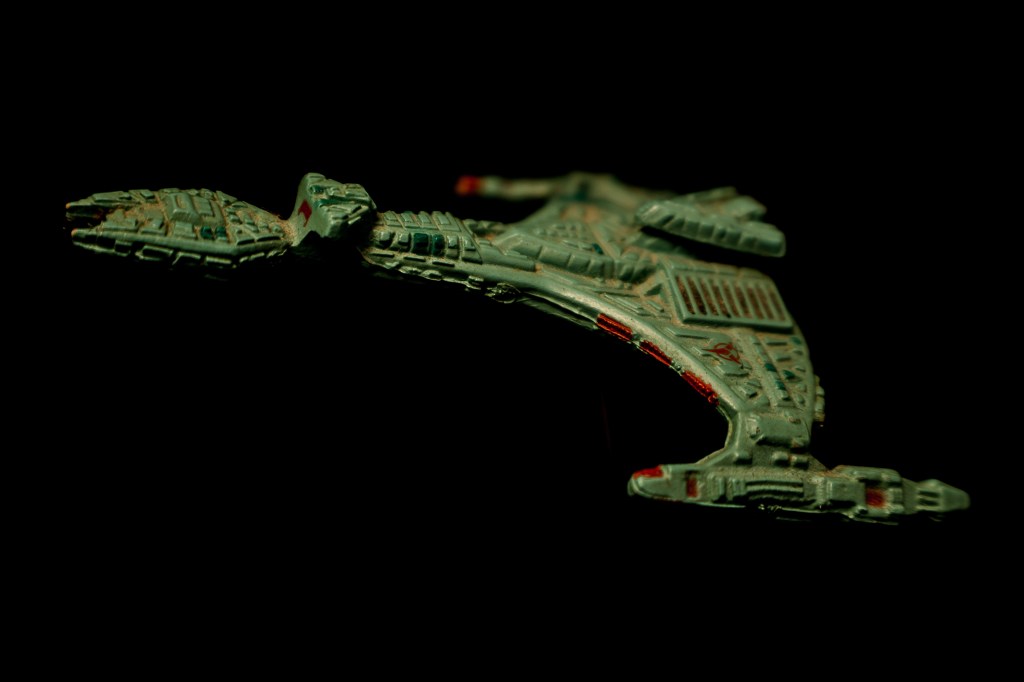
I love the vehicles, weapons, and technology, but most of all, I love the aliens and alien planets. Vulcans, Betazoids, Klingons, Romulans, Ferengi, Cardassians, Andorians, El-Aurians, Bajorans, and the Borg; but we also can’t forget the Q, or is it just Q? Its one of the greatest aspects to Star Trek and science fiction in general, the ability of creators to dream of bad-arse aliens, with their cultures, vehicles, appearances, and languages. The mind is a fertile place.

I’m not familiar with every single Star Trek character to have ever graced the small screen, as I’m just a middle-aged geek, not the God of Pop Culture. However, there is one character I know well enough, and that’s the OG miracle worker himself, Montgomery Scott. I say this because…well…if your first or last name is Scott, then at some point in your life, some highly unoriginal person, whether they are meeting you for the first time or not, would have said unto you, “Beam me up, Scotty!” When that phrase is spoken to me, I have to suppress the Klingon in me and embrace the Vulcan.

So, to bring this long and pointless exercise to a close, I just want to state that I love Star Trek, and this wannabe science officer is so grateful for it. And that’s it for another week. Did you like Star Trek? As always, please let me know. Remember to walk your dog, read a banned book, Up the Wahs, and I’ll see you next week because we’re off to 1964.

Hailing frequencies closed.


1 I did wear Superman cufflinks as well. Total class act.

2 I haven’t seen Star Trek: Section 31, but that’s a television movie, plus its on Paramount+, so I don’t know if I’ll ever see it.

The last week of August was rough

Hi everybody, and how are you feeling today? I’m sorry for interrupting my own weekly rant about science, movies, politics, comics, sports, and just about anything I can think of, to discuss life and death. Yes, 2026 has once again farted in our face and left the party, leaving us to pick up the pieces.

Last week, I was talking about the dwarf planet Haumea, but today it’s something different, though not unfamiliar. Sadly, I have mentioned this type of blog post before, but that reinforces the whole concept of doing it in the first place. Basically, I want to acknowledge the deaths of Dolly Parton, Tim Curry, Peter Cullen, and two special groups of people.


Image by Nile from Pixabay

Dolly Parton died on 25th August 2026 in Nashville, Tennessee, United States, aged 80. As you already know, Parton was a music legend whose career spanned over six decades. She released over 60 albums, including studio, collaborative, live, and soundtrack albums, and sold over 100 million albums, in addition to her acting career in film and television. She also wrote over 3,000 songs. I have trouble saving $3,000.

Apart from her music and acting career, Parton was also famous for her advocacy and philanthropy work, like the Dollywood Foundation. Part of the foundation operates Dolly Parton’s Imagination Library, which, as I understand it, mails one free, high-quality, age-appropriate book every month to registered children from birth until their fifth birthday. Since its inception in 1995, the Imagination Library has given over 330 million free books to over 120 million children.

I remember growing up listening to Dolly Parton on the radio because both my parents liked her and country and western music. As I’m writing this, I’m flipping back and forth, singing between 9 to 5 and Jolene. You have to wiggle your shoulders if you sing 9 to 5 as well. Those two songs are infectious for two vastly different reasons, as I can’t resist singing them.

Credit: OPRY

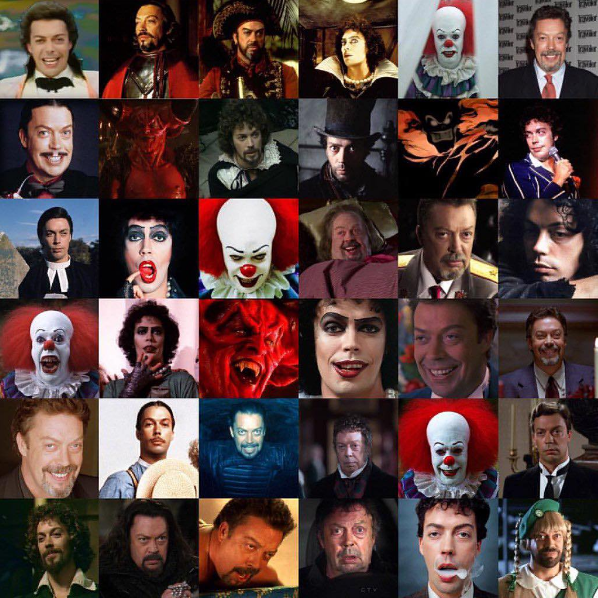
Tim Curry was an actor and singer who died at the age of 80 on 25th August in Los Angeles, California, United States. It’s been said that how you know Tim Curry from his acting career, which spanned nearly six decades on screen and stage, can say a lot about your personality.

Curry has given us some classic movie performances like Dr. Frank-N-Furter (The Rocky Horror Picture Show), “Rooster” Hannigan (Annie), Darkness (Legend), Wadsworth (Clue), Dr. Yevgeniy Petrov (The Hunt for Red October), Mr. Hector (Home Alone 2: Lost in New York), Herkermer Homolka (Congo), Long John Silver (Muppet Treasure Island), Roger Corwin (Charlie’s Angels), and Colonel Anatoly Cherdenko from the computer game Command & Conquer: Red Alert 3.

He also voiced several roles, including Sir Nigel Thornberry (The Wild Thornberrys), Hexxus (FernGully: The Last Rainforest), Professor Finbarr Calamitous (The Adventures of Jimmy Neutron: Boy Genius), Chancellor Palpatine / Darth Sidious (Star Wars: The Clone Wars), and many more.

However, Curry scared the shit out of my whole school and me as Pennywise from the TV mini-series, IT. Later on, as a man-child, I managed to read the book, and in my mind’s eye, when Pennywise was running around in it, I only saw Curry. He had an astonishing talent at playing villainous characters, and I loved him for it.

Credit: Instagram/summainfernoen

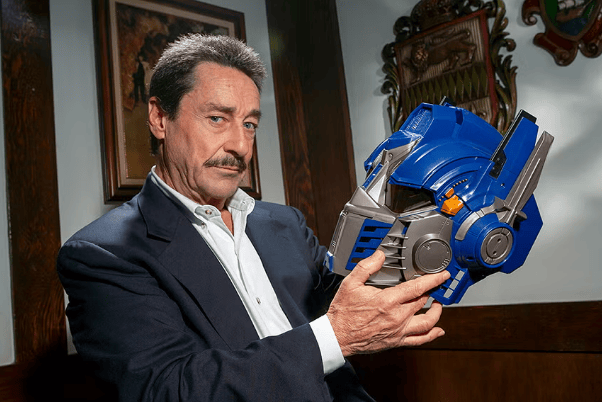
On 26th August, one day after the deaths of Parton and Curry, Peter Cullen died, aged 85, in Los Angeles, California, United States. I could be wrong about this, but I believe Cullen had mostly worked as a voice actor. His iconic voice had enabled him to work on many animated shows, as well as movies.

In saying that, some of his most beloved roles have been Thaedus (Invincible), KARR (Knight Rider), The Predator (Predator-he provided the iconic vocal effects and clicks), Monterey Jack (Chip ‘n Dale: Rescue Rangers), and Eeyore (Winnie the Pooh).

However, the role he is universally known for is the leader of the Autobots, Optimus Prime, from the Transformers franchise, in both animated and live-action series since 1984. When I’m watching a movie or television show and I recognise Cullen’s voice, it’s like, “Hey, it’s Optimus Prime! What’s he doing there?!” That is never going to change for me.

Credit: Dan MacMedan

And to close out this uplifting and positive blog post, I also want to acknowledge the victims of the 2026 Venezuela earthquakes and Nepal–Tibet floods. On 24th June, two earthquakes measuring Mw 7.2 and Mw 7.5 struck Northern Venezuela, which caused damage across the region, especially in the capital city of Caracas. To the best of my knowledge, the current aftermath has resulted in 6,509 people being killed, with 226,696 injured, but 18,100–50,000 are still missing.

A worker at La Esperanza Cemetery in Catia La Mar, La Guaira state, northeast of Caracas, paints graves for unidentified victims of the June 24 earthquake. Photo / AFP

As for the Nepal-Tibet floods, on 26th August, a glacier collapsed on Langtang Lirung, a mountain in the Himalayas, along the Nepal-China border. The section of the glacier dropped ice from around 5,200 to 5,600 m in elevation and fell about 1,200 to 1,900 below into the valley.

This created two things: a seismic event measured at Ms 5.2, as well as a catastrophic flash flood, with the wave estimated to have reached a median height of 70 m, ranging from 40 to 134 m. The wave also managed to reach speeds of 167 to 170 km per hour, which is about 47 to 52 m per second, and the debris travelled for over 100 km. The human cost of this disaster across Chinese-controlled Tibet and Nepal is, at the time of writing, 1,138 dead, with over 5,300 injuries, and over 5,610 people still missing.

Numbered identification tags placed inside pots mark the graves of flash flood victims at a mass burial site in Chitwan, Nepal, Monday, Aug. 31, 2026. (AP Photo/Dar Yasin)

There are many aid agencies and international emergency relief organisations still working in Venezuela, Nepal and Tibet, such as:

  • UNICEF
  • Red Cross
  • Oxfam
  • Save the Children
  • World Vision   

Several other organisations are supporting the victims with rescue and relief operations, so if you spare some money, please donate to one of your national organisations, or an international agency. It’s cliché to say, but it’s still true: every bit counts.

I don’t know what else to say about this blog post, other than to thank Dolly Parton, Tim Curry, and Peter Cullen for sharing their skills and talents with the world, and to the relief workers still working in Venezuela, Nepal and Tibet, trying to help the victims’ families and other survivors rebuild their lives.

Thank you for reading, and I’ll see you next week.