Flat Earthers and Space deniers vs Artemis II Mission

Since this beautiful planet has an axial tilt of about 23.5°, the Northern Hemisphere is currently roughly halfway through Spring. In contrast, in the Southern Hemisphere, we are in the middle of autumn, and it’s really starting to show. The winter pyjamas and slippers have come out, but we haven’t lit the fire; yet. It will happen, you can count on it.

There’s something else you can count on: the Artemis II mission upsetting our favourite conspiracy theorists: the Flat Earthers, and their wayward siblings, Space deniers. I know the last few weeks have been chaotic, with Eastern European elections, AI Trump/Jesus images, cyclones, blockades getting blocked, and of course, conspiracy theorists becoming very upset. The last time we discussed Flat Earthers, it was concerning the Midnight Sun, but they brushed that off like Daredevil brushes off the Hand.

Just to briefly clarify and to make sure we are all on the same page, Artemis II refers to the second mission of the Artemis lunar program, and its first crewed mission. The four astronauts orbited the Moon, which was the first time humans have done this since 1972, with the Apollo 17 mission.

Their flyby of the Moon resulted in the astronauts setting the record for the greatest distance humans have been away from Earth, at a distance of 406,771 km, which broke the previous record set by Apollo 13 in 1970, of 400,171 km. That was a quick outline of it, but you get the idea.

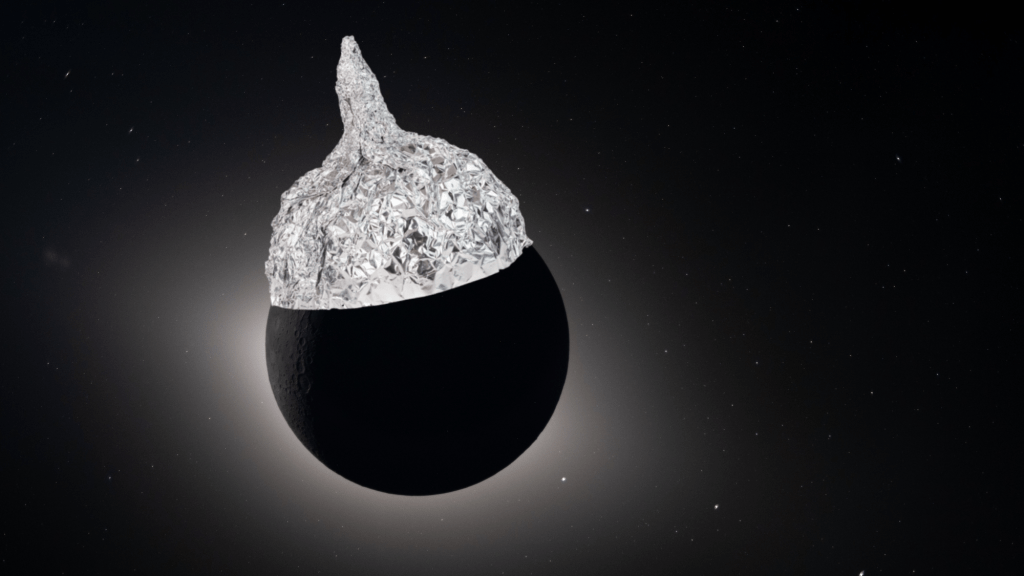
So, you can imagine that the launch of Artemis II has ruffled the delightful feathers that Flat Earthers and Space deniers wear in their tin foil hats. Call it tantrums or meltdowns, call it desperation, call it mental gymnastics, but the people who believe that space is a hoax, coupled with the ones who believe the Earth is flat, are having a very hard time defending their theories; but at the same time, they are trying to tear the Artemis II mission apart.

Why are they doing this? At least to me, it comes down to various points. It could be that the job of promoting Flat Earth and Space disbelief is a lucrative one, so they need to keep doing it; it’s how they make a living.

Another idea is that they believe they are helping the public to see the truth, because they are honestly trying to look out for people. They don’t like the idea of governments and companies lying to the public, so they believe they are helping us, by exposing the lies.

And finally, they believe they are special because they think they have discovered a truth about the world, and in their eyes, it makes them smarter than all of the experts.

It could be all of them combined, or none of them. Regardless of the true situation, Flat Earthers and Space deniers are not happy, and I feel like a terrible person reading their statements and watching their videos, struggling in vain to prove that their conspiracy theories are still valid and real. In some ways, I do feel sorry for them, but, as I said before, I also feel terrible that I’m finding it entertaining.


Credit: Vice Magazine

Their problems with the Artemis II mission vary because this mission has also drawn out the Moon Landing deniers, as well, to nobody’s surprise. I swear, like Avatar: The Last Airbender is a gateway drug into anime, Flat Earth is the gateway drug into wider conspiracy theories.

Overall, the evidence provided by conspiracy theorists who have criticised or incorrectly debunked the Artemis II mission includes, but is not limited to:

  • Creating AI images of the Moon to pass off as real images taken by the Artemis II crew.
  • Complaining that Artemis II’s launch was at the wrong angle, therefore it’s fake.
  • Creating AI images of the crew in front of a green screen to prove it’s fake.
  • Talking about the number of edits of the launch, which is supposedly happening live.
  • The capsule is too small to house four people for 10 days.
  • The public filmed the astronauts standing outside a building with their phones, but the astronauts were not on the screen.
  • Creating footage of Artemis II filming some type of vehicle moving on the Moon’s surface, to prove it’s fake.
  • Insisting it was a meta-joke, that Artemis II launched on 1st April, April Fool’s Day.
  • Claiming any glitches in transmission signals proves that the footage is fake.
  • Passing off previous images of the Moon as proof that NASA is reproducing Artemis II’s images.
  • And one of the best excuses was that Artemis II was a balloon.
  • The launch proves a Flat Earth, because the rocket did not keep going straight up; it curved, otherwise it would have hit the dome.

Of course, some of these insane statements clash and contradict each other, but let’s not let a silly thing like reality get in the way of a good conspiracy theory.

I’m not stunned by the quantity of conspiracy theorists moaning and complaining about Artemis II; it’s rather the quality of their shenanigans, mainly through the use of AI. These images, which have been passed off as real, are of such high quality that the media have had to push back on them and correct the disinformation.

That is scary as hell, but at least there is pushback on the “AI slop”; otherwise, we would believe it. Though, to be fair, I think that’s the conspiracy theorists’ point, not to trust anything. The AI images are so convincing that anybody could be fooled by them.

I have found some videos of various people pushing back against the conspiracy theorists, because it needs to be done. I have mentioned him before, but SciMan Dan has made a few videos concerning their Artemis II nonsense, among others like Creaky Binder and Dave McKeegan.

Before I go on, I need to mention that Sciman Dan also reacted to my favourite Flat Earther, CC from New York, Westchester County, and his work van. In my humble opinion, he’s my favourite conspiracy theorist, not because he brings well-thought-out ideas that are logical and researched, but rather because of the opposite. He’s a buffoon, a lovable buffoon, with no evidence to back up anything he says. Also, I think he’s the angriest man on the internet.

So, with that in mind, enjoy some of the best and worst humanity has to offer.

Sadly, there’s so much more, but you get the point. My family loved watching the launch, but also tracking the mission, ogling at the footage and images, and watching the splashdown live. Artemis II was amazing, and it clears the path for Artemis III, which is tentatively planned for mid-2027, where humans will once more walk on the Moon.

If the Midnight Sun or Artemis II haven’t broken the Flat Earth/Space Deniers/Moon Landing disbelievers, then Artemis III will break their minds, bodies, and souls; physically, mentally, and emotionally. That should be entertaining. Did you follow the Artemis II mission? What was your favourite moment from the mission, or the funniest conspiracy theory about it? As always, please let me know.

The clock has struck again, and the veil of sleep is descending, so it is time to visit the Dreaming. Thanks again for reading, following, and subscribing to Some Geek Told Me. Please don’t forget to walk your dog, read a banned book, try not to shed a tear for Viktor Orbán, and I’ll see you next week to discuss my wife’s reading habits. Sound interesting, doesn’t it?


We Didn’t Start the Fire: 1962

There once was a man named Scott,
He thought he was funny, but he was not.
He wrote a blog,
It stunk like a bog,
Because he had the writing IQ of snot.

Just when you thought it was safe to venture online, actually, it’s not very safe, isn’t it? Thanks, Mark and Elon. Anyway, as much as I would love to discuss the world at the moment, I’m not. Why am I not going to do this? Easy, there is something more important, dear reader!

The history project that Philomena Cunk would want nothing to do with is back! Put the baby to bed, turn the jug on, put your feet up, and get ready to be bored, because Some Geek Told Me’s We Didn’t Start the Fire has returned.

I know, this is the gift that keeps on giving, yet here we are again. For previous entries, please check out the following list:

We Didn’t Start the Fire: The Beginning 

We Didn’t Start the Fire: 1948-1949.

We Didn’t Start the Fire: 1950

We Didn’t Start the Fire: 1951

We Didn’t Start the Fire: 1952

We Didn’t Start the Fire: 1953

We Didn’t Start the Fire: 1954

We Didn’t Start the Fire: 1955

We Didn’t Start the Fire: 1956

We Didn’t Start the Fire: 1957

We Didn’t Start the Fire: 1958

We Didn’t Start the Fire: 1959

We Didn’t Start the Fire: 1960

We Didn’t Start the Fire: 1961

When we last left the song, we were well into the seventh verse, having just finished with 1961. So, logic and Spock would be correct, because we are going to look at 1962, which only has five references. So, shall we begin?


Credit: A.M.P.

Lawrence of Arabia 

Back in the 1957 entry, we discussed the movie, The Bridge on the River Kwai. That film was directed by David Lean, and wouldn’t you know it, he’s got another reference in the song. Lean directed Lawrence of Arabia, and it was released in 1962, which was based on the 1926 autobiography, Seven Pillars of Wisdom, by T.E (Thomas Edward) Lawrence.

The film had a budget of $15 million, but earned $70 million at the box office; Lawrence of Arabia was the highest-grossing movie of 1962. It went on to earn ten Academy Awards nominations in 1963, and won seven, as well as four BAFTA Awards and six Golden Globes. Like The Bridge on the River Kwai, Lawrence of Arabia is considered one of the greatest films ever made. I’ve been lucky enough to have seen it, and it’s a film that lives up to its hype.

We have discussed various modern movie equivalents in the past, so instead of revisiting those films, I want to take a different approach. Since Lawrence of Arabia won seven Academy Awards, I thought it would be interesting to list modern films that have also achieved this feat. The films that have won seven Academy Awards include: Dances with Wolves (1990), Schindler’s List (1993), Shakespeare in Love (1998), Everything Everywhere All at Once (2022), and Oppenheimer (2023).

British Beatlemania

I’ll tell you this for nothing: you don’t need to have worked on the Artemis II mission to understand that British Beatlemania is a 1962 documentary by Sir David Attenborough. The documentary…no, I can’t do this.

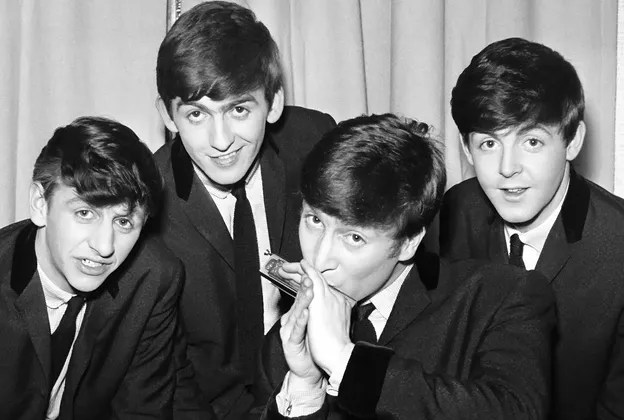
British Beatlemania refers to the British band, The Beatles and their rise to fame and popularity around the United Kingdom, the United States of America, and the world. They were part of what people would eventually call “The British Invasion”, which was the influx of British music “invading” radio stations, television shows, concerts and the record charts in the United States.

They made the list because songs such as Love Me Do, P.S. I Love You, and Please Please Me, helped kick-start Beatlemania. The crux of Beatlemania, at least to me, was having millions of people, mostly women, going crazy over the Beatles’ music, as well as the band members themselves, to the level of obsession or fanaticism. This was obviously aided by the mass media.

The Beatles had broken up before I was born, but I’ve seen footage and read stories about the craziness. My parents played a lot of Beatles’ music at home, so I get it. Some contemporary examples are Swifties (Taylor Swift) and Little Monsters (Lady Gaga), but one aspect of the Beatles’ legacy is that they are considered one of, if not the most popular and successful band ever, in part due to Beatlemania.

Ringo Starr, George Harrison, John Lennon and Paul McCartney of The Beatles. Credit: Harry Hammond/V&A Images/Getty Images

Ole Miss 

Ole Miss would be a great name for a horse, and maybe somewhere on the planet, that horse exists; however, this entry is not about them, but it has a connection to another name in the song. Back in 1957, via the fifth verse, we had the name, Little Rock. If you remember it, great stuff; if not, I’ll give you time to read about it now.

Sorted, you’re good to go? Excellent! Like Little Rock, Ole Miss was another flashpoint in the history of race relations in the United States. Ole Miss has a few different meanings, but in context to the song, it refers to the nickname of the University of Mississippi, located in Oxford, Mississippi, and its race riot in 1962.

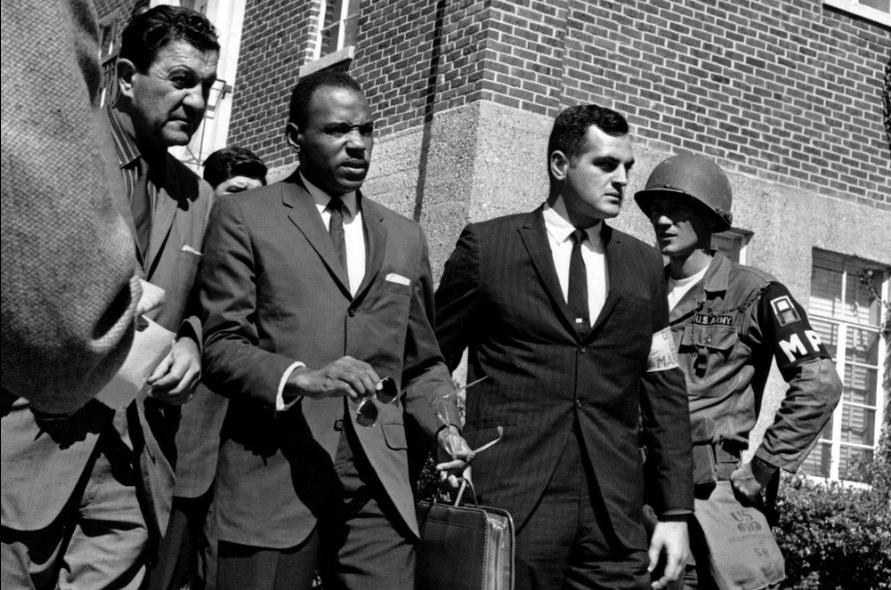
I’m not sure if I can do this event justice, but I’ll try. James Meredith, an African-American U.S. Air Force veteran, had enrolled at the University of Mississippi, and when it was discovered that he was not the white man they thought him to be, shit hit the fan, with the university officials, but also the Mississippi Governor, Ross Barnett. At the time, the University of Mississippi was an all-white university.

In an attempt to deny him entry to the university, Meredith was temporarily jailed, then released, with Barnett barring him from attending the university. President Kennedy and Attorney General Robert F. Kennedy got involved to find a way forward without violence, and allow Meredith to attend. Obviously, this incident, like nearly all of them, got out of hand.

Between 30th September and 1st October, a riot broke out on the campus involving federal law enforcement and a mob, consisting of segregationists, white supremacists, and some students. The aftermath of the riot included hijacked vehicles, destruction of buildings, and over 300 people were injured, including 28 U.S. Marshals being shot, as well as two civilians were killed. The next day, President Kennedy sent in over 30,000 troops to keep the peace and ensure Meredith could attend the university, with federal protection.

Meredith went on to graduate with a political science degree. So how does this event relate to the world of 2026? Well, how can it not? Yes, I’m not an American, but the evidence is plain to see. What the Little Rock incident did for the desegregation of high schools, the Ole Miss riot helped to bring about much-needed social reforms in universities within the United States.

Meredith, center with briefcase, is escorted to the University of Mississippi campus by U.S. marshals on Oct. 1, 1962. Credit: Associated Press

John Glenn 

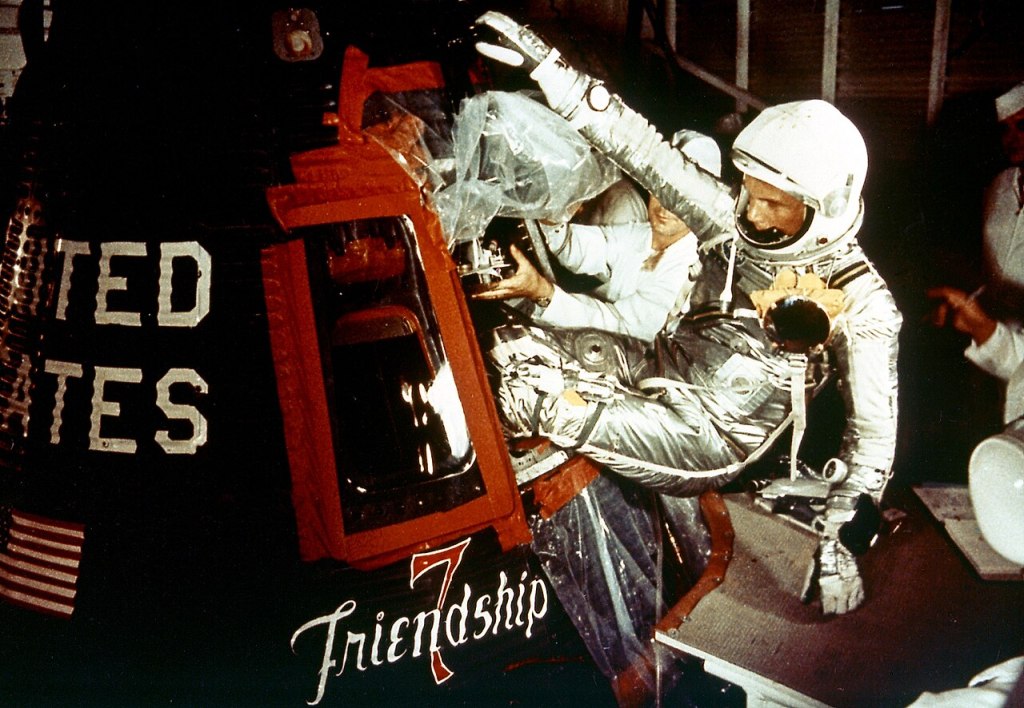
John Glenn was a politician, wartime pilot, test pilot, and astronaut. As you remember from previous entries, 1962 was at the height of the Cold War, but most importantly, the space race had started between the United States and the Soviet Union. Glenn was one of the seven astronauts chosen to fly spacecrafts for Project Mercury. These astronauts are known as the Mercury Seven.

He was included in the song because on 20th February 1962, he became the first American to orbit Earth, but he was not the first American in space. That honour belonged to Alan Shepard in 1961. Facts matter, folks, facts matter.

Anyway, Glenn completed three orbits of Earth, flying the Friendship 7 spacecraft for the Mercury-Atlas 6 mission. He completed three orbits in roughly 5 hours, 55 minutes, at speeds of over 28,000 km/ph.

A modern equivalent for a single astronaut achieving something new is sort of difficult, considering the huge advancements in space technology and flight. Instead of this, I could put forward the recent successful Artemis II mission, which is the second time I have mentioned it. I hope there’s not a third.

John Glenn entering his spacecraft, Friendship 7, prior to the launch of Mercury-Atlas 6 on 20 February, 1962. Credit: NASA.

Liston beats Patterson 

It’s been awhile since we discussed boxing, but like Thanos, it was inevitable. The boxers in question were Sonny Liston and Floyd Patterson, and they fought for the undisputed heavyweight world championship on 25th September 1962, at Comiskey Park, Chicago, Illinois.

This was Patterson’s second reign as champion, as he first won the title in 1956, lost it in 1959, and then reclaimed it in 1960. This, of course, made Liston the challenger. Liston was older and heavier than Patterson, but Patterson had started boxing professionally before Liston.

Depending on who you talk to, predictions for the fight were slightly in favour of Liston; it was strange that the champion was not the favourite. Anyway, the fight was memorable because after two minutes in the first round, Liston knocked Patterson out to become the new heavyweight champion of the world.

The story doesn’t end there, because Liston successfully defended his title in a rematch with Patterson in July 1963. Liston then fought to defend the title in February 1964 against Cassius Clay, but he was defeated. Clay changed his name a month later to Muhammad Ali. He then faced Liston for a second time in May 1965, and Liston lost again.

Essentially, Liston made the song for knocking out the world champion in the first round. Some contemporary examples were difficult to cite, mainly because champions continue to be knocked out, but it’s rare for it to happen in the first round in heavyweight fights.

The best I could find was on 29th October 19931, when the WBO Heavyweight Champion Tommy Morrison was knocked down three times in the first round by Michael Bentt, and lost the fight and title.

So for 1962, we covered a film, fanatic fans, a desegregation university riot, an astronaut, and a boxing match. 1963’s blog post is roughly seven weeks away, so I’d better prepare myself! If you’re still enjoying this project, as always, please let me know, because nothing happens in a vacuum.

So that’s it for this week. Thanks again for reading, following, and subscribing to Some Geek Told Me; it means a lot. My Twitter and Mastodon accounts are still ticking over with daily information that someone may find interesting. Maybe.

Please don’t forget to walk your dog, read a banned book, thank the bus driver, and if you ever repeat any of the information I write about, and someone asks you where you discovered it, just say, ‘Some Geek Told Me.‘ I’ll see you next week, when we discuss the Artemis II mission. Third time’s a charm!


1 If you can call 1993 contemporary, of course.

Three Former Failed Fluttering Flags

To the best of my amazing and gorgeous recollection, I have only made two blog posts about flags. That being the case, and unlike Robocop 3, I wanted the third instalment to be fantastic. However, the problem is that I’m the creator, so instead of Star Wars: Episode VI: Return of the Jedi, it will be more like Highlander III: The Sorcerer.

I had previously discussed four countries that had changed their flags because of redesigns and name changes. I wanted to go one step further and talk about countries that no longer exist, thus their flags are no longer in use, as well as new nations and flags that have sprung up from their demise.

So, may I present to you three former failed fluttering flags. Enjoy.


Image by Achim Scholty from Pixabay

Yugoslavia

Flag of the Socialist Federal Republic of Yugoslavia (1946-1992). Credit: Đorđe Andrejević-Kun & SVG

The flag of Yugoslavia, known as the Socialist Federal Republic of Yugoslavia, had been through several small tweaks over the years, since the country was formed in 1918, at the end of the First World War. The largest tweak was adding a red star in the middle of the flag, following the Second World War. This version of the flag survived from 1946 to 1992.

The dissolution of the flag is linked to Yugoslavia itself. Back in 1918, when Yugoslavia was founded, it was built by joining six states or republics to create the country. They were Macedonia, Bosnia and Herzegovina, Croatia, Montenegro, Serbia, and Slovenia.

The colours of the flag represented various things. The equal red, white, and blue horizonal stripes, represent the shared heritage of the Southern Slavs; the red star symbolises communism, socialism, and the fight for freedom and liberation; and finally, the gold outline of the star represents the valor of the state and prosperity. 

After the fall of communism in Eastern Europe, Yugoslavia went through some massive upheaval, during which some republics wanted to have more autonomy, having declared independence. This resulted in the break-up of Yugoslavia in the early 1990s and the horrific Yugoslav Wars, which raged across the region.

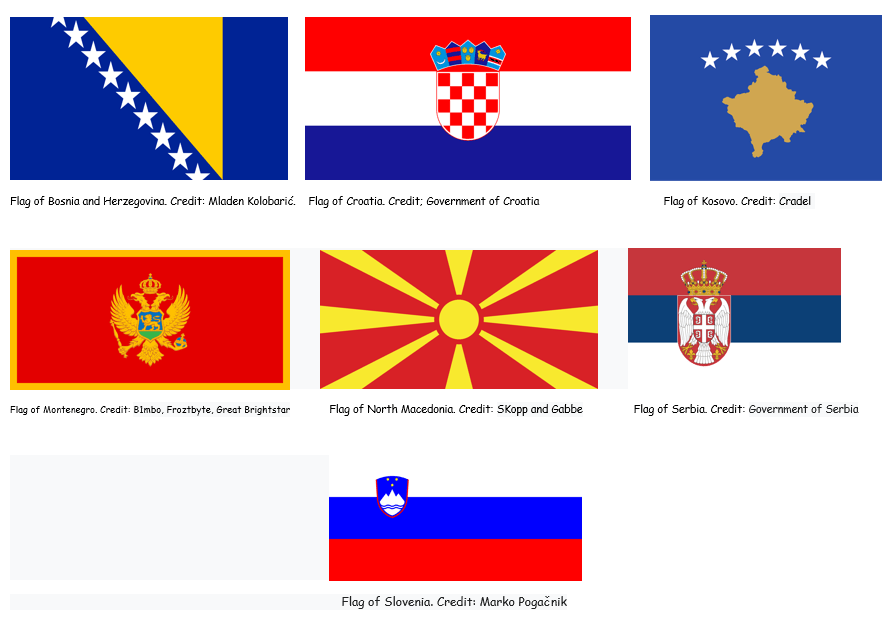
Currently, seven countries have risen from the ashes of Yugoslavia: Bosnia and Herzegovina, Croatia, Kosovo, Montenegro, North Macedonia, Serbia, and Slovenia.

The failure of Yugoslavia’s flag can be attributed to the collapse of Yugoslavia itself. The country ceased to exist and was eventually divided into seven republics, each adopting its own flag. Notably, the flags of Croatia, Serbia, and Slovakia feature horizontal stripes in red, white, and blue.

Soviet Union (Union of Soviet Socialist Republics/USSR)

Flag of the Soviet Union (1955-1991) Credit: СССР

.

Like the flag of Yugoslavia and many others, the flag of the Soviet Union had been altered since its inception in 1922. The name Union of Soviet Socialist Republics was exactly what you imagined it would be. The nation was a union of various republics that used communism as the driving force behind their governments. These republics totalled 15, which were spread across Eastern Europe, Western Asia, and Central Asia.

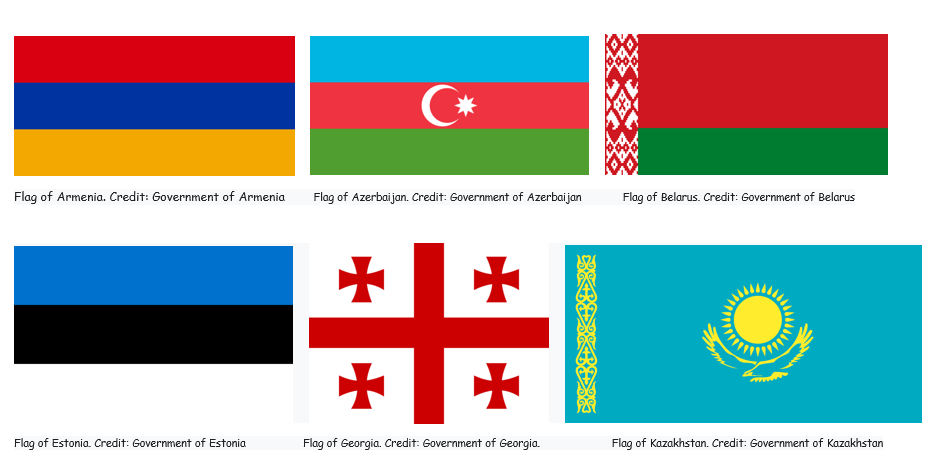
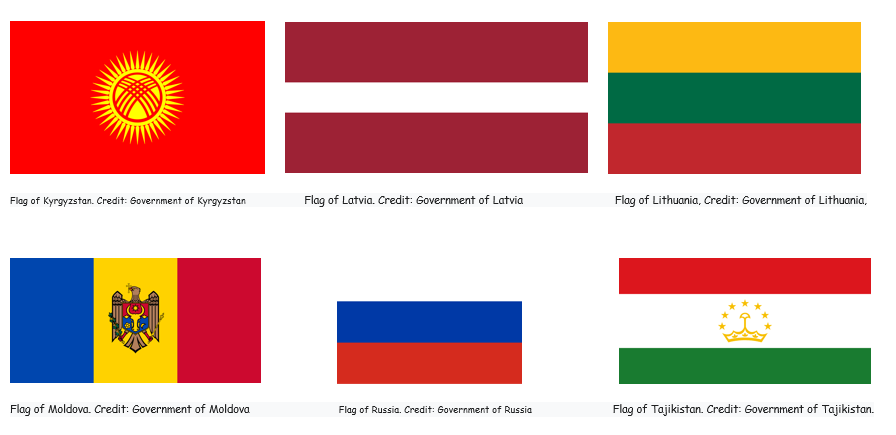
They were known as Armenia, Azerbaijan, Byelorussia, Estonia, Georgia, Kazakhstan, Kirgiziya, Latvia, Lithuania, Moldavia, Russian SFSR, Tajikistan, Turkmenistan, Ukraine, and Uzbekistan.

With the colours of the Soviet Union flag, the red represented revolution; the hammer (workers) and the sickle (peasants) were adopted from the Russian Revolution, representing the two factions; and the yellow star symbolised the Soviet Union’s Communist Party.

After years of turmoil and mounting pressure from internal and external forces, the dissolution of the Soviet Union occurred on 26th December 1991. The republics that had made up the Soviet Union were now free and independent again, though some of them had already gained their independence earlier.

The death of the Soviet Union allowed these republics to be reborn, which the world now knows them as: Armenia, Azerbaijan, Belarus, Estonia, Georgia, Kazakhstan, Kyrgyzstan, Latvia, Lithuania, Moldova, Russia, Tajikistan, Turkmenistan, Ukraine, and Uzbekistan, along with their own flags.

It’s interesting to note that Russia has now annexed parts of Georgia and Ukraine, in an attempt, in my humble opinion, to absorb these countries back into the fold.

Gran Colombia

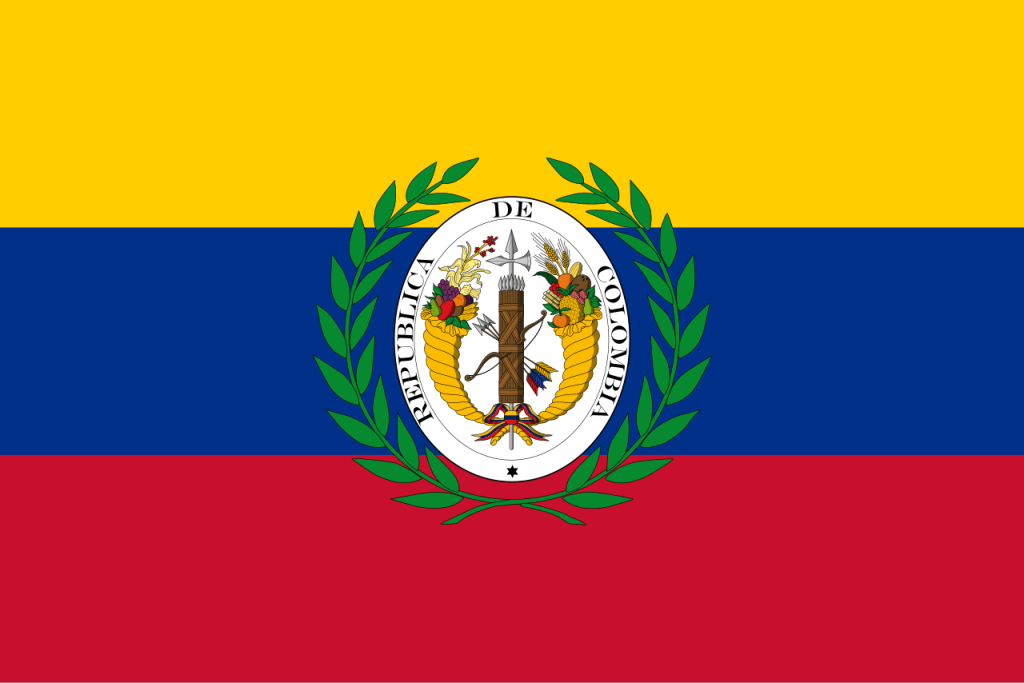
Third Flag of Gran Colombia 1821–1830. Credit: Wikipedia Commons

For this entry, we are bypassing the 20th century entirely and going to hang out in the 19th century, specifically Northern South America. The country was called Gran Colombia, and it only lasted 12 years, which is three World Cup cycles, from 17th December 1819 to 19th November 1831. To explain Gran Colombia, we need to understand why it existed in the first place, which is directly related to why it failed.

At the beginning of the 19th century, the Spanish Empire controlled vast territories extending from the northernmost part of North America to the southernmost part of South America. In 1808, when Napoleon Bonaparte, not Dynamite, invaded Spain, he sparked a series of revolutions and wars of independence throughout South America.

One of the key figures at the time was Simón Bolívar, who envisioned the countries of South America breaking free from Spanish and Portuguese control and becoming a unified South America. Part of this vision included the creation of Gran Colombia, where, after gaining independence from the Spanish Empire, several countries combined their powers and formed Captain Planet…I mean, Gran Colombia.

Asking countries to fight wars of independence was one thing, but asking them, after gaining a hard-fought independence, to join an even larger country, in hindsight, may not have been the best idea, even with the best of intentions. Because of restructuring and resignations, along with internal and external political and economic turmoil and pressure, Grand Colombia collapsed and was finally dissolved in 1831.

Gran Colombia had an original flag, then two redesigns, along with another proposed flag redesign, before the dissolution of the country in its short lifespan. The final flag before dissolution featured yellow, blue, and red horizontal stripes, along with a central coat of arms. The yellow represented Hispanic America, the blue portrayed the Pacific and Atlantic Oceans, while red represented Spain.

The coat-of-arms displayed two cornucopia, which were full of fruit and flowers, as these were symbols of wealth and abundance. In the centre, there is a quiver of arrows and an axe, along with a bow. The quiver has a tricolour (yellow, blue, red) ribbon tied to the bottom of it, which, to the best of my understanding, signifies union and strength. All of these items are inside an oval, which has the words, “República de Colombia,” which translates as “Republic of Colombia.”

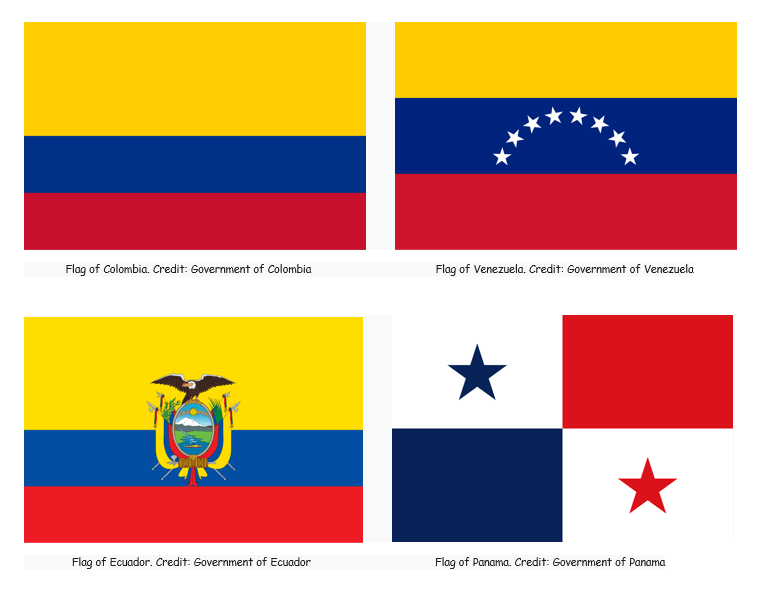
The dissolution of Gran Colombia eventually gave South America and geography books the countries of Colombia, Venezuela, Ecuador, and Panama. As you can see in the flags below, Gran Colombia’s legacy is in the tricolours of yellow, blue, and red, along with Ecuador having a central coat of arms. I tell you, history is cool, kids. History is cool.

There are other examples, of course, but as usual, I get far too distracted to make the blog interesting. Well, to be fair, I find them to be interesting; so that could be the problem, among many. If you can think of any flag-related topics I could discuss on this famous and beloved blog, please let me know.

So that’s it. The school holidays are upon us again, which means a lot of pyjama days for UMC1 and UMC2. Yay.

Thanks again for reading, following, and subscribing to Some Geek Told Me. Please don’t forget to walk your dog, go read Supergirl: Woman of Tomorrow, say “Thank you” to the bus driver, and I’ll see you next week, because we are going back to 1962. Yeah, baby, Billy Joel would be disgusted.