Movie Review: Supergirl

Some things in this world are destined to go together, like peas and carrots, Han and Chewbacca, salt and vinegar, Trump and corruption, but also my movie previews and reviews. Yes, just as the predictable nature of the Earth and Moon’s cosmic dance, as well as Newton’s third law of motion, my movie previews are followed by a review, and in this particular case, it’s Supergirl. If you missed last week’s preview, you can find it here.

I’ve been called many things in my life, but nobody has ever called me a creature of habit, even though that’s what I call myself. This is self-evident in the painfully predictable formula that I employ when covering the previews/reviews, which, fortunately, do not get picked up by mainstream media. Imagine how popular I would become? No, I’m quite happy living without doing interviews all the time.

Supergirl premiered on Thursday 25th June in New Zealand, and I saw it on Tuesday. As always with the movie rant from yours truly, the ticket was purchased in advance, so when I turned up at the cinema, I only brought a bottle of Pepsi Max, because I’m so extreme that I live life to the max!

Anyway, just like every single time I have purchased an advanced ticket, I was not asked to produce it, because why would the staff need to see something like that? Am I right? There were 12 people in the theatre, which I thought was a lot for a Tuesday night. They played the trailers for Spider-Man: Brand New Day and The Odyssey, which look cool, though I will discuss my fears for The Odyssey very soon.

As always, let’s go over the rules of the review.

1.) Please be aware there will be spoilers concerning the movie, so proceed with extreme anxiety and caution.

2.) The aim of my reviews are not to rip apart the subject or trash it. If I liked the subject enough to watch it, then I’ll give my honest (possibly biased) opinion.

3.) I’m not a professional critic, so I’m not going to dive into deeper concepts and themes, or the art of filmmaking. I’m just a geek; always have been, and always will be.

So, with that all out of the way, join me for another ill-advised rant about a big budget movie!


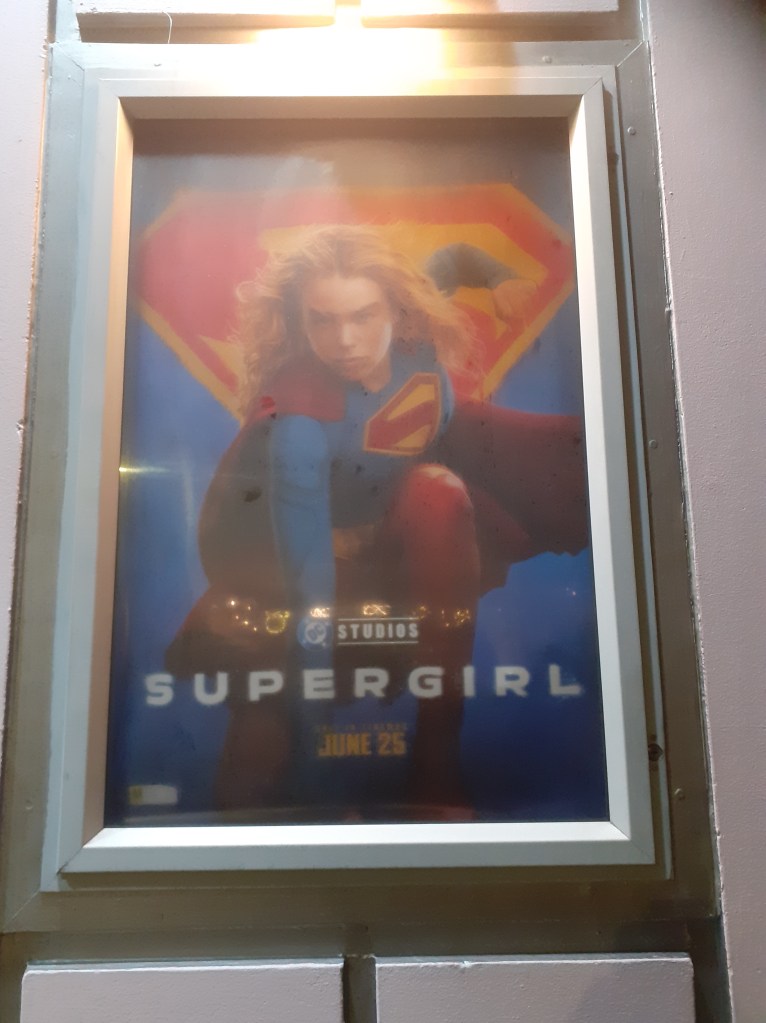
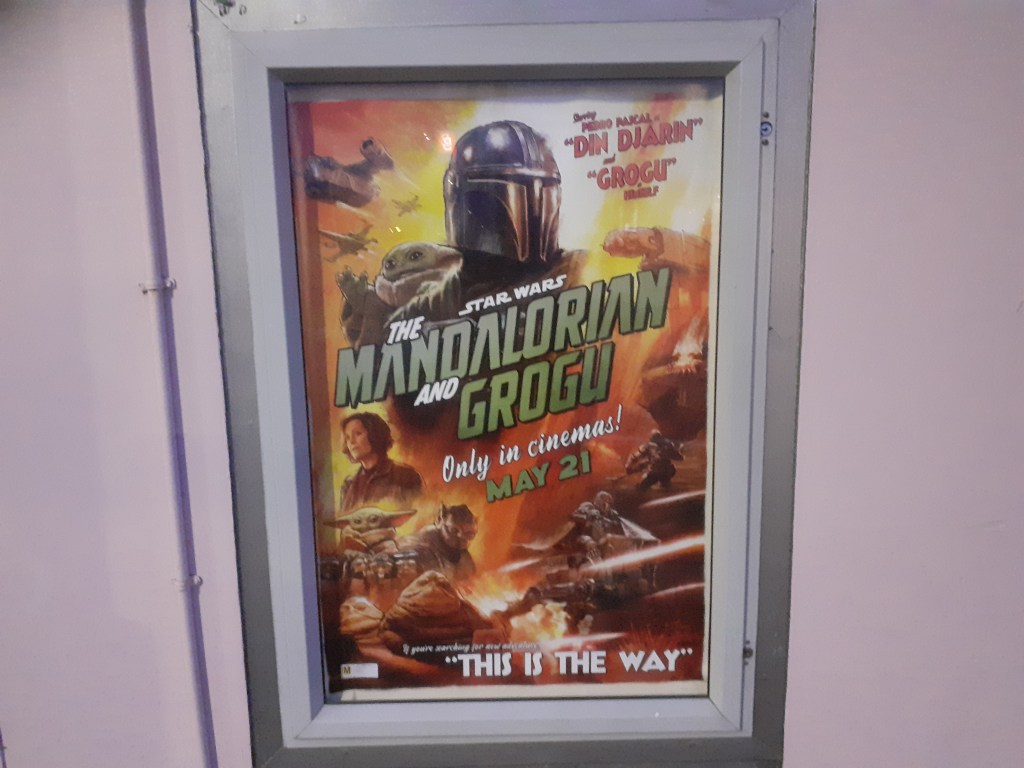
Credit: Warner Bros. and my local cinema. I’m sorry the photo is crappy, but it was cold and raining.

Let’s discuss the first part, because where else should we begin? Did I like the movie? The answer would have to be yes. Is it the best superhero movie I have ever seen? No, it isn’t. Is it the worst superhero movie ever? No, of course it isn’t, but I understand some people will probably want to rage because they can.

Before I go on, I want to explain the conversation I had with my wife when I got home from the cinema. I was discussing the movie, and of course, I was comparing it to the source material, Supergirl: Woman of Tomorrow. She asked if it would have been better for me not to have read the source material.

Normally, I would have said, of course not, but Supergirl has made me rethink it. It’s an interesting question: was it better or worse to have read the comic beforehand? Just something to think about.

Things I liked:

In no particular order, the best place to start is the fight scenes, which I thought were amazing. With Kara being a Kryptonian, her power levels are massive, so that would translate to her fighting ability and style. It was nice to point out that under a red star’s solar radiation, it cancels out a Kryptonian’s powers. I thought it was important to display that Kara can handle herself, with or without powers.

I thought the fights were well-choreographed, inventive and destructive. In saying that, Kara did get beaten up often, but that is not necessarily a negative thing. It showed that she could take a beating and not give up, which is shown by her fight with the alien over Ruthye’s sword. As I said, the fight scenes were great, especially having Kara being able to adapt to the environment.

And speaking of adapting, it was a clever idea to introduce planets by using a title card, as well as the colour status of its local star(s); that way, the audience has an insight into whether Kara will have her powers or not on that planet.

I thought Milly Alcock’s performance as Kara Zor-El was solid. She did a fantastic job showing the differences between Kara and her cousin, because their life experiences have shaped them, as they do for all of us. At the start of the movie, she is a bit of a mess, but, like any great character development arc, as in Batman in The Lego Batman Movie, Kara is a changed person by the end.

As I discussed in the preview, processing the trauma of losing your culture, people, parents, city, and planet would take some time, and maybe it’s something you may never 100% get over, but I think they did a fine job with that, especially with the flashbacks. It was also great that, apart from the flashbacks and the final scene, the story was set away from Earth, with Kara mixing it up with various other aliens and visiting odd planets.

I’d like to take the time to discuss something I noticed in Man of Steel that bugged me, with Superman and Supergirl correcting it. Yes, I know these characters and worlds are fictional, but in Man of Steel, we were presented with two versions of Kryptonese/Kryptonian.1 One was the written form, which, as you can imagine, looked very alien, as the symbols and characters were not from Earth.

However, the written language did not match up to the oral language, because all of the Kryptonian citizens we saw were walking around speaking English. I remember this because I saw the film on my birthday with my girlfriend at the time, who, side note, became my wife one year later. I remember feeling cheated of seeing Kryptonians speaking in their native fictional language, as we got Russell Crowe and Michael Shannon yelling at each other in English.

Flash forward 12 years, and we finally got to experience some Kryptonian in Superman, then expanded on in Supergirl, with actors having conversations in the fictional language. If you are committed to the concept that these characters are aliens, then give us an actual alien language. From that point of view, I was impressed and appreciated the effort in Supergirl.

Jason Momoa’s Lobo was in the film longer than I thought he would be. I honestly thought we had seen the last of him on Bilquis, so seeing more of him was a bonus.2 His “Super useless,“Bastich,” and “Bye, Tits” lines were hilarious to me because that’s very on brand for him. Momoa did a great job as the Main Man, though if I’m not mistaken, he never referred to himself as the Main Man in the film. If he did, that would have been outrageous.

Krypto was chaotic as ever, and the scene where he and Kara were in the apartment was awesome. He was flying around, trying to eat the feathers that he had just liberated from destroying the pillow. The scenes where he was shot, poisoned and dying were tough, because it made me think of my mate, Indy.

Obviously, I have no information about how much CGI was used for the various aliens, because I’m sure practical effects were used as well, but the point was that they were different, creative, quirky, and scary. All of the elements that you need to bring fictional aliens to life.

By the way, I’m not going to launch into great details about the comparisons between the comic and the movie; however, I was impressed that they included the scene on Barenton, when Kara was under the influence of one of the planet’s binary stars, where one was green and possibly made of kryptonite. It was important, at least to me, to show how physically, emotionally, and mentally strong Kara had become.3

Things I disliked:

Alright, this is the part where I’m leaning into the source material, maybe too much. I thought Eve Ridley’s portrayal of Ruthye Marye Knoll was a little odd. In the comic, only Ruthye’s father is murdered by Krem of the Yellow Hills, not her entire family, but that’s fine.

The point was that Ridley seemed wooden for Act 1 and Act 2. Now this could be put down to two reasons: the first could have been that Ridley was instructed to mimic Ruthye’s character from the comic, or possibly, the creative team and/or Ridley decided to go with that tone. She did grow into her role as the film went on, which was good, but Ruthye was difficult to like for the bulk of the film, as she did some strange things.

The main villain, Krem, is interesting because he has gotten a lot of hate for being a forgettable villain, or at least, providing Kara with a low-stakes problem. I honestly understand critics’ disdain for him, I do, and I agree, to a certain degree.

I do find myself defending Krem in a way. He was never going to be a Darkseid, Mongul, Anti-Monitor, Starro, or Brainiac. He was never trying to enslave a planet or the universe, or trying to rewrite history, distort reality, attain ultimate knowledge, solve the Anti-Life Equation, or control all sentient life forms. No, he wants money and to be able to kill whomever he wants.

Yes, that is evil, but it’s nowhere near the likes or power levels of the villains I just mentioned. He was never meant to be a high-stakes villain, but similar to the Hutts in Star Wars: The Mandalorian and Grogu, where the villains are not trying to take over the universe. No, they are just trying to make as much money as possible, and if they have to kill to achieve it, all the better, just like Krem.

To me, Krem is a personal and intimate villain, creating problems surrounding Kara, but not with her, until he shoots Krypto with a poison arrow, then he becomes Kara’s business. He was never going to truly threaten Kara, but that was not the point; he was there to test Kara, emotionally and mentally. I’ve now reached the region of the rant where I need to confess something. Like I have mentioned many times, I sourced Supergirl: Woman of Tomorrow, because I wanted to know the story, thus I discovered Krem’s true fate.

At the climax of the story, Krem is defeated and at the mercy of Kara and Ruthye’s sword, but Ruthye basically repeats all of the lessons she’s learnt from Kara, back to Kara. So, at the end, after all of the shitty things Krem has done throughout the series, they don’t kill him. Kara wanted to protect Ruthye’s innocence from killing Krem by doing it herself, but Ruthye talked her down. They gave him mercy.

Decades later, Ruthyre is a very old woman, and both Kara and Krypto turn up, virtually unchanged. It’s then revealed that Kara and Ruthye did deliver justice by sending Krem to the Phantom Zone to serve out his sentence, and Kara is there to release him. Upon his release, Krem is full of regret and remorse, which his younger self lacked. He apologises to them both for his crimes.

Since Ruthye is elderly, she uses a cane to walk and hits Krem on the head, which is depicted as a silhouette. He collapses on the ground, with Ruthye walking away. Kara remains for a while before eventually moving on, with the only passage of time being the local star rising in the background. So, after reading this, I was a little unsure about whether Krem was dead, because of the position of his arms. I assumed that he was alive, as why would Kara and Ruthye punish him in the Phantom Zone, just to execute him upon release?

I mean, it’s a pretty boss thing to do, but I needed to be sure. I looked it up, and the answer was that Krem survived; he was just unconscious. I was correct, but I thought it was a strange choice to leave that up to the reader’s discretion, but hey, I’m not Tom King, nor a comic book writer. I’m just a sucker who buys them.

King came out later to clear things up and said Krem survived the ordeal, and the ending wasn’t supposed to be so confusing. Now here is where things get super weird, super fast. In the climax of the film, the roles are reversed, with Ruthye holding the sword, Krem is at her mercy, and Kara is the one talking her down.

Kara is essentially saying to Ruthye that killing Krem won’t give her justice; it will change her into something she’s not. Kara also points out that Ruthye could take revenge by surviving and living a good life. Ruthye agrees to drop the sword, walks away and not to kill Krem. As Ruthye disappears off-screen, Kara then picks up the sword and stabs Krem in the stomach for vengeance over Krypto, then stabs him in the neck for Ruthye.

Since the film’s release, Ana Nogueira, the screenwriter, received some backlash over Krem’s death, and in an interview, she stated that basically, the screenplay followed the comic, because Krem died at the end, at the hands of Ruthye. There is also a twist in this, because in the comic, Ruthye is narrating the story, as in a memoir.

She states that Kara killed him with a sword, and that was the end of Krem, but the reader knows that’s not true, before we saw him alive. This is a long-winded way of saying that I believe Nogueira thought that Ruthye had executed Krem, and then swapped his executor for Kara in the movie, to protect Ruthye.

Adapting a beloved story will always be a challenge. What things do you keep, what things do you drop, and what things do you change? Was Nogueira allowed to change elements of Superman: Woman of Tomorrow to fit a movie? Of course, it’s a yes. But, and there’s the big question, is it possible that Nogueira misinterpreted the comic’s ending and mistakenly added the wrong outcome?

And if, and it’s a rather large if, if that’s the case, why was this change in plot not picked up? Why was it ignored by the filmmakers? Someone, somewhere, in the creative process, must have noticed that the two endings were vastly different, and why wasn’t something done to correct it?

Writers are allowed to make mistakes, but why didn’t the director, producer, or anybody else stop to correct this mistake? The whole point of the comic was a personal journey about Kara finding her place in the universe and dealing with the trauma of her life, but also trying to protect Ruthye from killing Krem. By doing this, Ruthye gave compassion and mercy to both Kara and Krem.

However, in the film, Kara talks Ruthye out of killing Krem and gives me mercy, then she just executes him herself anyway. Everything she just said was a lie. The trip home would be very awkward. How would the audience react in Spider-Man: No Way Home if Tobey Maguire’s Peter Parker stopped Tom Holland’s Peter Parker from killing Willem Dafoe’s Norman Osborn, then turned around to just kill Osborn himself?

Sadly, I feel the filmmakers may have dropped the ball on that scene.

So, what about my preview questions?

  • How faithful will the film be to the source material, Supergirl: Woman of Tomorrow? Overall, it’s quite faithful, which is rare in comic book movies.
  • Will Lobo’s appearance feel forced? It’s still hard to say. They could have left Lobo out, and the story would still have made sense, but it was fun to see him.
  • How old is Kara? That one is easy, she’s 23 years old.
  • Will Kara’s life on Krypton/Argo City be shown chronologically or as a flashback? It was done through a series of flashbacks, when Kara was explaining something or when a memory was triggered.
  • How much screen time will Lobo receive, and will he steal some of the spotlight from Kara? I suppose Momoa did steal some of the spotlight from Alcock, but I feel that was to be expected.
  • Will everybody’s interaction with Krypto seem real, or will it look uneven? I felt the actors’ interactions with the CGI Krypto were better in Supergirl than in Superman.
  • Apart from Superman, will there be any other cameos? I don’t think there were any cameos. I could have missed some, though I did notice Seth Rogen’s voice as an alien spacebus driver.
  • Will Krypto get a bad-arse scene? No, he didn’t, as he was poisoned for the majority of the film.
  • Is Supergirl known throughout the galaxy? Not that I’m aware of, but Krem did know of kryptonite and its effects on Kryptonians.
  • What is Supergirl’s status on Earth? Is she well-known? That’s a difficult question, hence the bulk of the story happens off-Earth. However, it seems that she is known on Earth, but nothing to the levels of my famous cousin.
  • Will Krem of the Yellow Hills be a believable antagonist? I discussed my answer to this amazing question in the above rant.
  • Kara seems to suffer from apathy, but will this continue by the end of the movie? No, by the time she is back on Earth, she wants to commit to Earth. Her friendship and adventure with Ruthye have empowered her with new hope.
  • Will audiences see Kara as a hero, standing on her own, or will she still be in her cousin’s shadow? I’ve realised that I don’t know how to quantify that. She has been around longer than Spider-Man, but deserves more attention than she gets.
  • Will there be a Brainiac reference somewhere? If there was, I missed it.

This brings me to discuss something I haven’t done before: box office returns. I’ve been planning on writing a series of blogs about what makes a film successful, because Supergirl has had some low numbers in terms of box office returns. At the time of writing, the movie has earned $89.1 million, against its $170 million budget.

I’m sure there are many people with a lot more qualifications than myself who have analysed the film’s earnings, but I have three working theories.

1.) Creative differences

The knives have been brought out, with various people throwing others under the bus, because of the film’s slow performance at the box office. From what I understand, the media has said there were two cuts of the movie, the director’s cut and the studio’s cut, and to the best of my understanding, the film released was the studio’s. There have also been reports of creative differences between the director, Craig Gillespie, and James Gunn, the co-CEO of DC Studios, along with other people.

2.) Release Time

I understand that film studios plan years in advance to determine the optimal release dates for their movies. They seek to find the best window for their product, which is essentially what a film is—a product that the studio is selling to us.

I also realise that the summer months for blockbuster releases in the Northern Hemisphere are June through August. However, it’s important to note that in New Zealand, June to August is actually winter.

Supergirl was released in New Zealand on 25th June, but it’s got stiff competition to earn our precious and hard-earned money. In New Zealand, Supergirl is fighting against Masters of the Universe, Disclosure Day, The Death of Robin Hood, Toy Story 5, Minions & Monsters, and Jackass: Best and Last, with Moana, The Odyssey, and Spider-Man: Brand New Day, just around the corner.

Releasing at this time, wasn’t the best idea in the world.

3.) Female Superhero movies

This theory has two parts to it. Since the birth of the Marvel Cinematic Universe (MCU) in 2008, the now-dead DC Extended Universe (DCEU), and the new DC Universe (DCU), 57 films have been released between all of them.4 Of these 57 films, only 4 MCU films (Captain Marvel, Black Widow, Black Panther: Wakanda Forever, and The Marvels), 3 DCEU films (Wonder Woman, Birds of Prey, and Wonder Woman 1984) and 1 DCU film (Supergirl) have female lead characters.

That works out to be only 14%, compared to 54% with a male lead character. Only Captain Marvel, Black Panther: Wakanda Forever and Wonder Woman have earned over $800 million at the box office.

What does this tell us? Well, male-led superhero movies tend to do better at the box office than female-led superhero movies, hence the massive discrepancy. But why? I think it’s the perception. I think studios need to be targeting male and female movie fans differently.

For males, studios need to be promoting female-led superhero movies, as these beloved classic characters need to be seen as the arse-kickers as they actually are, just like all of the male superheroes, and to actually prove it in the movie. For females, these female-led movies are a great opportunity for promoting these strong, intelligent, and powerful women as role models, not to be sidelined as sidekicks or love interests.

Hollywood is getting better at this, displaying more diverse voices, but women like superhero movies as well, so the studios just need them to turn up and care about these characters, as I do.

Another argument has been made against superhero movies as a whole genre, with the concept of superhero fatigue settling in. This is supported by the recent low box office numbers from Marvel and DC. The problem here is that with Spider-Man: Brand New Day being released only weeks away, and Avengers: Doomsday being released in December, both of these films will earn over $1 billion each. There will be no superhero fatigue with these two films, I promise you.

Fans want amazing special effects, along with tons of action and excitement, with a drop of humour; however, what drives these movies forward are the characters, which are driven by stories that mean something to people. We want to connect them because we want to see ourselves up there, whether they are male, female, dogs, aliens, or everything in between.

For the record, I enjoyed Supergirl. It does have its issues, but it does not deserve the hate and contempt that are overflowing from all regions of the internet. I think these haters are forgetting that if more superhero movies fail at the box office, more studios will be less inclined to invest money in them. So, in the end, more failed movies mean fewer movies being released, which means the audience and fans are the real losers.

If these people are truly fans, they need to stop cheering for a movie’s failure and start getting behind and supporting it.

But anyway, what do I know? Go out and see the movie for yourself, so you can be the judge.

I’m nearly done, but I need to mention a few things.

Firstly, this is my 300th blog post. I talk about some truly weird stuff on this blog, and it may never become popular, but I keep doing this because I feel I would go crazy if I didn’t have a creative outlet. Thank you to my long-suffering wife, but also UMC1 and UMC2, for allowing me the time to sit down and waffle on about history, books, movies, flags, geography, sport, politics, and fictional characters.

And thank you to my old and new subscribers, readers, and followers of New Zealand’s 5th least favourite website. Thank you for being an audience. Seriously, thank you.

This outpouring of emotion can also mean that my mid-year break is finally upon us. I will be taking a 2-3 week break from this website, because I’ve mentioned this before, but running a blog as badly as I do takes a lot of energy. There will be a shorter and smaller post for next week.

And that’s it. Please remember to walk your dog, read a banned book, go watch the World Cup quarter-finals and I’ll see you next week.


1 I’ve seen the term for the main language for Krypton be described as Kryptonese and Kryptonian, so I’m not sure not which one is more accurate then the other. In this regard, its the reader’s choice for which one to use.

2 If you have eaten your Vegemite, you would have recognised that the planet Bilquis, was named after the artist for Supergirl: Woman of Tomorrow, Bilquis Evely.

3 In DC lore, the green star was actually an artificial kryptonite star, created to neutralise and kill Superman, much like Solaris, the evil artificial-super computer powered red star was; except Solaris was sentient, whereas this green kryptonite star was not.

4 37 from the MCU, 16 from the DCEU, and 2 from the DCU. With the two different versions of the Justice League, I have counted as two different films.

Movie Preview: Supergirl

My winter break is just around the corner, as well as my 300th blog post, which is a sad, yet funny reminder that I exist. However, before these two events can be achieved, we have a new Movie Preview/Review to sort out. Yes, I am once again entering the positive and uplifting world of movie reviewing on social media, because I’m too old and stupid to do anything else.

I realise the world is busy right now, with algae blooms, Boston recovering from the Scottish invasion, people researching where Curaçao and Cabo Verde are located, along with Andy Burnham, Lionel Messi, Erling Haaland, and Kylian Mbappé taking over the planet. However, amidst all that craziness, I feel that in terms of preventing a total worldwide disaster, my Movie Preview/Review is here to save the day, just like Kara Zor-El.1

That seamless transition would make Ta-Nehisi Coates break down in awe, because the first half of the Preview/Review is the Preview, namely Supergirl. When I say Supergirl, I’m not discussing 1984’s movie, Supergirl, or Supergirl, the television series from CBS. No, what I’m discussing is the second cinematic entry in the DC Universe (DCU) Chapter One: Gods and Monsters Phase 1.

The first entry was last winter (Summer for my Northern Hemisphere friends), with Superman, for which I created a preview and review. Sadly, I’m still waiting for my Pulitzer Prize and an All Blacks call-up. Dreams are free, my friends, dreams are free.

As any keen and avid follower of New Zealand’s 5th least popular website will tell you, I always purchase an advanced movie ticket because that’s what hardcore fans do. Boo ya! I have my ticket for Tuesday 30th at 7.15 pm, and I have stopped name-dropping my blog when I purchase a ticket, because no one cares or has heard of this poorly received blog. Anyway, as you can imagine, my ticket is where it always is: centre of the back row.

Supergirl has been flying around in our minds and hearts since her debut in Action Comics #252 in 1959, and arguably, she has been an underrated and underused character in the world of DC. However, since Kara is a fictional character, and like so many others, her origin and backstory have been tweaked and retconned. This, of course, brings us to the US$170 million film that lies before us, written by Ana Nogueira and directed by Craig Gillespie.

To the best of my understanding, the cast includes Kara Zor-El / Supergirl (Milly Alcock), Krem of the Yellow Hills (Matthias Schoenaerts), Ruthye Marye Knoll (Eve Ridley), Zor-El (David Krumholtz), Alura In-Ze (Emily Beecham), and Lobo (Jason Momoa), as well as David Corenswet returning as Kal-El / Clark Kent / Superman. Krypto will also be appearing via CGI, and as longtime fans will remember, I have a connection with Krypto.

Before I start my rant, though I feel I may have already started, I find it interesting that the number of people who proudly promote and cheer for a project, whether it’s a television series, novel, video game, comic book, or movie, to fail has been increasing. Someone a lot smarter than me would be able to dissect this trend, as haters have been crawling out of the woodwork for Supergirl long before the movie was released.

Then again, what do I know? I’m just a sucker with no self-esteem. And with those glorious lyrics, let’s push on and see what the Maid of Steel may have in store for us!


Am I looking forward to watching Supergirl?

I think I’m going to have to change this question, because it’s always the same answer; of course, I am. Watching comic book movies at the cinema, especially the developing DCU unfold, is exciting for me, just as it is when viewing the newest Marvel entry. I am a geek after all, but there’s more to it.

I’ve always liked Supergirl, and her reintroduction in 2004 was awesome, especially having Michael Turner on the art.

To the best of my limited knowledge, I believe that Supergirl is based on the mini-series, Supergirl: Woman of Tomorrow #1-8, which was written by Tom King and illustrated by Bilquis Evely. I remember when the mini-series came out, I was very tempted to buy it, because of Evely’s work on The Dreaming, but ultimately I didn’t. Mainly because, even though I would love to read a lot more comic books, I simply can’t afford them.

When I discovered that the film was going to be based on the limited series, I did whatever self-respecting geek would do: curse that I didn’t buy it the first time, and then tried to read it. Buying the single issues proved to be far too expensive, so I settled on the DC Compact Comics version. I liked the new format, which surprised me.

People are going to complain that the movie plot is similar to True Grit, and that’s true to an extent, but that’s the crux of the story; Ruthye enlists Kara’s help to track down Krem of the Yellow Hills, who murdered her father. It’s an old trope, but it still works.

I’m glad that I read it, because, once again, I was surprised. I honestly enjoyed it, because as I was reading it, I started to understand why it’s an acclaimed title. Anyway, the point is that I’ve read it, so I know the characters and why Kara is portrayed as she is. Also, Alcock’s Supergirl looks like a blast, so that’s positive.

I’m really excited about the DC Universe! In Superman, which featured a cameo from Kara at the end. This explained why Krypto was at the Fortress of Solitude, as Krypto actually belongs to Kara, and not Clark, in this universe. Unlike some others, I’m perfectly fine with this change.

What is the movie about?

According to DC.com, the premise is this:

When an unexpected and ruthless adversary strikes too close to home, Kara Zor-El, aka Supergirl, reluctantly joins forces with an unlikely companion on an epic, interstellar journey of vengeance and justice.

What can we expect?

The running time is 108 minutes, which is sort of short, so your bladder should survive the ordeal, compared to Superman’s 130 minutes.

As previously mentioned, the movie is based on the Supergirl: Woman of Tomorrow mini-series, so regardless of how faithful it is to the source material, we can safely assume the majority of the plot will be off Earth. I discussed this in my last preview with Star Wars: The Mandalorian and Grogu, about the joy of travelling to new planets with crazy environments and even crazier aliens. Visually, I have high expectations.

I believe the film will also follow the path that King and Evely laid out, with Kara dealing with survivor’s guilt, and the trauma that goes with watching your entire world die before your eyes, twice. This is the major difference between Kara and her cousin: according to the DCU, Clark landed on Earth as a baby. He has no real memories of Krypton, as he was raised as an infant on Earth.

Kara is different since she survived the initial crisis and lived in Argo City, a section of Krypton that survived. I’m not sure of the official DC decree on how old Kara was when she left Argo City, but she was a teenager. This obviously meant she grew up with her parents and had many years with them.

Yes, once again, Kara is a fictional character, but the level of pain, regret, sadness, and trauma would be real for many real people who have had their worlds ripped apart by war, disease, violence, or a natural disaster, and can relate to her plight. It’s an interesting aspect to create for a character, especially for someone who wears a large S on their chest.

It’s interesting to note that this idea has been transferred to Jason Aaron and Rafa Sandoval’s Absolute Superman, where Kal-El grew up on Krypton with his parents, before escaping the planet’s destruction when he was 11-12 years old. This trauma has been a subplot throughout the series.

And now we’re going back to Kara. I’m sure there will be darker themes of the emotional and mental impacts of the trauma, but that’s the point. Kara will need to overcome something to win or save the day.

These breadcrumbs have led us to Krypto, where, in the trailers, we see Kara meeting Krypto as a puppy on Krypton or Argo City. Whether he was a stray or not, I can’t answer that. It does look like Krypto will be some sort of emotional anchor for Kara, linking her to her Kryptonian heritage. In addition to this, I saw in a trailer, Clark meeting Kara, obviously when she first arrived on Earth. It will be nice to see their interactions, especially because of the language and cultural barriers.

Hopefully, it might be fun to see a Kryptonian cutting loose (under a yellow or blue star, of course) and causing havoc out in the universe, on a micro-level. There is also the issue of the film allowing Kara to step out from her cousin’s large shadow, similar to Nightwing, and being able to be recognised as a hero on her own.

I’m curious to see the friendship develop between Kara and Ruthye, or will the writer, Ana Nogueira go off-road? The same can be said for Krem of the Yellow Hills, though I don’t know if the audience will accept him or not. And speaking of acceptance, we need to talk about the Main Man.

Having Jason Momoa return to DC, but also portray everybody’s favourite violence-loving, cigar-smoking, Czarnian bounty hunter, Lobo, is fantastic. I’ve always put Lobo and Guy Gardner in the same group because they excel at upsetting people, but underneath the layers of whatever they like to display, they still have a moral code of sorts.

I’m looking forward to seeing Lobo’s infamous regenerative and fighting abilities, as well as his bombastic statements, his chain, the Spacehog, and, if we are lucky, some space dolphins.

Do I have concerns?

I tend to stick with the non-award-winning formula for these previews, so it would be remiss of me to say that I have had no concerns about the film, because I always do. No true geek wouldn’t.

  • How faithful will the film be to the source material, Supergirl: Woman of Tomorrow?
  • Will Lobo’s appearance feel forced?
  • How old is Kara?
  • Will Kara’s life on Krypton/Argo City be shown chronologically or as a flashback?
  • How much screen time will Lobo receive, and will he steal some of the spotlight from Kara?
  • Will everybody’s interaction with Krypto seem real, or will it look uneven?
  • Apart from Superman, will there be any other cameos?
  • Will Krypto get a bad-arse scene?
  • Is Supergirl known throughout the galaxy?
  • What is Supergirl’s status on Earth? Is she well-known?
  • Will Krem of the Yellow Hills be a believable antagonist?
  • Kara seems to suffer from apathy, but will this continue by the end of the movie?
  • Will audiences see Kara as a hero, standing on her own, or will she still be in her cousin’s shadow?
  • Will there be a Brainiac reference somewhere?

As usual, there’s probably going to be more things rattling about in my mind after the movie, but I’m done for now. I’m going to wear my Superman t-shirt to the cinema, but since it was -2°C last week, I’ll be wearing a jersey as well.

I want the film to work, but that’s out of my hands, just like New Zealand leaving the World Cup, or Cabo Verde beating Argentina in a knock-out match.

Just a heads up to everybody that next week’s Supergirl review will be my last major blog post before I go on my Mid-winter break. So, yay for that.

Thanks once again for reading, following, and subscribing to Some Geek Told Me. Remember to walk your dog, read a banned book, keep watching the World Cup, and I’ll see you next week for the Supergirl Review. Later gators!


1 When I young, I thought I would able to grow up and marry either Wonder Woman, or Supergirl. Like they were real and I would have a chance with them. HAHAHA!

We Didn’t Start the Fire: 1963

I was thinking the other day about creating a new topic for this blog, since it’s difficult to maintain the moniker of being a trend setter. Luckily, I realised that I could always go back to look forward, and what better way to do that than using the way-back machine to travel to 1963.

That’s right, boys and girls, Some Geek Told Me’s: We Didn’t Start the Fire is back again. And just like observing the BFG with a telescope, the end is slowly coming into view. Please look up these previous uncelebrated posts:

We Didn’t Start the Fire: The Beginning 

We Didn’t Start the Fire: 1948-1949.

We Didn’t Start the Fire: 1950

We Didn’t Start the Fire: 1951

We Didn’t Start the Fire: 1952

We Didn’t Start the Fire: 1953

We Didn’t Start the Fire: 1954

We Didn’t Start the Fire: 1955

We Didn’t Start the Fire: 1956

We Didn’t Start the Fire: 1957

We Didn’t Start the Fire: 1958

We Didn’t Start the Fire: 1959

We Didn’t Start the Fire: 1960

We Didn’t Start the Fire: 1961

We Didn’t Start the Fire: 1962

Since you’re paying attention and you’re clever—getting at least 10 hours of sleep and eating your vegetables—you know we are going to explore the historical references in Billy Joel’s We Didn’t Start the Fire. With the World Cup playing in the background, let’s dive into it!


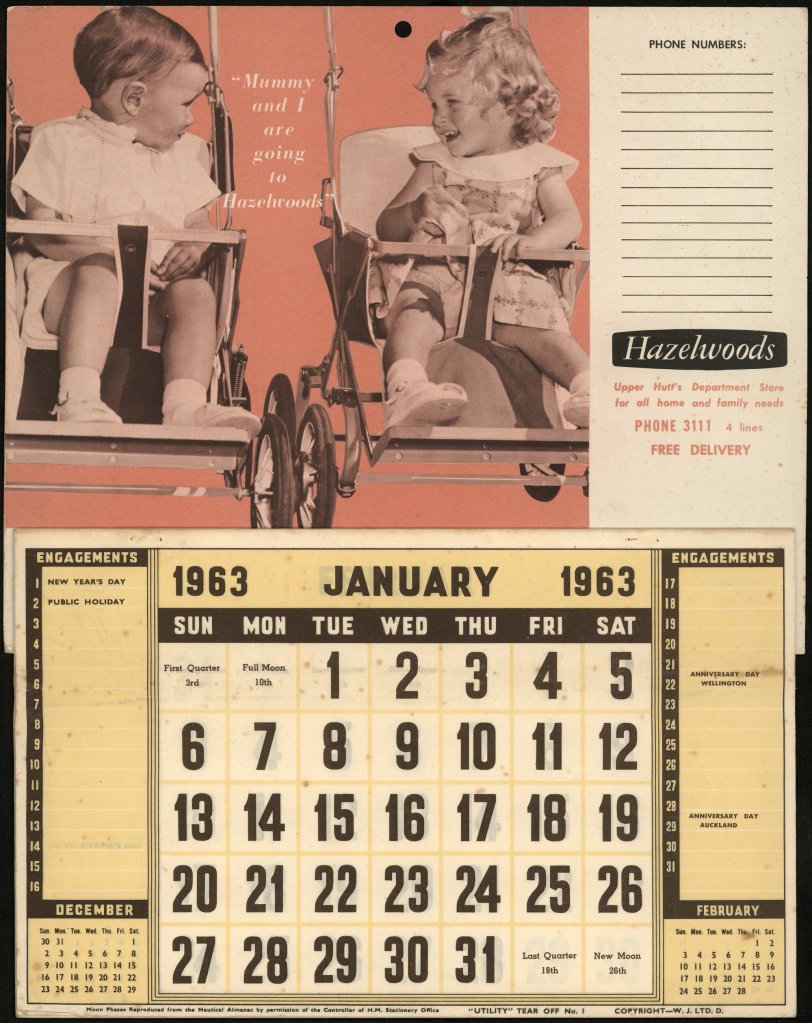
Credit: Hazelwoods

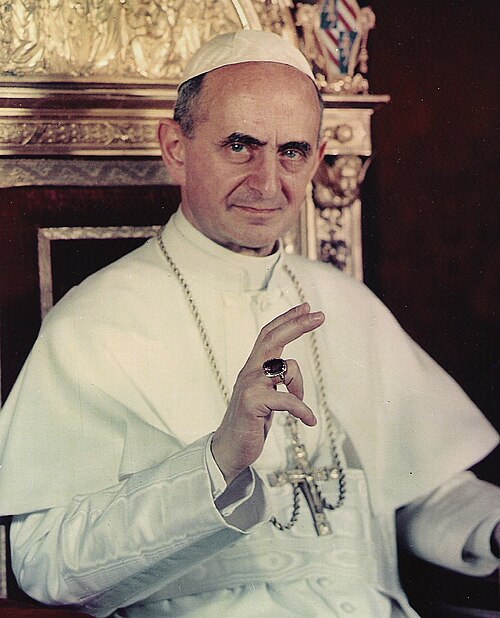
Pope Paul 

Pope Paul refers to Cardinal Giovanni Montini, who was elected to be the 262nd pope of the Catholic Church on 21st June 1963, and took the name Paul VI. Pope Paul was an Italian who led large reforms of the Catholic Church, which included reorganising the Roman Curia (The organisation that administers the affairs of the Church), opening more interfaith dialogue, imposing a mandatory retirement for bishops aged 75 years, restructuring the system of Holy Orders, introducing a new Mass, and was the first pope to visit six continents.

He died on 6th August 1978, was beatified in 2014, and canonised in 2018. A modern example is very difficult to explain; it’s not like…I’m messing with you, sorry. A modern example is Pope Leo XIV, who became the 267th pope in 2025.

Pope Paul VI. Credit: Unknown photographer

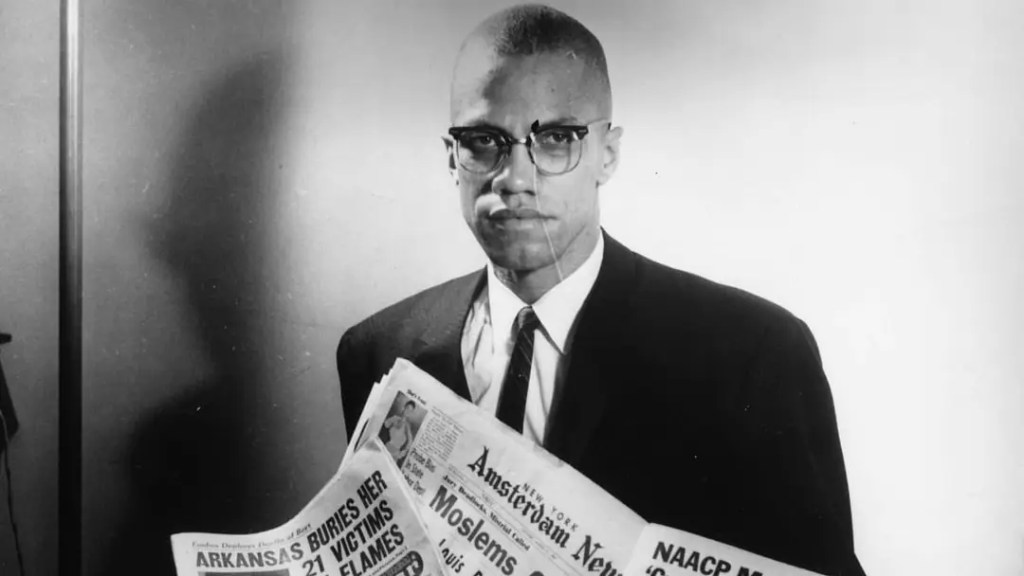
Malcolm X

Born Malcolm Little, and later El-Hajj Malik El-Shabazz, Malcolm X was an American civil rights activist, as well as an important Muslim leader. Being a non-American, Malcolm X was once described to me as Magento to Martin Luther King Jr.’s Professor X; both wanting the same thing, but going about it in different ways.

1963 was a controversial year for Malcolm X, which involved some negative comments about President Kennedy’s assassination, which led to censorship from the Nation of Islam (NOI); widespread media presence; his growing feud with NOI leader Elijah Muhammad; criticising other civil rights leaders, creating speeches, like “Message to the Grassroots” in Detroit or his interview at Berkley.

For a contemporary equivalent of Malcolm X, I’m not sure how to quantify that. Would this be for the United States or worldwide? Does it just cover Black civil rights, or LGBTQIA+ and women as well, or any civil rights? Every country, even New Zealand, has civil rights issues; however, if you look for them, you’ll always find some amazing activists campaigning for them.

Malcolm X, circa 1963. Credit: Three Lions/Hulton Archive/Getty Image

British politician sex 

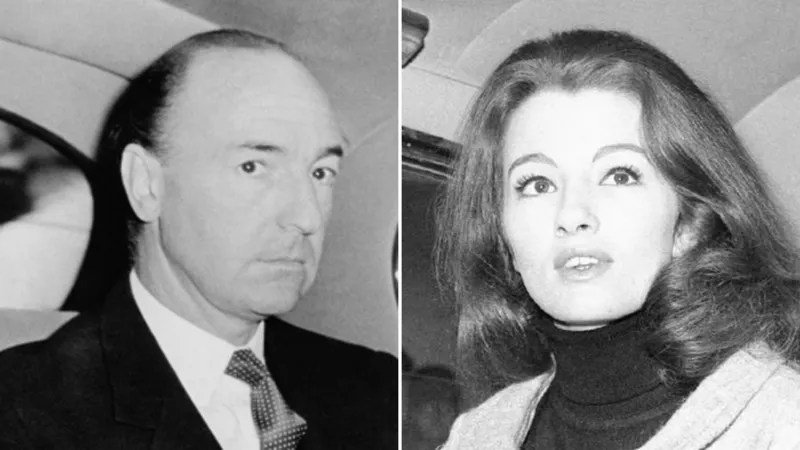
Get ready, because this one is a cracker! British politician sex sounds like a popular university band, but it’s far more interesting and depressing. Basically, this scandal has become known as the Profumo Affair, named after John Profumo. At the time, Profumo was married, as well as being a Member of Parliament for Stratford-on-Avon, and the Secretary of State for War (The title has changed to Defence Secretary) in the British Government, which at the time, was ruled by the Conservative Party, under the helm of Prime Minister Harold Macmillan.

In 1961, a 46-year-old Profumo met 19-year-old model Christine Keeler at a party and began a brief affair, which lasted for an unknown time. Keeler was later involved with other men, like Yevgeny Ivanov, who was a Soviet naval attaché. A shooting outside the house she was staying at drew the attention of MI5. They arrested the shooter, which drew Keeler into the public spotlight, and MI5 started to investigate her. Stephen Ward was also a player in the scandal, having a connection to Keeler and Ivanov.

Eventually, the affair with Profumo was revealed to Parliament and the public, highlighting the Profumo-Keeler-Ivanov connection. The fallout of this resulted in some trials, as well as Prumo lying to the House of Commons; both Prumo and Macmillan resigned in 1963; the Conservative Party lost the general election in 1964; Keeler was sentenced to nine months for perjury; Ivanov was recalled to Moscow; and Ward committed suicide before his trial could begin.

For modern politician sex scandals, get a world map, blind fold yourself and throw a dart at it. You’ll pretty much be guaranteed to hit a country that could give you an example.

John Profumo and Christine Keeler. Credit: Getty Images/PA

JFK blown away

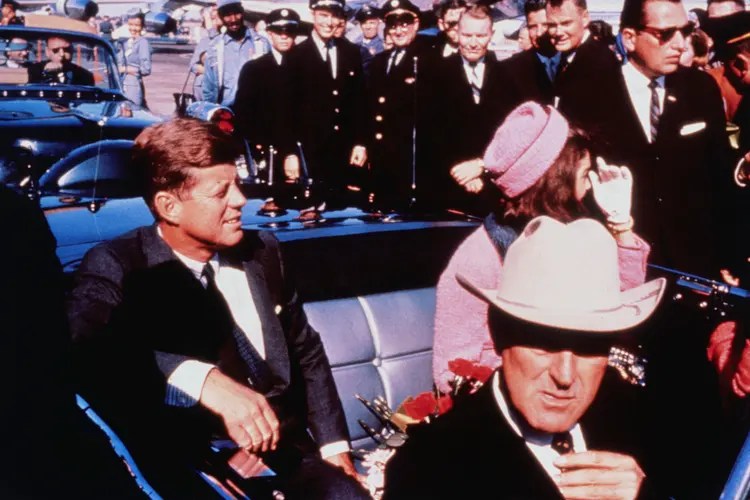
You don’t need to be Batman or Sherlock Holmes to understand this one. On 22nd November 1963, President John F. Kennedy was travelling in an open-top limousine in Dallas, Texas. Accompanying him was his wife, First Lady Jacqueline Kennedy, Texas Governor John Connally, Governor Connally’s wife, Nellie Connally, and the driver, Secret Service agent William Greer.

At 12:30 p.m., President Kennedy was shot on the top of his head and in his neck, along with Governor Connally, who was also wounded. Kennedy was taken to Parkland Memorial Hospital, but by 1 pm, he was dead. Lee Harvey Oswald was arrested for the murder of Police Officer J. D. Tippit, about an hour later, and then also charged with Kennedy’s murder. Only two days later, Oswald was murdered by nightclub owner Jack Ruby.

Like Flat Earth, Kennedy’s assassination has been the first step for many conspiracy theorists into a more unhinged world. Sadly, assassinating world leaders is not a new concept, just ask Julius Caesar. However, some notable modern examples of (ex)world leaders being assassinated include Shinzo Abe (2022), Jovenel Moïse (2021), Idriss Déby Itno (2021), João Bernardo Vieira (2009), Benazir Bhutto (2007), Rafik Hariri (2005), Zoran Đinđić (2003), and Laurent-Désiré Kabila (2001).

Texas Governor John Connally adjusts his tie (foreground) as President and Mrs. Kennedy, in a pink outfit, settled in rear seats, prepared for motorcade into city from airport in Dallas, Nov. 22, 1963. After a few speaking stops, the President was assassinated in the same car. Credit:Bettmann / Getty Images.

What else do I have to say? 

‘Nuff said on this one, though we still have 12 more years to cover.

So for 1963, we covered a pope, a civil rights activist, a politician’s sex scandal, and the assassination of a US president. This was a short one, but from here on out, we’ll be skipping years, according to the lyrics, as they stop going from year by year. Sounds confusing, but it will all make sense. Maybe.

And that brings this week’s rant from a middle-aged, white, straight man, living in the South Pacific, to a close. Thanks again for reading, following, and subscribing to Some Geek Told Me. Also, you should check out the world’s worst social media accounts on Twitter and Mastodon, though I don’t even know why they exist at all; they are so terrible.

Please don’t forget to walk your dog, read a banned book, watch more World Cup games, and I’ll see you next week for my Supergirl Movie Preview.


Four more tōtaras have fallen

I have mentioned this before, but today’s blog reflects a sad reality that seems to occur more frequently on this account. This, of course, is part of the human experience. I am also aware that terrible things have happened, are happening, and will continue to happen in the world to many people. Some can be prevented, and some can not, regardless of how we feel as members of humanity.

We can’t save everybody, which is a horrible thing to say. I can’t save the 7-month baby murdered in Palestine, or the 21-year-old killed on the frontline in Ukraine, nor can I save the 84-year-old woman who died alone in her cold, dark, damp house. These things shouldn’t be happening, but they do, and all we can do is to save and help as many as we can, and celebrate the ones we couldn’t.

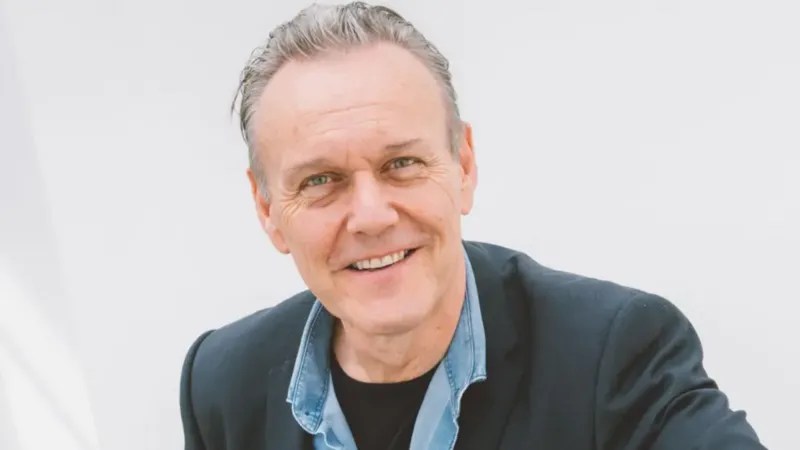
This brings us to this: I would like to take the time to acknowledge the deaths of Tatjana Wood, Marcia Lucas, Anthony Head, and James Handy.


Image by Gerd Altmann from Pixabay

Tatjana Wood died on 27th February, in New York City, aged 99. She was only three days short of her 100th birthday; though if you ask me, because of all of the leap days she experienced in her life, I’m sure those days could be traded in for three. If you don’t recognise her name, you can be forgiven. Just.

Wood loved the arts, as she worked as a weaver, dressmaker, and also as a comic book colourist. This involved covers and the interior artwork. She won several awards for her skills, as she mainly worked for DC Comics, but also EC Comics at the start of her career. Some of her work included Swamp Thing, Animal Man, House of Secrets, Our Army at War, The Flash, Tarzan, The Brave and the Bold, Green Lantern, Detective Comics, Batman, Action Comics, World’s Finest, Orion, and so many more.

Wood was the first female comic book creator I had ever heard of, and it blew my mind. I was young at the time, and I thought females didn’t like comic books. Men wrote them, and men drew them. It wasn’t that I thought females weren’t allowed to create or read comics, but rather that maybe girls and women were far too intelligent to be interested in the world of comic books. Girls at school didn’t read them, and I didn’t know of any female writers or artists.

My study of Wood’s work and the discovery of more female creators led me to an important conclusion: girls enjoy comics as well. I later realised that there were likely girls at my school who liked comics but felt embarrassed to express it, as the interest was often seen as something exclusive to boys. I’m very grateful Wood shared her love of comics with the world and me.

Tatjana Wood with her Eisner Hall of Fame Award, circa 2023. Photo courtesy of Lee Dillon.

Marcia Lucas was a film editor and producer who died aged 80 years old, on 27th May in California. Some of her famous works include THX 1138, American Graffiti, Taxi Driver, Star Wars: A New Hope, and Star Wars: Return of the Jedi. Lucas won an Academy Award and a Saturn Award for editing in 1978 for Star Wars.

She also helped with many films behind the camera, with their stories, plots, direction, and themes, like Raiders of the Lost Ark and especially Star Wars. It’s astounding to understand how many classic points from the franchise came from her. I can’t ever thank her enough for her contributions to those films.

Marcia Lucas. Credit: Vice TV

Actor and singer, Anthony Head, died at his home in England on 1st June, aged 72 years old. Head worked on stage, television and film productions, starting back in 1978, and worked around the world. Some of his most notable roles included Merlin (Uther Pendragon), Little Britain (The Prime Minister), and Ted Lasso (Rupert Mannion).

Though arguably, his most famous role was Rupert Giles in Buffy the Vampire Slayer, which was where I first discovered him. Yes, he’s had many various roles over the years, but he will always be Giles to me, and that’s not a bad thing. Even when he was being a scumbag, as Mannion in Ted Lasso, he was amazing! Thank you, Anthony!

Credit: BBC

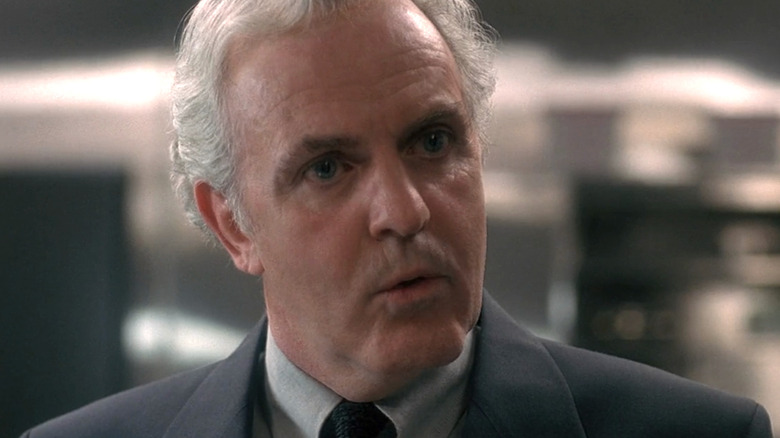
Finally, we have James Handy, who died on 3rd June, aged 81 years, at his home in Los Angeles. Handy was a veteran actor of film and television, having starred in roles since 1977. Handy was one of those actors who you see in a project, and say, “Hey, I’ve seen that guy before!”, but you wouldn’t necessarily know his name.

Some of his most famous roles were in Burglar, K-9, Arachnophobia, The Assassin, Jumanji, Unbreakable, Ash Wednesday, Logan, Top Gun: Maverick, Wiseguy, L.A. Law, Equal Justice, The Young Riders, Quantum Leap, Wings, Melrose Place, The X-Files, Law & Order, Alias, Profiler, and many more. Thank you, James, for entertaining us.

Credit: Fox/Disney +

As I said, thank you to these people for making life on Earth just that little bit better. This blog was a lot shorter than usual, but that’s life. Thank you for reading, following, and subscribing to Some Geek Told Me. Once again, I need to remind everybody that my Supergirl Movie Preview/Review starts in two weeks, along with my mid-Winter annual break, and my 300th blog post, which are also coming soon.

Don’t forget to walk your dog, read a banned book, and go watch some FIFA World Cup and Women’s T20 World Cup games. Look after yourself because next week, we’ll be going back to 1963. It’s going to be cool if you define cool as in reading about history.


2026 FIFA World Cup: Fanatical football frenzy

World Cup tournaments are outrageous and insane, and there’s always one on the horizon, regardless of the sport. As keen supporters of my idiotic account would know, my love for rugby and the Rugby World Cup is legendary. However, that blog post is for next year, so instead, I’ll go on to discuss another World Cup that I love, the OG: The FIFA World Cup.

Far better journalists and pundits have already written about the largest single-sport tournament, this side of the Asteroid Belt; however, it’s my turn to have a crack at it. This foolish guide to the beautiful game’s ultimate prize is just that: a guide. I’m excited for the tournament, along with UMC1 and UMC2, but as my wife…well, not so much.

So, without further waiting for the paint in the outdoor toilet to dry, let’s get on with the breakdown of the 2026 FIFA World Cup. Hook it straight into my veins!


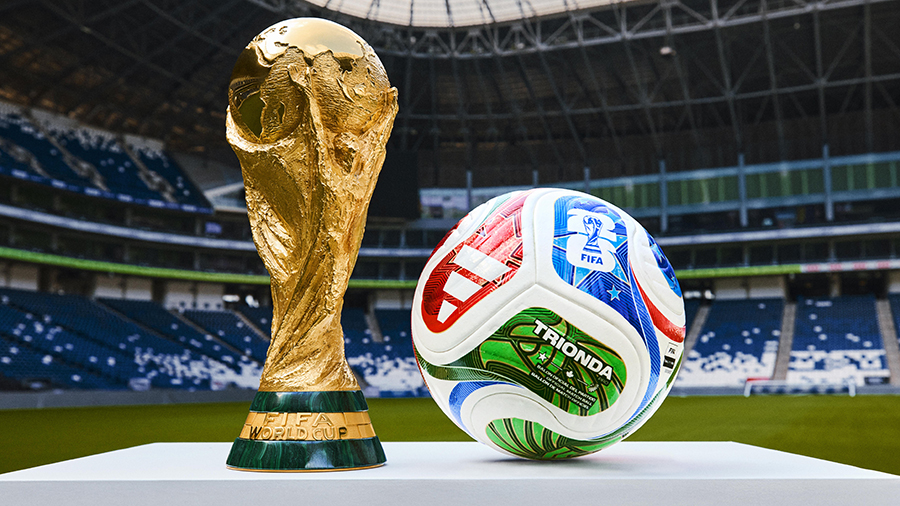
Credit: FIFA

On 11th June 2026, the 23rd edition of the FIFA World Cup will start, and it will finish with the final on the 19th July.

Hosts:

This is the first time the World Cup will be co-hosted by three countries: Canada, the United States of America, and Mexico. However, the World Cup has already been co-hosted by two countries before, South Korea and Japan, in 2002. Coincidentally, this is Mexico’s third hosting role, having already done it in 1970 and 1986; with the United States’ second time as host, having done it in 1994; while this is Canada’s first time.

It’s also the first time the format has been expanded to 48 teams and 12 pool groups, up from 32 teams and 8 pool groups in 2022. This means there will be an additional round where some third-placed teams from their pool can also qualify for the next round. I’m very interested to see how that plays out.

Between the three countries, 104 matches will be played, covering 16 cities and venues. I have also discovered that many stadiums will change their names during the tournament, due to various FIFA policies and regulations, so they may have alternative names.

In Canada we have:

  • Vancouver: BC Place is a multi-sport venue that can seat 54,500 people. It’s also home to the Vancouver Whitecaps. BC Place will host seven matches: five pool stage matches and two knock-out matches.
  • Toronto: BMO Field is home to Toronto FC and is another multi-sport venue. It can hold 45,000 people and will host five pool stage matches and one knock-out match.

For the United States we have:

  • Dallas: AT&T Stadium seats 94,000 people and is home to the Dallas Cowboys (NFL), along with other events. It will host nine games, which include five pool stage games, three knock-out games, and a semi-final.
  • East Rutherford: This is a weird one for me, because MetLife Stadium is in New Jersey, but it’s the home to both the New York Giants and New York Jets. MetLife Stadium can hold 82,500 fans, and will host five pool stage games, two knock-out games, and the final.
  • Atlanta: Known as the Mercedes-Benz Stadium, it is a multi-sport venue, home to the NFL’s Atlanta Falcons. This stadium will host five pool stage games, two knock-out games, and a semi-final. The stadium’s capacity is 75,000.
  • Kansas City: Arrowhead Stadium seats 73,000 spectators and is home to the Kansas City Chiefs (NFL). It will host six matches, covering four pool stage games, a knock-out match and a quarter-final.
  • Houston: NRG Stadium is home to the Houston Texans (NFL) and has a capacity of 72,000. NRG Stadium will host five pool stage games and two knock-out games.
  • Santa Clara: Levi’s Stadium can seat 71,000 fans, and is home to the San Francisco 49ers (NFL). It will host five pool stage matches and one knock-out match.
  • Los Angeles: We will remain in California, as we have SoFi Stadium, which is the dual home to the Los Angeles Rams and Los Angeles Chargers. It can hold 70,000 people and will host five pool stage games, two knock-out games, and a quarter-final.
  • Philadelphia: Lincoln Financial Field is the home field of the Philadelphia Eagles (NFL) and can seat 69,000 people. Lincoln Financial Field will host five pool stage matches and one knock-out match.
  • Seattle: Lumen Field can hold 69,000 fans and is home to the Seattle Seahawks (NFL) and Seattle Sounders FC. It will host four pool stage games, one knock-out game, and one quarter-final.
  • Boston: Gillette Stadium is a multi-sport venue and home to the New England Patriots (NFL) and New England Revolution FC. It’s going to host five pool stage games, one knock-out game, and one quarter-final.
  • Miami: For the last stadium in the United States, we have Hard Rock Stadium. It is the home field of the Miami Dolphins (NFL) and seats 65,000 spectators. Hard Rock Stadium will host four pool stage matches, one knock-out match, one quarter-final, and the bronze medal match.

For Mexico we have:

  • Mexico City: Estadio Azteca is a famous football stadium, having hosted the 1970 and 1986 World Cup Finals, as well as being the venue where Diego Maradona scored two famous goals in the quarter-final against England at the 1986 tournament. Estadio Azteca can seat 83,000 people, and will host the opening pool stage match, along with two more pool stage matches, and two knock-out matches.
  • Monterrey: Estadio BBVA is home to CF Monterrey and can hold 53,500 fans. Estadio BBVA will also feature three pool stage matches and one knock-out match.
  • Guadalajara: Estadio Akron is our final venue, and it is CD Guadalajara’s home ground. Estadio Akron can seat 48,000 people, and will also host four pool stage matches.

Teams

Like I said earlier, this is the first time there are 48 teams, across 12 groups. The draw looks like this:

Group A: Mexico, South Africa, Korea Republic (South Korea), and Czechia (Czech Republic).

Group B: Canada, Bosnia and Herzegovina, Qatar, and Switzerland.

Group C: Brazil, Morocco, Haiti, and Scotland.

Group D: United States of America, Paraguay, Australia, and Türkiye.

Group E: Germany, Curaçao, Côte d’Ivoire (Ivory Coast), and Ecuador.

Group F: The Netherlands, Japan, Sweden, and Tunisia.

Group G: Belgium, Egypt, Iran, and New Zealand (YES!!!)

Group H: Spain, Cabo Verde, Saudi Arabia, and Uruguay.

Group I: France, Senegal, Iraq, and Norway.

Group J: Argentina (defending world champions), Algeria, Austria, and Jordan.

Group K: Portugal, Congo DR, Uzbekistan, and Colombia.

Group L: England, Croatia, Ghana, and Panama.

Since the first tournament in 1930, I believe about 80 countries have tried to win the World Cup, but only eight have done it:

Brazil: 1958, 1962, 1970, 1994, and 2002.

Germany: 1954, 1974, 1990, and 2014.

Italy: 1934, 1938, 1982, and 2006.

Argentina: 1978, 1986, and 2022.

Uruguay: 1930 and 1950.

France: 1998 and 2018.

England: 1966

Spain: 2010

You may have noticed that the winners have only come from Europe, which is represented by UEFA (Union of European Football Associations), and South America, which is represented by CONMEBOL (South American Football Confederation). No team from North America, Asia, Africa, or Oceania have won the World Cup. The Women’s FIFA World Cup is another matter entirely.

Sadly, no Antarctic team has ever qualified for the World Cup. Tensions between penguins and seals have stood in their way. If they can overcome their prejudices, humans would never stand a chance.

Sorry, what’s that? Why should I care about the FIFA World Cup?

Easy. I’ve played many sports in my life, team sports and as an individual. Rugby League was the first team sport I ever played, and I still have a soft spot for it. I played Rugby, or Rugby Union to be accurate, for only a few years, but living where I am, it’s the biggest sport I support. However, football is the only team sport I’ve ever excelled at; I played for 25 years. I love football.

Now here’s something I haven’t shared with you before: when my birthday is. Well, it’s in June.

There are a few reasons why I enjoy having a birthday on a cold, damp, and often gloomy day in winter. One reason is that it marks the start of the All Blacks’ season. Additionally, every four years, I get to celebrate my birthday while watching World Cup games. Although there are rest days during the tournament, this year, there are several games scheduled on my birthday, and I’m stoked about it!

I love World Cups because I get to analyse the pools, predict which teams will move on, and guess who they would face next. This also means reading articles and news updates about the squads, and religiously checking draws, results, and table standings; along with previewing the games and deciding which pool games I want to see live, versus watching the highlights of games. This leads us to some key points about the World Cup: television coverage.

Because New Zealand is close to the International Date Line, we are around 12 hours ahead of Greenwich Mean Time, depending on Daylight Saving Time. Being a sports fan in New Zealand means watching live sports outside the country often requires significant commitment, whether that’s staying up late or getting up at stupid o’clock.

Over the years, Football and Rugby World Cups would have been available to watch for free on public television, but the rise of streaming services and pay-for-view TV stations has altered the way we watch sport. For the 2026 FIFA World Cup, I think there are three different ways to watch it in New Zealand. If you can afford it, you can watch the games through Sky TV or TVNZ (Television New Zealand) for a fee.

However, because New Zealand has skin in the game this tournament, the first time since 2010, all of the New Zealand games are free to watch, along with a few random pool games, knock-out games, and one semi-final on TVNZ. The final is always free to air. I would love to watch as many matches as I can, but the prices for viewership are getting worse, so I don’t know. I saw my first World Cup Final when I was nine years old, and I have never missed one since.

But the silver lining is the highlights. Before the rise of the internet, especially YouTube, you needed to watch a special World Cup TV show, with a presenter who would introduce the day’s games and give you the highlights of the day. If there were three games on that day, then you would get three games’ worth of highlights. It would usually screen about 5 pm, depending on the time zone differences. Sometimes, it was about 10 pm, which made my parents very happy that their son was up watching the World Cup on a school night.

YouTube has all but eliminated these highlight shows, at least in New Zealand. I now make it a point to watch the highlights of every single World Cup game on YouTube, even if I don’t know the result of the game. Though to be fair, if I knew a game ended in a 0-0 all draw, I’d skip it sometimes. I’ll played in 0-0 draws, and they are painful.

Being married has also altered my World Cup experiences, which cover rugby and football. Getting ready for the World Cup as a supporter always means I need to prepare my wife. This will be my wife’s fourth FIFA World Cup with me, not counting men’s and women’s rugby, rugby league, and cricket World Cups or the Women’s FIFA World Cup.

Last week, I was talking to her about the first round of matches, and she mentioned that she couldn’t name a single international football player who is currently still playing. After a 15-minute discussion, I discovered she wasn’t lying. How does she get through the day without knowing that?

Anyway, she isn’t her first World Cup with me, so she knows that she will lose her loving and supportive husband for 5-6 weeks, who is replaced with a sports nut, who only wants to discuss facts and games involving the World Cup with her. Her responses to my very important World Cup information involve:

“I didn’t know that.”

“Wow.”

“Cool.”

“Thanks for telling me.”

“Hmmmm.”

My wife also does a lot of nodding, as in she’s pretending that she’s actively listening to me, but in reality, she just wants me to shut up sometimes. She doesn’t care about the World Cup, as she has told me before. In saying that, she does listen to me discuss the World Cup, not out of love for football, but out of love for me. That’s romantic, isn’t it? Talking about sports to your non-sporting spouse is always entertaining.

I’ve got UMC1 and UMC2 pumped for it, so I’ve succeeded as a parent. I’m looking forward to viewing some amazing goals, terrific saves, appalling offside calls, magnificent set-pieces, passionate fans, bone-shaking tackles, resignations of managers, scandals, and, if I’m honest, some own goals.

So that’s it. Will you be watching or following the World Cup? Who are you supporting? Who do you think will win? As always, please let me know. Some reminders for what’s coming up on this popular blog over the next few weeks include the Supergirl Movie Preview/Review, my mid-Winter annual break, and my upcoming 300th blog post, which I only learnt about last week.

Thanks once again for reading, following, and subscribing to Some Geek Told Me. Don’t forget to walk your dog, read a banned book, go watch some World Cup games, and I’ll see you next week.


Movie Review: Star Wars: The Mandalorian and Grogu 

The challenge I laid down for myself last week was indeed achieved by me. What a result! Go me! And what challenge, dear reader, am I talking about? Yes, I braved the early wintery conditions and went to the cinema to see the latest Disney Star Wars entry, The Mandalorian and Grogu.

As always with this constant, ridiculous pop culture project, this blog post contains the second half. The movie preview can be found here.

If this is your first time reading one of my reviews, welcome, and I’m sorry. It’s great that you’re here, but if you’re hoping to get a detailed description of the film, then you will be very disappointed. My woeful reviews are mainly based on the preview, and this disaster is no exception to the broken formula. With that in mind, let’s be smart and start at the beginning.

Just like the immortal tales and legends of old, my cinematic ritual will never change. Following Batman and the Scouts’ motto of be prepared, I had already purchased my ticket, using the tears of my enemies. Wait…that’s a different story. No, I walked into our only cinema, to an empty foyer. I purchased my go-to drink, Pepsi Max, because I live life to the max. Um…no, I don’t.

Anyway, just like every single time I have purchased an advanced ticket, I simply walked into the theatre, with NOBODY checking to see if I had a ticket. It’s great to know they are consistent. By the time the film had started, there were seven people in the theatre, but for a Tuesday night, it was to be expected. Of course, I got to watch the movie from the centre seat of the back row, like a boss.

The trailers were nothing memorable, as in I can’t remember any of them, and then, surprise, surprise, the film started. As always, let’s go over the rules of the review.

1.) Please be aware that there will be spoilers concerning the movie, so proceed with extreme caution.

2.) The aim of my reviews is not to rip apart the subject or trash it. If I liked the subject enough to watch it, then I’ll give my honest (possibly biased) opinion.

3.) I’m not a professional critic, so I’m not going to dive into deeper concepts and themes or the art of filmmaking. I’m just a geek; always have been, and always will be.

I’m not going to fart around any more, as your Granny will show me up. So let’s get on with the review!


Credit: Disney and my local cinema

I guess the first question is the most basic one: Did I like it? Yes, I did. Is it the best Star Wars film I have ever seen? No, it isn’t. I think it does the job it set out to achieve; anything more than that, I’m clearly not clever enough to answer. However, it was certainly nice to watch a Star Wars movie in a cinema, even one based on a television show.

Things I liked:

These thoughts are in no particular order or importance, just the way my feeble brain works in recalling information.

I’m not sure what planet the story opens on, but whatever it was, it was a Hoth-type planet, covered in ice and snow. I already knew Din Djarin was a bad-arse from the clips I have seen, but I feel the filmmakers wanted to establish early on to new viewers that Djarin and Grogu are devastating as a team, but they still can show mercy, like in the board room, where he spared the representatives of various outposts/colonies. Also, Djarin taking down three Imperial Walkers reinforced this concept.

Let’s talk about the Hutts. When information about the movie was revealed, I read that Rotta the Hutt would be involved. This, of course, sparked my Spidey-Sense: Rotta the Hutt. I knew that name, but I couldn’t remember where I heard it.

After what seemed like an eternity, though it was only a few minutes, I searched for his name, only to discover it was Stinky! He made his appearance in 2008’s movie, Star Wars: The Clone Wars. I remember watching that movie at the cinema, not fully understanding it was a long pilot episode or opening chapter for the Star Wars: The Clone Wars television show.

Anyway, I’ll move on. It was interesting to see Rotta for a few reasons. Firstly, it is a trope to have a grown-up child being painted with the same brush as their parent, because of the parent’s sins. Having said that, it’s not a trope I get tired of, and growing up to be the scion of a crime syndicate would be awkward and demanding.

I liked his friendship with Grogu, and it was referred to that as a Hutt, Rotta could live for hundreds of years, so he would be the perfect candidate for an adopted father or godfather figure to Grogu, when Din Djarin finally dies, as he is only a human, to the best of my understanding.

Since I have not seen every single Disney Star Wars live-action or animated television episode, I can’t say this for certain, but travelling to Nal Hutta, the self-appointed home world of the Hutts, was something I’ve been waiting to see. The criminal underworld of Star Wars is rife with stories, as there is always a Hutt or two involved in the illegal dealings. I have learned that the Twins, the two Hutts involved in the movie, possibly siblings, have already appeared in previous television shows.

In various media, we have seen Hutts acting as agents of order and chaos. This, of course, leads to Rotta’s physique and fighting style in the arena. His rolling technique was quite impressive, and a smart move for the creative team to use; pun very much intended. As for witnessing a Hutt fight, that was not on my 2026 bingo board, as well as the Hutt ménage à trois, or at least that’s what it looked like. It was dark, and I was wearing 3-D glasses. Still, the Hutts fighting each other was great, and I loved it.

Rotta’s reaction to Djarin’s collaboration with the Hutts was important because it stemmed from Djarin’s response to Ward’s (Sigourney Weaver) suggestion of working with them. Djarin’s hesitance to engage in a partnership with the Hutts forced him to explain his position to Rotta, as neither character approved of the arrangement.

It does pose the interesting question of “Do the ends justify the means?” from a new perspective in the environment. Granted, the New Republic can be compared to the Allies after World War II, and Djarin is a Nazi Hunter, contracted to find war criminals. However, it would be like the Allies using the Mafia to track and hunt Nazis, and then paying them for it. I like the idea of putting characters into morally grey areas, where they need to untangle themselves from a situation that they are not comfortable with.

Continuing with Djarin, and after my rant about his helmet in the preview, I’m glad that Pedro Pascal only lost his helmet for a short amount of time, and not for the remaining part of the movie. It did not transition from a Star Wars movie to a Pascal action movie, which I was relieved about.

As a rule of thumb for aliens and me, the weirder the better, which is one of the reasons I enjoy Star Wars, Star Trek, and Doctor Who so much. The creatures in the arena were pretty wild and imaginative, which I enjoyed. And speaking of enjoying things, I thought the Twins’ mismatched droid army was genius. Of course, Hutts would not pay for top-quality droids; they would use whatever droids were cheap and lethal enough. They still have to worry about the bottom dollar, or whatever currency the Hutts prefer.

Today’s blockbusters seem to have a minimum $100 million budget now; whether that is a positive or negative thing, so I’ll let you be the judge of that. Anyway, the film looks great, even with the use of puppets, like the Anzellans. They look awesome, and I have loved the concept of the species, even since Episode IX.

I thought Grogu’s rescue mission was corny, but it was on brand. I mean, Djarin is effectively his dad, so why wouldn’t he try to save him, along with the Anzellans? Their spaceship was hilarious, which, after you think about it, does make sense.

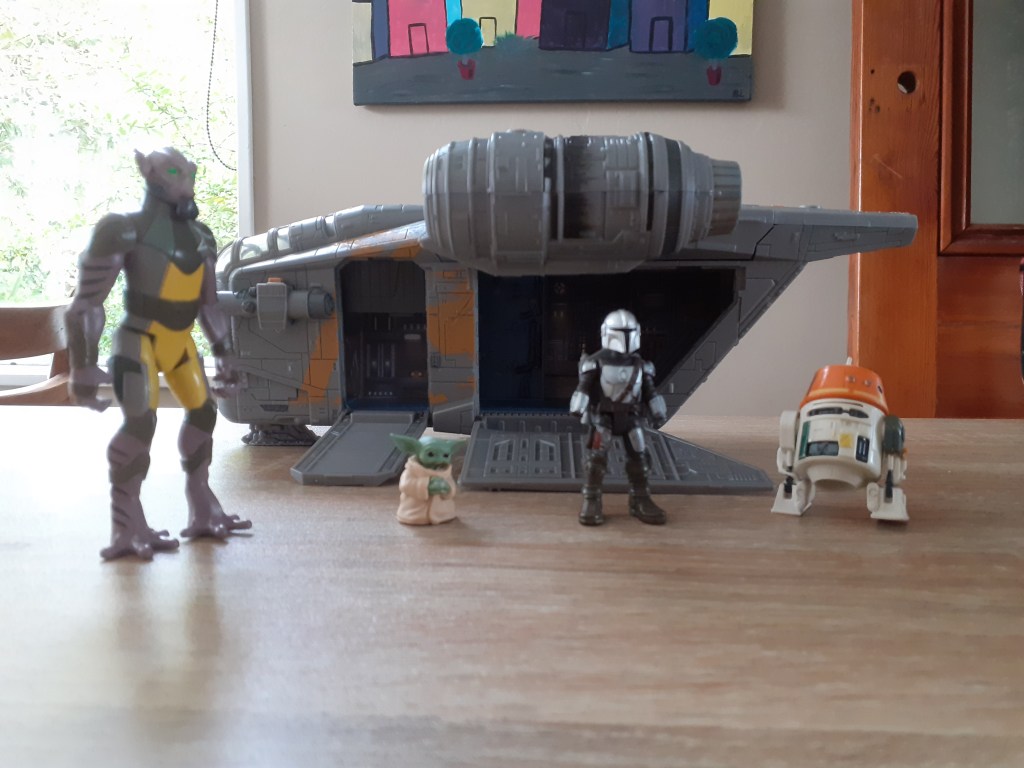
One more thing I want to add is something about Zeb. I realise he was in one of the live-action Star Wars television shows, but I don’t know which one. He didn’t look exactly how he did in Rebels, but bringing an animated character to life isn’t the easiest job in the world to do. The point being, it was good to see him, because Rebels remains a hit in our house. Occasionally, I closed my eyes for a few seconds when Zeb spoke, just so I could focus on Steve Blum’s voice for nostalgic reasons. “Karabast!”

Things I disliked:

Fans of the TV show could answer this, but why does everybody in the New Republic and other places refer to Djarin as Mando or Mandalorian, instead of Din Djarin? Is his name not publicly known? Do soldiers of the New Republic refer to every Mandalorian as Mando? If they met two Mandalorians, would they be referred to as Mando 1 and Mando 2, regardless of gender?

I find this weird because in 2026, would you be ok if people referred to you as the name of your religion, or your race? And then even shorten that name? Like I said, weird. It would be like if people outside of New Zealand called me “Kiwi” or just “Ki,” but never bothered to learn or use my real name.

Continuity errors and issues were something that I wasn’t expecting in a film with a budget of $165 million. I have three, but I could be wrong about these.

The first was when Djarin was thrown into the pit at the Twins’ palace, which was filled with water, aquatic creatures, and a dragonsnake. His helmet was removed, and he was weaponless. The underwater scenes were murky and not 100% clear, so it was difficult to see what was happening.

The point was that Djarin had no weapon in the pit, then, like magic, he had a long war-axe. As I just mentioned, it is possible that Djarin fell into the water and found the weapon, and because of the dirty water, it was difficult for the viewer to see. It’s possible this happened, and because of the low quantity of the water and the speed of the scene, I may have missed Djarin picking the war-axe up. However, if it isn’t the case, then the film crew have stuffed up.

The second issue was on Nevarro, when Embo captured Djarin. It looked like he was stripped of his weapons, so Embo could transport him to Nal Hutta on orders from the Twins. Fast forward a little bit, and Djarin is rescued and saved by Grogu and the Anzellans, though it does take some time.

When Djarin had recovered, he was seen walking into the gunrunner’s ship with his blasters. I was hit with the realisation about where he got the blasters from. To the best of my understanding, Embo took Djarin’s weapons with him on his ship, since we saw them there. So, if that was the case, how did Djarin get the blasters? I suppose it is possible that Grogu and the Anzellans raided Embo’s ship, but how realistic is that?

The third continuity error was about the gunrunner’s ship. Granted, as the viewer, you don’t know how much time has passed since Djrain sent Rotta with the gunrunner on Nevarro, to the time it took to get to Nal Hutta. However, when Djarin and Grogu discover the ship, it looks like it has been there for years, if not decades. The ship was trashed inside and out, but it had only been there for a few days at the most.

Another argument is the lack of action in the movie, or at least, people saying that it’s boring. I do understand this because I believe it’s true. Not boring, but having a lack of high stakes. However, to somewhat defend the project, it was never going to be that sort of film where Djairn and Grogu are trying to save a planet, the Republic, democracy, or the galaxy, from the Empire, Sith or whatever else is threatening to destroy everything.

It was not a macro-story, but rather a micro-story; essentially a story about a guy taking his adopted son to work. The film is lacking in intensity, and the stakes were lower than any other Star Wars film apart from Solo, but I think that’s on purpose. So yes, I disliked the low-stakes concept, but it works for what it was, so I’m ok with that.

I thought Sigourney Weaver would have more of a role in the movie. She was in two scenes at the New Republic’s base, one with the aerial assault and another one back at the base. That was it. This is Ripley herself, one of the original female action and science-fiction heroes, and I feel that her character of Ward was wasted.

I was also hoping to see other Mandalorians in the film, but that was a long shot, and it never happened. This came from the show, and it was on display in the gaping holes in my knowledge of characters and planets. I knew going into the movie that it wasn’t going to play out like an original movie or part of a Star Wars trilogy, since it was based on TV characters. I feel the filmmakers did the best they could to include new fans, as well as catering to the existing fans, but I still couldn’t help myself thinking of all that I was missing.

This involved the names of planets, weapons, and characters, especially characters. Part of the film involved me trying to figure out if characters were from the show or original characters for the film. Was Ward an existing character, for example? Again, I knew it would be like this, but I still felt lost at times.

Having not seen the television show, the film felt like a film and not like extra-long episodes, but there was still the feeling that I was missing things.

So, what about my preview questions?

  • Will there be an opening crawl, since this is a Star Wars movie? (I know Rogue One and Solo did not have one) Yes, there was an opening introduction, but it wasn’t a crawl.
  • How much time has passed since the end of the third season? Don’t quote me on this, but I think 1-2 years.
  • How accessible will the movie be to people who have not seen the television show? It was accessible and easy to follow, but as I mentioned earlier, you do feel like you’re missing out on things.
  • Are there any remnants of the Empire? That is a hard yes.
  • Will Grogu’s performance be a mixture of puppetry, animatronics, CGI, or everything? It looked a cross between puppetry and animatronics, but I’m not an expert.
  • Wasn’t the Razor Crest previously destroyed? Yes, in Season Two. The Razor Crest in the film is another ship that was found, refitted, and given to Din Djarin as an advanced form of payment.
  • Will Ahsoka Tano, Boba Fett, or any other major character feature? Apart from Zeb, who was advertised in the film, there was a blink-and-miss-it cameo from R2-D2, the bounty hunter Embo and his anooba, and the Anzellans. There were probably others, but having not seen the live-action television shows, I wouldn’t recognise them.
  • Is the plot going to drive the story forward, or will it be flat? I’m not sure. Djairn has a new spaceship, which is a replica of his previous one, so I guess there is that.
  • Will we get to visit any new planets (to me at least) or discover new alien species? Yes, we got to visit Nal Hutta, a new planet that looked like Scarif, Nevarro (new to me), and Shakari. The fighting arena aliens were awesome, along with the Anzellans, the fishing-hut guy, and the Hutts.
  • Will any bad-arse weapons be involved? Djarin was using a mini-scout walker at the start of the film, plus the phase-pulse rifle, which, to me, is new, that can disintegrate targets. It looked like and worked like a sci-fi shotgun, considering that Djarin had to load and reload it.
  • Will we meet any force-sensitive characters? If we did, I definitely missed them.
  • Who will be the main antagonist? I would say the primary antagonists were the Twins, with Commander Coin/Janu acting as a secondary antagonist.
  • Will the movie work as a movie, or behave like long television episodes? It works as a movie, but as I said earlier, it didn’t totally work.
  • If the future of Star Wars movies is going to be based on television shows, how will I feel? That’s a difficult question to answer. I believe the future of Star Wars lies in television more than movies, because of the way characters can be fleshed out more. In saying that, movies would be more profitable for the Mouse House, and they are a business. THE business.

Star Wars: The Mandalorian and Grogu is not perfect by any stretch of the imagination, but there are more things I like in the movie than I dislike. There are issues with it and the direction Disney is taking the franchise, which we can’t control. I want the creative teams to focus more on story development and take their time, rather than slapping something quickly together for a quick dollar and destroying the fan base.

One thing to point out is that Star Wars fans are passionate, but we can be toxic and negative, which is not always a good thing. Fans cry out to see new things in Star Wars, then complain and compare the projects to the original trilogy. Fans will then also complain of seeing the same old, same old in Star Wars, and complain that Disney won’t try new things. Sometimes you can’t win with people.

The franchise is facing its 50th birthday next year, so it must be difficult for all of the Star Wars creators across all mediums, whether it is movies, television, novels, learn-to-read books, comics, as well as fact books, along with board games and computer games, to keep the old fans happy, but still draw in the next generation. Not very Star Wars fan is a straight, white, 40-year-old, married male, and hopefully the creators are aware of this.

I want to see and read fantastic stories from a galaxy, far, far away, because it can allow our ideas and creativity to soar, which in turn can also be a reflection of us and how we view each other. I love Star Wars, so whether I will ever get to watch Disney + or not, I need Disney to be getting it right, which, as you would agree, is more difficult than buying a workable droid from a bunch of Jawas.

Anyway, as I’ve said this before, don’t trust me, go watch it for yourself, so you can be the judge. Have you seen Star Wars: The Mandalorian and Grogu? As always, please let us know.

That brings this non-award pop culture literature venture to its obvious conclusion. Thanks once again for reading, following, and subscribing to Some Geek Told Me. Please remember the FIFA World Cup and the Supergirl preview/review will be in June, along with my mid-Winter break, which is coming to New Zealand’s 5th least favourite website.

Remember to walk your dog, read a banned book, wish a homophobe a Happy Pride month, and I’ll see you next month, where we get to discuss the FIFA World Cup. I know, I’m excited too!


Movie Preview: Star Wars: The Mandalorian and Grogu

Wow, the last time I did a movie preview was back in July 2025 with The Fantastic Four: First Steps, and as I mentioned last week, we have plans to cover movie previews/reviews for SupergirlThe Odyssey, and Spider-Man: Brand New Day as well. The staff will be working overtime.

However, before these three movies have been previewed and reviewed by the most popular blog this side of the street, we have Star Wars: The Mandalorian and Grogu to discuss. It was either this or The Devil Wears Prada 2, and that’s not going to work, now is it?

With Star Wars: The Mandalorian and Grogu, I thought I could give you the illusion of being effective and professional, which, of course, is the total opposite. In that vein, I’ll refer to Star Wars: The Mandalorian and Grogu as The Mandalorian and Grogu from now on.

We have not had a Star Wars movie released since 2019, with the release of Star Wars: Episode IX – The Rise of Skywalker; however, we have had several Star Wars movies announced and then cancelled for one reason or another. Of course, as you are well aware, The Mandalorian and Grogu is not an original story, or continuing a movie trilogy, but rather a continuation of the television show on Disney +, Star Wars: The Mandalorian, or just The Mandalorian.

So, a new Star Wars movie is exciting enough for me to take the plunge and visit the local cinema. As longtime fans know, I try to buy my tickets in advance, so I can get the best seat, because, you know, that’s what hard-core geeks do. Anyway, my ticket is for Tuesday, 25th May at 5.45 pm. Centre of the back row, thank you very much.

Dun dun duuun!

To make sure we are all on the same page, The Mandalorian and Grogu is the cinematic appearances of the characters from The Mandalorian TV show on, and say it with me, Disney +. And to establish another concept, I don’t have Disney +, so just like all of the Marvel TV shows on the channel, I have only seen clips from YouTube of The Mandalorian, and never any entire episode, like every single Star Wars TV show on the channel.

It’s my understanding that The Mandalorian was released in 2019, and has aired for three seasons, or 24 episodes; eight episodes per season. Now, why there has been no Season 4 or why a movie has been based on the same characters, could be connected, or they could be as far away from each other as O. J. Simpson and the truth. Whatever the true origin of the movie and its existence is, it’s here.

Though, to the best of my understanding, the movie is a continuation of the third season, but that could be wrong. What the hell do I know about anything?

As for the cast, it’s been revealed as follows: Din Djarin/The Mandalorian (Pedro Pascal), Rotta the Hutt (Jeremy Allen White), Ward (Sigourney Weaver), Janu (Jonny Coyne), Trapper Wolf (Dave Filoni), and Garazeb “Zeb” Orrelios (Steve Blum).

These performances are a mix of live action and performance capture/motion capture, along with other characters, because you’re dealing with crazy arse aliens. This also includes Grogu, which, again, to the best of my understanding, is a hybrid of CGI, puppetry, and animatronics. It could make a nice drinking game; every appearance of a CGI character in a new scene, you drink.

The budget for each TV episode worked out to be around US$15 million; however, the movie’s budget was reportedly set at about US$165 million, which could buy you a lot of frozen pizzas and comics. A lot. Disney seems to have very deep pockets, though I don’t know if that’s a positive or negative thing. Still, Episode IX had a US$593.7 million budget in 2019, so who knows?


Will The Mandalorian and Grogu knock it out of the park, will it flop, or will it be somewhere in between? Join me as we preview the latest Star Wars movie.


Toys credited to UMC2. Yes, Din Djarin has no hands.

Am I looking forward to watching The Mandalorian and Grogu?

Like always, it’s a trick question, because if I’ve taken my time to write a preview of a movie, chances are that I’m looking forward to watching it, even as temperatures are dropping across the country, and especially at night. I’ve tried to have a steady diet of Star Wars content since 2019, mainly in the form of comics and novels.

I have discussed this before; not only do I like reading about Star Wars, but I also do not have, and say it all together…“I don’t have Disney +.” So, just to reinforce the point that I have not seen a single episode of The Mandalorian, only memes and clips on YouTube.

I get the general premise of the show, but obviously, not everything. Having not seen Season 3, I have no idea how it ended, because, as I understand it, the movie is set after that season, but I don’t know if it’s the next day, next month, or the next year.

Going into a Star Wars movie has always been an event for me, seriously, I love Star Wars. I also get that Mandalorian lore has been fleshed out over the years, especially with Star Wars: The Clone Wars and Star Wars: Rebels, which is only a positive thing.

However, after the sequel trilogy, my faith in Disney handling cinematic Star Wars experiences was shaken. Interestingly enough, I really enjoyed Rogue One, and Solo wasn’t half as bad as people made it out to be. But the sequel trilogy thoroughly disappointed me for various reasons. That being the case, I need to be honest. As much as I am looking forward to the movie, I am equally worried, for three main reasons that can be broken down.

The first reason is the previously mentioned concerns about Disney Star Wars movies. Of course, I’m basing these concerns on the sequel movies, and not on any of the animated or live-action TV shows, since I haven’t seen. None of the sequel trilogy movies would make my top five Star Wars movies. However, as I understand, the Disney live-action Star Wars TV shows are a lot better.

Another reason is the fact that since I have never actually seen the TV show, apart from short videos, I don’t know the characters that well, or even at all in some cases. There are three seasons of stories that I’m missing, so I need the filmmakers to have made the movie accessible to people who have never seen the TV show.

Having not seen the TV show, there is the concern that the movie will feel like an extra-long episode. I need them to drive the plot forward, but that’s difficult not knowing where the characters have started from, where they have been, where the audience left them, and where they are going. I want to travel to a galaxy, far, far away, but not feel guilty for not having enough money to pay for the TV show.

Sorry, I have a mixture of emotions, fighting for attention over this movie, and I’m trying to sort them out. I want this film to work.

What is the movie about?

According to Star Wars.com, the premise is this:

The evil Empire has fallen, and Imperial warlords remain scattered throughout the galaxy. As the fledgling New Republic works to protect everything the Rebellion fought for, they have enlisted the help of legendary Mandalorian bounty hunter Din Djarin (Pedro Pascal) and his young apprentice Grogu.

What can we expect?

The running time is 132 minutes, compared to the last three Star Wars movies is short: Star Wars: The Rise of Skywalker (141 minutes), Solo: A Star Wars Story (135 minutes), and Star Wars: The Last Jedi (152 minutes).

A budget of US$165 million is a rather large investment, but other films have had less money and achieved great results, but how many have been set a long time ago, in a galaxy, far, far away? I want to be transported and escape to that galaxy that I’ve grown up loving.

I want to be blown away by visiting funky planets, cool aliens, wicked spacecraft, and bad-arse weaponry. Granted, I can only imagine the amount of time the actors would have performed in front of a green screen, but I still want the razzle-dazzle.

But here’s a problem: what I expect from The Mandalorian and Grogu will be similar to other people who have never seen the TV show, but different to those who are fans of the TV show. Our experiences and connections to the characters will dictate the outcome. Will I be able to adapt to the story being told to me, or will it feel like I’m playing catch-up?

How much of the story is going to unfold versus be explained to us, purely because the filmmakers might have understood that not everyone would have seen the TV show. To prepare for it, I have watched various WatchMojo videos about the TV show, so whether that will help, I have no idea. I believe the movie is set five or six years after Episode VI, but I’m not confident about that.

This is a roundabout way to say, I’m not sure what to expect because I don’t know Din Djarin, Grogu, and their allies and enemies that well. It would be like if they made an adaptation or continued the story of Cal Kestis and BD-1, from the Star Wars Jedi computer games. I know of them, but I have never played the games, so I would feel lost about the plot that has happened previously.

I do understand that in Mandalorian lore (I think), warriors should not remove their helmets in the presence of other people. How much of that relates to other Mandalorians, I can’t really say; however, I have seen Bo-Katan Kryze (Katee Sackhoff) walking around without a helmet. I’ve viewed Pedro Pascal’s performance as Din Djarin from afar and have compared it to the two Judge Dredd movies: Judge Dredd (1995) and Dredd (2012).

This is a weird comparison, but I’ll explain. In the comics, Judge Dredd is (im)famous for never revealing his face. When he is working as a Judge, and when is he never not, Dredd is always drawn wearing a helmet. The helmet covers his upper face, but his lower face, as in his mouth and chin, is exposed.

When the creative team need him to be seen without the helmet, whether he takes it off, puts it on, or if it has been knocked off, Dredd’s face is put into shade or shadow. The idea is that it doesn’t matter what Mega-City One’s top lawman’s face looks like, because justice is supposed to be blind.

In the two movies, there is a small but subtle difference in Sylvester Stallone’s (Judge Dredd) and Karl Urban’s (Dredd) portrayal of Judge Dredd. In Judge Dredd, Stallone does an alright job of convincing people that he is the law. You know it’s Stallone wearing the helmet, because you’re not an idiot, plus, the lower part of his face is exposed; you know who it is.

Stallone is kicking arse until his helmet is removed, and it doesn’t go back on. From this moment on, the film transforms from a Judge Dredd movie to a Stallone movie. He stopped being Judge Dredd and was just Sylvester Stallone, running around without a helmet. It went from a crime-ridden futuristic landscape to just another 90’s Stallone movie. The rumour mill said that Stallone wanted to have the helmet removed, so the audience would recognise him. But like I just mentioned, we’re not idiots. Does that make sense?

Alright, flash forward to 2012’s Dredd, and Urban knew the assignment. Apparently, as the rumour mill went, Urban knew the comics and understood the character, so as a fan and audience member, you discovered this fact in the introduction.

When Urban is putting on his uniform, his face is never exposed to the camera, even when he places the helmet on. I was in Nelson at the time when I saw the movie, and when I saw that the filmmakers had obscured his face, I smiled and thought, “Yes, they get it.” I knew from that moment that we would never see Urban’s face, because the filmmakers were not going to treat us as…say it with me, idiots.

Now, going back to Pascal’s Din Djrain, and I could be wrong about this, but from the clips I have seen, the creative team took the steps to conceal Pascal’s face. People knew what Pascal looked like under the helmet; they didn’t need to be reminded. I did need to look this up, but his helmet was removed in the first season by a droid to receive medical treatment.

In the second season, he removes the helmet to infiltrate an Imperial base with Bill Burr’s character (I’ve seen that), and also says goodbye to Grogu, without a helmet. Now I believe, and I could be wrong about this, that in the third season, he had to atone for breaking the Mandalorian creed for removing his helmet in front of someone.

So, given the fact that someone like me, who has never seen an entire episode, understands that Pascal is Din Djarin, and the filmmakers have established the rule about never removing the helmet, there are scenes in the trailers that have Pascal as helmetless!

How much of the film will Pascal be running about without a helmet like Stallone? Is this due to part of the new audience members who won’t understand who is under the helmet? Is it part of a contract clause by Pascal?

Personally, I want to see Pascal’s Din Djarin be like Urban’s Judge Dredd, and not like Stallone’s. Then again, what the hell do I know?

Do I have concerns?

Of all of the movies that I previewed/reviewed, and let’s be honest, it’s not that many, The Mandalorian and Grogu have been the one that I’m most concerned for. Movies based on television shows, and I’m sure you’ll agree, have either hit the target or missed it; rarely settling in the middle. I am worried about this movie, mainly because it’s so unknown to me, and as a Star Wars fan, it’s an odd feeling. Some of my specific concerns are as follows, and will be answered in the review.

  • Will there be an opening crawl, since this is a Star Wars movie? (I know Rogue One and Solo did not have one)
  • How much time has passed since the end of the third season?
  • How accessible will the movie be to people who have not seen the television show?
  • Are there any remnants of the Empire?
  • Will Grogu’s performance be a mixture of puppetry, animatronics, CGI, or everything?
  • Wasn’t the Razor Crest previously destroyed?
  • Will Ahsoka Tano, Boba Fett, or any other major character feature?
  • Is the plot going to drive the story forward, or will it be flat?
  • Will we get to visit any new planets (to me at least) or discover new alien species?
  • Will any bad-arse weapons be involved?
  • Will we meet any force-sensitive characters?
  • Who will be the main antagonist?
  • Will the movie work as a movie, or behave like long television episodes?
  • If the future of Star Wars movies is going to be based on television shows, how will I feel?

There’s probably going to be more things to think about, but I’ll hopefully cover them in the review. I love Star Wars, so I hope this film works, I really do. Are you planning on watching Star Wars: The Mandalorian and Grogu? As always, please let me know.

Thanks once again for reading, following, and subscribing to Some Geek Told Me. Remember to walk your dog, read a banned book, get ready for the FIFA World Cup next month, and I’ll see you next week for the Star Wars: The Mandalorian and Grogu Review.

Also, I know it sounds boring, and it is, but the New Zealand Government will be announcing its budget for 2026 on Thursday, 28th May, and since it’s an election year, expect a lot of outrage across the media. I love it. Take care, and I’ll see you next week.


Tour of the Solar System: The Moons of Pluto

I was thinking the other day about things that seem to drag on: The Fast and the Furious franchise, election cycles, accident and emergency wait lists, time between Saga issues, and Some Geek Told Me’s Tour of the Solar System. It’s still chugging along, like the little engine that has no right to exist.

Roughly every nine weeks, another chapter is added to the tour, which is the equivalent of vomiting and having diarrhoea at the same time. So, with that rosy image in your heads, you can visit previous chapters of this magical tour.

1.) Meet the Family

2.) The Sun

3.) Planets vs. Dwarf planets

4.) Mercury

5.) Venus

6.) Earth

7.) The Moon

8.) Mars

9.) The Asteroid Belt

10.) Ceres

11.) Jupiter

12.) The Galilean moons

13.) Saturn

14.) Titan

15.) The Moons of Saturn

16.) Uranus

17.) Titania

18.) The Moons of Uranus

19.) The Literary Moons of Uranus

20.) Neptune

21.) Triton

22.) The Moons of Neptune

23.) The Kuiper Belt

24.) Pluto

25.) Charon

As you can see, the last tour stop was Charon, the largest of Pluto’s moons, but we need to meet the other members of Pluto’s children. Without delaying this highly popular blog post any longer, may I present to the academy’s pleasure, the Moons of Pluto.


This image, taken by NASA’s Hubble Space Telescope, shows five moons orbiting the distant, icy dwarf planet Pluto. The newly discovered small moon, Styx (initially designated P5), is the innermost of the moons found by Hubble over the past seven years. The diagram shows that Styx is in a 58,000-mile-diameter circular orbit around Pluto that is assumed to be co-planar with the other satellites in the system. Though Charon (discovered in 1978) is an even closer moon to Pluto, some astronomers consider the Pluto-Charon pair a “double planet” because Charon’s mass is 12 percent of Pluto’s mass (by comparison, our Moon is 1.2 percent Earth’s mass). This image was taken with Hubble’s Wide Field Camera 3 on July 7. Other observations that collectively show the moon’s orbital motion were taken on June 26, 27, and 29, 2012 and July 9, 2012. The new data will help scientists in their planning for the July 2015 flyby of Pluto by NASA’s New Horizons spacecraft.

Even though the International Astronomical Union kicked Pluto out of the planetary club, it still belongs to another club; a club that only has seven known members: planets and dwarf planets in our Solar System that have moons. For the record, Pluto had five moons, and since we met Charon last time, it’s time to meet the other four. I’ll present them in the largest diameter size after Charon, of course.

Hydra

Hydra is the second-largest moon of Pluto, with a diameter of about 51 km, which, in the scale of the solar system, is practically nothing. It orbits Pluto at around 64,738 km, which is quite close. It is not tidally locked to Pluto, and I can only imagine the relief for tourists and such.

The rotation period of Hydra is only 10.3 hours, and it has an axial tilt of 110°. In dating terms, Hydra is a hot mess. It’s very interesting and mysterious, but very unstable. Its rotation is chaotic, while it flips and tumbles, because of Pluto and Charon’s gravitational influences.

Hydra was discovered on 15th May 2005, by the Hubble Space Telescope, after the New Horizons team wanted to investigate the region. So, when the New Horizons spacecraft did its flyby in 2015, it sent back some astounding images. As for its name, it sadly is not named after the terrorist group from Marvel Comics, but from Greek Mythology, where else? The Lernaean Hydra is a multi-headed monster from the 12 Labours of Hercules. Spoilers, it was the second one, and Hercules, along with his nephew, Iolaus, kicked its collective arse.

Hydra is quite small, with an elongated, non-spherical body. Scientists believe Hydra is covered in water ice, which has a 83% reflectivity, so it is one of the most reflective objects in the Kuiper Belt.

Near true-color image of Hydra, taken by New Horizons on 14 July 2015. Credit: NASA

Nix

Keeping with naming celestial objects from Greek or Roman mythology, Nix was named after the Greek goddess of darkness and night, Nyx. She was also the mother of Charon, Hades’ (Pluto) ferryman. And just because I can, Nix is not named after Nyx, the character from Spawn, who is now the Queen of Hell. Yes, yet another comics reference!

Like Hydra, Nix is small and has a diameter of only 42 km, making it the third-largest moon of Pluto. Coincidentally, this is the distance of a marathon, though technically, it’s 42.2 km. Facts matter, people, facts matter. Nix is the third-farthest moon from Pluto, orbiting at an average distance of 48,694 km, which is a lot less than the Moon’s orbital distance from the Earth of 385,000 km. Nix’s orbital period is about 24 hours and 20 minutes, and it has a near-circular orbit to boot.

It was discovered by Max Mutchler and Andrew Steffl, members of the Pluto Companion Search Team. They used photos of Pluto taken in 2002, as well as images from the Hubble Space Telescope, to identify Nix in May 2005, but it wasn’t announced to the public until October 2005.

The average distance from Earth to Nix is roughly the same distance as Pluto, at 5.9 billion km, with New Horizons being the only spacecraft that has been able to complete a flyby and send images back in 2015. During the flyby, it was discovered that the moon was in a retrograde rotation, every 43.9 hours with a 132° axial tilt, flipping and tumbling like Hydra. Since its discovery, Nix’s spin rate has increased.

Nix’s surface is similar to Hydra’s, but it does have a unique red patch. It also has two craters, named Gleti and Metztli, named after moon goddesses from Dahomean and Aztec mythology. Science is so cool!

Enhanced color image of Nix, taken by New Horizons. Credit: NASA

Kerberos

Kerberos was discovered on the perfect day, 28th June, and confirmed on 20th July 2011 by Mark Showalter and a team of researchers, using the Hubble Space Telescope. Ironically, they were not looking for moons, but rather to see if Pluto had any rings. Kerberos has a diameter of 19 km, making it the fourth-largest moon of Pluto. This distance is so minuscule that it’s a distance that I can run. Badly, I might add, but I can still do it.

The moon is named after Pluto’s (Hades), loyal and large three-headed dog, Cerberus, who famously guards the gates to the Underworld. He had two functions: to allow the souls of the dead to enter the Underworld, but also to prevent living souls from entering, as well as to prevent dead souls from leaving. The immortal story of Orpheus, Eurydice and Cerberus is a classic bedtime story for children.

Kerberos orbits Pluto at about 57,780 km, and it cuts an orbital path between Nix and Hydra, making it the fourth-farthest moon from the dwarf planet. For its rotation, Kerberos completes one about every 32.167 Earth days, which is 772.008 hours. 

And just like Hydra, Nix, and a gymnast, Kerberos spends a lot of time flipping and tumbling. One leading theory for its creation is that Kerberos is a contact binary. This means it could have been formed from combining two objects, since Kerberos has two lobe-like features. The smaller lobe is roughly 5 km across, but the bigger lobe is 8 km across.

This image of Kerberos was created by combining four individual Long Range Reconnaissance Imager (LORRI) pictures taken on July 14, approximately seven hours before New Horizons’ closest approach to Pluto, at a range of 245,600 miles (396,100 km) from Kerberos.
Credit: NASA/JHUAPL/SwRI

Styx

We have now moved onto the final known moon of Pluto, Styx. It is the smallest of all of Pluto’s moons, with a diameter of 16 km, which again, is within the realms of a running distance for me. It was discovered in June 2012 by Showalter and a team of researchers again. The discovery was later verified in July 2012.

Styx is a popular name in pop culture, considering there’s a band, a video game, and yet another Marvel character that shares the name. The moon’s name has two sources, though it depends on who you ask. The first reference is the River Styx, which is one of the rivers that run through the Underworld, and the same river that Charon ferries the souls of the dead across; and the second reference is the Greek goddess, who was the personification of the River Styx, and possibly the daughter of Nyx (Nix). It’s not like her parents filed a birth certificate as such.

Styx is actually the closest moon to Pluto, averaging a distance of 42,650 km, which in cosmic terms is a coat of paint. Like Styx’s siblings, it is not a sphere, but elongated and lumpy, as well as flipping and tumbling. It takes about 20 days to complete a rotation.

Pluto’s moon Styx, as seen by the New Horizons spacecraft on 13 July 2015, from a distance of 632,000 km. Credit: NASA

I have to add two things as general statements about the Plutonian system.

Firstly, the information, data, and knowledge gained from Voyager 2′s 1989 flyby of the outer planets and moons significantly enhanced humanity’s understanding of these cosmic objects. This understanding can also be applied to New Horizons’ flyby of Pluto and its moons in 2015

Standing on the shoulders of giants.

I remember when the information was being released to the public, and, being me, I was explaining it to other staff members, because they made the mistake of asking me a question about it.

Secondly, a very basic observation has been made; Pluto is a hobbit. It is about 20% times smaller than the Earth, as you could fit 170 Plutos inside it. Pluto is also smaller than seven moons in the Solar System, which includes the Moon. So that being the case, why does something like Pluto, a dwarf planet, have five moons, when its much larger sibling, Earth, only has one?

It’s a fair question. Since no one was present, or at least not communicating with scientists, when the Solar System was formed, scientists must rely on observable and detectable evidence to prove their answers.

The leading hypothesis is that since Pluto is located inside the Kuiper Belt, it’s not out of the realm of possibility that either one or multiple collisions of Kuiper Belt Objects (KBOs) have resulted in three things:

1.) KBOs have been smashed into each other and produced smaller objects.

2.) These new objects have been disturbed and knocked out of their orbit, and left drifting within the Kuiper Belt.

3.) These objects have been caught in Pluto’s gravity well, as small as it is, and have settled into a stable orbit around Pluto.

Clearly, the time frame for these events to occur is longer than it will take for New Zealand to win the FIFA World Cup. Maybe.

With advancements in technology, scientists may discover that Pluto could still have some hidden children out there. Who knows? However, what I do know is that this week’s 6-7 minute lecture is finished. What’s your favourite moon of Pluto? Do you have any awesome facts about Charon, Hydra, Nix, Kerberos, or Styx? As always, please let me know.

Thanks again for reading, following, and subscribing to Some Geek Told Me. My Twitter and Mastodon accounts are still ticking over with content that will surely bore you, so you should definitely check them out and dazzle your family, friends, and enemies with the information.

As I’m packing up, I need to give you a heads-up about three things. The FIFA World Cup is starting next month, so don’t be surprised if you notice some increased posts about the World Cup across my three accounts. I also have a few movie previews/reviews planned soon, which will include Star Wars: The Mandalorian and Grogu, Supergirl, The Odyssey, and Spider-Man: Brand New Day. I haven’t decided about Masters of the Universe, or Disclosure Day, but my bank account could make that decision.

The final point is that some new amazing followers and readers don’t already know that we are slowly reaching the first of my two holidays from running New Zealand’s 5th least favourite website. Basically, it will be my mid-Winter break, which is around the end of June-start of July, which is followed by the mid-Summer break, also widely known as the Christmas holidays.

Please don’t forget to walk your dog, read a banned book, thank the bus driver, and I’ll see you next week for the Star Wars: The Mandalorian and Grogu Preview. Cool bananas and take care!


New Zealand Music Month

We are deep in Autumn, with Winter trying to show its ugly face now and then. This means the calendar is getting a great workout. Free Comic Book Day, Star Wars Day, Sir David Attenborough’s birthday, the FA Cup Final, the Champions League Final, Spider-Noir, and Star Wars: The Mandalorian and Grogu are all in May, which, to someone like me, is pretty gnarly.

And speaking of May, there’s another reason it’s quite rad: it’s New Zealand Music Month. Now, I am fully aware there will be a tiny fraction of my reader base who will either a.) know what I’m talking about or b.) be able to quote some songs. For the sake of convenience, I’m going to explain what I’m talking about in a way that does not make me look like the Swedish Chef.

I believe it was established in 2000, when May was recognised in New Zealand as New Zealand Music Month. What that means is that during May, local and national musicians are heavily promoted via television, radio, social media, and just about anywhere else. It’s the time when the country and the New Zealand music industry can celebrate current artists, as well as honour past musicians.

In May, many radio stations will feature songs by New Zealand artists, and numerous gigs will take place. This month is an opportunity for our country to showcase local and national musical talent. New singles are being played, new tours are being announced, and fresh music videos are premiering—all aimed at promoting and celebrating the New Zealand music community.


Credit: Music NZ

Over the years, New Zealand Music Month has grown in popularity, but it also remembers the classic Kiwi songs that we’ve grown up listening to, whether on the radio, your parents’ record collection, school, or at pubs and nightclubs. So in the spirit of New Zealand Music Month, I’ve searched the land of YouTube for 20 of my favourite New Zealand songs.

As always on this account, there are rules and exceptions for those rules. Yes, I have found 20 New Zealand songs that I love, but that doesn’t mean they are my top 20. Oh no, because to make this list, I decided only one entry per band or artist. That means Split Enz, Shihad, The Dance Exponents, or The Feelers, only get one entry each. However, there is one expectation.

There is one artist, Sir Dave Dobbyn, who appears in a band, but later on as a solo artist with a song; however, the solo song is really a duet with another group. Apart from that, the list is sound as a pound.

If the list were to look like my all-time New Zealand song list, regardless of multiple entries of bands or artists, then it would look different. However, that list is for another day. Some of these songs stretch back to the early 1980’s to about 2010, but they still get me singing when I’m alone. So sit back and enjoy some of God’s Own Country’s best songs, according to one of its least favourite sons. The list has been put together in a random order, because that’s what happens here.

Also, if you’re at a party or a bar, somewhere out in the big old world, and you want to find a New Zealander, play one of these songs, and I promise you they won’t be able to resist singing, especially Bliss, New Zealand’s unofficial drinking song.

And lastly, this song gets played at a lot of weddings.

And that’s it. What do you think of my list? Do you know of any New Zealand songs? What songs would you recommend? As always, please let me know.

Thanks again for reading, following, and subscribing to Some Geek Told Me. Please don’t forget to walk your dog, read a banned book, remember to charge your batteries, and I’ll see you at the week, where the most unhelpful tour returns. Sounds like a plan, Stan.


Happy 100th Birthday to Sir David Attenborough

Welcome to this brief and special blog post! It’s a Friday, which is quite uncommon for me to post on, but today is a celebration of the 100th birthday of Sir David Attenborough. In my opinion, he is one of the greatest science communicators of all time.

Since 1954, this broadcaster has brought fantastic content into our homes, educating us about the natural world, ourselves, and the responsibilities that come with that knowledge. Over the years, I have learned so much from him that I would genuinely enjoy listening to him narrate even the most mundane activities, like paint drying on a bathroom wall.


Sir David Attenborough with a black lion tamarin Credit: Photo: BBC/Emily Garner

Just like many of my other heroes, I have never met David, but his animal and plant education, coupled with advocacy for animal welfare and the protection of the planet, have had a huge impact on me and how I view the world, and the non-human residents who live on it.

The man is a national treasure to the United Kingdom, but also a treasure to the world.

Essentially, what I’m saying is, Happy 100th Birthday, David! My birthday wish for you would be for more people, companies, and governments to not just listen to you but actively change and bring about environmental reforms. You are amazing.

And after this short blog post, I’ll return you to your scheduled programme on Monday. See you then.