
2026 is drawing to a close, but the craziness seems to be escalating. Sandpapergate has returned, Trump had a boys’ night, Robert Pattinson is coming for your job, and Nigel Farage has been called the ‘biggest villain in politics,’ at least in the United Kingdom. However, just to reassure my dedicated readers and followers that I’m on the case, your wishes have been answered, and the Solar System’s worst tour is back.
Yes, once again, I have researched the vital information about our Solar System and present it in a way that will make you forget it very easily. For past entries in this blockbuster saga, may I present:
1.) Meet the Family
2.) The Sun
4.) Mercury
5.) Venus
7.) The Moon
8.) Mars
10.) Ceres
11.) Jupiter
12.) The Galilean moons
13.) Saturn
14.) Titan
15.) The Moons of Saturn
16.) Uranus
17.) Titania
18.) The Moons of Uranus
19.) The Literary Moons of Uranus
20.) Neptune
21.) Triton
22.) The Moons of Neptune
23.) The Kuiper Belt
24.) Pluto
25.) Charon
26.) The Moons of Pluto
27.) Haumea
In our Tour of the Solar System, our previous stop was the dwarf planet Haumea, which was a little quirky. But like Limp Bizkit, we need to “Keep rollin’, rollin’, rollin’, rollin.” This, of course, brings us to the next dwarf planet, Makemake. So sit back, relax, and enjoy the soothing and inspiring words of New Zealand’s worst scribe.
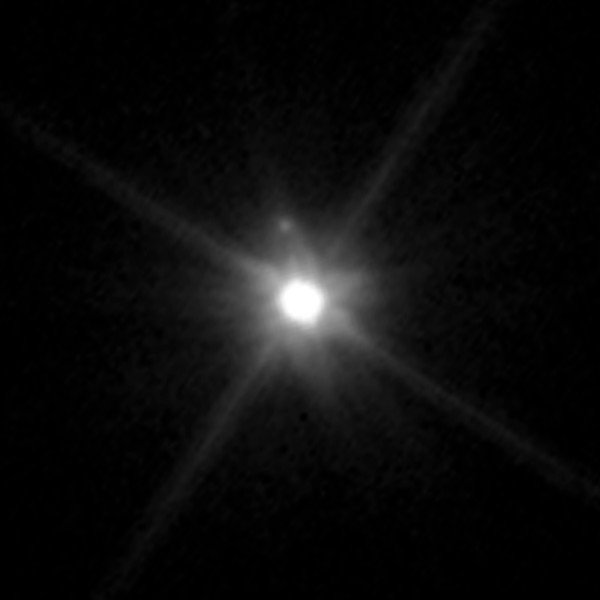
Haumea is in the rearview mirror now, with Makemake pulling into crystal-clear focus. Well, not 100% crystal-clear focus, but enough to see Winston Peters shouting that the car he was in had broken down was woke. Makemake is the fourth recognised dwarf planet from the Sun in our Solar System, after Ceres, Pluto, and Haumea.
Makemake hangs out in the Kuiper Belt, which makes it roughly 4.5 billion years old, similar to the other objects in the region. As for how and why Makemake was formed, scientists believe that Chuck Norris was not involved, which goes against public opinion, but rather that it coalesced from the protoplanetary disk that created the planets and dwarf planets.
Michael E. Brown, Chad Trujillo, and David Rabinowitz discovered Makemake on 31st March 2005 using the Samuel Oschin telescope at Palomar Observatory in California, United States. Three things are unique about the discovery.
1.) Michael E. Brown had already helped to discover Haumea.
2.) Brown only identified Makemake on 3rd April, when he was analysing images.
3.) The initial working name for Makemake was Easterbunny, since it was discovered just after Easter.
4.) Haumea, Makemake, and Eris were all found within months of each other.
5.) Makemake’s discovery helped to lead to a new classification of planetoids by the International Astronomical Union (IAU); the dwarf planet, which resulted in Pluto being reclassified. That’s the reason Pluto has never forgiven Makemake, and especially at family reunions, Pluto gets drunk and reminds everybody about it.
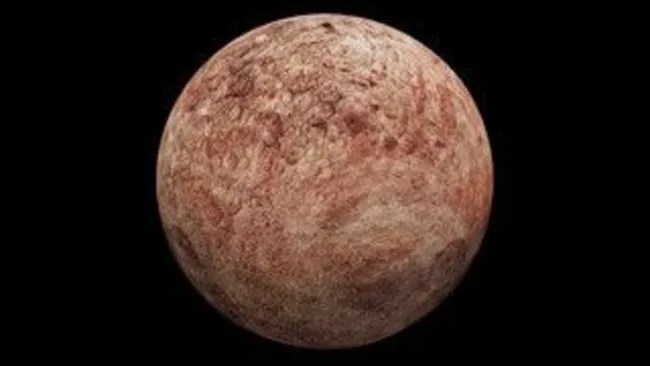
Makemake is named after the Rapa Nui god of fertility, as well as the creator of humanity. This falls in line with the tradition of using mythology to name cosmic objects, even if it’s not from Roman or Greek mythology. And if you’re wondering where the Rapa Nui people came from, surprise, surprise, they were the inhabitants of Easter Island. We also need to discuss how to pronounce Makemake. At first glance, it looks like make.make; however, it is really ma.ke.ma.ke, which is pretty boss.
Makemake has a diameter of 1,434 km, which works out to around 1/9th of the diameter of Earth, making it the 4th largest dwarf planet and the 24th largest object in the Solar System. For comparison, the distance is roughly the same as travelling from Paris, France, to Arad, Romania, or Oakland, California, to Albuquerque, New Mexico, in the United States. There is another reason Makemake is quite rad, and that’s because of its moon. Six of the eight planets in the Solar System have at least one moon, with four out of five dwarf planets having at least one. Sorry, Ceres.
Anyway, the moon was discovered on 27th April 2015, but it was a year later, 26th April 2016, that it was announced. Currently, it has one of the sexiest names in the Solar System, S/2015 (136472) 1, but sadly, it’s only a provisional designation. However, some people have tried to be cool and called it “MK 2” as an unofficial nickname.
MK 2 has a dark surface, along with a 175 km diameter, which is the same distance from Cape Reinga to Kaikohe in Northland, New Zealand, and roughly the distance between Cape Town and Cape Agulhas in South Africa. I love facts. If Makemake does have more natural satellites, or even rings, they remain to be seen, so place your bets now!
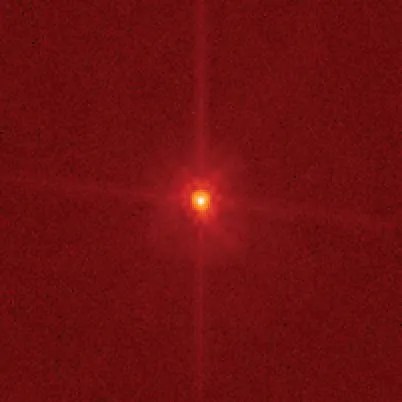
National Aeronautics and Space Administration
Since Makemake resides in the Kuiper Belt, its distance to the Sun is even further than Pluto or Haumea. Makemake orbits our local G-type main-sequence star, at an average distance of 6.8 billion km, which can break a human mind at conmpreheing the distance. This makes its average distance 45.8 AU, with 1 AU being the average distance from the Earth to the Sun, which works out to be about 150 million km.
Its perihelion, which is its closest point to the Sun, is about 5.7 billion km, but its furthest point away from the Sun, its aphelion, is 7.9 billion km. Makemake’s orbital speed is 4.42 km/s, compared to Earth’s 29.78 km/s.
6.8 billion km is just a bit more than a stone’s throw, but not for light. In a vacuum, light can travel about 300,000 km/s, so at this distance light from the Sun would take six hours and 20 minutes, or 380 minutes, to reach Makemake. This is the runtime for the original Star Wars Trilogy, or watching four rugby games and one netball game, back to back. As it orbits the Sun, it completes one rotation every 22 and a half hours, making its day length similar to Earth’s and Mars.
What’s next in Makemake’s profile? Don’t swipe left yet, because its orbit is interesting. Because of its massive distance from the Sun, it takes a lot longer for Makemake to orbit the Sun. The Earth takes 365.25 days, or one year, to complete one full orbit around the Sun, whereas it takes Makemake about 305 years. Just a tad more.
At a very rough estimate, when Makemake was in its present location 305 years ago, a world superpower was emerging. It was 1721, and at the conclusion of the Great Northern War and the Treaty of Nystad, Peter I became Emperor of All Russia, thus founding the Russian Empire. The echoes of that day are still being played out in Georgia and Ukraine. In 1721, the estimated total world population was about 650 million to 730 million people.
Just like Earth, Makemake has an elliptical orbit, but it is tilted with a 29° inclination to the ecliptic plane. And if you managed to stay awake in your high school’s physics class, you would know that the ecliptic plane is the flat plane of Earth’s year-long journey around the Sun. So, because of Makemake’s very sharp slope, it actually spends a lot of its 305 years travelling far below or high above the flat plane. Science is cool, kids, science is cool.
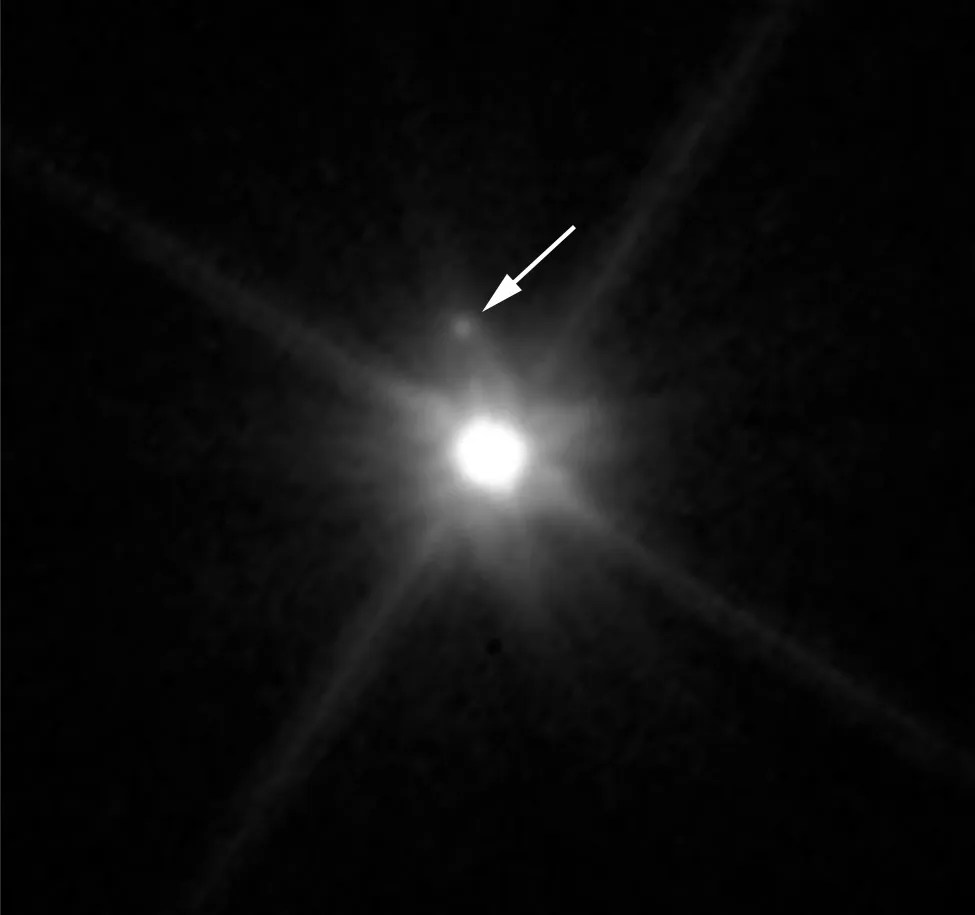
NASA, ESA, and A. Parker and M. Buie (SwRI)
Being so far away from the Sun, you can imagine that Makemake doesn’t receive a lot of sunlight. You could also imagine that it would be colder than a cold place; that’s really cold. Well, it may shock you to discover…no, I’m lying. Mars is a tropical paradise compared to Makemake, as it has average surface temperatures between −243°C and −233°C. This makes it even colder than Uranus, as you recall, the coldest planet in the Solar System.
In saying that, scientists have found something odd. Because of Makemake’s smaller mass, and to the best of my limited understanding, its gravity is not strong enough to hold onto a permanent, global atmosphere. However, data from the James Webb Space Telescope (JWST) have revealed a few things. The JWST detected methane, but also a very tiny amount of nitrogen, in addition to discovering emissions from Makemake, warming the localised region to -126°C due to surface activity, cementing the notion that Makemake is freaky.
The surface of Makemake is just as quirky. Makemake is covered in frozen methane, ethane and possibly nitrogen ice, along with tholin compounds, similar to Pluto and Haumea, which is believed to give Makemake its reddish-brown colour. The emissions that I had previously mentioned are quite possibly due to geothermal activity on the surface. This is backed up by the possible existence of cryovolcanoes, the methane emissions, and surface–atmosphere exchanges.
I could be wrong about this, but no craters, mountains, or surface landmarks have been officially named on Makemake. Imagine if the scientists were manga and anime fans; we could have Saitama Valley, Goku Crater, Mount Deku, or the Plains of Kusanagi.
No spacecraft has flown past Makemake, so all the information and data about it have not come from magical spells, but rather from images and data from ground-based telescopes, the Hubble Space Telescope, the JWST, and the New Horizons spacecraft that observed it from afar. Evidence suggests that using a gravity assist from Jupiter would take around 16 years for a spacecraft to travel to Makemake and explore it.
And with that, let’s call it a day. What’s your favourite fact about Makemake? As always, please let me know. I need to remind my loyal and patient readers and followers that my Mid-Summer break (Christmas holidays) is coming up, where I’ll be stepping away for a holiday running New Zealand’s 5th least favourite website. More details will be revealed closer to Christmas, though I’ll squeeze in the Avengers: Doomsday Movie Preview/Review before I go.
If you’re at a loose end, you should visit my Twitter and Mastodon accounts because they are smashing it. Currently, I have 49 followers on Twitter, and 170 followers on Mastodon; that’s 219 followers. I bet Trump does not have those numbers!
Thanks again for reading, following, and subscribing to Some Geek Told Me. Please don’t forget to walk your dog, read a banned book, go eat with chopsticks, and I’ll see you next week to discuss whatever pops into that tiny and illogical mind of mine. Take care.

