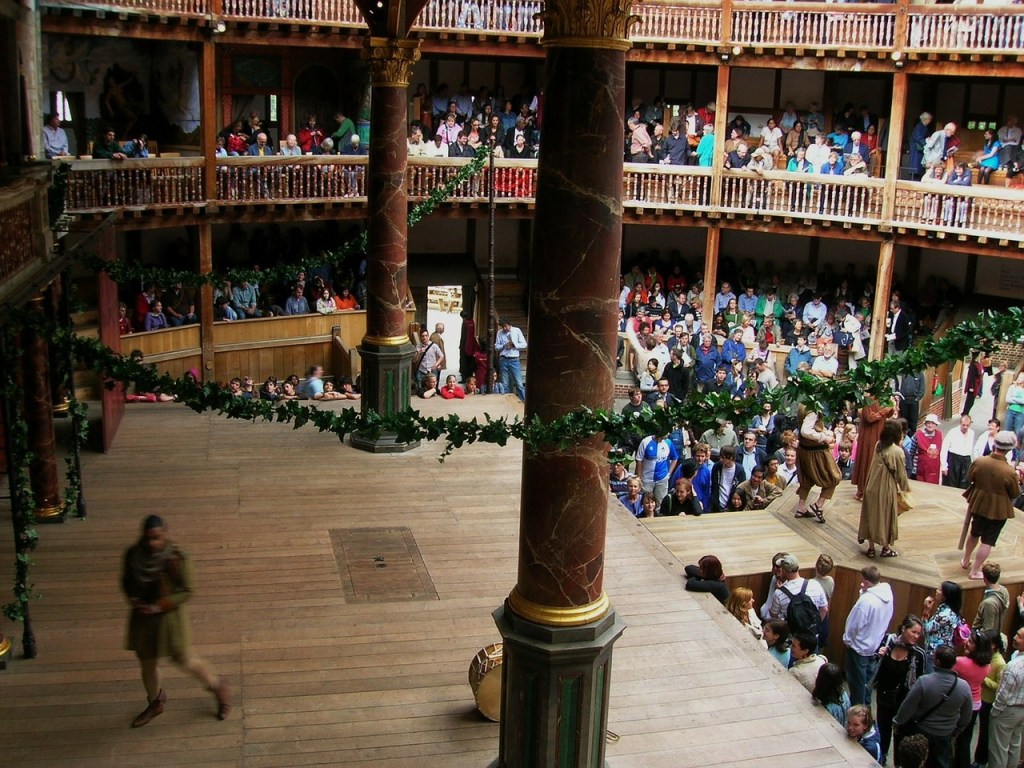
2026 is off to an interesting start

Once more unto the breach, dear friends, once more.

All of the staff at Some Geek Told Me are ready and raring to go for 2026. Another Gregorian Calendar year is spread out like a large, inviting beanbag, tempting us with comfort to trap us.

Many things are coming out this year that will evoke a range of emotions and feelings, filling therapists’ offices. Well, not all of them. There are things I’m looking forward to, and some that will make me squint my eyes and cross my fingers.

Over the past few years, I’ve published a version of this blog, and while it may not be entirely original, I believe it’s important to have things or events to look forward to. I also hold onto the hope that it’s all going to work out. Just to clarify, these are not New Year’s Resolutions, but rather Great Expectations for 2026.

And just like anything that happens on this wonderful corner of the internet, there are some rules. I have discussed them before, but let’s go over them.

1.) Just because an event is on the list does not mean I will get to experience that event in 2026. A book might be released in April, a movie might come out in July, or a TV show might be released on a streaming platform that I don’t currently subscribe to, so I may not read and watch them until 2027 or whenever. Also, I can’t watch every single sports game either; I wish.

2.) Some dates could be confusing because of time zone differences, but they are subject to change.

3.) Against popular belief, I don’t know everything. There will be information about an event that hasn’t been released yet, which I could be interested in, but if I don’t know about it, I can’t add it to the list.

4.) Hopefully, Sour Cream and Chives will finally be banned and labelled a plague on humanity. Dreams are free, aren’t they?

Two last things to note: I know the world is a crazy, but beautiful place. People are suffering for different reasons all over the planet, so this post is not ignoring that fact, but rather highlighting some positive and/or interesting things that are coming up in 2026, at least to me.

It also pays to remember that I’m a middle-aged, weird, straight, married white male, living in the South Pacific. The things you’re looking forward to could be very different from mine, and that’s alright.

So, what is there to look forward to in 2026? Let’s begin now, shall we?
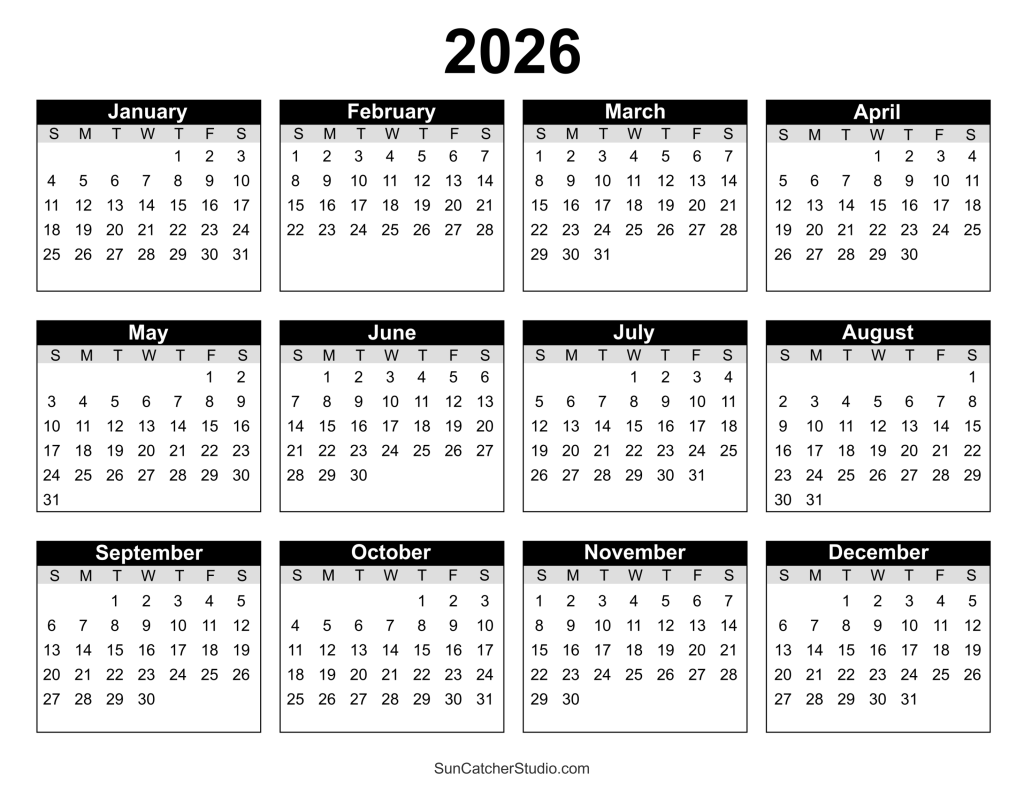

Credit: Suncatcher Studio

Let’s start with you, the reader, and what you can expect from New Zealand’s 5th least favourite website in 2026.

  • More spelling mistakes.
  • More grammatical errors.
  • More badly chosen topics.
  • More comic and manga blogs.
  • More blogs that are arguably not funny.
  • More movie previews/reviews.
  • More We Didn’t Start the Fire historic references.
  • More Tour of the Solar System posts.
  • Images and photos that are loosely connected to a post.
  • Possibly more Trump posts.
  • Hopefully, more science-related content.
  • The annual posts about Star Wars Day and Free Comic Book Day.
  • Fingers crossed, to finally start the animals blog posts.
  • Continue to increase subscribers (At the time of writing, I have 242 followers/subscribers across three social platforms. Jealous much?)

I’m sure there are more things, but my media spokesperson said any more information could incriminate myself.

With that, let us move on to other subjects.

Politics

All general elections around the world are important, but these elections I will be following very carefully. Listen to me, talking like an expert.

  • Nepal: General Election (5th March)
  • Vietnam: Parliamentary elections (15th March)
  • Republic of the Congo: Presidential elections (22nd March)
  • Hungary: Parliamentary elections (Expected on 12th April)
  • Peru: General elections (12th April)
  • Libya: Presidential and parliamentary elections (Expected in April)
  • Colombia: Presidential elections (31st May)
  • Lebanon: Parliamentary elections (Expected in May)
  • Ethiopia: General elections (1st June)
  • Haiti: General elections (30th August)
  • Russia: Parliamentary elections (Expected in September)
  • Brazil: General elections (4th October)
  • Israel: Parliamentary elections (Scheduled for 27th October, but will likely happen earlier)
  • United States: Midterm elections (3rd November)
  • New Zealand: General Election (To be confirmed, but no later than 19th December 2026)
  • South Sudan: General elections (Expected on 22nd December)

Sport

There are always watching and following the teams that I support, and one day I’ll write about that, but these single games don’t count. It’s just tournaments and competitions that I’m focusing on, because they include my four favourite sports. I am a New Zealander after all.

Rugby Union:

  • Men’s and Women’s Six Nations Championship (February-March and April-May)
  • Men’s Inaugural Nations Championship (July-November)
  • All Blacks’ Tour of South Africa (August-September)
  • Women’s Pacific Four Series (Dates to be confirmed)
  • Black Ferns Home Series against France (October)
  • WXV Global Series (Dates to be confirmed)

Rugby League:

  • NRL (National Rugby League) Competition
  • Rugby League World Cup (October-November)

Cricket:

  • ICC Men’s T20 World Cup (February-March)
  • ICC Women’s T20 World Cup (June-July)
  • New Zealand Men’s Tour of India (January)
  • South Africa Men’s tour of New Zealand (March)
  • South Africa Women’s tour of New Zealand (March-April)
  • New Zealand Men’s Tour of England (June)

Football:

  • African Cup of Nations (December 2025-January 2026)
  • 2025-2026 UEFA Champions League
  • 2025-2026 English Premier League
  • 2025-2026 A-League
  • FIFA Men’s World Cup (June-July)

Movies

These movies are all coming out this year, and I’m going to hopefully watch them at the cinema or at a later date on a streaming service. Maybe. I’m also very aware that a lot of these entries are adaptations, remakes, or sequels. There are a lot of superheroes and science-fiction choices, sorry.

  • Wuthering Heights (11th February)
  • Hoppers (6th March)
  • Project Hail Mary (20th March)
  • Animal Farm (1st May)
  • Star Wars: The Mandalorian and Grogu (22nd May)
  • Supergirl (26th June)
  • Minions 3 (1st July)
  • The Odyssey (17th July)
  • Spider-Man: Brand New Day (31st July)
  • Coyote vs. Acme (28th August)
  • Clayface (11th September)
  • Sense and Sensibility (21st September)
  • Digger (2nd October)
  • The Hunger Games: Sunrise on the Reaping (20th November)
  • Narnia: The Magician’s Nephew (26th November)
  • Dune: Part Three (18th December)
  • Avengers: Doomsday (18th December)

Television

Like the movie entries, I would like to watch these shows; it just depends on which streaming service they are on, because we don’t own a television. Basically, what I’m saying is that whether or not I can watch the TV show, it’s on the list because I want to watch it. As you can see, these TV shows are aimed at me.

  • Star Trek: Starfleet Academy (January)
  • A Knight of the Seven Kingdoms (January)
  • Wonder Man (January)
  • Lanterns (Mid year)
  • VisionQuest (Date to be confirmed)
  • Spider-Noir (Date to be confirmed)
  • Star Wars: Maul – Shadow Lord (Date to be confirmed)
  • Star Wars: Visions: The Ninth Jedi: (Date to be confirmed)

Music

I have no idea. Seriously, I suck.

Literature

Comics

Apart from the monthly titles and mini-series I’m already reading; which don’t count, there aren’t a lot of choices.

  • Saga is returning with #73.
  • The Crown: A Tale of Hell #1-2 (Hellboy mini-series)
  • Any Marvel/DC crossovers like Superman/Spider-Man and Spider-Man/Superman.

Manga

Just like the comics, I read some manga titles, so they don’t count.

  • Star Wars: Visions: Tsukumo (July)

Fiction and Non-Fiction

I am embarrassed to admit this, but my to-be-read piles have grown out of control. I now have four piles of books, so because of this, I have not researched any fiction or non-fiction books that are being released this year. I’ve become a dragon hoarding treasure, except the treasure is books. I’ve decided I need to read more books from my piles before purchasing any new ones this year. However, I might still give in if something truly captures my attention.

Honourable Mentions

  • The Commonwealth Games (July-August)
  • Free Comic Book Day/Comics Giveaway Day (2nd May)
  • Star Wars Day (4th May)
  • Any new species discovered.

I know the list is boring, and I also know there are more important things in life than movies, sports, and comics, like capturing a leader of a sovereign nation. Don’t be like the United States, I’m looking at you, Russia and China. It could just be me, but I’m starting to think Donald Trump doesn’t take the FIFA Peace Prize seriously at all.

Have I missed anything? What are you looking forward to in 2026? As always, please let me know. Thank you for reading, subscribing, and following Some Geek Told Me in 2025, and may it continue in 2026. Please remember to walk your dog, read a banned book, the Earth is not flat, and I’ll see you next week.


Shakespeare movie adaptations that are hidden in plain sight: Vol 1

Step right up, step right up for another blog post detailing how humanity can cure cancer, solve climate change, and understand why children are weird. Oh, wait, I can’t answer any of those questions, sorry. At least not today.

Diving into the nearly five-year-old bag of suggested topics from the staff at Some Geek Told Me, I have selected a topic that, every six months or so, I decide to write, but talk myself out of it. However, the die has been cast, and the wait is over.

As hardcore followers of this amateurish attempt to educate people, you will know that this geek suffers from a Shakespeare affliction. I can’t recite speeches or explain what the hell the characters are saying. Though, to be fair, what I can do is explain the plots and the themes. Well, to be honest, it’s what I think the themes are, so I could be 80% wrong.

Granted, the works of William Shakespeare have lasted over 400 years, much to the disappointment of all secondary school students studying English. I love the motivations behind characters, both heroes and villains, as well as how relevant the stories can be to contemporary audiences.

Watching a Shakespearean movie or attending one of his plays automatically engages my brain to sit up straight, focus, listen, and try to keep up. Over the years, this has led the plays to be adapted into various media like movies, comics, novels, and TV shows, among others.

Some adaptations would keep Shakespeare’s language of Early Modern English, while others would use Modern English, but still keep to the plot. Some adaptations are set in 16th-17th-century Europe, others in modern times, while others are set somewhere in between or earlier.

For today’s lecture, we are going to look at one group of these adaptations: the movies. Typically, it’s quite easy to identify a Shakespeare movie adaptation, because of its name: William Shakespeare’s Romeo + Juliet, Henry V, Othello, Richard III, Hamlet, and Coriolanus, to select but a few.

They are direct adaptations, or as close as a film production can allow. However, young grasshopper, there are a small group of movies that are indirect adaptations of one of Shakespeare’s plays, but they are not advertised as that, for whatever reason. Several films can fit into this niche, so this blog post will be the first of many; the single consideration is that I’ll try very hard to only have one movie per play.

So, for your reading pleasure, I have collected four examples of movies that are secretly Shakespeare adaptations. I hope you enjoy this as much as I did writing it. Let’s begin now.


Image by beauty_of_nature from Pixabay

West Side Story (Romeo and Juliet)

We are going to start with a very obvious one, and for good reason. West Side Story was originally a musical adaptation of Romeo and Juliet, which had opened on Broadway in 1957. The production was a huge success, so a film was produced, based on the musical.

The film was released in 1961, which is what we will be comparing. In the Upper West Side of Manhattan, New York City, in 1957, is where we lay our scene. In comparison, Romeo and Juliet was written sometime between 1591 and 1595.

Both stories deal with star-crossed lovers, in the form of Romeo Montague and Juliet Capulet, along with Tony (Richard Beymer) and Maria (Natalie Wood) from West Side Story. The House of Montague and the House of Capulet are feuding families in Verona, with Romeo and Juliet belonging to opposite houses.

Maria’s older brother, Bernardo (George Chakiris), is the leader of the Sharks, a teenage street gang, looking to control the Upper West Side. The Jets are a rival gang of which Tony was a co-founder and former member.

Trying to keep the warring families at bay in Romeo and Juliet is Prince Escalus, with the equivalent being two characters, Lieutenant Schrank (Simon Oakland) and Sergeant Krupke (William Bramley) in West Side Story. Other similar characters are Mercutio, Romeo’s friend, and Riff (Russ Tamblyn), best friend to Tony; Tybalt, Juliet’s cousin, is Bernardo; while Count Paris, Juliet’s suitor, is Chino Martin (Jose De Vega).

The two stories follow events to their tragic conclusion, but with a subtle difference. In Romeo and Juliet, Mercutio is slain by Tybalt, Tybalt is then slain by Romeo, Paris is killed by Romeo, and both Romeo and Juliet kill themselves. Both Houses are in mourning, and thus, the feud ends.

In West Side Story, Riff is murdered by Bernardo, who, in turn, is killed by Tony. However, you are expecting Tony to kill Chino, but it’s the opposite; Chino shoots and kills Tony. Maria threatens to kill Chino, the Jets, and the Sharks because of their hatred, which has taken the lives of Riff, her brother, and her lover. In the end, she backs down, but she ultimately survives the carnage, and the feud ends.

On a personal note, Romeo and Juliet is often described as the world’s greatest love story. It’s not the ultimate love story; it’s one of the world’s greatest tragedies. Much like West Side Story, love, violence, hatred, and prejudice are woven into both tales to tell and explore the human experience. West Side Story is a love story as well as a tragedy. Tony dies, but Maria lives, so hope remains. As for Romeo and Juliet, their tragedy is complete, for never was a story of more woe, than this of Juliet and her Romeo.

The Lion King (Hamlet)

I’m sorry to point this out and possibly damage your childhood, but I am not the first person to say this; the story of The Lion King is actually Hamlet in disguise. Wait, just hear me out.

This tragedy has a prince who goes into mourning as his father, the king, has died. The prince’s uncle, his father’s brother, ascends the throne. The prince goes into exile with two friends and returns years later to a kingdom that is rotten.

If you had thought I had just explained Simba’s story when it came out in 1994, you would be correct; however, it also mirrors Hamlet’s journey, which was written between 1599 and 1601. The stories share characters and their equivalents, with Simba (Hamlet), Mufasa (King Hamlet), Scar (Claudius), Nada (Ophelia), and Zazu (Polonius), along with Timon and Pumbaa (Rosencrantz and Guildenstern).

Even though the early 17th-century royal court of Denmark is swapped for the plains of the Serengeti in Tanzania, the plots have parallel events, though not entirely. Both kings are murdered by their brothers, who take the throne and are terrible rulers; both kings appear as ghosts to their sons and give advice; Simba and Hamlet have a love interest in Nada and Ophelia, respectively; both princes go into exile; and Scar and Claudius both die at the end.

Disney could have gone all in with a more accurate adaptation with Simba killing Nala’s father by accident; Simba’s mother, Sarabi, marries Scar; Nala commits suicide by drowning; Simba goes mad with grief and vengeance; another pride of lions invades and takes over the Pride Lands; and lastly, Sarabi, Scar, and Simba, all die in the closing scene. It would have been a beautiful nightmare, with Simba/Hamlet’s story haunting a generation of children, all over the world.

10 Things I Hate About You (The Taming of the Shrew)

Viewed through a contemporary lens, The Taming of the Shrew can be some what problematic, considering it was between 1590 and 1592, when it was written. However, that did not stop Hollywood from having a crack at it. Back in 1999, 10 Things I Hate About You was released, and even though the titles were different, it was based on The Taming of the Shrew.

I hope the Bard can forgive me for breaking his comedic play down like this, but The Taming of the Shrew was set in Padua, Italy, where we met a nobleman, Baptista Minola, who has two daughters, Katherina and Bianca. Many suitors would like to marry Bianca, but her father has decreed that Bianca can only get married when Katherina does, but no man wants to because of her assertiveness, along with her quick and sharp wit.

Some plans focus on the suitors Hortensio and Gremio, but also include Lucentio, who also wishes to marry Bianca, and Petruchio, tasked with wooing Katherina. Typical Shakespearean romantic mischief ensues, with everyone ultimately finding love.

10 Things I Hate About You shares many plot points, names, and characters with The Taming of the Shrew. The film is set around the students who attend Padua High School. Walter Stratford (Larry Miller) has two daughters, and you guessed it, Katarina (Julia Stiles) and Bianca (Larisa Oleynik). Like a similar decree from Baptista Minola, Walter explains that Bianca is only allowed to date when her older sister does.

Enter Cameron James (Joseph Gordon-Levitt), who has fallen for Bianca, so he enlists help from Patrick Verona (Heath Ledger) to woo the anti-social Katherina, so Cameron can date Bianca. By the end of the film, everybody is happy like a 90s high school film should be. It also had a Shakespeare reference with Sonnet 141.

O (Othello)

If you have been keeping score, and why wouldn’t you be, we have discussed two tragedies and one comedy. I’m a bit inclined to favour the tragedies, since they can teach us a lot about ourselves. Case in point, here is another tragedy, Othello.

Written about 1603, the story of Othello is a blueprint of having it all and losing it to jealousy. It’s a cautionary tale about Othello, a military commander, who is tricked and manipulated by one of his lower-ranked officers, the traitorous Iago, into believing that his wife, Desdemona, is having an affair with another officer, the loyal Michael Cassio.

In some academic and literary circles, Iago is considered to be the worst villain in all of Shakespeare’s works, and it’s not a surprise; he ruins lives. By the end of the play, Iago had murdered his wife, Emilia, and Roderigo (a nobleman), while stabbing Cassio, but not fatally. Othello had murdered Desdemona by smothering her, because of Iago’s lies, then realised Iago was behind it all, and stabs him, but he survives.

Othello then commits suicide by stabbing himself. Iago is arrested and taken away, but famously refuses to explain his motivations. Othello has mischief and hijinks, but it is not comedic; it’s just fraught with paranoia and jealousy.

Like 10 Things I Hate About You, O is set in modern times, with American teenagers. Mekhi Phifer stars as Odin (Othello); Josh Hartnett as Hugo (Iago); and Julia Stiles is back again, but this time she plays Desi (Desdemona). We also have Andrew Keegan as Michael Cassio (Michael Cassio), Elden Henson as Roger Calhoun (Roderigo), Rain Phoenix as Emily (Emilia), John Heard as Bob Brable (Brabantio, Desdemona’s father), and Martin Sheen as Coach Duke Goulding (The Duke of Venice).

The story of O does not centre around soldiers and officers, but rather high school basketball players and students. O follows the events of Othello, with Hugo manipulating people and events, but the end is still the same. Hugo shoots and kills Roger, along with his girlfriend, Emily. Odin strangles Desi to death, then shoots himself after learning that his friend, Hugo, had caused all of the chaos. Hugo, vowing not to reveal his motivations, is arrested by the police.

As I said earlier, many more films have been based, even loosely, on Shakespeare’s works, and this blog post will return to discuss more of them. But like I also said, only one movie per play, so Romeo and Juliet, Hamlet, The Taming of the Shrew, and Othello are done, with more to follow.

Do you have a favourite movie that is secretly a Shakespeare adaptation? As always, please let me know.

That’s it for me this week. Thanks again for reading, following, and subscribing to Some Geek Told Me. Please remember to walk your dog, read a banned book, donate to a food bank, and I’ll see you next week, where I discuss comics for a change.


TIME’s Person of the Year is not what you think it is

I realise there are more pressing issues confronting the world currently. These include the danger of climate change, the Sudanese civil war, the cryptocurrencies of Cristiano Ronaldo and the Hawk Tuah girl, Israel’s genocide of Palestine, when the Superman trailer is going to drop, and whether The Lord of the Rings: The War of the Rohirrim, will rule them all at the box office.

In saying that, I must acknowledge last week’s announcement of TIME’s 2024 Person of the Year. If you’ve been living under a rock or listening to Chumbawamba’s Tubthumping at full volume for a week, then you would have heard that the lucky winner was 2016’s winner, Donald John Trump. You know, the star of Zoolander, Home Alone 2: Lost in New York, Two Weeks Notice, The Little Rascals, and Eddie.

As you can imagine, the concept of Donald Trump winning TIME’s 2024 Person of the Year, has delighted millions of people and equally enraged millions more. On one hand, people are praising the decision, because he’s the OG of MAGA, defeated Kamala Harris in the US Presidential election, survived an assassination attempt, and is the proud father of three of his five children.

On the other hand, Trump’s been busy. He was convicted on 34 felony charges for falsifying business records related to hush money payments to a porn star, found liable for sexual assault and defamation, and has more legal issues concerning the IRS, and the Trump Organisation, among others.

So the two questions on many people’s minds are, yes, bananas do grow upside down, but also, why was a convicted felony and President-elect selected as TIME’s 2024 Person of the Year? Sadly, the answer is boring and nuanced, because, and say it with me, TIME’s Person of the Year is not what you think it is.


Credit: TIME

Let’s go back a few steps to 1927, when TIME, the American news magazine, first introduced the award of Person of the Year to Charles Lindbergh.1 Now you would think gracing the cover of TIME for the Person of the Year, would be a great honour, worthy of the amazing contributions you have made to humanity for the past year.

Again, you could imagine that it was because you had developed a vaccine, brokered a peace treaty and ended a war, discovered a new early human species, won the World Cup, was the star of a $2 billion blockbuster, or won an election. If you thought this, you would be wrong, oh so wrong.

According to TIME editors, to be awarded Person of the Year, you need to fit this criteria:

“Featuring a person, group, idea, or object that “for better or for worse … has done the most to influence the events of the year.”

I’m going to let that sink in for you. Influence the events of the year. Not curing children’s diseases; not clearing mines from a warzone; not freeing sex slaves; not persecuting racists, like the Ku Klux Klan, or Neo-Nazis; not developing carbon capture devices; or not fighting for human and animal rights; but influence the events of the year.

After reading that, and for better or for worse, tell me that person(s) is not Donald Trump. Did I want it to be him? Of course not, because both my grandfathers would return from the grave to beat some sense into me if I did.

However, this is the reason Donald Trump was awarded the title; not because he’s a good, honest, positive, decent, law-abiding and amazing person, but because he has dominated the news cycle in 2024. He really has. Even here in New Zealand, we have read and watched his shenanigans this year, whether they were election-based or legal-based.

To highlight the selection, I give you two quotes from TIME”s website on the announcement, to better explain the choice from their point of view:

“For 97 years, the editors of TIME have been picking the Person of the Year: the individual who, for better or for worse, did the most to shape the world and the headlines over the past 12 months. In many years, that choice is a difficult one. In 2024, it was not.”

“Today, we are witnessing a resurgence of populism, a widening mistrust in the institutions that defined the last century, and an eroding faith that liberal values will lead to better lives for most people. Trump is both agent and beneficiary of it all. For marshaling a comeback of historic proportions, for driving a once-in-a-­generation political realignment, for reshaping the American presidency and altering America’s role in the world, Donald Trump is TIME’s 2024 ­Person of the Year.”

Nobody on the planet had dominated and influenced the news cycle in 2024 more than Donald Trump. Even Palestine was drowned out by the MAGA Emperor. Using TIME’s definition of “Featuring a person, group, idea, or object that “for better or for worse … has done the most to influence the events of the year”, Donald Trump is the clear winner.

I know this decision has upset people, but I want to leave you with two things; one negative and one positive. If you’re angry about the choice, don’t blame Trump. He’s a 78-year-old narcissist, who doesn’t have the need, desire, or ability to change.

Don’t blame TIME, by trash-talking or boycotting them. It’s their rules and they are just following them.

If you want someone to blame for Trump winning this award, blame yourself. Blame your parents, children, spouse, siblings, neighbours, and politicians. Blame teachers, lawyers, journalists, reporters, scientists, librarians, talk show hosts, activists, social influencers, podcasters, singers, actors, and world leaders, for this mess.

You could blame everybody and anybody you’ve ever talked to in the last 10 years. Hell, you can even blame me. The reason is that all of these people, regardless of their political philosophy and beliefs, or mine, all have something in common: whether it’s positive or negative, we all talk about Trump.

Any attention that man gets is good attention, because it means people are talking about him, and that’s what he wants. And we have all given it to him, which is why he has dominated the news cycle.

By ignoring his crazy rants and lies, along with his illegal dealings, we are condoning his behaviour; therefore, we are enabling him. By calling out his crazy rants and lies, along with his illegal dealings, he can play the “I’m a billionaire victim because the false news and the deep state are out to get me” card; therefore, we are enabling him.

He’s like a male succubus, but instead of feeding and living off sexual energy and activity, he thrives on communication. The more people discuss him, the stronger he becomes. His ego feeds off the attention. But hey, what do I know? Even writing this stupid post will probably mean Trump will reach Super Saiyan God status now.

As for the positive part, just remember that even though Trump won this award, he joins some other previous top-quality winners of the award like Chiang Kai-shek and Soong Mei-ling (1937), Adolf Hitler (1938), Joseph Stalin (1939 and 1942), Richard Nixon (1971 and 1972), Henry Kissinger (1972), Ruhollah Khomeini (1979), Jeff Bezos (1999), Vladimir Putin (2007), and Mark Zuckerberg (2010).

Trump and the rest of the League of Losers can’t hold a candle to recent winners like The Ebola Fighters (2014), Angela Merkel (2015), The Silence Breakers (2017), and Greta Thunberg (2019); along with my favourites, The Protester (2011), The Guardians (2018), and Volodymyr Zelensky and The Spirit of Ukraine (2022).

And with that, I’m going to shut my mouth and go to bed. We are well into Summer here, which I’ll discuss somewhat next week. Thanks again for reading, following, and subscribing to Some Geek Told Me. Please remember to walk your dog, read a banned book, keep watching Syria and Palestine, and I’ll see you next week. Christmas is coming!


1 The award was actually first named Man of the Year, but eventually, equality caught up.

Three couples we need to stop admiring

To quote Huey Lewis and the News, “The power of love is a curious thing, Make a one man weep, Make another man sing.” Love can change and transform a person; it can make them loving, compassionate, brave, empathetic, happy, and basically everything else positive society can throw a label on.

Like many things or concepts in this mad little world, love is like a coin; it has two sides or two faces.1 On one face of the coin, is love as described by Jane Austen: witty, lovely, romantic, charming, and enduring. On the other face, well, we have love described by the Brontë sisters: dark, jealousy, twisted, obsessive, and secretive. Love can make people do some pretty crazy stuff and not all of it is good.

There are many couples throughout history and pop culture that personify romantic love. We can admire these couples as role models; whether straight, gay, or everything else. However, there are equally couples that are so bad for each other, that everybody knows they shouldn’t be together, or at least, have some extreme Brontë issues to work through.

Toss the love coin for a couple and see where it lands. Does it land Austen face up, or is it Brontë? That seems easy, doesn’t it? But what about the couples in the centre of the Venn diagram? What if the coin does not land face down, but is actually on its side? 2

Some people look and say that these couples are lovely and romantic, so they must belong together. They are admired, romanticised, and even idolised. Now I’m not an expert on love; ask my wife, but I have three couples that do not deserve your admiration. As a collective society, we need to stop lying to ourselves about these couples.

May I submit three couples that we desperately need to stop admiring: 1 x historical couple and 2 x fictional couples. Let’s break some hearts!


Image by Pexels from Pixabay

Bonnie Parker and Clyde Barrow (Bonnie and Clyde)

Bonnie Parker and Clyde Barrow were part of the Barrow Gang, which included Clyde’s brother Marvin “Buck” Barrow, and his wife Blanche. They operated in the Central United States of America, during 1932-1934, committing small-time heists and bank robberies.

Bonnie and Clyde were romanticised at the time, and still are. They were a young couple, living their best life, which fed into the counterculture, with part of the public admiring and adoring them. One of the reasons was that Bonnie was already married to a man named Roy Thornton, but she was in love with Clyde.

In the grips of the Great Depression, these love birds were fighting to be free and live wild. The growing problem was their crimes were becoming more violent, which resulted in people being killed. This made the public slowly turn on them, and law enforcement officers hunted them.

On 23rd May 1934, Bonnie and Clyde’s crime spree ended. They were ambushed in their car, by law enforcement officers and were shot to death. Bonnie had 26 bullet wounds, and Clyde received 17; with both suffering head shots.

Over the years, their romantic legacy has grown across the world, especially because of the Academy Award-winning 1967 film, Bonnie and Clyde. But let’s face facts; Bonnie and Clyde committed multiple robberies of banks, gas stations, and small stores, but also killed at least 12 people; which included nine law enforcement officers.

It’s been 89 years since their death, and I’m sorry to say, we need to stop admiring them.

Romeo Montague and Juliet Capulet (Romeo and Juliet)

Did you see this one coming?! First performed in 1597, William Shakespeare’s immortal play Romeo and Juliet, has been touted as one of the greatest love stories ever told. It’s been adapted into film, ballet, opera, paintings, and literature, and is still performed through theatre around the world. Over 420 years later, people are still experiencing and revisiting the story.

Though should we still be experiencing Romeo and Juliet? Hell, yes! I’m not smart enough to articulate just how impactful and amazing the play is, and why it’s important. To me, it’s good, it’s so, so good. However, that isn’t the correct question we should be asking.

We should hold on to Romeo and Juliet, until the potential heat death of the universe. But should we keep romanticising them? Hell, no!

I want you to think about a few things:

  • The entire play is set over six days. Yes, just six days!
  • When Romeo meets Juliet for the first time, he’s on the rebound from Rosaline (Sunday evening).
  • Romeo and Juliet fall in love with each other (Sunday evening).
  • Romeo meets Juliet for the second time and agree to marry (Late Sunday evening).
  • The next day, Romeo and Juliet marry (Monday afternoon).
  • By Friday morning, both Romeo and Juliet are dead by their own hands.

Imagine if your child or grandchild came to you and said, that the person they were planning on marrying today, they had only met them the day before? What would you do? Seriously, what would you say?

From the time I first met my future wife, to actually getting married was 20 months. I used to think that was fast, but that’s at a snail’s pace, compared to Romeo and Juliet’s 24 hours!

This brings me to their ages. At the time of the wedding, I believe Romeo was 16 years old, and Juliet was just 13 years old. Granted the play was set in Verona, around the 14th/15th century, but still.

Another love myth to break about the couple is that by the end of the play, six people had died. They were Mercutio, Tybalt, Lady Montague, Paris, and the idiots of the story, Romeo and Juliet. Yes, Romeo and Juliet did kill themselves, but through their actions; directly and indirectly, four other people paid the ultimate price for their one-night stand. Romeo alone personally killed three people!

“These violent delights have violent ends.”

If you’re looking for romance, love, or shenanigans in a Shakespearian play, then admire these couples: Sebastian and Olivia, Viola and Orsino, Lucentio and Bianca, Petruchio and Katherina, Bassanio and Portia, Beatrice and Benedick, or Orlando and Rosalind.

Romeo and Juliet truly belong with the other tragic couples: Othello and Desdemona, Macbeth and Lady Macbeth, Antony and Cleopatra, Duke of Albany and Goneril, Duke of Cornwall and Regan, and of course, Hamlet and Ophelia.

The tale of Romeo and Juliet is not a love story, because nobody is left happy at the end. I think one of the points of the play is not to admire Romeo and Juliet; because they don’t deserve it, but to see their flaws and mistakes, so you don’t have to make them yourself.

The Joker and Harley Quinn (The Joker and Harleen Quinzel)

I’m not going to spend a lot of time with this couple because they are the textbook example of a toxic relationship. When everybody’s favourite Arkham Asylum escapee was recaptured and brought back, the Joker met, manipulated, seduced, and corrupted psychologist Harleen Quinzel, and helped her to transform into Harley Quinn.

Harley Quinn became the Joker’s accomplice and girlfriend, but it was an awful abusive relationship. Over the years and in different versions, the Joker has done some pretty horrible things to Harley. These involve various methods, and include and not limited to throwing her into a vat of industrial chemicals; pushing her out of a window; torturing her by beating, cutting, and hanging her half to death; setting Harley’s own hyenas onto her; planning to kill her in front of the Dark Knight; tried to cut her face off; locked her into a rocket; he killed her and transformed her into a constellation; constantly beating and casting her out before wooing her back; and one time, he didn’t even notice that Harley had left for a year.

And just to clarify, Harley is not blameless in this mess. By the Joker’s own admission, he believes that Harley is crazier than him. The way the Joker controlled and manipulated Harley, only worked because Harley thought his abusive behaviour was a sign that he loved her. It wasn’t.

The Joker would have rather beaten Harley to a bloody pulp than admit he cared for her; as much as a homicidal, sadistic psychopath can care for someone.

Unlike the previous two entries on this list, there is a happy ending of a sort. Harley ultimately left the Joker forever and is now in a loving, positive, and healthy relationship with Poison Ivy. Though whether Harley being involved in another relationship with a villain is a good idea, remains to be seen.

And there you have it. Just like Fat Boy Slim said, “Like a favourite pair of jeans that you won’t give up on,” we need to give up on the idea that these three couples are to be romanticised, admired, or idolised because they don’t deserve it. You wouldn’t wish any family member to be involved in any relationship, similar to these disasters, would you? Well, maybe it depends on the family member.

Have I missed any toxic couples out? As always please let me know. I know I didn’t include Heathcliff and Catherine, but to be honest, this blog got away from me, so I’ll include them next time. 3

Thanks once again for reading, following, and subscribing to Some Geek Told Me. I’m also on Twitter and Mastodon, where I have daily posts, and attempt to be funny.

Please don’t forget to walk your dog, read a banned book, avoid playing Monopoly at all costs, watch some Rugby World Cup games, and I’ll see you next week.


1 It’s been a long time since I snuck in a Batman reference.

2 This is a shout out to Heathcliff and Catherine. I see you, I see you.

3 I told you I saw Heathcliff and Catherine.

The Entertainment differences between my Wife and I

I want to talk about my wife. Why? Considering she’s the only other adult in my house, we do have a lot in common. I mean, we did get married, so we must actually like each other. We both enjoy various pop culture franchises like Doctor Who, Star Wars, Harry Potter, and the list could go on and on.

We both love reading and eating pizza, as well as sharing a hatred of housework. We’re also in agreement that something very strange is happening with our local corner shop, because the hours they’re open are truly bizarre.

There are many other similarities between us, but they are not as interesting as the differences concerning entertainment.

If you can break it all down, there are two major differences between us. The first is…it’s still difficult to acknowledge this publicly, but my wife enjoys Sour Cream and Chives. I know what you’re thinking; how did a Salt and Vinegar-loving and Sour Cream and Chives-hating guy like myself, end up being married to a Sour Cream and Chives-loving and Salt and Vinegar-hating woman? No one is perfect or infallible; except God, Chuck Norris, and Sir David Attenborough.

One day I’ll write about a pair of star-crossed lovers, meeting over a packet of Chicken chips, but today is not this day.


Image by JayMantri from Pixabay

The second major difference is the consumption of entertainment; such as novels, movies, and tv shows. Let’s start with movies, shall we? I enjoy movies, either watching them at home or at the cinema; because everybody loves watching a movie in the dark with 100 other random people, while eating overpriced food.

The way I view movies can easily fall into two groups: movies I’ve seen before and movies I’ve never seen. There are a lot of movies that I would love to see again, whether they are one of my favourites, or if they are part of a series with a new addition coming out, so I want to familiarise myself with the plot and characters again. That sounds fair, right?

On the other hand that is not holding a lightsabre, there are new movies that I want to see; which to be honest is the majority of the two. Do I want to see every new movie that’s released? No, that’s insane, plus I would be broke. I just want to see some particular new movies, for whatever particular odd reason.

Ok, but what about my wife? She’s like me, that she can enjoy rewatching a favourite movie. This is something that she likes and is comfortable with. She knows the actors, the director, the plot, and the genre, so she knows what to expect. Again, that sounds fair, right?

With new movies, we do have a problem though. My wife does not like watching new movies; mainly ones she knows next to nothing about. She will happily watch a new movie at the cinema or at home, with pre-existing characters that she knows and loves. But ask her to watch a movie where she doesn’t know the characters or the plot? Hell, no. She will not watch it.

There is a loophole to this law: my wife will watch a new movie with characters she has never seen before, if…and only if, she has read the book that the movie is based on. That way, she is guaranteed to know various things about the plot and characters. You can’t expect her to watch a movie that she knows nothing about, can you?

So when it comes time for the two of us to sit and actually watch a movie together, there is a lot of discussion and negotiating involved.

Books are also treated the same way for both of us; to a point. I will reread my favourite books, but my main focus is reading new material. I have said this before, but my reading pile is reproducing asexually because it’s grown to five piles which are now sitting on my set of drawers. I have to apologise to them daily for not reading them fast enough; I have a Star Wars book that’s been sitting there for three years and counting.

Would you like to know where my wife’s reading pile lives? Those books are sitting next to the other books on the shelves, that she has already read! When my wife finishes reading a series, “What should I read next?” would be the next question. If you’re thinking, “You should read a book you’ve never read before”, then you don’t know my wife.

She will simply look through the shelves and select a book series that she has already read 100 times before, and start reading. Why you ask? It’s the same reason as the movies; she already knows the plot and characters; it’s familiar and that means the books are something that she is going to like, because…she has already liked and read them before!

I feel she’s my own personal mogwai, that comes with pop culture rules. There are exceptions to her book law: my wife does not like reading a stand-alone book, that is not part of any series. The biggest reason for this is that if she ever reads and likes the book, where does she go from there? There’s no sequel or prequel, it’s just the end. So would my wife commit her time and energy to a single book? It could go either way.

“Hang on, Scott. If your wife only ever reads books she has already read, then how does she read anything new?” That’s a great question. My wife will only read a new book if it’s based on a movie that she has already seen, or it’s a series of books that has been entirely published; like Twilight, Fifty Shades of Gray, or Harry Potter. This way, she can read the first book right through to the final book, without having to wait for the next book to be published. That’s torture for her, waiting for something to be published or released.

Also if it’s similar to something she already enjoys, like The Hunger Games, then reading the Divergent series is in the same wheelhouse, and it also fits in with her book reading criteria. I’ve known her for 10.5 years, so I understand her logic.

With television shows, you can pretty well guess where this is headed, and you are sort of right. TV shows are divided into four groups; shows that we both watch together, shows that I watch by myself, shows that she watches by herself, and shows neither of us watches.

We both tend to watch tv shows that are based on things that we have already seen, or at least read about; whether it’s a book or a comic. There are exceptions to this of course, like comedies or science-fiction. We’ve learned that if we want to watch a new tv show, we need to mention it to the other person. 90% of the time, the other spouse doesn’t want to watch it and that’s ok; however, with the other 10%, the answer is yes, which is strange, to say the least.

So what can we make of this? If anything, I like reading and watching new material, whereas my wife enjoys immersing herself in familiar content. We are both living with the opposite version of ourselves in terms of entertainment consumption, but nobody is perfect. Except God, Chuck Norris, and Sir David Attenborough.

That’s it for another rant and another week. Thanks once again for reading, following, and subscribing to Some Geek Told Me. Remember to walk your dog; read a banned book; remember the answer is 42; and I’ll see you next week.


Saying Goodbye to a Series: Are You a Quitter?

I want to talk about saying goodbye to a series. Why? Over the many times I have travelled around the Sun, this strange event has happened repeatedly. To understand this subject better, you won’t need Herb Powell to build a translator for you, I’ll just try to do a better job at explaining it.

You don’t have to be a geek or nerd to enjoy a series. This could be in the form of comics, novels, television shows, movies, video games, music, or just about anything that is created for people’s enjoyment and entertainment.1

Now for whatever reason, you love that series. Maybe you have grown up listening to a special artist or band, read all of the books in a saga, played all of the games in a franchise, watched every episode in a tv show, or seen every movie in a series.

Whatever it is, there is something you like watching, listening to, or reading, that…well, makes you happy; like lying in bed, listening to the rain fall on the roof, or eating some some Salt and Vinegar chips, while watching your favourite team win.

Whatever the case, you have a relationship with…and I’m doing to use the word, product, for the purposes of context. You have a relationship with that product; whether it is positive, negative and everything in between.

But here’s the problem: just like the relationships you have with other homo sapiens, every relationship has a beginning and an ending. Just the same as the relationship you have with your product.2


Image by Gerd Altmann from Pixabay

The way I see it, I can think of three different ways the relationship with the product will end.

1.) The product stops creating

The band could split up; the singer retires; the monthly comic book finishes; the tv show screens the final season; the final movie in a trilogy or series is released; the makers of the video game, have discontinued the line; or the last and final book in a saga, is finally released.

It doesn’t matter what the reason is, but the product that you enjoy, will no longer be creating any new content going forward, on a regular basis. Yes, it’s possible that tv shows and movies, could have spin offs; the monthly comic book could come back as a mini-series; the band members could join or create new bands; or the author may decide to explore prequel eras of the saga; but it’s not the same, is it?

Basically what I’m saying, is that the product broke up with you. It hurts, but it’s out of your hands. There will be no new book, album, movie, tv show, or comic book; whatever story the creators of that medium were telling, that story has been told and now, it’s finished.

You also know, if it was up to you, the product and yourself would still be together. All you can do now, is listen to the songs again, reread the saga, play the games again, or binge watch the tv shows and movies; compounded by the blessing and the curse, that you know what happens.

2.) The product is high maintenance

As the stale, old, bread winner of our one income family, this reason is a no-brainer: money. ABBBA and Pink Floyd warned us about this in the 70’s, to various degrees. The loss of a job, extra bills, crossovers, multi-media projects, dwindling savings, or just the slow and steady rise of the product’s cost, could result in you declaring that the product is now, high maintenance; therefore, you can’t afford it anymore.

It sucks, because you love the product, but the product is out of your league now. You could try to figure out a way to keep it: buy less food, give up the gym, or decrease on using electricity.

However when there are children or UMCs involved, you have to admit that you’re the adult, and you need to give up the product for their sake. Bread vs the new book? Electricity vs the new video game?

You’re a parent and you’re doing the best that you can for your kids, so you quit the product to help them. Or until you can afford it again!

3.) You and the product want different things

So we have finally arrived at the most strangest and personal reason, you and your product are no longer together: you’ve lost that loving feeling.

There are so many various situations about why this happens. It can cover the product receiving a new artist, new writer, new direction, new singer, death or return of major characters, new music video, new songs, games becoming easier/harder, storylines getting repeated, bad dialogue, or maybe just the fact that you have moved on from the product.

Whatever it is, the love and the passion you once had for the product, has slowly faded away. It could have been your family’s influence, or your friends, spouse, partner, work mates, or quite honestly, it was you realising that you and the product are travelling down different roads now, and you want something else.

There is no shame in this. I think about my own life and the products that I have quit for different reasons, is probably more than Chuck Norris has executed a roundhouse kick. Wait…that’s physically impossible. You can’t beat Chuck Norris at anything, except receiving roundhouse kicks to the face.

And you’re back in the room. This may sound quite odd, but hey, a geek’s going to do, what a geek’s going to. Every time I have quit a product; whether it involves movies, novels, comics, bands, or tv shows, I feel the need to explain myself.

By this I mean writing an email or letter to the director, author, or whomever it would be, to apologise for leaving the product, and explain why I have done it. I never have though, but the desire is there.

Sometimes it’s extremely easy for me to identify, the reason(s) why I’m not interested in a product anymore, but there are times when it’s the opposite. I’ll know that I’d like to quit the product, however I’m unable to explain why.

I may start second guessing myself over the decision, but if I start doing that, I know it’s over. Throughout my life, my love of music, books, comics, movies, and tv shows has not changed, but the genres have.

My tastes in popular culture have changed, just like me. I’m definitely a work in progress, but I’m still evolving, which means the products that I spend my hard earned money on, have to reflect what makes me happy. Though my taste for Sour Cream and Chives will never, ever change. Ever.

We have now arrived at the point of the conversation where I ask you the question: Are you a quitter? What products were you interested in, but have now left behind? What caused the break up? Please let me know.

Sorry, this was a long one. As usual I have a bad idea, then it spirals out of control. Alright, thanks for reading, walk your dog, and I’ll see you next Monday.


1 Alliteration much?

2 Am I the only one that has Closing Time, by Semisonic, as an earworm now?

Rethinking some Children’s Pop Culture Names

I want to talk about children’s names. Why? This is because selecting a child’s name is supposed to be a meaningful process, but sometimes it feels like it’s one of the most difficult things a parent can do. I thought my wife and I would get divorced, over our inability to compromise on UMC2’s name!

Both UMC1 and UMC2 have pop cultures names, but they are not mainstream names. It would only take a geek to identify their names and the meanings behind them.

Now this blog is not an original idea. My wife saw something similar on social media, about non-geeks giving children extremely cool sounding names from pop culture, but the parents not understanding the background of the names.

I liked the idea so much, that I put it to a vote to all of the staff at Some Geek Told Me, and I received 100% support for this, to create my own list.

As a parent, you could name your child after anything; like a traditional name from your family, or your favourite singer or sportsperson. Maybe it’s a name you have heard from pop culture that you quite like, but have no understanding about where it’s from.

Could you imagine yourself as a parent saying, “Luke, please wash your hands, or “Where are your shoes, Shuri?” That works, right?

But, what about, “Iago, please wash you hands,” or “Where are your shoes, Cruella?” Does it work now? No, no it doesn’t. Not for a child, at least. Or an adult I guess.

Below you will find some truly awesome sounding names from across pop culture. The issue is that these names will be from characters that have not made the wisest of choices. This will be because of two reasons; 1.) Characters that have very wobbly moral compasses, so they have made some very shitty decisions, or 2.) Characters that have betrayed their values, beliefs, country, family or friends, for vengeance, money, or power.

My humble apologies if there are real people with these names out there. It’s not to cause offense to anybody, I’m just trying to get some parents to rethink their choices, because you’re upsetting the geek community. And that is dangerous….just kidding, no, it’s not. We’re harmless, apart from trivia nights, where we conquer all whom stand before us. Pity the fools.

Alright, let’s do it in alphabetically order, because I can’t think of a better way!


Image by Gerd Altmann from Pixabay

Anakin Aoyama Atomica Baelish Barriss Belloq Bellwether Bertholdt Black Adam Briony Brutus Caliban Cersei Claudius Cruella Cypher Daenerys Davros Demona Don John Dooku Ephialtes Fredo Gambit Ghirra Gin Goneril Gothel Hamlet Hans Iago Judas Kaede Kisma Kylo Loki Lotso Macbeth Madhouse Maeglin Meleoron Melkor Miek Mondego Morgoth Namor Nedry O’Brien O’Dim Obadiah Othello Palpatine Pettigrew Pong Prosset Reiner Roose Saruman Sauron Scar Severus Sinestro Smeagol Squard Starscream Stinky Pete Tandro Terra The Master Tyrion Valeris Vegeta Vizsla Volemort Vulko Walder Waller Waternoose Zuko

If you’re thinking of selecting a name from this list for your future child, please reconsider. Seriously, please rethink it. Don’t be a hipster; just trust a geek when I say: Your child will not thank you for it, nor will the geek community. Stay away from these names, like the Bog of Eternal Stench!

Did you recognise any names on the list? Do you think I missed some out? Please let me know your thoughts.

That’s another blog down, and a whole week to think of a new topic to rant about. Thanks for reading, wash your hands, and I’ll see you next week!


Contemporary Shakespeare Endings: Part Three

Well here it is, the final part in the trilogy that nobody asked for! If you would like to read Part One or Part Two, please take a moment from my ramblings and look them up. We’re in the home stretch now, so let’s do it!


Image by jhenning from Pixabay

Much Ado About Nothing

Act III, Scene III: Don Pedro, Claudio, and Don John, witness Hero’s “unfaithfulness

Now I know what you’re thinking, you actually don’t get to see this; it’s only explained as some event that has happened off stage, by Borachio, a follower of Don John. The night before his wedding to Hero, Claudio is told by Don John, that his fiancée can be seen in the arms of another man, in her bedroom.

Because of this, Don John invited Claudio and Don Pedro to view the scandal later that night. However, what Claudio and Don Pedro are unaware of, is that the woman that they witness in Hero’s room, is actually Hero’s chambermaid, Margaret; while the man is actually Borachio.

The whole thing is a set up, in order for Claudio and Hero’s wedding to be ruined, by Don John’s scheming. Claudio and Don Pedro believe that the woman in the window, is actually Hero, which leads to Claudio to humiliate Hero on their wedding day, by casting her aside.

It all works out in the end, but imagine if Claudio and Don Pedro; through the help of Dogberry, the constable in charge of the night watch, could review CCTV footage. They could see the people in the room more clearly, but also record the different people that entered and left the building, as well as tracking down Hero, to establish her alibi.

By reviewing CCTV footage and discovering the truth early on, a lot of tears and drama could have be saved. Although Benedick and Beatrice would still provide entertainment for the masses.

Richard III

Act IV, Scene IV: Richard III learns of Henry Tudor’s invasion

The year is 1485, and the Earl of Richmond, Henry Tudor, is crossing the English Channel with an army, to wrestle the crown from Richard III. Richard learns of Henry’s invasion and prepares to face him with the royal army. Sadly for Richard, the campaign does not go well for him.

On the 22nd August 1485, the Yorks and Lancasters meet for the final battle of the War of the Roses, at Bosworth Field. Spoilers, but Richard lost the battle, the crown and his head. Henry Tudor became Henry VII, King of England and Lord of Ireland.

Richard could have avoided his fate by implementing more taxes at the border, more strip searches, more forms to fill out, and cancelled a lot of passports and visas. By creating a bureaucratic nightmare at the border, Henry’s army would be held back for days, in order for all of his troops to be processed.

By doing this, it gives Richard more time to plan and save his kingdom. Yes I know he’s the villain of the play, but by adding some Brexit issues at the border, Richard remains king. Maybe.

Othello

Act I, Scene III: Iago thinks Othello has slept with his wife, Emilia, and vows revenge

This is a simple one. Iago, is a ensign in service to the Venetian military, and under the command of Othello. Iago is jealous of Othello for many stupid reasons, but the main one is that he believes that Othello has slept with his wife, Emilia; which is not true. Because of this, Iago vows revenge and slowly starts to form a plan.

Through his paranoid and jealously, Iago basically ruins everyone’s lives. But what if Othello knew about Iago’s mental health issues? What if Othello, using his authority as a general, could get Iago the professional help he needed?

Maybe this could be in the form of some therapy sessions, or a second honeymoon with his wife, or a promotion and relocation for him? Whatever the case, by Othello being aware of Iago’s mental health issues and trying to help him, it may not only save Iago, but everybody else as well.

There’s that or just get Desdemona to use tissues instead of a handkerchief. Either way, everybody lives!

As You Like It

Act I, Scene II: Orlando wrestles Charles in front of Duke Frederick’s court

I don’t really know where to start with this one, because there are a few plot lines already revealed to the audience, before the wrestling scene occurs. Orlando is the youngest son of the late Sir Rowland de Boys, and he’s been mistreated by Oliver, his older brother.

Oliver is the heir to their father’s estate, and is being a right jerk to Orlando, concerning money and education. Because of this, Orlando is planning on earning some extra money, by going up against Charles, the court wrestler. Oliver learns of this match and schemes with Charles, to defeat Orlando.

During the wrestling match, Orlando defeats Charles and earns some cash; but he is soon told to leave after Duke Frederick learns his identity. This is because Frederick and Rowland were enemies.

Rosalind, Duke Senior’s daughter, is watching the match and meets Orlando, to which they both discover, that they like each other. Later on Rosalind and her cousin, Celia, are exiled from the court.

Now some other crazy stuff happens later on, but I can’t stop thinking about what would happen, if Orlando used some professional wrestling moves on Charles, like the Hurricanrana, Flying Elbow, Jackhammmer, Jackknife Powerbomb, or the Figure-four leglock.

By doing these crazy moves in later matches, Orlando would become a celebrity, thus earning respect from Oliver, honour from Duke Frederick, money from his fans, and finally, having the confidence to talk to fair Rosalind properly, and eventually marry her. Everybody wins. Well maybe not Duke Senior, but we could work on that.

As for Jaques, he would be disappointed if he had a happy ending.

King Lear

Act I, Scene I: King Lear reveals his plan to his three daughters

So let’s set the scene shall we? Lear is the King of Britain, but he is elderly and tired, so he wishes to retire from the monarchy. Because of this, he comes up with one of the worst ideas in all of literature; Lear decides to divide the kingdom among his three daughters, and declares he will offer the largest share to the one who loves him most.

Two of his daughters, Goneril and Regan, flatter their father with large empty statements, but Lear is impressed by their words. Cordelia is the youngest daughter to speak, though she is silent. She later explains that she loves Lear exactly as much as a daughter should love her father, no more and no less.

Lear throws a fit about this and exiles Cordelia, and the kingdom is divided up between Goneril and Regan. And because this play is a tragedy, nothing from here on in works out.

So to avoid this story turning into a tale of woe, Lear could have consulted his close friends, the Earl of Gloucester and the Earl of Kent. They both would have advised Lear to select Cordelia, because she is obviously the humblest of the three daughters.

However there is a second way to avoid disaster. King Lear could have kept the original idea of proving which daughter loves him the most, but instead of the daughters proving it with their words, Lear could look at their social media accounts.

Now not every adult on the planet had a social media account, or at least, uses it on a daily basis. The case could be made though, that the daughters of the king, would in fact have social media accounts.

Lear would discover lots of anti-father rants on Goneril and Regan’s social media accounts, along with photos of their lavish lifestyles, because, you know, they would be social influencers.

Cordelia’s social media account would be about promoting charities, or trying to bring about social justice reforms. Even though the account would not be covered in declarations of love for his father, there would not be a single social media post of hate, aimed at her father. Lear would then realise Cordelia would be the ideal monarch, rather than his two other daughters, and their greedy husbands. Case closed.

Macbeth

Act I, Scene III: Macbeth and Banquo meet the Three Witches

A drum, a drum! Macbeth doth come. For me, the entire outcome of the play can be changed with this one scene. Macbeth and Banquo are returning from a battle, when they meet the Three Witches. The witches start talking about Macbeth’s future, in particular becoming the Thane of Cawdor, and King of Scotland.

It’s from here, that the witches’ words, added later on with Lady Macbeth’s advice, and Macbeth’s own inner most thoughts, that sets Macbeth on a path that only brings death, carnage and ruin to Scotland.

But it didn’t have to be that way. When Macbeth and Banquo first meet the witches; and considering they’re generals, they could have ordered the witches to produce their COVID-19 passes or their face mask exemption cards.

Upon the witches producing nothing, Macbeth could have ordered the witches off the land, or commanded some soldiers to escort them away. They could return after producing their vaccine passports, or wearing face masks; but we all know they would never do that.

Even if Macbeth had held dreams of taking the throne from King Duncan, by not hearing the witches’ prophecies, would have saved a lot of lives and heart ache for Macbeth, and especially for Macduff.

And with that, I’m done. This has been fun, but it’s time to eat my chips, and watch Superman & Lois. Thanks for reading and I’ll see you next week.

BTW, Glory to Ukraine.


Contemporary Shakespeare Endings: Part Two

Welcome to Part Two of my Contemporary Shakespeare Endings. If you haven’t already read Part One, please take a moment and look it up. I can’t promise you’ll like it, but at least it will make some sort of sense.


Image by RGY23 from Pixabay

The Tempest

Act II, Scene I: Antonio and Alonso are washed up on the island

Antonio, the Duke of Milan, and Alonso, the King of Naples, along with some others, were travelling on a ship. The problem is that the ship is engulfed in a tempest, that was caused by Prospero, a self taught wizard, and Antonio’s brother. As the play goes on, a large collection of people are washed up on Prospero’s island, but nobody knows that. They are stumbling about trying to figure out where they are.

So instead of this, let’s remember that the King of Naples and the Duke Of Milan, are among them, and they would both have a GPS tracking device on them. Seriously, a king and duke have gone missing! Why would their security crew, not have the means to locate the king and duke, anywhere on the planet?

A GPS tracking device would allow their security crews to identify the locations of their missing employers, thus finding them would become a lot faster. This could mean that an engagement, and other minor things like justice and forgiveness, may never occur later on in the play; because, “Hell is empty and all the devils are here.”

Antony and Cleopatra

Act II, Scene II: Antony agrees to marry Octavia/Act III, Scene X: Antony leaves the Battle of Actium

To me, this whole play is built around the fact that Mark Antony falls in love with Cleopatra, and sails off with her to Egypt, leaving his wife, Fulvia, behind in Rome. As the years go by, Antony could has easily divorced Fulvia, and married Cleopatra, in a modern setting. However, Antony has two more chances to save his fate.

The first chance for survival was after Fulvia has died. Antony agrees to marry Octavius Caesar’s sister, Octavia, so to cement a new bond between the two men, because things are not going well for them. Now instead of marrying Octavia, Antony could have put his money where his mouth is, and refused the proposal, and married his de facto wife, Cleopatra.

Granted there would have been no guarantee that the marriage would have worked, but at least Antony could have proven to Cleopatra, that she was the one that he wanted to spend the rest of his life with. It’s a no-brainer, Mark. Seriously.

The second chance of survival was at the Battle of Actium. Antony is fighting Octavius’ navy near Actium, in the Ionian Sea. Antony and Cleopatra had an alliance, but Cleopatra’s fleet turns and retreats, which means Antony follows, which in turn means the battle is lost.

If Antony had a radio system on his flagship, he could have easily been talking to Cleopatra during the entire battle. This way, both Antony and Cleopatra would have been in constant communication with each other, thus hopefully preventing Cleopatra from leaving and saving themselves; because we all know, there were actually Romeo and Juliet 2.0.

Hamlet

Before the play starts: The death of Hamlet’s father, King Hamlet

Now I have about thought Hamlet for awhile, and the best thing that I could think of, for the course of the play to be changed, doesn’t happen during the play. When we are first introduced to the rotting state of Denmark, we meet the various characters, but we also learn of a death.

Before the curtain was raised, Hamlet, King of Denmark had died. His widow, Gertrude, then marries Claudius, brother to King Hamlet. Claudius is now King Claudius, however the Crown Prince Hamlet, is not happy about his father being dead, and his mother marrying his father’s brother. It sounds like a storyline from a soap opera.

Anyway, the whole saga is extremely stressful for Hamlet, which is slowly going to turn his mind mad, like a bag of bees. Because of this, things go from awkward to apocalyptic.

The point here is this: Before Hamlet’s father’s ghost pops in for a cameo, Hamlet should have pressed for an autopsy or an investigation into his father’s death; or better, bring in some type of Danish CSI team. They would solve the King’s death in 40-45 minutes, then EVERYBODY could survive, and Claudius would become prison currency. With professionals investigating the King’s death, Hamlet’s life and mental health would still be intact.

The Taming of the Shrew

Act I, Scene I: Baptista explains his position on his daughters marrying

The problem and solution to this play, begins in the first scene of the first act. Baptista Minola has two daughters; Katherina and Bianca. Bianca has two suitors, in the forms of Hortensio and Gremio, but they are both clearly not husband material for her.

Baptista basically states that since Katherina is the elder daughter, she must marry before Bianca does. So before anybody can be a serious suitor for Bianca or marry her, Katherina must be married first.

I need to point out there is a huge amount of sexism in this play, however for the late 16th century, this was very common. What I would change, would not be a character using a some modern piece of technology, but more of a shift in ideology.

Someone; whether it’s Bianca, Hortensio, Gremio, Tranio, Lucentio, Petruchio, or even Katherina, needs to talk to Baptista about his views. Bianca should be free to marry whomever she wishes, when she is ready, and the same for Katherina. If and when Katherina is ready to date, she could join Tinder, or some other dating site/app. Let it be her choice, rather than other people making decisions for her and about her.

Henry V

Act III, Scene VII: The French camp, near Agincourt

King Henry V of England, has invaded France for various and complicated reasons, with his army of about 6,000 soldiers, camped near Agincourt. The French were camped on the other side, with the Dauphin, the Duke of Orléans, Lord Rambures, and the Constable of France, among others. From here, they are discussing the upcoming battle, where they believe they will kick the English army’s arse.

Heavy rain has made the ground extremely muddy, so walking in full plate armour, and deploying cavalry, would become very difficult. Now, if the French commanders had weather reports via satellite imagery, they would know about the rain before hand, and the likely result it would have on the terrain.

Because of this knowledge, the French would know what a disadvantage they would be in if they fought, so they could choose to fall back, until they could find the ideal region to confront Henry’s smaller army and crush him.

This of course did not happen, because the French army fought the English at Agincourt, where they lost. Very badly. Henry then pushes on and claims the French crown, all because the French did not have modern weather reports via satellite imagery.

Twelfth Night

Act I, Scene II: Viola is shipwrecked and is helped by a captain

Sebastian and Viola are twins, and even though they are brother and sister, they do look alike. They were travelling on a ship, when it hit a reef and sank. Viola is washed up on the coast of Illyria, having no knowledge on what happened to her brother. It sounds like it had something to do with Prospero, but he was too busy being angry at Caliban.

She meets a captain, and after discussing her ordeal, he reveals that he saw Sebastian tied to a big mast floating in the sea. Viola is hopeful because of this positive news, so she decides to become a servant of Orsino, Duke of Illyria, and disguise herself as a man, in order to protect herself.

Now imagine this was you. Your twin sibling may or may not survived a shipwreck, and you’re now in another country, with no mobile phone. What do you do? Go and join the local ruler’s court? No, you find someone that has access to the internet, and send an email to your sibling.

If you have lost your phone while at sea, they probably did as well; so calling them is off the table. However sending them an email is the best option, because it allows your sibling to know you are alive and what your plans are. That way, if and when your sibling reaches land, they can access their email account and they can start to track you down.

Or you could pretend to be a man; fall in love with your employer; go and woo your employer’s crush on their behalf, just so they can fall in love with you, which will create even more shenanigans. The choice is yours.

Anyway, that’s another six plays down and six more to go. Thank you once again for reading my nonsense, and I’ll see you next week for Part Three.


Contemporary Shakespeare Endings: Part One

I want to talk about Shakespeare, William Shakespeare to be precise. Why? Seriously, why would you not want to talk about the Bard? For over 400 years, the literary works of William Shakespeare has enthralled audiences across the world; whether it’s theatre, film, literature, or maybe just people trying to understand what the hell they just read or saw.

I recently saw a local production of As You Like It, so it got me thinking about some more of Shakespeare’s plays; where if it was possible, for any of them to be changed, for better or worse.

This of course means looking at the comedies and tragedies, and figuring out this: if one element of the story was changed, like a character does one thing different; could the outcome of the play be different?

Before we push on with this, let’s address the Elizabethan elephant in the room. I am not an expert on Shakespeare, because I am not smart enough for that insanity. I generally understand only 60%, at any given time, while experiencing a Shakespearian play.

However I’ve had some time to mull this over, while I’ve been eating pizza and watching Peacemaker. Damn that show’s good! Anyway, I took my original idea and took it one step further. What if a Shakespearian play was set in 2022, and if you could change part of the story, would the outcome of the play be any different?

Now because UMC1 and UMC2 have joined a zealous cult, which believe that sleep is only for the weak, I have only looked at four plays this week (Part One), while next week (Part Two) I’ll attempt to look at six plays, with Part Three involving six more.

And yes, I do realise Shakespeare wrote more than 16 plays, but I’m too tired to do all of them; though hopefully, I’ll mention your favourite one. Maybe.


Image by David Mark from Pixabay

Julius Caesar

Act III, Scene I: Caesar arrives at the Senate

So Caesar arrives at the Senate on the Ides of March, having reversed his decision of not going. He’s a bit worried and stressed that he may die that day, but he’s convinced by Decius to actually go.

Regardless if Caesar was walking around with bodyguards or not, imagine if he was wearing Kevlar body armour? I mean, the man does suspect his life could be in danger, so wearing Kevlar body armour would be a good start in protecting himself. Also being a soldier, Caesar would be trained in various forms of martial arts, so hand-to-hand combat would be like breathing to him.

So the senators surround Caesar and try to assassin him with knives. Yes, he would still be injured from the stabbing, but he would still be alive; provided he wasn’t stabbed in the head. With his martial arts training, along with the Kelvar body armour, Caesar would kick their arse.

After the failed assassination, the conspirators would be rounded up for execution. As they were being executed one by one, Brutus would be left last, just so Caesar could turn the infamous question, into a statement and say to him, “Et tu Brute.” You too, Brutus; because you know, Caesar wasn’t hardcore enough.

Romeo and Juliet

Act IV, Scene I: Friar Laurence explains his plan to Juliet

So Friar Laurence has just met Paris and Juliet, to hear of their upcoming wedding. Paris leaves, then Juliet explains she would rather be dead, than marry Paris. Friar Laurence responds by taking out the vital, and telling Juliet to drink the liquid, where she’ll fall into a death like sleep.

Her family will think she’s dead, and after she has been laid to rest for a certain amount of time, Juliet will awaken, with Romeo waiting with her, so they can leave together. Friar Laurence then adds, that he’ll let Romeo know of the plan, by sending him a letter, via a messenger.

Ok…so instead of sending a messenger with a letter to Mantua, he really could have just sent a text message. Provided Romeo had a signal, he would have received the text, understood the plan, travelled to Verona, waited for Juliet to awaken, then live happily ever after together. Seriously, a simple text message could have saved them. But that didn’t happen, did it?

The Merchant of Venice

Act I, Scene 3: Shylock and Antonio agree on the bond

So Bassanio needs 3,000 ducats, to woo the fair, Portia. This is because he wasted his estate, so he turns to his friend, Antonio, the merchant, for help. Antonio’s wealth is invested in his trading ships, so he suggests to Bassanio to find a moneylender and secure the loan, and Antonio will act as the loan’s guarantor.

Shylock, the moneylender, agrees to the loan of 3,000 ducats, to be paid in three months, from when the bond is signed. However, the bond will state, that if the loan is not repaid by the agreed date, Shylock can remove a pound of Antonio’s flesh, from any part of his body, that Shylock wishes.

This is because of some past events between Shylock and Antonio, that has left anger and resentment with the two men. Antonio wants to be a kind and loyal friend to Bassanio, so he agrees to the bond.

But instead of Shylock and Antonio signing a brutal and horrifying document, that involves flesh cutting, they could have set up direct debt payments. Set over a few extra months, Shylock would have been receiving regular payments; whether it’s weekly, fortnightly or monthly.

Shylock gets his money back, with a very small interest rate; which enables his reputation to grow within Venice, thus supplying him with more business. If the famous Antonio, conducted a fair loan repayment system with Shylock, then Shylock could be trusted within the wider Christian community.

Using a direct debt system, means Shylock, Antonio, Bassanio, Portia, Jessica, Lozerno, Gratiano, and Nerissa, all end up as winners, without taking the issue to court and becoming the most talked about case in Italy; apart from a street fight that left two people dead in Verona.

A Midsummer Night’s Dream

Act 2, Scene 1 : Oberon and Titania argue/Oberon and Puck hatch a plan

This play is special, because in the same scene, featuring the same character, two different situations arise, that modern technology could have solved both problems. The first one is when Oberon, King of the Fairies, is having an argument with his wife, Titania, Queen of the Fairies.

They are fighting over Titania’s ward, whom is a human changeling. Oberon wants her to give the boy to him, but Titania severely refuses. They are both becoming irate with each other, with some very quick burns.

The solution to this martial strife, is to advertise on an employment website. Granted it may take some time to find the perfect candidate for the position of Oberon’s ward; but fairies are immortal, so the length of time to find said candidate, would be done in a blink of an eye, relative to Oberon. Both King and Queen end up with a ward, so both monarchs are happy.

The second situation is when Oberon witnesses Demetrius being a jerk to Helena. He decides that the love flower-juice idea, that he has planned for his wife, should also be used on Demetrius.

When Puck comes back with the flower, Oberon describes what Demetrius looks like, and explains that the love flower-juice that Puck is going to give to Titania, should also be given to Demetrius.

Now if Oberon had any type of modern mobile phone, he could have taken a photo of Demetrius, then either sent the photo via a text to Puck; if he had a phone of course, or either just shown Puck the photo when he arrived back. Either way, Puck now knows exactly what Demetrius looks like, so he could NEVER confuse Demetrius for Lysander, saving everybody a lot of grief.

Ok, that’s it for this week. Next week, I’ll bring you Part Two, where six new Shakespearian plays, will be dragged into the 21st century. Thanks yet again for reading and stay safe.