Tour of the Solar System: The Asteroid Belt

Step right up, step right up! The worst Solar System tour ever created is back for another month. That’s right, it’s Some Geek Told Me’s Tour of the Solar System! Sorry, did I forget to mention that there are no refunds?

If you’re new to the tour, don’t panic. This is our ninth tour stop, so there is plenty of time to be confused. The other stops are:

1.) Meet the Family

2.) The Sun

3.) Planets vs. Dwarf planets

4.) Mercury

5.) Venus

6.) Earth

7.) The Moon

8.) Mars

Today’s useless tour stop is the Asteroid belt. So whether you know everything about it or very little, get ready for the ninth stop of Some Geek Told Me’s Tour of the Solar System! This tour stop may seem a little boring, but even though it’s smaller than the other stops, it’s still very valid; at least to me.


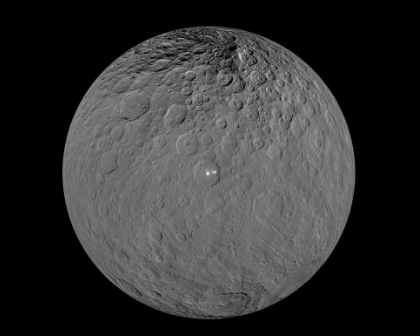
Credit: Mopic/Shutterstock

Let’s start at the beginning. When we last left the tour, we had stopped at Mars; which we all remember is a planet that has developed hundreds of different ways to kill humans. Awesome. Upon leaving Mars’ orbit, we find our new destination: the Asteroid belt.

Just to clarify things, the Asteroid belt is not a new pro-wrestling belt, though instead of King of the Ring, it could have been King of the Cosmos. The Asteroid belt is a region of space, that is located between Mars and Jupiter; like a belt. Because of this, it orbits our local cosmic nuclear fusion reactor; just like the rest of the Solar System.

Within this belt are roughly 1-2 million asteroids, and because scientists are amazing at naming things, it’s called the Asteroid belt. Did you see that coming? The Asteroid belt is also known as the Main belt or Main Asteroid belt. I still would like to stress that these names are not pro-wrestling belts. This is because there are other belts and asteroids in the Solar System, which we will eventually discuss. Great, let’s move on.

Here are two obvious questions, what are they doing there? How in the name of the seven dwarven rings, did they they get there?

The Asteroid belt is roughly 4.5 billion years old, just like the age of the inner rocky planets of Mercury, Venus, Earth, and Mars. The leading theories of the origin of the Asteroid belt are:

1.) It’s the leftovers of a protoplanet that did not form completely, so Jupiter’s gravity could have ripped it apart.

2.) It’s the leftovers from the creation of the terrestrial planets.

3.) It’s the leftovers from the protoplanetary disk that formed the Sun.

4.) It’s part of Galactus’ rock collection that he lost.

Regardless of the correct story, the asteroids have migrated through the Solar System over millions of years, until they settled in a stable orbit around the Sun, nestled between Mars and Jupiter.

Even though the asteroids were created around the same time as the birth of the Solar System, the rocks that the terrestrial planets are made from, are different from the asteroids in the belt. The main point is that asteroids in the belt, are like a time capsule of the creation of the Solar System, because they are far better preserved, and contain unique metals and minerals; so they are free of geological processes.

The dimensions of the Asteroid belt are far more impressive than Sokka’s obsession with food. The width and thickness of the Asteroid belt is about 150 million km and lies between 2.2 and 3.2 AU from the Sun.

Do you remember this classic scene from Star Wars: The Empire Strikes Back, when Han Solo flies directly into an asteroid field?

I’ve said this before, but truth is stranger than fiction. Because of the enormity of space, the distance between asteroids on average is 1 million km. It’s been said that if you could stand on an asteroid in the belt, it’s highly doubtful you could see another asteroid, because of the vast distance. Basically, if you’re flying a spacecraft through the Asteroid belt, you would have plenty of room to manoeuvre. Thanks, Hollywood.

As for the different sizes of the asteroids, they can vary a lot. It’s been reported that about 1 million asteroids are 1 km across; along with millions of smaller asteroids. Apparently, over 200 asteroids have been identified to be larger than 100 km, with thousands of other asteroids the size of small stones or pebbles; mainly created through collisions with other asteroids. Asteroids over 120 km in size have been recognised as possibly extremely old asteroids, because they have not been destroyed through collisions.

As for the larger objects in the Asteroid belt like Ceres, we’ll look at that closer with the next tour stop. This is purely because I’ve been watching too much rugby, cricket, and news.

And speaking of rugby, I have two things to add.

1.) The 2023 Rugby World Cup Final is on this Saturday night (Sunday at 8 a.m. for me), with the All Blacks going up against the old foe, South Africa.

2.) The inaugural WXV rugby tournaments have begun across the world, and I managed to find some tickets. So the four of us are going to Dunedin this Saturday, to watch the Black Ferns vs. Wales. UMC2 is looking forward to eating some hot chips at the stadium, whereas UMC1 is going to be the stadium tour guide.

Why I am telling you this? I’m a New Zealand rugby fan, and even though I’m a product of my environment, I bleed black. This means I’m equally excited and worried about this weekend.

That’s it for another week, so I hope you’re still enjoying the tour. I know it’s crap, but it costs you nothing. Thank you for reading, following, and subscribing to Some Geek Told Me. Please don’t forget to walk your dog, read a banned book, watch the Rugby World Cup Final, protest for the end of the Israel–Hamas war, and I’ll see you next week.
Go the All Blacks! Go the Black Ferns!


Tour of the Solar System: Mars

Guess what’s back for another week? No, it’s not Simon Cowell’s Ninja Dog UK show, it’s Some Geek Told Me’s Tour of the Solar System! If you’ve never been on the tour before, here are the previous stops:

1.) Introduction

2.) The Sun

3.) Planets vs. Dwarf planets

4.) Mercury

5.) Venus

6.) Earth

7.) The Moon

Voted least likely to help humanity in any way, Some Geek Told Me’s Tour of the Solar System is now on its eighth stop. Buckle up, because we are visiting a planet that if it was a teenage girl, then it would be the popular one. It’s Mars, the Red Planet! Wait, did you think it was Neptune?


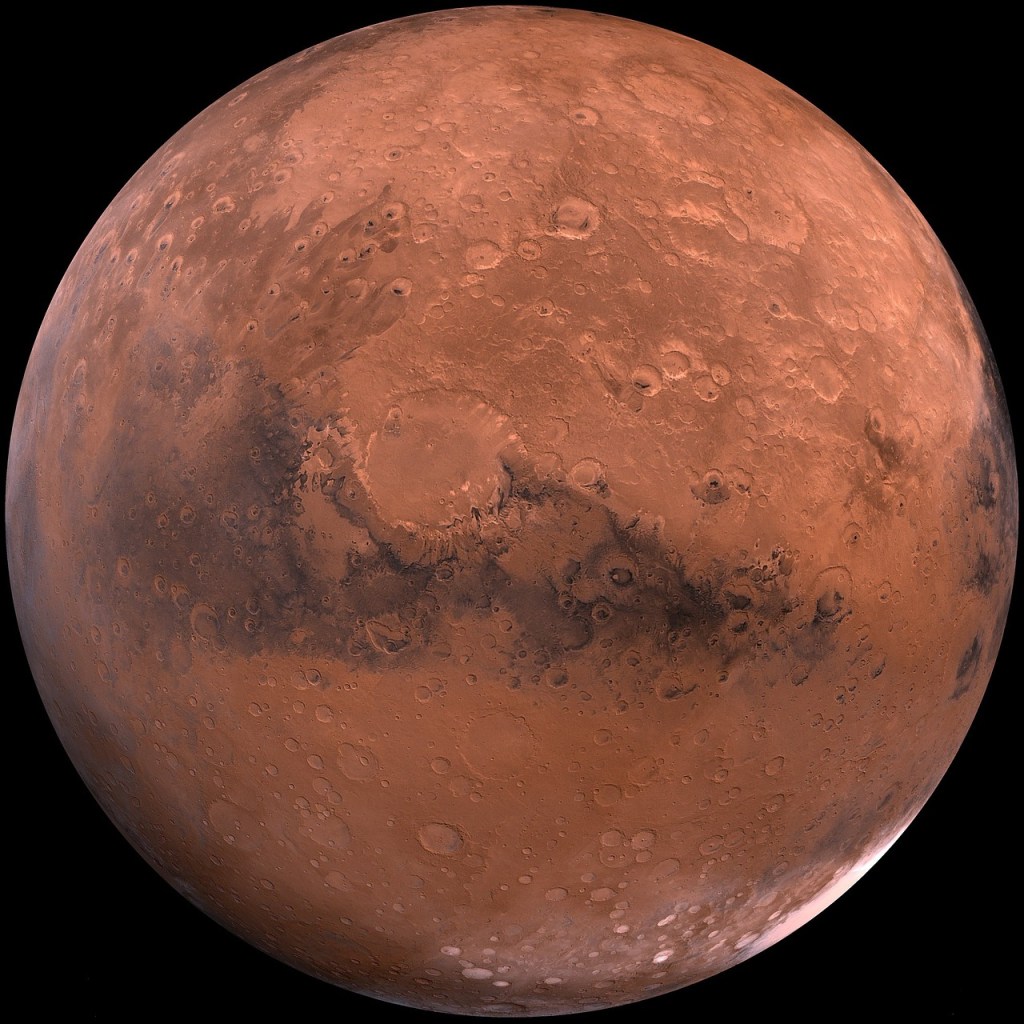
Image by WikiImages from Pixabay

Let’s establish something before we begin? There’s so much information on Mars, that I couldn’t possibly explain it all in one blog. Well, not without a time machine, which is a good thing I don’t have one. I’m just going to talk some basic information about Mars, though everything would make a Space-denier’s right eye start twitching.

Mars is the fourth planet from the Sun, after Mercury, Venus, and us; Earth. This makes it a terrestrial planet, which formed about 4.5 billion years old, give or take a few Sundays. This makes it extremely similar to the other terrestrial planets. That’s not really a surprise is it?

Unlike other planets, it’s named after a chocolate bar…no, seriously, Mars is named after the Roman god of war; you guessed it, Mars.1

As for planetary rings, someone swiped left on Mars but swiped right for moons. Mars has two moons named Phobos and Deimos, which mean fear and panic for the former, and terror and dread for the latter. I do find it interesting that Phobos and Deimos were the sons of Ares, the Greek god of war, who was identified by the Romans as Mars.

So basically, the planet is named after a Roman god, with the two moons named after his Greek equivalent’s sons. Not confusing at all.

Mars is smaller than Earth, with a diameter close to 6,792 km, compared to Earth’s diameter of 12,740 km. This means that everybody’s favourite planet named after a god of war, is actually the seventh largest planet in the solar system. Sorry, Mercury.

Just like Earth’s orbit of the Sun, Mars’ orbit is elliptical, but it is more severe. Mars’ perihelion is 206,650,000 km, while its aphelion is 249,261,000 km. The average distance from the Sun to Mars is 228 million kilometres, with the orbital speed of Mars being 24.07 km/s, which is only slightly faster than my dog when he’s blitzing.

Alright, that’s all well and good, but what else do we know about Mars? Great question, so here’s a complicated answer. Hollywood has given us some interesting films based on Mars, like Total Recall, Mission to Mars, Red Planet, Ghosts of Mars, The Martian, and Life. Between the insanity of the films lies the truth about Mars.

A long time ago on a planet, not that far away, liquid water was on the planet’s surface. Yes, billions of years ago, Mars had not just liquid water on the surface, but oceans. The observational evidence for this is the hundreds of photos and video footage taken over the years, that have been analysed by scientists; like ancient riverbeds.

Now whether life may have existed in this ancient primordial Martian ocean, is another blog for another day; just ask J’onn J’onzz or H. G. Wells. As for the reason why Mars lost its oceans, the leading hypothesis is that the oceans were ripped away by the solar wind because Mars lost its magnetic field, which prevented this from happening.

The next question is how did Mars lose its magnetic field? Like Earth’s spinning core, Mars’ core would have created a dynamo effect, which in turn would have powered the magnetic field. However, sometime in Mars’ ancient past, something happened to change the dynamo effect, which resulted in a snowball effect: No dynamo effect, caused the magnetic field to stop being generated, which caused the oceans to be ripped away by the solar wind. As to why there were some shenanigans in the Martian core, we should just bring in a CSI team, and they’ll solve it in under 45 minutes.

Mars is now a cold, barren, dusty wasteland; almost like the background to a Mad Max film. Polar ice caps exist at both poles, but the planet is a husk. Temperatures on Mars can range from −110 °C (−166 °F) to 35 °C (95 °F). Basically, Mars has the temperatures of both Hoth and Tatooine.

For Mars’ rotation and orbital period, it takes Mars 1.04 Earth days to rotate once, which is roughly 25 hours. A Martian year equals 687 Earth days, which is about 1.9 Earth years.2

The surface of Mars is covered in a dusty inorganic compound known as Iron(III) oxide. This dust gives the planet a rusty colour, which to nobody’s surprise at all, is why Mars is referred to as The Red Planet. The terrain is mixed with volcanoes, craters, valleys, and lower flat lands.

It’s for this reason that Mars is home to Olympus Mons, which is the tallest mountain in the solar system. Olympus Mons is a massive shield volcano, that is 21.9 km high. In comparison to Earth’s tallest mountains, Mount Everest is 8.848 km (above sea level), while Mauna Kea is 9.33 km (from underwater base to summit). 

Mars does have an atmosphere, but it’s very thin and weak. The atmosphere is made up of Carbon Dioxide (95.97%), Argon (1.93%), Nitrogen (1.89%), and smaller traces of Oxygen, Carbon Monoxide, and Water Vapour. If you’re planning on visiting Mars anytime soon, make sure you bring a survival/space suit. If the cold doesn’t kill you, the lack of breathable air will.

And speaking of visiting Mars, humanity has sent many landers, probes, and rovers to the Red Planet; which makes it unique because it’s the only planet that we know of except for Cybertron, that is populated by machines.

Journeying to Mars is no easy step because the average distance between Earth and Mars is about 225 million km. The human exploration and colonisation of Mars is a hot topic at the moment. There are many factors to consider about this, though namely, terraforming is one of them. Put another way, Mars hates humans and will do everything it can to kill them. Because of this, the earliest humans could be walking on Mars, will be in the 2030s. They have a lot of work to do, but they have already started.

Hopefully, when humans land on Mars, I’ll be able to watch it with UMC1 and UMC2. Of course, it depends at the very least, if a 15-year-old and a 12-year-old would want to hang out with their very uncool father.

Well, that’s it for another week. What’s your favourite Mars fact? Please let me know. The 2023 Rugby World Cup is still ticking over, so I’m still trying to find the best time to sleep, and I’m failing as usual.

Thanks once again for reading, following, and subscribing to Some Geek Told Me. I value everybody who stops by to read some of my nonsense. Please don’t forget to walk your dog, read a banned book, watch some Rugby World Cup games, Up the Wahs, and I’ll see you next week.

1 Astronomers really like Roman mythology.

2 The further you move away from the Sun, the orbital periods of the remaining planets are just going to become longer.

Tour of the Solar System: The Moon

Just when you thought it was over, it’s back. The Solar System’s worst tour has returned for another scheduled stop. Yes, it’s Some Geek Told Me’s Tour of the Solar System! This is the seventh stop of the tour, so if you want to get caught up, now’s the chance.

1.) Introduction

2.) The Sun

3.) Planets vs. Dwarf planets

4.) Mercury

5.) Venus

6.) Earth

For today’s thrilling chapter, we will be stopping by Earth’s BFF1; the Moon. Many cultures have their own stories and myths concerning the Moon, so we will just be sticking to the cold, hard data that Spock, Batman, and Sherlock Holmes would appreciate.

Sweet? Ok then, strap yourself in for lunacy.2


Image by Pexels from Pixabay

Let’s discuss the oliphaunt in the room, shall we? Her name is Angela, and after surviving the Battle of the Pelennor Fields, she has a lot of time to think about things. She told me one of these things is the Moon’s name. The name of Earth’s only moon is …..the Moon. I have stated this before, but scientists are extremely important and world-changing people, but some of them suck at naming things.

Angela and I love the concept that the Moon is named after a moon. It’s a moon, so let’s call it the Moon! Mars, Jupiter, Saturn, Uranus, Neptune, and even Pluto have moons, and every one has a real name. Some of them have badarse names like Deimos, Themisto, Hyperion, Oberon, Proteus, and Hydra. This means a collection of people would have discovered these moons, and given them truly creative and imaginative names, from various genres of literature.

But for our one and only moon, the best name humanity could come up with was the Moon. Yes, it has nicknames for informal occasions like Luna and Selene; but we could have called it Brightnail, Paroan, Vengeance, Merchant of the Void, Moony McMoon Face, or even Dave, however, we thought the Moon was a lot more edgier and hardcore.

It’s a wonder that Earth isn’t just called Planet.

The age of the Moon is certainly under debate in scientific circles. From what I understand, the Moon is estimated to be around 4.5 billion years old, but new research dates the Moon to be 4.425 billion years old. I heard some astrophysicists, astronomers, and astrogeologists, will enter a death match competition to determine the correct age; and the winners will have bragging rights and the globally accepted age of the Moon. It’ll be a battle royale involving reflecting telescopes, spectrometers, rovers, and satellites.

Another hot theory that’s up for discussion, is the origin of the Moon. I mean, why does the Earth have a moon? How did it get there? And since jumping over it, has the location of the cow been discovered?

One of the leading theories concerning the origin of the Moon, does not involve radioactive spiders, being struck by lightning and doused in chemicals, or being forged by the Dark Lord on his dark throne. The theory involves a hypothetical proto-planet, Theia, cruising around the Solar System before slamming into Earth. The debris from the collision was ejected into space, where over a huge amount of time, it coalesced and eventually formed the Moon.

I also could be stating the obvious here, that even though the Moon is a moon, the Moon has no moons, as well as being like Sauron; ringless.3

The Moon has a radius of 1,740 kilometres (1,080 miles) and a diameter of 3,475 kilometers (2,159 miles). This makes it the fifth-largest natural satellite in the Solar System, but also the most massive in relation to the planet that it orbits. I’m sure that would build up the Moon’s self-esteem if it heard that.

The average distance of the Moon to Earth is about 384,400 km (238,855 miles). On a cosmic scale, this distance seems extremely tiny, but it’s not. Like many other planets and moons in the solar system, the Moon’s orbit of the Earth is elliptical. When the Moon is at the furthest point away for us,4 you could fit Mercury, Venus, Mars, Jupiter, Saturn, Uranus, Neptune, Pluto, and Eris in between Earth and the Moon.

The Moon orbits the Earth about once every 27 days, which is roughly where we get the measurement of the months. So as the Earth rotates, so does the Moon. This is fascinating, as the Moon is tidally locked or in a synchronous rotation with the Earth. This means that our closest neighbour is spinning or rotating at the same rate as us, which causes the same side of the Moon to be always facing Earth.

It’s a common misconception that the Moon has a dark side; I’m looking at you, Pink Floyd! There is no dark side of the Moon, because the side we can’t see, is still bathed in sunlight. It’s actually known as the far side.


Video on Synchronous Rotation by astrogirlwest

Because the Moon orbits the Earth, different sections of the Moon are in darkness and sunlight, at different times of the month. This is known as the Moon’s phases, and it’s all about observing the Moon’s illumination from our perspective. It looks like the Moon is actually changing its shape, but it’s really not.

Do you remember my comment about the Earth and the Moon being BFFs at the start? Well, the Moon is actually moving away from the Earth, at the rate of about 4 cm per year. In hundreds of thousands of years; if not millions, the Moon will be a lot further away and the sky would look a lot different.

Depending on where you live in the world, people can also observe the Moon from different orientations. If you live in the southern hemisphere, you would see the Moon upside down compared to people in the northern hemisphere. If you’re on the equator, you could see various orientations throughout the day.

Against popular belief to some Flat Earthers and Space deniers, the Moon is not a projection or hologram. As for the Moon being a light source, the Moon indeed gives off light, but it does not produce or create light. Moonlight is actually sunlight that is reflected off the surface of the Moon.

This brings us to the Moon’s atmosphere. The Moon has little to no atmosphere; so it’s pretty weak. It offers no protection against radiation from the Sun, unlike the Earth. As for surface temperatures, they can vary a lot. While the Moon is facing full sunlight, temperatures can hit 127 °C (260 °F), however when in darkness, the Moon’s temperature can drop to -173 °C (-280 °F).

Basically, if you’re unlucky enough to be standing on the surface of the Moon without wearing a spacesuit, you’ll be dead in under three minutes. Sorry.

I’m running out of time and there’s so much more to discuss about the Moon, like the craters, the tidal effect, the gravitational and magnetic fields, the ice, and the lack of cheese! I would love to rant about these, but because time runs in one direction in this universe, I’ll talk about the exploration of the Moon instead.

To date, only 12 members of our species have walked on the Moon, but with the Artemis space missions, that is going to change. NASA is going back to the Moon, with Artemis 1 having already launched last year. Artemis 2 (lunar flyby) is scheduled for November 2024, with Artemis 3 (lunar landing) in 2026, and Artemis 4 is on track for September 2028. This also includes the launch of the Lunar Gateway in 2025, unless something stupid happens.

I wasn’t born between 1969-1972, which was the era humans walked on the Moon, so I can’t wait to sit with UMC1 and UMC2, to watch the Artemis missions and a lunar landing!

Alright, that’s it for me. I hope you’re still enjoying the tour, even though the view is quite miserable. Please let me know your thoughts on the tour if you feel up for it.

This coming week, we have the semi-finals of the FIFA Women’s World Cup, with Spain vs Sweden, and Australia vs England; as well as the final on Sunday. I’ll be watching them, will you?

I have a tremendous announcement concerning the next four weeks of blogs. This could be a train wreck in slow motion, but I’m going to be writing about the Rugby World Cup, which starts on 8th September. I love rugby, so to my non-rugby following audience, I’m sorry but I’ll try to make this fun for you! 5

Thanks once again for reading, following, and subscribing to Some Geek Told Me. Don’t forget to walk your dog, read a banned book, go watch the FIFA Women’s World Cup semi-finals and final, and I’ll see you next week.


1.) They won’t really be together forever, but it does sound nice.

2.) I couldn’t resist that pun. Sorry, not sorry.

3.) That’s two Sauron references in two precious paragraphs.

4.) This is called apogee. When the Moon is at its closest point to Earth, this is called perigee.

5.) Nothing ages me faster and makes me more anxious than the Rugby World Cup. It takes me four years to recover from each one.

Animals with the wrong names: Ocean Edition

I want to talk about scientists. Why? I love science and scientists, I truly do. They are amazing people, working throughout history; across various backgrounds, to help lift humanity up to understand ourselves and the environment we live in.

They have been unravelling the secrets of the cosmos, developing vaccines, creating Salt and Vinegar chips, identifying new elements and particles; as well as finding new breakthroughs in surgery, meteorology, psychology, sociology, anthropology, and many others.

As a global society, we can never repay them for the discoveries and inventions that they have given us. I’m in awe of them, and I wish I could be one, but I’m too…. wait, where was I? Oh right, Scientists!

Of all of the wonderful skills these fantastic people have, naming things is not a strong suit for some scientists. To be honest, it’s a bit problematic, to say the least.

This of course brings us to the crux of today’s blog. When it comes to naming organisms, some scientists blatantly don’t work in marketing or public relations departments; because if they did, some of their choices would never have seen the light of our nearest star.

Below is a list of animals, that have been named incorrectly. I’ve decided in my infinite wisdom, to only list ocean creatures to begin with. Many other animals can make different lists, but I need to pace myself. I mean, Rome wasn’t sacked once, was it? Simultaneously, the Gauls, Visigoths, Vandals, Ostrogoths, Normans, and soldiers of the Holy Roman Empire, are jumping up and down with their hands in the air, because they know the answer.

To make this list, an aquatic animal must have been given a name, or at least known as something, that it actually isn’t. As I said before, these animals have the wrong names. I’ll illustrate this by underlining the incorrect name because I’m tech-savvy. Also, they’re in alphabetic order because I obviously like to live dangerously.

I do need to point out some examples of aquatic lifeforms like whale sharks or lionfish, won’t make the list. This is because they’re named after what they actually are: a whale shark is still a shark, and a lionfish is still a fish. You’ll see what I mean, trust me.

Also, I’m not a biologist, so if I have given an animal the wrong classification, I’m sorry. This blog is not my day job. Not yet, anyway.


Electric Eel: Electric eels are not true eels, but rather a type of knifefish.

Horseshoe Crab: Not a crab, because they don’t meet the characteristics of being a crab. Horseshoe crabs are actually members of the Chelicerates, and they are closely related to arachnids, but they are still not crabs.

Image by Yinan Chen from Pixabay

Jellyfish: Jellyfish or jellies, are not fish, because they don’t meet the characteristics of being a fish. They are actually Cnidarians, because they belong to the phylum (division of classification) of Cnidaria.

Image by Silvo Bilinski from Pixabay

Killer Whale: While still being an aquatic mammal, Killer Whales are not technically whales, but rather the largest species of dolphins. Their real name is Orcas.

Image by Wolfgang Lucht from Pixabay

Mantis Shrimp: Believe it or not, but the mantis shrimp is not a mantis, nor a shrimp. They actually belong to a group of crustaceans known as Stomatopoda. Also don’t ever get into a boxing match with a mantis shrimp, because you’ll lose.

Image by Kevin Mc Loughlin from Pixabay

Sea Angel: Sea Angels are definitely not angels, but rather a type of sea slug. Sorry, not sorry.

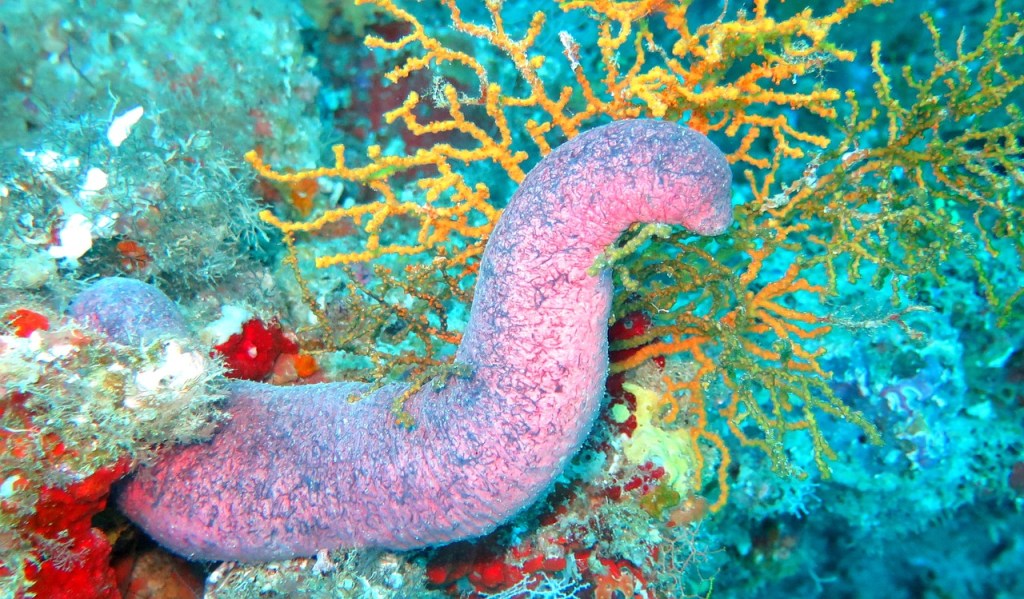
Sea Cucumber: I know it looks like a cucumber, but it really isn’t. They are not a vegetable, because this animal is a type of Echinoderm.

Image by Kevin Mc Loughlin from Pixabay

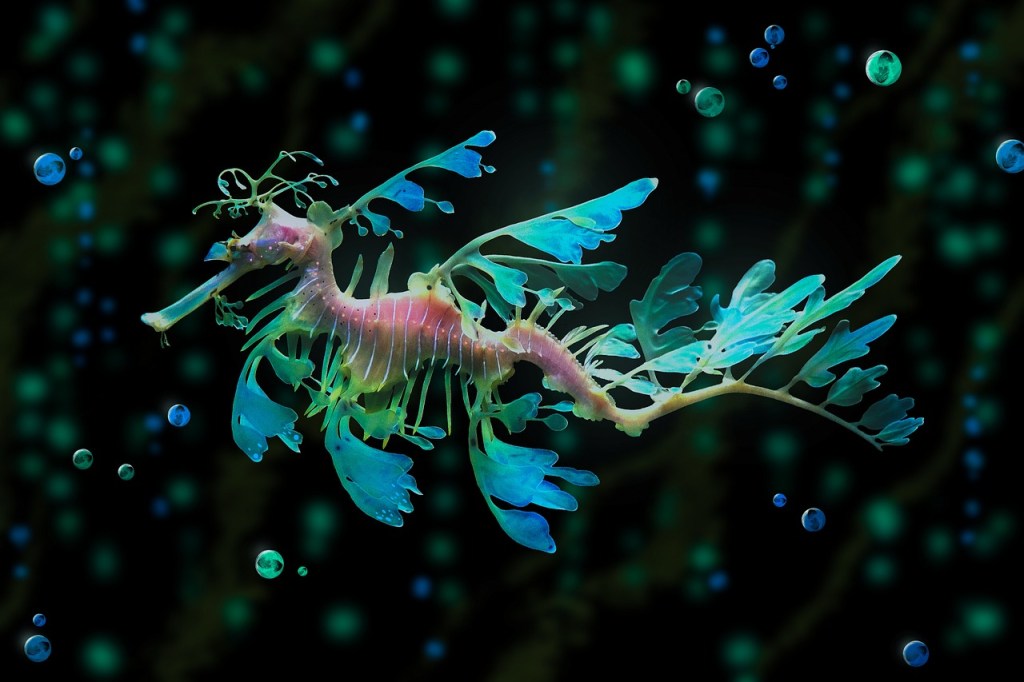
Seadragon: Say this with me, “A Seadragon is not a dragon.” They are actually closely related to seahorses, but still technically a fish, and not a dragon.

Image by gene1970 from Pixabay

Seahorse: You already know what I’m going to say, don’t you? “How in the nine levels of Dante’s Hell, is a seahorse actually a horse?” Easy, it’s not. Yes, they look like a horse, in a distorted kind of way, but they’re still not a horse. Just like seadragons, they are a type of fish.

Image by Arhnue Tan from Pixabay

Sea Lion: Are birds a special group of animals descended from dinosaurs? Yes, yes they are. Are sea lions a special group of lions? No, no they’re not. Sea lions are a type of seal, and they’re called sea lions because some adult males have thick fur around their necks; just like a lion’s mane.

Sea Nettle: Sea nettles are closely related to jellyfish because they share the same genus of classification, Chrysaora. Also, they aren’t any type of nettle. Obviously.

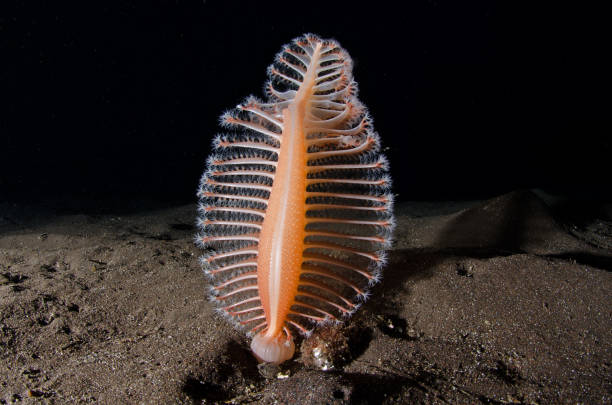
Sea Pen: Yes, they may have the long, cylindrical shape of a pen or quill; but I promise you they are not pens. You can’t write with them! Sea pens are actually closely related to jellyfish, so they belong to the Cnidarians.

Image by iStock

Sea Spider: Sea spiders are odd because they look like spiders, but they’re not. However, they are distantly related to spiders though. Sea spiders are actually a type of marine arthropod.

Starfish: Starfish do live in the ocean, but that doesn’t make them fish. They are more closely related to sea cucumbers, which makes them a type of Echinoderm. They do look pretty cool, don’t they?

Image by jacmoermanplanetnl from Pixabay

Vampire Squid: When discussing vampire squids, you need to remember two things. The first thing is that vampire squids are not vampires. Yes, they live in the dark, from depths of 600 to 900 metres, but they don’t suck the blood of their victims. Because of their habitat, their diet consists of marine snow or organic rain, which is dead animal material.

Secondly, although still a cephalopod, the vampire squid is not a squid. They are their own special group of animals, but vampire squids are more closely related to octopuses than squids.


Were any names of these animals a surprise to you? Did I miss any aquatic misnamed animals? Please let me know.

And that concludes another blog for another week. That’s one small blog for a man, but a giant blog for geek kind. Next week, I’ll be looking at the 2023 San Diego Comic-Con and the different upcoming releases that I found to be interesting. This is well within my wheelhouse, because…you know, I am a geek. Now and forever.

Thanks once again for reading, following, and subscribing to Some Geek Told Me. And just like last week, don’t forget to walk your dog, read a banned book, go watch some FIFA Women’s World Cup football, and I’ll see you next week.


Tour of the Solar System: Earth

Step right up for one of the universe’s worst tours, this side of Kalibak’s personal guided tour of Apokolips. Yes, that’s right, it’s time for Some Geek Told Me’s Tour of the Solar System! This is now our sixth stop, and for those of you that are joining us for the first time, firstly I’m sorry. Second, here is the list of our previous stops, so please feel free to brush up on some nonsense.

1.) Introduction

2.) The Sun

3.) Planets vs. Dwarf planets

4.) Mercury

5.) Venus

As I so gracefully explained last week, we will be visiting the planet Earth, for the next stop. Now, I know what you’re thinking. Yes, these are my real socks. No, I can not control my eyebrows. And finally, yes, I do realise we already live on Earth, so why would we be visiting it?

The reason that we’re going to look at Earth, is because why would we not? As I said last week, not only is Earth the single source of Salt and Vinegar chips in the observable universe, but it’s pretty cool as well.


Image by WikiImages from Pixabay

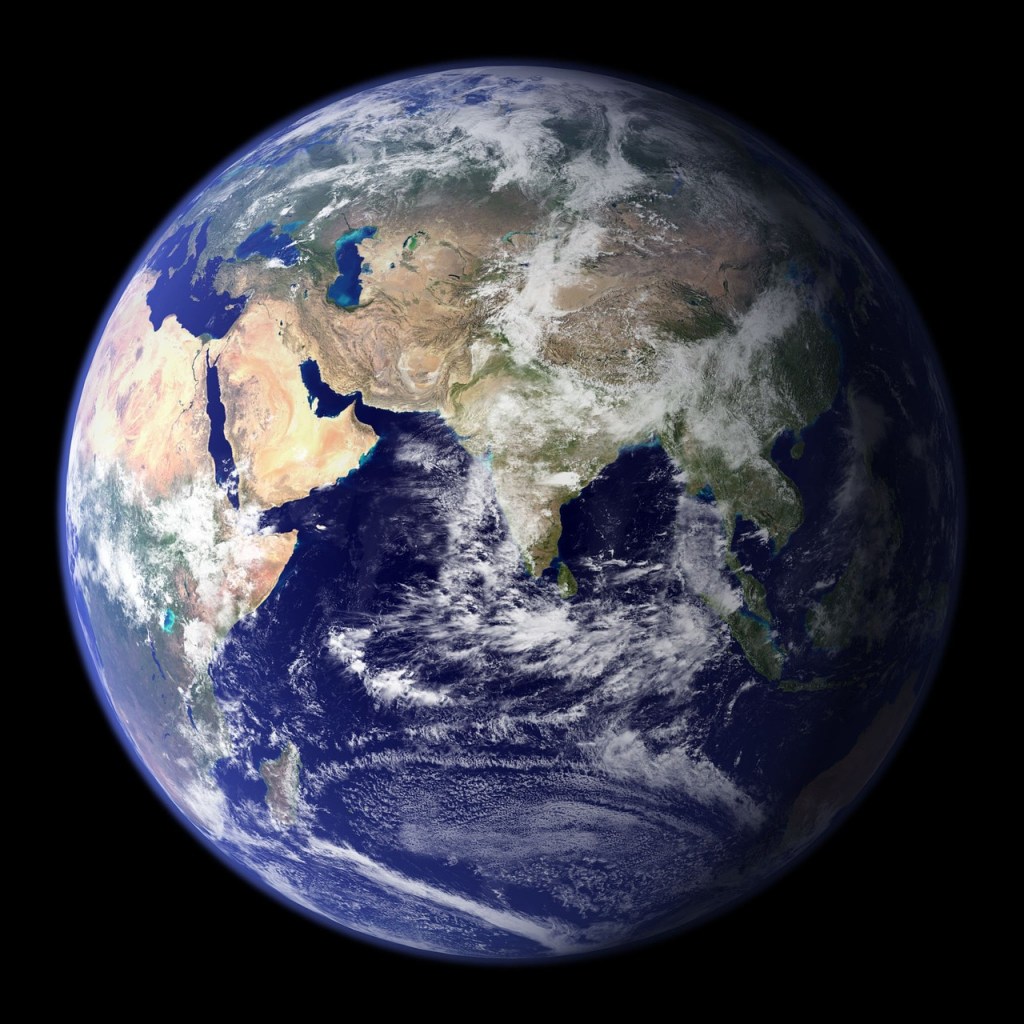
Earth is the third planet from the Sun, after Mercury and Venus. And just like Mercury and Venus, Earth is about 4.5 billion years old, though it doesn’t look a day over 2 billion. And in another stroke of terrestrial planet bonding, Earth also has no planetary rings.

However, there are a few differences between the siblings. Earth actually has a moon; which is called, surprise, surprise, The Moon. Remember this, because I’m going to come back to the Moon, just like NASA in 2025.

And just so everybody is on the same page, the Earth’s shape is not a perfect sphere or ball. It’s more like an oblate spheroid, or oblate ellipsoid because it bugles slightly at the equator and flattened at the poles. Having said that, calling Earth a sphere is still fine…because THE EARTH IS NOT FLAT.

Movin’ right along (doog-a-doon, doog-a-doon), Earth has a diameter of 12,756 kilometers (7,918 miles), which is exactly what Flat Earthers dare to say five times in front of a mirror. This makes it the fifth largest planet in the Solar System; just don’t say it in front of Venus.

Earth’s orbit of the Sun is elliptical, so it has a range of about 147,098,450 km (Perihelion) to 152,097,597 km (Aphelion). This is interesting because we recently passed Aphelion on Friday 7th July at 8:06 a.m. (NZST/UTC +12). Aphelion is when Earth reaches its furthest point from the Sun in its orbit, with Earth’s orbital speed being about 29 km/s.

The average distance from the Earth to the Sun is about 150 million km, otherwise known as one astronomical unit or AU. You know how important it is to differentiate between Vulcans and Klingons, well it’s important to know why 1 AU is relevant and important to our beautiful and crazy planet. This means it only takes about eight light minutes, for the light radiating from the Sun, to travel to Earth.

Because of Earth’s average distance and location to the Sun, we have something that our siblings, Mercury and Venus don’t have: liquid water on the surface. Basically, if Earth’s orbit extended well past Aphelion, then our liquid water like oceans and lakes, would freeze. The opposite is true; if Earth’s orbit extended well past Perihelion, then our liquid water would boil and evaporate.

We have one global ocean, but it can be divided into five oceans, which are the Pacific, Atlantic, Indian, Arctic, and Southern Oceans.

We are lucky enough to be sitting in just the right place for water to be liquid on the surface; we are not too cold, not too hot, we are just right. This is why scientists refer to our location as the Goldilocks Zone. There is so much liquid water on our planet, that it covers 71% of the surface, with 96.5% being found in the oceans.

Earth also has an atmosphere to go along with liquid water, sort of like a Salt and Vinegar combination, which is perfection by the way. Earth’s atmosphere is generally made up of Nitrogen (78%), Oxygen (21%), and other gases like Argon, Carbon Dioxide, Neon, Helium, Methane, Hydrogen, and Krypton1; along with Water Vapour.

Travelling through space can make things interesting for Earth. The planet spins on its axis, at 23.5 degrees, which gives us the four seasons of Spring, Summer, Autumn, and Winter. Seasons are not caused by the Earth’s location, relative to the Sun; it’s actually the axial tilt.

It takes 24 hours for the Earth to rotate once on its axis, thus one day equals 24 hours.2 But it also takes about 365 days, 5 hours, 59 minutes, and 16 seconds, for Earth to orbit the Sun.

To also make life crazy, since the Moon orbits the Earth, and the Earth orbits the Sun, different eclipses can be created. A Solar Eclipse is when the Moon travels between the Sun and the Earth, and blocks the Sun’s light, for a short period. A Lunar Eclipse is caused when the Earth travels between the Sun and the Moon, which casts the Earth’s shadow onto the Moon. There are variations of these two eclipses, but these astronomical events are beautifully stunning for different reasons.

Underneath the Earth is just as spectacular as above. The Earth’s interior is made of the Crust (Lithosphere), Mantle (Upper Mantle and Lower Mantle), and the Core (Outer Core and Inner Core). The Inner Core is a ball of solid iron and nickel and can reach insane temperatures like 5,500°C  (9,900°F), which is like the surface of our local star.

The geology of Earth has a few more quirks, like the spinning iron core creating a magnetic field, known as the magnetosphere, which is vital to Earth’s survival. Earth’s interior is also active and moving, which drives plate tectonics, the creation of mountain ranges, subduction, earthquakes, and of course, volcanoes.

Earth’s land mass covers different regions, like polar, tropical, dry, mild, and continental; which include deserts, and rainforests. The top and bottom of Earth are known as the North and South Poles, which are typically the coldest regions on the planet. The hottest regions are mainly close to the Equator, which is an imaginary line that runs around the middle of the planet.

In addition to this, there are seven continents, which are Africa, Europe, Asia, Oceania, North America, South America, and Antarctica.

This brings us to the crescendo of this rant. There are only two planets in the known universe that contain life: one is Mars because it has robotic life, in the form of probes, rovers, and landers. Let’s get real here, it’s a planet populated by machines.

The other planet is Earth, because it has organic life. It has us humans of course, but we’re not the only organisms here. There are ravens, pythons, goblin sharks, dung beetles, chimpanzees, kiwis, redwoods, the platypus, fungi, dogs, anglerfish, tarantulas, bees, oak trees, zebras, bacteria, worms, bumblebee bats, nautiluses, and maybe the most important of them all: phytoplankton.

I believe that the Earth doesn’t belong to humans. We actually share it with the non-human residents of this planet. But we are the ones doing the greatest amount of damage, so if we want to keep this beautiful place; along with our neighbours, we really need to change the way we think and act.

Earth is so rare and unique, we need to take a lot better care of it.

And with that, this part of the tour has finished. Did I miss anything out? Did you like it? Please let me know if you did.

Do you remember what I said about the Moon, and that I’ll be coming back to it? I meant it because the Moon will be the next stop on our Tour of the Solar System; which I think will be in five weeks.

I hope you’re still enjoying the tour because the quality of the tickets aren’t the best. Thanks once again for reading, following, and subscribing to Some Geek Told Me. Don’t forget to walk your dog, read a banned book, go play some football, and I’ll see you next week.


1 It’s a real element, I promise.

2 I’m not going into the difference between stellar day and sidereal day, because that is another rabbit hole for another time.

Tour of the Solar System: Venus

Welcome, welcome, welcome, to the worst tour of the Solar System you will ever experience. I’m probably overestimating the ridiculousness of it, but I’m pretty sure Brian May, Michelle Thaller, Bill Nye, Neil deGrasse Tyson, Brian Cox, or Becky Smethurst, would not want to purchase a ticket.

This is our fifth stop in our tour of the Solar System, with the previous four being Meet the Family, the Sun, Planets vs. Dwarf planets, and Mercury. Since the last stop was everybody’s favourite small planet that has a transition metal element named after itself, the next stop is somewhere that does a very good impression of Hell: Venus.

There are many different things I’d like to discuss about Venus, and I mean a lot, but I have to concentrate on the most interesting/weird information, purely for two reasons. Firstly because there is just too much information to talk about; and secondly, a Galapagos giant tortoise can write faster than me, so I just don’t have the time. Though a DeLorean with a functioning flux capacitor would help.


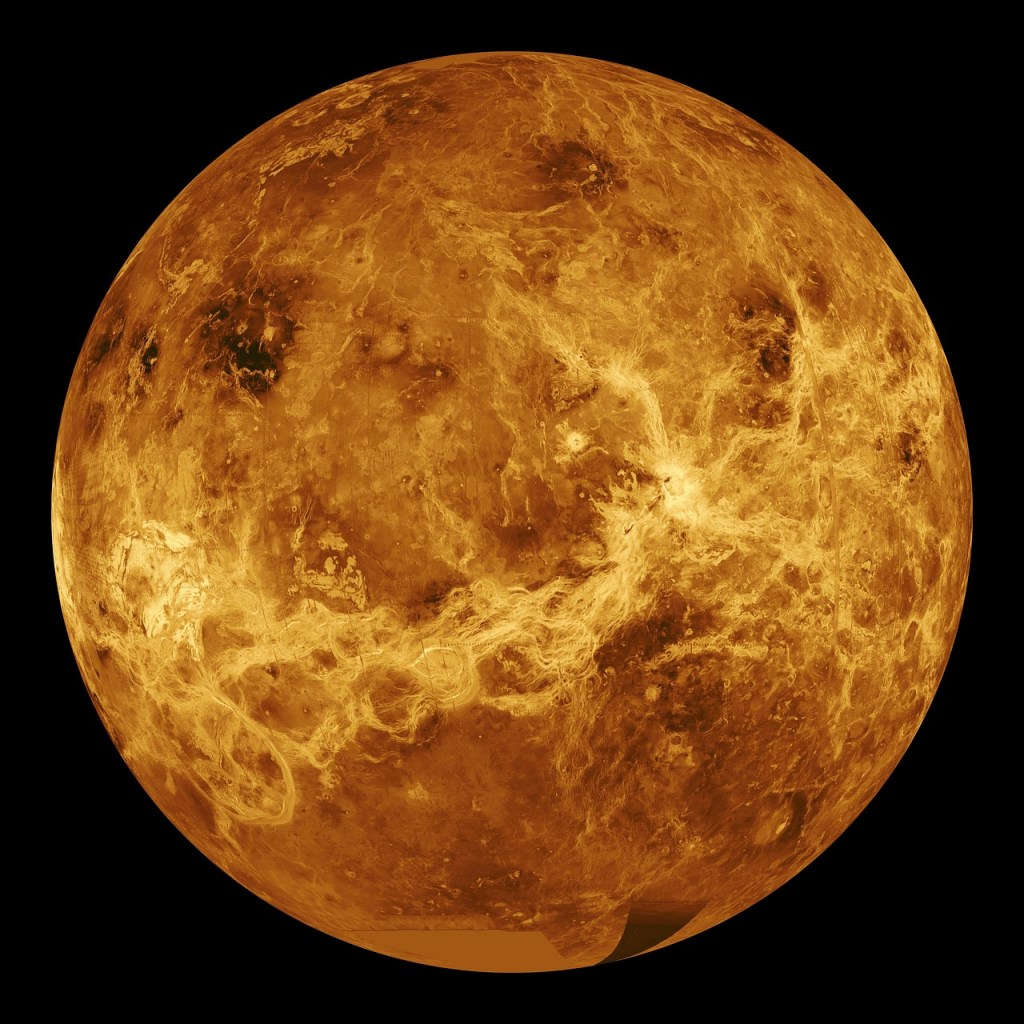
Venus. Image by WikiImages from Pixabay

Just like Mercury, Venus derives its name from Roman mythology, in the form of the goddess of love, sex, beauty, and other things I can’t really relate to. Venus is around 4.5 billion years old, give or take a few hundred million years, which is roughly like the other terrestrial planets. Venus also has two more things in common with Mercury; it has no natural satellites (moons) or rings. Sorry, Beyoncé.

Venus’ size is slightly smaller than Earth’s, which is why some people call it Earth’s twin. They are similar because Venus has a diameter close to 12,100 km, with Earth’s diameter being 12,756 km; which means Venus would lose at an arm wrestle with Earth, but not by much.

Just like the majority of objects in our Solar System, Venus orbits the Sun. The orbital range is 107,477,000 km (66,783,112 miles) to 108,939,000 km (67,691,556 miles), which is only a difference of 1.46 million km. The average distance from Venus to the Sun is around 108,208,000 km (67,237,334 miles), and if you’ve been paying attention, this means Venus is the second closest planet to our local natural fusion factory.

So up until now, Venus seems nice and normal, but what exactly is normal? If we are comparing Venus to other planets or exo-planets, it’s probably normal; however, if we are comparing Venus to Earth,…well, if Earth is Superman living in Metropolis, then Venus is Bizarro living in Arkham Asylum. Honestly, Venus is pretty messed up. You wouldn’t just be swiping left on Venus, you would be calling the police!

Venus is actually closer to Earth than Mars, with an average distance of 41 million km vs 228 million km, respectively. But here’s the thing; even though Venus is closer to Earth, we are preparing and planning to send astronauts to Mars. That’s not an accident, by the way, it’s because we’re not stupid.

Venus is basically like a public bathroom, after an entire rugby team suffering from chronic curry diarrhoea, has been: it’s somewhere you don’t want to go.

Even though Venus is named after a goddess, and is the only planet to do so, let’s discuss why you should NEVER visit Venus.

Venus is actually the hottest planet in the Solar System. Venus has a problem, a very big problem, that humanity has been noticing here on Earth: climate change. Venus has a runaway greenhouse gas effect happening, which has created an apocalyptic problem.

The clouds on Venus are made of extremely thick and poisonous sulfuric acid, which starts at 45-70 km. This of course is only compounded by the thick atmosphere, which is made up of over 90% carbon dioxide. This means the amount of pressure on Venus’ surface is 93 times that of Earth. To put this into perspective, standing on the surface of Venus would be equivalent to being 1 km under the ocean. At this pressure, and without some amazing super-reinforced space suit, your body would be crushed.

Sounds great, doesn’t it? But wait, there’s more horror!

Because the thick atmosphere acts as a blanket, Venus traps excess heat on the surface, which makes the Human Torch look like Olaf from Frozen. Temperatures on the surface can range from 438 °C (820 °F) to 482 °C (900 °F), which is hot enough to melt Tellurium, Zinc and Lead.

Venus was the first planet that humans managed to send spacecraft to and land. This has resulted in several landers and probes over the years, making the 41 million km trek to Venus, but because of the scorching heat and crushing atmospheric pressure, Venus has killed them all. The longest surviving probe on Venus only lasted about 2 hours, before it stopped transmitting.

Mars may be the only planet inhabited by functioning robots, but Venus is the OG; its surface is littered with robotic corpses. Venus is nightmare fuel.

Venus’ orbit and rotation manage to stay in theme with freakiness. Apart from Uranus, Venus is the only other planet that rotates backward on its axis in the Solar System. This is known as retrograde rotation, and it means the Sun rises in the west and sets in the east, which is the total opposite of what happens on Earth.

Venus also rotates painfully slowly on its axis, because one day on Venus equals 243 Earth days. This is the slowest rotation of a planet in the Solar System. Congratulations Venus!! The shenanigans continue because Venus actually orbits the Sun faster than Earth at 225 Earth days. So one Venusian day actually lasts longer than one Venusian year.

There are three last things that I need to mention about Venus, among others, before I depart for my bed.

1.) The surface of Venus is covered with valleys, craters, mountains, and extreme volcanic activity. Its estimated, that 80% of Venus’ surface is covered with volcanic plains. There’s also a mountain on Venus called Maxwell Montes, which is 11 km (36,000 ft) high, and dwarfs Mount Everest at 8.848 km (29,031.7 ft).

2.) Venus appears in the sky as a small bright light, near sunset and dawn. This has led people to give Venus names like “The Morning Star” and “The Evening Star.” This makes Venus the third brightest object in the sky after the Sun and Moon.

3.) Have you ever heard of the Star Light, Star Bright poem?

Star light, star bright,

First star I see tonight,

I wish I may, I wish I might,

Have this wish I wish tonight.

Traditionally, if you had a wish and saw the first star in the evening, you could recite this poem, and your wish could come true. The universe has a funny side because, for hundreds of years, people would do this; wishing on the first star of the evening. The issue is that the first star they would wish on wasn’t really a star at all; it was a planet. So if you have ever done this, and the wish didn’t come true, it was because it was Venus.

And with that, I’m done for another week. I hope you’re still enjoying the tour, because the tour guide is rubbish, quite frankly. For next week’s modest blog, I’m going to do something I’ve never done before; no, I’m not doing a Fifty Shades of Grey review. Drum roll please…..I’m going to write a preview! So I hope it works. Maybe.

Thanks once again for reading, following, and subscribing to Some Geek Told Me. Remember to walk your dog; read a banned book; learn what DVD actually means; and I’ll see you next week.

Tour of the Solar System: Mercury

Yes that’s right, it’s that time of the month for everybody’s least favourite astronomy blog: My Tour of the Solar System. This is the fourth amazing entry of the tour, so if you’re new, or you don’t know what to do, I promise it’s ok. The three previous entries are: Meet the Family, The Sun, and Planets vs. Dwarf planets.

When we last left the tour, I was waffling on about the differences between planets and dwarf planets, because you know, dwarf planets are a real thing. Seriously. So because of this, we move onto the first planet from the Sun, Mercury.


Mercury. Image by WikiImages from Pixabay

Named after the messenger of the gods in Roman mythology, Mercury is quite odd, considering a few of its siblings are overachievers. Mercury is believed to be 4.5 billion years old, so its quite similar to Earth in age.

Mercury is the smallest planet in our Solar System, with a mean diameter of 4,880 km; which puts it slightly larger than the Moon, at 3,474 km. Basically, if there was an arm wrestle between the two of them, your money should go on Mercury; but keep your cryptocurrency on Earth, because no other planet wants it.

Even though Mercury is the closest planet to the Sun, it is not the hottest; but it’s still worth swiping right. Mercury orbits the Sun at a range of 47 million km (29 million miles) to 70 million km (43 million miles); with an average distance of 58 million km (36 million miles). To put this into perspective, Earth orbits the Sun at an average distance of 150 million km (93 million miles).

Given its proximity to the Sun, Mercury is a hot mess. The length of time it takes for light to travel from the Sun to Mercury, is 192 light seconds or 3.2 light minutes, which is less time to boil an egg.

Temperatures can vary as much as Cookie Monster can eat all of the cookies in a single day. The surface temperatures on Mercury are insanely hot and cold. Day temperatures can reach 430°C (800°F), while night temperatures can plummet to -180°C (-290°F). Because it has no atmosphere, Mercury can’t hold onto the heat during the night, resulting in cold temperatures. Can you imagine the electricity bills?

And like the Flash, Mercury lives up to its namesake. Compared to all of the planets in the Solar System, Mercury is the fastest; even Usain Bolt would be moving like a statue in comparison. Not a Weeping Angel, though. To hell with that.

The further away a planet is from the Sun, the slower it travels; however the opposite is also true. Because Mercury is the closest planet to the Sun, it has the shortest distance to travel around it. This has resulted with Mercury travelling through space at 47 km (29 miles) per second, but it also has some counterintuitive discoveries.

  • Mercury spins slowly on its axis, at a rate of once every 59 Earth days.
  • It takes 88 Earth days for Mercury to orbit the Sun; which equals one Mercury year.
  • It takes 176 Earth days for Mercury to complete one solar Mercury day. Mercury has an elliptical orbit, which means twice during its orbit, it gets quite close to the Sun and speeds up, so it appears the Sun would be going backward; if you were standing on Mercury’s surface.
  • This means one day on Mercury, is longer than a Mercury year.

And just to add some more fun stuff; Mercury has no rings, no natural satellites (moons), plus it is tidally locked with the Sun.

Just like Red, Boober, Mokey, Gobo, and Wembley are all Fraggles; Venus, Earth, Mars, and Mercury are all rocky or terrestrial planets. Mercury looks like our Moon, with craters covering the surface, however with the crust and mantle being made of rock, the core is solid iron. This works out to be 75% of Mercury’s diameter. Because of Mercury’s smaller size, when the core cooled down, it become solid, which made Mercury shrink and caused the surface to wrinkle. This didn’t happen to Earth because it was larger, along with the fact our outer core was liquid, and the inner core was solid.

The majority of the craters on Mercury are actually named after famous artists, composers, and writers. The most famous crater is Caloris Planitia, which is an impact basin, stretching 1,550 km (960 miles) in diameter. For perspective, the length of the United Kingdom is about 1,000 km (600 miles). The Caloris Planitia is surrounded by a ring of mountains; and no, they are not the Ash Mountains, nor the Mountains of Shadow; but rather the Caloris Montes, which are 1-3 km high.

Another reason to swipe right, is the fact that Mercury’s mass is less than 6% of Earth’s. This means Mercury’s gravity is weaker, so if you weighed 70 kg on Earth, you would only weigh 26.6 kg on Mercury. Imagine how high you could jump?

Do you remember what I said about Mercury not having an atmosphere? Good job, you were paying attention. Well, Mercury does have a thin exosphere though. This exosphere is mostly made of oxygen, sodium, hydrogen, helium, and potassium. If you could stand on the surface of Mercury without a protective space suit, the cold, heat or just lack of air, would kill you in under 90 seconds. That’s something to put on the tourism brochure!

All and all, Mercury is a special and unique world, but just like visiting the dentist, you really wouldn’t like to go there. And with that, it’s time to wrap up another tour stop of the Solar System. Yah! This coming week, I’m going to be releasing two special short blogs, celebrating two important days on the Geek calendar. Do you know what they are? The first one will be on Thursday, while the second will be on Saturday. Three blogs in a week? I’ll need a lie down to do this.

Thanks once again for reading, following, and subscribing to Some Geek Told Me. Remember to walk your dog; read a banned book; stop running with scissors; and I’ll see you next week.


Tour of the Solar System: Planets vs. Dwarf planets

Hey, it’s you! I’m so glad you could make it! This is the third chapter of our little tour of the Solar System and I was beginning to think you weren’t going to make it. For the obligatory recap of the tour, the first chapter was the introduction, while the second was all about the Sun.

Since the last stop was the Sun, we should be moving onto the next celestial object, which is Mercury; the first planet from the Sun. The problem is, I feel it could be important to discuss just what a planet is, and how they are different from a dwarf planet.

I briefly mentioned dwarf planets in the introduction, because let’s face it, they sound made up. It’s ok to admit it, you’re among friends. Dwarf planets are real, but they’re not as famous as their larger siblings; however they are no less important. Seriously.

Ok Scott, stop talking and actually say something! What is a dwarf planet? That is an insightful question, so here is a ridiculous answer. Let’s hop in our DeLorean time machine of the mind and travel back in time to visit three important dates: 1930, 2005 and 2006.


In 1930, a planet was discovered by Clyde Tombaugh, which was later named as Pluto.1 Pluto become known as the ninth planet of the Solar System, and history and science textbooks would never be the same. Um….that’s not truly accurate is it? I remember learning about Pluto at primary school: we had nine planets in the Solar System and even though Pluto was the smallest, it was still identified as a planet.

For over 60 years, Pluto got to hang out with its older siblings, because it was still identified as a planet. Well, until 2005 it was. Over the years, technology has advanced with new developments, that has allowed humanity to view the universe in amazing new ways. Because of this, new objects were being discovered in our Solar System and beyond; but especially in and around the Kuiper belt, which is a disc like region of space, beyond Neptune.

And just so we are on the same page, Pluto resides in the Kuiper belt.

So back to 2005. Among the media released discoveries of Makemake and Haumea, another object was discovered: Eris. When the first measurements of Eris were released, it appears that it was actually larger than Pluto, even though it was further away. This development led a lot of scientists to call for the reclassification of Pluto. They also thought another object named Ceres, which was discovered in 1801, finally needed a permanent classification as well.

We can now move to 2006, which was Pluto’s least favourite year ever. Enter the International Astronomical Union (IAU). The IAU has been described as:

…a nongovernmental organisation with the objective of advancing astronomy in all aspects, including promoting astronomical research, outreach, education, and development through global co-operation.

Basically the IAU get to decide things about astronomy.

In 2006, the IAU held a general assembly, with one of the issues concerning Pluto and what to do about it; along with some other objects. This led to the definition of a planet, which consists of three criteria.

1.) Is in orbit around the Sun.

2.) Has sufficient mass to assume hydrostatic equilibrium.

3.) Has “cleared the neighbourhood” around its orbit.

The first criteria is obvious, the planet must orbit around the Sun.

The second criteria talks about the planet achieving hydrostatic equilibrium, which is just a shape that is nearly round.

The third criteria is about when a planet orbits the Sun, it must be the most dominant gravitational object, in that orbit. It means the planet needs to be able to sling or clear the neighbourhood of any other smaller objects in its path.

When Pluto was measured against these three criteria, it passed the first and second, but failed the third. And a long story short, Pluto was declassified as a planet and reclassified as a dwarf planet, along with others.

Textbooks were rewritten and suddenly Pluto no longer could sit with the cool kids, but needed to sit at a different table.

This being the case, a definition for a dwarf planet was established.

1.) It must orbit the Sun, and not be a moon.

2.) Has enough mass to be round.

3.) Has not cleared its orbit of debris.

To date, our Solar System has eight planets that meet all three planetary criteria. Starting with the closest to the Sun, we have Mercury, Venus, Earth, Mars, Jupiter, Saturn, Uranus and Neptune.

As for dwarf planets, they are planetoids that fail on one, two or even all three of the IAU planetary criteria; but pass all of the IAU dwarf planetary criteria. To the best of my understanding2, there are five official dwarf planets in our Solar System. Starting with the closest to the Sun, we have some amazing names like Ceres, Pluto, Makemake, Haumea and Eris.

There are five other dwarf planets in the Solar System, which are known as Trans-Neptunian objects or TNOs, that are waiting to be officially recognised as dwarf planets.3 In order from the Sun, they are Orcus, Salacia, Quaoar, Gonggong and Sedna.

Basically that’s it. A planet is identified as a planet, because it passes all three IAU planetary criteria, whereas the dwarf planets, fail at least with one of the planetary criteria. Whether this is fair, is another story for another day. Clear as mud?

That’s it for another week, I’m sorry. I’ve got to go and bore my wife with rugby and football scores now. Thanks once again for reading, following and subscribing to Some Geek Told Me; it means a lot. Remember to walk your dog; watch a banned movie; stay away from Sour Cream and Chives; and I’ll see you next week.


1 The story behind Pluto’s name, deserves its own tv movie.

2 Let’s face it, that isn’t very much.

3 Again, to the best of my understanding.

Tour of the Solar System: The Sun

Hi, welcome to my tour of the Solar System. The first chapter of the tour was last month, which woefully described why the tour is taking place and where we would go. But hey, the tickets are free, even though the tour guide is not officially affiliated with any tour group.

For our first expanded stop on the tour, we’re starting with the main attraction: The Sun. It’s always there, very dependable, just like an ideal boyfriend/girlfriend; but what do we really know? Short of Facebook stalking, we actually know quite a bit about the Sun. Let’s start with covering some information about everybody’s favourite natural fusion reactor.

The Sun is crucial to developing and maintaining life on our little ball of happiness. The Earth receives light and heat from the Sun; but it also powers photosynthesis in plants, the climate, weather, and ocean currents. Without the Sun, life on Earth would be like Frankenstein’s monster, without Frankenstein; because Frankenstein and the Sun both bring life. Except I don’t think the Sun has ever had one of its creations, sneak into a bedroom and strangle a bride on her wedding night. Yet.

I’ve said this before, but the Sun is actually a star. It’s like the trick question you get asked, “What’s the closest star to Earth?” So your answer could be, “Proxima Centauri.” If it was, you would be wrong…because, say it with me, the Sun is a star!

If you’re on a first or second date, you might suggest a walk together in starlight. Your date will probably correct you, by replying it’s daylight outside and the stars are not visible. You can then calmly mention that the sunlight that we are experiencing is produced by the Sun; the Sun is a star; stars produce starlight; so therefore, we are walking in starlight. Your coolness and hotness factors will increase exponentially; like a geek.


Image by WikiImages from Pixabay

The Sun is known as a yellow dwarf G-type main sequence star. Scientists are extremely clever and innovative people, but sometimes they can come up with some pretty bizarre names for things. If you saw that name on a Tinder profile, I’m sure you would be swiping left, but let’s look at the name and what it means.

Spoiler alert, but names tell you exactly what things actually are and what they do. Just like a green toaster, is a machine that’s green and toasts bread, or a book called, Pride and Prejudice, features two main characters that experience both pride and prejudice, or a man that dresses like a bat is called Batman, or a Horseshoe crab that…wait a minute.

There are many ways to describe main sequence stars in far better scientific terminology, than from a man that describes Azure, Royal Blue and Navy Blue, as Light Blue, Blue and Dark Blue, respectably.

A main sequence star is a star that crushes hydrogen atoms together, to form helium atoms in the star’s core. This is known as nuclear fusion, because it involves the fusion of atoms. It’s this process that releases the energy to make the star stable. This energy is pushing outwards, and it counteracts the force of gravity, which is trying to collapse the star. The Sun finds equilibrium through this, allowing it to continue to fuse atoms and release energy.

Let’s look at the G-type part now. Stars can be graded based on various factors using Stellar classification. These factors can include spectral characteristics, temperature, mass, luminosity and absolute magnitude. This puts our burning ball of hydrogen near the centre of the classification system; which is a G-type star. Not too hot, not too cool, it’s just right.

As for the another part of the name, yellow dwarf, the Sun is neither. It’s not a dwarf, because the Sun is about 1,392,700 km (865,000 miles) in diameter; which is 109 times the size of the Earth. That also means about 1 million Earths would fit inside the Sun. As for the mass, the Sun is estimated to be 1.989 x 1030 kilograms. That’s a strange looking number, but what it means is that the Sun’s mass is 300,000 times that of Earth. There are other stars in the universe much larger than the Sun, but that is another story for another day.

Continuing with breaking your perception of our local star, the Sun is not yellow or orange. Yes, yes, I know yellow is in the name; but that doesn’t mean it’s accurate. Hey, Science, is a Horseshoe crab actually a crab? Hollywood and nearly every picture book have been lying to you, for your entire life. I’m very sorry, but the colour of the Sun is actually white.

So how do we know that the Sun is white? The Sun produces a lot of different light, which is a type of radiation; which in turn, is part of the electromagnetic spectrum. The Suns emits radio waves at different frequencies, as well as microwaves, infrared waves, visible light, ultraviolet waves, and X-rays; but not gamma rays. Gamma radiation is very different, just ask Bruce Banner.

One way to explain this, is that if you have ever played with a prism, witnessed a rainbow in the sky or seen The Dark Side of the Moon album cover by Pink Floyd, you’ll understand that visible light can be broken up into separate colours; violet, indigo, blue, green, yellow, orange and red. All of these colours have different wavelengths.

When visible light passes through a medium and changes direction, this is called refraction. When visible light is split into the colour spectrum, this is called dispersion. In nature, visible light is being emitted from the Sun; so visible light contains all of the colours of the rainbow. And this works in reverse, because just like Captain Planet, when you combine all of the colours of the rainbow, you make white light. And this is a key point: visible light is white light. Visible light is sunlight, which is created by the Sun. So if visible light is white light, and white light is created by the Sun…the colour of the Sun is white.

I’m sure someone a lot smarter than me could do a better job at explaining this concept, but I don’t get paid for this, so I can’t hire any scientists to write this for me. Are you impressed with the Sun yet? No? Alright, let’s do some more!

The Sun is about 150 million km (93 million miles) from the spinning sphere of delight known as Earth. This distance is actually known as an astronomical unit (AU), which is the mean distance between the centre of the Sun and the centre of the Earth. This doesn’t mean that it’s always that distance, because both the star and the planet are moving through spacetime.

The Sun is pretty jacked too. It makes up 99.8% of all the mass in the solar system! Because of this, it never misses leg day. It’s also made of gas and plasma; which is the fourth state of matter, after gas, liquid and solid.

You may have heard that the Sun is old. Not as old as Mr. Burns from The Simpsons, but still pretty old. The Sun is about 4.6 billion years old. Let that sit with you for a moment. 4.6 billion years old. That is mind crushing; but just to dial it up to 11, the Sun is only half way through its life span.

For the interior of the Sun, a visit there would be…unpleasant, if you could stay there for any length of time. The Sun’s mass is made up of 70.6% hydrogen, 27.4% helium and 2% heavy elements like oxygen, nitrogen, carbon, neon, iron and others.

The Sun also has six different layers, which include the corona, which stretches 8 million km (5 million miles) above the Sun’s surface; the chromosphere, which is 400 km (250 miles) and 2100 km (1300 miles) above the solar surface; the photosphere, which is from the surface to about 400 km (250 miles) above that; the convective zone, this zone extends from a depth of about 200,000 km right up to the visible surface; the radiative zone, which has a depth of 515,000 km to 200,000 km; and the core, which is 170,000–140,000 km in depth (106,000-87,000 miles).

As you would expect the temperatures; just like the prices at the corner shop for ice cream, vary a lot. The temperatures are between 6,000 °C (11,000 °F) to 4,000 °C (7,200 °F) in the chromosphere; about 5,500 °C (10,000 °F) in the photosphere; about 2 million °C (4 million degrees °F) in the convective zone; between 7 million °C (12 million degrees °F) to around 2 million °C (4 million degrees °F) in the radiative zone; with 15 million degrees °C (27 million degrees °F) in the core.

With the corona, the temperatures range from 1 to 2 million °C (1.8 million to 3.6 million °F). This is interesting, because it means the upper atmosphere of the Sun, is actually 500 times hotter than the surface. Scientists are still trying to figure this out, along with why a Saiyan’s hair is always so perfect.

On a more serious note, I want to talk about the sheer power of the Sun and what it can actually do. We know that in the Sun’s core, the pressure and temperature is so high, it can fuse atoms together. When this happens, it releases a huge amount of energy.

To understand this, every second, of every single day, the Sun’s core fuses about 600 million tons of hydrogen into helium, which converts 4 million tons of matter into energy. This nuclear reaction is the energy equivalent of about 10 billion hydrogen bombs each second. Every second of every day.

That is 2 billion times more powerful, than the Tsar Bomba, the world’s largest nuclear bomb. Every second of every day.

The Sun produces enough energy every second, for almost 500,000 years of the world’s current energy needs. Every second of every day.

The energy that is released in the core, takes the form of a photon; and this is the source of the Sun’s light and heat. Photons are trapped in the core anywhere between 10,000 and 170,000 years, before they can escape. Once a photon makes to the surface of the Sun, it will only take eight minutes to travel from the Sun to reach Earth and you. Science is so cool.

And would you like to know what’s crazier? I haven’t even discussed the other things the Sun creates like sunspots, solar flares, the solar winds, coronal mass ejections, magnetic fields and neutrinos, or the gravitational influence it has on the rest of the Solar System, to name a few.

The Sun is glorious, beautiful, powerful, and yet it’s still terrifying. We have learnt so much already about our stellar neighbour, but with many new discoveries to come.

I hope the first stop on our tour has made sense. Please let me know if it does. And with that, I’m done. There are so many bags under my eyes, I could use them for shopping; so I need to go to bed. Thanks for reading, following and subscribing to Some Geek Told Me. This project keeps me off the streets, and prevents me from dealing comic books in dark alleys at midnight. I’ll see you next week.


Touring the Solar System: Meet the Family

One of my simple goals for 2023; not in terms of teaching the public about the dangers of Sour Cream and Chives, is to write more science based content. So to kick the new year off, I’m going to be writing about astronomy; namely the Solar System. Each month I’ll use a badly scratched and well used magnifying glass, to look at some of the stellar1 features within our Solar System.

I chose to write about astronomy, because it’s the first field of science I fell in love with. I didn’t even have to ask its phone number either; though to be fair, if it did give me a phone number, it would be fake. Nice.

I plan on starting off in the centre of the Solar System and slowly work my way out, so with each new month, I’ll be adding a new entry into my expansion pack. They will be full of facts and information, so they may look, sound, and read a bit differently than my other blogs. Hell, it could even be an improvement.

So for the first tour, we’ll be making very brief stops across the Solar System. A quick introduction will be made to each family member, then we’ll move onto the next one. Clear as mud? Great, so you need to strap yourself in, because we’re going to meet the family!


Image by WikiImages from Pixabay

Our first stop of the Solar System is meeting the single parent that looks after the family. The funny thing about this parent, is that it’s actually a fusion reactor. We call it the Sun and just to make sure everybody understands how important the Sun is to us and rest of the family, we need to remember a few small things:

1.) The Sun is actually a star.

2.) The Sun is around 4.5 billion years old.

3.) The Sun’s mass is so large, that everything within the Solar System orbits it. This includes comets, asteroids, planets and us.

Moving on from the Sun; which many of its ex-partners simply can’t do, we need to discuss the siblings; also known as planets. And just like nearly everything, you can place siblings in groups. A person could have a brother or sister, half-brother/half-sister, step-brother/step-sister or an adopted brother or adopted sister.

The same can be said for the planets of the Solar System. They can be grouped into three simple types: terrestrial planets, dwarf planets and gas planets.

The four planets closest to the Sun, in order are Mercury, Venus, Earth (Yay!) and Mars. These are the terrestrial planets, also known as the rock planets or Inner Planets. They are rocky planets that are dense and small, they contain various metals and have a solid physical surface; as well as a few or no natural satellites (moons).

Beyond Mars, the fourth planet from the Sun, and Jupiter, the fifth planet from the Sun, lies a region called the Asteroid Belt. This area of space has millions of asteroids of various sizes, that orbit the Sun as well. It’s here in the Asteroid Belt, that we meet Ceres, the first member of the second group; the dwarf planets.

Just to clear things up, dwarf planets do not have beards, swing axes, enjoy singing, living with princesses, like mining or wear mithril. They are known as dwarf planets because there is a small difference between them and planets. This difference was established by the International Astronomical Union (IAU) in 2006 upon three criteria.

Remember when everyone’s favourite ninth planet from the Sun, Pluto, was demoted from planet to dwarf planet? Pluto remembers, because it failed to achieve one of the three criteria; which I will cover in another blog, very soon. People are still emotional about Pluto getting kicked out of the club, but I will explain it, I promise.

Ok, are you still with me? Great, let’s push on. Now we visit the four gas planets, also known as the gas giants or Outer Planets. These are Jupiter, Saturn, Uranus and Neptune. These planets are different from the Inner Planets, because they filled with different gases, they have no physical surface and they are extremely cold. They also have rings, multiple moons and they’re huge; each one is larger than the Earth.

Past Neptune’s orbit, we have the Kuiper Belt. This region of space could possibly be the source and origin of short-period comets. The Kuiper Belt also has a collection of dwarf planets, which fall under the label of trans-Neptunian objects or TNOs. These include Pluto, Haumea, Makemake and Eris.

There are some other TNOs named Gonggong, Quaoar, Sedna, Orcus and Salacia; and from what I understand, these TNOs have not been given the prestigious title of dwarf planet. Yet.

There are many other parts to our Solar System, but I’ll just be sticking to the Sun, Inner Planets, the Asteroid Belt and Ceres, Outer Planets, along with the Kuiper Belt and dwarf planets for the time being. So the first blog will be about the Sun in February, and I’ll try to put the Solar System post up on the fourth Monday of the month. Maybe, though it depends on how enthusiastic I feel.

This side mission is different for me, so I hope it makes sense. Alright that’s it, go watch some football, read a banned book, walk your dog and I’ll see you next week.

1 Pun very much intended.