Who, what, and where are the elements named after?: Part 1

What’s a nice person like you, doing in a place like this? It’s not that bad, I think. In a totally unrelated matter, I attended a meeting with all of the administrative staff at Some Geek Told Me to discuss future ideas for blog posts.

The CEO came up with a few stupid ideas, the CFO mentioned a moronic suggestion, and the President of the company suggested a truly idiotic topic, though that’s pretty standard nowadays. However, whenever I need a dumb idea, the Vice President never disappoints me.

Because whatever the Vice President wants, the Vice President gets, so we are now going back to the Periodic Table. Yay! Our last venture into this elemental masterpiece was nearly four years ago, so if you missed it, check it out here before…I don’t have an answer to that statement.

Like me, I’m sure you’re a science fan, so how could you not love the Periodic Table? Created in 1869, by Russian chemist, Dmitri Mendeleev, the Periodic Table is the organisation of the known elements into a table, based on their physical properties, atomic number, atomic valence and their atomic mass.

One day I hope to understand it better, though at this rate, it might be the same time the All Blacks win the World Cup again.

So after reading this strange introduction, you would be forgiven if you’re wondering what is going on with today’s blog post. Other than neglecting my bed, we are going to start looking at where the names of the 118 elements have originated from, with the first part of this pointless exercise looking at real people.

Yes, 13 elements are directly named after real people, however, some different people are indirectly named after elements, but I will rant about them another day. I’m not going to present 13 elements in alphabetical order, as you would expect from this account, but rather in the order you would find them on the Periodic Table. So, without further fanfare, let’s turn the page and begin now.


Image by Daniel Madriz from Pixabay

Curium (Cm): Marie Curie and Pierre Curie

Curium is the 96th element on the Periodic Table, and it resides in the Actinoid group. It’s a synthetic element, which means it was created on purpose by Glenn T. Seaborg, Ralph A. James, and Albert Ghiorso in 1944, at the Lawrence Berkeley National Laboratory (Berkley), California, United States.

Curium was named after Marie and Pierre Curie, one of the most famous married couples in science. The Curies discovered polonium (Po), along with radium (Ra) and conducted years of research on radioactivity. In 1903, the Curies and Henri Becquerel shared the Nobel Prize in Physics, along with Marie winning the 1911 Nobel Prize in Chemistry.

Pierre and Maria Curie in the laboratory, 1904. Credit: Public domain, via Wikimedia Commons

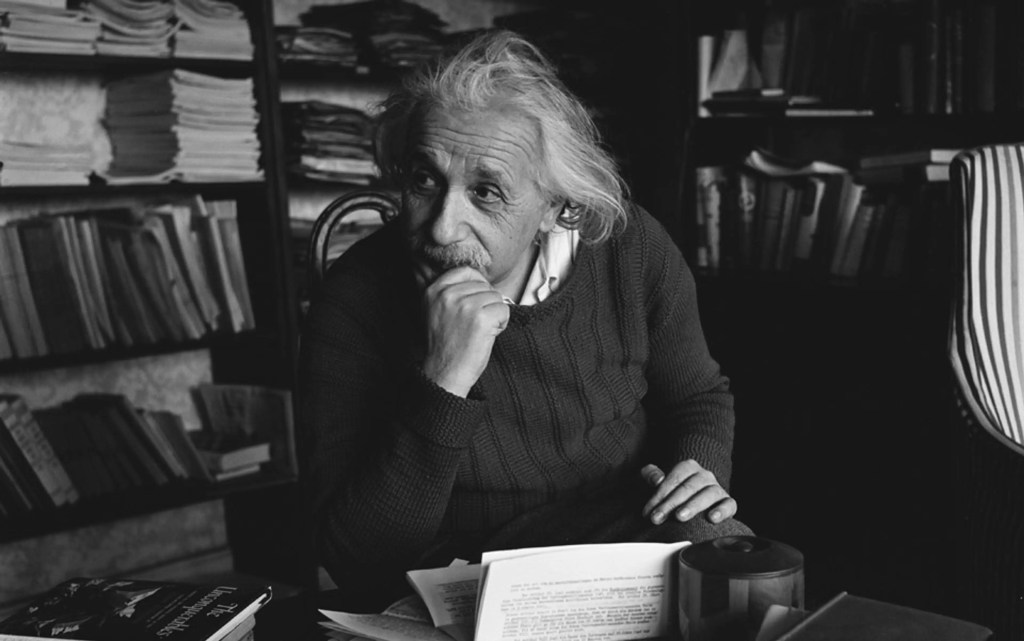
Einsteinium (Es): Albert Einstein

Einsteinium is the 99th element on the Periodic Table, and it hangs out just three spaces along from curium in the Actinoid group. Einsteinium is another synthetic element, and it was created in 1952, by Albert Ghiorso, Torbjørn Sikkeland, Almon E. Larsh, and Robert M. Latimer, at the University of California, Berkeley, United States.

Using your amazing detective skills, you would have figured out that Einsteinium was named after, arguably, the famous scientist of the 20th century, Albert Einstein.

I’ve stated this before, but Einstein was a theoretical physicist who researched and published work on the photoelectric effect, Brownian motion and the Einstein relation, special relativity, the principle of mass-energy equivalence (E=mc2), statistical mechanics, general relativity, and many more outstanding contributions to science. Einstein also received a Nobel Prize in 1921 in Physics.

Albert Einstein (1879 – 1955) at home in Princeton, New Jersey, 1944. Photo by Popperfoto/Getty Images

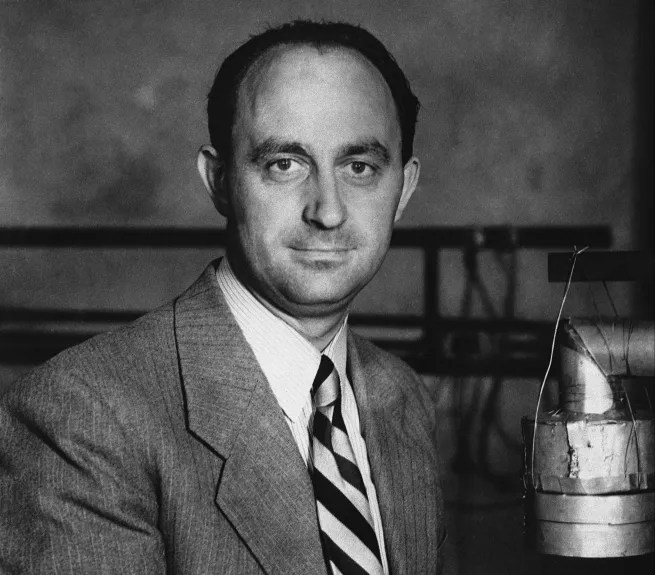
Fermium (Fm): Enrico Fermi

 Since Fermium is the 100th element on the Periodic Table, it sits right next to Einsteinium in the Actinoid group. As you can guess, Fermium is a synthetic element, and in 1952, it was discovered by Albert Ghiorso and other scientists at the Lawrence Berkeley National Laboratory. It was created in the debris of the first hydrogen bomb explosion in 1952, code-named Ivy Mike.

Just like the previous two entries, Fermium was named after another 20th-century scientist, Enrico Fermi. He was a physicist, and among the various things he accomplished, Fermi helped construct the world’s first artificial nuclear reactor, as well as working on the Manhattan Project.
And just like the Curies and Einstein, he was also awarded a Nobel Prize, but this was in 1938 for Physics.

Physicist Enrico Fermi, now a professor at the Columbia University, shown August 10, 1945, began experimenting with uranium in Italy in the early 1930’s. His experiments and the knowledge derived from them assisted in the final perfection of the atomic bomb. (AP Photo)

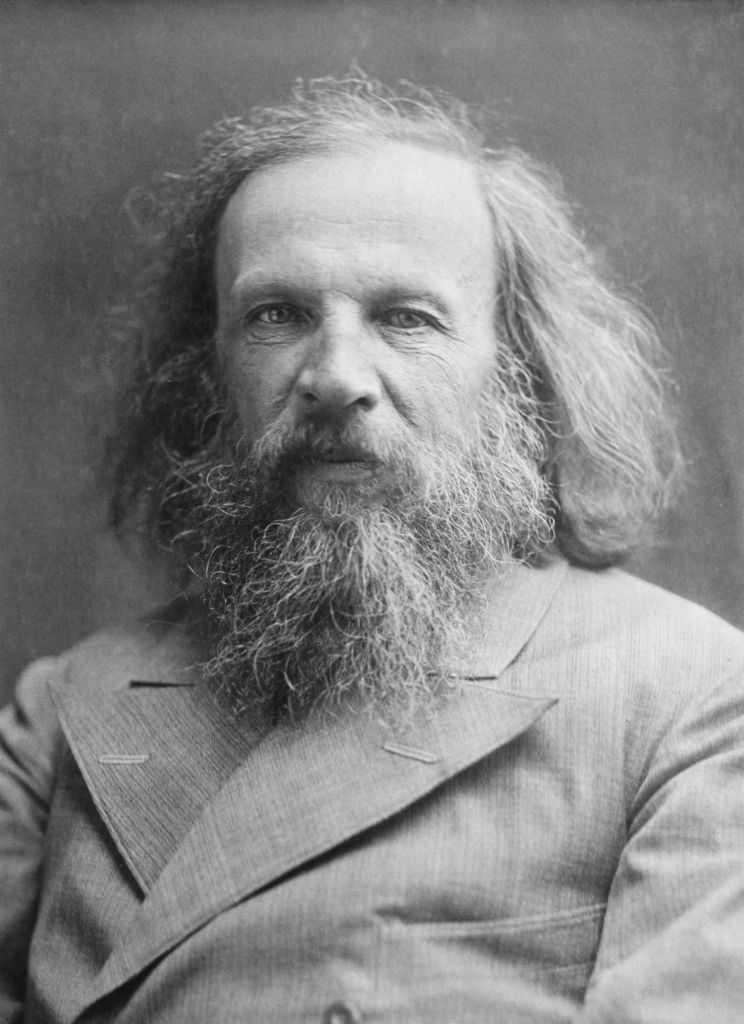
Mendelevium (Md): Dmitri Mendeleev

You knew this was coming, didn’t you? Mendelevium is another synthetic element and is the 101st element on the Periodic Table. It was discovered by Stanley G. Thompson, Albert Ghiorso, Glenn T. Seaborg, Gregory Robert Choppin, and Bernard G. Harvey in 1955 at the University of California.

Mendelevium was named after…wait for it…Dmitri Mendeleev! Mendeleev was the architect of the modern Periodic Table, and he did this by organising the elements into a table, based on their physical properties, like atomic number, atomic valence and atomic mass.

One remarkable aspect of Mendeleev’s Periodic Table is that he organised the elements in a way that allowed him to predict the existence of undiscovered elements by leaving gaps for them. History shows that his predictions were accurate with the later discoveries of germanium, gallium, and scandium.

Original: Unknown author
Upload: Germansociety2014/Wikicommons

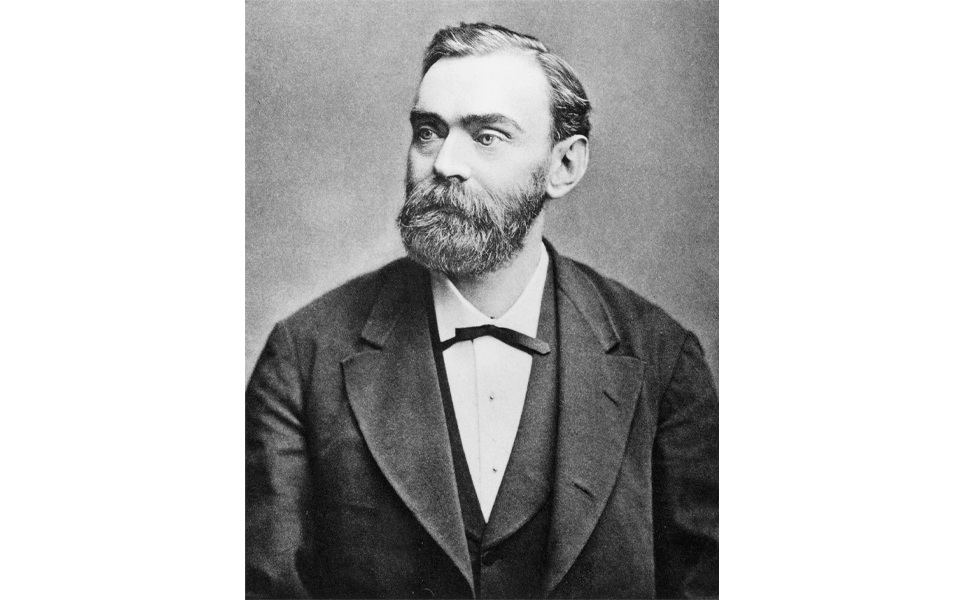
Nobelium (No): Alfred Nobel

As we march along the Actinoid group, we come across the 102nd element: Nobelium. Nobelium’s discovery seems to me, a bit odd. Scientists in Sweden announced the discovery of the element in 1957, but over the years, other sources have cited different years, such as 1958, 1963, and 1966, for the discovery. I don’t know who discovered nobelium first, because it may depend on who you talk to.

What isn’t up for debate is who nobelium was named after. Alfred Nobel was an inventor, engineer, businessman, and chemist who gave the world dynamite, gelignite, ballistite and the detonator, among other things. Nobel bequeathed his fortune to create a foundation to annually recognise people’s achievements for the benefit of humankind. Today, we know them as the Nobel Prizes.

Alfred Nobel. Image credit: Wikimedia Commons

Lawrencium (Lr): Ernest Lawrence

Lawrencium is the 103rd element of the Periodic Table, and like the others on this list, it’s another synthetic element. Similar to nobelium, lawrencium has been wrapped up in multiple claims of discovery. However, the earliest record of the discovery was in 1961, at Lawrence Berkeley National Laboratory, by Albert Ghiorso and a team of scientists.

Lawrencium was named after Ernest Lawrence, who was an accelerator physicist. He invented the cyclotron, which he was awarded the Nobel Prize in Physics in 1939, as well as worked on the Manhattan Project. He was also the founder of two laboratories, which were named in his honour after his death: the Lawrence Berkeley National Laboratory and the Lawrence Livermore National Laboratory.

Ernest Lawrence is perhaps best known for the invention of the cyclotron. Credit: LAWRENCE BERKELEY NATIONAL LABORATORY

Rutherfordium (Rf): Ernest Rutherford

As a New Zealander, this synthetic element has a special place in our rugby-obsessed hearts. Rutherfordium is the 104th element on the Periodic Table, and it’s a transition metal. Like the two previous entries, Rutherfordium has some controversy around its discovery. Whether it was discovered in 1964 by the Soviets or 1969 by the Americans, Rutherfordium only has a half-life of about 48 minutes.

Rutherfordium is the only element named after a New Zealander; my man, Ernest Rutherford. In 1908, Rutherford received the Nobel Prize in Chemistry for his research into the disintegration of elements and the chemistry of radioactive substances. He is also known as “the father of nuclear physics”, for his experiments that proved that the atom is made up of empty space, except for a small positively charged centre.

Rutherford proposed the term “nucleus” to describe the dense, positively charged core of an atom, thus giving him the title of “splitting the atom”, and the New Zealand $100 note was never the same.

Lord Rutherford’s pioneering research on radioactivity and the atom cemented his place as one of the greatest scientists of the 20th century. Credit: Bain News Service.

Seaborgium (Sg): Glenn T. Seaborg

It may sound like an alloy from Star Trek, but I promise you it’s not. The 106th element on the Periodic Table is seaborgium, and it’s yet another synthetic element. If I have this correct, both Soviet and American scientists discovered seaborgium, independently from each other in 1974, so its another controversy surrounding the discovery.

As for the naming of the element, that is simple. Seaborgium was named after the chemist, Glenn T. Seaborg. Seaborg helped to discover 10 elements, plutonium, americium, curium, berkelium, californium, einsteinium, fermium, mendelevium, nobelium and the final one, element 106; which was eventually named seaborgium.

He also won various awards, including the Nobel Prize in Chemistry in 1951. Seaborg was responsible for adding the Actinoids strip on the Periodic Table. Cool.

Glenn T. Seaborg, 1968.
Courtesy of the U.S. Atomic Energy Commission; photograph, Westcott

Bohrium (Bh): Niels Bohr

Sitting next to seaborgium in the transition metal group, we have the 107th element: Bohrium. There seems to be a trend happening because bohrium also has dual discoveries, with a Soviet team in 1976, as well as a German team in 1981.

People can argue about who discovered what element and when, but bohrium could have only been named after one person: Niels Bohr. Bohr was a Danish physicist, who also dabbled with philosophy. His contributions to science include atomic structure, nuclear fission, and quantum mechanics, but he also won the 1922 Nobel Prize in Physics.

The Niels Bohr Institute, at the University of Copenhagen is also named after him.

Niels Bohr, 1922. Credit: AB Lagrelius & Westpha

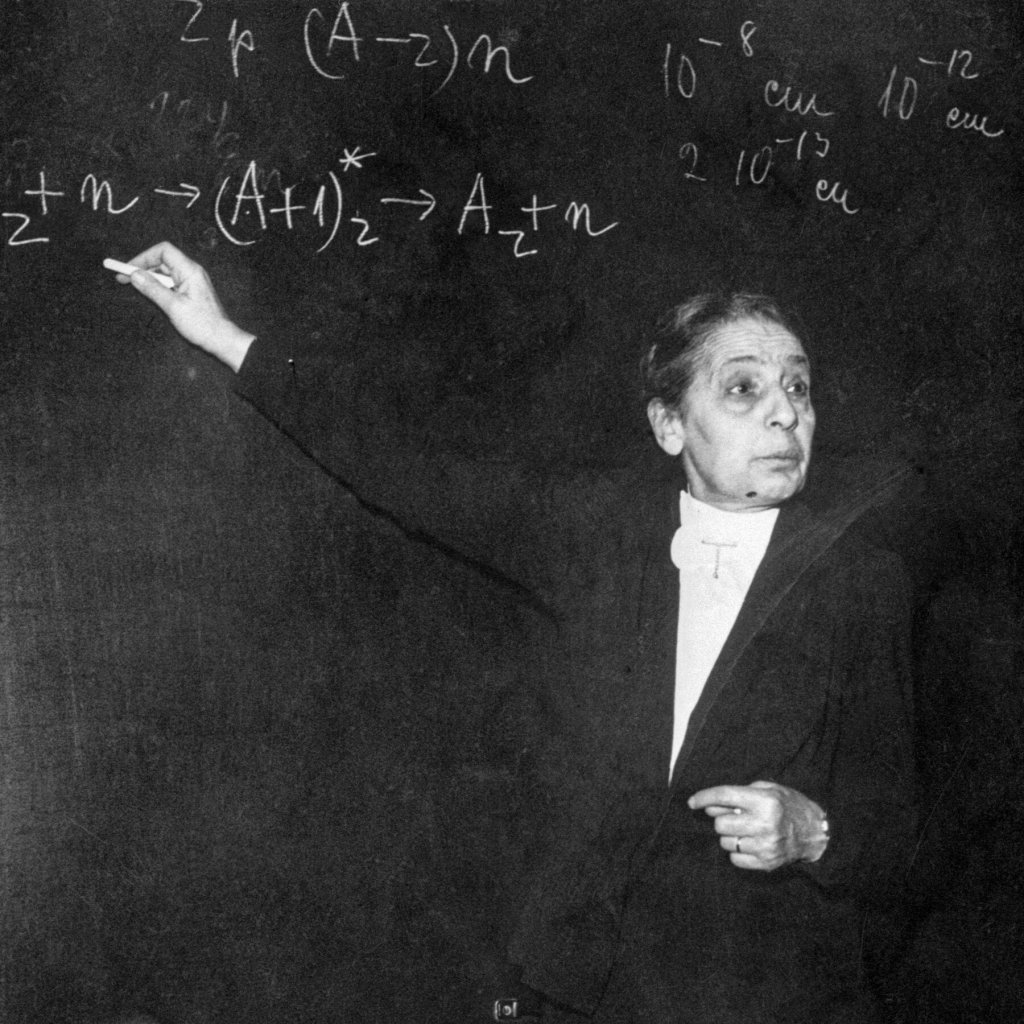
Meitnerium (Mt): Elise “Lise” Meitner

Meitnerium is the 109th element on the Periodic Table and another synthetic element. It was discovered by Gottfried Münzenber and Peter Armbruster at the GSI Heavy Ion Research Laboratory in Darmstadt, Germany in 1982.

There are only two elements on the Periodic Table named after real women, curium with Marie Curie, and the second is meitnerium, which was named after Lise Meitner. Meitner was a physicist who helped to discover the element protactinium, along with other discoveries like the Auger−Meitner effect and nuclear fission. She won the Max Planck Medal in 1949, the Enrico Fermi Award in 1966, and many other awards.

Credit: NY Times

Roentgenium (Rg): Wilhelm Röntgen

The 111th element is roentgenium, and it’s another transition metal. Just like meitnerium, roentgenium was created at the GSI Helmholtz Centre for Heavy Ion Research Laboratory, by Peter Armbruster and Gottfried Münzenberg, but this time in 1994.

Roentgenium was named after the physicist Wilhelm Röntgen, sometimes spelt as Wilhelm Roentgen. Through his work, Röntgen detected a form of electromagnetic radiation with a wavelength shorter than those of ultraviolet rays and longer than those of gamma rays.

This radiation became known as X-ray or Röntgen radiation. This discovery meant that in 1901, he was awarded the very first Nobel Prize in Physics.

Photograph of Wilhelm Conrad Röntgen. Credit: Public domain, via Wikimedia Commons

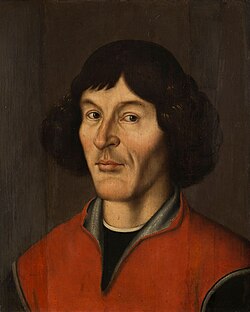
Copernicium (Cn): Nicolaus Copernicus

We are nearly at the end of the list, with only two to go! Copernicium is the 112th element and once again, was discovered at the GSI Helmholtz Centre for Heavy Ion Research. In 1996, a team led by Sigurd Hofmann and Victor Ninov worked for two weeks smashing lead with a beam of zinc ions, that were traveling at 30,000 km per second. The result of this experiment was the creation of a few atoms of copernicium.

If you’re a fan of space or astronomy, you may already know who I’m going to discuss. Copernicium was named after Nicolaus Copernicus, public enemy #1 for Flat Earthers. Copernicus was born in 1473 and achieved a lot in his life, which involved the fields of translation, medicine, economics, mathematics, laws, and diplomacy, but the main thing that he is still known for 500 years later, is his discoveries in astronomy.

Nicolaus Copernicus is often referred to as the father of modern astronomy due to his groundbreaking work, which demonstrated that not only is Earth a planet, but that other planets also orbit the Sun each year. In addition to this discovery, Copernicus explained that Earth rotates daily on its own axis. He also noted that very gradual changes in the direction of this axis are responsible for the precession of the equinoxes.

His model of the solar system is known as the Heliocentric system, which has the Sun at the centre, as opposed to the Geocentric model, which places the Earth at the centre.

Nicolaus Copernicus portrait from Town Hall in Toruń, 1580. Credit: Heritage Image Partnership Ltd/Alamy

Oganesson (Og): Yuri Oganessian

We have spent some time hanging out with the Actinoids and transition metals, but now we need to drift to the right, to visit the Noble Gases. Oganesson is the 118th and latest element to be added to the Periodic Table. It was created by a joint team of Russian and American scientists in 2002, at the Joint Institute for Nuclear Research in Russia.

Oganesson has three cool things going for it. It has the highest atomic number and highest atomic mass of all known elements, it was only formally named as late as 2016, and it’s the second element to be named after a living person, with the first being seaborgium and Glenn T. Seaborg.

And so, for the final time today, Oganesson was named after Yuri Oganessian, a nuclear physicist. His research on superheavy elements led him to help in the discovery of bohrium, meitnerium, hassium, darmstadtium, roentgenium, and copernicium. Oganesson has also been awarded the Lomonosov Gold Medal in 2017, and the Demidov Prize in 2019.

Credit: Joint Institute for Nuclear Research

With the other 105 elements on the Periodic Table, their names will hopefully be explained upon multiple entries on this popular and well-respected website.

So that’s it for another blog post and another week. Thanks again for reading, following, and subscribing to Some Geek Told Me. Please remember to walk your dog, read a banned book, avoid breaking the spacetime continuum whenever possible, and I’ll see you next week.


Friends, Romans, countrymen, lend me your ears, because I have some boring news for you

I’ve never dedicated an entire blog post to updating you with news before, at least about me. But, there’s a first time for everything, like trying Sour Cream and Chives for the first time. Your brain wants to shut down to stop feeling the vile taste.

Anyway, this blog post is slightly shorter, because of three main reasons. No, it’s not 20 questions, so I’ll tell you.

1.) I’m writing this before Easter because I will be busy over the weekend. Yes, I’m doing something at Easter, so the chances of me sitting down to work on New Zealand’s 5th least favourite website are slim. Not impossible, just slim, so I thought I would be prepared.

2.) As New Zealanders, we generally don’t boast about our achievements. This tendency stems from our history of being an isolated and pragmatic people. I’m not one to discuss my accomplishments or lack of. However, I feel compelled to share something significant that happened last weekend.

Long-time followers and subscribers of this wayward blog will know that I like running. To be honest, it’s somewhere between walking and jogging, but I pretend it’s running. Last weekend, I ran in one of my favourite half marathons, and something odd and wonderful happened.

2014 was the last time I ran a half marathon in under 2 hours. I’ve come close, dangerously close to that time, but that target has alluded me for over 10 years. In all honesty, I accepted the fact that I would probably never run another half marathon under 2 hours again. I thought my body had said, “To hell with that, we can’t do that anymore!”

By now, you can see where this is headed. For the first time since 2014, I ran a half marathon in under 2 hours. I know that in the grand scheme of things, it may not seem significant, but honestly, I thought I would never achieve this again. It’s surprising to realise I’m faster than I was in 2015, which feels almost unbelievable to me. In that sense, I feel proud of myself, which is a bizarre feeling.

It will sometime before that happens again. Maybe.


Image by Gerd Altmann from Pixabay

3.) For us, we are well and truly into Autumn, with Winter popping its ugly head up now and then. And just like the inevitability of the seasons and an Australian Prime Minister changing, we all change. This brings me to the biggest update, I’m changing jobs. I resigned in February, and the 24th of April will be my last day.

I’ve been there for nine years, and in the field for 16 years, but I’m going to be working for myself. I’ll be in the same industry, just adjacent to what I had been doing, which is equally exciting and horrifying, given how New Zealand and the world are currently.

Over the last few weeks, my emotions have felt like they are on a rollercoaster, and with my last day arriving soon, I’m sorry to report those emotions will probably just intensify. No doubt I’ll shame Chuck Norris by shedding a tear by the end.

I have no idea if this will work out, or even if it’s a good idea, but if the world’s most famous 78-year-old convicted felon has taught me anything, it’s that you can’t take anything or anyone for granted. I’m trying to look at the world differently, but also to try and do things differently.

I’ll let you know how things went on for the last day, but also how the new job is working out. Oh, look at me being all hopeful and positive!

Ok, that’s it for today. I promise I’ll get back to writing pointless posts like doing a Thunderbolts* Movie Preview next week.

Please remember to walk your dog, read a banned book, go fly a paper airplane, and I’ll see you next week.


We Didn’t Start the Fire: 1957

As the tariffs continue, so do the days of our lives. In our daily routines, we can choose what we do, including dissecting a 36-year-old song, even though it has been analysed before.

Because you’re a clever person who likes to get at least 10 hours of sleep and loves eating Vegemite, you would have realised I’m talking about one of my dumbest ideas, explaining the historical references in Billy Joel’s We Didn’t Start the Fire.

I started this pointless project in February 2024, and I’m still stuck in the 50s. I’ll probably retire before I finish it. For those unfortunate people who have missed out on the past entries, fear not, for I have the complete list.

 We Didn’t Start the Fire: The Beginning 

We Didn’t Start the Fire: 1948-1949.

We Didn’t Start the Fire: 1950

We Didn’t Start the Fire: 1951

We Didn’t Start the Fire: 1952

We Didn’t Start the Fire: 1953

We Didn’t Start the Fire: 1954

We Didn’t Start the Fire: 1955

We Didn’t Start the Fire: 1956

After reflecting on the historical events of 1956, I’m ready to delve into 1957, which promises to be just as wild and challenging. Like before, get ready for an adventure because we are traveling back in time with our destination set for 1957. Let’s do this!


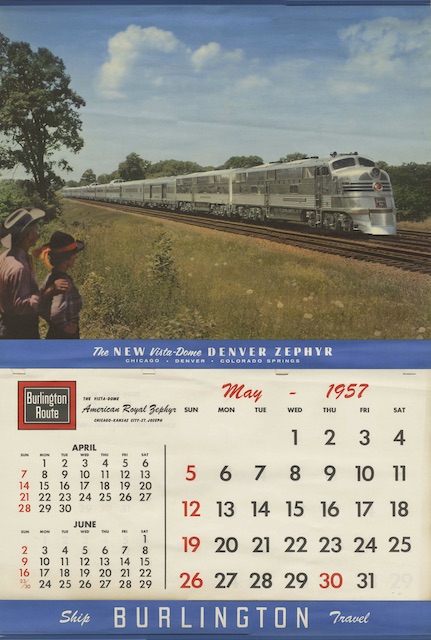
Credit: Burlington

1957

Little Rock

Little Rock is located in Arkansas, United States, and in 1957, it was a flashpoint for the Civil Rights Movement. It centred around nine African American students who were integrated into Little Rock Central High School. These students become known as The Little Rock Nine.

Through a ruling from the Supreme Court that declared that the laws that established segregated schools were unconstitutional, and the backing of the NAACP (National Association for the Advancement of Colored People), the nine students were enrolled at Little Rock Central High School.

The school was racially segregated, so black students attending an all-white school did not go down well for everybody. Among several protests against the integration, Orval Faubus, the Governor of Arkansas, deployed the Arkansas National Guard to support the protesters, as well as to block the students from entering the school.

If you remember from the 1952 blog, Dwight D. Eisenhower was the President of the United States of America, and this situation annoyed him. His response was to issue an executive order, which federalised the Arkansas National Guard. He ordered them to support the integration and along with the 101st Airborne Division, escorted and protected the students while at school. This drama was named The Little Rock Crisis.

As a non-American, it’s difficult to quantify a modern example of the Little Rock Crisis. My only answer is to point out the legacy that it brought to the public school system in the United States, by guiding the way in the desegregation of public schools.

The Little Rock Nine being escorted by the National Guard to Little Rock Central High School, Arkansas, 1957. Credit: Everett Collection

Pasternak

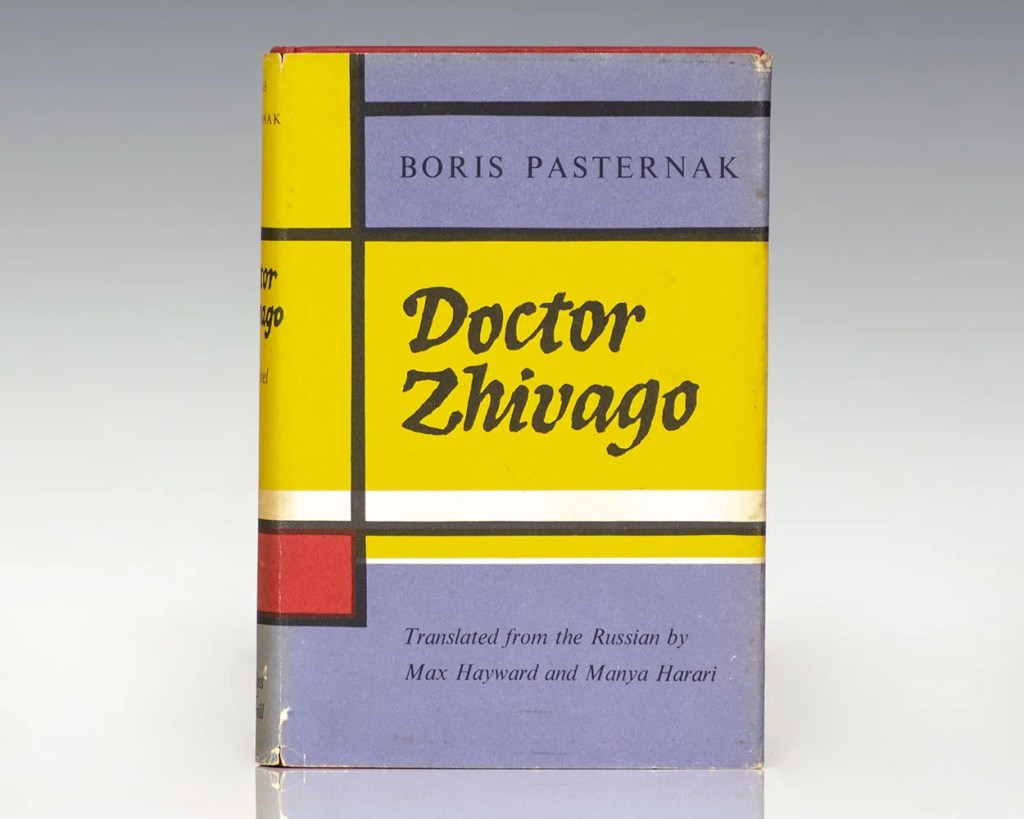
Boris Pasternak was a Russian poet, composer, literary translator, and novelist. He was born in Moscow, which was then part of the Russian Empire before it was transformed into the Soviet Union. He is included on this list because he wrote a small and uncomplicated book that you may have heard of: Doctor Zhivago.

Pasternak gave typed manuscripts to foreigners in 1956, knowing they wouldn’t be published in the USSR. The manuscripts were then smuggled to Milan, Italy. Doctor Zhivago was released in 1957, and I’m going to do an awful job at explaining this, but the novel focuses on wars, separation of families, love, and characters. So many characters, with just as many names.

The 1958 Nobel Prize for Literature was awarded to Pasternak for Doctor Zhivago, and it remains a masterpiece and beloved the world over for its themes. Over the years, the book has sold millions of copies and has been adapted for television, theatre, and film, with special mention to 1965’s Doctor Zhivago, where it was nominated for 10 Academy Awards and won five.

Doctor Zhivago. London: Collins & Harvill, 1958. Credit: Raptis Rare Books

Mickey Mantle

We haven’t discussed baseball for some years now, but this entry will change that. Mickey Mantle was a professional baseball player who played primarily as a centre fielder for the New York Yankees, between 1951–1968.

Mantle earned many different baseball awards, championships, and trophies, but that’s not why he’s on the list. In 1957, Mantle made The Major League Baseball (MLB) All-Stars team. For those of you not up with the play, the All-Stars are players made up from teams in the American League and National League.

This fixture became an annual event on the MLB calendar. Now what made Mantle’s inclusion in the 1957 game special was that it was the sixth year in a row that Mantle had made the All-Stars team.

For a contemporary equivalent, you could go with Mike Trout, but the All-Stars also covered Major League Soccer (MLS-Football), National Basketball Association (NBA), National Football League (NFL), and National Hockey League (NHL), so you could take your pick from them as well.

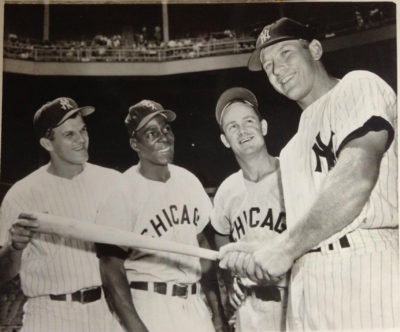
Bill Skowron, Minnie Minoso, Nellie Fox, and Mickey Mantle at the 1957 All-Star game. Credit: Unknown

Kerouac 

This is quite rare, but we have a second book entry. On the Road was written by Jack Kerouac, and was released in September 1957. Kerouac based this book on his travels with his friends across the United States, and in some circles, it’s considered a memoir.

The book highlights the Counterculture generation, like the Beat movement, and was controversial with the characters’ carefree lifestyle, drugs, and travelling, along with the music. On the Road has sold over 4 million copies worldwide, with ongoing sales of around 100,000 copies annually. 

On the Road has gone on to influence and inspire many different entertainment creators like Hunter S. Thompson, David Bowie, Matty Healy, Jerry Garcia, and Van Morrison, but also Jim Morrison and Bob Dylan.

Front cover for the first edition of On the Road by Jack Kerouac. Credit: The Viking Press

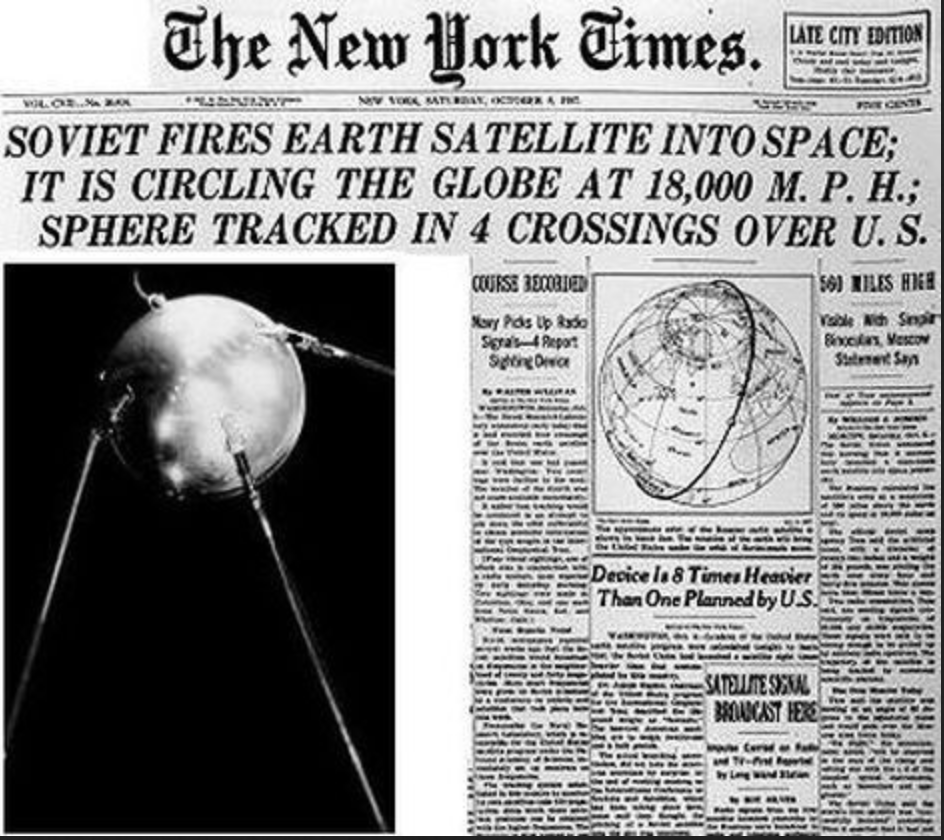
Sputnik 

I wasn’t born in the 50s, so I can’t imagine the fear and tension that came with Sputnik. Launched on 4th October 1957 by the Soviet Union, Sputnik 1 was the world’s first artificial satellite. It was only 58 cm in diameter, and it carried a low-power radio transmitter that broadcasted a beeping noise at regular intervals, which could be heard by radio listeners around the world.

It achieved an Earth orbit with an apogee (farthest point from Earth) of 940 km and a perigee (nearest point) of 230 km, along with circling the planet every 96 minutes. The satellite remained in orbit until 4th January 1958, when it fell back and burned in Earth’s atmosphere. It had travelled 70 million km around the planet before deorbiting. 

Known simply as Sputnik, this 83.6 kg device caused anxiety throughout the West, which marked the beginning of the space age between the United States and the Soviet Union. 

The legacy of Sputnik can be seen in various spacecraft and satellites launched by the USSR that bear its name, as well as in the thousands of satellites launched by other countries and companies. Just consider where NASA, ESA, SpaceX, Blue Origin, and Virgin Galactic would be today without the influence of Sputnik.

On Oct. 4, 1957, the Space Age began as the Soviet Union launched Sputnik 1, the first artificial satellite, into orbit. Credit: The New York Times

Chou En-Lai

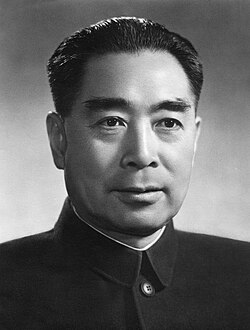
Chou En-Lai, also known as Zhou Enlai, served as the first Premier of the People’s Republic of China from its establishment in 1949 until he died in 1976. He was also the country’s foreign minister, a position he held from 1949 to 1958, during which he travelled extensively.

In 1950, he signed a treaty that committed China and the Soviet Union to co-operate. Furthermore, he played a crucial role in facilitating Richard Nixon’s historic meeting with Mao Zedong in China in 1972.

In modern times, you could go in two different ways, either as a foreign minister or an intermediary. For the foreign minister angle, you could just promote your foreign minister, however, the intermediary is a lot easier. Think of Henry Kissinger and President Jimmy Carter for the Middle East, Alexander Haig for Argentina and the United Kingdom, and recently, Emmanuel Macron for Ukraine and Russia.

Zhou Enlai (Chou En-Lai), Premier of China. Official portrait, 1950s. Credit: anonymous, Public domain, via Wikimedia Commons

Bridge on the River Kwai 

The Bridge on the River Kwai was a war film based on a book of the same name. Released in 1957, the film tells the story of Allied prisoners of war in Japanese-occupied Thailand, who are forced to build a bridge over the Kwai River, linking Thailand to Burma (Myanmar) for the Japanese, via a railway.

The film went on to earn US$30.6 million, against its US$2.8 million budget. It found universal acclaim, winning seven Oscars at the 1958 Academy Awards, three Golden Globes, and four British Academy Film Awards. The Bridge on the River Kwai has been described as not only the greatest war film ever made, but also one of the greatest films ever made.

I’ve been lucky enough to have seen it, and it’s phenomenal. Seriously, it’s one of those times when you should believe the hype about a film, it’s that good. Some modern films that swept the Academy Awards include Titanic (1997), The Lord of the Rings: The Return of the King (2003), and La La Land (2016).

So for 1957, we covered an American desegregated high school, a Russian author, a baseball player, an American author, a Soviet satellite, the Chinese Premier, and a film. We’ve been working hard on this, so 1958 will be less chaotic. Maybe.

So that’s it for another week in this ridiculous project. Cool. Thanks again for reading, following, and subscribing to Some Geek Told Me. I have accounts on Twitter and Mastodon, where I try to sound clever, so follow me if that floats your boat.

Please remember to walk your dog, read a banned book, and enjoy your 90-day pause on Trump’s tariffs. I’ll see you next week, where I’m going to discuss some news that is equally part exciting and scary. Take care and Slava Ukraini!


Who wants a trade war with penguins?

I’m going to start with an apology. Today’s blog post was supposed to be about We Didn’t Start the Fire’s 1957 historical references; as I spoke about this last week. Now, I’m very sorry to let the fans of this project down, because as I was writing the blog, something extraordinary happened, and I simply couldn’t ignore it.

So in my infinite wisdom, I decided to put a pin in the 1957’s historical references, and actually discuss a trade war. Due to our interconnected world, trade serves as a vital link among us. Surprisingly, it seems that the President of the United States is beginning a trade war with penguins, elephant seals, and seabirds.

Let’s analyse this carefully to determine its truthfulness, or if it is simply the mainstream media attempting to humiliate a 78-year-old convicted felon.

On 2nd April 2025 (local time), President Trump unveiled his hotly anticipated new tariff scheme, which was dubbed Liberation Day. Again, as you know, he declared a trade war against various countries and territories around the world, including my own.

I don’t have enough time to discuss how unusual it is that Russia, Belarus, and North Korea were omitted from the tariff list. My time is too valuable for that, as well as addressing the fact that these tariffs aren’t truly tariffs. Instead, they are based on a flawed formula meant to reflect the trade deficit between the United States and countries or territories.

No, I won’t mention those two things at all. I won’t even talk about how global markets are melting down, with at the time of writing, US$6.6 trillion was been wiped away. I would never stoop that low to discuss and mock those important matters.

And you can forget about me ever mentioning that the White House is now reframing the tariffs as sanctions. Nope, not by me, or on my account. There’s no way I would ever discuss that.

However, there is one tiny thing I would like to discuss. When the former McDonald’s employee and casino bankrupter revealed his list of countries and territories that he wanted to punish for not buying enough US-made items and goods, he included a rather strange entry: The Heard and McDonald Islands.


Credit: White House

The Heard and McDonald Islands are some of the most isolated places on the planet. They lie in the Southern Indian Ocean, about 3,850 km from Australia, where the islands are an Australian external territory. It’s roughly the same latitude as Madagascar, about two-thirds of the way from Antarctica and Madagascar.

The islands’ total land area is only 372 km2, with a coastline stretching 101.9 km. The Heard and McDonald Islands are home to two volcanoes and hundreds of thousands of fauna, such as penguins, elephant seals and seabirds.

But one of the strangest things about the Heard and McDonald Islands is the human population, which is zero. Yes, that’s correct, not a single person lives there. They are uninhabited by humans.

According to the data revealed by the White House, the Heard and McDonald Islands have a trade deficit of 10%, which has resulted in the world’s most famous 78-year-old convicted felon, slapping a 10% tariff on the islands.

Putting aside the suicidal nature of the financial and economic illiteracy of the tariffs, we have a problem. If we are to believe the White House’s data and figures, and why would we not, it means the Heard and McDonald Islands have a trade deficit with the United States.

From the United States perspective, the Heard and McDonald Islands are exporting more goods and services to the United States than they are importing from the United States, hence the trade deficit. But here’s the problem: if the Heard and McDonald Islands are uninhabited by humans, then who or what the fuck is trading with the Americans?

I hope you’re sitting down because the answer is penguins, elephants seals, and seabirds. I like to stay informed about world events, but I’ll be honest, I had no idea that a collection of penguins, elephants seals, and seabirds, living on islands near Antarctica, had not only mastered the ability to understand human language, finance, and commerce, but also have the means to conduct trade with humans. I feel really stupid and ignorant for not knowing this.

I have so many questions about this:

  • Do the different species of animals trade separately or collectively?
  • What do they trade? Is it eggs, feathers, shit, or something else?
  • If it’s shit, is penguin shit more valuable the elephant seal shit?
  • Do the penguins, elephant seals, and seabirds get along with each other, or are there different factions working against each other, whether it’s politically or financially?
  • How likely is a civil war to break out on the Heard and McDonald Islands, over the tariffs?
  • How do they communicate with the humans?
  • What do the penguins, elephant seals, and seabirds import from the United States?
  • Who are the American importers, and how are they surviving with the 10% tariff slapped on by the Heard and McDonald Islands?
  • What is the currency of the Heard and McDonald Islands?
  • Are Australian penguins, elephant seals, and seabirds, really taking jobs away from American humans, or American fauna?
  • Is this not the greatest example of evolutionary biology ever discovered?
  • How is this not the biggest news story in the history of the world; animals trading with humans?
  • Has anybody spoken to Sir David Attenborough about this? What are his thoughts?
  • Do the Heard and McDonald Islands only trade with the United States?
  • By starting a trade war with the Heard and McDonald Islands, does the White House hope to bring back more American jobs?
  • Does Elon Musk wish to export Teslas to the Heard and McDonald Islands?

The questions are endless because I’m just stunned at this revelation. This startling information is hard to understand and comprehend since it must be true and accurate. Otherwise, the US government would look like a group of people who wouldn’t be able to organise a party at a brewery. This would be one of the biggest displays of incompetence the US government have committed since Signalgate.

I mean, Trump, armed with his stable intellect, and his posse of loyal henchmen, could never make a mistake, right? Because that would be bigly. Nah, I bet every single penguin, elephant seal, and seabird on the Heard and McDonald Islands is woke.

And this ladies and gentlemen, is the world we live in. Welcome.

That’s another blog post for another week. Thanks once again for reading, following, and subscribing to Some Geek Told Me.

That’s three political blog posts in a row, so that’s enough for now. I’m going to finish We Didn’t Start the Fire: 1957, so we can discuss history, music, people, and politics…damn.

Please don’t forget to walk your dog, read a banned book, tell Sir David Attenborough about tariffs on the Heard and McDonald Islands, and I’ll see you next week to continue We Didn’t Start the Fire.

Seriously, can someone please talk to Sir David Attenborough? His response would be amazing.


Cherry picking Elon Musk’s delightful and inspiring tweets

Following on from last week’s award-winning blog post on Elon Musk and Tesla, I thought I would include an epilogue of some sort. And when I mean award-winning, I mean…wait, do I need to explain that joke?

Anyway, Musk is a busy man. He’s mismanaging DOGE (Department of Government Efficiency), selling Teslas at the White House, launching and blowing up rockets with SpaceX, selling and buying his companies to himself, and doing interviews with Fox News.

To everyone’s surprise, Musk still manages to find time to share his innermost thoughts and ideas with his 218.8 million followers on Twitter.1 Because of this, I talked to my Chief Consultant for Bad Ideas and decided to examine what Musk has been posting and reposting on his account lately.

Three things to remember before we start this stupid idea:
1.) I’m only going back a week at the most, because, well, that’s all I can tolerate.
2.) I’m focusing on the different posts and reposts that Musk has done on his Twitter account. I’m not including anything other people have said about him, that is not on his account.
3.) Since this is my account, I get to decide what happens. Because of this, I will be selectively choosing posts and reposts, which make Musk stand out for various negative reasons.

Awesome, so let’s read what nonsense the richest person on the planet has to say on nearly everything.


Credit: Sky News

Make of these posts as you will. That’s a lot to take in, as it was only over a few days, and that’s not counting all of the other stuff on his account. Musk is on social media more than George Takei, and that’s saying something!

Love him or hate him, Elon Musk is not going anywhere, least of all on Twitter, which Musk recently sold to xAI, an artificial intelligence start-up company, for US$33 billion. Just to clarify, Musk owns xAI, so he purchased and sold a company to himself. I have enough problems remembering to remind myself about things to buy at the supermarket.

Anyway, like I said last week, Musk is a complicated person, and his posts and reposts are a small window into the mind of a man who is one bad day away from becoming a real Bond villain.

That’s another blog post for another week. Thanks once again for reading, following, and subscribing to Some Geek Told Me.

Please don’t forget to walk your dog, read a banned book, and if you can, please donate to the rescue relief in Myanmar, where a 7.7-magnitude earthquake hit the country and killed over 1,600 people. From personal experience, earthquakes are hell, so if you can donate, please do. I’ll see you next week because we’re going back to 1957. Can’t wait.


1 I know Twitter has been rebranded as X, but it’s still Twitter to me; just like the Gulf of Mexico. Sorry, I’m a jerk.

15th March 2019: Six years later

I’ve mentioned this before, but sometimes I struggle to find humour in discussing certain topics. Not that I’m an expert in comedy—far from it—but today’s blog post is one of those times when I can find very little humour.

To make sure we all understand what I’m talking about, let’s very quickly establish the facts. On 15th March 2019, a lone gunman, armed with a collection of firearms, including semi-automatic rifles, shot and killed 51 people and injured 89, at the Al Noor Mosque, and Linwood Islamic Centre, in Christchurch, New Zealand. This event became known as the Christchurch mosque shootings or the Christchurch mosque attacks.

I’m not going to rehash the events of 15th March 2019, minute by minute. Professional journalists and reporters have done that already, so I can’t add anything new to the conversation.

The purpose of this blog post is to express my feelings and emotions about the sixth anniversary of the deadliest shootings in modern New Zealand history.

I have a strong connection to Christchurch, even though I no longer live there. I attended university in the city, played football, and met my wife there. It’s where we got married, and additionally, my first child, UMC1, was born in Christchurch. I was even present during the ML6.3 earthquake that struck on 22nd February 2011, which tragically resulted in the loss of 185 lives.

We moved away from Christchurch in early 2016, but it’s still important to us.

Christchurch features a large public open space in the city centre known as Hagley Park, which was one of my favourite places to run. I would always run in an anti-clockwise direction around the park, with Al Noor Mosque on my right-hand side, directly across from the park. The mosque is a famous and significant site for both the city and the Muslim community.

As for the Linwood Islamic Centre, it was only opened in 2018, but I lived only three blocks from the future site, so I know the area quite well. I wasn’t in Christchurch when the shootings happened, but six years later, I am still a mixed bag of emotions surrounding it.

Before I continue, I want to clarify that I did not know anyone who was shot or injured, so families of the victims and survivors will have a much more personal experience than I do. I don’t want to disrespect anyone’s experience, I simply want to express my emotions and feelings because I believe our country and the world are forgetting the lessons that day taught us.


Credit: Combating Terrorism Center

Let’s start with easy emotions, like shame and sadness. Six years later, I’m still ashamed and saddened those murders happened in Christchurch, let alone in New Zealand. The city and country are forever linked to that day and will have to carry an albatross around their necks, until the end of time. Granted, the albatross will gradually decrease in mass and weight, but it will always be there.

There’s also the sadness and shame in educating and explaining to our tamariki (children) about that day, because it relates to them, directly and indirectly.

This brings us to the shame and sadness towards the Muslim community of Christchurch, New Zealand, and the world. Some of the people attending the two mosques were born in New Zealand, while others were born overseas, with some being refugees.

I still feel sad and ashamed for the families having to travel; especially from other countries to mourn their loved ones, because they should have been safe here in New Zealand. They should’ve been, and it was disgusting and unforgivable.

Besides the location, a place of worship like a mosque, church, synagogue, or temple, should be a place of safety and protection for people. It still upsets me that this evil act of hatred was committed, not just against Muslims, or Christchurch or New Zealand, but it happened at all.

My experiences of feeling shame and sadness towards the attacks are also deeply connected to my anger and rage.

  • I’m still angry someone was able to amass a collection of firearms of that magnitude with ease.
  • I’m angry that he was able to livestream the first shootings on Facebook.
  • I’m angry that a white migrant shot and killed other migrants because they were from a different ethnic background to him.
  • I’m angry that the gunman believed in the conspiracy theory of the Great White Replacement. Long-time followers and readers of this account will understand my views towards conspiracy theorists and the garbage they peddle.
  • I’m angry that it happened in New Zealand, and of course, Christchurch.
  • I’m angry not only for the Muslims in Christchurch, New Zealand, and around the world, but also for the Muslims where I live.
  • I’m angry that this evil act empowered supporters of conspiracy theories, the alt-right, and anti-Islam groups in New Zealand to speak up.
  • I’m angry for the victims and their families because this should not have happened.
  • And I’m angry as a white, straight non-Muslim New Zealand male. This country has been slowly working towards diversity and inclusion for over 170 years, so the whole thing is a nightmare.

Having said that, you can’t have light without the dark, and just like the Christchurch earthquakes, you can’t have dark without the light. The 15th of March 2019 was one of the worst days in living memory for my country, but it allowed hope and pride to take centre stage.

  • The way the city, country and government, rallied around the victims and their families, was and still is excellent.
  • The flowers, hakas, and tributes were wonderful.
  • The denouncing of hatred towards people of our community and country was powerful.
  • The work towards pressuring social media companies to regulate more of their content, especially around hate speech and livestreaming, was impressive.
  • Closing the gun law loopholes and making semi-automatic firearms illegal was swift and direct.
  • There were stories of bravery, love, compassion, and humanity that were uplifting.
  • The backlash over the upcoming film, detailing the shootings was glorious by the New Zealand public.

Ultimately, what gave me hope and made me proud as a New Zealander, was the amazing response to the shootings. The world looked at New Zealand at one of our lowest and darkest days, so we did what New Zealanders only know how to: we embraced the victims and families because they were us; and told hate groups to fuck off, because this event would not stop us from doing the right thing, as in being a nation of diversity and inclusion.

There are many other emotions I could talk about, but the main one that remains is frustration, which concerns what’s currently happening in New Zealand and around the world.

  • In New Zealand, our new government have said they are open to rolling back the assault weapons ban, “…because it punishes the good and responsible gun owners.”
  • Taking his cues from the President of the United States of America, our Deputy Prime Minister Winston Peters, wants to start an anti-woke crusade, to weed out DEI hires, because, according to him, diversity and inclusion are tools of the left.
  • Attacks and prejudice towards the LGBTQIA+ community are increasing the world over.
  • Because of Hamas’ actions, anti-Muslim attacks are rising, along with antisemitism, because of the actions of the Israeli government.
  • For all the optics, the richest man in the world, Elon Musk, seems to be at the very least, a Nazi-sympathiser.
  • The Great White Replacement conspiracy theory is still being pushed by popular anchors, hosts, and influencers.
  • People are still making racist jokes online and in person; along with spewing hate speech on social media platforms, with little or no recourse.
  • Fascism is being dragged into the 21st century for a reboot.

I feel frustrated, because to me, a lot of the lessons of tolerance, compassion, diversity and inclusion, surrounding the shootings, are getting lost in the noise of prejudice, hatred, nationalism and extreme behaviour; even here in New Zealand.

We have been slowly falling back into the mindset of, “…if another group of people are different from me, or if I don’t understand them, that makes them wrong.”

It’s frustrating to witness the tremendous efforts that have been made to rebuild and move forward from the shootings, been slowly eroded due to everyday life. The rise of disinformation, misinformation, conspiracy theories, and hate groups, along with various governments claiming that diversity and inclusion weaken us, is both disheartening and morally wrong.

We already have enough violence in Ukraine, Palestine, Congo, South Sudan, and Myanmar; we don’t need to add to it. We need to get back to educating our family, friends, and the public, that diversity, inclusion, tolerance, and compassion are strengths, and they are the glue that binds us together, not separating us. And we do this through actions, not just words.

I think that’s enough for today. I need my precious beauty sleep because my wrinkles are becoming deeper and wider. Thanks once again for reading, following, and subscribing to Some Geek Told Me.

Just like last week, please don’t forget to walk your dog, read a banned book, continue to tell Nazis to fuck off, and I’ll see you next week.


We Didn’t Start the Fire: 1956

I know the last We Didn’t Start the Fire was released in December 2024, and you might have thought it was over. But just like Rambo, it’s never truly over. One day, this project will be finished—if I ever manage to write faster. However, that day is not today. So, without further ado, Some Geek Told Me proudly presents one of my least well-conceived ideas: discussing the historical references in We Didn’t Start the Fire.

For any unlucky readers who have missed the previous entries, the list is here:

 We Didn’t Start the Fire: The Beginning 

We Didn’t Start the Fire: 1948-1949.

We Didn’t Start the Fire: 1950

We Didn’t Start the Fire: 1951

We Didn’t Start the Fire: 1952

We Didn’t Start the Fire: 1953

We Didn’t Start the Fire: 1954

We Didn’t Start the Fire: 1955

We are well and truly committed to this insane project because this blog post is the ninth entry, which is tragic and hilarious, in equal measure. So, just like the eight previous entries, strap yourself in, because we are going back in time, to 1956 to be precise. Let’s go!


Credit: 68.media.tumblr.com

1956

Bardot 

Our first historical reference is about the French actress, singer, and model, Brigitte Bardot. Bardot started acting in 1952, but in 1956, she starred in four movies; Naughty Girl, Plucking the Daisy, The Bride Is Much Too Beautiful, and And God Created Woman.

These films put the world’s spotlight on Bardot, which made her one of the first women to be given the name, sex kitten, which describes a woman who exhibits sexual aggression.

Bardot quickly became a global icon for sexual revolution, with And God Created Woman becoming the highest-grossing foreign film ever released in the United States at the time, earning $4 million. Bardot went on to a have a successful career in entertainment, and retired from the industry in 1973.

She also became involved with animal rights, setting up The Brigitte Bardot Foundation in 1986, for animal protection.

Some contemporary examples, although similar, but different, could be famous female actresses and animal rights activists like Alicia Silverstone or Evanna Lynch.

Bridget Bardot in the 1956 film “And God Created Woman.” Credit: Iéna Productions

Budapest 

In 1956, the Hungarian People’s Republic was controlled and influenced by policies from the Soviet Union. Economic decline and political repression were slowly eating away at the country, so on 23rd October, university students and other citizens, began to protest in the capital city of Budapest. What happened next was known as the Hungarian Revolution of 1956, or the Hungarian Uprising.

They were against the Soviet Union’s policies and its influence on Hungary, and demanding Hungarian independence. The students clashed with the ÁVH (State Protection Authority), which was a special police group. These protests started a revolution across the country, but the Soviet Union started to push back.

On 4th November, Soviet tanks rolled into Budapest to end the uprising, which led to some infamous and iconic images, and by 11th November, the uprising was crushed. Soviet forces had brutally cracked down on the protests with over 30,000 troops and over 1,000 tanks.

The human cost of the failed revolution was 2,500-3,000 Hungarian citizens were killed, 13,000 were wounded, and 200,000 fled the country in exile. 26,000 people were arrested, with 22,000 sentenced and imprisoned, and 13,000 were interned. 229 people were executed. The Soviets suffered 722 killed and 1,540 wounded.

The revolution was famous around the world, not just for the brave actions of the students and citizens, but also for the awful and bloody response from the Soviet Union.

Some modern examples of revolutions and brutal crackdowns from oppressive governments include the Second Intifada with Palestine and Israel (2000-2005), the Arab Spring (2010-2012), the Tulip Revolution (2005), the Hong Kong protests (2019-2020), along with civil wars involving Syria, Libya, Yemen, and Sudan.

Though to be fair, I think the best/worst example would be the 1989 Tiananmen Square protests and massacre.

The Soviet repression of the Hungarian Revolution saw T-54 tanks patrolling the streets of Budapest. Credit: Nagy Gyula

Alabama 

Alabama refers to three events in 1956, with the first being the Montgomery bus boycott, in Montgomery, Alabama, United States. This was during the American Civil Rights movement, with the boycott centred on social and political protests, campaigning against racial segregation on the local public bus network.

The campaign lasted from 5th December 1955-20th December 1956, and it brought national and international attention to the cause, with the now famous Rosa Parks, an African-American woman, refusing to surrender her seat to a white person on a bus. This action led to her arrest.

The Montgomery bus boycott was a key moment in the civil rights movement, because the Montgomery Bus Line mandated that African-Americans were not to be employed as drivers, but were also forced to ride in the back of the bus, and were often ordered to give up their seats to white people. 75% of the bus system’s riders were African-Americans.

Reports detailed that many African-American passengers were assaulted on the buses, short-changed, treated poorly by the drivers, and sometimes were left stranded, even after paying their fare. The boycott led to the 1956 Supreme Court decision Browder v. Gayle, which ruled that Alabama’s segregation laws for buses were unconstitutional. Martin Luther King, Jr., the MIA’s (Montgomery Improvement Association) president, became a major civil rights leader because of the boycott.

The second event was on 10th April 1956. Tensions were running high, with some white men attacking Nat King Cole during a performance in Birmingham, Alabama.

The third event involved Autherine Lucy, who became the first African-American student to enrol at the University of Alabama. There were many riots protesting Lucy’s attendance at the university, but despite them, she continued to attend. Three days later, the university suspended her “for her own safety,” prompting the university’s president to resign in protest.

Montgomery Bus Boycott March. Credit: Socialist Alternative

Khrushchev

Nikita Khrushchev was the First Secretary of the Communist Party of the Soviet Union, which effectively meant he was the leader of the Soviet Union, from 1953 to 1964. Now if you cast your mind back to the 1953 blog post, you’ll remember that Joseph Stalin, the positive and uplifting Soviet Union leader, had died after 30 years in power, then Georgy Malenkov took his place. He only governed for 186 days, before Khrushchev had him removed.

On 25th February 1956, at the closed session of the 20th Congress of the Communist Party of the Soviet Union, Khrushchev gave a speech and report officially called, On the Cult of Personality and Its Consequences. Unofficially, it became known as the Secret Speech. It was the speech that shook the world.

In this speech, Khrushchev did something unthinkable at the time; he started trash-talking Stalin. Even though Stalin had been dead for nearly three years, the Soviet Union had been altered, changed, influenced, and controlled by Stalin’s policies, over the course of decades.

Khrushchev was highly critical of Stalin and the way his followers still worshipped him. He also talked about the negative impacts of the purges, along with spitting out accusations and defamations towards the government.

Khrushchev wanted to introduce some reforms to the nation, which helped to kickstart the Soviet space programme, ease censorship policies, and have more open negotiations and discussions with Western leaders. In saying that, Khrushchev was in power when the Soviet Union went into Hungary to crush the uprising.

I can’t fully emphasise how important Khrushchev’s Secret Speech was, not just for the Soviet Union to move forward, but also to openly criticise the cult of Stalin and the damage Stalin had done to the country.

Drawing a contemporary comparison to the Secret Speech is challenging, as there have been numerous speeches delivered by leaders to their governments over the years, both public and private. With this in mind, I encourage you to make your own comparisons. A part of me believes that there may not be an equivalent to the Secret Speech, given its monumental impact—perhaps it is unparalleled.

Warsaw, March 1956, Polish print of the Secret Speech. Credit: Wikiwlh

Princess Grace

Grace Patricia Kelly was an American stage and screen actress, who gained international fame. She won an Academy Award, three Golden Globes and starred in classic movies like High Noon (1952), Dial M for Murder (1954), Rear Window (1954), and To Catch a Thief (1955), in addition to many television appearances.

While Kelly was at the Cannes Film Festival in 1955, with the world at her feet, she was invited to a photo session by Prince Rainier III of Monaco, at the Prince’s Palace of Monaco. From there, Kelly and Rainer started dating, and after a year, they were married, with two ceremonies occurring on the 18th April and 19th April 1956.

Kelly is on the list for two reasons; she retired from acting at age 26 years to marry Rainer, with High Society (1956) being her final film. The second reason was that by marrying Prince Rainier III, Kelly got a name upgrade, becoming the Princess of Monaco, though the public called her Grace of Monaco, or simply, Princess Grace.

A modern example of Grace Kelly would be (Rachel) Meghan Markle, the American actress. She married Prince Harry, Duke of Sussex, of the British Royal family, on 19th May 2018. With this marriage, she became the Duchess of Sussex.

Grace Kelly, kneeing at the altar on her wedding day, April 1956. Credit: Getty Images

Peyton Place

This is the first and only book for 1956’s list. Peyton Place was written by Grace Metalious and was released in 1956. Peyton Place deals with a lot of issues, including abortion, adultery, lust, murder, incest and premarital sex, which were subjects that were quite taboo in 1956.

60,000 copies of the book were sold within the first ten days of release, and it remained for 59 weeks on The New York Times best seller list. The subject matter of the book divided many people, with some banning the book; or at least trying to ban it, because of the “shocking and disgusting” themes of the book. Other people were amazed at the material, and loved reading about the sex lives of people, living in a small New Hampshire town.

The book was a best-seller and helped to usher in the sexual liberation movement, along with Metalious’ other works in the franchise. For a 21st century equivalent, maybe Fifty Shades of GreyFifty Shades Darker, and Fifty Shades Freed, by E. L. James, known as The Fifty Shades Trilogy.

Cover of the first edition of Peyton Place. Credit: Simon & Schuster

Trouble in the Suez

There is so much to this entry, I’ll try and cram it all in. The Suez Canal is a 193 km-long waterway, located in Egypt. It links the Mediterranean Sea to the Red Sea, and by definition, Africa to Asia, and Europe to Asia. It is one of the busiest waterways in the world, with an average of 56 vessels traveling the canal per day. Construction on the Suez Canal started in 1859, and 10 years later in 1869, it was completed and opened.

I could be oversimplifying this, but the Suez Crisis, as it was called, started on 29th October 1956. At the time, the canal was operated by Egypt, with the backing of the United Kingdom and France. After the 1952 Egyptian revolution, our old friend, Gamal Abdel Nasser Hussein, from the 1953 blog post, was in power in 1956.

Basically, Egypt was flirting with the Soviet Union, so the United Kingdom and the United States got jealous of this, and removed their funding for the Aswan Dam. Nasser decided to play the game as well, and nationalised the canal on 26 July 1956, from the British and French company that controlled it.

He then transferred it to the Suez Canal Authority and closed the Straits of Tiran to all Israeli ships, because of the ill will of the 1948 Arab–Israeli War, also known as the First Arab–Israeli War.

This was as popular as employing zombies as babysitters. The international community, namely the United Kingdom, France, and Israel invaded Egypt to take control of the Suez Canal. This become known as Second Arab–Israeli War, and lasted from 29th October to 7th November 1956. It didn’t last for long, but the damage was significant. At the end of the fighting, Egypt was still in control of the Suez Canal.

Pressure applied by the United States, the Soviet Union, and the United Nations, along with Egypt’s war effort, forced the three countries to retreat. The war strengthened Nasser’s position in the Arab world, but it also humiliated the British and French invasions.

Their roles as the world’s superpowers had ended, with the United States and the Soviet Union, having emerged as the two prominent superpowers in the world.

The Suez Crisis resulted in 3,200 deaths, with 177 of those deaths on the Israeli side. The crisis also left around 5,500 people wounded and around 6,000 fighters taken hostage.

The legacy of the Suez Crisis is still being felt in 2025, which is covered by two current events. The first is about the Gaza Strip. At the time, Gaza was controlled by Egypt, after the First Arab–Israeli War.

During the invasion of Egypt, Israel gained control of the Gaza Strip and Egypt’s Sinai Peninsula. Israeli forces held a four-month-long occupation of the region, before withdrawing, but not before winning freedom of navigation through the Straits of Tiran.

Years later, Israel recaptured and occupied the Gaza Strip and has never left. The Israeli military occupation of Gaza in 2025, is still relevant as it was with the wars in 1973, 1967 and 1956.

The second event is the escalating crisis concerning the Panama Canal. The United States government is demanding that the canal be handed over to them to ensure that the Panama Canal Authority is not influenced by China or other foreign countries and companies.

Will this be a repeat of the Suez Crisis, or can common sense and negotiation prevail? With the current US president, who the hell knows?

Credit: The Los Angeles Examiner

So for 1956, we covered a French actress, a failed revolution, a bus boycott, a speech, an American actress, a book, and a 10-day war. The more things change, the more they stay the same. 1957’s historical references are just as crazy as 1956, but that’s for next month.

And that’s it for another week. Thanks again for reading, following, and subscribing to Some Geek Told Me. I’m still lurking about on Twitter and Mastodon, so drop in to say hello.

Please remember to walk your dog, read a banned book, Slava Ukraini, and just like last time, go and tell a Nazi to fuck off. I’ll see you next week because I’m doing the Captain America: Brave New World: Movie preview. The preview should be terrible. Awesome.


The Final Experiment: The Flat Earth Fallout

So, how are things with you? Hmm.. that’s a mixed bag, isn’t it? As for me, I’m back at work, with UMC1 and UMC2 returning to school this week. Suffice to say, they are not too happy about that. Would you like to know some other people that are not happy? Flat Earthers.

But why are Flat Earthers unhappy, because we all know they’re such an upbeat, positive, open-minded, tolerant community. The answer is in the title because they are losing their collective minds over the Final Experiment.

Let’s do the responsible thing, and not let our friends use Comics San and go over what the Final Experiment was all about. To quote a somewhat lazy writer, “The Final Experiment is an observational showdown/trip between Team Globe (people who accept and understand we live on a globe) and Team Flat Earth (people who believe that the Earth is flat and deny reality).

It was created by Will Duffy, a pastor in Denver, Colorado, USA. It involves the concept of settling the argument about the shape of our planet, by inviting people to travel to Antarctica, this December, to confirm whether the 24-hour Sun exists or not.”

To the best of my understanding of the Flat Earth community, there is no official Flat Earth model, however, one of the most popular and beloved is the Alexander Gleason map. This map represents the planet on a 2-D surface, with the Arctic in the middle, with the other land masses centred around it.


Members of “The Final Experiment” group explore Antarctica in December 2024. (Photo courtesy of Will Duffy)

This of course means that on this map, Antarctica is not a massive continent at the bottom of the globe, but rather land that runs along the edge of the Earth, the so-called ice-wall. I know, I’m a Game of Thrones fan as well.

One of the many, many issues with that map, is the explanation of the Midnight Sun or the 24-hour Sun. Basically, on a Flat Earth, a Midnight Sun is only possible in the Arctic, as you can imagine, but impossible in Antarctica.

So imagine the idea, that you could travel to Antarctica in December; because remember, a Midnight Sun is only visible during Summer in the Southern Hemisphere, and you could witness it. This would either prove the existence of a Globe Earth or a Flat Earth. Simple enough, isn’t it?


Antarctic Logistics & Expeditions’ 757 lands directly on the ice in Antarctica in December 2024. (Photo courtesy of Will Duffy)

If we’re up to speed, let’s discuss the Final Experiment. Will Duffy and a mixed group of Globe Earthers and Flat Earthers travelled to Antarctica in December 2024, which is where Flat Earthers said you were not allowed to visit.

I think Duffy paid for three people to go, while the others crowdfunded to pay for the trip. I mean, it’s not like you’re travelling to the other side of a large city.

Because the Antarctic Midnight Sun only allows for a small window of time to witness it, the expedition was organised so they could arrive in time for the event. And so, what happened? I’ll give you a clue, you don’t need to be a rocket scientist to figure out what happened.

No, it wasn’t a penguin turf war, but a 24-hour Sun. Wow, but a surprise. Here is a time-lapsed tracked view of the Midnight Sun in Antarctica, by Dave McKeegan, who went on the Final Experiment expedition.

But the point of this blog post is not to discuss that all of the observational and investigational science was correct, because of course it was. Oh no, the point is to discuss the fallout and aftermath to the Flat Earth community.

In a previous blog post about the Final Experiment, I hypothesised about what the Flat Earth community might say or do, pending the observations of the Midnight Sun. These included:

1.) Some people will believe and accept the images and footage presented to them by fellow Flat Earthers of a Midnight Sun to be real and accept the truth, that the world is a globe and not flat.

2.) Some people will believe and accept the images and footage presented to them by fellow Flat Earthers of a Midnight Sun to be real, but will deny that it proves the shape of the planet, one way or another.

3.) Some people will deny the evidence of the Midnight Sun, and of the Globe. This will be because they weren’t there to confirm the validity of the claims, but images and footage can be changed, so why would they believe anything? The photos are fake, the footage is CGI, and the Flat Earther participants are lying and can’t be trusted.


A special camp for “The Final Experiment” is seen in the foreground, with Union Glacier Camp in the middle and Mount Rossman in the background, in Antarctica in December 2024. (Photo courtesy of Will Duffy)

I’ll be honest here, I do feel like a terrible human being, and I’m a little ashamed of myself, because I’ve taken great delight in the Flat Earth community’s desperate responses to explain the Final Experiment, and they have not let me down.

In some cases, it’s like a civil war has broken out within the community because they don’t know what to do. Some of their responses and conspiracy theories have included and are not limited to:

  • The footage is genuine, but it was previously filmed in the Arctic, six months earlier. (This conspiracy theory falls apart concerning the live-streaming.)
  • The footage is genuine and live-streamed, but it was not filmed in Antarctica, but on location somewhere else. (This conspiracy theory falls apart because even if it wasn’t filmed in Antarctica, a Midnight Sun should not be possible on a Flat Earth in December.)
  • The footage is fake and edited because you can’t travel and visit Antarctica because of the Antarctic Treaty. Antarctica is guarded and protected by the world’s military. (Where do I even begin with this?)
  • The footage is fake and edited because it was filmed in a studio in front of a green screen. (This conspiracy theory is destroyed because of the live-streaming.)
  • All Globe Earthers are not to be trusted, because they are all liars. (The response does not help or promote the Flat Earth model.)
  • The Globe Earther participants in the Final Experiment lie for a living, and the Flat Earther participants are sell-outs, so it’s all lies. (So everybody involved in the expedition are liars because they said they went to Antarctica?)
  • Analysing the footage and deciding that different angles of shadows and their length, prove it was staged and fake. (This has been debunked by images of non-Antarctic regions.)
  • The absence of the participants’ breath, proves they were not in a cold environment like Antarctica. (Footage has shown people’s breath as they exhaled.)
  • Someone caught vaping (It’s been called Vapegate) on live-stream, proves they were trying to mimic breath, so the whole project is fake. (Dave McKeegan does an excellent job of explaining this.)
  • Flat Earthers are complaining about the lack of footprints because it proves the snow is CGI; there are too many footprints, which proves it’s filmed on a set, and the Sun changes shape, which means it’s CGI.
  • One Flat Earther built a working Flat Earth model to explain the Midnight Sun in Antarctica, by having some sort of sky that is fluid. (The problem is that nearly every other natural phenomenon fails in this working model, like rainbows and solar eclipses).
  • One Flat Earther said the footage was filmed at Amazon Studios LED Wall Virtual Production Stage. (They have no real evidence apart from an AI voiceover).

This is my favourite conspiracy theory though:

Two of the Flat Earthers that went on the expedition have had their faces scanned by other Flat Earthers. The conclusion is that these two men have female skulls, which means that they are female; or at least transgender. The implications are that if these two men can not be truthful about their identity and gender, then they can not be trusted to tell the truth about the Midnight Sun. (So if they are transgendered, and everything they have said about the Midnight Sun is a lie, then everything they said before the expedition, about the Flat Earth model, was a lie as well?)

It’s also interesting that some Flat Earthers like to dabble with other conspiracy theories about the trans community as well.

After everything they have responded to, the consensus of the Flat Earth community regarding the Final Experiment seems to be, that yes, the participants did travel to Antarctica, and yes, they did witness a Midnight Sun.

However, witnessing the Midnight Sun in Antarctica is a single observation. It happened, but it doesn’t mean anything. The existence of a Midnight Sun does not prove the geometry of the Earth. It’s just an observation, like seeing rain clouds or a rainbow; it doesn’t mean or prove anything to them.

To quote Creaky Blinder, everyone’s favourite Welsh YouTuber, regarding Flat Earthers dismissing evidence:

You all ignore any piece of evidence that’s presented to you unless it backs up what you already believe.

As I said previously, the results of the Final Experiment would cause some Flat Earthers to abandon their crusade, namely Jeran Campanella, but not all of them. Being a professional Flat Earther means you’re a grifter, whether on purpose or by accident, so players are going to play, haters are going to hate, and grifters are going to grift. This is how they make their living, it’s their job. A real Flat Earther would never let evidence stop them from grifting.

What’s been your favourite response from the Flat Earth community about the Final Experiment? As always, please let me know.

That’s another blog for another week. Thanks again for reading, following, and subscribing to Some Geek Told Me. Please don’t forget to walk your dog, read a banned book, remember that #FactsMatter and I’ll see you next week, where I’m going to be discussing the Last Son of Krypton.


A 78-year-old convicted felon gets his facts wrong

Welcome back to New Zealand’s 5th least favourite website! I’ve had my break, so Some Geek Told Me is ready for 2025, with more incoherent rants and poorly written topics. I was going to start with something a lot more positive, but my OCD got the better of me.

You see, a certain 78-year-old convicted felon held a press conference the other day and made some fascinating and entertaining statements that were, in the nicest way possible, incorrect.

Before I stumble my way through this blog post, I need to go over something with you. A few weeks ago, I posted a blog about TIME’S Person of the Year. When talking about a certain 78-year-old convicted felon, I said,

Any attention that man gets is good attention, because it means people are talking about him, and that’s what he wants. And we have all given it to him, which is why he has dominated the news cycle.

By ignoring his crazy rants and lies, along with his illegal dealings, we are condoning his behaviour; therefore, we are enabling him. By calling out his crazy rants and lies, along with his illegal dealings, he can play the “I’m a billionaire victim because the false news and the deep state are out to get me” card; therefore, we are enabling him.

He’s like a male succubus, but instead of feeding and living off sexual energy and activity, he thrives on communication. The more people discuss him, the stronger he becomes. His ego feeds off the attention.”

Moving forward into 2025 and beyond, I’m going to talk about him, without talking about him. I’m going to do this by doing two things:

  • If his behaviour is truly that terrible, I will name him. Otherwise, I will do my best to avoid naming him. Words have power, so I won’t give him any more attention than he needs or deserves, starting with his name.
  • If I discuss his antics, I won’t repeat the lies or absurdities; instead, I will provide a counterpoint or the truth to his unfounded claims. For instance, if he were to say, “We’re going to cure people of being gay because it’s a disease,” or “Vaccines are immoral and illegal,” or “Sour Cream and Chives is the greatest flavour in the world,” I will not echo the falsehoods.
  • Instead, I will explain that homosexuality is not a disease, vaccines are legal and one of humanity’s greatest inventions, and as for the last claim, I’ll make an emphatic argument in favour of Salt and Vinegar.

What I’m trying to say is that if he or anyone from the League of Losers makes a false statement or says something that’s utterly outrageous, I won’t repeat it here. Instead, I’ll counter with his kryptonite: facts and logic. Even if Mark Zuckerberg no longer agrees with it, I believe that #FactsMatter.


Image by Tumisu from Pixabay

So, without further delay, let’s establish the facts over six things the famous 78-year-old convicted felon boasted about at his recent press conference concerning the Western Hemisphere. Someone is in big trouble for showing him either a globe or an atlas.

1.) There is no scientific evidence of any type to suggest that wind turbines hurt or kill whales, let alone drive them crazy.

Credit: ABC

2.) There is no criminal evidence of any type to suggest that Hezbollah were involved in the United States Capitol attacks and riots on 6th January 2021.

Rioters storm the Capitol on Jan. 6, 2021. Credit: Ricky Carioti / The Washington Post via Getty Images file

3.) The Gulf of Mexico shares a border with Mexico, Cuba, and the United States. The gulf’s name first appeared on maps used by Spanish explorers from the 16th century. Apparently, there is a map that displays the name, Gulf of Mexico, from 1607.

No single individual can change the name of a body of water. Such a decision would need to be made by a recognised authority, like the International Hydrographic Organization. Even if the United States were to change the name from the Gulf of Mexico to the Gulf of America, countries like Mexico, Cuba, and others around the world would not be obligated to adopt the new name.

Millions, if not billions of dollars would be wasted in changing maps, websites, and books to alter the name, which only one country on the planet would use. And there’s no guarantee it would last because the next administration could just change it back.

Map of the Gulf of Mexico. Credit: Encyclopædia Britannica, Inc.

4.) The Panama Canal, to everybody’s surprise, is located in Panama. It’s a shortcut that allows ships access to the Atlantic and Pacific Oceans, through the use of locks. Construction started in 1904 and was only finished in 1914, at a cost of roughly, at the time, US$500 million.

The waterway stretches 82 km, and it is vital to shipping and trade around the world. Yes, it is true that the United States did build the canal in Panama, through negotiations for economic, geopolitical, and strategic reasons, among others.

It’s also true that the United States owned and administered the Panama Canal, which was a very lucrative operation for them. That changed in the 1970s when President Jimmy Carter transferred the administration to a joint agency of the United States and Panama. Panama gained full control of the canal in 1999. 

It’s been recently criticised that Carter was wrong and stupid for giving up control of the Panama Canal for nothing, but there were valid reasons for this.

  • Carter wanted to show the countries of Central and South America, that the United States was their friend and ally, not a bully. Basically, it was because of peaceful diplomacy.
  • The 1956 Suez Canal crisis, reinforced the notion that the world’s waterways should be neutral and for everybody; even communist countries like the Soviet Union and China, to prevent them from constructing their own canals.
  • The cost of keeping and maintaining the Panama Canal, especially since the introduction of nuclear silos, instead of deploying warships with nuclear weapons, meant that administering the canal outweighed the benefits.

The Panama Canal is owned by the Government of Panama, and operated by the Panama Canal Authority, not the Chinese Government. The United States has no legal right to annex the Panama Canal.

Map of the Panama Canal Credit: Thomas Römer

5.) Canada is the United States’ northern neighbour and shares the world’s longest international land border with them. Canada is made up of 10 provinces and 3 territories and has a population of about 40 million people. The country’s head of government is the Prime Minister, currently Justin Trudeau, but not for long; while the Governor General is Mary Simon, and the Monarch is King Charles III.

Although Canada and the United States are distinct independent sovereign countries, they share significant cultural and historical ties, as well as being crucial trading partners, allies, and friends. Both countries must address the harm done to Indigenous and First Nations peoples, but their relationships with the United Kingdom have varied. This has led the two countries into conflict with each other.

Having said that, the Dominion of Canada is not the United States of America, and the United States of America is not the Dominion of Canada. The United States has no legal right to annex Canada.

Canada is also a member of NATO, which means if the United States, a member of NATO itself, invades or attacks Canada, Canada could invoke Article 5 of the NATO charter, so all of the other charter NATO members will come to the defence of Canada, against the United States.

Map of Canada Credit: WorldAtlas

6.) Greenland is the world’s largest island at 2,166,086 km2 and has a population of 55,000 people. Greenland is physically and geographically closer to North America, but it is economically and politically tied to Europe, Denmark in particular.

Greenland is an autonomous territory of Denmark, but it has an interesting history because people have lived in Greenland for at least 4,500 years. However, in the context of the Greenland/Denmark debate, the following history is this:

  • In 1721, the first Danish settlement was established in Greenland.
  • In 1814, the Treaty of Kiel (Unification with Denmark) brought Greenland formally under Danish control.
  • In 1940, Nazi Germany invaded and occupied Denmark, cutting links to Greenland. The United States steps in and administers the island.
  • In 1945, after Nazi Germany’s surrender, Denmark is given control back over Greenland, but the United States kept a base of operations there.
  • In 1949, Denmark joined NATO.
  • In 1953, having integrated with Denmark and representation in the Danish parliament, the citizens of Greenland were also citizens of Denmark.
  • From 1979-2008, Greenland attains home rule and greater autonomy.

Simply put, Greenland has autonomy, but it has limits and restrictions, as it’s still formally under Danish control. There has been a push for greater autonomy for Greenland, in the form of independence, over the last decade.

Having said that, the United States has no legal right to annex Greenland, and just like Canada, if it did, Denmark could invoke Article 5 of the NATO charter, so all other charter NATO members would come to the defence of Denmark, against the United States.

Now why this 78-year-old convicted felon said those inaccurate statements, could be boiled down to five things:

a.) He made up some of those things on the spot to sound powerful and important, forgot what he said, read about what he said, and then talked about what great ideas they were, so he’ll take the advice and follow them through.

b.) He knows how to gaslight and scare people and the media, so he has no intention to follow through with any of them. He’s saying it because he can, just for shits and giggles since there is no such thing as bad attention for him. He loves and craves the drama.

c.) He’s serious about some of them, and less so about the others, but it’s the media’s job to figure out which ones are which.

d.) He’s honestly going to invade Canada, annex Greenland and the Panama Canal, and rename the Gulf of Mexico.

e.) The whole thing is a distraction, to stop people from realising that his campaign promises will go unfulfilled, like ending the war in Palestine and Ukraine quickly, decreasing the cost of groceries and fuel, and increasing employment.

Credit: BBC

As for the correct answer, take your pick, because maybe he doesn’t even know. Anyway, buckle up because the next four years will be chaos.

That’s another rant for another week. Thanks again for reading, following, and subscribing to Some Geek Told Me. Please be generous and donate to the aid and refugee funds for the conflicts in Sudan, Palestine, and Ukraine, as well as for the emergency responses in Tibet and California.

Look after yourself and I’ll see you next week, because nobody’s favourite Tour of the Solar System is back!


Happy New Year MMXXV

If you’re still nursing a headache from the party, I won’t shout. If you’re still partying, then you’re better than me. And with that, 2024 has eaten the last slice of pizza, spilt wine on the couch, vomited on the carpet, and left the house for good.

Don’t panic, though. It’s time for 2025 or MMXXV, if you prefer, to party hard for 365 days. The Gregorian Calendar is still popular at our house; however, there is a small campaign to swap to the Shire Calendar. I’ll let you know how that goes.

Happy New Year and I hope this year will be better for you than the last one.


Image by Erad from Pixabay

You can expect more badly written and ill-advised weekly blog posts from me because I don’t know how to do anything else.

I’m currently on holiday and hoping that UMC1 and UMC2 will be willing to be seen in public with me, even if I’m not wearing Minecraft clothes. I’ll continue posting daily on Twitter and Mastodon, but my unofficial return is on 6th January, and my official return to New Zealand’s fifth least favorite website will be on 13th January.

Until then, Happy New Year, be safe and I’ll see you next week.