So, if you have been living in a dumpster that’s been on fire, firstly, I don’t blame you. Secondly, you may not know that this is the second week of my Winter Break from New Zealand’s 5th least favourite website. If I work hard enough, it may reach the dizzying heights of 6th; but we have to wait and see.
Temperatures here have dropped to -3°C, which is just so… delightful. That being the case, today’s blog is as small as the charities that Mr. Charles Montgomery Burns donates to, because I need to keep warm.
In other news, I hope Viktor Orban’s anti-LGBTQIA+ legalisation works wonders for Hungary. It’s not like over 200,000 people would ever participate in a Gay Pride march in Budapest, in defiance of said legalisation. I mean, that wouldn’t happen, would it?
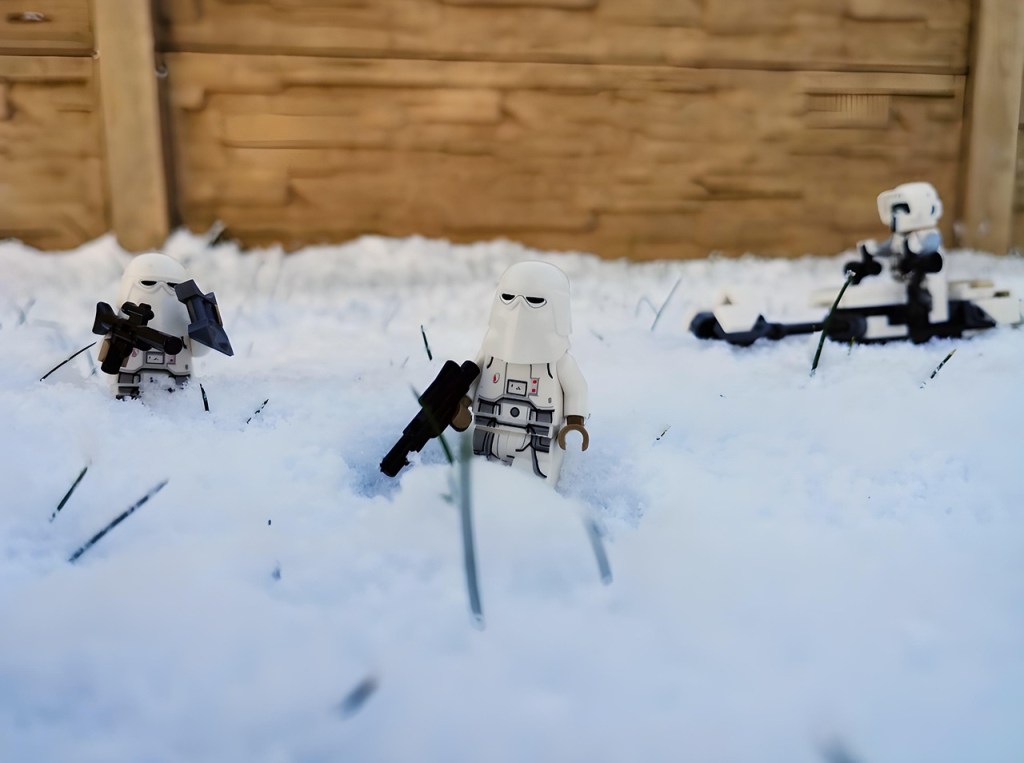
Snow in the South Island, New Zealand, Early June. (Source: Gavin Martin)
And that’s it for this week. I’ll be back next Monday for a longer blog because Superman opens very soon, so I need to do one of my world-famous movie previews.
Please don’t forget to walk your dog, read a banned book, and enjoy the last day of Pride Month. I know Viktor Oban, Donald Trump, and Christopher Luxon will.
The June Solstice has passed, and now we are heading towards aphelion. For those of us in the Southern Hemisphere, winter has arrived. The Starks will be relieved, as all hope, warmth, and light have been fading away.
Because of this positive and uplifting event, I am officially on my first break of the year. Yes, I am taking two weeks off from running New Zealand’s 5th least favourite website, because it’s difficult to manage low-quality content for the masses.
It’s a bittersweet break since I found out I was not selected for the All Blacks again. However, I recently registered with Hoopla, so my break will involve catching up on a lot of books.
Lake Tekapo, New Zealand, has already been hit by heavy snow. Photo: Supplied / Tanja Clauberg
Just like last year, I need to address two things.
1.) I’ll be publishing another blog post next Monday, but just like this one, it will be greatly reduced in size and length.
2.) I’ll still be posting daily nonsense on Twitter and Mastodon, so that won’t change.
Thank you to all my readers, followers, and subscribers. Whether you are new or old, your support for this vanity project means a lot to me.
Please don’t forget to walk your dog, read a banned book, don’t bomb nuclear facilities, and I’ll quickly check in with you next week. Take care.
I was thinking the other day about our finite time on this beautiful planet. We try to use it by developing various skills and spending time with our loved ones. And then there is this project, which I don’t fully understand where it would fall.
Yes, dear reader, one of the worst ideas I have ever had has returned with a vendetta against logic and reason. Some Geek Told Me is proud to present the latest instalment of We Didn’t Start the Fire, where we examine the historical references of the song.
For the previous non-award-winning entries of the song, please see below to be stunned into submission!
In 1957, there were many shenanigans, so 1958 might be a nice change of pace. So strap yourself in, because we’re going back to 1958! Make it so!
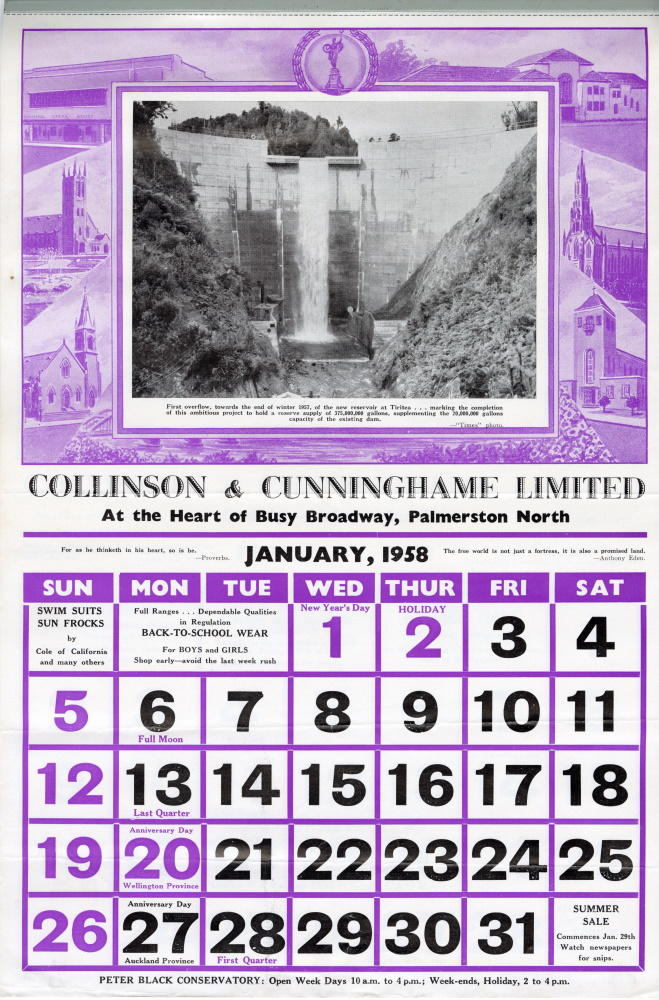
Credit: Collinson & Cunninghame Ltd: Publisher
1958
Lebanon
Lebanon is a country that can be found in the region called the Middle East and has a deep and rich history, dating back to at least 5,000 BCE. It borders the Mediterranean Sea to the west, with Cyprus just 240 km off the coast. Syria lies to the north and east of Lebanon, with Israel and the Golan Heights to the south. Lebanon has a population of approximately 5.84 million people, similar to New Zealand, which has a population of about 5.3 million. The capital city, Beirut, has an estimated population of 2.3 million.
1958 was the year of the Lebanon Crisis, where the country was thrown into political and religious turmoil. At the time, the President of Lebanon was Camille Chamoun, and he was in the sixth and final year of his term.
Some of the issues Lebanon were facing included tensions between Christians and Arab Muslims flaring up; Egypt and Syria had merged to create the United Arab Republic (UAR) and wanted Lebanon to join them; an armed rebellion had formed; along with Chamoun wanting to seek another term, which went against the Constitution of Lebanon.
The problem was brought to the attention of the United Nations Security Council, and one proposed solution involved United States President Dwight D. Eisenhower leading an intervention at the request of Chamoun. Under Operation Blue Bat, he sent 5,000 marines to secure the Port of Beirut and Beirut International Airport. This lasted from 15th July to 25th October 1958.
The legacy of the Lebanon Crisis was that Chamoun did not attain a new term, with Fouad Chehab becoming the President of Lebanon, and a national reconciliation government was formed. Sadly, Lebanon went on to suffer a civil war for 15 years, which killed an estimated 150,000 people, coupled with conflicts with Israel, the Syrian Civil War, the Arab Spring, the October Revolution, and a financial crisis, Lebanon is now identified as a failed state.
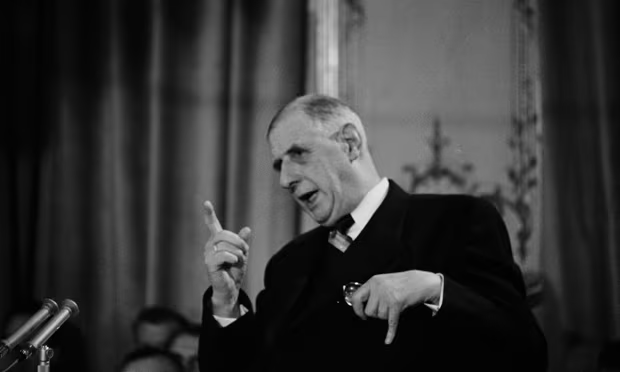
Charles de Gaulle remains a famous French icon, over 130 years after his birth. Born in 1890, de Gaulle was a veteran of the First World War, and after the war ended, he stayed with the army. This led him to gain worldwide attention later on during the Second World War, after de Gaulle was promoted within the army and the government, to the point where he was in charge of the Free French Forces against Nazi Germany.
After the war, de Gaulle remained within the government in various roles until 1946. However, in 1958, Algeria was involved in an armed conflict to wrestle its independence from France.
Charles de Gaulle re-entered French politics during a crisis in the Fourth Republic, particularly regarding Algeria, during the 1958 election. He was appointed Prime Minister and granted special powers to address the Algerian Crisis, as many believed he was the only person capable of resolving it.
This led to de Gaulle drafting a new French Constitution, which established the Fifth Republic of France, where he was subsequently elected as the first President of the Fifth Republic. Although Algeria won its independence from France on 5th July 1962, de Gaulle remained President until 1969.
A contemporary equivalent for de Gaulle would be someone who was a war hero and then entered politics. History is filled with such people, however, I’ll go for George H.W. Bush, Bajram Begaj, Hashim Thaçi, Aslan Maskhadov, and Min Aung Hlaing, along with many others.
Charles de Gaulle gives a press conference, 1958. Photograph: Daniele Darolle/Sygma via Getty Images
California baseball
This is not the first time a baseball team has appeared as an entry on one of our lists. California baseball refers to the New York Giants, who had played in the National League, in MLB (Major League Baseball), since 1883. They were based in…wait for it…New York; Upper Manhattan to be precise.
One of their rivals was the Brooklyn Dodgers, who managed to grace the 1955 edition of We Didn’t Start the Fire. At the end of the 1957 season, the New York Giants and the Brooklyn Dodgers left New York and moved to California. They transformed into the San Francisco Giants and the Los Angeles Dodgers, all ready for the 1958 season so they could continue their feud.
After moving to California, the Giants won the World Series in 2010, 2012, and 2014. I’ve stated this before, but I’m not a baseball expert, so for a modern example of a baseball team relocating recently, I think the Oakland Athletics moving to Las Vegas, Nevada is a clear winner.
Giants first practice at Seal Stadium on April 15, 1958. Starting line up: Davenport, O’Connell, Mays, Cepeda, Sauer, Spencer, Thomas, Gomez. Starting Pitcher Ruben Gomez. Credit: Art Frisch.
Starkweather homicide
Alright, here’s a historical reference from 1958 that is still sending ripples through time. Between November 1957 and January 1958, Charles Starkweather killed 11 people and two dogs, accompanied by his girlfriend, Caril Ann Fugate. The victims’ ages ranged from 2-70 years old, with the 2-year-old being Betty Jean Bartlett, Fugate’s sister.
Starkweather killed his first victim on 30th November/1st December 1957, then went on to terrorise the US states of Nebraska and Wyoming. The Starkweather homicides gripped the American public, which had resulted in a large manhunt for the couple. They were finally captured by authorities near Douglas, Wyoming, on 29th January 1958.
After he was found guilty, Starkweather was executed by an electric chair on 25th June 1959, while Fugate was given life imprisonment, though she was released in 1976.
The Starkweather homicides have spawned many adaptations and variations across television, film, books, comics, music, and video games.
Starkweather has been characterised as both a serial killer and a spree killer. The term spree killer is often used interchangeably with rampage killer or shooter. If you’re looking for a modern equivalent in 2025, simply reading a newspaper or watching news videos will help you find the latest incidents of spree killings, no matter where you are in the world.
Casper Tribune-Herald on 30th January 1958, describes Starkweather’s capture. Credit: Casper Tribune-Herald
Children of Thalidomide
Children of Thalidomide refers to the Thalidomide scandal that swept the globe. Thalidomide was first introduced in 1957, under the name of Contergan, and it was a revolutionary new drug. It was marketed as an over-the-counter medication, that could help with tension, sleeping, anxiety, and morning sickness.
Health authorities around the world began to observe three troubling trends: an increase in infant deaths shortly after birth, a rise in miscarriages, and a growing number of babies born with deformities such as heart, arm, leg, eye, and urinary tract defects. A common factor associated with these alarming trends was the use of thalidomide by pregnant women. Approximately 300 million tablets of thalidomide were sold during this time.
By 1958, the Thalidomide scandal was in full effect across the planet. Soon, country by country were starting to stop the sale of thalidomide and introduced legalisation to ban the drug. It was later discovered that thalidomide caused birth defects by disrupting the development of blood vessels in the embryo.
The Thalidomide scandal prompted many countries to review their drug regulatory policies, resulting in enhanced monitoring of these regulations. The effects of this are still observed today with stronger drug regulations worldwide.
In the last 15 years, many drugs have been withdrawn because of safety concerns, which have included Ingenol mebutate gel, Lorcaserin, Ranitidine, Flupirtine, Tetrazepam, Drotrecogin alfa, Propoxyphene, Gemtuzumab ozogamicin, Ozogamicin, and Rosiglitazone, to name but a few.
Contergan tablets. Credit: WDR
So for 1958, we covered a country, a war hero-turned-politician, a baseball team, a spree killer, and a dangerous over-the-counter drug. One of the biggest points about the historical references for 1958, is how these events are still being echoed in 2025.
So that’s it for another week. The 1960s are just months away, but we need to face 1959 first, so hang in there. Thanks again for reading, following, and subscribing to Some Geek Told Me. My accounts on Twitter and Mastodon, are still there, doing whatever the opposite of cool is.
This is a good time to remind my amazing audience that my mid-year break is coming up soon, where I take a well-deserved two-week holiday from running New Zealand’s 5th least favourite website. It’s hard work producing low-quality content.
Anyway, please remember to walk your dog, read a banned book, swipe right on diplomacy, and I’ll see you next week.
It’s been a while since I’ve discussed my wife and her quirky traits, so I thought I would remedy that. For previous insightful entries about analysing her, please see here about her choices of books, TV shows, and movies.
To set the scene, I shared some ideas with her, but she considered my suggestions and proposed a topic that was far better than what I had originally come up with. Like anyone else, she often talks to me about various unusual topics that pique her interest, and these interests have evolved over the years.
This includes when I’m watching rugby or reading, she will start discussing some new or crazy topic. I love her, but the All Blacks would be playing, and she decides now is the best time to talk to me about her new interest in following Mongolian throat singing, or something to that effect.
I have compiled a collection of her new and random interests, along with the rationale behind each one, presented in her own words whenever possible. Additionally, my wife has noted that she has interests beyond just watching things; these are simply her latest random pursuits. She believes that this makes her pretty cool.
I think its fascinating and the eggs are soft and just so un-egg like (Molinaro Snake Lab to be precise).
Watching restoration videos:
The rustier the better, I just like all the steps and processes involved. (Chip Channel Restorations and The Fabrick to be precise)
Manufacturing videos:
Like food factory stuff. It’s just great what people have come up with to make life easierand I find it exciting.
Prop making:
I like watching other people make stuff, while I’m making my own stuff. It’s great to understand their thought processes around problem-solving. It’s like you’re working with an arts and crafts buddy. (Rachel Maksy to be precise)
Bardcore music:
I have no explanation for this, I just like it because it’s cool. (Hildegard von Blingin’ to be precise)
British Football chants:
So hilarious, unexpectedly funny and just really creative.
Keith Richards memes:
Another illogical one because I’m not even a fan of his; they are just funny.
Comedy music artists:
Music + humour. What’s not to like? They tickle my brain. I really like Tom Cardy, Rhett and Link, and Flight of the Concords. Also ERB (Epic Rap Battles of History) has the bonus of learning stuff too.
That is just what’s happening with her in the first half of 2025. I’m anxious about what the remaining months of the year hold for her.
Do you enjoy any of these interests like my wife? Is she correct, and agree that she’s cool? As always, please let me know.
This blog is shorter this week, but I’ll make up for it next week because we’re going back to 1958. Yes, Billy Joel would likely be disappointed in me.
Thanks again for reading, following, and subscribing to Some Geek Told Me. Please remember to walk your dog, read a banned book, and I’ll see you next week.
Also having two conservative billionaires having a very messy public break-up, at the beginning of Pride Month, via their own social media platforms, is catty, petty, and bitchy. I’m ashamed that I love it.
In this week’s blog, I want to discuss the death of another giant of the comics and entertainment industry, Peter David. He passed away on 20th May at NYU Langone Hospital, New York, at the age of 68.
Over the last week, many articles have been written by professionals about Peter, across various media. In saying that, I’m going to offer my humble tribute to a man I had never met.
Comic-book writer Peter David ‘PAD’ attends “Stan Lee’s World of Heroes” during Comic-Con International 2012 held at the Hilton San Diego Bayfront Hotel on July 12, 2012 in San Diego, California. (Photo by Frazer Harrison/Getty Images)
Each time I reflect on someone who has influenced my life from afar and has passed away, I feel grateful for the various genres that exist, including comics, television shows, movies, and novels.
I love comic books, and as long-time followers and readers may know, I was captivated by them when I was a boy and have never recovered. Among the many reasons for my enduring passion, one of them was Peter David.
For those of you who have never heard of Peter, he was a proficient writer who had penned hundreds of comics, but also novels, videogames, and screenplays. He had worked for both DC and Marvel, but also added a large volume of work to the Star Trek canon through various mediums.
Peter David was always somebody who was in my sphere of knowledge, even though I didn’t know it. I can’t tell you the first comic I read that was written by Peter, but over time, I started recognising his name and work.
For me, his work on Supergirl, Aquaman, X-Factor,Spider-Man, and the Incredible Hulk, has become immortal, along with his status as a writer. From a comic book lover’s perspective, I enjoyed his stories because they included a collection of social issues, mixed with action.
Peter’s Incredible Hulk #420 may have been the first time that I can recall, reading about a character who was dying from AIDS in a comic book. It was relevant then, and it’s relevant now. It’s been my understanding that Peter’s life would bleed through onto the pages, helping to shape and guide characters.
Through his hard work, Peter also gave us The Maestro, a future evil version of the Hulk, who remains a key Marvel villain, and still a warning about ourselves when we allow our morality and compassion to be stripped away, to gain more power. I still have Hulk: Future Imperfect #1–2 and Incredible Hulk: The End #1; I probably always will.
I always liked his strong female characters, who rarely needed a man to save them, because they were always strong enough to save themselves, as well as other people. He also tried to champion people not just on the page, but also off it, with his views and dedication; especially about supporting creators and many other causes.
Over the last few years, I was deeply saddened to hear about his financial and medical issues. Even though he was living in another country, in reality, he might as well have been living on the Moon.
From Spider-Man 2099 to Talos, to Cyber, to Joe Fixit, to Random, to Fallen Angel, Peter’s characters are unique and beloved. I wish I had the opportunity to have met him, but the universe doesn’t work like that. So instead, I’d like to thank Peter for his amazing literacy work that helped expand the mind of a boy living in a small town, half a world away.
What’s your favourite Peter David story? As always please let me know.
Alright, that’s it for another week. Thanks once again for reading, following, and subscribing to Some Geek Told Me. I’m also on Twitter and Mastodon, where I bumble around in various echo chambers.
Please remember to walk your dog, read a banned book, and if you had a bet that PSG would win the UEFA Champions League Final, over Inter Milan, 5-0, then you’re a lot smarter than me. I’ll see you next week.
What’s a nice person like you, doing in a place like this? It’s not that bad, I think. In a totally unrelated matter, I attended a meeting with all of the administrative staff at Some Geek Told Me to discuss future ideas for blog posts.
The CEO came up with a few stupid ideas, the CFO mentioned a moronic suggestion, and the President of the company suggested a truly idiotic topic, though that’s pretty standard nowadays. However, whenever I need a dumb idea, the Vice President never disappoints me.
Because whatever the Vice President wants, the Vice President gets, so we are now going back to the Periodic Table. Yay! Our last venture into this elemental masterpiece was nearly four years ago, so if you missed it, check it out here before…I don’t have an answer to that statement.
Like me, I’m sure you’re a science fan, so how could you not love the Periodic Table? Created in 1869, by Russian chemist, Dmitri Mendeleev, the Periodic Table is the organisation of the known elements into a table, based on their physical properties, atomic number, atomic valence and their atomic mass.
One day I hope to understand it better, though at this rate, it might be the same time the All Blacks win the World Cup again.
So after reading this strange introduction, you would be forgiven if you’re wondering what is going on with today’s blog post. Other than neglecting my bed, we are going to start looking at where the names of the 118 elements have originated from, with the first part of this pointless exercise looking at real people.
Yes, 13 elements are directly named after real people, however, some different people are indirectly named after elements, but I will rant about them another day. I’m not going to present 13 elements in alphabetical order, as you would expect from this account, but rather in the order you would find them on the Periodic Table. So, without further fanfare, let’s turn the page and begin now.
Curium is the 96th element on the Periodic Table, and it resides in the Actinoid group. It’s a synthetic element, which means it was created on purpose by Glenn T. Seaborg, Ralph A. James, and Albert Ghiorso in 1944, at the Lawrence Berkeley National Laboratory (Berkley), California, United States.
Curium was named after Marie and Pierre Curie, one of the most famous married couples in science. The Curies discovered polonium (Po), along with radium (Ra) and conducted years of research on radioactivity. In 1903, the Curies and Henri Becquerel shared the Nobel Prize in Physics, along with Marie winning the 1911 Nobel Prize in Chemistry.
Pierre and Maria Curie in the laboratory, 1904. Credit: Public domain, via Wikimedia Commons
Einsteinium (Es): Albert Einstein
Einsteinium is the 99th element on the Periodic Table, and it hangs out just three spaces along from curium in the Actinoid group. Einsteinium is another synthetic element, and it was created in 1952, by Albert Ghiorso, Torbjørn Sikkeland, Almon E. Larsh, and Robert M. Latimer, at the University of California, Berkeley, United States.
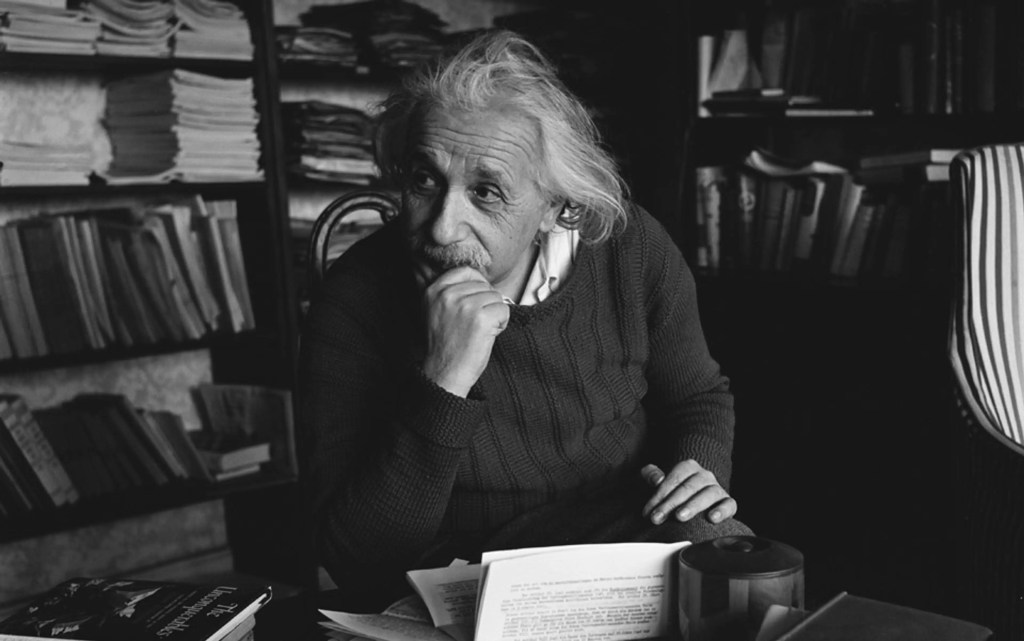
Using your amazing detective skills, you would have figured out that Einsteinium was named after, arguably, the famous scientist of the 20th century, Albert Einstein.
I’ve stated this before, but Einstein was a theoretical physicist who researched and published work on the photoelectric effect, Brownian motion and the Einstein relation, special relativity, the principle of mass-energy equivalence (E=mc2), statistical mechanics, general relativity, and many more outstanding contributions to science. Einstein also received a Nobel Prize in 1921 in Physics.
Albert Einstein (1879 – 1955) at home in Princeton, New Jersey, 1944. Photo by Popperfoto/Getty Images
Fermium (Fm): Enrico Fermi
Since Fermium is the 100th element on the Periodic Table, it sits right next to Einsteinium in the Actinoid group. As you can guess, Fermium is a synthetic element, and in 1952, it was discovered by Albert Ghiorso and other scientists at the Lawrence Berkeley National Laboratory. It was created in the debris of the first hydrogen bomb explosion in 1952, code-named Ivy Mike.
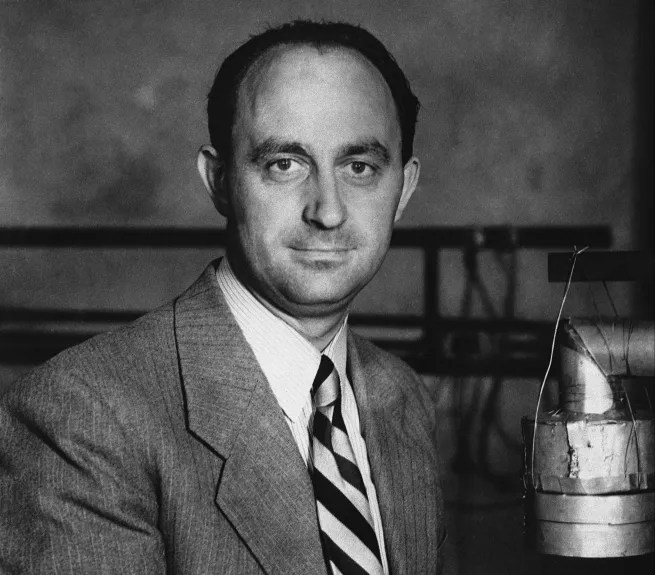
Just like the previous two entries, Fermium was named after another 20th-century scientist, Enrico Fermi. He was a physicist, and among the various things he accomplished, Fermi helped construct the world’s first artificial nuclear reactor, as well as working on the Manhattan Project.
And just like the Curies and Einstein, he was also awarded a Nobel Prize, but this was in 1938 for Physics.
Physicist Enrico Fermi, now a professor at the Columbia University, shown August 10, 1945, began experimenting with uranium in Italy in the early 1930s. His experiments and the knowledge derived from them assisted in the final perfection of the atomic bomb. (AP Photo)
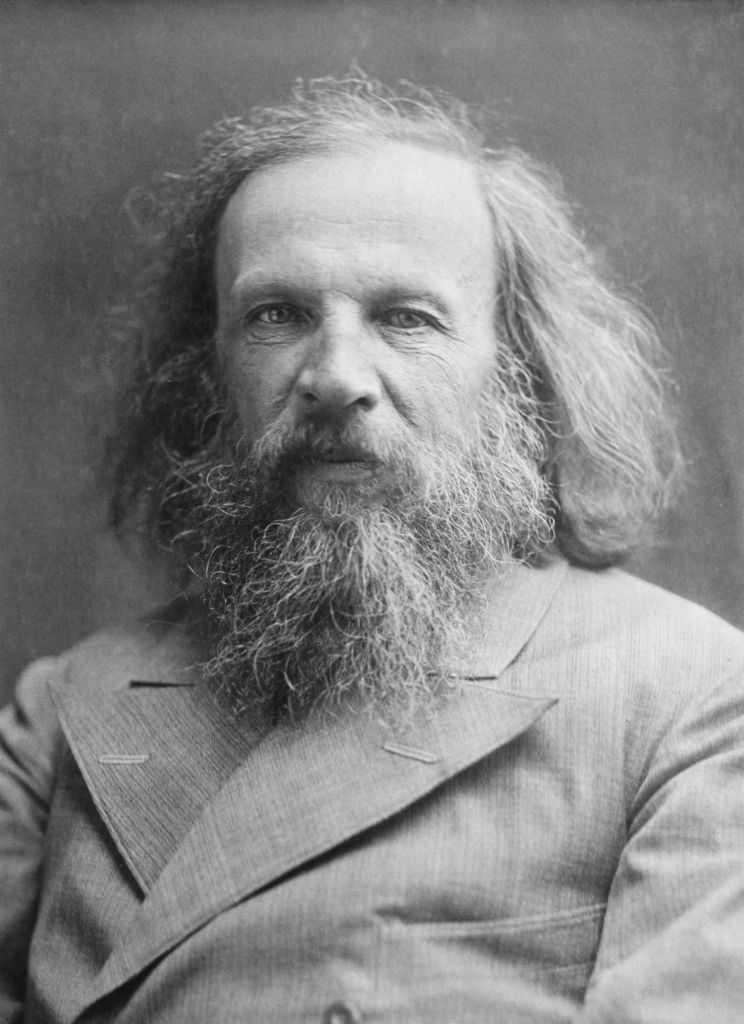
Mendelevium (Md): Dmitri Mendeleev
You knew this was coming, didn’t you? Mendelevium is another synthetic element and is the 101st element on the Periodic Table. It was discovered by Stanley G. Thompson, Albert Ghiorso, Glenn T. Seaborg, Gregory RobertChoppin, and Bernard G. Harvey in 1955 at the University of California.
Mendelevium was named after…wait for it…Dmitri Mendeleev! Mendeleev was the architect of the modern Periodic Table, and he did this by organising the elements into a table, based on their physical properties, like atomic number, atomic valence and atomic mass.
One remarkable aspect of Mendeleev’s Periodic Table is that he organised the elements in a way that allowed him to predict the existence of undiscovered elements by leaving gaps for them. History shows that his predictions were accurate with the later discoveries of germanium, gallium, and scandium.
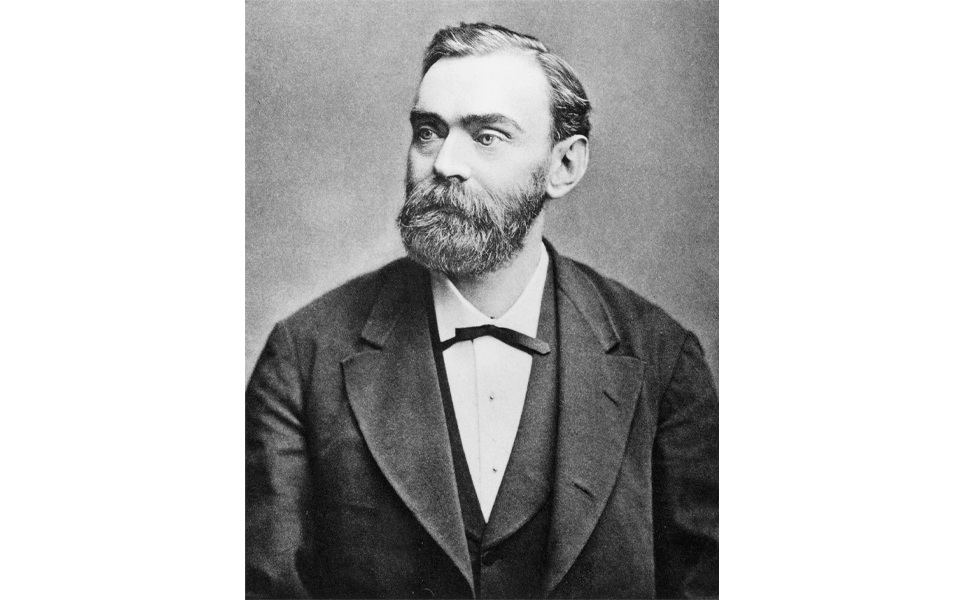
As we march along the Actinoid group, we come across the 102nd element: Nobelium. Nobelium’s discovery seems to me, a bit odd. Scientists in Sweden announced the discovery of the element in 1957, but over the years, other sources have cited different years, such as 1958, 1963, and 1966, for the discovery. I don’t know who discovered nobelium first, because it may depend on who you talk to.
What isn’t up for debate is who nobelium was named after. Alfred Nobel was an inventor, engineer, businessman, and chemist who gave the world dynamite, gelignite, ballistite and the detonator, among other things. Nobel bequeathed his fortune to create a foundation to annually recognise people’s achievements for the benefit of humankind. Today, we know them as the Nobel Prizes.
Alfred Nobel. Image credit: Wikimedia Commons
Lawrencium (Lr): Ernest Lawrence
Lawrencium is the 103rd element of the Periodic Table, and like the others on this list, it’s another synthetic element. Similar to nobelium, lawrencium has been wrapped up in multiple claims of discovery. However, the earliest record of the discovery was in 1961, at Lawrence Berkeley National Laboratory, by Albert Ghiorso and a team of scientists.
Lawrencium was named after Ernest Lawrence, who was an accelerator physicist. He invented the cyclotron, which he was awarded the Nobel Prize in Physics in 1939, as well as worked on the Manhattan Project. He was also the founder of two laboratories, which were named in his honour after his death: the Lawrence Berkeley National Laboratory and the Lawrence Livermore National Laboratory.
Ernest Lawrence is perhaps best known for the invention of the cyclotron. Credit: LAWRENCE BERKELEY NATIONAL LABORATORY
Rutherfordium (Rf): Ernest Rutherford
As a New Zealander, this synthetic element has a special place in our rugby-obsessed hearts. Rutherfordium is the 104th element on the Periodic Table, and it’s a transition metal. Like the two previous entries, Rutherfordium has some controversy around its discovery. Whether it was discovered in 1964 by the Soviets or 1969 by the Americans, Rutherfordium only has a half-life of about 48 minutes.
Rutherfordium is the only element named after a New Zealander; my man, Ernest Rutherford. In 1908, Rutherford received the Nobel Prize in Chemistry for his research into the disintegration of elements and the chemistry of radioactive substances. He is also known as “the father of nuclear physics”, for his experiments that proved that the atom is made up of empty space, except for a small positively charged centre.
Rutherford proposed the term “nucleus” to describe the dense, positively charged core of an atom, thus giving him the title of “splitting the atom”, and the New Zealand $100 note was never the same.
Lord Rutherford’s pioneering research on radioactivity and the atom cemented his place as one of the greatest scientists of the 20th century. Credit: Bain News Service.
Seaborgium (Sg): Glenn T. Seaborg
It may sound like an alloy from Star Trek, but I promise you it’s not. The 106th element on the Periodic Table is seaborgium, and it’s yet another synthetic element. If I have this correct, both Soviet and American scientists discovered seaborgium, independently from each other in 1974, so its another controversy surrounding the discovery.
As for the naming of the element, that is simple. Seaborgium was named after the chemist, Glenn T. Seaborg. Seaborg helped to discover 10 elements, plutonium, americium, curium, berkelium, californium, einsteinium, fermium, mendelevium, nobelium and the final one, element 106; which was eventually named seaborgium.
He also won various awards, including the Nobel Prize in Chemistry in 1951. Seaborg was responsible for adding the Actinoids strip on the Periodic Table. Cool.
Glenn T. Seaborg, 1968. Courtesy of the U.S. Atomic Energy Commission; photograph, Westcott
Bohrium (Bh): Niels Bohr
Sitting next to seaborgium in the transition metal group, we have the 107th element: Bohrium. There seems to be a trend happening because bohrium also has dual discoveries, with a Soviet team in 1976, as well as a German team in 1981.
People can argue about who discovered what element and when, but bohrium could have only been named after one person: Niels Bohr. Bohr was a Danish physicist, who also dabbled with philosophy. His contributions to science include atomic structure, nuclear fission, and quantum mechanics, but he also won the 1922 Nobel Prize in Physics.
The Niels Bohr Institute, at the University of Copenhagen is also named after him.
Niels Bohr, 1922. Credit: AB Lagrelius & Westpha
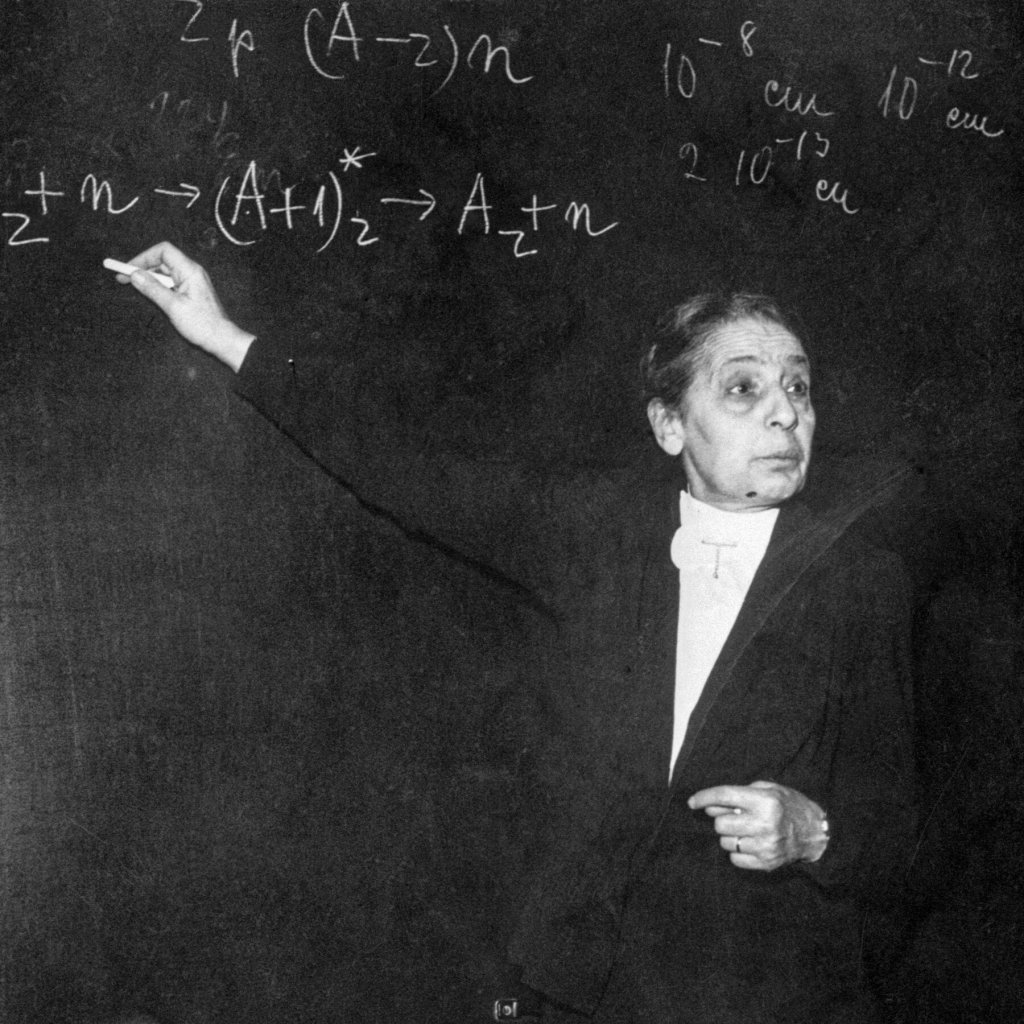
Meitnerium (Mt): Elise “Lise” Meitner
Meitnerium is the 109th element on the Periodic Table and another synthetic element. It was discovered by Gottfried Münzenber and Peter Armbruster at the GSI Heavy Ion Research Laboratory in Darmstadt, Germany in 1982.
There are only two elements on the Periodic Table named after real women, curium with Marie Curie, and the second is meitnerium, which was named after Lise Meitner. Meitner was a physicist who helped to discover the element protactinium, along with other discoveries like the Auger−Meitner effect and nuclear fission. She won the Max Planck Medal in 1949, the Enrico Fermi Award in 1966, and many other awards.
Credit: NY Times
Roentgenium (Rg): Wilhelm Röntgen
The 111th element is roentgenium, and it’s another transition metal. Just like meitnerium, roentgenium was created at the GSI Helmholtz Centre for Heavy Ion Research Laboratory, by Peter Armbruster and Gottfried Münzenberg, but this time in 1994.
Roentgenium was named after the physicist Wilhelm Röntgen, sometimes spelt as Wilhelm Roentgen. Through his work, Röntgen detected a form of electromagnetic radiation with a wavelength shorter than those of ultraviolet rays and longer than those of gamma rays.
This radiation became known as X-ray or Röntgen radiation. This discovery meant that in 1901, he was awarded the very first Nobel Prize in Physics.
Photograph of Wilhelm Conrad Röntgen. Credit: Public domain, via Wikimedia Commons
Copernicium (Cn): Nicolaus Copernicus
We are nearly at the end of the list, with only two to go! Copernicium is the 112th element and once again, was discovered at the GSI Helmholtz Centre for Heavy Ion Research. In 1996, a team led by Sigurd Hofmann and Victor Ninov worked for two weeks smashing lead with a beam of zinc ions, that were traveling at 30,000 km per second. The result of this experiment was the creation of a few atoms of copernicium.
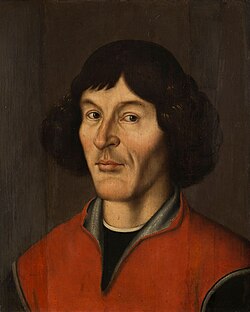
If you’re a fan of space or astronomy, you may already know who I’m going to discuss. Copernicium was named after Nicolaus Copernicus, public enemy #1 for Flat Earthers. Copernicus was born in 1473 and achieved a lot in his life, which involved the fields of translation, medicine, economics, mathematics, laws, and diplomacy, but the main thing that he is still known for 500 years later, is his discoveries in astronomy.
Nicolaus Copernicus is often referred to as the father of modern astronomy due to his groundbreaking work, which demonstrated that not only is Earth a planet, but that other planets also orbit the Sun each year. In addition to this discovery, Copernicus explained that Earth rotates daily on its own axis. He also noted that very gradual changes in the direction of this axis are responsible for the precession of the equinoxes.
His model of the solar system is known as the Heliocentric system, which has the Sun at the centre, as opposed to the Geocentric model, which places the Earth at the centre.
Nicolaus Copernicus portrait from Town Hall in Toruń, 1580. Credit: Heritage Image Partnership Ltd/Alamy
Oganesson (Og): Yuri Oganessian
We have spent some time hanging out with the Actinoids and transition metals, but now we need to drift to the right, to visit the Noble Gases. Oganesson is the 118th and latest element to be added to the Periodic Table. It was created by a joint team of Russian and American scientists in 2002, at the Joint Institute for Nuclear Research in Russia.
Oganesson has three cool things going for it. It has the highest atomic number and highest atomic mass of all known elements, it was only formally named as late as 2016, and it’s the second element to be named after a living person, with the first being seaborgium and Glenn T. Seaborg.
And so, for the final time today, Oganesson was named after Yuri Oganessian, a nuclear physicist. His research on superheavy elements led him to help in the discovery of bohrium, meitnerium, hassium, darmstadtium, roentgenium, and copernicium. Oganesson has also been awarded the Lomonosov Gold Medal in 2017, and the Demidov Prize in 2019.
Credit: Joint Institute for Nuclear Research
With the other 105 elements on the Periodic Table, their names will hopefully be explained upon multiple entries on this popular and well-respected website.
So that’s it for another blog post and another week. Thanks again for reading, following, and subscribing to Some Geek Told Me. Please remember to walk your dog, read a banned book, avoid breaking the spacetime continuum whenever possible, and I’ll see you next week.
One of the many reasons I started this vanity project, was an ill-conceived idea of promoting science literacy. Indeed, I don’t talk enough about science, but every 6-8 weeks, the world’s least asked-for tour, much like a zombie, is resurrected, bumbling and stumbling, stumbling and bumbling into the world.
Yes, search your feelings, you know it to be true! Some Geek Told Me’s Tour of the Solar System is back, with another insightful profile on one of our distant neighbours.
If by a cruel twist of fate you haven’t read any of the previous entries, here is the magnificent list:
This is our 21st entry, so without being invited to a dodgy 21st birthday with tequila shots, let’s welcome the new entry into the fold, Triton, where it can proudly stand with The Moon, Titan, and Titania. Cool.
Voyager 2 image of Triton showing the south polar region with dark streaks produced by geysers visible on the icy surface. Credit: NASA/JPL
If you’re a Marvel fan, you would have recognised the name Triton from the Inhumans. He’s the green guy who can breathe underwater, if you don’t already know. Sorry, it can be a surprise that some people don’t know things like that.
Triton and his namesake share a similar quality; they are both quite odd. Neptune has 16 known moons, and Triton is the largest. It has a diameter of 2,710 km, which is roughly the distance between London to Moscow. Triton is the seventh-largest moon in the Solar System, as well as being Neptune’s largest moon. It’s larger than Pluto, just don’t mention it because Pluto is still sensitive about being kicked out of the planet club.
Triton was discovered by William Lassell, on 10th October 1846, a mere 17 days after the discovery of Neptune. As we have already established Triton was not named after a comic book character, but rather the standard way, after a Greek god. Triton was the son of Poseidon (Greek)/Neptune (Roman), the god of the seas and oceans. Oh, if you’re wondering if Poseidon was like his big brother Zeus, by having a wandering eye and not being faithful, then you would be correct.
Triton orbits Neptune at around 354,800 km, which is closer than what the Moon orbits Earth. In addition to this, generally speaking of course, Triton’s distance to the Sun is about 4.3 billion km, which means it takes the Sun’s light about 4 hours to travel that distance to Triton. 4.3 billion km in 4 hours? That’s almost as fast as it takes UMC1 and UMC2 to trash their bedroom.
Do you remember when I said Triton is quite odd? Well, Triton’s orbit and rotation are great examples of this. Among all of the large moons within the Solar System, Triton has the distinctive honour of being the largest moon to have a retrograde orbit around its planet. If you remember from previous tour stops, a moon that has a retrograde orbit, is when a moon orbits the planet’s rotation in the opposite direction.
Triton rotates on its axis every 5.87 days or 5 days and 21 hours, and has an orbital speed of about 4.39 km per second. Triton is also tidally locked, which is when a planet or moon like Triton, matches its rotation period to another cosmic body, like Neptune.
Just like the Moon is tidally locked to Earth, Triton has one side that is always facing Neptune, as it’s locked. If you can somehow survive and live on Neptune, you would only ever see the same side of Triton. I love science!
A lot of the data and information that scientists first used to measure and assess Triton, was made by our old friend, the Voyager 2 spacecraft, as it did a flyby in 1989. When Voyager 2 surveyed Triton, it only managed to map 40% of the surface.
Ok, what else can we learn about the sixteenth-largest object in the Solar System? Triton has some impressive physical features like a large southern polar cap, impact craters, mounds, and pits created by icy lava flows. This is because Triton is an active place for cryovolcanism, with the largest being called Leviathan Patera, which is a caldera that stretches 100 km in diameter. Triton is only a handful of cosmic bodies in the Solar System that has a cryovolcanic network.
Triton’s surface is geologically young and is primarily made of frozen nitrogen (55%), with water ice (15-35%) and some frozen carbon dioxide (10-20%). Some scientists believe that a subsurface ocean of liquid water may exist beneath the icy crust, like several other moons, such as Europa, Enceladus, and Titania. Imagine the possibility of life existing there! Granted, it would be in the form of micro-organisms, but it would still be amazing.
The composition of Triton’s atmosphere is exactly made you would imagine it to be: heavily made of nitrogen (95%), mixed with traces of carbon monoxide and methane. It is about 70,000 times less dense than Earth’s atmosphere. The atmosphere extends to about 30 km above the surface, with clouds can be found at around 4 km.
Because of its insane distance from the Sun, and its 30° axial tilt, Triton has seasons that can last 40 years, which is pure nightmare fuel. Westeros has nothing on Triton. And speaking of nightmare fuel, the surface temperature can get down to an average of −235 °C. This makes Triton one of the coldest objects in our Solar System. Even Captain Cold, Iceman, and Mr Freeze would think twice about visiting Triton.
Some other random facts about Triton include:
The geysers on Triton eject nitrogen gas from beneath the surface, creating long plumes that can reach heights of up to 8 km.
Triton’s density is about twice that of water, making it more dense than almost any other satellite of an outer planet.
Scientists believe that Triton is a Kuiper Belt Object that was captured by Neptune’s gravity millions of years ago.
In approximately 3.5 billion years, Triton will come too close to Neptune in its orbit, and the planet’s gravitational pull will cause Triton to break apart. This event will lead to the formation of a ring system around Neptune.
There are more things to discuss and write about Triton, but like always, my desire for sleep is stronger. What is your favourite fact about Triton? As always, please let me know, and I hope the tour is living up to its hype.
Thank you for reading, following, and subscribing to Some Geek Told Me. I still write daily nonsense on Twitter and Mastodon, if you want to check it out. Please remember to walk your dog, read a banned book, don’t put tomato in your fruit salad, and I’ll see you next week.
Kia ora everybody, and I hope you’re as happy as Daredevil fighting The Hand. For today’s rant, I want to talk about a very special event that occurred on 8th May. I was sitting on the fence about whether to talk about this, but after the world’s most famous 78 year-old convicted felon decided to give the world a history lesson about it, the die was cast and he forced my hand.
His explanation about 8th May was a prime example of the Dunning-Kruger effect, because he was like the class bully who had secured the answers to a history test, but still managed to copy the answers down wrong.
To understand why I’m losing sleep and my hair turning grey over this, I’m referencing VE Day, which is known as Victory in Europe Day. This day is commemorated on 8th May every year, where it marks the unconditional surrender of Nazi Germany, on the 8th May 1945.
To clarify, when Nazi Germany surrendered on 8th May 1945, this brought the theatre of war in Europe during the Second World War to a close, but not the actual war. The fighting in Europe had ended; hence the term, Victory in Europe, however, the Allies still needed to deal with Japan.
World War Two continued until the surrender of Imperial Japan on 15th August 1945, which is known as VJ Day, otherwise known as Victory over Japan Day. The official surrender of the Japanese forces was held on 2nd September 1945.
Credit: Charnwood Borough Council
Because you’re keen followers of New Zealand’s 5th least favourite website, you would have realised that 8th May 2025 was the 80th anniversary of VE Day. To say VE Day changed the world is like saying Salt and Vinegar chips are just a snack. You can look at it from various angles, but in my humble opinion and without trying to glorify war, because I’m not, but World War Two was for the world; it was about saving the world, and VE Day meant the job was half done.
In all seriousness, the 80th anniversary of VE Day is still relevant and important, not only to Europe but also to the world. The Nazis were defeated, and the world rejoiced and partied like it was 31st December 1999, bringing much-needed peace to the continent.
I did not witness the moment when Germany’s surrender was announced. I cannot imagine the range of emotions that people from different countries, religions, ages, backgrounds, and political ideologies experienced that day.
However, since different governments have honoured the 80th anniversary of VE Day, I searched through the land of the internet, to find some photos taken on 8th May 1945, regardless of their origin, to show what it was like. It must have been a hell of a party because it’s still within the living memory of the world’s population.
As you know, I’m a New Zealander, so it will come as no surprise that I’ll start with photos in Godzone, then I’ll move on to other countries, in alphabetic order. If I have missed your country, I’m very sorry, as I can only do as much as I can, within the limits of being conscious. Enjoy.
New Zealand
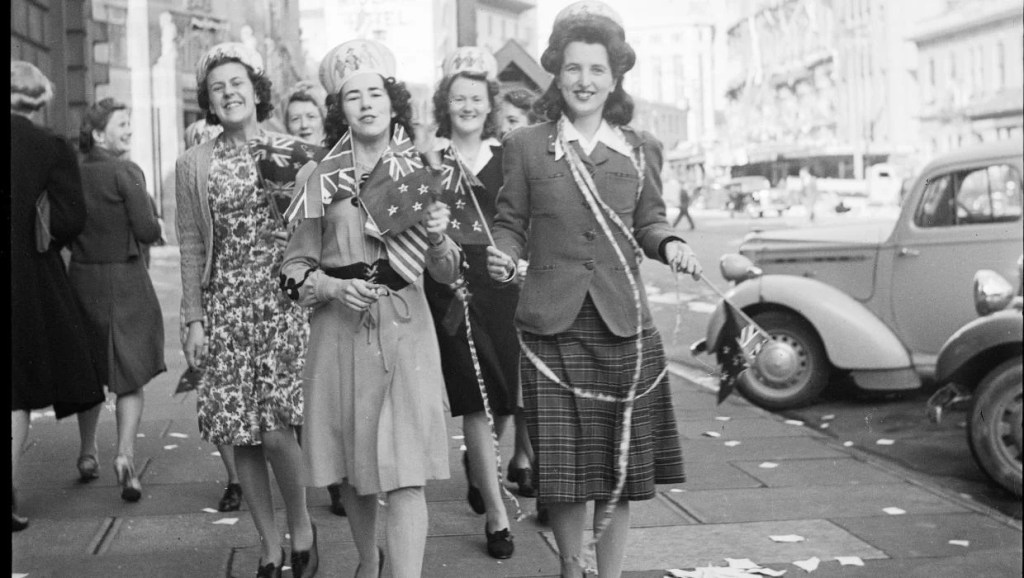
A group of women in party mode carrying flags and steamers near the Ballance Street/Lambton Quay corner, Wellington, New Zealand to celebrate VE Day. Credit: Alexander Turnbull Library reference 1 / 4-001508-F
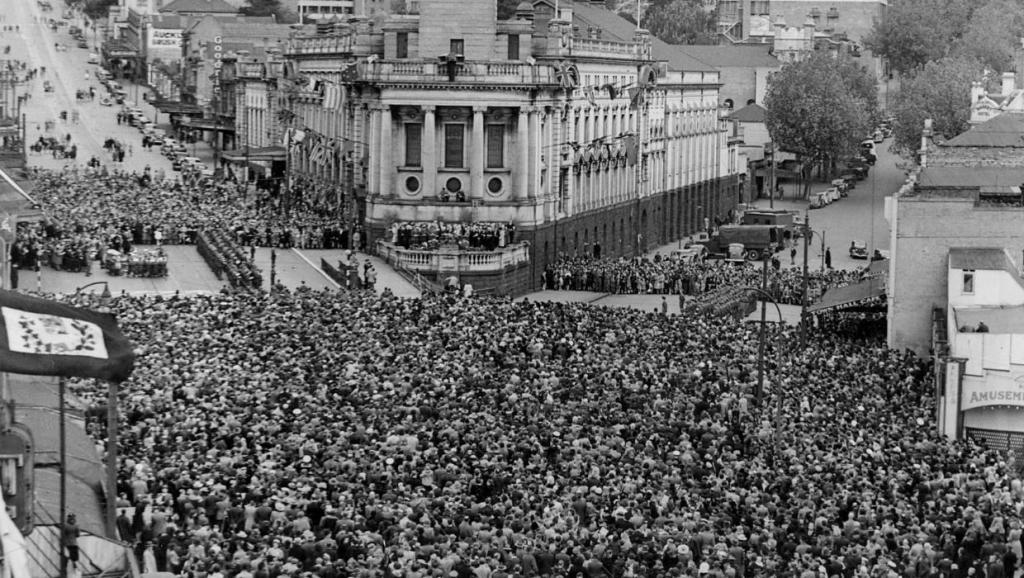
Crowds outside Parliament in Wellington on VE Day. Credit: Alexander Turnbull Library reference 1 / 4-001525-F.
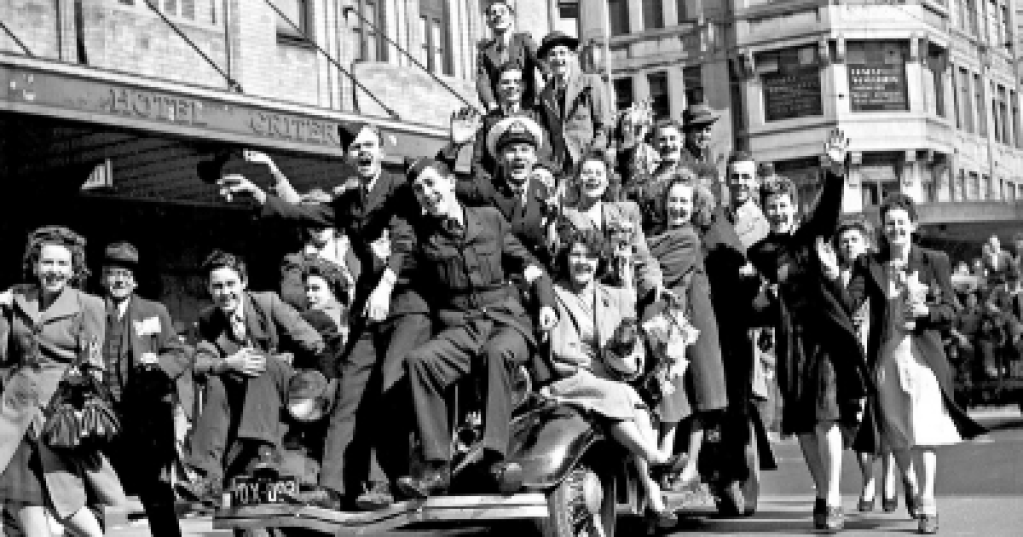
Crowds celebrate VE Day in Queen St, Auckland. Credit: FAIRFAX NZ / Sunday-Star-Times
Australia
Celebrating Victory in Europe: 8 May 1945 | Anzac Memorial, Hyde Park, Sydney. Credit: Anzac Memorial.
100,000 people attended the VE Day service at the Shrine of Remembrance in Melbourne on 9 May 1945. Image courtesy of the Australian War Memorial, 089865.
Belorussian S.S.R(Belarus)
Belarusians celebrate victory in central Minsk. More than a quarter of the entire population of the Belorussian S.S.R. were killed during World War II. Credit: Emmanuil Yevzerikhin
Canada
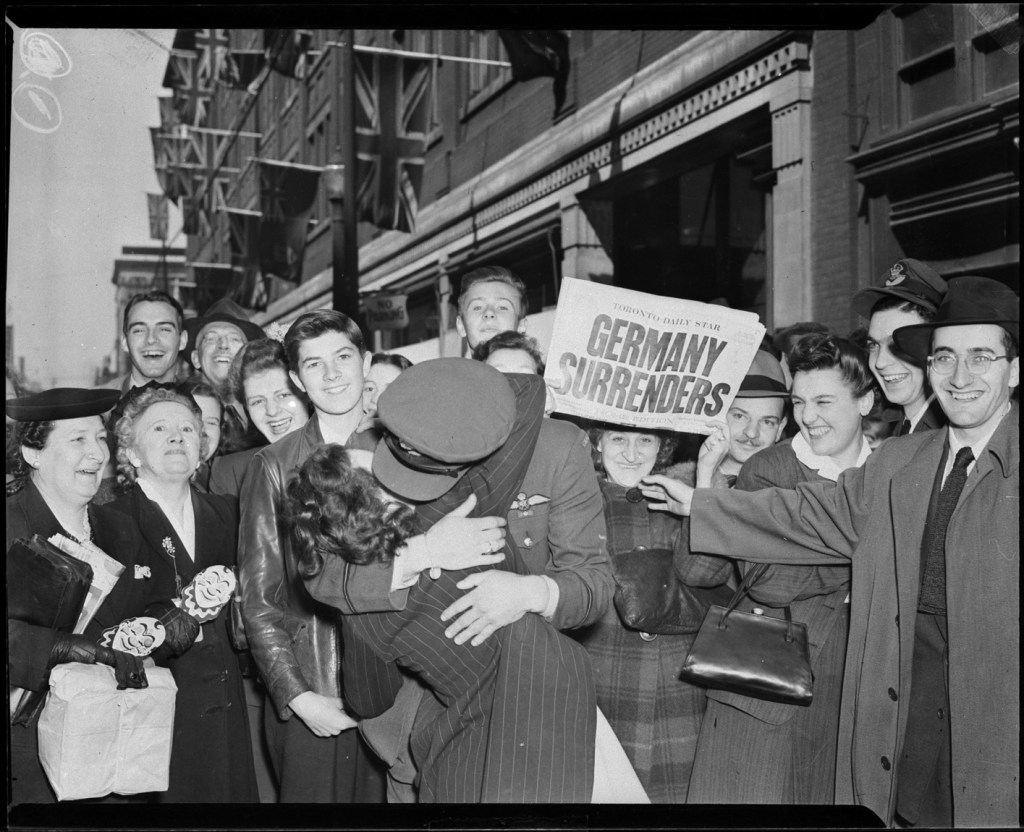
VE Day in Toronto. Credit: City of Toronto Archives Fonds 1257, Series 1056, Item 195
V-E Day celebrations on Bay Street, Toronto, Canada. Credit: John H. Boyd.
Czechoslovakia (Czech Republic)
German tanks in Prague’s Old Town Square in May, 1945 (via Prague City Archives)
Denmark
German troops on a midget retreat through the Town Hall Square in Copenhagen after VE Day. Credit: Hulton Archive/Getty Images
France
A group watches from the top of Paris’s Arc de Triomphe as crowds gather. Credit: AFP.
Crowds gather at the Arc de Triomphe on 7 May 1945 to celebrate the end of the second world war. Photograph: AP
Parisians march through the Arc de Triomphe jubilantly waving flags of the Allied Nations as they celebrate Germany’s surrender, May 8 1945. Credit AP
The Netherlands
Amsterdam, 8 May, 1945. Heavy allied trucks, loaded with cheering ‘Amsterdammers’ drive through the city in the vicinity of ‘de Munt’. Colour: ColourisedPieceofJake Source: NIMH
Raucous celebrations on Moscow’s Red Square. A witness recalled “everyone had fun, although some had tears in their eyes…. At the American Embassy, we saw diplomats and employees throwing chocolate, sweets, and toys from the balcony.” Credit: Boris Kudoyarov
A British sergeant being thrown into the air by a crowd of youngsters in Moscow. The Soviet Union celebrated one day after most Allied countries because Germany’s high command signed a second surrender document, as demanded by Josef Stalin, late on May 8. Due to time-zone differences, the signing in Berlin took place in the small hours of the following morning in Moscow. Credit: Keystone/Getty Images
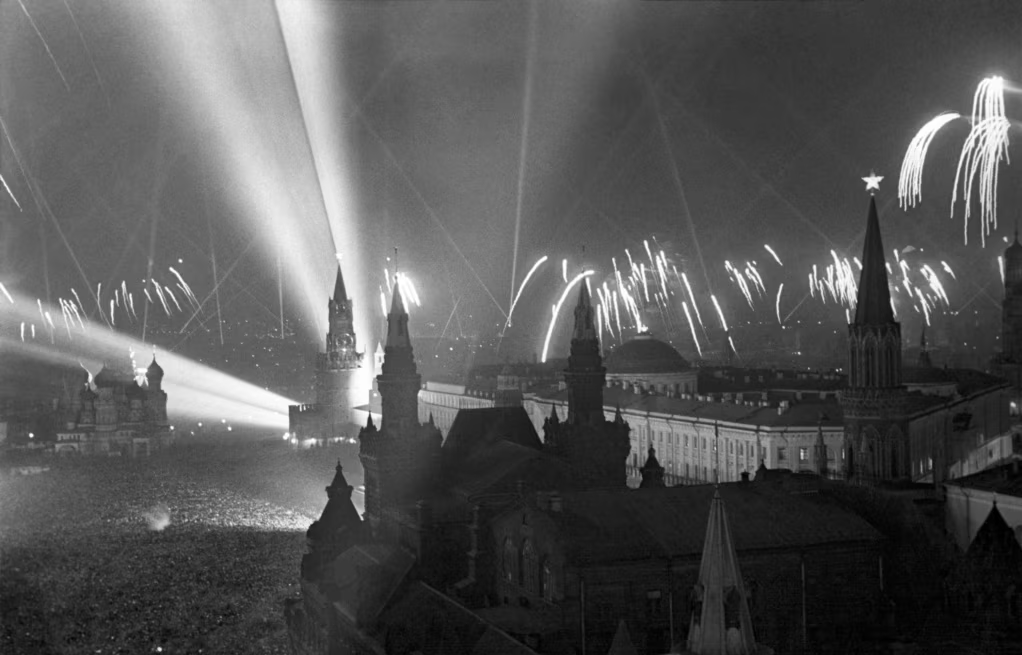
Moscow’s Red Square, packed with people as fireworks explode around the Kremlin. One man who was there later told Russian media “Strangers kissed each other. I don’t remember such a unity of people as it was on May 9, 1945; we were all one and the same — Russians, Tatars, Uzbeks, and Georgians — we were all united as never before.” Credit: Nikolai Sitnlkov
Moscow Victory Day, 1945: Soviet soldiers throwing the banners of defeated Nazi armies at the foot of Lenin’s Mausoleum. Credit: Центральная студия документальных фильмов, ЦСДФ
United Kingdom
Winston Churchill waves to crowds in Whitehall in London as they celebrate VE Day, 8 May 1945. From the the balcony of the Ministry of Health, Prime Minister Winston Churchill gives his famous ‘V for Victory’ sign to crowds in Whitehall on the day he broadcast to the nation that the war with Germany had been won, 8 May 1945 (VE Day). To Churchill’s left is Sir John Anderson, the Chancellor of the Exchequer. To Churchill’s right is Ernest Bevin, the Minister of Labour. Credit: Major W. G. Horton
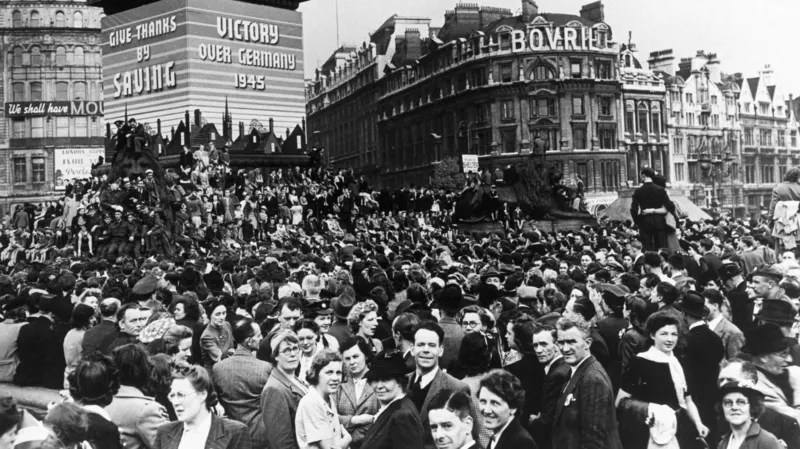
London celebrated the end of World War Two across the capital – including in Trafalgar Square. Credit: Getty Images
Crowds spilled out on to the Mall all the way to Buckingham Palace.
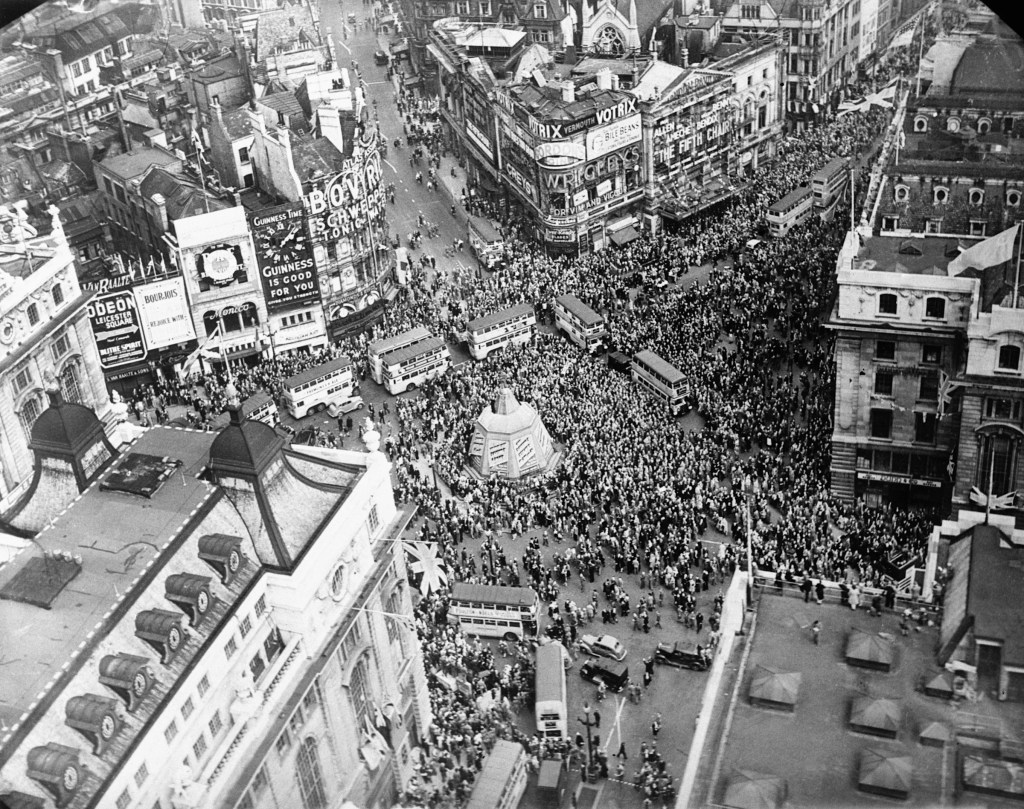
An estimated 50,000 people headed to Piccadilly Circus and nearby Trafalgar Square to celebrate the end of the Second World War on 8 May 1945, which was declared a national holiday in a radio broadcast the day before. (Getty)
A victory street party to celebrate VE Day in Brockley, South London
United States of America
Hundreds of thousands gather to celebrate V-E Day in Times Square. Credit: NY Times
Crowds celebrate VE day in Times Square, New York. Hulton Archive, Getty Images
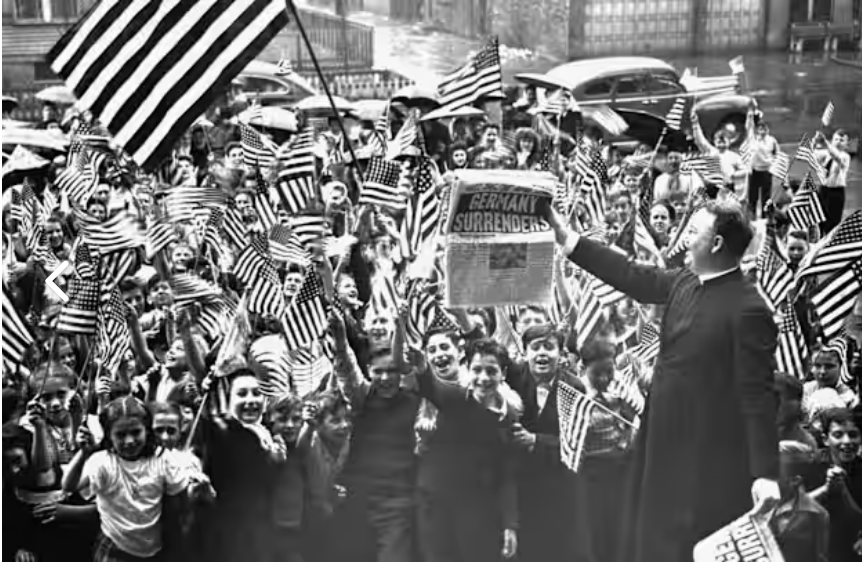
A parish priest waves a newspaper with news of Germany’s unconditional surrender to pupils of a Roman Catholic parochial school in Chicago. Credit: Corbis/Getty Images.
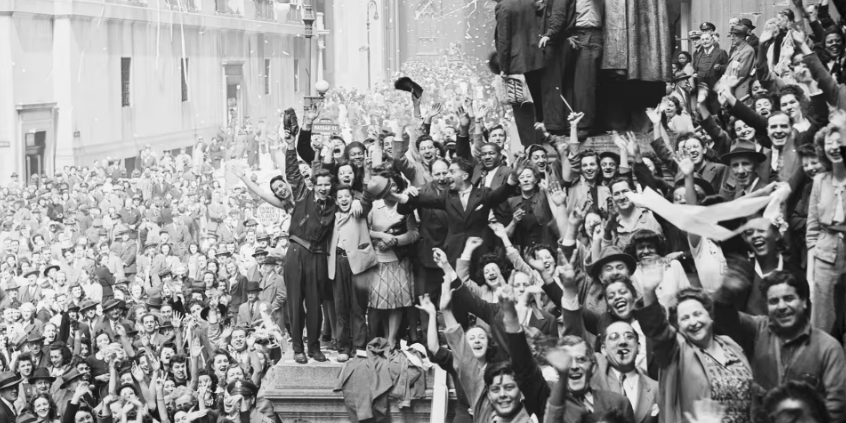
Wall Street is jammed as Financial District workers celebrate the reported end of the war in Europe. Credit: Bettmann Archive/Getty Images
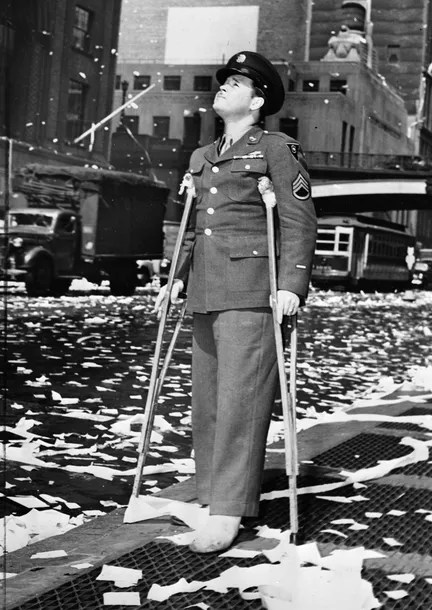
Arthur Moore of Buffalo, N.Y., who was wounded in Belgium, stands near New York’s Grand Central Station on May 7, 1945 as New Yorkers celebrate news of the Allies’ victory over Nazi Germany. Associated Press
We owe them a debt we can never repay. Thanks once again for reading, following, and subscribing to Some Geek Told Me, and I’ll see you next week.
Building on from last week’s amazing Thunderbolts*: Preview, we need to cover the second half of this intriguing endeavour, the review.
Because this is a hot topic, I won’t mince my words about the movie. It’s important not to waste valuable reader’s time when discussing relevant information. Some Geek Told Me prides itself on explaining the news and information concisely, which is simple to digest and straightforward.
Let’s dive straight into the review since Some Geek Told Me is well-known for not time wasting. That sort of disrespectful move is unwanted and mocks the great and sacred institution of being an amateur film critic.
When people read a movie review, they don’t want to hear about deals at Pak n’ Save concerning Mother’s Day, like Snacka Changi Chips Vinegar & Salt Kettle Fried Potato Chips 150g, priced at $3.49, or the Champion League Semi-final first leg results, like Paris Saint-Germain 1-Arsenal 0, and Barcelona 3-Inter Milan 3. You won’t see that happening on this account, as it is too respected for that. No sir, never on this account.
Like I mentioned last week, I purchased a ticket to an advanced screening of Thunderbolts*, and like always, after purchasing a drink, I walked into the theatre without ANYBODY checking to see my ticket. For an early evening advanced screening, the theatre was about 25% full. Sorry, my mistake, I meant to say it was 1/4 full.
I chose my regular spot, which is the centre seat in the back row, where the real geeks are. The trailers were weird, because I was expecting possibly Superman, or at least The Fantastic Four: First Steps, but no. They played three Disney trailers, Elio, Freakier Friday, and Lilo & Stitch; all films that could be classified as child-friendly or family movies. Not a single adult movie. Like I said, weird.
As always, let’s go over the rules of the review.
1.)Please be aware there will be spoilers concerning the movie, so proceed with extreme anxiety and caution.
2.) The aim of my reviews are not to rip apart the subject or trash it. If I liked the subject enough to watch it, then I’ll give my honest (possibly biased) opinion.
3.) I’m not a professional critic, so I’m not going to dive into deeper concepts and themes, or the art of filmmaking. I’m just a geek; always have been, and always will be.
So, I’m not here to watch paint dry, let’s get on with the review!
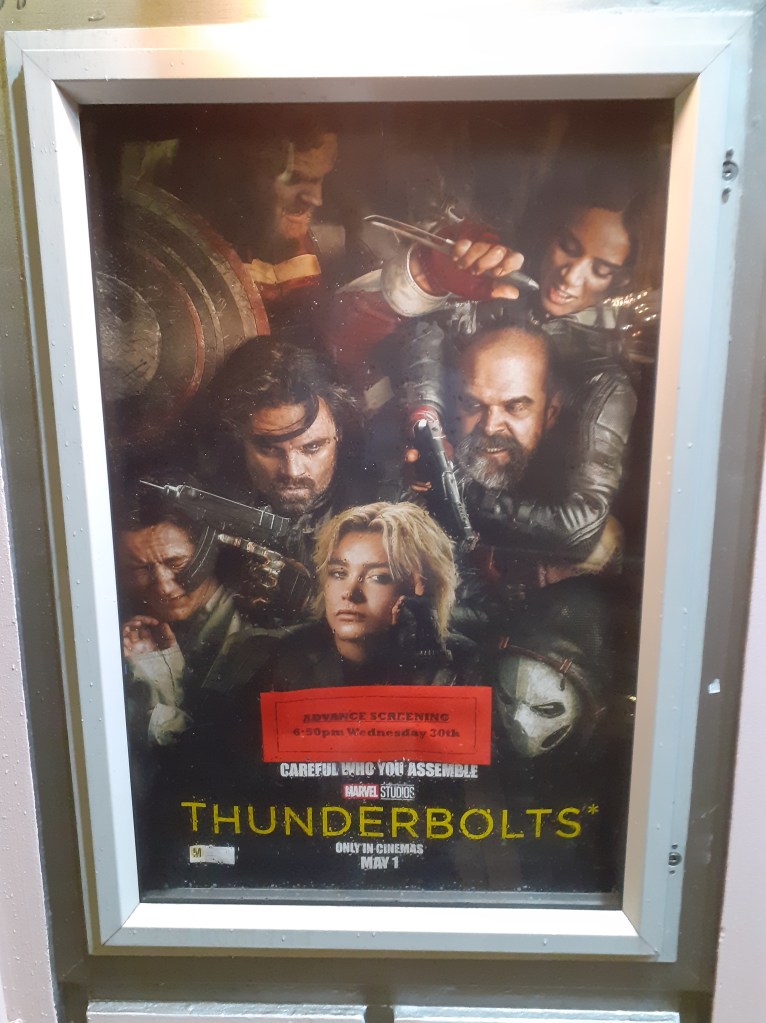
Credit: Marvel Studios/Disney and my local cinema
First things first, did I like the movie? Yes, yes I did, but for an MCU film, I feel I’ve been left with a lot of questions. Though to be fair, that’s usual for me. People have been saying that Thunderbolts* is getting the MCU back on track since it’s a step in the right direction. Let’s hope the MCU continues this momentum.
Things I liked:
I’m going to start with the most obvious, loneliness. Whether it’s in the form of feeling alone, having negative feelings, or depression, I feel every person who has ever lived, has experienced a version of these emotions, regardless of their magnitude and the effects that it has on their body, mind, and heart.
I thought it was a bold, or even mature way to start a superhero movie, with a character talking about their existential crisis. With Yelena (Florence Pugh) narrating her feelings, and in my humble geeky opinion, I thought it was refreshing to be handling a serious topic within the confines of a comic book movie.
The conversation between Yelena and Alexei Shostakov (David Harbour) on the street was extremely personal. Feelings about loss, abandonment, failure, rejection, and loneliness bubbled to the surface, with a daughter talking about feeling lost and needing her father, versus a father feeling like a failure, because he thinks his daughter no longer needs him. It was a powerful scene.
Feelings are an important aspect of the human experience, and likely of all intelligent and sentient life. Whether these feelings are classified as mental health issues and how they are treated is less important to me. What truly matters is that we talk about these feelings more openly and acknowledge their existence.
This, of course, leads to Bob (Lewis Pullman), whose feelings about isolation, failure, and loneliness were highlighted before he discovered his abilities, with the emergence of the Sentry and the Void.
Since his introduction in 2000, The Sentry has been linked with mental illness. I could be wrong about this, but I have always thought since Sentry was a Superman-level character, Marvel gave him similar strengths and weaknesses. DC gave Superman kryptonite as an unexpected and simple way to defeat him, like Marvel giving Sentry a weakness in the form of mental illness.
Unlike how the Force is presented in Star Wars, I believe there is no Light Side or Dark Side to the Force, there is only the Force. Because of this, I believe there are no true positive and negative emotions within the human condition, there are only emotions. You can’t have the light without the dark, or positivity without negativity, and vice versa.
It’s not about suppressing feelings of loneliness and failure or letting them take over you and forever dominate your destiny, but rather learning to accept, live and function with them.
I found it both unexpected and refreshing for the MCU to address a taboo topic that affects a significant portion of the human population. We should acknowledge the importance of listening to the concerns of those in this situation, whether they are fully aware of it or not.
That was long-winded, wasn’t it? Sorry, right, let’s push on.
I enjoyed Shostakov not only for being an oddball but also for his genuine desire to improve himself and help those around him. His enthusiasm was both infectious and hilarious. Sometimes, we need characters like him, as they are simply so likeable.
The scene where he arrived in the car, honking to warn Yelena about the potential danger, even though the danger had passed, mixed with Yelena’s reaction to this, was easily the funniest part of the movie.
Imagine John McClane receiving a phone call from his mother in Die Hard with a Vengeance or Live Free or Die Hard, warning him about the danger to New York and the United States? You never stop being a parent. Priceless.
The redemption arcs for the main characters, Bucky included, were great to see, even if it was expected. Saving the public while people were disappearing and the city collapsing around them was vital to illustrate how far the Thunderbolts have come with their character development.
For all of Contessa Valentina Allegra de Fontaine’s (Julia Louis-Dreyfus) faults, it was interesting to see her motivations, via the memory of her father’s death; added to John Walker’s (Wyatt Russell) and Bob’s memories.
The dialogue between the main characters was also snappy and witty, if not brutal and raw at times. I was impressed with their interactions.
Things I disliked:
Taskmaster. We need to talk about Taskmaster. This villain has always had a soft spot with me. In the comics, he not only had photographic reflexes, which allowed him to mimic different people’s fighting styles, but he also trained henchmen, thugs, and goons, for various supervillains and criminal organisations. He was such a severe arse-kicker, that even Captain America, Daredevil, or Spider-Man would think twice before fighting him.
The MCU version of Taskmaster (Olga Kurylenko) has been different, since they changed Taskmaster’s identity and gender, but kept her photographic ability. The major difference in Black Widow was that she was being brainwashed and didn’t speak. That was a major disappointment because Taskmaster is such a great character.
I had high hopes for Taskmaster to start training thugs in the MCU, so various heroes could break in and shut her operation down, just so she defeat them and escape. I was looking forward to seeing her character develop because she had a massive amount of potential. She was an under-used character, which proved having her in Thunderbolts* made a lot of sense.
So, imagine my surprise when she was murdered in her first scene. Initially, I thought it was a ruse, but as the film continued, it soon became apparent that she was dead. I’ve read about the director, Jake Schreier’s reasoning for her cheap death. I get it, but it doesn’t take away that Marvel has wasted her character.
The film could have existed without her, and nobody would have noticed, but her involvement in the movie seemed a little pointless. Again, Marvel has wasted the chance to develop an amazing character. Added to the fact, Marvel was quite deceptive in their marketing with Taskmaster, including her in many promotional materials, including the poster inside the cinema.
It does teach the public not to believe anything that a movie production company does and says, while they are in pre-production, production, post-production, or marketing. Marvel has lied before, and they will do it again.
If you remember, I was concerned about how Marvel would handle the Sentry, and I was right, but not for the reasons I thought. By the end of the film, Bob chooses not to become the Sentry, since he can’t control his powers, which means he can’t control the Void. Fair enough, right?
But this leaves us with a problem. Bob is living in the New Avengers’ Tower, walking around with the power of a million exploding suns. It means that he is the world’s nuclear option, a Hail Mary, or even a deus ex machina.
No matter what threat Avengers or New Avengers face, or any other heroes, whether its Doctor Doom, Thanos, Galactus, Mephisto, Gladiator, Apocalypse, or even the Brood, Kree, Skrulls, Badoon, or Shi’ar, the heroes could always use their Plan B, by activating Bob and turning him into Sentry.
Granted, there’s no guaranteed way he could win every fight, but the Sentry could do a vast amount of damage against his enemy; he’s nearly invincible. And if the Void should appear, they could always use Yelena to calm him down, just like Black Widow did with Hulk. It’s not like the Void is killing people when he turns them into shadows. They are still alive, but just in a different form. So even if the Void gets loose again, all of the people he transforms can simply be returned and transformed back.
Marvel can’t ignore that fact, ever.
And speaking of ignoring, when the Void was redecorating Manhattan, where were the New York superheroes like Spider-Man or Daredevil? Yes, I understand the Sentry/Void battle could have only been about 15-20 minutes long, but in that time, what were Peter Parker and Matt Murdock doing?
I’ve mentioned this before, but the way Marvel has built this inter-connected world over 17 years, means if something happens on Earth; especially in the United States, other heroes are going to react to it and help.
Since we didn’t see Peter or Matt cameos, Marvel needs to address that in a future TV show or movie and explain where they were when the Void was painting the town black. I feel that if Peter or Matt discovered Manhattan was being attacked, they would drop what they were doing and try to help save lives. While we are talking about it, does Luke Cage exist in the MCU?
So Marvel, where were Spider-Man and Daredevil?
So, what about my preview questions?
How accessible will Thunderbolts* be to viewers who have not seen the Disney+ TV show, The Falcon and the Winter Soldier? I feel the plot gave us the key points about what we needed to know about the show and the characters, to understand what was happening, and who the characters were. Having said that, since I still haven’t seen The Falcon and the Winter Soldier or Hawkeye, I still believe I’ve missed a lot of information.
Does the plot make sense? It does, though the whole scene with the, “Sending the hired killers to kill each other” trope was tired, but everything else was ok.
Will the movie reference Captain America: Brave New World, or hint at The Fantastic Four: First Steps? Yes, Captain America: Brave New World was mentioned when Valentina Allegra de Fontaine discussed the former president turning into a red monster, during her impeachment hearing. With The Fantastic Four: First Steps, the end credits scene answered that.
Why are the Thunderbolts involved in the first place? de Fontaine ordered them to kill each other in a covert O.X.E. facility, unbeknownst to the others. They figured out her betrayal, with three more characters joining the team.
Can the absence of the Avengers in the movie be believed? At that moment in time, the Avengers are still disbanded, hence their absence.
Will the introduction of the Sentry be a success or failure? I believe the Sentry’s entry into the MCU has been a success, based on the public’s responses; mainly for the inclusion and presentation of mental illness.
Will other MCU villains be making appearances? If there were any other MCU villains in the movie, I missed them.
Will Taskmaster have a larger role than in Black Widow? Wow, that question was ominous. No, she died in her first scene.
Can they truly explain how the Sentry got his powers? He gained his powers from being involved in a top-secret experiment, however, what they actually did to him remains a mystery.
How does Bucky fit into the plot? He is a free citizen, correct? Before the movie, I thought the Thunderbolts would rope Bucky into helping, but it was the other around. He needed their help to testify against de Fontaine.
Where is the film’s continuity in the MCU? It’s set in 2027, after Captain America: Brave New World.
Do the Thunderbolts have a choice to be in the team? Yes, it wasn’t like Suicide Squad. They did follow orders at the beginning, but they became a team out of choice, not because they were ordered to do so.
Does Valentina Allegra de Fontaine betray the Thunderbolts? Having not seen any TV shows featuring de Fontaine, I predicted she would, and she did. Yay for me!
Will any of the Thunderbolts go free at the end of the movie? Yes, all of them went free, except for Taskmaster who died earlier in the film.
Do the Thunderbolts only protect the United States? During the first act, the characters are only trying to save themselves. However, by the third act, they are trying to save New York City. Building on that, in the end credits scene, they are actively working to protect and guard the planet. I think.
So, should you go and see Thunderbolts*? Yes, but what the hell do I know? At least 20% of my clothes are comic book-related, so my opinion is biased. Have you seen Thunderbolts*? Please tell me your thoughts about it, I would love to know.
That’s it for another week, with another preview/review all wrapped up. I believe the next one will be in July for Superman, the first movie entry in the DCU (DC Universe). I want to take UMC1 and UMC2 to see it, but we will wait for the film’s rating to be revealed first.
Thanks once again for reading, following, and subscribing to Some Geek Told Me, it means a lot to me. Remember to walk your dog, read a banned book, and please point out to Rubio, Vance, and Musk, that the AfD are the most far-right political Nazi-like party in Germany, since the Nazis.
And speaking of Nazis, because of a certain 78 year-old convicted felon’s history lesson, we are going to be discussing the 80th anniversary of VE Day, next week. Sounds awesome, because science, history, and comics are where it’s at, baby!
This is the day you’re looking for! Yes, today is 4th May, Star Wars Day! May The 4th Be With You has become a day set aside to celebrate everything about Star Wars, whether it’s movies, books, comics, toys, board games, cosplay, TV shows, and everything else!
It’s also amazing to see the 20th-anniversary Star Wars: Episode III-Revenge of the Sith re-release has been outselling new movie releases with pre-sales tickets! That’s crazy because it’s not like they will give Anakin and Padmé a happy ending. Right? Right?
As always, Star Wars Day is important to our family, so my wife, UMC1 and UMC2 decided to celebrate by creating art, but this time, it was on the kitchen blackboards.
On the left-hand side, we have my wife’s art. It’s filled with Star Wars quotes and sound effects, along with a Power Droid speaking Aurebesh saying, “Gonks Rule!”
On the centre blackboard, we have UMC2’s artwork which depicts a Rancor fighting some Gamorrean guards, at Jabba’s Palace. There’s a lot of blaster fire and explosions, because some stupid person built a blaster large enough for a Rancor to use, and gave it to them!
On the right-hand side blackboard, we have UMC1’s offering, which displays A New Hope’s Death Star battle scene, with X-wings and Y-wings attacking the Death Star, which is defended by TIE fighters.
As for me, I’m just showcasing my Star Wars: The High Republic novel collection. This does not include the comics and manga series, which are kept separately. Escape from Valo is there, it’s just been pushed to the back.
I’ve been enjoying The High Republic series, and I’m sad to see it end. I’m just waiting for the last five books to be published as paperbacks so I can finish the saga. This reminds me that I STILL have not written that High Republic blog post, I keep saying I’m going to do. I need to get on to that.
For Star Wars Day, we will probably wear our Star Wars t-shirts, read some Star Wars books or comics, play Star Wars: Risk, or watch some Star Wars content, or maybe all of it!
How are you celebrating Star Wars Day? Please let me know. Ok, that’s it for me. Enjoy this wizard day and I’ll see you on Monday.























 SOME GEEK TOLD ME
You must be logged in to post a comment.