Shakespeare movie adaptations that are hidden in plain sight: Vol 1

Step right up, step right up for another blog post detailing how humanity can cure cancer, solve climate change, and understand why children are weird. Oh, wait, I can’t answer any of those questions, sorry. At least not today.

Diving into the nearly five-year-old bag of suggested topics from the staff at Some Geek Told Me, I have selected a topic that, every six months or so, I decide to write, but talk myself out of it. However, the die has been cast, and the wait is over.

As hardcore followers of this amateurish attempt to educate people, you will know that this geek suffers from a Shakespeare affliction. I can’t recite speeches or explain what the hell the characters are saying. Though, to be fair, what I can do is explain the plots and the themes. Well, to be honest, it’s what I think the themes are, so I could be 80% wrong.

Granted, the works of William Shakespeare have lasted over 400 years, much to the disappointment of all secondary school students studying English. I love the motivations behind characters, both heroes and villains, as well as how relevant the stories can be to contemporary audiences.

Watching a Shakespearean movie or attending one of his plays automatically engages my brain to sit up straight, focus, listen, and try to keep up. Over the years, this has led the plays to be adapted into various media like movies, comics, novels, and TV shows, among others.

Some adaptations would keep Shakespeare’s language of Early Modern English, while others would use Modern English, but still keep to the plot. Some adaptations are set in 16th-17th-century Europe, others in modern times, while others are set somewhere in between or earlier.

For today’s lecture, we are going to look at one group of these adaptations: the movies. Typically, it’s quite easy to identify a Shakespeare movie adaptation, because of its name: William Shakespeare’s Romeo + Juliet, Henry V, Othello, Richard III, Hamlet, and Coriolanus, to select but a few.

They are direct adaptations, or as close as a film production can allow. However, young grasshopper, there are a small group of movies that are indirect adaptations of one of Shakespeare’s plays, but they are not advertised as that, for whatever reason. Several films can fit into this niche, so this blog post will be the first of many; the single consideration is that I’ll try very hard to only have one movie per play.

So, for your reading pleasure, I have collected four examples of movies that are secretly Shakespeare adaptations. I hope you enjoy this as much as I did writing it. Let’s begin now.


Image by beauty_of_nature from Pixabay

West Side Story (Romeo and Juliet)

We are going to start with a very obvious one, and for good reason. West Side Story was originally a musical adaptation of Romeo and Juliet, which had opened on Broadway in 1957. The production was a huge success, so a film was produced, based on the musical.

The film was released in 1961, which is what we will be comparing. In the Upper West Side of Manhattan, New York City, in 1957, is where we lay our scene. In comparison, Romeo and Juliet was written sometime between 1591 and 1595.

Both stories deal with star-crossed lovers, in the form of Romeo Montague and Juliet Capulet, along with Tony (Richard Beymer) and Maria (Natalie Wood) from West Side Story. The House of Montague and the House of Capulet are feuding families in Verona, with Romeo and Juliet belonging to opposite houses.

Maria’s older brother, Bernardo (George Chakiris), is the leader of the Sharks, a teenage street gang, looking to control the Upper West Side. The Jets are a rival gang of which Tony was a co-founder and former member.

Trying to keep the warring families at bay in Romeo and Juliet is Prince Escalus, with the equivalent being two characters, Lieutenant Schrank (Simon Oakland) and Sergeant Krupke (William Bramley) in West Side Story. Other similar characters are Mercutio, Romeo’s friend, and Riff (Russ Tamblyn), best friend to Tony; Tybalt, Juliet’s cousin, is Bernardo; while Count Paris, Juliet’s suitor, is Chino Martin (Jose De Vega).

The two stories follow events to their tragic conclusion, but with a subtle difference. In Romeo and Juliet, Mercutio is slain by Tybalt, Tybalt is then slain by Romeo, Paris is killed by Romeo, and both Romeo and Juliet kill themselves. Both Houses are in mourning, and thus, the feud ends.

In West Side Story, Riff is murdered by Bernardo, who, in turn, is killed by Tony. However, you are expecting Tony to kill Chino, but it’s the opposite; Chino shoots and kills Tony. Maria threatens to kill Chino, the Jets, and the Sharks because of their hatred, which has taken the lives of Riff, her brother, and her lover. In the end, she backs down, but she ultimately survives the carnage, and the feud ends.

On a personal note, Romeo and Juliet is often described as the world’s greatest love story. It’s not the ultimate love story; it’s one of the world’s greatest tragedies. Much like West Side Story, love, violence, hatred, and prejudice are woven into both tales to tell and explore the human experience. West Side Story is a love story as well as a tragedy. Tony dies, but Maria lives, so hope remains. As for Romeo and Juliet, their tragedy is complete, for never was a story of more woe, than this of Juliet and her Romeo.

The Lion King (Hamlet)

I’m sorry to point this out and possibly damage your childhood, but I am not the first person to say this; the story of The Lion King is actually Hamlet in disguise. Wait, just hear me out.

This tragedy has a prince who goes into mourning as his father, the king, has died. The prince’s uncle, his father’s brother, ascends the throne. The prince goes into exile with two friends and returns years later to a kingdom that is rotten.

If you had thought I had just explained Simba’s story when it came out in 1994, you would be correct; however, it also mirrors Hamlet’s journey, which was written between 1599 and 1601. The stories share characters and their equivalents, with Simba (Hamlet), Mufasa (King Hamlet), Scar (Claudius), Nada (Ophelia), and Zazu (Polonius), along with Timon and Pumbaa (Rosencrantz and Guildenstern).

Even though the early 17th-century royal court of Denmark is swapped for the plains of the Serengeti in Tanzania, the plots have parallel events, though not entirely. Both kings are murdered by their brothers, who take the throne and are terrible rulers; both kings appear as ghosts to their sons and give advice; Simba and Hamlet have a love interest in Nada and Ophelia, respectively; both princes go into exile; and Scar and Claudius both die at the end.

Disney could have gone all in with a more accurate adaptation with Simba killing Nala’s father by accident; Simba’s mother, Sarabi, marries Scar; Nala commits suicide by drowning; Simba goes mad with grief and vengeance; another pride of lions invades and takes over the Pride Lands; and lastly, Sarabi, Scar, and Simba, all die in the closing scene. It would have been a beautiful nightmare, with Simba/Hamlet’s story haunting a generation of children, all over the world.

10 Things I Hate About You (The Taming of the Shrew)

Viewed through a contemporary lens, The Taming of the Shrew can be some what problematic, considering it was between 1590 and 1592, when it was written. However, that did not stop Hollywood from having a crack at it. Back in 1999, 10 Things I Hate About You was released, and even though the titles were different, it was based on The Taming of the Shrew.

I hope the Bard can forgive me for breaking his comedic play down like this, but The Taming of the Shrew was set in Padua, Italy, where we met a nobleman, Baptista Minola, who has two daughters, Katherina and Bianca. Many suitors would like to marry Bianca, but her father has decreed that Bianca can only get married when Katherina does, but no man wants to because of her assertiveness, along with her quick and sharp wit.

Some plans focus on the suitors Hortensio and Gremio, but also include Lucentio, who also wishes to marry Bianca, and Petruchio, tasked with wooing Katherina. Typical Shakespearean romantic mischief ensues, with everyone ultimately finding love.

10 Things I Hate About You shares many plot points, names, and characters with The Taming of the Shrew. The film is set around the students who attend Padua High School. Walter Stratford (Larry Miller) has two daughters, and you guessed it, Katarina (Julia Stiles) and Bianca (Larisa Oleynik). Like a similar decree from Baptista Minola, Walter explains that Bianca is only allowed to date when her older sister does.

Enter Cameron James (Joseph Gordon-Levitt), who has fallen for Bianca, so he enlists help from Patrick Verona (Heath Ledger) to woo the anti-social Katherina, so Cameron can date Bianca. By the end of the film, everybody is happy like a 90s high school film should be. It also had a Shakespeare reference with Sonnet 141.

O (Othello)

If you have been keeping score, and why wouldn’t you be, we have discussed two tragedies and one comedy. I’m a bit inclined to favour the tragedies, since they can teach us a lot about ourselves. Case in point, here is another tragedy, Othello.

Written about 1603, the story of Othello is a blueprint of having it all and losing it to jealousy. It’s a cautionary tale about Othello, a military commander, who is tricked and manipulated by one of his lower-ranked officers, the traitorous Iago, into believing that his wife, Desdemona, is having an affair with another officer, the loyal Michael Cassio.

In some academic and literary circles, Iago is considered to be the worst villain in all of Shakespeare’s works, and it’s not a surprise; he ruins lives. By the end of the play, Iago had murdered his wife, Emilia, and Roderigo (a nobleman), while stabbing Cassio, but not fatally. Othello had murdered Desdemona by smothering her, because of Iago’s lies, then realised Iago was behind it all, and stabs him, but he survives.

Othello then commits suicide by stabbing himself. Iago is arrested and taken away, but famously refuses to explain his motivations. Othello has mischief and hijinks, but it is not comedic; it’s just fraught with paranoia and jealousy.

Like 10 Things I Hate About You, O is set in modern times, with American teenagers. Mekhi Phifer stars as Odin (Othello); Josh Hartnett as Hugo (Iago); and Julia Stiles is back again, but this time she plays Desi (Desdemona). We also have Andrew Keegan as Michael Cassio (Michael Cassio), Elden Henson as Roger Calhoun (Roderigo), Rain Phoenix as Emily (Emilia), John Heard as Bob Brable (Brabantio, Desdemona’s father), and Martin Sheen as Coach Duke Goulding (The Duke of Venice).

The story of O does not centre around soldiers and officers, but rather high school basketball players and students. O follows the events of Othello, with Hugo manipulating people and events, but the end is still the same. Hugo shoots and kills Roger, along with his girlfriend, Emily. Odin strangles Desi to death, then shoots himself after learning that his friend, Hugo, had caused all of the chaos. Hugo, vowing not to reveal his motivations, is arrested by the police.

As I said earlier, many more films have been based, even loosely, on Shakespeare’s works, and this blog post will return to discuss more of them. But like I also said, only one movie per play, so Romeo and Juliet, Hamlet, The Taming of the Shrew, and Othello are done, with more to follow.

Do you have a favourite movie that is secretly a Shakespeare adaptation? As always, please let me know.

That’s it for me this week. Thanks again for reading, following, and subscribing to Some Geek Told Me. Please remember to walk your dog, read a banned book, donate to a food bank, and I’ll see you next week, where I discuss comics for a change.


Tour of the Solar System: The Kuiper Belt

The wheel has turned again, and the world is still faced with unrest, turmoil, and US$499 Trump watches. However, there is an antidote in the form of Some Geek Told Me’s Tour of the Solar System! Once again, the tour that nobody on the planet asked for, except for me, is back to entertain the masses and spark curiosity within society, or just something to read on the bus.

Some Geek Told Me’s Tour of the Solar System is the envy of the scientific community, especially in astronomy circles. Don’t be one of those professors struggling to catch up on reading blogs, because you can do that now! Past entries include:

1.) Meet the Family

2.) The Sun

3.) Planets vs. Dwarf planets

4.) Mercury

5.) Venus

6.) Earth

7.) The Moon

8.) Mars

9.) The Asteroid Belt

10.) Ceres

11.) Jupiter

12.) The Galilean moons

13.) Saturn

14.) Titan

15.) The Moons of Saturn

16.) Uranus

17.) Titania

18.) The Moons of Uranus

19.) The Literary Moons of Uranus

20.) Neptune

21.) Triton

22.) The Moons of Neptune

Our journey started in January 2023, and in September 2025, we left the Neptunian System, along with the Sun, the other seven planets, their moons, a single dwarf planet, and the Asteroid Belt. We are now going to be venturing into new territory, namely the Kuiper Belt. So, ladies and gentlemen, make sure you’re wearing your thinking hats, because the tour continues!


Kuiper Belt Illustration. Credit: Laurine Moreau/Space Facts

The next stop is an odd one, because just like the Asteroid Belt, the Kuiper Belt is a region of space, rather than a single object, like a planet or moon. Before we dive into what the Kuiper Belt actually is, which is not a new Ralph Lauren belt, we need to establish its name and its discovery. I know, it’s not very flashy or sick, but facts matter.

The discovery of Pluto in 1930 created a stir in the astronomy community because of the possibility of other objects being discovered beyond Pluto. It was thought that since Pluto was on a long-period orbit, it may have just been the first to be revealed, with more waiting out of view.

Over the years, various theories were created to explain what this region beyond Neptune could hold, such as those of Kenneth Edgeworth in 1943. Whatever the reality, the growing consensus was that it could be made up of thousands, hundreds of thousands, if not millions or hundreds of millions of objects, similar in size to Pluto, especially short-period comets.

In 1951, an astronomer named Gerard Kuiper proposed in a paper that this region could be in the shape of a disc, where it could be the leftovers of cosmic bodies, and through time and gravity, have changed. As the years moved on, more objects were slowly discovered in this region of space.

Fast forward to 1992, when astronomers David Jewitt and Jane Luu discovered an object, 1992 QB1, which was later named 15760 Albion. This discovery helped to reinforce Kuiper’s theory of the existence of the disc/belt in that region.

This belt was then named after Kuiper; thus, it became known as the Kuiper Belt, but it’s also known as the Edgeworth–Kuiper belt. Despite that, some astronomers believe that Kuiper and Edgeworth don’t deserve their names to be attached to it, as they support the idea that other astronomers predicted the existence of the belt before them.


The Kuiper Belt is actually doughnut shaped; Pluto’s inclined orbit is typical of other KBOs. Credit: BBC

That was great, but what is the Kuiper Belt? What an insightful question, well done. Someone who is far more intelligent than I am, and has actually astronomical qualifications, not just a geek with a passion for space, would be able to give you a better description than I could. However, I will try.

The Kuiper Belt is a region of space located beyond Neptune’s orbit. It is shaped like a doughnut, with the centre of it containing the Sun, inner planets, the Asteroid Belt, and the outer planets. It’s home to dwarf planets, as well as smaller rocky and icy objects. Along with that, the Kuiper Belt is a source of short-period comets.

The size of the Kuiper Belt, to me, boggles the mind. If you can remember from previous tour stops, one astronomical unit (AU) is the distance between the Sun and the Earth, which roughly works out to be 150 million km. The Kuiper Belt can be divided into two sections: the Inner region and the Scattered Disc.

The Inner region, which is the main section, begins at 30 AU at Neptune’s orbit and finishes about 50 AU. The belt extends into the Scattered Disc, which overlaps the Inner region, with some objects being measured at distances of 1,000 AU. The width of the Kuiper Belt is believed to be about 20 AU, which is gargantuan.

Like many events in Earth’s history or Deep Time, there were no people around to witness it or record information. But just like Sherlock Holmes and Batman, scientists are detectives who can look at evidence to explain the origins of the Kuiper Belt.

The Kuiper Belt is thought to be 4.6 billion years old, slightly younger than the Solar System. At the formation of the Solar System, it would have been crazy, with objects zipping around and coalescing into planets or proto-planets.

Just like the Asteroid Belt, the Kuiper Belt is the remnants or leftovers of proto-planets that failed to form and were pulled apart by gravitational forces. The difference is that the Asteroid Belt was formed by Jupiter’s gravitational pull, whereas the Kuiper Belt was created by the gravitational pull of Neptune.

Objects located within the Kuiper Belt have special labels, referred to as Trans-Neptunian objects (TNOs) and Kuiper Belt Objects (KBOs). There is a myth that TNOs and KBOs are the same thing, like the United Kingdom and Great Britain. They are similar, but different.

The United Kingdom is made up of England, Scotland, Wales and Northern Ireland; however, Great Britain consists of England, Scotland, and Wales. Great Britain is part of the United Kingdom, but the United Kingdom is not Great Britain.

The same rule applies to the Kuiper Belt. TNOs are any objects that are located and discovered beyond Neptune’s orbit, which includes the Kuiper Belt; however, KBOs are objects only located within the Kuiper Belt. All KBOs are TNOs, but not all TNOs are KBOs. It’s a subtle difference, but facts matter.


Some interplanetary dust particles that end up in Earth’s atmosphere may have started life in the faraway Kuiper Belt (illustrated), a region of icy objects farther from the sun than Neptune. Credit: ESA

Centaurs are another type of rocky and icy objects that begin in the Kuiper Belt, but now have orbits between Jupiter and Neptune. They act as a transitional population between KBOs and comets, if that makes sense. Their orbits are unstable due to various gravitational interactions with Jupiter, Saturn, Uranus and Neptune, which can send them inwards.

This process can eventually cause them to evolve into comets or be ejected from the solar system entirely. Because of their origin, they are sometimes called “Kuiper Belt escapees.”

The distribution of objects in the belt is not even, so they are scattered. Another comparison with the Asteroid Belt is the distance between objects. Hollywood likes to add drama to space travel, like it wasn’t already dangerous, and paints the picture of asteroids hitting each other because they are so close.

The opposite is true, since the average distance of objects in the Kuiper Belt is about the distance between the Earth and the Moon, roughly 385,000 km. You will have no issue hitting another object; it’s smooth sailing.

The spacecrafts Pioneer 10 (1983) and Voyager 2 (1989) have both travelled into the Kuiper Belt, with the most recent visitor, New Horizons, in 2015, which is still sending back fantastic data and images, along with the Hubble and James Webb space telescopes studying the region.

The Kuiper Belt has many famous citizens, particularly dwarf planets, which brings us to our next tour stop, Pluto! That brings this section of the tour to a close, but we will start again in December, whether that is before or after Christmas. Good times.

What’s your favourite fact about the Kuiper Belt? As always, please let me know. Thanks again for reading, following, and subscribing to Some Geek Told Me. My Twitter and Mastodon accounts are highly popular, since I have a combined total of 174 followers; I know, Neil deGrasse Tyson can only dream of those numbers.

Please don’t forget to walk your dog, read a banned book, rainbows are not dangerous, and I’ll see you next week for some Shakespeare! I bet you can’t wait!


Finally, my Star Wars: The High Republic post is here

Well, this blog post has been years in the making. I’ve hinted at this for some time, and now that my sponsorships are under control and I’ve completed the press tours, I feel it’s the right moment to write a blog post about the Star Wars: The High Republic series. I’m now rich and famous for running New Zealand’s fifth least favourite website, so it seems like the perfect opportunity to share my thoughts on this important subject.

Let’s establish an ugly truth before we begin: not every person on this planet has seen a Star Wars movie or TV show, or read a Star Wars novel or comic book; while some people, for some strange and unexplained reason, don’t like Star Wars. I know, it’s difficult to believe, but it’s true.

It’s been well and truly documented that I’m a geek and a fan of the world’s most famous space opera. This shouldn’t be a surprise to any of you. Seriously, it shouldn’t.

In terms of my Star Wars diet, I’ve been reading Star Wars literature in the form of novels and comic books for decades. Yes, I enjoyed the films, and since I won’t dive into that today, they left a void in me. I wanted more from that fictional universe, especially learning about the Jedi and events before A New Hope.

Enter Tales of the Jedi from Dark Horse Comics, and my prayers were answered. I think I discovered Tales of the Jedi at a library, and I was instantly hooked. Stories about the Jedi, set thousands of years before the Battle of Yavin? Sign me up.

It was a chance to tell new and exciting tales about the Star Wars universe, without being bogged down with continuity problems, since they were set thousands of years ago. I read the trades, then sourced all of the single issues, because I felt the entire series was made for me. I loved it.

Dark Horse later released Star Wars: Knights of the Republic, Star Wars: The Lost Tribe of the Sith-Spiral, Star Wars: Knight Errant, Star Wars: Jedi vs Sith, Star Wars: Republic, Star Wars: Dark Times, and one of my favourites, Star Wars: Dawn of the Jedi, among others.

Since then, various novels have been released, detailing thousands of years of Jedi and Sith, as well as the years leading up to The Phantom Menace and The Clone Wars. This also does not take away from the Canon stories exploring everything after A New Hope, either. I’ve enjoyed the Star Wars books I have read, but my love for Tales of the Jedi was enduring.

I felt I was starved for new Canon Star Wars content that was set hundreds or thousands of years before the Battle of Yavin. Legends’ stories were all over that, but the new stories seemed to be focused elsewhere. However, that changed with Star Wars: The High Republic.


My Star Wars: The High Republic novels

Essentially, The High Republic was1 a massive multi-media project, spanning novels (adult, young adult, middle-grade, young readers) comic books, audio drama, web series, manga, reference books, and short stories, with one animated TV show (Star Wars: Young Jedi Adventures), and one live action TV show (Star Wars: The Acolyte). The creators were a mix of seasoned Star Wars writers and new writers, not including the multiple artists.

The High Republic was set about 150 years before A New Hope, with both the Galactic Republic and the Jedi Order being at their prime. This is a time when thousands of Jedi patrol the galaxy, and new worlds are being discovered, and are invited to join the Republic. It’s an era of potential and exportation, when relative peace and security are a steady theme within the galaxy.

That sounds amazing, but would people want to read stories about Jedi travelling to distant worlds to mediate, or just enjoy having easy and stress-free lives? No, the Jedi needed a challenge to push them to become better. The Sith are still hiding throughout this time, so if the Sith aren’t the villains, the Jedi need someone else to fight!

This beautiful transition brings us the Drengir and the Nihil. The best way to explain the Drengir is that they are a sentient carnivorous plant species who have a connection to the Dark Side of the Force. They also have a hive-mind that is controlled by the Great Progenitor, who acts like the Borg Queen.

They had tentacles, thorns, various poisons, huge mouths, and an unending appetite for meat, which came in the form of whatever organisms they could find. During the series, the Drengir were wiping out villages, settlements, and colonies scattered across the galaxy.

The main villains of the series were the Nihil, who were described as space vikings. The creators put in a lot of effort in fleshing them out, since they were led by Marchion Ro, an Evereni who had an all-consuming hatred of the Republic and the Jedi.

The Nihil had a caste system, and they terrorised worlds and spaceships with raids, killing anyone that got in their way and taking whatever they wanted. Their spaceships had Path Engines, which were an engineering masterpiece and a secret weapon.

As I understood it, a normal spaceship that had a hyperdrive could make jumps through hyperspace across massive distances. However, Path engines allowed the Nihil to make micro-jumps through hyperspace, or even within a planet’s atmosphere. It meant the Nihil could make micro-jumps within a space battle and destroy or conquer spaceships with ease.

Throughout the series, they executed various gigantic plans across the galaxy to spread fear, terror, and to lay claim to new territories, as well as humiliating the Republic and destroying the Jedi Order. They did this through the aforementioned plans, but they also had an ace up their sleeve.

Marchion Ro used unique creatures. Called by several names, like The Shrikarai, the Nameless, and Shrii-ka-rai, these creatures were Force Eaters, which meant they survived and consumed the Living Force. As you can guess, their Force-sensitive victims were drained of the Living Force, and their bodies were converted to husks. And if their victims were Force-sensitive, it meant that their greatest strength became their greatest weakness.

Having a Nameless approach someone who was Force-sensitive would distort reality for that person, and affect them emotionally, physically, and mentally; but the main reason the Nameless were deadly was that Jedi were supposed to be mindful of their feelings and be able to suppress fear, but the Nameless made the Jedi afraid. They made the Jedi feel fear.

It’s an interesting take to see the brave Jedi being reduced to crying and screaming messes on the ground, when a non-Force-sensitive lifeform would be unaffected.

And speaking of Force-sensitive people, the creators have, in my opinion, been courageous in presenting other organisations that are connected to the Force, other than the Jedi and the Sith. Just because you are sensitive to the Force does not automatically mean you are destined to fall into the two camps of Jedi or Sith. It was great to see other organisms using the Force and helping communities, by not using a lightsabre.2

Phase III Star Wars: The High Republic Comics. Credit: Marvel & Dark Horse

Across the series, we have been introduced to many new and different Jedi. This relates to their species, type of lightsabre they use, and rank in the Jedi order, which is nothing new, since we were exposed to this with The Phantom Menace. However, the creators introduced something I believe I have never seen or heard of before: the way organisms feel, experience, and perceive the Force is different.

Albert Einstein explained with his theory of special relativity that there is no universal clock, so nobody experiences time the same way; we all experience time differently. This is much the same as how a lifeform experiences and perceives the Force, which will be different from everybody else. One Jedi experiences the Force as an ocean, another as music, and another as a forest. It was a cool concept.

We met new Jedi like OrbaLin, Burryaga Agaburry, Lily Tora-Asi, Sav Malagán, Ram Jomaram, Qort, Lula Talisola, Vernestra Rwoh, and Porter Engle, to name but a few. It was interesting to read about them in a novel, then discover them in a comic book, and vice versa. Star Wars: The High Republic also introduced lots of non-Jedi characters like Chancellor Lina Soh, Sevran Tarkin, Alys “Crash” Ongwa, Ty Yorrick, Tey Sirrek, Zeen Mrala, and Geode, along with many more.

The series was released in phases, which included the various media from January 2021 to June 2025. The main focus was the novels, with the comics, manga, and audio dramas still accessible to stand alone. The web series was released before the launch, so readers could understand the characters better and the time period.

With each phase, new content would slowly be released across, roughly 18 months, then go into hiatus, to reset for the new phase. Each phase was divided into Waves (1-3), which would include a novel, a young adult novel, and a middle-grade novel, so three books per wave meant nine books per phase.

Through the different phases, two main comic books were running, Star Wars: The High Republic from Marvel, and Star Wars: The High Republic Adventures, first released from IDW, then Dark Horse took over publication with Phase II.

Multiple comic book mini-series were also released through the three phases, along with one-shots, six manga, and three audio dramas (also available as scripts). The picture, art, and reference books were published near the end of each phase, but I could be wrong about that.

Phase I: Light of the Jedi was the first entry into the series, with nine novels. They set up the scene for the golden era of the Republic and the Jedi, which was about 150 years before A New Hope, where Jedi numbers were in their thousands. The Nihil, Drengir and their mischief-making were introduced across the phase.

Phase II: Quest of the Jedi was different for two reasons. The first reason was that the time period shifted, because we journeyed back another 100 years, before Phase I, to where the Outer Rim was still being explored. I think it was done to allow the readers to process the events of Phase I and to answer some questions that were raised. The other reason was that, instead of nine novels being released like in Phase I, only six were published in Phase II.

Phase III: Trials of the Jedi had another time jump and picked up the story one year after the events of Phase I. Some characters had died, and others grew through character development. I would like to add extra information to Phase III, but I can’t.

The thing is, even though Star Wars: The High Republic has finished, I have not finished reading Phase III. Nine books were published in this phase, and not counting the comic books and manga, I have only read the first four: Escape from Valo, The Eye of Darkness, Defy the Storm, and Temptation of the Force.

My local bookstore is still waiting for the paperback editions of Beware the Nameless, Tears of the Nameless, Into the Light, A Valiant Vow, and Trials of the Jedi, along with the script of the Tempest Breaker audio drama.

I have the final chapter in the series, the Marvel one-shot, Star Wars: The High Republic: Finale, waiting patiently to be read, only after the other six books have been located and read. It’s difficult because I really want to read it, but I’ve waited this long, so I can wait some more.

I’ve really enjoyed reading Star Wars: The High Republic. Meeting both old3 and new characters and travelling to new planets has been a thrilling experience. I’ve been eagerly waiting for a massive Star Wars project like this for over half my life.

The motivations behind the actions of characters, along with their visual designs, have been quite beneficial in the different media, which have allowed the creators to explore and showcase various characters in new ways.

A lot of them were complex, because as children, we were taught a person is either good or bad, but life isn’t as binary as that, with people having the potential for both good and bad. I thought it was a mature choice from the creators to reflect that.

As for reflection, I know a lot of people complained about the inclusion of many LGBTQIA+ characters in the stories. Personally, I found their complaints to be hilarious, because it’s a fact that not every Star Wars fan is a middle-aged straight white male.

As a business model, if you’re selling products involving fictional characters, you want any person, of any background, to be able to pick one of your products and to be able to see themselves in it. You want to cater to as many people as possible. Star Wars should be for anybody, not just the die-hard fans, because you want the next generation to fall in love with it, just like you did.

It’s also been clever not to have the Sith as the antagonists, because other factions hate the Jedi as well. They were hiding at the time, so why expose themselves? Because they do that in The Phantom Menace, after thousands of years of waiting, planning, and killing themselves.

I loved this series, but I have only two small disadvantages with it. The first is the cost, though that depends on how far you want to dive into the project. If you’re only interested in the novels, then the story will make sense. And if only comic books float your boat, then you can still enjoy the story as well.

However, if you’re anything like me, you would want to read as much as you can, to fully explore this time period, with novels and comic books, so it’s going to cost you. Though in saying that, you can take your time with the collection, so there’s no hurry.

The other point is probably criticism towards me rather than the series. Because there were so many characters, I sometimes found myself reading about a character that I couldn’t remember. I would have to stop, quickly research that character, curse myself for being stupid for forgetting them, then continue reading.

I hope the Star Wars franchise creates another multi-media project like The High Republic, because if they do, I’m there. When UMC1 and UMC2 are interested, the novels are waiting for them. Not the comics, though, that’s another discussion.

And with that, this overly bloated blog post is finished. Have you read any of the Star Wars: The High Republic or have any thoughts about it? As always, please let me know.

Thanks again for reading, following, and subscribing to Some Geek Told Me. Please remember to walk your dog, read a banned book, try to close a revolving door, and I’ll see you next week.


1 I believe the main High Republic story has finished, but some comics from Phase II are being released to expand upon this time period.

2 Yes, I know I have used “lightsabre” rather than “lightsaber.” I use British/New Zealand English, not American English, so I’m sorry, but not sorry.

3 I’m looking at you, Yoda.

Jane Goodall and Nigel Latta: Hope and understanding

I’ve been chugging along with this vanity project for nearly five years, but now and then, I have to bring the room’s mood down. Sadly, this blog post is one of those times, with the last one being nearly eight weeks ago.

Jane Goodall and Nigel Latta, two people I have admired for years, recently died, so I thought I had better acknowledge them and pay my respects.

From what I understand, Dr Jane Goodall died in her sleep on 1st October, in Los Angeles, California. She was 91 years old. Goodall was famous around the world for various reasons, but mainly for her decades of research on chimpanzee behaviour. I’m likely underselling her, but Goodall was a scientist, author, and advocate for the natural world, including animal rights.

I love animals, especially pets; however, Jane Goodall was one of these people who helped me to understand that if you have a love for animals, why would you eat them? It’s one of the reasons why I have almond milk now, as well as being a semi-vegetarian, which means I eat meat, but only chicken and fish. I don’t eat mammals any more, and one day I’ll go full vegetarian. I’m working on it.

Goodall came to New Zealand, not long ago, where she was on tour. I saw the tickets advertising the event, and I really wanted to go. I’ve admired her work for years, but I couldn’t justify spending a small fortune on tickets, flights, and accommodation, which would only be for me, and not my family.

Because of that, I decided I couldn’t afford to go. I was disappointed about it, but I accepted it. Looking back on it now, I am filled with regret. Goodall spoke about many different things, as she reinforced the notion that if you wanted the world to change, you needed to change first; she was very inspiring.

Jane Goodall with Motambo, an orphan at the Jane Goodall Institute’s Tchimpounga Chimpanzee Rehabilitation Center in Pointe Noire, Republic of Congo. Credit: The Jane Goodall Institute.

For my international community, you may not have heard of Nigel Latta, but my New Zealand followers would have. Latta died from cancer on 30th September, aged 58, in Auckland. Now, for those of you not in the know, Latta was an author and broadcaster, but he was also, arguably, the most famous psychologist in the country.

Latta helped people across the community through his books and television shows, to help us better understand ourselves mentally, emotionally, and physically, but also our loved ones, and how to pick ourselves up and keep trying.

Understanding why and how people make decisions has helped me, not only in figuring out other people, but also myself, especially as a parent, raising two geeky boys.

I remember I was in Napier on holiday, when I was walking along, and I saw Latta with his family having lunch. By then, he was a household name, and I had really enjoyed his TV shows. An idea suddenly popped into my head that I should go over and say hello and thank him for his work.

I got a few steps towards him when I fully took in the scene. He was spending quality time with his family, so I quickly changed my mind, since I didn’t want to break up that scene for him, so I turned around and kept on walking.

It would have been great to have met him, but I don’t regret my decision. Latta was very relatable with his commentaries and greatly helped so many people.

Credit: RNZ / Cole Eastham-Farrelly

Both Goodall and Latta, like many others, have influenced my nerdy and geeky life in subtle ways, and I feel extremely lucky to have lived when they did, having heard their various messages of hope and change.

In my usual memorial blog posts, I typically spend more time talking about the person’s achievements and their impact on the world; however, instead of that, I think it would be far better if Jane Goodall and Nigel Latta did it for me. So, because of that, I have collected some of Goodall and Latta’s quotes and messages, as they are a far more fitting tribute than what I could ever come up with.

“Young people, when informed and empowered, when they realize that what they do truly makes a difference, can indeed change the world.” 

“Lasting change is a series of compromises. And compromise is alright, as long as your values don’t change.”

“Change happens by listening and then starting a dialogue with the people who are doing something you don’t believe is right.”

“You cannot get through a single day without having an impact on the world around you. What you do makes a difference, and you have to decide what kind of difference you want to make.”

“You cannot share your life with a dog, as I had done in Bournemouth, or a cat, and not know perfectly well that animals have personalities and minds and feelings.”

“Chimpanzees, gorillas, orangutans have been living for hundreds of thousands of years in their forest, living fantastic lives, never overpopulating, never destroying the forest. I would say that they have been in a way more successful than us as far as being in harmony with the environment.”

“Chimps can do all sorts of things we thought that only we could do – like tool-making and abstraction and generalisation. They can learn a language – sign language – and they can use the signs. But when you think of our intellects, even the brightest chimp looks like a very small child.”

“I’m always pushing for human responsibility. Given that chimpanzees and many other animals are sentient and sapient, then we should treat them with respect.”

“We can’t leave people in abject poverty, so we need to raise the standard of living for 80% of the world’s people, while bringing it down considerably for the 20% who are destroying our natural resources.”

“What you do makes a difference, and you have to decide what kind of difference you want to make.”

“The greatest danger to our future is apathy.”

“Here we are, the most clever species ever to have lived. So how is it we can destroy the only planet we have?”

“Most of the time life is pretty unfair. Good people get cancer, while bad people live to a ripe old age.”

“I think more of us want fairness. I think more of us want to see that everyone really is afforded the same opportunities.”

What’s becoming really clear to me as I’m wandering around and looking at all the stuff that I would normally buy…it’s not so much that sugar’s hidden, but it’s kind of hidden in plain sight because it’s in almost everything.

“We have this illusion that life will go on forever, so the joy gets buried in all the everyday stuff. What we’ve learned is, and I wish I’d done this earlier in my life, connect with the joy earlier. Don’t wait for the catastrophe.”

“We live in a culture that measures our worth based on pounds, dollars, hours clocked at work and social media likes… Rewiring this mindset takes practice. Practice counting the relationships that add meaning to life, your qualities and aspirations, the trials you have overcome, the lessons you have learned.”

“Science is one of the greatest things the human race has going for it. It has given us the things that now make our lives easier, healthier, more interesting, and longer. Yet our policy makers seem to ignore good science when it doesn’t suit.”

“Things like alcohol being a group-one carcinogen, and the sobering fact that 40 per cent of households living in poverty have at least one adult in paid employment. These seem like things we should all just know. But we don’t.”

“There are a lot of people out there who think poor people are lazy, people in prison are all bad buggers, and anyone who wants to make something of themselves can. I hope this series has helped people to see that these things aren’t necessarily true. It’s important for all of us to look after all of us.”

“We are a nation of people who care about each other. Yes, there are divisions, and factions, and cynical opinion-piece writers, and toxic bloggers, but the rest of us really do care. That might seem a little hokey to some people, but it makes me feel better about it all. It confirms what I’ve always believed about us as a people: We might have our moments, but underneath it all there beats a good heart.”

“We’re all busy trying to put food on the table, pay off mortgages, and keep our jobs. Because of that there’s a lot going on that many of us simply don’t pay attention to. Things like supermarkets threatening local councils with expensive legal action if they try to restrict the hours alcohol can be sold. We’re busy trying to get ourselves signed up to free-trade agreements that have huge implications for all of us, and we’re not allowed to know what those implications are.”

All I can do is thank them and continue to implement their ideas into my life. They will be missed.

And that brings the latest entry of New Zealand’s 5th least favourite website to a close. Do you have any thoughts or comments about Jane Goodall or Nigel Latta? As always, please let me know.

Thanks again for reading, following, and subscribing to Some Geek Told Me. Please remember to walk your dog, read a banned book, tell your cat I said “Pspsps”, and I’ll see you next week.


Science advice from a 79 year-old convicted felon

I’m not sure if you fully understand how lucky the world is to have a courageous and intelligent leader, like President Donald Trump. Not only is he an amazing debater and casino owner, but he also understands how lawsuits work, as he has been able to explain what it’s like to go through the impeachment process. Twice. His legal mind is unparalleled in its knowledge of tax codes, bankruptcies, and indictments.

However, this blog post is not about singing the praises of Trump’s legal prowess, but rather, he is an untapped source of scientific information, wisdom, and knowledge. Yes, even though he has no scientific qualifications, Trump can converse with the masses and explain various scientific concepts and theories.

To celebrate his achievements in science communication, the staff of Some Geek Told Me have collected some of his wisest nuggets of scientific information. Sadly, the geeky editor of this well-respected blog has insisted on adding some extra information to Trump’s astute scientific statements. These unwanted literary additions will be indicated in italics. I’m sorry, but our editor enjoys putting in his two cents’ worth.

And with that, let us enjoy the scientific advice from a beloved politician and golfer (who is a 79-year-old convicted felon), President Donald Trump, from 2015 onwards. Let’s begin now.


In 2017, Trump heroically warned the public on the dangers of staring directly at the Sun during an eclipse without wearing solar eclipse glasses, by staring directly at the Sun during an eclipse without wearing solar eclipse glasses.
Credit: Teen Vogue

Windmills (Wind turbines)

“It is the worst form of energy, the most expensive form of energy, but windmills should not be allowed.”

  • The most expensive form of energy, in terms of cost per kilowatt, is coal power, with internal combustion engines and nuclear power more expensive than wind power (on land and offshore). Trump’s statement is false.

“[Wind turbines] are causing whales to die in numbers never seen before.”

  • There is no evidence or links to suggest that offshore wind turbines can be connected to or attributed to the deaths of large groups of whales. Trump’s statement is false.

“[Windfarms] kill the birds.”

  • Yes, it’s correct to say that wind turbines can result in bird deaths. Large blades spinning around at tremendous speeds will obviously be able to injure and/or kill birds, whether on land or offshore. In saying that, the rates of birds being killed by wind turbines are low, compared to other factors like birds flying into power lines, pesticides, and the loss of habitats, as well as wild and domestic cats.

“They say the noise [Wind turbines] causes cancer.”

  • I believe you would be hard-pressed to find any credible scientific or medical research that would link the noise generated by wind turbines to cancer rates in humans. Essentially, the noise of wind turbines does not cause cancer. Trump’s statement is false.

“[Wind turbines] start to rust and rot in eight years and, when they do, you can’t really turn them off, you can’t burn them. They won’t let you bury the propellers, the props, because there’s a certain type of fibre that doesn’t go well with the land.”

  • Just like the various car designs, every wind turbine design is different and built by different companies. However, 20-25 years is the average life span of a wind turbine. If properly maintained and in certain areas, a wind turbine could last more than 30 years. As for their waste, estimates show that 80-90% of their mass can be recycled. Trump’s statement is false.

Plastic straws

 “I don’t think that plastic [straw] is going to affect a shark as they’re eating, as they’re munching their way through the ocean.”

  • Trump’s claim that discarded plastic straws in the ocean will not affect sharks is false. Scientific evidence shows that marine wildlife like sharks, sea turtles and others do, in fact, consume single-use plastics, like straws.

COVID-19

“So, supposing we hit the body with a tremendous — whether it’s ultraviolet or just very powerful light — and I think you said that that hasn’t been checked, but you’re going to test it. And then I said, supposing you brought the light inside the body, which you can do either through the skin or in some other way, and I think you said you’re going to test that too. It sounds interesting.”

  • In 2020, when the world was going into lockdown over COVID-19, vaccines were still being developed. Trump’s suggestion of fighting the virus with light and heat was based on the evidence that a lot of viruses die when exposed to ultraviolet light on a surface. However, exposing a virus to ultraviolet light inside a human body would not kill the virus. Trump’s statement is false.

“Right. And then I see the disinfectant, where it knocks it out in a minute. One minute. And is there a way we can do something like that, by injection inside or almost a cleaning. Because you see it gets in the lungs and it does a tremendous number on the lungs. So it would be interesting to check that. So, that, you’re going to have to use medical doctors with. But it sounds — it sounds interesting to me.”

  • Although it is awkward to understand his point, Trump is wondering if we should be treating COVID-19 with disinfectant, because it can kill viruses on surfaces, so why not on the human body? This statement is not so much false as it is just wrong and dangerous. Ingesting or injecting disinfectants to kill viruses will only end up poisoning and harming you, if not kill you. Please do not do this.

Magnets

“”Think of it, magnets. Now all I know about magnets is this. Give me a glass of water. Let me drop it on the magnets. That’s the end of the magnets.”

“They want to use magnets to lift up the elevators, I said magnets will not work. Give me a cup of water, throw it on the magnets, you totally short out the system. They said, ‘How did you know that?’ I said, ‘Because I know that.”

  • Both of these statements talk about how Trump believes that magnets do not work underwater. In reality, magnets can still work effectively underwater. This is because water is basically non-magnetic, so it does not interfere with a magnetic field. However, saltwater and heat, over a period of time, can weaken them. Inferring that a magnet can not work underwater is false.

Autism

“The meteoric rise in autism is among the most alarming public health developments in history. There’s never been anything like this. Just a few decades ago, 1 in 10,000 children had autism. So that’s not a long time. And I’ve always heard, you know, they say a few, but I think it’s a lot less time than that.”

  • Trump is correct that autism rates in the United States, but also the world in general, are rising. However, the main reasons for this are that technology has evolved, which means the assessment process is more refined, as well as experts having a far better understanding and recognition of the condition. Both of these factors will drive the rates up. Trump’s statement is misleading.

“It’s [the MMR vaccine] too much liquid, too many different things are going into that baby.”

  • There is no scientific research or medical evidence to suggest a link between vaccines, like the MMR vaccine, and autism. A child can not catch autism, nor can it be given through a vaccination. Evidence reveals that autism is hereditary, so it is passed on through families, like parent to child. Trump’s statement is false.

“First, effective immediately, the FDA will be notifying physicians that the use of a — well, let’s see how we say that acetaminophen — is that OK? Which is basically commonly known as Tylenol during pregnancy, can be associated with a very increased risk of autism.”

  • Acetaminophen is a painkiller that is known under brand names like Tylenol and Panadol. While it’s true that no medication is 100% safe, various health and medical organisations around the world have issued statements saying that acetaminophen is a safe option for pregnant women to take. There is no scientific research or medical evidence to suggest a link between acetaminophen and autism. Trump’s statement is false.

Coal

“[Coal] It’s cheap, incredibly efficient, high density and it’s almost indestructible.”

  • We have already established that coal is the most expensive form of energy, at a cost of per kilowatt; it is not cheap. As for the claim that coal is almost indestructible, you can mine and burn coal, in addition to breaking it with a hammer. Trump’s statement is false.

“There is a thing called clean coal. Coal will last for a thousand years in this country [United States of America].”

  • Coal production in the United States is becoming cleaner, but the answer is more complex than that. Coal is one of the dirtiest fossil fuels that humans use. When burnt, it releases carbon dioxide, which is a major greenhouse gas that contributes to climate change. Burning coal also creates health issues, such as lung disease, smog, acid rain, and respiratory illness, as well as neurological and developmental damage. Trump’s statement is false.
  • The United States has the largest coal reserves on the planet, estimated to be around 22% of the world’s share; however, that is finite. Overall, coal production in the United States has slowed, and estimates put the current coal reserve will last for only another 400 years, depending on whether production increases or decreases. Trump’s statement is false.

Climate Change

“This ‘climate change,’ it’s the greatest con job ever perpetrated on the world, in my opinion. All of these predictions made by the United Nations and many others, often for bad reasons, were wrong. They were made by stupid people that have cost their countries fortunes and given those same countries no chance for success. If you don’t get away from this green scam, your country is going to fail.”

  • It’s becoming extremely difficult to be a politician and deny climate change now. Climate change is one, if not the biggest, threat to life on Earth. Our planet does have a natural climate change cycle, so it is a real process. However, mountains of data and evidence confirm that our current climate cycle is being accelerated by humans, caused by the large release of carbon dioxide. Trump’s statement is false.

“There is a cooling, and there’s a heating. I mean, look, it used to not be climate change, it used to be global warming. Right . . . That wasn’t working too well because it was getting too cold all over the place.”

  • Trump is referring to the fact that climate change used to be known as global warming; this is correct. However, the term has evolved to become “climate change” because the term “global warming” was not entirely accurate. If you hear the term global warming, you think of the entire planet heating up. Everywhere will be getting hotter because of the rising temperatures, thanks to the massive release of carbon dioxide through the use of fossil fuels. The reality is that generally, the hot areas will continue to get hotter, to extreme conditions. The opposite is also true, where the areas that are cold will continue to be colder, to the point of extreme weather. Climate change is a far better term to describe the effects of the planet’s rising temperature. Trump’s statement is misleading.

There is a lot more fantastic scientific advice from the world’s greatest leader (a man who was held liable for the sexual assault of E. Jean Carroll, as well as being named in the late convicted paedophile, Jeffrey Epstein’s files), but I have run out of time.

Spoiler: if you are a follower of this vanity project, you would realise that I am not a supporter of Donald Trump or his policies. I don’t want The New York Times, The Washington Post, The Guardian, CNN, Fox News, or especially The Sun, stating that I endorse Trump. This is a piss-take because I advocate for accurate scientific communication, and not spreading false scientific misinformation or disinformation. Sorry, but not sorry; I am a geek, after all.

I will revisit more of Trump’s scientific claims, as well as looking at some other things he has said that are not entirely correct, concerning one of my other favourite topics. And with that, I am done. Thanks again for reading, following, and subscribing to Some Geek Told Me

Please remember to walk your dog, read a banned book, be wary of cats that listen to you, and I’ll see you next week.

Take care and Slava Ukraini.


We Didn’t Start the Fire: 1959

The date was 16th June 2025, and it was a simpler time. We were watching the break-up of the world’s wealthiest person and the President of the United States of America; South Park Season 27 had not yet aired; New Zealand rugby supporters were happy; and the world had not yet discovered that the cause of autism was paracetamol and women were to blame.1

However, that date is also famous for being the last entry in one of the planet’s greatest literary feats, discussing the historical references in Billy Joel’s We Didn’t Start the Fire.

The answer to your first question is no, James Gunn has not contacted me about being part of the DCU. The answer to your second question is yes, it’s back. After delays with other blog posts and events, the long-awaited musical and historical breakdown has returned, much like your persistent back pain.

Since no living person is perfect2, I have collected the previous entries of this wonderful endeavour and presented them to you, just in case you have missed any of them. They include:

We Didn’t Start the Fire: The Beginning 

We Didn’t Start the Fire: 1948-1949.

We Didn’t Start the Fire: 1950

We Didn’t Start the Fire: 1951

We Didn’t Start the Fire: 1952

We Didn’t Start the Fire: 1953

We Didn’t Start the Fire: 1954

We Didn’t Start the Fire: 1955

We Didn’t Start the Fire: 1956

We Didn’t Start the Fire: 1957

We Didn’t Start the Fire: 1958

If you’ve studied the teachings of Sesame Street’s greatest mathematician, you would have realised that after looking at the sequence of numbers above you, it leads you to the conclusion that 1959 is the next year in the pattern. Thanks, Count.

I’m curious to learn if there’s any positive and uplifting information that we can gather from 1959. So, like many times before, strap yourselves in, because we are going back in time! Cool.


Credit: Ruby Lane

1959

Buddy Holly

Charles Holley was born in 1936 and became a singer, songwriter, and musician. His stage name was Buddy Holly, and along with his band, the Crickets, he gained fame in musical genres like country and western, and rock and roll.

In the late 50s, his musical career was soaring, with national and international tours, as well as television appearances. Sadly, Holly is not in this song because of his musical talents. Holly and his new band were on tour, but they were having issues with the bus. The schedule was tight, and some people have said that it was poorly planned.

On 3rd February 1959, a flight was chartered from Iowa to the next gig in North Dakota. The plane was a four-seater aircraft, and on board the flight were 22-year-old Holly, 17-year-old Ritchie Valens, 28-year-old Jiles Perry Richardson Jr (The Big Bopper), and the pilot, Roger Peterson, a 21-year-old.

Soon after take-off, and flying in terrible weather conditions, Peterson lost control of the aircraft and crashed, killing everybody instantly. This incident was known as The Day the Music Died, made famous by Don McLean’s 1971 song “American Pie“.

Some contemporary examples of musicians being killed in aircraft crashes include Stevie Ray Vaughan, who died in a helicopter crash in 1990; John Denver died when his experimental plane crashed in 1997; and Aaliyah and her entourage were killed in a 2001 plane crash in the Bahamas. 

Buddy Holly backstage at the Prom Ballroom in St. Paul on Jan. 28, 1959. (Courtesy of Blue Days Productions)

Ben-Hur

Released in 1959, Ben-Hur was a film that was adapted from Lew Wallace’s book, Ben-Hur: A Tale of the Christ, but also a remake of the 1925 film Ben-Hur: A Tale of the Christ. It tells the story of Judah Ben-Hur (Charlton Heston), or just Ben-Hur, in one of Heston’s most famous roles. Ben-Hur is a Jewish man living in Roman-occupied Judea, around the same time as Jesus Christ.

With a US$15 million budget, unheard of at the time, it earned US$146 million at the box office. By today’s standards, Ben-Hur’s earnings would be a disaster for the film studio, but for 1959, this film was a smash hit.

Like The Bridge on the River Kwai (1957), Ben-Hur won several awards. This included winning 11 Academy Awards, which still holds the record, tied with Titanic (1997) and The Lord of the Rings: The Return of the King (2003), as well as three Golden Globe Awards.

Ben-Hur also raised the benchmark for various elements within the film industry, especially the size of sets, and the number of extras, animals, costumes, and other artists involved with the film; added with the legendary chariot race, places Ben-Hur as a Hollywood classic.

For examples of modern movies dominating awards, I covered this with The Bridge on the River Kwai entry. So instead of doing that, some better examples would be films quantifying their design numbers, such as Kingdom of Heaven (2005), which used around 30,000 extras, Stalingrad (2013) for the massive set designs, Marie Antoinette (2006) for the costume designs, and Alexander (2004) for using large numbers of horses and elephants.

Space monkey

For this entry, you can promote the advancement of science; however, the method is always up for debate. You can be for or against these particular scientific experiments, but regardless of your position, this historical reference requires acknowledgement and examination.

The space race between the Soviet Union and the United States of America had begun, and both nations were determined not to lose. To that end, we have “Space monkeys”, which is probably exactly what you think it is.

Space flight was still in its early stages, so they needed non-human organisms to be sent on flights to test the systems, but mainly to reduce the dangers to humans. These animals included fruit flies, mice, dogs, rabbits, frogs, and primates. The point is, a lot of these animals died being astronauts.

On 29th May 1959, NASA sent a rhesus macaque named Miss Able and a squirrel monkey called Miss Baker on a NASA JUPITER AM-18 mission. The monkeys successfully travelled a distance of 2,735 km, at a height of 579 km, with a top speed of 16,000 km/h.

Both monkeys survived the flight, making them the first two animals to be launched by NASA into space, survive and be recovered. Miss Able died four days later in post-flight surgery from an anaesthetic reaction, while Miss Baker lived until 1984.

In modern times, people still use animals in space experiments, but it’s mainly to assess how they cope and adapt to microgravity environments, rather than testing to see whether they survive space flights. Lately, these animals have included mice, fruit flies, spiders, and bobtail squids, as well as tardigrades, because they seem to be one of the resilient lifeforms ever found.

LIFE Magazine’s June 15, 1959. Cover featuring Miss Able and Miss Baker. Credit: Life Magazine
LIFE Magazine Cover b/w © Time Inc. 

Mafia

As you would expect, Mafia refers to organised crime, but there is more to it, because it’s not just one reference; it’s actually several. Since I’m a geek, I’m going to add some background to this, because it’s fun to learn about things!

In 1957, a meeting involving over 100 mobsters from the United States, Cuba, and Italy took place in Apalachin, New York, dubbed the Apalachin meeting. Topics to be discussed at the meeting included the takeover of recently murdered Albert Anastasia’s crime operations, but also gambling, loansharking, and narcotics trafficking within the United States.

The meeting was discovered by law enforcement agencies, which resulted in 60 mobsters being arrested, including the host of the meeting, Joseph “Joe the Barber” Barbara, and crime boss, Vito Genovese. This meeting forced law enforcement agencies to confront two things: the sheer scale of the organised crime network in the United States, and to admit to the public that the Cosa Nostra (The Sicilian Mafia) existed in the United States.

Fast forward to 1959, when some events occurred that were directly linked to the Apalachin meeting. The 1957 arrest of Vito Genovese, the boss of the Genovese crime family, led to his conviction in 1959 for drug trafficking, and he was sentenced to 15 years. Other 1959 convictions included Vincent Gigante (7 years), Joseph Valachi (15 years), and Paul Castellano (5 years).

These convictions changed the Mafia’s power structure, as well as empowering law enforcement agencies in their war against organised crime. Obviously, organised crime has never gone away, but some modern examples of assaults on their leadership have been the conviction of crime boss, John Gotti (1992); the Justice Department indicted 14 members of the Chicago Outfit, leading to convictions under the RICO Act (2005); and FBI agents arrested 127 mobsters in a single day, known as the Mob Bust (2011).

Vito Genovese, 1959. Credit: Phil Stanziola.

Hula hoops

This entry is quite straightforward. When Hula Hoops hit stores in the late 1950s, they were not an original creation. They had been used for thousands of years, in various forms across different societies, including using bamboo, rattan, willow, stiff grasses, and grapevines.

The new Hula Hoops were made of plastic tubing and were a colossal hit around the world. The trend drove sales of the toy to the heights of $100 million in the United States between 1958 and 1960.

For a 2025 equivalent, I would have to say Labubu. These elf-type monsters have conquered the world, with global sales in the first half of 2025 being over $670 million.

The Hula Hoop craze, Deerfield Illinois, 1959. Credit: Art Shay.

Castro

Love him or hate him, but there is no denying Fidel Castro’s influence on the 20th century. Castro was a Cuban lawyer, politician, and revolutionary, who was involved in the Revolución de Cuba (Cuban Revolution), which was an armed revolution against the Cuban dictator, Fulgencio Batista.

It began on 26th July 1953, and ended with Batista fleeing the country on 31st December 1958; though Castro’s forces (The 26th of July Movement or M-26-7) did not learn about this until the next day, when they started to take control of Cuba.

Castro became Prime Minister of Cuba on 17th February 1959 and served until 2nd December 1976, then became President of Cuba from 2nd December 1976 to 24th February 2008. Castro overhauled Cuba and transformed it into the first communist country in the Western Hemisphere, and ended up having a brutal regime, just like his enemy, Batista.

I’d like to add that Castro will return for the 1961 edition of this wonderful project. Be prepared for the Bay of Pigs Invasion.

A contemporary example of someone overthrowing an authoritarian government would be Ahmed al-Sharaa, when Syrian President Bashar al-Assad was toppled in December 2024, after 13 years of civil war.

Fidel Castro addresses a rally in 1959. Credit: Sovfoto/Universal Images Gro/REX / Shutterstock

Edsel is a no-go

This is an interesting entry because there are two points to discuss. To establish the background, Edsel refers to a brand of car created by Ford Motors, and it was named after Henry Ford’s son, Edsel, since Ford was the company’s founder.

The car was launched in 1958 and became a commercial failure. By 1959, sales for the car had dropped significantly, which included reasons such as low quality, being ugly, being vaunted too much, and being introduced during a recession. The car resulted in a loss of over $250 million for Ford Motors, so it was pulled from production in 1960.

The second point of this tale is the actual name. Edsel was a relatively common name for boys in the United States at the time. However, due to the failure of the Edsel car brand, many new parents became hesitant to name their baby boys after a name associated with a failed product. As a result, just as sales of the car declined, so did the popularity of the name Edsel.

Some 21st century examples of failed or failing car brands include the Lincoln Blackwood, Rover CityRover, Saturn Ion, Chrysler Crossfire, Aston Martin Cygnet, Nissan Murano CrossCabriolet, BMW XM, Fisker Ocean, and the Tesla Cybertruck, to name but a few.

A 1958 Edsel convertible made by Ford. Credit: Underwood Archives / Getty Images

So for 1959, we covered a musician, a movie, two astronaut monkeys, mobsters being convicted, a toy, a revolutionary leader, and a failed car brand. 1959 was busy, and like many other years in this project, it can reflect 2025 as well. But look on the bright side, we get to enter the 1960s next time! Yay!

So that brings another blog post from yours truly to a close. Thanks again for reading, following, and subscribing to Some Geek Told Me. My accounts on Twitter and Mastodon are still operating, where I post daily things concerning everything. Cool.

As a New Zealander, I would also like to apologise to the world on behalf of my country for my government’s inaction in recognising the State of Palestine. It’s not good enough, and I’m very sorry.

Please remember to walk your dog, read a banned book, stay away from Polonium-210, and I’ll see you next week for some science advice.


1 In New Zealand, Tylenol is known as the drug, Paracetamol.

2 Except for Chuck Norris, praise be his name.

The death of a pet: One year later

I’ve known this blog post was coming up, but I still wasn’t prepared for it. That sounds quite ridiculous, considering that, apart from the endless staff who work for me, I plan and write the awkward content that goes on here.

Even with the title, I’m going to give you some spoilers about this blog post. Today’s lecture will not be filled with rainbows, ponies and ice creams. I’m sorry, but it really won’t. So, I won’t be offended if it’s not for you, because it’s not even for me.

Over the weekend, it marked the first anniversary of the death of our dog, Indy. See, I told you this was not going to be fun. I’m not sure how I’m supposed to navigate my feelings and thoughts around this, so I need to turn back the clock first.

It’s important to note that Indy was my future wife’s dog before I met him. He was the runt of his litter, and my wife was present when he was born. A friend of hers owned Indy’s parents and planned to sell the puppies later on. My wife initially had no intention of adopting a puppy because her living situation wasn’t ideal for one.

However, fate had other ideas, because as the weeks passed, nobody wanted him because of his small stature. If nobody adopted him, then he might have been given to an animal charity centre. My wife didn’t want that to happen to him, so they chose each other.


Indy looking fabulous at a Christmas party.

My wife and Indy became an inseparable pair, and six months later, they met me. And after many dates, the two of them asked me to join their team. Sometime later, it became official with a wedding. The interesting thing about me before I met Indy and my future wife was that I was mourning our family dog, Jack.

I was living in another city when Jack got very ill and died. I felt disconnected from that event, and I took his death really hard. During this grieving period, I purposely avoided petting or playing with dogs. It didn’t even matter that they were my friends’ dogs; I just didn’t want to touch them. It felt wrong to do that, so I avoided being around them.

As I mentioned previously, fate had other ideas. When I met my future wife for our first date, she brought Indy to keep her company. She later said that Indy was her measuring stick for her dates: if Indy didn’t like the date, or if the date didn’t like him, there would be no second date.

I knew she had brought her dog with her, but I had not fully processed what that would mean. As I sat down and tried to act like a normal single male with a beautiful woman, I needed to come to terms with the fact that there was a dog, who was begging for some pats and belly rubs. I discovered that I couldn’t say no to him.

It was weeks later that my future wife informed me that the reason we had a second date, was because I was kind to Indy and that he liked me. I had no idea that the course of my life was going to depend on whether a dog liked me or not.

The more time I spent around Indy, the more it revealed a few things about myself that were a surprise. The obvious point was that I had to acknowledge that I missed having a dog in my life.

What I didn’t realise at the time was that Indy was helping me heal the hole in my heart left by Jack’s death. He also helped me understand that being part of a team with a beautiful woman wasn’t a daunting idea. I wasn’t as frightened as I thought I would be. This little dog saved me in ways I didn’t realise I needed saving.


Indy claiming his spot in our bed.

So, let’s get back to the title of the blog. It’s been one year since Indy died, so what has life been like? I guess it depends on how honest I want to be. I would be lying if I said that it has been easy, with the first two months being pretty rough.

I know people grieve in different ways, because we are all different. But how does someone grieve and mourn for a pet? What’s the best way to do this? Having said that, I’m not sure how to explain things, but I’ll give it a go.

We have encouraged UMC1 and UMC2 to discuss Indy when they wanted to, whether to talk about his misadventures or just to state the fact that they miss him. UMC2 talks about him more than UMC1, but I know they both miss and love him.

For myself, I’m content to talk about him, but it heavily relies on the context of the discussion. Sometimes I can joke about him and retell stories, but other times, I still have to leave the room after talking about him.

I suppose the grief is always sitting there, just under the skin, and all it takes is a small scratch to reveal it. I’m left thinking, “Wow, where did that reaction come from?” I also know that he’s been gone for a year, but I still catch myself doing things, mainly out of habit.

  • When my wife picks me up from work, I have to stop myself from asking how Indy’s day has been.
  • When calling my wife from work, I have to stop myself from asking how Indy’s day has been.
  • I find myself wanting to check the bed before sitting on it, so I don’t hurt Indy.

We miss and love Indy, and he loved us. So what do you do with the leftover love? UMC1 and UMC2 would like to get another dog soon; however, my wife and I are not ready for that. We want to be, just not yet.

I remember reading somewhere that not loving another pet after a pet’s death is a sin. There are so many pets out there that need loving families to take care of them, and we will do that again, just not yet. My wife is worried she would compare the new dog to Indy, and that wouldn’t be fair to the new dog. As for me, I guess I have more healing to be done.


Indy catching up on some well deserved rest.

It was awkward going to Indy’s favourite places around town, but this has been getting better. We were at the beach the other day, when UMC2 pointed to a dog and stated that the dog looked like Indy’s clone. That caught me by surprise, but he wasn’t angry or sad about it; it was just an observation.

Something that has shocked me has been my ability to talk to and hug other dogs. After Jack died, I isolated my heart from dogs and avoided being around them. After Indy’s death, I didn’t want to make the same mistake, so I decided that when I would meet a dog, I would give it lots of pats and hugs. It’s not their fault, they want to get some attention from a faulty human.

This has been great because it’s allowed me to discuss the dog with the owner. Sometimes Indy comes up in conversations, and sometimes he doesn’t. It’s been helpful.

We have photos of Indy around the house, and I have photos of Indy and Jack, next to each other, on my desk. The dogs never met in life, but part of me hopes they have met in the afterlife.

This blog post is ultimately not as good as I had hoped it would be, as I have stopped several times to think about him and let the experience wash over me. The more I think about Indy, the more I have to write. But the more I write about him, the more I have to stop and compose myself.

Indy was a fucking good dog, not just to me, the boys and my wife, but to everybody. He changed my life, and as long as we continue to talk about his misadventures, our memories and love for him will never be gone.

I’m done now. Thank you for continuing to read, follow, and subscribe to Some Geek Told Me. If you have a pet, please do me a favour and hug them. I’ll see you next week for the return of We Didn’t Start the Fire.


2025 Rugby World Cup: Peculiar and Puzzling Positions Reborn

As you good people know, I tend to write some nonsense from time to time. I also like to stretch my writing skills and avoid cramps by talking about topics that interest me. Within that collection of topics is rugby.

Now, I can imagine you could be thinking, “Ok Scott, what’s that got to do with today’s lecture?” That’s an outstanding question, by the way, you should be proud of yourself.

To answer your question, the 2025 Women’s Rugby World Cup is on. Granted, we have just had the quarter-finals over the weekend, with New Zealand to face Canada in the first semi-final, and England going up against France in the second.

To celebrate this event, I thought I would dust off a previous blog post and represent it. Why, you ask? It’s all about the positions in rugby, because they have awesome names, regardless of whether it’s the female or male game. The positions can be confusing, but I hope this guide helps you. If it doesn’t, I sincerely apologise.

Yes, I am a New Zealander, so I am biased, but rugby is one of the greatest sports on the planet, and the 2025 Women’s Rugby World Cup, which is currently being held in England, is the world’s showcase for the women’s game.

There are only four games left, so if you’re planning on watching some games, you had better hop to it! If you have seen a few of the games, then I hope you have enjoyed them and understood what was going on. So, sit back and relax while I discuss the various rugby positions.


New Women’s Rugby World Cup trophy introduced to mark an era-defining tournament that will feature representatives from all regional associations for the first time. Credit: World Rugby

Just like any team sport that requires players to wear numbers, their number denotes their position. And rugby has some pretty messed-up positions. There are 15 (1-15) players in a team, with another 8 (16-23) as reserves, so 23 in total.

So what I’m going to do today is try to explain what these positions mean and what the player’s job is during the game. Because I’m a New Zealander, I’ll use Kiwi terminology, but I’ll add other names for positions that other countries use as well. Also, the person who gets the honour of wearing the number 8 jersey has the greatest positional name in rugby, and maybe in all of sport.

The Positional Numbers

1.) Loose-head prop

2.) Hooker

3.) Tight-head prop

4.) Lock (Second row)

5.) Lock (Second row)

6.) Blind-side flanker

7.) Open-side flanker

8.) No. 8

9.) Half-back (Scrum half)

10.) First Five (Fly half, First 5/8)

11.) Left wing

12.) Second Five (Inside Centre, Second 5/8)

13.) Centre (Outside Centre)

14.) Right wing

15.) Full back

Credit: Six Nations Rugby

Job done then, right? Great Caesar’s Ghost, the answer is no!

The team can be divided into two groups: forwards (1-8) and backs (9-15). There is no better way to illustrate the differences between the two groups than when there is a scrum or a line-out. All of the forwards are packed together into a scrum or standing in a line behind each other for a lineout. The backs, on the other hand, will be standing side by side, stretched out across the field when either a scrum or a line out is taking place.

Rugby is a sport where all body types can be used and celebrated. This is because each position needs a specialised player with a particular body type and skills. Traditionally, forwards are larger but slower players, while backs are usually leaner, but faster.

Alright then, what’s special about the positions?

Explaining the Positions:

Front Row (Props and Hooker/Numbers 1-3)

Body type in the community:

This is easy. The best way to describe what body types props and hookers would have would be a female bouncer or weightlifter. You know the type, their arms and legs are the same size; they’re born without a neck; they can bench press a small car; and they won’t take any shit from anybody.

What‘s a prop’s job in a rugby game?

Formal answer:

Their job is to “prop” up the scrum, support the hooker, and add lift to the lineout jumpers.

Informal answer:

Their job is to be a human bulldozer and to take as many defenders down as they can. They are also experts in the dark arts of the front row.

What‘s a hooker’s job in a rugby game?

Formal answer:

Their job is to “hook” the ball with their legs during a scrum and to throw the ball in at the lineout.

Informal answer:

Their job is to be an extremely niggly player who acts like they’re a saint, but they’re actually the devil in disguise. If the referee pulls them up for a penalty, the hooker will deny it, even with 20 m wide screens, showing them committing the crime.

New Zealand and Australia’s front row (prop/hooker/prop) about to set a scrum. Photo: PHOTOSPORT

Second Row (Locks/Numbers 4-5)

Body type in the community:

Locks would have the body type of basketball players: tall and muscular. However, the difference here would be that instead of bouncing a ball on a court, these players have declared that they would rather suffer cauliflower ears, head trauma, broken bones, or torn ligaments than play basketball.

What‘s a lock’s job in a rugby game?

Formal answer:

A lock’s job is to form the second row in the scrum, receive the ball from the kick-off, and be a primary jumper at the lineout.

Informal answer:

Their job is to have the best shoplifting hands on the field, to be lectured by referees half their size, and to be at the bottom of every ruck and maul.

Harlequins’ lock, Rosie Galligan wins a lineout against Gloucester-Hartpury (Getty Images)

Loose Forwards (Flankers and No. 8/Numbers 6-8)

Body type in the community:

Do you remember how members of the front row would be described as bouncers? Well, if they’re the bouncers, then the loose forwards would be the crazy, tough players starting fights in the bar/club or in the line outside.

What‘s a loose forward’s job in a rugby game?

Formal answer:

A loose forward has several jobs, like being a secondary jumper at the lineout, supporting the ball carrier around the ruck, giving protection at the breakdown, and searching for the ball.

Informal answer:

There have been many epic quests throughout pop culture, like Frodo and Sam’s mission to destroy the One Ring at Mt. Doom, Thanos collecting the Infinity Stones, Ahab’s obsession with Moby Dick, Darkseid searching for the Anti-Life Equation, Ang to master the bending of all four elements, or Barbie’s quest into the real world.

But they all pale in comparison to a loose forward’s mission to hunt and find the rugby ball. They are lunatics, running around searching for the ball during tackles and breakdowns. They are either off their medication or need to be on some, because they are single-minded in their conviction to find and secure the ball for their team.

Spain vs Netherlands, while they set a scrum. The flankers are on the sides on the scrum, while No.8 is at the back.

Half-back (Number 9)

Body type in the community:

Picture any group of people working in sales with various body sizes. The half-back would be the smallest of them; toned, quick, and very talkative.

What‘s a half-back’s job in a rugby game?

Formal answer:

Like a hooker, the half-back is a singular, specialised player. Their job is to be the link between the forwards and the backs; to feed the ball into the scrum; to receive the ball from the lineout; and to gather the ball at breakdowns, to either pass, run, or kick it.

Informal answer:

The half-back’s job is to yell at everybody and to tell them where they need to be. Half-backs are also well-versed in rugby laws since they are always telling the referee what to do. They love pointing out the illegal things the opposition is doing to the referee, as well as convincing the referee that the illegal things their own team are doing are perfectly legal.

Jenny Maxwell at half-back for Scotland. Credit: The Offside Line

Inside Backs (First Five, Second Five, and Centre/Numbers 10, 12, 13)

Body type in the community:

These players are usually decisive, fast, and agile. You’ll see them at the gym working out and looking fabulous. They are the ones, typically, posing for photo shoots.

What‘s a First Five’s job in a rugby game?

Formal answer:

When the First Five receives the ball, they will either run, pass, or kick it. If they kick the ball, they need to decide if they are kicking for territory, forcing the other team to kick the ball out, forcing the other team to make a mistake, or setting up a scoring situation. They are usually the player who kicks the goals.

Informal answer:

Their job is to crush the opposition by doing three things: kicking penalty goals and conversions from anywhere on the field, landing drop goals, and forcing the opposition back 50-80 m through territory kicks. If a First Five is constantly doing this in a game, she is soul-destroying for the other team.

What‘s a Second Five and Centre’s job in a rugby game?

Formal answer:

Their job is to support the First Five, create line breaks, kick for territory, supply cover defence, and to follow set pieces.

Informal answer:

When done correctly, the deadly partnership of the Second Five and Centre can bust open teams, but also crazy enough to act like loose forwards at the breakdown. Their job is to make the game a living hell for the opposition’s back line. They’re very clever, fast, and dangerous, but still look like a model as they do it.

Dannah O’Brien (No.10) kicking one of her seven successful conversions against Italy. Photo: Sportsfile

Outside Backs (Wingers and Full back/Numbers 11, 14, 15)

Body type in the community:

These players will look like inside backs, except for one difference: their speed. These players are generally the fastest on the field, so look for people who like working out, but also sprinting. Outside backs are also great dancers because of the work they do to evade being tackled.

Formal answer:

These players need to be able to catch the high ball, but also chase it. They need to be strong enough to fend off tacklers, but also to tackle around the waist and legs. Outside backs are try-scoring machines because of their speed.

Informal answer:

These players love to humiliate teams by evading tackles, applying the side step, outrunning or chasing someone down, producing try-saving tackles, but mainly by scoring a huge amount of tries.

England’s Ellie Kildunne (fullback) in the centre of the photo, was named World Rugby women’s player for the year.
Photograph: Tom Jenkins/The Observer

What’s your favourite or least favourite rugby position? Have you seen any World Cup games? As always, please let me know.

Hopefully, this guide about the positions was easy to understand. Before I go, I need to point out how tough, strong, and skilled all of these women need to be to play rugby. It can be a brutal sport to watch and experience, but it is glorious.

Thanks once again for reading, following, and subscribing to Some Geek Told Me. I’m also on Twitter and Mastodon, where I’m still posting about daily random stuff.

Please don’t forget to walk your dog, read a banned book, watch some of the last few Rugby World Cup games, and I’ll see you next week for a personal blog post. I hope it’s not sad.


Who, what, and where are the elements named after?: Part 2

I’m so glad that you’re back. The incident with the kitchen whisk is now behind us, and all is forgiven. And speaking of forgiveness, I have to plead for forgiveness, because it’s been a while since I published a blog post about the Period Table.

I have the time to explain this, so I will. In my infinite wisdom, I have decided to embark on another ill-conceived project: to explain where the names of the 118 elements that sit on the coolest table in the universe come from.

My first chapter was about discussing the elements that have been named after real people. Because that was such a great success, this chapter will be discussing the elements that have been named after objects, in particular, cosmic objects. Like before, I’m not going to present these elements in alphabetical order, because that would be too easy. No, I’m going to list them in the order you would find them on the Periodic Table.

Get ready for some more interesting pieces about history, chemistry, and astronomy. Prepare yourselves!


Image by Elchinator from Pixabay

Helium (He): The Sun

Helium is quite special, because it’s the second element on the Periodic Table. It’s a noble gas, and it was discovered in 1868 by Norman Lockyer, then isolated by William Ramsay, Per Teodor Cleve, and Abraham Langlet in 1895. Helium was the first and only element to be identified outside of Earth, which was through observations and spectral analysis of the Sun.

Since helium was discovered in our local star, Lockyer named the new element after the word Helios, which is derived from the Greek word for the Sun. Helios was also the Greek god of the Sun.

Credit: NASA

Selenium (Se): The Moon

Selenium is the first and only element on today’s list that fits into the Non-metal group on the Periodic Table. Because of this, it’s the 34th element on the table. It was discovered in 1817 by Jöns Jacob Berzelius, and possibly, Johann Gottlieb Gahn as well, though that’s difficult to accurately state.

The Greek word for the Moon is Selene, but it’s also the name of the Greek Goddess of the Moon. Berzelius named Selenium after the Moon; however, just like the Sun, an argument could be made that it’s actually named after a deity.

The Moon, the best name for any moon in the universe. Credit: Airwolfhound/FlickrCC BY-SA 2.0

Palladium (Pd): Pallas

Palladium is the 46th element on the Periodic Table, which places it in the Transition Metals group. In 1802, it was discovered by William Hyde Wollaston, an English chemist, who also discovered osmium and rhodium.

Between the orbits of Mars and Jupiter is a region of our Solar System called the Asteroid Belt. Wollaston named Palladium after an asteroid that was located in it, Pallas, and just like Palladium, it was discovered in 1802. Pallas is the third-largest asteroid in our Solar System. Represent.

An image of the asteroid Pallas captured by the European Southern Observatory’s Very Large Telescope. (Image credit: ESO/Vernazza et al.)

Tellurium (Te): Earth

Tellurium is a metalloid and the 52nd element on the Periodic Table. Like several other elements, it was discovered and isolated by different individuals. Tellurium was discovered by Franz-Joseph Müller von Reichenstein in 1782, but isolated in 1798 by Martin Heinrich Klaproth.

The name Tellurium comes from tellus, the Latin word for Earth; so essentially, tellurium is named after our home planet, Earth.

A NASA camera aboard the Deep Space Climate Observatory satellite caught this view of Africa and the entire sunlit side of Earth on July 9, 2015. (Image credit: NASA)

Cerium (Ce): Ceres

For this entry, we have Cerium, which is the 58th element on the Periodic Table. It can be found lounging around with the other Lanthanoids, and it was discovered by Martin Heinrich Klaproth, Jöns Jakob Berzelius, and Wilhelm Hisinger in 1803, but was first isolated by William Francis Hillebrand in 1875.

Within the Asteroid Belt, we can find the dwarf planet Ceres, which cerium was named after. Ceres was discovered in 1801, just two years before cerium was identified.

An image of dwarf planet Ceres captured by NASA’s Dawn mission.  (Image credit: NASA)

Mercury (Hg): Mercury

Mercury is the 80th element on the Periodic Table, and just like the cool kids, it sits in the Transition metals group. To the best of my understanding, no one person can be credited with Mercury’s discovery, as it was in use since antiquity, which has included several ancient civilisations like the Egyptians, Qin dynasty, Mayas, and Sumerians, to name but a few.

As you can imagine, Mercury is not named after Freddie Mercury, but rather the planet, Mercury, the first planet from the Sun. The element was once known as quicksilver because it is a metal that remains liquid at room temperature. This property connects it to the planet Mercury, named after the messenger of the Roman gods, who was said to speed across the night sky, just like the planet.

A colourful view of Mercury produced using images from the color base map imaging campaign during MESSENGER’s primary mission. (Image credit: NASA/Johns Hopkins University Applied Physics Laboratory/Carnegie Institution of Washington)

Uranium (U): Uranus

Located in the Actinoids group, Uranium is the 92nd element on the Periodic Table. Just like the beautiful nightmare of your ex-partner, this element is radioactive and dangerous. Uranium was discovered in 1789 by the German chemist, Martin Heinrich Klaproth, whom we have met before.

It won’t take you 20 questions to figure this one out, but Klaproth named his newly discovered element after the 1781 discovery of the seventh planet from the Sun, Uranus, by the German astronomer, William Herschel.

Please remember that the pronunciation of Uranus’ name is not Yuor-ray-nuhs or U-ran-us, as you would think. It’s actually pronounced Yoor-e-nes or Ur-an-us. Facts matter, boys and girls, facts matter.

This composite image features the ringed planet Uranus set against the blackness of space. Credit: NASA’s Chandra X-ray Observatory.

Neptunium (Np): Neptune

Sitting right next to Uranium in the Actinoids is Neptunium, the 93rd element on the Periodic Table. It was first synthesised in 1940 by Philip H. Abelson and Edwin McMillan at the Berkeley Radiation Laboratory, California, United States.

Neptunium was named after the eighth planet, Neptune, which was discovered in 1846 by Johann Galle, Urbain Le Verrier, and John Couch Adams. The element was named after the planet, because it was going to follow the pattern set down with Uranium and Uranus.

This composite image provided by NASA on Sept. 21, 2022, shows three side-by-side images of Neptune. From left, a photo of Neptune taken by Voyager 2 in 1989, Hubble in 2021, and the James Webb telescope in 2022. Credit: NASA via AP.

Plutonium (Pu): Pluto

Chilling next to Neptunium in the Actinoids group, we have the 94th element on the Periodic Table: Plutonium. For its discovery, we need to go back to between December 1940 and February 1941, when Glenn T. Seaborg, Edwin McMillan, Emilio Segrè, Joseph W. Kennedy, and Arthur Wahl first produced, isolated, and identified plutonium.

By now, you would have noticed a small pattern with the naming of the last two elements. You don’t have to be a qualified nuclear safety inspector like Homer Simpson to realise that plutonium was named after the planet, now dwarf planet, Pluto, which was discovered in 1930.

Enhanced color view of Pluto using images from New Horizons Long Range Reconnaissance Imager (LORRI) and color data from the spacecraft’s Ralph Instrument. (Image credit: NASA/Johns Hopkins University Applied Physics Laboratory/Southwest Research Institute)

That’s another nine elements down, with only 96 to go. I’ll keep chipping away at it here, on New Zealand’s 5th least favourite website. Did I miss any elements? As always, please let me know.

That’s it for another week. Thanks again for reading, following, and subscribing to Some Geek Told Me. Please remember to walk your dog, read a banned book, and never give Chuck Norris a blunt instrument, because someone will regret it. I’ll see you next week for some more amateur writing by yours truly.


Tour of the Solar System: The Moons of Neptune

I think I need to start with an apology. I’m sorry, but I have not released a new Tour of the Solar System blog post since 19th May. That is being rectified today with the latest chapter of the tour that very few people actually want or need. Yes, my loyal readers, Some Geek Told Me’s Tour of the Solar System is back!

For the previous entries on this non-award winning project, we have:

1.) Meet the Family

2.) The Sun

3.) Planets vs. Dwarf planets

4.) Mercury

5.) Venus

6.) Earth

7.) The Moon

8.) Mars

9.) The Asteroid Belt

10.) Ceres

11.) Jupiter

12.) The Galilean moons

13.) Saturn

14.) Titan

15.) The Moons of Saturn

16.) Uranus

17.) Titania

18.) The Moons of Uranus

19.) The Literary Moons of Uranus

20.) Neptune

21.) Triton

Some Geek Told Me’s Tour of the Solar System is the best tour that money can buy; I mean, it’s free, so the quality is somewhere in the middle. However, I beseech you to stay and enjoy one of the rare tour stops that is not about a singular object, but many. Prepare yourselves, because we are going to discuss…drum roll please…..The Moons of Neptune! Let’s listen to the chime and begin now.


An annotated picture of some of Neptune’s many moons as captured by the James Webb Space Telescope. The bright blue diffraction star is Triton, Neptune’s largest moon; while Hippocamp, its smallest regular moon, is too small to be seen.

Just like Jupiter, Saturn, and Uranus, Neptune has multiple moons. 16 known moons have been discovered orbiting Neptune since 1846, which makes it a very successful foster parent.1 In addition to this, their names come from Roman or Greek mythology, just like Jupiter and Saturn, but as you remember, not the moons of Uranus.

On the last stop of the tour, we visited Triton, which was the largest natural satellite of Neptune. Because that entry was so riveting, I’m only able to list the next five largest moons, even though there are 10 more moons. Sadly, these moons will not be discussed because of my lack of sleep and time, so I do repent my actions on this. 2

So, without further delay, let’s crack on and meet some of Neptune’s moons!

Proteus

Proteus is the second-largest moon of Neptune, with a diameter of about 420 km. It orbits Neptune at around 117,640 km, and it’s tidally locked to Neptune. What this means is that the amount of time it takes Proteus to execute one orbit of Neptune is the same time it takes Neptune to rotate just once. An easy example of this is with the Earth and the Moon.

Proteus is not named after the Marvel mutant, as you may have thought, but rather a shape-changing sea god from Greek mythology, who was the son of Poseidon (Neptune). It was discovered by Stephen P. Synnott on 16th June 1989, from images taken by Voyager 2, before it completed its flyby of Neptune.

Proteus’ shape is an irregular polyhedron, instead of a traditional spheroid, like the majority of cosmic objects. Another interesting fact is that Proteus has an impact crater called Pharos. What makes Pharos unique is that it’s measured to be 10–15 km deep and has a diameter of 250 km, which, if you have been keeping up, means it’s more than half the diameter of Proteus.

This image of Neptune’s satellite 1989N1 was obtained on Aug. 25, 1989 from a range of 146,000 kilometres. The resolution is about 2.7 kilometres per line pair. Credit: Voyager 2, NASA.

Nereid

Nereid is named after the Nereids, who were from Greek mythology, as they were sea-nymphs and servants to Poseidon (Neptune). Nereid has a diameter of only 340 km, making it the third-largest moon of Neptune, after Triton and Proteus. Nereid is the ninth-farthest moon from Neptune, orbiting at an average distance of 5,513,400 km. 

Nereid is the second moon of Neptune to be discovered. Astronomer Gerard Kuiper made this discovery on 1st May 1949. You’ll encounter Kuiper’s name several more times during our tour, so pay attention! Trust me.

Because of Nereid’s massive distance from Earth (about 4.5-5 billion km), Voyager 2 has been the only spacecraft to fly past the moon, which happened in 1989. Nereid has an eccentric and curious orbit, which ranges from 1.4 to 9.6 million km. It takes 360 Earth days to make one orbit of Neptune, while it takes about 11 hours to make one rotation.

This Voyager view of Nereid was obtained on Aug. 24, 1989 at a distance of 4.7 million kilometres. With a resolution of 43 kilometres per pixel, this image has sufficient detail to show the overall size and albedo. Credit: NASA/JPL

Larissa

Larissa was discovered by a team of astronomers, Harold J. Reitsema, William B. Hubbard, Larry A. Lebofsky and David J. Tholen, on 24th May 1981, after many occultation observations. Its existence was confirmed with the Voyager 2’s flyby in 1989. Larissa has a diameter of 194 km, making it the fourth-largest moon of Neptune. It’s named after a nymph who was a lover of Poseidon, because in Greek mythology, the Gods had fidelity issues.

Larissa orbits Neptune at about 73,540 km, which makes it the fifth-farthest moon from the planet, placing it within Neptune’s rings. For its orbit, Larissa completes one rotation around Neptune every 13 hours and 20 minutes.

The moon is gradually twirling towards Neptune, and it is believed that it will eventually hit Neptune’s atmosphere. Another theory is that Larissa could be ripped apart by Neptune’s tidal forces to create a new ring. As for Larissa’s surface, it is heavily cratered and irregularly shaped, just like my face when I was a teenager.

These Voyager 2 images of satellite 1989N2 at a resolution of 4.2 kilometres per pixel reveal it to be and irregularly shaped, dark object. Credit: NASA/JPL

Galatea

Moving right along, we have Galatea. It’s the fifth-largest moon of Neptune, with a diameter of about 174.8 km. It was discovered in 1989 by Synnott, along with a team of astronomers, with the announcement being held on 2nd August 1989. Like several other moons on the list, Voyager 2’s images proved to be invaluable.

Galatea sounds like the name of a female professional wrestler, but alas, it’s not. Do you remember how Nereid was named after the Nereids, the sea-nymphs? Galatea was named in 1991 after one particular Nereid, because one of Poseidon’s sons, Polyphemus, was in love with her. Lucky girl. It’s also noteworthy that Polyphemus was the same Cyclops from the epic Odyssey, written by Homer.

Out of the six major moons of Neptune, Galatea is the fourth closest to the planet, with an orbiting distance of about 62,000 km. Galatea also shares other traits with its siblings, like being irregularly shaped, with some scientists believing that these irregularly shaped moons are the leftovers of some cosmic collisions.

Like Larissa, Galatea is spiralling towards Neptune and one day, it will be ripped apart or collide with Neptune’s atmosphere. Galatea also orbits the gas giant every 10 hours and 18 minutes.

Galatea as seen by Voyager 2. The image is smeared due to the combination of long exposure needed at this distance from the Sun, and the rapid relative motion of Galatea and Voyager. Hence, Galatea appears more elongated than in reality. Credit: Voyager 2/NASA.

Despina

Now, if Galatea sounds like a female professional wrestler, then Despina sounds like a female Disney villain, though the name is still interconnected with Greek Gods and relationships. Big surprise. Despina was a nymph, as she was the daughter of Poseidon and Demeter. And since Poseidon and Demeter were siblings, that meant Despina’s biological parents were also her uncle and aunty.

Despina is the sixth-largest of Neptune’s moons, and as you can guess, it was discovered by Synnott again, as well as with the Voyager Imaging Team, in July 1989.

The moon is only 150 km in diameter, which is 1/23rd the diameter of the Moon. Despina is believed to be made up of water ice and rocky material, and has an orbital period of 8 hours.

Despina as seen by Voyager 2. There is significant horizontal smearing due to the combination of long exposure needed at this distance from the Sun, and the rapid relative motion of the moon and Voyager. Credit: NASA/Calvin J. Hamilton.

Like I said earlier, there are 10 more moons to discuss, whose names are Thalassa, Halimede, Naiad, Neso, Sao, Laomedeia, Psamathe, Hippocamp, S/2002 N 5 and S/2021 N 1. Maybe one day I’ll discuss them, but not today, because I need a lot of beauty sleep. What’s your favourite moon of Neptune? As always, please let me know.

Thanks again for reading, following, and subscribing to Some Geek Told Me. My Twitter and Mastodon accounts still exist, if you feel like reading some boring facts and information. It’s an attractive offer, isn’t it? Please don’t forget to walk your dog, read a banned book, watch some games from the Women’s Rugby World Cup, and I’ll see you next week.
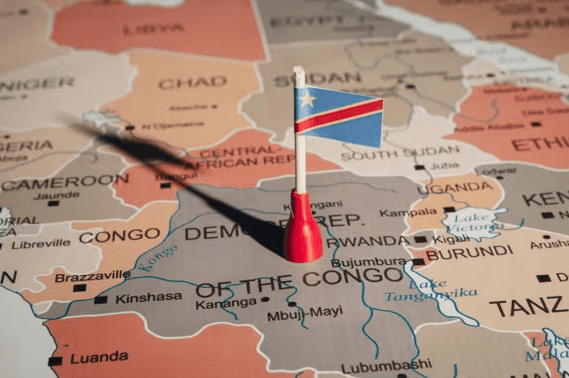

1 The most recent moons to be discovered were in both in 2024, with the awesome working names of S/2002 N 5 and S/2021 N 1.

2 As you know, I enjoy Shakespeare, and I enjoy even more when I can understand it.