Crazy Policies from the New Zealand General Election

Voting in a general election can be difficult. You could vote for a political party for any number of reasons.

  • It could be because it’s a generational thing; your grandparents and parents voted for them, so you vote for them.
  • You could be a swing voter and only vote for parties that keep their promises.
  • You could have researched each party and studied them until you found the party that best aligns with your values.
  • Maybe your favourite celebrity or influencer told you to do it.
  • It could be because that party has the best logo or the most attractive candidates.

The reasons are like Destiny, Death, and Dream; endless.

But voting can be a double-edged sword. The party you support may have an amazing education policy, like every primary school child will have all of their stationery and uniforms paid for by the government. However, that same party could have a crazy immigration policy by demanding every immigrant, regardless of age, needs three PhDs, with $5 million to support them.

If you choose to vote for that party, you’re choosing to help and support the nation’s children, but at the same time, you’re supporting an inhumane immigration policy. Like I said, it’s a double-edged sword.


Credit: New Zealand Electoral Commission

This brings us to the New Zealand General Election. Our general election is being held on 14th October 2023, though advanced voting started on the 2nd October.

Before I go on, you could be thinking, “Well, I’m not a New Zealander, Scott, so why should I care about it?” That’s a fair question, so here’s a fair answer: you don’t have to care, it’s just nice to know things. Like going to a party and knowing the capital city of Brazil is not Rio de Janeiro, but Brasília; or the fact George Lucas did not direct The Empire Strikes Back, it was Irvin Kershner. It’s nice to drink and know things.

We have 17 parties to choose from, along with their candidates in this election. I’ll admit that I’m biased, but we have some good parties, some average parties, some bad parties, and some truly awful ones as well. We have parties ranging from left-wing, centre-left, centre, centre-right, right-wing, and the insane.

They have a range of policies that are truly amazing to the downright batshit crazy, and it’s these batshit policies I’d like to highlight. We have some conspiracy political parties now, which is equally terrifying and hilarious; so it’s not a surprise that I’ll discuss these. Also, I’m not mentioning all of the 17 parties, just the policies that are batshit crazy, in my humble opinion.

I’m apologising in advance if you think any of the below policies are…well, good.

All of these policies are linked through Policy NZ and through the websites of the political parties.


ACT Party

  • To abolish the New Zealand Human Rights Commission, the Ministry for Women, the Ministry for Pacific Peoples, and the Ministry for Ethnic Communities.
  • To restrict access to permanent sickness benefits, if the person can work.
  • To increase the retirement age to 67.
  • To halt contributions to the New Zealand Super Fund, which is the sovereign wealth fund that supports the cost of superannuation.
  • To oppose laws against hate speech.
  • To ignore the UN Declaration on the Rights of Indigenous Peoples.
  • To remove a public holiday.
  • Require annual leave to be calculated on a pro-rata basis.
  • To abolish the Fees Free tertiary education programme.
  • To repeal the Zero Carbon Act.
  • To abolish the Climate Change Commission, the Climate Emergency Response Fund, the Progressive Home Ownership Scheme, and the First Home Grant.
  • To sell public hospitals to private investors under leaseback arrangements.
  • To reduce government Kiwisaver contributions.
  • To hold a referendum on the interpretation of the Treaty of Waitangi.

New Conservatives

  • Our long-term problem of fatherlessness is not helped by telling men and boys that their masculinity is toxic and unwelcome. New Conservatives will be a voice for men and the value of masculinity.
  • To ban medical abortions and withdraw public funding for abortion services.
  • To ban gender reassignment surgery and hormone therapies for young people.
  • We affirm the biological reality that there are only two sexes, and oppose the lie that a person can be ‘born in the wrong body’, or can ‘change their gender’. 
  • To remove left-wing ideologies from the curriculum, including critical race theory, gender theory, decolonisation, and extremist “climate science” and sex “education”.
  • We believe that current climate policies are a distraction from real opportunities to protect and improve the environment. There is no climate emergency. We will end all climate-focused taxes, subsidies, and regulations.
  • Reducing New Zealand’s greenhouse gas emissions does not actually benefit the environment in any way – if anything only shifting high-emitting activities overseas.  
  • New Conservatives believe that is an inappropriate use of technology1 – we should not be playing God, altering the natural makeup of organisms for no real environmental benefit – and this shows there is no real case for change.
  • Fossil fuels are here to stay, and should be harnessed for the good of the country. We will restore orderly licensing for oil and gas exploration, and make sure that the players in this industry know they are welcome in New Zealand for the long term.

New Zealand First

  • Withdraw from the UN Declaration on the Rights of Indigenous Peoples (UNDRIP) as it removes the rights of New Zealand citizens to write their own laws.
  • To stop using Te Reo Māori names for government departments.
  • To amend the Sport and Recreation New Zealand Act to remove public funding from bodies that allow non-biological women to be selected unequally against biological women.
  • Require a national interest test to stop us being dictated to by the United Nations and agencies like the W.H.O.
  • To remove gender ideology from the curriculum, and review the New Zealand curriculum to remove critical race theory and de-colonialism.
  • We will abolish the Māori Health Authority.
  • To create a Royal Commission of Inquiry into media independence in New Zealand.
  • To restore 90-day job trials to provide employer certainty.
  • We will prepare a bid to hold the 2026 Commonwealth Games in Christchurch.

Leighton Baker Party

  • To drop the carbon net-goals as they do not work and impoverish our nation.
  • There must be a full review of the harm caused by the COVID-19 vaccine, as well as the effectiveness of the vaccine.

New Zealand Loyal

  • To end New Zealandʼs participation in the United Nations, World Economic Forum, and World Health Organisation.
  • To investigate the Reserve Bank of New Zealand and its past practices.
  • To investigate who has benefited by selling this country out to the “Green Agenda.”

Freedoms NZ

  • To remove UN driven campaigns to control our country and drive the Climate Change fraud, food production, and Health Control.
  • We believe we are already carbon negative.
  • To scrap the Resource Management Act.
  • To ensure there is no more school indoctrination with the Transgender Agenda + more.
  • To scrap all changes to New Zealand’s firearms legislation made since March 2019.2

New Nation Party

  • No state funding for media.
  • To leave the United Nations.
  • To launch a Commission of Inquiry into our country’s COVID-19 response.
  • Limit Significant Natural Areas (SNA) to public areas.
  • To reduce the number of Members of Parliament to 100.3

NewZeal Party

  • We stand on the side of biological and scientific reality when it comes to gender, and reject attempts to deny or erase the biological evidence of gender.
  • We will oppose proposed significant content regulations and limitations for media and online platforms. 
  • We will ensure that our media platforms and press can be independent and reliable, free from censorship and unnecessary restrictions.

Have I been too harsh on these parties, or not harsh enough? Have I missed out on any batshit crazy policies? Do you agree or disagree with any of them? As always, please let me know.

Hopefully this time next week, we will have a clear election result, but who knows, the Aotearoa Legalise Cannabis Party may surprise us all!

This was my 149th blog post, so next week I’ll reach the milestone of 150, and I have no idea what to do about it.

Thanks once again for reading, following, and subscribing to Some Geek Told Me. Please don’t forget to walk your dog, read a banned book, play Lego with some children, watch some Rugby World Cup games, and I’ll see you next week.


1 The technology stated is Genetic Engineering.

2 This refers to the Christchurch mosque shootings, where 51 people were killed and 40 people injured. Two AR-15-style rifles, one semi-automatic shotgun, one pump-action shotgun, and two other rifles were used in the massacre.

3 Currently, the number is 120.

15 Comic Book Artists Synonymous With My Favourite Characters

Some comic book artists go together with characters amazingly well, like salt and vinegar; fish and chips; ice cream and cones; and finally, Vegemite and toast. As a follower of this small endeavour into lunacy, you may recall my love for comic books.

In saying that, and with all due respect to writers, inkers, letterers, colourists, and editors, where would comics be without the artists? They are a pretty visual element to the storytelling, and extremely vital for promoting the style and tone of the comic book.

There have been thousands of comic book characters created over the last 100 years, along with hundreds of different artists; all of which have drawn multiple characters for many different companies, or creator-owned projects.

Over the years, I have read a few comics, so I can appreciate various artists across various genres, like superheroes, horror, science fiction, fantasy; and like the road, the list goes on and on. So because of this, I have subconsciously linked an artist to a character.


Image by Emilie Farris from Pixabay

What I’m not talking about is linking a famous run or storyline to an artist; what I’m actually talking about is an artist that I believe is synonymous with a particular character. An unrelated example is when I think of Western movies, I think of Clint Eastwood. If I think of rugby, I think of the All Blacks; if I think of dysfunctional families, I think of the Skywalkers.

The comic book artists on this list, are not made up of my favourite artists; though some of them would be. However, that is another blog for another day. No, at least to me, these artists have drawn the best versions of certain characters. In my humble opinion, they are my favourite artists to draw these particular characters. Basically, if I could choose anybody to draw these characters, it would be these artists.

Some of these decisions were extremely difficult, so hopefully I mean no disrespect to any other artists.

I’ve only included 15 characters for the first round, but I promise you, I’ll write several more of these lists! I’ve included heroes and villains to be fair, as well as limiting one artist per character.

Alright then, we are doing this in alphabetical order, so sit back, relax, and away we go!

Some of these artists have died, so out of respect for them, I’ll indicate this with a *


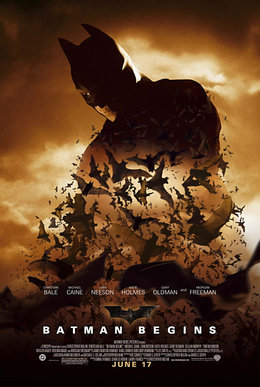
Batman by Tim Sale*

Credit: Tim Sale and DC Comics

Captain America by George Perez*

Credit: George Perez, Wizard Magazine and Marvel Comcs

Captain Marvel (Mar-Vell) by Jim Starlin

Credit: Jim Starlin and Marvel Comics

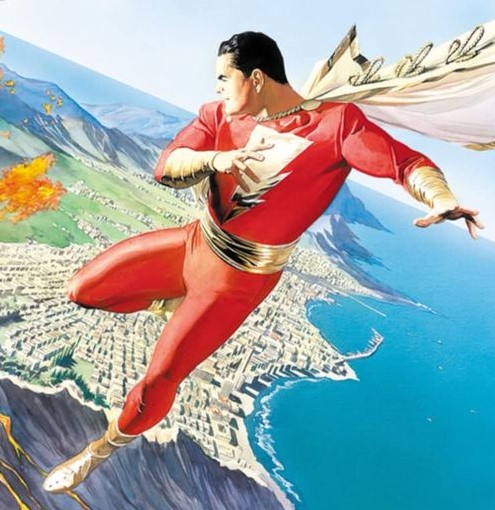
Captain Marvel (Shazam!) by Alex Ross

Credit: Alex Ross and DC Comics

Deadman by Neal Adams*

Credit: Neal Adams and DC Comics

Doctor Doom by John Byrne

Credit: John Byrne and Marvel Comics

Harley Quinn by Amanda Conner

Credit: Amanda Conner and DC Comics

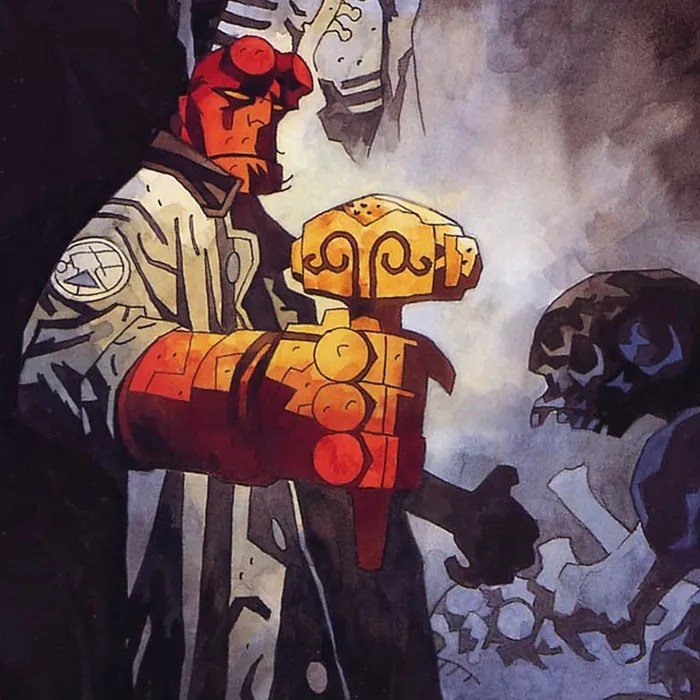
Hellboy by Mike Mignola

Credit: Mike Mignola and Dark Horse Comics

Invincible by Ryan Ottley

Credit: Ryan Ottley and Image Comics

Judge Dredd by Ron Smith*

Credit: Ron Smith and 2000AD

Spawn by Todd McFarlane

Credit: Todd McFarlane and Image Comics

Superman by Dan Jurgens

Credit: Dan Jurgens and DC Comics

The Joker by José Luis García-López 

Credit: José Luis García-López and DC Comics

The Phantom by Sy Barry

Credit: Sy Barry and King Features Syndicate

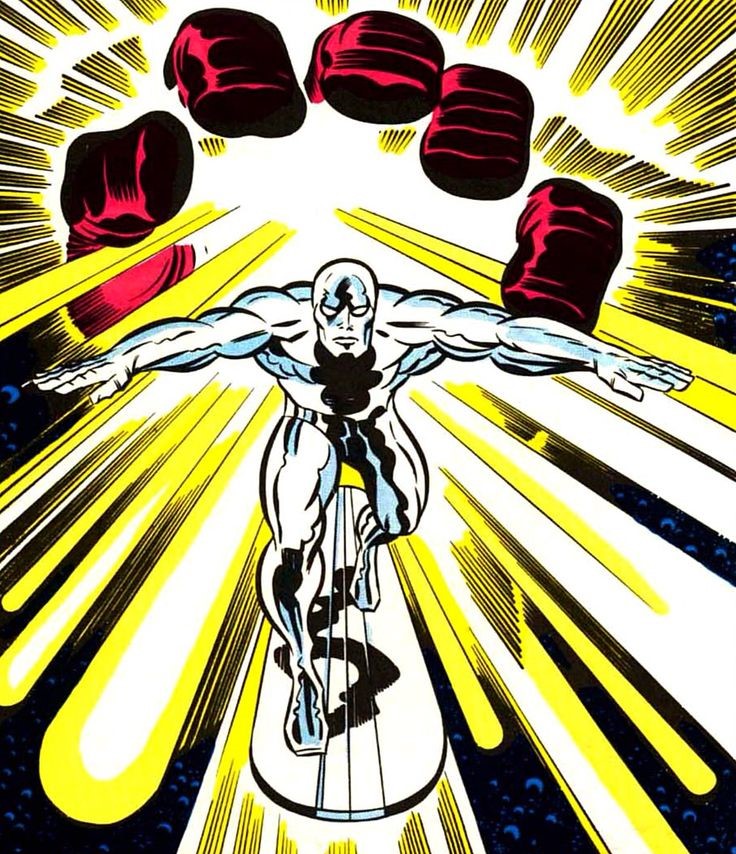
The Silver Surfer By Jack Kirby*

Credit: Jack Kirby and Marvel Comics

As a bonus entry, I’d like to point out that my favourite Star Wars artist is Jan Duursema.

Credit: Jan Duursema and Dark Horse Comics

Do you agree with any of my choices? Who’s your favourite Batman, Captain America, or Superman artist? As always, please let me know.

And that concludes another blog; which coincidentally is my 148th blog post. It’s 147 more than I thought I’d do, that’s for sure. Thanks once again for reading, following, and subscribing to Some Geek Told Me.

Please don’t forget to walk your dog, read a banned book, eat some Salt and Vinegar chips, watch some Rugby World Cup games, and I’ll see you next week.


Three couples we need to stop admiring

To quote Huey Lewis and the News, “The power of love is a curious thing, Make a one man weep, Make another man sing.” Love can change and transform a person; it can make them loving, compassionate, brave, empathetic, happy, and basically everything else positive society can throw a label on.

Like many things or concepts in this mad little world, love is like a coin; it has two sides or two faces.1 On one face of the coin, is love as described by Jane Austen: witty, lovely, romantic, charming, and enduring. On the other face, well, we have love described by the Brontë sisters: dark, jealousy, twisted, obsessive, and secretive. Love can make people do some pretty crazy stuff and not all of it is good.

There are many couples throughout history and pop culture that personify romantic love. We can admire these couples as role models; whether straight, gay, or everything else. However, there are equally couples that are so bad for each other, that everybody knows they shouldn’t be together, or at least, have some extreme Brontë issues to work through.

Toss the love coin for a couple and see where it lands. Does it land Austen face up, or is it Brontë? That seems easy, doesn’t it? But what about the couples in the centre of the Venn diagram? What if the coin does not land face down, but is actually on its side? 2

Some people look and say that these couples are lovely and romantic, so they must belong together. They are admired, romanticised, and even idolised. Now I’m not an expert on love; ask my wife, but I have three couples that do not deserve your admiration. As a collective society, we need to stop lying to ourselves about these couples.

May I submit three couples that we desperately need to stop admiring: 1 x historical couple and 2 x fictional couples. Let’s break some hearts!


Image by Pexels from Pixabay

Bonnie Parker and Clyde Barrow (Bonnie and Clyde)

Bonnie Parker and Clyde Barrow were part of the Barrow Gang, which included Clyde’s brother Marvin “Buck” Barrow, and his wife Blanche. They operated in the Central United States of America, during 1932-1934, committing small-time heists and bank robberies.

Bonnie and Clyde were romanticised at the time, and still are. They were a young couple, living their best life, which fed into the counterculture, with part of the public admiring and adoring them. One of the reasons was that Bonnie was already married to a man named Roy Thornton, but she was in love with Clyde.

In the grips of the Great Depression, these love birds were fighting to be free and live wild. The growing problem was their crimes were becoming more violent, which resulted in people being killed. This made the public slowly turn on them, and law enforcement officers hunted them.

On 23rd May 1934, Bonnie and Clyde’s crime spree ended. They were ambushed in their car, by law enforcement officers and were shot to death. Bonnie had 26 bullet wounds, and Clyde received 17; with both suffering head shots.

Over the years, their romantic legacy has grown across the world, especially because of the Academy Award-winning 1967 film, Bonnie and Clyde. But let’s face facts; Bonnie and Clyde committed multiple robberies of banks, gas stations, and small stores, but also killed at least 12 people; which included nine law enforcement officers.

It’s been 89 years since their death, and I’m sorry to say, we need to stop admiring them.

Romeo Montague and Juliet Capulet (Romeo and Juliet)

Did you see this one coming?! First performed in 1597, William Shakespeare’s immortal play Romeo and Juliet, has been touted as one of the greatest love stories ever told. It’s been adapted into film, ballet, opera, paintings, and literature, and is still performed through theatre around the world. Over 420 years later, people are still experiencing and revisiting the story.

Though should we still be experiencing Romeo and Juliet? Hell, yes! I’m not smart enough to articulate just how impactful and amazing the play is, and why it’s important. To me, it’s good, it’s so, so good. However, that isn’t the correct question we should be asking.

We should hold on to Romeo and Juliet, until the potential heat death of the universe. But should we keep romanticising them? Hell, no!

I want you to think about a few things:

  • The entire play is set over six days. Yes, just six days!
  • When Romeo meets Juliet for the first time, he’s on the rebound from Rosaline (Sunday evening).
  • Romeo and Juliet fall in love with each other (Sunday evening).
  • Romeo meets Juliet for the second time and agree to marry (Late Sunday evening).
  • The next day, Romeo and Juliet marry (Monday afternoon).
  • By Friday morning, both Romeo and Juliet are dead by their own hands.

Imagine if your child or grandchild came to you and said, that the person they were planning on marrying today, they had only met them the day before? What would you do? Seriously, what would you say?

From the time I first met my future wife, to actually getting married was 20 months. I used to think that was fast, but that’s at a snail’s pace, compared to Romeo and Juliet’s 24 hours!

This brings me to their ages. At the time of the wedding, I believe Romeo was 16 years old, and Juliet was just 13 years old. Granted the play was set in Verona, around the 14th/15th century, but still.

Another love myth to break about the couple is that by the end of the play, six people had died. They were Mercutio, Tybalt, Lady Montague, Paris, and the idiots of the story, Romeo and Juliet. Yes, Romeo and Juliet did kill themselves, but through their actions; directly and indirectly, four other people paid the ultimate price for their one-night stand. Romeo alone personally killed three people!

“These violent delights have violent ends.”

If you’re looking for romance, love, or shenanigans in a Shakespearian play, then admire these couples: Sebastian and Olivia, Viola and Orsino, Lucentio and Bianca, Petruchio and Katherina, Bassanio and Portia, Beatrice and Benedick, or Orlando and Rosalind.

Romeo and Juliet truly belong with the other tragic couples: Othello and Desdemona, Macbeth and Lady Macbeth, Antony and Cleopatra, Duke of Albany and Goneril, Duke of Cornwall and Regan, and of course, Hamlet and Ophelia.

The tale of Romeo and Juliet is not a love story, because nobody is left happy at the end. I think one of the points of the play is not to admire Romeo and Juliet; because they don’t deserve it, but to see their flaws and mistakes, so you don’t have to make them yourself.

The Joker and Harley Quinn (The Joker and Harleen Quinzel)

I’m not going to spend a lot of time with this couple because they are the textbook example of a toxic relationship. When everybody’s favourite Arkham Asylum escapee was recaptured and brought back, the Joker met, manipulated, seduced, and corrupted psychologist Harleen Quinzel, and helped her to transform into Harley Quinn.

Harley Quinn became the Joker’s accomplice and girlfriend, but it was an awful abusive relationship. Over the years and in different versions, the Joker has done some pretty horrible things to Harley. These involve various methods, and include and not limited to throwing her into a vat of industrial chemicals; pushing her out of a window; torturing her by beating, cutting, and hanging her half to death; setting Harley’s own hyenas onto her; planning to kill her in front of the Dark Knight; tried to cut her face off; locked her into a rocket; he killed her and transformed her into a constellation; constantly beating and casting her out before wooing her back; and one time, he didn’t even notice that Harley had left for a year.

And just to clarify, Harley is not blameless in this mess. By the Joker’s own admission, he believes that Harley is crazier than him. The way the Joker controlled and manipulated Harley, only worked because Harley thought his abusive behaviour was a sign that he loved her. It wasn’t.

The Joker would have rather beaten Harley to a bloody pulp than admit he cared for her; as much as a homicidal, sadistic psychopath can care for someone.

Unlike the previous two entries on this list, there is a happy ending of a sort. Harley ultimately left the Joker forever and is now in a loving, positive, and healthy relationship with Poison Ivy. Though whether Harley being involved in another relationship with a villain is a good idea, remains to be seen.

And there you have it. Just like Fat Boy Slim said, “Like a favourite pair of jeans that you won’t give up on,” we need to give up on the idea that these three couples are to be romanticised, admired, or idolised because they don’t deserve it. You wouldn’t wish any family member to be involved in any relationship, similar to these disasters, would you? Well, maybe it depends on the family member.

Have I missed any toxic couples out? As always please let me know. I know I didn’t include Heathcliff and Catherine, but to be honest, this blog got away from me, so I’ll include them next time. 3

Thanks once again for reading, following, and subscribing to Some Geek Told Me. I’m also on Twitter and Mastodon, where I have daily posts, and attempt to be funny.

Please don’t forget to walk your dog, read a banned book, avoid playing Monopoly at all costs, watch some Rugby World Cup games, and I’ll see you next week.


1 It’s been a long time since I snuck in a Batman reference.

2 This is a shout out to Heathcliff and Catherine. I see you, I see you.

3 I told you I saw Heathcliff and Catherine.

Tour of the Solar System: Mars

Guess what’s back for another week? No, it’s not Simon Cowell’s Ninja Dog UK show, it’s Some Geek Told Me’s Tour of the Solar System! If you’ve never been on the tour before, here are the previous stops:

1.) Introduction

2.) The Sun

3.) Planets vs. Dwarf planets

4.) Mercury

5.) Venus

6.) Earth

7.) The Moon

Voted least likely to help humanity in any way, Some Geek Told Me’s Tour of the Solar System is now on its eighth stop. Buckle up, because we are visiting a planet that if it was a teenage girl, then it would be the popular one. It’s Mars, the Red Planet! Wait, did you think it was Neptune?


Image by WikiImages from Pixabay

Let’s establish something before we begin? There’s so much information on Mars, that I couldn’t possibly explain it all in one blog. Well, not without a time machine, which is a good thing I don’t have one. I’m just going to talk some basic information about Mars, though everything would make a Space-denier’s right eye start twitching.

Mars is the fourth planet from the Sun, after Mercury, Venus, and us; Earth. This makes it a terrestrial planet, which formed about 4.5 billion years old, give or take a few Sundays. This makes it extremely similar to the other terrestrial planets. That’s not really a surprise is it?

Unlike other planets, it’s named after a chocolate bar…no, seriously, Mars is named after the Roman god of war; you guessed it, Mars.1

As for planetary rings, someone swiped left on Mars but swiped right for moons. Mars has two moons named Phobos and Deimos, which mean fear and panic for the former, and terror and dread for the latter. I do find it interesting that Phobos and Deimos were the sons of Ares, the Greek god of war, who was identified by the Romans as Mars.

So basically, the planet is named after a Roman god, with the two moons named after his Greek equivalent’s sons. Not confusing at all.

Mars is smaller than Earth, with a diameter close to 6,792 km, compared to Earth’s diameter of 12,740 km. This means that everybody’s favourite planet named after a god of war, is actually the seventh largest planet in the solar system. Sorry, Mercury.

Just like Earth’s orbit of the Sun, Mars’ orbit is elliptical, but it is more severe. Mars’ perihelion is 206,650,000 km, while its aphelion is 249,261,000 km. The average distance from the Sun to Mars is 228 million kilometres, with the orbital speed of Mars being 24.07 km/s, which is only slightly faster than my dog when he’s blitzing.

Alright, that’s all well and good, but what else do we know about Mars? Great question, so here’s a complicated answer. Hollywood has given us some interesting films based on Mars, like Total Recall, Mission to Mars, Red Planet, Ghosts of Mars, The Martian, and Life. Between the insanity of the films lies the truth about Mars.

A long time ago on a planet, not that far away, liquid water was on the planet’s surface. Yes, billions of years ago, Mars had not just liquid water on the surface, but oceans. The observational evidence for this is the hundreds of photos and video footage taken over the years, that have been analysed by scientists; like ancient riverbeds.

Now whether life may have existed in this ancient primordial Martian ocean, is another blog for another day; just ask J’onn J’onzz or H. G. Wells. As for the reason why Mars lost its oceans, the leading hypothesis is that the oceans were ripped away by the solar wind because Mars lost its magnetic field, which prevented this from happening.

The next question is how did Mars lose its magnetic field? Like Earth’s spinning core, Mars’ core would have created a dynamo effect, which in turn would have powered the magnetic field. However, sometime in Mars’ ancient past, something happened to change the dynamo effect, which resulted in a snowball effect: No dynamo effect, caused the magnetic field to stop being generated, which caused the oceans to be ripped away by the solar wind. As to why there were some shenanigans in the Martian core, we should just bring in a CSI team, and they’ll solve it in under 45 minutes.

Mars is now a cold, barren, dusty wasteland; almost like the background to a Mad Max film. Polar ice caps exist at both poles, but the planet is a husk. Temperatures on Mars can range from −110 °C (−166 °F) to 35 °C (95 °F). Basically, Mars has the temperatures of both Hoth and Tatooine.

For Mars’ rotation and orbital period, it takes Mars 1.04 Earth days to rotate once, which is roughly 25 hours. A Martian year equals 687 Earth days, which is about 1.9 Earth years.2

The surface of Mars is covered in a dusty inorganic compound known as Iron(III) oxide. This dust gives the planet a rusty colour, which to nobody’s surprise at all, is why Mars is referred to as The Red Planet. The terrain is mixed with volcanoes, craters, valleys, and lower flat lands.

It’s for this reason that Mars is home to Olympus Mons, which is the tallest mountain in the solar system. Olympus Mons is a massive shield volcano, that is 21.9 km high. In comparison to Earth’s tallest mountains, Mount Everest is 8.848 km (above sea level), while Mauna Kea is 9.33 km (from underwater base to summit). 

Mars does have an atmosphere, but it’s very thin and weak. The atmosphere is made up of Carbon Dioxide (95.97%), Argon (1.93%), Nitrogen (1.89%), and smaller traces of Oxygen, Carbon Monoxide, and Water Vapour. If you’re planning on visiting Mars anytime soon, make sure you bring a survival/space suit. If the cold doesn’t kill you, the lack of breathable air will.

And speaking of visiting Mars, humanity has sent many landers, probes, and rovers to the Red Planet; which makes it unique because it’s the only planet that we know of except for Cybertron, that is populated by machines.

Journeying to Mars is no easy step because the average distance between Earth and Mars is about 225 million km. The human exploration and colonisation of Mars is a hot topic at the moment. There are many factors to consider about this, though namely, terraforming is one of them. Put another way, Mars hates humans and will do everything it can to kill them. Because of this, the earliest humans could be walking on Mars, will be in the 2030s. They have a lot of work to do, but they have already started.

Hopefully, when humans land on Mars, I’ll be able to watch it with UMC1 and UMC2. Of course, it depends at the very least, if a 15-year-old and a 12-year-old would want to hang out with their very uncool father.

Well, that’s it for another week. What’s your favourite Mars fact? Please let me know. The 2023 Rugby World Cup is still ticking over, so I’m still trying to find the best time to sleep, and I’m failing as usual.

Thanks once again for reading, following, and subscribing to Some Geek Told Me. I value everybody who stops by to read some of my nonsense. Please don’t forget to walk your dog, read a banned book, watch some Rugby World Cup games, Up the Wahs, and I’ll see you next week.


1 Astronomers really like Roman mythology.

2 The further you move away from the Sun, the orbital periods of the remaining planets are just going to become longer.

2023 Rugby World Cup: Peculiar and Puzzling Positions

The 2023 Rugby World Cup has started, and we have already witnessed France vs. New Zealand, Italy vs. Namibia, Ireland vs. Romania, Australia vs. Georgia, England vs. Argentina, Japan vs. Chile, South Africa vs. Scotland, and Wales vs. Fiji. It’s been full of blood, sweat, and tears; and that’s just from the fans!

If this is your first Rugby World Cup, or at the very least, the first time you’ve seen rugby, then firstly, congratulations and welcome to the club. Secondly, if you have observational skills like the Question, you would have noticed the players’ jerseys; namely the numbers on their backs.


Rugby Positions by World Rugby

Just like any team sport that requires players to wear numbers, their number denotes their position. And rugby has some pretty messed up positions. There are 15 (1-15) players in a team, with another 8 (16-23) as reserves, so 23 in total.

So what I’m going to do today, is try and explain what these positions mean and what the player’s job is during the game. Because I’m a New Zealander, I’ll use Kiwi terminology, but I’ll add other names for positions that other countries use as well. Also, the person that gets the honour of wearing the number 8 jersey, has the greatest positional name in rugby, and maybe in all of sport.

The Positional Numbers

1.) Loose-head prop

2.) Hooker

3.) Tight-head prop

4.) Lock (Second row)

5.) Lock (Second row)

6.) Blind-side flanker

7.) Open-side flanker

8.) No. 8

9.) Half back (Scrum half)

10.) First Five (Fly half, First 5/8)

11.) Left wing

12.) Second Five (Inside Centre, Second 5/8)

13.) Centre (Outside Centre)

14.) Right wing

15.) Full back

Job done then, right? Great Caesar’s Ghost, the answer is no!

The team can be divided into two groups: forwards (1-8) and backs (9-15). There is no better way to illustrate the differences between the two groups, than when there is a scrum or a line-out. All of the forwards are packed together into a scrum, or standing in a line behind each other for a line out. The backs on the other hand, will be standing side by side, stretched out across the field when either a scrum or a line out is taking place.

Rugby is a sport where all body types can be used and celebrated. This is because each position needs a specialised player with a particular body type and skills. Traditionally, forwards are larger but slower players, while backs are usually smaller, but faster.

Alright then, what’s special about the positions?

Explaining the Positions:

Front Row (Props and Hooker/Numbers 1-3)

Body type in the community:

This is easy. The best way to describe what body types props and hookers would have, would be a bouncer. You know the type, their arms and legs are the same size; they’re born without a neck; they can bench press a small car; and they won’t take any shit from anybody.

What‘s a prop’s job in a rugby game?

Formal answer:

Their job is to “prop” up the scrum, support the hooker, and add lift to the line-out jumpers.

Informal answer:

Their job is to be a human bulldozer and to take as many defenders down as they can. They are also experts in the dark arts.

What‘s a hooker’s job in a rugby game?

Formal answer:

Their job is to “hook” the ball with their legs during a scrum and to throw the ball in at the line-out.

Informal answer:

Their job is to be an extremely niggly player, that acts like they’re a saint, but they’re actually the devil in disguise. If the referee pulls them up for a penalty, the hooker will deny it; even with 20 m wide screens, showing them committing the crime.

Second Row (Locks/Numbers 4-5)

Body type in the community:

Locks would have the body type of basketball players: tall and muscular. However, the difference here would be instead of bouncing a ball on a court, these people have declared that they would rather suffer cauliflower ears, head trauma, broken bones, or torn ligaments than play basketball.

What‘s a lock’s job in a rugby game?

Formal answer:

A lock’s job is to form the second row in the scrum, receive the ball from the kick-off, and be a primary jumper at the line-out.

Informal answer:

Their job is to have the best shoplifting hands on the field, to be lectured by referees half their size, and to be at the bottom of every ruck and maul.

Loose Forwards (Flankers and No. 8/Numbers 6-8)

Body type in the community:

Do you remember how members of the front row would be described as bouncers? Well if they’re the bouncers, then the loose forwards would be the crazy, tough idiots starting fights in the bar/club or in the line outside.

What‘s a loose forward’s job in a rugby game?

Formal answer:

A loose forward has several jobs like being a secondary jumper at the line-out, supporting the ball carrier around the ruck, giving protection at the breakdown, and searching for the ball.

Informal answer:

There have been many epic quests throughout pop culture, like Frodo and Sam’s mission to destroy the One Ring at Mt. Doom, Thanos collecting the Infinity Stones, Ahab’s obsession with Moby Dick, Darkseid searching for the Anti-Life Equation, Ang to master bending of all four elements, and Andy Stitzer’s quest to lose his virginity.

But they all pale in comparison to a loose forward’s mission to hunt and find the rugby ball. They are lunatics, running around searching for the ball during tackles and breakdowns. They are either off their medication or need to be on some, because they are single-minded in their conviction to find and secure the ball for their team.

Half back (Number 9)

Body type in the community:

Picture any group of people working in sales with various body sizes. The half back would be the smallest of them; toned, small, quick, and very talkative.

What‘s a half back’s job in a rugby game?

Formal answer:

Like a hooker, the half back is a singular specialised player. Their job is to be the link between the forwards and the backs; to feed the ball into the scrum; to receive the ball from the line-out; and to gather the ball at breakdowns, to either pass or kick it.

Informal answer:

The half back’s job is to yell at everybody and to tell them where they need to be. Half backs are also well versed in rugby laws since they are always telling the referee what to do. They love pointing out the illegal things the opposition is doing to the referee, as well as convincing the referee that the illegal things their own team is doing are perfectly legal.

Inside Backs (First Five, Second Five, and Centre/Numbers 10, 12, 13)

Body type in the community:

These players are usually attractive, decisive, fast, and agile. You’ll see them at the gym working out and looking fabulous. They are the ones posing during photo shoots for underwear adverts.

What‘s a First Five’s job in a rugby game?

Formal answer:

When the First Five receives the ball, they will either run, pass, or kick it. If they kick the ball, they need to decide if they are kicking for territory, forcing the other team to kick the ball out, forcing the other team to make a mistake, or setting up a scoring situation. They are usually the player that kicks the goals.

Informal answer:

Their job is to crush the opposition by doing three things: kicking penalty goals and conversions from anywhere on the field, landing drop goals, and forcing the opposition back 50-80 m through territory kicks. If a First Five is constantly doing this in a game, it is soul-destroying for the other team.

What‘s a Second Five and Centre’s job in a rugby game?

Formal answer:

Their job is to support the First Five, create line breaks, kick for territory, supply cover defence, and to follow set pieces.

Informal answer:

When done correctly, the deadly partnership of the Second Five and Centre can bust open teams; but also crazy enough to act like loose forwards at the breakdown. Their job is to make the game a living hell for the opposition’s back line. They’re very clever, fast, and dangerous; but still look like a model as they do it.

Outside Backs (Wingers and Full back/Numbers 11, 14, 15)

Body type in the community:

These players will look like inside backs, except for one difference; their speed. These players are generally the fastest on the field, so look for people who like working out, but also sprinting. Outside backs are also great dancers, because of the work they do to evade being tackled.

Formal answer:

These players need to be able to catch the high ball, but also chase it. They need to be strong enough to fend off tacklers, but also to tackle around the waist and legs. Outside backs are try-scoring machines because of their speed.

Informal answer:

These players love to humiliate teams by evading tackles, applying the side step, outrunning or chasing someone down, producing try-saving tackles, but mainly by scoring a huge amount of tries.

What’s your favourite or least favourite rugby position? As always, please let me know.

I hope these blogs are coherent enough for you to be interested in the Rugby World Cup. If it has, I’ll congratulate myself with some Salt and Vinegar chips. If not, I’ll schedule a meeting with the writing team.
Thanks once again for reading, following, and subscribing to Some Geek Told Me. I’m also on Twitter and Mastodon, where I post about things that I think are quite cool. Maybe.

Please don’t forget to walk your dog, read a banned book, watch some Rugby World Cup games, and I’ll see you next week for our next stop on the Tour of the Solar System. Good times.


2023 Rugby World Cup: Supreme Scoring System

The 2023 Rugby World Cup begins in under a week and for thousands of people, this will be their first Rugby World Cup. Whether it’s watching them in the comfort of your own home, your friend’s house, or a bar, or maybe you’re going to be attending some games; it’s going to be someone’s first Rugby World Cup, or at the very least, it could their first rugby game.

Rugby can be a truly mental and angry sport to follow to the uninitiated. Points are scored every which way, and it can be confusing to begin with, like which indictment Trump should be focusing on first. However, the way points are scored in rugby can be explained. So to help you understand what you’re looking at during the Rugby World Cup, here is a very quick guide to the points system.

Before I begin, I’m only explaining how to score points, what the points mean, and their value.


Image by David Mark from Pixabay

The value of points scored in a game comes in the form of 5 points (try), 2 points (conversion), 7 points (penalty try), and 3 points (penalty or drop goal).

5 points for a try

Scoring a try in rugby means your team is awarded 5 points. A try is similar to a touchdown in the NFL, except for some subtle differences.

To score a try, a player must place the ball on the opposition’s try line or beyond it. The “try zone” consists of a strip of grass in the form of a rectangle, that starts at the try line, with the parallel line being the “dead-ball” line. The two other lines of the rectangle are the touch/sidelines (out of bounds).

If the ball is placed before the try line, it’s not a try; just the same as if the ball is placed after the dead-ball line, it’s not a try. The ball just has to be placed in between them. To place the ball down, a player either can walk, jump, or run across the line and place the ball down, or simply be lying on the ground and stretch out with their hand, with the ball in it.

With the grounding, you can either do it with one hand or two. It doesn’t matter what you do, and this is important, so long as you have control of the ball and apply downward pressure on it. Even if you’re across the line, you must have control of the ball and be able to force the ball on the ground.

The TMO (Television Match Official) can be called upon by the referee to check the grounding of the ball, in case the ball was lost forward, if there was no grounding, or if another player placed their hand between the ball and the ground; thus preventing the grounding, then the try would not be given.

But if the referee and TMO are happy with the grounding, then your team is awarded 5 points.

I do need to point out, that even if you place the ball legally over the line, you may not be awarded the try, if someone in your team did something illegal, leading up to the try. Rugby is a cold sport.

Here are some examples of players scoring tries:


2 points for a conversion

Of all of the points to be discussed, this is the easiest. After your team scores a try, you have the chance to score an additional 2 points for a conversion. When your team’s try has been confirmed, the goal-kicker; traditionally the first five/fly half (player with 10 on their back) or the fullback (player with 15 on their back), will attempt to kick the ball between the posts and over the crossbar.

The kicker must kick the ball from the ground when the ball is placed on either a plastic tee or a pile of sand, or in the form of a drop kick.1 The place where the conversion attempt must be taken, is perpendicular to where the try was awarded. Basically what this means is that the closer you score the try to the posts, the easier the conversion is for the kicker. The further the try is scored away from the posts, the more challenging the kick is for the kicker.

The kicker is given one minute to complete the kick, and if the kick is successful; as in the ball passes in between the posts and over the crossover, your team receives 2 more points. If the kick misses the posts, no extra points are awarded.

Here’s a video showing examples of conversions:


7 points for a penalty try (try + conversion)

A penalty try is rare to witness, but they do happen. A penalty try is awarded to the attacking team, if the referee thinks the defending team has prevented a try from being scored through illegal methods. If the try was going to be probably scored, without the illegal actions of the defending team, then the referee would do three things:

1.) Confirm the penalty try under the posts.

2.) Award the attacking team an automatic 7 points, which equates to a try and conversion (5+2=7).

3.) Punish the offending player by showing them a yellow card (the player is sin-binned, so they are sent off for 10 minutes before coming back to the game) or a red card (the player is sent off for the rest of the game. They do not get to come back).

Here are some examples of penalty tries:


3 points for a penalty goal

Since rugby has so many laws and rules, it’s extremely easy to break any number of them. As an ex-player, I really can confirm this. From not releasing the ball, not rolling away after the tackle, hands in the ruck, committing an illegal tackle, to a scrum collapse, and so many more, the referee can and will punish any player and team, in the form of a penalty.

If the referee awards a penalty to a team, within a kickable distance to their posts, they are allowed an attempt to kick a penalty goal. It’s the same routine as a conversion, apart from three differences:

1.) With a conversion attempt, players from the defending team are allowed to run at the kicker, as soon as they start moving, so they can block the ball. With a penalty goal attempt, the defending players are not allowed to move.

2.) Where the infringement took place, is where the penalty goal is attempted; if it’s in a kickable distance to the posts.

3.) If the ball passes between the posts and over the crossbar, 3 points instead of 2, are awarded to the attacking team.

Here’s a video showing examples of penalty goals:


3 points for a drop goal

Drop goals are an easy and effective way to score 3 points for your team, and considering the Rugby World Cup is nearly upon us, you’ll see a lot of them.

To score a drop goal, you need to drop kick the ball. This involves dropping the ball onto the ground, and as it bounces up, you kick it. And just like the conversion and penalty goals, the ball must pass between the posts and over the crossbar to be awarded 3 points.

The drop goal is traditionally used; but only always, if the score is tied, or a team is only 1-2 points ahead or behind. Like I said before, drop goals will be used a lot in the knock-out games at the World Cup, because it won’t happen if a team wins by 1 point or 10; as long as they can stay alive and win. So believe me, a lot of drop goals will be used.

Here’s a video showing examples of drop goals in Rugby World Cup Finals:


Does the scoring system make sense? Does this make you want to watch some rugby games? As always, please let me know.

That’s it for another week. Thanks once again for reading, following, and subscribing to Some Geek Told Me. Please don’t forget to walk your dog; read a banned book; avoid licking windows, and I’ll see you next week.


1 Don’t panic, I’ll explain what a drop kick is very soon. It’s also a term for an idiot or loser!

2023 Rugby World Cup: Preposterous Pool Play

Welcome back! I’m glad I didn’t scare you off from last week’s 2023 Rugby World Cup introduction blog, though it wasn’t that bad. It wasn’t that good, either.

In keeping with celebrating the Rugby World Cup that starts next month, I’m dedicating some blogs to discuss the tournament, purely because I love rugby.


Credit: World Rugby

After my intimidating intellectual introduction to the 2023 Rugby World Cup last week, this blog will focus on some of the most important pool games. To refresh our wonderful memories on the matter, the draw looks like this:

Pool A: New Zealand, France, Italy, Uruguay, and Namibia.

Pool B: South Africa (defending world champions), Ireland, Scotland, Tonga, and Romania.

Pool C: Wales, Australia, Fiji, Georgia, and Portugal.

Pool D: England, Japan, Argentina, Samoa, and Chile.


Before I discuss some of these pool games, let’s establish two key things:

1.) Every single pool game is important and deserves your attention, regardless of the two teams smashing each other.

2.) A lot of people like myself, will be following and supporting their team throughout the pool games. I’ll be watching the four New Zealand pool games live, even at stupid o’clock.

Having said those two things, because of my decades of one-eyed bias, I believe that eight pool games will dictate and impact the quarter-finals. To put it another way, these are the key games throughout the four pools. I’m not listing by importance, but the order in which they’ll be played. Also since the games will be played in France, the kick-off times are at local time.

1st Key Game: Pool A

New Zealand vs France (opening game): 8th September at 9.15 pm

The opening game will feature The All Blacks vs. Les Bleus and it will be dangerous. The All Blacks have been performing very well this year, though Saturday’s game against South Africa is something I’m still trying to process, to be honest. On the other boot, I think France is the second-best team on the planet, currently. The last time these two teams played, France won 40-25.

By hosting the World Cup, the French are going to be playing in front of their fans, so they’ll be extremely difficult to beat. They are such an excellent side, especially with their captain, Antoine Dupont, arguably the best player in the world.

In all honesty, the winner of this game will win Pool A, with the loser being the runner-up. The problem here is that whether it’s France/New Zealand or New Zealand/France, they will be facing the winner and runner-up of Pool B in the quarter-finals. That is a mind-numbing prospect. Do I know who is going to win this game? No, but there’s no way I’m missing it.

2nd Key Game: Pool D

England vs Argentina: 9th September at 9.00 pm

At this Rugby World Cup, there are two pools of death: Pool B and Pool D, with both pools having three possible contenders each.

The last time England played Argentina, it was the South American team that won 30-29. In my humble opinion, Argentina has made huge gains over the last 15 years. They can wear down and defeat anybody in the world, but they do struggle with an 80-minute performance.

England’s had some mixed results over the last two years. Adding in the factors of a new coach, a string of defeats, and some key suspensions leading into the World Cup, this clash will be highly important, considering the other team they will need to contend with.

3rd Key Game: Pool B

South Africa vs Scotland: 10th September at 5.45 pm

This is the first key game from Pool B. South Africa, the three-time and current world champions, are up against Scotland the Brave. The last time Scotland defeated South Africa was in 2010 at Murrayfield; this was before the MCU had taken over the world.

Scotland has won six games this year, so they have been progressing quite well; however their magical fullback, Stuart Hogg retired earlier in the year to the shock of many, including myself. In saying that, Scotland still has game-winning players like Finn Russell and Duhan van der Merwe.

South Africa has been doing what South African teams are famous are: producing monsters that dominate and grind teams into submission. These two teams have not played against each other for two years, so both teams will be fielding their top sides to deal with the carnage.

4th Key Game: Pool D

England vs Japan: 17th September at 9.00 pm

Regardless of what happens between England and Argentina, if England wants to progress to the quarter-finals, they will need to go through Japan. Maybe 10-15 years ago, nobody would have rated Japan at a Rugby World Cup. They’re easily the best team in Asia, but they were always a Tier 2 nation at best.

Over time, they have beaten teams like Canada, Tonga, the United States, Samoa, Fiji, Georgia, Argentina, and Romania. Then Japan rolled Wales in 2013, and Italy in 2014; however they had never won a Rugby World Cup game. That changed at the 2015 Rugby World Cup, when they defeated South Africa 34-32, to achieve their first-ever win at the tournament.

Since then, Japan has drawn against France and defeated both Ireland and Scotland at the 2019 Rugby World Cup in front of home fans. The last two years have been difficult for them, but the self-belief is there for the Brave Blossoms, so England vs. Japan will be very interesting.

5th Key Game: Pool B

South Africa vs Ireland: 23rd September at 9.00 pm

The current world champions playing the world’s number-one-ranked team in a pool match seems insane, but it’s true. Over the last 10 years, Ireland has slowly become a powerhouse in world rugby, and within the last three years, they have become the team to beat and the number-one-ranked team in the world.

Ireland’s work at the breakdown, coupled with set pieces, line breaks, and the ability to problem solve out of terrible situations, are the envy of the world. They are currently on an 11-game winning streak, but that will be put to the test against South Africa.

The South Africans have won the World Cup three times, with Ireland never progressing past the quarter-finals. Having said that, Ireland is going into the World Cup as one of the favourites to win it, and they will be desperate to do it. They are an amazing team, but they will need to overcome South Africa to get there. What a game that’s going to be!

6th Key Game: Pool C

Wales vs Australia: 28th September at 9.00 pm

Even though Fiji’s win against England in the weekend was impressive, I still believe the biggest game in Pool C is Wales vs. Australia. Both teams are very similar: they have endured some mixed performances against Tier 1 and 2 nations over the last three years, and they are both rebuilding, as well as having ex-coaches returning, in the forms of Warren Gatland and Eddie Jones, respectfully.

I get the feeling that this game will be more about the coaches than the players. Both Gatland and Jones are under massive pressure, because of their mixed results. They have been touted as the saviours of their team’s woes, so they will need the players to prove to their home countries, that they are still the right person for the job.

There’s a lot of history between Wales and Australia, so this game will be brutal.

7th Key Game: Pool B

Ireland vs Scotland: 7th October at 9.00 pm

Just like England and Japan, if Ireland wants to progress out of their pool, they need to go through Scotland. Currently, history is against Scotland, with Ireland winning the previous eight games. But the thing is, this is the World Cup and anything can happen.

Ireland would be quietly confident about this game, but we have no idea the condition of their players after the South African game. For all we know, half of the forwards could be injured, with some of the backs could be sitting on red cards.

On paper, Ireland should win this, but Scotland will not go quietly into the night. From the Scottish point of view, Ireland is in their way to reaching the quarter-finals, so they will start their A-side to battle them. This game will be crazy!

8th Key Game: Pool D

Japan vs Argentina: 8th October at 1.00 pm

Out of all of the key pool games, this could be the most explosive. Whatever team loses this game, could be going home. Yes, it does depend on England’s results against Japan and Argentina. I mean if England lost both games, then some of the pressure would have been let off for this game. However, if England wins against both Japan and Argentina, then this game will be utter carnage.

Both teams will need to be firing at full strength, and a draw may save one team, but doom the other. This game will feature the top team in South America vs. the top team in Asia, with a potential quarter-final berth as the prize.

It would also be remiss of me, not to mention the dangers Italy, Tonga, Georgia, Fiji, and Samoa will represent in pool games. They will be desperate to impress as well, along with the other remaining teams.

What pool games will you be watching? Have I missed any key pool games? Like always, please let me know.

This blog got away from me, like Bugs Bunny from Elmer Fudd. I was going to talk about rugby’s scoring system, so I promise to do it next week.

I need to get in some extra hours of sleep because I’m going to be losing a lot of it, through watching games and anxiety. Damn it, I just felt another hair turn grey.

Thanks once again for reading, following, and subscribing to Some Geek Told Me. This entire project is pure hubris, but it means a lot to me. Don’t forget to walk your dog; read a banned book; and please understand that releasing your mugshot on your social media account, is an own goal. I’ll see you next week.


2023 Rugby World Cup: What is it all about?

When I came up with the idea of Some Geek Told Me during the first lockdown, one of the main reasons was to discuss different things that interest me, like popular culture, science, salt and vinegar chips, and the list could go on and on.

I’ve discussed many important topics on my blog like my socks, my favourite Saga covers, the order in which children should watch the Star Wars movies, and how my wife is weird. However, there is one topic I have mentioned in passing, but I have never taken the time to enlighten the world on it. This gets corrected this month.

I love rugby. I mean it, I love it. I’m a New Zealander, so I have to by default, but I still love it. Firstly, I know for some strange reason, some people in the world either don’t like rugby or don’t care about it. I’ve said this before, but no one is perfect.1

That being the case, I’m going to talk about the 2023 Rugby World Cup. Few things in this world make me feel fear and excitement like a Rugby World Cup; apart from eating some random chips at a party. Will they be Salt and Vinegar or Sour Cream and Chives or something else? I live on the edge. Aerosmith doesn’t have anything on me.

Every four years relative to their trophy, the world’s best rugby teams compete to be world champions. In 2022, the 2021 Women’s Rugby World Cup was held 2 and the next one will be in 2025. For the men’s trophy, it actually starts next month; with various emotions already flooding into me. Anxiety, hope, fear, happiness, depression, excitement, apathy, and jubilation. They’re fighting for control of my mind because I want my country to win, and I can’t do anything about it.


The Rugby World Cup, aka The Webb Ellis Cup. This is named after William Webb Ellis, which according to legend says that he is credited for creating rugby union, by picking up the ball and running with it, during a football game in 1823. Credit: World Rugby.

Host

This year’s tournament will run from 8th September to 28th October 2023, but because of the differences in time zones, it’ll be 9th September to 29th October for me. 3

The host country is France, and they have held the tournament before; 1991 with eight games (co-host), 1999 with eight games (co-host), and 2007 with 42 games as the main host. France will host all 48 games, over 51 days, covering nine cities.

They are:

  • Paris: Stade de France. Capacity: 80,023. Will host the second and fourth quarter-finalsboth semi-finals, the bronze play-off match, and the final.
  • Marseille: Stade Vélodrome. Capacity: 67,847. Will host the first and third quarter-finals,
  • Lyon: OL Stadium. Capacity: 58,883.
  • Lille: Stade Pierre-Mauroy. Capacity: 50,096.
  • Bordeaux: Stade de Bordeaux. Capacity: 42,060.
  • Saint-Étienne: Stade Geoffroy-Guichard. Capacity: 42,152.
  • Nice: Stade de Nice. Capacity: 35,983.
  • Nantes: Stade de la Beaujoire. Capacity: 35,520.
  • Toulouse: Stade de Toulouse. Capacity: 33,103.

Teams

There are 20 teams across four pools. The draw looks like this:

Pool A: New Zealand, France, Italy, Uruguay, and Namibia.

Pool B: South Africa (defending world champions), Ireland, Scotland, Tonga, and Romania.

Pool C: Wales, Australia, Fiji, Georgia, and Portugal.

Pool D: England, Japan, Argentina, Samoa, and Chile.


Previous Winners

After the first edition in 1987, there have been only four countries that have won the Rugby World Cup:

New Zealand: 1987, 2011, and 2015

South Africa: 1995, 2007, and 2019

Australia: 1991 and 1999

England: 2003


So why should you care about the Rugby World Cup? Hang on, here’s a better question, why do I care about it?

Nothing, and I mean nothing, brings me more quadrennial stress than the Rugby World Cup! For my elevated stress levels, this event is more dangerous to me than my job, children and my wife combine. This is my wife’s third Rugby World Cup with me, and I’m already annoying her, with only 18 days from the start of the tournament. And it’s slowly going to get worse. I’m terrible.

Why do I do this to myself? Easy, I love rugby, I love my country and I want them to win. But as past World Cups have shown, how you deal with victory, is just as important as how you deal with heartbreak.

Case in point, it’s a life lesson I’ve been explaining to UMC1 and UMC2. With any team sport, and especially World Cups, you want your team to do well because you love them. You support and follow them because they’re your team. When they win, you love them because they’re winning. And if they lose, that’s when you need to love them even more.

I’m an All Blacks fan. I always have been and I always will be. I’ve ridden the highs with them, as well as suffered and stressed about the lows. This Rugby World Cup is going to be extremely competitive and tight; particularly with the phenomenal way Ireland and France are currently playing. Although that is another blog for another week.

Rugby is a wonderful sport, with crazy rules and outstanding players. From the scoring system, the dark arts of the front row, the lexicon, and players’ positions, rugby is simply amazing.

If this is your first Rugby World Cup, then welcome. If you’re a returning fan, then it’s great to see you again. If you’re interested in watching the games, please do so. If nothing else, they will give you an excuse to complain about forward passes, hands in the ruck, collapsing scrums, offsides, head-high tackles, and whether the referee is actually watching the game or not.

I can’t wait, though my blood pressure can. I can feel individual hairs on my head slowly turning grey, just thinking about the Rugby World Cup. Good times.

Will you be watching the Rugby World Cup? Who are you supporting? Who do you think will win? Please let me know. Next week, I’m going to discuss which pool games to look out for, because they will have the biggest impact on the quarter-finals, as well as discussing the scoring system for any rugby novices. This only happens every four years, so I’m making the most of it. Sorry, not sorry.

Thanks once again for reading, following, and subscribing to Some Geek Told Me. I’m also on Twitter and Mastodon, where I post about history, geography, movies, politics, music, sports, comics, and anything else that can hold my attention. Don’t forget to walk your dog, read a banned book, block Elon Musk, and I’ll see you next week.


1.) Dear single people, please remember that.

2.) Thanks COVID-19, once again.

3.) Can any Flat Earther explain time zones?

Tour of the Solar System: The Moon

Just when you thought it was over, it’s back. The Solar System’s worst tour has returned for another scheduled stop. Yes, it’s Some Geek Told Me’s Tour of the Solar System! This is the seventh stop of the tour, so if you want to get caught up, now’s the chance.

1.) Introduction

2.) The Sun

3.) Planets vs. Dwarf planets

4.) Mercury

5.) Venus

6.) Earth

For today’s thrilling chapter, we will be stopping by Earth’s BFF1; the Moon. Many cultures have their own stories and myths concerning the Moon, so we will just be sticking to the cold, hard data that Spock, Batman, and Sherlock Holmes would appreciate.

Sweet? Ok then, strap yourself in for lunacy.2


Image by Pexels from Pixabay

Let’s discuss the oliphaunt in the room, shall we? Her name is Angela, and after surviving the Battle of the Pelennor Fields, she has a lot of time to think about things. She told me one of these things is the Moon’s name. The name of Earth’s only moon is …..the Moon. I have stated this before, but scientists are extremely important and world-changing people, but some of them suck at naming things.

Angela and I love the concept that the Moon is named after a moon. It’s a moon, so let’s call it the Moon! Mars, Jupiter, Saturn, Uranus, Neptune, and even Pluto have moons, and every one has a real name. Some of them have badarse names like Deimos, Themisto, Hyperion, Oberon, Proteus, and Hydra. This means a collection of people would have discovered these moons, and given them truly creative and imaginative names, from various genres of literature.

But for our one and only moon, the best name humanity could come up with was the Moon. Yes, it has nicknames for informal occasions like Luna and Selene; but we could have called it Brightnail, Paroan, Vengeance, Merchant of the Void, Moony McMoon Face, or even Dave, however, we thought the Moon was a lot more edgier and hardcore.

It’s a wonder that Earth isn’t just called Planet.

The age of the Moon is certainly under debate in scientific circles. From what I understand, the Moon is estimated to be around 4.5 billion years old, but new research dates the Moon to be 4.425 billion years old. I heard some astrophysicists, astronomers, and astrogeologists, will enter a death match competition to determine the correct age; and the winners will have bragging rights and the globally accepted age of the Moon. It’ll be a battle royale involving reflecting telescopes, spectrometers, rovers, and satellites.

Another hot theory that’s up for discussion, is the origin of the Moon. I mean, why does the Earth have a moon? How did it get there? And since jumping over it, has the location of the cow been discovered?

One of the leading theories concerning the origin of the Moon, does not involve radioactive spiders, being struck by lightning and doused in chemicals, or being forged by the Dark Lord on his dark throne. The theory involves a hypothetical proto-planet, Theia, cruising around the Solar System before slamming into Earth. The debris from the collision was ejected into space, where over a huge amount of time, it coalesced and eventually formed the Moon.

I also could be stating the obvious here, that even though the Moon is a moon, the Moon has no moons, as well as being like Sauron; ringless.3

The Moon has a radius of 1,740 kilometres (1,080 miles) and a diameter of 3,475 kilometers (2,159 miles). This makes it the fifth-largest natural satellite in the Solar System, but also the most massive in relation to the planet that it orbits. I’m sure that would build up the Moon’s self-esteem if it heard that.

The average distance of the Moon to Earth is about 384,400 km (238,855 miles). On a cosmic scale, this distance seems extremely tiny, but it’s not. Like many other planets and moons in the solar system, the Moon’s orbit of the Earth is elliptical. When the Moon is at the furthest point away for us,4 you could fit Mercury, Venus, Mars, Jupiter, Saturn, Uranus, Neptune, Pluto, and Eris in between Earth and the Moon.

The Moon orbits the Earth about once every 27 days, which is roughly where we get the measurement of the months. So as the Earth rotates, so does the Moon. This is fascinating, as the Moon is tidally locked or in a synchronous rotation with the Earth. This means that our closest neighbour is spinning or rotating at the same rate as us, which causes the same side of the Moon to be always facing Earth.

It’s a common misconception that the Moon has a dark side; I’m looking at you, Pink Floyd! There is no dark side of the Moon, because the side we can’t see, is still bathed in sunlight. It’s actually known as the far side.


Video on Synchronous Rotation by astrogirlwest

Because the Moon orbits the Earth, different sections of the Moon are in darkness and sunlight, at different times of the month. This is known as the Moon’s phases, and it’s all about observing the Moon’s illumination from our perspective. It looks like the Moon is actually changing its shape, but it’s really not.

Do you remember my comment about the Earth and the Moon being BFFs at the start? Well, the Moon is actually moving away from the Earth, at the rate of about 4 cm per year. In hundreds of thousands of years; if not millions, the Moon will be a lot further away and the sky would look a lot different.

Depending on where you live in the world, people can also observe the Moon from different orientations. If you live in the southern hemisphere, you would see the Moon upside down compared to people in the northern hemisphere. If you’re on the equator, you could see various orientations throughout the day.

Against popular belief to some Flat Earthers and Space deniers, the Moon is not a projection or hologram. As for the Moon being a light source, the Moon indeed gives off light, but it does not produce or create light. Moonlight is actually sunlight that is reflected off the surface of the Moon.

This brings us to the Moon’s atmosphere. The Moon has little to no atmosphere; so it’s pretty weak. It offers no protection against radiation from the Sun, unlike the Earth. As for surface temperatures, they can vary a lot. While the Moon is facing full sunlight, temperatures can hit 127 °C (260 °F), however when in darkness, the Moon’s temperature can drop to -173 °C (-280 °F).

Basically, if you’re unlucky enough to be standing on the surface of the Moon without wearing a spacesuit, you’ll be dead in under three minutes. Sorry.

I’m running out of time and there’s so much more to discuss about the Moon, like the craters, the tidal effect, the gravitational and magnetic fields, the ice, and the lack of cheese! I would love to rant about these, but because time runs in one direction in this universe, I’ll talk about the exploration of the Moon instead.

To date, only 12 members of our species have walked on the Moon, but with the Artemis space missions, that is going to change. NASA is going back to the Moon, with Artemis 1 having already launched last year. Artemis 2 (lunar flyby) is scheduled for November 2024, with Artemis 3 (lunar landing) in 2026, and Artemis 4 is on track for September 2028. This also includes the launch of the Lunar Gateway in 2025, unless something stupid happens.

I wasn’t born between 1969-1972, which was the era humans walked on the Moon, so I can’t wait to sit with UMC1 and UMC2, to watch the Artemis missions and a lunar landing!

Alright, that’s it for me. I hope you’re still enjoying the tour, even though the view is quite miserable. Please let me know your thoughts on the tour if you feel up for it.

This coming week, we have the semi-finals of the FIFA Women’s World Cup, with Spain vs Sweden, and Australia vs England; as well as the final on Sunday. I’ll be watching them, will you?

I have a tremendous announcement concerning the next four weeks of blogs. This could be a train wreck in slow motion, but I’m going to be writing about the Rugby World Cup, which starts on 8th September. I love rugby, so to my non-rugby following audience, I’m sorry but I’ll try to make this fun for you! 5

Thanks once again for reading, following, and subscribing to Some Geek Told Me. Don’t forget to walk your dog, read a banned book, go watch the FIFA Women’s World Cup semi-finals and final, and I’ll see you next week.


1.) They won’t really be together forever, but it does sound nice.

2.) I couldn’t resist that pun. Sorry, not sorry.

3.) That’s two Sauron references in two precious paragraphs.

4.) This is called apogee. When the Moon is at its closest point to Earth, this is called perigee.

5.) Nothing ages me faster and makes me more anxious than the Rugby World Cup. It takes me four years to recover from each one.

Inside a stadium on a cold winter’s night

I want to talk about the FIFA Women’s World Cup again. Why? It’s funny that you should ask that, because I got to attend a game at the Forsyth Barr Stadium, aka Dunedin Stadium.

Let’s back this up briefly, and I’ll try to explain. As the amazing followers of Some Geek Told Me would know, I love the beautiful game. When I discovered my proud little country would co-host the FIFA Women’s World Cup, I knew I had to go to a game.


And so the football gods smiled at me, because I uncovered a surprise. Not only were games going to be played in Dunedin (the closest venue to me), but New Zealand would be playing Switzerland there, for their final pool game.

I talked to my family about going, and the truth was exposed. Yes, they all wanted to go to Dunedin, but only UMC1 wanted to go to the game. And with that, the die was cast.

It took a while, but I managed to purchase two tickets for the UMC1 and myself. Hot damn I was happy! I was going to a FIFA World Cup game! For over nine months, I had small bouts of geekasms.


Outside Forsyth Barr Stadium, before the game.

Fast forward to 29th July, when we left to travel to Dunedin on Saturday. We were all pretty stoked to be going, but UMC1 and I were amped up to 11. Of course, travelling with two children is always interesting to be polite.

When we finally arrived in Dunedin, I made sure I pointed out the stadium to UMC1. His response was to roll his eyes; which is standard now, but he was doing it with a smile.

Let’s move on to the next day for the game.

I had read about some free buses were being used to transport people from the Octagon in the CBD to the stadium. Obviously, this was going to be the best way to get to the game, and after discovering there was a FIFA double-decker bus being used…well, UMC1 and I both declared that was the bus for us!


Our hotel was only a 10 minute walk to the Octagon, but we missed the FIFA bus by 25 seconds. That was a great start! After waiting for 15 minutes for another bus, we got on one, though we did promise each other that we would try to find the FIFA bus on the return trip.

After the bus dropped us off, we had another 10 minute walk to the stadium, and once we got there, it was crazy. UMC1 was concerned that the game had already started, but we had 45 minutes to spare. Once we went through security, I asked UMC1 the biggest question of the night: Did he want to eat before the game started or at half-time? He selected to eat at half-time, because he just wanted to find our seats; he was afraid someone would steal them!

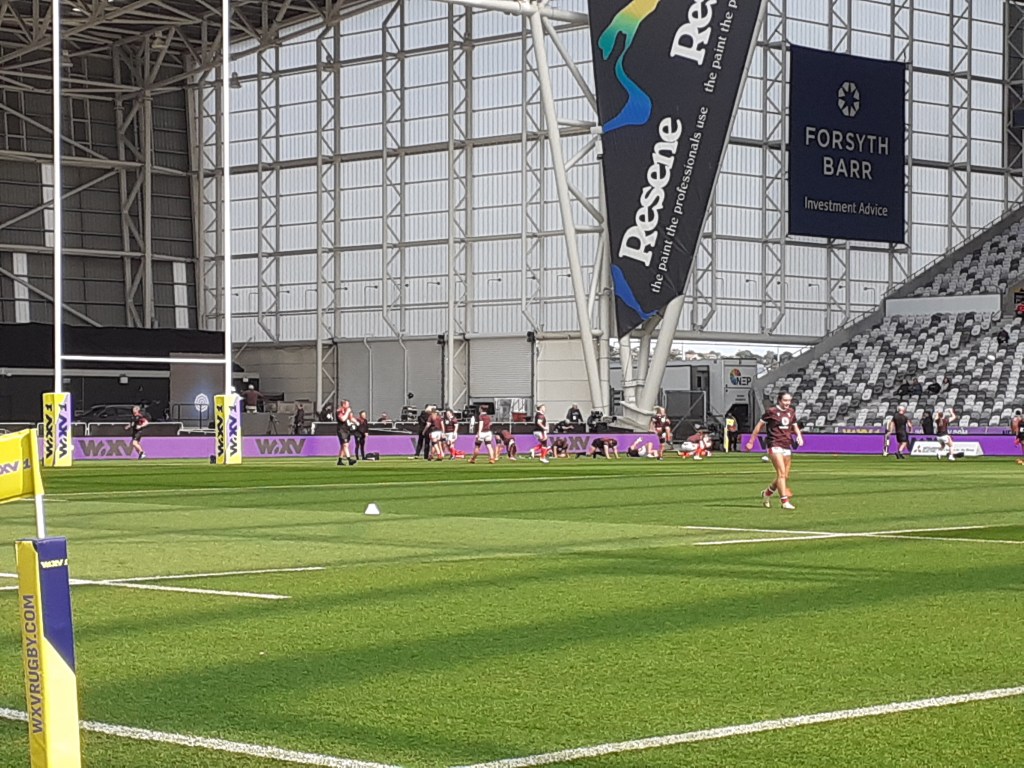
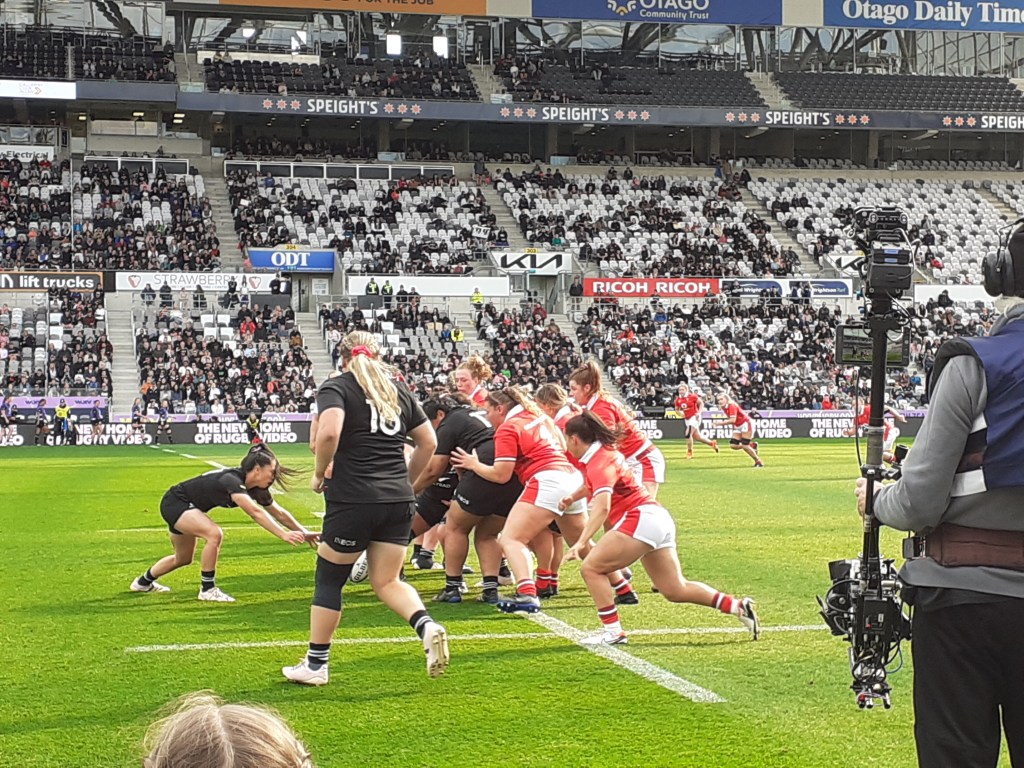
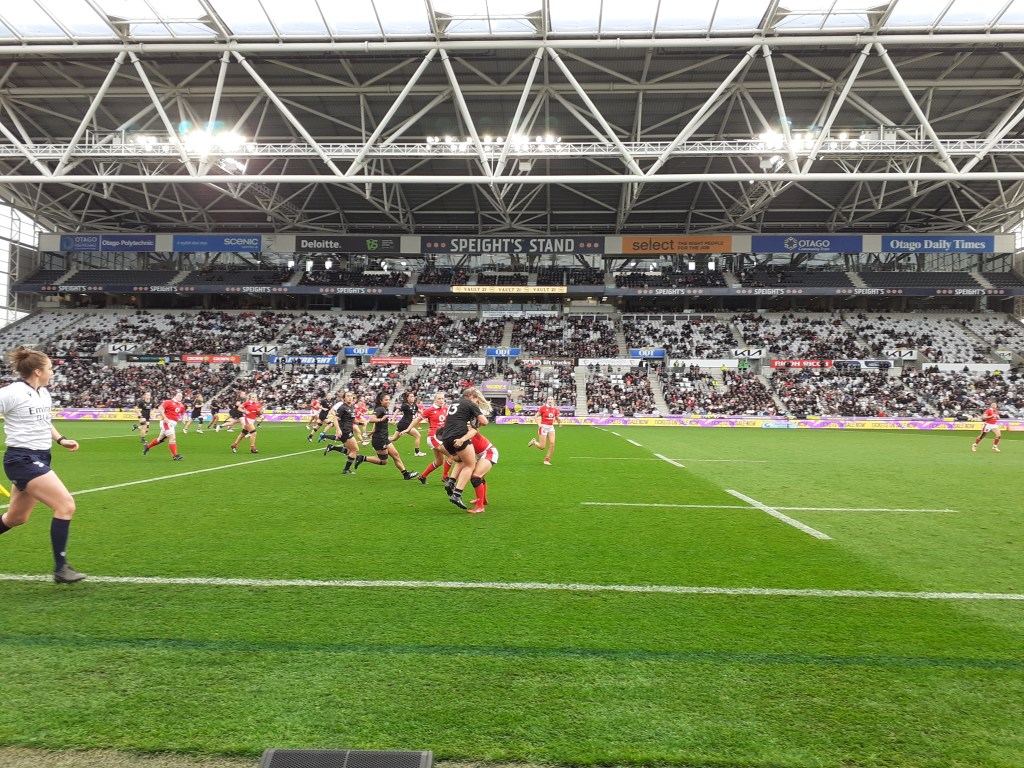
Forsyth Barr Stadium is unique for a few reasons. Firstly, it can seat 28,000 people, but secondly, it’s the only fully roofed, natural grass stadium in the world. This makes it an intimate experience to be seated there. We were seated in line with the goal box and got to see both teams do their training routines, but we were closer to the Swiss team.

New Zealand TV sports celebrities were there to ramp up the crowd, with singing and dancing. I noticed UMC1 started gingerly at first, then he was singing, stomping, and clapping along with everybody else, which was astonishing.

Eventually, the teams were ready and after the national anthems, they got underway. New Zealand was playing left to right, from our perspective. UMC1 quickly noticed that every time the Swiss goalkeeper received a back pass, the crowd shouted, “WWWWWHHHHOOOOAAAA!” Every single time. UMC1 thought this was hilarious!


When New Zealand hit the post in the first half, UMC1 got angry at the referee. His argument was that if the post wasn’t there, then the ball would have gone in. It’s difficult to argue with a passionate 8 year old.

My wife often mentions that I’m not very observant. This is relevant because as I was watching the ball, the referee would stop the game. I’d be curious to know what had happened, only to discover a player was lying on the field and I didn’t even notice them.

Half-time came around, so it was time to pay for some overpriced food. UMC1 wanted some hot chips and ice cream. This was because everybody knows it’s not football without hot chips and ice cream.

After purchasing the food, we were just sitting down as the players were running back onto the field. The second half started with the Swiss goalkeeper still getting hassled with every back pass.


As the game got on, everybody was becoming more vocal. The people behind us mentioned that Norway had destroyed the Philippines in the other pool match, which meant New Zealand could not afford to draw the game; they needed to win to qualify for the Round of 16.

Things were looking desperate, so the New Zealand goalkeeper kept moving into the Swiss goalbox for corners. As you probably already know, the full-time score was 0-0; which meant Switzerland and Norway were through to the Round of 16, so New Zealand and the Philippines were out.

It’s interesting to note that both Switzerland and Norway lost their Round of 16 matches to Spain and Japan, respectively.


While we were walking out of the stadium, UMC1 was sad, but not angry. I was proud of him because I was just annoyed! Anyway, UMC1’s night improved when we managed to find the FIFA double-decker bus and found two seats, on the top level no less!

Even though it wasn’t the result we wanted, UMC1 and I had fun together; even though he threw me under the bus to my wife about not dancing in the stadium. Seriously mate, where are your priorities?! It’s been over a week now, and he’s still talking about the whole experience; the food, the bus, the noise of the stadium, and the game.


We’re still following the FIFA Women’s World Cup, and I’ll be watching as many knock-out matches as I can; especially the semi-finals and final. And speaking of World Cups, the Rugby World Cup starts on 8th September (9th September for me) to 28th October (29th October for me). I’ll be doing some badly written blogs and posts about it soon, so for my non-rugby followers and subscribers, I’m very sorry.

Thanks once again for reading, following, and subscribing to Some Geek Told Me. I’m also on Twitter and Mastodon, where I spout about various things. All cool stuff, mind you. Sometimes. Don’t forget to walk your dog, read a banned book, go watch some FIFA Women’s World Cup football, and I’ll see you next week.