Santa Claus doesn’t stop at my house

This glorious blog has discussed some pretty strange things over the last three years, by peeling back some of my layers of geekdom. Yes, some of those layers are rotten, slimy, and overripe, but occasionally, there is something personal. I was planning on discussing this blog last Christmas, but the FIFA World Cup got in my way; not that I’m complaining. I mean, it’s a World Cup.

Considering Christmas is next week, it’s time to discuss the big fat red man in the room. Not, I don’t mean Fat Albert; I want to talk to you about Santa Claus and why he doesn’t visit our house.

My wife and I disagree about a lot of things, such as Sour Cream and Chives, corn, Rambo, musicals, socks in the bed, vampires, time travel, and the correct level of dodginess for our corner shop. However, there is something we both agree on; our mutual dislike of Santa Claus.

The crux of this blog is this: As parents, we do not advocate or promote Santa Claus, his flying reindeer, or his merry workshop of happy elves.


Credit: Oren neu dag

That’s a bold and unorthodox statement from a couple raising two children, aged 8 and 5 years old. Before I continue though, I need to point out two things that are quite important to our family:

1.) My wife’s birthday is 24th December, so if you’re keeping score, you would realise that’s Christmas Eve.

2.) My wife and I are not perfect parents. We have never claimed that we are, nor will we ever be. I spend too much money on pizza for that, and we also don’t have all the answers.

So, what’s the deal? Are we Grinches? No. Are we hard-core religious nuts? No. Don’t we celebrate Christmas? Yes, we do, just not Santa Claus.

I’ll try to explain, so if you’re a parent of young children, I hope this makes sense.

My wife and I believe in truism for raising our children. This means we try to explain real information and facts about the world, in ways that are age appropriate to them. This can cover diseases, politics, sports, blood, pollution, movies, books, and many more. Basically, we teach the truth about the world to UMC1 and UMC2, in ways that they can understand, considering their different ages.

As they become older, we give them more information and facts. For every question they ask, we give them an answer they can understand. Ultimately, it comes down to this: we don’t lie to our children.

This of course brings us to Santa Claus. As parents who deal with teaching children the truth about the world, are we really going to teach them that Santa Claus is real?! It goes against the foundation of our parenting; we don’t lie to our children, we teach the truth. It sounds heavy and intense, but surprise, surprise, it’s the truth.

Alright, what’s the harm in lying to children about Santa Claus? It’s all about them believing in the magical time of Christmas, so what’s wrong with that? That’s a great question, so I’ll give you a great answer.

I want you to imagine two scenarios. The first scenario is to imagine you’re one of your children, and through whatever means or methods, they learn the truth about Santa Claus. Every child’s reaction is different, but let’s imagine your child has an epiphany: they realise that not only have their uncles, aunties, grandparents, teachers, coaches, cousins, neighbours, doctors, and nurses, have been lying to them, but their parents have as well.

It means the people they are supposed to trust most in the world, have been lying to them their entire life. It also means, that if your child is smart enough to come to this conclusion, then they may start to think about what else have you been lying to them about.

We don’t lie to UMC1 and UMC2 about Santa Claus, because of many reasons. One is that we don’t want them to ever think that a large man in a red suit, that lives at the top of the world, is watching and evaluating their behaviour, through the use of cameras and spies; but also judging them to be worthy of receiving his presents.

Another reason is about the long game. If we are truthful with the boys now and have built up a level of trust between us, then as teenagers or young adults, they will hopefully trust us. If things have gone bad somewhere in their lives, we want them to feel comfortable enough to tell us anything, but that only happens with trust.

With the second scenario, imagine your child has asked for a remote-controlled car or a real horse from Santa, but on Christmas Day, they discover they received a Matchbox car or a My Little Pony. Ok, kids can’t always get what they want for Christmas, but some kids do.

Now imagine your child discovering that their cousin received a jet ski for Christmas, or their neighbour received a real horse as a Christmas present. When asked, how would you explain to your children why Santa would give more expensive gifts to other children, but not to them? Why is he rewarding other children? How would you stop your children from thinking that maybe Santa hates them, or that they’re bad children? Children aren’t stupid, they notice and remember what other children get for Christmas.

So how do we handle Christmas? It’s easy, we tell the truth. We have explained that Santa Claus is a game that some people and families play at Christmas time. We’ve pointed out that Santa is not real, but it’s not our right to ruin the game for other people and children. If other families want to play the Santa Game, they are allowed to, but we don’t need to.

UMC1 and UMC2 know that the Christmas presents they will be receiving will be purchased by us; not because they have been showing good behaviour, but because we love them and respect them enough, not to lie to them. Regardless of their behaviour, they’re still going to get presents from us, because we love and appreciate them.

We’ve been a one-income family for eight years now, but when UMC1 and UMC2 make Christmas lists, they don’t list the things they want to receive; they list the things they want to give other people.

If it’s a Christmas list for my wife, UMC1, UMC2 and I will discuss her interests and presents that she might like. They enjoy Christmas shopping and making things for people, because we have tried so hard to make Christmas about appreciating the people we love, and giving them gifts. Again, children aren’t stupid, because both my boys know they are getting presents, no matter what; and each one has chosen a present for the other one.

We also treat Christmas like a Christmas office party, where we give presents to each other, and to say well done; thank you for all of your hard teamwork this year, and we appreciate you.

I hope this makes sense. Anyway, upon hearing about our anti-Santa stance, people react in different ways. Sometimes they react like you’ve shown them a giant tattoo of a dead baby on your chest; for other people, it’s like they’re hearing a foreign language and they don’t know what to think or say.

And of course, some people, mainly parents and grandparents of young children react just a tad on the negative side. People mainly accuse us of stealing the joy from our children or ruining the magic of Christmas.

Personally, I find this hilarious, because we have taught the boys that there is magic in the world, and it can be found through education and just by living. Like the magic of understanding cephalopods; volcanoes; the immune system; superheroes; magnets; observing insects; building and working with Lego; Star Wars; watching our favourite teams win; rocket launches; or simply eating pizza, while watching one of their favourite movies. I think you can find magic anywhere with children, I just don’t believe that you have to lie to them to find it.

Advocating and promoting Santa Claus works for many families around the world, and that’s alright. It’s just not for us, and it never will be.

If you have young children, do you celebrate Santa Claus? Does anybody agree with me about kicking Santa to the curb? As always, please let me know.

Since next Monday is Christmas Day, I’ll be posting a much shorter blog. My aim this week is to spend extra time with UMC1 and UMC2, but also to catch up on work from my real job that pays the bills, and allows me to purchase pizzas.

Thank you once again for reading, following, and subscribing to Some Geek Told Me. Please don’t forget to walk your dog, read a banned book, watch Scrooged this week, and I’ll see you on Christmas Day.


Te Reo for Lupesey

I dabble here and there with politics on this blog, because I find it interesting and entertaining; yet it can be a flashpoint for some people. I’ve been following politics from around the world, especially the Republicans, One Nation, and the Tories, and laughing at their insanity for promoting climate change deniers, anti-vaxxers, conspiracy theories, and book banning/burning. Sadly, in my hubris and arrogance, I now have to deal with the concept that homegrown clown school drop-outs, will be running my country.

That amazing and beautiful transition now brings us to Lupesey. Oh, Lupesey, Lupesey, Lupesey. We’ve had chaos, eye-rolling, repeals, conspiracy theories, media leaks, culture wars, rants, anti-wokeness, misogyny, rollbacks, shenanigans, along with nepotism, and it’s only been two weeks; and that’s not counting the six weeks of awful negotiation.

For all you wonderful people who have no idea or care who Lupesey is; and like I said last week, I envy you, we have a new conservative coalition government in New Zealand, which is like a three-headed mutant baby born from our general election on 14th October.

Our new government is made up of three right-wing conservative parties, National, ACT, and New Zealand First. The three leaders of these parties are our newly minted Prime Minister Christopher Luxon (National), Deputy Prime Minister Winston Peters (New Zealand First), and Future Deputy Prime Minister David Seymour (ACT); which is the triumvirate of Lupesey.

Lupesey is upset for a great number of reasons, and one of them is that they are not too keen on the use of Te Reo Maori for the names of government departments. One idea floated by our new Prime Minister, suggested that having English and Te Reo names for government departments and agencies is too confusing for the average Kiwi. I find this hilarious, considering Te Reo Maori was the first language of our nation. Lupesey loves talking about Te Reo, just not actually using Te Reo.

Lupesey has already explained their contradictory positions over multiple policies, so I thought it would be nice to sit down and educate Lupesey on some Te Reo words that are relevant to New Zealanders now, as well as including words people are going to need to use because Lupesey wants to drag us back to the 1950s.

With me so far? Great! Let’s begin. Spoilers, if you’re a Lupesey supporter, you won’t enjoy this. Sorry, not sorry. Also with Te Reo, there can be several different words describing the same word.


Aotearoa: New Zealand

ariā kakai: conspiracy theory

aroha: love

hahoretanga: poverty

hamupaka: sham

hapanga: redundancy

heahea: idiot

hikareti: cigarettes

hori: lie

hunga kore mahi: unemployment

hunga pāpāho: media

huringa āhuarangi: climate change

kaiako: teacher

kaikaiwaiū: betrayal

kaituku: donor

kaituku rīhi: landlord

koranehe: fossil fuel

korekiko: ineffective

kōrero parau: to tell an untruth

korotake: incompetence

Kotahitanga o Ngā Iwi o te Ao: United Nations

kuīni whakarākei: drag queen

kutukutu ahi: nonsense

manapori: democracy

mate pukupuku: lung cancer

Minitatanga mō ngā Wāhine: Ministry of Women’s Affairs

nanakia: cruel

oati teka: false statement

parau: deceit

pātaka Kai: food bank

pēkerapu: bankruptcy

penihana: unemployment benefit

pōrewarewa: imbecile

pōrori: stupid

puhipuhi: smoking

pūtaiao: science

rongoā āraimate: vaccination

rorirori: halfwit

rūkahu: propaganda

rūpahu: mislead

Takatāpui: someone belonging to the rainbow community or LGBTQI+

tamariki: children

taupoki: cyclone

Te Aka Whai Ora: Māori Health Authority

Te Kāhui Tika Tangata: Human Rights Commission

Te Manatū Hauora: Ministry of Health

Te Manatū Māori: Ministry of Māori Affairs

Te Manatū mō Ngā Iwi o Te Moana-nui-a-Kiwa: Ministry for Pacific Peoples

Te Manatū mō te Taiao: Ministry of the Environment

Te Manatū Pūtaiao: Ministry of Research, Science and Technology

Te Tāhuhu o te Mātauranga: Ministry of Education

Te Tari Pūreke: Firearms Safety Authority

teka: lying

tipatipa: erroneous

ture kore: chaos

waea pūkoro: mobile phone

waipuketanga: flooding

Waka Kotahi: NZ Transport Agency 

Whakahaere hauora o te ao: World Health Organization

whakahāweatanga: prejudice

whakapāha: apology

whakapikinga utu: inflation

whakapōhēhē: misinformation

whakatahe: abortion

whāwhāki: leaks


I’ll be checking in on Lupesey over the next three years because my Spidey-Sense is telling me that Lupesey’s nonsense will make them a one-term government. Is anyone having buyer’s remorse yet? Don’t worry, Lupesey will give you ample opportunity to experience it.

Alright, that’s it for another week. I’m sorry if this one was a bit weird, but I’m sick of Lupesey already. Thank you once again for reading, following, and subscribing to Some Geek Told Me. Please don’t forget to walk your dog, read a banned book, and I’ll see you next week.

Also, please don’t ever tell your advertisers to go fuck themselves. Not the smartest move in the world, but what do I know; I have no advertisers.


Happy Third Birthday to Me!

Well, wouldn’t you know it? Some Geek Told Me turned three years old on 1st December, so I’m officially a preschooler now, and all of the craziness that goes with that. Blackmailing people into being my friend, throwing food under the table, telling my parents they’re not my friends anymore, and having meltdowns at the supermarket. Cool.

So what does it mean for Some Geek Told Me to have another birthday? Simply put, this random little blog is important to me. I’ll explain that later on, but for now, it’s time to look back and reflect on the last 12 months, and ask the eternal question, “Have I learned anything?”

Spoilers, the answer is not a lot.


Credit: iStock

My observations of life and social media for the last 12 months, will be in random order, very much like the topics at Speakers’ Corner. Oh, I’m writing poetry now, that’s odd.

  • Lying can get you expelled from government, just as easily as lying can get you into government. I’m talking to you George Santos and Lupesey.1
  • After another 12 months of blogging, sadly I have not earned a pay raise. I’m still on $0.00 per hour.
  • Discovering your dog asleep on your pillow, after they have been playing in the rain, is disturbing.
  • The war in the Democratic Republic of Congo is showing no signs of ever ending.
  • Election interference has never been as funny. Thanks, John Oliver.
  • I’m still proofreading and editing my work at 11 pm, and still doing a crap job at it.
  • Whether UMC1 and/or UMC2 go to bed early, on time, or even later, they still wake up at the same time. I still haven’t managed to work out whether this is a positive or negative thing.
  • After 3 years and 157 posts, my writing is still as awful as the day I started.
  • Even though I live in New Zealand, there’s a house in my town with an official Trump 2024 flag, hanging on the outside. WTF?!
  • Going to the cinema and purchasing two adults and two children’s tickets, along with food and drink, requires a bank loan.
  • Vladimir Putin still needs to read an atlas.
  • When reading one of my posts, my wife still thinks I’m going to be funny. The joke’s on her because I’m not.
  • Listening to UMC2 use new words correctly in context, can be quite unnerving.
  • Someone thinking that a military solution in the Middle East would be a good idea, needs to talk to their Human Resources and Public Relations departments.
  • Who would have thought that the CEO of SpaceX and Tesla, as well as the CEO of X, formerly known as Twitter, would be complicated?
  • UMC1 loves to point out technicalities, just like his dad and Vulcans.
  • There’s only an estimated population of 1000 pūteketeke in New Zealand. Thanks, John Oliver, for pointing that out.
  • Changing your dog’s diet, results in some really disgusting farts.
  • I’m enjoying reading manga far more than American comics currently.
  • The 2023 Rugby and Cricket World Cups have aged me terribly.
  • And just like last time, I’m still trying to promote the blog, without promoting the blog. What an idiot!

There’s probably some other insightful stuff that I have discovered over the year, but like Leonard Shelby in Memento, I’ve forgotten it. Some Geek Told Me will enter a new year, full of strange and weird things to discuss. The stupid ideas are endless.

And speaking of stupid, this blog is an outlet for me. Granted it’s simple and awful, but it still matters to me. Thank you once again for reading, following, and subscribing to Some Geek Told Me. Please don’t forget to walk your dog, read a banned book, go and lose at UNO to a 5-year-old, and I’ll see you next week.


1 Lupesey is the term for the new triumvirate in New Zealand politics, featuring Christopher Luxon, Winston Peters, and David Seymour. If you don’t know who they are, I envy you.

Tour of the Solar System: Ceres

Guess what’s back, back again?
Some Geek Told Me’s Tour of the Solar System, tell a friend,
Guess what’s back? Guess what’s back?
Guess what’s back?

The world’s worst Solar System tour is back for another week, it’s Some Geek Told Me’s Tour of the Solar System! As always, if you want to catch up on our previous inadequate tour stops, you can find them here:

1.) Meet the Family

2.) The Sun

3.) Planets vs. Dwarf planets

4.) Mercury

5.) Venus

6.) Earth

7.) The Moon

8.) Mars

9.) The Asteroid Belt

If you remember from last month, we had left Mars and journeyed into the vast expanse of the Asteroid Belt. It’s within this region that we arrive at our destination: Ceres.


Ceres
Credit: NASA

Ceres? What in the hell is Ceres? There’s no planet in our Solar System named Ceres!”

I don’t need to be a Omega Level Mutant or have access to a TARDIS, to know what you’re thinking. Yes, you are 100% correct. There is no planet in our Solar System named Ceres. The catch is that Ceres is actually a dwarf planet.

If you’re confused about the differences between planets and dwarf planets, our third tour stop was about that very topic.

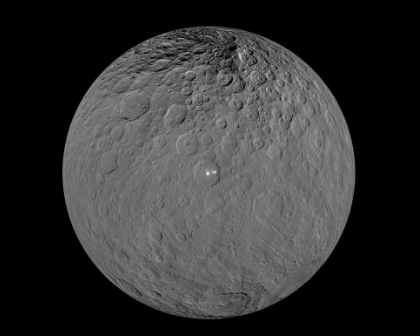
So…Ceres. Where do we begin? Apart from Bizarro World and using a DeLorean time machine, let’s start at the beginning. At our best understanding, Ceres was formed around 4.5 billion years ago, which puts it near the time of the formation of the inner or terrestrial planets.

Scientists believe that Ceres didn’t form in the Asteroid Belt, or even inside Mars’ orbit, but rather somewhere between Jupiter and Saturn. Over hundreds of millions of years, Ceres migrated and settled in the Asteroid Belt, after taking out a long-term lease.

Fast forward to 1st January 1801, where an Italian Catholic priest called Giuseppe Piazzi, discovered Ceres. This has sparked debate over the years, as to what Ceres is and how it should be classified, which has included planet, asteroid, and comet; with the final classification of a dwarf planet in 2006. This makes Ceres the only dwarf planet inside Neptune’s orbit, and the closest to our local star.

Ceres is named after the Roman goddess of agriculture, which is also the origin of the word cereal. Someone really needs to name a planet Coco Pops, because that would be cool. Ceres is also single, as it has no rings, as well as no moons.

As you can clearly imagine, Ceres is a lot smaller than Earth, Mercury, or the Moon. Ceres has a diameter of 939 km, which means out of the five recognised dwarf planets in our Solar System, Ceres is the smallest. Having just said that, Ceres makes up 25% of the total mass of the Asteroid Belt.

Given Ceres’ poky size, it still orbits the Sun, with an average distance of 413 million kilometres, which takes 22 minutes for the Sun’s light to reach Ceres; as opposed to Earth’s eight minutes. Ceres’ orbital speed is 17.9 km/s, which is still slower than UMC2 running to eat chocolate.

1,682 Earth days, or roughly 4 years and 6 months, is the length of time it takes Ceres to orbit the Sun, which equals one year. However, one day on Ceres is only 9 hours, because of its rotation. Imagine a day that’s only 9 hours!

Ceres also has a few quirky aspects to it. Its axis of rotation is slightly tilted compared to its orbit around the Sun. This allows Ceres to avoid experiencing seasons, unlike Earth and other tilted planets, which is quite bizarre. Given its small size, Ceres is also covered in more craters, than pimples on a teenage boy’s face. I’m allowed to say that because I’ve lived that experience.

Ceres does have an atmosphere, but it’s very thin. Traces of water vapour were detected by the Dawn spacecraft in 2015, though the leading hypothesis is that it’s caused by cryovolcanoes, which is an awesome term for “ice volcanoes.” Instead of lava spewing out of the vents, cryovolcanoes erupt methane, ammonia, or water, but because of the cold environment, the vents eject plumes and vapour. This geological process also occurs on many other moons in the Solar System, so it’s not unheard of.

If any microorganisms do live on Ceres, they would have to be able to survive the crippling temperatures. They can range from −73 °C (−100 °F) in the daytime on the surface, to -143 °C (225 °F). That’s not exactly holiday weather, is it?

Scientists are curious about Ceres for multiple reasons. It’s estimated that Ceres has a mantle of water ice, which means, potentially, Ceres could be made up of 25% water. Using the latest gadgets from NASA like Dawn, gave us information and images about Ceres’ ice craters and cryovolcanoes. This gives us the tiny chance there could be organic life in the form of microorganisms, living in the water ice.

This is exciting for two reasons:

1.) Just like the Moon, having another planetoid like Ceres with ice reserves is invaluable for a spacefaring civilisation. This is because the water could be mined and used for either rocket fuel or liquid water for astronauts and their crops.

2.) The possibility of finding life outside of Earth is strong, if liquid water can be found. One of the best places in our Solar System for this is in the form of interior oceans and cryovolcanoes, and Ceres is a great place to look.

The funny thing is, whenever I think of humans drinking water from another source, other than Earth, I think of the Doctor Who episode, The Waters of Mars. Even now, The Flood is still terrifying!

Ceres gets a bum rap, as it’s often left off Solar System charts or diagrams, which to this geek, is utterly crazy, purely because Ceres was discovered 45 years before Neptune! Anyway, there’s a lot more to Ceres, but alas, our time is up for this week. What’s your favourite Ceres fact? As always, please let me know.

We are making a slow and steady march to Christmas, which is always equal parts interesting, and insanity. I’ve a got Christmas blog coming soon, but not next week. This is because on 1st December, Some Geek Told Me will be turning three years old…and I don’t know what that means.

Thanks once again for reading, following, and subscribing to Some Geek Told Me. Please don’t forget to walk your dog, read a banned book, bend your knees when picking up your comic box, and I’ll see you next week.


Will the real Cricket World Cup trophy please stand up?

I love cricket, even though I’m a crap batter. Cricket is a crazy and confusing sport at the best of times. Seriously, it really is, because everything in the video below is true.

I told you, cricket is crazy. Have you ever tried to explain the rules of cricket to someone; especially someone from a country where cricket is not popular? It’s madness!

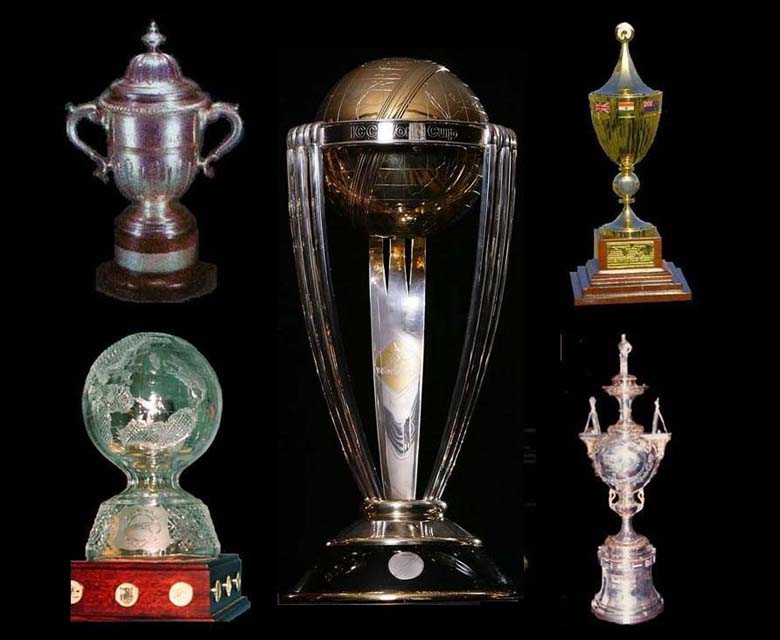
But do you know what is also madness? The Men’s Cricket World Cup Trophy. On Sunday 19th November 2023, Australia lifted the Men’s Cricket World Cup for a record 6th time. The 2023 Cricket World Cup was the 13th edition of the competition, but it was only the 7th time the ICC Cricket World Cup Trophy had been used. In total, there have been five different Cricket World Cup Trophies!

I told you that cricket is crazy!


Credit: Cricket Corner

1975-1983 (Prudential World Cup Trophy)

The first Men’s Cricket World Cup was hosted by England in 1975, and the main sponsor of the tournament was Prudential, which is a British multinational insurance company. This won’t come as a huge surprise that the trophy was named The Prudential Cup, so the tournament and trophy were known as the same thing.

The West Indies won the tournament in 1975, beating Australia in the final, thus being the first team to win the World Cup and lift the trophy. England hosted the tournament again in 1979, with the West Indies defeating England in the final, and in 1983, India defeated the West Indies in the final, to become world champions for the first time.

The trophy now sits at the Lord’s cricket museum, London, England.

Prudential World Cup Trophy Credit: ICC

1987 (Reliance World Cup Trophy)

The 1987 World Cup tournament was moved outside of England for the first time because India and Pakistan were the co-hosts. This World Cup had another change, which was over the sponsorship rights. Reliance Industries, which is an Indian multinational conglomerate was the new sponsor.

This resulted in the World Cup being known as the Reliance World Cup, as well as getting a brand new trophy; which you guessed it, was known as the Reliance World Cup Trophy. This trophy was gold-plated and covered in diamonds, which was estimated to have cost around 600,000 Indian rupees, and adjusted for inflation, around 8 million rupees at today’s price.

Australia became world champions for the first time by winning the final against England, and they remain the only country to have won this trophy. I’m unsure of its location, but I would guess it would be held in some cricket museum in Australia.

Reliance World Cup Trophy
Credit: ICC

1992 (Benson and Hedges World Cup Trophy)

The 1992 World Cup moved to the Southern Hemisphere for the first time, with Australia and New Zealand co-hosting the tournament. History likes to repeat itself because the sponsorship and naming rights changed again.

Benson & Hedges, a cigarette conglomerate of all things, became the new sponsor, along with renaming the tournament and a new trophy. The Benson & Hedges World Cup Trophy is a Waterford crystal globe on a wooden base, which was accompanied by the logos of all nine teams. This trophy was rumoured to have cost around £8,000, and adjusted for inflation, around £16,900 at today’s price.

Pakistan won the final, defeating England by 22 runs. There are three facts from the final:

1.) This was Pakistan’s first and only World Cup title.

2.) Pakistan were the only team to have ever won the Benson & Hedges World Cup Trophy.

3.) The trophy is situated at the National Cricket Academy, Lahore, Pakistan.

The Benson & Hedges World Cup Trophy Credit: ICC

1996 (Wills World Cup Trophy)

In 1996, the Cricket World Cup returned to the subcontinent, with India, Pakistan, and Sri Lanka co-hosting the tournament. By now you would have noticed the tournament’s new name; Wills World Cup, named after another cigarette company, Wills, after they won the sponsorship and naming rights.

The newly named and designed Wills World Cup Trophy was won by Sri Lanka, defeating Australia in the final by 7 wickets. Just like the 1992 tournament, some facts are important about this trophy.

1.) This was Sri Lanka’s first and only World Cup title.

2.) Sri Lanka were the only team to have ever won the Wills World Cup Trophy.

3.) The trophy is situated at the Sri Lanka Cricket Museum, Colombo, Sri Lanka.

Wills World Cup Trophy
Credit: Sri Lanka Cricket

1999-Present (ICC Cricket World Cup Trophy)

24 years after the first tournament, the ICC (International Cricket Council) decided to change things up and award their own trophy. With England, Wales, Scotland, Ireland, and the Netherlands co-hosting, the ICC unveiled the ICC Cricket World Cup Trophy.

This trophy has been constructed from gold and silver, and the centre piece is a golden globe, which is held up by three columns. The symbolism here is represented with the columns, which are shaped as stumps and bails; as well as batting, bowling, and fielding, the three fundamental aspects of cricket. The globe also represents a cricket ball.

The trophy’s height is 60 cm and the weight is approximately 11.0567 kilograms. The names of the previous winners are engraved on the base of the trophy, with space for more. I think the trophy was valued at around £25,000, but I could be wrong.

From 1999, the winning team of each tournament is awarded this trophy; but there’s a catch. As Uddipta Banerjee explained:

“The original World Cup trophy remains at the ICC headquarters in Dubai. A replica of the trophy, which is identical to the original in all aspects apart from the inscriptions of the previous champions, is awarded to the winning team of the Cricket World Cup and remains in their possession.”

The ICC Cricket World Cup Trophy
Credit: Reuters

So, will the real Cricket World Cup trophy please stand up? You have five to choose from. Alright, that’s another blog finished for yet another week, so I hope you’ve enjoyed it. And speaking of enjoying things, guess what’s coming back next week? I’ll give you a clue, Brian May, Michelle Thaller, Bill Nye, Neil deGrasse Tyson, Brian Cox, and Becky Smethurst, would want nothing to do with it.

That’s right, our Tour of the Solar System continues! Yay. Thanks once again for reading, following, and subscribing to Some Geek Told Me. My third anniversary of running New Zealand’s 5th least favourite website is coming up soon, so that’s going to be an achievement of a sort.

Anyway, please don’t forget to walk your dog, read a banned book, go and lose at Risk, watch out for the Fagradalsfjall volcano, and I’ll see you next week.


Geographical Misconceptions: Part Two

I had a meeting a few weeks ago with Some Geek Told Me’s Social Media Consultant and Creative Director. I’ll admit that the discussion was fairly one-sided, however, a decision was made that another Geographical Misconceptions blog needed to be created. The first list of geographical misconceptions can be found here, but it’s nearly two years old. That seems like a long time, though I feel that’s the same length of time it takes a Greenland Shark to blink.

To clarify what a geographical misconception means; at least to me, is a piece of information that people believe to be true, but actually is false.

Just like Superman has various weaknesses, my weaknesses are disinformation, misinformation, and misconceptions.1 Whenever I hear one of those three types of garbage, my left eye twitches, and my right foot starts tapping. This is me fighting the urge to say something, until I fail, as always, to shut my big fat mouth.

The first list had seven geographical misconceptions, but for the sequel, I’m only going for five. So without wasting any more time, I’ll quote the creator of New Zealand’s fifth least favourite website:

Here are some geographical misconceptions that, to my eternal shame, upset me.


Image by Gerd Altmann from Pixabay

1.) Europe is a country

Very much like the misconception of Africa being a country, this falsehood is very convincing to some people. Their argument would be that Europe has its own currency (Euro €), and its own flag, so it must be a country. Oh, alias, the supermarket is open, but nobody is shopping.

The Euro (€) is a form of currency that’s used in 20 of the 27 countries in the European Union (EU). This means a €20 note you received in Germany, could be spent in Spain or Italy; it has the same value.

There are some countries, microstates, and territories in and outside of Europe that use the Euro as well. However some countries like the United Kingdom, Bulgaria, Croatia, Czech Republic, Denmark, Hungary, Poland, Romania, and Sweden are located in Europe, but they still use their own currency.

As for the flag, they would be referring to the EU flag, and it represents the union of the 27 countries of the EU. As the United Kingdom is a great example, not every country in Europe is in the EU.2

Image by Ralph from Pixabay

Europe is not a country, simply because it is a continent.

2.) Mount Kilimanjaro is in Kenya

I can understand why this misconception exists, I really do, but it’s still wrong. Everybody knows that Mount Kilimanjaro is the highest mountain in Africa and that it is located in Kenya, right? Not quite. Mount Kilimanjaro is the highest mountain in Africa, but it’s not in Kenya; it’s actually in Tanzania.

Kenya shares a border with Tanzania to the south, and Mount Kilimanjaro is extremely close to the border. However, 100% of the mountain is on the Tanzanian side of the border. A lot of famous photos advertising Mount Kilimanjaro have been taken in Kenya, but make no mistake, Mount Kilimanjaro is not in Kenya, it’s in Tanzania.

Image by Greg Montani from Pixabay

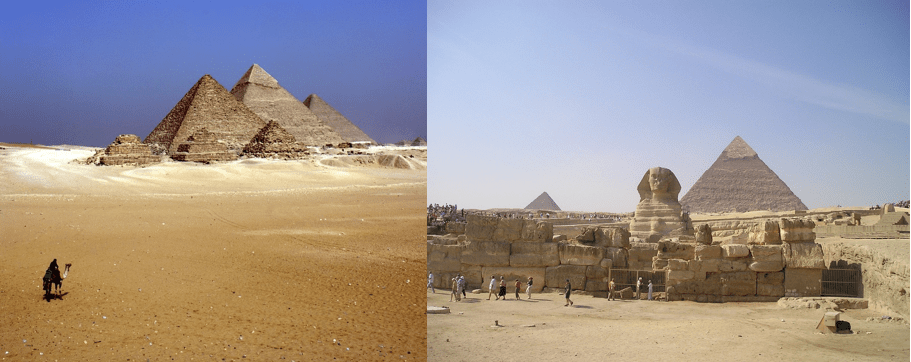
3.) The Giza necropolis is in the middle of a desert

Let’s clear something up first. The Giza necropolis refers to the Giza Plateau, which includes; along with other ancient structures, the Pyramids of Giza and the Great Sphinx of Giza.

We’ve all seen amazing photos of the Pyramids and the Sphinx, like these for example:

Image by Pexels and Simon from Pixabay

The photos give the impression that the Giza necropolis is in the middle of a desert, well away from human civilisation, but the truth is always stranger than fiction. The Giza necropolis is extremely close to the city of Giza, which is also known as Greater Cairo, so it’s actually a short bus ride from the city.

Credit: Robster1983 
Credit: Al Jazeera
Credit: ISS/NASA

So there you go, these ancient structures are over 4,000 years old, but they’re actually close to roads, apartment blocks, hotels, and a Pizza Hut.

4.) Mount Everest is the tallest mountain on Earth

This misconception is a technicality, but like any good Vulcan, we should embrace it. Mount Everest is located in the Himalayas, along the China–Nepal border. From the base to the summit, Mount Everest measures 8,848.86 m (29,031.7 ft). It’s the roof of the world, there is no other point on Earth that is higher. So naturally this would mean that Mount Everest would be the tallest mountain on Earth, correct?

Mount Everest by Papa Lima Whiskey 2

That’s not entirely correct. This is confusing, but on the island of Hawaii, which makes up one of the several islands of the US state of Hawaii, there is a volcano named Mauna Kea. Above sea level, Mauna Kea measures 4,205 m (13,796 ft).

Mauna Kea by Pinterest

But here’s the technicality; over 50% of Mauna Kea is actually underwater. From the underwater base to the summit, Mauna Kea is actually 10,211 m (33,500 ft), which is more than 1.3 km higher than Mount Everest. This makes Mauna Kea the tallest mountain in the world because it is taller than Mount Everest; measured from the base to the summit.

There is nothing wrong with saying Mount Everest is the tallest mountain in the world; provided you say: Mount Everest is the tallest mountain in the world, above sea level. By saying it’s above sea level, it makes the statement more accurate. However as I previously said, this misconception is a technicality, because Mauna Kea is actually taller.

5.) Great Britain and the United Kingdom are the same country

This one really rips my undies. It’s simple, but to explain this better, I’ll use some maps.

The countries we are discussing involve England, Wales, Scotland, Northern Ireland, and the Republic of Ireland.

Credit: Abode.

Great Britain (territorial and legal term) is a coalition made up of England, Wales, and Scotland.

The United Kingdom of Great Britain and Northern Ireland (territorial and legal term) is made up of surprise, surprise, England, Wales, Scotland, and Northern Ireland.

The British Isles (geographical term only) consists of England, Wales, Scotland, Northern Ireland, and the Republic of Ireland.

Credit: The Times.

Great Britain and the United Kingdom are not the same country.

There are so many more geographical misconceptions, that I’ll have to badly write another list. I’ll even attempt to tackle some historical misconceptions one day. Alright, that’s it for another week. Thanks once again for reading, following, and subscribing to Some Geek Told Me. I’m also on Twitter and Mastodon, so drop by and make fun of me for not getting paid for this.

Please don’t forget to walk your dog, read a banned book, donate to the Gaza Humanitarian crisis, watch the Cricket World Cup semi-finals and final, and I’ll see you next week.


1 I know I didn’t list Sour Cream and Chives. I can and will never forget my original nemesis.

2 Give us a B, give us a R, give us an E, give us a X, give us an I, and give us a T. What does it spell? DISASTER!

Every day is the same: Movie Edition

People reliving the same day over and over again is not something new to the human experience.

It could be playing against a particular person or team, already knowing that you’re going to lose the same way, just like all the other times you have tried. It could be a new scandal rocking the government, but in reality, it’s an old one because it just keeps happening. It could be having an argument with the same person over the same thing, time, and time, and time again.

There are various ways to describe this experience of reliving the same day, again, again, and again. The first is an extreme form of déjà vu; which I feel deserves a blog post all on its own. Another is having a full-time job; every day is the same as the previous one. Another example is a time loop.


Living in a time loop could bring a plethora of emotions to the surface for a person, whether they are positive or negative, or in some cases, both of them.

Wait a minute Scott, what cases are you talking about?

I’m glad you asked. By the way, you ask amazing questions, well done.

Right, where was I? Of course, the list. Actually reliving the same day in reality would be as terrifying and dangerous as standing up at a women’s rights conference and booing. However, watching someone else work through their emotions during this traumatic time is a lot more entertaining.

I’m not an expert on pop culture, which is abundantly clear because of the lack of imagination in my writing, but also because I have not seen every movie in existence.

Having just said that I have made a list of some of my favourite movies that deal with time loops. As I ignore the sound of trumpets while I announce this, no Some Geek Told Me list would be complete without at least one exception!

WARNING! SPOILERS AHEAD!


Groundhog Day (1993)

Let’s start with the most famous time loop movie of them all; Groundhog Day. Phil Connors (Bill Murray) is stuck in Punxsutawney, Pennsylvania, USA. It’s 2nd of February, Groundhog Day, and Connors is trapped in a time loop. No matter what happens to him during that day; no matter what, he wakes up in his bed unharmed at the inn at 6 a.m. on the 2nd of February.

Since the day is reset at 6 a.m., Connors remembers everything, but to the rest of the citizens of Punxsutawney, it’s the 2nd of February for the first time. You watch Connors experience every human emotion possible throughout his time in Punxsutawney, all the while trying to achieve a perfect day with his producer, Rita Hanson (Andie MacDowell).

When you meet Connors for the first time, he’s an arse, but as the movie moves forward, you start rooting for him. He slowly starts to change, which means he starts to care about the town. I’ve always liked this movie because the concept is simple and the dialogue is funny as hell.

Edge of Tomorrow (2014)

Based on the manga All You Need Is Kill, Edge of Tomorrow is a lot better than you think it is; it’s criminally underrated. The short version of this movie is that William Cage (Tom Cruise) is involved in a war with aliens named Mimics, that have invaded Europe.

Cage is killed during a battle after he kills a special type of alien. Some of the alien’s blood enters Cage’s body and after he dies, he wakes up on the previous day, unharmed. Cage retains the memories of the previous day, and with the help of Rita Vrataski (Emily Blunt), he learns the truth: every time he dies, he resets the day. And some of Cage’s deaths are hilarious!

As the movie progresses, and just like Connors in Groundhog Day, Cage starts to change. He starts to become an excellent soldier, but also a great leader. The concept of constantly dying to reset the day to win a war, brings a lot new level of intensity to a film that has amazing special and practical effects. Live. Die Repeat.

Happy Death Day (2017) and Happy Death Day 2U (2019)

Time looping with a masked serial killer. That is the best way to describe Happy Death Day and the sequel, Happy Death Day 2U. Theresa Gelbman (Jessica Rothe) wakes up in a strange dorm room on her birthday. Later that day, she is murdered by a person wearing a mask of her school mascot.

Gelbman then wakes up in the same dorm room, on the morning of her birthday. As the film moves along, Gelbman understands that every time she is murdered, she wakes up in the same place, at the same time. This allows Gelbman to investigate the killer’s identity, but to do so, she needs to keep dying until she learns the truth, and her deaths become very creative.

Just like Connors and Cage, Gelbman retains her memories of the past day, but nobody else. And just like Cage, Gelbman needs to die to reset the day. However there is a difference: every time she wakes up in the time loop, she is unharmed, but her body has remembered the damage, as her body shows evidence of recovering injuries.

Added that the sequel is even crazier than the original, these two films have taken the time loop genre to places that I’m ashamed to say that I enjoyed.

 Lego DC Comics Super Heroes: The Flash (2018)

I bet you thought I was going to discuss The Flash (2023) and not a Lego movie, right? The Joker is attacking Metropolis with laughing gas and a fun cannon, so the Justice League is out to stop him. The problem is that Flash is running late because the fastest man alive is always late!

Flash arrives and saves the day, but is drawn into a race with another speedster. Flash wakes up in his room, and just like the same morning, he is running late. Flash soon realises that every time he saves everybody, he ends up racing the strange speedster at the end, then he wakes up in his room on the same day.

Flash is caught in a time loop, and the only person who knows what is going on or could help him break out of it is the strange yellow speedster. But Flash has to catch him first! I think the actual time loop section of the film is quite small, but it’s a plot device to set Flash up for the rest of the film.

This version of a time loop is different from the others, because it’s deliberate, courtesy of the Reverse-Flash!

UMC1, UMC2, and I think it’s hilarious watching Flash go from a happy, positive, and optimistic character, to someone angry, jaded, and desperate to break free of the time loop. We love this movie because Flash is one of UMC2’s favourite superheroes. It has super speed fights, time loops, milkshakes, and a Clown Batman, or is that a Batman Clown?


And here are some honorary mentions:

Run Lola Run (1998)

Primer (2004) 1

Premature (2014)

The Final Girls (2015)

Miss Peregrine’s Home for Peculiar Children (2016)

Naked (2017)

Palm Springs (2020)


And now for the exception; it’s not a movie, or about a traditional time loop. However, it needs to be mentioned, because when my wife and I saw it, we were gob smacked by its originality.

Doctor Who: Season 9-Episode 11: Heaven Sent (2015)

I’m not going to give too many spoilers for this fantastic episode, because I would rather you discover it for yourself. The Twelfth Doctor (Peter Capaldi) wakes up in a teleporting tube, which appears to be inside a castle of some sort. He has no idea how he got there, how long he’s been there, or why he’s there, but he’s going to find out!

The Doctor soon discovers that he is being hunted, very slowly by a cloaked figure that never stops. The Doctor also learns that the castle is in the middle of an ocean, with no visible means of escaping. As the episode goes on, the Doctor slowly starts to learn, that somehow he has already been there before. He’s there for a very special reason, and more importantly, he has a job to accomplish.

Heaven Sent is easily the best episode of Season 9, if not one of the best episodes of Doctor Who or any television show ever. It’s a great example of why the character is beloved by fans, but also the extraordinary creativity of the production team.


Did I miss your favourite time loop movie out? As always, please let me know. Well, that’s another rant for another week. Thanks once again for reading, following, and subscribing to Some Geek Told Me. And just like last week, please don’t forget to walk your dog, read a banned book, donate to the Gaza Humanitarian crisis, and I’ll see you next Monday.


1 Not technically a time loop movie, but it does have time travel with loops.

I Bleed Black

I’m starting with an apology, because this blog is quite shorter and stranger than usual. To expand on this, I’m going to discuss three things today, so hopefully someone can relate to this.


1.) Let’s rip that plaster off now. As you may or may not know, I’m somewhat of a New Zealand rugby supporter. I’ve said this before, but I’m a product of my environment. That being the case, the All Blacks lost the Rugby World Cup Final to South Africa 12-11 on Sunday morning (NZ time), so I’ve been working through a lot of emotions. I’ve been here before, so the emotions aren’t new.

I’m not going to talk about the game, the referee, or the TMO. When I’m ready to talk about these things in a semi-literate way, I will; just not today.

I acknowledge that South Africa won the final, and the All Blacks did not. Congratulations to the Springboks for being the first team to win the William Webb Ellis trophy for a record fourth time.

2.) I travelled to Dunedin on Saturday to watch the Black Ferns vs. Wales, which was part of the WXV1 tournament. I suffered the car trip with my wife, UMC1, and UMC2; and for those unfamiliar with UMC1 and UMC2, they’re my sons: Unmatured Clone 1 (8 years old) and Unmatured Clone 2 (5 years old).

The boys loved it. UMC2 brought his yellow budget binoculars to watch the game and got some hot chips, so he was stoked with the experience. UMC1 had a blast shouting and cheering, as well as calling out set pieces and penalties. The Black Ferns won 70-7, which was quite entertaining and amazing.

Here are some of the photos. I’m sorry about the quality, but I’m a crap photographer.


The Forsyth Barr Stadium in Dunedin
We got to the stadium very early!
Shameless Mitre 10 advertisement
The Black Ferns warming up
The Black Ferns still warming up
The Welsh had to warm up as well
A Welsh throw in at the line-out
Up close and personal at a ruck
Some huge tackles were going into this game
More tackling
More rucks
I think this line-out photo is the best one

This is the Black Ferns’ Haka

3.) So what’s the point of this short blog? I admire a range of different people for various reasons, so I view them as heroes. This covers people that are alive or dead; male or female and everything in between; people with different religions and different nationalities; scientists, politicians, artists, writers, and everybody else.

I also admire a lot of sports people from different sports and countries. One day I’ll make a blog where I’ll list my heroes, but for the moment, I’m going to discuss a small number of them. You see, some of my heroes wear black.

I’m a grown man-child, and even though it sounds stupid to say it out loud, but the All Blacks and the Black Ferns are some of my heroes. I bleed black. 

I mentioned this on Twitter, but I’ll expand upon it further. I was raised with rugby union and rugby league. My grandfathers played, my great-uncles played, my father played, my uncles played, my cousins played, I played, and now my nephew plays. And maybe one day, UMC1 and UMC2 will play as well.

It’s this reason that I developed my love for the All Blacks, and then the Black Ferns. I’ve been a fan of New Zealand rugby since I was a boy, and I promise you, I always will be. 

When the All Blacks, Black Ferns and the Sevens teams play, I do what I can to watch and support them. They’re my heroes because they are the best of us at what they do. Week in and week out, they play for us. I bleed black. 

For me, it’s not about winning or losing; they’re my teams, and I’ll support them forever. We belong to them, and they belong to us. We experience the triumphs and failures with them because they come from us.

I don’t love them because they win World Cups and multiple tests (though that does help), and I don’t hate them when they lose. I love them because they don’t remember their victories; they remember their losses. They use it for fuel and motivation, to pick themselves up and to go again. Harder, faster, stronger, and to improve so they can be the best. I bleed black. 

Like everybody’s favourite Dagobah resident once said:

“The greatest teacher, failure is.”

Before winning the World Cup for a historic sixth time last year, the Black Ferns had to rebuild themselves after failure, and the All Blacks will do the same. They are stunning examples of role models for all of the tamariki (children) of my country. I’ve noticed recently that when the All Blacks and Black Ferns play, UMC1 and UMC2 are in awe of them, just like me. I bleed black. 

After the final, UMC2 asked if I wanted to kick and pass the ball with him outside, and then UMC1 joined us after a few minutes. UMC2 told me that he was a Black Fern, while UMC1 was an All Black.

I feel this setback will only inspire the next generation to step up and play. Anyway, what do I know? I’m 100% biased and I bleed black. 

And that concludes this week’s rant. Thanks once again for reading, following, and subscribing to Some Geek Told Me. I’m also on Twitter and Mastodon, so please drop by and say hello.

Please don’t forget to walk your dog, read a banned book, donate to the Gaza Humanitarian crisis, and I’ll see you next week.

Sorry, before I go, I’d like to mention that the Cricket World Cup is still on and that Tier 2 and Tier 3 rugby nations exist as well. The fun never ends!


.

Tour of the Solar System: The Asteroid Belt

Step right up, step right up! The worst Solar System tour ever created is back for another month. That’s right, it’s Some Geek Told Me’s Tour of the Solar System! Sorry, did I forget to mention that there are no refunds?

If you’re new to the tour, don’t panic. This is our ninth tour stop, so there is plenty of time to be confused. The other stops are:

1.) Meet the Family

2.) The Sun

3.) Planets vs. Dwarf planets

4.) Mercury

5.) Venus

6.) Earth

7.) The Moon

8.) Mars

Today’s useless tour stop is the Asteroid belt. So whether you know everything about it or very little, get ready for the ninth stop of Some Geek Told Me’s Tour of the Solar System! This tour stop may seem a little boring, but even though it’s smaller than the other stops, it’s still very valid; at least to me.


Credit: Mopic/Shutterstock

Let’s start at the beginning. When we last left the tour, we had stopped at Mars; which we all remember is a planet that has developed hundreds of different ways to kill humans. Awesome. Upon leaving Mars’ orbit, we find our new destination: the Asteroid belt.

Just to clarify things, the Asteroid belt is not a new pro-wrestling belt, though instead of King of the Ring, it could have been King of the Cosmos. The Asteroid belt is a region of space, that is located between Mars and Jupiter; like a belt. Because of this, it orbits our local cosmic nuclear fusion reactor; just like the rest of the Solar System.

Within this belt are roughly 1-2 million asteroids, and because scientists are amazing at naming things, it’s called the Asteroid belt. Did you see that coming? The Asteroid belt is also known as the Main belt or Main Asteroid belt. I still would like to stress that these names are not pro-wrestling belts. This is because there are other belts and asteroids in the Solar System, which we will eventually discuss. Great, let’s move on.

Here are two obvious questions, what are they doing there? How in the name of the seven dwarven rings, did they they get there?

The Asteroid belt is roughly 4.5 billion years old, just like the age of the inner rocky planets of Mercury, Venus, Earth, and Mars. The leading theories of the origin of the Asteroid belt are:

1.) It’s the leftovers of a protoplanet that did not form completely, so Jupiter’s gravity could have ripped it apart.

2.) It’s the leftovers from the creation of the terrestrial planets.

3.) It’s the leftovers from the protoplanetary disk that formed the Sun.

4.) It’s part of Galactus’ rock collection that he lost.

Regardless of the correct story, the asteroids have migrated through the Solar System over millions of years, until they settled in a stable orbit around the Sun, nestled between Mars and Jupiter.

Even though the asteroids were created around the same time as the birth of the Solar System, the rocks that the terrestrial planets are made from, are different from the asteroids in the belt. The main point is that asteroids in the belt, are like a time capsule of the creation of the Solar System, because they are far better preserved, and contain unique metals and minerals; so they are free of geological processes.

The dimensions of the Asteroid belt are far more impressive than Sokka’s obsession with food. The width and thickness of the Asteroid belt is about 150 million km and lies between 2.2 and 3.2 AU from the Sun.

Do you remember this classic scene from Star Wars: The Empire Strikes Back, when Han Solo flies directly into an asteroid field?

I’ve said this before, but truth is stranger than fiction. Because of the enormity of space, the distance between asteroids on average is 1 million km. It’s been said that if you could stand on an asteroid in the belt, it’s highly doubtful you could see another asteroid, because of the vast distance. Basically, if you’re flying a spacecraft through the Asteroid belt, you would have plenty of room to manoeuvre. Thanks, Hollywood.

As for the different sizes of the asteroids, they can vary a lot. It’s been reported that about 1 million asteroids are 1 km across; along with millions of smaller asteroids. Apparently, over 200 asteroids have been identified to be larger than 100 km, with thousands of other asteroids the size of small stones or pebbles; mainly created through collisions with other asteroids. Asteroids over 120 km in size have been recognised as possibly extremely old asteroids, because they have not been destroyed through collisions.

As for the larger objects in the Asteroid belt like Ceres, we’ll look at that closer with the next tour stop. This is purely because I’ve been watching too much rugby, cricket, and news.

And speaking of rugby, I have two things to add.

1.) The 2023 Rugby World Cup Final is on this Saturday night (Sunday at 8 a.m. for me), with the All Blacks going up against the old foe, South Africa.

2.) The inaugural WXV rugby tournaments have begun across the world, and I managed to find some tickets. So the four of us are going to Dunedin this Saturday, to watch the Black Ferns vs. Wales. UMC2 is looking forward to eating some hot chips at the stadium, whereas UMC1 is going to be the stadium tour guide.

Why I am telling you this? I’m a New Zealand rugby fan, and even though I’m a product of my environment, I bleed black. This means I’m equally excited and worried about this weekend.

That’s it for another week, so I hope you’re still enjoying the tour. I know it’s crap, but it costs you nothing. Thank you for reading, following, and subscribing to Some Geek Told Me. Please don’t forget to walk your dog, read a banned book, watch the Rugby World Cup Final, protest for the end of the Israel–Hamas war, and I’ll see you next week.

Go the All Blacks! Go the Black Ferns!


150 Blog Posts About Stuff

This is my 150th blog post and I have the grey hair and stress lines to prove it. I made my first Some Geek Told Me blog post on 1st December 2020, which was born out of the desire to make the COVID-19 national lockdown count for something. 


Credit: Tenor

At the time of writing this blog post, I have amassed a staggering amount of followers and subscribers, across three platforms:

WordPress: 49 subscribers

Twitter: 17 followers

Mastodon: 85 followers

I know, it’s pretty impressive isn’t it?

To mark my 150th blog post, I thought I would share some of the subjects that I’ve discussed on Some Geek Told Me, but are also connected to 150. Sweet? Great, let’s dive into the latest blog post from New Zealand’s 5th least favourite website. 


Batman Begins had a budget of US$150 million.

Credit: Warner Bros.

One of my favourite comic book series celebrated a special milestone: Fables #150.

Credit: Vertigo Comics

The average distance from the Sun to the Earth is 150 million km, which is known as an astronomical unit (1AU).

Credit: NASA

Star Trek: First Contact is one of the best Star Trek movies, in my humble geek opinion. The 1996 film had a box office return of US$150 million.

Credit: Paramount Pictures

The atomic weight of Samarium (Sm) is 150.3.

Credit: Max Whitby

An average adult male South China tiger weighs 150 kg.

Credit: Animal Spot

Around the World in Eighty Days by Jules Verne, was first published 150 years ago, in 1873.


The Amazing Spider-Man #150 from 1975.

Credit: Marvel Comics

150 is the sum of eight consecutive primes (7 + 11 + 13 + 17 + 19 + 23 + 29 + 31).


At a New Zealand supermarket called Countdown, a 1.5L of Countdown Lemon, Lime & Bitters is NZ$1.50 or 150 cents.

Credit: Countdown

There are 150 seats in the House of Representatives of The Netherlands.

Credit: Husky

Can I just quickly address the herd of elephants in the room?

1.) In their infinite wisdom, New Zealanders voted in the most Conservative government in years, with a National-ACT coalition. What have we done?!

2.) Australia voted no, on the Australian Indigenous Voice referendum. What have they done?!

3.) The Israel-Hamas War is showing no signs of slowing down. What can we do?!

This ball of rock and water that we call home, can sometimes be very scary and cruel. I get it. Watching footage or reading articles about terrible events can make you feel a range of emotions including anxiety, worry, disappointment, shock, dread, sadness, fear, panic, frustration, powerlessness, loneliness, and melancholy.

I think it’s natural to have these emotions, but just be grateful you don’t feel apathy. All those previous emotions can be associated with negativity; but at least you have them. It means you care, because feeling apathy is worse.

As for feeling anger, well, to quote Rage Against the Machine:

Your anger is a gift. 

And that’s it. Thank you for reading, following, and subscribing to Some Geek Told Me. It means a lot to this geeky introvert. Maybe my writing will actually improve by the 300th blog post. Who knows?!

Please don’t forget to walk your dog, read a banned book, watch the Rugby World Cup semi-finals, and I’ll see you next week. And why you ask? Because the Tour of the Solar System is back, and the next stop is the Asteroid belt!