Tour of the Solar System: The Kuiper Belt

The wheel has turned again, and the world is still faced with unrest, turmoil, and US$499 Trump watches. However, there is an antidote in the form of Some Geek Told Me’s Tour of the Solar System! Once again, the tour that nobody on the planet asked for, except for me, is back to entertain the masses and spark curiosity within society, or just something to read on the bus.

Some Geek Told Me’s Tour of the Solar System is the envy of the scientific community, especially in astronomy circles. Don’t be one of those professors struggling to catch up on reading blogs, because you can do that now! Past entries include:

1.) Meet the Family

2.) The Sun

3.) Planets vs. Dwarf planets

4.) Mercury

5.) Venus

6.) Earth

7.) The Moon

8.) Mars

9.) The Asteroid Belt

10.) Ceres

11.) Jupiter

12.) The Galilean moons

13.) Saturn

14.) Titan

15.) The Moons of Saturn

16.) Uranus

17.) Titania

18.) The Moons of Uranus

19.) The Literary Moons of Uranus

20.) Neptune

21.) Triton

22.) The Moons of Neptune

Our journey started in January 2023, and in September 2025, we left the Neptunian System, along with the Sun, the other seven planets, their moons, a single dwarf planet, and the Asteroid Belt. We are now going to be venturing into new territory, namely the Kuiper Belt. So, ladies and gentlemen, make sure you’re wearing your thinking hats, because the tour continues!


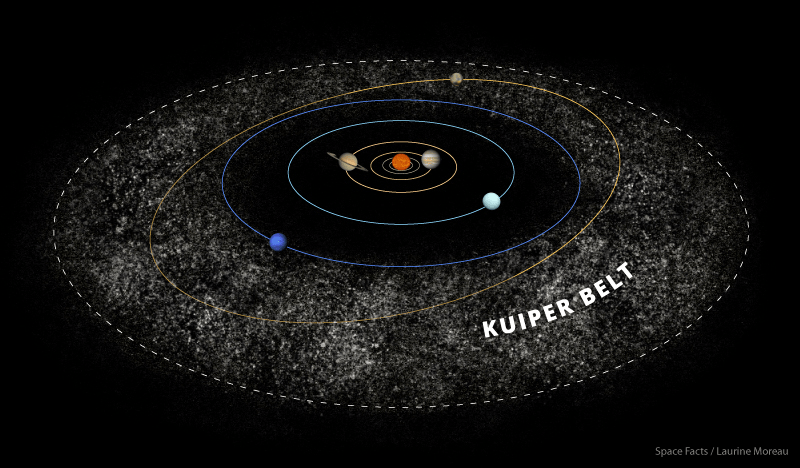
Kuiper Belt Illustration. Credit: Laurine Moreau/Space Facts

The next stop is an odd one, because just like the Asteroid Belt, the Kuiper Belt is a region of space, rather than a single object, like a planet or moon. Before we dive into what the Kuiper Belt actually is, which is not a new Ralph Lauren belt, we need to establish its name and its discovery. I know, it’s not very flashy or sick, but facts matter.

The discovery of Pluto in 1930 created a stir in the astronomy community because of the possibility of other objects being discovered beyond Pluto. It was thought that since Pluto was on a long-period orbit, it may have just been the first to be revealed, with more waiting out of view.

Over the years, various theories were created to explain what this region beyond Neptune could hold, such as those of Kenneth Edgeworth in 1943. Whatever the reality, the growing consensus was that it could be made up of thousands, hundreds of thousands, if not millions or hundreds of millions of objects, similar in size to Pluto, especially short-period comets.

In 1951, an astronomer named Gerard Kuiper proposed in a paper that this region could be in the shape of a disc, where it could be the leftovers of cosmic bodies, and through time and gravity, have changed. As the years moved on, more objects were slowly discovered in this region of space.

Fast forward to 1992, when astronomers David Jewitt and Jane Luu discovered an object, 1992 QB1, which was later named 15760 Albion. This discovery helped to reinforce Kuiper’s theory of the existence of the disc/belt in that region.

This belt was then named after Kuiper; thus, it became known as the Kuiper Belt, but it’s also known as the Edgeworth–Kuiper belt. Despite that, some astronomers believe that Kuiper and Edgeworth don’t deserve their names to be attached to it, as they support the idea that other astronomers predicted the existence of the belt before them.


The Kuiper Belt is actually doughnut shaped; Pluto’s inclined orbit is typical of other KBOs. Credit: BBC

That was great, but what is the Kuiper Belt? What an insightful question, well done. Someone who is far more intelligent than I am, and has actually astronomical qualifications, not just a geek with a passion for space, would be able to give you a better description than I could. However, I will try.

The Kuiper Belt is a region of space located beyond Neptune’s orbit. It is shaped like a doughnut, with the centre of it containing the Sun, inner planets, the Asteroid Belt, and the outer planets. It’s home to dwarf planets, as well as smaller rocky and icy objects. Along with that, the Kuiper Belt is a source of short-period comets.

The size of the Kuiper Belt, to me, boggles the mind. If you can remember from previous tour stops, one astronomical unit (AU) is the distance between the Sun and the Earth, which roughly works out to be 150 million km. The Kuiper Belt can be divided into two sections: the Inner region and the Scattered Disc.

The Inner region, which is the main section, begins at 30 AU at Neptune’s orbit and finishes about 50 AU. The belt extends into the Scattered Disc, which overlaps the Inner region, with some objects being measured at distances of 1,000 AU. The width of the Kuiper Belt is believed to be about 20 AU, which is gargantuan.

Like many events in Earth’s history or Deep Time, there were no people around to witness it or record information. But just like Sherlock Holmes and Batman, scientists are detectives who can look at evidence to explain the origins of the Kuiper Belt.

The Kuiper Belt is thought to be 4.6 billion years old, slightly younger than the Solar System. At the formation of the Solar System, it would have been crazy, with objects zipping around and coalescing into planets or proto-planets.

Just like the Asteroid Belt, the Kuiper Belt is the remnants or leftovers of proto-planets that failed to form and were pulled apart by gravitational forces. The difference is that the Asteroid Belt was formed by Jupiter’s gravitational pull, whereas the Kuiper Belt was created by the gravitational pull of Neptune.

Objects located within the Kuiper Belt have special labels, referred to as Trans-Neptunian objects (TNOs) and Kuiper Belt Objects (KBOs). There is a myth that TNOs and KBOs are the same thing, like the United Kingdom and Great Britain. They are similar, but different.

The United Kingdom is made up of England, Scotland, Wales and Northern Ireland; however, Great Britain consists of England, Scotland, and Wales. Great Britain is part of the United Kingdom, but the United Kingdom is not Great Britain.

The same rule applies to the Kuiper Belt. TNOs are any objects that are located and discovered beyond Neptune’s orbit, which includes the Kuiper Belt; however, KBOs are objects only located within the Kuiper Belt. All KBOs are TNOs, but not all TNOs are KBOs. It’s a subtle difference, but facts matter.


Some interplanetary dust particles that end up in Earth’s atmosphere may have started life in the faraway Kuiper Belt (illustrated), a region of icy objects farther from the sun than Neptune. Credit: ESA

Centaurs are another type of rocky and icy objects that begin in the Kuiper Belt, but now have orbits between Jupiter and Neptune. They act as a transitional population between KBOs and comets, if that makes sense. Their orbits are unstable due to various gravitational interactions with Jupiter, Saturn, Uranus and Neptune, which can send them inwards.

This process can eventually cause them to evolve into comets or be ejected from the solar system entirely. Because of their origin, they are sometimes called “Kuiper Belt escapees.”

The distribution of objects in the belt is not even, so they are scattered. Another comparison with the Asteroid Belt is the distance between objects. Hollywood likes to add drama to space travel, like it wasn’t already dangerous, and paints the picture of asteroids hitting each other because they are so close.

The opposite is true, since the average distance of objects in the Kuiper Belt is about the distance between the Earth and the Moon, roughly 385,000 km. You will have no issue hitting another object; it’s smooth sailing.

The spacecrafts Pioneer 10 (1983) and Voyager 2 (1989) have both travelled into the Kuiper Belt, with the most recent visitor, New Horizons, in 2015, which is still sending back fantastic data and images, along with the Hubble and James Webb space telescopes studying the region.

The Kuiper Belt has many famous citizens, particularly dwarf planets, which brings us to our next tour stop, Pluto! That brings this section of the tour to a close, but we will start again in December, whether that is before or after Christmas. Good times.

What’s your favourite fact about the Kuiper Belt? As always, please let me know. Thanks again for reading, following, and subscribing to Some Geek Told Me. My Twitter and Mastodon accounts are highly popular, since I have a combined total of 174 followers; I know, Neil deGrasse Tyson can only dream of those numbers.

Please don’t forget to walk your dog, read a banned book, rainbows are not dangerous, and I’ll see you next week for some Shakespeare! I bet you can’t wait!


Who, what, and where are the elements named after?: Part 2

I’m so glad that you’re back. The incident with the kitchen whisk is now behind us, and all is forgiven. And speaking of forgiveness, I have to plead for forgiveness, because it’s been a while since I published a blog post about the Period Table.

I have the time to explain this, so I will. In my infinite wisdom, I have decided to embark on another ill-conceived project: to explain where the names of the 118 elements that sit on the coolest table in the universe come from.

My first chapter was about discussing the elements that have been named after real people. Because that was such a great success, this chapter will be discussing the elements that have been named after objects, in particular, cosmic objects. Like before, I’m not going to present these elements in alphabetical order, because that would be too easy. No, I’m going to list them in the order you would find them on the Periodic Table.

Get ready for some more interesting pieces about history, chemistry, and astronomy. Prepare yourselves!


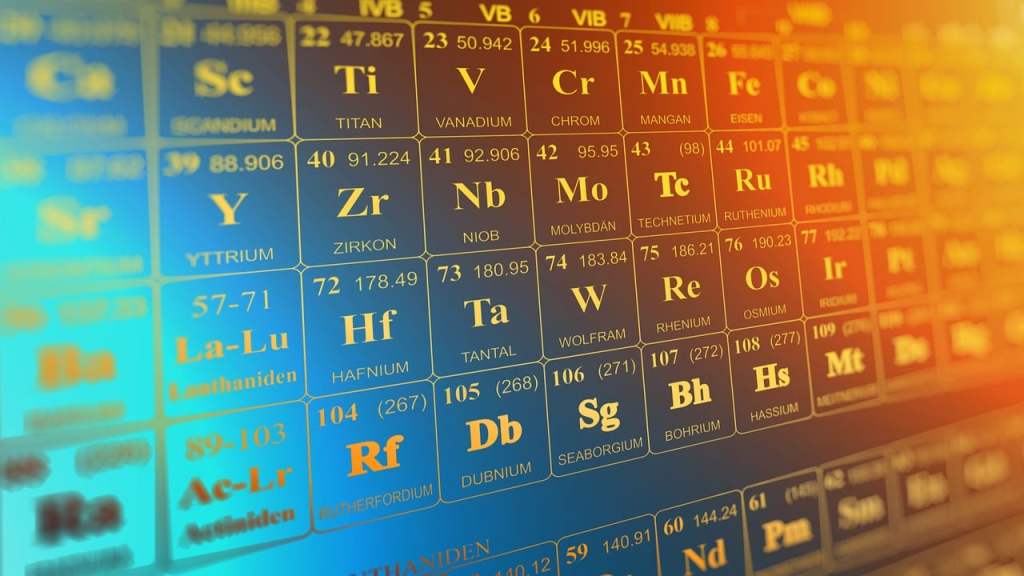
Image by Elchinator from Pixabay

Helium (He): The Sun

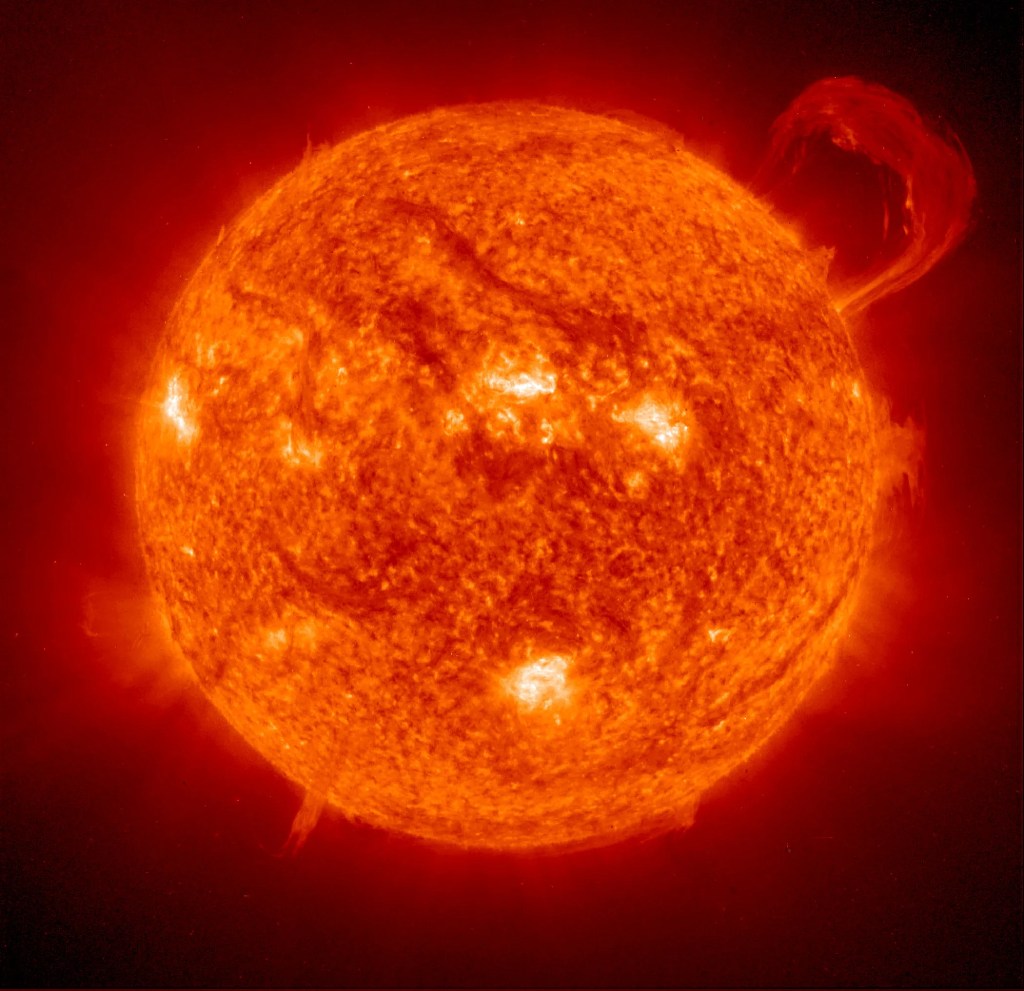
Helium is quite special, because it’s the second element on the Periodic Table. It’s a noble gas, and it was discovered in 1868 by Norman Lockyer, then isolated by William Ramsay, Per Teodor Cleve, and Abraham Langlet in 1895. Helium was the first and only element to be identified outside of Earth, which was through observations and spectral analysis of the Sun.

Since helium was discovered in our local star, Lockyer named the new element after the word Helios, which is derived from the Greek word for the Sun. Helios was also the Greek god of the Sun.

Credit: NASA

Selenium (Se): The Moon

Selenium is the first and only element on today’s list that fits into the Non-metal group on the Periodic Table. Because of this, it’s the 34th element on the table. It was discovered in 1817 by Jöns Jacob Berzelius, and possibly, Johann Gottlieb Gahn as well, though that’s difficult to accurately state.

The Greek word for the Moon is Selene, but it’s also the name of the Greek Goddess of the Moon. Berzelius named Selenium after the Moon; however, just like the Sun, an argument could be made that it’s actually named after a deity.

The Moon, the best name for any moon in the universe. Credit: Airwolfhound/FlickrCC BY-SA 2.0

Palladium (Pd): Pallas

Palladium is the 46th element on the Periodic Table, which places it in the Transition Metals group. In 1802, it was discovered by William Hyde Wollaston, an English chemist, who also discovered osmium and rhodium.

Between the orbits of Mars and Jupiter is a region of our Solar System called the Asteroid Belt. Wollaston named Palladium after an asteroid that was located in it, Pallas, and just like Palladium, it was discovered in 1802. Pallas is the third-largest asteroid in our Solar System. Represent.

An image of the asteroid Pallas captured by the European Southern Observatory’s Very Large Telescope. (Image credit: ESO/Vernazza et al.)

Tellurium (Te): Earth

Tellurium is a metalloid and the 52nd element on the Periodic Table. Like several other elements, it was discovered and isolated by different individuals. Tellurium was discovered by Franz-Joseph Müller von Reichenstein in 1782, but isolated in 1798 by Martin Heinrich Klaproth.

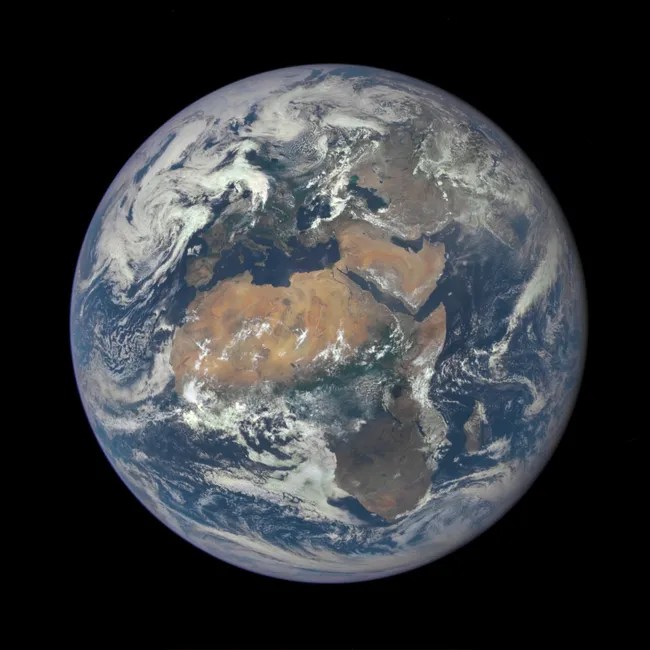
The name Tellurium comes from tellus, the Latin word for Earth; so essentially, tellurium is named after our home planet, Earth.

A NASA camera aboard the Deep Space Climate Observatory satellite caught this view of Africa and the entire sunlit side of Earth on July 9, 2015. (Image credit: NASA)

Cerium (Ce): Ceres

For this entry, we have Cerium, which is the 58th element on the Periodic Table. It can be found lounging around with the other Lanthanoids, and it was discovered by Martin Heinrich Klaproth, Jöns Jakob Berzelius, and Wilhelm Hisinger in 1803, but was first isolated by William Francis Hillebrand in 1875.

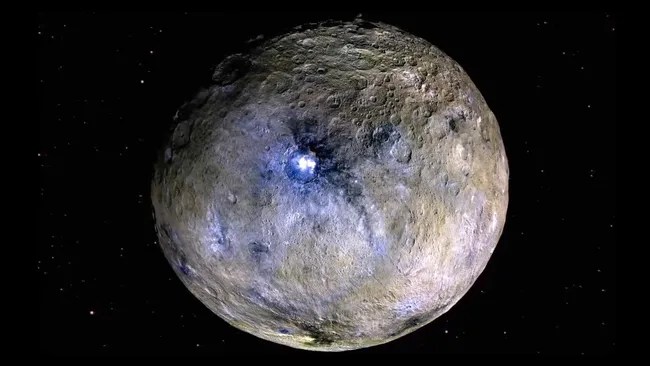
Within the Asteroid Belt, we can find the dwarf planet Ceres, which cerium was named after. Ceres was discovered in 1801, just two years before cerium was identified.

An image of dwarf planet Ceres captured by NASA’s Dawn mission.  (Image credit: NASA)

Mercury (Hg): Mercury

Mercury is the 80th element on the Periodic Table, and just like the cool kids, it sits in the Transition metals group. To the best of my understanding, no one person can be credited with Mercury’s discovery, as it was in use since antiquity, which has included several ancient civilisations like the Egyptians, Qin dynasty, Mayas, and Sumerians, to name but a few.

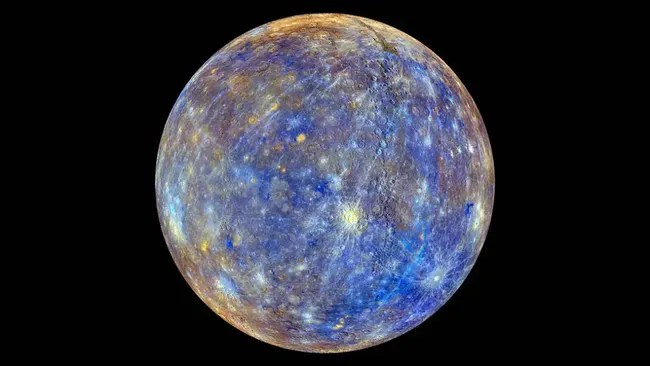
As you can imagine, Mercury is not named after Freddie Mercury, but rather the planet, Mercury, the first planet from the Sun. The element was once known as quicksilver because it is a metal that remains liquid at room temperature. This property connects it to the planet Mercury, named after the messenger of the Roman gods, who was said to speed across the night sky, just like the planet.

A colourful view of Mercury produced using images from the color base map imaging campaign during MESSENGER’s primary mission. (Image credit: NASA/Johns Hopkins University Applied Physics Laboratory/Carnegie Institution of Washington)

Uranium (U): Uranus

Located in the Actinoids group, Uranium is the 92nd element on the Periodic Table. Just like the beautiful nightmare of your ex-partner, this element is radioactive and dangerous. Uranium was discovered in 1789 by the German chemist, Martin Heinrich Klaproth, whom we have met before.

It won’t take you 20 questions to figure this one out, but Klaproth named his newly discovered element after the 1781 discovery of the seventh planet from the Sun, Uranus, by the German astronomer, William Herschel.

Please remember that the pronunciation of Uranus’ name is not Yuor-ray-nuhs or U-ran-us, as you would think. It’s actually pronounced Yoor-e-nes or Ur-an-us. Facts matter, boys and girls, facts matter.

This composite image features the ringed planet Uranus set against the blackness of space. Credit: NASA’s Chandra X-ray Observatory.

Neptunium (Np): Neptune

Sitting right next to Uranium in the Actinoids is Neptunium, the 93rd element on the Periodic Table. It was first synthesised in 1940 by Philip H. Abelson and Edwin McMillan at the Berkeley Radiation Laboratory, California, United States.

Neptunium was named after the eighth planet, Neptune, which was discovered in 1846 by Johann Galle, Urbain Le Verrier, and John Couch Adams. The element was named after the planet, because it was going to follow the pattern set down with Uranium and Uranus.

This composite image provided by NASA on Sept. 21, 2022, shows three side-by-side images of Neptune. From left, a photo of Neptune taken by Voyager 2 in 1989, Hubble in 2021, and the James Webb telescope in 2022. Credit: NASA via AP.

Plutonium (Pu): Pluto

Chilling next to Neptunium in the Actinoids group, we have the 94th element on the Periodic Table: Plutonium. For its discovery, we need to go back to between December 1940 and February 1941, when Glenn T. Seaborg, Edwin McMillan, Emilio Segrè, Joseph W. Kennedy, and Arthur Wahl first produced, isolated, and identified plutonium.

By now, you would have noticed a small pattern with the naming of the last two elements. You don’t have to be a qualified nuclear safety inspector like Homer Simpson to realise that plutonium was named after the planet, now dwarf planet, Pluto, which was discovered in 1930.

Enhanced color view of Pluto using images from New Horizons Long Range Reconnaissance Imager (LORRI) and color data from the spacecraft’s Ralph Instrument. (Image credit: NASA/Johns Hopkins University Applied Physics Laboratory/Southwest Research Institute)

That’s another nine elements down, with only 96 to go. I’ll keep chipping away at it here, on New Zealand’s 5th least favourite website. Did I miss any elements? As always, please let me know.

That’s it for another week. Thanks again for reading, following, and subscribing to Some Geek Told Me. Please remember to walk your dog, read a banned book, and never give Chuck Norris a blunt instrument, because someone will regret it. I’ll see you next week for some more amateur writing by yours truly.


Tour of the Solar System: The Moons of Neptune

I think I need to start with an apology. I’m sorry, but I have not released a new Tour of the Solar System blog post since 19th May. That is being rectified today with the latest chapter of the tour that very few people actually want or need. Yes, my loyal readers, Some Geek Told Me’s Tour of the Solar System is back!

For the previous entries on this non-award winning project, we have:

1.) Meet the Family

2.) The Sun

3.) Planets vs. Dwarf planets

4.) Mercury

5.) Venus

6.) Earth

7.) The Moon

8.) Mars

9.) The Asteroid Belt

10.) Ceres

11.) Jupiter

12.) The Galilean moons

13.) Saturn

14.) Titan

15.) The Moons of Saturn

16.) Uranus

17.) Titania

18.) The Moons of Uranus

19.) The Literary Moons of Uranus

20.) Neptune

21.) Triton

Some Geek Told Me’s Tour of the Solar System is the best tour that money can buy; I mean, it’s free, so the quality is somewhere in the middle. However, I beseech you to stay and enjoy one of the rare tour stops that is not about a singular object, but many. Prepare yourselves, because we are going to discuss…drum roll please…..The Moons of Neptune! Let’s listen to the chime and begin now.


An annotated picture of some of Neptune’s many moons as captured by the James Webb Space Telescope. The bright blue diffraction star is Triton, Neptune’s largest moon; while Hippocamp, its smallest regular moon, is too small to be seen.

Just like Jupiter, Saturn, and Uranus, Neptune has multiple moons. 16 known moons have been discovered orbiting Neptune since 1846, which makes it a very successful foster parent.1 In addition to this, their names come from Roman or Greek mythology, just like Jupiter and Saturn, but as you remember, not the moons of Uranus.

On the last stop of the tour, we visited Triton, which was the largest natural satellite of Neptune. Because that entry was so riveting, I’m only able to list the next five largest moons, even though there are 10 more moons. Sadly, these moons will not be discussed because of my lack of sleep and time, so I do repent my actions on this. 2

So, without further delay, let’s crack on and meet some of Neptune’s moons!

Proteus

Proteus is the second-largest moon of Neptune, with a diameter of about 420 km. It orbits Neptune at around 117,640 km, and it’s tidally locked to Neptune. What this means is that the amount of time it takes Proteus to execute one orbit of Neptune is the same time it takes Neptune to rotate just once. An easy example of this is with the Earth and the Moon.

Proteus is not named after the Marvel mutant, as you may have thought, but rather a shape-changing sea god from Greek mythology, who was the son of Poseidon (Neptune). It was discovered by Stephen P. Synnott on 16th June 1989, from images taken by Voyager 2, before it completed its flyby of Neptune.

Proteus’ shape is an irregular polyhedron, instead of a traditional spheroid, like the majority of cosmic objects. Another interesting fact is that Proteus has an impact crater called Pharos. What makes Pharos unique is that it’s measured to be 10–15 km deep and has a diameter of 250 km, which, if you have been keeping up, means it’s more than half the diameter of Proteus.

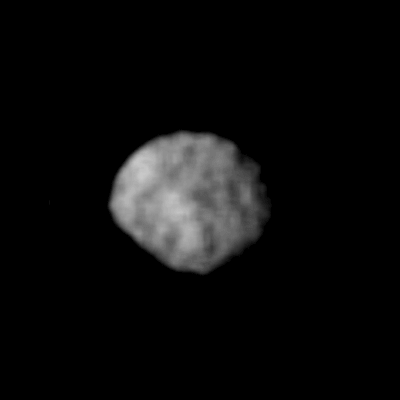
This image of Neptune’s satellite 1989N1 was obtained on Aug. 25, 1989 from a range of 146,000 kilometres. The resolution is about 2.7 kilometres per line pair. Credit: Voyager 2, NASA.

Nereid

Nereid is named after the Nereids, who were from Greek mythology, as they were sea-nymphs and servants to Poseidon (Neptune). Nereid has a diameter of only 340 km, making it the third-largest moon of Neptune, after Triton and Proteus. Nereid is the ninth-farthest moon from Neptune, orbiting at an average distance of 5,513,400 km. 

Nereid is the second moon of Neptune to be discovered. Astronomer Gerard Kuiper made this discovery on 1st May 1949. You’ll encounter Kuiper’s name several more times during our tour, so pay attention! Trust me.

Because of Nereid’s massive distance from Earth (about 4.5-5 billion km), Voyager 2 has been the only spacecraft to fly past the moon, which happened in 1989. Nereid has an eccentric and curious orbit, which ranges from 1.4 to 9.6 million km. It takes 360 Earth days to make one orbit of Neptune, while it takes about 11 hours to make one rotation.

This Voyager view of Nereid was obtained on Aug. 24, 1989 at a distance of 4.7 million kilometres. With a resolution of 43 kilometres per pixel, this image has sufficient detail to show the overall size and albedo. Credit: NASA/JPL

Larissa

Larissa was discovered by a team of astronomers, Harold J. Reitsema, William B. Hubbard, Larry A. Lebofsky and David J. Tholen, on 24th May 1981, after many occultation observations. Its existence was confirmed with the Voyager 2’s flyby in 1989. Larissa has a diameter of 194 km, making it the fourth-largest moon of Neptune. It’s named after a nymph who was a lover of Poseidon, because in Greek mythology, the Gods had fidelity issues.

Larissa orbits Neptune at about 73,540 km, which makes it the fifth-farthest moon from the planet, placing it within Neptune’s rings. For its orbit, Larissa completes one rotation around Neptune every 13 hours and 20 minutes.

The moon is gradually twirling towards Neptune, and it is believed that it will eventually hit Neptune’s atmosphere. Another theory is that Larissa could be ripped apart by Neptune’s tidal forces to create a new ring. As for Larissa’s surface, it is heavily cratered and irregularly shaped, just like my face when I was a teenager.

These Voyager 2 images of satellite 1989N2 at a resolution of 4.2 kilometres per pixel reveal it to be and irregularly shaped, dark object. Credit: NASA/JPL

Galatea

Moving right along, we have Galatea. It’s the fifth-largest moon of Neptune, with a diameter of about 174.8 km. It was discovered in 1989 by Synnott, along with a team of astronomers, with the announcement being held on 2nd August 1989. Like several other moons on the list, Voyager 2’s images proved to be invaluable.

Galatea sounds like the name of a female professional wrestler, but alas, it’s not. Do you remember how Nereid was named after the Nereids, the sea-nymphs? Galatea was named in 1991 after one particular Nereid, because one of Poseidon’s sons, Polyphemus, was in love with her. Lucky girl. It’s also noteworthy that Polyphemus was the same Cyclops from the epic Odyssey, written by Homer.

Out of the six major moons of Neptune, Galatea is the fourth closest to the planet, with an orbiting distance of about 62,000 km. Galatea also shares other traits with its siblings, like being irregularly shaped, with some scientists believing that these irregularly shaped moons are the leftovers of some cosmic collisions.

Like Larissa, Galatea is spiralling towards Neptune and one day, it will be ripped apart or collide with Neptune’s atmosphere. Galatea also orbits the gas giant every 10 hours and 18 minutes.

Galatea as seen by Voyager 2. The image is smeared due to the combination of long exposure needed at this distance from the Sun, and the rapid relative motion of Galatea and Voyager. Hence, Galatea appears more elongated than in reality. Credit: Voyager 2/NASA.

Despina

Now, if Galatea sounds like a female professional wrestler, then Despina sounds like a female Disney villain, though the name is still interconnected with Greek Gods and relationships. Big surprise. Despina was a nymph, as she was the daughter of Poseidon and Demeter. And since Poseidon and Demeter were siblings, that meant Despina’s biological parents were also her uncle and aunty.

Despina is the sixth-largest of Neptune’s moons, and as you can guess, it was discovered by Synnott again, as well as with the Voyager Imaging Team, in July 1989.

The moon is only 150 km in diameter, which is 1/23rd the diameter of the Moon. Despina is believed to be made up of water ice and rocky material, and has an orbital period of 8 hours.

Despina as seen by Voyager 2. There is significant horizontal smearing due to the combination of long exposure needed at this distance from the Sun, and the rapid relative motion of the moon and Voyager. Credit: NASA/Calvin J. Hamilton.

Like I said earlier, there are 10 more moons to discuss, whose names are Thalassa, Halimede, Naiad, Neso, Sao, Laomedeia, Psamathe, Hippocamp, S/2002 N 5 and S/2021 N 1. Maybe one day I’ll discuss them, but not today, because I need a lot of beauty sleep. What’s your favourite moon of Neptune? As always, please let me know.

Thanks again for reading, following, and subscribing to Some Geek Told Me. My Twitter and Mastodon accounts still exist, if you feel like reading some boring facts and information. It’s an attractive offer, isn’t it? Please don’t forget to walk your dog, read a banned book, watch some games from the Women’s Rugby World Cup, and I’ll see you next week.


1 The most recent moons to be discovered were in both in 2024, with the awesome working names of S/2002 N 5 and S/2021 N 1.

2 As you know, I enjoy Shakespeare, and I enjoy even more when I can understand it.