Tour of the Solar System: Titania

When reading this particular blog post, imagine if you could hear a soundtrack. So the obvious question is what would it be? John Williams’ Imperial March, of course! Why? What better example of badarsery to accompany the return of the tour nobody asked for. Get ready ladies and gentlemen, because the Solar System’s worst tour of the Solar System is back!

To allow yourself time to catch up on some literary madness, the previous entries on the tour have included:

1.) Meet the Family

2.) The Sun

3.) Planets vs. Dwarf planets

4.) Mercury

5.) Venus

6.) Earth

7.) The Moon

8.) Mars

9.) The Asteroid Belt

10.) Ceres

11.) Jupiter

12.) The Galilean moons

13.) Saturn

14.) Titan

15.) The Moons of Saturn

16.) Uranus

Since January 2023, I have roughly created one rant per month about the crazy, but beautiful things in our Solar System. Because this is a slow and complicated path, we have arrived at another moon. And since our last tour stop was Uranus, it’s not a leap of reasoning to discover that today’s rant is about Uranus’ largest moon, Titania.


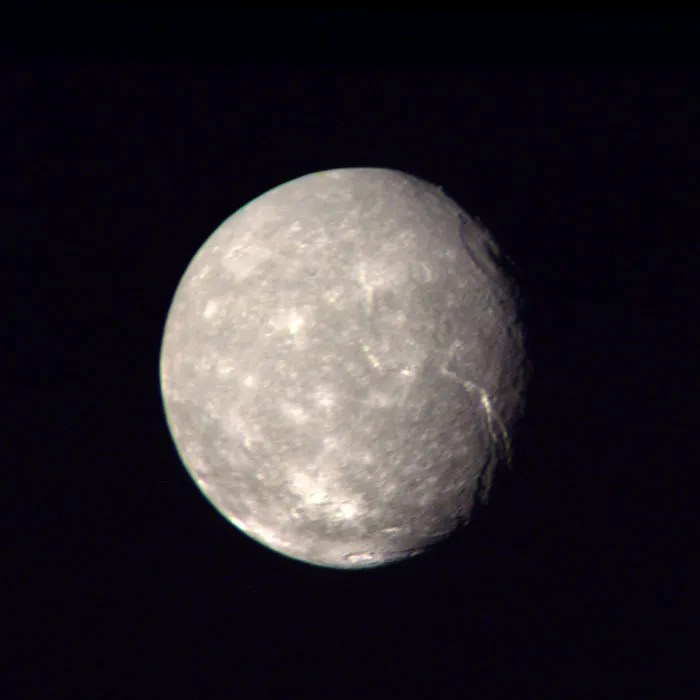
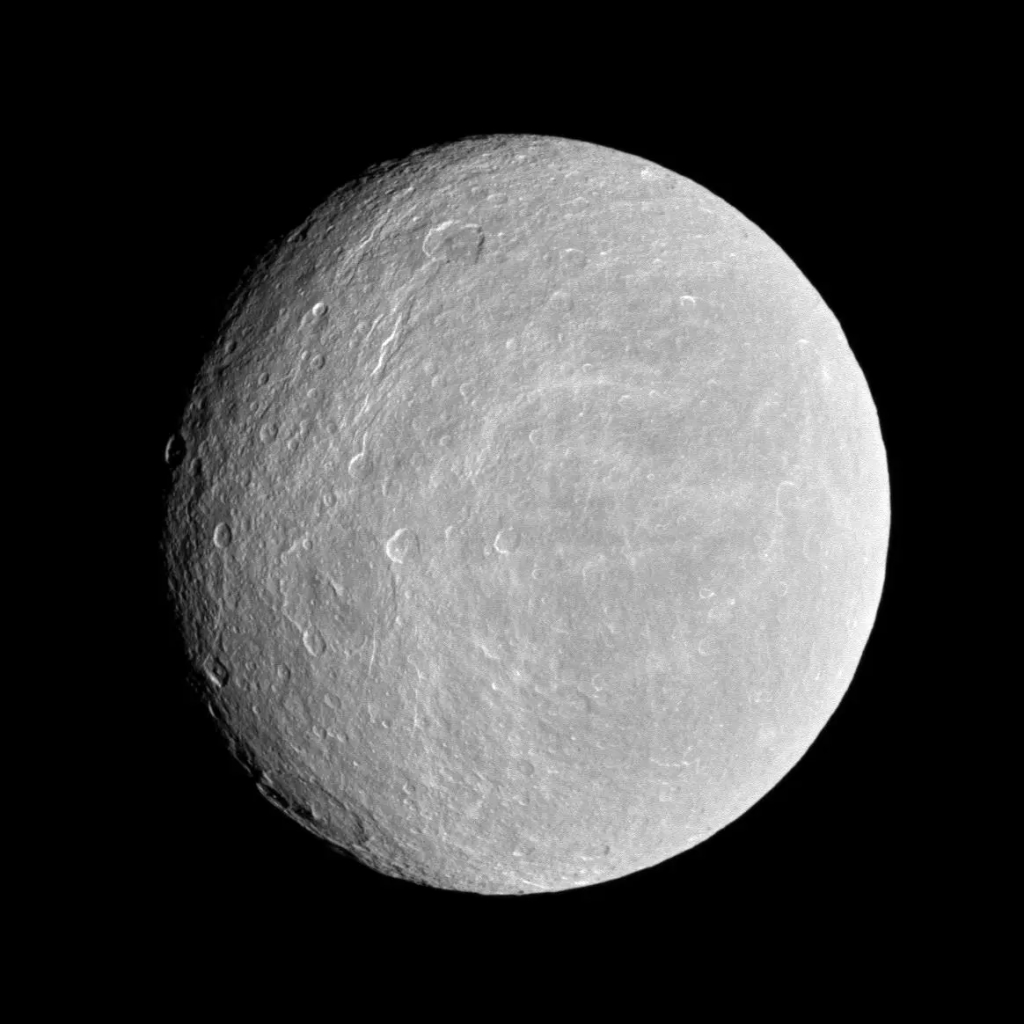
This high-resolution colour composite of Titania was made from Voyager 2 images taken Jan. 24, 1986, as the spacecraft neared its closest approach to Uranus.
Credit: NASA/JPL

If I say the name, Titania, our society’s current understanding of the name would be, “It’s that lady from She-Hulk, right?” Yes, Titania is a Marvel character; a particularly misguided super strong woman, but for today’s rant, this is not the Titania we’re looking for.

Titania is the largest of Uranus’ 28 moons, the eighth-largest moon in the Solar System, and the 20th-largest object in the Solar System overall. Titania has a diameter of 1,578 km and a surface area similar to that of Australia. It was discovered by William Herschel on 11th January, 1787. As a reminder, Herschel was the astronomer who discovered Uranus in 1781.

Titania and her moon siblings are special because their names are not based on Roman or Greek mythology like other moons. Oh no, these moons are named after characters from the works of William Shakespeare and Alexander Pope. Titania is named after Titania, Queen of the Fairies, in Shakespeare’s rom-com, A Midsummer Night’s Dream.

A fun fact is that on the same day Titania was discovered, Herschel also discovered another of Uranus’ moons, Oberon. And if you know your Shakespeare, you’ll know that Oberon was the Fairy King and husband to Titania in A Midsummer Night’s Dream.

Titania orbits Uranus at about 436,000 km, which puts it roughly over 2 billion km from the Sun. At this distance, it takes the Sun’s light about 2 hours and 45 minutes to reach Titania. It puts things into perspective, so you may stop complaining about your daily commute.

The rotation and orbit of Titania are also quirky. Titania’s orbit of Uranus makes it the second farthest moon from Uranus, among the five major moons, after our old mate, Oberon. The orbital period is about 8.7 days and matches its rotational speed.

Titania is part of a special group of moons that are tidally locked, meaning only one side always faces the planet, similar to our Moon. Additionally, Uranus’ magnetosphere is so large that it extends to where Titania orbits.

Since a “sphere” has been name-dropped into the conversation and can drive Flat Earthers into a frenzy, let’s talk about Titania’s atmosphere and surface, because you know, why not?!

There are three recognised classes of geological features on Titania such as craters, canyons and scarps. Titania has a notable system of fault valleys, with one of them nearly 1,609 km long, named Messina Chasm. These valleys have broken the crust in two directions, which shows the tectonic extension of the crust. Titania also appears to be made from equal parts water ice and rocky materials.

Infrared measurements have also revealed Titania has water ice on the surface, along with traces of carbon dioxide. Like some other similar moons, Titania is believed to have an interior or sub-surface ocean. The ocean could be up to 50 km thick, but more research needs to be done to confirm this.

Titania does have an atmosphere, but it’s quite weak and faint, and mainly consists of carbon dioxide.

Since Titania is so far away, a lot of the first information we have about it was revealed by the Voyager 2 space probe and its flyby in 1986. The images covered about 40% of Titania’s surface, which for 1986, was an amazing feat of engineering. Only 24% of the images were within the precision required for geological mapping.

Voyager 2’s photos helped to usher in a new wave of knowledge and understanding about the moon. Since then, no other space probe has visited Titania, but there are plans to address this problem in the future.

Some other random facts about Titania include:

  • Titania has an almost circular orbit.
  • The average orbital speed of Titania is 3.64 km/second.
  • Due to Titania’s tilt, each of Titania’s poles experiences 42 years in the sun and 42 years in the dark.
  • It’s unclear whether geological processes are still occurring on Titania or not.
  • The Messina Chasm is named after a location in William Shakespeare’s play, “Much Ado About Nothing.”

If Titania does have a sub-surface ocean, the question will then turn to whether life exists there or not. But that is another question for another day. And with that, our Tour of the Solar System must take a well-deserved rest.

What is your favourite fact about Titania? As always, please let me know. I wonder if The New Zealand Sour Cream and Chives Preservation Society will read this blog post?

Thank you for reading, following, and subscribing to Some Geek Told Me. I’m also on Twitter and Mastodon, where I write about truly random things.

Before I sign off, I have a favour to ask. If you have a dog, please give them a pat and a hug from me. Dogs are amazing creatures, and we are lucky to have them in our lives. Take care of yourselves, and I’ll catch you next week.


The Final Experiment: Will Flat Earthers cry or care?

And you’re back in the room. No, not that room, the other room. You know, the cool room, yes, that one. I haven’t talked about the Flat Earth conspiracy batshit crazy theory in a while, though I think the last time was with My questions about the Flat Earth.


Credit: Vector illustration Pro Vector

In saying that, an event is fast approaching us, and for someone like me, I find it truly fascinating. If you’ve heard of the Midnight Sun, then you know it’s not a new STI or a vampire book…oh. Forget about the last one.

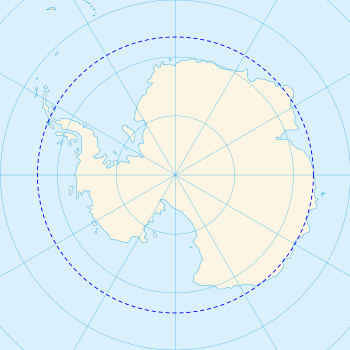
During the summer months in the Northern and Southern Hemispheres, a phenomenon known as the Midnight Sun occurs, also known as a Polar Day or the 24-hour Sun. Located in places north of the Arctic Circle and south of the Antarctic Circle, our local star will stay visible in the sky, even at midnight.


The Arctic Circle, roughly 67° north of the Equator, defines the boundary of the Arctic waters and lands. Credit: CIA World Fact Book

In the Arctic Circle, the Sun will appear to travel from left to right, so in the Antarctic Circle, the opposite is true. If you’ve ever seen Christopher Nolan’s Insomnia, you will get the concept of perpetual daylight. I’ve never experienced it, but I want to.

The Midnight Sun phenomenon exists, so it follows that the opposite might exist as well. This is known as the Polar Night, during which the Sun remains below the horizon throughout the day. For reference, think of 30 Days of Night, either the comics or movie, but mainly the comics.


Map of the Antarctica with the Antarctic Circle in blue. Credit: Thesevenseas.

Ok, thanks Scott, for another useless lecture. So what’s this got do to with the price of milk?

Damn, you ask some great questions! The point is this:

A Midnight Sun in the Southern Hemisphere could only exist on a globe, a Flat Earth model does not allow it. Flat Earthers can’t fully explain how the Sun could remain visible in the sky for 24 hours, so they do the only thing they can do; they deny it exists.

If there is a photo of the Midnight Sun, well, it has to be fake, right? If there is footage of it, well, that’s CGI, isn’t it? Many different proofs destroy the Flat Earth Model, but the Midnight Sun is one of the most difficult to deny.

This brings us to the Final Experiment. It sounds more sinister than it is, though to some Flat Earthers, it’s beyond a nightmare for them. To accurately explain what it is, I’ve sourced the information from the website: https://www.the-final-experiment.com

The Final Experiment is an observational showdown/trip between Team Globe (people who accept and understand we live on a globe) and Team Flat Earth (people who believe that the Earth is flat and deny reality).

It was created by Will Duffy, a pastor in Denver, Colorado, USA. It involves the concept of settling the argument about the shape of our planet, by inviting people to travel to Antarctica, this December, to confirm whether the 24-hour Sun exists or not.

I live in the Southern Hemisphere, and December is the first month of Summer for us. And if you follow that logic, yes, it means our Christmases are hot and never, ever cold. I keep promising to write about that, so I’m going to do this year. Hopefully.

As I mentioned before, the Flat Earth Model does not allow the Midnight Sun to exist in the Southern Hemisphere, because the popular version of the Flat Earth map, turns Antarctica from a continent to an ice wall, that runs around the perimeter of the Flat Earth.

A Midnight Sun in the Northern Hemisphere works on a Flat Earth map but in the Southern Hemisphere? Hell no, because a 24-hour Sun in Antarctica would utterly decimate the Flat Earth Model.

Added to the fact, Flat Earthers have been saying for years that nobody is allowed to go to Antarctica because it’s controlled by the military. Which military I hear you ask? All of them! Portions of the world’s armies are there, protecting the secret of the Flat Earth. Apparently.


The next question is who gets to witness the Midnight Sun in the Final Experiment?

If I understand it correctly, 24 Flat Earthers and 24 Globe Earthers were invited to participate in The Final Experiment. These people are mainly YouTubers, or at least, social influencers, whether they are Team Flat Earth or Team Globe.

Out of these 48 participants, one Flat Earther and one Globe Earther will have their entire trip paid for; so it’s basically winning a free trip to Antarctica to confirm first-hand, the existence of the Southern Midnight Sun.

The other participants will be allowed to go as well, provided they accept the invitation to go and if they pay their own way. Some participants are crowdfunding their trip, which is a smart way to do it, if you ask me.

To the best of my understanding, three Flat Earthers and eight Globe Earthers are going this December to witness the 24-hour Sun.

Please remember, the idea of this event is to settle the argument whether our planet is Flat or a Globe. However, that argument was settled thousands of years ago, yet some people are living in their own versions of reality.


So here’s another question. What happens after the participants from Team Flat Earth and Team Globe witness the Midnight Sun? Because that’s what they’re going to see.

From the Team Globe perspective, I can only imagine the participants will upload the footage and images of the 24-hour Sun, create podcasts and videos about it, and say, “We don’t want to say we told you so, but we told you so. The Earth is a globe and not flat.”

The responses from the Flat Earthers will be different. Make no mistake about this, all of the participants will witness a Midnight Sun in the Antarctic Circle, that’s exactly what is going to happen. But what happens to them after that can be broken down into three different responses.

1.) Some Flat Earther participants will accept what they saw was a Midnight Sun and confirm they witnessed a 24-hour Sun in the Antarctic Circle, which proves the world is a globe and not flat; proving they are wrong. They will either drop out of social media and disappear, or they will transition into Team Globe and start promoting the globe, or at the least, start attacking the Flat Earth Model.

2.) Some Flat Earthers participants will accept what they saw was the Midnight Sun, but they will reject that it proves the world is a globe. It will just prove there was a Midnight Sun and nothing else.

3.) Some Flat Earthers participants will deny they saw a Midnight Sun, thus proving the world is Flat. What they saw was CGI, a hoax, a massive prank to convince them it was a 24-hour Sun. To them, the event was fake, so if it was fake, it must mean people are hiding the truth of a Flat Earth.

The responses from the wider Flat Earth community will be the same:

1.) Some people will believe and accept the images and footage presented to them by fellow Flat Earthers of a Midnight Sun to be real, and accept the truth that the world is a globe and not flat.

2.) Some people will believe and accept the images and footage, presented to them by fellow Flat Earthers of a Midnight Sun to be real, but deny that it proves the shape of the planet, one way or another.

3.) Some people will deny the evidence of the Midnight Sun, and of the Globe. This will be because they weren’t there to confirm the validity of the claims, but images and footage can be changed, so why would they believe anything? The photos are fake, the footage is CGI, and the Flat Earther participants are lying and can’t be trusted.

To this third group, they will believe that the lack of “real” evidence, is actually evidence that the Globe Earthers are lying, so that means the Earth is Flat, and it’s a cover-up.

It’s interesting to note that some of the Flat Earthers who were invited to participate in the Final Experiment and declined to go, are already explaining the results of the Final Experiment will mean nothing and change nothing, and/or explain how NASA and Globe Earthers will fake the entire operation.

I wish the participants in the Final Experiment all the luck in the world. I wish I was going, but I ultimately feel the majority of the Flat Earth community will still deny and reject the results.

Is it because they will not be able to accept reality at all costs?
Is it because they believe they are still correct, and also smarter than all of the world’s scientists combined? Is it because they have spent over 1,000 hours researching Flat Earth on YouTube, so they know the ultimate truth? Is it because they have spent thousands of dollars on Flat Earth, and the idea that they have wasted that money, is too great to accept? Or is it because spreading disinformation about Flat Earth, is how some people earn their living on social media?

Maybe it is one of them, all of them or none of them, but don’t be surprised that after the Final Experiment is finished, hundreds of Flat Earthers will double down on their ideas and philosophy.

However, my admiration and congratulations go to Will Duffy for this enterprise. To quote Vanilla Ice, “Conducted and formed, this is a hell of a concept.”

And that’s another rant for another week. Thanks for reading, following, and subscribing to Some Geek Told Me. Please remember to walk your dog, read a banned book, eat your greens and I’ll see you next week.


Tour of the Solar System: Uranus

It’s been awhile between innings, but it’s back! The worst tour in the Solar System, about the Solar System has returned, with another well-intended love letter towards the topic. The tension is almost unbearable, but you must wait a little longer before the magic begins anew.

For those silly sausages that have missed the previous entries, fear not, for I have a list:

1.) Meet the Family

2.) The Sun

3.) Planets vs. Dwarf planets

4.) Mercury

5.) Venus

6.) Earth

7.) The Moon

8.) Mars

9.) The Asteroid Belt

10.) Ceres

11.) Jupiter

12.) The Galilean moons

13.) Saturn

14.) Titan

15.) The Moons of Saturn

Believe it or not, not everybody appreciates the amount of effort and time it takes to create a masterpiece of scientific communication.

Take The New Zealand Sour Cream and Chives Preservation Society for an example; no please, take them. In commenting on my blog about The Moons of Saturn in a media statement, The New Zealand Sour Cream and Chives Preservation Society said:

“Six moons. This terrible excuse of a New Zealander forced us to read and learn about six different moons of Saturn. Hey moron, news flash, people don’t care about stuff like this. We already have a moon! When is this human skidmark going to get a hint and stop with this crap?! The hardworking and honest people of New Zealand are getting tired of this vacuous human hedgehog telling us things, we don’t want to know. Someone call a taxi for him and take him home.”

I think I’m beginning to get under their skin. Good times.

After visiting the Moons of Saturn, the next stop on the tour is every 10-year-old’s favourite joke and planet: Uranus! Ladies and gentlemen, please make sure your seat is forward and tray tables are in their full upright position. Make sure your seat belt is securely fastened and all carry-on luggage is stowed underneath the seat in front of you or the overhead bins, because we’re going to Uranus!


Uranus sports a faint ring system. (Image credit: X-ray: NASA/CXO/University College London/W. Dunn et al; Optical: W.M. Keck Observatory)

Let’s start the lecture with Uranus’ name. The most common way to pronounce it is:

Yuor-ray-nuhs or U-ran-us

It’s been the butt1 of jokes for years, in every school around the world. However, if you want to sound like a true geek or nerd, then have to pronounce it as:

Yoor-e-nes or Ur-an-us

Trust me, it’s for the best.

Uranus is a planet that’s overshadowed by Jupiter’s size and Saturn’s rings, like two overachieving older siblings. It’s an odd world, but that just makes it even better.

Uranus is the seventh planet from the Sun and the third largest planet in the Solar System. It’s also the third Gas Giant or Outer Planet, as well as being about 4.5 billion years old, which puts it slightly older than some of my running t-shirts.

The name Uranus does come not from some graffiti on a public toilet wall, but from somewhere else. Usually, the answer to this question would be Roman mythology. I mean, as the tour has progressed, we’ve met Mercury, Venus, Mars, Jupiter, and Saturn; all named from Roman mythology.

But Uranus is different because its name comes from Greek mythology. Uranus or Caelus in Roman mythology, was the father of Cronus (Saturn), and grandfather to Zeus (Jupiter), as well as being the great-grandfather of Ares (Mars).

Unlike the other planets we have met on the tour, Uranus was the first planet to be discovered by mathematical prediction and telescope. I told you Uranus was odd, but it’s still cool. Throughout history, people have been able to see Uranus with the naked eye, but assumed it was a star.

To my understanding, the German astronomer Johann Elert Bode, predicted Uranus’ existence after making some observations but also made the mistake of thinking it was a star. However, that changed on 13th March 1781, when William Herschel (Frederick William Herschel) discovered it with his homemade reflecting telescope.

Herschel initially thought it could have been a comet, but more astronomers started to observe it. Upon greater reflection, this wandering light was deemed to be a planet in 1783. Because Herschel discovered it, he claimed dibs on the name and suggested Georgium Sidus or George’s Star, after his patron, King George III. This did not prove to be successful.

It was Bode, who in 1782, floated the name, Uranus, taken from the pages of Greek mythology. It was a hard sell, but eventually, Uranus was decided a better name than Georgium Sidus. It wasn’t until 1850, when the last supporters of Georgium Sidus, the HM Nautical Almanac Office, finally caved, and started referring to it as Uranus.

Since it’s a gas giant and the third largest planet in the Solar System, Uranus is larger than Earth. Uranus has a diameter of 51,118 km, which means Uranus could fit about 63 Earths inside it.

Can you imagine your doctor explaining the reason you feel crap, is because you have 63 Earth-sized planets inside you? I’d rather not imagine the condition of the toilet.

Uranus and its happy siblings all orbit the Sun. And just like the others, Uranus has an elliptical orbit, so at its perihelion, the distance from Uranus from the Sun is about 2.5 billion km; and at its aphelion is 3 billion km, with 6.80 km/s being the average orbital speed. It takes sunlight roughly, 2 hours and 40 minutes to travel from the Sun to Uranus, which is the length of Once Upon A Time in Hollywood.

With its rotation and axial tilt…well, remember that I said Uranus is odd? I wasn’t lying. One day on Uranus takes about 17 hours, which is the length it takes for Uranus to complete one rotation on its axis. If you thought one Uranian day was short, its year is next level.

It takes Uranus 84 Earth years to complete one orbit of the Sun. 84 years! Let that sink in. The last time Uranus was roughly in its present location in time and space – at the time of this blog being published – the Second World War was raging across the world. The Battle of Britain was being fought, the Hundred Regiments Offensive was starting, The Blitz was just around the corner, and Bugs Bunny had just made his official debut.

Most of the planets in the Solar System rotate East to West, with Venus having a retrograde orbit, so it spins West to East. Uranus is watching this and says, “Hold my beer.” Uranus doesn’t rotate East to West, but even though technically, Uranus has a retrograde orbit, it’s not the same as Venus.

Uranus’ equator is almost at a right angle, relative to its orbit, with a tilt of 97.77 degrees. Imagine Saturn with its beautiful rings, rotating parallel to the Solar System’s plane, like it does now. Now imagine that someone pushes the planet over, so its rings are not horizontal, but vertical. That’s Uranus!

Scientists believe that deep into Uranus’ past, another object must have collided with it, with enough force and energy, to knock the planet over, and start spinning it in the most asinine way possible. Because of this outrageous tilt, Uranus has the most extreme seasons in our family of planets. Each of Uranus’ poles gets about 42 years of darkness, then 42 years of sunlight, and back again.

Can you imagine 42 years of winter? Not even House Stark or the North could imagine that horror. For comparison, Earth’s tilt is only 23.5 degrees.

This brings us to Uranus’ temperatures, because this charming little oddball, is the coldest planet in our family. Yes, even though Uranus is over 2 billion km away from the Sun, it’s the crazy arse tilt that allows it to take the crown. Temperatures on Uranus have been recorded at -224℃, which is colder than my bathroom in winter.

Added to the fact that Uranus’ atmosphere has a mixture of hydrogen, helium, methane, hydrogen deuteride, hydrogen sulfide, methane hydrate, ammonia, water ice, and ammonium hydrosulfide, reinforces the concept that because Uranus is a gas giant, it is also an ice planet. Compared to Uranus, Hoth is a tropical destination.

I’m running out of time, but there’s so much more to discuss about Uranus, but the two most important things left are its rings and moons. There are only four ringed planets in the Solar System; Jupiter, Saturn, Uranus, and Neptune.

Like Saturn, Uranus’ rings can be divided into groups. It has 13 rings, with the first nine being narrow inner rings, then two dusty-like rings, and then two outer rings. Because scientists are amazing at naming cosmic objects, the rings moving away from Uranus are: Zeta, 6, 5, 4, Alpha, Beta, Eta, Gamma, Delta, Lambda, Epsilon, Nu, and Mu. This awards Uranus the honour of having the second most complex ring system in the Solar System.

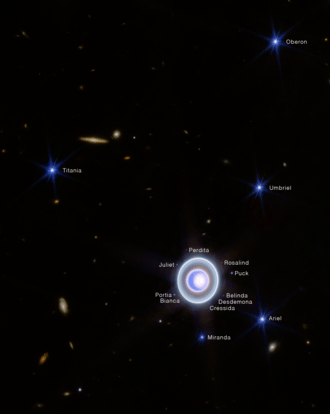
As for its moons, Uranus has 28 confirmed moons. And to continue the notion of Uranus being odd, the names of its moons are not derived from Roman or Greek mythology like other moons, but rather characters from the works of William Shakespeare and Alexander Pope.

I’ll talk more about Uranus’ moons next time on the tour, because they deserve their own blog post. I wanted to write more about our strange older sibling, but I’ve been watching too much of the Olympics, sorry.

And with that, this week’s lecture is over. What is your favourite fact about Uranus? As always, please let me know. I still hope you’re enjoying the Tour. I know the view is terrible, but at least the ticket is free!

Thanks again for reading, following, and subscribing to Some Geek Told Me. I’m still on Twitter and Mastodon, trying to sound less of a geek, but utterly failing. Drop in and say hello, if you feel like it.

Please don’t forget to walk your dog, read a banned book, keep pressuring your politicians for a ceasefire in Palestine, and I’ll see you next week.

Slava Ukraini!


1 Sorry, I couldn’t help myself.


Tour of the Solar System: The Moons of Saturn

It’s the moment you have all been waiting for! No, the ICC Men’s T20 World Cup has already started. No, the 2024 UEFA Championship just started over the weekend. No, sorry, the 2024 Copa América begins later this week. Alright, I’ll tell you, Some Geek Told Me’s Tour of the Solar System is back, baby!

Settle down, I know it’s exciting, but let’s look back on the past entries on the world’s worst tour.

1.) Meet the Family

2.) The Sun

3.) Planets vs. Dwarf planets

4.) Mercury

5.) Venus

6.) Earth

7.) The Moon

8.) Mars

9.) The Asteroid Belt

10.) Ceres

11.) Jupiter

12.) The Galilean moons

13.) Saturn

14.) Titan

As usual, not everybody is excited about the tour. After reading my post about Titan, The New Zealand Sour Cream and Chives Preservation Society felt the need to comment on it:

“For a blog about Titan, written by a person whose intelligence is in the negatives, he talked more about space probes than Titan. Nobody cares about his pro-Salt and Vinegar agenda, or the differences between rotational and orbital periods. He is an embarrassment, not only to his family and community but also to New Zealand. Utterly shameful and disrespectful.”

Wow, I wonder if the New Zealand Sour Cream and Chives Preservation Society will ever tell us how they really feel. Moving on from those haters, let’s discuss the Moons of Saturn. Yes, we’ve already talked about Titan, but that’s just the beginning of the fun.


This composite image, taken by the NASA/ESA Hubble Space Telescope on 6 June 2018, shows the ringed planet Saturn with six of its 62 known moons. With a diameter of 1,123 kilometres, Dione is the fourth-largest of Saturn’s moons and the largest of the siblings in this family portrait. The smallest satellite in this picture is the irregularly shaped Epimetheus, with a size of 143 x 108 x 98 kilometres. The image is a composite because the moons move during the Saturn exposures, and individual frames must be realigned to make a colour portrait. Credit: NASA, ESA, A. Simon (GSFC) and the OPAL Team, and J. DePasquale (STScI)

Saturn is a glorious overachiever. Not only does it have a beautiful ring system, it has more moons than any other planet in the Solar System. To the best of my understanding, Saturn has at least 146 confirmed moons, and just like Pokémon, each one is different and unique.

I’m not going to talk about all of them, mainly because I need to eat and sleep. However, these are some of the coolest and most noteworthy of them.

Rhea:

Rhea has a diameter of 1,528 km, making it the second-largest moon of Saturn, after Titan. It was discovered by Giovanni Domenico Cassini in 1672, and you might remember Cassini and the Cassini space probe from the Titan blog. Due to its craters, it’s easy to mistake Rhea for our Moon, although it has a low density since it is 75% ice and only 25% rock.

The Cassini spacecraft looks toward the cratered plains of the trailing hemisphere of Rhea.
NASA/JPL/Space Science Institute

Iapetus:

Iapetus was another moon discovered by Cassini, this time in 1671. Iapetus has a diameter of 1,469 km, making it the third-largest moon of Saturn. This moon is famous for two main reasons: the first is the equatorial ridge, a mountain feature that is 20 km high and runs along the equator for 75% of the way around the moon.

The second feature is its distinctive colours, which make it look like someone spilt green paint across it or it’s being attacked by some killer space fungi. Cool stuff!

These two global images of Iapetus show the extreme brightness dichotomy on the surface of this peculiar Saturnian moon. The left-hand panel shows the moon’s leading hemisphere and the right-hand panel shows the moon’s trailing side.
NASA/JPL-Caltech/Space Science Institute

Enceladus:

Enceladus may not look like much at first glance, but you would like to swipe right. It’s the sixth-largest moon of Saturn, with a diameter of 500 km. It was discovered by Friedrich Wilhelm Herschel in 1789; so remember Herschel’s name, because we’re going to talk about him on the next tour stop.

Enceladus is one of the most reflective objects in the Solar System, mainly because the surface is covered in ice. In addition to this, Enceladus also has cryovolcanoes, where instead of erupting lava, they eject things like ice particles, water vapour, and molecular hydrogen at high speeds and altitudes.

Using computer modelling and data from Cassini, scientists believe Enceladus has a gigantic subsurface ocean. This has led them to believe that the moon may harbour microorganisms in the ocean, just like Jupiter’s moons of Ganymede and Europa.

Saturn’s tiny, frozen moon Enceladus is slashed by four straight, parallel fissures or “tiger stripes” from which water erupts. These features are unlike anything else in the solar system. Researchers now have an explanation for them. (NASA/JPL/Space Science Institute image)

Mimas:

Mimas has a diameter of 396.4 km, but there’s something very familiar about it. The moon is the seventh-largest of Saturn, and it was discovered by Herschel in 1789, just a few weeks after discovering Enceladus.

The most amazing thing about Mimas is that it looks like the Death Star from Star Wars. For all we know, Mimas is a planet-killing space station, and Saturn’s rings were made from the corpses of Mimas’ victims. Maybe. Also, scientists believe Mimas has a subsurface ocean as well.

Shadows cast across Mimas’ defining feature, Herschel Crater, provide an indication of the size of the crater’s towering walls and central peak. Credit: NASA/JPL-Caltech/Space Science Institute

Hyperion:

The eighth-largest moon of Saturn is Hyperion, with a diameter of 121.57 km. Hyperion’s discovery is unique, because William Lassell observed Hyperion in 1848, two days after the team of William Cranch Bond and his son, George Phillips Bond. The interesting thing is that Lassell had already come up with the moon’s name, along with beating the Bonds to publication.

I find Hyperion fascinating for a few reasons. First, its name is pretty awesome. Second, its shape is irregular and does not have hydrostatic equilibrium. The massive 10.2 km deep crater on Hyperion is particularly noteworthy. While many people have described its appearance, I’ll let you use your imagination for that.

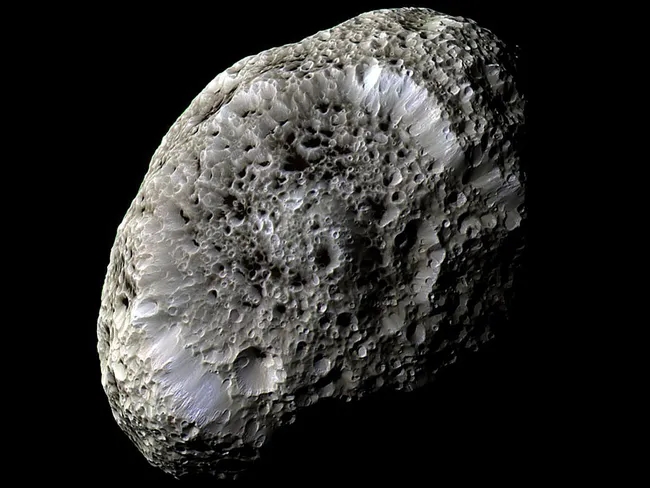
Saturn’s moon, Hyperion, resembles a large sponge traveling through space. Its porous appearance raises questions about its composition. (Image credit: NASA, ESA, JPL, SSI and Cassini Imaging Team)

Prometheus:

Prometheus is on the list since it’s similar to Hyperion. It has a diameter of 86.2 km, and it was discovered in 1980, from photos taken by the Voyager 1 probe. Prometheus is such a wicked name for a moon, but it has something else going for it.

Although it is the 12th-largest moon of Saturn, Prometheus is an irregularly shaped elongated rock, that has ridges and valleys. To put it bluntly, it looks like a giant space potato. I love it.

NASA’s Cassini spacecraft spied details on the pockmarked surface of Saturn’s moon Prometheus (86 kilometers, or 53 miles across) during a moderately close flyby on Dec. 6, 2015.
NASA/JPL-Caltech/Space Science Institute
.

There are hundreds of Saturn’s moons to discuss, but I need a lot more beauty sleep. What’s your favourite moon of Saturn? As always, please let me know.

Thanks again for reading, following, and subscribing to Some Geek Told Me. I can also be found hanging out on Twitter and Mastodon, trying to sound cool. Please don’t forget to walk your dog, read a banned book, watch the UEFA Championship, and I’ll see you next week for a special announcement. It’s not that special though.


Tour of the Solar System: Titan

You know the feeling when you receive your monthly electricity bill, or when you discover a speeding fine you didn’t know about? When reading this blog, you will experience the opposite of those feelings, because it’s back again! Some Geek Told Me’s Tour of the Solar System returns for another month, and a collective sigh of relief can be heard across neighbourhoods around the world!

There are 13 previous stops on our magical Tour of the Solar System, which are:

1.) Meet the Family

2.) The Sun

3.) Planets vs. Dwarf planets

4.) Mercury

5.) Venus

6.) Earth

7.) The Moon

8.) Mars

9.) The Asteroid Belt

10.) Ceres

11.) Jupiter

12.) The Galilean moons

13.) Saturn

As much as possible, I try to fact-check all the information I write here, as well as on X and Mastodon; especially about pizzas and ice cream. The problem is that there’s a community that doesn’t believe me; or dare I say, even like me for some strange reason.

The Hastings chapter of The New Zealand Sour Cream and Chives Preservation Society was recently quoted in The New Zealand Herald about New Zealand’s 5th least favourite website by saying:

“Do you see last month’s blog from that Geek Told Me Twit’s Solar System Tour? That man is making stuff up, he’s a fraud! He claims that Saturn has 146 moons and as any reality-based person would know, that’s a lie. Saturn can’t have 146 moons, because Saturn isn’t real! That guy is a disgrace to this beautiful country, and we fully recommend the Serious Fraud Office investigate him.”

I have three official responses for them:

1.) Firstly, I make no money from my accounts. It costs me to run them, so the Serious Fraud Office would be wasting their time, like Sun Tzu writing a book on marriage counselling.

2.) I’m not sure if this is a general trend with The New Zealand Sour Cream and Chives Preservation Society, but I feel some Flat Earthers, or at least Space Deniers are filling their ranks. 

3.) Just because The New Zealand Sour Cream and Chives Preservation Society mentioned Saturn’s moons, I’m going to talk about them. In all honestly, I was going to mention a few of them, but since they have annoyed me, I’m just going to discuss one of them; arguably the most famous of them, Titan.


A composite image of Saturn’s moon Titan taken by the Cassini spacecraft. Credit: NASA

So, why have I selected Titan to discuss? Apart from being the homeworld of Thanos, Spock would agree that Titan is a fascinating place. To start our tour off, you’re probably thinking, “Damn, Salt and Vinegar chips are the best!” And you would be correct!

You’re also thinking, “But Scott, there are no planets in our Solar System named Titan.” And once again, I have to agree with you. Yes, it’s the name of Matt Damon’s spaceship, but it’s also not a planet, because Titan is a moon. 

Titan is the second moon to feature on our Tour of the Solar System, after, you know, the Moon. Titan is the largest moon of Saturn and was discovered by Christiaan Huygens, a Dutch astronomer on 25th March 1655. 

Because Titan is one of Saturn’s moons, it won’t come as a surprise to you that it orbits Saturn. Imagine that. Titan is 5,149.46 km in diameter, which makes it larger than Mercury, and the Moon; but also the ninth-largest object in the solar system, after the Sun of course.

Titan is about 1.2 million km from Saturn, which if you remember from last month, is about 1.4 billion km from the Sun. Because of this distance, it takes 80 minutes for light from the Sun to reach Titan. By comparison, it only takes eight minutes for the Sun’s light to reach Earth. Sunlight is about 100 times fainter on Titan than on Earth.

Two more awkward points about Titan’s rotation and orbit, are that Titan’s seasons last more than seven Earth years and a Titan year lasts 29 Earth years.

Titan orbits Saturn around every 15 days and 22 hours. And similar to how Titan has a kick-arse name, just like the Moon, Titan is also tidally locked. This means that its rotational period (the time it takes to turn on its axis) is the same as its orbital period (the time it takes to orbit Saturn), so one side of Titan is permanently facing Saturn since it is in a synchronous rotation with Saturn.

These facts about Titan are cool, don’t get me wrong, but the real things to talk about Titan are its atmosphere and surface. There are only two known places in the Solar System where liquid forms on the surface. One is Earth, the birthplace of rugby and dogs, with the other being Titan.

On Earth, the liquid on the surface is David Dunn’s and Elphaba Thropp’s weakness; water. While on Titan, the liquid is not water because of Titan’s vast distance from the Sun, which creates temperatures around −179 °C. It’s not a retreat for a Summer holiday.

The liquid on the surface is methane and ethane, which have carved out river channels and filled lakes. Because of the low temperatures, which create the process of condensation, these natural gases have changed their state of matter from gas to liquids.

Titan’s atmosphere consists of about 95% nitrogen and 5% methane, which makes it quite thick. Titan’s atmospheric pressure is about 60% greater than Earth’s, which is like the equivalent of swimming below the surface of a lake or ocean at a depth of 15 m. 

Since Titan is smaller and less massive than Earth, its atmosphere extends to an altitude 10 times higher than Earth’s, nearly 600 km because of the weaker gravity. This is why Titan looks like it’s covered in smog or haze. Cool. 

Another rad thing about Titan is the possibility of life. On 15th October 1997, a space probe was launched by NASA, the European Space Agency, and the Italian Space Agency. Its mission was to study Saturn, its rings and moons. The space probe was called Cassini–Huygens, named after Giovanni Domenico Cassini, an Italian astronomer who made some discoveries about Saturn’s rings and moons; as well as our old friend, Christiaan Huygens.

The probe reached the Saturn System in 2004, with Cassini being part of the probe that did mapping and research. Cassini spent 13 years working and orbiting Saturn and was decommissioned in 2017, where it was de-orbited so it could burn up in Saturn’s upper atmosphere.

Huygens on the other hand had a different mission, because it was designed to detach from Cassini, and land on Titan to conduct measurements. On 14th January 2005, Huygens landed on Titan and recorded measurements of the wind and temperature, but also took images of the landscape. 90 minutes after Huygens landed, the probe stopped transmitting. 

Data from Cassini and Huygens revealed that Titan has an underground ocean of liquid water, which could harbour life. Years later, researchers conducted many experiments to test the viability of life on Titan, because of complex molecules being found. Whether life exists on Titan or not, let’s hope it’s not in the form of Thanos.

And with that, another chapter of the worst Tour in the Solar System is brought to a close. What is your favourite fact about Titan? As always, please let me know. Thanks for supporting this tour, even though the tour guide is a bit dodgy.

Thanks once again for reading, following, and subscribing to Some Geek Told Me. I’m also on Twitter/X and Mastodon, where I usually fail at sounding humorous. 

Please don’t forget to walk your dog, read a banned book, keep pushing for a ceasefire in Palestine, and watch the Mighty Wellington Phoenix in the second leg of the A-League semi-final. Look after yourself and I’ll see you next week.


Tour of the Solar System: Saturn

The cost of living crisis is rampaging around the planet, celebrity rappers are on the run, Associate Education Ministers want to send sick children to school, Israel and Russia need a time-out, rainbow pedestrian crossings are now dangerous, and the former most powerful person in the world is now selling bibles for US$59.99 to pay legal bills. What a mess.

I wonder if there is a blog out there that can heal the divisions in our societies, and bring people to the negotiation table. If you’re looking for that blog, then you need to keep on looking, because you won’t find it here.

What you will find is an appalling awkward attempt at astronomical alliteration, because the worst tour in all of science is back! Some Geek Told Me’s Tour of the Solar System is here once again, but be warned, a statement about the Tour from The New Zealand Sour Cream and Chives Preservation Society said:

“The so-called Tour of the Solar System is an embarrassment to all science-loving people, but especially to the hard-working people of New Zealand. The author needs to be arrested and charged with gross negligence towards New Zealand’s scientific community. He’s a moron.”

If I didn’t know any better, I’m starting to think that The New Zealand Sour Cream and Chives Preservation Society are getting a little personal, don’t you?

Anyway, if you’re lucky enough to have dodged the last 12 stops, well…you’re in for a shock. The 12 stops of the Tour of the Solar System are as follows:

1.) Meet the Family

2.) The Sun

3.) Planets vs. Dwarf planets

4.) Mercury

5.) Venus

6.) Earth

7.) The Moon

8.) Mars

9.) The Asteroid Belt

10.) Ceres

11.) Jupiter

12.) The Galilean moons

Since you’re a person who eats carrots and goes to bed before midnight, you would have guessed that this tour stop is all about Saturn, so let’s stop gasbagging and get on with it.


Image: NASA, ESA and Erich Karkoschka (University of Arizona)

Ask any number of people to name their favourite planet, and the chances are it’s going to be Earth, Vulcan, or Saturn. The main reason people like Saturn is because it’s so gorgeous, but just like the mysterious hot person at the party, there is a lot more to them than just their looks.

Saturn is the sixth planet from the Sun and the second of the gas giants or Outer Planets. If Saturn needed to purchase some alcohol, its ID would show that they are about 4.6 billion years old, which still makes it slightly older than the terrestrial planets or Inner Planets.

Continuing along the good ideas of naming planets after deities from Roman Mythology, Saturn was the god of wealth and agriculture. His Ancient Greek equivalent was Cronus, the father of Zeus (Jupiter).

Being a gas giant, Saturn is massive. It’s the second largest planet in the Solar System, obviously following Jupiter, though Saturn is still smaller than the Sun.

It has a diameter of 120,536 km, which compared to Earth, means that Saturn could fit 700 Earths inside it. You’ve heard of the very old saying, “Inside every gas giant, an Earth is trying to break out.” In Saturn’s case, it’s 699 more. Saturn also has 95 times the mass of Earth, and that’s even without the help of a personal trainer.

The eight siblings of the Solar System share many things in common with each other, and having an elliptical orbit is one of them. Saturn’s perihelion is about 1.35255 billion km, and its aphelion is 1.51450 billion km. Another way to look at it is Saturn’s average distance from our local star is 1.4 billion km, with 9.68 km/s being its orbital speed.

And speaking of speed, Saturn has the second-shortest day in the solar system. 10.7 hours is the time it takes Saturn to rotate once, with Saturn taking 29.4 Earth years or 10,756 Earth days to complete one orbit of the Sun. What were you doing 29.4 years ago? The world was watching Heat, Twelve Monkeys, and Sense and Sensibility, along with the biggest movie of December 1994 and of all time, Cutthroat Island. 

We’ve finally arrived at the point of the blog, that would make the Mandarin jealous: the rings. Saturn is famous for its rings because they are so obvious and beautiful; like a bowl of Salt and Vinegar chips at a pub. This ring system is one of the most complicated in the Solar System and was first discovered by our old mate, Galileo Galilei in 1610 CE.

There are eight main rings, some smaller rings, along with some gaps. Some of the rings and gaps have some amazing and original names like A, B, C, and D, as well as names like Pallene Ring and the Roche Division. 

The rings are made up of different materials like ice, rock, and dust of various sizes; numbering in their billions. As for the origin of the rings, it’s believed they are from broken pieces of moons, asteroids, or comets, that have been ripped apart by Saturn’s gravity.

Another idea is that cryovolcanoes from one of Saturn’s moons are also helping to create and maintain the rings. Their age is believed to be about 400 million years old, and it’s interesting to note that each of the rings orbits Saturn at a different speed.

Saturn is like a sibling that’s an annoying overachiever because it also has another claim to fame; it has 146 recognised moons, making it the planet with the most moons in the Solar System. That’s more moons than Trump has court cases! There are some truly fascinating moons like Titan, Rhea, Iapetus, Dione, Tethys, Enceladus, and Mimas, along with hundreds of others.

I’m not spending too much time talking about these moons today because I’m going to discuss them next time on the Tour. In saying that, scientists believe life could exist on several of Saturn’s moons, so let’s watch this space, shall we?

Just like how Sour Cream and Chives is similar to Demon’s Arse Breath, Saturn is similar to Jupiter in certain areas. Because Saturn is a gas giant like Jupiter, it doesn’t have a true surface. Saturn’s atmospheric pressure is over 1000 times the atmospheric pressure on Earth’s surface. The pressure is so strong, it can squeeze gas into a liquid.

To put it another way, the further down into Saturn’s atmosphere you go, the stronger the pressure becomes, so if you were on board a spacecraft, you’ve purchased a one-way ticket.

And speaking of Saturn’s atmosphere, it consists of about 75% hydrogen and 25% helium, the two main elements in Jupiter and the Sun. Saturn also has trace amounts of water ice, propane, acetylene, phosphine, ammonia, ethane, and methane.

Here’s another fun fact about Saturn; it has an average density that’s less than water. This means if it was ever possible to build one larger enough, Saturn could float in a bathtub of water.

The weather on Saturn makes it another reason it’s an overachiever. The cloud formations come in faint stripes, jet streams, and storms. Within the upper atmosphere, winds can reach 500 m per second, and compared this with Earth, where hurricane winds can reach 110 m per second.

At Saturn’s north pole, there is a crazy thing happening. There’s a hexagon-shaped pattern, which is a six-sided jet stream. After observations from Voyager 1 and Cassini, the hexagon was measured to be 30,000 km across, with winds reaching 322 km per hour. To me, that’s Ludicrous Speed, and I’m sure Dark Helmet would agree.

There are so many more amazing things I would love to discuss about Saturn, but I’m out of time. I’ve been distracted by world events and the fact that I need more sleep. However, I’m going to leave you with this; although Saturn’s magnetic field is not as large as Jupiter’s, it’s still 578 times more powerful than Earth’s. Sucks to be us, I guess.

And with that, this week’s rant has finished. What is your favourite fact about Saturn? As always, please let me know. I hope you’re enjoying the Tour because, with inflation, it’s still pretty affordable. Terrible, but still affordable.

Thanks once again for reading, following, and subscribing to Some Geek Told Me. I’m also on Twitter/X and Mastodon, spitting out useless daily information.

Please don’t forget to walk your dog, read a banned book, keep pushing for a ceasefire in Palestine, check out the Solar eclipse, and I’ll see you next week.

Because of its size, Jupiter has the largest and strongest magnetic field of any planet in the Solar System, however, the Sun’s magnetic field is stronger. Jupiter’s magnetic field is 16-54 times stronger than Earth’s, and it extends 1-3 million km, in the direction of the Sun, as well as 1 billion km towards Saturn. This works out to about 7-21 times Jupiter’s diameter; which is larger than Rishi Sunak’s ego.

In addition to this, Jupiter acts as a bodyguard for the rest of the Solar System. Jupiter’s gravity well is so massive, that it attracts and diverts comets and asteroids into the Jovian System. This accounts for the extremely high rate of impacts in the Jovian System, and some scientists speculate, that this is why life on Earth has survived, because Jupiter keeps taking bullets for us.

Well, that’s it for another week. What’s your favourite fact about Jupiter? As always, please let me know. Some Geek Told Me’s Tour of the Solar System will return next month, so please keep your tickets, as there are no refunds.

Tour of the Solar System: The Galilean moons

Welcome back to the most basic and cost-effective Tour of the Solar System you will ever see! It’s cheap and nasty, but it won’t make you visit the doctor. We’ve been on this tour for over a year now, so if you’re just joining us, here are the previous stops:

1.) Meet the Family

2.) The Sun

3.) Planets vs. Dwarf planets

4.) Mercury

5.) Venus

6.) Earth

7.) The Moon

8.) Mars

9.) The Asteroid Belt

10.) Ceres

11.) Jupiter

Because you’re observant, you would have noticed the title of this blog, but let’s clear some things up first. The Galilean moons are not a cosmic STI, nor are they a new punk band from Berlin.

Jupiter has 95 officially recognised moons, but for this work of literary incompetency, I’m only going to be discussing four of them; Io, Callisto, Europa and Ganymede, the Galilean moons. If you remember from our last tour stop, I briefly mentioned them; and for me, briefly means five paragraphs. They’re gorgeous too!


Jupiter’s four largest satellites, the Galilean moons, are named after consorts of the Roman god Jupiter: Io, Europa, Ganymede, and Callisto. Credit: NASA/JPL/DLR

Let’s step into our TARDIS of the mind, and travel back through time to Italy, around late 1609 and early 1610. Telescopes were a new invention, and a certain jack of all trades named Galileo Galilei decided to make his own version.

Not long after this, Galileo used his telescope to peer into the void and reveal things behind the curtain. He made some stunning discoveries and observed things like the Moon’s craters and mountains, the phases of Venus, sunspots, Saturn, and stars within the Milky Way. These discoveries have helped move humanity forward, in our understanding of space and our place in it.

However, Galileo’s biggest contribution to astronomy was the revelation that Jupiter had moons. That doesn’t sound like much, but I promise you, it was a colossal discovery. At the time, one of the main models explaining the nature of the universe was the Geocentric model; also known as the Ptolemaic world system.

Basically, this model suggested that the Earth was at the centre of the universe, and everything including the Sun, Moon, stars, and planets, would be orbiting the Earth. Sounds reasonable, right?

That all changed when Galileo observed something strange, using his new telescope. He noticed what he believed to be some fixed stars near Jupiter, but after weeks of detailed observations, Galileo concluded that these fixed stars were not fixed stars at all, because they were orbiting Jupiter.

Galileo had discovered moons orbiting a planet, just like the Earth and the Moon. This revelation supported the recent Copernican heliocentrism model, explaining that the Sun was at the centre of the universe, and planets like Mercury, Mars, Jupiter, and even Earth, revolved around it. The Galilean moons were also confirmed and discovered by Simon Marius, a German astronomer, around the same time.

In 17th-century Europe, this was a major scandal, and even heresy to support such an idea. But as you know, the Copernican heliocentrism model was proven correct. The Sun does not orbit the Earth; the Earth orbits the Sun.


As for the moons, they’re just like a team of rugby players; similar, yet different.

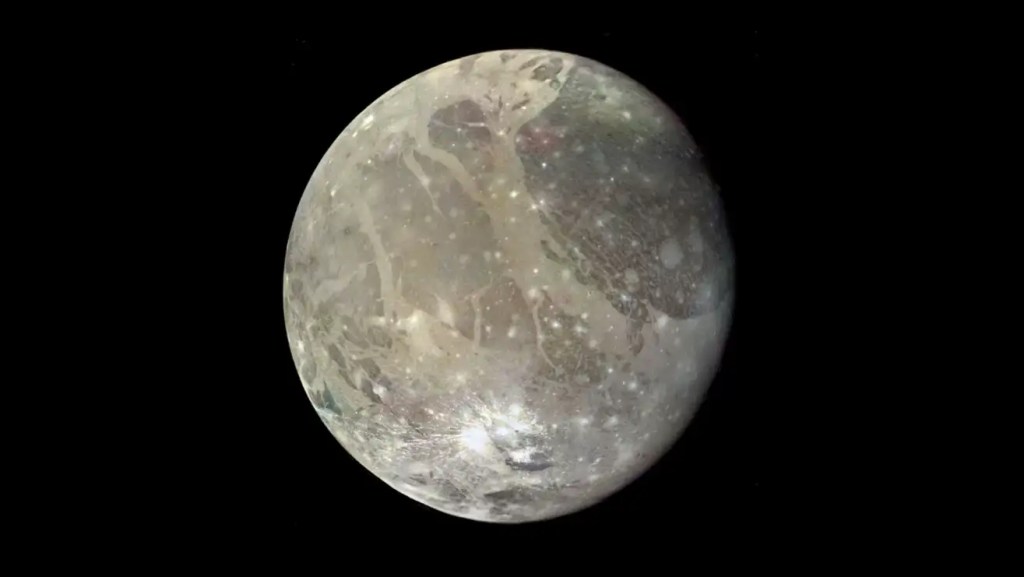
Let’s start with Ganymede, because you know, why not? Not only is Ganymede the largest of the Galilean moons, or the rest of Jupiter’s moons, but it’s also the largest moon in the Solar System. It’s even larger than Mercury.

Ganymede has a diameter of 5,270 km, and orbits Jupiter roughly at 1,070,400 kilometres; which is the third of the Galilean moons in distance from Jupiter. Ganymede also has a magnetic field, possibly due to its liquid iron core, and it takes roughly seven days to orbit Jupiter.

One of the most interesting discoveries about Ganymede is that it has a subsurface ocean. This is exciting because of the possibility of scientists finding life in the ocean. Granted if life exists on Ganymede, it would be in the form of microorganisms, but a win is a win!

Jupiter’s moon Ganymede, the largest moon in our Solar System.
Image: NASA

The next largest moon is Callisto, with a diameter of 4,821 km, and an orbital distance from Jupiter of 1,883,000 km. This makes Callisto the furthest of the Galilean moons to orbit Jupiter. Callisto is also one of the most heavily impacted objects in the Solar System, as it is riddled with very extremely old craters.

Because of its location from Jupiter, Callisto takes about 16 days to orbit the planet. Subsurface oceans seem to be the trend with the Galilean moons because Callisto is suspected of having one, but that has not been confirmed. Yet.

Photograph of the Callisto moon captured from NASA Galileo spacecraft. (Image credit: NASA/JPL/DLR)

Our third-largest Galilean moon is so cool, it only has two letters in its name. Io has a diameter of 3,643 km, which makes it slightly bigger than our Moon at 3,475 km. Io orbits Jupiter at a distance of 421,700 km, which makes it the closest of the Galilean moons to Jupiter. Given its close distance, Io orbits Jupiter in just under two days.

Io can also take the title of having the strongest surface gravity of any moon and the highest density of any moon in the Solar System. Io is also quite odd because it has over 400 active volcanoes, in addition to having over 100 mountains; with several mountains reaching heights that are taller than Mount Everest.

Jupiter’s moon Io is the most volcanically active world in the solar system. This high-resolution image of Jupiter’s fifth moon was captured by NASA’s Galileo spacecraft and was published on 18, Dec. 1997. (Image credit: NASA/JPL/University of Arizona)

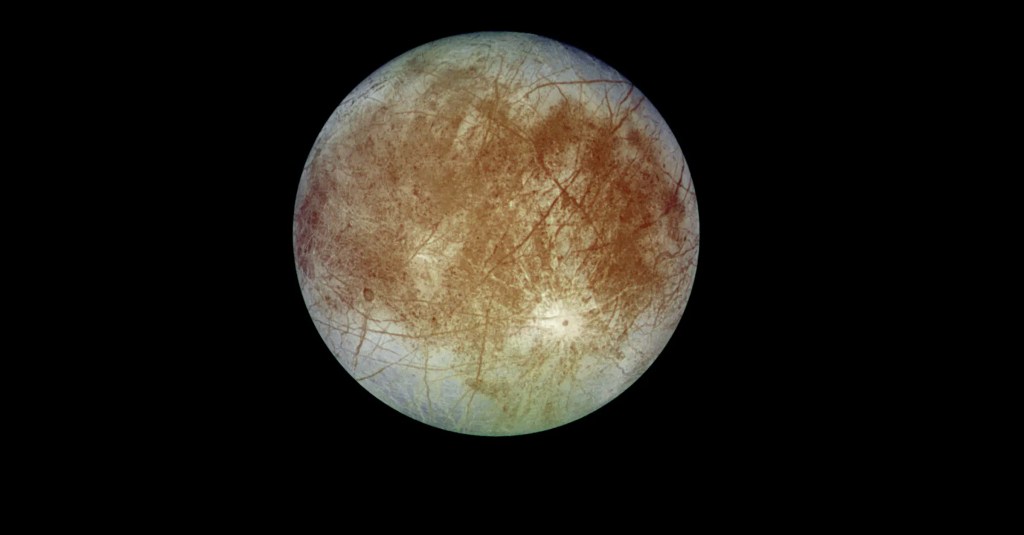
Europa is our fourth and final stop on this tour today. Orbiting at a distance of 670,900 km means Europa is the second closest of the Galilean moons to Jupiter, between Io and Ganymede. However, Europa is the smallest of the four, with a diameter of 3,121km.

Considering its close proximity to Jupiter, Europa orbits Jupiter in about 3.5 days, and it also appears to have an extremely smooth surface. In saying that, Europa is covered in dark lines called lineae. These are believed to be caused by interior processes, which has led to the theory that Europa could have a subsurface ocean as well.

Photo of Europa. Credit: Sciquest.org

There’s a lot more to the moons than what we have discussed, but I can’t do everything. Maybe. So, that’s it for today. The next stop on the tour will be a popular one for many people: Saturn. Just remember that the tickets for the tour are non-refundable.

Thanks once again for reading, following, and subscribing to Some Geek Told Me. I’m also on X and Mastodon because that’s where the cool people are. Please don’t forget to walk your dog, read a banned book, eat some lemons, and I’ll see you next week.


Tour of the Solar System: Jupiter

Some Geek Told Me’s Tour of the Solar System is now one year old, and just like inflation, the end is nowhere in sight. Even though it’s a one-way relationship, I love space and everything in it, which sounds quite oxymoronic.

This tour is not for everybody or the faint of heart. Dubbed by the New Zealand Sour Cream and Chives Preservation Society, “…the worst example of science communication this country has seen, since your uncle tried to explain hydroponics to his dog.” Harsh, but fair.

Today marks the 11th tour stop, with the previous stops are as follows:

1.) Meet the Family

2.) The Sun

3.) Planets vs. Dwarf planets

4.) Mercury

5.) Venus

6.) Earth

7.) The Moon

8.) Mars

9.) The Asteroid Belt

10.) Ceres

Our last stop was the dwarf planet, Ceres, which is located in the Asteroid Belt. So, if you’ve been travelling along with us, you will realise that the next stop is rather large. It’s time to meet Jupiter!


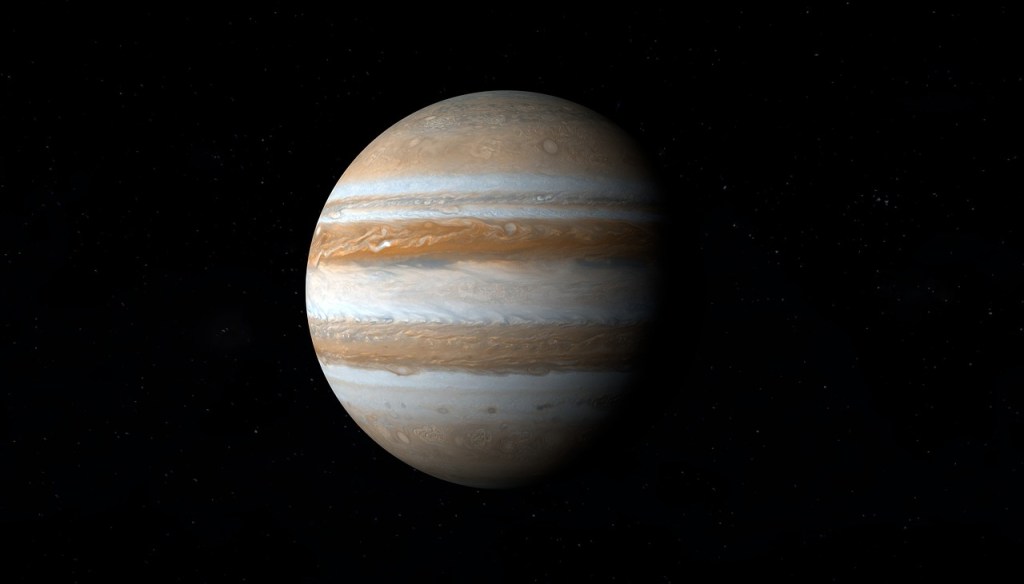
Image by Gustavo Ackles from Pixabay

There’s more information about Jupiter, than you can shake a stick at, on your best stick-shaking day. Because of this, today’s tour stop won’t be covering everything, but I’ll still give it a go.

Just like going to a speed dating event, let’s cover some basic information about the biggest sibling in the family. Jupiter is the fifth planet from our local natural fission factory and the first of the Outer Planets or gas planets.

To the best of my knowledge and understanding, Jupiter was formed around 4.6 billion years ago, making it older than Mercury, Venus, Earth, and Mars; otherwise known as the Inner Planets or the terrestrial planets.

Jupiter was named after the Roman King of the Gods, … pause for dramatic effect, Jupiter! For context, the Ancient Greek equivalent was Zeus.

For its size, Jupiter would be fighting in the heavyweight bouts. If you heard the gossip from Vicky from accounting, you would know that Jupiter is the second largest object in the Solar System; behind the Sun, and the largest planet in the Solar System.

It has a diameter of 142,984 km, which seems not bad. However, when you compare Jupiter’s size to Earth’s diameter of 12,740 km, you finally get the sense that Jupiter is truly colossal; a real giant. Jupiter is so massive, it could fit 1,300 Earths inside it. To me, that is insane.

Jupiter’s orbit is quite extraordinary also. Just like the Earth, it has an elliptical orbit. Jupiter’s perihelion is roughly 741 million km, while its aphelion is 817 million km. This means the average distance from the Sun to Jupiter is about 778 million km, with an orbital speed of 13.07 km/s.

Another cool aspect of Jupiter’s orbit is its barycentre. The centre of an object’s mass or its centre of gravity, is where the most amount of mass is located; like the middle of a ruler, or the head of a hammer.

In astronomy, two objects that orbit each other will also have a centre of mass, which is the point that the objects orbit. This is known as the barycentre point, and it is usually found near the object with the largest amount of mass.

For an example, between the Sun and the Earth, the barycentre lies close to the Sun’s centre. Jupiter is different because it has a lot more mass than the Earth, so the barycentre between the Sun and Jupiter, is not near the Sun’s centre; it’s an empty point in space, just away from the surface of the Sun!

And just like a Star Wars wipe transition, this brings us to time. With Jupiter’s rotation and orbital period, it takes Jupiter 10 Earth hours to rotate once, which makes it the shortest day in the Solar System. A Jovian year equals 4,333 Earth days, which is about 11.8 Earth years.

What this means is that the last time Jupiter was located at its present location; and at the time of this writing, Barack Obama was still in his first term, The Avengers were smashing cinemas worldwide, the second season of Game of Thrones was screening, and Somebody That I Used to Know was breaking hearts everywhere.

I also need to mention, much to Gollum’s disgust, that Jupiter put a ring on it. By this I mean, Jupiter is the first planet on our tour that has rings! Yes, that is not a mistake, Jupiter has rings! They weren’t discovered until 1979, thanks to the Voyager 1 space probe.

Jupiter has four rings, but they are very different from Saturn’s. Jupiter’s rings are very thin and faint, as they are mainly made from dust; which is different from the household variety. We’re talking about micro-particles made from rocks and minerals.

Scientists love to give terrible names to things, and the Jovian rings are no exception. Starting as the closest to Jupiter and moving outwards, we have the halo ring, the main ring, the Amalthea gossamer ring, and the Thebe gossamer ring. If you think these names are terrible, just wait for the rings of Saturn!

Not only does Jupiter have memberships to two exclusive clubs; the gas giants, and the rings clubs, but it also has moons! And when I mean moons, I mean it has more moons than Tony Stark has Iron Man suits. Currently, the International Astronomical Union has officially recognised 95 moons in the Jovian System.

The four largest of these moons, are Io, Callisto, Europa and Ganymede. They’re also known as the Galilean moons, as they were discovered by Galileo Galilei in 1610, through the use of a telescope.

This made the Galilean moons the first objects in the Solar System to be discovered since humanity had been observing the planets, as well as the first objects to be found to orbit any planet that was beyond Earth.

The Galilean moons are an interest to scientists, for the possibility of harbouring life. Granted, if life does exist on one of the moons, it would be in the form of microorganisms, but who would be complaining?

It won’t be a surprise to learn that Space deniers, Flat Earthers, and supporters of the Ptolemaic model, view the Galilean moons with a level of disdain that rivals the height of Olympus Mons. It is also interesting to note that Ganymede is the largest moon in the Solar System; along with actually being larger than Mercury.

Because Jupiter is a gas giant, and unlike the terrestrial planets, it doesn’t have a true surface. Because of Jupiter’s size and mass, the atmospheric pressure would be greater than the bottom of Earth’s oceans. Jupiter is a death trap for people and spacecraft.

Like Earth’s atmosphere, the atmosphere of Jupiter is divided into layers or zones. The upper atmosphere contains about 90% hydrogen and 10% helium by volume, and 75% hydrogen and 24% helium by mass, with the remaining 1% made from other elements. The lower atmosphere is dense and consists of 71% hydrogen, 24% helium and 5% comes from other elements.

Jupiter’s atmosphere has also given the Solar System some pretty crazy weather. Winds have been recorded at the equator, clocking in at 539 km/h; it has raging cyclones and anticyclones; as well as the Big Red Spot. This is a famous high-pressure storm, that has been raging for centuries. As you can imagine, the Big Red Spot looks like a Big Red Spot. I told you scientists love giving terrible names to things.

Over the years, the Big Red Spot appears to be decreasing. Of course, this means future generations will only see the Big Red Spot in textbooks and photographs because it’s going to completely disperse. If they have access to a TARDIS, then it’s not a problem!

As I said near the start of this tremendous piece of science literature, there’s so much information about Jupiter to discuss, but as usual, I have run out of time. Well…not quite. I want to turn the amplifier up to eleven before I go.

Because of its size, Jupiter has the largest and strongest magnetic field of any planet in the Solar System, however, the Sun’s magnetic field is stronger. Jupiter’s magnetic field is 16-54 times stronger than Earth’s, and it extends 1-3 million km, in the direction of the Sun, as well as 1 billion km towards Saturn. This works out to about 7-21 times Jupiter’s diameter; which is larger than Rishi Sunak’s ego.

In addition to this, Jupiter acts as a bodyguard for the rest of the Solar System. Jupiter’s gravity well is so massive, that it attracts and diverts comets and asteroids into the Jovian System. This accounts for the extremely high rate of impacts in the Jovian System, and some scientists speculate, that this is why life on Earth has survived, because Jupiter keeps taking bullets for us.

Well, that’s it for another week. What’s your favourite fact about Jupiter? As always, please let me know. Some Geek Told Me’s Tour of the Solar System will return next month, so please keep your tickets, as there are no refunds.

Thanks once again for reading, following, and subscribing to Some Geek Told Me. I’m also on Twitter and Mastodon, where I give the impression that I’m cool. Please don’t forget to walk your dog, read a banned book, keep watching the African Cup of Nations games, and I’ll see you next week when I’m going to discuss an unassuming $83.3 million.


Tour of the Solar System: Ceres

Guess what’s back, back again?
Some Geek Told Me’s Tour of the Solar System, tell a friend,
Guess what’s back? Guess what’s back?
Guess what’s back?

The world’s worst Solar System tour is back for another week, it’s Some Geek Told Me’s Tour of the Solar System! As always, if you want to catch up on our previous inadequate tour stops, you can find them here:

1.) Meet the Family

2.) The Sun

3.) Planets vs. Dwarf planets

4.) Mercury

5.) Venus

6.) Earth

7.) The Moon

8.) Mars

9.) The Asteroid Belt

If you remember from last month, we had left Mars and journeyed into the vast expanse of the Asteroid Belt. It’s within this region that we arrive at our destination: Ceres.


Ceres
Credit: NASA

Ceres? What in the hell is Ceres? There’s no planet in our Solar System named Ceres!”

I don’t need to be a Omega Level Mutant or have access to a TARDIS, to know what you’re thinking. Yes, you are 100% correct. There is no planet in our Solar System named Ceres. The catch is that Ceres is actually a dwarf planet.

If you’re confused about the differences between planets and dwarf planets, our third tour stop was about that very topic.

So…Ceres. Where do we begin? Apart from Bizarro World and using a DeLorean time machine, let’s start at the beginning. At our best understanding, Ceres was formed around 4.5 billion years ago, which puts it near the time of the formation of the inner or terrestrial planets.

Scientists believe that Ceres didn’t form in the Asteroid Belt, or even inside Mars’ orbit, but rather somewhere between Jupiter and Saturn. Over hundreds of millions of years, Ceres migrated and settled in the Asteroid Belt, after taking out a long-term lease.

Fast forward to 1st January 1801, where an Italian Catholic priest called Giuseppe Piazzi, discovered Ceres. This has sparked debate over the years, as to what Ceres is and how it should be classified, which has included planet, asteroid, and comet; with the final classification of a dwarf planet in 2006. This makes Ceres the only dwarf planet inside Neptune’s orbit, and the closest to our local star.

Ceres is named after the Roman goddess of agriculture, which is also the origin of the word cereal. Someone really needs to name a planet Coco Pops, because that would be cool. Ceres is also single, as it has no rings, as well as no moons.

As you can clearly imagine, Ceres is a lot smaller than Earth, Mercury, or the Moon. Ceres has a diameter of 939 km, which means out of the five recognised dwarf planets in our Solar System, Ceres is the smallest. Having just said that, Ceres makes up 25% of the total mass of the Asteroid Belt.

Given Ceres’ poky size, it still orbits the Sun, with an average distance of 413 million kilometres, which takes 22 minutes for the Sun’s light to reach Ceres; as opposed to Earth’s eight minutes. Ceres’ orbital speed is 17.9 km/s, which is still slower than UMC2 running to eat chocolate.

1,682 Earth days, or roughly 4 years and 6 months, is the length of time it takes Ceres to orbit the Sun, which equals one year. However, one day on Ceres is only 9 hours, because of its rotation. Imagine a day that’s only 9 hours!

Ceres also has a few quirky aspects to it. Its axis of rotation is slightly tilted compared to its orbit around the Sun. This allows Ceres to avoid experiencing seasons, unlike Earth and other tilted planets, which is quite bizarre. Given its small size, Ceres is also covered in more craters, than pimples on a teenage boy’s face. I’m allowed to say that because I’ve lived that experience.

Ceres does have an atmosphere, but it’s very thin. Traces of water vapour were detected by the Dawn spacecraft in 2015, though the leading hypothesis is that it’s caused by cryovolcanoes, which is an awesome term for “ice volcanoes.” Instead of lava spewing out of the vents, cryovolcanoes erupt methane, ammonia, or water, but because of the cold environment, the vents eject plumes and vapour. This geological process also occurs on many other moons in the Solar System, so it’s not unheard of.

If any microorganisms do live on Ceres, they would have to be able to survive the crippling temperatures. They can range from −73 °C (−100 °F) in the daytime on the surface, to -143 °C (225 °F). That’s not exactly holiday weather, is it?

Scientists are curious about Ceres for multiple reasons. It’s estimated that Ceres has a mantle of water ice, which means, potentially, Ceres could be made up of 25% water. Using the latest gadgets from NASA like Dawn, gave us information and images about Ceres’ ice craters and cryovolcanoes. This gives us the tiny chance there could be organic life in the form of microorganisms, living in the water ice.

This is exciting for two reasons:

1.) Just like the Moon, having another planetoid like Ceres with ice reserves is invaluable for a spacefaring civilisation. This is because the water could be mined and used for either rocket fuel or liquid water for astronauts and their crops.

2.) The possibility of finding life outside of Earth is strong, if liquid water can be found. One of the best places in our Solar System for this is in the form of interior oceans and cryovolcanoes, and Ceres is a great place to look.

The funny thing is, whenever I think of humans drinking water from another source, other than Earth, I think of the Doctor Who episode, The Waters of Mars. Even now, The Flood is still terrifying!

Ceres gets a bum rap, as it’s often left off Solar System charts or diagrams, which to this geek, is utterly crazy, purely because Ceres was discovered 45 years before Neptune! Anyway, there’s a lot more to Ceres, but alas, our time is up for this week. What’s your favourite Ceres fact? As always, please let me know.

We are making a slow and steady march to Christmas, which is always equal parts interesting, and insanity. I’ve a got Christmas blog coming soon, but not next week. This is because on 1st December, Some Geek Told Me will be turning three years old…and I don’t know what that means.

Thanks once again for reading, following, and subscribing to Some Geek Told Me. Please don’t forget to walk your dog, read a banned book, bend your knees when picking up your comic box, and I’ll see you next week.


Tour of the Solar System: The Asteroid Belt

Step right up, step right up! The worst Solar System tour ever created is back for another month. That’s right, it’s Some Geek Told Me’s Tour of the Solar System! Sorry, did I forget to mention that there are no refunds?

If you’re new to the tour, don’t panic. This is our ninth tour stop, so there is plenty of time to be confused. The other stops are:

1.) Meet the Family

2.) The Sun

3.) Planets vs. Dwarf planets

4.) Mercury

5.) Venus

6.) Earth

7.) The Moon

8.) Mars

Today’s useless tour stop is the Asteroid belt. So whether you know everything about it or very little, get ready for the ninth stop of Some Geek Told Me’s Tour of the Solar System! This tour stop may seem a little boring, but even though it’s smaller than the other stops, it’s still very valid; at least to me.


Credit: Mopic/Shutterstock

Let’s start at the beginning. When we last left the tour, we had stopped at Mars; which we all remember is a planet that has developed hundreds of different ways to kill humans. Awesome. Upon leaving Mars’ orbit, we find our new destination: the Asteroid belt.

Just to clarify things, the Asteroid belt is not a new pro-wrestling belt, though instead of King of the Ring, it could have been King of the Cosmos. The Asteroid belt is a region of space, that is located between Mars and Jupiter; like a belt. Because of this, it orbits our local cosmic nuclear fusion reactor; just like the rest of the Solar System.

Within this belt are roughly 1-2 million asteroids, and because scientists are amazing at naming things, it’s called the Asteroid belt. Did you see that coming? The Asteroid belt is also known as the Main belt or Main Asteroid belt. I still would like to stress that these names are not pro-wrestling belts. This is because there are other belts and asteroids in the Solar System, which we will eventually discuss. Great, let’s move on.

Here are two obvious questions, what are they doing there? How in the name of the seven dwarven rings, did they they get there?

The Asteroid belt is roughly 4.5 billion years old, just like the age of the inner rocky planets of Mercury, Venus, Earth, and Mars. The leading theories of the origin of the Asteroid belt are:

1.) It’s the leftovers of a protoplanet that did not form completely, so Jupiter’s gravity could have ripped it apart.

2.) It’s the leftovers from the creation of the terrestrial planets.

3.) It’s the leftovers from the protoplanetary disk that formed the Sun.

4.) It’s part of Galactus’ rock collection that he lost.

Regardless of the correct story, the asteroids have migrated through the Solar System over millions of years, until they settled in a stable orbit around the Sun, nestled between Mars and Jupiter.

Even though the asteroids were created around the same time as the birth of the Solar System, the rocks that the terrestrial planets are made from, are different from the asteroids in the belt. The main point is that asteroids in the belt, are like a time capsule of the creation of the Solar System, because they are far better preserved, and contain unique metals and minerals; so they are free of geological processes.

The dimensions of the Asteroid belt are far more impressive than Sokka’s obsession with food. The width and thickness of the Asteroid belt is about 150 million km and lies between 2.2 and 3.2 AU from the Sun.

Do you remember this classic scene from Star Wars: The Empire Strikes Back, when Han Solo flies directly into an asteroid field?

I’ve said this before, but truth is stranger than fiction. Because of the enormity of space, the distance between asteroids on average is 1 million km. It’s been said that if you could stand on an asteroid in the belt, it’s highly doubtful you could see another asteroid, because of the vast distance. Basically, if you’re flying a spacecraft through the Asteroid belt, you would have plenty of room to manoeuvre. Thanks, Hollywood.

As for the different sizes of the asteroids, they can vary a lot. It’s been reported that about 1 million asteroids are 1 km across; along with millions of smaller asteroids. Apparently, over 200 asteroids have been identified to be larger than 100 km, with thousands of other asteroids the size of small stones or pebbles; mainly created through collisions with other asteroids. Asteroids over 120 km in size have been recognised as possibly extremely old asteroids, because they have not been destroyed through collisions.

As for the larger objects in the Asteroid belt like Ceres, we’ll look at that closer with the next tour stop. This is purely because I’ve been watching too much rugby, cricket, and news.

And speaking of rugby, I have two things to add.

1.) The 2023 Rugby World Cup Final is on this Saturday night (Sunday at 8 a.m. for me), with the All Blacks going up against the old foe, South Africa.

2.) The inaugural WXV rugby tournaments have begun across the world, and I managed to find some tickets. So the four of us are going to Dunedin this Saturday, to watch the Black Ferns vs. Wales. UMC2 is looking forward to eating some hot chips at the stadium, whereas UMC1 is going to be the stadium tour guide.

Why I am telling you this? I’m a New Zealand rugby fan, and even though I’m a product of my environment, I bleed black. This means I’m equally excited and worried about this weekend.

That’s it for another week, so I hope you’re still enjoying the tour. I know it’s crap, but it costs you nothing. Thank you for reading, following, and subscribing to Some Geek Told Me. Please don’t forget to walk your dog, read a banned book, watch the Rugby World Cup Final, protest for the end of the Israel–Hamas war, and I’ll see you next week.

Go the All Blacks! Go the Black Ferns!