
I want to talk about Kate Sheppard and in particular, a $10NZ banknote. Why? Because in New Zealand, Kate and her allies, did something that can still bring a smug smile and a wink to any New Zealander.1 She remains to this day, an important figure and icon in New Zealand; but in my humble opinion, to the world as well.
Before I rant on about this, I realise that all of the following information can be found on the internet and in books, so the information is easy to access, if you want it. The reason I’m writing this, is because I think she was an arse kicker and to me, that’s awesome.

Image by Christchurch City Libraries
Alright, let’s back the trailer up and try to explain what this is all about. Catherine Wilson Malcolm was born in Liverpool, England on the 10th March 1847/48.2 As she grew up, Kate revealed that she preferred the spelling of her name to be “Katherine” or just “Kate.” Kate’s family emigrated to Christchurch, New Zealand in 1868, after the death of her father. The family joined a church once they were settled in Christchurch and she later married Walter Sheppard in 1871.
From there, Kate became more involved in many different committees and organisations around Christchurch, as well as giving birth and raising their son, Douglas. One of the groups that she joined was the women’s suffrage movement.
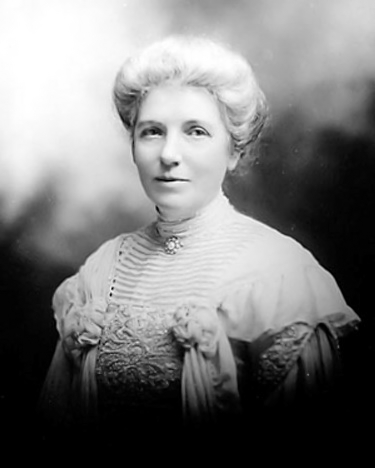
Image by H. H. Clifford from Wikipedia
At the time, the women’s suffrage movement was established in various countries around the world, with New Zealand being one of them. Their quest was for women to be treated and seen as equal, and to be able to vote in democratic elections.
The right for women to vote is taken for granted in many countries today, but in reality, you don’t have to go back in time that far, to a period when no countries allowed it. That was going to change, because this was something that lit a fire in Kate and her future in activism.
Kate joined the Woman’s Christian Temperance Union of New Zealand (WCTUNZ) and started campaigning for some employment and alcohol reforms, by creating petitions for the public to sign, then promoting them to Parliament.
These petitions failed in Parliament, so Kate and her allies came to the conclusion, until women were given the vote, Parliament would just keep ignoring their petitions. To be taken seriously, they would need to be seen as equals first. At the time, every single member of Parliament was male and little did they know, a storm was gathering and it was headed straight towards them.
Over the next few years, the women’s suffrage movement became the rallying cry for change in New Zealand. Kate and her allies began holding more conferences, writing to newspapers, running community meetings and lobbying Parliamentary members for their support of women’s suffrage; by travelling up and down the country.
Kate was becoming a powerful orator and writer on women’s suffrage, to the effect that she wrote many articles for newspapers, as well writing and sending a leaflet to every single member of the House of Representatives; titled Ten Reasons Why the Women of New Zealand Should Vote. To me, that’s so bad arse, but brilliant at the same time.
After a new bill in 1888, reinforced the exclusion of women to vote, Kate and her allies decided to, well…dial it up to 11. The women campaigned harder, connecting and reaching more citizens with their message of election equity. It was in this phrase of the movement that the national petitions were created.
Two national petitions were signed by women, for the right for them to vote. The first petition gained 10,085 signatures in 1890; and in 1892, the second petition had 20,274 signatures. Both petitions failed at Parliament. Not defeated by this, Kate and her relentless allies organised yet another petition!
In 1893, the third petition was the largest to ever to be presented to the New Zealand Parliament, at the time. By the end, the petition was 270m long and held 31,872 women’s signatures. The thing is, 31,872 does not seem a huge number by today’s standards; however the estimated population of New Zealand, at the time was around 698,500. Nearly 4.5% of the population signed the third petition!

Image by Archives New Zealand via Wikipedia
That was enough for the subject of women’s suffrage, to be not just discussed in newspapers and town halls, but now over the dinner table. Grandmothers, mothers, wives, sisters, daughters, granddaughters and nieces, were asking their grandfathers, fathers, husbands, brothers, sons, grandsons and nephews, what their stance was on the right for women to vote.
The question of the women’s vote, was not something the Boys’ club could ignore anymore. Members of Parliament were being questioned by female family members. To me and quite possibly only me, I call this the Storm of 1893 and you can’t hold back a storm; not even Parliament could.
In 1893, the Electoral Bill was passed and on 19th September 1893, it became law. Although other states and territories had already done this around the world, New Zealand had become the first self governing nation in the world, to give the vote to all adult females. Even after 128 years, it still gives the nation a huge amount of pride.
There were many different women that campaigned for women’s suffrage in New Zealand. They included Ada Wells; Mary Müller; Lily Atkinson; Meri Mangakāhia; Annie Jane Schnackenberg; and many other courageous women. However, after this victory, Kate was seen as the leader of the New Zealand women’s suffrage movement.
Kate went on to became a pioneer journalist and editor of the White Ribbon-the first newspaper, in New Zealand to be published, managed and owned by women; remarry after her first husband’s death; continued her activism in politics; as well as leading several groups and organisations. Kate also met with different leaders of the women’s suffrage movement in the United Kingdom and United States of America.
Kate passed away on 13th July 1934 in Christchurch, New Zealand. She left no living descendants and was buried with her mother and brother. There has been quite a few commemorations to Kate over the years from memorials; busts; streets; football cups; pedestrian lights; plays; as well as making into several top 5 lists, for the greatest New Zealanders of all time.

Image by PARLIAMENT.NZ
So, we have now arrived at the question; what has Kate Sheppard got to do with $10? The answer to that is quite simple; she’s on it. Previously, the NZ$10 featured Queen Elizabeth II, but during the 1990’s, all of the banknotes were redesigned.
In 1993, the NZ$10 was released to pay tribute to the centennial of women winning the vote in New Zealand. Kate Sheppard was displayed on the front of the note, with one of her most famous and iconic photographs.

Image by Reserve Bank of New Zealand
To me, I think it’s fantastic that she’s on it, because her image serves as a constant reminder to the people of Aotearoa that doing the right thing, isn’t difficult; you just have to persevere and be brave enough to do it.
The poet Jessie Mackay, once described Kate as “…the woman whose life and personality made the deepest mark upon New Zealand’s history.” There have been many truly amazing women over the years, who have all made a hugely positive impact on New Zealand, whether it’s through science, arts, race relations, sports or politics. Kate Sheppard has more than earnt her place among these inspirational women.
Anyway, thanks for reading and see you next week!
1 I know we don’t mean to do it, but as a nation, we’re pretty proud of this.
2 This sounds strange, but there are two different years attributed to her birth year. One account says her birthdate was 10th March 1847, while another states 10th March 1848.




.jpg)
You must be logged in to post a comment.