Can a country have Dissociative identity disorder?  

Flags, flags, flags, I love a good flag. I live in an area where there are four houses within walking distance of my home that have a flagpole. A few weeks ago, I was walking along when I noticed a flag slightly flying on one of them. I could make out that the flag had orange and black on it.

I suddenly realised I had no idea whose country it belonged to, let alone the continent. Orange and black, orange and black. I was going to memorise the flag, then search for it later on. What country just had orange and black on their flag?!

As I walked closer and closer, I searched the bottom of the flag knowledge file in my mind for any possible answers. Because of the angle I was facing, the majority of the flag wasn’t revealed until I was three houses away.

It was then that I made the discovery that delighted and frustrated me; it was a Halloween flag featuring a witch. This mundane incident obviously triggered my Geek-sense, and the idea grew into the amazing blog post you are now reading.

Just over three years ago, I published my first and only blog post about flags, which can be discovered here. In that literary masterpiece, I discussed four countries’ flags that are no longer in use, for various reasons.

In some circles, three years is the perfect length of time for a sequel, so where is The Batman: Part II? To extend upon this, I have decided to create a sequel to that blog post, but this time, to simply discuss one country, whose history of name changing and flag swapping would make a swinger’s head swivel.

So, sit back, relax, and put your tray table away, because we’re going to look at one country’s many failed flags.


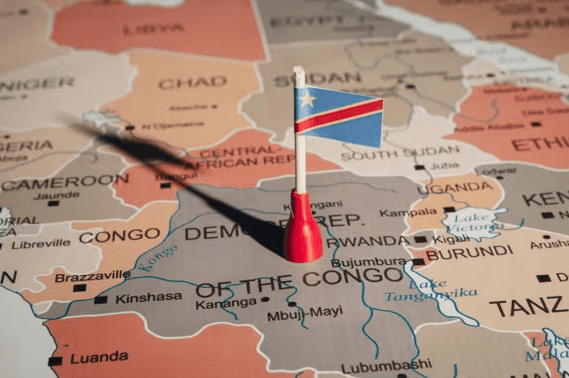
DR Congo’s location in Central Africa, marked by a pin of its national flag. Credit: Mappr

Democratic Republic of the Congo (Formerly known as the Congo Free State/Belgian Congo/Republic of the Congo/Democratic Republic of the Congo/Zaire)

The Democratic Republic of the Congo is odd because it doesn’t just have a few national flags, but several, although it’s the same country; but at the same time, it’s six countries. I told you it was odd.

We have to venture to Central Africa, and to explain the Democratic Republic of the Congo, I need to explain Zaire. In order to explain Zaire, I need to explain the Democratic Republic of the Congo; and to explain the Democratic Republic of the Congo, I need to explain the Republic of the Congo. But to explain the Republic of the Congo, I need to explain the Belgian Congo. However, to explain the Belgian Congo, I need to explain the Congo Free State. It’s like Russian nesting dolls filled with flags and countries.

The Congo Free State

Flag of Congo Free State (1885–1908).
Credit: Public domain, via Wikimedia Commons

Starting with the Congo Free State is arguably the best country to begin with. The flag has a blue background with a yellow star in the centre. It was first introduced when the Congo Free State was a de facto African colony of Belgium, but more importantly, it was controlled by King Leopold II of Belgium.

Also, in a totally random and unrelated coincidence, the Congo Free State shared its flag with the International Association of the Congo or the International Congo Society, which was set up by King Leopold II of Belgium, to further his interests in the region. What are the odds of that happening?!
Belgian Congo

Flag of Belgian (1908-1960).
Credit: Public domain, via Wikimedia Commons

In 1908, the Congo Free State was officially annexed by the Belgian government, so the country was renamed the Belgian Congo, but they decided to retain the flag. That was nice of them, considering the atrocities the Belgians committed upon the Congolese, in the pursuit of rubber, ivory and minerals.

Republic of the Congo or Congo-Léopoldville (Not to be confused with its neighbour, the Republic of the Congo)

Flag of the Republic of the Congo (1960–1963). Credit: Public domain, via Wikimedia Commons.

In 1960, the Belgian Congo declared independence from Belgium. Among civil unrest and wars that plagued the newly (re)minted country, the nation’s name changed for a second time to the Republic of the Congo, along with a tweaked version of the original flag, namely, the vertical column of six five-pointed stars on the left-hand side.1

Flag of the Republic of the Congo (1963-1966). Credit: Public domain, via Wikimedia Commons

Three years later, in 1963, the flag was changed yet again to another similar, but different version. This new flag still had the original yellow star, but it was smaller and had been moved to the top corner of the left-hand side. It also had a red and yellow-lined band that ran diagonally across the centre. The star represented unity, the yellow symbolised prosperity, the blue stood for hope, and the red reflected the people’s blood.

In 1964, the call was made to change the official name of the Republic of the Congo to the Democratic Republic of the Congo, because why the hell not?

Democratic Republic of the Congo

Flag of the Democratic Republic of the Congo (1966-1971). Credit: Public domain, via Wikimedia Commons

Just like how a classic comic book character like Daredevil is relaunched with a new #1, and then three years later, he has yet another relaunch with another #1, the same applies here. In 1966, because three years in an eternity in politics, the government decided the national flag needed an update, because if the country has a new name…it needs a new flag.

This flag was identical to the previous one, but for two small changes. The red band has widened, and the yellow star has decreased in size.

Zaire

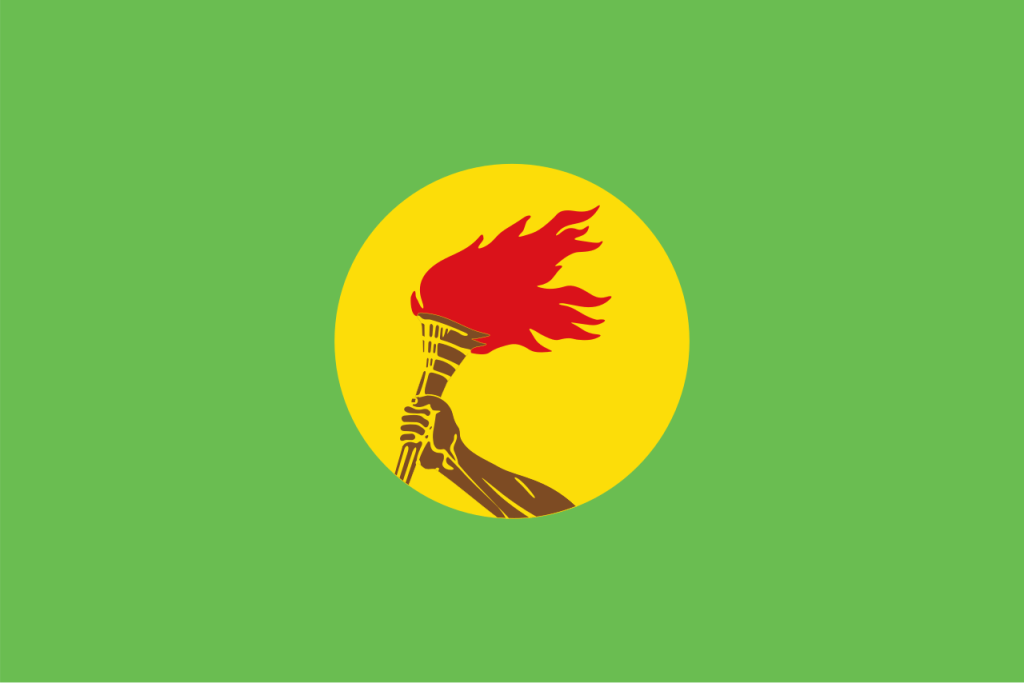
Flag of Zaire (1971–1997). Credit: Moyogo.

To offer a recap, the Congo Free State rebranded itself to become the Belgian Congo, then changed into the Republic of the Congo; along with several flag alternations, and another name change to the Democratic Republic of the Congo. By 1971, you would think that the days of the country’s name and flag changing were over. However, to quote John Rambo, “Nothing is over! Nothing!”

The Democratic Republic of the Congo was renamed Zaire to shake off its colonial past and embrace its African heritage and culture. The new name came with a new flag, which included the Pan-African colours of red, yellow, and green.

The green background represented hope and the country’s fertile land; the yellow symbolised the country’s prosperity and bountiful natural resources, and the red stood for the blood shed for independence and the nation’s martyrs.

The circle with the flaming torch represented the unity of the Zairean people, as well as being a symbol of the ruling party, the Popular Movement of the Revolution (MPR).

Democratic Republic of the Congo (Again)

Flag of Democratic Republic of the Congo (1997-2003). Credit: Public domain, via Wikimedia Commons

The government was overthrown in 1997, which, you guessed it, brought about a new name and flag. The name Zaire was dissolved, and the Democratic Republic of the Congo was reintroduced, along with updating the flag. Instead of looking to contemporary times for inspiration to redesign the flag, it was decided to dive back into the past, 1960, to be correct, to find the next flag.

The new, but old flag was a variation of the first Republic of the Congo’s flag, which was adopted in 1960. The number of stars and their yellow colour didn’t change, but the central star is slightly smaller, along with a lighter blue background.

Flag of the Democratic Republic of the Congo (2003–2006). Credit: Moyogo.

When the Democratic Republic of the Congo was just six years old, a decision was made that the national flag needed to be updated. As a result, the flag underwent a makeover. Perhaps someone was allergic to the original blue or felt that it wasn’t light enough, but whatever the reason, the blue on the flag was changed to a lighter shade, and the size of the central star was also adjusted.

In my personal opinion, I think some ministers’ OCD was out of control.

Flag of the Democratic Republic of the Congo (since 2006). Credit: Nightstallion.

By now, you would have guessed what happened in 2006, three years after the Democratic Republic of the Congo’s third flag was revealed. Yes, we have another flag change. 10 points to Hufflepuff!

You can’t make this stuff up, but in 2006, the wheel turned again, and another flag was introduced. It’s a hybrid of the Democratic Republic of the Congo’s first and third flags, combining the design of the 1966 flag, but using the blue from 2003’s flag.

If I understand it properly, the star represents the future for the country, red is for “the blood of the country’s martyrs”, the country’s wealth is yellow, and the blue stands for peace.

Next year will mark the 20th anniversary of the Democratic Republic of the Congo’s current flag, and long may it last. However, like a married man having a midlife crisis, who starts dating a woman old enough to be his daughter, will the Democratic Republic of the Congo have another makeover, via a name and flag change? Who knows?

I hope this blog post was coherent enough to understand, because as I was writing it, I kept saying to myself, “This makes no sense, but it’s true.” As always, please let me know your thoughts on the subject.

Writing about the Democratic Republic of the Congo’s flags and name changes has given me a small headache, so I’m done. Thanks again for reading, following, and subscribing to Some Geek Told Me

Please remember to walk your dog, read a banned book, the world is a vampire, and I’ll see you next week.


1.) When the Republic of the Congo was named, its neighbour was also called the Republic of the Congo. To sort through the confusion and help the international community differentiate between the two Congos, the flags were different.

In addition to this, the Republic of the Congo was referred to as Congo-Léopoldville, acknowledging its Belgian past. And not to be outdone, the Republic of the Congo was known as Congo-Brazzaville, acknowledging its French heritage. Not confusing at all.

We Didn’t Start the Fire: 1960

It’s been a long time since I celebrated a real achievement on this highly popular website. I’ve made over 250 critically acclaimed blog posts that are the envy of all the Flat Earth creators, and produced numerous content where people have actually left comments; sometimes it’s been two people! I know, it’s quite impressive, so please, don’t be intimidated too much.

The point is that today marks an important milestone in the history of New Zealand’s 5th least favourite website. On 29th April 2024, we entered the 1950s in the We Didn’t Start the Fire historical references blog posts, and today we finally enter the 1960s!

To remind any newcomers about this amazing life choice, I have decided, in my utterly infallible wisdom, to explain all of the historical references in Billy Joel’s song, We Didn’t Start the Fire. Why would I do such a thing when various people have already done this with a greater degree of professionalism? The short answer is that I love the song and history, so what’s another thing I can add to the Mountain of Eternal Regret?

I have said this before, but this blog keeps me off the streets and out of bars, so my wife can keep track of me.

The list of previous fascinating and informative blog posts can be found here:

We Didn’t Start the Fire: The Beginning 

We Didn’t Start the Fire: 1948-1949.

We Didn’t Start the Fire: 1950

We Didn’t Start the Fire: 1951

We Didn’t Start the Fire: 1952

We Didn’t Start the Fire: 1953

We Didn’t Start the Fire: 1954

We Didn’t Start the Fire: 1955

We Didn’t Start the Fire: 1956

We Didn’t Start the Fire: 1957

We Didn’t Start the Fire: 1958

We Didn’t Start the Fire: 1959

We have now entered the third decade of historical references in the song; what a ride! This entry is shaping up to be quite chaotic, so you need to strap yourself in, because we are going back to 1960! Prepare yourself!


Credit: Rosners’/Pinterest

U-2 

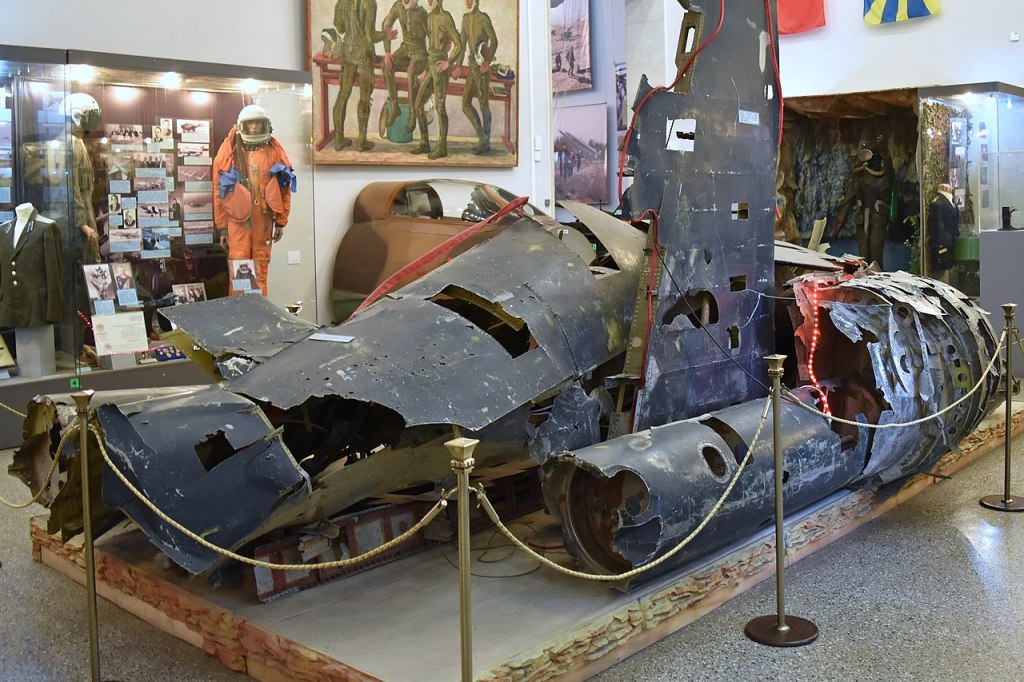
The incident happened during the Cold War, and it had nothing to do with an Irish rock band. U-2 refers to the Lockheed U-2, which is a high–altitude reconnaissance aircraft that has a single engine and a single pilot. The aircraft, known as a spy plane, is operated by the Central Intelligence Agency (CIA) and the United States Air Force (USAF).

In what can only be described as a plot for a spy movie, on 1st May 1960, an American Lockheed U-2 spy plane took off from Pakistan and was eventually shot down over the Soviet Union by the Soviet Air Defence Forces.

The pilot, Francis Gary Powers, was taking aerial photographs when his aircraft was hit by a Soviet surface-to-air missile. Powers parachuted away and was captured by Soviet forces, then put on trial for espionage. The entire affair was a huge embarrassment for the CIA and USAF, as well as for the United States Government, and resulted in the cancellation of an upcoming summit in Paris between the United States, the Soviet Union, the United Kingdom, and France.

Two modern examples of spy plane scandals were the 2001 Hainan Island incident between the United States and China, as well as in January 2024, when Ukrainian forces shot down a Russian Beriev A-50U airborne early warning aircraft, which serves as a surveillance and command-and-control platform. Truth is stranger than fiction.

The remains of the Lockheed U-2 are now on display in the Central Armed Forces Museum, Moscow, Russia. Credit: Alan Wilson.

Syngman Rhee 

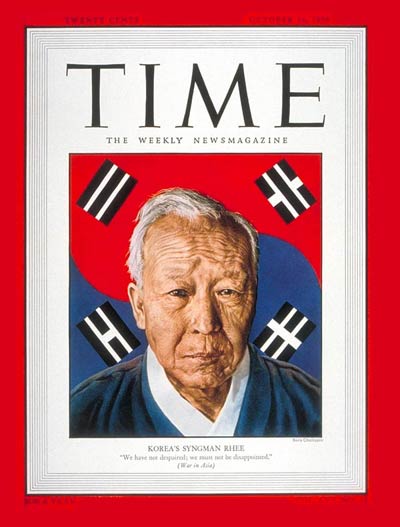
Syngman Rhee (1875-1965) was a dedicated advocate for Korean independence during the Imperial Japanese annexation of Korea. Rhee eventually became the first President of South Korea, who served from 1948 to 1960. He also wanted to reunify the Korean Peninsula.

If you’re a student of history like me, you would have noticed that Rhee was president during the Korean War. It could be argued that Rhee might have made this list for other reasons, but the reason he actually made the list in 1960 was related to the South Korean presidential election.

Rhee was looking to be re-elected for a fourth term, but his opponent, Chough Pyung-ok, died one month before the election. This meant Rhee was re-elected unopposed, and government reports said that he received 100% of the votes from a 97% voter turnout.

The focus turned to the race for the Vice President, which resulted in Rhee’s running mate Lee Ki-poong defeating Chang Myon, 79.19% to 17.51%. This caused widespread calls of election fraud and authoritative claims against Rhee and Lee, which led to the massive civil unrest and Rhee’s resignation and exile to the United States.

For some contemporary examples of politicians resigning because of public protests; would be the Arab Spring (2010-2012), Viktor Yanukovych (2014), Sigmundur Davíð Gunnlaugsson (2016), Serzh Sargsyan (2018), Omar al-Bashir (2019), Sheikh Hasina (2024), KP Sharma Oli (2025), Milos Vucevic (2025), and so many more.

TIME Magazine Cover: 16th October 1960. Credit: TIME Magazine/BORIS CHALIAPIN

Payola 

This entry is completely believable, and it’s a wonder it didn’t happen sooner. The term payola refers to an illegal practice in the music industry, where a payment is made to a commercial radio station to play a song, but the station does not disclose the payment.

In 1959, a federal investigation was launched into the practice, which turned into a gigantic scandal. Over 330 DJs and radio hosts admitted to taking bribes to play certain songs over others. This led to criminal charges being levelled at radio hosts like Alan Freed, who was extremely popular at the time.

These investigations caused several people to lose their jobs and careers. An estimated $263,000 was accepted in bribes.

A modern equivalent would be in 2006, when a payola scandal involving record companies Universal Music Group, Sony, and Warner Music Group. Record labels were paying various radio stations for radio play, with settlements being over $30 million, after a New York Attorney General’s investigation.

Credit: Daily News

Kennedy

This is a straightforward reference involving John F. Kennedy being elected as the 35th president of the United States, defeating Richard Nixon. Kennedy served as President until his assassination in 1963. He was the second youngest person to be elected as President of the United States at 43 years old.

For comparison, Donald Trump was 70 years old when elected in 2016, Joe Biden was 78 years old and 61 days when elected in 2020, and when Donald Trump was elected for a second time in 2024, he was 78 years old and 220 days, making him the oldest person ever to be elected as President; just to point that out.

John F. Kennedy campaign button
Button from John F. Kennedy’s 1960 U.S. presidential campaign. Credit: Encyclopædia Britannica

Chubby Checker 

Cover songs can either work so well that the new version completely eclipses the original, so that people tend to think the cover is the original, or the cover song just simply exists, and pales in comparison to the original, or the cover and original both benefit from each other’s success. Trust me, I am going somewhere with this.

In 1960, Ernest Evans, aka Chubby Checker, released a song called, The Twist, which in fact was originally released by Hank Ballard and the Midnighters in 1958. The original was very popular in its own right and did very well in sales, but the cover sent the popularity of The Twist into the exosphere.

One of the reasons Chubby Checker’s version was popular, to the point that even if a nightclub in New Zealand played the song, people would know what to do, was the dance, or rather, a dance craze.

“Doing’ the Twist” twisted people on the dance floor around the world, but also helped in the United States, at least, by producing a dance that was popular with black and white audiences during the “Jim Crow” racial segregation era.

Naming cover songs that were successful and popular is one thing, while naming songs that introduce a dance craze is another. However, combining the two is a little more difficult, so the best that the staff at Some Geek Told Me can think of is Macarena, which is a remix from the Bayside Boys in 1995. You know the dance, I bet you do. Hey Macarena, ay!

Psycho 

I’m not a huge horror movie fan, but I can sit down and enjoy one. Granted, I may have my eyes shut or my hands covering my face, but I have seen the next entry. This, of course, reminds me that one day I’m going to write about my favourite movie directors.

Like the seamless transition of Sméagol to Gollum and back, this brings us to Psycho. I can’t remember where or when I first saw the movie, but I sure as hell remember what happened in it. Released in 1960, Psycho is arguably one of director Alfred Hitchcock’s most famous works.

Shot in black and white, Hitchcock gave audiences a ride they didn’t see coming, in the form of a ground-breaking masterpiece in Psycho, which covered a range of themes like guilt, madness, voyeurism, family, and morality. Not only did Psycho change thriller and horror movies forever, but movies in general as well.

With a budget of only US$800,000, it collected US$50 million at the box office, as well as being nominated for four Academy Awards, with Janet Leigh winning a Golden Globe for Best Supporting Actress in a Motion Picture.

For previous movie references in the song, Psycho did not win multiple awards, but rather changed how movies are made; it was revolutionary. In that vein, some modern movie comparisons include Pulp Fiction (1994), Toy Story (1995), Saving Private Ryan (1998), The Blair Witch Project (1999), The Matrix (1999), The Lord of the Rings Trilogy (2001-2003), and Avatar (2009).

Belgians in the Congo 

Belgians in the Congo means exactly what you think it does. For some much-needed context, in the 1870s, King Leopold II of Belgium was keen to have a Belgian colony in the Congo basin, which is located in Central Africa.

By the 1880s, he had effectively set up shop in the Congo basin. The people of the Congo Free State, as it was known, suffered atrocities with an estimated 1.5 million to 13 million deaths at the hands of Leopold’s policies and greed.

In 1908, the annexation became official, with the Congo Free State being rebranded as the Belgian Congo, thus becoming a colony of Belgium. The Belgian government began a massive suppression of rights and economic exploitation of the region and of its people.

After years of a fierce independence movement, the country achieved independence from Belgium on 30th June 1960. The new country was renamed The Republic of the Congo, then changed to Zaire, and changed again, to the Democratic Republic of the Congo, which is what it is called today.

After independence was achieved, the transition resulted in civil unrest, protests, and conflicts, which became known as the Congo Crisis (1960-1965). Various wars were fought, with Belgian troops trying to regain control of the country, as well as other factions and countries that were involved. This eventually served as a proxy war between the United States and the Soviet Union, just like the Korean War, Vietnam War, Angolan Civil War, and Afghan–Soviet War.

The Democratic Republic of the Congo went on to suffer wars in the shape of the First Congo War (1996-1997) and the Second Congo War (1998-2003), which resulted in a combined death toll of about 5.65 million people. The Second Congo War was the deadliest war since World War II, with parts of the country still being unstable because of armed conflicts, mainly between the Congolese army and the M23 rebel group.

Belgian paratrooper secures the restaurant terrace of Léopoldville (Kinshasa) airport, during Congo Crisis, July 1960. Credit: Unknown.

So, for 1960, we covered a spy plane being shot down, a South Korean president, a music scandal, a US president, a musician and his dance craze, a movie, and an armed conflict. Obviously, all of these references happened before I was born; however, it always pays to understand why things happened and how they are related to the world today. Well, to me at least, because I love history.

Thanks again for reading, following, and subscribing to Some Geek Told Me. My Twitter and Mastodon accounts are still producing daily data about the world, so please drop in to say hello.

Please remember to walk your dog, read a banned book, Grok is not always correct, and I’ll see you next week.


We Didn’t Start the Fire: 1959

The date was 16th June 2025, and it was a simpler time. We were watching the break-up of the world’s wealthiest person and the President of the United States of America; South Park Season 27 had not yet aired; New Zealand rugby supporters were happy; and the world had not yet discovered that the cause of autism was paracetamol and women were to blame.1

However, that date is also famous for being the last entry in one of the planet’s greatest literary feats, discussing the historical references in Billy Joel’s We Didn’t Start the Fire.

The answer to your first question is no, James Gunn has not contacted me about being part of the DCU. The answer to your second question is yes, it’s back. After delays with other blog posts and events, the long-awaited musical and historical breakdown has returned, much like your persistent back pain.

Since no living person is perfect2, I have collected the previous entries of this wonderful endeavour and presented them to you, just in case you have missed any of them. They include:

We Didn’t Start the Fire: The Beginning 

We Didn’t Start the Fire: 1948-1949.

We Didn’t Start the Fire: 1950

We Didn’t Start the Fire: 1951

We Didn’t Start the Fire: 1952

We Didn’t Start the Fire: 1953

We Didn’t Start the Fire: 1954

We Didn’t Start the Fire: 1955

We Didn’t Start the Fire: 1956

We Didn’t Start the Fire: 1957

We Didn’t Start the Fire: 1958

If you’ve studied the teachings of Sesame Street’s greatest mathematician, you would have realised that after looking at the sequence of numbers above you, it leads you to the conclusion that 1959 is the next year in the pattern. Thanks, Count.

I’m curious to learn if there’s any positive and uplifting information that we can gather from 1959. So, like many times before, strap yourselves in, because we are going back in time! Cool.


Credit: Ruby Lane

1959

Buddy Holly

Charles Holley was born in 1936 and became a singer, songwriter, and musician. His stage name was Buddy Holly, and along with his band, the Crickets, he gained fame in musical genres like country and western, and rock and roll.

In the late 50s, his musical career was soaring, with national and international tours, as well as television appearances. Sadly, Holly is not in this song because of his musical talents. Holly and his new band were on tour, but they were having issues with the bus. The schedule was tight, and some people have said that it was poorly planned.

On 3rd February 1959, a flight was chartered from Iowa to the next gig in North Dakota. The plane was a four-seater aircraft, and on board the flight were 22-year-old Holly, 17-year-old Ritchie Valens, 28-year-old Jiles Perry Richardson Jr (The Big Bopper), and the pilot, Roger Peterson, a 21-year-old.

Soon after take-off, and flying in terrible weather conditions, Peterson lost control of the aircraft and crashed, killing everybody instantly. This incident was known as The Day the Music Died, made famous by Don McLean’s 1971 song “American Pie“.

Some contemporary examples of musicians being killed in aircraft crashes include Stevie Ray Vaughan, who died in a helicopter crash in 1990; John Denver died when his experimental plane crashed in 1997; and Aaliyah and her entourage were killed in a 2001 plane crash in the Bahamas. 

Buddy Holly backstage at the Prom Ballroom in St. Paul on Jan. 28, 1959. (Courtesy of Blue Days Productions)

Ben-Hur

Released in 1959, Ben-Hur was a film that was adapted from Lew Wallace’s book, Ben-Hur: A Tale of the Christ, but also a remake of the 1925 film Ben-Hur: A Tale of the Christ. It tells the story of Judah Ben-Hur (Charlton Heston), or just Ben-Hur, in one of Heston’s most famous roles. Ben-Hur is a Jewish man living in Roman-occupied Judea, around the same time as Jesus Christ.

With a US$15 million budget, unheard of at the time, it earned US$146 million at the box office. By today’s standards, Ben-Hur’s earnings would be a disaster for the film studio, but for 1959, this film was a smash hit.

Like The Bridge on the River Kwai (1957), Ben-Hur won several awards. This included winning 11 Academy Awards, which still holds the record, tied with Titanic (1997) and The Lord of the Rings: The Return of the King (2003), as well as three Golden Globe Awards.

Ben-Hur also raised the benchmark for various elements within the film industry, especially the size of sets, and the number of extras, animals, costumes, and other artists involved with the film; added with the legendary chariot race, places Ben-Hur as a Hollywood classic.

For examples of modern movies dominating awards, I covered this with The Bridge on the River Kwai entry. So instead of doing that, some better examples would be films quantifying their design numbers, such as Kingdom of Heaven (2005), which used around 30,000 extras, Stalingrad (2013) for the massive set designs, Marie Antoinette (2006) for the costume designs, and Alexander (2004) for using large numbers of horses and elephants.

Space monkey

For this entry, you can promote the advancement of science; however, the method is always up for debate. You can be for or against these particular scientific experiments, but regardless of your position, this historical reference requires acknowledgement and examination.

The space race between the Soviet Union and the United States of America had begun, and both nations were determined not to lose. To that end, we have “Space monkeys”, which is probably exactly what you think it is.

Space flight was still in its early stages, so they needed non-human organisms to be sent on flights to test the systems, but mainly to reduce the dangers to humans. These animals included fruit flies, mice, dogs, rabbits, frogs, and primates. The point is, a lot of these animals died being astronauts.

On 29th May 1959, NASA sent a rhesus macaque named Miss Able and a squirrel monkey called Miss Baker on a NASA JUPITER AM-18 mission. The monkeys successfully travelled a distance of 2,735 km, at a height of 579 km, with a top speed of 16,000 km/h.

Both monkeys survived the flight, making them the first two animals to be launched by NASA into space, survive and be recovered. Miss Able died four days later in post-flight surgery from an anaesthetic reaction, while Miss Baker lived until 1984.

In modern times, people still use animals in space experiments, but it’s mainly to assess how they cope and adapt to microgravity environments, rather than testing to see whether they survive space flights. Lately, these animals have included mice, fruit flies, spiders, and bobtail squids, as well as tardigrades, because they seem to be one of the resilient lifeforms ever found.

LIFE Magazine’s June 15, 1959. Cover featuring Miss Able and Miss Baker. Credit: Life Magazine
LIFE Magazine Cover b/w © Time Inc. 

Mafia

As you would expect, Mafia refers to organised crime, but there is more to it, because it’s not just one reference; it’s actually several. Since I’m a geek, I’m going to add some background to this, because it’s fun to learn about things!

In 1957, a meeting involving over 100 mobsters from the United States, Cuba, and Italy took place in Apalachin, New York, dubbed the Apalachin meeting. Topics to be discussed at the meeting included the takeover of recently murdered Albert Anastasia’s crime operations, but also gambling, loansharking, and narcotics trafficking within the United States.

The meeting was discovered by law enforcement agencies, which resulted in 60 mobsters being arrested, including the host of the meeting, Joseph “Joe the Barber” Barbara, and crime boss, Vito Genovese. This meeting forced law enforcement agencies to confront two things: the sheer scale of the organised crime network in the United States, and to admit to the public that the Cosa Nostra (The Sicilian Mafia) existed in the United States.

Fast forward to 1959, when some events occurred that were directly linked to the Apalachin meeting. The 1957 arrest of Vito Genovese, the boss of the Genovese crime family, led to his conviction in 1959 for drug trafficking, and he was sentenced to 15 years. Other 1959 convictions included Vincent Gigante (7 years), Joseph Valachi (15 years), and Paul Castellano (5 years).

These convictions changed the Mafia’s power structure, as well as empowering law enforcement agencies in their war against organised crime. Obviously, organised crime has never gone away, but some modern examples of assaults on their leadership have been the conviction of crime boss, John Gotti (1992); the Justice Department indicted 14 members of the Chicago Outfit, leading to convictions under the RICO Act (2005); and FBI agents arrested 127 mobsters in a single day, known as the Mob Bust (2011).

Vito Genovese, 1959. Credit: Phil Stanziola.

Hula hoops

This entry is quite straightforward. When Hula Hoops hit stores in the late 1950s, they were not an original creation. They had been used for thousands of years, in various forms across different societies, including using bamboo, rattan, willow, stiff grasses, and grapevines.

The new Hula Hoops were made of plastic tubing and were a colossal hit around the world. The trend drove sales of the toy to the heights of $100 million in the United States between 1958 and 1960.

For a 2025 equivalent, I would have to say Labubu. These elf-type monsters have conquered the world, with global sales in the first half of 2025 being over $670 million.

The Hula Hoop craze, Deerfield Illinois, 1959. Credit: Art Shay.

Castro

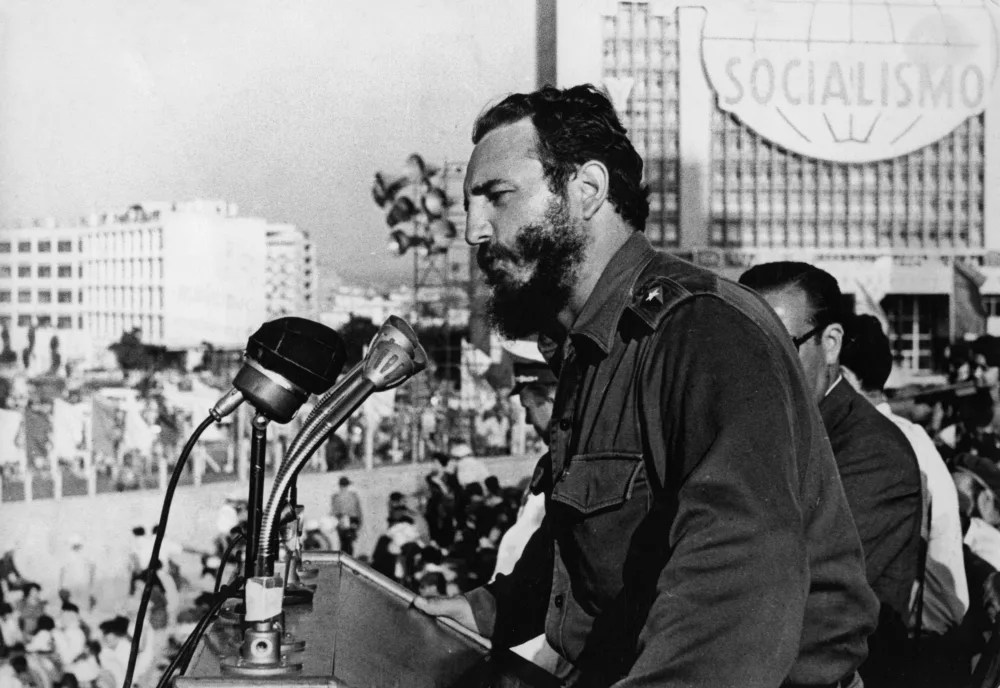
Love him or hate him, but there is no denying Fidel Castro’s influence on the 20th century. Castro was a Cuban lawyer, politician, and revolutionary, who was involved in the Revolución de Cuba (Cuban Revolution), which was an armed revolution against the Cuban dictator, Fulgencio Batista.

It began on 26th July 1953, and ended with Batista fleeing the country on 31st December 1958; though Castro’s forces (The 26th of July Movement or M-26-7) did not learn about this until the next day, when they started to take control of Cuba.

Castro became Prime Minister of Cuba on 17th February 1959 and served until 2nd December 1976, then became President of Cuba from 2nd December 1976 to 24th February 2008. Castro overhauled Cuba and transformed it into the first communist country in the Western Hemisphere, and ended up having a brutal regime, just like his enemy, Batista.

I’d like to add that Castro will return for the 1961 edition of this wonderful project. Be prepared for the Bay of Pigs Invasion.

A contemporary example of someone overthrowing an authoritarian government would be Ahmed al-Sharaa, when Syrian President Bashar al-Assad was toppled in December 2024, after 13 years of civil war.

Fidel Castro addresses a rally in 1959. Credit: Sovfoto/Universal Images Gro/REX / Shutterstock

Edsel is a no-go

This is an interesting entry because there are two points to discuss. To establish the background, Edsel refers to a brand of car created by Ford Motors, and it was named after Henry Ford’s son, Edsel, since Ford was the company’s founder.

The car was launched in 1958 and became a commercial failure. By 1959, sales for the car had dropped significantly, which included reasons such as low quality, being ugly, being vaunted too much, and being introduced during a recession. The car resulted in a loss of over $250 million for Ford Motors, so it was pulled from production in 1960.

The second point of this tale is the actual name. Edsel was a relatively common name for boys in the United States at the time. However, due to the failure of the Edsel car brand, many new parents became hesitant to name their baby boys after a name associated with a failed product. As a result, just as sales of the car declined, so did the popularity of the name Edsel.

Some 21st century examples of failed or failing car brands include the Lincoln Blackwood, Rover CityRover, Saturn Ion, Chrysler Crossfire, Aston Martin Cygnet, Nissan Murano CrossCabriolet, BMW XM, Fisker Ocean, and the Tesla Cybertruck, to name but a few.

A 1958 Edsel convertible made by Ford. Credit: Underwood Archives / Getty Images

So for 1959, we covered a musician, a movie, two astronaut monkeys, mobsters being convicted, a toy, a revolutionary leader, and a failed car brand. 1959 was busy, and like many other years in this project, it can reflect 2025 as well. But look on the bright side, we get to enter the 1960s next time! Yay!

So that brings another blog post from yours truly to a close. Thanks again for reading, following, and subscribing to Some Geek Told Me. My accounts on Twitter and Mastodon are still operating, where I post daily things concerning everything. Cool.

As a New Zealander, I would also like to apologise to the world on behalf of my country for my government’s inaction in recognising the State of Palestine. It’s not good enough, and I’m very sorry.

Please remember to walk your dog, read a banned book, stay away from Polonium-210, and I’ll see you next week for some science advice.


1 In New Zealand, Tylenol is known as the drug, Paracetamol.

2 Except for Chuck Norris, praise be his name.

Who, what, and where are the elements named after?: Part 2

I’m so glad that you’re back. The incident with the kitchen whisk is now behind us, and all is forgiven. And speaking of forgiveness, I have to plead for forgiveness, because it’s been a while since I published a blog post about the Period Table.

I have the time to explain this, so I will. In my infinite wisdom, I have decided to embark on another ill-conceived project: to explain where the names of the 118 elements that sit on the coolest table in the universe come from.

My first chapter was about discussing the elements that have been named after real people. Because that was such a great success, this chapter will be discussing the elements that have been named after objects, in particular, cosmic objects. Like before, I’m not going to present these elements in alphabetical order, because that would be too easy. No, I’m going to list them in the order you would find them on the Periodic Table.

Get ready for some more interesting pieces about history, chemistry, and astronomy. Prepare yourselves!


Image by Elchinator from Pixabay

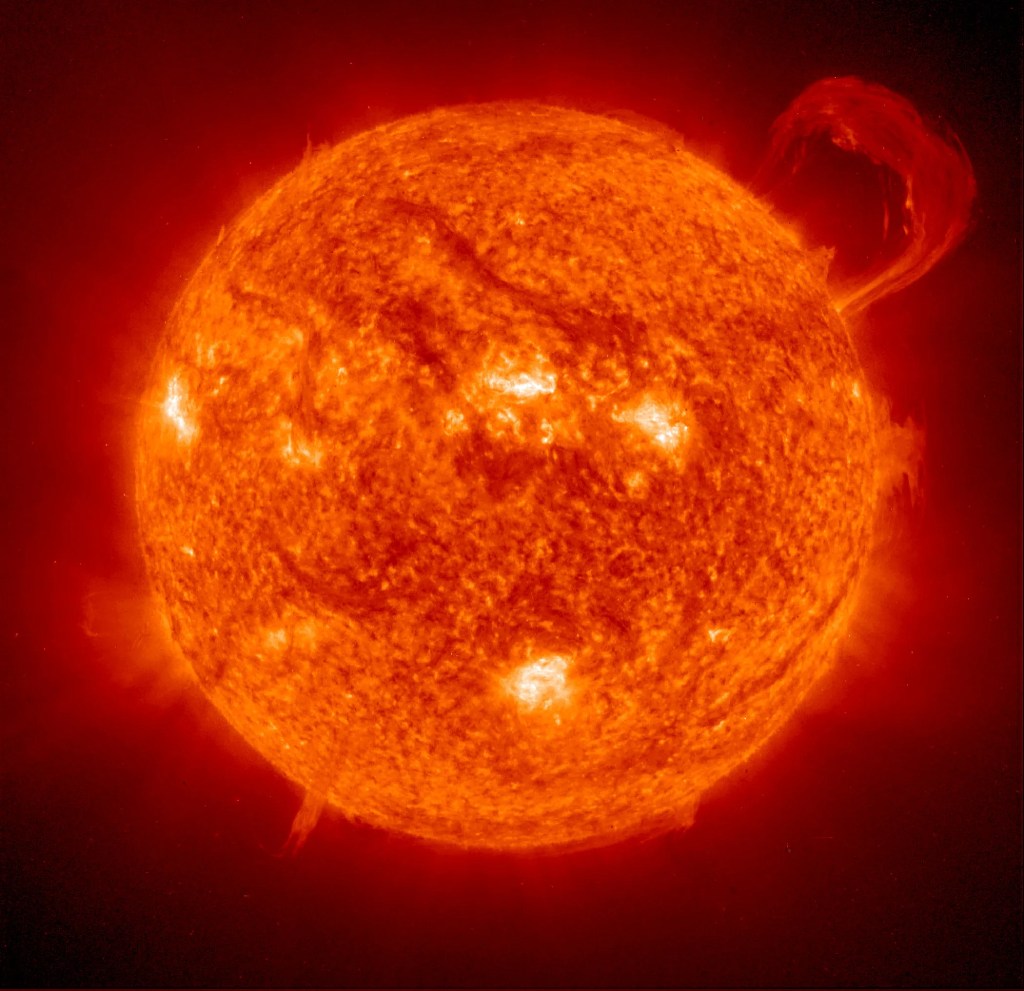
Helium (He): The Sun

Helium is quite special, because it’s the second element on the Periodic Table. It’s a noble gas, and it was discovered in 1868 by Norman Lockyer, then isolated by William Ramsay, Per Teodor Cleve, and Abraham Langlet in 1895. Helium was the first and only element to be identified outside of Earth, which was through observations and spectral analysis of the Sun.

Since helium was discovered in our local star, Lockyer named the new element after the word Helios, which is derived from the Greek word for the Sun. Helios was also the Greek god of the Sun.

Credit: NASA

Selenium (Se): The Moon

Selenium is the first and only element on today’s list that fits into the Non-metal group on the Periodic Table. Because of this, it’s the 34th element on the table. It was discovered in 1817 by Jöns Jacob Berzelius, and possibly, Johann Gottlieb Gahn as well, though that’s difficult to accurately state.

The Greek word for the Moon is Selene, but it’s also the name of the Greek Goddess of the Moon. Berzelius named Selenium after the Moon; however, just like the Sun, an argument could be made that it’s actually named after a deity.

The Moon, the best name for any moon in the universe. Credit: Airwolfhound/FlickrCC BY-SA 2.0

Palladium (Pd): Pallas

Palladium is the 46th element on the Periodic Table, which places it in the Transition Metals group. In 1802, it was discovered by William Hyde Wollaston, an English chemist, who also discovered osmium and rhodium.

Between the orbits of Mars and Jupiter is a region of our Solar System called the Asteroid Belt. Wollaston named Palladium after an asteroid that was located in it, Pallas, and just like Palladium, it was discovered in 1802. Pallas is the third-largest asteroid in our Solar System. Represent.

An image of the asteroid Pallas captured by the European Southern Observatory’s Very Large Telescope. (Image credit: ESO/Vernazza et al.)

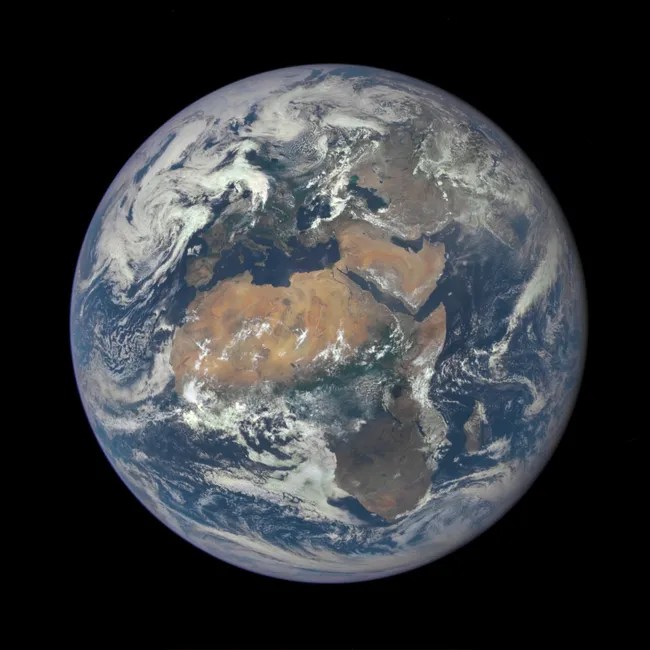
Tellurium (Te): Earth

Tellurium is a metalloid and the 52nd element on the Periodic Table. Like several other elements, it was discovered and isolated by different individuals. Tellurium was discovered by Franz-Joseph Müller von Reichenstein in 1782, but isolated in 1798 by Martin Heinrich Klaproth.

The name Tellurium comes from tellus, the Latin word for Earth; so essentially, tellurium is named after our home planet, Earth.

A NASA camera aboard the Deep Space Climate Observatory satellite caught this view of Africa and the entire sunlit side of Earth on July 9, 2015. (Image credit: NASA)

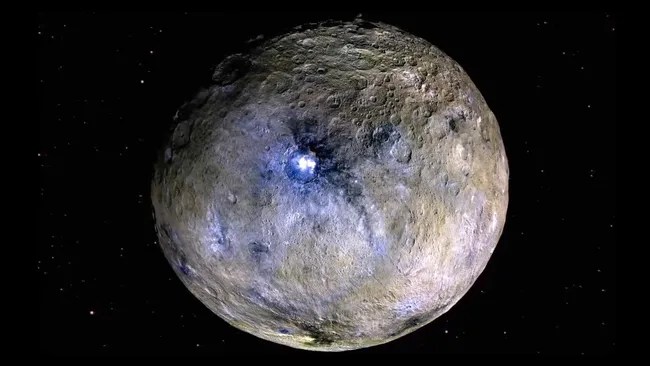
Cerium (Ce): Ceres

For this entry, we have Cerium, which is the 58th element on the Periodic Table. It can be found lounging around with the other Lanthanoids, and it was discovered by Martin Heinrich Klaproth, Jöns Jakob Berzelius, and Wilhelm Hisinger in 1803, but was first isolated by William Francis Hillebrand in 1875.

Within the Asteroid Belt, we can find the dwarf planet Ceres, which cerium was named after. Ceres was discovered in 1801, just two years before cerium was identified.

An image of dwarf planet Ceres captured by NASA’s Dawn mission.  (Image credit: NASA)

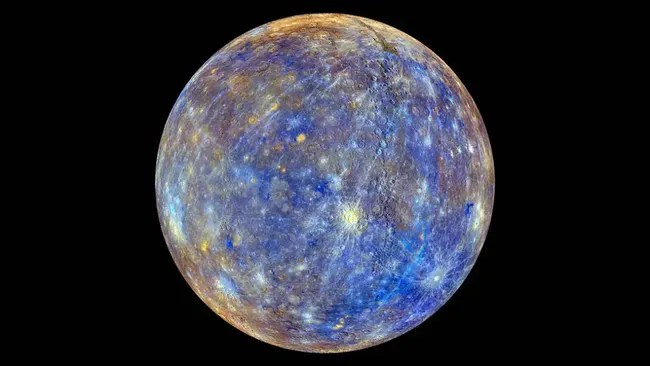
Mercury (Hg): Mercury

Mercury is the 80th element on the Periodic Table, and just like the cool kids, it sits in the Transition metals group. To the best of my understanding, no one person can be credited with Mercury’s discovery, as it was in use since antiquity, which has included several ancient civilisations like the Egyptians, Qin dynasty, Mayas, and Sumerians, to name but a few.

As you can imagine, Mercury is not named after Freddie Mercury, but rather the planet, Mercury, the first planet from the Sun. The element was once known as quicksilver because it is a metal that remains liquid at room temperature. This property connects it to the planet Mercury, named after the messenger of the Roman gods, who was said to speed across the night sky, just like the planet.

A colourful view of Mercury produced using images from the color base map imaging campaign during MESSENGER’s primary mission. (Image credit: NASA/Johns Hopkins University Applied Physics Laboratory/Carnegie Institution of Washington)

Uranium (U): Uranus

Located in the Actinoids group, Uranium is the 92nd element on the Periodic Table. Just like the beautiful nightmare of your ex-partner, this element is radioactive and dangerous. Uranium was discovered in 1789 by the German chemist, Martin Heinrich Klaproth, whom we have met before.

It won’t take you 20 questions to figure this one out, but Klaproth named his newly discovered element after the 1781 discovery of the seventh planet from the Sun, Uranus, by the German astronomer, William Herschel.

Please remember that the pronunciation of Uranus’ name is not Yuor-ray-nuhs or U-ran-us, as you would think. It’s actually pronounced Yoor-e-nes or Ur-an-us. Facts matter, boys and girls, facts matter.

This composite image features the ringed planet Uranus set against the blackness of space. Credit: NASA’s Chandra X-ray Observatory.

Neptunium (Np): Neptune

Sitting right next to Uranium in the Actinoids is Neptunium, the 93rd element on the Periodic Table. It was first synthesised in 1940 by Philip H. Abelson and Edwin McMillan at the Berkeley Radiation Laboratory, California, United States.

Neptunium was named after the eighth planet, Neptune, which was discovered in 1846 by Johann Galle, Urbain Le Verrier, and John Couch Adams. The element was named after the planet, because it was going to follow the pattern set down with Uranium and Uranus.

This composite image provided by NASA on Sept. 21, 2022, shows three side-by-side images of Neptune. From left, a photo of Neptune taken by Voyager 2 in 1989, Hubble in 2021, and the James Webb telescope in 2022. Credit: NASA via AP.

Plutonium (Pu): Pluto

Chilling next to Neptunium in the Actinoids group, we have the 94th element on the Periodic Table: Plutonium. For its discovery, we need to go back to between December 1940 and February 1941, when Glenn T. Seaborg, Edwin McMillan, Emilio Segrè, Joseph W. Kennedy, and Arthur Wahl first produced, isolated, and identified plutonium.

By now, you would have noticed a small pattern with the naming of the last two elements. You don’t have to be a qualified nuclear safety inspector like Homer Simpson to realise that plutonium was named after the planet, now dwarf planet, Pluto, which was discovered in 1930.

Enhanced color view of Pluto using images from New Horizons Long Range Reconnaissance Imager (LORRI) and color data from the spacecraft’s Ralph Instrument. (Image credit: NASA/Johns Hopkins University Applied Physics Laboratory/Southwest Research Institute)

That’s another nine elements down, with only 96 to go. I’ll keep chipping away at it here, on New Zealand’s 5th least favourite website. Did I miss any elements? As always, please let me know.

That’s it for another week. Thanks again for reading, following, and subscribing to Some Geek Told Me. Please remember to walk your dog, read a banned book, and never give Chuck Norris a blunt instrument, because someone will regret it. I’ll see you next week for some more amateur writing by yours truly.


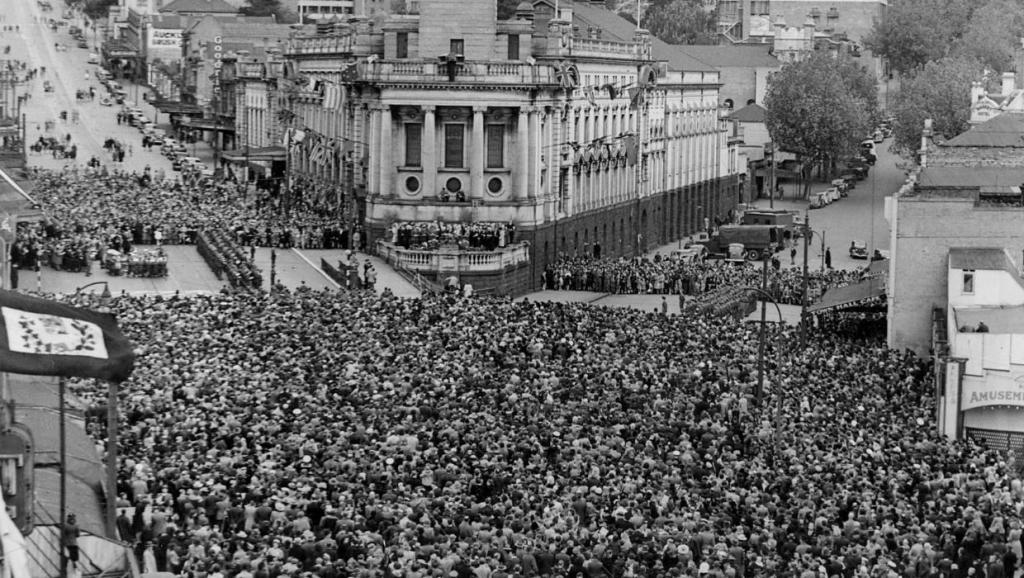
80th VJ Day Anniversary

Oh, you’re back. I wasn’t expecting that, so welcome. I hope your week’s been treating you better than Trump, Putin, Netanyahu, or Luxon’s. Those four precious darlings just can’t catch a break. For this week’s lecture, I want to discuss a sequel of some sort that occurred last week, on 15th August, to be precise.

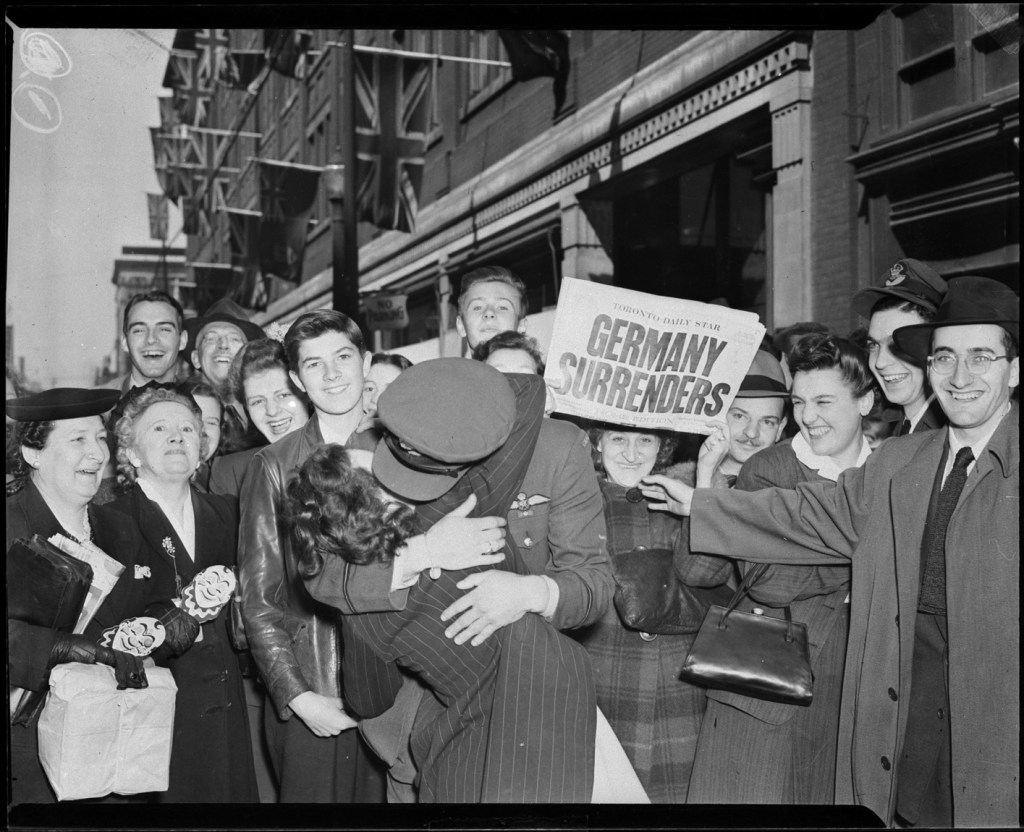
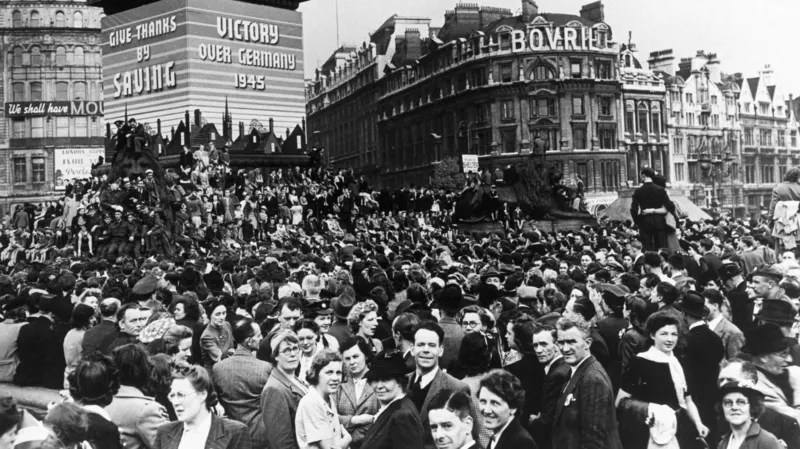
Sorry, if you were hoping for another fun-filled blog post, you are out of luck today. This one is all about history, baby! In May, I published the 80th VE Day Anniversary, which commemorated the unconditional surrender of Nazi Germany, on the 8th May 1945. This event brought the Second World War to a close in Europe, but, as you know, not the war itself. This day became known as Victory in Europe Day or VE Day.

The focus of the war then turned towards Imperial Japan, even though fighting in Asia and the Pacific had been going on since the Japanese invasion of Manchuria in 1931.

On 6th August 1945, the United States dropped a 64 kg uranium-235 core bomb on the Japanese city of Hiroshima. This was the first time an atomic weapon had been used against a population. Three days later, on 9th August, a second bomb, one with a 5 kg plutonium core, was dropped on another Japanese city, Nagasaki. My blog post about the 80th Anniversary of the Atomic Bombings of Hiroshima and Nagasaki can be found here. Hopefully.

Imperial Japan surrendered on 15th August 1945, but because of the time zone difference, some countries reported it as the 14th August. However, the official surrender of the Imperial Japanese forces was held on 2nd September 1945, on board the battleship USS Missouri.

Since 8th May was known as VE Day, 15th August was named Victory over Japan Day or VJ Day. An interesting point is that while various nations commemorate VJ Day on 15th August, like us in New Zealand, the United States honours VJ Day on 2nd September, the day of the official surrender.

Since 8th May was known as VE Day, 15th August was named Victory over Japan Day or VJ Day. An interesting point is that while various nations commemorate VJ Day on 15th August, like us in New Zealand, the United States honours VJ Day on 2nd September, the day of the official surrender.

In Japan, 15th August is known as Memorial Day for the End of the War and/or The Day for Mourning of War Dead and Praying for Peace. Regardless of what day you mark VJ Day, it celebrates the end of the Second World War.


Credit: Chesham Town Council

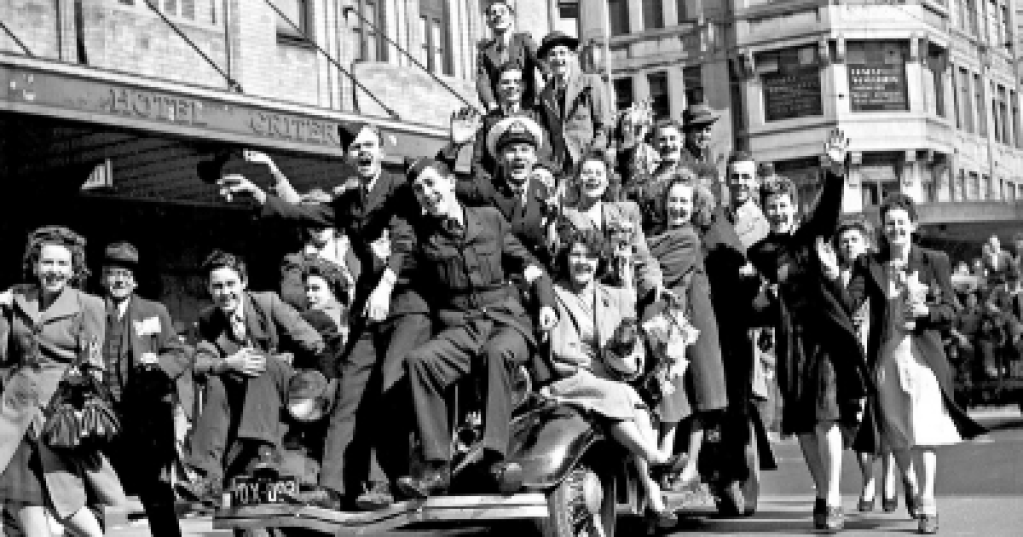
The VE Day celebrations were massive, and filled with happiness, relief and joy. The VJ Day celebrations were similar, but they also signalled the end of the worst conflict the world had ever seen. Over the years, it’s been estimated that 70–85 million people were killed, which worked out to be 3% of the planet’s population at the time.

The horrors and legacies of World War II are still within the living memories of people today. I can’t add anything more to the volumes of literary work that already exist on the subject, other than the dual nature of humans, bringing inhumanity unto ourselves, but also helping each other.

In New Zealand, the 80th anniversary of VJ Day was commemorated with dignity, sharing stories of courage, bravery, and sacrifice while also honouring those who lost their lives.

World War I was supposed to be the war to end all wars. Who would have thought that when the Treaty of Versailles was signed in 1919, only 20 years later, an even deadlier war was coming?

I’m uncertain about the lessons that Homo sapiens have learned from World War II. Since its end, we have made strides toward peace and tolerance, yet we continue to struggle with civil wars, genocides, ethnic cleansing, Neo-Nazis, and invasions.

Still, there is hope that one day, as a species, we can finally get it right and educate people about war in history lessons, and not through current affairs.

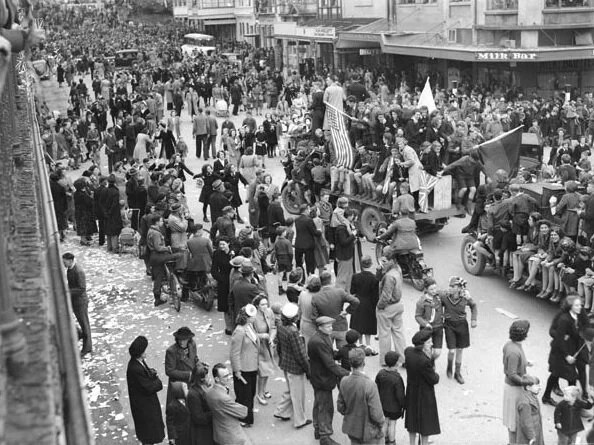
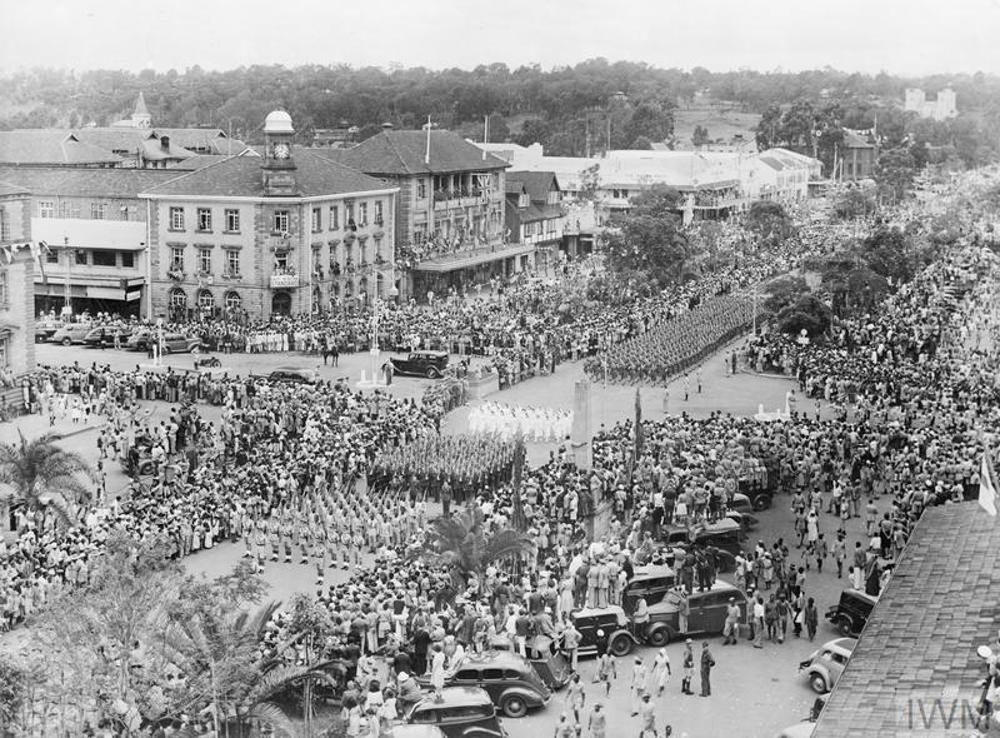
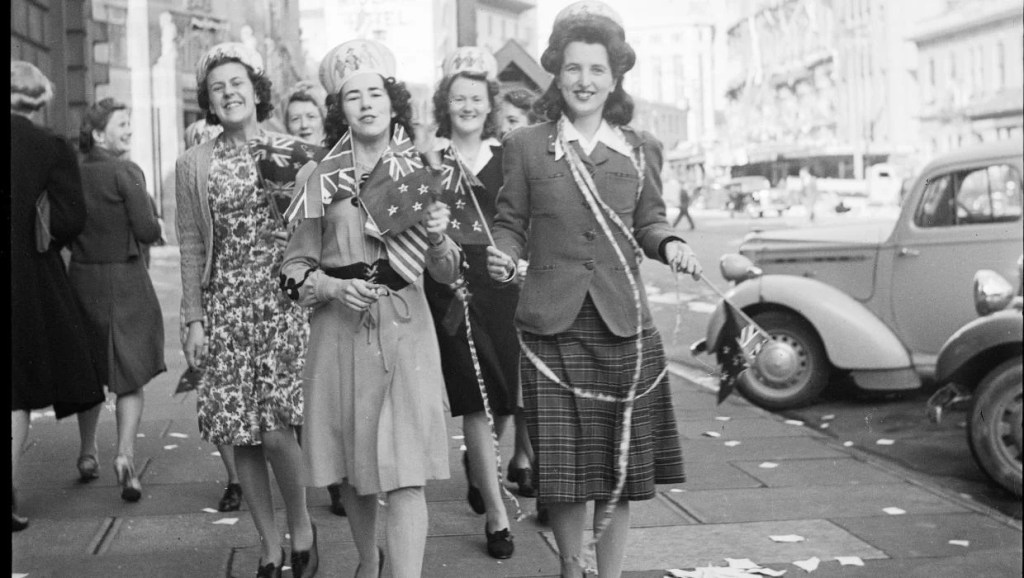
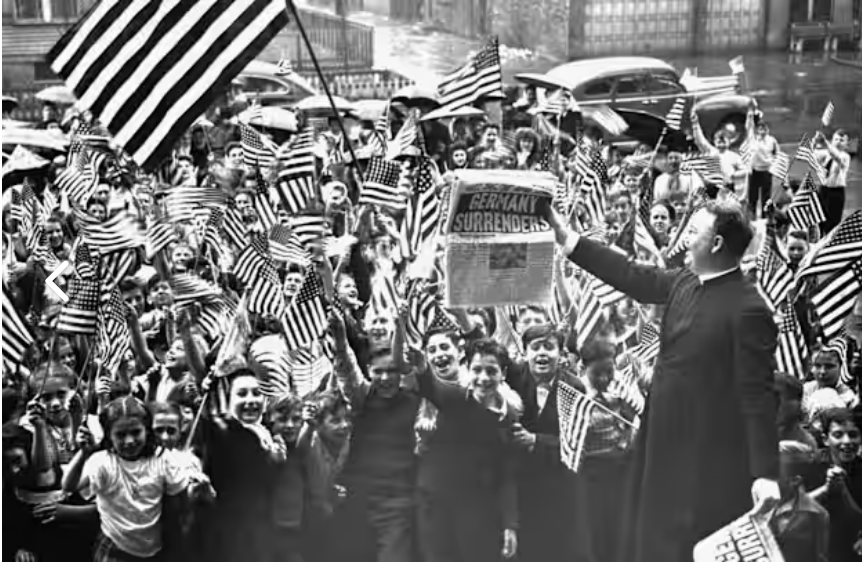
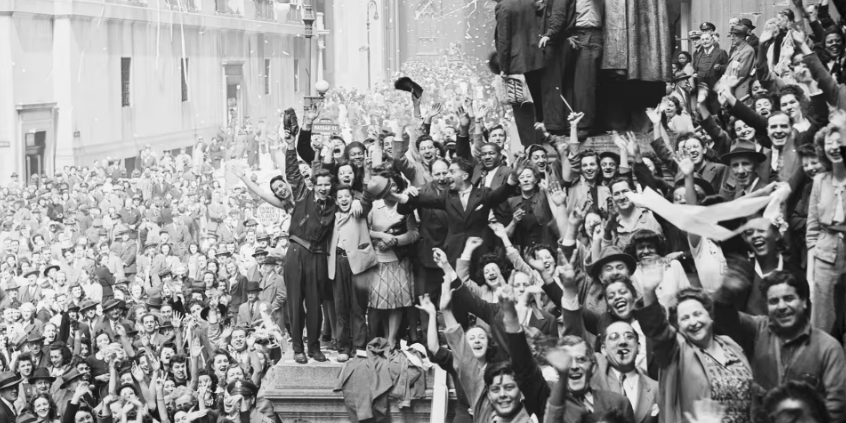
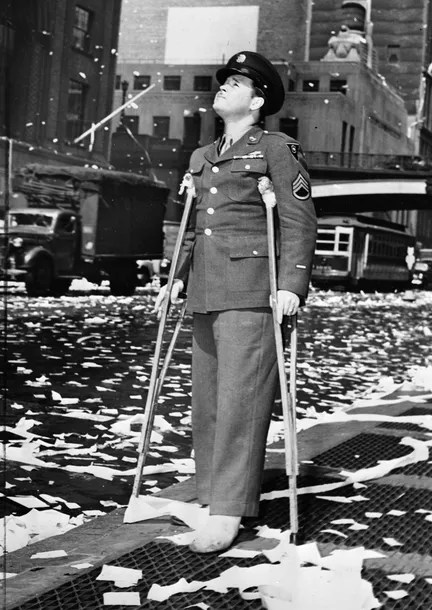
Just like my 80th anniversary VE Day post, I found various online photographs of people celebrating VJ Day, on 15th August 1945, or as close to that date as I could find. Again, since I’m a New Zealander, I’ve started with the celebrations in New Zealand, then moved around the globe in alphabetical order. I’m very sorry if I have missed your country, so please forgive me.

Relax and enjoy witnessing people expressing joy and relief 80 years ago, when the Second World War finally ended.


New Zealand

Victory Japan Day (VJ Day), Nelson, 1945. Nelson Provincial Museum, Kingsford Collection: 160684

A crowd of young people celebrating V-J Day at the crossing of Cuba and Manners streets, Wellington, New Zealand. Photographed by an Evening Post staff photographer on the 15th of August 1945.

Australia

Photo of a yet unidentified man dancing in the streets of Sydney, Australia at the close of World War II (August 15, 1945)
Victory in the Pacific Day celebrations in Sydney in 1945. Picture: Australian War Memorial

Canada

V-J Day celebration, Elizabeth Street
August 1945. Credit: City of Toronto Archives

China

Crowds in Shanghai celebrating V-J Day, End of World War II in China. Photo by Public Domain.

India

VJ Day, India Gate New Delhi. Credit: Unknown.

Kenya

VJ Day celebrations in Nairobi, Kenya, circa August 1945 (IWM (K 9878))

Korea (Before dividing into North and South Korea)

August 15 1945, Korea celebrated its liberation from over 30 years of colonial rule under Imperial Japan. Credit: Unknown.

The Philippines

TARLAC, LUZON ISLAND, THE PHILIPPINES, 1945-09-24. VJ (VICTORY OVER JAPAN) DAY CELEBRATIONS FLOAT. Credit: Australian War Memorial.

United Kingdom

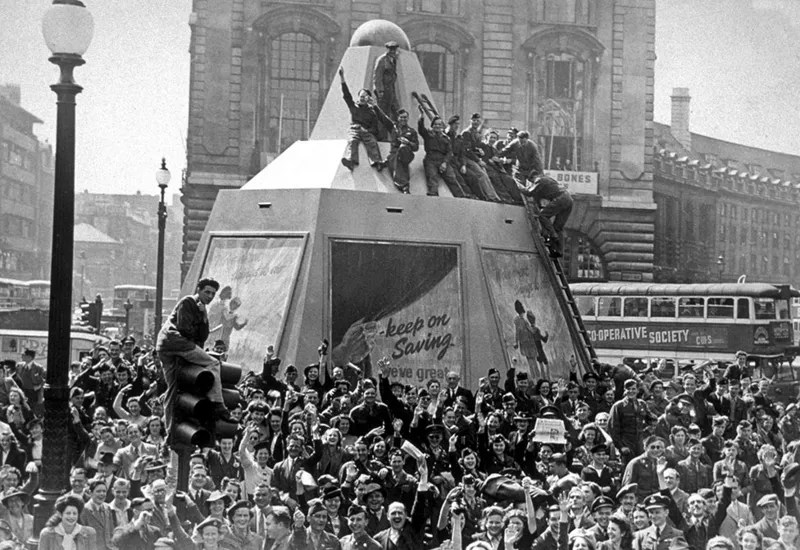
Thousands of people descended on the Mall, London, in 1945 to celebrate VJ Day. Credit: Getty Images.
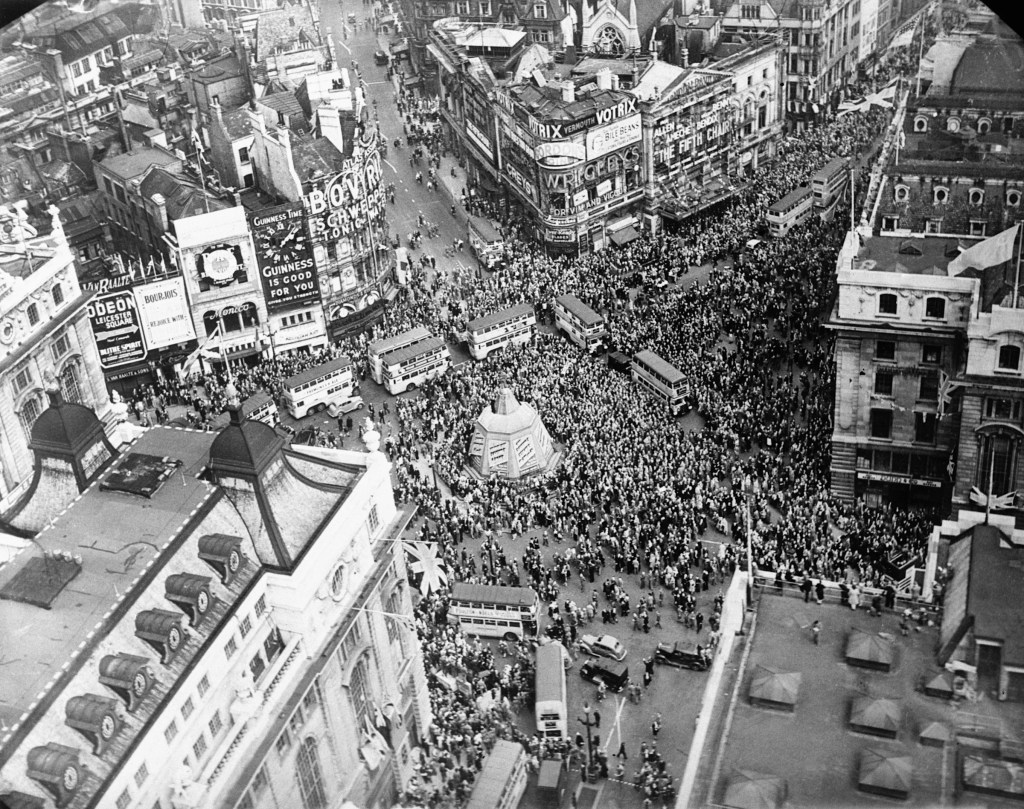
People celebrate in Piccadilly Circus, London on VJ Day. Credit: Getty Images.
Celebrations in London, August 1945 (Image courtesy of IWM)
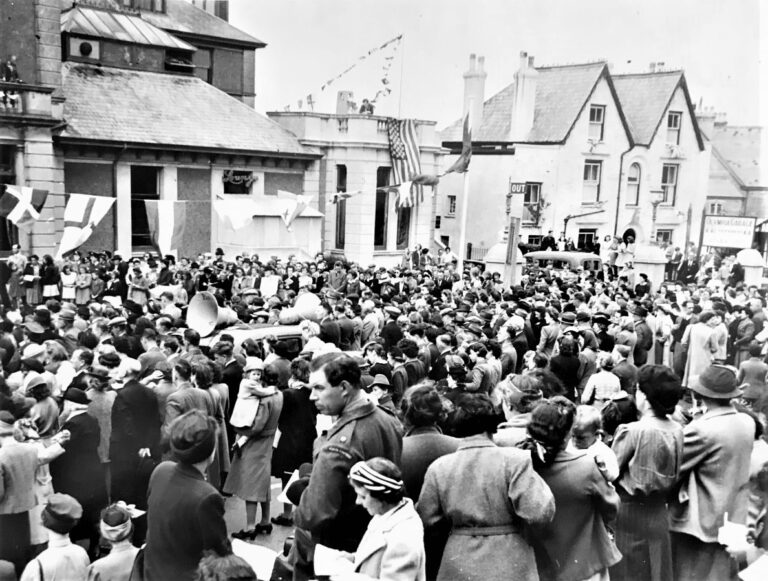
Newquay VJ Day 1945. Credit: Unknown.

United States of America

V-J Day in Times Square, a photograph by Alfred Eisenstaedt, was published in Life in 1945 with the caption, “In New York’s Times Square a white-clad girl clutches her purse and skirt as an uninhibited sailor plants his lips squarely on hers”
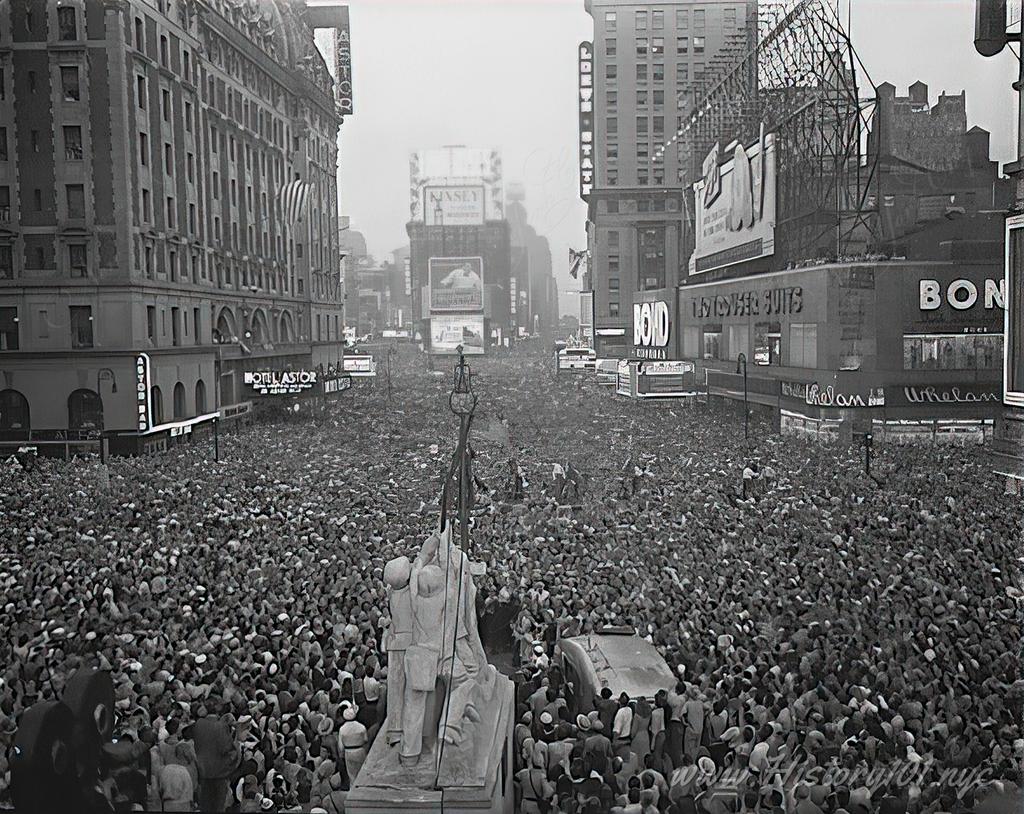
750,000 people gathered in “Times Square” to Celebrate Victory over Japan Day (V-J Day), following announcement of Japan’s acceptance of Postdam Declaration of unconditional surrender. Image Credit: Unknown. Reprinted with permission.

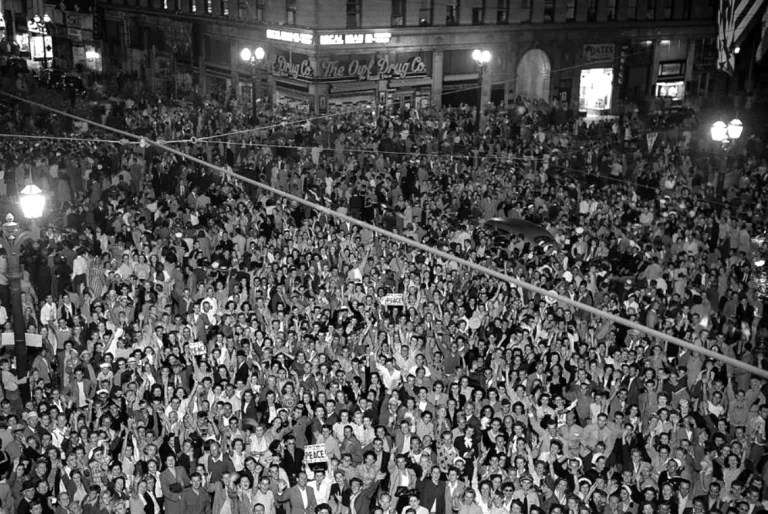
Crowds at the corner of Hollywood and Vine celebrating surrender of Japan, ending World War II – VJ Day, August 14, 1945
When Seattleites celebrated V-J Day on August 14, 1945 – marking victory over Japan and the end of World War II – it was one of the biggest impromptu parties downtown has ever seen. (MOHAI)

Like I said in the 80th VE Day blog post, we owe them a debt we can never repay. Thanks once again for reading, following, and subscribing to Some Geek Told Me. Remember to walk your dog, read a banned book, Crimea is Ukraine, and I’ll see you next week for the 2025 San Diego Comic-Con catch-up. Sounds exciting. Maybe.


80th Anniversary of the Atomic Bombings of Hiroshima and Nagasaki

Welcome to a rare occurrence, a Saturday blog from Some Geek Told Me. This is a special one, since this week saw the world commemorate the 80th anniversary of the atomic bombings of the Japanese cities of Hiroshima and Nagasaki.

Given that the 80th Anniversary of VJ Day (Victory over Japan) is just around the corner, which signalled the end of the Second World War, I thought it would be important to revisit one of my previous blogs, concerning the bombings.

I’ve tidied up some of the old blog post, but the core of the message is the same: the dropping of atomic bombs on Hiroshima and Nagasaki changed the world. How it changed remains your decision and judgment.

As a history fan, I find it hard to ignore these events. However, I will not be discussing the following:

  • The development of the atomic bombs, through the Manhattan Project.
  • The justification behind the Allies’ decision to drop the bombs.
  • The Quebec Agreement or The Potsdam Declaration.
  • The Allies warning the Japanese citizens of the bombings.
  • Whether Japan had the capability to defend itself, against an Allied invasion.

I’ll be discussing the impact of the two bombs on the cities of Hiroshima and Nagasaki, as well as their effects on the citizens. While this topic may not be as exciting as Fifty Shades of Grey or The Da Vinci Code, it’s important to understand and remember the lessons of history.

With that in mind, let’s now begin this week’s special lecture.


The gutted Hiroshima Prefectural Industrial Promotion Hall – now known as the A-Bomb Dome or the Hiroshima Peace Memorial – after the bombing on 6 August 1945, and the same location near Aioi Bridge in 2015.
Photograph: Toshio Kawamoto/Yoshio Kawamoto/Reuters/Issei Kato

Hiroshima: 6th August 1945

At the time of the bombing, Hiroshima was the headquarters for the Chūgoku Regional Army, as well as the Second General Army. Given Hiroshima’s position for shipping and military resources, it was one of the targets selected to be hit.

Hiroshima’s population was nearly 345,000, which was made up of military personnel, citizens, including children, slave labourers and prisoners of war.

The weapon used on Hiroshima was a bomb with a 64 kg uranium-235 core, nicknamed Little Boy. It had the power of 15 kilotons of TNT.

On 6th August, at 8.15 a.m. (local time), the bomb was dropped from the Enola Gay, an American Boeing B-29 Superfortress bomber, at an altitude of 9,400 m. It fell for 44-45 seconds before detonating at 580 m, which was directly above a hospital.

The result of the first nuclear weapon being used in warfare, was nothing short of horrific.

  • The ground-level temperature surpassed 7,000 °C.
  • 70,000 people were instantly killed by the blast and the resulting firestorm, with under 10% being military personnel.
  • By the end of 1945, the death toll had risen to over 100,000, mainly through radiation and injuries.
  • Of the city’s buildings, 70% were destroyed (60,000), with another 7% damaged.
  • Nuclear shadows or blast shadows of victims were created on the city’s footpaths and walls.
  • A mushroom cloud was created and rose to more than 12 km high.
  • The blast radius of the weapon had total destruction for 1.6 km, along with fires stretching across 11 km².
  • Over 90% of doctors and 93% of nurses in Hiroshima were killed or injured.
  • For people looking for medical treatment from the weapon, many would die before any medical help could be given to them. This resulted in dead bodies lying around hospitals.
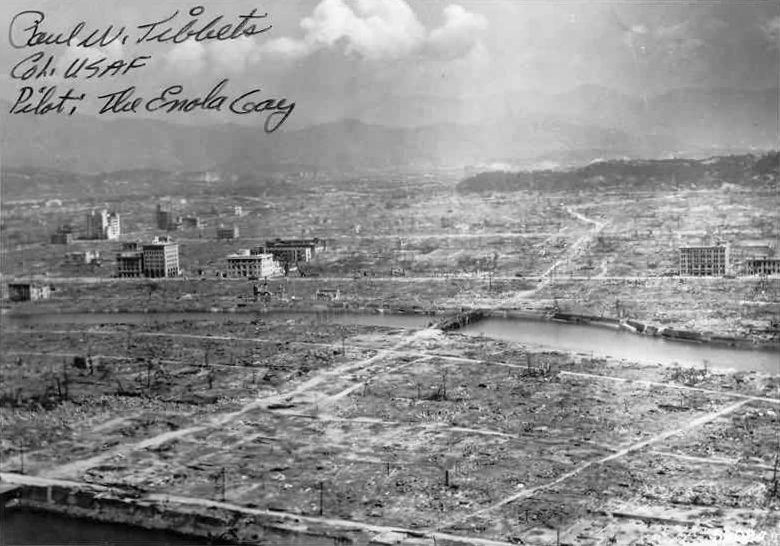
Source: https://commons.wikimedia.org/wiki/File:Hiroshima_aftermath.jpg. Shortly after 6th August 1945 (8:15 a.m. – the atomic bomb was dropped on Hiroshima)
Source: https://www.britannica.com/event/atomic-bombings-of-Hiroshima-and-Nagasaki
Aerial photograph of Hiroshima after it was struck by an atomic bomb on August 6, 1945.
Source: This image is available from the Collection Database of the Australian War Memorial under the ID Number: P05395.013. The two photos taken Yoshito Matsushige, and show examples of nuclear shadows.

Nagasaki: 9th August 1945

During the war, Nagasaki was an important seaport, which was one of the largest in Japan. Nagasaki was also home to four massive companies that were involved in the production of various military technology and machines. These companies employed 90% of the labour force in the city. Because of this, it was selected as a target.

Nagasaki’s population was 263,000, which consisted of Japanese citizens, Korean citizens, Korean and Chinese workers, soldiers and prisoners of war.

The Nagasaki bomb had a 5 kg plutonium core, nicknamed Fat Man. This weapon had the equivalent power of 21 kilotons of TNT.

On 9th August, at 11.01 a.m. (local time), the plutonium bomb was dropped from another American Boeing B-29 Superfortress bomber, Bockscar. It fell for 53 seconds, exploding near 500 m, which was directly above a tennis court.

As Japan and the world were still reeling after the Hiroshima bombing, a new nightmare was about to unfold.

  • 40,000 people were instantly killed by the blast, with 60,000 injured.
  • By the end of 1945, the death toll had risen to an estimated 80,000, mainly through radiation and injuries.
  • 40% of the city’s buildings were destroyed.
  • The industrial area sustained 68-80% of its production, was destroyed.
  • A mushroom cloud was created to a height of 16 km.
  • The blast radius of the weapon had total destruction for 1.6 km, along with fires stretching 3.2 km south of the blast radius.
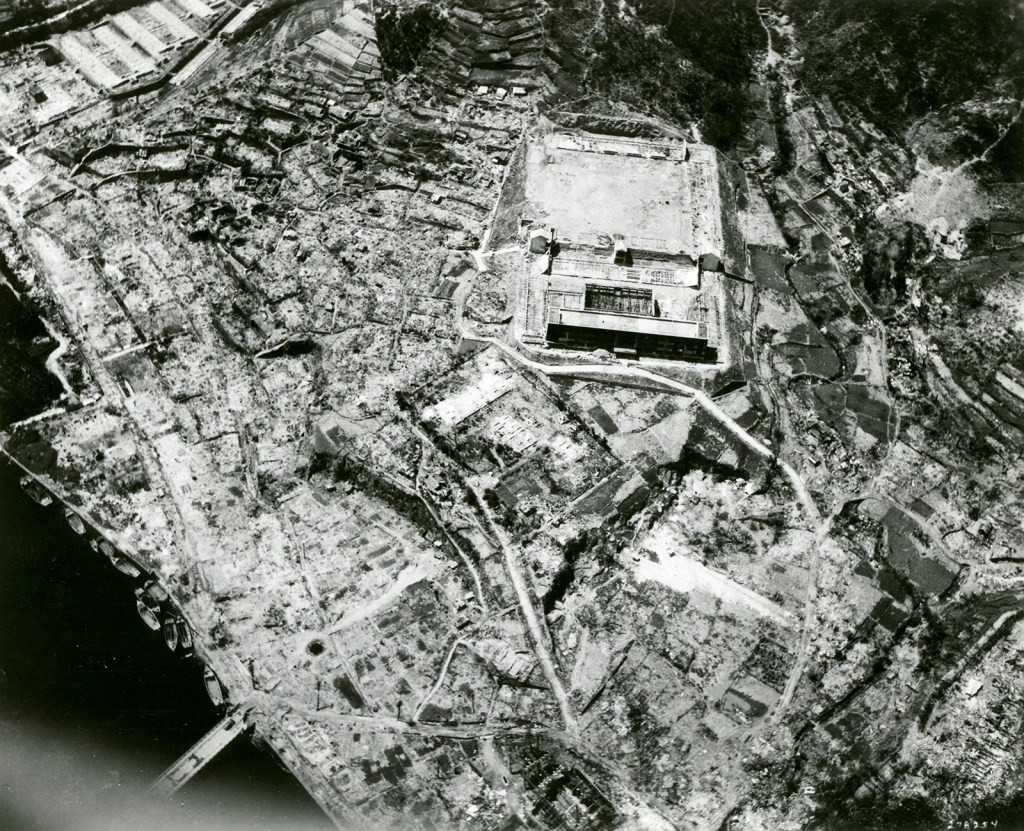
Image by WikiImages from Pixabay. Photo of Nagasaki after the bombing, from a 1946 US report.
Source: Courtesy of Library of Congress, “Nagasaki, Japan after atomic bombing / U.S. Army A.A.F. photo,” 1945
Source: https://www.britannica.com/event/atomic-bombings-of-Hiroshima-and-Nagasaki/The-bombing-of-Nagasaki#/media/1/2191531/243815. Ruins in Nagasaki, Japan, September 16, 1945, one month after the dropping of an atomic bomb on the city.

Casualties of the bombs could be collected under three main groups: radiation injuries, debris injuries, and burns.

Radiation injuries accounted for 10% of the deaths in Hiroshima and 6% in Nagasaki. Debris injuries accounted for 30% of the deaths in Hiroshima and 14% in Nagasaki, while burns accounted for 60% of the deaths in Hiroshima and about 80% in Nagasaki.

This information does not even touch upon the massive reconstruction effort of Hiroshima and Nagasaki; the aftercare needed for the survivors, named as hibakusha in Japanese; the radiation and cancer research conducted with the survivors; the cultural and historical impact on Japanese society; or even the world’s reaction and response to the bombings.

Over the last few years, I’ve explained what happened to Hiroshima and Nagasaki to UMC1 and UMC2. I haven’t gone into great detail about them, but it’s difficult to explain to children that the nuclear apocalypse of Hiroshima and Nagasaki was real. It’s not fake, this happened; not once, but twice.


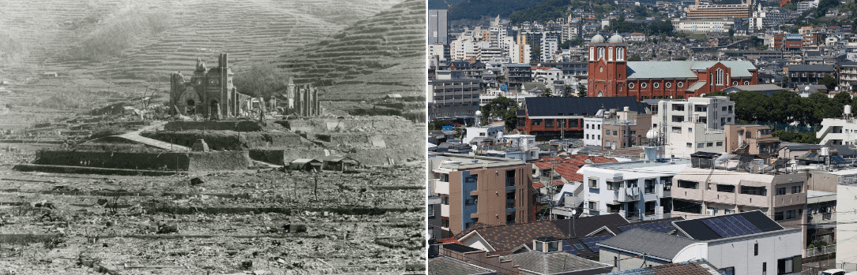
The Urakami Cathedral in Nagasaki, which was obliterated on 9 August. The replacement was built in 1959.
Photograph: Shigeo Hayashi/Nagasaki Atomic Bomb Museum/Reuters/Issei Kato

The bombing of Hiroshima and Nagasaki changed Japan forever, but also the world. I think the legacy of the two cities is a twisted form of doublethink.

The destruction of Hiroshima and Nagasaki can show us an example of what the worst of humanity can offer; what terrible things we can do to each other. However, it also shows us how, quite literally and figuratively, humanity can stand up after being knocked down and start to rebuild in the name of peace.

Both statements are true. They can co-exist alongside each other in your mind, and that’s alright. Though I think, just maybe, it’s about what you want to focus more on: hate or hope.

And that’s enough from me today. I hope this was enlightening for you, as I’ll be back on Monday with another thrilling post from New Zealand’s 5th least favourite website. Take care.


We Didn’t Start the Fire: 1958

I was thinking the other day about our finite time on this beautiful planet. We try to use it by developing various skills and spending time with our loved ones. And then there is this project, which I don’t fully understand where it would fall.

Yes, dear reader, one of the worst ideas I have ever had has returned with a vendetta against logic and reason. Some Geek Told Me is proud to present the latest instalment of We Didn’t Start the Fire, where we examine the historical references of the song.

For the previous non-award-winning entries of the song, please see below to be stunned into submission!

 We Didn’t Start the Fire: The Beginning 

We Didn’t Start the Fire: 1948-1949.

We Didn’t Start the Fire: 1950

We Didn’t Start the Fire: 1951

We Didn’t Start the Fire: 1952

We Didn’t Start the Fire: 1953

We Didn’t Start the Fire: 1954

We Didn’t Start the Fire: 1955

We Didn’t Start the Fire: 1956

We Didn’t Start the Fire: 1957

In 1957, there were many shenanigans, so 1958 might be a nice change of pace. So strap yourself in, because we’re going back to 1958! Make it so!


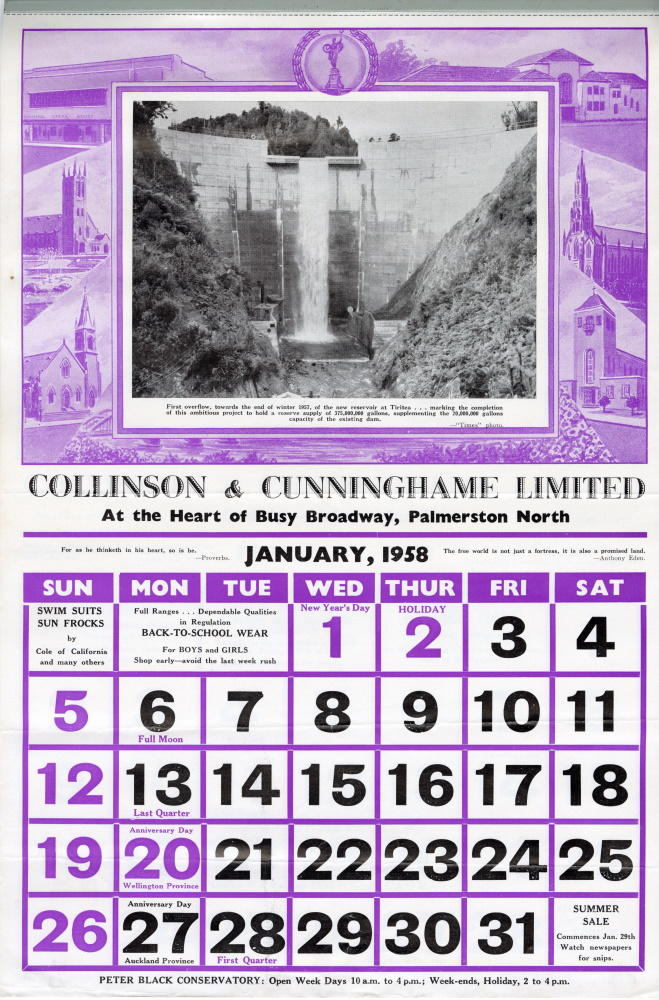
Credit: Collinson & Cunninghame Ltd: Publisher

1958

Lebanon

Lebanon is a country that can be found in the region called the Middle East and has a deep and rich history, dating back to at least 5,000 BCE. It borders the Mediterranean Sea to the west, with Cyprus just 240 km off the coast. Syria lies to the north and east of Lebanon, with Israel and the Golan Heights to the south. Lebanon has a population of approximately 5.84 million people, similar to New Zealand, which has a population of about 5.3 million. The capital city, Beirut, has an estimated population of 2.3 million.

1958 was the year of the Lebanon Crisis, where the country was thrown into political and religious turmoil. At the time, the President of Lebanon was Camille Chamoun, and he was in the sixth and final year of his term.

Some of the issues Lebanon were facing included tensions between Christians and Arab Muslims flaring up; Egypt and Syria had merged to create the United Arab Republic (UAR) and wanted Lebanon to join them; an armed rebellion had formed; along with Chamoun wanting to seek another term, which went against the Constitution of Lebanon.

The problem was brought to the attention of the United Nations Security Council, and one proposed solution involved United States President Dwight D. Eisenhower leading an intervention at the request of Chamoun. Under Operation Blue Bat, he sent 5,000 marines to secure the Port of Beirut and Beirut International Airport. This lasted from 15th July to 25th October 1958.

The legacy of the Lebanon Crisis was that Chamoun did not attain a new term, with Fouad Chehab becoming the President of Lebanon, and a national reconciliation government was formed. Sadly, Lebanon went on to suffer a civil war for 15 years, which killed an estimated 150,000 people, coupled with conflicts with Israel, the Syrian Civil War, the Arab Spring, the October Revolution, and a financial crisis, Lebanon is now identified as a failed state.

US Marines move into Lebanon 28 July 1958. Copyright Life Magazine
LIFE Magazine Cover b/w © Time Inc. 

Charles de Gaulle

Charles de Gaulle remains a famous French icon, over 130 years after his birth. Born in 1890, de Gaulle was a veteran of the First World War, and after the war ended, he stayed with the army. This led him to gain worldwide attention later on during the Second World War, after de Gaulle was promoted within the army and the government, to the point where he was in charge of the Free French Forces against Nazi Germany.

After the war, de Gaulle remained within the government in various roles until 1946. However, in 1958, Algeria was involved in an armed conflict to wrestle its independence from France.

Charles de Gaulle re-entered French politics during a crisis in the Fourth Republic, particularly regarding Algeria, during the 1958 election. He was appointed Prime Minister and granted special powers to address the Algerian Crisis, as many believed he was the only person capable of resolving it.

This led to de Gaulle drafting a new French Constitution, which established the Fifth Republic of France, where he was subsequently elected as the first President of the Fifth Republic. Although Algeria won its independence from France on 5th July 1962, de Gaulle remained President until 1969.

A contemporary equivalent for de Gaulle would be someone who was a war hero and then entered politics. History is filled with such people, however, I’ll go for George H.W. Bush, Bajram Begaj, Hashim Thaçi, Aslan Maskhadov, and Min Aung Hlaing, along with many others.

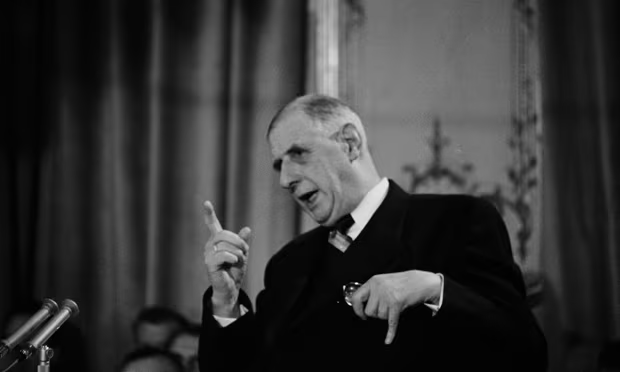
Charles de Gaulle gives a press conference, 1958. Photograph: Daniele Darolle/Sygma via Getty Images

California baseball

This is not the first time a baseball team has appeared as an entry on one of our lists. California baseball refers to the New York Giants, who had played in the National League, in MLB (Major League Baseball), since 1883. They were based in…wait for it…New York; Upper Manhattan to be precise.

One of their rivals was the Brooklyn Dodgers, who managed to grace the 1955 edition of We Didn’t Start the Fire. At the end of the 1957 season, the New York Giants and the Brooklyn Dodgers left New York and moved to California. They transformed into the San Francisco Giants and the Los Angeles Dodgers, all ready for the 1958 season so they could continue their feud.

After moving to California, the Giants won the World Series in 2010, 2012, and 2014. I’ve stated this before, but I’m not a baseball expert, so for a modern example of a baseball team relocating recently, I think the Oakland Athletics moving to Las Vegas, Nevada is a clear winner.

Giants first practice at Seal Stadium on April 15, 1958. Starting line up: Davenport, O’Connell, Mays, Cepeda, Sauer, Spencer, Thomas, Gomez. Starting Pitcher Ruben Gomez. Credit: Art Frisch.

Starkweather homicide

Alright, here’s a historical reference from 1958 that is still sending ripples through time. Between November 1957 and January 1958, Charles Starkweather killed 11 people and two dogs, accompanied by his girlfriend, Caril Ann Fugate. The victims’ ages ranged from 2-70 years old, with the 2-year-old being Betty Jean Bartlett, Fugate’s sister.

Starkweather killed his first victim on 30th November/1st December 1957, then went on to terrorise the US states of Nebraska and Wyoming. The Starkweather homicides gripped the American public, which had resulted in a large manhunt for the couple. They were finally captured by authorities near Douglas, Wyoming, on 29th January 1958.

After he was found guilty, Starkweather was executed by an electric chair on 25th June 1959, while Fugate was given life imprisonment, though she was released in 1976.

The Starkweather homicides have spawned many adaptations and variations across television, film, books, comics, music, and video games.

Starkweather has been characterised as both a serial killer and a spree killer. The term spree killer is often used interchangeably with rampage killer or shooter. If you’re looking for a modern equivalent in 2025, simply reading a newspaper or watching news videos will help you find the latest incidents of spree killings, no matter where you are in the world.

Casper Tribune-Herald on 30th January 1958, describes Starkweather’s capture. Credit: Casper Tribune-Herald

Children of Thalidomide

Children of Thalidomide refers to the Thalidomide scandal that swept the globe. Thalidomide was first introduced in 1957, under the name of Contergan, and it was a revolutionary new drug. It was marketed as an over-the-counter medication, that could help with tension, sleeping, anxiety, and morning sickness.

Health authorities around the world began to observe three troubling trends: an increase in infant deaths shortly after birth, a rise in miscarriages, and a growing number of babies born with deformities such as heart, arm, leg, eye, and urinary tract defects. A common factor associated with these alarming trends was the use of thalidomide by pregnant women. Approximately 300 million tablets of thalidomide were sold during this time.

By 1958, the Thalidomide scandal was in full effect across the planet. Soon, country by country were starting to stop the sale of thalidomide and introduced legalisation to ban the drug. It was later discovered that thalidomide caused birth defects by disrupting the development of blood vessels in the embryo.

The Thalidomide scandal prompted many countries to review their drug regulatory policies, resulting in enhanced monitoring of these regulations. The effects of this are still observed today with stronger drug regulations worldwide.

In the last 15 years, many drugs have been withdrawn because of safety concerns, which have included Ingenol mebutate gel, Lorcaserin, Ranitidine, Flupirtine, Tetrazepam, Drotrecogin alfa, Propoxyphene, Gemtuzumab ozogamicin, Ozogamicin, and Rosiglitazone, to name but a few.

Contergan tablets. Credit: WDR

So for 1958, we covered a country, a war hero-turned-politician, a baseball team, a spree killer, and a dangerous over-the-counter drug. One of the biggest points about the historical references for 1958, is how these events are still being echoed in 2025.

So that’s it for another week. The 1960s are just months away, but we need to face 1959 first, so hang in there. Thanks again for reading, following, and subscribing to Some Geek Told Me. My accounts on Twitter and Mastodon, are still there, doing whatever the opposite of cool is.

This is a good time to remind my amazing audience that my mid-year break is coming up soon, where I take a well-deserved two-week holiday from running New Zealand’s 5th least favourite website. It’s hard work producing low-quality content.

Anyway, please remember to walk your dog, read a banned book, swipe right on diplomacy, and I’ll see you next week.


Who, what, and where are the elements named after?: Part 1

What’s a nice person like you, doing in a place like this? It’s not that bad, I think. In a totally unrelated matter, I attended a meeting with all of the administrative staff at Some Geek Told Me to discuss future ideas for blog posts.

The CEO came up with a few stupid ideas, the CFO mentioned a moronic suggestion, and the President of the company suggested a truly idiotic topic, though that’s pretty standard nowadays. However, whenever I need a dumb idea, the Vice President never disappoints me.

Because whatever the Vice President wants, the Vice President gets, so we are now going back to the Periodic Table. Yay! Our last venture into this elemental masterpiece was nearly four years ago, so if you missed it, check it out here before…I don’t have an answer to that statement.

Like me, I’m sure you’re a science fan, so how could you not love the Periodic Table? Created in 1869, by Russian chemist, Dmitri Mendeleev, the Periodic Table is the organisation of the known elements into a table, based on their physical properties, atomic number, atomic valence and their atomic mass.

One day I hope to understand it better, though at this rate, it might be the same time the All Blacks win the World Cup again.

So after reading this strange introduction, you would be forgiven if you’re wondering what is going on with today’s blog post. Other than neglecting my bed, we are going to start looking at where the names of the 118 elements have originated from, with the first part of this pointless exercise looking at real people.

Yes, 13 elements are directly named after real people, however, some different people are indirectly named after elements, but I will rant about them another day. I’m not going to present 13 elements in alphabetical order, as you would expect from this account, but rather in the order you would find them on the Periodic Table. So, without further fanfare, let’s turn the page and begin now.


Image by Daniel Madriz from Pixabay

Curium (Cm): Marie Curie and Pierre Curie

Curium is the 96th element on the Periodic Table, and it resides in the Actinoid group. It’s a synthetic element, which means it was created on purpose by Glenn T. Seaborg, Ralph A. James, and Albert Ghiorso in 1944, at the Lawrence Berkeley National Laboratory (Berkley), California, United States.

Curium was named after Marie and Pierre Curie, one of the most famous married couples in science. The Curies discovered polonium (Po), along with radium (Ra) and conducted years of research on radioactivity. In 1903, the Curies and Henri Becquerel shared the Nobel Prize in Physics, along with Marie winning the 1911 Nobel Prize in Chemistry.

Pierre and Maria Curie in the laboratory, 1904. Credit: Public domain, via Wikimedia Commons

Einsteinium (Es): Albert Einstein

Einsteinium is the 99th element on the Periodic Table, and it hangs out just three spaces along from curium in the Actinoid group. Einsteinium is another synthetic element, and it was created in 1952, by Albert Ghiorso, Torbjørn Sikkeland, Almon E. Larsh, and Robert M. Latimer, at the University of California, Berkeley, United States.

Using your amazing detective skills, you would have figured out that Einsteinium was named after, arguably, the famous scientist of the 20th century, Albert Einstein.

I’ve stated this before, but Einstein was a theoretical physicist who researched and published work on the photoelectric effect, Brownian motion and the Einstein relation, special relativity, the principle of mass-energy equivalence (E=mc2), statistical mechanics, general relativity, and many more outstanding contributions to science. Einstein also received a Nobel Prize in 1921 in Physics.

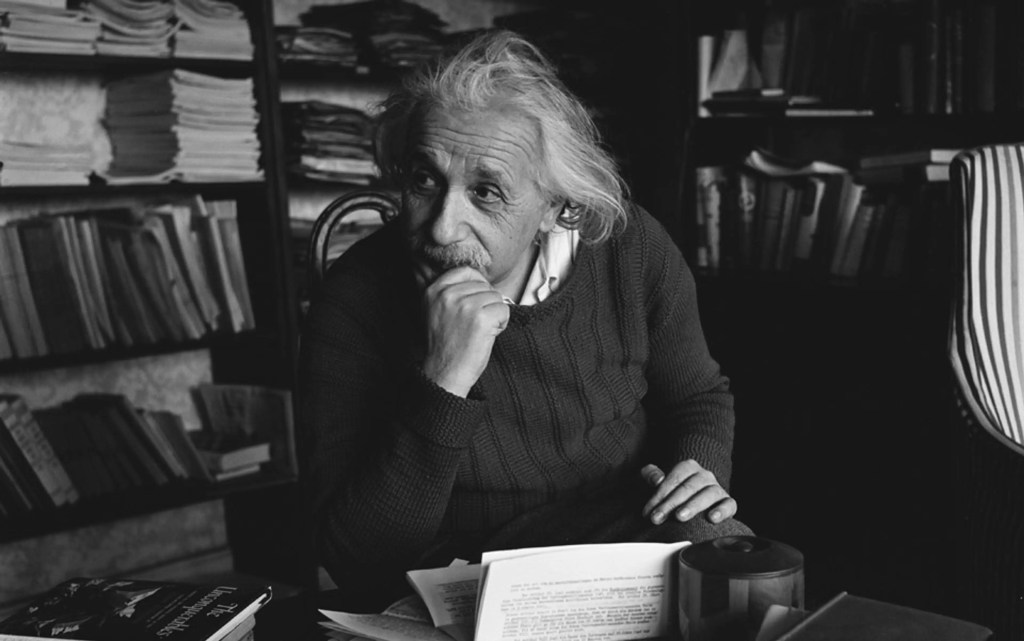
Albert Einstein (1879 – 1955) at home in Princeton, New Jersey, 1944. Photo by Popperfoto/Getty Images

Fermium (Fm): Enrico Fermi

 Since Fermium is the 100th element on the Periodic Table, it sits right next to Einsteinium in the Actinoid group. As you can guess, Fermium is a synthetic element, and in 1952, it was discovered by Albert Ghiorso and other scientists at the Lawrence Berkeley National Laboratory. It was created in the debris of the first hydrogen bomb explosion in 1952, code-named Ivy Mike.

Just like the previous two entries, Fermium was named after another 20th-century scientist, Enrico Fermi. He was a physicist, and among the various things he accomplished, Fermi helped construct the world’s first artificial nuclear reactor, as well as working on the Manhattan Project.

And just like the Curies and Einstein, he was also awarded a Nobel Prize, but this was in 1938 for Physics.

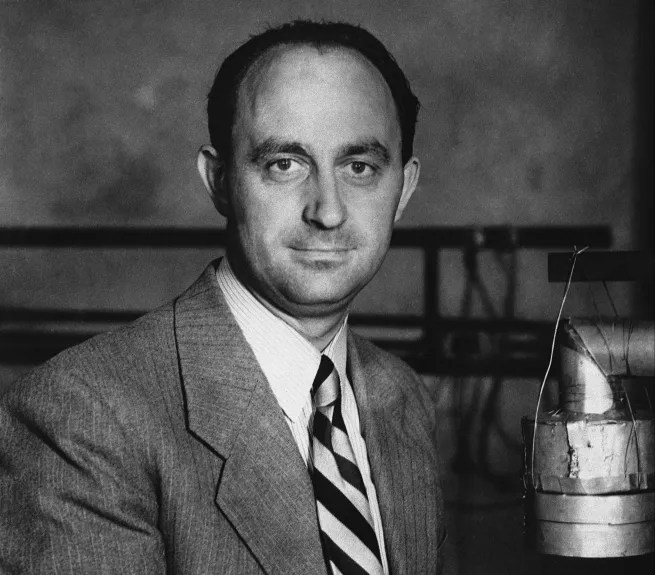
Physicist Enrico Fermi, now a professor at the Columbia University, shown August 10, 1945, began experimenting with uranium in Italy in the early 1930’s. His experiments and the knowledge derived from them assisted in the final perfection of the atomic bomb. (AP Photo)

Mendelevium (Md): Dmitri Mendeleev

You knew this was coming, didn’t you? Mendelevium is another synthetic element and is the 101st element on the Periodic Table. It was discovered by Stanley G. Thompson, Albert Ghiorso, Glenn T. Seaborg, Gregory Robert Choppin, and Bernard G. Harvey in 1955 at the University of California.

Mendelevium was named after…wait for it…Dmitri Mendeleev! Mendeleev was the architect of the modern Periodic Table, and he did this by organising the elements into a table, based on their physical properties, like atomic number, atomic valence and atomic mass.

One remarkable aspect of Mendeleev’s Periodic Table is that he organised the elements in a way that allowed him to predict the existence of undiscovered elements by leaving gaps for them. History shows that his predictions were accurate with the later discoveries of germanium, gallium, and scandium.

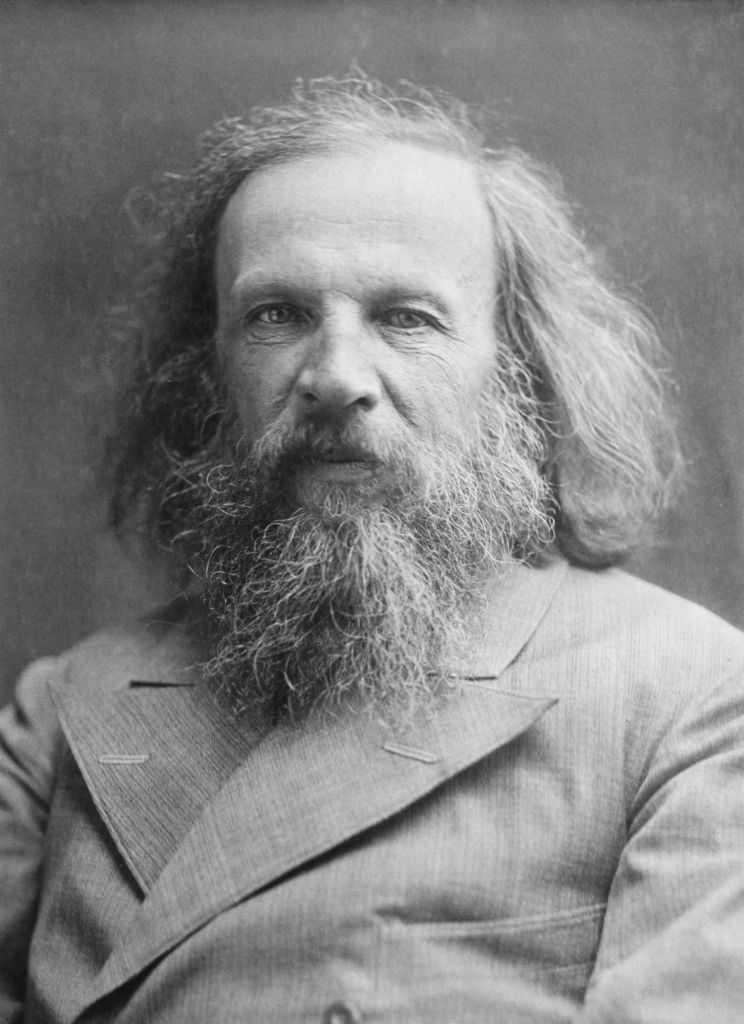
Original: Unknown author
Upload: Germansociety2014/Wikicommons

Nobelium (No): Alfred Nobel

As we march along the Actinoid group, we come across the 102nd element: Nobelium. Nobelium’s discovery seems to me, a bit odd. Scientists in Sweden announced the discovery of the element in 1957, but over the years, other sources have cited different years, such as 1958, 1963, and 1966, for the discovery. I don’t know who discovered nobelium first, because it may depend on who you talk to.

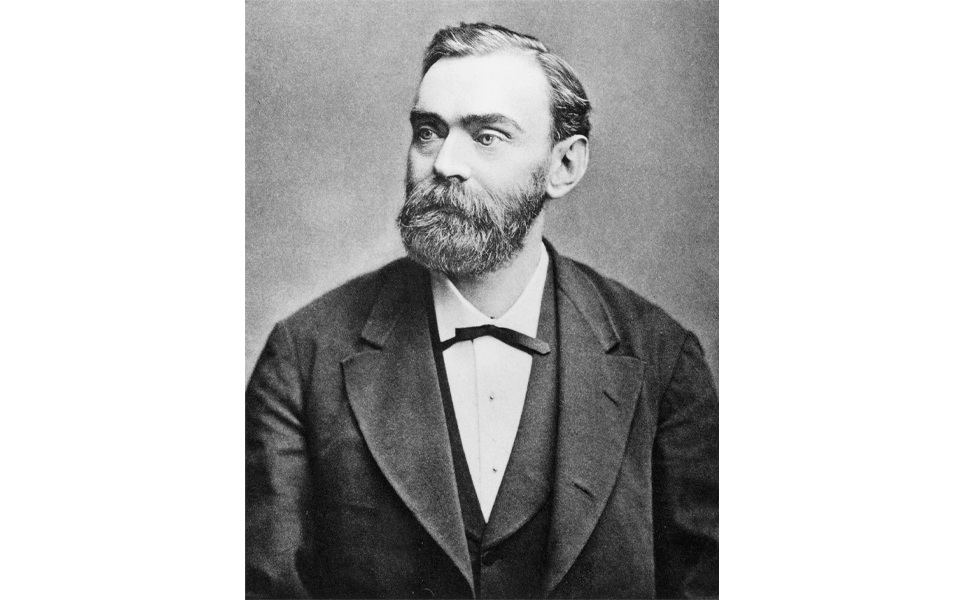
What isn’t up for debate is who nobelium was named after. Alfred Nobel was an inventor, engineer, businessman, and chemist who gave the world dynamite, gelignite, ballistite and the detonator, among other things. Nobel bequeathed his fortune to create a foundation to annually recognise people’s achievements for the benefit of humankind. Today, we know them as the Nobel Prizes.

Alfred Nobel. Image credit: Wikimedia Commons

Lawrencium (Lr): Ernest Lawrence

Lawrencium is the 103rd element of the Periodic Table, and like the others on this list, it’s another synthetic element. Similar to nobelium, lawrencium has been wrapped up in multiple claims of discovery. However, the earliest record of the discovery was in 1961, at Lawrence Berkeley National Laboratory, by Albert Ghiorso and a team of scientists.

Lawrencium was named after Ernest Lawrence, who was an accelerator physicist. He invented the cyclotron, which he was awarded the Nobel Prize in Physics in 1939, as well as worked on the Manhattan Project. He was also the founder of two laboratories, which were named in his honour after his death: the Lawrence Berkeley National Laboratory and the Lawrence Livermore National Laboratory.

Ernest Lawrence is perhaps best known for the invention of the cyclotron. Credit: LAWRENCE BERKELEY NATIONAL LABORATORY

Rutherfordium (Rf): Ernest Rutherford

As a New Zealander, this synthetic element has a special place in our rugby-obsessed hearts. Rutherfordium is the 104th element on the Periodic Table, and it’s a transition metal. Like the two previous entries, Rutherfordium has some controversy around its discovery. Whether it was discovered in 1964 by the Soviets or 1969 by the Americans, Rutherfordium only has a half-life of about 48 minutes.

Rutherfordium is the only element named after a New Zealander; my man, Ernest Rutherford. In 1908, Rutherford received the Nobel Prize in Chemistry for his research into the disintegration of elements and the chemistry of radioactive substances. He is also known as “the father of nuclear physics”, for his experiments that proved that the atom is made up of empty space, except for a small positively charged centre.

Rutherford proposed the term “nucleus” to describe the dense, positively charged core of an atom, thus giving him the title of “splitting the atom”, and the New Zealand $100 note was never the same.

Lord Rutherford’s pioneering research on radioactivity and the atom cemented his place as one of the greatest scientists of the 20th century. Credit: Bain News Service.

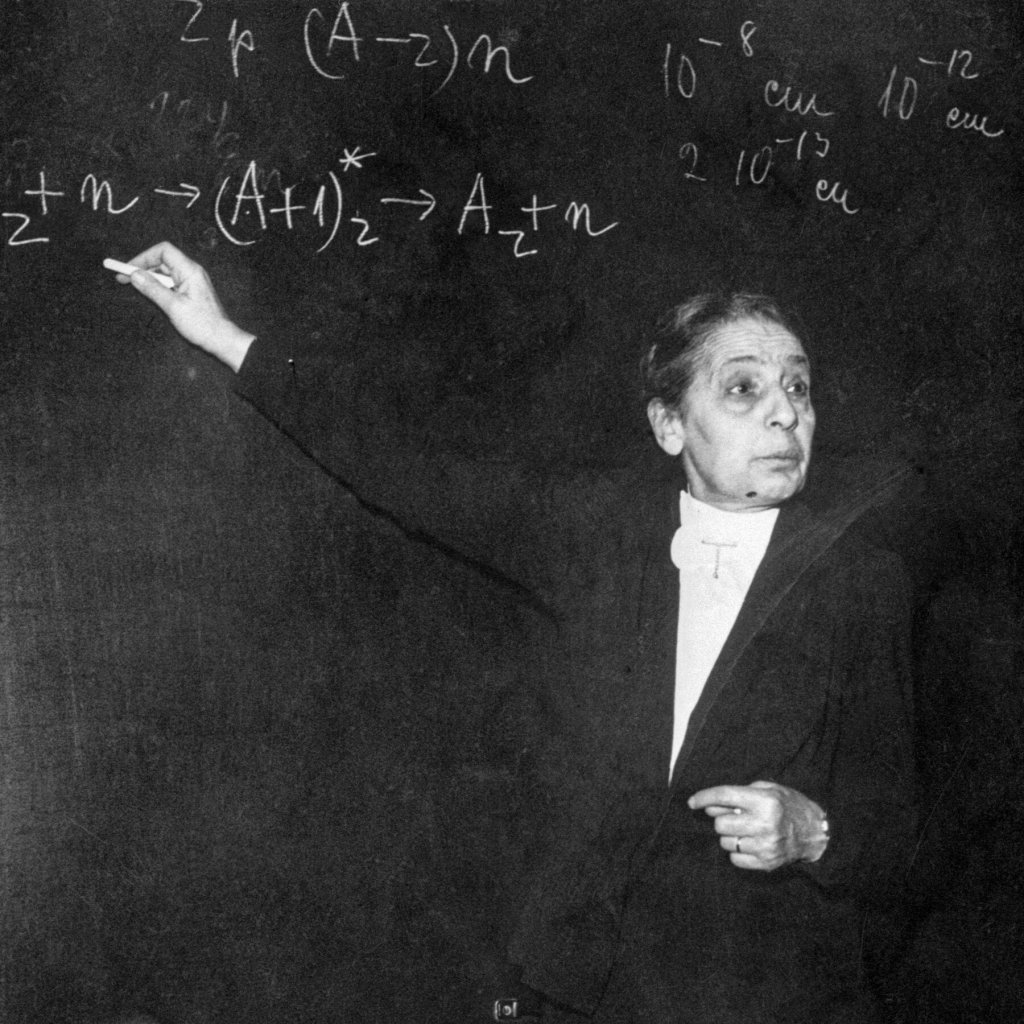
Seaborgium (Sg): Glenn T. Seaborg

It may sound like an alloy from Star Trek, but I promise you it’s not. The 106th element on the Periodic Table is seaborgium, and it’s yet another synthetic element. If I have this correct, both Soviet and American scientists discovered seaborgium, independently from each other in 1974, so its another controversy surrounding the discovery.

As for the naming of the element, that is simple. Seaborgium was named after the chemist, Glenn T. Seaborg. Seaborg helped to discover 10 elements, plutonium, americium, curium, berkelium, californium, einsteinium, fermium, mendelevium, nobelium and the final one, element 106; which was eventually named seaborgium.

He also won various awards, including the Nobel Prize in Chemistry in 1951. Seaborg was responsible for adding the Actinoids strip on the Periodic Table. Cool.

Glenn T. Seaborg, 1968.
Courtesy of the U.S. Atomic Energy Commission; photograph, Westcott

Bohrium (Bh): Niels Bohr

Sitting next to seaborgium in the transition metal group, we have the 107th element: Bohrium. There seems to be a trend happening because bohrium also has dual discoveries, with a Soviet team in 1976, as well as a German team in 1981.

People can argue about who discovered what element and when, but bohrium could have only been named after one person: Niels Bohr. Bohr was a Danish physicist, who also dabbled with philosophy. His contributions to science include atomic structure, nuclear fission, and quantum mechanics, but he also won the 1922 Nobel Prize in Physics.

The Niels Bohr Institute, at the University of Copenhagen is also named after him.

Niels Bohr, 1922. Credit: AB Lagrelius & Westpha

Meitnerium (Mt): Elise “Lise” Meitner

Meitnerium is the 109th element on the Periodic Table and another synthetic element. It was discovered by Gottfried Münzenber and Peter Armbruster at the GSI Heavy Ion Research Laboratory in Darmstadt, Germany in 1982.

There are only two elements on the Periodic Table named after real women, curium with Marie Curie, and the second is meitnerium, which was named after Lise Meitner. Meitner was a physicist who helped to discover the element protactinium, along with other discoveries like the Auger−Meitner effect and nuclear fission. She won the Max Planck Medal in 1949, the Enrico Fermi Award in 1966, and many other awards.

Credit: NY Times

Roentgenium (Rg): Wilhelm Röntgen

The 111th element is roentgenium, and it’s another transition metal. Just like meitnerium, roentgenium was created at the GSI Helmholtz Centre for Heavy Ion Research Laboratory, by Peter Armbruster and Gottfried Münzenberg, but this time in 1994.

Roentgenium was named after the physicist Wilhelm Röntgen, sometimes spelt as Wilhelm Roentgen. Through his work, Röntgen detected a form of electromagnetic radiation with a wavelength shorter than those of ultraviolet rays and longer than those of gamma rays.

This radiation became known as X-ray or Röntgen radiation. This discovery meant that in 1901, he was awarded the very first Nobel Prize in Physics.

Photograph of Wilhelm Conrad Röntgen. Credit: Public domain, via Wikimedia Commons

Copernicium (Cn): Nicolaus Copernicus

We are nearly at the end of the list, with only two to go! Copernicium is the 112th element and once again, was discovered at the GSI Helmholtz Centre for Heavy Ion Research. In 1996, a team led by Sigurd Hofmann and Victor Ninov worked for two weeks smashing lead with a beam of zinc ions, that were traveling at 30,000 km per second. The result of this experiment was the creation of a few atoms of copernicium.

If you’re a fan of space or astronomy, you may already know who I’m going to discuss. Copernicium was named after Nicolaus Copernicus, public enemy #1 for Flat Earthers. Copernicus was born in 1473 and achieved a lot in his life, which involved the fields of translation, medicine, economics, mathematics, laws, and diplomacy, but the main thing that he is still known for 500 years later, is his discoveries in astronomy.

Nicolaus Copernicus is often referred to as the father of modern astronomy due to his groundbreaking work, which demonstrated that not only is Earth a planet, but that other planets also orbit the Sun each year. In addition to this discovery, Copernicus explained that Earth rotates daily on its own axis. He also noted that very gradual changes in the direction of this axis are responsible for the precession of the equinoxes.

His model of the solar system is known as the Heliocentric system, which has the Sun at the centre, as opposed to the Geocentric model, which places the Earth at the centre.

Nicolaus Copernicus portrait from Town Hall in Toruń, 1580. Credit: Heritage Image Partnership Ltd/Alamy

Oganesson (Og): Yuri Oganessian

We have spent some time hanging out with the Actinoids and transition metals, but now we need to drift to the right, to visit the Noble Gases. Oganesson is the 118th and latest element to be added to the Periodic Table. It was created by a joint team of Russian and American scientists in 2002, at the Joint Institute for Nuclear Research in Russia.

Oganesson has three cool things going for it. It has the highest atomic number and highest atomic mass of all known elements, it was only formally named as late as 2016, and it’s the second element to be named after a living person, with the first being seaborgium and Glenn T. Seaborg.

And so, for the final time today, Oganesson was named after Yuri Oganessian, a nuclear physicist. His research on superheavy elements led him to help in the discovery of bohrium, meitnerium, hassium, darmstadtium, roentgenium, and copernicium. Oganesson has also been awarded the Lomonosov Gold Medal in 2017, and the Demidov Prize in 2019.

Credit: Joint Institute for Nuclear Research

With the other 105 elements on the Periodic Table, their names will hopefully be explained upon multiple entries on this popular and well-respected website.

So that’s it for another blog post and another week. Thanks again for reading, following, and subscribing to Some Geek Told Me. Please remember to walk your dog, read a banned book, avoid breaking the spacetime continuum whenever possible, and I’ll see you next week.


80th VE Day Anniversary

Kia ora everybody, and I hope you’re as happy as Daredevil fighting The Hand. For today’s rant, I want to talk about a very special event that occurred on 8th May. I was sitting on the fence about whether to talk about this, but after the world’s most famous 78 year-old convicted felon decided to give the world a history lesson about it, the die was cast and he forced my hand.

His explanation about 8th May was a prime example of the Dunning-Kruger effect, because he was like the class bully who had secured the answers to a history test, but still managed to copy the answers down wrong.

To understand why I’m losing sleep and my hair turning grey over this, I’m referencing VE Day, which is known as Victory in Europe Day. This day is commemorated on 8th May every year, where it marks the unconditional surrender of Nazi Germany, on the 8th May 1945.

To clarify, when Nazi Germany surrendered on 8th May 1945, this brought the theatre of war in Europe during the Second World War to a close, but not the actual war. The fighting in Europe had ended; hence the term, Victory in Europe, however, the Allies still needed to deal with Japan.

World War Two continued until the surrender of Imperial Japan on 15th August 1945, which is known as VJ Day, otherwise known as Victory over Japan Day. The official surrender of the Japanese forces was held on 2nd September 1945.


Credit: Charnwood Borough Council

Because you’re keen followers of New Zealand’s 5th least favourite website, you would have realised that 8th May 2025 was the 80th anniversary of VE Day. To say VE Day changed the world is like saying Salt and Vinegar chips are just a snack. You can look at it from various angles, but in my humble opinion and without trying to glorify war, because I’m not, but World War Two was for the world; it was about saving the world, and VE Day meant the job was half done.

In all seriousness, the 80th anniversary of VE Day is still relevant and important, not only to Europe but also to the world. The Nazis were defeated, and the world rejoiced and partied like it was 31st December 1999, bringing much-needed peace to the continent.

I did not witness the moment when Germany’s surrender was announced. I cannot imagine the range of emotions that people from different countries, religions, ages, backgrounds, and political ideologies experienced that day.

However, since different governments have honoured the 80th anniversary of VE Day, I searched through the land of the internet, to find some photos taken on 8th May 1945, regardless of their origin, to show what it was like. It must have been a hell of a party because it’s still within the living memory of the world’s population.

As you know, I’m a New Zealander, so it will come as no surprise that I’ll start with photos in Godzone, then I’ll move on to other countries, in alphabetic order. If I have missed your country, I’m very sorry, as I can only do as much as I can, within the limits of being conscious. Enjoy.


New Zealand

A group of women in party mode carrying flags and steamers near the Ballance Street/Lambton Quay corner, Wellington, New Zealand to celebrate VE Day. Credit: Alexander Turnbull Library reference 1 / 4-001508-F
Crowds outside Parliament in Wellington on VE Day. Credit: Alexander Turnbull Library reference 1 / 4-001525-F.
Crowds celebrate VE Day in Queen St, Auckland. Credit: FAIRFAX NZ / Sunday-Star-Times

Australia

Celebrating Victory in Europe: 8 May 1945 | Anzac Memorial, Hyde Park, Sydney. Credit: Anzac Memorial.
100,000 people attended the VE Day service at the Shrine of Remembrance in Melbourne on 9 May 1945.
Image courtesy of the Australian War Memorial, 089865.

Belorussian S.S.R (Belarus)

Belarusians celebrate victory in central Minsk. More than a quarter of the entire population of the Belorussian S.S.R. were killed during World War II. Credit: Emmanuil Yevzerikhin

Canada

VE Day in Toronto. Credit: City of Toronto Archives Fonds 1257, Series 1056, Item 195
V-E Day celebrations on Bay Street, Toronto, Canada. Credit: John H. Boyd.

Czechoslovakia (Czech Republic)

German tanks in Prague’s Old Town Square in May, 1945 (via Prague City Archives)

Denmark

German troops on a midget retreat through the Town Hall Square in Copenhagen after VE Day. Credit: Hulton Archive/Getty Images

France

A group watches from the top of Paris’s Arc de Triomphe as crowds gather. Credit: AFP.
Crowds gather at the Arc de Triomphe on 7 May 1945 to celebrate the end of the second world war. Photograph: AP
Parisians march through the Arc de Triomphe jubilantly waving flags of the Allied Nations as they celebrate Germany’s surrender, May 8 1945. Credit AP

The Netherlands

Amsterdam, 8 May, 1945.
Heavy allied trucks, loaded with cheering ‘Amsterdammers’ drive through the city in the vicinity of ‘de Munt’. Colour: ColourisedPieceofJake
Source: NIMH

Norway

Cheering crowds on a lorry in Karl Johans on 8 May 1945 (Photographer: Ingvald Møllerstad, © Aftenposten, NTB scanpix).

Soviet Union (Russia)

Raucous celebrations on Moscow’s Red Square. A witness recalled “everyone had fun, although some had tears in their eyes…. At the American Embassy, ​​we saw diplomats and employees throwing chocolate, sweets, and toys from the balcony.” Credit: Boris Kudoyarov
A British sergeant being thrown into the air by a crowd of youngsters in Moscow. The Soviet Union celebrated one day after most Allied countries because Germany’s high command signed a second surrender document, as demanded by Josef Stalin, late on May 8. Due to time-zone differences, the signing in Berlin took place in the small hours of the following morning in Moscow. Credit: Keystone/Getty Images
Moscow’s Red Square, packed with people as fireworks explode around the Kremlin. One man who was there later told Russian media “Strangers kissed each other. I don’t remember such a unity of people as it was on May 9, 1945; we were all one and the same — Russians, Tatars, Uzbeks, and Georgians — we were all united as never before.” Credit: Nikolai Sitnlkov
Moscow Victory Day, 1945: Soviet soldiers throwing the banners of defeated Nazi armies at the foot of Lenin’s Mausoleum. Credit: Центральная студия документальных фильмов, ЦСДФ

United Kingdom

Winston Churchill waves to crowds in Whitehall in London as they celebrate VE Day, 8 May 1945. From the the balcony of the Ministry of Health, Prime Minister Winston Churchill gives his famous ‘V for Victory’ sign to crowds in Whitehall on the day he broadcast to the nation that the war with Germany had been won, 8 May 1945 (VE Day). To Churchill’s left is Sir John Anderson, the Chancellor of the Exchequer. To Churchill’s right is Ernest Bevin, the Minister of Labour. Credit: Major W. G. Horton
London celebrated the end of World War Two across the capital – including in Trafalgar Square. Credit: Getty Images
Crowds spilled out on to the Mall all the way to Buckingham Palace.

An estimated 50,000 people headed to Piccadilly Circus and nearby Trafalgar Square to celebrate the end of the Second World War on 8 May 1945, which was declared a national holiday in a radio broadcast the day before. (Getty)
A victory street party to celebrate VE Day in Brockley, South London

United States of America

Hundreds of thousands gather to celebrate V-E Day in Times Square. Credit: NY Times
Crowds celebrate VE day in Times Square, New York.
Hulton Archive, Getty Images
A parish priest waves a newspaper with news of Germany’s unconditional surrender to pupils of a Roman Catholic parochial school in Chicago. Credit: Corbis/Getty Images.
Wall Street is jammed as Financial District workers celebrate the reported end of the war in Europe. Credit: Bettmann Archive/Getty Images
Arthur Moore of Buffalo, N.Y., who was wounded in Belgium, stands near New York’s Grand Central Station on May 7, 1945 as New Yorkers celebrate news of the Allies’ victory over Nazi Germany. Associated Press

We owe them a debt we can never repay. Thanks once again for reading, following, and subscribing to Some Geek Told Me, and I’ll see you next week.


We Didn’t Start the Fire: 1957

As the tariffs continue, so do the days of our lives. In our daily routines, we can choose what we do, including dissecting a 36-year-old song, even though it has been analysed before.

Because you’re a clever person who likes to get at least 10 hours of sleep and loves eating Vegemite, you would have realised I’m talking about one of my dumbest ideas, explaining the historical references in Billy Joel’s We Didn’t Start the Fire.

I started this pointless project in February 2024, and I’m still stuck in the 50s. I’ll probably retire before I finish it. For those unfortunate people who have missed out on the past entries, fear not, for I have the complete list.

 We Didn’t Start the Fire: The Beginning 

We Didn’t Start the Fire: 1948-1949.

We Didn’t Start the Fire: 1950

We Didn’t Start the Fire: 1951

We Didn’t Start the Fire: 1952

We Didn’t Start the Fire: 1953

We Didn’t Start the Fire: 1954

We Didn’t Start the Fire: 1955

We Didn’t Start the Fire: 1956

After reflecting on the historical events of 1956, I’m ready to delve into 1957, which promises to be just as wild and challenging. Like before, get ready for an adventure because we are traveling back in time with our destination set for 1957. Let’s do this!


Credit: Burlington

1957

Little Rock

Little Rock is located in Arkansas, United States, and in 1957, it was a flashpoint for the Civil Rights Movement. It centred around nine African American students who were integrated into Little Rock Central High School. These students become known as The Little Rock Nine.

Through a ruling from the Supreme Court that declared that the laws that established segregated schools were unconstitutional, and the backing of the NAACP (National Association for the Advancement of Colored People), the nine students were enrolled at Little Rock Central High School.

The school was racially segregated, so black students attending an all-white school did not go down well for everybody. Among several protests against the integration, Orval Faubus, the Governor of Arkansas, deployed the Arkansas National Guard to support the protesters, as well as to block the students from entering the school.

If you remember from the 1952 blog, Dwight D. Eisenhower was the President of the United States of America, and this situation annoyed him. His response was to issue an executive order, which federalised the Arkansas National Guard. He ordered them to support the integration and along with the 101st Airborne Division, escorted and protected the students while at school. This drama was named The Little Rock Crisis.

As a non-American, it’s difficult to quantify a modern example of the Little Rock Crisis. My only answer is to point out the legacy that it brought to the public school system in the United States, by guiding the way in the desegregation of public schools.

The Little Rock Nine being escorted by the National Guard to Little Rock Central High School, Arkansas, 1957. Credit: Everett Collection

Pasternak

Boris Pasternak was a Russian poet, composer, literary translator, and novelist. He was born in Moscow, which was then part of the Russian Empire before it was transformed into the Soviet Union. He is included on this list because he wrote a small and uncomplicated book that you may have heard of: Doctor Zhivago.

Pasternak gave typed manuscripts to foreigners in 1956, knowing they wouldn’t be published in the USSR. The manuscripts were then smuggled to Milan, Italy. Doctor Zhivago was released in 1957, and I’m going to do an awful job at explaining this, but the novel focuses on wars, separation of families, love, and characters. So many characters, with just as many names.

The 1958 Nobel Prize for Literature was awarded to Pasternak for Doctor Zhivago, and it remains a masterpiece and beloved the world over for its themes. Over the years, the book has sold millions of copies and has been adapted for television, theatre, and film, with special mention to 1965’s Doctor Zhivago, where it was nominated for 10 Academy Awards and won five.

Doctor Zhivago. London: Collins & Harvill, 1958. Credit: Raptis Rare Books

Mickey Mantle

We haven’t discussed baseball for some years now, but this entry will change that. Mickey Mantle was a professional baseball player who played primarily as a centre fielder for the New York Yankees, between 1951–1968.

Mantle earned many different baseball awards, championships, and trophies, but that’s not why he’s on the list. In 1957, Mantle made The Major League Baseball (MLB) All-Stars team. For those of you not up with the play, the All-Stars are players made up from teams in the American League and National League.

This fixture became an annual event on the MLB calendar. Now what made Mantle’s inclusion in the 1957 game special was that it was the sixth year in a row that Mantle had made the All-Stars team.

For a contemporary equivalent, you could go with Mike Trout, but the All-Stars also covered Major League Soccer (MLS-Football), National Basketball Association (NBA), National Football League (NFL), and National Hockey League (NHL), so you could take your pick from them as well.

Bill Skowron, Minnie Minoso, Nellie Fox, and Mickey Mantle at the 1957 All-Star game. Credit: Unknown

Kerouac 

This is quite rare, but we have a second book entry. On the Road was written by Jack Kerouac, and was released in September 1957. Kerouac based this book on his travels with his friends across the United States, and in some circles, it’s considered a memoir.

The book highlights the Counterculture generation, like the Beat movement, and was controversial with the characters’ carefree lifestyle, drugs, and travelling, along with the music. On the Road has sold over 4 million copies worldwide, with ongoing sales of around 100,000 copies annually. 

On the Road has gone on to influence and inspire many different entertainment creators like Hunter S. Thompson, David Bowie, Matty Healy, Jerry Garcia, and Van Morrison, but also Jim Morrison and Bob Dylan.

Front cover for the first edition of On the Road by Jack Kerouac. Credit: The Viking Press

Sputnik 

I wasn’t born in the 50s, so I can’t imagine the fear and tension that came with Sputnik. Launched on 4th October 1957 by the Soviet Union, Sputnik 1 was the world’s first artificial satellite. It was only 58 cm in diameter, and it carried a low-power radio transmitter that broadcasted a beeping noise at regular intervals, which could be heard by radio listeners around the world.

It achieved an Earth orbit with an apogee (farthest point from Earth) of 940 km and a perigee (nearest point) of 230 km, along with circling the planet every 96 minutes. The satellite remained in orbit until 4th January 1958, when it fell back and burned in Earth’s atmosphere. It had travelled 70 million km around the planet before deorbiting. 

Known simply as Sputnik, this 83.6 kg device caused anxiety throughout the West, which marked the beginning of the space age between the United States and the Soviet Union. 

The legacy of Sputnik can be seen in various spacecraft and satellites launched by the USSR that bear its name, as well as in the thousands of satellites launched by other countries and companies. Just consider where NASA, ESA, SpaceX, Blue Origin, and Virgin Galactic would be today without the influence of Sputnik.

On Oct. 4, 1957, the Space Age began as the Soviet Union launched Sputnik 1, the first artificial satellite, into orbit. Credit: The New York Times

Chou En-Lai

Chou En-Lai, also known as Zhou Enlai, served as the first Premier of the People’s Republic of China from its establishment in 1949 until he died in 1976. He was also the country’s foreign minister, a position he held from 1949 to 1958, during which he travelled extensively.

In 1950, he signed a treaty that committed China and the Soviet Union to co-operate. Furthermore, he played a crucial role in facilitating Richard Nixon’s historic meeting with Mao Zedong in China in 1972.

In modern times, you could go in two different ways, either as a foreign minister or an intermediary. For the foreign minister angle, you could just promote your foreign minister, however, the intermediary is a lot easier. Think of Henry Kissinger and President Jimmy Carter for the Middle East, Alexander Haig for Argentina and the United Kingdom, and recently, Emmanuel Macron for Ukraine and Russia.

Zhou Enlai (Chou En-Lai), Premier of China. Official portrait, 1950s. Credit: anonymous, Public domain, via Wikimedia Commons

Bridge on the River Kwai 

The Bridge on the River Kwai was a war film based on a book of the same name. Released in 1957, the film tells the story of Allied prisoners of war in Japanese-occupied Thailand, who are forced to build a bridge over the Kwai River, linking Thailand to Burma (Myanmar) for the Japanese, via a railway.

The film went on to earn US$30.6 million, against its US$2.8 million budget. It found universal acclaim, winning seven Oscars at the 1958 Academy Awards, three Golden Globes, and four British Academy Film Awards. The Bridge on the River Kwai has been described as not only the greatest war film ever made, but also one of the greatest films ever made.

I’ve been lucky enough to have seen it, and it’s phenomenal. Seriously, it’s one of those times when you should believe the hype about a film, it’s that good. Some modern films that swept the Academy Awards include Titanic (1997), The Lord of the Rings: The Return of the King (2003), and La La Land (2016).

So for 1957, we covered an American desegregated high school, a Russian author, a baseball player, an American author, a Soviet satellite, the Chinese Premier, and a film. We’ve been working hard on this, so 1958 will be less chaotic. Maybe.

So that’s it for another week in this ridiculous project. Cool. Thanks again for reading, following, and subscribing to Some Geek Told Me. I have accounts on Twitter and Mastodon, where I try to sound clever, so follow me if that floats your boat.

Please remember to walk your dog, read a banned book, and enjoy your 90-day pause on Trump’s tariffs. I’ll see you next week, where I’m going to discuss some news that is equally part exciting and scary. Take care and Slava Ukraini!