
To the best of my amazing and gorgeous recollection, I have only made two blog posts about flags. That being the case, and unlike Robocop 3, I wanted the third instalment to be fantastic. However, the problem is that I’m the creator, so instead of Star Wars: Episode VI: Return of the Jedi, it will be more like Highlander III: The Sorcerer.
I had previously discussed four countries that had changed their flags because of redesigns and name changes. I wanted to go one step further and talk about countries that no longer exist, thus their flags are no longer in use, as well as new nations and flags that have sprung up from their demise.
So, may I present to you three former failed fluttering flags. Enjoy.
Yugoslavia
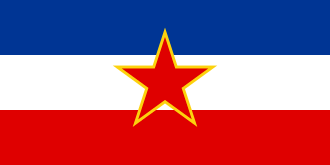
Flag of the Socialist Federal Republic of Yugoslavia (1946-1992). Credit: Đorđe Andrejević-Kun & SVG
The flag of Yugoslavia, known as the Socialist Federal Republic of Yugoslavia, had been through several small tweaks over the years, since the country was formed in 1918, at the end of the First World War. The largest tweak was adding a red star in the middle of the flag, following the Second World War. This version of the flag survived from 1946 to 1992.
The dissolution of the flag is linked to Yugoslavia itself. Back in 1918, when Yugoslavia was founded, it was built by joining six states or republics to create the country. They were Macedonia, Bosnia and Herzegovina, Croatia, Montenegro, Serbia, and Slovenia.
The colours of the flag represented various things. The equal red, white, and blue horizonal stripes, represent the shared heritage of the Southern Slavs; the red star symbolises communism, socialism, and the fight for freedom and liberation; and finally, the gold outline of the star represents the valor of the state and prosperity.
After the fall of communism in Eastern Europe, Yugoslavia went through some massive upheaval, during which some republics wanted to have more autonomy, having declared independence. This resulted in the break-up of Yugoslavia in the early 1990s and the horrific Yugoslav Wars, which raged across the region.
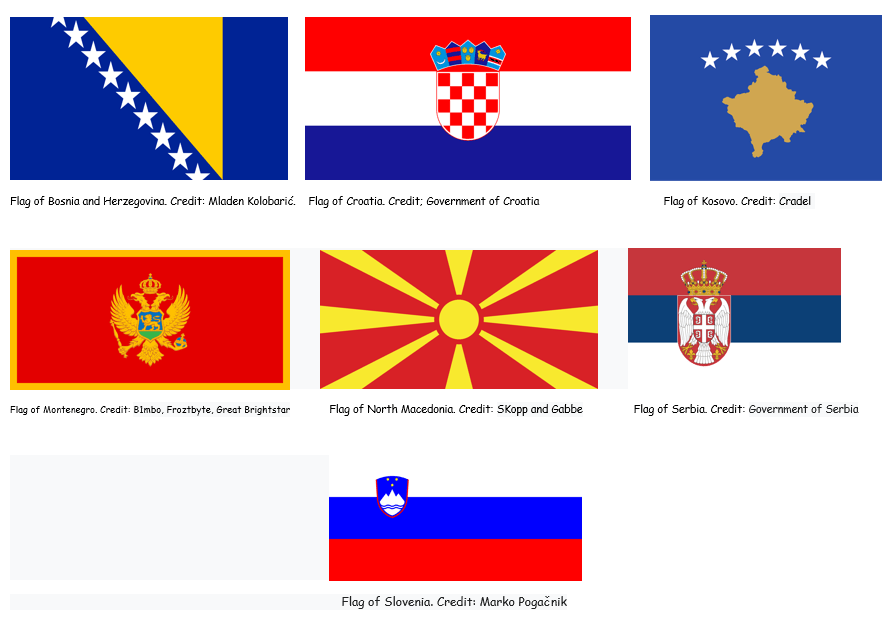
Currently, seven countries have risen from the ashes of Yugoslavia: Bosnia and Herzegovina, Croatia, Kosovo, Montenegro, North Macedonia, Serbia, and Slovenia.
The failure of Yugoslavia’s flag can be attributed to the collapse of Yugoslavia itself. The country ceased to exist and was eventually divided into seven republics, each adopting its own flag. Notably, the flags of Croatia, Serbia, and Slovakia feature horizontal stripes in red, white, and blue.
Soviet Union (Union of Soviet Socialist Republics/USSR)
.
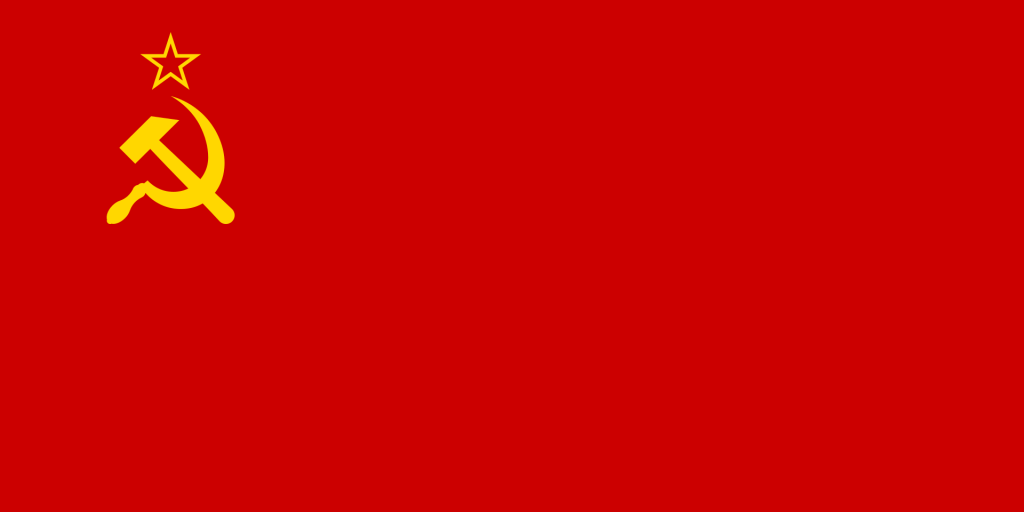
Like the flag of Yugoslavia and many others, the flag of the Soviet Union had been altered since its inception in 1922. The name Union of Soviet Socialist Republics was exactly what you imagined it would be. The nation was a union of various republics that used communism as the driving force behind their governments. These republics totalled 15, which were spread across Eastern Europe, Western Asia, and Central Asia.
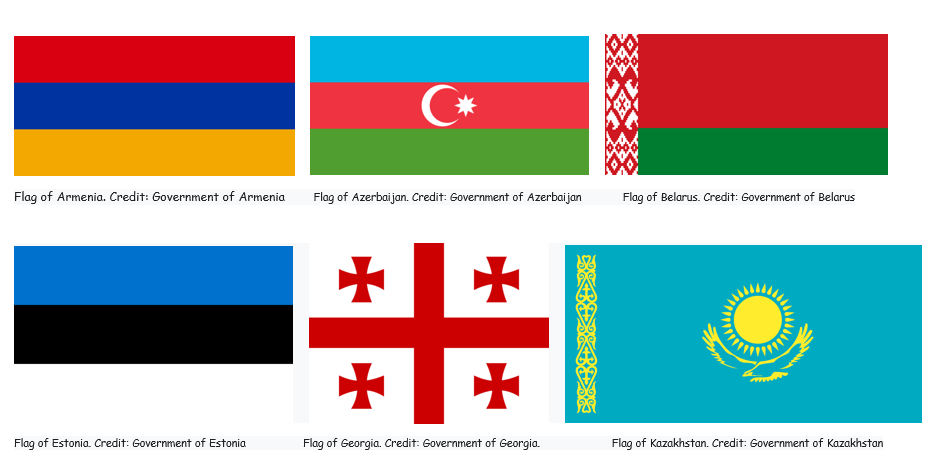
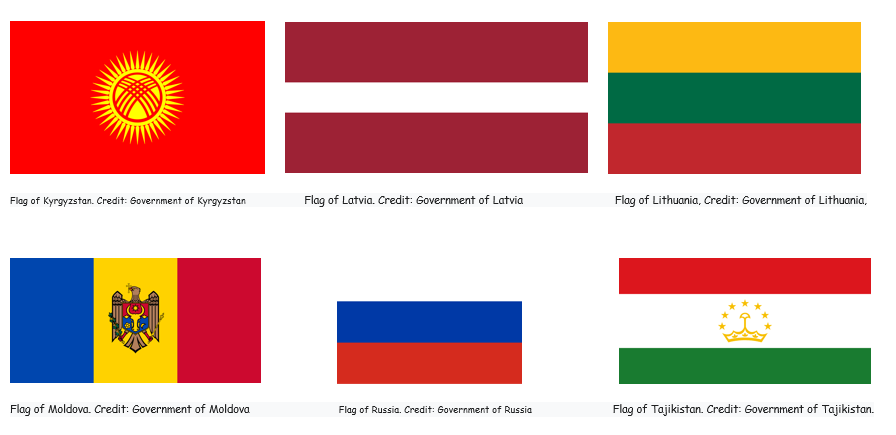
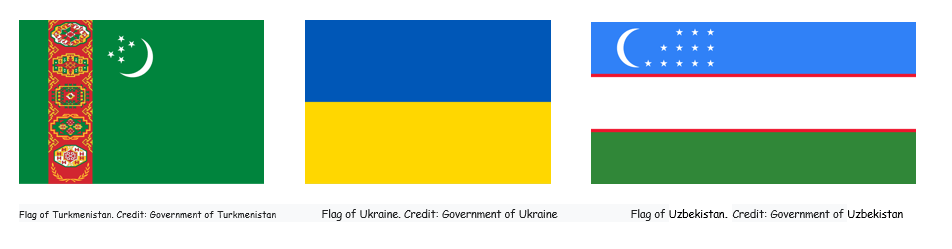
They were known as Armenia, Azerbaijan, Byelorussia, Estonia, Georgia, Kazakhstan, Kirgiziya, Latvia, Lithuania, Moldavia, Russian SFSR, Tajikistan, Turkmenistan, Ukraine, and Uzbekistan.
With the colours of the Soviet Union flag, the red represented revolution; the hammer (workers) and the sickle (peasants) were adopted from the Russian Revolution, representing the two factions; and the yellow star symbolised the Soviet Union’s Communist Party.
After years of turmoil and mounting pressure from internal and external forces, the dissolution of the Soviet Union occurred on 26th December 1991. The republics that had made up the Soviet Union were now free and independent again, though some of them had already gained their independence earlier.
The death of the Soviet Union allowed these republics to be reborn, which the world now knows them as: Armenia, Azerbaijan, Belarus, Estonia, Georgia, Kazakhstan, Kyrgyzstan, Latvia, Lithuania, Moldova, Russia, Tajikistan, Turkmenistan, Ukraine, and Uzbekistan, along with their own flags.
It’s interesting to note that Russia has now annexed parts of Georgia and Ukraine, in an attempt, in my humble opinion, to absorb these countries back into the fold.
Gran Colombia
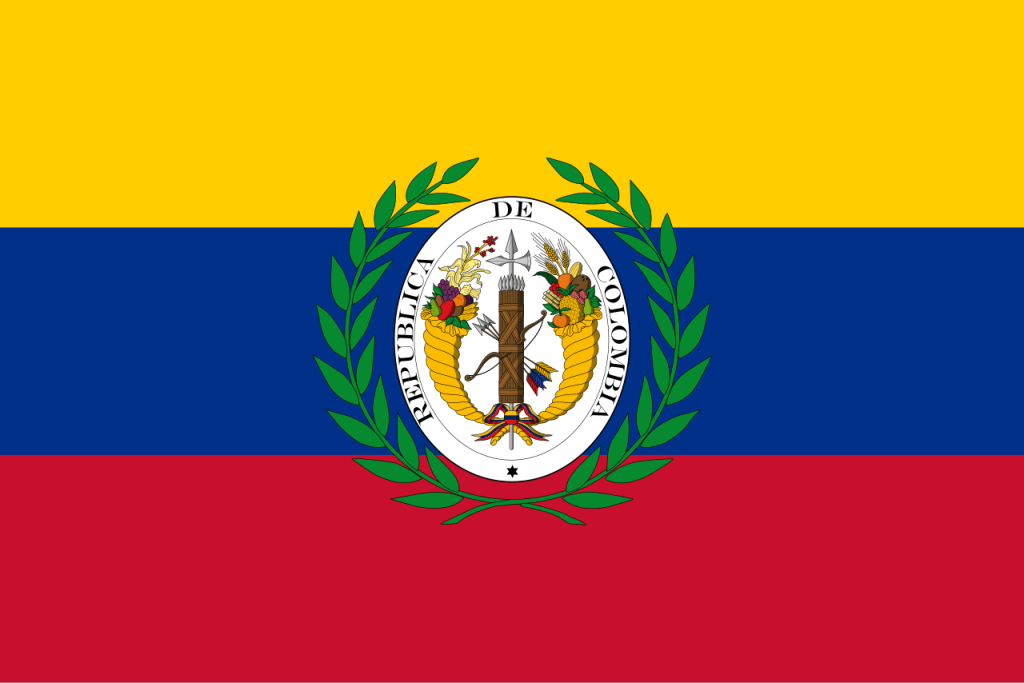
For this entry, we are bypassing the 20th century entirely and going to hang out in the 19th century, specifically Northern South America. The country was called Gran Colombia, and it only lasted 12 years, which is three World Cup cycles, from 17th December 1819 to 19th November 1831. To explain Gran Colombia, we need to understand why it existed in the first place, which is directly related to why it failed.
At the beginning of the 19th century, the Spanish Empire controlled vast territories extending from the northernmost part of North America to the southernmost part of South America. In 1808, when Napoleon Bonaparte, not Dynamite, invaded Spain, he sparked a series of revolutions and wars of independence throughout South America.
One of the key figures at the time was Simón Bolívar, who envisioned the countries of South America breaking free from Spanish and Portuguese control and becoming a unified South America. Part of this vision included the creation of Gran Colombia, where, after gaining independence from the Spanish Empire, several countries combined their powers and formed Captain Planet…I mean, Gran Colombia.
Asking countries to fight wars of independence was one thing, but asking them, after gaining a hard-fought independence, to join an even larger country, in hindsight, may not have been the best idea, even with the best of intentions. Because of restructuring and resignations, along with internal and external political and economic turmoil and pressure, Grand Colombia collapsed and was finally dissolved in 1831.
Gran Colombia had an original flag, then two redesigns, along with another proposed flag redesign, before the dissolution of the country in its short lifespan. The final flag before dissolution featured yellow, blue, and red horizontal stripes, along with a central coat of arms. The yellow represented Hispanic America, the blue portrayed the Pacific and Atlantic Oceans, while red represented Spain.
The coat-of-arms displayed two cornucopia, which were full of fruit and flowers, as these were symbols of wealth and abundance. In the centre, there is a quiver of arrows and an axe, along with a bow. The quiver has a tricolour (yellow, blue, red) ribbon tied to the bottom of it, which, to the best of my understanding, signifies union and strength. All of these items are inside an oval, which has the words, “República de Colombia,” which translates as “Republic of Colombia.”
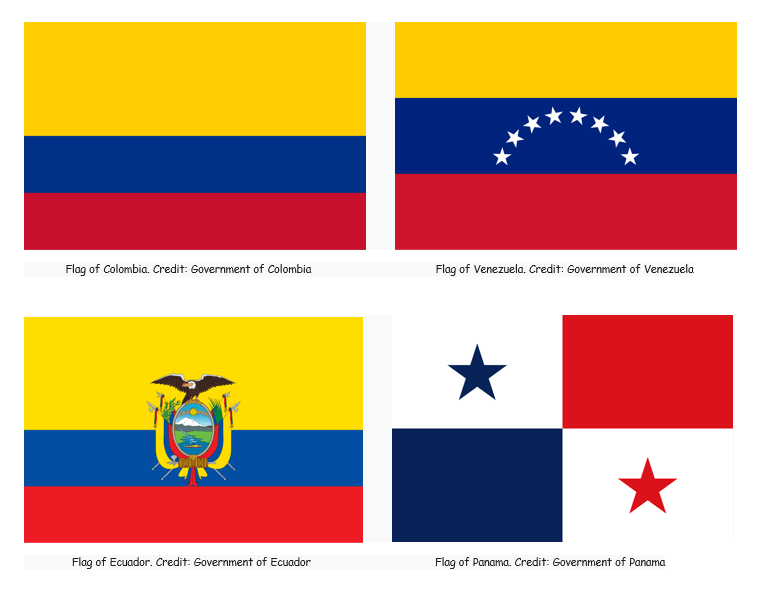
The dissolution of Gran Colombia eventually gave South America and geography books the countries of Colombia, Venezuela, Ecuador, and Panama. As you can see in the flags below, Gran Colombia’s legacy is in the tricolours of yellow, blue, and red, along with Ecuador having a central coat of arms. I tell you, history is cool, kids. History is cool.
There are other examples, of course, but as usual, I get far too distracted to make the blog interesting. Well, to be fair, I find them to be interesting; so that could be the problem, among many. If you can think of any flag-related topics I could discuss on this famous and beloved blog, please let me know.
So that’s it. The school holidays are upon us again, which means a lot of pyjama days for UMC1 and UMC2. Yay.
Thanks again for reading, following, and subscribing to Some Geek Told Me. Please don’t forget to walk your dog, go read Supergirl: Woman of Tomorrow, say “Thank you” to the bus driver, and I’ll see you next week, because we are going back to 1962. Yeah, baby, Billy Joel would be disgusted.
 SOME GEEK TOLD ME
You must be logged in to post a comment.