We Didn’t Start the Fire: 1959

The date was 16th June 2025, and it was a simpler time. We were watching the break-up of the world’s wealthiest person and the President of the United States of America; South Park Season 27 had not yet aired; New Zealand rugby supporters were happy; and the world had not yet discovered that the cause of autism was paracetamol and women were to blame.1

However, that date is also famous for being the last entry in one of the planet’s greatest literary feats, discussing the historical references in Billy Joel’s We Didn’t Start the Fire.

The answer to your first question is no, James Gunn has not contacted me about being part of the DCU. The answer to your second question is yes, it’s back. After delays with other blog posts and events, the long-awaited musical and historical breakdown has returned, much like your persistent back pain.

Since no living person is perfect2, I have collected the previous entries of this wonderful endeavour and presented them to you, just in case you have missed any of them. They include:

We Didn’t Start the Fire: The Beginning 

We Didn’t Start the Fire: 1948-1949.

We Didn’t Start the Fire: 1950

We Didn’t Start the Fire: 1951

We Didn’t Start the Fire: 1952

We Didn’t Start the Fire: 1953

We Didn’t Start the Fire: 1954

We Didn’t Start the Fire: 1955

We Didn’t Start the Fire: 1956

We Didn’t Start the Fire: 1957

We Didn’t Start the Fire: 1958

If you’ve studied the teachings of Sesame Street’s greatest mathematician, you would have realised that after looking at the sequence of numbers above you, it leads you to the conclusion that 1959 is the next year in the pattern. Thanks, Count.

I’m curious to learn if there’s any positive and uplifting information that we can gather from 1959. So, like many times before, strap yourselves in, because we are going back in time! Cool.


Credit: Ruby Lane

1959

Buddy Holly

Charles Holley was born in 1936 and became a singer, songwriter, and musician. His stage name was Buddy Holly, and along with his band, the Crickets, he gained fame in musical genres like country and western, and rock and roll.

In the late 50s, his musical career was soaring, with national and international tours, as well as television appearances. Sadly, Holly is not in this song because of his musical talents. Holly and his new band were on tour, but they were having issues with the bus. The schedule was tight, and some people have said that it was poorly planned.

On 3rd February 1959, a flight was chartered from Iowa to the next gig in North Dakota. The plane was a four-seater aircraft, and on board the flight were 22-year-old Holly, 17-year-old Ritchie Valens, 28-year-old Jiles Perry Richardson Jr (The Big Bopper), and the pilot, Roger Peterson, a 21-year-old.

Soon after take-off, and flying in terrible weather conditions, Peterson lost control of the aircraft and crashed, killing everybody instantly. This incident was known as The Day the Music Died, made famous by Don McLean’s 1971 song “American Pie“.

Some contemporary examples of musicians being killed in aircraft crashes include Stevie Ray Vaughan, who died in a helicopter crash in 1990; John Denver died when his experimental plane crashed in 1997; and Aaliyah and her entourage were killed in a 2001 plane crash in the Bahamas. 

Buddy Holly backstage at the Prom Ballroom in St. Paul on Jan. 28, 1959. (Courtesy of Blue Days Productions)

Ben-Hur

Released in 1959, Ben-Hur was a film that was adapted from Lew Wallace’s book, Ben-Hur: A Tale of the Christ, but also a remake of the 1925 film Ben-Hur: A Tale of the Christ. It tells the story of Judah Ben-Hur (Charlton Heston), or just Ben-Hur, in one of Heston’s most famous roles. Ben-Hur is a Jewish man living in Roman-occupied Judea, around the same time as Jesus Christ.

With a US$15 million budget, unheard of at the time, it earned US$146 million at the box office. By today’s standards, Ben-Hur’s earnings would be a disaster for the film studio, but for 1959, this film was a smash hit.

Like The Bridge on the River Kwai (1957), Ben-Hur won several awards. This included winning 11 Academy Awards, which still holds the record, tied with Titanic (1997) and The Lord of the Rings: The Return of the King (2003), as well as three Golden Globe Awards.

Ben-Hur also raised the benchmark for various elements within the film industry, especially the size of sets, and the number of extras, animals, costumes, and other artists involved with the film; added with the legendary chariot race, places Ben-Hur as a Hollywood classic.

For examples of modern movies dominating awards, I covered this with The Bridge on the River Kwai entry. So instead of doing that, some better examples would be films quantifying their design numbers, such as Kingdom of Heaven (2005), which used around 30,000 extras, Stalingrad (2013) for the massive set designs, Marie Antoinette (2006) for the costume designs, and Alexander (2004) for using large numbers of horses and elephants.

Space monkey

For this entry, you can promote the advancement of science; however, the method is always up for debate. You can be for or against these particular scientific experiments, but regardless of your position, this historical reference requires acknowledgement and examination.

The space race between the Soviet Union and the United States of America had begun, and both nations were determined not to lose. To that end, we have “Space monkeys”, which is probably exactly what you think it is.

Space flight was still in its early stages, so they needed non-human organisms to be sent on flights to test the systems, but mainly to reduce the dangers to humans. These animals included fruit flies, mice, dogs, rabbits, frogs, and primates. The point is, a lot of these animals died being astronauts.

On 29th May 1959, NASA sent a rhesus macaque named Miss Able and a squirrel monkey called Miss Baker on a NASA JUPITER AM-18 mission. The monkeys successfully travelled a distance of 2,735 km, at a height of 579 km, with a top speed of 16,000 km/h.

Both monkeys survived the flight, making them the first two animals to be launched by NASA into space, survive and be recovered. Miss Able died four days later in post-flight surgery from an anaesthetic reaction, while Miss Baker lived until 1984.

In modern times, people still use animals in space experiments, but it’s mainly to assess how they cope and adapt to microgravity environments, rather than testing to see whether they survive space flights. Lately, these animals have included mice, fruit flies, spiders, and bobtail squids, as well as tardigrades, because they seem to be one of the resilient lifeforms ever found.

LIFE Magazine’s June 15, 1959. Cover featuring Miss Able and Miss Baker. Credit: Life Magazine
LIFE Magazine Cover b/w © Time Inc. 

Mafia

As you would expect, Mafia refers to organised crime, but there is more to it, because it’s not just one reference; it’s actually several. Since I’m a geek, I’m going to add some background to this, because it’s fun to learn about things!

In 1957, a meeting involving over 100 mobsters from the United States, Cuba, and Italy took place in Apalachin, New York, dubbed the Apalachin meeting. Topics to be discussed at the meeting included the takeover of recently murdered Albert Anastasia’s crime operations, but also gambling, loansharking, and narcotics trafficking within the United States.

The meeting was discovered by law enforcement agencies, which resulted in 60 mobsters being arrested, including the host of the meeting, Joseph “Joe the Barber” Barbara, and crime boss, Vito Genovese. This meeting forced law enforcement agencies to confront two things: the sheer scale of the organised crime network in the United States, and to admit to the public that the Cosa Nostra (The Sicilian Mafia) existed in the United States.

Fast forward to 1959, when some events occurred that were directly linked to the Apalachin meeting. The 1957 arrest of Vito Genovese, the boss of the Genovese crime family, led to his conviction in 1959 for drug trafficking, and he was sentenced to 15 years. Other 1959 convictions included Vincent Gigante (7 years), Joseph Valachi (15 years), and Paul Castellano (5 years).

These convictions changed the Mafia’s power structure, as well as empowering law enforcement agencies in their war against organised crime. Obviously, organised crime has never gone away, but some modern examples of assaults on their leadership have been the conviction of crime boss, John Gotti (1992); the Justice Department indicted 14 members of the Chicago Outfit, leading to convictions under the RICO Act (2005); and FBI agents arrested 127 mobsters in a single day, known as the Mob Bust (2011).

Vito Genovese, 1959. Credit: Phil Stanziola.

Hula hoops

This entry is quite straightforward. When Hula Hoops hit stores in the late 1950s, they were not an original creation. They had been used for thousands of years, in various forms across different societies, including using bamboo, rattan, willow, stiff grasses, and grapevines.

The new Hula Hoops were made of plastic tubing and were a colossal hit around the world. The trend drove sales of the toy to the heights of $100 million in the United States between 1958 and 1960.

For a 2025 equivalent, I would have to say Labubu. These elf-type monsters have conquered the world, with global sales in the first half of 2025 being over $670 million.

The Hula Hoop craze, Deerfield Illinois, 1959. Credit: Art Shay.

Castro

Love him or hate him, but there is no denying Fidel Castro’s influence on the 20th century. Castro was a Cuban lawyer, politician, and revolutionary, who was involved in the Revolución de Cuba (Cuban Revolution), which was an armed revolution against the Cuban dictator, Fulgencio Batista.

It began on 26th July 1953, and ended with Batista fleeing the country on 31st December 1958; though Castro’s forces (The 26th of July Movement or M-26-7) did not learn about this until the next day, when they started to take control of Cuba.

Castro became Prime Minister of Cuba on 17th February 1959 and served until 2nd December 1976, then became President of Cuba from 2nd December 1976 to 24th February 2008. Castro overhauled Cuba and transformed it into the first communist country in the Western Hemisphere, and ended up having a brutal regime, just like his enemy, Batista.

I’d like to add that Castro will return for the 1961 edition of this wonderful project. Be prepared for the Bay of Pigs Invasion.

A contemporary example of someone overthrowing an authoritarian government would be Ahmed al-Sharaa, when Syrian President Bashar al-Assad was toppled in December 2024, after 13 years of civil war.
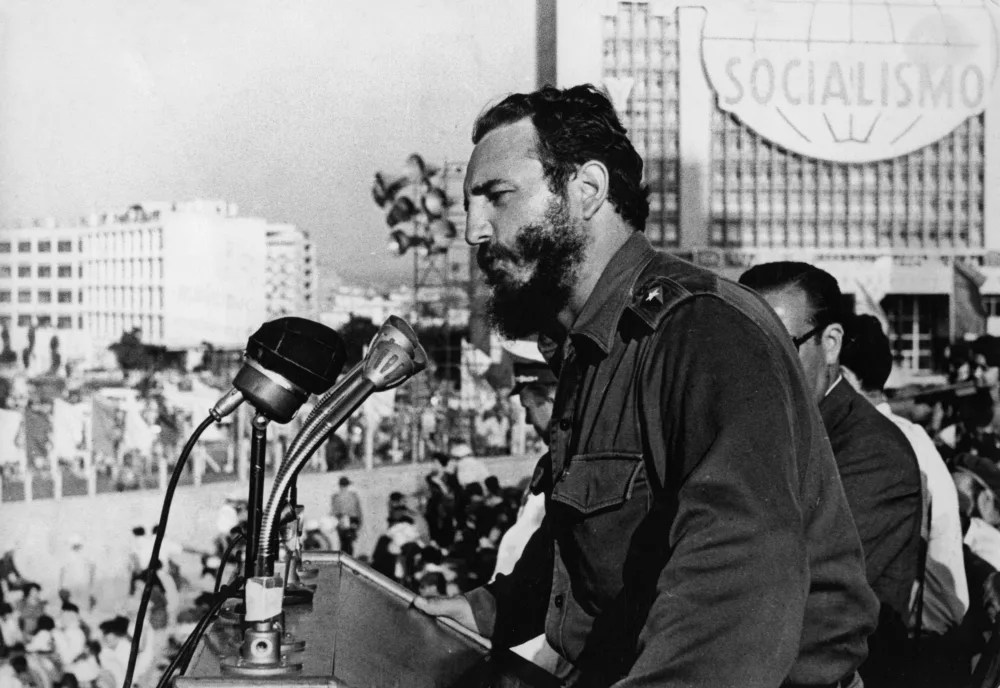
Fidel Castro addresses a rally in 1959. Credit: Sovfoto/Universal Images Gro/REX / Shutterstock

Edsel is a no-go

This is an interesting entry because there are two points to discuss. To establish the background, Edsel refers to a brand of car created by Ford Motors, and it was named after Henry Ford’s son, Edsel, since Ford was the company’s founder.

The car was launched in 1958 and became a commercial failure. By 1959, sales for the car had dropped significantly, which included reasons such as low quality, being ugly, being vaunted too much, and being introduced during a recession. The car resulted in a loss of over $250 million for Ford Motors, so it was pulled from production in 1960.

The second point of this tale is the actual name. Edsel was a relatively common name for boys in the United States at the time. However, due to the failure of the Edsel car brand, many new parents became hesitant to name their baby boys after a name associated with a failed product. As a result, just as sales of the car declined, so did the popularity of the name Edsel.

Some 21st century examples of failed or failing car brands include the Lincoln Blackwood, Rover CityRover, Saturn Ion, Chrysler Crossfire, Aston Martin Cygnet, Nissan Murano CrossCabriolet, BMW XM, Fisker Ocean, and the Tesla Cybertruck, to name but a few.

A 1958 Edsel convertible made by Ford. Credit: Underwood Archives / Getty Images

So for 1959, we covered a musician, a movie, two astronaut monkeys, mobsters being convicted, a toy, a revolutionary leader, and a failed car brand. 1959 was busy, and like many other years in this project, it can reflect 2025 as well. But look on the bright side, we get to enter the 1960s next time! Yay!

So that brings another blog post from yours truly to a close. Thanks again for reading, following, and subscribing to Some Geek Told Me. My accounts on Twitter and Mastodon are still operating, where I post daily things concerning everything. Cool.

As a New Zealander, I would also like to apologise to the world on behalf of my country for my government’s inaction in recognising the State of Palestine. It’s not good enough, and I’m very sorry.

Please remember to walk your dog, read a banned book, stay away from Polonium-210, and I’ll see you next week for some science advice.


1 In New Zealand, Tylenol is known as the drug, Paracetamol.

2 Except for Chuck Norris, praise be his name.
The death of a pet: One year later

I’ve known this blog post was coming up, but I still wasn’t prepared for it. That sounds quite ridiculous, considering that, apart from the endless staff who work for me, I plan and write the awkward content that goes on here.

Even with the title, I’m going to give you some spoilers about this blog post. Today’s lecture will not be filled with rainbows, ponies and ice creams. I’m sorry, but it really won’t. So, I won’t be offended if it’s not for you, because it’s not even for me.

Over the weekend, it marked the first anniversary of the death of our dog, Indy. See, I told you this was not going to be fun. I’m not sure how I’m supposed to navigate my feelings and thoughts around this, so I need to turn back the clock first.

It’s important to note that Indy was my future wife’s dog before I met him. He was the runt of his litter, and my wife was present when he was born. A friend of hers owned Indy’s parents and planned to sell the puppies later on. My wife initially had no intention of adopting a puppy because her living situation wasn’t ideal for one.

However, fate had other ideas, because as the weeks passed, nobody wanted him because of his small stature. If nobody adopted him, then he might have been given to an animal charity centre. My wife didn’t want that to happen to him, so they chose each other.


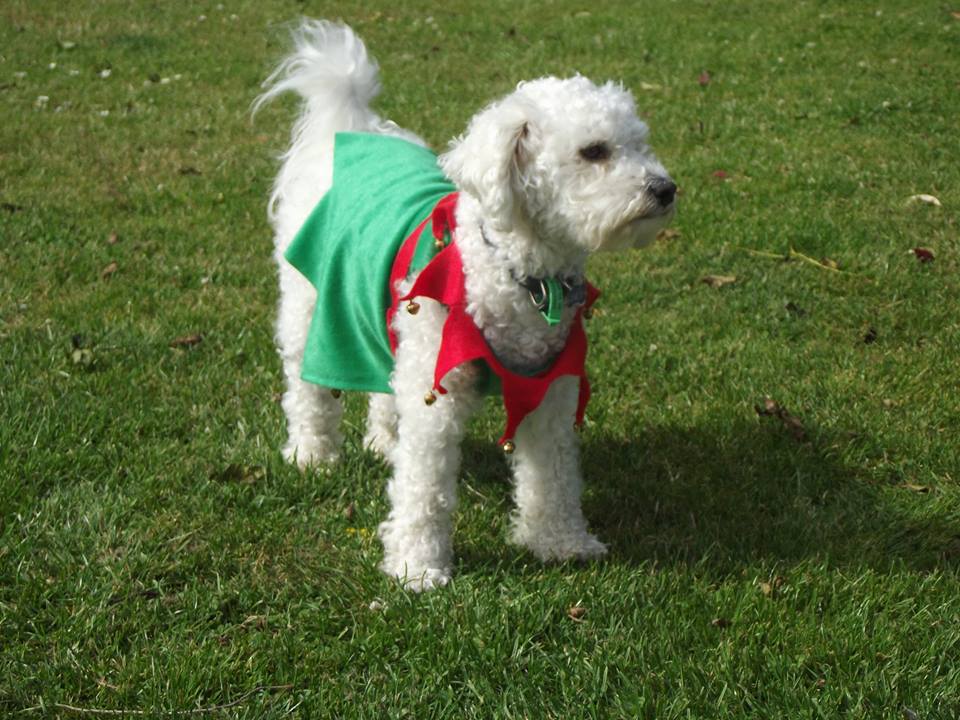
Indy looking fabulous at a Christmas party.

My wife and Indy became an inseparable pair, and six months later, they met me. And after many dates, the two of them asked me to join their team. Sometime later, it became official with a wedding. The interesting thing about me before I met Indy and my future wife was that I was mourning our family dog, Jack.

I was living in another city when Jack got very ill and died. I felt disconnected from that event, and I took his death really hard. During this grieving period, I purposely avoided petting or playing with dogs. It didn’t even matter that they were my friends’ dogs; I just didn’t want to touch them. It felt wrong to do that, so I avoided being around them.

As I mentioned previously, fate had other ideas. When I met my future wife for our first date, she brought Indy to keep her company. She later said that Indy was her measuring stick for her dates: if Indy didn’t like the date, or if the date didn’t like him, there would be no second date.

I knew she had brought her dog with her, but I had not fully processed what that would mean. As I sat down and tried to act like a normal single male with a beautiful woman, I needed to come to terms with the fact that there was a dog, who was begging for some pats and belly rubs. I discovered that I couldn’t say no to him.

It was weeks later that my future wife informed me that the reason we had a second date, was because I was kind to Indy and that he liked me. I had no idea that the course of my life was going to depend on whether a dog liked me or not.

The more time I spent around Indy, the more it revealed a few things about myself that were a surprise. The obvious point was that I had to acknowledge that I missed having a dog in my life.

What I didn’t realise at the time was that Indy was helping me heal the hole in my heart left by Jack’s death. He also helped me understand that being part of a team with a beautiful woman wasn’t a daunting idea. I wasn’t as frightened as I thought I would be. This little dog saved me in ways I didn’t realise I needed saving.


Indy claiming his spot in our bed.

So, let’s get back to the title of the blog. It’s been one year since Indy died, so what has life been like? I guess it depends on how honest I want to be. I would be lying if I said that it has been easy, with the first two months being pretty rough.

I know people grieve in different ways, because we are all different. But how does someone grieve and mourn for a pet? What’s the best way to do this? Having said that, I’m not sure how to explain things, but I’ll give it a go.

We have encouraged UMC1 and UMC2 to discuss Indy when they wanted to, whether to talk about his misadventures or just to state the fact that they miss him. UMC2 talks about him more than UMC1, but I know they both miss and love him.

For myself, I’m content to talk about him, but it heavily relies on the context of the discussion. Sometimes I can joke about him and retell stories, but other times, I still have to leave the room after talking about him.

I suppose the grief is always sitting there, just under the skin, and all it takes is a small scratch to reveal it. I’m left thinking, “Wow, where did that reaction come from?” I also know that he’s been gone for a year, but I still catch myself doing things, mainly out of habit.

  • When my wife picks me up from work, I have to stop myself from asking how Indy’s day has been.
  • When calling my wife from work, I have to stop myself from asking how Indy’s day has been.
  • I find myself wanting to check the bed before sitting on it, so I don’t hurt Indy.

We miss and love Indy, and he loved us. So what do you do with the leftover love? UMC1 and UMC2 would like to get another dog soon; however, my wife and I are not ready for that. We want to be, just not yet.

I remember reading somewhere that not loving another pet after a pet’s death is a sin. There are so many pets out there that need loving families to take care of them, and we will do that again, just not yet. My wife is worried she would compare the new dog to Indy, and that wouldn’t be fair to the new dog. As for me, I guess I have more healing to be done.


Indy catching up on some well deserved rest.

It was awkward going to Indy’s favourite places around town, but this has been getting better. We were at the beach the other day, when UMC2 pointed to a dog and stated that the dog looked like Indy’s clone. That caught me by surprise, but he wasn’t angry or sad about it; it was just an observation.

Something that has shocked me has been my ability to talk to and hug other dogs. After Jack died, I isolated my heart from dogs and avoided being around them. After Indy’s death, I didn’t want to make the same mistake, so I decided that when I would meet a dog, I would give it lots of pats and hugs. It’s not their fault, they want to get some attention from a faulty human.

This has been great because it’s allowed me to discuss the dog with the owner. Sometimes Indy comes up in conversations, and sometimes he doesn’t. It’s been helpful.

We have photos of Indy around the house, and I have photos of Indy and Jack, next to each other, on my desk. The dogs never met in life, but part of me hopes they have met in the afterlife.

This blog post is ultimately not as good as I had hoped it would be, as I have stopped several times to think about him and let the experience wash over me. The more I think about Indy, the more I have to write. But the more I write about him, the more I have to stop and compose myself.

Indy was a fucking good dog, not just to me, the boys and my wife, but to everybody. He changed my life, and as long as we continue to talk about his misadventures, our memories and love for him will never be gone.

I’m done now. Thank you for continuing to read, follow, and subscribe to Some Geek Told Me. If you have a pet, please do me a favour and hug them. I’ll see you next week for the return of We Didn’t Start the Fire.


2025 Rugby World Cup: Peculiar and Puzzling Positions Reborn

As you good people know, I tend to write some nonsense from time to time. I also like to stretch my writing skills and avoid cramps by talking about topics that interest me. Within that collection of topics is rugby.

Now, I can imagine you could be thinking, “Ok Scott, what’s that got to do with today’s lecture?” That’s an outstanding question, by the way, you should be proud of yourself.

To answer your question, the 2025 Women’s Rugby World Cup is on. Granted, we have just had the quarter-finals over the weekend, with New Zealand to face Canada in the first semi-final, and England going up against France in the second.

To celebrate this event, I thought I would dust off a previous blog post and represent it. Why, you ask? It’s all about the positions in rugby, because they have awesome names, regardless of whether it’s the female or male game. The positions can be confusing, but I hope this guide helps you. If it doesn’t, I sincerely apologise.

Yes, I am a New Zealander, so I am biased, but rugby is one of the greatest sports on the planet, and the 2025 Women’s Rugby World Cup, which is currently being held in England, is the world’s showcase for the women’s game.

There are only four games left, so if you’re planning on watching some games, you had better hop to it! If you have seen a few of the games, then I hope you have enjoyed them and understood what was going on. So, sit back and relax while I discuss the various rugby positions.


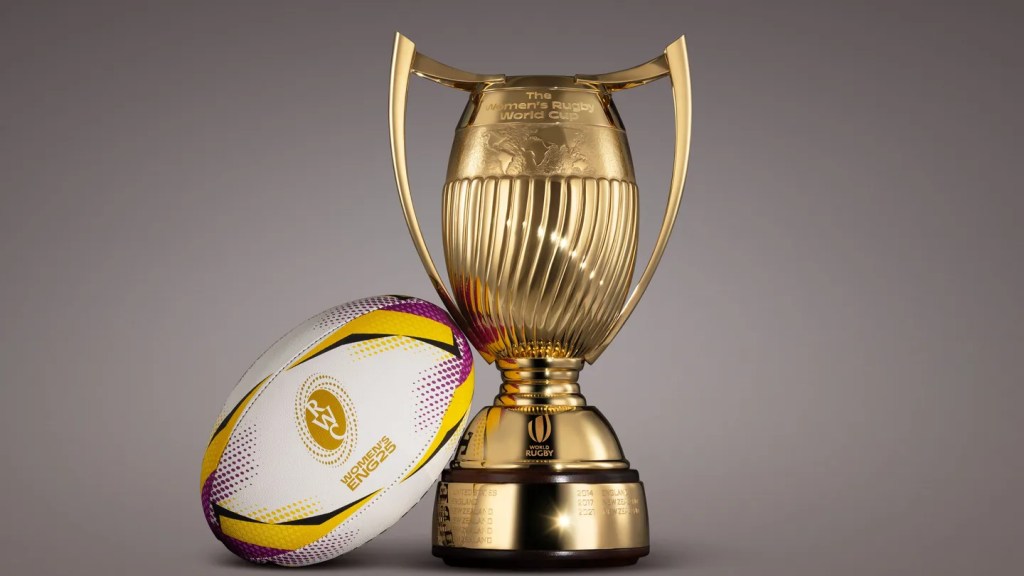
New Women’s Rugby World Cup trophy introduced to mark an era-defining tournament that will feature representatives from all regional associations for the first time. Credit: World Rugby

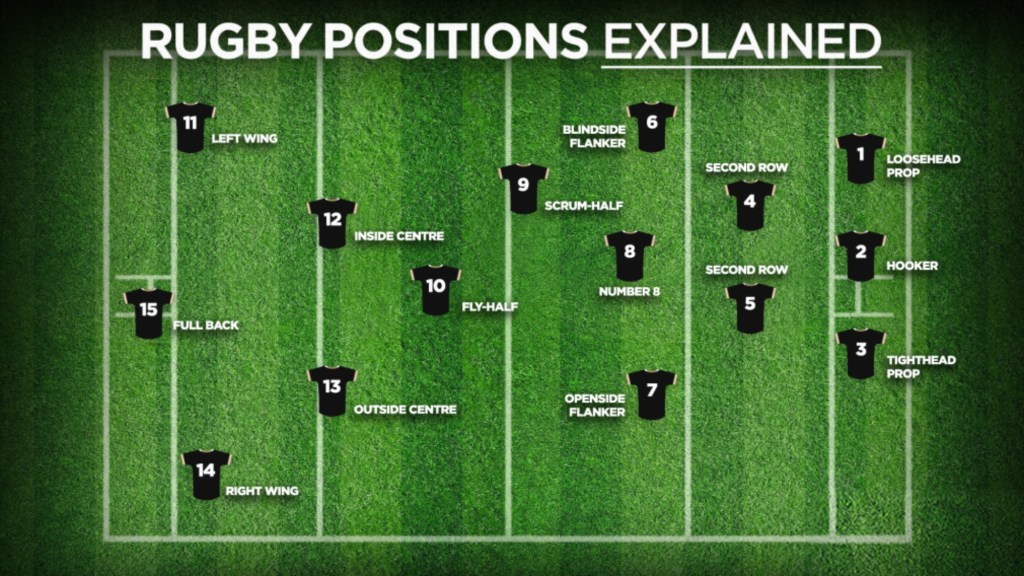
Just like any team sport that requires players to wear numbers, their number denotes their position. And rugby has some pretty messed-up positions. There are 15 (1-15) players in a team, with another 8 (16-23) as reserves, so 23 in total.

So what I’m going to do today is try to explain what these positions mean and what the player’s job is during the game. Because I’m a New Zealander, I’ll use Kiwi terminology, but I’ll add other names for positions that other countries use as well. Also, the person who gets the honour of wearing the number 8 jersey has the greatest positional name in rugby, and maybe in all of sport.

The Positional Numbers

1.) Loose-head prop

2.) Hooker

3.) Tight-head prop

4.) Lock (Second row)

5.) Lock (Second row)

6.) Blind-side flanker

7.) Open-side flanker

8.) No. 8

9.) Half-back (Scrum half)

10.) First Five (Fly half, First 5/8)

11.) Left wing

12.) Second Five (Inside Centre, Second 5/8)

13.) Centre (Outside Centre)

14.) Right wing

15.) Full back

Credit: Six Nations Rugby

Job done then, right? Great Caesar’s Ghost, the answer is no!

The team can be divided into two groups: forwards (1-8) and backs (9-15). There is no better way to illustrate the differences between the two groups than when there is a scrum or a line-out. All of the forwards are packed together into a scrum or standing in a line behind each other for a lineout. The backs, on the other hand, will be standing side by side, stretched out across the field when either a scrum or a line out is taking place.

Rugby is a sport where all body types can be used and celebrated. This is because each position needs a specialised player with a particular body type and skills. Traditionally, forwards are larger but slower players, while backs are usually leaner, but faster.

Alright then, what’s special about the positions?

Explaining the Positions:

Front Row (Props and Hooker/Numbers 1-3)

Body type in the community:

This is easy. The best way to describe what body types props and hookers would have would be a female bouncer or weightlifter. You know the type, their arms and legs are the same size; they’re born without a neck; they can bench press a small car; and they won’t take any shit from anybody.

What‘s a prop’s job in a rugby game?

Formal answer:

Their job is to “prop” up the scrum, support the hooker, and add lift to the lineout jumpers.

Informal answer:

Their job is to be a human bulldozer and to take as many defenders down as they can. They are also experts in the dark arts of the front row.

What‘s a hooker’s job in a rugby game?

Formal answer:

Their job is to “hook” the ball with their legs during a scrum and to throw the ball in at the lineout.

Informal answer:

Their job is to be an extremely niggly player who acts like they’re a saint, but they’re actually the devil in disguise. If the referee pulls them up for a penalty, the hooker will deny it, even with 20 m wide screens, showing them committing the crime.

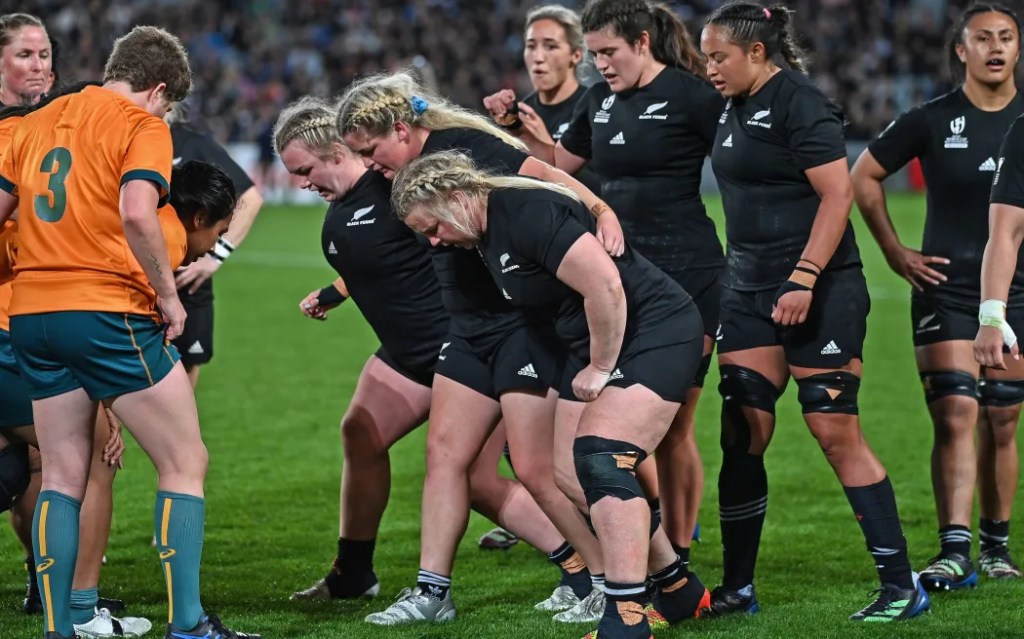
New Zealand and Australia’s front row (prop/hooker/prop) about to set a scrum. Photo: PHOTOSPORT

Second Row (Locks/Numbers 4-5)

Body type in the community:

Locks would have the body type of basketball players: tall and muscular. However, the difference here would be that instead of bouncing a ball on a court, these players have declared that they would rather suffer cauliflower ears, head trauma, broken bones, or torn ligaments than play basketball.

What‘s a lock’s job in a rugby game?

Formal answer:

A lock’s job is to form the second row in the scrum, receive the ball from the kick-off, and be a primary jumper at the lineout.

Informal answer:

Their job is to have the best shoplifting hands on the field, to be lectured by referees half their size, and to be at the bottom of every ruck and maul.

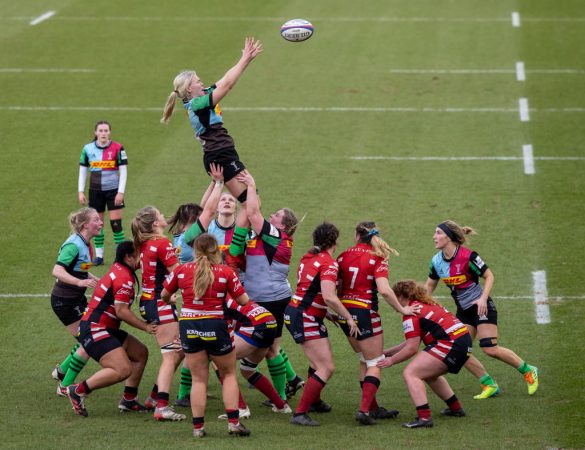
Harlequins’ lock, Rosie Galligan wins a lineout against Gloucester-Hartpury (Getty Images)

Loose Forwards (Flankers and No. 8/Numbers 6-8)

Body type in the community:

Do you remember how members of the front row would be described as bouncers? Well, if they’re the bouncers, then the loose forwards would be the crazy, tough players starting fights in the bar/club or in the line outside.

What‘s a loose forward’s job in a rugby game?

Formal answer:

A loose forward has several jobs, like being a secondary jumper at the lineout, supporting the ball carrier around the ruck, giving protection at the breakdown, and searching for the ball.

Informal answer:

There have been many epic quests throughout pop culture, like Frodo and Sam’s mission to destroy the One Ring at Mt. Doom, Thanos collecting the Infinity Stones, Ahab’s obsession with Moby Dick, Darkseid searching for the Anti-Life Equation, Ang to master the bending of all four elements, or Barbie’s quest into the real world.

But they all pale in comparison to a loose forward’s mission to hunt and find the rugby ball. They are lunatics, running around searching for the ball during tackles and breakdowns. They are either off their medication or need to be on some, because they are single-minded in their conviction to find and secure the ball for their team.

Spain vs Netherlands, while they set a scrum. The flankers are on the sides on the scrum, while No.8 is at the back.

Half-back (Number 9)

Body type in the community:

Picture any group of people working in sales with various body sizes. The half-back would be the smallest of them; toned, quick, and very talkative.

What‘s a half-back’s job in a rugby game?

Formal answer:

Like a hooker, the half-back is a singular, specialised player. Their job is to be the link between the forwards and the backs; to feed the ball into the scrum; to receive the ball from the lineout; and to gather the ball at breakdowns, to either pass, run, or kick it.

Informal answer:

The half-back’s job is to yell at everybody and to tell them where they need to be. Half-backs are also well-versed in rugby laws since they are always telling the referee what to do. They love pointing out the illegal things the opposition is doing to the referee, as well as convincing the referee that the illegal things their own team are doing are perfectly legal.

Jenny Maxwell at half-back for Scotland. Credit: The Offside Line

Inside Backs (First Five, Second Five, and Centre/Numbers 10, 12, 13)

Body type in the community:

These players are usually decisive, fast, and agile. You’ll see them at the gym working out and looking fabulous. They are the ones, typically, posing for photo shoots.

What‘s a First Five’s job in a rugby game?

Formal answer:

When the First Five receives the ball, they will either run, pass, or kick it. If they kick the ball, they need to decide if they are kicking for territory, forcing the other team to kick the ball out, forcing the other team to make a mistake, or setting up a scoring situation. They are usually the player who kicks the goals.

Informal answer:

Their job is to crush the opposition by doing three things: kicking penalty goals and conversions from anywhere on the field, landing drop goals, and forcing the opposition back 50-80 m through territory kicks. If a First Five is constantly doing this in a game, she is soul-destroying for the other team.

What‘s a Second Five and Centre’s job in a rugby game?

Formal answer:

Their job is to support the First Five, create line breaks, kick for territory, supply cover defence, and to follow set pieces.

Informal answer:

When done correctly, the deadly partnership of the Second Five and Centre can bust open teams, but also crazy enough to act like loose forwards at the breakdown. Their job is to make the game a living hell for the opposition’s back line. They’re very clever, fast, and dangerous, but still look like a model as they do it.

Dannah O’Brien (No.10) kicking one of her seven successful conversions against Italy. Photo: Sportsfile

Outside Backs (Wingers and Full back/Numbers 11, 14, 15)

Body type in the community:

These players will look like inside backs, except for one difference: their speed. These players are generally the fastest on the field, so look for people who like working out, but also sprinting. Outside backs are also great dancers because of the work they do to evade being tackled.

Formal answer:

These players need to be able to catch the high ball, but also chase it. They need to be strong enough to fend off tacklers, but also to tackle around the waist and legs. Outside backs are try-scoring machines because of their speed.

Informal answer:

These players love to humiliate teams by evading tackles, applying the side step, outrunning or chasing someone down, producing try-saving tackles, but mainly by scoring a huge amount of tries.

England’s Ellie Kildunne (fullback) in the centre of the photo, was named World Rugby women’s player for the year.
Photograph: Tom Jenkins/The Observer

What’s your favourite or least favourite rugby position? Have you seen any World Cup games? As always, please let me know.

Hopefully, this guide about the positions was easy to understand. Before I go, I need to point out how tough, strong, and skilled all of these women need to be to play rugby. It can be a brutal sport to watch and experience, but it is glorious.

Thanks once again for reading, following, and subscribing to Some Geek Told Me. I’m also on Twitter and Mastodon, where I’m still posting about daily random stuff.

Please don’t forget to walk your dog, read a banned book, watch some of the last few Rugby World Cup games, and I’ll see you next week for a personal blog post. I hope it’s not sad.


Who, what, and where are the elements named after?: Part 2

I’m so glad that you’re back. The incident with the kitchen whisk is now behind us, and all is forgiven. And speaking of forgiveness, I have to plead for forgiveness, because it’s been a while since I published a blog post about the Period Table.

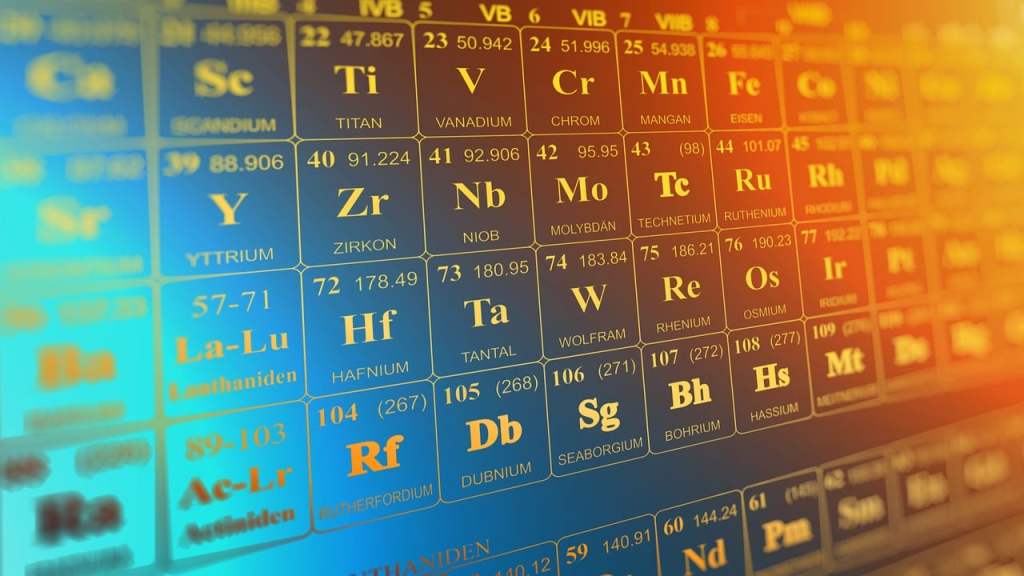
I have the time to explain this, so I will. In my infinite wisdom, I have decided to embark on another ill-conceived project: to explain where the names of the 118 elements that sit on the coolest table in the universe come from.

My first chapter was about discussing the elements that have been named after real people. Because that was such a great success, this chapter will be discussing the elements that have been named after objects, in particular, cosmic objects. Like before, I’m not going to present these elements in alphabetical order, because that would be too easy. No, I’m going to list them in the order you would find them on the Periodic Table.

Get ready for some more interesting pieces about history, chemistry, and astronomy. Prepare yourselves!


Image by Elchinator from Pixabay

Helium (He): The Sun

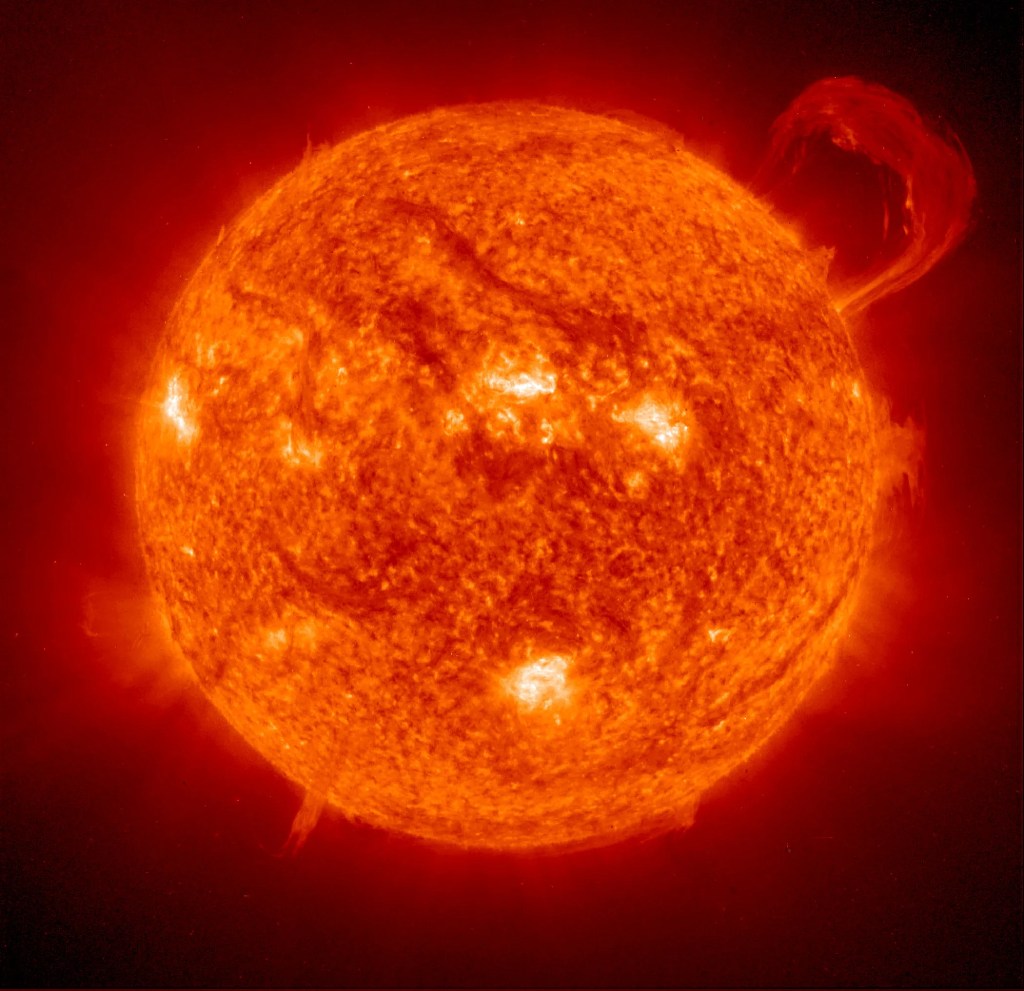
Helium is quite special, because it’s the second element on the Periodic Table. It’s a noble gas, and it was discovered in 1868 by Norman Lockyer, then isolated by William Ramsay, Per Teodor Cleve, and Abraham Langlet in 1895. Helium was the first and only element to be identified outside of Earth, which was through observations and spectral analysis of the Sun.

Since helium was discovered in our local star, Lockyer named the new element after the word Helios, which is derived from the Greek word for the Sun. Helios was also the Greek god of the Sun.

Credit: NASA

Selenium (Se): The Moon

Selenium is the first and only element on today’s list that fits into the Non-metal group on the Periodic Table. Because of this, it’s the 34th element on the table. It was discovered in 1817 by Jöns Jacob Berzelius, and possibly, Johann Gottlieb Gahn as well, though that’s difficult to accurately state.

The Greek word for the Moon is Selene, but it’s also the name of the Greek Goddess of the Moon. Berzelius named Selenium after the Moon; however, just like the Sun, an argument could be made that it’s actually named after a deity.

The Moon, the best name for any moon in the universe. Credit: Airwolfhound/FlickrCC BY-SA 2.0

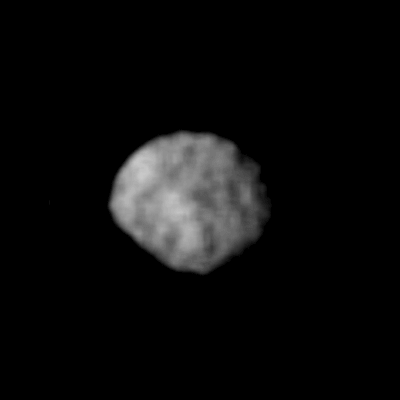
Palladium (Pd): Pallas

Palladium is the 46th element on the Periodic Table, which places it in the Transition Metals group. In 1802, it was discovered by William Hyde Wollaston, an English chemist, who also discovered osmium and rhodium.

Between the orbits of Mars and Jupiter is a region of our Solar System called the Asteroid Belt. Wollaston named Palladium after an asteroid that was located in it, Pallas, and just like Palladium, it was discovered in 1802. Pallas is the third-largest asteroid in our Solar System. Represent.

An image of the asteroid Pallas captured by the European Southern Observatory’s Very Large Telescope. (Image credit: ESO/Vernazza et al.)

Tellurium (Te): Earth

Tellurium is a metalloid and the 52nd element on the Periodic Table. Like several other elements, it was discovered and isolated by different individuals. Tellurium was discovered by Franz-Joseph Müller von Reichenstein in 1782, but isolated in 1798 by Martin Heinrich Klaproth.

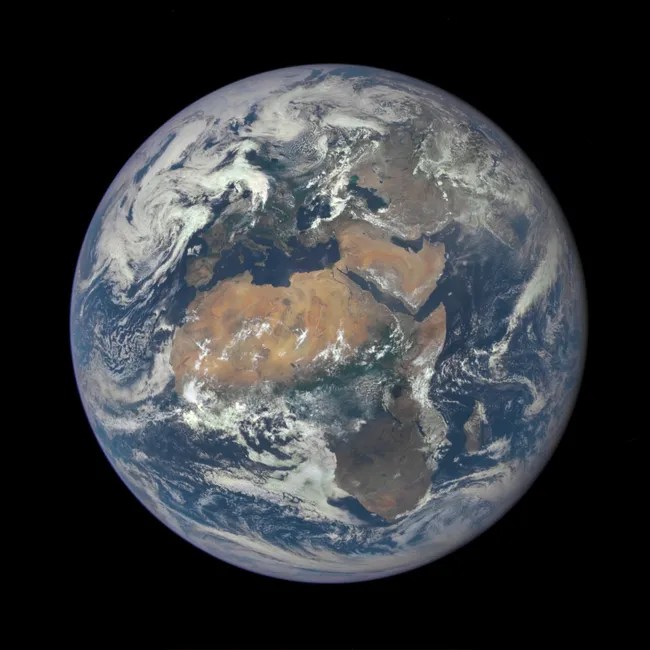
The name Tellurium comes from tellus, the Latin word for Earth; so essentially, tellurium is named after our home planet, Earth.

A NASA camera aboard the Deep Space Climate Observatory satellite caught this view of Africa and the entire sunlit side of Earth on July 9, 2015. (Image credit: NASA)

Cerium (Ce): Ceres

For this entry, we have Cerium, which is the 58th element on the Periodic Table. It can be found lounging around with the other Lanthanoids, and it was discovered by Martin Heinrich Klaproth, Jöns Jakob Berzelius, and Wilhelm Hisinger in 1803, but was first isolated by William Francis Hillebrand in 1875.

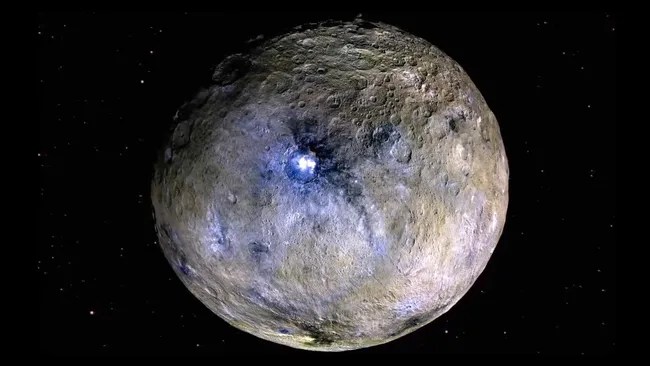
Within the Asteroid Belt, we can find the dwarf planet Ceres, which cerium was named after. Ceres was discovered in 1801, just two years before cerium was identified.

An image of dwarf planet Ceres captured by NASA’s Dawn mission.  (Image credit: NASA)

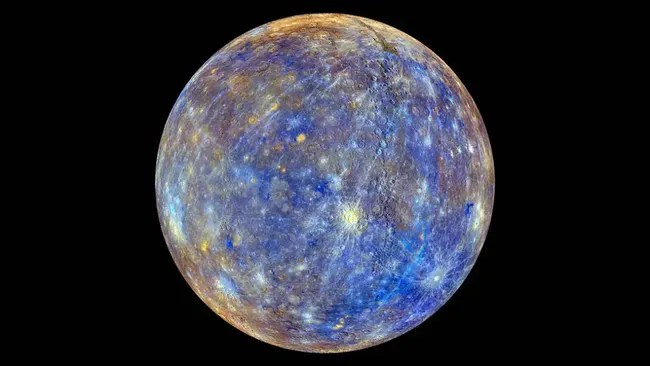
Mercury (Hg): Mercury

Mercury is the 80th element on the Periodic Table, and just like the cool kids, it sits in the Transition metals group. To the best of my understanding, no one person can be credited with Mercury’s discovery, as it was in use since antiquity, which has included several ancient civilisations like the Egyptians, Qin dynasty, Mayas, and Sumerians, to name but a few.

As you can imagine, Mercury is not named after Freddie Mercury, but rather the planet, Mercury, the first planet from the Sun. The element was once known as quicksilver because it is a metal that remains liquid at room temperature. This property connects it to the planet Mercury, named after the messenger of the Roman gods, who was said to speed across the night sky, just like the planet.

A colourful view of Mercury produced using images from the color base map imaging campaign during MESSENGER’s primary mission. (Image credit: NASA/Johns Hopkins University Applied Physics Laboratory/Carnegie Institution of Washington)

Uranium (U): Uranus

Located in the Actinoids group, Uranium is the 92nd element on the Periodic Table. Just like the beautiful nightmare of your ex-partner, this element is radioactive and dangerous. Uranium was discovered in 1789 by the German chemist, Martin Heinrich Klaproth, whom we have met before.

It won’t take you 20 questions to figure this one out, but Klaproth named his newly discovered element after the 1781 discovery of the seventh planet from the Sun, Uranus, by the German astronomer, William Herschel.

Please remember that the pronunciation of Uranus’ name is not Yuor-ray-nuhs or U-ran-us, as you would think. It’s actually pronounced Yoor-e-nes or Ur-an-us. Facts matter, boys and girls, facts matter.

This composite image features the ringed planet Uranus set against the blackness of space. Credit: NASA’s Chandra X-ray Observatory.

Neptunium (Np): Neptune

Sitting right next to Uranium in the Actinoids is Neptunium, the 93rd element on the Periodic Table. It was first synthesised in 1940 by Philip H. Abelson and Edwin McMillan at the Berkeley Radiation Laboratory, California, United States.

Neptunium was named after the eighth planet, Neptune, which was discovered in 1846 by Johann Galle, Urbain Le Verrier, and John Couch Adams. The element was named after the planet, because it was going to follow the pattern set down with Uranium and Uranus.

This composite image provided by NASA on Sept. 21, 2022, shows three side-by-side images of Neptune. From left, a photo of Neptune taken by Voyager 2 in 1989, Hubble in 2021, and the James Webb telescope in 2022. Credit: NASA via AP.

Plutonium (Pu): Pluto

Chilling next to Neptunium in the Actinoids group, we have the 94th element on the Periodic Table: Plutonium. For its discovery, we need to go back to between December 1940 and February 1941, when Glenn T. Seaborg, Edwin McMillan, Emilio Segrè, Joseph W. Kennedy, and Arthur Wahl first produced, isolated, and identified plutonium.

By now, you would have noticed a small pattern with the naming of the last two elements. You don’t have to be a qualified nuclear safety inspector like Homer Simpson to realise that plutonium was named after the planet, now dwarf planet, Pluto, which was discovered in 1930.

Enhanced color view of Pluto using images from New Horizons Long Range Reconnaissance Imager (LORRI) and color data from the spacecraft’s Ralph Instrument. (Image credit: NASA/Johns Hopkins University Applied Physics Laboratory/Southwest Research Institute)

That’s another nine elements down, with only 96 to go. I’ll keep chipping away at it here, on New Zealand’s 5th least favourite website. Did I miss any elements? As always, please let me know.

That’s it for another week. Thanks again for reading, following, and subscribing to Some Geek Told Me. Please remember to walk your dog, read a banned book, and never give Chuck Norris a blunt instrument, because someone will regret it. I’ll see you next week for some more amateur writing by yours truly.


Tour of the Solar System: The Moons of Neptune

I think I need to start with an apology. I’m sorry, but I have not released a new Tour of the Solar System blog post since 19th May. That is being rectified today with the latest chapter of the tour that very few people actually want or need. Yes, my loyal readers, Some Geek Told Me’s Tour of the Solar System is back!

For the previous entries on this non-award winning project, we have:

1.) Meet the Family

2.) The Sun

3.) Planets vs. Dwarf planets

4.) Mercury

5.) Venus

6.) Earth

7.) The Moon

8.) Mars

9.) The Asteroid Belt

10.) Ceres

11.) Jupiter

12.) The Galilean moons

13.) Saturn

14.) Titan

15.) The Moons of Saturn

16.) Uranus

17.) Titania

18.) The Moons of Uranus

19.) The Literary Moons of Uranus

20.) Neptune

21.) Triton

Some Geek Told Me’s Tour of the Solar System is the best tour that money can buy; I mean, it’s free, so the quality is somewhere in the middle. However, I beseech you to stay and enjoy one of the rare tour stops that is not about a singular object, but many. Prepare yourselves, because we are going to discuss…drum roll please…..The Moons of Neptune! Let’s listen to the chime and begin now.


An annotated picture of some of Neptune’s many moons as captured by the James Webb Space Telescope. The bright blue diffraction star is Triton, Neptune’s largest moon; while Hippocamp, its smallest regular moon, is too small to be seen.

Just like Jupiter, Saturn, and Uranus, Neptune has multiple moons. 16 known moons have been discovered orbiting Neptune since 1846, which makes it a very successful foster parent.1 In addition to this, their names come from Roman or Greek mythology, just like Jupiter and Saturn, but as you remember, not the moons of Uranus.

On the last stop of the tour, we visited Triton, which was the largest natural satellite of Neptune. Because that entry was so riveting, I’m only able to list the next five largest moons, even though there are 10 more moons. Sadly, these moons will not be discussed because of my lack of sleep and time, so I do repent my actions on this. 2

So, without further delay, let’s crack on and meet some of Neptune’s moons!

Proteus

Proteus is the second-largest moon of Neptune, with a diameter of about 420 km. It orbits Neptune at around 117,640 km, and it’s tidally locked to Neptune. What this means is that the amount of time it takes Proteus to execute one orbit of Neptune is the same time it takes Neptune to rotate just once. An easy example of this is with the Earth and the Moon.

Proteus is not named after the Marvel mutant, as you may have thought, but rather a shape-changing sea god from Greek mythology, who was the son of Poseidon (Neptune). It was discovered by Stephen P. Synnott on 16th June 1989, from images taken by Voyager 2, before it completed its flyby of Neptune.

Proteus’ shape is an irregular polyhedron, instead of a traditional spheroid, like the majority of cosmic objects. Another interesting fact is that Proteus has an impact crater called Pharos. What makes Pharos unique is that it’s measured to be 10–15 km deep and has a diameter of 250 km, which, if you have been keeping up, means it’s more than half the diameter of Proteus.

This image of Neptune’s satellite 1989N1 was obtained on Aug. 25, 1989 from a range of 146,000 kilometres. The resolution is about 2.7 kilometres per line pair. Credit: Voyager 2, NASA.

Nereid

Nereid is named after the Nereids, who were from Greek mythology, as they were sea-nymphs and servants to Poseidon (Neptune). Nereid has a diameter of only 340 km, making it the third-largest moon of Neptune, after Triton and Proteus. Nereid is the ninth-farthest moon from Neptune, orbiting at an average distance of 5,513,400 km. 

Nereid is the second moon of Neptune to be discovered. Astronomer Gerard Kuiper made this discovery on 1st May 1949. You’ll encounter Kuiper’s name several more times during our tour, so pay attention! Trust me.

Because of Nereid’s massive distance from Earth (about 4.5-5 billion km), Voyager 2 has been the only spacecraft to fly past the moon, which happened in 1989. Nereid has an eccentric and curious orbit, which ranges from 1.4 to 9.6 million km. It takes 360 Earth days to make one orbit of Neptune, while it takes about 11 hours to make one rotation.

This Voyager view of Nereid was obtained on Aug. 24, 1989 at a distance of 4.7 million kilometres. With a resolution of 43 kilometres per pixel, this image has sufficient detail to show the overall size and albedo. Credit: NASA/JPL

Larissa

Larissa was discovered by a team of astronomers, Harold J. Reitsema, William B. Hubbard, Larry A. Lebofsky and David J. Tholen, on 24th May 1981, after many occultation observations. Its existence was confirmed with the Voyager 2’s flyby in 1989. Larissa has a diameter of 194 km, making it the fourth-largest moon of Neptune. It’s named after a nymph who was a lover of Poseidon, because in Greek mythology, the Gods had fidelity issues.

Larissa orbits Neptune at about 73,540 km, which makes it the fifth-farthest moon from the planet, placing it within Neptune’s rings. For its orbit, Larissa completes one rotation around Neptune every 13 hours and 20 minutes.

The moon is gradually twirling towards Neptune, and it is believed that it will eventually hit Neptune’s atmosphere. Another theory is that Larissa could be ripped apart by Neptune’s tidal forces to create a new ring. As for Larissa’s surface, it is heavily cratered and irregularly shaped, just like my face when I was a teenager.

These Voyager 2 images of satellite 1989N2 at a resolution of 4.2 kilometres per pixel reveal it to be and irregularly shaped, dark object. Credit: NASA/JPL

Galatea

Moving right along, we have Galatea. It’s the fifth-largest moon of Neptune, with a diameter of about 174.8 km. It was discovered in 1989 by Synnott, along with a team of astronomers, with the announcement being held on 2nd August 1989. Like several other moons on the list, Voyager 2’s images proved to be invaluable.

Galatea sounds like the name of a female professional wrestler, but alas, it’s not. Do you remember how Nereid was named after the Nereids, the sea-nymphs? Galatea was named in 1991 after one particular Nereid, because one of Poseidon’s sons, Polyphemus, was in love with her. Lucky girl. It’s also noteworthy that Polyphemus was the same Cyclops from the epic Odyssey, written by Homer.

Out of the six major moons of Neptune, Galatea is the fourth closest to the planet, with an orbiting distance of about 62,000 km. Galatea also shares other traits with its siblings, like being irregularly shaped, with some scientists believing that these irregularly shaped moons are the leftovers of some cosmic collisions.

Like Larissa, Galatea is spiralling towards Neptune and one day, it will be ripped apart or collide with Neptune’s atmosphere. Galatea also orbits the gas giant every 10 hours and 18 minutes.

Galatea as seen by Voyager 2. The image is smeared due to the combination of long exposure needed at this distance from the Sun, and the rapid relative motion of Galatea and Voyager. Hence, Galatea appears more elongated than in reality. Credit: Voyager 2/NASA.

Despina

Now, if Galatea sounds like a female professional wrestler, then Despina sounds like a female Disney villain, though the name is still interconnected with Greek Gods and relationships. Big surprise. Despina was a nymph, as she was the daughter of Poseidon and Demeter. And since Poseidon and Demeter were siblings, that meant Despina’s biological parents were also her uncle and aunty.

Despina is the sixth-largest of Neptune’s moons, and as you can guess, it was discovered by Synnott again, as well as with the Voyager Imaging Team, in July 1989.

The moon is only 150 km in diameter, which is 1/23rd the diameter of the Moon. Despina is believed to be made up of water ice and rocky material, and has an orbital period of 8 hours.

Despina as seen by Voyager 2. There is significant horizontal smearing due to the combination of long exposure needed at this distance from the Sun, and the rapid relative motion of the moon and Voyager. Credit: NASA/Calvin J. Hamilton.

Like I said earlier, there are 10 more moons to discuss, whose names are Thalassa, Halimede, Naiad, Neso, Sao, Laomedeia, Psamathe, Hippocamp, S/2002 N 5 and S/2021 N 1. Maybe one day I’ll discuss them, but not today, because I need a lot of beauty sleep. What’s your favourite moon of Neptune? As always, please let me know.

Thanks again for reading, following, and subscribing to Some Geek Told Me. My Twitter and Mastodon accounts still exist, if you feel like reading some boring facts and information. It’s an attractive offer, isn’t it? Please don’t forget to walk your dog, read a banned book, watch some games from the Women’s Rugby World Cup, and I’ll see you next week.


1 The most recent moons to be discovered were in both in 2024, with the awesome working names of S/2002 N 5 and S/2021 N 1.

2 As you know, I enjoy Shakespeare, and I enjoy even more when I can understand it.