
I want to talk about Shakespeare, William Shakespeare to be precise. Why? Seriously, why would you not want to talk about the Bard? For over 400 years, the literary works of William Shakespeare has enthralled audiences across the world; whether it’s theatre, film, literature, or maybe just people trying to understand what the hell they just read or saw.
I recently saw a local production of As You Like It, so it got me thinking about some more of Shakespeare’s plays; where if it was possible, for any of them to be changed, for better or worse.
This of course means looking at the comedies and tragedies, and figuring out this: if one element of the story was changed, like a character does one thing different; could the outcome of the play be different?
Before we push on with this, let’s address the Elizabethan elephant in the room. I am not an expert on Shakespeare, because I am not smart enough for that insanity. I generally understand only 60%, at any given time, while experiencing a Shakespearian play.
However I’ve had some time to mull this over, while I’ve been eating pizza and watching Peacemaker. Damn that show’s good! Anyway, I took my original idea and took it one step further. What if a Shakespearian play was set in 2022, and if you could change part of the story, would the outcome of the play be any different?
Now because UMC1 and UMC2 have joined a zealous cult, which believe that sleep is only for the weak, I have only looked at four plays this week (Part One), while next week (Part Two) I’ll attempt to look at six plays, with Part Three involving six more.
And yes, I do realise Shakespeare wrote more than 16 plays, but I’m too tired to do all of them; though hopefully, I’ll mention your favourite one. Maybe.
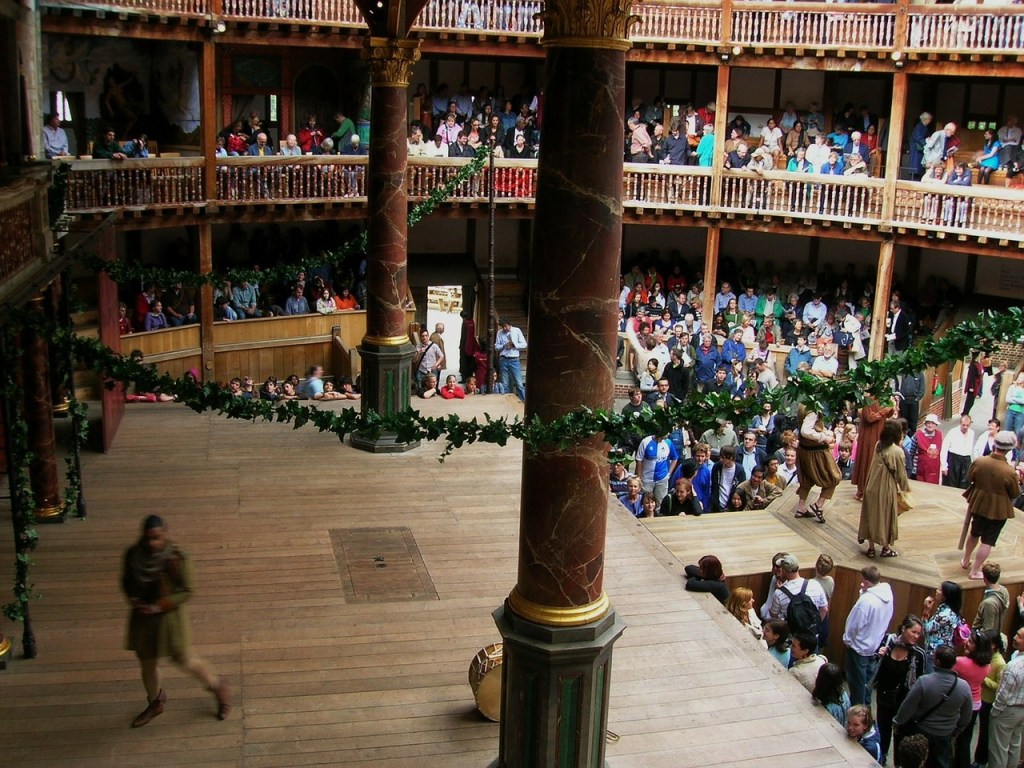
Julius Caesar
Act III, Scene I: Caesar arrives at the Senate
So Caesar arrives at the Senate on the Ides of March, having reversed his decision of not going. He’s a bit worried and stressed that he may die that day, but he’s convinced by Decius to actually go.
Regardless if Caesar was walking around with bodyguards or not, imagine if he was wearing Kevlar body armour? I mean, the man does suspect his life could be in danger, so wearing Kevlar body armour would be a good start in protecting himself. Also being a soldier, Caesar would be trained in various forms of martial arts, so hand-to-hand combat would be like breathing to him.
So the senators surround Caesar and try to assassin him with knives. Yes, he would still be injured from the stabbing, but he would still be alive; provided he wasn’t stabbed in the head. With his martial arts training, along with the Kelvar body armour, Caesar would kick their arse.
After the failed assassination, the conspirators would be rounded up for execution. As they were being executed one by one, Brutus would be left last, just so Caesar could turn the infamous question, into a statement and say to him, “Et tu Brute.” You too, Brutus; because you know, Caesar wasn’t hardcore enough.
Romeo and Juliet
Act IV, Scene I: Friar Laurence explains his plan to Juliet
So Friar Laurence has just met Paris and Juliet, to hear of their upcoming wedding. Paris leaves, then Juliet explains she would rather be dead, than marry Paris. Friar Laurence responds by taking out the vital, and telling Juliet to drink the liquid, where she’ll fall into a death like sleep.
Her family will think she’s dead, and after she has been laid to rest for a certain amount of time, Juliet will awaken, with Romeo waiting with her, so they can leave together. Friar Laurence then adds, that he’ll let Romeo know of the plan, by sending him a letter, via a messenger.
Ok…so instead of sending a messenger with a letter to Mantua, he really could have just sent a text message. Provided Romeo had a signal, he would have received the text, understood the plan, travelled to Verona, waited for Juliet to awaken, then live happily ever after together. Seriously, a simple text message could have saved them. But that didn’t happen, did it?
The Merchant of Venice
Act I, Scene 3: Shylock and Antonio agree on the bond
So Bassanio needs 3,000 ducats, to woo the fair, Portia. This is because he wasted his estate, so he turns to his friend, Antonio, the merchant, for help. Antonio’s wealth is invested in his trading ships, so he suggests to Bassanio to find a moneylender and secure the loan, and Antonio will act as the loan’s guarantor.
Shylock, the moneylender, agrees to the loan of 3,000 ducats, to be paid in three months, from when the bond is signed. However, the bond will state, that if the loan is not repaid by the agreed date, Shylock can remove a pound of Antonio’s flesh, from any part of his body, that Shylock wishes.
This is because of some past events between Shylock and Antonio, that has left anger and resentment with the two men. Antonio wants to be a kind and loyal friend to Bassanio, so he agrees to the bond.
But instead of Shylock and Antonio signing a brutal and horrifying document, that involves flesh cutting, they could have set up direct debt payments. Set over a few extra months, Shylock would have been receiving regular payments; whether it’s weekly, fortnightly or monthly.
Shylock gets his money back, with a very small interest rate; which enables his reputation to grow within Venice, thus supplying him with more business. If the famous Antonio, conducted a fair loan repayment system with Shylock, then Shylock could be trusted within the wider Christian community.
Using a direct debt system, means Shylock, Antonio, Bassanio, Portia, Jessica, Lozerno, Gratiano, and Nerissa, all end up as winners, without taking the issue to court and becoming the most talked about case in Italy; apart from a street fight that left two people dead in Verona.
A Midsummer Night’s Dream
Act 2, Scene 1 : Oberon and Titania argue/Oberon and Puck hatch a plan
This play is special, because in the same scene, featuring the same character, two different situations arise, that modern technology could have solved both problems. The first one is when Oberon, King of the Fairies, is having an argument with his wife, Titania, Queen of the Fairies.
They are fighting over Titania’s ward, whom is a human changeling. Oberon wants her to give the boy to him, but Titania severely refuses. They are both becoming irate with each other, with some very quick burns.
The solution to this martial strife, is to advertise on an employment website. Granted it may take some time to find the perfect candidate for the position of Oberon’s ward; but fairies are immortal, so the length of time to find said candidate, would be done in a blink of an eye, relative to Oberon. Both King and Queen end up with a ward, so both monarchs are happy.
The second situation is when Oberon witnesses Demetrius being a jerk to Helena. He decides that the love flower-juice idea, that he has planned for his wife, should also be used on Demetrius.
When Puck comes back with the flower, Oberon describes what Demetrius looks like, and explains that the love flower-juice that Puck is going to give to Titania, should also be given to Demetrius.
Now if Oberon had any type of modern mobile phone, he could have taken a photo of Demetrius, then either sent the photo via a text to Puck; if he had a phone of course, or either just shown Puck the photo when he arrived back. Either way, Puck now knows exactly what Demetrius looks like, so he could NEVER confuse Demetrius for Lysander, saving everybody a lot of grief.
Ok, that’s it for this week. Next week, I’ll bring you Part Two, where six new Shakespearian plays, will be dragged into the 21st century. Thanks yet again for reading and stay safe.
 SOME GEEK TOLD ME
You must be logged in to post a comment.