
It’s been a long time since I celebrated a real achievement on this highly popular website. I’ve made over 250 critically acclaimed blog posts that are the envy of all the Flat Earth creators, and produced numerous content where people have actually left comments; sometimes it’s been two people! I know, it’s quite impressive, so please, don’t be intimidated too much.
The point is that today marks an important milestone in the history of New Zealand’s 5th least favourite website. On 29th April 2024, we entered the 1950s in the We Didn’t Start the Fire historical references blog posts, and today we finally enter the 1960s!
To remind any newcomers about this amazing life choice, I have decided, in my utterly infallible wisdom, to explain all of the historical references in Billy Joel’s song, We Didn’t Start the Fire. Why would I do such a thing when various people have already done this with a greater degree of professionalism? The short answer is that I love the song and history, so what’s another thing I can add to the Mountain of Eternal Regret?
I have said this before, but this blog keeps me off the streets and out of bars, so my wife can keep track of me.
The list of previous fascinating and informative blog posts can be found here:
We Didn’t Start the Fire: The Beginning
We Didn’t Start the Fire: 1948-1949.
We Didn’t Start the Fire: 1950
We Didn’t Start the Fire: 1951
We Didn’t Start the Fire: 1952
We Didn’t Start the Fire: 1953
We Didn’t Start the Fire: 1954
We Didn’t Start the Fire: 1955
We Didn’t Start the Fire: 1956
We Didn’t Start the Fire: 1957
We Didn’t Start the Fire: 1958
We Didn’t Start the Fire: 1959
We have now entered the third decade of historical references in the song; what a ride! This entry is shaping up to be quite chaotic, so you need to strap yourself in, because we are going back to 1960! Prepare yourself!

U-2
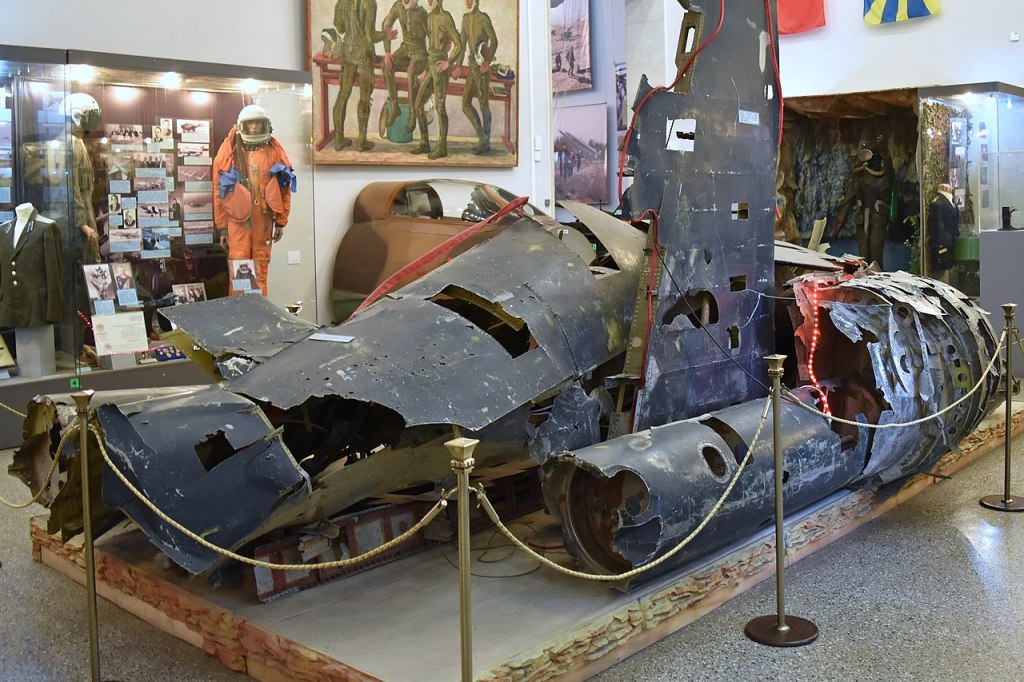
The incident happened during the Cold War, and it had nothing to do with an Irish rock band. U-2 refers to the Lockheed U-2, which is a high–altitude reconnaissance aircraft that has a single engine and a single pilot. The aircraft, known as a spy plane, is operated by the Central Intelligence Agency (CIA) and the United States Air Force (USAF).
In what can only be described as a plot for a spy movie, on 1st May 1960, an American Lockheed U-2 spy plane took off from Pakistan and was eventually shot down over the Soviet Union by the Soviet Air Defence Forces.
The pilot, Francis Gary Powers, was taking aerial photographs when his aircraft was hit by a Soviet surface-to-air missile. Powers parachuted away and was captured by Soviet forces, then put on trial for espionage. The entire affair was a huge embarrassment for the CIA and USAF, as well as for the United States Government, and resulted in the cancellation of an upcoming summit in Paris between the United States, the Soviet Union, the United Kingdom, and France.
Two modern examples of spy plane scandals were the 2001 Hainan Island incident between the United States and China, as well as in January 2024, when Ukrainian forces shot down a Russian Beriev A-50U airborne early warning aircraft, which serves as a surveillance and command-and-control platform. Truth is stranger than fiction.
Syngman Rhee
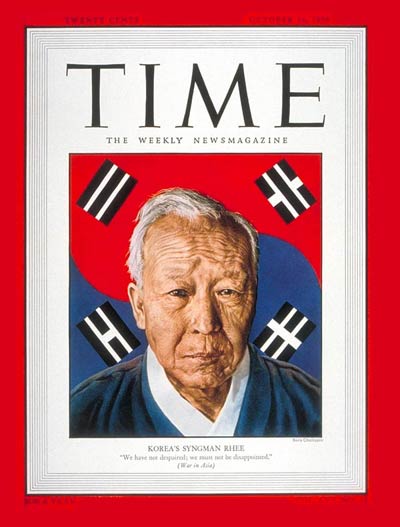
Syngman Rhee (1875-1965) was a dedicated advocate for Korean independence during the Imperial Japanese annexation of Korea. Rhee eventually became the first President of South Korea, who served from 1948 to 1960. He also wanted to reunify the Korean Peninsula.
If you’re a student of history like me, you would have noticed that Rhee was president during the Korean War. It could be argued that Rhee might have made this list for other reasons, but the reason he actually made the list in 1960 was related to the South Korean presidential election.
Rhee was looking to be re-elected for a fourth term, but his opponent, Chough Pyung-ok, died one month before the election. This meant Rhee was re-elected unopposed, and government reports said that he received 100% of the votes from a 97% voter turnout.
The focus turned to the race for the Vice President, which resulted in Rhee’s running mate Lee Ki-poong defeating Chang Myon, 79.19% to 17.51%. This caused widespread calls of election fraud and authoritative claims against Rhee and Lee, which led to the massive civil unrest and Rhee’s resignation and exile to the United States.
For some contemporary examples of politicians resigning because of public protests; would be the Arab Spring (2010-2012), Viktor Yanukovych (2014), Sigmundur Davíð Gunnlaugsson (2016), Serzh Sargsyan (2018), Omar al-Bashir (2019), Sheikh Hasina (2024), KP Sharma Oli (2025), Milos Vucevic (2025), and so many more.
Payola
This entry is completely believable, and it’s a wonder it didn’t happen sooner. The term payola refers to an illegal practice in the music industry, where a payment is made to a commercial radio station to play a song, but the station does not disclose the payment.
In 1959, a federal investigation was launched into the practice, which turned into a gigantic scandal. Over 330 DJs and radio hosts admitted to taking bribes to play certain songs over others. This led to criminal charges being levelled at radio hosts like Alan Freed, who was extremely popular at the time.
These investigations caused several people to lose their jobs and careers. An estimated $263,000 was accepted in bribes.
A modern equivalent would be in 2006, when a payola scandal involving record companies Universal Music Group, Sony, and Warner Music Group. Record labels were paying various radio stations for radio play, with settlements being over $30 million, after a New York Attorney General’s investigation.

Kennedy
This is a straightforward reference involving John F. Kennedy being elected as the 35th president of the United States, defeating Richard Nixon. Kennedy served as President until his assassination in 1963. He was the second youngest person to be elected as President of the United States at 43 years old.
For comparison, Donald Trump was 70 years old when elected in 2016, Joe Biden was 78 years old and 61 days when elected in 2020, and when Donald Trump was elected for a second time in 2024, he was 78 years old and 220 days, making him the oldest person ever to be elected as President; just to point that out.

Button from John F. Kennedy’s 1960 U.S. presidential campaign. Credit: Encyclopædia Britannica
Chubby Checker
Cover songs can either work so well that the new version completely eclipses the original, so that people tend to think the cover is the original, or the cover song just simply exists, and pales in comparison to the original, or the cover and original both benefit from each other’s success. Trust me, I am going somewhere with this.
In 1960, Ernest Evans, aka Chubby Checker, released a song called, The Twist, which in fact was originally released by Hank Ballard and the Midnighters in 1958. The original was very popular in its own right and did very well in sales, but the cover sent the popularity of The Twist into the exosphere.
One of the reasons Chubby Checker’s version was popular, to the point that even if a nightclub in New Zealand played the song, people would know what to do, was the dance, or rather, a dance craze.
“Doing’ the Twist” twisted people on the dance floor around the world, but also helped in the United States, at least, by producing a dance that was popular with black and white audiences during the “Jim Crow” racial segregation era.
Naming cover songs that were successful and popular is one thing, while naming songs that introduce a dance craze is another. However, combining the two is a little more difficult, so the best that the staff at Some Geek Told Me can think of is Macarena, which is a remix from the Bayside Boys in 1995. You know the dance, I bet you do. Hey Macarena, ay!
Psycho
I’m not a huge horror movie fan, but I can sit down and enjoy one. Granted, I may have my eyes shut or my hands covering my face, but I have seen the next entry. This, of course, reminds me that one day I’m going to write about my favourite movie directors.
Like the seamless transition of Sméagol to Gollum and back, this brings us to Psycho. I can’t remember where or when I first saw the movie, but I sure as hell remember what happened in it. Released in 1960, Psycho is arguably one of director Alfred Hitchcock’s most famous works.
Shot in black and white, Hitchcock gave audiences a ride they didn’t see coming, in the form of a ground-breaking masterpiece in Psycho, which covered a range of themes like guilt, madness, voyeurism, family, and morality. Not only did Psycho change thriller and horror movies forever, but movies in general as well.
With a budget of only US$800,000, it collected US$50 million at the box office, as well as being nominated for four Academy Awards, with Janet Leigh winning a Golden Globe for Best Supporting Actress in a Motion Picture.
For previous movie references in the song, Psycho did not win multiple awards, but rather changed how movies are made; it was revolutionary. In that vein, some modern movie comparisons include Pulp Fiction (1994), Toy Story (1995), Saving Private Ryan (1998), The Blair Witch Project (1999), The Matrix (1999), The Lord of the Rings Trilogy (2001-2003), and Avatar (2009).
Belgians in the Congo
Belgians in the Congo means exactly what you think it does. For some much-needed context, in the 1870s, King Leopold II of Belgium was keen to have a Belgian colony in the Congo basin, which is located in Central Africa.
By the 1880s, he had effectively set up shop in the Congo basin. The people of the Congo Free State, as it was known, suffered atrocities with an estimated 1.5 million to 13 million deaths at the hands of Leopold’s policies and greed.
In 1908, the annexation became official, with the Congo Free State being rebranded as the Belgian Congo, thus becoming a colony of Belgium. The Belgian government began a massive suppression of rights and economic exploitation of the region and of its people.
After years of a fierce independence movement, the country achieved independence from Belgium on 30th June 1960. The new country was renamed The Republic of the Congo, then changed to Zaire, and changed again, to the Democratic Republic of the Congo, which is what it is called today.
After independence was achieved, the transition resulted in civil unrest, protests, and conflicts, which became known as the Congo Crisis (1960-1965). Various wars were fought, with Belgian troops trying to regain control of the country, as well as other factions and countries that were involved. This eventually served as a proxy war between the United States and the Soviet Union, just like the Korean War, Vietnam War, Angolan Civil War, and Afghan–Soviet War.
The Democratic Republic of the Congo went on to suffer wars in the shape of the First Congo War (1996-1997) and the Second Congo War (1998-2003), which resulted in a combined death toll of about 5.65 million people. The Second Congo War was the deadliest war since World War II, with parts of the country still being unstable because of armed conflicts, mainly between the Congolese army and the M23 rebel group.

So, for 1960, we covered a spy plane being shot down, a South Korean president, a music scandal, a US president, a musician and his dance craze, a movie, and an armed conflict. Obviously, all of these references happened before I was born; however, it always pays to understand why things happened and how they are related to the world today. Well, to me at least, because I love history.
Thanks again for reading, following, and subscribing to Some Geek Told Me. My Twitter and Mastodon accounts are still producing daily data about the world, so please drop in to say hello.
Please remember to walk your dog, read a banned book, Grok is not always correct, and I’ll see you next week.
 SOME GEEK TOLD ME
You must be logged in to post a comment.