We Didn’t Start the Fire: 1960

It’s been a long time since I celebrated a real achievement on this highly popular website. I’ve made over 250 critically acclaimed blog posts that are the envy of all the Flat Earth creators, and produced numerous content where people have actually left comments; sometimes it’s been two people! I know, it’s quite impressive, so please, don’t be intimidated too much.

The point is that today marks an important milestone in the history of New Zealand’s 5th least favourite website. On 29th April 2024, we entered the 1950s in the We Didn’t Start the Fire historical references blog posts, and today we finally enter the 1960s!

To remind any newcomers about this amazing life choice, I have decided, in my utterly infallible wisdom, to explain all of the historical references in Billy Joel’s song, We Didn’t Start the Fire. Why would I do such a thing when various people have already done this with a greater degree of professionalism? The short answer is that I love the song and history, so what’s another thing I can add to the Mountain of Eternal Regret?

I have said this before, but this blog keeps me off the streets and out of bars, so my wife can keep track of me.

The list of previous fascinating and informative blog posts can be found here:

We Didn’t Start the Fire: The Beginning 

We Didn’t Start the Fire: 1948-1949.

We Didn’t Start the Fire: 1950

We Didn’t Start the Fire: 1951

We Didn’t Start the Fire: 1952

We Didn’t Start the Fire: 1953

We Didn’t Start the Fire: 1954

We Didn’t Start the Fire: 1955

We Didn’t Start the Fire: 1956

We Didn’t Start the Fire: 1957

We Didn’t Start the Fire: 1958

We Didn’t Start the Fire: 1959

We have now entered the third decade of historical references in the song; what a ride! This entry is shaping up to be quite chaotic, so you need to strap yourself in, because we are going back to 1960! Prepare yourself!


Credit: Rosners’/Pinterest

U-2 

The incident happened during the Cold War, and it had nothing to do with an Irish rock band. U-2 refers to the Lockheed U-2, which is a high–altitude reconnaissance aircraft that has a single engine and a single pilot. The aircraft, known as a spy plane, is operated by the Central Intelligence Agency (CIA) and the United States Air Force (USAF).

In what can only be described as a plot for a spy movie, on 1st May 1960, an American Lockheed U-2 spy plane took off from Pakistan and was eventually shot down over the Soviet Union by the Soviet Air Defence Forces.

The pilot, Francis Gary Powers, was taking aerial photographs when his aircraft was hit by a Soviet surface-to-air missile. Powers parachuted away and was captured by Soviet forces, then put on trial for espionage. The entire affair was a huge embarrassment for the CIA and USAF, as well as for the United States Government, and resulted in the cancellation of an upcoming summit in Paris between the United States, the Soviet Union, the United Kingdom, and France.

Two modern examples of spy plane scandals were the 2001 Hainan Island incident between the United States and China, as well as in January 2024, when Ukrainian forces shot down a Russian Beriev A-50U airborne early warning aircraft, which serves as a surveillance and command-and-control platform. Truth is stranger than fiction.
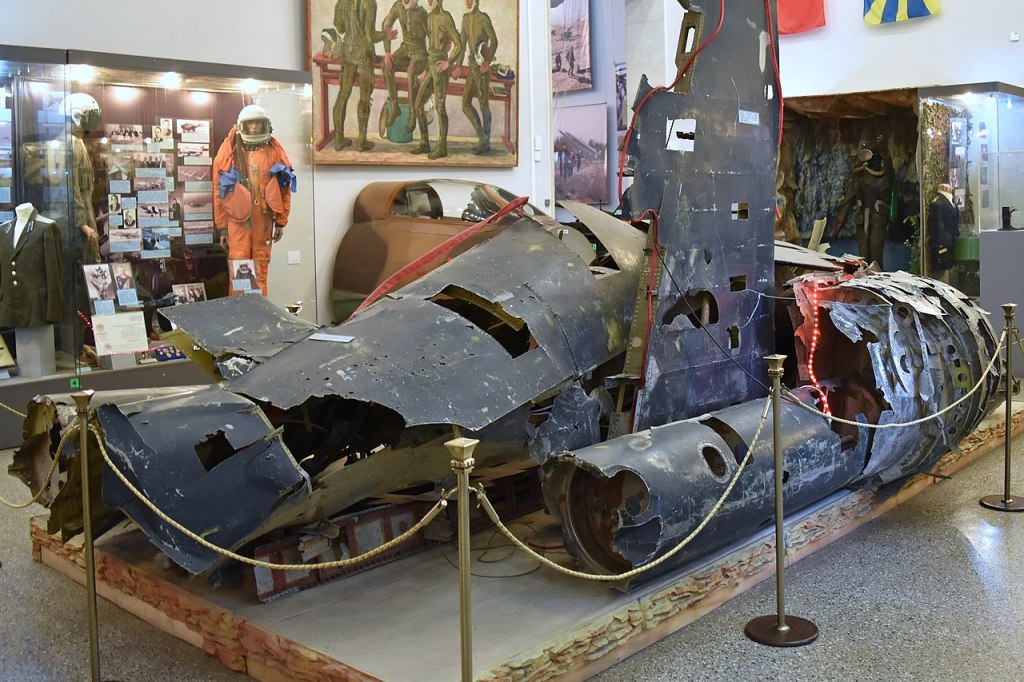
The remains of the Lockheed U-2 are now on display in the Central Armed Forces Museum, Moscow, Russia. Credit: Alan Wilson.

Syngman Rhee 

Syngman Rhee (1875-1965) was a dedicated advocate for Korean independence during the Imperial Japanese annexation of Korea. Rhee eventually became the first President of South Korea, who served from 1948 to 1960. He also wanted to reunify the Korean Peninsula.

If you’re a student of history like me, you would have noticed that Rhee was president during the Korean War. It could be argued that Rhee might have made this list for other reasons, but the reason he actually made the list in 1960 was related to the South Korean presidential election.

Rhee was looking to be re-elected for a fourth term, but his opponent, Chough Pyung-ok, died one month before the election. This meant Rhee was re-elected unopposed, and government reports said that he received 100% of the votes from a 97% voter turnout.

The focus turned to the race for the Vice President, which resulted in Rhee’s running mate Lee Ki-poong defeating Chang Myon, 79.19% to 17.51%. This caused widespread calls of election fraud and authoritative claims against Rhee and Lee, which led to the massive civil unrest and Rhee’s resignation and exile to the United States.

For some contemporary examples of politicians resigning because of public protests; would be the Arab Spring (2010-2012), Viktor Yanukovych (2014), Sigmundur Davíð Gunnlaugsson (2016), Serzh Sargsyan (2018), Omar al-Bashir (2019), Sheikh Hasina (2024), KP Sharma Oli (2025), Milos Vucevic (2025), and so many more.
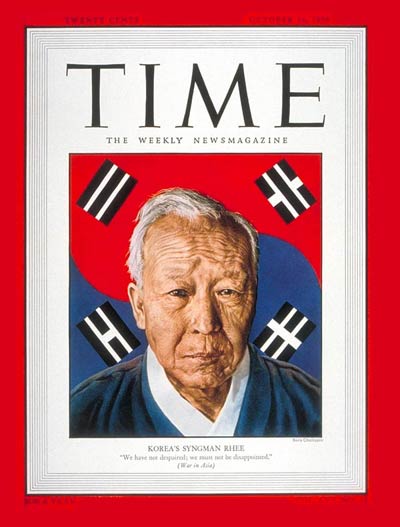
TIME Magazine Cover: 16th October 1960. Credit: TIME Magazine/BORIS CHALIAPIN

Payola 

This entry is completely believable, and it’s a wonder it didn’t happen sooner. The term payola refers to an illegal practice in the music industry, where a payment is made to a commercial radio station to play a song, but the station does not disclose the payment.

In 1959, a federal investigation was launched into the practice, which turned into a gigantic scandal. Over 330 DJs and radio hosts admitted to taking bribes to play certain songs over others. This led to criminal charges being levelled at radio hosts like Alan Freed, who was extremely popular at the time.

These investigations caused several people to lose their jobs and careers. An estimated $263,000 was accepted in bribes.

A modern equivalent would be in 2006, when a payola scandal involving record companies Universal Music Group, Sony, and Warner Music Group. Record labels were paying various radio stations for radio play, with settlements being over $30 million, after a New York Attorney General’s investigation.

Credit: Daily News

Kennedy

This is a straightforward reference involving John F. Kennedy being elected as the 35th president of the United States, defeating Richard Nixon. Kennedy served as President until his assassination in 1963. He was the second youngest person to be elected as President of the United States at 43 years old.

For comparison, Donald Trump was 70 years old when elected in 2016, Joe Biden was 78 years old and 61 days when elected in 2020, and when Donald Trump was elected for a second time in 2024, he was 78 years old and 220 days, making him the oldest person ever to be elected as President; just to point that out.

John F. Kennedy campaign button
Button from John F. Kennedy’s 1960 U.S. presidential campaign. Credit: Encyclopædia Britannica

Chubby Checker 

Cover songs can either work so well that the new version completely eclipses the original, so that people tend to think the cover is the original, or the cover song just simply exists, and pales in comparison to the original, or the cover and original both benefit from each other’s success. Trust me, I am going somewhere with this.

In 1960, Ernest Evans, aka Chubby Checker, released a song called, The Twist, which in fact was originally released by Hank Ballard and the Midnighters in 1958. The original was very popular in its own right and did very well in sales, but the cover sent the popularity of The Twist into the exosphere.

One of the reasons Chubby Checker’s version was popular, to the point that even if a nightclub in New Zealand played the song, people would know what to do, was the dance, or rather, a dance craze.

“Doing’ the Twist” twisted people on the dance floor around the world, but also helped in the United States, at least, by producing a dance that was popular with black and white audiences during the “Jim Crow” racial segregation era.

Naming cover songs that were successful and popular is one thing, while naming songs that introduce a dance craze is another. However, combining the two is a little more difficult, so the best that the staff at Some Geek Told Me can think of is Macarena, which is a remix from the Bayside Boys in 1995. You know the dance, I bet you do. Hey Macarena, ay!

Psycho 

I’m not a huge horror movie fan, but I can sit down and enjoy one. Granted, I may have my eyes shut or my hands covering my face, but I have seen the next entry. This, of course, reminds me that one day I’m going to write about my favourite movie directors.

Like the seamless transition of Sméagol to Gollum and back, this brings us to Psycho. I can’t remember where or when I first saw the movie, but I sure as hell remember what happened in it. Released in 1960, Psycho is arguably one of director Alfred Hitchcock’s most famous works.

Shot in black and white, Hitchcock gave audiences a ride they didn’t see coming, in the form of a ground-breaking masterpiece in Psycho, which covered a range of themes like guilt, madness, voyeurism, family, and morality. Not only did Psycho change thriller and horror movies forever, but movies in general as well.

With a budget of only US$800,000, it collected US$50 million at the box office, as well as being nominated for four Academy Awards, with Janet Leigh winning a Golden Globe for Best Supporting Actress in a Motion Picture.

For previous movie references in the song, Psycho did not win multiple awards, but rather changed how movies are made; it was revolutionary. In that vein, some modern movie comparisons include Pulp Fiction (1994), Toy Story (1995), Saving Private Ryan (1998), The Blair Witch Project (1999), The Matrix (1999), The Lord of the Rings Trilogy (2001-2003), and Avatar (2009).

Belgians in the Congo 

Belgians in the Congo means exactly what you think it does. For some much-needed context, in the 1870s, King Leopold II of Belgium was keen to have a Belgian colony in the Congo basin, which is located in Central Africa.

By the 1880s, he had effectively set up shop in the Congo basin. The people of the Congo Free State, as it was known, suffered atrocities with an estimated 1.5 million to 13 million deaths at the hands of Leopold’s policies and greed.

In 1908, the annexation became official, with the Congo Free State being rebranded as the Belgian Congo, thus becoming a colony of Belgium. The Belgian government began a massive suppression of rights and economic exploitation of the region and of its people.

After years of a fierce independence movement, the country achieved independence from Belgium on 30th June 1960. The new country was renamed The Republic of the Congo, then changed to Zaire, and changed again, to the Democratic Republic of the Congo, which is what it is called today.

After independence was achieved, the transition resulted in civil unrest, protests, and conflicts, which became known as the Congo Crisis (1960-1965). Various wars were fought, with Belgian troops trying to regain control of the country, as well as other factions and countries that were involved. This eventually served as a proxy war between the United States and the Soviet Union, just like the Korean War, Vietnam War, Angolan Civil War, and Afghan–Soviet War.

The Democratic Republic of the Congo went on to suffer wars in the shape of the First Congo War (1996-1997) and the Second Congo War (1998-2003), which resulted in a combined death toll of about 5.65 million people. The Second Congo War was the deadliest war since World War II, with parts of the country still being unstable because of armed conflicts, mainly between the Congolese army and the M23 rebel group.

Belgian paratrooper secures the restaurant terrace of Léopoldville (Kinshasa) airport, during Congo Crisis, July 1960. Credit: Unknown.

So, for 1960, we covered a spy plane being shot down, a South Korean president, a music scandal, a US president, a musician and his dance craze, a movie, and an armed conflict. Obviously, all of these references happened before I was born; however, it always pays to understand why things happened and how they are related to the world today. Well, to me at least, because I love history.

Thanks again for reading, following, and subscribing to Some Geek Told Me. My Twitter and Mastodon accounts are still producing daily data about the world, so please drop in to say hello.

Please remember to walk your dog, read a banned book, Grok is not always correct, and I’ll see you next week.


We Didn’t Start the Fire: 1959

The date was 16th June 2025, and it was a simpler time. We were watching the break-up of the world’s wealthiest person and the President of the United States of America; South Park Season 27 had not yet aired; New Zealand rugby supporters were happy; and the world had not yet discovered that the cause of autism was paracetamol and women were to blame.1

However, that date is also famous for being the last entry in one of the planet’s greatest literary feats, discussing the historical references in Billy Joel’s We Didn’t Start the Fire.

The answer to your first question is no, James Gunn has not contacted me about being part of the DCU. The answer to your second question is yes, it’s back. After delays with other blog posts and events, the long-awaited musical and historical breakdown has returned, much like your persistent back pain.

Since no living person is perfect2, I have collected the previous entries of this wonderful endeavour and presented them to you, just in case you have missed any of them. They include:

We Didn’t Start the Fire: The Beginning 

We Didn’t Start the Fire: 1948-1949.

We Didn’t Start the Fire: 1950

We Didn’t Start the Fire: 1951

We Didn’t Start the Fire: 1952

We Didn’t Start the Fire: 1953

We Didn’t Start the Fire: 1954

We Didn’t Start the Fire: 1955

We Didn’t Start the Fire: 1956

We Didn’t Start the Fire: 1957

We Didn’t Start the Fire: 1958

If you’ve studied the teachings of Sesame Street’s greatest mathematician, you would have realised that after looking at the sequence of numbers above you, it leads you to the conclusion that 1959 is the next year in the pattern. Thanks, Count.

I’m curious to learn if there’s any positive and uplifting information that we can gather from 1959. So, like many times before, strap yourselves in, because we are going back in time! Cool.


Credit: Ruby Lane

1959

Buddy Holly

Charles Holley was born in 1936 and became a singer, songwriter, and musician. His stage name was Buddy Holly, and along with his band, the Crickets, he gained fame in musical genres like country and western, and rock and roll.

In the late 50s, his musical career was soaring, with national and international tours, as well as television appearances. Sadly, Holly is not in this song because of his musical talents. Holly and his new band were on tour, but they were having issues with the bus. The schedule was tight, and some people have said that it was poorly planned.

On 3rd February 1959, a flight was chartered from Iowa to the next gig in North Dakota. The plane was a four-seater aircraft, and on board the flight were 22-year-old Holly, 17-year-old Ritchie Valens, 28-year-old Jiles Perry Richardson Jr (The Big Bopper), and the pilot, Roger Peterson, a 21-year-old.

Soon after take-off, and flying in terrible weather conditions, Peterson lost control of the aircraft and crashed, killing everybody instantly. This incident was known as The Day the Music Died, made famous by Don McLean’s 1971 song “American Pie“.

Some contemporary examples of musicians being killed in aircraft crashes include Stevie Ray Vaughan, who died in a helicopter crash in 1990; John Denver died when his experimental plane crashed in 1997; and Aaliyah and her entourage were killed in a 2001 plane crash in the Bahamas. 

Buddy Holly backstage at the Prom Ballroom in St. Paul on Jan. 28, 1959. (Courtesy of Blue Days Productions)

Ben-Hur

Released in 1959, Ben-Hur was a film that was adapted from Lew Wallace’s book, Ben-Hur: A Tale of the Christ, but also a remake of the 1925 film Ben-Hur: A Tale of the Christ. It tells the story of Judah Ben-Hur (Charlton Heston), or just Ben-Hur, in one of Heston’s most famous roles. Ben-Hur is a Jewish man living in Roman-occupied Judea, around the same time as Jesus Christ.

With a US$15 million budget, unheard of at the time, it earned US$146 million at the box office. By today’s standards, Ben-Hur’s earnings would be a disaster for the film studio, but for 1959, this film was a smash hit.

Like The Bridge on the River Kwai (1957), Ben-Hur won several awards. This included winning 11 Academy Awards, which still holds the record, tied with Titanic (1997) and The Lord of the Rings: The Return of the King (2003), as well as three Golden Globe Awards.

Ben-Hur also raised the benchmark for various elements within the film industry, especially the size of sets, and the number of extras, animals, costumes, and other artists involved with the film; added with the legendary chariot race, places Ben-Hur as a Hollywood classic.

For examples of modern movies dominating awards, I covered this with The Bridge on the River Kwai entry. So instead of doing that, some better examples would be films quantifying their design numbers, such as Kingdom of Heaven (2005), which used around 30,000 extras, Stalingrad (2013) for the massive set designs, Marie Antoinette (2006) for the costume designs, and Alexander (2004) for using large numbers of horses and elephants.

Space monkey

For this entry, you can promote the advancement of science; however, the method is always up for debate. You can be for or against these particular scientific experiments, but regardless of your position, this historical reference requires acknowledgement and examination.

The space race between the Soviet Union and the United States of America had begun, and both nations were determined not to lose. To that end, we have “Space monkeys”, which is probably exactly what you think it is.

Space flight was still in its early stages, so they needed non-human organisms to be sent on flights to test the systems, but mainly to reduce the dangers to humans. These animals included fruit flies, mice, dogs, rabbits, frogs, and primates. The point is, a lot of these animals died being astronauts.

On 29th May 1959, NASA sent a rhesus macaque named Miss Able and a squirrel monkey called Miss Baker on a NASA JUPITER AM-18 mission. The monkeys successfully travelled a distance of 2,735 km, at a height of 579 km, with a top speed of 16,000 km/h.

Both monkeys survived the flight, making them the first two animals to be launched by NASA into space, survive and be recovered. Miss Able died four days later in post-flight surgery from an anaesthetic reaction, while Miss Baker lived until 1984.

In modern times, people still use animals in space experiments, but it’s mainly to assess how they cope and adapt to microgravity environments, rather than testing to see whether they survive space flights. Lately, these animals have included mice, fruit flies, spiders, and bobtail squids, as well as tardigrades, because they seem to be one of the resilient lifeforms ever found.

LIFE Magazine’s June 15, 1959. Cover featuring Miss Able and Miss Baker. Credit: Life Magazine
LIFE Magazine Cover b/w © Time Inc. 

Mafia

As you would expect, Mafia refers to organised crime, but there is more to it, because it’s not just one reference; it’s actually several. Since I’m a geek, I’m going to add some background to this, because it’s fun to learn about things!

In 1957, a meeting involving over 100 mobsters from the United States, Cuba, and Italy took place in Apalachin, New York, dubbed the Apalachin meeting. Topics to be discussed at the meeting included the takeover of recently murdered Albert Anastasia’s crime operations, but also gambling, loansharking, and narcotics trafficking within the United States.

The meeting was discovered by law enforcement agencies, which resulted in 60 mobsters being arrested, including the host of the meeting, Joseph “Joe the Barber” Barbara, and crime boss, Vito Genovese. This meeting forced law enforcement agencies to confront two things: the sheer scale of the organised crime network in the United States, and to admit to the public that the Cosa Nostra (The Sicilian Mafia) existed in the United States.

Fast forward to 1959, when some events occurred that were directly linked to the Apalachin meeting. The 1957 arrest of Vito Genovese, the boss of the Genovese crime family, led to his conviction in 1959 for drug trafficking, and he was sentenced to 15 years. Other 1959 convictions included Vincent Gigante (7 years), Joseph Valachi (15 years), and Paul Castellano (5 years).

These convictions changed the Mafia’s power structure, as well as empowering law enforcement agencies in their war against organised crime. Obviously, organised crime has never gone away, but some modern examples of assaults on their leadership have been the conviction of crime boss, John Gotti (1992); the Justice Department indicted 14 members of the Chicago Outfit, leading to convictions under the RICO Act (2005); and FBI agents arrested 127 mobsters in a single day, known as the Mob Bust (2011).

Vito Genovese, 1959. Credit: Phil Stanziola.

Hula hoops

This entry is quite straightforward. When Hula Hoops hit stores in the late 1950s, they were not an original creation. They had been used for thousands of years, in various forms across different societies, including using bamboo, rattan, willow, stiff grasses, and grapevines.

The new Hula Hoops were made of plastic tubing and were a colossal hit around the world. The trend drove sales of the toy to the heights of $100 million in the United States between 1958 and 1960.

For a 2025 equivalent, I would have to say Labubu. These elf-type monsters have conquered the world, with global sales in the first half of 2025 being over $670 million.

The Hula Hoop craze, Deerfield Illinois, 1959. Credit: Art Shay.

Castro

Love him or hate him, but there is no denying Fidel Castro’s influence on the 20th century. Castro was a Cuban lawyer, politician, and revolutionary, who was involved in the Revolución de Cuba (Cuban Revolution), which was an armed revolution against the Cuban dictator, Fulgencio Batista.

It began on 26th July 1953, and ended with Batista fleeing the country on 31st December 1958; though Castro’s forces (The 26th of July Movement or M-26-7) did not learn about this until the next day, when they started to take control of Cuba.

Castro became Prime Minister of Cuba on 17th February 1959 and served until 2nd December 1976, then became President of Cuba from 2nd December 1976 to 24th February 2008. Castro overhauled Cuba and transformed it into the first communist country in the Western Hemisphere, and ended up having a brutal regime, just like his enemy, Batista.

I’d like to add that Castro will return for the 1961 edition of this wonderful project. Be prepared for the Bay of Pigs Invasion.

A contemporary example of someone overthrowing an authoritarian government would be Ahmed al-Sharaa, when Syrian President Bashar al-Assad was toppled in December 2024, after 13 years of civil war.

Fidel Castro addresses a rally in 1959. Credit: Sovfoto/Universal Images Gro/REX / Shutterstock

Edsel is a no-go

This is an interesting entry because there are two points to discuss. To establish the background, Edsel refers to a brand of car created by Ford Motors, and it was named after Henry Ford’s son, Edsel, since Ford was the company’s founder.

The car was launched in 1958 and became a commercial failure. By 1959, sales for the car had dropped significantly, which included reasons such as low quality, being ugly, being vaunted too much, and being introduced during a recession. The car resulted in a loss of over $250 million for Ford Motors, so it was pulled from production in 1960.

The second point of this tale is the actual name. Edsel was a relatively common name for boys in the United States at the time. However, due to the failure of the Edsel car brand, many new parents became hesitant to name their baby boys after a name associated with a failed product. As a result, just as sales of the car declined, so did the popularity of the name Edsel.

Some 21st century examples of failed or failing car brands include the Lincoln Blackwood, Rover CityRover, Saturn Ion, Chrysler Crossfire, Aston Martin Cygnet, Nissan Murano CrossCabriolet, BMW XM, Fisker Ocean, and the Tesla Cybertruck, to name but a few.

A 1958 Edsel convertible made by Ford. Credit: Underwood Archives / Getty Images

So for 1959, we covered a musician, a movie, two astronaut monkeys, mobsters being convicted, a toy, a revolutionary leader, and a failed car brand. 1959 was busy, and like many other years in this project, it can reflect 2025 as well. But look on the bright side, we get to enter the 1960s next time! Yay!

So that brings another blog post from yours truly to a close. Thanks again for reading, following, and subscribing to Some Geek Told Me. My accounts on Twitter and Mastodon are still operating, where I post daily things concerning everything. Cool.

As a New Zealander, I would also like to apologise to the world on behalf of my country for my government’s inaction in recognising the State of Palestine. It’s not good enough, and I’m very sorry.

Please remember to walk your dog, read a banned book, stay away from Polonium-210, and I’ll see you next week for some science advice.


1 In New Zealand, Tylenol is known as the drug, Paracetamol.

2 Except for Chuck Norris, praise be his name.

Jim Shooter, Ozzy Osbourne, Hulk Hogan, and 250

Hi everybody, how are we all feeling? This week’s lecture is bittersweet, which in reality, is nothing new for this writer who suffers from delusions of grandeur. The act of transferring information and knowledge through the written word does not come easily for me. There are moments where humour can be injected into the topic, and it feels natural.

There are times when a certain unofficial degree of levity is needed, and in most cases, finding the balance between the two can be challenging, depending on the topic.

This is my long-winded way of discussing the fact that I need to acknowledge the deaths of Jim Shooter, Ozzy Osbourne, and Hulk Hogan.


Image by keesluising from Pixabay

Firstly, let’s discuss James (Jim) Shooter. Shooter died on 30th June, 2025, aged 73 years, at his home in Nyack, New York. For those of you not in the know, Shooter was a comic book writer, publisher, editor, and occasional fill-in artist who worked for several companies, like Dark Horse, DC, and Marvel, having broken into the industry at the age of 13. He also went to establish Valiant, Defiant and Broadway Comics.

For me, Shooter wrote some legendary storylines for DC and Marvel, but also created popular characters like Archer & Armstrong, The Beyonder, Emerald Empress, Faith Herbert, The Fatal Five, Henry Peter Gyrich, Harbingers, Karate Kid, Mordru, Parasite, Ferro Lad, Rai, Shadow Lass, Tabitha Smith, Star Brand, and Titania, and many more. I also have a soft spot for his Aric of Dacia, aka X-O Manowar.

His characters and stories were bombastic, featuring aliens, superheroes from the future, supervillains, and everything in between. I can’t fully express my gratitude to people like Shooter, people who donate their lives and careers to a medium I love.

I valued and enjoyed his work, and like several other comic book creators who have passed away, Jim Shooter will live forever, inspiring the next generation of writers to dream of aliens and superpowers, as well as the human condition. UMC2 likes Parasite for some reason, so that’s a win!

Credit: DC Comics/Marvel/CBR

Next, we have the Prince of Darkness, John Osbourne, otherwise known as Ozzy Osbourne. Osbourne was famous for different reasons, like being a reality TV star, co-creating the music festival, Ozzfest; a businessman; and advocating for charities, which have all added to the aura of this multi-talented Englishman. He was also a media personality and songwriter.

However, the main reason Osbourne was an icon was that he was the singer for the heavy metal band, Black Sabbath. He was loved the world over, mainly because, in my humble opinion, he would always find a way to relate to people through his career, on and off the stage.

I loved his music, and for me, he was one of the first nonconformists that I listened to and admired. He had a lifestyle that many people envied, being a real OG rock star, but I always appreciated his amazement of this world, and the beautiful people who live in it, as well as his unique experiences and views. He was a real showman who gave electrifying performances.

Osbourne died on 22nd July, aged 76 years, at his home in Buckinghamshire. I can’t remember the first song I heard Osbourne sing, but War Pigs is one of my favourites. Whenever I listen to it now, it will have a greater meaning.

Let me tell you something, brother, because we have finally arrived at Hulk Hogan. Born Terry Bollea, Hogan died on 24th July in Clearwater, Florida. As you will be well aware, Hogan was arguably one of the most famous professional wrestlers of all time. Where and when I grew up, we couldn’t watch World Wrestling Federation (WWF). And even if we did, I’m very confident my parents wouldn’t have let me watch it.

In saying that, all of the kids at school, myself included, still knew who Hulk Hogan was: he was the heavyweight champion of the world. It wasn’t until I got older that I managed to watch matches. My favourite wrestler was the Ultimate Warrior, but there was nothing like Hulk Hogan ripping his t-shirt, brother. Hulkamania was everywhere!

Like Dragon Ball and Dragon Ball Z, Hulk Hogan taught me the art of trash-talking, especially how ridiculous and empowering it can be. UMC1, UMC2 and I trash-talk each other from time to time, and it’s so difficult to keep a straight face when a 7-year old is explaining to his father that nobody can defeat him, and that I’m going to experience pain like never before. Added to UMC1 pointing out that he will squash his opponents like grapes before power flexing, is too much for me.

Hogan provided me with entertainment that I never knew I wanted, but I badly needed. Growing up, that kind of outlet was outstanding, brother.

Credit: WWE/Getty Images

I am also aware that all three men have had their share of controversies, which have upset and offended some people, with actions in their careers, and retirements. Those comments and issues could be discussed on this blog, but not today. Today, I’m just glad these three larger-than-life figures have injected some entertainment and life into an odd and quirky boy living in the South Pacific. For that, I am eternally grateful.

Now, because you train, say your prayers, and take your vitamins, you would have noticed that the title for this rant was: Jim Shooter, Ozzy Osbourne, Hulk Hogan, and 250. The first three parts of the title have been easy to identify, but what about 250?

Well, my dear and loyal readers, this blog post is my 250th. Yes, from my first blog post on 1st December 2020, I have now written 250 of the weirdest blog posts, this side of The New Zealand Sour Cream and Chives Preservation Society’s Swimming Carnival, or Beetroot Awareness Aotearoa’s baby matching game.

Let me tell you something, brother, those idiots are the worst. The Thing has the Yancy Street Gang, Daredevil has the Hand, and I have The New Zealand Sour Cream and Chives Preservation Society and Beetroot Awareness Aotearoa.

In the history of the universe, this achievement of writing 250 quasi-humorous blog posts is nothing, but to me, it’s everything. 250 blog posts of nonsense, utter nonsense. Maybe one day my writing will improve. Maybe.


Credit: Abode Stock

Thank you for reading, following, and subscribing to Some Geek Told Me. I have no idea what the future has in store for me or Some Geek Told Me, but here’s to another 250 oddly-written and semi-informative blog posts.

Remember to walk your dog, read a banned book, laugh at Neo-Nazis, and I’ll see you next week for the 80th VJ Day Anniversary. Look after yourselves and your family.