We Didn’t Start the Fire: 1960

It’s been a long time since I celebrated a real achievement on this highly popular website. I’ve made over 250 critically acclaimed blog posts that are the envy of all the Flat Earth creators, and produced numerous content where people have actually left comments; sometimes it’s been two people! I know, it’s quite impressive, so please, don’t be intimidated too much.

The point is that today marks an important milestone in the history of New Zealand’s 5th least favourite website. On 29th April 2024, we entered the 1950s in the We Didn’t Start the Fire historical references blog posts, and today we finally enter the 1960s!

To remind any newcomers about this amazing life choice, I have decided, in my utterly infallible wisdom, to explain all of the historical references in Billy Joel’s song, We Didn’t Start the Fire. Why would I do such a thing when various people have already done this with a greater degree of professionalism? The short answer is that I love the song and history, so what’s another thing I can add to the Mountain of Eternal Regret?

I have said this before, but this blog keeps me off the streets and out of bars, so my wife can keep track of me.

The list of previous fascinating and informative blog posts can be found here:

We Didn’t Start the Fire: The Beginning 

We Didn’t Start the Fire: 1948-1949.

We Didn’t Start the Fire: 1950

We Didn’t Start the Fire: 1951

We Didn’t Start the Fire: 1952

We Didn’t Start the Fire: 1953

We Didn’t Start the Fire: 1954

We Didn’t Start the Fire: 1955

We Didn’t Start the Fire: 1956

We Didn’t Start the Fire: 1957

We Didn’t Start the Fire: 1958

We Didn’t Start the Fire: 1959

We have now entered the third decade of historical references in the song; what a ride! This entry is shaping up to be quite chaotic, so you need to strap yourself in, because we are going back to 1960! Prepare yourself!


Credit: Rosners’/Pinterest

U-2 

The incident happened during the Cold War, and it had nothing to do with an Irish rock band. U-2 refers to the Lockheed U-2, which is a high–altitude reconnaissance aircraft that has a single engine and a single pilot. The aircraft, known as a spy plane, is operated by the Central Intelligence Agency (CIA) and the United States Air Force (USAF).

In what can only be described as a plot for a spy movie, on 1st May 1960, an American Lockheed U-2 spy plane took off from Pakistan and was eventually shot down over the Soviet Union by the Soviet Air Defence Forces.

The pilot, Francis Gary Powers, was taking aerial photographs when his aircraft was hit by a Soviet surface-to-air missile. Powers parachuted away and was captured by Soviet forces, then put on trial for espionage. The entire affair was a huge embarrassment for the CIA and USAF, as well as for the United States Government, and resulted in the cancellation of an upcoming summit in Paris between the United States, the Soviet Union, the United Kingdom, and France.

Two modern examples of spy plane scandals were the 2001 Hainan Island incident between the United States and China, as well as in January 2024, when Ukrainian forces shot down a Russian Beriev A-50U airborne early warning aircraft, which serves as a surveillance and command-and-control platform. Truth is stranger than fiction.
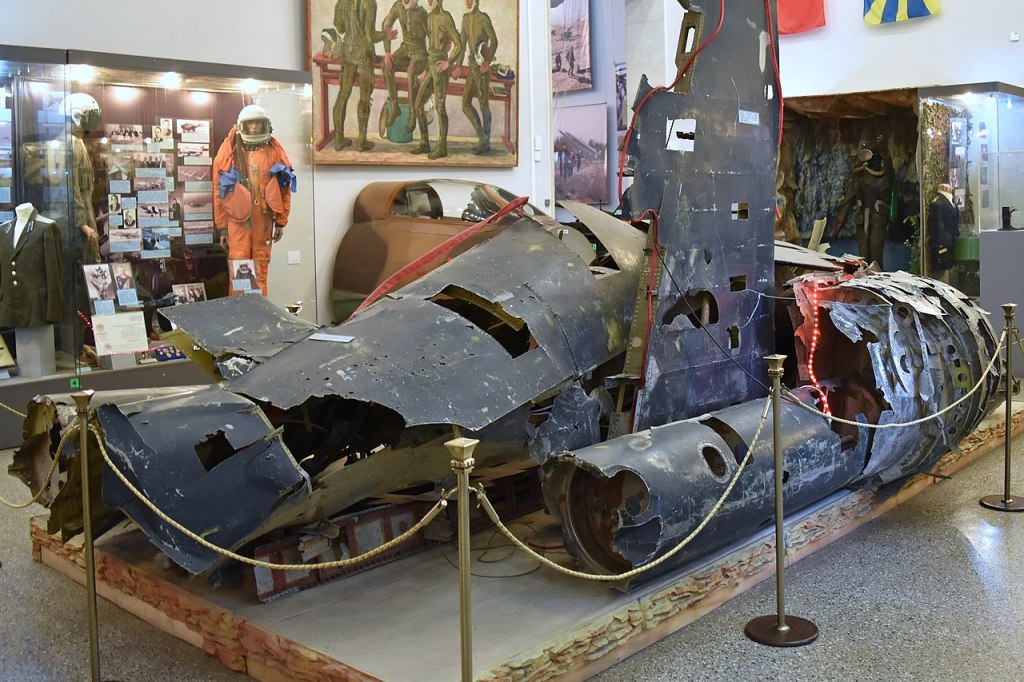
The remains of the Lockheed U-2 are now on display in the Central Armed Forces Museum, Moscow, Russia. Credit: Alan Wilson.

Syngman Rhee 

Syngman Rhee (1875-1965) was a dedicated advocate for Korean independence during the Imperial Japanese annexation of Korea. Rhee eventually became the first President of South Korea, who served from 1948 to 1960. He also wanted to reunify the Korean Peninsula.

If you’re a student of history like me, you would have noticed that Rhee was president during the Korean War. It could be argued that Rhee might have made this list for other reasons, but the reason he actually made the list in 1960 was related to the South Korean presidential election.

Rhee was looking to be re-elected for a fourth term, but his opponent, Chough Pyung-ok, died one month before the election. This meant Rhee was re-elected unopposed, and government reports said that he received 100% of the votes from a 97% voter turnout.

The focus turned to the race for the Vice President, which resulted in Rhee’s running mate Lee Ki-poong defeating Chang Myon, 79.19% to 17.51%. This caused widespread calls of election fraud and authoritative claims against Rhee and Lee, which led to the massive civil unrest and Rhee’s resignation and exile to the United States.

For some contemporary examples of politicians resigning because of public protests; would be the Arab Spring (2010-2012), Viktor Yanukovych (2014), Sigmundur Davíð Gunnlaugsson (2016), Serzh Sargsyan (2018), Omar al-Bashir (2019), Sheikh Hasina (2024), KP Sharma Oli (2025), Milos Vucevic (2025), and so many more.
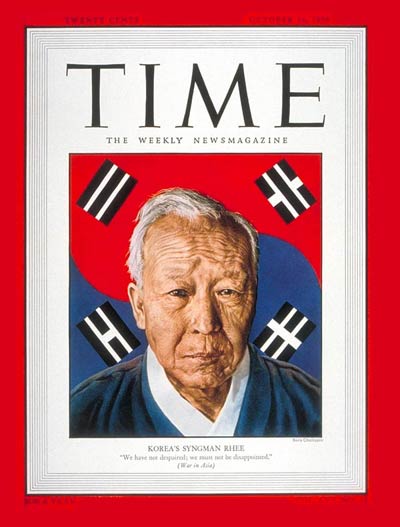
TIME Magazine Cover: 16th October 1960. Credit: TIME Magazine/BORIS CHALIAPIN

Payola 

This entry is completely believable, and it’s a wonder it didn’t happen sooner. The term payola refers to an illegal practice in the music industry, where a payment is made to a commercial radio station to play a song, but the station does not disclose the payment.

In 1959, a federal investigation was launched into the practice, which turned into a gigantic scandal. Over 330 DJs and radio hosts admitted to taking bribes to play certain songs over others. This led to criminal charges being levelled at radio hosts like Alan Freed, who was extremely popular at the time.

These investigations caused several people to lose their jobs and careers. An estimated $263,000 was accepted in bribes.

A modern equivalent would be in 2006, when a payola scandal involving record companies Universal Music Group, Sony, and Warner Music Group. Record labels were paying various radio stations for radio play, with settlements being over $30 million, after a New York Attorney General’s investigation.

Credit: Daily News

Kennedy

This is a straightforward reference involving John F. Kennedy being elected as the 35th president of the United States, defeating Richard Nixon. Kennedy served as President until his assassination in 1963. He was the second youngest person to be elected as President of the United States at 43 years old.

For comparison, Donald Trump was 70 years old when elected in 2016, Joe Biden was 78 years old and 61 days when elected in 2020, and when Donald Trump was elected for a second time in 2024, he was 78 years old and 220 days, making him the oldest person ever to be elected as President; just to point that out.

John F. Kennedy campaign button
Button from John F. Kennedy’s 1960 U.S. presidential campaign. Credit: Encyclopædia Britannica

Chubby Checker 

Cover songs can either work so well that the new version completely eclipses the original, so that people tend to think the cover is the original, or the cover song just simply exists, and pales in comparison to the original, or the cover and original both benefit from each other’s success. Trust me, I am going somewhere with this.

In 1960, Ernest Evans, aka Chubby Checker, released a song called, The Twist, which in fact was originally released by Hank Ballard and the Midnighters in 1958. The original was very popular in its own right and did very well in sales, but the cover sent the popularity of The Twist into the exosphere.

One of the reasons Chubby Checker’s version was popular, to the point that even if a nightclub in New Zealand played the song, people would know what to do, was the dance, or rather, a dance craze.

“Doing’ the Twist” twisted people on the dance floor around the world, but also helped in the United States, at least, by producing a dance that was popular with black and white audiences during the “Jim Crow” racial segregation era.

Naming cover songs that were successful and popular is one thing, while naming songs that introduce a dance craze is another. However, combining the two is a little more difficult, so the best that the staff at Some Geek Told Me can think of is Macarena, which is a remix from the Bayside Boys in 1995. You know the dance, I bet you do. Hey Macarena, ay!

Psycho 

I’m not a huge horror movie fan, but I can sit down and enjoy one. Granted, I may have my eyes shut or my hands covering my face, but I have seen the next entry. This, of course, reminds me that one day I’m going to write about my favourite movie directors.

Like the seamless transition of Sméagol to Gollum and back, this brings us to Psycho. I can’t remember where or when I first saw the movie, but I sure as hell remember what happened in it. Released in 1960, Psycho is arguably one of director Alfred Hitchcock’s most famous works.

Shot in black and white, Hitchcock gave audiences a ride they didn’t see coming, in the form of a ground-breaking masterpiece in Psycho, which covered a range of themes like guilt, madness, voyeurism, family, and morality. Not only did Psycho change thriller and horror movies forever, but movies in general as well.

With a budget of only US$800,000, it collected US$50 million at the box office, as well as being nominated for four Academy Awards, with Janet Leigh winning a Golden Globe for Best Supporting Actress in a Motion Picture.

For previous movie references in the song, Psycho did not win multiple awards, but rather changed how movies are made; it was revolutionary. In that vein, some modern movie comparisons include Pulp Fiction (1994), Toy Story (1995), Saving Private Ryan (1998), The Blair Witch Project (1999), The Matrix (1999), The Lord of the Rings Trilogy (2001-2003), and Avatar (2009).

Belgians in the Congo 

Belgians in the Congo means exactly what you think it does. For some much-needed context, in the 1870s, King Leopold II of Belgium was keen to have a Belgian colony in the Congo basin, which is located in Central Africa.

By the 1880s, he had effectively set up shop in the Congo basin. The people of the Congo Free State, as it was known, suffered atrocities with an estimated 1.5 million to 13 million deaths at the hands of Leopold’s policies and greed.

In 1908, the annexation became official, with the Congo Free State being rebranded as the Belgian Congo, thus becoming a colony of Belgium. The Belgian government began a massive suppression of rights and economic exploitation of the region and of its people.

After years of a fierce independence movement, the country achieved independence from Belgium on 30th June 1960. The new country was renamed The Republic of the Congo, then changed to Zaire, and changed again, to the Democratic Republic of the Congo, which is what it is called today.

After independence was achieved, the transition resulted in civil unrest, protests, and conflicts, which became known as the Congo Crisis (1960-1965). Various wars were fought, with Belgian troops trying to regain control of the country, as well as other factions and countries that were involved. This eventually served as a proxy war between the United States and the Soviet Union, just like the Korean War, Vietnam War, Angolan Civil War, and Afghan–Soviet War.

The Democratic Republic of the Congo went on to suffer wars in the shape of the First Congo War (1996-1997) and the Second Congo War (1998-2003), which resulted in a combined death toll of about 5.65 million people. The Second Congo War was the deadliest war since World War II, with parts of the country still being unstable because of armed conflicts, mainly between the Congolese army and the M23 rebel group.

Belgian paratrooper secures the restaurant terrace of Léopoldville (Kinshasa) airport, during Congo Crisis, July 1960. Credit: Unknown.

So, for 1960, we covered a spy plane being shot down, a South Korean president, a music scandal, a US president, a musician and his dance craze, a movie, and an armed conflict. Obviously, all of these references happened before I was born; however, it always pays to understand why things happened and how they are related to the world today. Well, to me at least, because I love history.

Thanks again for reading, following, and subscribing to Some Geek Told Me. My Twitter and Mastodon accounts are still producing daily data about the world, so please drop in to say hello.

Please remember to walk your dog, read a banned book, Grok is not always correct, and I’ll see you next week.


Finally, my Star Wars: The High Republic post is here

Well, this blog post has been years in the making. I’ve hinted at this for some time, and now that my sponsorships are under control and I’ve completed the press tours, I feel it’s the right moment to write a blog post about the Star Wars: The High Republic series. I’m now rich and famous for running New Zealand’s fifth least favourite website, so it seems like the perfect opportunity to share my thoughts on this important subject.

Let’s establish an ugly truth before we begin: not every person on this planet has seen a Star Wars movie or TV show, or read a Star Wars novel or comic book; while some people, for some strange and unexplained reason, don’t like Star Wars. I know, it’s difficult to believe, but it’s true.

It’s been well and truly documented that I’m a geek and a fan of the world’s most famous space opera. This shouldn’t be a surprise to any of you. Seriously, it shouldn’t.

In terms of my Star Wars diet, I’ve been reading Star Wars literature in the form of novels and comic books for decades. Yes, I enjoyed the films, and since I won’t dive into that today, they left a void in me. I wanted more from that fictional universe, especially learning about the Jedi and events before A New Hope.

Enter Tales of the Jedi from Dark Horse Comics, and my prayers were answered. I think I discovered Tales of the Jedi at a library, and I was instantly hooked. Stories about the Jedi, set thousands of years before the Battle of Yavin? Sign me up.

It was a chance to tell new and exciting tales about the Star Wars universe, without being bogged down with continuity problems, since they were set thousands of years ago. I read the trades, then sourced all of the single issues, because I felt the entire series was made for me. I loved it.

Dark Horse later released Star Wars: Knights of the Republic, Star Wars: The Lost Tribe of the Sith-Spiral, Star Wars: Knight Errant, Star Wars: Jedi vs Sith, Star Wars: Republic, Star Wars: Dark Times, and one of my favourites, Star Wars: Dawn of the Jedi, among others.

Since then, various novels have been released, detailing thousands of years of Jedi and Sith, as well as the years leading up to The Phantom Menace and The Clone Wars. This also does not take away from the Canon stories exploring everything after A New Hope, either. I’ve enjoyed the Star Wars books I have read, but my love for Tales of the Jedi was enduring.

I felt I was starved for new Canon Star Wars content that was set hundreds or thousands of years before the Battle of Yavin. Legends’ stories were all over that, but the new stories seemed to be focused elsewhere. However, that changed with Star Wars: The High Republic.


My Star Wars: The High Republic novels

Essentially, The High Republic was1 a massive multi-media project, spanning novels (adult, young adult, middle-grade, young readers) comic books, audio drama, web series, manga, reference books, and short stories, with one animated TV show (Star Wars: Young Jedi Adventures), and one live action TV show (Star Wars: The Acolyte). The creators were a mix of seasoned Star Wars writers and new writers, not including the multiple artists.

The High Republic was set about 150 years before A New Hope, with both the Galactic Republic and the Jedi Order being at their prime. This is a time when thousands of Jedi patrol the galaxy, and new worlds are being discovered, and are invited to join the Republic. It’s an era of potential and exportation, when relative peace and security are a steady theme within the galaxy.

That sounds amazing, but would people want to read stories about Jedi travelling to distant worlds to mediate, or just enjoy having easy and stress-free lives? No, the Jedi needed a challenge to push them to become better. The Sith are still hiding throughout this time, so if the Sith aren’t the villains, the Jedi need someone else to fight!

This beautiful transition brings us the Drengir and the Nihil. The best way to explain the Drengir is that they are a sentient carnivorous plant species who have a connection to the Dark Side of the Force. They also have a hive-mind that is controlled by the Great Progenitor, who acts like the Borg Queen.

They had tentacles, thorns, various poisons, huge mouths, and an unending appetite for meat, which came in the form of whatever organisms they could find. During the series, the Drengir were wiping out villages, settlements, and colonies scattered across the galaxy.

The main villains of the series were the Nihil, who were described as space vikings. The creators put in a lot of effort in fleshing them out, since they were led by Marchion Ro, an Evereni who had an all-consuming hatred of the Republic and the Jedi.

The Nihil had a caste system, and they terrorised worlds and spaceships with raids, killing anyone that got in their way and taking whatever they wanted. Their spaceships had Path Engines, which were an engineering masterpiece and a secret weapon.

As I understood it, a normal spaceship that had a hyperdrive could make jumps through hyperspace across massive distances. However, Path engines allowed the Nihil to make micro-jumps through hyperspace, or even within a planet’s atmosphere. It meant the Nihil could make micro-jumps within a space battle and destroy or conquer spaceships with ease.

Throughout the series, they executed various gigantic plans across the galaxy to spread fear, terror, and to lay claim to new territories, as well as humiliating the Republic and destroying the Jedi Order. They did this through the aforementioned plans, but they also had an ace up their sleeve.

Marchion Ro used unique creatures. Called by several names, like The Shrikarai, the Nameless, and Shrii-ka-rai, these creatures were Force Eaters, which meant they survived and consumed the Living Force. As you can guess, their Force-sensitive victims were drained of the Living Force, and their bodies were converted to husks. And if their victims were Force-sensitive, it meant that their greatest strength became their greatest weakness.

Having a Nameless approach someone who was Force-sensitive would distort reality for that person, and affect them emotionally, physically, and mentally; but the main reason the Nameless were deadly was that Jedi were supposed to be mindful of their feelings and be able to suppress fear, but the Nameless made the Jedi afraid. They made the Jedi feel fear.

It’s an interesting take to see the brave Jedi being reduced to crying and screaming messes on the ground, when a non-Force-sensitive lifeform would be unaffected.

And speaking of Force-sensitive people, the creators have, in my opinion, been courageous in presenting other organisations that are connected to the Force, other than the Jedi and the Sith. Just because you are sensitive to the Force does not automatically mean you are destined to fall into the two camps of Jedi or Sith. It was great to see other organisms using the Force and helping communities, by not using a lightsabre.2

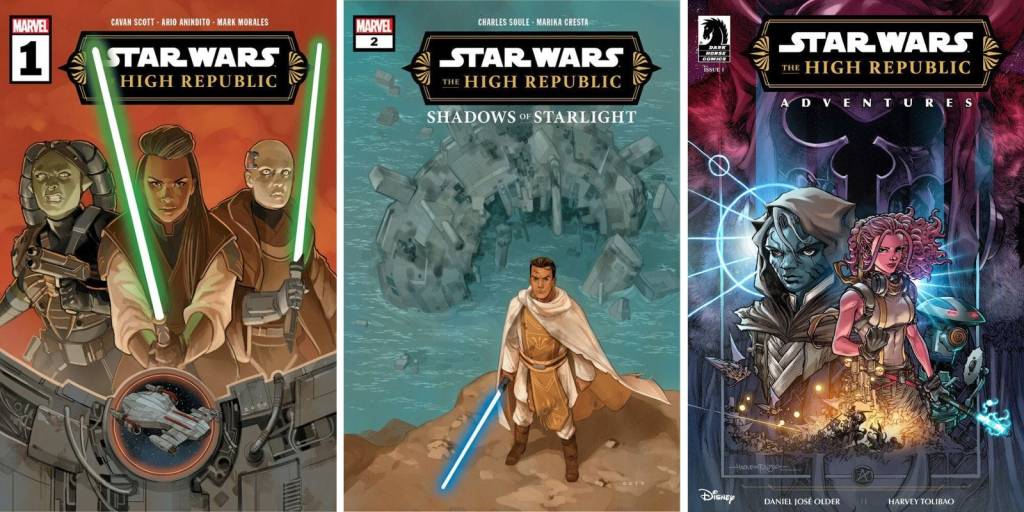
Phase III Star Wars: The High Republic Comics. Credit: Marvel & Dark Horse

Across the series, we have been introduced to many new and different Jedi. This relates to their species, type of lightsabre they use, and rank in the Jedi order, which is nothing new, since we were exposed to this with The Phantom Menace. However, the creators introduced something I believe I have never seen or heard of before: the way organisms feel, experience, and perceive the Force is different.

Albert Einstein explained with his theory of special relativity that there is no universal clock, so nobody experiences time the same way; we all experience time differently. This is much the same as how a lifeform experiences and perceives the Force, which will be different from everybody else. One Jedi experiences the Force as an ocean, another as music, and another as a forest. It was a cool concept.

We met new Jedi like OrbaLin, Burryaga Agaburry, Lily Tora-Asi, Sav Malagán, Ram Jomaram, Qort, Lula Talisola, Vernestra Rwoh, and Porter Engle, to name but a few. It was interesting to read about them in a novel, then discover them in a comic book, and vice versa. Star Wars: The High Republic also introduced lots of non-Jedi characters like Chancellor Lina Soh, Sevran Tarkin, Alys “Crash” Ongwa, Ty Yorrick, Tey Sirrek, Zeen Mrala, and Geode, along with many more.

The series was released in phases, which included the various media from January 2021 to June 2025. The main focus was the novels, with the comics, manga, and audio dramas still accessible to stand alone. The web series was released before the launch, so readers could understand the characters better and the time period.

With each phase, new content would slowly be released across, roughly 18 months, then go into hiatus, to reset for the new phase. Each phase was divided into Waves (1-3), which would include a novel, a young adult novel, and a middle-grade novel, so three books per wave meant nine books per phase.

Through the different phases, two main comic books were running, Star Wars: The High Republic from Marvel, and Star Wars: The High Republic Adventures, first released from IDW, then Dark Horse took over publication with Phase II.

Multiple comic book mini-series were also released through the three phases, along with one-shots, six manga, and three audio dramas (also available as scripts). The picture, art, and reference books were published near the end of each phase, but I could be wrong about that.

Phase I: Light of the Jedi was the first entry into the series, with nine novels. They set up the scene for the golden era of the Republic and the Jedi, which was about 150 years before A New Hope, where Jedi numbers were in their thousands. The Nihil, Drengir and their mischief-making were introduced across the phase.

Phase II: Quest of the Jedi was different for two reasons. The first reason was that the time period shifted, because we journeyed back another 100 years, before Phase I, to where the Outer Rim was still being explored. I think it was done to allow the readers to process the events of Phase I and to answer some questions that were raised. The other reason was that, instead of nine novels being released like in Phase I, only six were published in Phase II.

Phase III: Trials of the Jedi had another time jump and picked up the story one year after the events of Phase I. Some characters had died, and others grew through character development. I would like to add extra information to Phase III, but I can’t.

The thing is, even though Star Wars: The High Republic has finished, I have not finished reading Phase III. Nine books were published in this phase, and not counting the comic books and manga, I have only read the first four: Escape from Valo, The Eye of Darkness, Defy the Storm, and Temptation of the Force.

My local bookstore is still waiting for the paperback editions of Beware the Nameless, Tears of the Nameless, Into the Light, A Valiant Vow, and Trials of the Jedi, along with the script of the Tempest Breaker audio drama.

I have the final chapter in the series, the Marvel one-shot, Star Wars: The High Republic: Finale, waiting patiently to be read, only after the other six books have been located and read. It’s difficult because I really want to read it, but I’ve waited this long, so I can wait some more.

I’ve really enjoyed reading Star Wars: The High Republic. Meeting both old3 and new characters and travelling to new planets has been a thrilling experience. I’ve been eagerly waiting for a massive Star Wars project like this for over half my life.

The motivations behind the actions of characters, along with their visual designs, have been quite beneficial in the different media, which have allowed the creators to explore and showcase various characters in new ways.

A lot of them were complex, because as children, we were taught a person is either good or bad, but life isn’t as binary as that, with people having the potential for both good and bad. I thought it was a mature choice from the creators to reflect that.

As for reflection, I know a lot of people complained about the inclusion of many LGBTQIA+ characters in the stories. Personally, I found their complaints to be hilarious, because it’s a fact that not every Star Wars fan is a middle-aged straight white male.

As a business model, if you’re selling products involving fictional characters, you want any person, of any background, to be able to pick one of your products and to be able to see themselves in it. You want to cater to as many people as possible. Star Wars should be for anybody, not just the die-hard fans, because you want the next generation to fall in love with it, just like you did.

It’s also been clever not to have the Sith as the antagonists, because other factions hate the Jedi as well. They were hiding at the time, so why expose themselves? Because they do that in The Phantom Menace, after thousands of years of waiting, planning, and killing themselves.

I loved this series, but I have only two small disadvantages with it. The first is the cost, though that depends on how far you want to dive into the project. If you’re only interested in the novels, then the story will make sense. And if only comic books float your boat, then you can still enjoy the story as well.

However, if you’re anything like me, you would want to read as much as you can, to fully explore this time period, with novels and comic books, so it’s going to cost you. Though in saying that, you can take your time with the collection, so there’s no hurry.

The other point is probably criticism towards me rather than the series. Because there were so many characters, I sometimes found myself reading about a character that I couldn’t remember. I would have to stop, quickly research that character, curse myself for being stupid for forgetting them, then continue reading.

I hope the Star Wars franchise creates another multi-media project like The High Republic, because if they do, I’m there. When UMC1 and UMC2 are interested, the novels are waiting for them. Not the comics, though, that’s another discussion.

And with that, this overly bloated blog post is finished. Have you read any of the Star Wars: The High Republic or have any thoughts about it? As always, please let me know.

Thanks again for reading, following, and subscribing to Some Geek Told Me. Please remember to walk your dog, read a banned book, try to close a revolving door, and I’ll see you next week.


1 I believe the main High Republic story has finished, but some comics from Phase II are being released to expand upon this time period.

2 Yes, I know I have used “lightsabre” rather than “lightsaber.” I use British/New Zealand English, not American English, so I’m sorry, but not sorry.

3 I’m looking at you, Yoda.

The death of a pet: One year later

I’ve known this blog post was coming up, but I still wasn’t prepared for it. That sounds quite ridiculous, considering that, apart from the endless staff who work for me, I plan and write the awkward content that goes on here.

Even with the title, I’m going to give you some spoilers about this blog post. Today’s lecture will not be filled with rainbows, ponies and ice creams. I’m sorry, but it really won’t. So, I won’t be offended if it’s not for you, because it’s not even for me.

Over the weekend, it marked the first anniversary of the death of our dog, Indy. See, I told you this was not going to be fun. I’m not sure how I’m supposed to navigate my feelings and thoughts around this, so I need to turn back the clock first.

It’s important to note that Indy was my future wife’s dog before I met him. He was the runt of his litter, and my wife was present when he was born. A friend of hers owned Indy’s parents and planned to sell the puppies later on. My wife initially had no intention of adopting a puppy because her living situation wasn’t ideal for one.

However, fate had other ideas, because as the weeks passed, nobody wanted him because of his small stature. If nobody adopted him, then he might have been given to an animal charity centre. My wife didn’t want that to happen to him, so they chose each other.


Indy looking fabulous at a Christmas party.

My wife and Indy became an inseparable pair, and six months later, they met me. And after many dates, the two of them asked me to join their team. Sometime later, it became official with a wedding. The interesting thing about me before I met Indy and my future wife was that I was mourning our family dog, Jack.

I was living in another city when Jack got very ill and died. I felt disconnected from that event, and I took his death really hard. During this grieving period, I purposely avoided petting or playing with dogs. It didn’t even matter that they were my friends’ dogs; I just didn’t want to touch them. It felt wrong to do that, so I avoided being around them.

As I mentioned previously, fate had other ideas. When I met my future wife for our first date, she brought Indy to keep her company. She later said that Indy was her measuring stick for her dates: if Indy didn’t like the date, or if the date didn’t like him, there would be no second date.

I knew she had brought her dog with her, but I had not fully processed what that would mean. As I sat down and tried to act like a normal single male with a beautiful woman, I needed to come to terms with the fact that there was a dog, who was begging for some pats and belly rubs. I discovered that I couldn’t say no to him.

It was weeks later that my future wife informed me that the reason we had a second date, was because I was kind to Indy and that he liked me. I had no idea that the course of my life was going to depend on whether a dog liked me or not.

The more time I spent around Indy, the more it revealed a few things about myself that were a surprise. The obvious point was that I had to acknowledge that I missed having a dog in my life.

What I didn’t realise at the time was that Indy was helping me heal the hole in my heart left by Jack’s death. He also helped me understand that being part of a team with a beautiful woman wasn’t a daunting idea. I wasn’t as frightened as I thought I would be. This little dog saved me in ways I didn’t realise I needed saving.


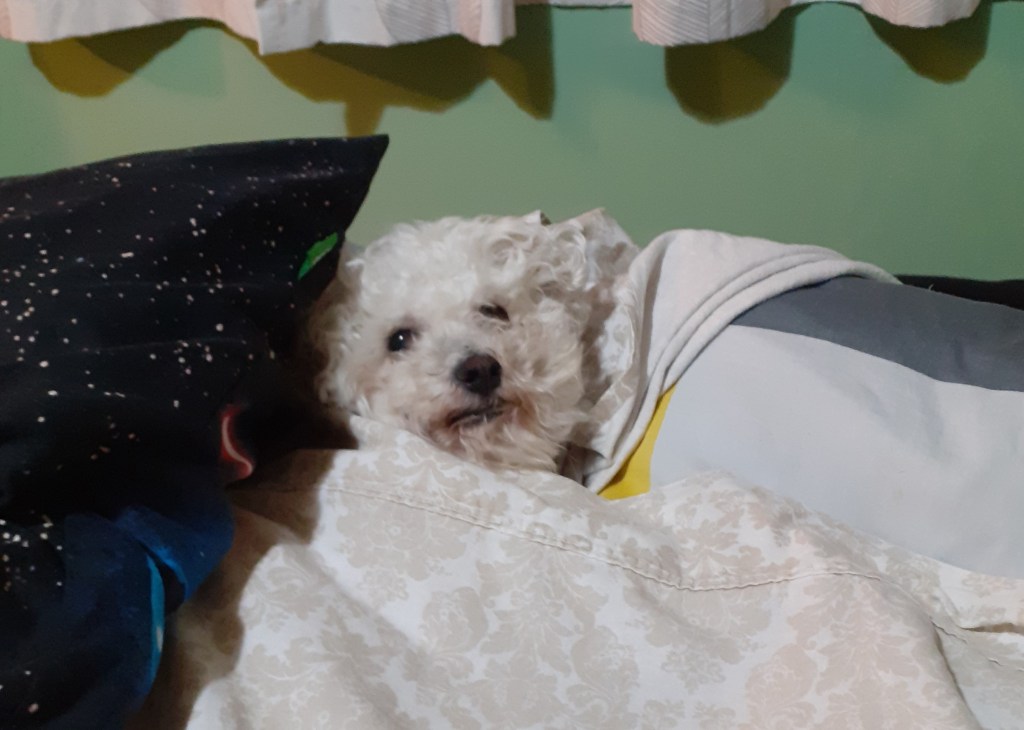
Indy claiming his spot in our bed.

So, let’s get back to the title of the blog. It’s been one year since Indy died, so what has life been like? I guess it depends on how honest I want to be. I would be lying if I said that it has been easy, with the first two months being pretty rough.

I know people grieve in different ways, because we are all different. But how does someone grieve and mourn for a pet? What’s the best way to do this? Having said that, I’m not sure how to explain things, but I’ll give it a go.

We have encouraged UMC1 and UMC2 to discuss Indy when they wanted to, whether to talk about his misadventures or just to state the fact that they miss him. UMC2 talks about him more than UMC1, but I know they both miss and love him.

For myself, I’m content to talk about him, but it heavily relies on the context of the discussion. Sometimes I can joke about him and retell stories, but other times, I still have to leave the room after talking about him.

I suppose the grief is always sitting there, just under the skin, and all it takes is a small scratch to reveal it. I’m left thinking, “Wow, where did that reaction come from?” I also know that he’s been gone for a year, but I still catch myself doing things, mainly out of habit.

  • When my wife picks me up from work, I have to stop myself from asking how Indy’s day has been.
  • When calling my wife from work, I have to stop myself from asking how Indy’s day has been.
  • I find myself wanting to check the bed before sitting on it, so I don’t hurt Indy.

We miss and love Indy, and he loved us. So what do you do with the leftover love? UMC1 and UMC2 would like to get another dog soon; however, my wife and I are not ready for that. We want to be, just not yet.

I remember reading somewhere that not loving another pet after a pet’s death is a sin. There are so many pets out there that need loving families to take care of them, and we will do that again, just not yet. My wife is worried she would compare the new dog to Indy, and that wouldn’t be fair to the new dog. As for me, I guess I have more healing to be done.


Indy catching up on some well deserved rest.

It was awkward going to Indy’s favourite places around town, but this has been getting better. We were at the beach the other day, when UMC2 pointed to a dog and stated that the dog looked like Indy’s clone. That caught me by surprise, but he wasn’t angry or sad about it; it was just an observation.

Something that has shocked me has been my ability to talk to and hug other dogs. After Jack died, I isolated my heart from dogs and avoided being around them. After Indy’s death, I didn’t want to make the same mistake, so I decided that when I would meet a dog, I would give it lots of pats and hugs. It’s not their fault, they want to get some attention from a faulty human.

This has been great because it’s allowed me to discuss the dog with the owner. Sometimes Indy comes up in conversations, and sometimes he doesn’t. It’s been helpful.

We have photos of Indy around the house, and I have photos of Indy and Jack, next to each other, on my desk. The dogs never met in life, but part of me hopes they have met in the afterlife.

This blog post is ultimately not as good as I had hoped it would be, as I have stopped several times to think about him and let the experience wash over me. The more I think about Indy, the more I have to write. But the more I write about him, the more I have to stop and compose myself.

Indy was a fucking good dog, not just to me, the boys and my wife, but to everybody. He changed my life, and as long as we continue to talk about his misadventures, our memories and love for him will never be gone.

I’m done now. Thank you for continuing to read, follow, and subscribe to Some Geek Told Me. If you have a pet, please do me a favour and hug them. I’ll see you next week for the return of We Didn’t Start the Fire.