Professor Brian Cox’s HORIZONS – A 21st Century Space Odyssey

I want to talk about Brian Cox. Why? Oh this is easy! I attended Professor Brian Cox’s HORIZONS – A 21st Century Space Odyssey, in Dunedin on the 6th December. It was at the Regent Theatre, which if you have never visited ole Dunners, it sits in the heart of the city. No, not U Bar or the Bog, but the Octagon!


I wanted to see the show because living in New Zealand, we don’t get that many famous international scientists coming here and giving presentations that are open to the public. Having just said that, I’ve been very fortunate in the last five years, to see and meet Neil deGrasse Tyson and Michio Kaku. I do have some photos of me standing next to them, with Tyson and Kaku looking amazing, whereas I’m looking like a stunned deer trapped in headlights.

As I was saying, the Regent Theatre was actually pretty intimate, because I had managed to score a front row seat in the Upper Circle. I secured my precious ticket through pre-sales; I’m so predictable. Anyway, it’s quite funny because after being shown to my seat by an attendant, I felt like a vague minor celebrity, mistaken for someone far more important. To prove this point, I wore my Schrodinger’s cat t-shirt, as well as my Spider-Man socks, the pair with a hole in the heel of the left sock. What’s that you ask?, “How do I know which is the left sock?” My response is, “How would I not know?”


I’m sorry about the photo, I’m a crap photographer.

I promised myself I would purchase something from the presentation; whether it was a sticker, a book, or an old banana skin signed by Cox. And sure enough, there was a small table situated just inside the foyer. After looking at all of the items and comparing how much money I didn’t have because of my minor budget, I decided to buy the Horizons booklet. 

This of course was an entertaining read, while I waited for the whole thing to kick off. I would also like to mention that when I told UMC2 that I was going to a science lecture, he wanted me to ask Brian Cox if he knew anything about fossils, especially marine fossils. I told him that Brian Cox was not a paleontologist, so he probably didn’t study fossils.

UMC2 was not happy with that answer and politely stated in his own way, that Brian Cox couldn’t be a real scientist, if he didn’t know anything about fossils. There’s nothing like getting burnt by a 4 year old.
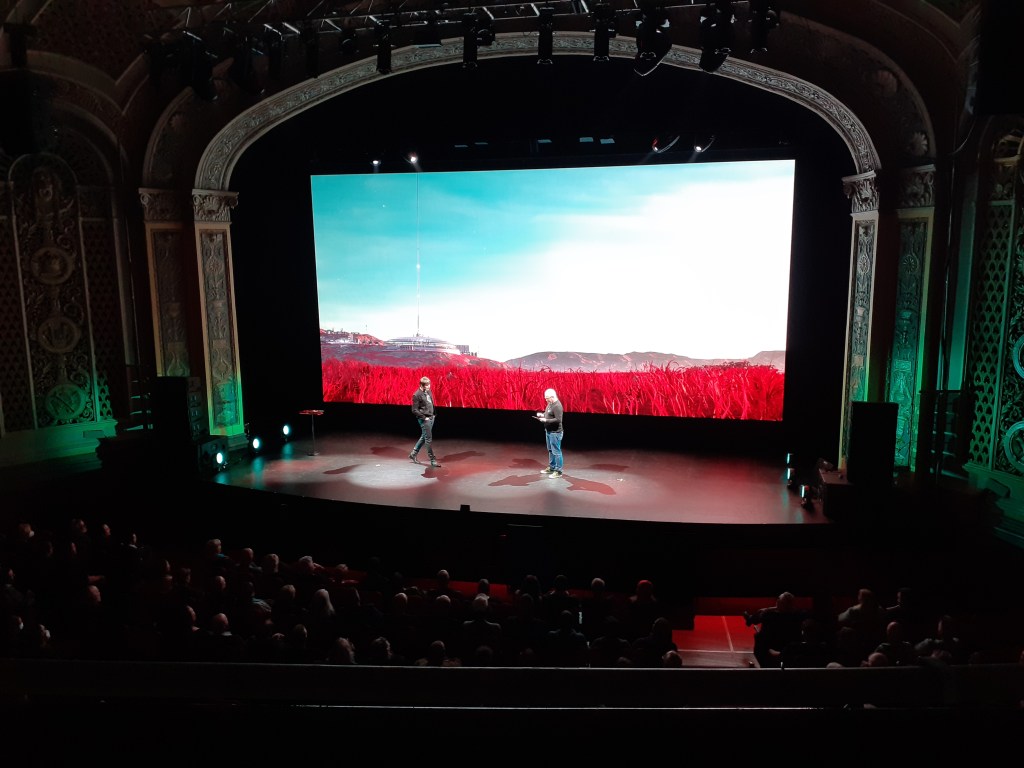


Anyway let’s talk about the actual show, to which I was quite impressed with. Among the different topics that he covered, Brian Cox talked about the general theory of relativity, black holes, Schwarzschild Equations, stellar evolution, world lines, Roy Kerr (New Zealand mathematician), quantum theory, quantum entanglement, Hawking radiation and virtual particles, and some other things as well. 

Cox was also joined by his Infinite Monkey Cage partner, Robin Ince. He gave the audience some great pearls of wisdom for learning and understanding science. Ince was quite funny, so he’s why I want to revisit some of the Infinite Monkey Cage episodes now.

I believe that it’s the smallest things in life, that can give you the greatest amount of pleasure. Case in point, when Cox was explaining something or when it was leading into something, my Spidey-Sense was saying, “Yeah, I know where are you going with this. I understand it.”

When I say understand, I obviously mean not to the level of anyone with a PhD. I’m talking about grassroots basic science. It did make me think, “Wow, all these books I’ve read and the hours of watching science videos on YouTube, means I have not been wasting my life. Maybe.” It’s always nice to understand at least 10% of what a scientist is explaining to you in a presentation. Awesome.


Once again I’m sorry about the photo, I’m a crap photographer.

Overall the show had great special effects and amazing information, as well as excellent interactions with the audience. I really enjoyed it, because Brian Cox and Robin Ince were fantastic. It’s made me; dare I say it, fall in love with science communication all over again, because it’s something I really want to write more of. Sorry. Which is why I’m going to write more science based content. Though whether my work is good or funny, that’s for someone else to judge. Wow, what a cop out!

Speaking of more content, I’m already on Twitter, but I’ve also joined Mastodon; just so I can do more things, instead of sleeping that will actually help me. I post daily stuff on Twitter at 7 am (NZ Time) and 6 pm-8 pm (NZ Time) on Mastodon, so please visit me if you have the time. Let’s see how stressed I can get with this.

Thanks for reading and following Some Geek Told Me. Please walk your dog, read a banned book, and do yourself a favour; go and watch Croatia vs Argentina in the 1st semi-final this week, then Morocco vs France in the 2nd semi-final. They should be great, unless they’re not. See you next Monday.


What does living in a Post-COVID society look like?

I want to talk about living in a society that has moved past COVID-19 and what it looks like. This could have been achieved through the use of magic, time travel, or just good old science. There are many countries that have come out of the other side of COVID-19, while others are still battling and fighting to keep their country afloat.

On 13th September 2022, the New Zealand Government scrapped the COVID-19 Protection Framework (traffic lights system), and on 28th September 2022, the last government vaccine mandates ended for health and disability workers.

It’s only been a few weeks, but what is life like now in Aotearoa New Zealand? Having given COVID-19 a flying kick in the face, along with an atomic elbow, how is our society responding to the lifting of vaccine and mask mandates? How are we progressing on getting back to normality?

My incoherent and insane observations are based on things that I have seen, hear, or read about in the last few weeks, whether it’s local or national. Whether this information is positive, negative, or in the middle…I’ll let you be the judge for that.

So without further ado, I will get straight to the matter. I will not be farting around discussing matters that are not important to the topic. Delaying this message will not help anybody; there will no procrastination here. I want to be direct with my information, so there will be no ambiguity or vagueness. Dithering, prolonging, or dawdling with this content, would be extremely unproductive and inefficient. I will not be dragging my feet, giving the you runaround, or shilly-shallying; there’s no way I would ever do that to you. No way; I would never waste your time…wait, what was I talking about?!


How Aotearoa New Zealand is adjusting to Post-COVID life

  • The Anti-Vaxxers are still proclaiming the pandemic was fake, because a.) they never were infected or b.) they were infected, but they had little to no symptoms.
  • Children’s illnesses like chicken pox; measles; hand, foot and mouth; and school sores have returned. This is because after two years, the public have forgotten every single lesson COVID-19 taught us.
  • Some candidates in local regional council elections are promoting their anti-vaxx, anti-mask and climate change denying beliefs; while some are trying to hide these beliefs.
  • Interest rates, supply chain issues, food and petrol prices are increasing; but house prices, community health measures, and the public’s support of the All Blacks are decreasing.
  • Since the death of Her Majesty Queen Elizabeth II, the concept of New Zealand becoming a republic, has been an increasing topic of conversation at the water cooler, dinner table, and at the pub.
  • Wearing a face mask in public has gone from being viewed as idiotic, to heroic, and back to being idiotic again.
  • Some businesses and companies have removed their plastic barriers, centred on interactions with the public; while others are committed to keeping them, to protect their staff.
  • Many extroverts across the country are now having a “livin’ la vida loca” lifestyle, while many introverts are remaining home, because they feel unsafe.
  • Regardless of gender, ages, and codes, some team sports are finding it difficult to field players, because people don’t want to be around other people. However individual sports are booming, especially hiking, surfing, biking, running, swimming, tennis, and golf.
  • Jehovah’s Witness are back knocking on doors. When I met the two guys at my house, they were so excited to be back talking to the public, that I talked to them for 15 minutes before letting them down.
  • And this is not even diving into the unemployment, domestic violence, youth suicide, crime, or mental health statistics.

On a brighter note, we are hosting the 2021 Rugby World Cup, from 8th October to 12th November. It features the 12 best women’s rugby teams on the planet…but because of COVID-19, the tournament was delayed a year, and the games are only being played in three stadiums; two in Auckland and one in Whangarei, which are all near the top of the country. It would take me some time to hitchhike there.

I’m not sure what else to say about this; somehow New Zealand is better off, and equally, worse off because of surviving COVID-19. The biggest change for me is the number of conspiracy groups that were on the fringe of society, are now nearly mainstream. It’s the realisation that a family friend is an Anti-Vaxxer, or your barber is an Anti-Masker.

There are some deep lines of division in this odd little country, that I fear will we never really be able reconcile. It’s a hell of a thing to listen to people that you admire and respect, start discussing conspiracy theories about climate change, vaccines, masks, and anything else. Somehow, I think COVID-19 has emboldened them, like taken away their fear of sounding crazy. But that could be another blog for another day.

The new House of the Dragon episode is up, so I need to watch it before I read spoilers. I’m stupid and read too many things I shouldn’t. Thanks for reading my little project, walk your dog, read some banned books and I’ll see you next week.


The Four Fundamental Forces of the Universe walk into a bar…

I want to talk about the four fundamental forces in the universe. Why? Well this has been a terrible idea of mine for some time now, so I was thinking, “Why delay it any longer?”

Before we can get to the main event, we need to establish what a fundamental force is and why would anybody care. There are many different types of forces that homo sapiens have discovered and identified over the years, such as the normal, friction, air resistance, spring, elastic, and buoyancy force, and many, many more. Sadly we still have not accessed the Speed Force, though several speedsters could be of assistance.

To the best of my understanding, all of the known forces are some form of either pushing and/or pulling. Because of this, and just like how scientists can trace living species back to their ancient ancestors, forces can be traced back as well.

This means one force is connected, related, or linked to another force, until you can trace them all back, to a point where the action being done, can’t really be explained any simply or easier; thus making it a fundamental force of the universe: that we know of. Someone with a lot more letters after their name than me, would probably be able to give you, the curious reader, a better explanation for this; but alas, you have me.

Just like the title of the blog indicates, there are four fundamental forces in the universe, that govern the laws of interactions. In no particular order, though some may feel like they are more important than others, the fundamental forces are electromagnetic, strong, weak and gravity.

Just like unpacking some IKEA furniture and you realise there are no instructions, you ask yourself, “Now what?” Ok, let’s look at the forces and try to understand what they are and how they fit into the universal jigsaw puzzle.


Electromagnetic Force

Just like Batman is known as the Dark Knight, the electromagnetic force is also known as the electromagnetic interaction. So what does it do when its not at home mowing the lawn?

The electromagnetic force seems to be the Swiss Army knife of physics, because it is responsible for a lot. It is a long range force that is either attractive or repulsive, though it depends on the charges that it is dealing with, which will be negative or positive.

This is the force inside an atom that keeps electrons in orbit around the atomic nucleus. The electromagnetic force also creates magnetic and electric fields, electromagnetic waves, chemical bonding, and visible light. It’s pretty cool when you think about it, well at least to me.

Strong Force

The strong force, the strong interaction, and the strong nuclear force, are all the different names it is known by; though their ex would have some creative names as well.

There is something to be said about doing one thing, but doing it really well. The strong force does one thing, but if it was bad at it, well…the universe and our world, would be a very different place.

The strong force operates on the subatomic level, namely in atomic nuclei. Inside the nucleus of an atom (except for hydrogen), protons have a positive charge, while neutrons have a negative charge.

You all know what happens when you try to bring two magnets together with the same charge; instead of attraction, they repel or push away from each other. So imagine that scenario with two positively charged protons, inside the nucleus of an atom.

Because the protons both have the same charge, they both should repel each other. But they don’t, do they? If they did, atoms could not form, along with stars, dogs, water, turnips, carbon dioxide, and people. But this doesn’t happen, so why?

That’s right, the strong force is actually strong enough to overcome the protons’ repulsion of each other, and bind them to the neutrons. But that’s not all, the strong force also binds the quarks inside the protons and neutrons together. The strong force has one very attractive job1, but it does it really, really well, just like the Flash.

Weak Force

Alright, let’s march on to the next force: the weak force, aka the weak interaction, or the weak nuclear force.

You may think the weak force has something to do with a geek or nerd using free weights, but you would be wrong. The weak force is actually about decay. Radioactive decay to be correct.

Just like the strong force, the weak force operates within an atom, but on a much smaller scale. Basically, through the use of the weak force, a proton can be changed into a neutron, but also inversely; which to me is just mental. This process is a form of radioactive decay known as beta decay, which is where particles are pushed out of the nucleus, as quarks change their “flavour.”

The weak force actually helps one element change into a new element, which is what happens with nuclear fission in nuclear reactors, and nuclear fusion in the core of the Sun. Now imagine if we didn’t have the weak force? To me, that is a horrifying thought; just like Sour Cream and Chives.

Gravitational Force

And so we have reached the fourth and final, and quite possibly the most famous fundamental force; gravity or the gravitational force. This is quite interesting, because of all of the fundamental forces, gravity is the weakest.

Gravity is a long range attractive force, that exists between two objects that contain mass. Gravity not only can describe the motions of objects and help growth of life forms on Earth, but also objects like planets, stars, black holes, and galaxies.

Gravity basically just wants to pull or bring mass together. When working on or talking about the subatomic world, gravity has little or no effect on this region of reality, which is where the other three fundamental forces come into play.

There are four footnotes I need to add to my badly explained blog.

1.) When discussing the fundamental forces, many contemporary scientists prefer to combine the electromagnetic force with the weak force, to become the electroweak interaction or electroweak force. This is because they are viewed as two sides of the same coin.

2.) If you have ever heard the phrase, Grand Unified Theory, it’s actually a particle physics model where the electromagnetic, strong, and weak forces combine into one single force. However after saying that, we can dial it up to 11 for the next footnote.

3.) There are terms like, Superforce, Unified field theory, and the Theory of everything, are; at least to me, different ways to describe all four fundamental forces and merge them together, to create one unified force. This force would also incorporate quantum mechanics and the general theory of relativity.

Electromagnetic!

Strong Nuclear!

Weak Nuclear!

Gravity!

Go, Superforce!

By your powers combined, I am Captain Superforce!

Captain Superforce, he’s our hero,
Gonna take ignorance down to zero,
He’s our powers amalgamated,
And he’s fighting on science’s side

Captain Superforce, he’s our hero,
Gonna take ignorance down to zero,

Gonna help him to educate,
Bad guys who like to lie and hate

“You’ll pay for this Captain Superforce!”

We’re real scientists,
You can be one too!
Because learning about the universe is the thing to do,
Disinformation and denial is not the way,
Hear what Captain Superforce has to say:

“THE POWER TO LEARN IS YOURS!!”

That would be a kick arse kids science anime show.

4.) When discussing the fundamental forces, the Standard Model of particle physics is crucial to this. It’s like the chips are physics, the salt are the fundamental forces, and the vinegar is the Standard Model. I will talk about the Standard Model and how it connects to the fundamental forces, one day, but not this day. That is another blog, for another Monday.

Hopefully that was easy to read and understand, so I’m praying I didn’t get too many things wrong. Anyway, that’s it for me. I have finally started watching Star Trek: Discovery, so I need to get back to it. Thanks for reading, walk your dog and I’ll see you next Monday.


1 Pun very much intended.

The James Webb Space Telescope: Awesomeness worth $10 billion

I once again want to talk about the James Webb Space Telescope. Why? Well strap yourself in, because I’ve been geeking out. Back in January, I gushed over the launch of the JWST, while trying very poorly to explain how important and magnificent the JWST will be to humanity.

The JWST’s main function is to capture and see images in infrared. This is because infrared wavelengths are longer than visible light that we can see; thus making it invisible to us. By allowing the JWST to see in infrared, the telescope will be able to detect and see different cosmic objects, that are too far away for us to see with visible light.

This is a great time to mention that JWST’s first images were released recently, and they did not disappoint. I’m swiping right here. The JWST images are more gorgeous, than you can shake a stick at, on your best stick shaking day.

You may have already seen these images, but please just humour me. The truth is, I just want to stare at them. As sad as it is, these images are bringing me a lot of joygasms. WTF?! This is awesome!

With the descriptions of the images, I’ve tried to give a brief explanation of them. Can’t promise the explanations are good though!

One thing quick thing we need to sort before we start: what is a light-year? It sounds like it could be a measurement of time, but it’s not; it’s about distance. A light-year is the distance light can travel in a vacuum, within a single year. Light travels at 299,792,458 metres per second, (you can round it up to 300,000,000 m/s) so a light-year is 9.46 trillion kilometres (9.46×10¹² km).

To put this in perspective, the distance between the Sun and the Earth is around 150,000,000 km. The light travelling from the Sun towards Earth is travelling at the speed of light, which is 300,000,000 m/s or 300,000 km/s. This means the distance from the Sun to the Earth, is just over 8 light-minutes.

Earth’s second closest star, Proxima Centauri, is 4.2 light-years away. Space is big.


SMACS 0723 aka Webb’s First Deep Field

Credits: NASA, ESA, CSA, and STScI

To start the ball rolling, this image; just like the Hubble Deep Field photo, is greater than the sum of all of its parts. This is a cluster of galaxies called SMACS J0723.3–7327, but SMAC 0723 works just as fine.

SMAC 0723 is over 4 billion light-years from Earth, and this image is remarkable for four reasons.

1.) From what I understand, every dot, blob, or smear of light in this image, is actually a galaxy, filled with millions of stars, and hundred of millions of exoplanets.

2.) The area of space in the image, is about the size of a grain of sand, where a person standing on Earth, held it out at arm’s length.

3.) Due to the huge size and combined mass of this galaxy cluster, it is distorting space-time. This allows light to be bent around it, thus it acts like a lens, so we can see distant galaxies at a greater magnification. This is known as gravitational lensing.

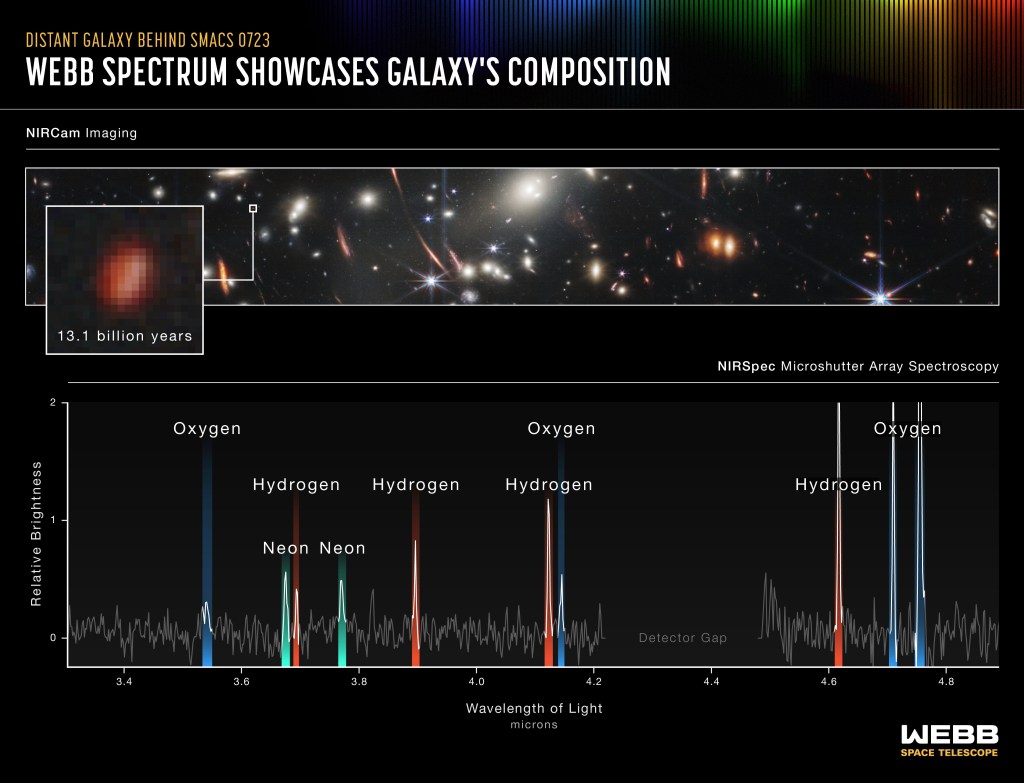
4.) The JWST has some pretty cool instruments on board. The NIRCam and NIRSpec, have helped to reveal information about one of the galaxies in the image. The analysis of the galaxy’s light, shows it to be red shifted and about 13.1 billion years old. The age of the universe is about 13.8 billions years old. We are looking at a galaxy that, quite possibly, was only created around 700 million years after the Big Bang. This is mind blowing.

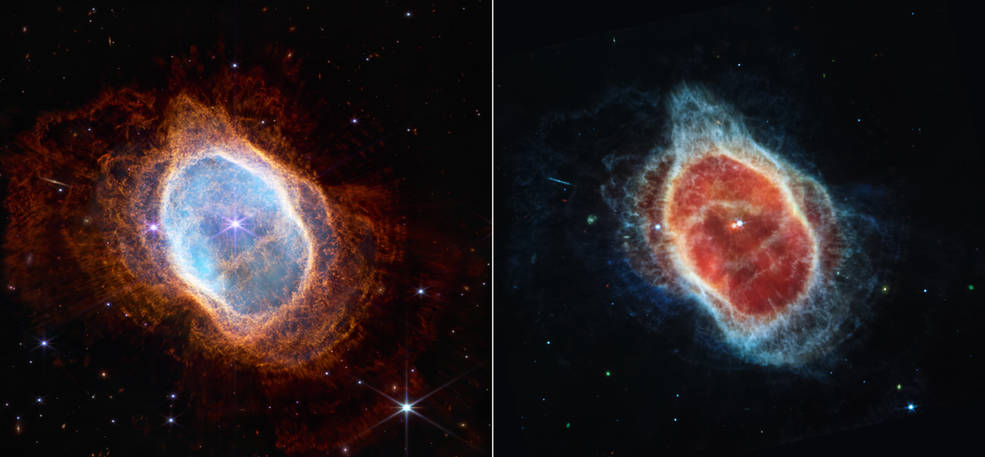
Southern Ring Nebula

Credit: NASA, ESA, CSA, and STScI

This Planetary Nebula is 2,000 light-years away. It’s not a planet, but rather a collection of gas and dust, blown away from a Red Giant star as it died. With the image on the right, do you see a small white dot in the centre? That’s the White Dwarf star, and that’s what remains from the Red Giant’s death. For me, that looks like a hot mess. It’s gorgeous.

Stephan’s Quintet

Credit: NASA, ESA, CSA, and STScI

This image is quite literally, out of this galaxy. This is Stephan’s Quintet, which is located around 300 million light-years away. Named after Édouard Stephan, the astronomer that discovered it, this is a galaxy group.

The image consists of four different galaxies; NGC 7320, NGC 7319, NGC 7318, and NGC 731. NGC 7318 is actually two galaxies that are colliding into each other. Which by the way, is exactly what will happen to our Milky Way Galaxy, in about 4.5 billion years, when we collide into the Andromeda Galaxy.

It also pays to understand, there are thousands of other galaxies in the background. You are not entertained?!

Carina Nebula

Credit: NASA, ESA, CSA, and STScI

This is part of the Carina Nebula, that’s called the Cosmic Cliffs. It is near 8,500 light-years away from Earth and is filled with gas and dust. The Carina Nebula is what you would call a stellar nursery. This means it’s a region of space where stars are born, because of the vast amounts of gas and dust that are pulled into it. Once again, another gorgeous image.

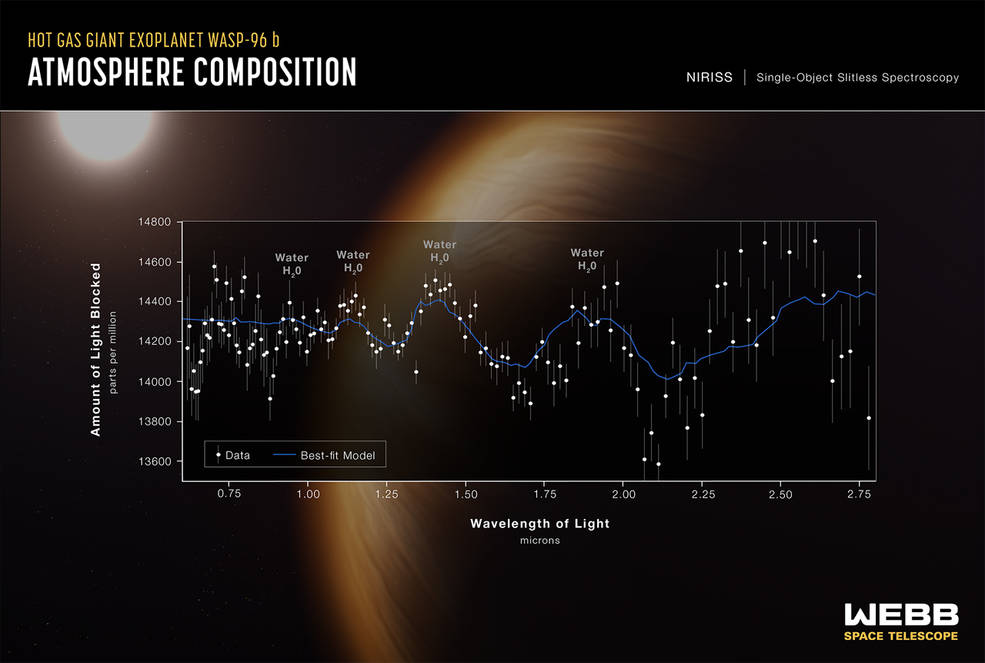
Atmosphere Composition of WASP-96 b

Credit: NASA, ESA, CSA, and STScI

Spectrum of a Galaxy’s Composition

Credit: NASA, ESA, CSA, and STScI

These two compositions of an exoplanet’s atmosphere, and of a galaxy’s spectrum, reveals two major things: water and oxygen are more common in the universe, than we first thought. The implications to this data, could already change the way we understand and view the universe.

These images from the JWST are some of the first to be released, with many years of images to come. This telescope is going to create new fields of science, for generations of people to study and learn from. It really is going to change the world. Believe the hype about the JWST.

It cost $10 billion to create, which is a hefty price tag. However what we are going to learn from it, is going to be invaluable and priceless to life on our planet, but maybe, just maybe, life out there as well.

Thank you for reading Some Geek Told Me. It keeps me inside and in front of a computer, where my wife can keep an eye on me. Marriage is awesome. Stay away from Sour Cream and Chives, walk your dog, and I’ll see you next week.


My questions about the Flat Earth

I want to talk about the Flat Earth. Why? Well, this has been floating around in my science loving head for some time now. I have to admit, whenever I hear, read or watch Flat Earth content, I experience a flood of different emotions, ranging from amazement to sadness to anger to disbelief.

It’s not a topic that I actively search for. Do I search for the latest updates on book releases? Yes. Do I search for the latest updates on movie releases? Yes. Do I search for the latest updates on rugby and football news? Yes. Do I search for the latest updates on Flat Earth? No, because that sucker was solved a long time ago.

You see, I have 99 problems, but a Globe Earth isn’t one of them. I do however have a Flat Earth problem. Only one, you ask? Yes, only one; if you can compress them all down, just like the Slitheen’s compression fields.1

This is the problem, pause for dramatic effect….with all of the uncountable pieces of evidence that prove we live on a planet that has achieved hydrostatic equilibrium, Flat Earthers still deny the evidence. It’s either a cover up (because there is no evidence to support a Flat Earth, which proves it’s a cover up) or everything we read or see, is a lie or fake.

In my humble understanding, the average Flat Earther will never accept a Globe Earth, because of the reasons above. That being the case; short of having some sort of mental breakdown or head injury, what would it take for me to accept a Flat Earth?


Image by Vicki Nunn from Pixabay

I gave this a lot of thought, because for a Flat Earther to convince me to cross to the Dark side of the Force, they would have to answer all of these questions.

For me to believe in a Flat Earth, someone please explain:

The Flat Earth Map

  • Why is there no official Flat Earth map?
  • How do time zones work on Flat Earth maps?
  • Why do some Flat Earth maps include the dome and some don’t?

The Dome

  • What is the dome made of?
  • Whom built the dome?
  • Why can we not see the dome?
  • How was the dome installed?
  • Is there any evidence to support the dome’s existence?
  • Why do we not see domes on other planets?
  • What are the dimensions of the dome?

Planetary Evolution

  • Why is the Earth, the only planet that we have discovered, that has defied planetary evolution and not formed into a sphere?
  • Why are Mercury, Venus, Mars, Jupiter, Saturn, Uranus or Neptune, not flat?
  • How have scientists misunderstood planetary evolution?
  • Can Flat Earth models explain Kepler’s laws of planetary motion?
  • Can Flat Earth models explain Newtonian physics?
  • If the planets in our solar system orbit the Sun, but the Sun orbits above the Flat Earth, what does this happen?
  • Earth has less mass than Jupiter, so why does Jupiter orbit Earth, according to the Flat Earth model?

Geology

  • Do tectonic plates exist on a Flat Earth?
  • How old is the Earth?
  • On a Flat Earth, does the Earth still have a crust, mantle, outer core or inner core?
  • How are volcanoes, earthquakes, and mountains made on a Flat Earth?
  • Can a Flat Earth model explain subduction, convection and continental drift?
  • Using the Flat Earth model, how are Earth’s magnetic fields created?
  • Can the Earth’s 15 degree per hour drift, be explained on a Flat Earth?

Lunar Evolution

  • Why is the Moon not flat?
  • Why are the other moons in the solar system, not flat as well?
  • How was the Moon formed, in relation to the Flat Earth?
  • How did the Flat Earth trap the Moon, inside the dome?
  • Why does the Moon travel in perfect circles above our heads, never slowing or speeding up, but in balance with the Sun?
  • How do lunar eclipses work on a Flat Earth model?
  • Does the Earth need to be perpendicular, to produce it’s shadow on the Moon, during a lunar eclipse, for the Flat Earth model to work?
  • Can lunar eclipses occur at different times of the day on a Flat Earth?
  • How old is the Moon?

Oceanography

  • How are tides caused on a Flat Earth?
  • Can a Flat Earth model explain Magellan’s circumnavigation of the world?
  • Can the formation of underwater mountain ranges, be explained on a Flat Earth?
  • How do ocean currents work on a Flat Earth?
  • How are gyres explained using the Flat Earth model?
  • Using the Flat Earth model, are oceanographic moorings fake?
  • Can the Flat Earth model truly explain why ships disappear below the horizon?

Stellar Evolution

  • Why is the Sun not flat?
  • Why are all known and observable stars in our galaxy, not flat?
  • How does the Flat Earth model explain the Sun’s light rays, causing different lengths of shadows at 12pm, at different locations?
  • How was the Sun formed, in relation to the Flat Earth?
  • How did the Flat Earth trap the Sun, inside the dome?
  • Why does the Sun travel in perfect circles above our heads, never slowing or speeding up, but in balance with the Moon?
  • How do solar eclipses work on a Flat Earth model?
  • How old is the Sun?
  • How have scientists misunderstood stellar evolution?
  • There is a model that demonstrates how seasons work on the Flat Earth. This is done by the Sun moving in different orbital planes throughout the year. Why does the Sun move like that and how does it know to move to a new orbital plane, and to move back at different times during the year?

Politics and History

  • What year did people discover the Earth was flat?
  • When the Earth was discovered to be flat, why did people lie about it?
  • How many governments are suppressing the truth about the Flat Earth?
  • What year did all of these governments decide to suppress the truth about the Flat Earth?
  • Does every politician, world leader, and CEO in the world, know the truth about the Flat Earth?
  • Does every teacher, pilot, engineer, and airline staff member in the world, know the truth about the Flat Earth?
  • Does every employee of every space agency in the world, know the truth about the Flat Earth?
  • What prevents people with the truth about the Flat Earth, going to the media with evidence?
  • What do people gain from suppressing the truth about the Flat Earth?
  • Are there any countries that teach the Flat Earth model in their schools, as part of their national curriculum?

Last questions

  • Can the Flat Earth model explain the Coriolis Effect?
  • How does the Aurora Borealis and Aurora Australis exist on a Flat Earth?
  • How does the Flat Earth model allow for sunsets and sunrises to happen at different times around the world, according to your longitude?
  • How does the Flat Earth model allow for different stars to be seen from different latitudes?
  • On a Flat Earth, why can someone standing in New Zealand, not see Polaris, The North Star?
  • On a Flat Earth, why can someone standing in Iceland, not see the Southern Cross?

And for the final question:

  • Can someone please explain how the Flat Earth model, allows and supports the General Theory of Relativity?

And with that, I am done; and I haven’t even talked about flight paths, the precise curvature of the Earth, or Antarctica and the ice wall. If any Flat Earther can answer all of these questions, I would love to hear them. Or maybe you think I have missed some vital questions out? If you do, let me of your ideas.

Thanks once again for reading, wash your hands, and I’ll see you next week.


1 Dr. Who! (HEY) Dr. Who. Dr. Who! (HEY) The TARDIS.

The 15 Best Songs About Geek and Nerd Culture

I want to talk about music. Why? This is because of all of the ludicrous topics that I have covered, since starting on this insane quest, music has not been one of them. That changes today.

I often have different earworms playing in my head, featuring geek/nerd culture songs. So in my finite wisdom, I’ve decided to list 15 of the best songs that I can think of, that showcase or highlight geek or nerd culture.

There are some catches to the list though; every song on my precious list, actually has lyrics, so no orchestra pieces. Sorry. Also, theme songs from movies or television shows are not counted. Those entries deserve their own blog, which I will get to one rainy day.

The songs that have missed the cut, will be because they would only mention a word or a line, featuring geek culture; which is not enough to make the list. Though there is one exception, and I will explain. Scout’s honour.

I also feel the need to explain, that for the purposes of this list, the words, geek and nerd, can and will be interchangeable.

There are some artists that appear more than once on the list, and that’s just unavoidable. Sorry. You might know some of these songs on the list, or maybe you could recommend some others? Please let me know.

Without further grandstanding, may I present to you, 15 of the best songs that highlight geek/nerd culture. Also the list is in no particular order, because I wanted to see if my OCD would allow it. Go me!


Image by Jean-Paul Jandrain from Pixabay

Superman (It’s Not Easy): Five for Fighting (2000)


Talk Nerdy To Me: KFace TV (2014)


The Universe is Weird: Hank Green (2012)


A Song About an Anglerfish: Hank Green (2009)


Doctorin’ the Tardis: Timelords aka The KLF (1988)


Star Trekkin’: The Firm (1987)


Word Crimes:  “Weird Al” Yankovic (2014)


The Saga Begins: “Weird Al” Yankovic (1999)


Yoda: “Weird Al” Yankovic (1985)


Twinkle, Twinkle Little Earth: Leonard Nimoy (1967)


Nerd vs Geek Rap Battle: Rhett & Link (2013)


Data & Picard: Pogo (2016)


Intergalactic: Beastie Boys (1998). This is the exception I was talking about. It’s here because of the amazing video. Kaiju anyone?


Astronomically Correct Twinkle Twinkle: Henry Reich, Zach Weinersmith & Chris Jones (2014)


The Science Love Song: AsapScience (2014)


And finally for a bonus entry, this song is the greatest version of geek/nerd culture ever recorded.

The Ballard of Bilbo Baggins: Leonard Nimoy (1968)


So do you agree with the entries? Do you think I’ve missed your favourite geek/nerd song off the list? Please let me know your thoughts.

Alright, that’s it for today. From the bottom of my four chambered heart, thank you for reading and following Some Geek Told Me. It’s a side project that keeps me off the dark and cold streets.

I’m doing another special blog for Wednesday, because of some sad news that has hit the comics industry, within the last few weeks.

Thanks for reading, wash your hands, and I’ll see you on Wednesday.


Particle Accelerators: The Coolest Machines on Earth

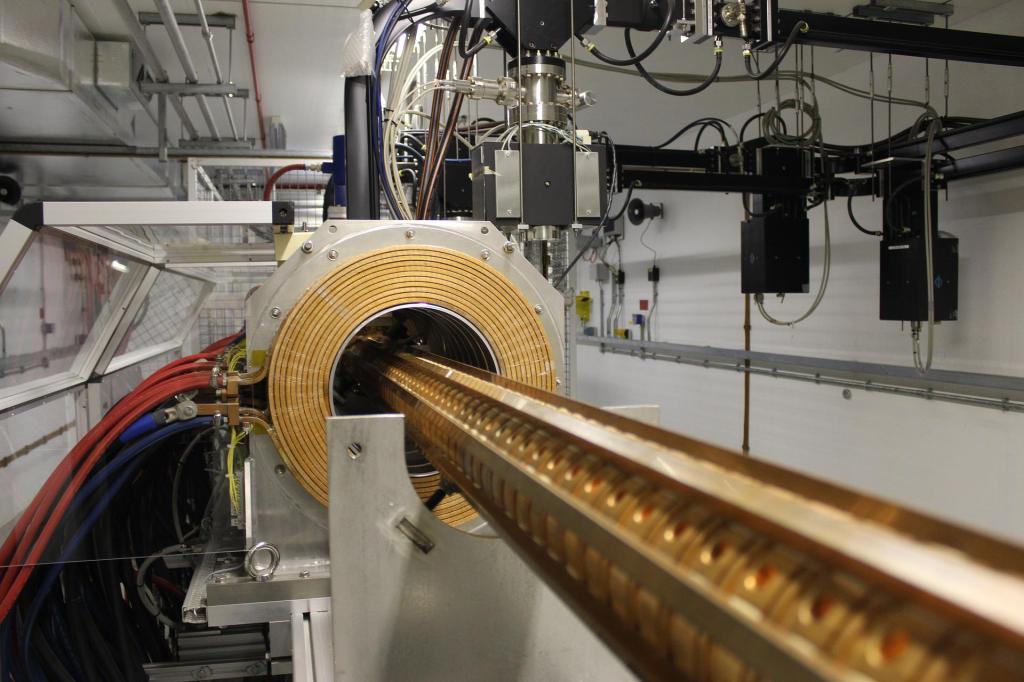
I want to talk about particle accelerators. Why? Well, in my humble opinion, I think they are the coolest machines on Earth. That’s a big call, so do I have any evidence for this? Not really, only my misplaced love in technology that I can only describe as beautiful.

You may have heard the words, atom smashers, colliders, or particle accelerators before, but they are more or less words that can be interchangeable, just like the Infinity Stones and the Infinity Gems, but also Paradise Island and Themyscira. That being the case, let’s try to untangle this mess that I’ve made.1

Simply put, particle accelerators smash pieces of atoms together.

Great, thanks for reading and I’ll see….


Image by Achim Weidner from Pixabay

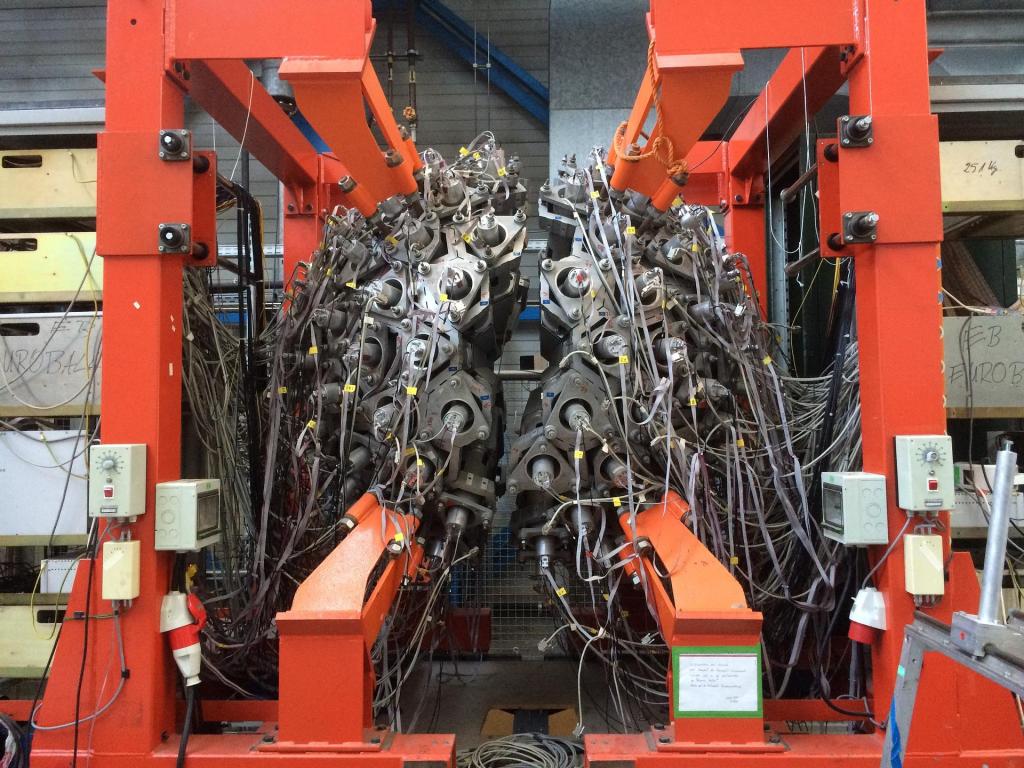
As if. Particle accelerators are massive machines that can fire subatomic particles around a circuit, at speeds similar to the speed of light. The results of each experiment can help scientists to research and investigate answers about our universe, which brings about more questions.

I can only imagine years ago, a group of drunk physicists were enjoying a good night out at the pub, when someone suggests of thinking up the craziest experiments possible. Once again, I can only imagine there would be lots of different ideas, when someone mentions, “Hey, I’ve got it! Let’s take some subatomic particles and using electromagnetic fields, fling them around a circuit at close to the speed of light, and smash them together.”

Everybody would laugh at this and move on to the next crazy idea; but the group’s designated driver would have been listening the whole time. They speak up and say, “I was thinking about the last idea, and it seems quite interesting.”

The actual truth is far less entertaining than a drunken idea. The way I understand it, the design and implementation of various particle accelerators, were created by scientists Gustaf Ising, Ernest Lawrence, Max Steenbeck, Leó Szilárd and Rolf Widerøe, from the 1920’s to 1930’s.


Image by Macedo_Media from Pixabay

So how does a particle accelerator work? That’s a great question, in fact, that’s the best question I have heard all day; even better than, “Should we get pizza tonight?”

Because each particle accelerator is different, they have different components, so they operate differently. Having said that, the best and simplest way I could describe it to anybody 2, means laying down some easy groundwork first.

Let’s look at one of the most famous particle accelerators in the world, the Large Hadron Collider (LHC), located near Geneva, Switzerland, operated by CERN, to help me to explain them. Hopefully correctly.

Atoms are not the smallest pieces of matter. Within the structure of an atom 3, you would find three basic particles: a proton (it has a positive charge), a neutron (they have no charge, they are neutral), and an electron (it has a negative charge).

With each different element, the quantity of protons, neutrons, and electrons changes. There are other subatomic particles out in the world, but let’s just use protons, neutrons, and electrons for now. Ok?

Scientists can take protons for an example, and accelerate them to speeds, close to the speed of light. They do this by using electromagnetic fields, to accelerate the particles, through a network of tunnels.

These tunnels at CERN, span 27 km; at a maximum depth of 175 m, have been built around the area to house the particle accelerator, because it needs a lot of space and energy.

Now this is crazy, but true. Because of this, the particles can be fired at around 99% the speed of light. They zip around the network of looped tunnels, at a mind crushing speed of 11,000 times per second. Let that fact sink in.

The idea is that when these particles are whipping around, scientists can cause them to smash into each other. This is not because scientists hate subatomic particles, or there is a secret cult, trying to eliminate all subatomic particles from the world 4, but rather to create new subatomic particles and unlock more of the subatomic world.

I know, the whole thing sounds like a bad B-movie plot, but it’s real. By using particle accelerators, scientists have discovered the Higgs Boson (or God particle or Higgs particle); developed better computer scanning imagery; created synthetic elements like Moscovium, Tennessine, Oganesson; medical applications; the W and Z particles; and other subatomic particles.

I remember when the Higgs Boson was announced by the media in 2012, an article citing some scientists and researchers, were explaining that the discovery of the Higgs Boson, could give humanity the building blocks for faster than light technology.

This of course has led to scientists designing various theoretical space ships, with the ability to warp space/time or travel at light speed. How cool is that?!

There is also a real belief, that particle accelerators can help scientists to bridge the gap between the general theory of relativity and quantum mechanics, to create the Holy Grail of physics: quantum gravity theory.


Image by Achim Weidner from Pixabay

I have never visited or seen a real particle accelerator, but I would love the opportunity to. Honestly, I think particle accelerators are what dreams are made of, so they have been pulled into our reality. They are the coolest machines, not just on this planet, or the solar system; but maybe the galaxy.

Not the universe though, because there will be an alien civilization, in some distant red-shifted galaxy, with real working replicators. How rad would that be?!

Anyway, with the new upgrades to the CERN particle accelerator, who the hell knows what amazing and fascinating surprises, will we discover. Particle accelerators; they are the cat’s pyjamas; the bee’s knees; or just simply, the coolest machines on Earth.

Thanks for reading, wash your hands, and I’ll see you on Wednesday for another special blog.


1 There’s a first for everything.

2 Remember, I’m not a physicist, just someone that likes science. A lot. Probably too much, actually.

3 Hydrogen being an exception, because it has no neutrons; just 1 proton and 1 electron.

4 Good luck with that one.

COVID-19 tracked me down and kicked my arse

This is a special blog for today, because I usually post sometime on a Monday; and as you are all very capable of following the Gregorian calendar, today is Wednesday.

The reason I am posting today, is because I want to talk about COVID-19. Why? Because after two years of avoiding it like…um…the plague, COVID-19 finally tracked me down and kicked my arse.

I’ll be honest with you, in my utter arrogance, I thought I would avoid it. I told myself, that if I kept washing and sanitising my hands regularly, wearing a face mask in public, and following government guidelines, I would be sweet as. What an idiot.

Currently, the COVID-19 Omicron variant is still ripping it’s way through New Zealand, like Cookie Monster at a birthday party. At the time of writing this blog, 18% of the entire population of New Zealand, has been infected with COVID-19.

I’m thinking about it now, and catching COVID-19 was inevitable for me; just as Winter follows Autumn, or the Joker escaping Arkham Asylum. It was always going to happen.


Image by Spencer Davis from Pixabay

Now as disappointed as I was for actually contracting the virus in the first place, I do feel fortunate for one reason. During my time of being infected, I was suffering from headaches, constant coughing, insomnia, nose bleeds, sneezing, tiredness and a sore throat.

My wife has seen first hand, what kind of damage Man Flu can have on me; but at COVID-19’s peak, she said that I looked, spoke, and walked like a zombie. COVID-19 kicked my arse.

I feel grateful though, because of all of the symptoms I suffered from, things could have been worse for me. I could have been hospitalised or died from it; but I didn’t and it’s down to one reason: vaccinations. As a country, we are sitting at a vaccine rate of 96%, and I was lucky enough to be double vaccinated, as well as receiving the booster.

I have no doubt that the vaccine protected me, from developing even greater and more dangerous symptoms. However I know millions of people around the world are still without their first dose.

I don’t know how to solve that problem, but one thing I can do, is once again thank every single person involved in the research, design, development, testing, manufacturing, and distribution, of the various COVID-19 vaccinations being used on this planet.

I love science. Always have, always will.

Thanks for reading, please look after yourselves and your families, wash your hands, and I’ll see you next Monday.


Who cares about the James Webb Space Telescope? I do!

I want to talk about the James Webb Space Telescope or JWST. Why? I like learning about new things, whether it’s the history of the Opium Wars; the mating habits of the kākāpō; or the positive philosophical implications of enjoying Salt and Vinegar chips; I like learning new things.

If I was immortal, then one day I might learn and know everything, but alias, I am not. The exponential growth of my grey hair proves this. Another one of my mortal problems is that my mind is like a black hole; it takes in information, but it’s nearly impossible to retrieve it.

However there are some topics like Astronomy, that once I start talking, it’s easier to make Judge Dredd laugh, than to get me to stop talking about that subject. Which brings us to the James Webb Space Telescope.


James Webb Space Telescope by Northrup Grumman

If you haven’t already heard about it, the JWST is a new space telescope, that was launched on 25th December 2021. Now I could try and give you a detailed analysis and history of the JWST, but I’m not going to.

There are two reasons for this; the first one being after so many delays, the telescope has actually launched, so I’m just ecstatic. The second reason is because there have been so many articles already written about the telescope, explaining the history and the technology, that I feel it’s a bit redundant going over this. However what I am going to talk about, is what the telescope actually means to me and why I’m excited.

Without sounding like too much of a massive geek; which I’m going to fail extremely badly at, the JWST is the next generation of space telescopes. I’m crossing my fingers here, but the telescope is hopefully going to unlock more secrets of the universe, that we have only ever dreamt of.

It’s mission has four goals: to study planetary systems and the origins of life; to understand the formation of stars and planetary systems; to study the formation and evolution of galaxies; and to search for light from the first stars and galaxies that formed in the universe after the Big Bang. No pressure then. I for one, can’t wait for the discoveries that the JWST is going to make.

Hundreds of people from round the world, working thousands of hours, using cutting edge technology, have designed, built and have launched the JWST. I think that’s amazing, and every single person involved in this project deserves our congratulations and thanks.

The information the JWST is going to collect and present to humanity, will give us a better understanding of our place in the universe. It’ll also give us better tools to research and hopefully get answers, to questions that have plagued astronomers and astrophysicists for decades.

That’s exciting, it really is, because it may also help us in finding solutions to problems that the world is currently facing at the moment, like Climate Change, cancer, and Sour Cream and Chives chips.

You might feel anxious about what the future holds for us, but an event like the launch of the JWST, can somehow; at least to me, be truly inspiring, and it gives me the belief that not everything in this world is doom and gloom.

Right now, the telescope is travelling at 1.39 km per second, on it’s way to the second Lagrange Point (L2) in our solar system; which is 1.5 million km, directly behind the Earth, when viewed from the Sun.

A Lagrangian point is a location in space, where the orbital motion of a body and gravitational forces, can balance each other out. They can be used by spacecraft to hover, and that is exactly what the JWST is doing to do. To quote everyone’s favourite Vulcan science officer; to me, that is fascinating.

Whether you’re interested in space exploration, or just like to keep up with latest news events, the launch of the James Webb Space Telescope is quite frankly priceless, and a great way to put 2021 behind us.

Thanks for reading and I’ll see you next week!


Do We Save the World or Leave It?

I want to talk about the Earth for my blog today. Why? Because there seems to be a argument floating about, and I feel as a geek, I would like to add my $3.50 to it.


Image by Arek Socha from Pixabay

So the crux of the argument is this: should we be spending time, resources, and money to try and fix the problems and issues, that are plaguing our world currently, or should we be investing time, resources, and money into the colonisation of space? This is a grossly over-simplified explanation of the issue, but it’s still very valid, much like the terrible photo on my driver’s licence.

On one side of the argument, we have people campaigning for the preservation and protection of Earth; mainly against deforestation, pollution, and Climate Change. To be fair, I agree that Climate Change is one of, if not the biggest problem facing life on this planet. That and Sour Cream and Chives, in all it’s forms.

The issue is the catastrophic changes we are making to this planet, are happening in real world time. It’s happening right in front of us and we are the cause of it. There is a campaign to shift the mindset of people across the world, so they can get them on board, to fight Climate Change and to protect not just humanity, but life all over the world.

Some people say we should be investing in clean renewable energy, and to find new sustainable solutions. Whether this is upgraded solar, wind, and thermal technology or my personal favourite, nuclear fusion energy.1 Sadly, the CO2 rates just keep climbing, so the entire global biosphere in in jeopardy.

We are on the abyss and if we can’t change our ways, if we can’t pull back from this, we’re going to tip over, and we will drag everything with us. To add to this argument, is that there are people who believe that investing in space colonisation is wrong.

They believe this to be a complete waste of time, resources, and money; to be exploring and experimenting with space technology, when we need it on Earth to save the planet. I can understand this, it’s a fair point.

However, on the other side of the argument, are people that believe that space exploration and colonisation, terraforming planets, and the building of generational starships, are not just wants, but a necessity to save our unique species.

Going back to the Moon, landing on Mars, and developing technology that will allow humans to live in space longer, are concepts that some people firmly believe in, to enhance space exploration and colonisation. This is where they believe, we need to be donating our time, resources, and money in developing new technology. Again, I kind of feel it’s a very fair point.

So what can I do to solve this conundrum? As a very proud geek, am I pro-Earth or pro-Space? I think the problem is very much like nearly everything society launches at us. It’s forcing us to make a choice between two options, whether it’s Team Jacob or Team Edward; Team Batman or Team Superman; Freddy vs Jason; or Godzilla vs Kong.

But what would happen, if you choose neither of them and both of them at the same time? We just need to place the Earth in a box, so Schrödinger could explain about collapsing wave functions, and Climate Change could be the poison.

But seriously, my answer is this: why can’t we have both? Why can’t we develop the technology to change our lifestyle habits, and to save yourselves, but also the other nonhuman residents of this planet, by fighting Climate Change? By actively protecting the planet, why can’t we do that, as well as developing technology to take us off the planet and live among the stars?

There’s something about the future, that no matter how much you can dismiss it, no matter how much you don’t want to think about it or read about it, that you can’t escape from. There is something that is going to happen to our planet, but it’s not going to happen in our lifetime.

One day from now, around 5 billion years in the future, life will not be able to survive or exist on this planet. This is because, the closest star to us is currently halfway through it’s life cycle, and one day it will burn through it’s hydrogen reserves, and then start fusing helium. When that happens, the Sun will expand its outer layers, and swallow Mercury, Venus and, quite possibly the Earth. 2

And there is nothing, absolutely nothing humanity can do to stop this fact. The only thing we can do, is preserve the Earth for as long as possible, because one day we are going to have to leave this planet, if we are going to survive.3

The way I see it, we don’t own the Earth, we never have. We’re just renting it. Who or what actually owns the planet, is a blog for another day; but the point is, the Earth is not forever or ours. We are only here for a short period, because we are renters.

As a former renter myself, you try to do whatever you can to keep the house working. You mow the lawns, you wash the windows, you try to keep everything clean and tidy, so the house can still function. Sometimes you may have to get a tradesperson in to the fix the washing machine or the fridge, in consultation with the landlord; but the idea is that, while you are living in that house, you do everything possible to keep it in a working condition, so you can actually live in it and not be evicted.

But like I said, as a former renter, there is always a terrible thought at the back of your mind; you know you can’t stay there forever. It doesn’t matter how much you like living there, or how much blood, money or sweat, you put in to protecting and preserving the house; one day you’re going to have to leave it.

Even if this house goes to the next generation, and the generation after that, their job will be the same: to protect and preserve the house as long as possible. Because one day, you will have to leave, whether it’s your choice or not. And when you do, you’ll need somewhere to go, and the only place we can go, is space.

We need to learn how to live in space on a permanent basis and be safe, but also to terraform planets. If we’re going to survive as a species, we need to do two things: we need to fix our problems and mistakes regarding Climate Change, and we need to do it quickly. We also need to do it together, but at the same time, the long-term plan is that we’re going to have to leave.

Surely we can do this. Surely we can multitask and solve Climate Change, as well as developing space exploration technology, at the same time.

As a species, we’ve made Salt and Vinegar chips, Star Wars, football, pizza, manga, and the Periodic Table. Surely we can solve this. Surely we can have a short-term plan and a long-term plan. Why can’t we do both? There is no reason, no reason at all, why we can’t do this, for the fact to survive as a species, we have to do both.

But then, what do I know? I live in a house with two individuals that believe the height of intellectual entertainment are farts, and my wardrobe is filled with comic books. What do I know?

Anyway, thank you once again for reading, and I’ll see you next week.


1 As a New Zealander, I feel like I’m betraying my country; but I extremely believe that nuclear fusion energy, is one of the best tools to fight against Climate Change.

2 The Sun is a star, so even if you’re outside during the day, you are still being bathed in starlight.

3 If you haven’t just realised, I have just described Kal-El’s origin.