So…how is everybody doing? It’s an interesting period in human history right now, and it can seem that things could be getting out of hand. Maybe things are already out of hand. Regardless of the truth, I want to take the time to acknowledge the deaths of two people who were recently announced.
Before I do, I realise I have discussed the deaths of people on this blog before, especially people I have never met, which is somewhat awkward and strange. How do you convey your thoughts and feelings about the matter? Do we have the right to do so? I don’t know what the proper answer or response could or should be; I never have.
I have no stirring speeches about the deaths of people with influence, only that by looking and examining ourselves, we can see that humanity can still shine through in these dire times, but also, understanding and being grateful that we got to experience their gifts that they shared with the world. Because maybe, just maybe, that’s the point.
Anyway, I want to talk about Sam Kieth and Chuck Norris.
Sam Kieth died on 15th March, aged 63 years old, and from what I can understand, he died from complications from Lewy body dementia, which is a form of dementia I never knew existed, I’m sorry to say.
For those not in the know, Kieth was a comic book creator who worked with many companies, including Aftershock, Dark Horse, DC, Image, Marvel, and others. Kieth created and co-created memorable characters, including, but not limited to, Cyber, Mr Gone, Mervyn Pumpkinhead, Mad Hettie, Goldie, Zero Girl, Roderick Burgess, Azazel, and Julie Winters, along with the three most well-known: Lucifer Morningstar, The Maxx, and Dream of the Endless.
I can’t tell you what the first Sam Kieth art I saw was, but I can tell you how it made me feel. I always thought just like his characters, Kieth’s art was not conventional; it was kooky, surreal, weird, offbeat, and odd. But that’s why I felt it stood out from the crowd, and that’s why his art worked. I would see his art somewhere and think, “That looks bonkers, it must be Sam Kieth’s. I love it!”, and it usually was. I enjoyed his art and storytelling, so his talents will be missed.
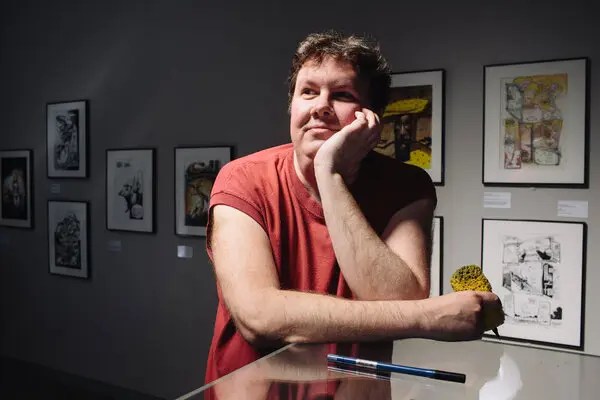
Sam Kieth in 2013 at a retrospective of his work at the Cartoon Art Museum in San Francisco. His bold art aesthetic and exploration of mature themes gave an adult edge to his comic book characters. Credit: Stephen Lam
It’s difficult to believe, but Death finally found the courage to tell Chuck Norris that he was actually dead. His formal death was recorded as 19th March 2026, in Hawaii, aged 86 years. Born Switchblade Killingsworth, Norris changed his name because he believed it didn’t sound tough enough.
Norris was a famous actor, martial artist, author, and screenwriter. Walker, Texas Ranger was one of his most famous roles, along with his scene-stealing cameo in Dodgeball.
He was the most dangerous, courageous, intelligent, and lethal man in the world. Norris managed to achieve some truly mighty feats, which include:
He could delete the Recycle Bin.
He once won a game of Connect Four in three moves.
He counted to infinity. Twice.
He could slam a revolving door.
He could strangle a man with a cordless phone.
He could start a fire by rubbing two ice cubes together.
He could divide by zero.
He could kill two stones with one bird.
He once played Russian roulette with a fully-loaded gun and won.
He would drink napalm to fight his heartburn.
He could manage to achieve a bachelor’s degree in scheduled time.
He didn’t read books. He would stare them down until he got the information he wanted.
He once beat paper, rock, and scissors, all at the same time.
He never blinked in his entire life. Never.
He could speak Braille.
He could build a snowman out of rain.
Chuck Norris appeared in the ‘Street Fighter II’ video game, but was removed by Beta Testers because every button caused him to do a roundhouse kick. When asked bout this “glitch,” Chuck Norris replied, “That’s no glitch.”
Chuck Norris did go hunting because the word hunting implies the possibility of failure. Chuck Norris went killing.
The only time Chuck Norris was ever wrong was when he thought he had made a mistake.
There are many more, but my eternal thanks go to Chuck Norris. I read books documenting his feats to UMC1 and UMC2, while they were baking in the womb. It did this for four reasons: to build a connection to them with my voice, to watch my wife suppress her laughter, to educate them on what a roundhouse kick was, and to inform my unborn children of the adventures of the world’s greatest man. Death has a Chuck Norris problem now.
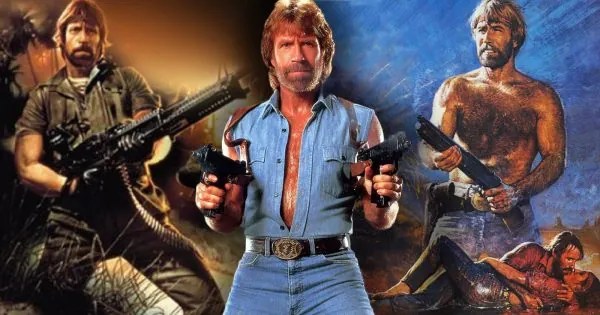
Chuck Norris being Chuck Norris. Credit: Fickeringmyth
Seriously, both Sam Kieth and Chuck Norris have helped me become the geek I am today. Thank you.
This was a short blog post, so it is what it is. Thank you for reading, following, and subscribing to Some Geek Told Me. It wouldn’t be New Zealand’s 5th least favourite website without your support.
Remember to walk your dog, read a banned book, go watch Heated Rivalry, and I’ll see you next week. Look after yourselves and your family.
Using the way-back machine, let’s travel back to 2022, where I wrote about various reviews of two television shows that I hadn’t seen at the time. I thought it was overdue to revisit this concept, but instead of writing about another television show, we’re going to look at a movie. This sounds like another excellent idea, like fire-proof matches, or ejector seats in helicopters.
We are spoiled for choice, as we are surrounded by a collection of motion pictures, whether they are shown at the cinema or through various streaming services. What an age to live in!
However, considering her spouse, the U.S. president, the Board of Peace chairman, the winner of the inaugural FIFA Peace Prize, the recent recipient of a hand-me-down Nobel Peace Prize, and convicted felony, Donald Trump, has been busy bombing Iran, I thought it would be fitting to look at Melania Trump’s movie, Melania.
Let’s establish something first. I can think of no conceivable reason why I would ever watch, Melania. Seriously, I don’t want to watch it. If I were on a long-haul flight, and I had no book, with the movie stuck on repeat, then maybe. A big maybe.
So, how does someone review a movie that they have no intention of ever watching? The answer is very simple; I read what other people have said. I had a staff meeting about this subject, and the consensus was that we should try to be fair and neutral. However, sometimes we can be biased, and today is one of those days.
Melania premiered on 29th January 2026, with a budget of US$40 million, and has made US$16.6 million worldwide, which technically makes it a flop. From what I understand, the film covers Melania’s movements and experiences around the last 20 days leading up to the second inauguration of everybody’s favourite president, Donald Trump. Sounds action-packed stuff, right?
And with that, let’s make it so!
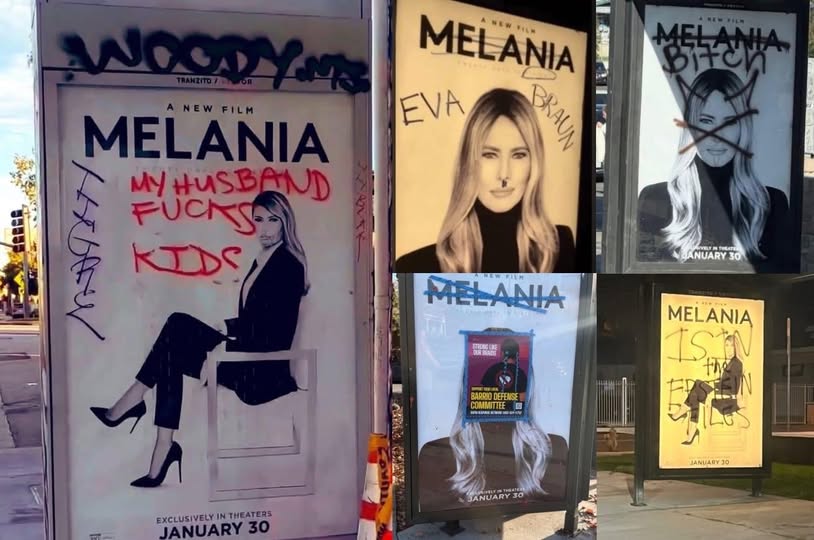
‘Melania’ movie posters vandalized across LA. Credit: Fox 11 News
I enjoy reading humorous reviews as much as the next person, so this was a fun experience for me, unlike smelling an open bag of Sour Cream and Chives from 500 m away. Gross.
Because you demand nothing but the best from this wayward literary venture, I have collected some of the funniest reviews for Melania and have tried to group them accordingly, because I can, and it looks neat. Also, I am aware of review bombing, so thank you in advance for the heads up.
Rotten Tomatoes: (Accurate for 5th March 2026)
11% Tomatometer
98% Audience Score
Coleman Spilde: Salon.com 7th February 2026
This documentary doesn’t absolve any sins; it highlights them. “Melania” taunts the viewer and takes glee in the assumption that they can’t do anything about it.
Joseph Robinson: Fish Jelly Films (YouTube) 6th February 2026
More PR campaign than personal portrait, Melania is an astonishingly dull documentary that masquerades as a glamorous immigrant story while offering little insight beyond carefully curated image-making.
Robert Denerstein: Denerstein Unleashed 4th February 2026
By any critical standards I’m familiar with, I’ll tell you that Melania isn’t much of a documentary; it’s more like a plush Life Styles of the Rich and Famous episode that bleeds into a chorus of booming triumphalism centering on Trump’s inauguration.
Amy Nicholson: Los Angeles Times 3rd February 2026
Melania” plays like a sizzle reel for her post-political (post-spousal?) future career in which she may rouse herself to be a guest judge on a reality competition show.
Calum Cooper: Cinerama Film 3rd February 2026
Melania is shambolic, putrid, pitiful garbage: A brazen, awkward, irredeemable infomercial that ignores truth and scrutiny in favour of performative humility. It’s not just wretched – it’s offensive to the collective intelligence of the human race.
Donald Clarke: Irish Times 31st January 2026
No good impression emerges of the former Slovenian model. No bad impression emerges either. Ratner’s film achieves, rather, a sort of passive distance – as you might get by pointing a camera, for close to two hours, at a waterfall or a wheat field.
IMDb: (Accurate for 5th March 2026)
1.4/10 rating
Sleepin_Dragon: 1/10 rating 30th January 2026
I can’t pretend I sat through this to the end. There was only so much I could take, and as we left the cinema, the screen itself was empty. That probably says everything I need to say about this dire ….movie.
meltymark: 1/10 rating 30th January 2026
I’m not a political person, politics are disgusting to me on both sides of the isle and I understand Melania is not a politician and deserves some respect and dignity like all other people… but
This was not only boring, but it was also incredibly painful to watch. It reminded me of the feeling you get when a boss or person in authority is bragging about themselves and you have to just take it and act like it doesn’t repulse you and your body language and whole being just can’t take it to the point of it making you physically ill.
andrew-lundberg-1970: 1/10 rating 31st January 2026
Everything about this film is pure tragedy, and not in a meaningful or intentional way. It’s dull, self-important, and completely devoid of insight, as if it mistakes moodiness for depth and emptiness for sophistication. The pacing drags, the storytelling goes nowhere, and whatever point it thinks it’s making never arrives. If I could give it less than one star, I would. Don’t waste your time, your money, or your patience on this hollow mess.
mbvqp: 1/10 rating 1st February 2026
Melania” is an utter WASTE OF TIME and MONEY-hands down the WORST MOVIE I’ve ever seen. Its disjointed plot, uninspired performances, and cringeworthy ridiculous dialogue make it a tedious chore to sit through. Rather than offering insight, it delivers a bland, utterly uninspiring experience that adds absolutely nothing to the broader discourse. Please do yourself an enormous favour and SKIP THIS DISASTER entirely. You’ll be glad that you did!
rppratings: 1/10 rating 5th February 2026
Melania is less of a movie and more of a painfully long exercise in boredom. Calling it hollow would be generous – this film is a glossy, lifeless shell with absolutely nothing inside. It drags, it stalls, it goes nowhere, and somehow still feels longer than its runtime. Watching paint dry would’ve delivered more emotional payoff.
The “story,” if you can even call it that, is buried under endless slow shots, awkward silence, and a level of stiffness that makes mannequins look expressive. Every moment that should feel revealing or meaningful instead feels cold, staged, and completely devoid of humanity. It’s not mysterious – it’s empty.
The dialogue is flat, the pacing is brutal, and the entire thing feels like a stretched-out PR video nobody asked for. By the end, I wasn’t frustrated, I wasn’t moved – I was just stunned that something so expensive-looking could be so painfully pointless.
Melania isn’t just bad – it’s spectacularly, monumentally dull. A beautiful wrapper around absolutely nothing. A total waste of time.
JoshuaT-253: 1/10 rating 19th February 2026
There is nothing harder to describe than a movie that is simply dull and uninteresting. I could sit here and describe how nothing happens for close to 80% of the time. Just a lady sitting around waiting for things to happen. She then travels from place to place multiple times in great and tedious detail with nothing to show for it than more waiting to travel to yet another place. It has almost zero content, nothing to hold interest or to connect with at all.
…No doubt there is a great documentary to be made about Melania Knauss, the ambitious model from out of Slovenia who married a New York real-estate mogul and then found herself cast in the role of a latter-day Eva Braun, but the horrific Melania emphatically isn’t it. It’s one of those rare, unicorn films that doesn’t have a single redeeming quality. I’m not even sure it qualifies as a documentary, exactly, so much as an elaborate piece of designer taxidermy, horribly overpriced and ice-cold to the touch and proffered like a medieval tribute to placate the greedy king on his throne.
…Last night, I left an empty chickpea can on my counter. When I came back 30 minutes later, small, black bugs had swarmed the tin and were crawling over my sink. I would rather relive that moment a hundred times over than have to watch another minute of the movie Melania.
…Cameras followed Melania in the twenty days leading up to Trump’s second Inauguration. About nineteen of them seem to have been devoted to planning Melania’s big event, a candlelit dinner for MAGA backers and bagmen, including Bezos. Chef Chris’s menu opens with a “golden egg and caviar,” an event planner says. At this point, you think that “Melania” has broken the fourth wall, that the far-too-obvious symbolism is about to be acknowledged and then punctured or dismissed. But, no, the gilded hors d’œuvres are for real, even if, as a metaphor, they are at best incomplete. With “Melania,” you get the brittle shell, but none of the rich internal goo that makes for a compelling portrait.
…People will tell you to remember that this is just a documentary and that’s why it’s boring, but that’s just plain wrong. This documentary shows no historical value other than “my husband became the president.” I would not show this to my children because I see no role model. If I want to show my kids a documentary, I’d choose one with a more empowering figure, someone they can look up to and strive to be.
…I cannot recommend “Melania” as a good movie or even an interesting one. It has the feel of a soothingly looped AI screen saver, a trance-inducing spell where nothing matters so long as your high heels aren’t hurting your feet. Yet against all odds, there is a truth in her SUV-to-tarmac-to-SUV-to-tarmac insularity. Future historians will be glad to have “Melania” as a lens into this moment in time. Like everything she touches, it’s a costly artifact.
…Melania is a documentary that never comes to life. It’s a “portrait” of the First Lady of the United States, but it’s so orchestrated and airbrushed and stage-managed that it barely rises to the level of a shameless infomercial. Is it cheesy? At moments, but mostly it’s inert. It feels like it’s been stitched together out of the most innocuous outtakes from a reality show. There’s no drama to it. It should have been called “Day of the Living Tradwife.
Melania many go down in history as one of the least revealing documentaries ever made. But if you’ve never watched the First Lady get on and off a plane, Brett Ratner’s got a movie for you.
…Melania is like a horror film with nothing scary in it, or a crime thriller with no twists, or an action film with no fighting. It is a documentary with no interest in exploring its central figure beneath her most superficial level. It is incomprehensibly empty.
But I think the best review I have discovered is this:
Couldn’t hear what the hell was going on during the film because the whole theater was filled with dudes in red hats sucking each other off load af.
Now, in the interests of being fair, not every single Melania review is negative; some, in fact, praise the film. Different strokes for different folks, though. Should you watch the film or give it a pass? I would give it a hard pass, not even to watch it, to decry it.
It goes for a general rule of thumb for any comic, book, movie, TV show, computer game, music, chip flavour or documentary; don’t listen to anybody else’s review or opinion. If you want to experience a product, go and experience it yourself; that way, you’ll always know. If you like it, then praise the living hell out of it; if not, then go the other way.
To quote one of the 90’s greatest arse-kickers, “The power is yours!”
And that, dear friends, brings another jam-packed blog post filled with mystery to a close. Also, regardless of what happens with Trump’s non-war with Iran, Iran is due to play all of its group games of the FIFA World Cup in the United States, with the first game against us, New Zealand, on 15th June. Who knows if Trump will let them into the country or if there will be a boycott? Who knows?
Thanks again for reading, following, and subscribing to Some Geek Told Me. Please don’t forget to walk your dog, read a banned book, go watch The Creator, and I’ll see you next week.
Hi, and welcome back. After last week’s mammoth undertaking of writing six entries for We Didn’t Start the Fire: 1961, I thought I might take it easy and discuss something light, like the Epstein Files. My wife asked me what I was blogging about this week, so I told her. “That’s a can of worms, isn’t it?” she replied. It certainly is.
I know, it’s not the most positive and uplifting story, now is it? However, this blog has been rattling around in my mind for some time now, so I apologise because I needed to get it out.
As usual with the hard-hitting journalism you have come to expect from yours truly, today’s blog post will not cover Jeffery Epstein per se, as in his crimes. His convictions for sex trafficking and child sex offences have been thoroughly covered and documented by seasoned and professional writers and reporters, not some part-time blogger from the South Pacific.
No, I would like to discuss the obvious aspects of the Epstein Files, which I believe need attention. Clear? Great, let’s see how I go with this.
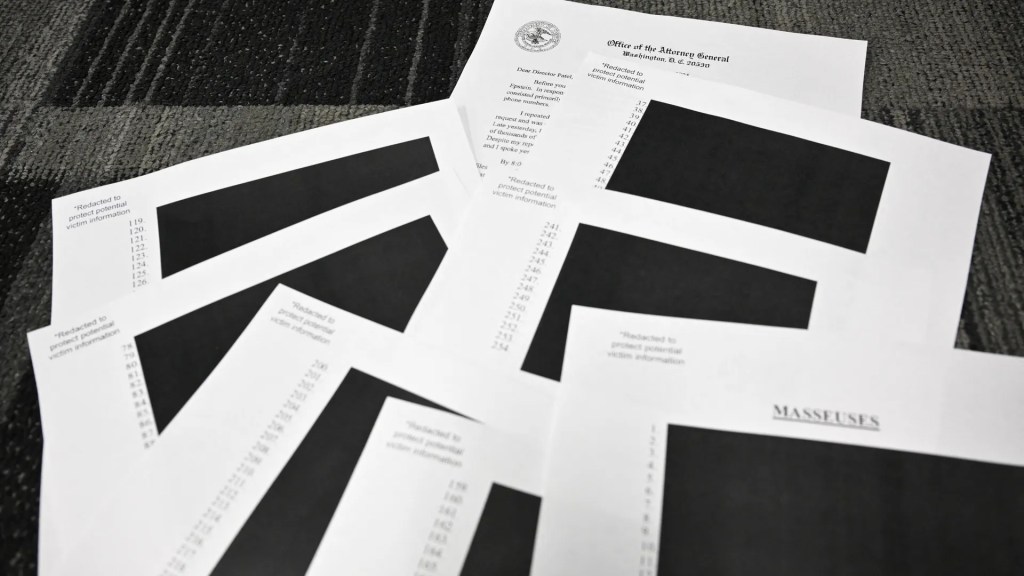
Redacted documents are shown in a photo illustration in Washington, D.C., on Dec. 19, after the Justice Department began releasing records from its investigation into convicted sex offender Jeffrey Epstein. Photo: Mandel Ngan/AFP via Getty Images
Even in New Zealand, the Epstein Files continue to garner attention. Case in point, with my ugly mug. Now, if you don’t know what the Epstein Files are, then you have been either living a lonely lifestyle or living with the bliss of ignorance, and I don’t know which is better.
The best way for me to explain the Epstein Files is, sadly, to go back to Epstein himself. In a nutshell, for decades, Epstein was a high roller investor who, among other things, operated a sex trafficking business, where he located underage boys and girls, as well as adult women, and transported them to his ultra-elite friends/associates for sex crimes. Epstein died of suicide in 2019, while awaiting trial.
As for the Epstein Files, here is another crash course. They are a collection of records, numbering over six million documents, that relate to Epstein’s activities and crimes. They contain videos, documents, images, and emails that connect Epstein to some of his ultra-elite club of mates. There is more to it, but these are the bare bones of the situation.
Recently, the United States Department of Justice released over three million documents from the Epstein Files, where some were heavily redacted, while others were not redacted enough. With me so far?
Some of the names in the files were not a surprise, because they have been linked to Epstein for decades. The media and the public have known about the connections, just not what those connections were exactly. Essentially, just what their relationship to Epstein actually involved.
In the public court, any person named in the Epstein Files is guilty of sex crimes. However, before people are lynched because their name appeared in the Epstein Files, it pays to remember two things: under the law, people are innocent until proven guilty; and just because someone’s name is mentioned in the files, it does not mean they are automatically guilty.
To my understanding, Jon Stewart, Stephen Colbert, and even Pikachu were mentioned in the Epstein Files. However, at least to me, there is a colossal difference between being mentioned in Epstein-related emails, like the three above, versus being connected to Epstein’s activities, or at the very least, being in some way associated with him.
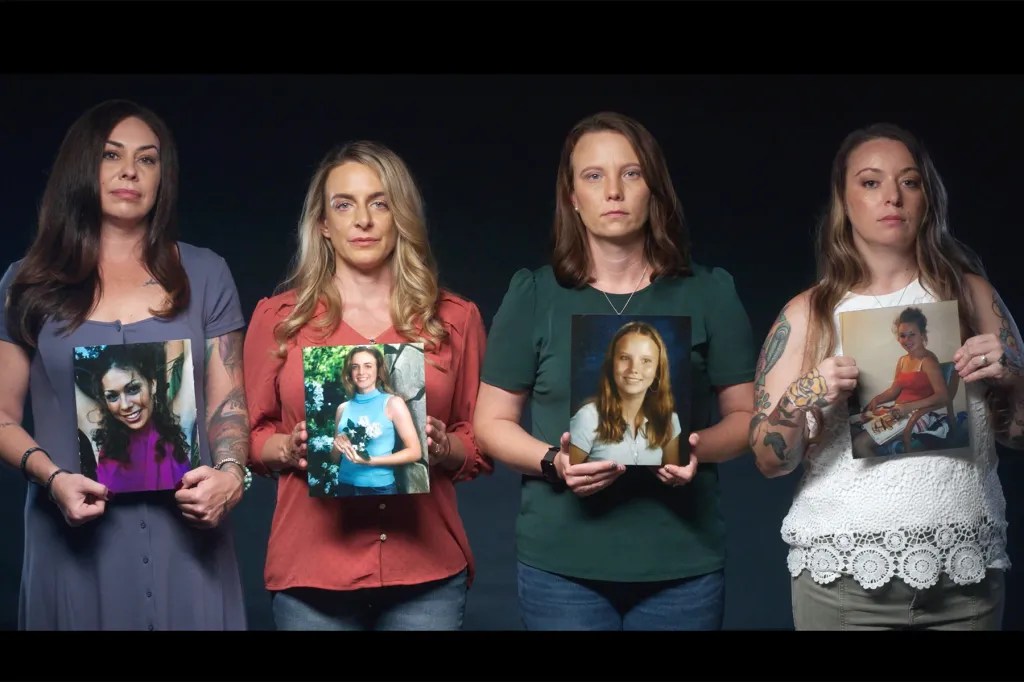
Epstein survivors are seen holding photos of their younger selves, as some of them recite their ages when they met first met Jeffrey Epstein in a video from World Without Exploitation published on November 16, 2025. (World Without Exploitation)
Over the last two weeks, we have seen several people resign from their jobs because of internal and external pressure applied to them over their connection to Epstein, no matter how innocent, benign, or small that connection was. Just the fact that they were in some way linked to Jeffrey Epstein means they are trying to save their image by resigning. Fair enough.
Some of these people I feel quite bad for, as they may not have done anything wrong. You are welcome to disagree with me, but I haven’t finished my rant. There’s another group of people I feel sorry for, and that is the survivors. Which, of course, guides us to the other names in the files; the real names of the people we really should care about.
Like the difference between being mentioned in emails versus being involved with Epstein’s activities, there is also a difference between being mentioned three times in the files versus being mentioned 3,000, 30,000, or even 300,000 times. For me, it’s the number of times they are mentioned in the files, which is the concern.
Two people could be mentioned in the files, with one person being mentioned four times, while the other person’s name appears 38,000 times. In my opinion, out of the two, I would want to know why the second person is mentioned 38,000 times in the files connected to a children’s sex trafficking network.
Should the person whose name is mentioned five times in the files be investigated? Sure, by all means, yes. However, before we do that, we should talk to the person mentioned 38,000 times first.
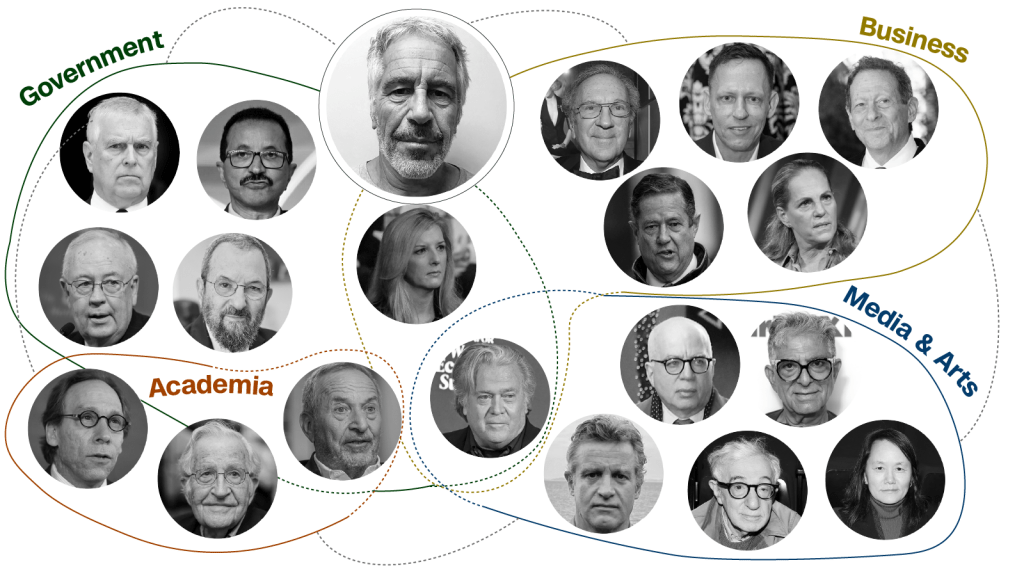
This transition brings us to the bulk of my blog: Are any people ever going to be prosecuted, or at least investigated for possible sex crimes, related to the Epstein Files? I could be wrong about this, but Epstein’s operation lasted for decades, and in all of that time, only Epstein himself, Ghislaine Maxwell, and Jean-Luc Brunel have been prosecuted over the crimes. In saying that, over the new information release, Thorbjørn Jagland (Former Norwegian prime minister) and Peter Mandelson (British politician) are now facing charges.
Sources: Getty Images; Medium; US House Oversight Committee Graphic: Alex Leeds Matthews, CNN
The sheer scale of the operation, and the famous and ultra-rich people involved in it, just boggles my mind that it went on for so long. It’s a stain of accountability that the perpetrators of these crimes have managed, potentially, to hide their crimes behind wealth, titles, and friends, believing that laws and rules do not apply to them.
That, because of their positions in the world, their belief that they can prey on the most vulnerable members of our society, children, and suffer no consequences or punishment, flies in the face of every adult trying to teach children about consequences.
The Epstein Files remind us of the worst of humanity, on what fame, money and power can bring to a person, to create a concept that they are untouchable; beyond the law, because laws don’t apply to them. They are like a real cabal of supervillains that Batman or Daredevil have finally unmasked to the world.
It also reflects the best of humanity. This is taken in the form of the survivors, their families, and other people supporting them, and advocating for justice, regardless of who and what they are up against.
They are some of the new role models for the 21st century; they are unrelenting in their crusade for the truth, and they are bringing all of the people involved with Epstein’s sex trafficking activities to justice. Because if we can’t, then what’s the point of retelling stories of good triumphing over evil, if we can’t make it a reality?
Maybe I’ve read far too many comic books and watched far too many movies, but I still have hope for us as a society that these people will not be able to hide and cover up their crimes, no matter who they are. Even though a lot of things still amaze me in this world, it’s staggering that releasing survivors’ names and redacting possible abusers’ names, somehow, in the eyes of the DOJ, is bringing justice to the matter, and not the other way around.
Again, just because someone’s name has appeared in the files does not mean they are guilty of anything; it’s the number of times they are mentioned that is worth our attention. Because of this, at the very least, these people whose names appear thousands of times, whether they were abusers or enablers, need to be investigated.
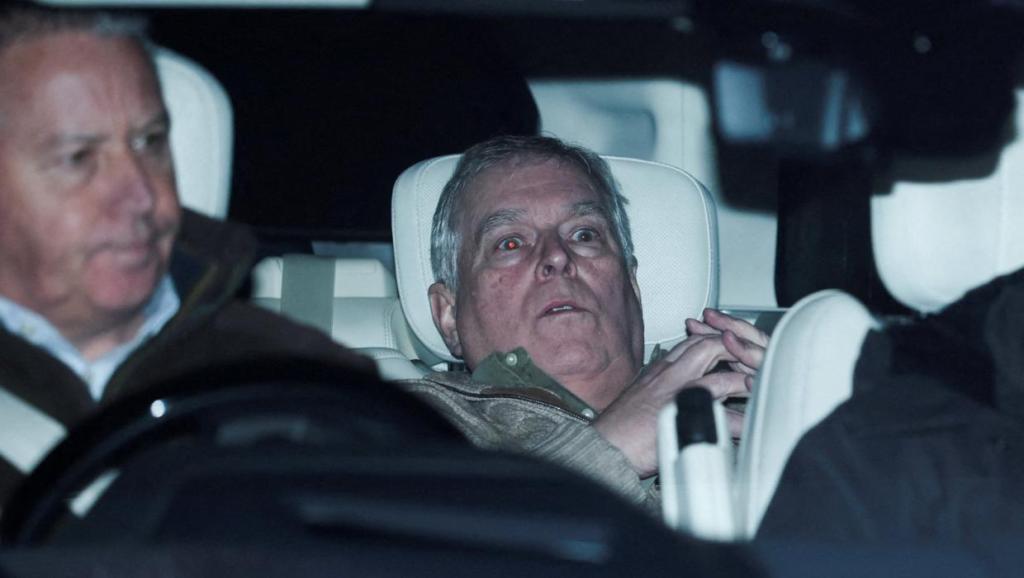
Andrew Mountbatten Windsor, younger brother of Britain’s King Charles, formerly known as Prince Andrew, leaves Aylsham Police Station on a vehicle, on the day he was arrested on suspicion of misconduct in public office, after the U.S. Justice Department released more records tied to the late financier and convicted sex offender Jeffrey Epstein, in Aylsham, Britain, February 19, 2026. Photo: Phil Noble/Reuters
This web of corruption needs to be untangled, and this poses an interesting question: What if someone you have admired for years, for whatever reason, is directly linked to Epstein’s criminal activities? A few months ago, I saw a video with a woman on a panel with two other people, and she explained the reality of the situation. I can’t remember her exact words because I couldn’t find the clip again, but I’m going to paraphrase what she said, mixed with some of my own.
It shouldn’t matter whether we admire the people in the files or not, but the names of the abusers and enablers need to be released. Whether they are Republicans, Democrats, conservatives, liberals, actors, politicians, models, CEOs, scientists, musicians, writers, professors, or sports stars, it doesn’t matter; burn the whole house down. Release the names, or at the very least, law enforcement agencies around the world need to start doing something with the information, and to show people that these crimes will not go unpunished.
With the recent arrest of Andrew Mountbatten-Windsor (Former Duke of York), it pays to wonder if his investigation will bring about more charges levelled against him, but also, will other abusers and enablers be taken down as well?
These horrible threads need to be followed, regardless of where they lead, whether to a CEO’s office or the Oval Office; this needs to happen, for the sake of our own collective morality. The world will never move on from the Epstein Files until every single abuser and enabler has been found, investigated, and if need be, prosecuted and convicted. Nothing, absolutely nothing short of this will be any closure to survivors and their families.
And after that wonderful and positive thought, I shall take my leave of you, amazing people. Thanks again for reading, following, and subscribing to Some Geek Told Me. Please don’t forget to walk your dog, read a banned book, keep watching the T20 Men’s Cricket World Cup, and I’ll see you next week for some running. Cool bananas.
The historic project that skilled historians have written content about for decades has returned for 2026! Yeah, baby, Some Geek Told Me’s We Didn’t Start the Fire is back for its 14th entry. Sometimes I think about all of the various things I could have been doing, instead of writing about this, and I realise that it’s been totally worth it; much like not watching Melania.
If you’re new to this blog, then welcome! It’s always nice to have a new pair of eyes to gaze upon your weekly endeavour to make the world a better place, one badly written blog at a time. If you’re a veteran of this project, then be most welcome as well! You’ve been very patient with this project, but just in case you have skipped any of the previous entries, here they are:
For the last entry, we discussed 1960, so you don’t need to be Sherlock Holmes or Batman to deduce that this blog post will be breaking down the 1961 historical references in Billy Joel’s We Didn’t Start the Fire. Get ready, because we’re going back to 1961! And with that, away we go!
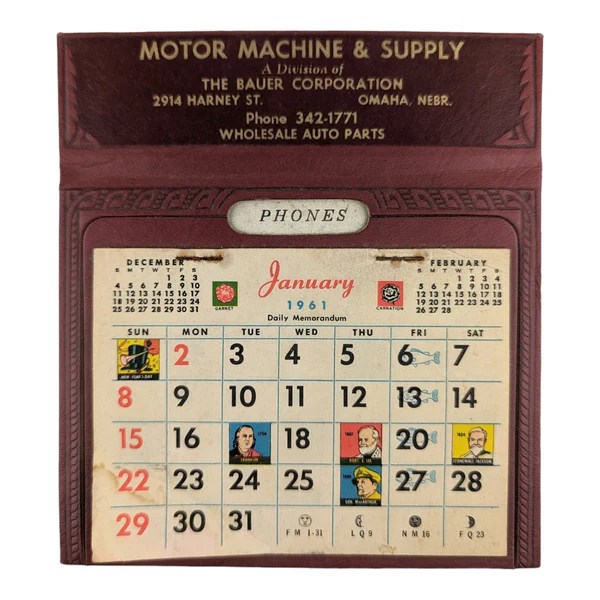
Vintage original 1961 Omaha, Nebraska Advertising Calendar for Motor Machine & Supply. A Division of The Bauer Corporation. Photo: Avid Vintage
Hemingway
I’m sure at some point in your life, you have heard of Ernest Hemingway at least once. Hemingway was a writer and journalist who penned novels, such as The Sun Also Rises, A Farewell to Arms, For Whom the Bell Tolls, Across the River and into the Trees, and The Old Man and the Sea, which won the Pulitzer Prize for Fiction in 1953.
Hemingway was also a correspondent and covered the Greco-Turkish War, Spanish Civil War, Sino-Japanese War, and World War II, as well as volunteering as an ambulance driver in World War I. Throughout the 20th century, Hemingway was lauded by critics and readers, and his cult status has only grown over the years.
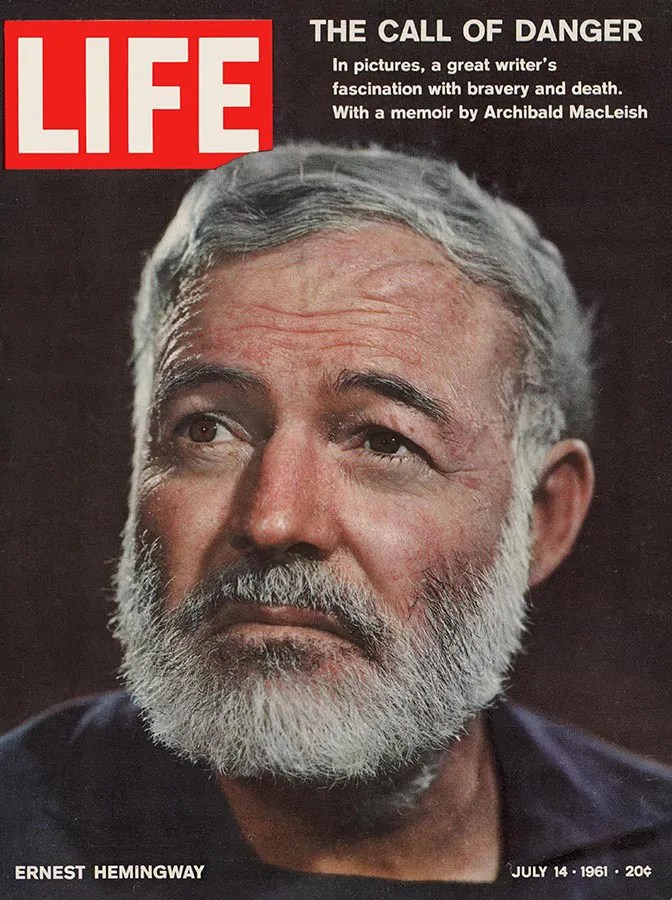
Now, I would love to say that Hemingway was mentioned in the song because of some amazing literary work, but sadly, that’s not the case. On 2nd July 1961, aged 61 years old, Ernest Hemingway killed himself at his home in Ketchum, Idaho. His death sent shockwaves around the world, impacting various parts of society.
For a modern example, many celebrities have committed suicide over the last 20-30 years. Still, for a famous writer to have died by their own hand, the most relevant example is Hunter S. Thompson, author of Fear and Loathing in Las Vegas, The Curse of Lono, and The Rum Diary, who killed himself on 20th February 2005.
LIFE Magazine Cover: 14th July 1961. Credit: LIFE Magazine
Eichmann
Given the rise of far-right parties and policies around the world, it is poignant to discuss Adolf Eichmann. Eichmann was a member of the Nationalsozialistische Deutsche Arbeiterpartei, or in English, the National Socialist German Workers’ Party. If those two names don’t register a response, you may know the party by its informal name: The Nazi Party.
Yes, Eichmann was not only a Nazi, but he was an SS (Schutzstaffel) officer and one of the architects of the Holocaust. After the end of the Second World War, Eichmann fled to Argentina in 1950, since he was implicated during the Nuremberg trials. Because of Argentina’s history of rejecting extradition, Mossad agents captured Eichmann in 1960, and he was taken to Israel to stand trial.
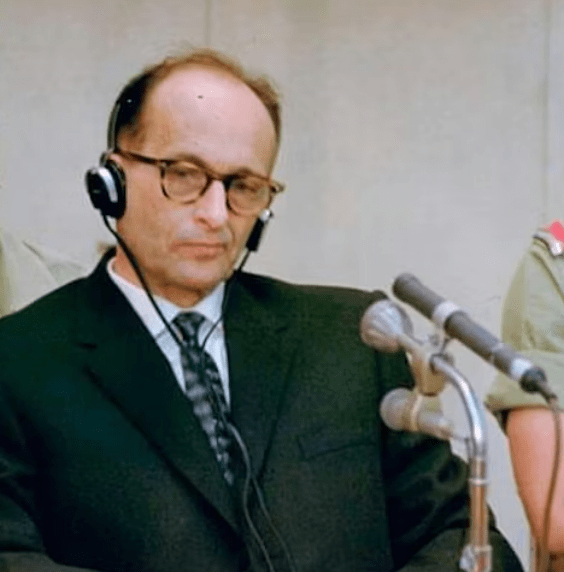
His trial, which became known as the Eichmann Trial, lasted from 11th April to 15th August 1961, where Eichmann faced 15 charges under Israel’s Nazis and Nazi Collaborators (Punishment) Law. He was convicted of 12 charges, but he was only partially convicted of the other three. Eichmann was sentenced to death via hanging, which was carried out on 1st June 1962.
You can be the judge whether it’s a positive or negative thing, but for a contemporary equivalent, we have a large selection of war criminals to choose from. This includes Slobodan Milosevic, Saddam Hussein, Charles Taylor, Radovan Karadžić, Nuon Chea, Théoneste Bagosora, and so many more.
Adolf Eichmann at his trial in Jerusalem (1961). Credit: Public Domain
Stranger in a Strange Land
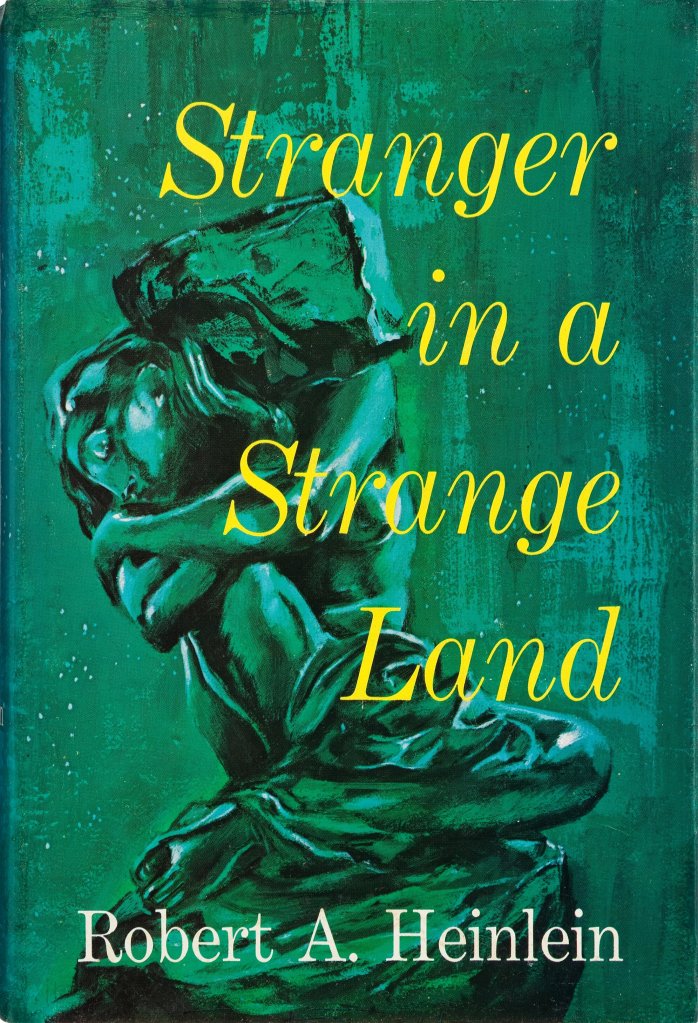
This is the first and last book reference for 1961s time in the sunshine. Written by Robert A. Heinlein and released in, surprise, surprise, 1961, Stranger in a Strange Land was famous throughout the United States and around the world. This science fiction book was about a human who was discovered on Mars and was taken back to Earth, along with the implications.
Stranger in a Strange Land divided critics and fans because of the taboo topics like religion, culture, free love, misogyny, rape, and other topics. Heinlein later explained that the book aimed to expose hypocrisy and to challenge societal norms. The book was very controversial at the time, but it also introduced terms like grok and waterbed into the lexicon.
The legacy of Stranger in a Strange Land can be seen in various media like The Ministry for the Future, The Sparrow, and The Expanse, though maybe you could think of better examples.
Dust jacket of the first edition of Stranger in a Strange Land by Robert A. Heinlein. Credit: Wikipedia
Dylan
Dylan refers to Bob Dylan, the great American singer-songwriter. A few events happened to Dylan in 1961, with the first being that he had already been performing for a couple of years before he moved from Minnesota to New York in January 1961 to pursue his musical career.
Dylan managed to meet Woody Guthrie, his musical idol, as well as playing at venues around Greenwich Village, which helped him make a name for himself. This led him to feature on one of Carolyn Hester’s albums, and as the story goes, his work on the album attracted the attention of John Hammond.
Hammond was the album’s producer, and on 26th October 1961, he signed the 20-year-old Dylan to Columbia Records. This was Dylan’s first contract, and his debut album, Bob Dylan, was produced for about $400. The album sold about 5,000 copies, with Dylan on his way to stardom and a long-time relationship with Columbia Records.
For a modern example of Bob Dylan’s historical signing, I don’t have an answer. I mean, do I present someone like Bob Dylan, who signed their first contract 30-40 years ago, and they are now a household name? Or could it be someone signed their first contract only five years ago, and they are on their way to stardom? You be the judge, unless you can provide some examples of your own.
Bob Dylan performs at New York City’s the Bitter End, 1961. Credit: Sigmund Goode/Michael Ochs Archive/Getty
Berlin
Back in 1961, Germany was divided into two countries after World War II: West Germany and East Germany. At the time, the Cold War was also in effect, with Western Europe and NATO on one side, and the Soviet Union and the Chinese bloc on the other side. West vs East, Blue vs Red, Capitalism vs Communism, with West Germany and East Germany as a site for that proxy war.
Berlin was in East Germany, but the city was split into three Western sectors (American, British, French) and one Eastern sector (Soviet). Thus, we had West Berlin and East Berlin. The Federal Republic of Germany (West Germany) was backed by Western countries, while the German Democratic Republic (East Germany) was backed by the Eastern (Communist) bloc.1
And for me personally, there was no other symbol that represented the Cold War more than the real Iron Curtain, the Berlin Wall.
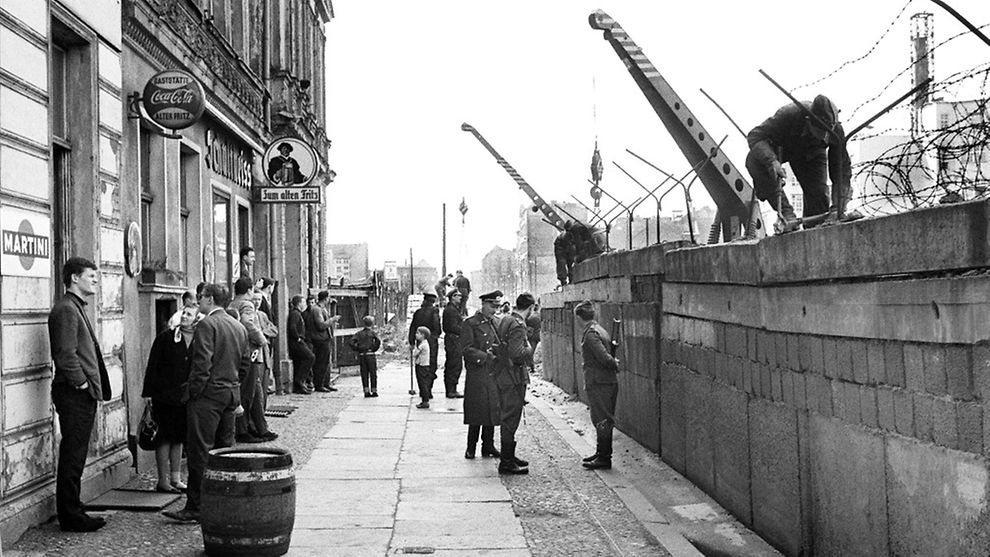
East Germany started construction on the Berlin Wall on 13th August 1961, and it was infamous. It was a 155 km concrete barrier that surrounded West Berlin, which was lined with anti-vehicle trenches, bunkers, watch towers, and guards. It also served as a de facto border between the two countries, covering 111.9 km along the border.
The function of the Berlin Wall was to stem the flow of people from the East to the West. Records show about 140 people were killed crossing or attempting to cross the wall, though this number is not a true reflection of the human cost. The legacy of the Berlin Wall was that it lasted for 28 years, until after communism in Central and Eastern Europe fell.
During the Peaceful Revolution, on 9th November 1989, sections of the Berlin Wall fell, allowing unimpeded migration from East Germany to West Germany, and vice versa. The Fall of the Berlin Wall was a watershed for world history and paved the way for the reunification of Germany on 3rd October 1990.
Building the Berlin Wall on 13 August 1961. Overnight families and friends were divided. Photo: Bundesregierung/Lehnartz
Bay of Pigs Invasion
And speaking of the Cold War, let’s discuss Cuba. Do you remember the Cuban leader, Fidel Castro, from the 1959 blog post? Well, I gave a spoiler that he would return, and he’s back! Castro and his mates had transformed Cuba into the first communist country in the Western Hemisphere, but more importantly, Cuba was only a stone’s throw from the United States.
Since the Cold War was trending at the time, the United States did not like having a communist country so close to its shores. Relations with Castro had soured, and with Cuba building stronger ties with the Soviet Union, but also the injustices that were happening in the country, the U.S. government decided to overthrow Castro.
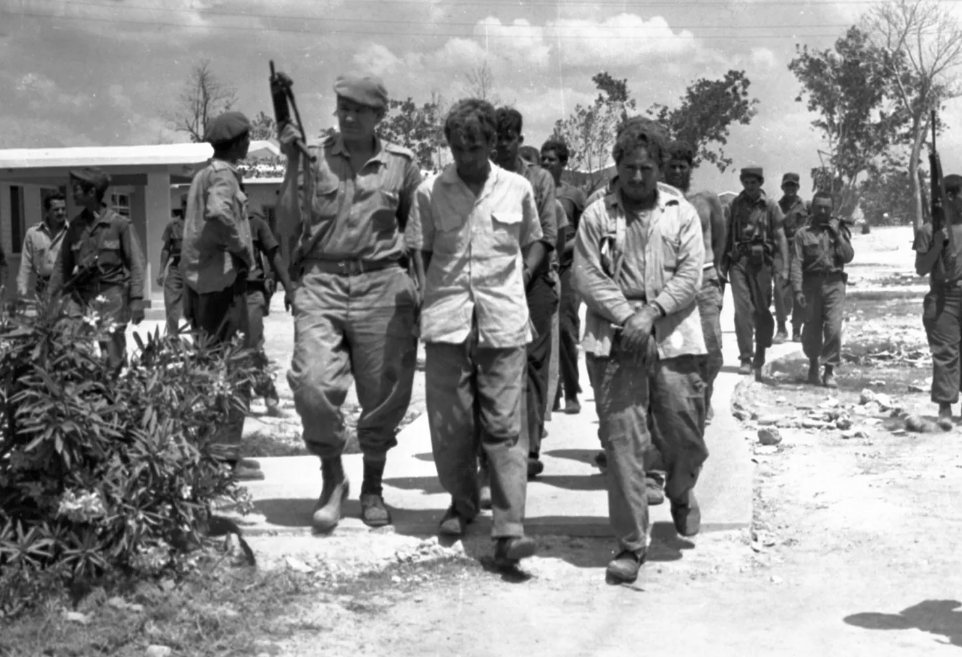
This, of course, led to the Bay of Pigs Invasion. Backed by the U.S. Navy, U.S. Air Force, and the C.I.A, ex-Cuban exiles (mainly the Cuban Democratic Revolutionary Front, and Brigade 2506) were trained to invade Cuba and oust Castro from power. On 17th April 1961, after bombing some Cuban airbases, the invasion was launched at several sites.
The main invading site was the Bay of Pigs, or Bahía de Cochinos, which is located on the south-central coast. The invasion lasted for a few days before they needed to retreat and evacuate. The American-backed Cubans were under-resourced and ill-prepared, as well as being outnumbered and outmanoeuvred by Castro’s forces. It was a humiliating and humbling experience for the U.S. government, as the invasion failed spectacularly in front of the international community.
Operation Gideon in 2020 (the Failed Coup in Venezuela) and the Russian Invasion of Ukraine in 2022 were the two best/worst examples of a failed invasion in the 21st century, where the objective was to overthrow a foreign government, or at least, to capture the leader of another country. Yes, technically Russia have not lost, but it’s been nearly four years, and they are no closer to winning.
U.S.-backed Cuban exiles captured during the failed Bay of Pigs invasion, Cuba, 1961. Credit: Sovfoto/Universal Images Group/Shutterstock.com
So for 1961, we covered a writer’s death, a war criminal’s trial, a book, a musician, a wall, and a failed invasion. Like all of the years discussed in the song, their events and legacies are still with us today in 2026. Will 1962 be busier or crazier? Tune in next month, same Bat-time, same Bat-channel.
That brings another wonderful blog post to a close. Wait, I don’t think anybody has described this blog as wonderful! Thanks again for reading, following, and subscribing to Some Geek Told Me. If you’re looking for new social media to follow, then I would recommend my Twitter and Mastodon accounts, pretty please.
Please don’t forget to walk your dog, read a banned book, go and talk to a five-year-old, and if you ever repeat any of the information I write about, and someone asks you where you discovered it, just say, ‘Some Geek Told Me.‘ I’ll see you next week, and look after yourself.
1 We have briefly discussed the“Communist Bloc” in East Germany, with the We Didn’t Start the Fire: 1953 blog post, featuring that historical reference. Please read it for more details, I dare you!
As fans of this highly informative blog will undoubtedly know, I’m somewhat of a fan of William Shakespeare’s work. I’ve talked about his work before on this beloved blog, but one day I will discuss the villains, because, in my humble opinion, there’s nothing greater than a Shakespearean villain.
Now, you could be sitting on public transportation as you read this, or maybe in the bathroom, and you would be forgiven if you think I’m going to talk about Shakespearean villains today. Alas, no, not today.
I’m bringing up the term because, once again, in my humble opinion, someone last weekend exhibited actions worthy of being called a Shakespearean villain.
Well, that’s not fair to Iago and Richard III, is it? I mean, they could challenge Trump to a battle of wits, but … oh, you know the rest.
I was honestly going to write a Tour of the Solar System post, but each time I looked at the news, the OCD in me wouldn’t let it go, so here we are.
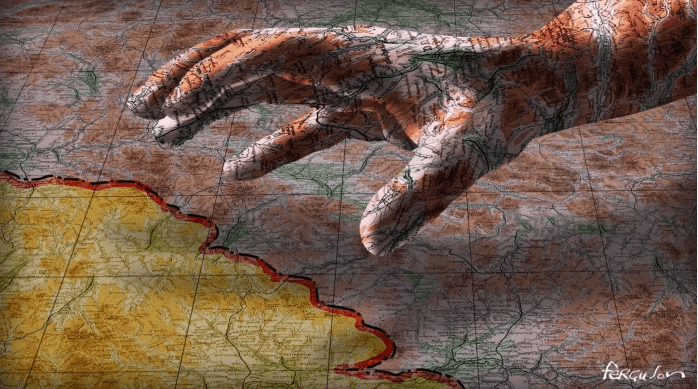
Unless you have been living in a shoe, I’m discussing the capture of Venezuelan President Nicolás Maduro and his wife Cilia Flores by United States forces, after they attacked the capital, Caracas, on 3rd January. At the latest count, at least 57 people were killed in the attack. Like I said last week, it’s an interesting way to start 2026.
This also covers Trump claiming that the United States is going to “run” Venezuela, along with opening up its massive oil reserves and selling them, in addition to prosecuting Maduro in the United States court system.
I’m not here to debate the legality of what Trump has done, purely because I’m not an expert in international law. If I were, my topics would be far more exciting! Trump’s actions can be measured against the United Nations and/or any other international legal body. However, my Spidey-sense has been tripped, and is ringing like a school fire alarm.
Today’s rant will be of interest to roughly only 8% of my readers, but it’s about my hopes and fears regarding the situation.
Credit: Ferguson
Let’s start with the most obvious statement, which I’m going to repeat:
Venezuela is better off without Nicolás Maduro
I’m not going to sit here and list the crimes Maduro has committed against Venezuelans, as they are well documented. Along with former president, the late Hugo Chávez, Maduro has run Venezuela into the ground, and the shenanigans involving various Venezuelan presidential elections have also been well-reported.
So, I’m going to reinforce this point that Venezuela is better off without Nicolás Maduro. They are free of his extrajudicial killings and suicidal financial policies. This, of course, seamlessly brings us to my hopes for Venezuela, because I want to focus on the country first.
My hope for Venezuela is, quite simply, that Maduro’s removal will give them hope. Depending on how much money is created from the sale of the oil, if it happens, of course. Regardless, I hope it is pumped back into the country and its people.
I came across a social media post from a man in Venezuela who stated that people in the West do not understand what it was like living under Maduro’s regime, as it was a time of great despair. He mentioned that if Trump wants to take their oil, he can, because at least the money would bring some financial benefit to the country.
That’s tough to read and argue against.
Venezuela is better off without Nicolás Maduro
My other hope for Venezuela is with the new President, Delcy Rodríguez, the former Vice President. Assuming the US government “allows” her to function in this role, or the opposition leader, María Corina Machado, does not take the job, or if she is just waiting for Maduro’s return, there are a lot of expectations and responsibilities now resting on Rodríguez’s shoulders.
Rodríguez has been involved in previous policies, but not all of them, that have crippled the country, so she’s in a rare position to redeem herself and the government, to Latin America, the world, but mainly to Venezuela. Her government can craft new laws that will lift Venezuelans, and not continue with the same or more Maduro-style policies that have damaged the country.
With Maduro’s removal, there is a possibility that the country could divide and fall into civil war, or it could bring the nation together with steps toward a brighter future for Venezuela.
I hope that Rodríguez is up to the task, because the country has suffered enough. She can bring them hope against inflation and corruption. What’s going to happen? I have no idea, but we can still hope.
Venezuela is better off without Nicolás Maduro
Alright, those are my hopes for Venezuela, so what are my fears?
As I mentioned just before, Venezuela could tear itself apart if it and the world are not careful, but I believe the country will survive. It will be rough, but no worse than the years under Maduro, which have given them a new strength. I am not too fearful for Venezuela’s future. No, it’s what happens outside of Venezuela that gives me fear.
I said before that this blog post is not going into the legality of Trump’s actions towards Maduro, or “seizing” control of the country, or threatening to sell off Venezuela’s oil reserve. Far better writers, reporters, activists, lawyers, and journalists can do that.
Are Trump’s actions illegal, and will the US government suffer no consequences, or are Trump’s actions legal? I don’t know which one scares me the most. This has led me to a revelation; regardless of whether Trump’s actions were legal or not, and whether Venezuela will thrive or not, I fear that this is only the start.
Let’s begin with the United States, because it’s an obvious choice. We are going to play a game and pretend there will be no legal consequences from the international community for Trump and the US government over Maduro’s capture and “seizure” of Venezuela. With me so far? Great.
So, if Trump is allowed to capture a leader from a sovereign country, because that country has resources that the United States needs, what is stopping them from doing it again? What happens if they decide that taking control of Greenland needs to become a reality? While they are at it, maybe taking over Panama to secure the Panama Canal seems like a great idea to strengthen American interests.
Hell, let’s secure Cuba, Haiti, as well, though, securing Colombia is another super idea too.
The problem here is that no matter how it is justified, the world may look at the United States and think, “If they’re allowed to do it, so are we.”
Following Trump’s and the United States’ new foreign policy of 21st-century annexation, we can only guess at what the upcoming chaos could be. Imagine if Russia captured Volodymyr Zelenskyy, or China secured Lai Ching-te, because they followed the United States’ example.
Israel takes Palestine, China annexes Taiwan, Nepal, and Bhutan, and Russia absorbs the former USSR states of Ukraine, Moldova, Estonia, Latvia, Lithuania, Georgia, Armenia, Azerbaijan, Kazakhstan, Kyrgyzstan, Tajikistan, Turkmenistan, and Uzbekistan.
Maybe North Korea decides to unite the Korean peninsula and invades South Korea. Maybe India decides that Sri Lanka and Bangladesh are better off under Indian control. Maybe Sudan thinks that South Sudan has had its fun and its time to come home.
It could be that Egypt takes North Africa, while Nigeria absorbs West Africa. In other parts, Central, East, and Southern Africa descend into carnage. As for the Arabian Peninsula and the Persian Gulf, that could be a royal rumble, with land and oil on the line, involving multiple nations.
Malaysia, Indonesia and the Philippines could start fighting over islands, with Australia and New Zealand concluding that all Pacific Island nations need to be under their control, to protect everybody’s future.
Where would this strategy of a real-world game of Risk take us? Carving up regions in Antarctica and the Moon? The new land-grab would destroy everything and everyone. Trump just has to do it again, or another world leader decides that their neighbour has a nice pair of resources, and it starts. This, of course, is assuming that no country fights back.
Another possibility is what if one country decides that another country would be better off under their control, but the surrounding countries, or even the world, steps in to stop them? What if a conflict between two nations spills over and engulfs the region or the world? I mean, Russia is already knocking on NATO’s door.
It’s possible this could happen. Highly unlikely, but still possible. I fear that the wrong leaders are surrounded by the wrong people, being told the wrong advice, that if they don’t act and claim what they want from another country, someone else will.
To me, this is madness. It’s just madness. I don’t know how this is going to work out, because I doubt even Trump knows. All I know is that this, if it hasn’t already, could go sideways very quickly.
I’m glad that Venezuela has the opportunity to move forward, since the country has been lacking hope for a long time. Whatever happens next, I hope that world leaders, even my government, whom I trash-talk a lot, manage to calm the situation down, so clearer heads will prevail. Maybe.
Well, this is not exactly how I thought we would be starting 2026, but like many things in life, they are out of our hands; though it’s still nice to know that not everybody agrees with the sparkly new Donroe Doctrine. To quote Pope Leo XIV, “War is back in vogue. And the zeal for war is spreading.”
What are your thoughts on the situation? As always, please let me know.
Thanks again for reading, following, and subscribing to Some Geek Told Me. Before I depart to have UMC1 and UMC2 kick my arse once again in Monopoly, I thought I would continue the depressing tone of 2026.
I’d like to remind you all to continue discussing the situations I’ve mentioned, as well as those in Palestine, Congo, Sudan, and Ukraine. The ongoing riots and the deaths of protesters in Iran also warrant our attention.
The universe loves and needs opposites, which are being played out across the Earth. War has Peace, Hate has Love, Ignorance has Compassion, Apathy has Empathy, and Sour Cream and Chives has Salt and Vinegar, so don’t lose hope. And with that, I’ll see you next week.
Midnight has passed, and we can say goodbye to 2025 and welcome its new sibling, 2026. Hopefully, 2026 will be kinder to everybody than 2025, so let’s see if we can make that happen.
I’m still on holiday, so don’t expect too much from this well-articulated blog post. My Twitter and Mastodon accounts are still running, so drop by and roll your eyes at the content, because…I don’t really have a decent answer, sorry.
I’ll be back on Monday, 5th January, so until then, Happy New Year and look after yourselves.
Jingle bells, Batman smells, Robin laid an egg, The Batmobile lost its wheel, And the Joker got away!
From everyone in the Some Geek Told Me office, we wish everybody a Merry Christmas and a Happy New Year! I know how it sounds, but thank you for reading, following, and subscribing to this blog. This venture could not exist if people didn’t read it, so thank you.
As you know, I have started my holiday break away from New Zealand’s 5th least favourite website, as I’m going to get my arse kicked playing board games with UMC1 and UMC2. I’ve taught them too well. My Twitter and Mastodon accounts will still have daily posts, as I plan them three weeks in advance, so visit them if you miss me.
Look after yourselves and your family, and I’ll see you in 2026.
I had originally planned to write about something else this week, but after learning about a particular piece of news, the die was cast, and the decision was no longer mine to make.
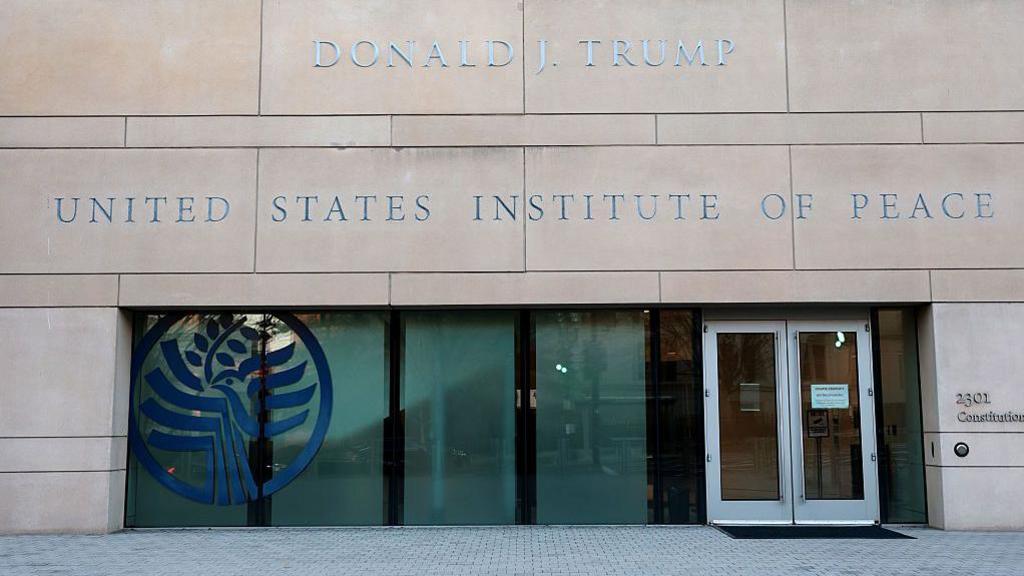
Just in case you’re a very unlucky person and have not been following the news, there has been a recent development in the administration of peace in the United States. The United States Institute of Peace in Washington, D.C., which is run by the United States Congress, has been unselfishly renamed after everybody’s favourite world leader, as the Donald J. Trump Institute of Peace. Naming a building after yourself is rather classy, especially if it’s a government building.
This compelling and authentic move reflects President Trump’s desire for peace in the United States and around the world; except for Yemen, the European Union, Venezuela, Portland, Iran, Mexico, Canada, Chicago, and Greenland, but they don’t count.
To prove this point, President Trump was awarded the inaugural FIFA Peace Prize recently, which in no way panders to his fragile ego. That is just garbage, spun by fake news outlets that believe in accountability and justice.
Like President Trump, I am very humble, and I would like to acknowledge TheDaily Show for giving me the idea for this informative article. Credit where credit is due. On behalf of 100% of the staff at Some Geek Told Me, I would like to thank The Daily Show for the inspiring idea, as well as President Trump for pursuing peace, because he can stop wars that don’t even exist! What a role model!
Credit: BBC & Getty Images
Because President Trump is a bastion for peace in a world that seems divided by President Trump, I have collected some other clinics, institutes, academies, and other learning centres that could be renamed, like the Donald J. Trump Institute of Peace.
Sadly, I was born outside of the United States and away from President Trump’s bigly protection, so some of my selections may not be familiar to my international readers, but my New Zealand readers will understand.
And with that, let’s turn the page and begin now.
The Christopher Luxon Entitlement Academy
The Winston Peters Centre of Cultural Diversity
The Brian Tamaki LGBTQIA+ Appreciation Institute
The David Seymour Food Nutrition Clinic
The Pauline Hanson Centre of Islamic-Awareness
The Vladimir Putin Geography Academy
The Kim Jong Un Institute of Human Rights
The Viktor Orbán Centre for Free Speech
The Alexander Lukashenko Institute of Democracy
The Bashar al-Assad Anti-Corruption Institute
The Benjamin Netanyahu Anti-Genocide Centre
The Xi Jinping Institute for the Protection of the Uyghurs
The Nigel Farage Centre of Tolerance and Inclusion
The Kristi Noem Gun Safety School
The JD Vance Museum of Furniture
The RFK Jr Centre for Preventable Childhood Diseases
The Marco Rubio School of Fawning and Grovelling
The Sean Duffy Centre of Climate Change
The Lauren Boebert Gender-Affirming Clinic
The Marjorie Taylor Greene Institute for Autism Awareness
The Ted Cruz Free Abortion Clinic
The Elon Musk Family Planning Clinic
The Jeff Bezos Centre for Independent Book Sellers
The Bob Iger School of Business Ethnics
The Patrick W. Smith Academy of Accountability
The Darren Woods Museum of Environmental Disasters
The Anthony Hopkins Academy of Method Acting
The Neil deGrasse Tyson Flat Earth Centre
The Jonathan Pie Anti-Profanity School
The Alex Jones Meditation Institute
The Nicholas Cage Institute of Marriage Counselling
The Rassie Erasmus Centre of Sports Ethnics
The Neymar School of Acting
The Cristiano Ronaldo Centre for Modesty and Humbleness
And I would like to close with a post humorous choice:
The J. R. R. Tolkien Memorial Institute for Concise Writing
So, how did I do? Did I miss any selections? As always, please let me know.
I hope you liked this week’s rant as much as I liked writing it. Next week will be the last proper blog post before I head off into the sunset for a much-needed break, since running a highly successful blog takes its toll.
Thanks again for reading, following, and subscribing to Some Geek Told Me. Please remember to walk your dog, read a banned book, watch the Supergirl trailer, and I’ll see you next week.
It’s been a long time since I celebrated a real achievement on this highly popular website. I’ve made over 250 critically acclaimed blog posts that are the envy of all the Flat Earth creators, and produced numerous content where people have actually left comments; sometimes it’s been two people! I know, it’s quite impressive, so please, don’t be intimidated too much.
The point is that today marks an important milestone in the history of New Zealand’s 5th least favourite website. On 29th April 2024, we entered the 1950s in the We Didn’t Start the Fire historical references blog posts, and today we finally enter the 1960s!
To remind any newcomers about this amazing life choice, I have decided, in my utterly infallible wisdom, to explain all of the historical references in Billy Joel’s song, We Didn’t Start the Fire. Why would I do such a thing when various people have already done this with a greater degree of professionalism? The short answer is that I love the song and history, so what’s another thing I can add to the Mountain of Eternal Regret?
I have said this before, but this blog keeps me off the streets and out of bars, so my wife can keep track of me.
The list of previous fascinating and informative blog posts can be found here:
We have now entered the third decade of historical references in the song; what a ride! This entry is shaping up to be quite chaotic, so you need to strap yourself in, because we are going back to 1960! Prepare yourself!
Credit: Rosners’/Pinterest
U-2
The incident happened during the Cold War, and it had nothing to do with an Irish rock band. U-2 refers to the Lockheed U-2, which is a high–altitude reconnaissance aircraft that has a single engine and a single pilot. The aircraft, known as a spy plane, is operated by the Central Intelligence Agency (CIA) and the United States Air Force (USAF).
In what can only be described as a plot for a spy movie, on 1st May 1960, an American Lockheed U-2 spy plane took off from Pakistan and was eventually shot down over the Soviet Union by the Soviet Air Defence Forces.
The pilot, Francis Gary Powers, was taking aerial photographs when his aircraft was hit by a Soviet surface-to-air missile. Powers parachuted away and was captured by Soviet forces, then put on trial for espionage. The entire affair was a huge embarrassment for the CIA and USAF, as well as for the United States Government, and resulted in the cancellation of an upcoming summit in Paris between the United States, the Soviet Union, the United Kingdom, and France.
Two modern examples of spy plane scandals were the 2001 Hainan Island incident between the United States and China, as well as in January 2024, when Ukrainian forces shot down a Russian Beriev A-50U airborne early warning aircraft, which serves as a surveillance and command-and-control platform. Truth is stranger than fiction.
The remains of the Lockheed U-2 are now on display in the Central Armed Forces Museum, Moscow, Russia. Credit: Alan Wilson.
Syngman Rhee
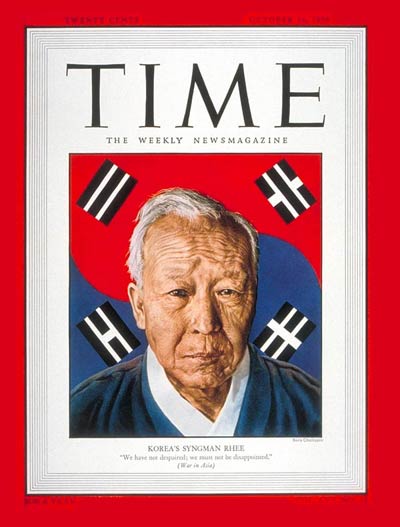
Syngman Rhee (1875-1965) was a dedicated advocate for Korean independence during the Imperial Japanese annexation of Korea. Rhee eventually became the first President of South Korea, who served from 1948 to 1960. He also wanted to reunify the Korean Peninsula.
If you’re a student of history like me, you would have noticed that Rhee was president during the Korean War. It could be argued that Rhee might have made this list for other reasons, but the reason he actually made the list in 1960 was related to the South Korean presidential election.
Rhee was looking to be re-elected for a fourth term, but his opponent, Chough Pyung-ok, died one month before the election. This meant Rhee was re-elected unopposed, and government reports said that he received 100% of the votes from a 97% voter turnout.
The focus turned to the race for the Vice President, which resulted in Rhee’s running mate Lee Ki-poong defeating Chang Myon, 79.19% to 17.51%. This caused widespread calls of election fraud and authoritative claims against Rhee and Lee, which led to the massive civil unrest and Rhee’s resignation and exile to the United States.
For some contemporary examples of politicians resigning because of public protests; would be the Arab Spring (2010-2012), Viktor Yanukovych (2014), Sigmundur Davíð Gunnlaugsson (2016), Serzh Sargsyan (2018), Omar al-Bashir (2019), Sheikh Hasina (2024), KP Sharma Oli (2025), Milos Vucevic (2025), and so many more.
TIME Magazine Cover: 16th October 1960. Credit: TIME Magazine/BORIS CHALIAPIN
Payola
This entry is completely believable, and it’s a wonder it didn’t happen sooner. The term payola refers to an illegal practice in the music industry, where a payment is made to a commercial radio station to play a song, but the station does not disclose the payment.
In 1959, a federal investigation was launched into the practice, which turned into a gigantic scandal. Over 330 DJs and radio hosts admitted to taking bribes to play certain songs over others. This led to criminal charges being levelled at radio hosts like Alan Freed, who was extremely popular at the time.
These investigations caused several people to lose their jobs and careers. An estimated $263,000 was accepted in bribes.
A modern equivalent would be in 2006, when a payola scandal involving record companies Universal Music Group, Sony, and Warner Music Group. Record labels were paying various radio stations for radio play, with settlements being over $30 million, after a New York Attorney General’s investigation.
Credit: Daily News
Kennedy
This is a straightforward reference involving John F. Kennedy being elected as the 35th president of the United States, defeating Richard Nixon. Kennedy served as President until his assassination in 1963. He was the second youngest person to be elected as President of the United States at 43 years old.
For comparison, Donald Trump was 70 years old when elected in 2016, Joe Biden was 78 years old and 61 days when elected in 2020, and when Donald Trump was elected for a second time in 2024, he was 78 years old and 220 days, making him the oldest person ever to be elected as President; just to point that out.
John F. Kennedy campaign button Button from John F. Kennedy’s 1960 U.S. presidential campaign. Credit: Encyclopædia Britannica
Chubby Checker
Cover songs can either work so well that the new version completely eclipses the original, so that people tend to think the cover is the original, or the cover song just simply exists, and pales in comparison to the original, or the cover and original both benefit from each other’s success. Trust me, I am going somewhere with this.
In 1960, Ernest Evans, aka Chubby Checker, released a song called, The Twist, which in fact was originally released by Hank Ballard and the Midnighters in 1958. The original was very popular in its own right and did very well in sales, but the cover sent the popularity of The Twist into the exosphere.
One of the reasons Chubby Checker’s version was popular, to the point that even if a nightclub in New Zealand played the song, people would know what to do, was the dance, or rather, a dance craze.
“Doing’ the Twist” twisted people on the dance floor around the world, but also helped in the United States, at least, by producing a dance that was popular with black and white audiences during the “Jim Crow” racial segregation era.
Naming cover songs that were successful and popular is one thing, while naming songs that introduce a dance craze is another. However, combining the two is a little more difficult, so the best that the staff at Some Geek Told Me can think of is Macarena, which is a remix from the Bayside Boys in 1995. You know the dance, I bet you do. Hey Macarena, ay!
Psycho
I’m not a huge horror movie fan, but I can sit down and enjoy one. Granted, I may have my eyes shut or my hands covering my face, but I have seen the next entry. This, of course, reminds me that one day I’m going to write about my favourite movie directors.
Like the seamless transition of Sméagol to Gollum and back, this brings us to Psycho. I can’t remember where or when I first saw the movie, but I sure as hell remember what happened in it. Released in 1960, Psycho is arguably one of director Alfred Hitchcock’s most famous works.
Shot in black and white, Hitchcock gave audiences a ride they didn’t see coming, in the form of a ground-breaking masterpiece in Psycho, which covered a range of themes like guilt, madness, voyeurism, family, and morality. Not only did Psycho change thriller and horror movies forever, but movies in general as well.
With a budget of only US$800,000, it collected US$50 million at the box office, as well as being nominated for four Academy Awards, with Janet Leigh winning a Golden Globe for Best Supporting Actress in a Motion Picture.
For previous movie references in the song, Psycho did not win multiple awards, but rather changed how movies are made; it was revolutionary. In that vein, some modern movie comparisons include Pulp Fiction (1994), Toy Story (1995), Saving Private Ryan (1998), The Blair Witch Project (1999), The Matrix (1999), The Lord of the Rings Trilogy (2001-2003), and Avatar (2009).
Belgians in the Congo
Belgians in the Congo means exactly what you think it does. For some much-needed context, in the 1870s, King Leopold II of Belgium was keen to have a Belgian colony in the Congo basin, which is located in Central Africa.
By the 1880s, he had effectively set up shop in the Congo basin. The people of the Congo Free State, as it was known, suffered atrocities with an estimated 1.5 million to 13 million deaths at the hands of Leopold’s policies and greed.
In 1908, the annexation became official, with the Congo Free State being rebranded as the Belgian Congo, thus becoming a colony of Belgium. The Belgian government began a massivesuppression of rights and economic exploitation of the region and of its people.
After years of a fierce independence movement, the country achieved independence from Belgium on 30th June 1960. The new country was renamed The Republic of the Congo, then changed to Zaire, and changed again, to the Democratic Republic of the Congo, which is what it is called today.
After independence was achieved, the transition resulted in civil unrest, protests, and conflicts, which became known as the Congo Crisis (1960-1965). Various wars were fought, with Belgian troops trying to regain control of the country, as well as other factions and countries that were involved. This eventually served as a proxy war between the United States and the Soviet Union, just like the Korean War, Vietnam War, Angolan Civil War, and Afghan–Soviet War.
The Democratic Republic of the Congo went on to suffer wars in the shape of the First Congo War (1996-1997) and the Second Congo War (1998-2003), which resulted in a combined death toll of about 5.65 million people. The Second Congo War was the deadliest war since World War II, with parts of the country still being unstable because of armed conflicts, mainly between the Congolese army and the M23 rebel group.
Belgian paratrooper secures the restaurant terrace of Léopoldville (Kinshasa) airport, during Congo Crisis, July 1960. Credit: Unknown.
So, for 1960, we covered a spy plane being shot down, a South Korean president, a music scandal, a US president, a musician and his dance craze, a movie, and an armed conflict. Obviously, all of these references happened before I was born; however, it always pays to understand why things happened and how they are related to the world today. Well, to me at least, because I love history.
Thanks again for reading, following, and subscribing to Some Geek Told Me. My Twitter and Mastodon accounts are still producing daily data about the world, so please drop in to say hello.
Please remember to walk your dog, read a banned book, Grok is not always correct, and I’ll see you next week.
I have not used enough self-deprecating humour for a while, so I had an idea. An awful idea. I had a wonderful, awful idea! I know what to do. I haven’t revisited this topic since last year, so perhaps it’s time for a review. In case you haven’t read the first thrilling instalment, here it is.
I left my job in April, and since then, I’ve been thinking about the possibilities that are open to me in the future, even though I have found a new job. Yay! Although I have mentioned this before, it’s nice to have a job that pays well and that you love, but you also need to have an interest in it and be qualified. That last part is awkward, at the very least.
The idea is that there are some jobs I feel I would be great at (on paper at least), and there would be some jobs, let’s face it, I would suck at. I have a certain set of skills that are only of interest to me, but can they be transferable to any job? Doubt it.
To reinforce what I said in the first blog post about this positive and uplifting subject, I will detail three jobs that I believe I would suck at. Whether I describe myself as being terrible, horrible, ill-suited, unqualified, or just wrong, these jobs would not be for me. This does not cover the pay rate; it just looks at whether the job would be a woeful match for me.
Also, please remember that if your job may appear here today or at a later date, that’s fine for you because I’m not saying your job sucks. I’m just saying your job would suck for me since I’m awkward. If you can do any of these three jobs, you’re a better person than I am!
So without further delays or hair combing, let me explain how I would be swiping left on these three jobs. And away we go!
This is a rather specific job, and I will explain, so just hear me out. I’ve done data entry before, years ago, of a sort. It wasn’t 100% data entry because the day was broken up with other things that went with the job, but the bulk of it was data entry.
I struggled with the job, and one of the reasons I outlived the monotony was being able to leave my little office to venture out into the big, brave world. Now, take a similar job, where the job is just data entry, but I get to work from home, and it would be a disaster.
Let’s take stock of the potential problems I would face: raiding the pantry every 15 minutes for a snack, checking my emails every 3 minutes, constantly checking on whether any parcel or letters have arrived (only on Monday, Wednesday, and Friday), doing the washing and dishes, stopping to read a book or comics, checking on various new sites about the world, and checking updates on sport scores.
Regardless of whether I needed to pick the boys up from school or not, once they were home, forget about me achieving any work. And if my wife were at home, the tiny fraction of work I would be getting done would only be getting smaller. A two-minute conversation about lunch would turn into 45 minutes of talking about cartoons.
Working as a data entry operator from home would be a massive mistake for me, because I get too distracted while I’m on the computer. Just think about how long it’s taken me to write this section. I would never need to quit the job, because I would have been fired before that. I would suck as a data entry operator working from home.
Fencer
Now, before you start asking questions, no, I’m not talking about the sport or reselling stolen property. Oh no, I’m referring to the job of actually building and installing fences. You see, I’m not exactly a handyman, as I have great difficulty with building and making things.
My mum pointed out to me once that if there was a long and complicated way of doing something, you can bet that I would do it. This would transfer over to building things, as I would just stuff it up.
And even if you took away the fact that my fences would look like they were designed by a 4-year-old, or an earthquake has installed them, there is the social side to it. I can only imagine going around different farms, building fences, and talking to various farmers.
Talking to farmers is not the problem; it would be listening to the same stories and the same jokes, time and time again. I’m not sure how I could handle building wayward fences, with gaps in them like the government’s budget, but also sounding surprised and interested, when I’ve heard the same story or the same jokes from someone, every time I see them.
I can’t hide my emotions while I wear my face; it’s a giveaway to people, so not only would I be building poor, shoddy, and terrible fences, with holes in them that a rhino could slip through, I would go crazy listening to the repeated stories and jokes told by the same people. I would suck as a fencer.
Baker
This entry can be explained and broken down into three sections, because I would suck being a baker. Firstly, getting up so I can be at work by 4 am would get old extremely quickly. By 9 am, I would have to tape my eyelids back so I wouldn’t close them and fall asleep. Being sleep-deprived and working with blunt and sharp objects is a guaranteed way to injure myself or someone else.
I would have to go to bed before the boys did, which would be a sure-fire way to damage my marriage. Secondly, being a baker, you need to be able to follow recipes and work out the same calculations. By this, I mean I would be working with the same ingredients, but just halving or doubling the recipe. Every day. I won’t lie to you, I would have mental, emotional, and physical issues with that.
I would have to follow someone’s recipe, without ever fundamentally changing it, or perhaps, ever creating anything new. This leads me to the third reason: I’m not very good in the kitchen. Yes, I can prepare dinners, which are just variations of each other, but baking? No way. Even if I was smart enough to follow the recipe, the Good Lord did not seem to bless me with baking skills.
Somehow, someway, I would just mess it up. Whether it was baking cookies, cakes, buns, scones, or anything else would be a disaster. Cooking toast? Check. Boiling soup? Check. Steaming vegetables? Check. Cooking pasta? Check. Baking chocolate chip cookies? Um…just sack me, and get it over and done with.
I would never win any reality TV baking show. Not that I would be kicked off in the first round, oh no, I would not have been good enough to be on the show in the first place. I would suck as a baker.
Again, I’m very sorry if I have mentioned any of your jobs. It’s not you, it’s me. And that’s another blog post for another week.
Thanks for reading, following, and subscribing to Some Geek Told Me. I mean it. This project helps me to scoop out the negativity and replace it with something else, less smelly, and a lot crunchier.
Please remember to walk your dog, read a banned book, 15-year-olds are still children, and I’ll see you next week, because we are finally entering the 1960s. You know what I’m talking about. Please say that you do.








 SOME GEEK TOLD ME
You must be logged in to post a comment.