This is the day you’re looking for! Yes, today is 4th May, Star Wars Day! May The 4th Be With You has become a day set aside to celebrate everything about Star Wars, whether it’s movies, books, comics, toys, board games, cosplay, TV shows, and everything else!
It’s also amazing to see the 20th-anniversary Star Wars: Episode III-Revenge of the Sith re-release has been outselling new movie releases with pre-sales tickets! That’s crazy because it’s not like they will give Anakin and Padmé a happy ending. Right? Right?
As always, Star Wars Day is important to our family, so my wife, UMC1 and UMC2 decided to celebrate by creating art, but this time, it was on the kitchen blackboards.
On the left-hand side, we have my wife’s art. It’s filled with Star Wars quotes and sound effects, along with a Power Droid speaking Aurebesh saying, “Gonks Rule!”
On the centre blackboard, we have UMC2’s artwork which depicts a Rancor fighting some Gamorrean guards, at Jabba’s Palace. There’s a lot of blaster fire and explosions, because some stupid person built a blaster large enough for a Rancor to use, and gave it to them!
On the right-hand side blackboard, we have UMC1’s offering, which displays A New Hope’s Death Star battle scene, with X-wings and Y-wings attacking the Death Star, which is defended by TIE fighters.
As for me, I’m just showcasing my Star Wars: The High Republic novel collection. This does not include the comics and manga series, which are kept separately. Escape from Valo is there, it’s just been pushed to the back.
I’ve been enjoying The High Republic series, and I’m sad to see it end. I’m just waiting for the last five books to be published as paperbacks so I can finish the saga. This reminds me that I STILL have not written that High Republic blog post, I keep saying I’m going to do. I need to get on to that.
For Star Wars Day, we will probably wear our Star Wars t-shirts, read some Star Wars books or comics, play Star Wars: Risk, or watch some Star Wars content, or maybe all of it!
How are you celebrating Star Wars Day? Please let me know. Ok, that’s it for me. Enjoy this wizard day and I’ll see you on Monday.
Here we are again at the start of a new movie preview, brought to you by the mind of the person who writes about many pointless things. Well, discussing movies, science, politics, and comics is never meaningless.
As I have previously mentioned, because repeating things helps me to remember to do things, I plan to watch more comic book movies at the cinema, because if we don’t go to watch them, they’ll stop making them. Maybe that would make many people happy, but I am not one of them.
My last preview/review was Captain America: Brave New World, so for our next movie preview instalment, we are headed back to the Marvel Cinematic Universe (MCU) with the Thunderbolts*. It opens in New Zealand on Thursday 1st May, as the 36th MCU movie. I’m about 98% sure Darkhawk or Sleepwalker will not make a cameo, but hope springs eternal.
Our only cinema is having an advanced screening of Thunderbolts* on Wednesday 30th April, and yours truly has secured a ticket. Like always for my films, I walked into the cinema to buy the ticket, mainly because I didn’t want to pay the extra fees via their website.
Anyway, a strange pattern happens when I purchase an advanced ticket. I casually mention I’m going to be writing a review about the movie, and name-drop my website. The staff member will stare at me blankly, so I stop talking, pay for the ticket, and leave as fast as The Flash running to an all-you-can-eat buffet.
So, who or what are the Thunderbolts?
For those unfamiliar with comic lore, here’s a brief history lesson: the Thunderbolts first appeared in The Incredible Hulk #449 in 1997. They later received their own monthly title, which launched three months after their debut with Thunderbolts #1. I own both of these issues because I’m a geek. They even had a cool slogan: “Justice, like lightning!”
Marvel had previously done a company-wide crossover event in 1996, in the form of Onslaught. By the end of the storyline, The Avengers and The Fantastic Four had disappeared, and for all intent and purposes, the public thought they were dead.
Enter the Thunderbolts, a new heroic super team to step into the void left by the absent heroes. Before I go on, one thing I love about comics is when something major happens, whether it is the appearance of a new character or the return of an old one, a death, revelation or a twist, and the company does not advertise it. It sneaks up on you, and as you turn the page, it hits you. Such is the case with the Thunderbolts.
The twist was that the Thunderbolts were not the superheroes they made out to be, but rather the Masters of Evil, a supervillain team, primarily slugging it out with the Avengers. Led by Baron Zemo, their goal was to gain access to national and international secret information and to further their mission with organised crime and world domination.
Another plot twist came when some Thunderbolts members started to dislike acting as superheroes, but rather liked being a superhero. After internal strife, the team eventually came under the control of the government and became a government-sponsored team, filled with reformed supervillains, similar to DC’s Suicide Squad.
The film will, to the best of my knowledge, mainly focus on characters we have met before, whether they are from a television show or a movie. These include Yelena Belova (Florence Pugh), Bucky Barnes (Sebastian Stan), John Walker/ U.S. Agent (Wyatt Russell), Antonia Dreykov / Taskmaster (Olga Kurylenko), Alexei Shostakov / Red Guardian (David Harbour), Ava Starr / Ghost (Hannah John-Kamen), and Valentina Allegra de Fontaine (Julia Louis-Dreyfus). The exception is Lewis Pullman’s Sentry, who I think plays the film’s antagonist, via the Void.
The film’s budget is about $200 million, so the expectations are high. Aside from TV’s Loki, I think this is the MCU’s first film that is centred around villains, but I could be wrong.
Ok, I have waffled on long enough, it’s time for the preview!
Thunderbolts #1 (1997) Credit: Marvel Comics
Am I looking forward to watching Thunderbolts*?
It’s a stupid question, I know, but I need to ask it. I’m looking forward to it as much as Popeye likes to eat spinach. To keep my promise of supporting comic book movies, I need to keep buying tickets. Plus, it’s a cool way to escape for two hours.
I have the habit of mentioning this, but it’s the truth. I don’t have Disney+, so I haven’t been able to watch key TV shows like The Falcon and the Winter Soldier, which have introduced some of these characters. Having said that, I’ll go back to Wikipedia and read the summary of the show. That sounds great, doesn’t it?
Because there is an ensemble cast, the dialogue will hopefully be sharp and witty. Hopefully.
I do have a small reservation about how they are going to handle and introduce the Sentry, a somewhat-Superman-type character into the MCU. His power level is off the chart, but his mental instability is another matter altogether. I hope they get it right, but is there a correct way to introduce a mortal god?
The box office did not support Captain America: Brave New World very well, which seems to be the new standard for superhero movies. Will Thunderbolts* suffer the same fate, or will it fare better?
What is the movie about?
According to Marvel.com, the premise is this:
Marvel Studios assembles an unconventional team of antiheroes—Yelena Belova, Bucky Barnes, Red Guardian, Ghost, Taskmaster and John Walker. After finding themselves ensnared in a death trap set by Valentina Allegra de Fontaine, these disillusioned castoffs must embark on a dangerous mission that will force them to confront the darkest corners of their pasts. Will this dysfunctional group tear themselves apart, or find redemption and unite as something much more before it’s too late?
What can we expect?
The running time is 126 minutes, which means it just surpasses the two-hour mark, so be sure to pace yourself with drinks. I’m not sure what the rating is for other countries, but Thunderbolts* has received a PG rating in New Zealand, and I’m uncertain how to interpret that.
I can imagine the plot is going to be fast, because of the size of the cast, but also, the team has to break up before it’s reformed to save the day. I expect to see some great fight scenes, whether the Thunderbolts are fighting themselves or other people.
Since I don’t know The Falcon and the Winter Soldier very well, I can only guess that Valentina Allegra de Fontaine, is like an Amanda Waller-type character; a government director who has no time, patience, or respect for the members of the team, other than getting the job done; or if she is playing her own game. Who knows?
As always, since this is an MCU film, there will be references and cameos to appease the die-hard super fans, though I wonder how many I’ll miss!
Do I have concerns?
I’ve said this before, but I will always have concerns about superhero movies. Will they stick to the source material as much as possible, or will they stretch their creative limbs and do something outrageous? Is that a positive or negative thing? Who knows?
Here are some of my questions:
How accessible will Thunderbolts* be to viewers who have not seen the Disney+ TV show, The Falcon and the Winter Soldier?
Does the plot make sense?
Will the movie reference Captain America: Brave New World, or hint at The Fantastic Four: First Steps?
Why are the Thunderbolts involved in the first place?
Can the absence of the Avengers in the movie be believed?
Will the introduction of the Sentry be a success or failure?
Will other MCU villains be making appearances?
Will Taskmaster have a larger role than in Black Widow?
Can they truly explain how the Sentry got his powers?
How does Bucky fit into the plot? He is a free citizen, correct?
Where is the film’s continuity in the MCU?
Do the Thunderbolts have a choice to be in the team?
Does Valentina Allegra de Fontaine betray the Thunderbolts?
Will any of the Thunderbolts go free at the end of the movie?
Do the Thunderbolts only protect the United States?
There are probably more questions rattling around in that tiny mind of mine, but they will have to wait.
I’ve not read or heard any reviews about the movie, so I’m still optimistic about it, but I’ll let you know my thoughts next Monday with the review. Before I go, I want to address two things. The first is that my last day went better than I thought it would. I didn’t cry once!
The second thing is that I know the world is currently a scary and sad place. News keeps pouring in about Palestine and Ukraine, coupled with tariffs, the cost of living, and everything else. I get it. My preview about a movie that millions of people will never see, seems a touch removed from reality. I get it, I really do.
Just hang in there, I mean it. Look after yourselves and your family, and if possible, other people.
Thanks once again for reading, following, and subscribing to Some Geek Told Me. Remember to walk your dog, read a banned book, and hang in there, and I’ll see you this weekend for two special blog posts. It’s the start of May, so try and guess what’s happening!
As the tariffs continue, so do the days of our lives. In our daily routines, we can choose what we do, including dissecting a 36-year-old song, even though it has been analysed before.
Because you’re a clever person who likes to get at least 10 hours of sleep and loves eating Vegemite, you would have realised I’m talking about one of my dumbest ideas, explaining the historical references in Billy Joel’s We Didn’t Start the Fire.
I started this pointless project in February 2024, and I’m still stuck in the 50s. I’ll probably retire before I finish it. For those unfortunate people who have missed out on the past entries, fear not, for I have the complete list.
After reflecting on the historical events of 1956, I’m ready to delve into 1957, which promises to be just as wild and challenging. Like before, get ready for an adventure because we are traveling back in time with our destination set for 1957. Let’s do this!
Credit: Burlington
1957
Little Rock
Little Rock is located in Arkansas, United States, and in 1957, it was a flashpoint for the Civil Rights Movement. It centred around nine African American students who were integrated into Little Rock Central High School. These students become known as The Little Rock Nine.
Through a ruling from the Supreme Court that declared that the laws that established segregated schools were unconstitutional, and the backing of the NAACP (National Association for the Advancement of Colored People), the nine students were enrolled at Little Rock Central High School.
The school was racially segregated, so black students attending an all-white school did not go down well for everybody. Among several protests against the integration, Orval Faubus, the Governor of Arkansas, deployed the Arkansas National Guard to support the protesters, as well as to block the students from entering the school.
If you remember from the 1952 blog, Dwight D. Eisenhower was the President of the United States of America, and this situation annoyed him. His response was to issue an executive order, which federalised the Arkansas National Guard. He ordered them to support the integration and along with the 101st Airborne Division, escorted and protected the students while at school. This drama was named The Little Rock Crisis.
As a non-American, it’s difficult to quantify a modern example of the Little Rock Crisis. My only answer is to point out the legacy that it brought to the public school system in the United States, by guiding the way in the desegregation of public schools.
The Little Rock Nine being escorted by the National Guard to Little Rock Central High School, Arkansas, 1957. Credit: Everett Collection
Pasternak
Boris Pasternak was a Russian poet, composer, literary translator, and novelist. He was born in Moscow, which was then part of the Russian Empire before it was transformed into the Soviet Union. He is included on this list because he wrote a small and uncomplicated book that you may have heard of: Doctor Zhivago.
Pasternak gave typed manuscripts to foreigners in 1956, knowing they wouldn’t be published in the USSR. The manuscripts were then smuggled to Milan, Italy. Doctor Zhivago was released in 1957, and I’m going to do an awful job at explaining this, but the novel focuses on wars, separation of families, love, and characters. So many characters, with just as many names.
The 1958 Nobel Prize for Literature was awarded to Pasternak for Doctor Zhivago, and it remains a masterpiece and beloved the world over for its themes. Over the years, the book has sold millions of copies and has been adapted for television, theatre, and film, with special mention to 1965’s Doctor Zhivago, where it was nominated for 10 Academy Awards and won five.
We haven’t discussed baseball for some years now, but this entry will change that. Mickey Mantle was a professional baseball player who played primarily as a centre fielder for the New York Yankees, between 1951–1968.
Mantle earned many different baseball awards, championships, and trophies, but that’s not why he’s on the list. In 1957, Mantle made The Major League Baseball (MLB) All-Stars team. For those of you not up with the play, the All-Stars are players made up from teams in the American League and National League.
This fixture became an annual event on the MLB calendar. Now what made Mantle’s inclusion in the 1957 game special was that it was the sixth year in a row that Mantle had made the All-Stars team.
For a contemporary equivalent, you could go with Mike Trout, but the All-Stars also covered Major League Soccer (MLS-Football), National Basketball Association (NBA), National Football League (NFL), and National Hockey League (NHL), so you could take your pick from them as well.
Bill Skowron, Minnie Minoso, Nellie Fox, and Mickey Mantle at the 1957 All-Star game. Credit: Unknown
Kerouac
This is quite rare, but we have a second book entry. On the Road was written by Jack Kerouac, and was released in September 1957. Kerouac based this book on his travels with his friends across the United States, and in some circles, it’s considered a memoir.
The book highlights the Counterculture generation, like the Beat movement, and was controversial with the characters’ carefree lifestyle, drugs, and travelling, along with the music. On the Road has sold over 4 million copies worldwide, with ongoing sales of around 100,000 copies annually.
On the Road has gone on to influence and inspire many different entertainment creators like Hunter S. Thompson, David Bowie, Matty Healy, Jerry Garcia, and Van Morrison, but also Jim Morrison and BobDylan.
Front cover for the first edition of On the Road by Jack Kerouac. Credit: The Viking Press
Sputnik
I wasn’t born in the 50s, so I can’t imagine the fear and tension that came with Sputnik. Launched on 4th October 1957 by the Soviet Union, Sputnik 1 was the world’s first artificial satellite. It was only 58 cm in diameter, and it carried a low-power radio transmitter that broadcasted a beeping noise at regular intervals, which could be heard by radio listeners around the world.
It achieved an Earth orbit with an apogee (farthest point from Earth) of 940 km and a perigee (nearest point) of 230 km, along with circling the planet every 96 minutes. The satellite remained in orbit until 4th January 1958, when it fell back and burned in Earth’s atmosphere. It had travelled 70 million km around the planet before deorbiting.
Known simply as Sputnik, this 83.6 kg device caused anxiety throughout the West, which marked the beginning of the space age between the United States and the Soviet Union.
The legacy of Sputnik can be seen in various spacecraft and satellites launched by the USSR that bear its name, as well as in the thousands of satellites launched by other countries and companies. Just consider where NASA, ESA, SpaceX, Blue Origin, and Virgin Galactic would be today without the influence of Sputnik.
On Oct. 4, 1957, the Space Age began as the Soviet Union launched Sputnik 1, the first artificial satellite, into orbit. Credit: The New York Times
Chou En-Lai
Chou En-Lai, also known as Zhou Enlai, served as the first Premier of the People’s Republic of China from its establishment in 1949 until he died in 1976. He was also the country’s foreign minister, a position he held from 1949 to 1958, during which he travelled extensively.
In 1950, he signed a treaty that committed China and the Soviet Union to co-operate. Furthermore, he played a crucial role in facilitating Richard Nixon’s historic meeting with Mao Zedong in China in 1972.
In modern times, you could go in two different ways, either as a foreign minister or an intermediary. For the foreign minister angle, you could just promote your foreign minister, however, the intermediary is a lot easier. Think of Henry Kissinger and President Jimmy Carter for the Middle East, Alexander Haig for Argentina and the United Kingdom, and recently, Emmanuel Macron for Ukraine and Russia.
Zhou Enlai (Chou En-Lai), Premier of China. Official portrait, 1950s. Credit: anonymous, Public domain, via Wikimedia Commons
Bridge on the River Kwai
The Bridge on the River Kwai was a war film based on a book of the same name. Released in 1957, the film tells the story of Allied prisoners of war in Japanese-occupied Thailand, who are forced to build a bridge over the Kwai River, linking Thailand to Burma (Myanmar) for the Japanese, via a railway.
The film went on to earn US$30.6 million, against its US$2.8 million budget. It found universal acclaim, winning seven Oscars at the 1958 Academy Awards, three Golden Globes, and four British Academy Film Awards. The Bridge on the River Kwai has been described as not only the greatest war film ever made, but also one of the greatest films ever made.
I’ve been lucky enough to have seen it, and it’s phenomenal. Seriously, it’s one of those times when you should believe the hype about a film, it’s that good. Some modern films that swept the Academy Awards include Titanic (1997), The Lord of the Rings: The Return of the King (2003), and La La Land (2016).
So for 1957, we covered an American desegregated high school, a Russian author, a baseball player, an American author, a Soviet satellite, the Chinese Premier, and a film. We’ve been working hard on this, so 1958 will be less chaotic. Maybe.
So that’s it for another week in this ridiculous project. Cool. Thanks again for reading, following, and subscribing to Some Geek Told Me. I have accounts on Twitter and Mastodon, where I try to sound clever, so follow me if that floats your boat.
Please remember to walk your dog, read a banned book, and enjoy your 90-day pause on Trump’s tariffs. I’ll see you next week, where I’m going to discuss some news that is equally part exciting and scary. Take care and Slava Ukraini!
Last week, I published Captain America: Brave New World-Preview, and since I saw the movie last Tuesday, it’s time to discuss it. Writing these previews/reviews may seem like a bad idea, and make no mistake, they are, but they keep me entertained, instead of trading comic books under a bridge at night. It’s a very popular trend in New Zealand, like giving tax cuts to landlords and running boot camps for young offenders.
Sorry, my snowflake liberal woke heart was bleeding again. Being the CEO of New Zealand’s 5th least favourite website is a busy job because I work hard enough, it could become the 6th. Maybe.
Right, where was I? Oh yes, the review. Like last time, I had purchased my ticket days early, so I just walked into the cinema, without anybody checking my ticket. Again. After opening a second mortgage to pay for the snacks, I got to sit in the middle of the back row, like I always do, because…say it with me, I’m a geek. Altogether, there were only six people in the theatre.
They played trailers for Thunderbolts* and The Fantastic Four: First Steps, which I have to admit, The Thing looks far more comic-accurate than his appearances in the previous three films. I haven’t included 1994’s unreleased The Fantastic Four, since it seems the majority of the world will never get to see it.
As always, let’s go over the rules of the review.
1.)Please be aware there will be spoilers concerning the movie, so proceed with extreme anxiety and caution.
2.) The aim of my reviews are not to rip apart the subject or trash it. If I liked the subject enough to watch or read it, then I’ll give my honest (possibly biased) opinion.
3.) I’m not a professional critic, so I’m not going to dive into deeper concepts and themes, or the art of filmmaking. I’m just a geek; always have been, and always will be.
So, I’m not here to shag spiders, let’s get on with the review!
Credit: Marvel Studios/Disney
Firstly, did I like the movie? Yes, I did, but not for the reasons I thought I would. These reasons are not listed in any particular order; they simply reflect my thoughts as they come to mind. Captain America: Brave New World isn’t the best superhero film Marvel has produced, nor is it the worst. It may not be great, but it’s certainly not terrible. Overall, it’s a solid film.
Things I liked:
It’s been a while since I’ve seen Sam Wilson fight using his wings. As you know, I haven’t watched The Falcon and the Winter Soldier series, but I was impressed by his fighting style, even though I’m not an expert on combat techniques.
I think the way Wilson uses his wings as extra limbs, is similar to how Doctor Octopus fights. His reach is incredible, and I can imagine how challenging it would be to fight against him, especially if he has his shield.
One aspect I appreciated was the reference to the 2021 film The Eternals, specifically the corpse of the Celestial Tiamut. Although The Eternals did not receive a warm reception from fans and critics, the filmmakers could not ignore the presence of Tiamut’s corpse, which had been resting in the Indian Ocean for years, and it was important for them to acknowledge that.
Also having the new alloy discovered on “Celestial Island”, turning out to be adamantium, was a shock to me. I honestly sat with my mouth open for about 20 seconds, before I remembered to shut it. This is a stepping stone or at least a bridge to the introduction to Wolverine and the X-Men. How Marvel Studios are going to force the X-Men into the MCU is going to be interesting, as they are my favourite Marvel super-team.
I thought Anthony Mackie was great at portraying a new Captain America, by trying to do the right thing, as well as coping with his ability to live up to the name of Captain America. It was a hard thing to balance, and I think Mackie was awesome at it.
His discussion with Isaiah Bradley about meeting with President Ross was to me, accurate and smart. Knowing he can’t trust Ross, and how Bradley feels about the government, Wilson basically said, “I want to keep my friends close, and my enemies even closer.” By refusing Ross’ offer, Wilson would never learn what Ross is planning or what is going to happen next.
And speaking of Thaddeus “Thunderbolt” Ross, Captain America: Brave New World felt like a sequel to 2008’s The Incredible Hulk. It features the return of Liv Tyler’s Betty Ross and Tim Blake Nelson’s Samuel Sterns, aka The Leader, but has Ross facing the consequences of his actions during that movie.
By now, you probably know that Ross transforms into the Red Hulk. I liked his transformation scene, where his skin and clothes appeared to be burning from the intense heat radiating off him. They didn’t have to include that detail, but they did, and it made the scene really cool.
It was also helpful to people who had not seen The Falcon and the Winter Soldier, when Joaquin Torres (Danny Ramirez) known as the Falcon, explained his connection to Wilson, but also where Wilson got his new flying harness from.
I know I’ve spoken about not having Disney+, so I’ve been unable to watch The Falcon and the Winter Soldier, but as I was watching Captain America: Brave New World, it occurred to me that I haven’t seen She-Hulk: Attorney at Law. After the film, it made me think about new questions about some of the characters that could have been answered after that series.
Having members of the Serpent Society appear in the forms of Giancarlo Esposito as Sidewinder and Jóhannes Haukur Jóhannesson as Copperhead, was a surprise. I haven’t had a lot of history with the Serpent Society, I know The Lizard League from Invincible better, but I still appreciate their appearances.
The aerial battle over Celestial Island was, by all accounts, extremely well done. All of the fight scenes were well-choreographed and impressive.
Since this was an MCU movie, there was always going to be a cameo, and it was like Yoda turning up to give Luke a pep-talk. Having Bucky turn up was positive and negative because he helped Wilson to understand things about himself that he already knew, and that it also reinforced the importance of The Falcon and the Winter Soldier series.
In saying that, Wilson’s line about not taking the super-soldier serum while fighting Red Hulk was priceless.
Things I disliked:
Like I said earlier, Captain America: Brave New World felt like a sequel to The Incredible Hulk. Negatively, it turned the spotlight away from Mackie’s Captain America and put it on the Hulk characters. I think it may have stunted the plot and the development of some of the characters. Also being an unofficial The Incredible Hulk sequel without Bruce Banner, made it strange. Very strange.
With Red Hulk featuring in the trailers and various marketing spots, I feel Marvel gave away the Red Hulk’s identity to movie fans, who were not already comic book fans. I felt that the way they promoted the film, certainly gave the impression that Ross was Red Hulk. Marvel didn’t really try to hide it at all, unlike in the comics, where it was so secret that readers didn’t even know.
The treaty bothered me for a few reasons. Firstly, and I could be wrong about this, but I felt the treaty concerning the adamantium from Celestial Island, seemed quite complicated. Was the treaty truly explained in its entirety and how it works or even named? Was it the International Adamantium Treaty, the Adamantium International Treaty, or the I-Found-It-First Treaty?
The top 11 largest economies in the world are the United States, China, Germany, Japan, India, the United Kingdom, France, Italy, Canada, Brazil, and Russia. The countries involved with the treaty, were the United States, India, France and Japan.
If this was the case, why were China and Germany not part of the treaty, since their economies are larger than Japan, India, and France? Why was the United Kingdom, Italy, Canada, Brazil, or Russia not invited to join? China’s location to the Indian Ocean means they are closer than Japan and France; why were they not part of the treaty?
Also what about other countries that are close to Celestial Island, that didn’t get an invitation, such as Australia, Indonesia, Malaysia, Pakistan, Iran, South Africa, or even Wakanda? Imagine if the Kingdom of Wakanda could develop technology made of vibranium and adamantium? Does Latveria care? Is this an opening for Doctor Doom to enter global politics?
I was glad to see Sterns return, even as the main antagonist, but I was disappointed by his appearance. Yes, his head was deformed, but I wanted to see his infamous forehead. Seeing Sterns’ slightly distorted head, pales in comparison to what he could or should have looked like. I don’t know why the filmmakers made that decision, but it was a let down, as well as Sterns not calling himself, the Leader.
Lastly, let’s discuss Captain America’s fight with Red Hulk. It’s not so much about the fact that Cap won; I can accept that. What I find troubling is the absence of any other superheroes to lend a hand. The fight lasted only about 8 to 15 minutes, yet in the MCU, which is filled with heroes, nobody came to help Captain America. Not a single one?
Marvel Studios has been building this expansive universe for 17 years and has introduced many characters. Yet, we are led to believe that no one was nearby or powerful enough to assist Captain America during a fight that was being broadcast live on television? I find that hard to accept.
So, what about my preview questions?
How accessible will Captain America: Brave New World be to viewers who have not seen the Disney+ TV show, The Falcon and the Winter Soldier?I felt it was possible to accept the events and characters in The Falcon and the Winter Soldier and not have seen them, to enjoy the movie. However, there were times in the film where having watched the series, would have greatly helped the movie experience, in addition to having watched She-Hulk: Attorney at Law.
I understand this film is set after The Eternals, but will there be any references to other MCU events?Hell yes. I think The Eternals, The Incredible Hulk, Captain America: The Winter Soldier, Captain America: Civil War, Avengers: Infinity War, and Avengers: Endgame, were the largest references to the film. Mainly The Eternals, and The Incredible Hulk though, with the teasers for the X-Men and Secret Wars to come.
Will there be any Avengers cameos in the film, especially from Bruce Banner?As discussed earlier, Bruce Banner did not appear, but Bucky did.
Where is the film’s continuity in the MCU? Captain America: Brave New Worldis set around February 2027.
Is the plot going to make sense, or will it be confusing?The most confusing plot lines in the film were centred on the existence of the adamantium treaty; and the machinations of Sterns, which covered the stolen adamantium, creating Red Hulk, and discrediting Ross.
Will there be screen time detailing Wilson’s life outside of the costume?This was difficult, because this may have been addressed in The Falcon and the Winter Soldier. When Wilson was at the bar, the bartender knew who he was, without the mask or costume, plus the film gave the impression that Wilson knew Xosha Roquemore’s character of Leila Taylor, as they were romantically linked in the comics.
Will the film follow Red Hulk’s origin in the comics, or will they do something different?In the comics, Ross, with the assistance of Leader, M.O.D.O.K., and Doc Samson, manages to siphon gamma energy from Banner, when he is imprisoned. In the film, Sterns had been adding gamma radiation to Ross’ pills.
Is it believable for Wilson to be able to go toe-to-toe with Red Hulk, when his power level is gigantic? I was sceptical about this, but I was reminded throughout the film that Captain America’s shield and flying harness are made from vibranium, which would allow, to a certain level, Wilson to absorb Red Hulk’s attacks. He wouldn’t be invincible, but he would be better protected than not having the shield or flying harness. I’m satisfied with the result.
Will Wilson be working with or for the government?There’s a subtle difference.It’s a moot point because Ross withdrew his offer for Wilson to restart the Avengers. However, having Ross imprisoned in the Raft by the end of the film, where he sent many superhumans after the Civil War, was poetic justice. The film also ended giving the audience the impression that Wilson was going to restart the Avengers, with an unknown connection to the government.
How accepting is the public of Wilson being Captain America?From what I saw and heard, the public was very supportive about this. I need to add two things about this; 1.) I have no idea about how the transition was handled in The Falcon and the Winter Soldier. 2.) The opinions of heads of government agencies, or even Ross’ true feelings towards Wilson, were not for the public’s ears.
Is S.H.I.E.L.D still operating?As far as I understand, S.H.I.E.L.D is still operating in the MCU, but it has changed. In saying that, there were no S.H.I.E.L.D agents in the film, that I know of.
Will the Leader’s appearance be comic-accurate? Will it be CGI or practical effects?From my understanding, Nelson wanted practical effects to be used for Sterns’ disfigurement because it certainly looked like that. I was hoping for a hybrid of CGI and practical effects, only because I wanted to see the most famous forehead in all of comics in a live-action production.
As a non-American myself, will the villains be Americans or non-Americans?Yes, we did have the United States and Japan involved in a small conflict over Celestial Island, for access to adamantium. However, no one country was made out to be the villain, which did surprise me. Yes, Sterns and Ross were Americans and had shady dealings, which caused a lot of death and destruction, but the Serpent Society were an international group. I was glad it wasn’t a case of America (us) versus another country (them) because it’s been done before and it’s boring; especially for someone like me, who is a non-American.
Will Captain America only be protecting the United States and no other country?This is similar to the previous question, but it is slightly different. Captain America and Falcon go out of their way to prevent the American-Japanese conflict from escalating, by unravelling the mystery behind the mind-controlling threat, but also stopping the missiles from hitting the American and Japanese fleets. It would have been lazy writing for Captain America to have been all in, to fight and protect the United States, because he’s a soldier. People make that mistake, because, and I could be wrong here, that Cap is not about fighting wars, he’s about preventing and stopping them. He stands for democracy, liberty and justice, which are not just American values, but values shared all over the world.
But what do I know? I’m a nobody with a pop culture and science addiction.
Have you seen Captain America: Brave New World? Please tell me your thoughts about it, I would love to know.
That’s it for another week, with another preview/review done. I think the next one could be Thunderbolts* in May, but I’ll have to double-check. Thanks again for reading, following, and subscribing to Some Geek Told Me. For any new followers and subscribers, I put up a new blog every Monday night, NZ time.
The world is an interesting place currently, and this tiny project allows me to exercise a small slice of sanity. I would love to do this for a living one day, but that day is not today. Mainly because I have the literary talent of a doorknob.
Thanks once again for reading, following, and subscribing to Some Geek Told Me. Remember to walk your dog, read a banned book, remember that Crimea is Ukraine, and I’ll see you next week. Also, as a favour to me, please remember that even though Nazis, Neo-Nazis, and Nazi sympathisers are similar but technically different, please tell them to fuck off. I know it’s not very polite or nice, but seriously, they’re Nazis and they suck. 2025 has no place for them.
Welcome back, dear reader, to New Zealand’s fifth-least favourite website! As I promised, I’m committed to watching more superhero movies in theatres. My concern is that if people don’t go to see them—whether they are from Marvel, DC, or another studio—they might stop making these films altogether. So, I’m off to see another one!
Much to my shame, but I still haven’t seen Blue Beetle,Thor: Love and Thunder or The Marvels. Blue Beetle is still sitting on my watchlist (sorry), but short of subscribing toDisney+, I don’t know how to watch Thor: Love and Thunder or The Marvels. My wife said that when she lands a job, she will pay for Disney+, so until then, we’re going back to the waiting game.
My last preview/review was Deadpool & Wolverine, and so my new target is another Marvel film, Captain America: Brave New World, which opened in New Zealand on 13th February, just in time for Valentine’s Day.
If the information is to be believed, Captain America: Brave New World is the 35th film in the MCU (Marvel Cinematic Universe). I’m still waiting in eternal hope for Sleepwalker and Darkhawk to make an appearance. Yes, 90’s comics were crazy, but there were some gems to be found amongst the chaos.
I’ve been saving my coins, and I purchased a ticket to our only cinema for Tuesday 18th February. I like to purchase my ticket early to gain the best seat, because, you know, I’m a geek. I wonder if they’ll be checking tickets? They usually don’t.
Anyway, back to the pointless blog post.
Captain America is not only an enduring character but a legacy one as well. He’s been around since late 1940-early 1941, but that’s been Steve Rogers, and since you’re movie fans, you know that Steve Rogers (Chris Evans) retired as Captain America at the end of Avengers: Endgame, way back in 2019, before COVID-19, the Israel-Hamas War, and the second coming of everybody’s favourite convicted felon.
The shield has been passed to Sam Wilson (Anthony Mackie), who was previously known as the Falcon. In the comics, Wilson was introduced in 1969 and has been kicking arse and taking names ever since. Wilson’s had a long friendship with Rogers over the years, and he’s an amazing martial artist, tactician and strategist.
I remember owning a fragile, coverless Captain America #213, featuring both Rogers and Wilson, and it was my first introduction to the Falcon. As with any character who can fly, I felt a sense of jealousy and wanted to understand how he could do that!
Mackie has been awesome at portraying a powerless superhero because not every superhero has superpowers.1 Adding the wing harness and other gadgets, along with his training and experience, Wilson is the most obvious choice for the new Captain America. That includes John Walker, the U.S. Agent.
According to reports, the film’s budget was US$180 million, and it’s only the second time in the MCU, that a character has been given their own solo movie for a fourth time, with Captain America: The First Avenger, Captain America: The Winter Soldier, and Captain America: Civil War. The first quadrilogy was with Thor.
I remember seeing a trailer for Captain America: Brave New World at the Deadpool & Wolverine screening, with some lady asking loudly, “I thought Hulk was green. Why’d they change his colour?!” I had the biggest grin on my face upon hearing that.
Since this is just a preview, there shouldn’t be any spoilers. However, having read the comics, I plan to play the game and will withhold a specific detail about Red Hulk’s identity from the blog post. I’ll include it in next week’s review, though.
Anyway, I’ve wasted enough time, so let’s get on with the preview!
Credit: Lego and Brick Central
Am I looking forward to watching Captain America: Brave New World?
I always ask this question, because the answer is always yes. I’ve said this before, but my goal is to view new superhero movies at the cinema, rather than waiting for them to go to a streaming service. I used to see every MCU and DCEU film at the cinema, but I got into the bad habit of waiting for them to stream. However, I’m back on board to watch them at the cinema.
I’m a little nervous about the film for two reasons. The first is the Purple Titan in the room; MCU movies have been taking a battering at the box office, and with critics lately. I feel Marvel Studios need to knock this out of the park to get people excited to go to the cinema to see Thunderbolts* and The Fantastic Four: First Steps, later in the year, as well as cementing Mackie as Captain America. I believe fatigue over superhero movies is upon us, so this film needs to work.
The second reason is I have not seen The Falcon and the Winter Soldier, the six-episode TV show on Disney+. I’ve read the summary of each episode via the Wikipedia entry, but I don’t know if that will be enough. Hopefully, the movie will be tailored to all people, regardless if they have seen the TV show or not. Like I said, hopefully.
What is the movie about?
According to Marvel.com, the premise is this:
Anthony Mackie returns as the high-flying hero Sam Wilson, who’s officially taken up the mantle of Captain America. After meeting with newly elected U.S. President Thaddeus Ross, Sam finds himself in the middle of an international incident. He must discover the reason behind a nefarious global plot before the true mastermind has the entire world seeing red.
What can we expect?
The running time is 118 minutes, so just under two hours, which is an okay length of time before your bladder explodes. The rating is M, which is fair, but not as distinctive as R, with Deadpool & Wolverine.
Considering it’s a Captain America movie, I can only imagine there’s going to have a lot of politics, betrayal, intrigue, rogue countries, companies, or organisations, but also some flying action and shield-slinging. Oh, and a Red Hulk.
I know the cast has Anthony Mackie as Captain America (Sam Wilson) and Harrison Ford as President Thaddeus Ross, a character that has popped up a few times in the MCU. He was previously played by William Hurt, but Ford took over the role after Hurt died in 2022.
I believe Liv Tyler has returned as Betty Ross, as well as Tim Blake Nelson as Samuel Sterns (The Leader), both last seen in The Incredible Hulk, from 2008.
I’ve tried hard not to investigate the cast too much, in fear of spoilers. Having said that, I do know we have Danny Ramirez as Joaquin Torres (Falcon), and Carl Lumbly as Isaiah Bradley (The VERY first Captain America). I also know the film has Shira Haas, Giancarlo Esposito, Xosha Roquemore, Takehiro Hira, and Jóhannes Haukur Jóhannesson, whose roles I’ve deliberately been ignorant about.
Since this is an MCU film, there are probably going to be cameos of major and minor characters or some comic-based reference to someone or something.
Do I have concerns?
I always have concerns when working with characters I know, as adapting projects can be complex. I previously mentioned two reasons for my anxiety regarding the film, but I will only highlight one of them in the list. I realise that The Falcon and the Winter Soldier, may have already addressed many of the questions I have.
Here are some of my questions:
How accessible will Captain America: Brave New World be to viewers who have not seen the Disney+ TV show, The Falcon and the Winter Soldier?
I understand this film is set after The Eternals, but will there be any references to other MCU events?
Will there be any Avengers cameos in the film, especially from Bruce Banner?
Where is the film’s continuity in the MCU?
Is the plot going to make sense, or will it be confusing?
Will there be screen time detailing Wilson’s life outside of the costume?
Will the film follow Red Hulk’s origin in the comics, or will they do something different?
Is it believable for Wilson to be able to go toe-to-toe with Red Hulk, when his power level is gigantic?
Will Wilson be working with or for the government?There’s a subtle difference.
How accepting is the public of Wilson being Captain America?
Is S.H.I.E.L.D still operating?
Will the Leader’s appearance be comic-accurate? Will it be CGI or practical effects?
As a non-American myself, will the villains be Americans or non-Americans?
Will Captain America only be protecting the United States and no other country?
Hopefully the film will answer all of these questions and more.
Ok, that’s it for me. The only other thing to do is watch the movie on Tuesday and report about it. I hope Captain America: Brave New World is a success, both financially and critically, because the genre needs it. I’m feeling positive about it, but I felt positive about the 2023 Rugby World Cup, so we’ll just have to see.
Thanks once again for reading, following, and subscribing to Some Geek Told Me. Remember to walk your dog, read a banned book, remember that it was Russia that invaded Ukraine, and I’ll see you next week for the Captain America: Brave New World review. See you later, alligator.
Also, do we really need a second Nakba? No. No, we don’t.
Take care.
1 Not Batman though, because he’s super-rich, super-paranoid, and super-arrogant. You know I’m preaching the truth.
Today’s blog post is a bit unusual, so I hope you’ll bear with me. Longtime followers of my wayward account know that I have enjoyed reading comics for most of my life. As a result, I’ve encountered a variety of characters over the years. Some characters hold significant importance to me, while others are favourites for different reasons, and I have a few that I just have a soft spot for.
I’ve previously stumbled my way through posts about Invincible, Saga, The Sandman,Hellboy, and One-Punch Man, but today, as you can tell from the title, I’m going to be talking about Superman, or at least, how I describe it, his recent renaissance.
Superman was co-created by writer Jerry Siegel, and artist Joe Shuster, having made his first appearance in Action Comics #1, in 1938. Over the last 87 years, Superman has become very much beloved the world over and has transitioned to every medium imaginable, as well as conquering the retail market, covering his name and face over all manner of items.
The thing is, I’m not here to detail what Superman means to me, because that can be another blog for another time. No, today I’m talking about his recent resurgence in the media and how the public understands and relates to him.
Before we continue, let’s be clear: Superman is a fictional character and not a real person. However, due to the various strategies that creators and actors have used to portray him, many people feel a personal connection to him. They understand and know him as if he were a friend, even though we don’t get to spend much time with him.
I also need to point out some strong talking points about him, that I feel many people have forgotten, or quite simply, just don’t realise. The character has three names; Superman, Kal-El, and Clark Kent, and although they are all the same person, they are different, in subtle and not-so-subtle ways.
To start with, he was born as Kal-El, a refugee from the now destroyed planet called Krypton. His backstory has been changed and altered over the last eight decades, but what has not changed was that he was an alien baby that landed on Earth. Kal-El is his Kryptonian name, his birth name.
When a storyline requires a cosmic perspective or involves Kal interacting with other Kryptonians, such as Zod, Kara Zor-El (Supergirl), or his parents, the name Kal-El is frequently used. Other characters in his inner circle can also refer to him by this name, as it is a trusted secret name that he shares with them.
So, going back to his arrival on Earth, he is discovered and adopted by an American couple, Martha and Jonathan Kent, who give him the name, Clark Kent. This is his human or Earth name, the name people call him as he interacts with the world, like with his family and friends, whether they are superheroes or not.
The final name is Superman. This is the name the public at large, as in the world calls him; coined famously by Lois Lane. This is his superhero name.
The small, but technical point is this; he responds to all three names, but there is a difference between Clark and Superman.
Clark is the person, no matter what clothes he is wearing, but Superman is something that Clark can do and be. Superman is the mask that Clark wears to the world, not the other way around. His loved ones (family and friends) call him Clark, whether he’s in costume or not. Clark is the person, while Superman is the disguise.
Sweet? Excellent, let’s move on. Going back to the recent Superman renaissance, we are very lucky to be living in this amazing period of Superman content. If there is some other project that I’ve missed, I’m sorry; especially to the ongoing comics featuring or starring Superman being published. I’ll try to keep this short because my introduction was far too long.
I think this live-action TV show was at first set in the Arrowverse world, then shifted to its own separate continuity. I was nervous about the show, from the point that I thought I needed to have watched all of the Arrowverse shows, especially Supergirl and The Flash, to understand the characters and past events, because I hadn’t been keeping up with them.
The irony was that there was no reason to feel nervous about understanding the show because the first episode explained it all, and from that point, I was on board. I feel that Clark and Lois are stronger characters, both physically and emotionally when they are together. I liked this iteration because it hammered home this point. This was because they took the time to explain that Clark loved Lois, but Lois fell in love with Clark and not Superman.
I would also like to establish that Tyler Hoechlin’s portrayal of Clark and Superman was awesome. Added into the mix having Clark and Lois as parents, brought a new side to their relationship, that you don’t see in live-action.
I loved this show for a lot of different reasons including the special effects, the twins, Smallville, the Department of Defence, Clark and Lois being parents, the supporting cast, but mainly, driving the distinction between Clark and Superman, with Clark walking around his house wearing his glasses; even though he doesn’t need to.
Also having Superman racing off to save people not just in the United States, but in other countries as well, was important, at least to me, because I’ve always thought of Superman as a superhero for the world, not just protecting and serving one country.
It was a great show and that final episode made me cry since it reinforced how important Superman is to the public’s psyche, along with installing hope to a negative and cynical world.
My Adventures with Superman (2023-Current)
I’ve only seen the first season of this animated TV show, and I liked it, which surprised me. Set in it’s own continuity, this series sees Clark Kent and Jimmy Olsen working at the Daily Planet as interns, with Lois Lane being the senior reporter.
It features the three characters becoming friends and dealing with villains from the Superman mythos. Additionally, Clark discovers more about himself and his abilities.
This series starts with Clark and Lois meeting for the first time and slowly developing feelings for each other. The animation is inspired by anime, which bleeds through and, at least to me, offers a new perspective on the classic story.
I also have to acknowledge that making Lois Lane half-Korean, has brought positive and negative attention to the show, and how its been handled.
I think this series is interesting, quirky, and charming, and I like it so much, I’m going to let UMC1 watch it. I’d have to think about UMC2 watching it though, but I think it’s off to a strong start as a modern retelling of Superman. The potential for My Adventures with Superman is huge.
Absolute Superman (2024-Current)
Multiverse stories have existed in comics for decades, because it gives creators freedom to have characters living different, but crazy lives, by not being part of the main continuity.
In the early 2000s, Marvel launched the Ultimate line of comics, which reimagined Spider-Man, the Avengers, the X-Men, the Fantastic Four, and other characters in a different universe set in contemporary times. This new setting represented their version of the age of superheroes. The Avengers in the Marvel Cinematic Universe (MCU) are based on the Ultimates, which is the version of the Avengers from that alternate world.
DC Comics has done a similar idea by creating the Absolute line of comics. On this world, the superheroes are not as respected, or privileged as their counter-selves, since they are missing vital elements and advantages that go with their story.
The line started with Absolute Batman and Absolute Wonder Woman, with Absolute Flash, Absolute GreenLantern and Absolute Martian Manhunter making their first appearances soon. With this new publishing initiative, Superman is involved in the form of Absolute Superman.
Absolute Superman #1 was released in November 2024, by writer Jason Aaron, and artist, Rafa Sandoval, and features some radical differences between Absolute Superman and the main continuity Superman.
Firstly, Absolute Kal-El did not arrive on Earth as a baby, but as a teenager, so the majority of his life was on Krypton. His mother, Lara-El, is some type of mechanical engineer, while his father, Jor-El, is a mining engineer.
Krypton is ruled by a caste system, with the El’s being part of the Labour Guild, which Kal-El refers to as the People of Steel. Members of the Labour Guild also wear the “S” shield on their chests, to identify themselves as part of the Labour Guild, like caste groups too.
The Absolute Kal-El does not appear to be as strong as the main continuity Superman, because he needs to recharge his cells (which act like solar batteries) at night, in addition to wearing an AI suit called Sol, which guides and protects Kal-El. Sol can create a cape made of a Kryptonian rock named sunstone, which can materialise and dematerialise.
Because Absolute Kal-El’s heritage is connected with labourers and workers, he identifies with the workers from Earth, who are being used and exploited by large greedy corporations, who he is railing against, as well as saving people.
We have also been exposed to the backstory of what happened with the tragedy of Krypton, via environmental disasters. The creators seem to be tapping into the current trend of supporting the working classes, while fighting against the ruling and elite classes, but also discussing climate change.
People have come out to decry the title for numerous reasons, including presenting Superman as a supporter of woke ideology. However, other people are equally loving it. Whether the series is a success remains to be seen, though sales have been quite strong, because Superman remains a hero of the people.
I’ve read Absolute Superman #1-3, and from what I’ve seen, I want to continue this journey, because I find it fascinating. To me, the creators have hit their respected Absolute titles out of the park, especially Absolute Superman. The greatest compliment I can give them is that I want to read the next issue, I love it.
Main covers for Absolute Superman #1-6. Credit: DC Comics
Superman(2025)
11th July 2025 is the release date for Superman, though I don’t know if that’s worldwide, or just for the United States. For New Zealand, I have no idea.
Written and directed by James Gunn, Superman is the first film in the new DCU (DC Universe), and armed with a budget of at least US$200 million, there is a lot of pressure for the film to resonate with audiences.
Some of the film’s cast includes David Corenswet (Clark Kent / Superman), Rachel Brosnahan (Lois Lane), Nicholas Hoult (Lex Luthor), Edi Gathegi (Michael Holt / Mister Terrific), Anthony Carrigan (Rex Mason / Metamorpho), Nathan Fillion (Guy Gardner / Green Lantern), Isabela Merced (Hawkgirl), Skyler Gisondo (Jimmy Olsen), Sara Sampaio (Eve Teschmacher), María Gabriela de Faría (Angela Spica / The Engineer), and Wendell Pierce as Perry White.
When the teaser trailer was released, social media was flooded with people’s reactions and comments about the trailer, mainly gushing about how good it looks, and that they can’t wait to see it. They were comparing it to Henry Cavill’s Superman, and trashing Cavill and Zack Snyder’s DC films.
Fast forward one month to a TV spot advertising the film, the social media backlash over David Corenswet flying was surprising. They were comparing it to Cavill’s Superman, and praising Cavill and Zack Snyder’s DC films. Sadly, some fans are never happy.
I’m looking forward to this film, especially if it’s good enough to take UMC1 and UMC2 to see it. I’ll watch it first, then make that decision, unless it somehow becomes age-appropriate for children aged at least 7 years old. My father took me to the cinema to see Superman IV: The Quest for Peace, so I want to do this for my boys.
I’m looking forward to seeing the movie, so I’ll write one of my famous previews/reviews in July. I’m especially excited about Krypto making his live-action movie debut; so I have high hopes for the film. When the trailer dropped, I mentioned how Krypto resembled a larger version of my dog, Indy. The moment when Krypto saved Clark hit me hard, but in a good way. When Clark started whistling, I couldn’t help but cry.
For the actual movie, I will probably cry watching Krypto run and fly around, being a good boy. Nothing, and I mean nothing, better happen to Krypto. Don’t do it, James; don’t do it.
What are your thoughts about Superman & Lois, and My Adventures with Superman? Have you read Absolute Superman, or goingtowatch Superman? As always, please let me know.
That’s another blog for another week. Thanks again for reading, following, and subscribing to Some Geek Told Me. Please don’t forget to walk your dog, read a banned book, say no to kryptonite, visit the Gulf of Mexico, and I’ll see you next week because we’re going back to 1956!
BTW, New Zealanders are regarded as generous and polite people, but we have nothing on Canada. So imagine what it would feel like to piss off the entire population of the politest nation on Earth? Damn, grab the popcorn, because angry Canadians were not on my 2025 bingo card.
Welcome back to New Zealand’s 5th least favourite website! A case could be made for the 4th or the 6th; though it depends on a certain point of view. Thanks, Obi-Wan.
I realise not every person on the planet gives a damn about elections, least of all elections in another country. Because of that amazing observation, and to take my little mind off it, I’ve decided to create an original blog post. Something similar, but different. Like Pepsi and Pepsi Max, Rugby Union and Rugby League, Salt and Vinegar chips and Sour Cream…wait. That last example is completely wrong.
I’ve stumbled through previews and reviews before, but I have never compared mediums when it comes to an adaption. Whether this is a smart idea or not, I’ll let my Chief Consultant of Bad Ideas be the judge of that.
As loyal and attentive readers know, I’m a fan of the Right Hand of Doom, otherwise known as Big Red, Anung Un Rama, and of course, Hellboy. I’ve been wasting money reading and collecting Hellboy comics for decades. Remember, I’m a geek, so it’s in the name. I even have a Right Hand of Doom money bank. It has no coins in it, but it still looks cool.
This means I have also seen Hellboy’s three live-action movies, along with the two lesser-known animated films. Like I said before, I’m a geek.
I’ve just seen Hellboy: The Crooked Man at my local cinema. Now I know it’s had a limited release around the world, and especially across New Zealand. It’s so limited that my local cinema only had one screening of it: 7.45 pm on Halloween. When I discovered that the screening was going to be rarer than seeing Donald Trump’s tax records, I knew I had to go.
Only three people were in the theatre for it, myself included, which was both a positive and negative experience.
Before we begin, this intellectual entertainment offering will not be reviewing the film as such like previous reviews, but rather comparing the source material to the adaption. This is new for me as well, and just like many things in life, we will have to see whether it’s a stupid idea or not.
I will add my thoughts about the future of the movie franchise at the bottom if I can remember.
Credit: Mike Mignola & Richard Corden/Dark Horse Comics-Millennium Media/Dark Horse Entertainment
Clear as mud? Great, let’s establish the mediums first. In 2008, Dark Horse Comics released Hellboy: The Crooked Man #1-3, which was a limited series, running from July to September. Mike Mignola, Hellboy’s creator, was the writer, with Richard Corben supplying the art.
Hellboy: The Crooked Man was released on the 8th of October 2024 in the United States, written by Christopher Golden, Mike Mignola, and Brian Taylor; with Taylor serving as the director. It was released by Millennium Media and Dark Horse Entertainment.
Right off the bat, I think the movie is a faithful adaptation of the comics, regardless of what you think of the movie itself. Having said that, there are always subtle and creative changes when translating a story into another medium. Always has been and always will be.
At least to me, the comics and the movie differ in three different ways. Firstly, is the opening for the comic, where you have Hellboy wandering about the Appalachian Mountains alone, when he meets Tom Ferrell after Hellboy had finished with some stuff down South, as explained.
As for the movie, Hellboy is travelling on a train with BPRD agent Bobbie Jo Song, and another government agent. They were transporting some type of supernatural evil spider, so of course the spider broke loose, the train carriage derailed, and Hellboy and Song ended up in the Appalachian Mountains.
The second major difference was true fanboy service. During the movie, Hellboy receives a vision of a witch on fire, alongside a giant raven, who is a devil. Hellboy sees her later on and interacts with her. It turns out the witch is his mother, Sarah Hughes, and the devil is his father, Azzael. The vision, which is like a flashback, retells Sarah’s descent into Hell to be with her lover, Azzael, who turns directly to Hellboy and speaks to him.
In the comics, a similar scene unfolds where Hellboy falls asleep in the church where he first appeared in 1944. During his dream, he sees a witch repenting, however, a giant devil comes to claim her and her unborn child, addressing Hellboy and referring to him as, “…my favourite son.”
The difference here is that this scene did not happen in Hellboy: The Crooked Man limited series, but rather in Dark Horse Presents 1000 #2 (1995). It gives a great origin for the character, but it happened in a different comic.
The third major difference is the confrontation between Tom and Hellboy against The Crooked Man (Jeremiah Witkins) in his mansion. In the comics, Witkins was already injured and weakened from the church fight, so when Tom and Hellboy arrived at his mansion, he had reverted to his true form, which was a demonic crab-type creature. Tom throws his witchbone; which was the source of the shenanigans to start with, at Witkins, who vanishes back to Hell.
The movie is different, because why would I be talking about this if it wasn’t? The movie features Tom and Hellboy arriving at the mansion, with Song and Reverend Watts running about in the coal mines underneath.
Song and Watts’ mission was added to the movie, along with the extended goal of locating and destroying Witkins in the mansion. The comic displayed it as a straightforward operation, whereas the movie presented it as a final boss battle. It seemed Witkins was a lot more powerful in the movie than in the comics, but you need to make the villain a real threat to the heroes, so I get it.
Like I said, I think the movie is a fairly accurate and faithful adaption of the comics, so I was impressed with that. Considering Mignola was a co-writer of the script, you would expect it to be.
Now remember, that this blog post was comparing the comics and the movie, and not reviewing the movie itself. For that, you should seek out a real professional journalist, and not amateur hour with Some Geek Told Me.
However, and here it comes, I’ll say this. The movie is different from the three previous entries, mainly for two reasons. The first is that the film’s budget was only $20 million, compared to Hellboy‘s (2004) $60–66 million, Hellboy II: The Golden Army‘s $82.5–85 million, and Hellboy‘s (2019) $50 million. If you have less money to work with than previous films, the sets, CGI, actors, and practical effects will look and sound different.
The other random thing to consider is that the three previous movies in the Hellboy series have all centred on Hellboy saving the world, from the likes of Grigori Rasputin and the Ogdru Jahad, Prince Nuada and the Golden Army, and of course, Nimue the Blood Queen and her minions.
Hellboy: The Crooked Man gave us a version of Hellboy, who was not fighting to save the world, but rather centred on fighting to save one person, Tom Ferrell. If you’re a fan of the Hellboy movies, then this movie appears to be lacking by not turning the stakes up high, like trying to save the world.
But I would argue that this Hellboy presents a more honest version of the character, because he’s the world’s greatest paranormal investigator. This means he runs into ghouls, demons, ghosts, devils, monsters, vampires, witches, and everything else.
Not all of his missions require the world to be saved; it’s personal, like trying to save a person, a family, or a town. Comic book fans would back me on this, I’m sure! Maybe, if I say pretty please?
Also, if this is the future of Hellboy movies, I’m ok with that. I would rather see a live-action version of Hellboy like this or a live-action TV show, than no Hellboy at all.
Have you read Hellboy: The Crooked Man or seen the movie? How did they compare? As always, please let me know your thoughts.
So that’s another rant finished for another week. Thanks again for reading, following, and subscribing to Some Geek Told Me. And I’m going to repeat this for a third week in a row, but please remember to walk your dog, read a banned book, and if you’re a US citizen, please vote for Kamala Harris.
I want to see Donald Trump complain and whine about how his life is so unfair. Please, America, kick that man to the curb. For the world’s sake, please vote for Kamala Harris.
I realise that the world is not a perfect place. Wherever you look, there seems to be injustice, war, corruption, and lies. Yet, hope remains in the form of people going about their daily lives and doing the things that they love.
This can take many different forms, as people can help strangers in unexpected and wonderful ways. I respect numerous jobs and careers, as well as particular individuals around my town, country, and the world.
But life can deliver you a googly, and you’re left standing in shock and confusion on the cricket pitch, trying to understand how you missed the ball because it’s taken the middle stump.
Today is one of those days. Depending on the circles you travel in, you may have heard the sad news that Tūheitia Pōtatau Te Wherowhero VII, James Earl Jones, and John Cassaday died within days of each other. I’m not a professional writer, which is painfully obvious, but I would still like to acknowledge these three icons because they have helped me.
For those of you who didn’t recognise his name, Tūheitia Pōtatau Te Wherowhero VII was known as Kīngi Tūheitia, the seventh Māori monarch. He was coronated on 21st August 2006, on the last day of the tangi (funeral) of his mother, the Māori Queen, Te Arikinui Dame Te Atairangikaahu.
He reigned until his death on 30th August 2024, aged 69. His successor is his daughter, the eighth monarch and second-only Māori queen, Ngā Wai Hono i te Pō Pōtatau Te Wherowhero VIII.
Tūheitia’s mother was the monarch when I was born, so she was the only Māori monarch I had known. When she died, it was a major event in the country’s history. I remember watching the tangi and Tūheitia’s coronation, and I found it quite profound.
I respected and liked Tūheitia for many different reasons, which included and were not limited to reintroducing the need and concept of the Māori King movement to a new generation; promoting Māori culture around Aotearoa and the world; advocating for justice and prison reform for all people; representing Māori when meeting heads of state; trying to reduce the number of Māori incarcerated; desiring to unite all Māori; helping to lead the protests at national huis (meetings) against the current government’s recent policies towards Māori; and for being a passionate, positive and kind leader.
He will be missed.
Kīngi Tūheitia Pootatau Te Wherowhero VII. Photo supplied by New Zealand Government, Office of the Governor-General
The great American actor, James Earl Jones died at his home in New York, on 9th September 2024, aged 93. James leaves behind a gargantuan body of work in theatre, television and film. He started acting in 1953 and only retired in 2021. James also belongs to the small group of performers who have won an Emmy, Grammy, Oscar, and Tony award. He was an excellent actor and performer.
He overcame a shutter as a child and went on to have one of the world’s most recognised voices. I suppose it depends on the generation that you’re from, where you would identify his most famous roles, which include, but not all of them, Lt. Lothar Zogg (Dr. Strangelove), Jack Jefferson (The Great White Hope), Douglass Dilman (The Man), Thulsa Doom (Conan the Barbarian), King Jaffe Joffer (Coming to America), Terence Mann (Field of Dreams), Admiral James Greer (The Hunt for Red October), Mufasa (The Lion King), Raymond Murdock (A Family Thing), Junius Johnson (Heat Wave), Gabriel Bird (Gabriel’s Fire), many Shakespeare productions, and quite arguably, his most famous role, being the voice of the Dark Lord of the Sith, Darth Vader.
He will be missed.
James Earl Jones in NYC talking about his movie “Field of Dreams.” Credit: Robert Deutsch/USA Today
And finally, we need to discuss John Cassady. John died on 9th September 2024, in New York City; he was only 52 years old. John was one of these comic book artists, that you only needed 1-2 seconds to identify his work because it was very recognisable and gorgeous; whether he was the interior or cover artist. Damn, he was good.
This is a strange way to describe his art style, but I always thought his art was very “straight or linear.” At least to me, it seemed very different and unique, so I think that’s why I liked his work. Whether it was Astonishing X-Men, Planetary, Captain America, Star Wars,The Lone Ranger, Uncanny Avengers, or so many others, I feel lucky that I managed to witness his amazing work.
The number of awards that John received, reinforces that he was a very creative and talented man.
He will be missed.
Comics artist John Cassaday at a January 16, 2015 signing for Star Wars #1 at Midtown Comics Downtown in Manhattan. Credit: Luigi Novi / Wikimedia Commons
I never had the opportunity to meet these three men, but all of them, in their own way, have brought hope and joy to my life.
The list of people I always thought I would get to meet one day, is slowly becoming smaller and shorter.
I’ve said this before, but I’ll repeat it.
In New Zealand, we have some mighty trees called tōtaras. They are symbolically important because they are massive, straight, light, and resistant to rot. Basically, they’re forest giants. Māori would use them to make large wakas (canoes), but also carve the tōtara to decorate maraes.
These are not my words, but they convey my thoughts and feelings:
KUA HINGA TE TOTARA I TE WAO NUI A TANE
THE TOTARA HAS FALLEN IN THE FOREST OF TANE
THE TOTARA IS A HUGE TREE THAT GROWS FOR HUNDREDS OF YEARS. THE GREATNESS OF THE TOTARA IS A METAPHOR FOR WHEN SOMEONE OF IMPORTANCE PASSES AWAY.
To me, Tūheitia, James and John were tōtaras.
That’s it for this week. Thanks for reading, following, and subscribing to Some Geek Told Me. Please remember to walk your dog, read a banned book, be kind to yourself and I’ll see you next week for my 200th blog post!!
This is the third year I’ve done this, but I like making fun mistakes. It’s that time of the year to discuss one of the biggest geek events on the planet: no, it’s not me wearing my Batman socks and my Iron Man t-shirt, at the same time. However cool and brave that event is, it pales compared to San Diego Comic-Con.
I’ve never been to it, mainly because it’s over 10,000 km away and I can’t afford to go; like ever. But that doesn’t mean I still can’t enjoy it, right? Right?!
San Diego Comic-Con is the opportunity for some of the world’s leading entertainment companies to showcase their upcoming products, whether toys, anime, computer games, manga, books, comics, movies, or TV shows, to the ticket-paying fans, and the rest of the world.
Standing in line for hours to meet an idol, overpriced food, cool tote bags, and cosplaying, what’s more to love?! Information, that’s what; specifically trailers, panels, and media statements.
After going through the list of upcoming projects, like a dog bin-diving, who is searching for a disgusting tissue, I have found some things that interest me. I have said this before about San Diego Comic-Con, but I haven’t read or watched every single scrap of information that was released. Tragic, but true.
So, what projects are coming to a cinema or store near you? Well, it’s a concoction, stranger than Dr Jekyll’s elixir. As always, with nearly every one of my posts, there are some rules. Of course, there are.
1.) I have not read or seen, every article or trailer released from San Diego Comic-Con. I can only discuss the things I know of, but also things I’m interested in. However, I will not be picking up a copy of The Bloody Beetroot #1, thank you very much.
2.) Just because a product is on my list, doesn’t mean I’ll get to see, or purchase it. Quite simply, if something has landed on this list, it has my attention; regardless if I watch or purchase it.
3.) I have included some information and trailers that were released, just before San Diego Comic-Con. This is because I’m the chief shareholder in the company. That sounds very fair.
Before I go on, I realise the world is a crazy place, and not everything that happens is positive. I’m aware of this, which is why this nonsense blog exists. Cool bananas?
Ok, I’m not here to shag spiders, so let’s do this!
Image: Michael Buckner/Variety via Getty Images
Literature: (Books and Comics)
With the comics selection, the biggest projects that sparked my interest were from DC and Marvel. I’m not saying other companies have nothing of interest to me, but as I have said before, I can only talk about projects that I know of.
AbsoluteUniverse
Yes, Marvel already did this with the Ultimate Universe, so over 20 years later, it’s DC’s turn. I don’t know all the details, but it seems they have reimagined key heroes like Batman, Superman, and Wonder Woman in a new universe.
Bruce has no money or Batcave, Clark has no family, and Diana is the last of the Amazons. The concept is simple, but the designs for the characters are impressive. There are more Absolute titles coming, like The Flash, Green Lantern, and Martian Manhunter.
I don’t know if I’ll buy any of these titles, but they look interesting, and sometimes that’s half the battle.
Credit: DC Comics
Star Wars
I need to remember to write about Star Wars: The High Republic. It’s been another year, and I still haven’t done it, so I’m sorry about that. We’re approaching the halfway point of the third and final phase of the project, but my love for Star Wars remains strong.
Information concerning Star Wars literature include:
Star Wars: The Acolyte: Wayseeker(novel)
Star Wars: The High Republic: Fear of the Jedi (limited series-Marvel)
Star Wars: Battle of Jakku: Insurgency Rising(limited series-Marvel)
Star Wars: The High Republic: Edge of Balance: Premonition(manga-Viz Media)
Credit: Marvel Comics
Here’s a quick update about the project that I discussed about last year’s Comic-Con. Knights Vs Samurai, is finally getting released in September, and I’m looking forward to it.
Credit: Image Comics
Movies:
Star Trek: Section 31
Technically, this is a television movie, but let’s not split hairs too much.1 Like any geek, I love Star Trek, and this spin-off from Star Trek: Discovery seems intriguing. Michelle Yeoh’s Philippa Georgiou was a stand-out character in the series, who eventually went on her own growth and development arc. Granted, I’m not entirely sure when the film is set in the timeline, but it’s enough to grab my attention.
It’s going to be on a streaming service, like nearly everything else, so I just hope I’ll be able to see it. Maybe finding a magic lamp will help.
Hellboy: The Crooked Man
Any long-time followers of this vanity project will know my love for Anung un Rama, aka Hellboy. I’ve been slowly going bankrupt for years, reading and collecting Hellboy comics; which led me to read the classic Hellboy: The Crooked Man mini-series, when it came out in 2008.
I knew a fourth Hellboy movie was being produced, but when I understood it was going to be about The Crooked Man, well, I did my infamous Daddy-Dance in front of my wife; and she just rolled her eyes.
After watching the trailer, I danced again, because the film looks immaculate. Leaning into the horror aspect of Hellboy’s world, goes in step with the ghouls and demons that live there. This is a film I am 100% going to see.
Captain America: Brave New World
Captain America: Brace New World is the MCU’s first film for 2025, wait..2025? Really? I remember going to see Iron Man only a few years ago…oh. Damn.
Anyway, I want to see this film, but just like Loki and the TVA in Deadpool & Wolverine, I haven’t seen The Falcon and the Winter Soldier, surprise, surprise. So basically, will people understand the progression of events in the movie, if they haven’t seen the mini-series?
I have no idea, but I’m keen as a bean to see whether Red Hulk will be intelligent or not. I’ll have to visit The Falcon and the Winter Soldier’s Wikipedia page before visiting my local cinema, to get myself up to speed. Will this be enough? Again, I have no idea, but I still would like to see it.
Alien: Romulus
I want to see Alien: Romulus because I’m a fan of the Alien movies. The trailer makes it look dark, claustrophobic, and intense, just like any Alien movie should be.
However, after watching an army of face huggers running around a space station in the trailer, I’ve decided I’m going to watch the movie at home. I don’t want to be scared in public, so I’ll save the pants-peeing and pants-shitting for my living room. I still haven’t had the courage to watch Alien: Covenant yet!
Television shows:
The Penguin
Colin Farrell was unrecognisable as Oswald Cobblepot, aka Penguin in 2022’s The Batman; which was an amazing film. He was fantastic as Cobblepot, and if I understand the plot correctly, the show is set after the first film, but before the second, which is in preproduction.
After Carmine Falcone died in The Batman, Cobblepot is attempting to take over Gotham’s underworld and install himself as the new crime lord. That being the case, I think Batman will only be used in conversations, and not actually appear.
Maybe more of Batman’s Rogue’s gallery will turn up in the mini-series, because Sofia and Alberto Falcone are involved, so they could be setting up a live-action version of The Long Halloween. Who knows? Whatever the case, Farrell looks like he’s bringing the heat and it’s a show that my wife and I will watch together. And who said romance is dead?!
Star Trek: Strange New Worlds: Season 3
Like I said about Star Trek: Section 31, I’ve been enjoying Star Trek: Discovery, but my admiration of the saga, also includes Star Trek: Strange New Worlds. I have to be honest, this show keeps surprising me, and that’s a good thing.
Witnessing these familiar, but also unfamiliar characters has been great, and the cliffhanger for Season 2 was unexpected. Strange New Worlds has helped me to fall in love with Star Trek, all over again. Isn’t that cute and nice?
Superman & Lois: Season 4
Superman & Lois has been a TV show that destroyed my expectations of it. Seriously. These versions of Clark and Lois are wonderful, and I fully believe that Clark and Lois are better together on screen. This show brings out their strengths and highlights that Clark can’t be Superman, without the support of his family; which to me, makes him only stronger.
Add in Season 3’s cliffhanger fight with Doomsday, and I’ve reserved my ticket for the final season. I’m going to miss this show.
The Lord of the Rings: The Rings of Power: Season 2
The Lord of the Rings: The Rings of Power was quite divisive among fans for several reasons. I did watch the first season, so I can understand some of the criticisms, which I’ve discussed before on this magnificent blog.
However, unlike the hundreds, if not thousands of fans that have distanced themselves from the project, I am more than willing to give this show another shot at greatness. Have things improved on the show? I don’t know, but I promise I’m going to watch it. I see that Tom Bombadil is in the show, but I still want Melkor to have a cameo!
Also, this is a special mention about Batman: Caped Crusader. I’m going to write my first preview/review about a television show, and Batman: Caped Crusader gets to be the lucky winner. I’ll talk more about this closer to the time, but I’m optimistic about the show.
Anyway, that’s it for another week. What announcements from San Diego Comic-Con were you interested in? As always, please let me know. Remember to walk your dog, read a banned book, keep watching the Olympics, and I’ll see you next week for the return of the Solar System’s worst tour!
1 Like Vulcans, I embrace technicalities; but not for this section. The double pun is very much intended.
Following last week’s fantastic preview of Deadpool & Wolverine, it’s time to discuss the movie review. I know, I know, my movie previews and reviews are amazing…at being terrible, but feeding UMC1 and UMC2, keeping my dog warm and happy, along with running New Zealand’s 5th least favourite website, means sleep is precious to me. Very preciousssss.
Like Aquaman and the Lost Kingdom, I purchased the ticket at the cinema, days before the screening. Because you know, a geek’s got to do, what a geek’s got to do. At the cinema on Wednesday night, I jumped into line for food and drink, and the cinema liberated a small fortune from my bank account for said items.
And just like every other time at our cinema, I walked straight into the theatre and sat down, without anybody checking my ticket. This is the quintessential example of New Zealand culture: Trusting that the people sitting in a theatre have paid, so there’s no need to check their tickets.
Before I continue, they played the trailer for Captain America: Brave New World, which featured an image of the Red Hulk. I heard one person say, “I thought Hulk was green. Why’d they change his colour?!” Sitting in the back row, allowed me to have a wry smile without being seen. And yes, I am ashamed of myself.
Anyway, on with the review!
Credit: Marvel Studios
Let’s go over the rules of the review.
1.)Please be aware there will be spoilers concerning the movie, so proceed with extreme anxiety and caution.
2.) The aim of my reviews are not to rip apart the subject or trash it. If I liked the subject enough to watch or read it, then I’ll give my honest (possibly biased) opinion.
3.) I’m not a professional critic, so I’m not going to dive into deeper concepts and themes, or the art of filmmaking. I’m just a geek; always have been, and always will be.
And away we go!
So, did I like the movie? Yes, yes I did. I enjoyed it for different reasons, though I’ll try to cover them all. Firstly, the dialogue was sharp and more brutal than some fight scenes. The constant 4th wall insults, like the divorce reference and the Canada joke, had me laughing so hard that the woman sitting next to me kept glaring at me. Also, even though Gambit’s accent was comic-accurate, it was still funny to hear.
The movie was hilarious, showing even more than the previous two movies, that Wade Wilson is a lunatic who likes to stab and shoot, with or without the mask, but he’s a lunatic on the side of the angels.
The fight scenes were extremely graphic and violent, but you knew that was coming; it was expected. Still, using Wolverine’s skeleton as a weapon, strangely made a lot of sense in a twisted way. The scene where Deadpool had stabbed a TVA agent in the arse with Wolverine’s claws, is something I can’t unsee, no matter how hard I try.
The first fight between Deadpool and Wolverine in the Void was amazing, but it paled in comparison with the war they fought over in the Honda Odyssey, which was something I never knew I wanted to see. The entire sequence was phenomenal, simple, and entertaining, but horrific all at the same time.
The soundtrack was a surprise, with songs from *NSYNC and AC/DC, being somewhat appropriate choices for Deadpool’s dance routine against the TVA agents, along with the first fight between Deadpool and Wolverine.
Since we’re not talking about cameos, let’s discuss them. Some of the cameos included Deadpool variants, as well as Wolverine variants such as Patch, Age of Apocalypse Wolverine, Old Man Logan, the cover of Uncanny X-Men #251 Wolverine, comic-accurate height Wolverine, and the “Cavillrine,” were all extremely well done. When I saw the Uncanny X-Men cover with Wolverine being crucified on a giant X, I couldn’t help but quietly clap because it was obvious that they had done their homework.
With the other cameos, I suppose this movie was the official final chapter in the 20th Century Fox superheroes franchises, because it felt like it was becoming a tribute movie. I mentioned a few of the cameos last week, but I didn’t see Johnny Storm, Blade, or the appearance of Gambit coming.
Here’s a shout-out to the production crew including the Red Skull’s car and the Fantasticar. I appreciated seeing them again.
So, what about my preview questions?
I don’t have Disney+, so I haven’t seen Loki, only some videos from YouTube. This means my experience with the TVA is limited. Will the TVA be accessible to non-Disney+ viewers?Yes, they were accessible to a non-Disney+ viewer, but I still have a lot of questions about them, mainly who decides what goes in the Sacred Timeline? I’m sure when I get to watch Loki, many questions will be answered. Maybe.
I know Wolverine is alive in the film because it’s set before he died in Logan. But does this mean Logan is a fixed point in continuity?That was a sneaky one because Marvel Studios had explained that the film would be set before James died in Logan. They lied, because the whole point of the movie, was that Earth-10005’s version of Wolverine was dead. So yes, Logan was a fixed point in continuity.
Is Cassandra Nova’s Charles Xavier twin sister in the movie?Yes, she was, and Emma Corrin did a great job playing Cassandra Nova. My only question was why they cast a young actor for the role of Cassandra, when being Xavier’s twin, she would have to be decades older. She would be the same age as Xavier so she would be at least 60 years old; unless time works differently in the Void. I don’t know.
Will this movie somehow activate the X-gene in people in the MCU?If it did, I must have missed it, because I would have said no.
Will Liev Schreiber return?To the best of my knowledge, he didn’t.
Will 21st Century Fox’s X-Men’s continuity merge with Disney’s MCU, creating one continuity, or will it be something else?The ending of the movie surprised me, because I thought there would be some sort of timeline merging, but surprise, surprise, I was wrong. Deadpool remained in his Fox-era universe, and not in the MCU.
Will Wolverine lose his memories of the movie’s events by the end credits?I would say that’s a no, because he was at Wade’s party and holding Dogpool, by the end of the movie.
However the movie ends, will the X-Men be standing in the MCU?I’m going out on a limb and say, “Hell, no!”
How different will the MCU look after Deadpool & Wolverine?As far as I can see and understand, not a lot, if anything has changed in the MCU, because of the movie. Maybe if I understood the TVA better, I could give a better answer.
Will any Avengers turn up?The Hulk was fighting, I think a Wolverine variant wearing the classic 80’s brown and tan costume. There was also footage of Thor leaning over a dying Deadpool in the future.
Will Wolverine break the 4th wall?I believe Hugh Jackman broke the 4th wall in marketing adverts, but not in the movie. I hope I’m right about that!
Will the plot make sense with multiple timelines/worlds being involved?Remembering that Deadpool still had Cable’s time-travelling device from the previous film, and also armed with a TemPad, he could travel to other universes. Throw in the leftovers found in the Void, there were a lot of timelines involved. The plot wasn’t perfect, but it didn’t have to be, since Deadpool was involved.
Ryan Reynolds and Hugh Jackman were devastatingly good, but it does raise the question of what happens next, since Deadpool is living on Earth-10005, and not in the MCU; especially with a new Wolverine walking around. For the MCU, I think the next film will be Captain America: Brave New World in February 2025, which I promise to watch.
If you want 2 hours of entertainment, with a superhero movie that embraces the sheer ridiculousness of the genre, then you will love Deadpool & Wolverine. Adding in some graphic violence, insults, middle management villains, and one of the coolest dogs in cinema, this movie won’t win any Academy Awards, but it will win fans over. Maximum effort.
That’s it for another week and another terrible post. Thanks again for reading, following, and subscribing to Some Geek Told Me. My 200th blog post is coming up soon, so that’s exciting, at least to me. I mean, I thought I would have quit by now.
Remember to walk your dog, read a banned book, watch some of the Olympics, and I’ll see you next week for my annual recap of San Diego Comic-Con. Hell, yeah!

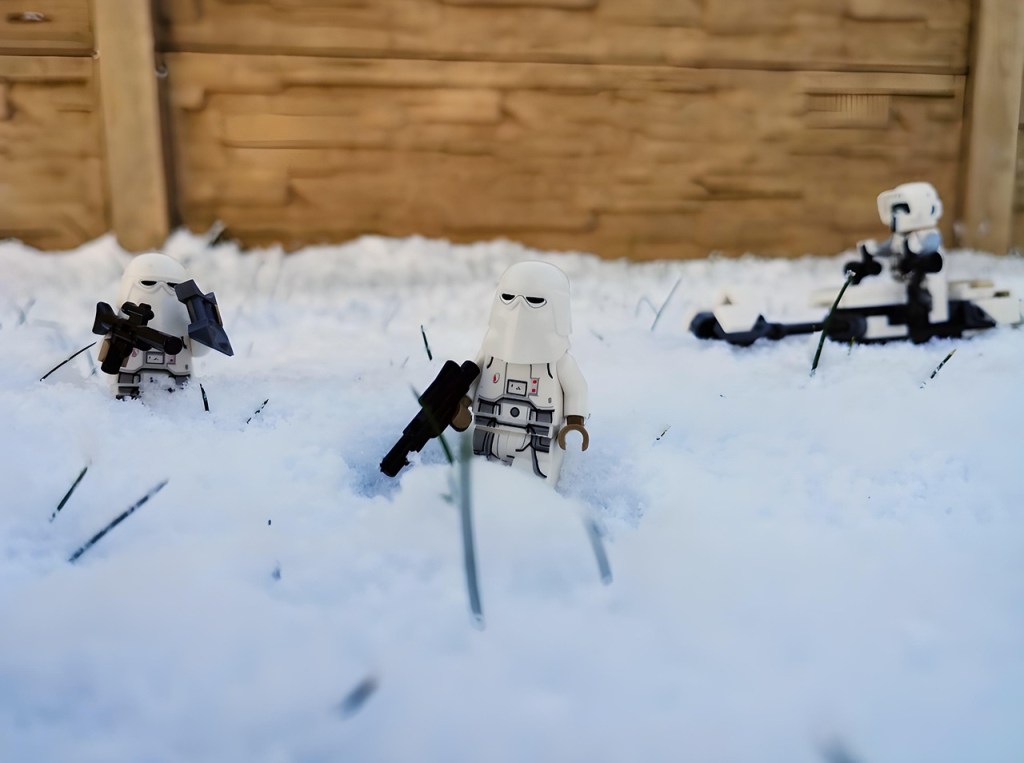


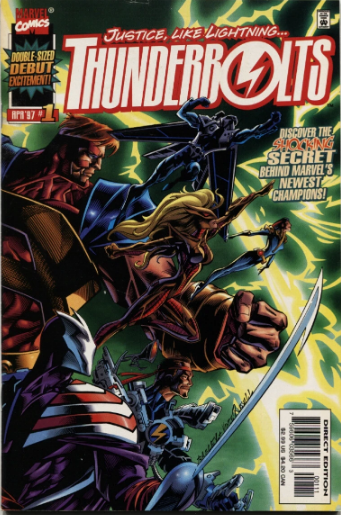
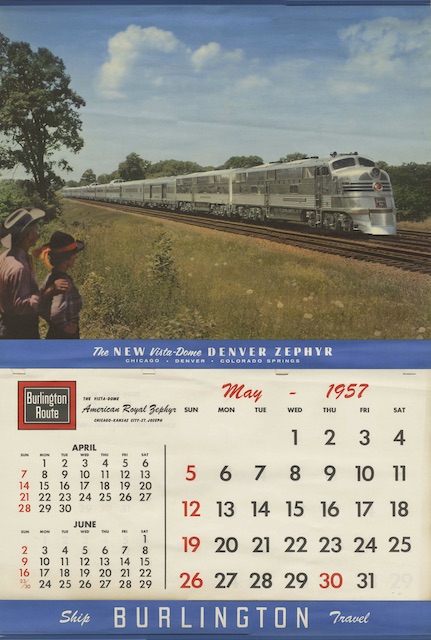


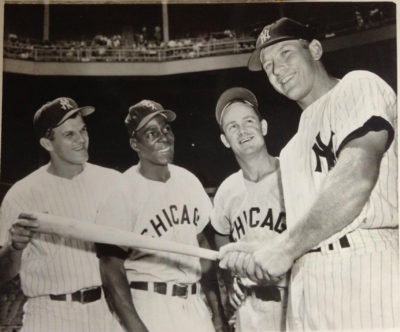

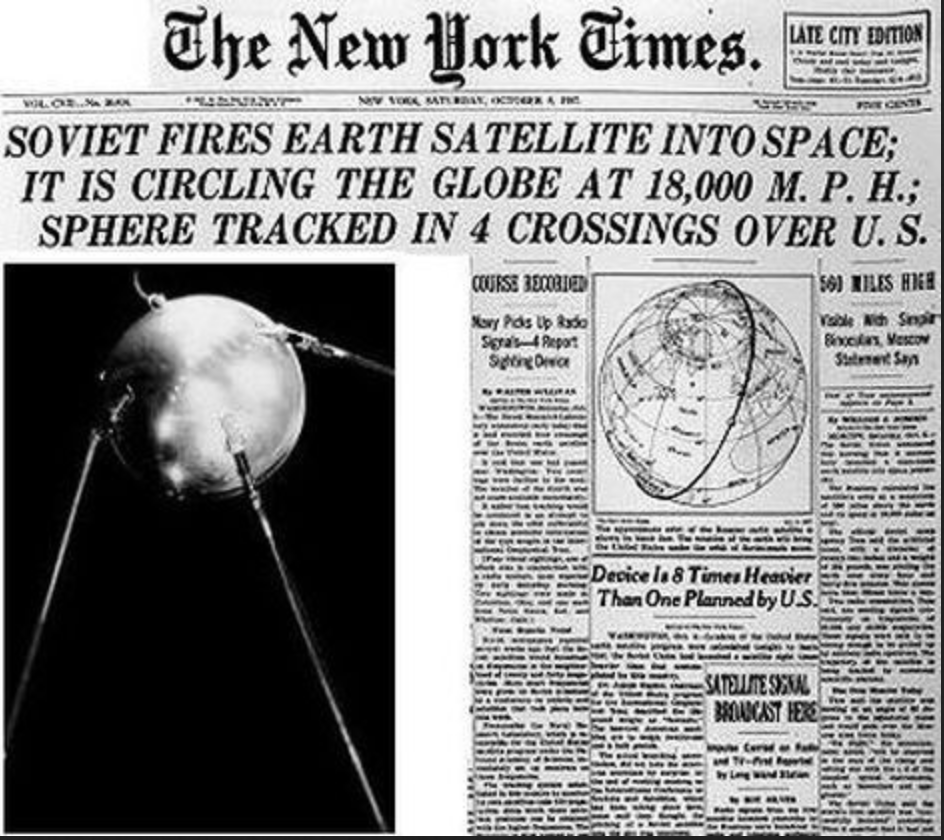



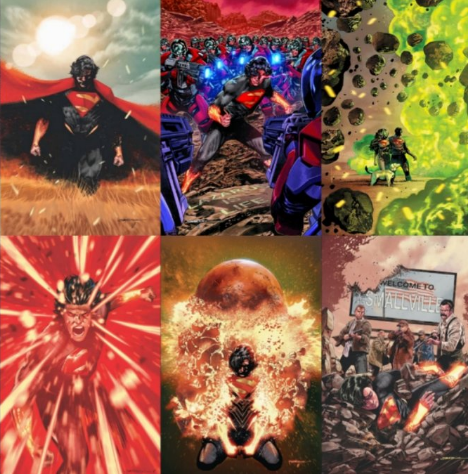



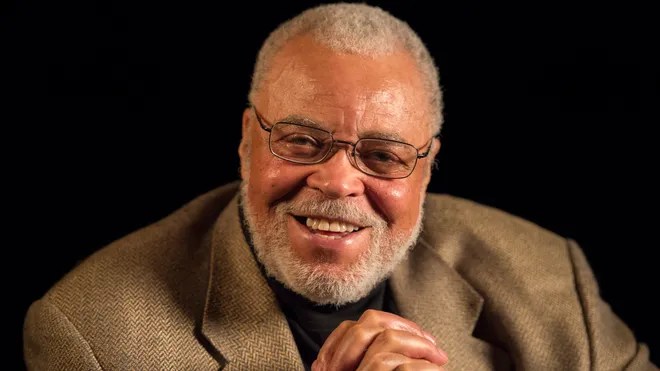


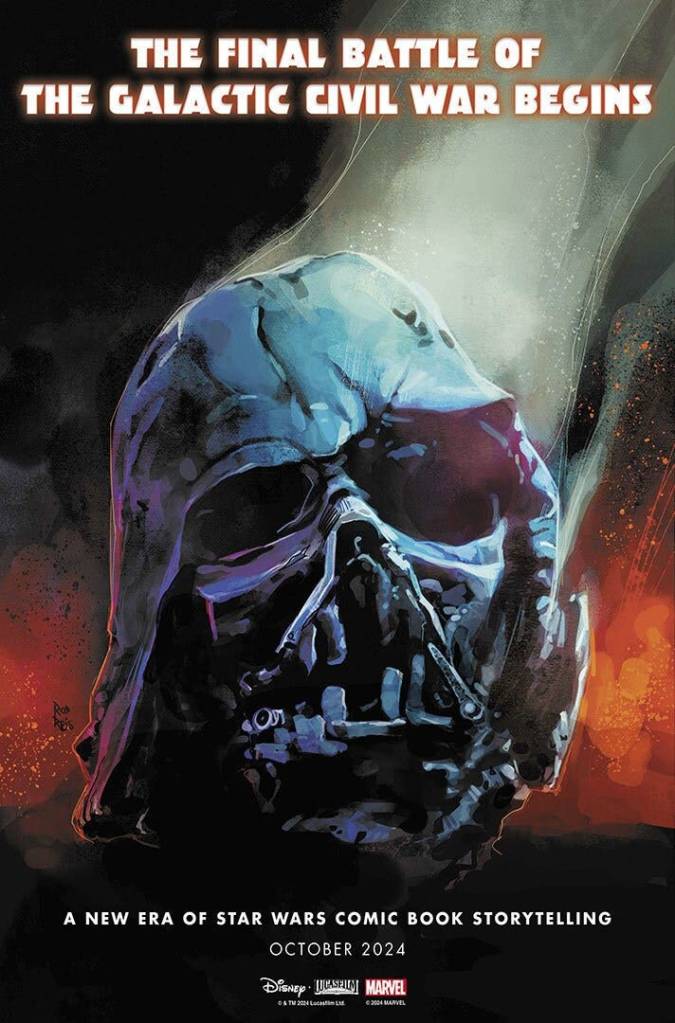

 SOME GEEK TOLD ME
You must be logged in to post a comment.