Sport is Sport

I’d like to interrupt my regular incoherent weekly blog, for the first of two special posts. The first one concerns sport, particularly rugby union, rugby league, football and cricket.

Whether you are aware of it or not; and I do apologise if you already do, but the 2021 Rugby World Cup1 was hosted by New Zealand, and the final was played on Saturday 12th November, between England and New Zealand, aka the Red Roses and the Black Ferns.

Running parallel to this tournament is the 2021 Rugby League World Cup2 which is currently being held in England. Also next year the 2023 FIFA World Cup will be co-hosted between Australia and New Zealand.

Now for those of you that are keeping score, I’ve just named three of my favourite sports, with the exception of cricket.

So what do these three tournaments have got to do with the price of milk and each other? That’s a no brainer, because all three tournaments are for female players. This is important; because I feel at least in my country, we’re at a point where women playing international sport that has been traditionally identified as male, is finally going to get primetime coverage, attention and recognition.

Firstly, the Black Ferns won on Saturday, claiming their 6th World Cup title. Along with England, they put on an amazing display of rugby, that showcases how fantastic the game is to the entire world. My wife, UMC1, UMC2 and myself have watched as many games as possible, and we have not been disappointed. This tournament has lifted the profile of the sport, maybe forever.

The Kiwi Ferns will also be playing England on Monday 14th November at 7.30 pm (local time) in the 2nd semi-final for the Rugby League World Cup. These games I’ve been watching via highlights because of the time zones difference; we’re 13 hours ahead of the United Kingdom. Added to the fact that next year, the best 32 football teams in the world, will travel to Australia and New Zealand to fight for football supremacy.

As a sports fan, a New Zealander, and as a human being, this is phenomenal. Across these codes; and yes, I am including cricket with this, these World Cups were only introduced recently; 1991 for rugby and football, 2000 for rugby league, and 1973 for cricket.


The Black Ferns celebrate winning the Rugby World Cup. (Source: Photosport)

What I’m driving at; and I’m going to sound corny, is that all of these players across these codes; are amazing. Simply amazing. Somewhere along the road, whether it was when they were a girl, teenager or as an adult, these players would have run into obstacles.

They may have been told that they couldn’t play their preferred sport, because it was only played by boys. It could have been they were told to just stick with sports, that are only played by girls, whether at school or at a club level. Maybe they were rejected for being the wrong size, height, or build.

There also could have been the issue of their school or community, not having the resources, staff, management or teams, to run a girls competition in rugby, rugby league, football or cricket. Maybe these players needed to travel hours to another town or city, to fit into a team that could take them in; committing to travel for trainings and games.

Whatever the case, they would have found an obstacle and discovered a way to climb over it, to go around it, and simply, to go through it. To me, sport is sport. You can have team sports like rugby, or individual sports like swimming, that deal in male or female competitions, and that’s fine. However, and it’s what I teach UMC1 and UMC2, there is no such thing as boys sport, or girls sport; there is only sport.

All of these players, regardless of their sport and country are inspirational. They are playing the sport they love; and they are also showing the current and next generation of players and supporters, that sport is for everybody, regardless of your ability and gender. They are role models for girls and boys to support and admire. Seriously, sport is sport.

So what’s next? Well, if you truly believe that sport is sport, you should do something about it. Demand more games from your broadcaster, so you can watch them; attend live games and if the case arises, buy tickets for the games; volunteer your time as a coach; buy merchandise like jerseys or posters; but just do something to support them.

I’ve taken my own advice, because I’ve purchased tickets for the FIFA World Cup next year. UMC1 and I will watch New Zealand (Football Ferns) vs Switzerland in Dunedin and we can’t wait.

Anyway, congratulations to the Black Ferns. Tino pai rawa atu! Damn, I love rugby.

Thanks for reading, go watch some sport, read some banned books, and I’ll see you on Monday for the second special blog.


1 Thanks COVID-19 for delaying it one year.

2 Once again, thanks COVID-19 for delaying it one year.

Remember, remember, the 5th of November

I want to talk about the 5th of November. Why? Failure is something we all have to live with. I’ve lost count of the number of times I’ve failed just this week alone. The point is, my failures have not changed the world; well, not yet anyway. But can you imagine failing at something, and 417 years later, people still celebrate that failure?

Guy Fawkes is synonymous with the Gunpowder Plot of 1605; along with a Alan Moore comic book, a Hollywood movie, a famous poem and fireworks. Lots of fireworks. But that’s not the whole story; it was a team effort. It’s complicated, but I’ve always thought that the 5th of November was akin to Dunkirk; victory from the jaws of defeat. You’re probably scratching your head thinking, ”Oh no, what in the hell is he ranting about now?”

Don’t worry, I’ll try to explain this as painlessly as I can, but no promises!

Remember, remember, the 5th of November,

Gunpowder, treason and plot.

I see no reason

Why gunpowder treason

Should ever be forgot.

Guy Fawkes, Guy Fawkes, ’twas his intent

To blow up the King and the Parliament

Three score barrels of powder below

Poor old England to overthrow

By God’s providence he was catch’d

With a dark lantern and burning match

Holler boys, holler boys, let the bells ring

Holler boys, holler boys

God save the King!


You and I haven’t done this in awhile, but let’s sit inside our heads and travel back in time to England, at the turn of the 17th century. This is a time before Brexit, reality television and three prime ministers in two months. This is the time of Shakespeare, the British colonization of the Americas and the First Polish–Swedish War.

Sitting on the English throne was the OG herself, Elizabeth I, from the House of Tudor. She reigned from 1558 to her death in 1603, aged 69. There are two major things to remember about Elizabeth; when she died, she had no children. Therefore, there was no direct line for the succession for the throne. The other part was that Elizabeth was Protestant. Remember that.

At the time, Catholics and Protestants worshipped the same God; they just argued about how do it. A lot. The main problem was that the English monarch determined what the main religion would be for the country; basically you could be punished for the worshipping in the wrong religion. This was an issue across Europe, and Elizabeth’s father, Henry VIII, made things worse by telling Pope Clement VII to stick it, and created his own religion; the Church of England, so he could divorce his first wife, Catherine of Aragon.

This feud between the two denominations, has been passed on for centuries. Some of the best/worst examples of this feud, is currently in Northern Ireland, but also in Scottish Football, of all places, with Celtic FC traditionally supported by Catholics, while Rangers FC were supported by the Protestants.

Anyway, Elizabeth was succeeded by a distant relative, King James VI and I (VI of Scotland and I of England) from the House of Stuart. James was a Protestant, but he was quite tolerant towards Catholics. However, over the next two years and for various reasons; but mainly persecution, some Catholics were feeling it would be better if the Throne of England belonged to a Catholic monarch, and not a Protestant.

This is the part of the story where Guy Fawkes enters, but he’s not alone. The original group of the five conspirators were Guy Fawkes of course, Thomas Wintour, John Wright, Thomas Percy, and the true mastermind behind the whole project, Robert Catesby. This group later recruited other members like Robert Wintour, Christopher Wright, Francis Tresham, Robert Keyes, John Grant, Thomas Bates, Ambrose Rookwood, and Sir Everard Digby.


The Gunpowder Plot Conspirators. Source: Crispijn van de Passe the Elder, Wikipedia

Their plan involved two different stages:

1.) To kill King James, his wife and eldest son, along with Lords, Judges, members of Parliament, and other targets. They would do this by blowing up the Houses of Parliament, at the State opening on 5th November, 1605.

2.) To kidnap the nine year old Elizabeth Stuart; King James’ daughter, through a revolt in the Midlands. The idea was to place her on the Throne of England, Scotland and Ireland, as a Catholic Queen. This was provided her father and brother were killed.

To destroy the Houses of Parliament, dozens of gunpowder barrels would be used for the explosion. They would be positioned in a cellar, underneath Parliament. It was decided that Fawkes would light the fuse and detonate the gunpowder, then escape across the River Thames.

Everything was going well with the plot, but the truth is stranger than fiction, because a group of betrayers and plotters, were in turn, betrayed themselves. Tragic irony or poetic justice? At this point, does it matter?

On the 26th October 1605, a letter was delivered to William Parker, 4th Baron Monteagle; which has famously been known as the Monteagle Letter. This letter was a warning about the conspiracy, but the author has remained a mystery. A suspect is Tresham, because he was Parker’s brother-in-law, however Parker was a suspect also. Regardless of the author’s identity, the letter was shown to several people, before making its way to King James on the 1st November, and well, he was not happy.

James ordered the Houses of Parliament to be searched for any shenanigans on the 4th November; though at the same time, the conspirators were finalising the last details about the plan. Fawkes was going to light the fuse at an agreed time, while others were getting ready to kidnap Princess Elizabeth. What could go wrong?

After the first search of the buildings, Fawkes was discovered with firewood, within the undercroft. Mixing lies with the truth, Fawkes explained that the firewood belonged to Thomas Percy. Fawkes was let go and the report was given to the King James, whom demanded the buildings be searched for a second time.

The second search proved to be more successful, because Fawkes was discovered again in the undercroft, later that night. He had a lantern, coal, firewood, and the barrels of gunpowder; so he was quickly arrested and on the morning of 5th November, he was brought before the King. The rest of the conspirators heard of Fawkes’ arrest fled and regrouped outside of London.

Having going by the alias of “John Johnson,” Fawkes was interrogated and eventually tortured. He had insisted that he was working alone, but after being tortured, Fawkes confessed to the entire plot. The authorities had already a few leads on the conspirators and armed with Fawkes’ confession, they started to seek them out as fast as possible.

Some of the conspirators had fled, while others were held up at Holbeche House, Staffordshire. It was there where someone had the smart idea to dry some of the wet gunpowder they had, in front of an open fire. You can guess what happened, because the gunpowder exploded. After that apocalyptic clown show, more conspirators fled. There was only Thomas Wintour, Grant, Rookwood, Percy, Catesby and the Wright brothers left now.

On the morning of 8th November, 200 men surrounded the house and opened fire. According to the report, several conspirators were killed, with Thomas Wintour, Rookwood, Grant being arrested. Eventually the remaining conspirators were found, arrested and put on trial.

These are the fates of the 13 Gunpowder Plot conspirators:

Thomas Bates: Died on 30th January 1606, after being hanged, drawn and quartered in London.

Sir Everard Digby: Died on 30th January 1606, after being hanged, drawn and quartered in London.

John Grant: Died on 30th January 1606, after being hanged, drawn and quartered in London.

Robert Keyes: Died on 31st January 1606, after being hanged, drawn and quartered in London.

Thomas Percy: Killed on 8th November 1605, after being shot at Holbeche House. His body was later exhumed and decapitated. with his head put on a spike outside Parliament.

Ambrose Rookwood: Died on 31st January 1606, after being hanged, drawn and quartered in London.

Francis Tresham: Died from natural causes, on 23th December 1605, in the Tower of London.

Robert Wintour: Died on 30th January 1606, after being hanged, drawn and quartered in London.

Thomas Wintour: Died on 31st January 1606, after being hanged, drawn and quartered in London.

Christopher Wright: Killed on 8th November 1605, after being shot at Holbeche House.

John Wright: Killed on 8th November 1605, after being shot at Holbeche House.

So what happened to the most famous of all the Gunpowder Plot conspirators, Guy Fawkes?

Guy Fawkes: Died on 31st January 1606 in London, after breaking his neck, right before the execution. His body was still drawn and quartered though.

And that just leaves the mastermind behind it all; what happened to Robert Catesby?

Robert Catesby: Killed on 8th November 1605, after being shot at Holbeche House. His body was later exhumed and decapitated. with his head put on a spike outside Parliament.

Their legacy is Fireworks Night, Bonfire Night, or just Guy Fawkes Night; which is celebrated in various countries around the world, including here in New Zealand. But going back to the beginning of this blog, this is the victory I was talking about. Even though the 13 Gunpowder Plot conspirators tried to commit regicide and failed, they did end up changing the world. 417 years later and we still remember their names.

Thanks for sticking with me and subscribing to my weekly editions of verbal diarrhea, I appreciate it. Alright that’s it for me, go and walk your dog, read some banned books, and I’ll see you next week.


Black Adam Movie Review: Banal and boring vs Brilliant and beautiful?

I want to talk about Black Adam. Why? Oh this is quite easy! I saw the new movie last weekend, and I thought I would share my unbiased and unsolicited opinion, because why not? 

So let’s start at the beginning; Black Adam is the new movie released by Warner Brothers, starring Dwayne Johnson, aka The Rock, as the main character, Teth-Adam/Black Adam.

I’m going to establish a few things first. The movie we’re going to be talking about is not going to win any acting or writing awards, but winning set designs and special effects awards, are definitely on the table. I mean this is a movie about people with superpowers; it’s not an art house or an independent film. This film is designed to rake in hundreds of millions of dollars.

If you have no idea who or what Black Adam is, I’m not sure whether that is an advantage or disadvantage, though it depends on how you view  it. As for me I know the character, though I’m not an expert, but I do know him. My wife asked me who exactly Black Adam was, because she was unsure about seeing the film. The reason was because she was not familiar with the character and to be honest, who could blame her? Maybe me? Just kidding.

The terrible point that I’m making, is that I’ve always viewed Black Adam as a character very similar, if not running parallel to Namor from Marvel. They are both leaders of a country, both are slightly less arrogant than Batman and both have a wobbly moral compass, that is extremely brutal and dangerous.

I don’t write a lot of movie reviews, because as you can see, I’m only a few paragraphs in and I’m only just starting to talk about the movie. However more importantly, it’s rare for me to actually go to the cinema. That’s because sitting in the dark with random strangers, eating whatever food I want, while watching a movie, is something I don’t do enough of.


Image by Igor Ovsyannykov from Pixabay

Anyway, let’s actually get around to discussing the movie, shall we?

Warning, major spoilers ahead. If you haven’t seen the film and you don’t want to know about it, please stop reading now. No, I really mean it. If you do stop reading, you can go and read some of my other blogs, because that would be really handy, even though I don’t get paid.

Let’s start with the Sour Cream and Chives portion of the movie.

When we first meet Teth-Adam, he’s speaking in what I only assume is some type of ancient Arabic language. The next time he speaks and I could be mistaken about this, is when he is in Amon’s bedroom, where he speaks English. I thought this was kind of weird considering Teth-Adam was taken out of the world for around 5,000 years, so how did he learn to speak English? 

I know what you’re about to say. He’s got the wisdom of Solomon; though to be technically correct, Teth-Adam actually has the wisdom of Zehuti. So it is technically possible that Teth-Adam could speak a language he has never spoken before, or the fact that this language had not been invented 5,000 years ago, because of his magical abilities. It is possible, I just would have liked to have see that explained, because it just didn’t quite fit or feel right. Does that make sense to you?

And speaking of 5,000 years, I think it would have been quite fascinating for the viewer to be looking at the world through Teth-Adam’s eyes. I mean he’s over 5,000 years old. Entire civilizations would have risen and fallen, with technology, politics, medicine, philosophy, music and science would have all been developed to modern standards.

However by the end of the film, Black Adam seems to have completely adjusted to his new world. I just feel it would have been a bit of a stretch for that to happen, because he’s got 5,000 years to catch up on, so it’s going to take him a long time to adjust to this new world. Yes, I know he’s got the godly magical abilities and they could possibly help him to adjust, but I feel like the film makers could’ve had a lot of fun with it, but also being serious at the same time. Or maybe Black Adam just didn’t care enough about the world to learn about the last 5,000 years.

I think there’s another thing to consider with Black Adam; he’s a difficult character to relate to or at least like.

I mean is Black Adam the protagonist, or just another antagonist in the film? Is he the villain or the hero, or maybe he’s exactly what he’s supposed to be in the comics: an anti-hero.

The thing is, Batman is an anti-hero as well and people love him; but the character is pretty brutal. The difference with Black Adam, is that the brutality is dialled up to 11. He’s not hiding behind a mask, that’s just who he is and he does not give a damn whether you approve of his methods or not; you’re beneath his attention.

I think this is one of the things that they’re going to have to work really hard on, if they want people to care about the character or at least, care what happens to him. Or maybe they don’t need to. Maybe he’s exactly the way the film makers want him to be, sitting in the middle of a Venn diagram of good and evil.

As for the Justice Society, I would love to have seen them being fleshed out a lot more, but when you have an ensemble cast, everyone is jostling for the spotlight and it would make it extremely difficult for everyone to have their time to shine.

Having said that, I thought Doctor Fate (Pierce Brosnan) was pretty cool. I think he was the very first superhero magician, I had ever read about. From the helmet to his costume, I thought he was awesome. I discovered Doctor Fate, before I discovered Doctor Strange, so when Fate was in full costume for the first time on screen, there was a small part of me that was yelling, “It’s about time!”

I really hope they flesh out Hawkman (Aldis Hodge) as a character, whether it’s through more movies or television shows, because I think he has left us with more questions than answers, which is a positive thing.

Ok, I want bring balance to this review, just like the Force.

I thought the special effects were amazing. I also think they did a great job of mixing practical effects with CGI. The scene where Black Adam was floating down the staircase in the apartment block, was outstanding. I could be wrong about this, but it sure looked like a practical effect!

As for Black Adam himself, I thought it was very brave that DC made this film, basing it on an anti hero/villain. What I mean is the fact that the main character is going out of his way to murder people. He’s not holding back, he’s doing what needs to be done and very similar to Namor.

Black Adam is not Superman or Captain America or Wonder Woman or Black Panther. It was very interesting to see a character like this, to use their abilities in a twisted and demented form of altruism. Some of those death scenes were funny, but some of them were very brutal and gruesome; but that’s the whole point of his character.

Another aspect of the movie I liked, was the use of geo-politics. I’ve heard this example used before and it’s the best one I can think of: One man’s terrorist is another man’s freedom fighter. This example fits exactly into the Black Adam mythos. There is a scene with Adrianna (Sarah Shahi) arguing with the Justice Society.

They are claiming that Black Adam is a villain and a killer, that needs to be stopped. However to Adrianna and the citizens of Kahndaq, Black Adam is a saviour, a liberator, a hero. Who is right and who is wrong? Is it possible that the Justice Society and Adrianna can be right and wrong at the same time?

I thought it was very powerful and meaningful for Adrianna to be pointing out, that after so many years of Intergang controlling Kahndaq and the world not caring about them, it was only until Black Adam appeared, that the world gave a damn about them. I thought that was extremely important and profound; but hey, what do I know?

I could keep talking about this film, but basically it has several good and bad points, just like any other film. To be honest, I liked the film. It’s not perfect, but that’s ok with me. For a superhero movie, I was entertained and that’s one of the biggest compliment I can give.

I know there is a criticism that this movie was only made for comic book fans; but isn’t any adapted film made for old fans, as well as new fans? I mean isn’t the whole point of adapting films to bring in new audiences also? I mean imagine if there was a disclaimer that every time you wanted to see a Harry Potter film, you were only allowed to see it, if you had read the book? Imagine if going to watch a new Stephen King film, you were only allowed to see it, if you had read the book first? It doesn’t work like that and it shouldn’t.

The point of this completely disjointed review about Black Adam, is that you shouldn’t listen to me about the film and don’t listen to anyone else. If you’re curious about the film, go and see it and make your own mind up. It’s the same for any product, whether it’s a movie, TV show, book or music; don’t worry about what everyone else is saying about it, if you’re interested, go and read it or watch it or listen to it. Make your own mind up about it, because that way you’ll know.

And that’s a wrap from me! Thanks for stopping by, now go walk your dog, read some banned books, and I’ll see you next Monday.

Six catchphrases my family says

I want to talk about catchphrases. Why? My family uses a few of them for different reasons, like the Penguin does with his umbrellas. Some are funny, while others are very practical in nature; though they are not exclusively used by my wife and I, we all know what they mean.

Let’s look at them, shall we?


Image by Gerd Altmann from Pixabay

1.) Calm the Farm

This gem came from my late mother-in-law. It refers to when there was a ruckus on the farm, the farmer would try to calm the situation down.

We break it out when UMC1 and/or UMC2 are becoming too loud, too excited, or when they’re fighting over some extremely important reason; like someone ate more chips than the other one; so we say, “Calm the farm, guys, calm the farm.”

2.) Team Indy

As some of you know, our dog is called Indy. We often joke about how our team was formed, basically like our origin story. First there was Indy, then he decided that living with my future wife was a good idea. The two of them went on a recruitment drive for a new team member, and I was asked to join. The three of us then added two more members to the team, thus giving us a team of five.

But what is the name of your team, Scott? Easy, we named it after the original team member.

The catchphrase is like a rallying cry in a way. Sometimes when a team member is having a bad day or when things have gone worse than Edward Scissorhands visiting the Museum of Paper, we try and regroup and remind ourselves, “Hey everything is going to be alright, we can do it. We’re Team Indy!”

3.) Toilet Drama

Toilet drama is what my wife and I call all of the arguments and negative experiences, surrounding UMC1 and UMC2 going to the toilet. Whether it’s about a roll of toilet paper being pulled off onto the floor; the stool being kicked over; denial of needing to go to the toilet, when they obviously need to go; or not washing their hands aka dunny hands; as well as everything else not mentioned.

If there is any drama connected to the toilet, then it’s Toilet drama; and we DON’T do Toilet drama.

4.) Roasty Toasty

This is an easy one, because it’s all about being warm and snug. Roasty Toasty is a catchphrase we say to UMC1 and UMC2, when we are putting them to bed; especially during late Autumn, Winter and early Spring.

The boys sleep in the same room and since the house is over 110 years old, it can get extremely cold. So when the boys go to sleep, we make sure they’re wearing winter pyjamas and several blankets, so they will be; and say it with me, Roasty Toasty.

5.) Being a Master

Firstly, this is not a Doctor Who reference, though that would be pretty cool. What I’m talking about, is giving the boys a job, where they can be the master of something. It sounds odd, but I’ll give some examples.

Say I need some help putting out or bringing in the rubbish and recycling bins. Asking if there was a Bin Master to help, will get a far more positive response from UMC1 and UMC2 than anything else. Other masters include: Washing Master, Shoes Master, Plate Master, Vacuum Master, Trolley Master, Lego Master, Duplo Master, Tidying-up Master, and the ultimate master this family has; the Biscuit Master.

Each week, some new Team Indy member becomes the Biscuit Master; which means they are the Master of Biscuits. They get to select the biscuits from the supermarket, regardless of any other person’s preference. We work on a rotation system, so since a new Biscuit Master is chosen each week, and UMC1 and UMC2 take this job EXTREMELY seriously.

6.) Kick in the guts

This is a classic catchphrase from my father-in-law; Kick in the guts. So, there is no stomach kicking involved here, just some oddly placed words. Kick in the guts means to wind something up or to finish something. We mainly use it when we are getting the boys ready for bed. After they’ve had some books or done a puzzle or drawn some art or played a board game, and all that’s left is to brush their teeth and go to bed; well, then it’s time to Kick in the guts.

We also use it when it’s time to tidy up; finish getting ready in the morning; or when it’s time to leave somewhere and go home. It’s time to Kick in the guts.

Does your family have any special catchphrases? If you do, what are they? Please let me know. Right, I’ll off to watch Doctor Who: The Power of the Doctor, with my wife because we’re geeks. Thanks for following me, read some banned books, place your bets on the next UK Prime Minister, and I’ll see you next week for my Black Adam review.


Four Former Failed Fluttering Flags

I want to talk about flags, in particular flags that are no longer used. Why? This pains me to admit, but Sheldon Cooper and I have many things in common; and one of them is vexillology. If you’re not familiar with the term, you will be familiar with what it actually means: the study or love of flags.

When talking about myself, I don’t have an elephant in the room; I have a herd of them. However one of those elephants is all about flags. It’s not really the source of conversation for a first date, is it? Or the second, or the third, or the fourth.


Image by Maik from Pixabay

I remember eventually explaining my love of flags to my future wife, like I was confessing that I had a window licking habit. Her response was something along the lines of, “I didn’t know that about you, though it does make sense. I knew there would be more stuff. I knew it.”

I’m not an expert on flags, far from it. Though I do like learning about them and trying to identify them as much possible. Please remember I am a geek, and I have been very upfront about that from Day One. That fact that the title of my blog is called, Some Geek Told Me, is a huge red flag.1

Because of this, I thought I’d talk about some countries that have changed their national flag. There could be many different reasons for the change, from social, political, or cultural issues, or maybe someone smeared tomato sauce on it, so they needed to redesign it.

The point is a country changing their national flag, happens a lot more than you realise. I’m going to list some of the most famous national flag changes in the world, but as usual, there are some exemptions. I am not going to discuss a country’s flag change, where it has gone back to using the original version like Russia-USSR-Russia. What I’m talking about is a completely new design for a country’s flag, that is still being flown today.


Canada

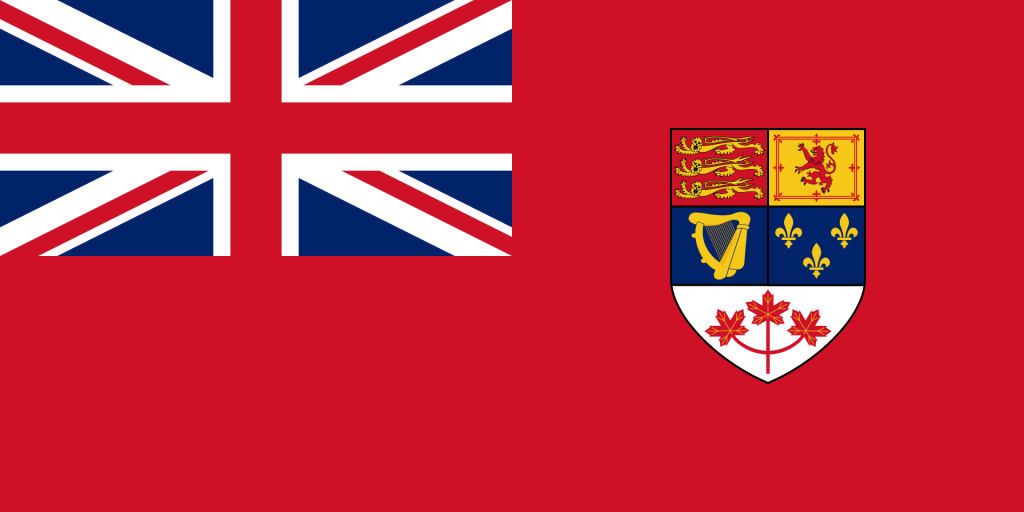
Canadian Red Ensign (1957–1965): Image by Denelson83

The Canadian Red Ensign served as the unofficial national flag and symbol for Canada throughout the years, from as early as 1868. Canada had gone through several versions of this flag, with small differences with each one.

However there had been a call for an official flag of Canada to actually exist for decades, so during 1963-1964, the Great Canada Flag Debate was born. During this time, a new design for the flag was sought and after 3,541 entries, a winner was eventually found. On 15th February, 1965, the “Maple Leaf” flag was inaugurated as the official of flag of Canada. This flag could never be mistaken for belonging to another country, other than Canada.

The National Flag of Canada (1965-present): Image by Clker-Free-Vector-Images from Pixabay

South Africa

Flag of South Africa (1928–1994): Image by Denelson83

Just like the different flags throughout Canada’s history, South Africa has gone through many versions. This changed in 1928, when the country adopted the Union of South Africa flag. The problem with this flag is that it’s tied to the Apartheid system that the South African government used, which was based on racial segregation.

With the end of Apartheid, a new flag was purposed for the country to move past the injustices, and look towards a brighter tomorrow. Over 7,000 entries were received and on the day of the 1994 South African general election; the first general election open to citizens of all races, the famous Rainbow Flag was first flown.

The National Flag of South Africa (1994-present): Image by OpenClipart-Vectors from Pixabay

Zimbabwe (Formerly known as Southern Rhodesia)

Flag of Southern Rhodesia (1968-1979): Image by Actarux 

The next two entries are rather unique, because these countries didn’t just change their flag, but also their name. From 1895 to 1990, Southern Rhodesia was the name of this Southern African country. It had been a British colony 2 and over the years it was known as Southern Rhodesia, the Republic of Rhodesia, Rhodesia, and finally Zimbabwe Rhodesia; with a white minority government.

This changed when the country gained its independence from the United Kingdom in 1980, but also with a black majority government. Because of this, the country changed it’s name to Zimbabwe and the flag; to greater reflect and honour their African heritage.

The Flag of the Republic of Zimbabwe (1980-present): Image by Clker-Free-Vector-Images from Pixabay

Myanmar (Formerly known as Burma)

The Socialist Republic of the Union of Burma Flag (1988-2010):
Image by Clker-Free-Vector-Images from Pixabay

Just like Zimbabwe, Myanmar has a troubled past. It has been part of the Pagan Empire, a British colony 3, been ruled by the military, and littered with civil wars. Having won its independence from the United Kingdom in 1948, the country was known as the Union of Burma. Fast forward to 1988, where the country received an updated version of their old flag.

After some voting, social, and economic reforms from the military junta, the country stepped into a new era. It was given a new name for three reasons:

1.) Myanma is the official name of the country in the native Burmese language.

2.) It was thought that the name Myanma was more inclusive of minorities than the name Bama.

3.) The military junta had long been suspicious of the casual Burmese language, which it had perceived as inferior; the English name “Burma” mirrors the Burmese name Bama.

Because of these reasons and others, a new flag was adopted in 2010.

 The Republic of the Union of Myanmar Flag (2010-present):
Image by Adam Lapuník from Pixabay

And that’s a wrap from me. I realise I missed many other flags, but are there some I should have listed? Please let me know your thoughts.

Thanks for letting me share my love of vexillology, because there is no known cure. Anyway, I’m off to persuade my dog to sleep somewhere else, other than my pillow. Read some banned books, eat some ice cream, and I’ll see you next Monday.


1 Pun very much intended.

2 To nobody’s surprise.

3 Oh no, not again!

The 10 Best Songs about Historical Events

I want to talk about music, especially songs about historical events. If you’ve been following me for awhile, you will sadly know that I love history. I mean it, I love history as much as I love Salt and Vinegar; so that’s a lot.

So I was thinking the other day; in between reading Kaiju No. 8 and watching The Rugby Championship, of a new topic for the blog. Being the cultural influencer that I am, I thought about combining two of my interests like pizza flavoured ice cream or a biologists vs physicists football game.1

In my infinite wisdom, which is sprinkled with hubris and incompetence, I decided to list some of my favourite songs about historical events. To make the list, there are only three criteria:

1.) The song can be performed by an artist or by a band.

2.) The song needs to be about a real event that has taken place, at some point in history. There is one special exemption to this rule, because the song is about several events, not just one.

3.) I do realise there are hundreds of songs about historical events, that I won’t mention. This is only because the songs on my list, will be ones that I’m quite familiar with and like, or the event that the song is based on, is something that has interested me.

Songs about real people, do not qualify. My apologies to Rubin ‘Hurricane’ Carter, Andy Kaufman, Queen Elizabeth II, and the list, just like the road, goes ever on and on. That will be a separate list for another blog.

Clear as mud? Great, let’s do it!


Image by Maximilian Hofer from Pixabay

Sunday Bloody Sunday: U2 (1983)

This song refers to two different incidents involving assassinations and massacres. The first are the two attacks on Sunday 21st November 1920, during the Irish War of Independence. In the morning of the 21st, Irish Republican Army (IRA) operatives assassinated British intelligence agents that were living in Dublin at the time. This resulted in 15 deaths and five people being injuried.

In the afternoon of the same day, British and Police forces converged on Croke Park, Dublin, where a game of Gaelic football was being played. There were at least 5,000 spectators at the game, when the British and Police forces started shooting. 14 civilians including two children were killed, along with 80 civilians with injuries.

The second is the Bloody Sunday massacre of Sunday 30th January 1972, when British troops from the Parachute Regiment opened fire on unarmed civilian protesters, in Derry, Northern Ireland. This happened during a time called The Troubles, which was also known as the Northern Ireland Conflict. 14 civilians were killed altogether, with 13 victims killed on the day, and another victim died later on, because of their injuries sustained during the attack.


Magna Carta: 800 Years: Ben Miller, Naz Osmanoglu, Lawry Lewin, Jessica Ransom from Horrible Histories (2015)

This song is from a television show Horrible Histories, which is based on a series of books. It refers to the signing of the Magna Carta in 1215, by King John, King of England. The document basically states that no person; whether they be a king or not, is above the law. For over 800 years, the Magna Carta has been the bedrock for justice and has influenced many other important policies, legislation and civil rights. If you want some more information, some nitwit wrote about it here.


Sink the Bismarck: Johnny Horton (1960)

This song is about the hunt to sink the German battleship, Bismarck. The Bismarck was one of the largest battleships ever built, and during the Second World War, it was the subject to one of the greatest maritime searches in history.

After sinking the British HMS Hood in the North Atlantic, on 24th May 1941, the Bismarck was the most hunted ship in the world. Eventually the Bismarck was discovered, pursued, and attacked, with the battleship being scuttled and sunk on 27th May 1941.


The cause of World War One! Origins Rap Battle: WW1 Uncut BBC (2014)

This song is actually a rap battle about the origins of the First World War, which was to commemorate 100 years since the start of the war. It features characters like Gaurilo Princip, the assassin; Emperor Franz Josef of Austro-Hungary; Joseph Joffre, Commander of the French Forces; Tsar Nichols II of Russia; Kaiser Wilhelm II of Germany, and George V of Great Britain.

The characters explain their motivations for being involved in the build up to the war, as well as throwing in some amazing insults and burns. The song does a fantastic job at detailing the origins of the war with humour, disguised as a history lesson.


Genocide (The Killing of the Buffalo): Thin Lizzy (1980)

This song looks at the organised slaughter of the North American buffalo during the Plains Indian Wars of the 19th century. The buffalo was critical to the survival of many Native American tribes, which was well known to the US government. Because of this, the government entered a campaign of hunting and killing millions of buffalo and bringing them to the edge of extinction. This was a way to starve Native Americans and have them enter submission.


2019: Count Binface (2019)

This song covers two different events spanning three years. The first refers to the 2016 United Kingdom European Union membership referendum, aka Brexit; while the second refers to 2019 United Kingdom general election, which at the time, was going to be held in December 2019.

The artist Count Binface, like Jonathan Pie, is not a fan of the Conservative Party. Utterly brilliant.


Spanish Bombs: The Clash (1979)

The lyrics for this song are based on the Spanish Civil War, which was fought in 1936-1939. Like all civil wars, the Spanish Civil War was extremely brutal, having the Republicans and others, fighting against the Nationalists and allies. The conflict resulted in 200,000 soldiers killed, but between 150,000-180,000 civilians were also killed. In total 200,000 people were murdered, which involved mass shootings, torture, and mob violence.


Battle of Hastings Song aka Norman Style: Kevin Eldon, Naz Osmanoglu from Horrible Histories (2015)

This is another Horrible Histories song, but it looks at the Norman Invasion of England in 1066 and the Battle of Hastings, between the Norman forces, led by William I the Conqueror, against the English, led by King Harold II. The Normans won the battle and King Harold died on the battlefield. William successfully conquered England, ending Anglo-Saxon rule over the country, and thus changing English, European and World History.


Zombie: The Cranberries (1994)

This song was created as a direct response to the deaths of Tim Parry, 12, and Johnathan Ball, 3. This happened on 20th March 1993, through an IRA bombing in Warrington, England. Two small bombs were placed in litter bins, near a shopping area when they were detonated. 56 people when injured, along with killing the two children. Previously on 26th February 1993, the IRA had committed another bombing, by destroying gas holders in Warrington, as part of the IRA’s campaign to get the British to withdraw from Northern Ireland.


And finally for the special entry; if I have a list of my top 10 songs of all time, this song is on that list.

We Didn’t Start the Fire: Billy Joel (1989)

This song is unique because it doesn’t just focus on one event, but rather multiple world events occurring from 1948 to 1989. The events span politics, culture, science and sports, and have left a lasting impression on the world, whether they are positive or negative.

It’s the chorus that haunts me to this day:

We didn’t start the fire
It was always burning, since the world’s been turning
We didn’t start the fire
No, we didn’t light it, but we tried to fight it


So do you agree with the entries? Have I missed out your favourite song about a historical event? Please let me know your thoughts. Alright, that’s it for me today, because my dog stinks and is well overdue for a bath; so wish me luck. Thanks for stopping by, walk your dog, read some banned books, and I’ll see you next Monday.


1 The referee would be a geologist, because you wouldn’t be able to trust a chemist.

What does living in a Post-COVID society look like?

I want to talk about living in a society that has moved past COVID-19 and what it looks like. This could have been achieved through the use of magic, time travel, or just good old science. There are many countries that have come out of the other side of COVID-19, while others are still battling and fighting to keep their country afloat.

On 13th September 2022, the New Zealand Government scrapped the COVID-19 Protection Framework (traffic lights system), and on 28th September 2022, the last government vaccine mandates ended for health and disability workers.

It’s only been a few weeks, but what is life like now in Aotearoa New Zealand? Having given COVID-19 a flying kick in the face, along with an atomic elbow, how is our society responding to the lifting of vaccine and mask mandates? How are we progressing on getting back to normality?

My incoherent and insane observations are based on things that I have seen, hear, or read about in the last few weeks, whether it’s local or national. Whether this information is positive, negative, or in the middle…I’ll let you be the judge for that.

So without further ado, I will get straight to the matter. I will not be farting around discussing matters that are not important to the topic. Delaying this message will not help anybody; there will no procrastination here. I want to be direct with my information, so there will be no ambiguity or vagueness. Dithering, prolonging, or dawdling with this content, would be extremely unproductive and inefficient. I will not be dragging my feet, giving the you runaround, or shilly-shallying; there’s no way I would ever do that to you. No way; I would never waste your time…wait, what was I talking about?!


How Aotearoa New Zealand is adjusting to Post-COVID life

  • The Anti-Vaxxers are still proclaiming the pandemic was fake, because a.) they never were infected or b.) they were infected, but they had little to no symptoms.
  • Children’s illnesses like chicken pox; measles; hand, foot and mouth; and school sores have returned. This is because after two years, the public have forgotten every single lesson COVID-19 taught us.
  • Some candidates in local regional council elections are promoting their anti-vaxx, anti-mask and climate change denying beliefs; while some are trying to hide these beliefs.
  • Interest rates, supply chain issues, food and petrol prices are increasing; but house prices, community health measures, and the public’s support of the All Blacks are decreasing.
  • Since the death of Her Majesty Queen Elizabeth II, the concept of New Zealand becoming a republic, has been an increasing topic of conversation at the water cooler, dinner table, and at the pub.
  • Wearing a face mask in public has gone from being viewed as idiotic, to heroic, and back to being idiotic again.
  • Some businesses and companies have removed their plastic barriers, centred on interactions with the public; while others are committed to keeping them, to protect their staff.
  • Many extroverts across the country are now having a “livin’ la vida loca” lifestyle, while many introverts are remaining home, because they feel unsafe.
  • Regardless of gender, ages, and codes, some team sports are finding it difficult to field players, because people don’t want to be around other people. However individual sports are booming, especially hiking, surfing, biking, running, swimming, tennis, and golf.
  • Jehovah’s Witness are back knocking on doors. When I met the two guys at my house, they were so excited to be back talking to the public, that I talked to them for 15 minutes before letting them down.
  • And this is not even diving into the unemployment, domestic violence, youth suicide, crime, or mental health statistics.

On a brighter note, we are hosting the 2021 Rugby World Cup, from 8th October to 12th November. It features the 12 best women’s rugby teams on the planet…but because of COVID-19, the tournament was delayed a year, and the games are only being played in three stadiums; two in Auckland and one in Whangarei, which are all near the top of the country. It would take me some time to hitchhike there.

I’m not sure what else to say about this; somehow New Zealand is better off, and equally, worse off because of surviving COVID-19. The biggest change for me is the number of conspiracy groups that were on the fringe of society, are now nearly mainstream. It’s the realisation that a family friend is an Anti-Vaxxer, or your barber is an Anti-Masker.

There are some deep lines of division in this odd little country, that I fear will we never really be able reconcile. It’s a hell of a thing to listen to people that you admire and respect, start discussing conspiracy theories about climate change, vaccines, masks, and anything else. Somehow, I think COVID-19 has emboldened them, like taken away their fear of sounding crazy. But that could be another blog for another day.

The new House of the Dragon episode is up, so I need to watch it before I read spoilers. I’m stupid and read too many things I shouldn’t. Thanks for reading my little project, walk your dog, read some banned books and I’ll see you next week.


What happens when you cross an ill prepared runner and the Dunedin Half Marathon?

I try to keep my promises as much as I can, so here’s the nondescript account of my experience of the Dunedin Half Marathon 2022.

The run started at 9.00 am, which meant I woke up without an alarm, near 5.10 am. We’re off to a great start already.

Let’s back up a little shall we? My wife, UMC1 and UMC2 travelled down to Dunedin with me on the Friday, so we could stay for the whole weekend. I’d been saving for a few months for the trip, because we had some child-friendly activities we had planned to do around Dunedin; especially visiting the museum. We are a family of nerds/geeks after all.

We stayed at a hotel, and I’ll be honest; no matter the different places we went to, or the different things that we did with UMC1 and UMC2, the highlight of the trip for them, was the hotel room. We don’t have a television at home, so watching Saturday morning cartoons, was unreal for them; particularly using the remote control. It took both of us to convince them to actually leave the hotel room, because they were having so much fun.

Anyway, after picking up the race pack, and making our plans for Sunday morning, it was time for me to start slowly getting anxious. What a winner.


Image by Makalu from Pixabay. St Paul’s Cathedral, Dunedin, New Zealand

Like I said at the start, I woke up at 5.10 am on Sunday morning, because we were all sleeping in the same room. I could only listen to UMC1 and UMC2 argue in their sleep for only so long, before I had to get up. Reading news articles and watching video clips about Queen Elizabeth II’s death, at the time seemed like a good idea, like an ejection seat in a helicopter.

After reading and watching an avalanche of information about the Queen, I knew I needed breakfast, however this is a riddle I have never been able to solve. It comes in two parts: what do you eat before a race? and when should you actually eat? I’ll be damned if I know.

Being a very amateur runner, I decided on cereal, toast and yoghurt, because…well, we didn’t have anything else in the unit. After eating, getting changed and packing my bag, I needed to wake everybody else up and the results were not pretty.

After my wife dropped me off near Forsyth Barr Stadium, I followed the stream of positive and intelligent people, that were deliberately going to put themselves through hours of pain. Caledonian Ground was the destination, and after arriving there, things just got real.

There was a sea of people in and around the ground, so I decided to perform my token stretches on the rugby field next door. After embarrassing myself by smothering my legs with vaseline to avoid chafing, I wandered over to the starting line.

As I walked past the elite runners at the front and headed towards the back, I started noticing people. They were ready and I was woefully not ready. The realisation that I was ill prepared for the run, was a horrible thing. A bad diet and a somewhat lack of training is never a great combination; like vodka and swimming.

There was a guy vaping, while he was waiting near me, which did a lot to build my confidence. Oh, I’m sorry, did I say build? What I meant to say was destroy! And before you could say, “Pachycephalosaurus were crazy looking bipedal herbivore dinosaurs”, the race had started.

We headed out towards the industrial area, while trying not to crash into anybody. From there, it was along the water front and out towards the peninsula. And this is where it got weird for me.

I remember passing the 5 km mark, because it was the turning point for the 10 km runners; but from then on, I didn’t see another distance marker until the 18 km mark. It was weird to be actively participating in an distorted example of the Uncertainty principle. I knew how much time had passed, but not my location.

After finally reaching the turning point for the race, I started remembering and listening to my body. I remember my brain convincing my heart, legs, stomach, and everything else, that running in this race was a great idea. On the way back, my brain had absolved itself of any involvement in the decision making process, and was trying to force a confession from some other body part, blaming them for the decision to run. My body was not happy with itself.

On the way back, something very predictable happened; young and older runners started passing me. I found that experience to be soul crushing, especially when I’m running as fast as I can! Eventually I saw the 18 km mark and I realised that my dream time was not going to be achieved. So being the winner that I am, I slipped down to aim for my second dream time.

Running towards the finish line, which was actually a pub, did not have the desired impact for me; I just wanted it to be over. I crossed the line and even though I didn’t get the time that I wanted, I got the time that I needed. I shaved nine minutes off my previous time, though I sound like such a loser, it’s hilarious!

Anyway, the run was not the total disaster I thought it would be, I could even do squats the next day, which was a minor miracle. I showed UMC2 my finisher’s medal and he said it was stupid, because it had no yellow on it. Cheers mate, thanks for the support.

I have another race in a fortnight, but this one is actually local. This means hundreds of people in the community will get to see me fail. I’m a D-List celebrity, so I’m looking forward to people telling me that I suck. Can’t wait.

So that’s it. I’m back to running half marathons, by starting with energy and hope, and ending with despair and misery. Cool. House of the Dragon is now up, so I need to study some more fictional royal family trees. Thanks for reading, walk your dog, read some banned books and I’ll see you next week.


Working through the five stages of grief, when your team is losing

I want to talk about grief, in particular when your favourite team is losing. I’m serious! Anybody that supports a team; no matter the sport, will know the highs and lows of being a supporter.

You believe that supporting the team, helps the players to achieve heroic deeds on the field/court/pitch. You don’t listen to the haters and non-believers that preach insane things like, telling the referee/umpire to open their eyes, will not actually make it happen. “Haters are going to hate”, you say. “My team needs me”, you say.

You’re a staunch supporter, always watching or attending a game, whether you were introduced to the team as a young child or as an adult. Whatever the case, you’re loyal to them. When they win, you share in their glory, reinforcing the amazing belief, that your support of them can actually bend the laws of the universe, and actually make them win. They won because of your support, because you’re part of the team. Search your feelings, you know this to be true.

But there is the other side of the coin. Much like Two-Face’s double headed coin, or with the concept of love, in Jane Austen’s novels and the Brontë sisters’ literature; one side is amazing and beautiful, while the other is twisted and scarred.

When your team loses a game, you can sit down and semi-rationalise the loss. It’s like when you hit or knock your ulnar nerve on the humerus bone; it hurts, but you know you can get over it. Everything will be alright, the team will learn some lessons from the loss, so they can get straight back to winning.

But what happens when they don’t? What if the unthinkable happens and they fall into a losing streak? Fear, doubt and anger start to seep in. However, just like Master Yoda said, “Fear is the path to the Dark Side. Fear leads to anger. Anger leads to hate. Hate leads to suffering.”

The truth is this: if you truly support a team, you will end up suffering along the way. That being the case, I thought a guide to understanding your grief may help some people in this. I know what I’m talking about, because I’m an All Blacks supporter1, so parts of 2021-2022 have been…unpleasant and very uncomfortable.


The Five Stages of Grief: Team Sports Edition

First Stage: Denial

Alright, so my team has lost a game. Who cares! Every team loses at some point during the season. They’re fine.

Sorry, what did you say? They lost again. That’s two games now. Not a problem, they are ironing out some wrinkles in their set plays. They’re fine.

Hmmm….that’s three games they have lost now. It’s still ok, they have had some injuries and travel issues. This is not a slump, it’s a small, tiny, extremely minor bump in the road. They’re fine.

Yes, yes, I saw the game, they lost again. I think that makes it four games now. That referee was an idiot, so technically they didn’t lose, it was stolen from them. They’re fine.

I’m telling you, they’re fine! Losing five games does not mean a losing streak. Seriously, stop talking about it! The players and coaching staff are doing their best, stop talking about them. THEY’RE FINE!

SHUT UP! SHUT UP! SHUT UP! They are not in a slump! I know they have lost six games, but its not their fault! Leave them alone! THEY ARE NOT IN SLUMP! THEY’RE FINE!

Sadly at some point during the season; but try as you may, you can’t deny reality anymore. Whether they have lost two, three, four, or even ten games, whatever the number for whatever fan/supporter, sooner or later, you have to face the reality that your team is losing. You can’t deny this anymore, than you can stop Last Week Tonight from winning Emmys for Outstanding Writing for a Variety Series or Outstanding Variety Talk Series.


Second Stage: Anger

Dammit, what the hell is happening?! You really need someone to blame for this disaster!

Let’s make a list of accountability:

  • It’s the players fault: They are not training or focused enough.
  • It’s the coaching staff fault: They are not preparing the players well enough.
  • It’s the players children’s fault: Their parent is missing the game to attend the child’s birthday. How selfish is that child to want to see their parent on their birthday?
  • It’s a player’s new spouse’s fault: How dare they think getting married during the season is a good idea? What? There’s a honeymoon as well? Divorce their arse, right now!
  • It’s a player’s pregnant wife/girlfriend fault, for going into labour: What in the nine circles of Dante’s Hell is she thinking, giving birth during the season?! How self-centred can you be?
  • It’s a player’s family member fault, that has died: Oh, don’t get me started on that selfish person! They have made this season into all about them!
  • It’s the media’s fault: The media keeps writing terrible things about the team; the team reads the terrible things; the team plays terribly; and the cycle repeats.
  • It’s the team’s bus driver’s fault: The driver is not providing a ride that allows the team to arrive at the stadium, fully refreshed and ready. They are playing the wrong music and making too many left turns.
  • It’s the President’s or Prime Minister’s fault: They are in charge of the whole country, so this means the team’s failures are their fault. Vote them out!
  • It’s Climate Change’s fault: Bloody Climate Change! It’s making the weather unstable, so the players can’t play properly.
  • It’s Stephen King’s fault: His books are so creepy, that after reading them, the players refuse to go to sleep anymore, because of the nightmares.
  • It’s Critical Race Theory’s (CRT) fault: This educational module confuses the players and makes them turn on each other, thus the team performs badly.

There could be one or several reasons why the team has lost their form, but whatever it is, your anger will be directed at one person or several; whether they deserve your criticism or not. If a scapegoat can be found, then everything else will just fix itself. If only…

The problem is no matter how angry you are feeling, the players and coaching staff are feeling it 1,000 times more.


Third Stage: Bargaining

This is an odd one, because you need two things for bargaining: something to bargain and someone to bargain with.

With the former, maybe you’re going to give up drinking beer for a month, if your team starts winning. Or it could giving up smoking; giving more to charity; cleaning the bathroom for six months; changing every nappy for a week; start watching the game in your least favourite chair, attending a game in different seats; creating a swear jar; being less judgmental, cynical, pessimistic, or sarcastic; or maybe it could be to give up watching the games for the rest of the season, if only they could please start winning games!

For the other part, whom are your negotiations directed at? God? Jesus? Allah? Jehovah? Moses? Buddha? Waheguru? Brahma? Vishnu? Gandalf? Captain Planet? Spider-Man? Green Lantern? Goku? Yoda? Spock? Splinter? Aslan? Harry Potter? The Doctor? Neil degrasse Tyson? King Charles III? Elon Musk? Liz Truss? Or maybe any patron saint or god of sport?

Ultimately your bargaining will fall on deaf ears. Why would anybody accept your prayers for your team to start winning again, when there is another person praying for your team to lose; or at the very least, praying for their team to win?

I think God has bigger things to worry about, like fighting against racism and climate change, but also trying to figure out why Sour Cream and Chives were created, than worrying about your team. Sorry.


Fourth Stage: Depression

Depression or the black dog is easy to describe; your beloved team is losing and it hurts. Everywhere people are talking about it: talkback radio, breakfast shows, work places, newspapers, magazines, podcasts….you can’t escape it. Your busy mind is now stuck reliving the defeats, but also wondering what else could happen?

It is such a bleak outlook, when watching people that support the team, slowly turn on them. You try to distract yourself by actually living your life, but the defeats are still there. Always there, following you around like the entity in It Follows; except for the sex, because who can think of sex when your team is losing!

Food has lost it’s beautiful taste, and your beloved sport now feels like it was created to punish those that love it.

You refuse to read or listen to anything about the crisis, until you do by accident, and you wish you hadn’t. Your mind dives deep into the catastrophe, which causes you more torment, which in turn, causes more depression.

Your team is losing, people are laughing at them, and there is absolutely nothing you can do about it. But it will be alright, this will not last forever, even though it feels like it will. Your team will survive this, and so can you.


Fifth Stage: Acceptance

Having a brutal and honest conversation with yourself is never easy, and acceptance is the worst. When staring at yourself in the mirror, you have to admit: this is not an episode from the Twilight Zone or Black Mirror; it is not a dream from a hateful elder god; it is not a vision from a parallel world; this is real. Your team is losing.

You have accepted a horrible truth, but it’s a truth. And at this point, you realise that all of the negative emotions you have been experiencing, is because of one thing: you still love your team. If you didn’t, you would be indifferent, but you’re not. You still care.

It is very easy to love and support a team when they are winning. It’s more difficult to love and support them when they are losing, but that is exactly what a fan would do.

So after everything, what do you do? Easy, you start wearing your team’s jersey/shirt/uniform in public. You don’t give up on them when it’s hard; that’s when the team needs your support more than ever. People will hassle you for wearing their colours, but let’s face it; haters are always going to hate. Let them.

You love your team. You always have and you always will. Keep the faith and don’t give up on them.

Hopefully this guide will come in handy for someone, because it’s been therapeutic for me to write it. Anyway, my stomach has woken up and I need to search for ice cream. Support your team, walk your dog, read some banned books, and I’ll see you next week with the blog about the Dunedin Half Marathon. I know, I know, you can’t wait to read it, but you’re going to have to. Sorry!


1 I know it is so cliché for a New Zealander to support the All Blacks, but I’m a product of my environment. But what I am doing to do? Support Australia?!

Queen Elizabeth II: 70 years & 214 days

I was going to talk about my half marathon from the weekend, but I thought better of it; I’ll do it next week. Considering what has happened, I feel the need to talk about HM Queen Elizabeth II. I’ll try and keep this short, but I can’t promise anything.

Queen Elizabeth II meant many different things to many different people, but also for different reasons. To some people she was everything, to others she hardly meant anything at all. To some she was a progressive, generous, loyal and caring female leader, while to others she was the figurehead of imperialism and colonialism. Whatever the case you believe in, she was a global icon.


Image by M. Harris from Pixabay

Being a New Zealand citizen as well as growing up here, the Queen has been the head of state, since 1952. Many people have already stated this, but it does not make it any less true; the Queen was a constant force in our lives.

Whether it was through stamps, bank notes, coins, official portraits, speeches, or tours, she was always there, because she is everywhere in Aotearoa. She was almost like the nation’s grandmother in a way. There was aura of stability with her, I mean she did see 17 New Zealand Prime Ministers and 15 United Kingdom Prime Ministers take office, that served under her reign.

Like millions of other people in the Commonwealth, she’s the only monarch I have ever known, because basically, she was the Queen of New Zealand. I’ve always liked this, for reasons that are too stupid and strange to explain.

I do find it funny that during her many tours of New Zealand, the Queen visited my home town. At least twice. WTF???

Her reign lasted 70 years and 214 days, which was longer than the Nazis, Union of Soviet Socialist Republics (USSR), the Khmer Rouge, the Chilean Junta, and South African apartheid system had lasted.

She died at the age of 96, which meant she outlived some 20th century winners like Mao Zedong, Joseph Stalin, Adolf Hitler, Benito Mussolini, Kim Il-sung, Ferdinand Marcos, Robert Mugabe, Idi Amin, Augusto Pinochet, Pol Pot, Slobodan Milosevic, Saddam Hussein, Fidel Castro, Francisco Franco, Hideki Tojo, Juan Perón, and Josip Broz Tito. She outlived all of them.


Image by Brett Hondow from Pixabay

With the ascension of HM King Charles III, comes three interesting points, at least to me.

1.) All of the historic ceremonies surrounding the death of HM Queen Elizabeth II, including the proclamation of HM King Charles III, but mainly her funeral; followed by the King’s coronation.

2.) The slow and subtle changes to be made in New Zealand culture. I’m talking about the eventual phasing out of the Queen’s image and name on stamps, bank notes ($20), coins, passports, court rooms, and official portraits; but at the same time, possibly some more plaques, monuments, or statues will be dedicated to her. We will also lose the public holiday of Queen’s Birthday, but gain King’s Birthday. Eventually.

3.) Continuing to live our lives, but in the knowledge that our monarch is no longer a female, but a male. A simple, but difficult fact to adjust to.

Just like Stan Lee and Stephen Hawking, I always thought I would meet the Queen one day. I don’t why or how, but I just thought it would happen, at some point in my life. The illogical side of me; which there is a lot, thought that if any person was going to be immortal, it was going to be her.

She can’t die, she’s the Queen. She’s going to live forever.”

Anyway, I’d like to thank her for all that she was done, not just for the United Kingdom, but for the world.

From everybody connected to Some Geek Told Me, our deepest condolences to the Royal family, the citizens of the United Kingdom and the Commonwealth, but also to the staff that saw, supported, and worked along side HM Queen Elizabeth II, every single day.

That’s it for today, I have House of the Dragon to watch now. Please walk your dog, read some banned books and I’ll see you next Monday.