We Didn’t Start the Fire: 1960

It’s been a long time since I celebrated a real achievement on this highly popular website. I’ve made over 250 critically acclaimed blog posts that are the envy of all the Flat Earth creators, and produced numerous content where people have actually left comments; sometimes it’s been two people! I know, it’s quite impressive, so please, don’t be intimidated too much.

The point is that today marks an important milestone in the history of New Zealand’s 5th least favourite website. On 29th April 2024, we entered the 1950s in the We Didn’t Start the Fire historical references blog posts, and today we finally enter the 1960s!

To remind any newcomers about this amazing life choice, I have decided, in my utterly infallible wisdom, to explain all of the historical references in Billy Joel’s song, We Didn’t Start the Fire. Why would I do such a thing when various people have already done this with a greater degree of professionalism? The short answer is that I love the song and history, so what’s another thing I can add to the Mountain of Eternal Regret?

I have said this before, but this blog keeps me off the streets and out of bars, so my wife can keep track of me.

The list of previous fascinating and informative blog posts can be found here:

We Didn’t Start the Fire: The Beginning 

We Didn’t Start the Fire: 1948-1949.

We Didn’t Start the Fire: 1950

We Didn’t Start the Fire: 1951

We Didn’t Start the Fire: 1952

We Didn’t Start the Fire: 1953

We Didn’t Start the Fire: 1954

We Didn’t Start the Fire: 1955

We Didn’t Start the Fire: 1956

We Didn’t Start the Fire: 1957

We Didn’t Start the Fire: 1958

We Didn’t Start the Fire: 1959

We have now entered the third decade of historical references in the song; what a ride! This entry is shaping up to be quite chaotic, so you need to strap yourself in, because we are going back to 1960! Prepare yourself!


Credit: Rosners’/Pinterest

U-2 

The incident happened during the Cold War, and it had nothing to do with an Irish rock band. U-2 refers to the Lockheed U-2, which is a high–altitude reconnaissance aircraft that has a single engine and a single pilot. The aircraft, known as a spy plane, is operated by the Central Intelligence Agency (CIA) and the United States Air Force (USAF).

In what can only be described as a plot for a spy movie, on 1st May 1960, an American Lockheed U-2 spy plane took off from Pakistan and was eventually shot down over the Soviet Union by the Soviet Air Defence Forces.

The pilot, Francis Gary Powers, was taking aerial photographs when his aircraft was hit by a Soviet surface-to-air missile. Powers parachuted away and was captured by Soviet forces, then put on trial for espionage. The entire affair was a huge embarrassment for the CIA and USAF, as well as for the United States Government, and resulted in the cancellation of an upcoming summit in Paris between the United States, the Soviet Union, the United Kingdom, and France.

Two modern examples of spy plane scandals were the 2001 Hainan Island incident between the United States and China, as well as in January 2024, when Ukrainian forces shot down a Russian Beriev A-50U airborne early warning aircraft, which serves as a surveillance and command-and-control platform. Truth is stranger than fiction.

The remains of the Lockheed U-2 are now on display in the Central Armed Forces Museum, Moscow, Russia. Credit: Alan Wilson.

Syngman Rhee 

Syngman Rhee (1875-1965) was a dedicated advocate for Korean independence during the Imperial Japanese annexation of Korea. Rhee eventually became the first President of South Korea, who served from 1948 to 1960. He also wanted to reunify the Korean Peninsula.

If you’re a student of history like me, you would have noticed that Rhee was president during the Korean War. It could be argued that Rhee might have made this list for other reasons, but the reason he actually made the list in 1960 was related to the South Korean presidential election.

Rhee was looking to be re-elected for a fourth term, but his opponent, Chough Pyung-ok, died one month before the election. This meant Rhee was re-elected unopposed, and government reports said that he received 100% of the votes from a 97% voter turnout.

The focus turned to the race for the Vice President, which resulted in Rhee’s running mate Lee Ki-poong defeating Chang Myon, 79.19% to 17.51%. This caused widespread calls of election fraud and authoritative claims against Rhee and Lee, which led to the massive civil unrest and Rhee’s resignation and exile to the United States.

For some contemporary examples of politicians resigning because of public protests; would be the Arab Spring (2010-2012), Viktor Yanukovych (2014), Sigmundur Davíð Gunnlaugsson (2016), Serzh Sargsyan (2018), Omar al-Bashir (2019), Sheikh Hasina (2024), KP Sharma Oli (2025), Milos Vucevic (2025), and so many more.
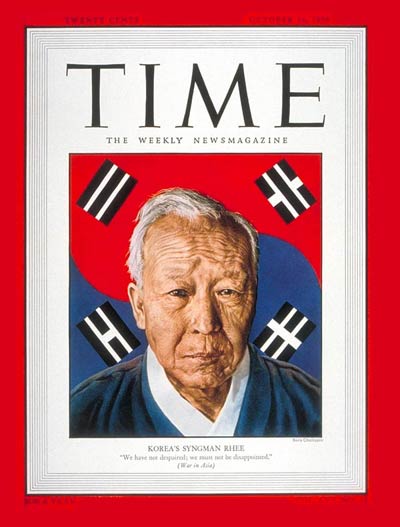
TIME Magazine Cover: 16th October 1960. Credit: TIME Magazine/BORIS CHALIAPIN

Payola 

This entry is completely believable, and it’s a wonder it didn’t happen sooner. The term payola refers to an illegal practice in the music industry, where a payment is made to a commercial radio station to play a song, but the station does not disclose the payment.

In 1959, a federal investigation was launched into the practice, which turned into a gigantic scandal. Over 330 DJs and radio hosts admitted to taking bribes to play certain songs over others. This led to criminal charges being levelled at radio hosts like Alan Freed, who was extremely popular at the time.

These investigations caused several people to lose their jobs and careers. An estimated $263,000 was accepted in bribes.

A modern equivalent would be in 2006, when a payola scandal involving record companies Universal Music Group, Sony, and Warner Music Group. Record labels were paying various radio stations for radio play, with settlements being over $30 million, after a New York Attorney General’s investigation.

Credit: Daily News

Kennedy

This is a straightforward reference involving John F. Kennedy being elected as the 35th president of the United States, defeating Richard Nixon. Kennedy served as President until his assassination in 1963. He was the second youngest person to be elected as President of the United States at 43 years old.

For comparison, Donald Trump was 70 years old when elected in 2016, Joe Biden was 78 years old and 61 days when elected in 2020, and when Donald Trump was elected for a second time in 2024, he was 78 years old and 220 days, making him the oldest person ever to be elected as President; just to point that out.

John F. Kennedy campaign button
Button from John F. Kennedy’s 1960 U.S. presidential campaign. Credit: Encyclopædia Britannica

Chubby Checker 

Cover songs can either work so well that the new version completely eclipses the original, so that people tend to think the cover is the original, or the cover song just simply exists, and pales in comparison to the original, or the cover and original both benefit from each other’s success. Trust me, I am going somewhere with this.

In 1960, Ernest Evans, aka Chubby Checker, released a song called, The Twist, which in fact was originally released by Hank Ballard and the Midnighters in 1958. The original was very popular in its own right and did very well in sales, but the cover sent the popularity of The Twist into the exosphere.

One of the reasons Chubby Checker’s version was popular, to the point that even if a nightclub in New Zealand played the song, people would know what to do, was the dance, or rather, a dance craze.

“Doing’ the Twist” twisted people on the dance floor around the world, but also helped in the United States, at least, by producing a dance that was popular with black and white audiences during the “Jim Crow” racial segregation era.

Naming cover songs that were successful and popular is one thing, while naming songs that introduce a dance craze is another. However, combining the two is a little more difficult, so the best that the staff at Some Geek Told Me can think of is Macarena, which is a remix from the Bayside Boys in 1995. You know the dance, I bet you do. Hey Macarena, ay!

Psycho 

I’m not a huge horror movie fan, but I can sit down and enjoy one. Granted, I may have my eyes shut or my hands covering my face, but I have seen the next entry. This, of course, reminds me that one day I’m going to write about my favourite movie directors.

Like the seamless transition of Sméagol to Gollum and back, this brings us to Psycho. I can’t remember where or when I first saw the movie, but I sure as hell remember what happened in it. Released in 1960, Psycho is arguably one of director Alfred Hitchcock’s most famous works.

Shot in black and white, Hitchcock gave audiences a ride they didn’t see coming, in the form of a ground-breaking masterpiece in Psycho, which covered a range of themes like guilt, madness, voyeurism, family, and morality. Not only did Psycho change thriller and horror movies forever, but movies in general as well.

With a budget of only US$800,000, it collected US$50 million at the box office, as well as being nominated for four Academy Awards, with Janet Leigh winning a Golden Globe for Best Supporting Actress in a Motion Picture.

For previous movie references in the song, Psycho did not win multiple awards, but rather changed how movies are made; it was revolutionary. In that vein, some modern movie comparisons include Pulp Fiction (1994), Toy Story (1995), Saving Private Ryan (1998), The Blair Witch Project (1999), The Matrix (1999), The Lord of the Rings Trilogy (2001-2003), and Avatar (2009).

Belgians in the Congo 

Belgians in the Congo means exactly what you think it does. For some much-needed context, in the 1870s, King Leopold II of Belgium was keen to have a Belgian colony in the Congo basin, which is located in Central Africa.

By the 1880s, he had effectively set up shop in the Congo basin. The people of the Congo Free State, as it was known, suffered atrocities with an estimated 1.5 million to 13 million deaths at the hands of Leopold’s policies and greed.

In 1908, the annexation became official, with the Congo Free State being rebranded as the Belgian Congo, thus becoming a colony of Belgium. The Belgian government began a massive suppression of rights and economic exploitation of the region and of its people.

After years of a fierce independence movement, the country achieved independence from Belgium on 30th June 1960. The new country was renamed The Republic of the Congo, then changed to Zaire, and changed again, to the Democratic Republic of the Congo, which is what it is called today.

After independence was achieved, the transition resulted in civil unrest, protests, and conflicts, which became known as the Congo Crisis (1960-1965). Various wars were fought, with Belgian troops trying to regain control of the country, as well as other factions and countries that were involved. This eventually served as a proxy war between the United States and the Soviet Union, just like the Korean War, Vietnam War, Angolan Civil War, and Afghan–Soviet War.

The Democratic Republic of the Congo went on to suffer wars in the shape of the First Congo War (1996-1997) and the Second Congo War (1998-2003), which resulted in a combined death toll of about 5.65 million people. The Second Congo War was the deadliest war since World War II, with parts of the country still being unstable because of armed conflicts, mainly between the Congolese army and the M23 rebel group.

Belgian paratrooper secures the restaurant terrace of Léopoldville (Kinshasa) airport, during Congo Crisis, July 1960. Credit: Unknown.

So, for 1960, we covered a spy plane being shot down, a South Korean president, a music scandal, a US president, a musician and his dance craze, a movie, and an armed conflict. Obviously, all of these references happened before I was born; however, it always pays to understand why things happened and how they are related to the world today. Well, to me at least, because I love history.

Thanks again for reading, following, and subscribing to Some Geek Told Me. My Twitter and Mastodon accounts are still producing daily data about the world, so please drop in to say hello.

Please remember to walk your dog, read a banned book, Grok is not always correct, and I’ll see you next week.


Jobs that I would suck at: Vol 2

I have not used enough self-deprecating humour for a while, so I had an idea. An awful idea. I had a wonderful, awful idea! I know what to do. I haven’t revisited this topic since last year, so perhaps it’s time for a review. In case you haven’t read the first thrilling instalment, here it is.

I left my job in April, and since then, I’ve been thinking about the possibilities that are open to me in the future, even though I have found a new job. Yay! Although I have mentioned this before, it’s nice to have a job that pays well and that you love, but you also need to have an interest in it and be qualified. That last part is awkward, at the very least.

The idea is that there are some jobs I feel I would be great at (on paper at least), and there would be some jobs, let’s face it, I would suck at. I have a certain set of skills that are only of interest to me, but can they be transferable to any job? Doubt it.

To reinforce what I said in the first blog post about this positive and uplifting subject, I will detail three jobs that I believe I would suck at. Whether I describe myself as being terrible, horrible, ill-suited, unqualified, or just wrong, these jobs would not be for me. This does not cover the pay rate; it just looks at whether the job would be a woeful match for me.

Also, please remember that if your job may appear here today or at a later date, that’s fine for you because I’m not saying your job sucks. I’m just saying your job would suck for me since I’m awkward. If you can do any of these three jobs, you’re a better person than I am!

So without further delays or hair combing, let me explain how I would be swiping left on these three jobs. And away we go!


Image by Gerd Altmann from Pixabay

Data entry operator who works from home

This is a rather specific job, and I will explain, so just hear me out. I’ve done data entry before, years ago, of a sort. It wasn’t 100% data entry because the day was broken up with other things that went with the job, but the bulk of it was data entry.

I struggled with the job, and one of the reasons I outlived the monotony was being able to leave my little office to venture out into the big, brave world. Now, take a similar job, where the job is just data entry, but I get to work from home, and it would be a disaster.

Let’s take stock of the potential problems I would face: raiding the pantry every 15 minutes for a snack, checking my emails every 3 minutes, constantly checking on whether any parcel or letters have arrived (only on Monday, Wednesday, and Friday), doing the washing and dishes, stopping to read a book or comics, checking on various new sites about the world, and checking updates on sport scores.

Regardless of whether I needed to pick the boys up from school or not, once they were home, forget about me achieving any work. And if my wife were at home, the tiny fraction of work I would be getting done would only be getting smaller. A two-minute conversation about lunch would turn into 45 minutes of talking about cartoons.

Working as a data entry operator from home would be a massive mistake for me, because I get too distracted while I’m on the computer. Just think about how long it’s taken me to write this section. I would never need to quit the job, because I would have been fired before that. I would suck as a data entry operator working from home.

Fencer

Now, before you start asking questions, no, I’m not talking about the sport or reselling stolen property. Oh no, I’m referring to the job of actually building and installing fences. You see, I’m not exactly a handyman, as I have great difficulty with building and making things.

My mum pointed out to me once that if there was a long and complicated way of doing something, you can bet that I would do it. This would transfer over to building things, as I would just stuff it up.

And even if you took away the fact that my fences would look like they were designed by a 4-year-old, or an earthquake has installed them, there is the social side to it. I can only imagine going around different farms, building fences, and talking to various farmers.

Talking to farmers is not the problem; it would be listening to the same stories and the same jokes, time and time again. I’m not sure how I could handle building wayward fences, with gaps in them like the government’s budget, but also sounding surprised and interested, when I’ve heard the same story or the same jokes from someone, every time I see them.

I can’t hide my emotions while I wear my face; it’s a giveaway to people, so not only would I be building poor, shoddy, and terrible fences, with holes in them that a rhino could slip through, I would go crazy listening to the repeated stories and jokes told by the same people. I would suck as a fencer.

Baker

This entry can be explained and broken down into three sections, because I would suck being a baker. Firstly, getting up so I can be at work by 4 am would get old extremely quickly. By 9 am, I would have to tape my eyelids back so I wouldn’t close them and fall asleep. Being sleep-deprived and working with blunt and sharp objects is a guaranteed way to injure myself or someone else.

I would have to go to bed before the boys did, which would be a sure-fire way to damage my marriage. Secondly, being a baker, you need to be able to follow recipes and work out the same calculations. By this, I mean I would be working with the same ingredients, but just halving or doubling the recipe. Every day. I won’t lie to you, I would have mental, emotional, and physical issues with that.

I would have to follow someone’s recipe, without ever fundamentally changing it, or perhaps, ever creating anything new. This leads me to the third reason: I’m not very good in the kitchen. Yes, I can prepare dinners, which are just variations of each other, but baking? No way. Even if I was smart enough to follow the recipe, the Good Lord did not seem to bless me with baking skills.

Somehow, someway, I would just mess it up. Whether it was baking cookies, cakes, buns, scones, or anything else would be a disaster. Cooking toast? Check. Boiling soup? Check. Steaming vegetables? Check. Cooking pasta? Check. Baking chocolate chip cookies? Um…just sack me, and get it over and done with.

I would never win any reality TV baking show. Not that I would be kicked off in the first round, oh no, I would not have been good enough to be on the show in the first place. I would suck as a baker.

Again, I’m very sorry if I have mentioned any of your jobs. It’s not you, it’s me. And that’s another blog post for another week.

Thanks for reading, following, and subscribing to Some Geek Told Me. I mean it. This project helps me to scoop out the negativity and replace it with something else, less smelly, and a lot crunchier.

Please remember to walk your dog, read a banned book, 15-year-olds are still children, and I’ll see you next week, because we are finally entering the 1960s. You know what I’m talking about. Please say that you do.


Why are the Ultimate and Absolute comics so popular?

Kia ora everybody, and how is November working out for you? I believe it’s going well for Zohran Mamdani, having been elected mayor of New York, but also for Donald Trump, who is enjoying throwing parties, falling asleep at work, and building a ballroom. Not him personally, of course. His bone spurs would prevent him from doing that.

On the other side of the equation, it’s not going so well for Prince Andrew and Nigel Farage, though they seem like two top blokes, so I’m sure they will bounce back.

As for me, I have been thinking about comic books lately, which, to be honest, is fairly typical. Before I prattle on any further, I need to issue a warning to any unsuspecting readers. This blog post will be discussing recent comic books, because…well, you know, I’m a geek. Always have been, always will be.

A few weeks ago, I learnt that Marvel had released a press statement that their comics involving the highly popular Ultimate Universe would end in April 2026. It was also around the same time that I discovered DC’s Absolute Batman #1 was one of the highest-selling comic books of 2024, with nearly 400,000 units sold, along with Marvel’s Ultimate Spider-Man #1, which sold around 450,000 units; both issues had multiple printings.

This, of course, had driven a pop culture splinter into my mind, among other things, which has forced me to ask a very simple question: Why are the Ultimate and Absolute comics so popular?

Because my writing is not always linear, to answer that question, we need to understand what the Ultimate Universe and Absolute Universe are first. Clear as mud? I thought so. Get ready for another pointless lecture.


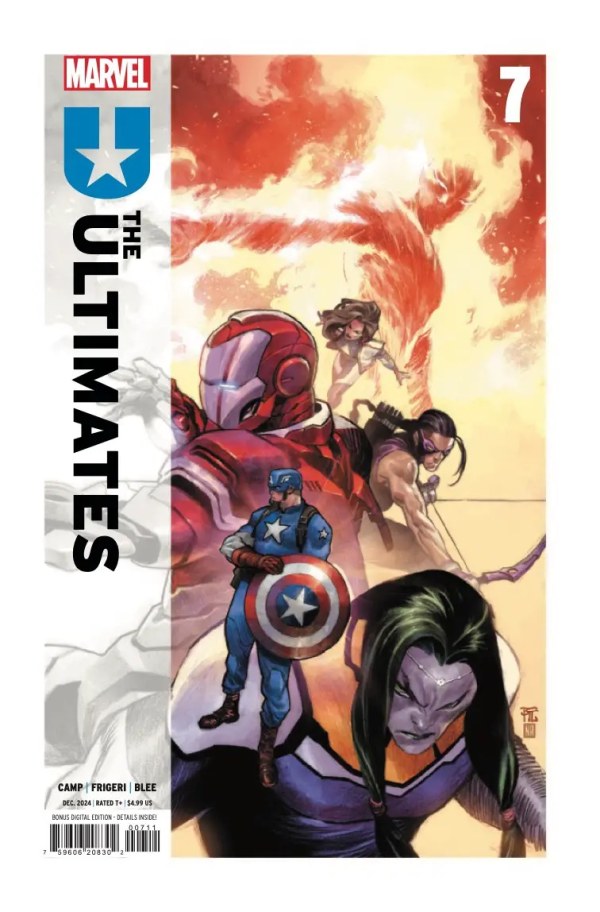
Credit: Marvel Comics & DC Comics

To build on what I have previously said about this subject, multiverse stories have existed in comics for decades. In fact, it’s one of the jewels in comics’ crown. Setting up well-known characters on different worlds gives the creative teams the freedom to design new costumes, powers, and motivations for their creations, without being part of the main continuity, aka the main line of comic books.

These worlds are comparable to the primary comic book universe represented by various comic companies, yet each one has its own unique differences. I want to emphasise this point: multiverse stories have been a part of comics for decades; they are not a new concept.

Let’s fast forward to the early 2000s, when Marvel launched a line of comics called the Ultimate series: Ultimate Spider-Man, Ultimate X-Men, The Ultimates (The Avengers), Ultimate Fantastic Four, and many others. Marvel designated this world to be Earth-1610, whereas the main Marvel world was Earth-616.

This series of titles reimagined characters like Spider-Man, Captain America, Wolverine, Mister Fantastic, and others to enter a different universe set in contemporary times. By doing this, Marvel allowed new and old generations of readers a chance to experience Peter Parker being bitten by a radioactive spider for the first time, along with Steve Rogers waking up from his frozen sleep in the 21st century, and various other changes. Miles Morales, one of the most popular characters created this century, was born in this world.

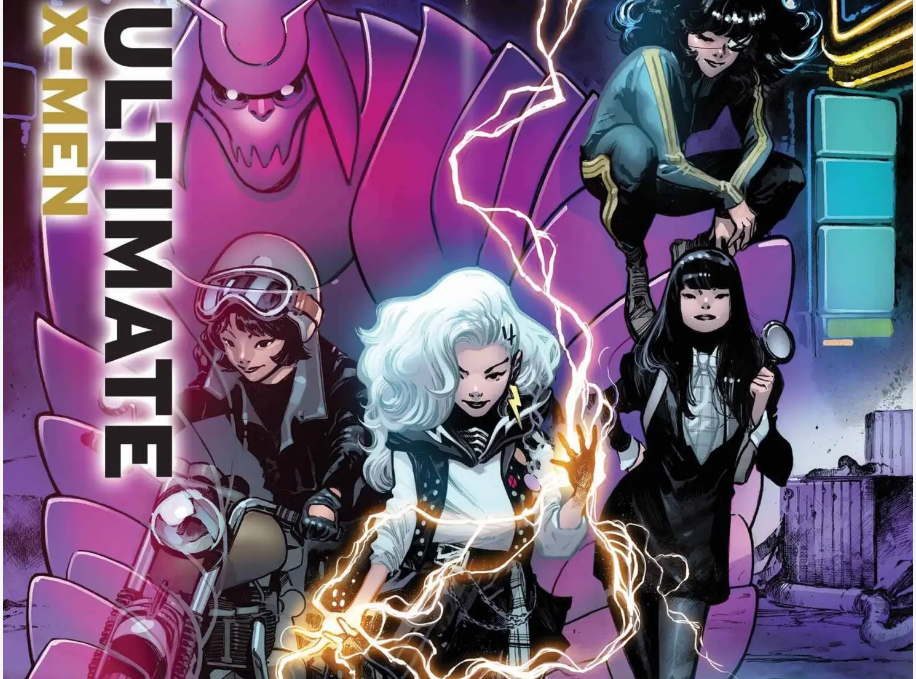
Credit: Ultimate X-Men

The Avengers from the Marvel Cinematic Universe (MCU) are based on the Ultimates, which are the version of the Avengers from that alternate world. These titles proved to be successful, and they lasted for some years before Marvel pulled the plug on the project.

A few years ago, Marvel relaunched the Ultimate line, which set the stories on the same alternative Earth, but to my understanding, the second volume of these titles did not have the same financial and cultural impact as the first round. In the end, the relaunched Ultimate line was closed down.

Let’s travel forward through time and arrive at 2023, when Marvel had started sowing the seeds of the Ultimate line once again; however, this world, Earth-6160, was a totally different Earth. As the months and years ticked by, The Ultimates, Ultimate Spider-Man, Ultimate Black Panther, Ultimate X-Men, Ultimate Wolverine, some mini-series and one-shots were released, to critical and financial acclaim.

In a nutshell, Earth-6160 was changed by the machinations of the Maker, a villainous Reed Richards from Earth-1610, the original Ultimate world. He did some crazy stuff to Earth-6160’s timeline, preventing characters from receiving superpowers or their creation, but also working behind geo-political scenes to control the world with others, who had carved up the world into regions that they control and manipulate.

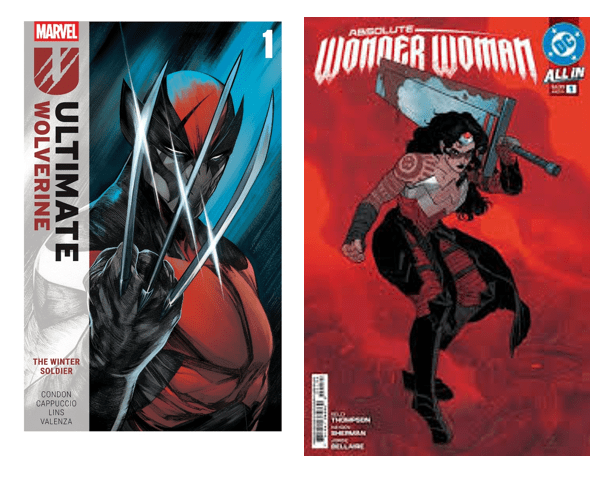
Credit: Marvel Comics

One of the core plot twists is that on this world, Peter Parker did not become Spider-Man as a teenager; he only gained his powers recently, as a married man with two children, which you get to witness. There are also some great redesigns for Black Panther, Hulk, mutants, Moon Knight, as well as having Earth-6160’s Doctor Doom being Reed Richards.

In October 2025, it was announced that the Ultimate Universe would be finishing in April 2026, because if I understand it correctly, that was always going to be the plan. What the condition of the Ultimate Universe will be after the Ultimate: Endgame mini-series is anybody’s guess, but what I can’t see is Marvel completely ending the line, since the characters and titles are popular.

All of the Ultimate Universe comics have been performing very well with monthly sales.

And with that amazing conclusion, we can now shift our attention towards DC’s Absolute Universe.

Identified as Earth-Alpha, this world had been influenced by Darkseid’s energy, having made cameo appearances in some earlier cosmic mini-series. I could be wrong about this, but the Absolute Universe seems to have been created and altered by Darkseid.

The natural order of systems has changed, resulting in villains gaining control and heroes becoming underdogs. This shift has also led to familiar yet distinct versions of the main characters from Earth-One. For example, Bruce Wayne’s mother is alive, and he is not wealthy. Kal-El arrived on Earth as an estimated 11-year-old boy, having been raised by Jor-El and Lara on Krypton rather than by the Kents. Additionally, Diana was trained to be a warrior-witch in Hell by Circe, without the influence of the Amazons.

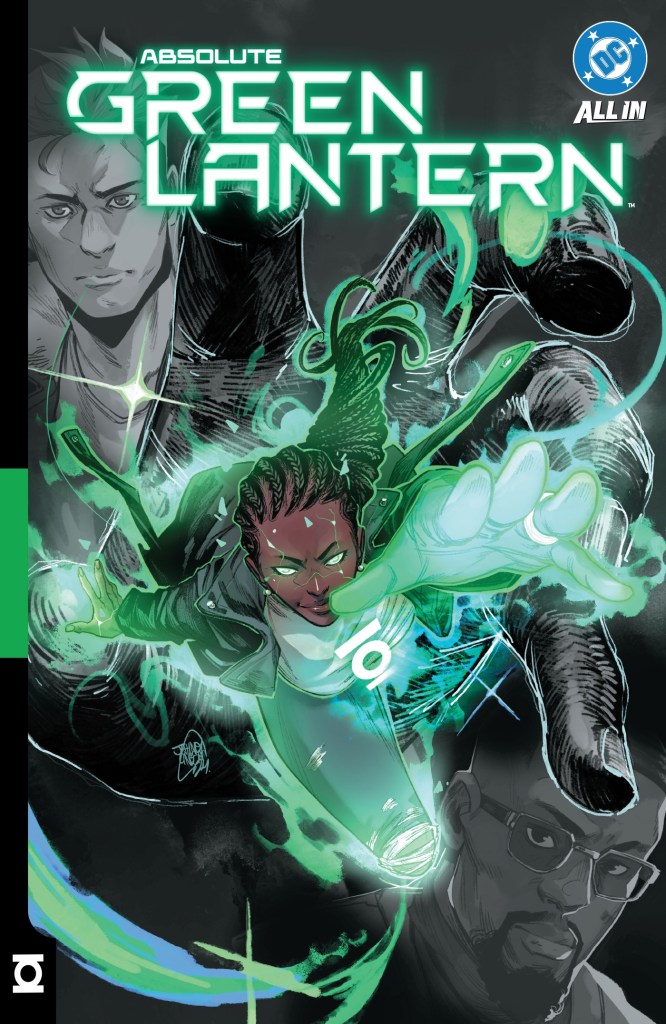
Credit: DC Comics

Like the Ultimate Universe, other titles have been released, like Absolute Martian Manhunter, Absolute Flash, and Absolute Green Lantern, all of which have had something missing or altered in their origin story. This also covers the redesigns for the villains, like costumes, genders, and motivations, in addition to turning Absolute Ra’s al Ghul into an Absolute Superman villain.

In July 2025, Absolute Wonder Woman won five Eisner Awards, claiming awards for Best New Series, Best Writer (Kelly Thompson), Best Colouring (Jordie Bellaire), Best Cover Artist (Lee Bermejo and Mike Deodato Jr.), and Best Lettering (Clayton Cowles).

According to reports, Absolute Flash #1 had over 180,000 pre-orders, which means it was the best-selling Flash comic since 1987’s Flash #1, and Absolute Martian Manhunter #1 sold over 120,000 copies, which is unheard of for a Martian Manhunter title. I have a soft spot for J’onn J’onzz, so I’m really happy for the creative team.

By February 2025, the Absolute Universe comics had sold over 2.5 million units, which includes multiple printings, for various issues across the titles.

So, the Maker has been pulling the strings of Earth-6160, and Earth-Alpha has been influenced by Darkseid. They sound like recipes for disasters to the superheroes, but also successful financial recipes for both companies. So if we have established what the Ultimate and Absolute comics are, why are they proving so popular with readers? Why are both lines outperforming their main counterparts in sales and awards?

I have a theory that consists of many parts, but I haven’t looked into this in great detail, to the point that I would be regurgitating someone’s professional opinion. This is coming from someone who has probably spent far too much love, time and money on comics. This is my opinion, so I haven’t based it on anyone’s work; it’s just me.

Credit: DC Comics

I will be honest about two things:
1.) I am currently buying and reading some Absolute titles; however, for the Ultimate titles, I am reading the trades through the library, so it’s a slow process.
2.) I have not read every single Ultimate or Absolute issue; I’m just doing what I can.

The Art

Obviously, comics without the creative team of artists, inkers and colourists would turn the medium into novels, so they are vital. Having said that, and in my personal opinion, the Ultimate and Absolute art teams have somehow raised the bar slightly.

We all know that monthly comic books are produced on a tight deadline, and if two Flash comics are released in a month, both Flash titles will not look 100% the same, because they were drawn by two different creative teams. If you read X-Men, then you expect Wolverine to look one way, but if you read Wolverine, the creative team is different, so you expect him to look how he looks in that title.

Within roughly two years, readers have become enamoured with the art team’s work on these characters. This comes in the form of fantastic costume redesigns (Ultimate Wolverine), explosions of colours (Absolute Martian Manhunter), and the physical differences of the characters, compared to the main universe versions we all know and love. We now expect to see a spell-tattoo on Diana’s right arm, Peter and T’Challa are rocking beards, and Bruce looks like a jacked-up UFC fighter. The art teams have been swinging for the fences.

Credit: Marvel Comics

The Writing

In the previous nonsensical section, I just praised the art teams on their stellar productions. I also have to talk about the other side of the coin: the writing.

You could have a comic with poor writing and poor art, great writing and great art, poor writing and great art, and great writing and poor art. Over the years, I have come across examples of these comics, but it always sends shivers down my spine when I read comics with excellent writing and excellent art.

The execution of these lines of comics has been amazing, because it’s been the concepts. The writers have had some roadblocks removed, so ideas have been flowing like an erupting shield volcano. Having both worlds altered by cosmic villains in the guises of the Maker and Darkseid, and having heroes, villains, and supporting characters changed, along with their costumes, has been, once again, in my humble opinion, masterstrokes of creativity and imagination.

J. Jonah Jameson and Ben Parker are portrayed as best friends, while only Thomas Wayne was shot and killed. Logan is depicted as the Winter Soldier, and Kal-El is shown growing up on Krypton. Additionally, Wakanda is in conflict with both the Upper and Lower Kingdoms, and Wally does not access his powers through the Speed Force. These examples illustrate the writing decisions that challenge our understanding of these characters.

Throw in geo-politics, cabals, and characters already going through growth and development, and the writing teams have understood their assignments. They are bringing their stories to the next level.

Credit: DC Comics

The Readers

The comic industry has been complaining about not enticing new readers since Adam was a cowboy. Companies try new strategies to do this, but they need to find the awkward balance of welcoming the next generation of readers while also catering to and keeping existing readers.

It looks like both Marvel and DC have found a niche market with readers, which has surprised even me. I thought I was done with reading monthly superhero titles when Invincible finished, but here I am reading the Ultimate and Absolute comics.

The two Earths (Earth-6160 and Earth-Alpha) cater to new readers because they don’t need 60 years of continuity and reading to understand the characters or previous storylines. They are not bogged down with these concepts because the Ultimate and Absolute comics allow them to experience a world inhabited by superhumans, from the ground floor on up.

New readers can join on Day 1 and follow the characters’ journeys through these two exciting worlds. They don’t complain about how the new heroes compare to the old ones or view these stories as a waste of time. Instead, new readers want to immerse themselves in these worlds. As long as the quality remains high, they will be happy to support the titles. That’s a good thing.

These comics also cater to the old and existing readers. Yes, these readers may have grown up with these fictional characters, so they know them so well, almost like long-distance family members. Now, however much these readers (like myself) like these characters, they are over 60 years old, with some of them over 80 years old.

The result is that the established readers want to see and experience new things with comics, not just the same storylines told differently. By exposing these readers to Earth-6160 and Earth-Alpha, it enables Marvel and DC to maintain those readers, since they are still giving them the adventures of their favourite characters, by doing different things with them.

Watching old heroes and villains emerge with new costumes, powers, and origins is as compelling as the first time they read about them. Who doesn’t want to read about heroes meeting their arch-enemy for the first time? Old readers want to be dazzled and surprised with plot twists and revelations, which can sometimes look forced with the main universe counterparts.

These worlds are new, and their potential and possibilities are endless, which shows how strong the reaction to them has been by the readers, with increasing and strong sales. Like I said earlier, multiverse stories have existed in comics for decades, so the Ultimate and Absolute comics are not an entirely original idea. However, their constant domination in the top 10 monthly best-selling comic books shows us that the mainstream comic industry still has drive and passion for storytelling.

Credit: Marvel Comics & DC Comics

I was not expecting the Ultimate and Absolute comics to be as amazing as they are, but that’s a good thing.

Have you read any of the Ultimate or Absolute comics? What are your thoughts? As always, please let me know.

And that brings this week’s lecture to a close. Thanks again for reading, following, and subscribing to Some Geek Told Me. Please remember to walk your dog, read a banned book, never trust a trash-diving raccoon, and I’ll see you next week.


Shakespeare movie adaptations that are hidden in plain sight: Vol 1

Step right up, step right up for another blog post detailing how humanity can cure cancer, solve climate change, and understand why children are weird. Oh, wait, I can’t answer any of those questions, sorry. At least not today.

Diving into the nearly five-year-old bag of suggested topics from the staff at Some Geek Told Me, I have selected a topic that, every six months or so, I decide to write, but talk myself out of it. However, the die has been cast, and the wait is over.

As hardcore followers of this amateurish attempt to educate people, you will know that this geek suffers from a Shakespeare affliction. I can’t recite speeches or explain what the hell the characters are saying. Though, to be fair, what I can do is explain the plots and the themes. Well, to be honest, it’s what I think the themes are, so I could be 80% wrong.

Granted, the works of William Shakespeare have lasted over 400 years, much to the disappointment of all secondary school students studying English. I love the motivations behind characters, both heroes and villains, as well as how relevant the stories can be to contemporary audiences.

Watching a Shakespearean movie or attending one of his plays automatically engages my brain to sit up straight, focus, listen, and try to keep up. Over the years, this has led the plays to be adapted into various media like movies, comics, novels, and TV shows, among others.

Some adaptations would keep Shakespeare’s language of Early Modern English, while others would use Modern English, but still keep to the plot. Some adaptations are set in 16th-17th-century Europe, others in modern times, while others are set somewhere in between or earlier.

For today’s lecture, we are going to look at one group of these adaptations: the movies. Typically, it’s quite easy to identify a Shakespeare movie adaptation, because of its name: William Shakespeare’s Romeo + Juliet, Henry V, Othello, Richard III, Hamlet, and Coriolanus, to select but a few.

They are direct adaptations, or as close as a film production can allow. However, young grasshopper, there are a small group of movies that are indirect adaptations of one of Shakespeare’s plays, but they are not advertised as that, for whatever reason. Several films can fit into this niche, so this blog post will be the first of many; the single consideration is that I’ll try very hard to only have one movie per play.

So, for your reading pleasure, I have collected four examples of movies that are secretly Shakespeare adaptations. I hope you enjoy this as much as I did writing it. Let’s begin now.


Image by beauty_of_nature from Pixabay

West Side Story (Romeo and Juliet)

We are going to start with a very obvious one, and for good reason. West Side Story was originally a musical adaptation of Romeo and Juliet, which had opened on Broadway in 1957. The production was a huge success, so a film was produced, based on the musical.

The film was released in 1961, which is what we will be comparing. In the Upper West Side of Manhattan, New York City, in 1957, is where we lay our scene. In comparison, Romeo and Juliet was written sometime between 1591 and 1595.

Both stories deal with star-crossed lovers, in the form of Romeo Montague and Juliet Capulet, along with Tony (Richard Beymer) and Maria (Natalie Wood) from West Side Story. The House of Montague and the House of Capulet are feuding families in Verona, with Romeo and Juliet belonging to opposite houses.

Maria’s older brother, Bernardo (George Chakiris), is the leader of the Sharks, a teenage street gang, looking to control the Upper West Side. The Jets are a rival gang of which Tony was a co-founder and former member.

Trying to keep the warring families at bay in Romeo and Juliet is Prince Escalus, with the equivalent being two characters, Lieutenant Schrank (Simon Oakland) and Sergeant Krupke (William Bramley) in West Side Story. Other similar characters are Mercutio, Romeo’s friend, and Riff (Russ Tamblyn), best friend to Tony; Tybalt, Juliet’s cousin, is Bernardo; while Count Paris, Juliet’s suitor, is Chino Martin (Jose De Vega).

The two stories follow events to their tragic conclusion, but with a subtle difference. In Romeo and Juliet, Mercutio is slain by Tybalt, Tybalt is then slain by Romeo, Paris is killed by Romeo, and both Romeo and Juliet kill themselves. Both Houses are in mourning, and thus, the feud ends.

In West Side Story, Riff is murdered by Bernardo, who, in turn, is killed by Tony. However, you are expecting Tony to kill Chino, but it’s the opposite; Chino shoots and kills Tony. Maria threatens to kill Chino, the Jets, and the Sharks because of their hatred, which has taken the lives of Riff, her brother, and her lover. In the end, she backs down, but she ultimately survives the carnage, and the feud ends.

On a personal note, Romeo and Juliet is often described as the world’s greatest love story. It’s not the ultimate love story; it’s one of the world’s greatest tragedies. Much like West Side Story, love, violence, hatred, and prejudice are woven into both tales to tell and explore the human experience. West Side Story is a love story as well as a tragedy. Tony dies, but Maria lives, so hope remains. As for Romeo and Juliet, their tragedy is complete, for never was a story of more woe, than this of Juliet and her Romeo.

The Lion King (Hamlet)

I’m sorry to point this out and possibly damage your childhood, but I am not the first person to say this; the story of The Lion King is actually Hamlet in disguise. Wait, just hear me out.

This tragedy has a prince who goes into mourning as his father, the king, has died. The prince’s uncle, his father’s brother, ascends the throne. The prince goes into exile with two friends and returns years later to a kingdom that is rotten.

If you had thought I had just explained Simba’s story when it came out in 1994, you would be correct; however, it also mirrors Hamlet’s journey, which was written between 1599 and 1601. The stories share characters and their equivalents, with Simba (Hamlet), Mufasa (King Hamlet), Scar (Claudius), Nada (Ophelia), and Zazu (Polonius), along with Timon and Pumbaa (Rosencrantz and Guildenstern).

Even though the early 17th-century royal court of Denmark is swapped for the plains of the Serengeti in Tanzania, the plots have parallel events, though not entirely. Both kings are murdered by their brothers, who take the throne and are terrible rulers; both kings appear as ghosts to their sons and give advice; Simba and Hamlet have a love interest in Nada and Ophelia, respectively; both princes go into exile; and Scar and Claudius both die at the end.

Disney could have gone all in with a more accurate adaptation with Simba killing Nala’s father by accident; Simba’s mother, Sarabi, marries Scar; Nala commits suicide by drowning; Simba goes mad with grief and vengeance; another pride of lions invades and takes over the Pride Lands; and lastly, Sarabi, Scar, and Simba, all die in the closing scene. It would have been a beautiful nightmare, with Simba/Hamlet’s story haunting a generation of children, all over the world.

10 Things I Hate About You (The Taming of the Shrew)

Viewed through a contemporary lens, The Taming of the Shrew can be some what problematic, considering it was between 1590 and 1592, when it was written. However, that did not stop Hollywood from having a crack at it. Back in 1999, 10 Things I Hate About You was released, and even though the titles were different, it was based on The Taming of the Shrew.

I hope the Bard can forgive me for breaking his comedic play down like this, but The Taming of the Shrew was set in Padua, Italy, where we met a nobleman, Baptista Minola, who has two daughters, Katherina and Bianca. Many suitors would like to marry Bianca, but her father has decreed that Bianca can only get married when Katherina does, but no man wants to because of her assertiveness, along with her quick and sharp wit.

Some plans focus on the suitors Hortensio and Gremio, but also include Lucentio, who also wishes to marry Bianca, and Petruchio, tasked with wooing Katherina. Typical Shakespearean romantic mischief ensues, with everyone ultimately finding love.

10 Things I Hate About You shares many plot points, names, and characters with The Taming of the Shrew. The film is set around the students who attend Padua High School. Walter Stratford (Larry Miller) has two daughters, and you guessed it, Katarina (Julia Stiles) and Bianca (Larisa Oleynik). Like a similar decree from Baptista Minola, Walter explains that Bianca is only allowed to date when her older sister does.

Enter Cameron James (Joseph Gordon-Levitt), who has fallen for Bianca, so he enlists help from Patrick Verona (Heath Ledger) to woo the anti-social Katherina, so Cameron can date Bianca. By the end of the film, everybody is happy like a 90s high school film should be. It also had a Shakespeare reference with Sonnet 141.

O (Othello)

If you have been keeping score, and why wouldn’t you be, we have discussed two tragedies and one comedy. I’m a bit inclined to favour the tragedies, since they can teach us a lot about ourselves. Case in point, here is another tragedy, Othello.

Written about 1603, the story of Othello is a blueprint of having it all and losing it to jealousy. It’s a cautionary tale about Othello, a military commander, who is tricked and manipulated by one of his lower-ranked officers, the traitorous Iago, into believing that his wife, Desdemona, is having an affair with another officer, the loyal Michael Cassio.

In some academic and literary circles, Iago is considered to be the worst villain in all of Shakespeare’s works, and it’s not a surprise; he ruins lives. By the end of the play, Iago had murdered his wife, Emilia, and Roderigo (a nobleman), while stabbing Cassio, but not fatally. Othello had murdered Desdemona by smothering her, because of Iago’s lies, then realised Iago was behind it all, and stabs him, but he survives.

Othello then commits suicide by stabbing himself. Iago is arrested and taken away, but famously refuses to explain his motivations. Othello has mischief and hijinks, but it is not comedic; it’s just fraught with paranoia and jealousy.

Like 10 Things I Hate About You, O is set in modern times, with American teenagers. Mekhi Phifer stars as Odin (Othello); Josh Hartnett as Hugo (Iago); and Julia Stiles is back again, but this time she plays Desi (Desdemona). We also have Andrew Keegan as Michael Cassio (Michael Cassio), Elden Henson as Roger Calhoun (Roderigo), Rain Phoenix as Emily (Emilia), John Heard as Bob Brable (Brabantio, Desdemona’s father), and Martin Sheen as Coach Duke Goulding (The Duke of Venice).

The story of O does not centre around soldiers and officers, but rather high school basketball players and students. O follows the events of Othello, with Hugo manipulating people and events, but the end is still the same. Hugo shoots and kills Roger, along with his girlfriend, Emily. Odin strangles Desi to death, then shoots himself after learning that his friend, Hugo, had caused all of the chaos. Hugo, vowing not to reveal his motivations, is arrested by the police.

As I said earlier, many more films have been based, even loosely, on Shakespeare’s works, and this blog post will return to discuss more of them. But like I also said, only one movie per play, so Romeo and Juliet, Hamlet, The Taming of the Shrew, and Othello are done, with more to follow.

Do you have a favourite movie that is secretly a Shakespeare adaptation? As always, please let me know.

That’s it for me this week. Thanks again for reading, following, and subscribing to Some Geek Told Me. Please remember to walk your dog, read a banned book, donate to a food bank, and I’ll see you next week, where I discuss comics for a change.