
I was thinking the other day about our finite time on this beautiful planet. We try to use it by developing various skills and spending time with our loved ones. And then there is this project, which I don’t fully understand where it would fall.
Yes, dear reader, one of the worst ideas I have ever had has returned with a vendetta against logic and reason. Some Geek Told Me is proud to present the latest instalment of We Didn’t Start the Fire, where we examine the historical references of the song.
For the previous non-award-winning entries of the song, please see below to be stunned into submission!
We Didn’t Start the Fire: The Beginning
We Didn’t Start the Fire: 1948-1949.
We Didn’t Start the Fire: 1950
We Didn’t Start the Fire: 1951
We Didn’t Start the Fire: 1952
We Didn’t Start the Fire: 1953
We Didn’t Start the Fire: 1954
We Didn’t Start the Fire: 1955
We Didn’t Start the Fire: 1956
We Didn’t Start the Fire: 1957
In 1957, there were many shenanigans, so 1958 might be a nice change of pace. So strap yourself in, because we’re going back to 1958! Make it so!
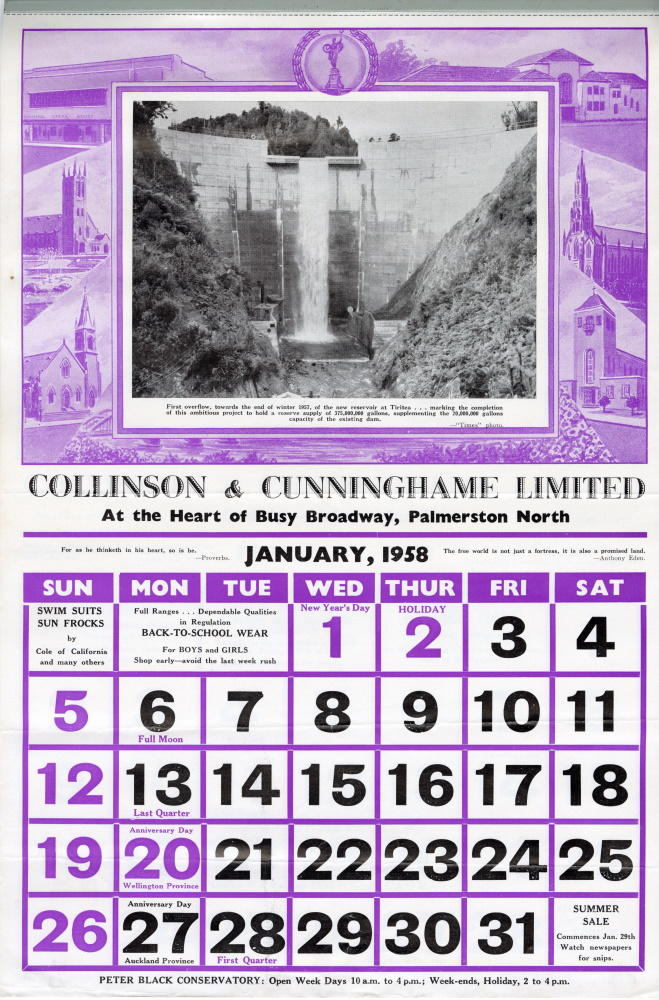
1958
Lebanon
Lebanon is a country that can be found in the region called the Middle East and has a deep and rich history, dating back to at least 5,000 BCE. It borders the Mediterranean Sea to the west, with Cyprus just 240 km off the coast. Syria lies to the north and east of Lebanon, with Israel and the Golan Heights to the south. Lebanon has a population of approximately 5.84 million people, similar to New Zealand, which has a population of about 5.3 million. The capital city, Beirut, has an estimated population of 2.3 million.
1958 was the year of the Lebanon Crisis, where the country was thrown into political and religious turmoil. At the time, the President of Lebanon was Camille Chamoun, and he was in the sixth and final year of his term.
Some of the issues Lebanon were facing included tensions between Christians and Arab Muslims flaring up; Egypt and Syria had merged to create the United Arab Republic (UAR) and wanted Lebanon to join them; an armed rebellion had formed; along with Chamoun wanting to seek another term, which went against the Constitution of Lebanon.
The problem was brought to the attention of the United Nations Security Council, and one proposed solution involved United States President Dwight D. Eisenhower leading an intervention at the request of Chamoun. Under Operation Blue Bat, he sent 5,000 marines to secure the Port of Beirut and Beirut International Airport. This lasted from 15th July to 25th October 1958.
The legacy of the Lebanon Crisis was that Chamoun did not attain a new term, with Fouad Chehab becoming the President of Lebanon, and a national reconciliation government was formed. Sadly, Lebanon went on to suffer a civil war for 15 years, which killed an estimated 150,000 people, coupled with conflicts with Israel, the Syrian Civil War, the Arab Spring, the October Revolution, and a financial crisis, Lebanon is now identified as a failed state.

LIFE Magazine Cover b/w © Time Inc.
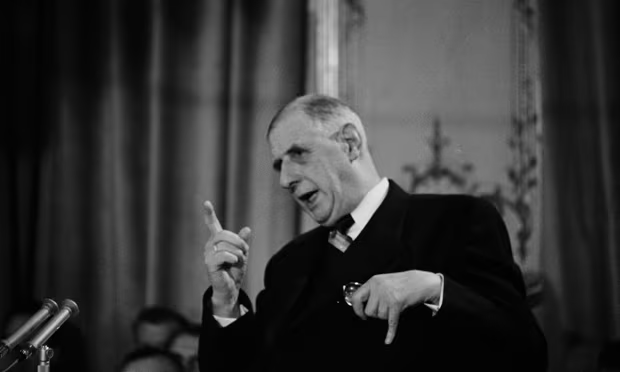
Charles de Gaulle
Charles de Gaulle remains a famous French icon, over 130 years after his birth. Born in 1890, de Gaulle was a veteran of the First World War, and after the war ended, he stayed with the army. This led him to gain worldwide attention later on during the Second World War, after de Gaulle was promoted within the army and the government, to the point where he was in charge of the Free French Forces against Nazi Germany.
After the war, de Gaulle remained within the government in various roles until 1946. However, in 1958, Algeria was involved in an armed conflict to wrestle its independence from France.
Charles de Gaulle re-entered French politics during a crisis in the Fourth Republic, particularly regarding Algeria, during the 1958 election. He was appointed Prime Minister and granted special powers to address the Algerian Crisis, as many believed he was the only person capable of resolving it.
This led to de Gaulle drafting a new French Constitution, which established the Fifth Republic of France, where he was subsequently elected as the first President of the Fifth Republic. Although Algeria won its independence from France on 5th July 1962, de Gaulle remained President until 1969.
A contemporary equivalent for de Gaulle would be someone who was a war hero and then entered politics. History is filled with such people, however, I’ll go for George H.W. Bush, Bajram Begaj, Hashim Thaçi, Aslan Maskhadov, and Min Aung Hlaing, along with many others.
California baseball
This is not the first time a baseball team has appeared as an entry on one of our lists. California baseball refers to the New York Giants, who had played in the National League, in MLB (Major League Baseball), since 1883. They were based in…wait for it…New York; Upper Manhattan to be precise.
One of their rivals was the Brooklyn Dodgers, who managed to grace the 1955 edition of We Didn’t Start the Fire. At the end of the 1957 season, the New York Giants and the Brooklyn Dodgers left New York and moved to California. They transformed into the San Francisco Giants and the Los Angeles Dodgers, all ready for the 1958 season so they could continue their feud.
After moving to California, the Giants won the World Series in 2010, 2012, and 2014. I’ve stated this before, but I’m not a baseball expert, so for a modern example of a baseball team relocating recently, I think the Oakland Athletics moving to Las Vegas, Nevada is a clear winner.

Starkweather homicide
Alright, here’s a historical reference from 1958 that is still sending ripples through time. Between November 1957 and January 1958, Charles Starkweather killed 11 people and two dogs, accompanied by his girlfriend, Caril Ann Fugate. The victims’ ages ranged from 2-70 years old, with the 2-year-old being Betty Jean Bartlett, Fugate’s sister.
Starkweather killed his first victim on 30th November/1st December 1957, then went on to terrorise the US states of Nebraska and Wyoming. The Starkweather homicides gripped the American public, which had resulted in a large manhunt for the couple. They were finally captured by authorities near Douglas, Wyoming, on 29th January 1958.
After he was found guilty, Starkweather was executed by an electric chair on 25th June 1959, while Fugate was given life imprisonment, though she was released in 1976.
The Starkweather homicides have spawned many adaptations and variations across television, film, books, comics, music, and video games.
Starkweather has been characterised as both a serial killer and a spree killer. The term spree killer is often used interchangeably with rampage killer or shooter. If you’re looking for a modern equivalent in 2025, simply reading a newspaper or watching news videos will help you find the latest incidents of spree killings, no matter where you are in the world.

Children of Thalidomide
Children of Thalidomide refers to the Thalidomide scandal that swept the globe. Thalidomide was first introduced in 1957, under the name of Contergan, and it was a revolutionary new drug. It was marketed as an over-the-counter medication, that could help with tension, sleeping, anxiety, and morning sickness.
Health authorities around the world began to observe three troubling trends: an increase in infant deaths shortly after birth, a rise in miscarriages, and a growing number of babies born with deformities such as heart, arm, leg, eye, and urinary tract defects. A common factor associated with these alarming trends was the use of thalidomide by pregnant women. Approximately 300 million tablets of thalidomide were sold during this time.
By 1958, the Thalidomide scandal was in full effect across the planet. Soon, country by country were starting to stop the sale of thalidomide and introduced legalisation to ban the drug. It was later discovered that thalidomide caused birth defects by disrupting the development of blood vessels in the embryo.
The Thalidomide scandal prompted many countries to review their drug regulatory policies, resulting in enhanced monitoring of these regulations. The effects of this are still observed today with stronger drug regulations worldwide.
In the last 15 years, many drugs have been withdrawn because of safety concerns, which have included Ingenol mebutate gel, Lorcaserin, Ranitidine, Flupirtine, Tetrazepam, Drotrecogin alfa, Propoxyphene, Gemtuzumab ozogamicin, Ozogamicin, and Rosiglitazone, to name but a few.

So for 1958, we covered a country, a war hero-turned-politician, a baseball team, a spree killer, and a dangerous over-the-counter drug. One of the biggest points about the historical references for 1958, is how these events are still being echoed in 2025.
So that’s it for another week. The 1960s are just months away, but we need to face 1959 first, so hang in there. Thanks again for reading, following, and subscribing to Some Geek Told Me. My accounts on Twitter and Mastodon, are still there, doing whatever the opposite of cool is.
This is a good time to remind my amazing audience that my mid-year break is coming up soon, where I take a well-deserved two-week holiday from running New Zealand’s 5th least favourite website. It’s hard work producing low-quality content.
Anyway, please remember to walk your dog, read a banned book, swipe right on diplomacy, and I’ll see you next week.
 SOME GEEK TOLD ME
You must be logged in to post a comment.