Thunderbolts*: Movie Preview

Here we are again at the start of a new movie preview, brought to you by the mind of the person who writes about many pointless things. Well, discussing movies, science, politics, and comics is never meaningless.

As I have previously mentioned, because repeating things helps me to remember to do things, I plan to watch more comic book movies at the cinema, because if we don’t go to watch them, they’ll stop making them. Maybe that would make many people happy, but I am not one of them.

My last preview/review was Captain America: Brave New World, so for our next movie preview instalment, we are headed back to the Marvel Cinematic Universe (MCU) with the Thunderbolts*. It opens in New Zealand on Thursday 1st May, as the 36th MCU movie. I’m about 98% sure Darkhawk or Sleepwalker will not make a cameo, but hope springs eternal.

Our only cinema is having an advanced screening of Thunderbolts* on Wednesday 30th April, and yours truly has secured a ticket. Like always for my films, I walked into the cinema to buy the ticket, mainly because I didn’t want to pay the extra fees via their website.

Anyway, a strange pattern happens when I purchase an advanced ticket. I casually mention I’m going to be writing a review about the movie, and name-drop my website. The staff member will stare at me blankly, so I stop talking, pay for the ticket, and leave as fast as The Flash running to an all-you-can-eat buffet.

So, who or what are the Thunderbolts?

For those unfamiliar with comic lore, here’s a brief history lesson: the Thunderbolts first appeared in The Incredible Hulk #449 in 1997. They later received their own monthly title, which launched three months after their debut with Thunderbolts #1. I own both of these issues because I’m a geek. They even had a cool slogan: “Justice, like lightning!”

Marvel had previously done a company-wide crossover event in 1996, in the form of Onslaught. By the end of the storyline, The Avengers and The Fantastic Four had disappeared, and for all intent and purposes, the public thought they were dead.

Enter the Thunderbolts, a new heroic super team to step into the void left by the absent heroes. Before I go on, one thing I love about comics is when something major happens, whether it is the appearance of a new character or the return of an old one, a death, revelation or a twist, and the company does not advertise it. It sneaks up on you, and as you turn the page, it hits you. Such is the case with the Thunderbolts.

The twist was that the Thunderbolts were not the superheroes they made out to be, but rather the Masters of Evil, a supervillain team, primarily slugging it out with the Avengers. Led by Baron Zemo, their goal was to gain access to national and international secret information and to further their mission with organised crime and world domination.

Another plot twist came when some Thunderbolts members started to dislike acting as superheroes, but rather liked being a superhero. After internal strife, the team eventually came under the control of the government and became a government-sponsored team, filled with reformed supervillains, similar to DC’s Suicide Squad.

The film will, to the best of my knowledge, mainly focus on characters we have met before, whether they are from a television show or a movie. These include Yelena Belova (Florence Pugh), Bucky Barnes (Sebastian Stan), John Walker/ U.S. Agent (Wyatt Russell), Antonia Dreykov / Taskmaster (Olga Kurylenko), Alexei Shostakov / Red Guardian (David Harbour), Ava Starr / Ghost (Hannah John-Kamen), and Valentina Allegra de Fontaine (Julia Louis-Dreyfus). The exception is Lewis Pullman’s Sentry, who I think plays the film’s antagonist, via the Void.

The film’s budget is about $200 million, so the expectations are high. Aside from TV’s Loki, I think this is the MCU’s first film that is centred around villains, but I could be wrong.

Ok, I have waffled on long enough, it’s time for the preview!
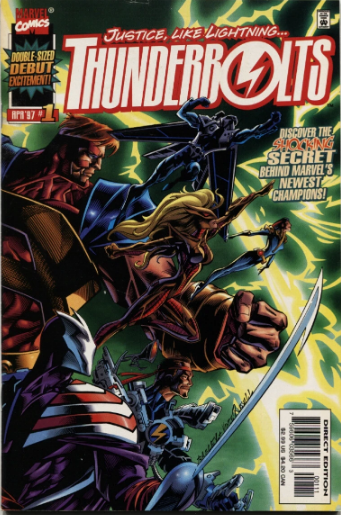

Thunderbolts #1 (1997) Credit: Marvel Comics

Am I looking forward to watching Thunderbolts*?

It’s a stupid question, I know, but I need to ask it. I’m looking forward to it as much as Popeye likes to eat spinach. To keep my promise of supporting comic book movies, I need to keep buying tickets. Plus, it’s a cool way to escape for two hours.

I have the habit of mentioning this, but it’s the truth. I don’t have Disney+, so I haven’t been able to watch key TV shows like The Falcon and the Winter Soldier, which have introduced some of these characters. Having said that, I’ll go back to Wikipedia and read the summary of the show. That sounds great, doesn’t it?

Because there is an ensemble cast, the dialogue will hopefully be sharp and witty. Hopefully.

I do have a small reservation about how they are going to handle and introduce the Sentry, a somewhat-Superman-type character into the MCU. His power level is off the chart, but his mental instability is another matter altogether. I hope they get it right, but is there a correct way to introduce a mortal god?

The box office did not support Captain America: Brave New World very well, which seems to be the new standard for superhero movies. Will Thunderbolts* suffer the same fate, or will it fare better?

What is the movie about?

According to Marvel.com, the premise is this:

Marvel Studios assembles an unconventional team of antiheroes—Yelena Belova, Bucky Barnes, Red Guardian, Ghost, Taskmaster and John Walker. After finding themselves ensnared in a death trap set by Valentina Allegra de Fontaine, these disillusioned castoffs must embark on a dangerous mission that will force them to confront the darkest corners of their pasts. Will this dysfunctional group tear themselves apart, or find redemption and unite as something much more before it’s too late?

What can we expect?

The running time is 126 minutes, which means it just surpasses the two-hour mark, so be sure to pace yourself with drinks. I’m not sure what the rating is for other countries, but Thunderbolts* has received a PG rating in New Zealand, and I’m uncertain how to interpret that.

I can imagine the plot is going to be fast, because of the size of the cast, but also, the team has to break up before it’s reformed to save the day. I expect to see some great fight scenes, whether the Thunderbolts are fighting themselves or other people.

Since I don’t know The Falcon and the Winter Soldier very well, I can only guess that Valentina Allegra de Fontaine, is like an Amanda Waller-type character; a government director who has no time, patience, or respect for the members of the team, other than getting the job done; or if she is playing her own game. Who knows?

As always, since this is an MCU film, there will be references and cameos to appease the die-hard super fans, though I wonder how many I’ll miss!

Do I have concerns?

I’ve said this before, but I will always have concerns about superhero movies. Will they stick to the source material as much as possible, or will they stretch their creative limbs and do something outrageous? Is that a positive or negative thing? Who knows?

Here are some of my questions:

  • How accessible will Thunderbolts* be to viewers who have not seen the Disney+ TV show, The Falcon and the Winter Soldier?
  • Does the plot make sense?
  • Will the movie reference Captain America: Brave New World, or hint at The Fantastic Four: First Steps?
  • Why are the Thunderbolts involved in the first place?
  • Can the absence of the Avengers in the movie be believed?
  • Will the introduction of the Sentry be a success or failure?
  • Will other MCU villains be making appearances?
  • Will Taskmaster have a larger role than in Black Widow?
  • Can they truly explain how the Sentry got his powers?
  • How does Bucky fit into the plot? He is a free citizen, correct?
  • Where is the film’s continuity in the MCU?
  • Do the Thunderbolts have a choice to be in the team?
  • Does Valentina Allegra de Fontaine betray the Thunderbolts?
  • Will any of the Thunderbolts go free at the end of the movie?
  • Do the Thunderbolts only protect the United States?

There are probably more questions rattling around in that tiny mind of mine, but they will have to wait.

I’ve not read or heard any reviews about the movie, so I’m still optimistic about it, but I’ll let you know my thoughts next Monday with the review. Before I go, I want to address two things. The first is that my last day went better than I thought it would. I didn’t cry once!

The second thing is that I know the world is currently a scary and sad place. News keeps pouring in about Palestine and Ukraine, coupled with tariffs, the cost of living, and everything else. I get it. My preview about a movie that millions of people will never see, seems a touch removed from reality. I get it, I really do.

Just hang in there, I mean it. Look after yourselves and your family, and if possible, other people.

Thanks once again for reading, following, and subscribing to Some Geek Told Me. Remember to walk your dog, read a banned book, and hang in there, and I’ll see you this weekend for two special blog posts. It’s the start of May, so try and guess what’s happening!

Friends, Romans, countrymen, lend me your ears, because I have some boring news for you

I’ve never dedicated an entire blog post to updating you with news before, at least about me. But, there’s a first time for everything, like trying Sour Cream and Chives for the first time. Your brain wants to shut down to stop feeling the vile taste.

Anyway, this blog post is slightly shorter, because of three main reasons. No, it’s not 20 questions, so I’ll tell you.

1.) I’m writing this before Easter because I will be busy over the weekend. Yes, I’m doing something at Easter, so the chances of me sitting down to work on New Zealand’s 5th least favourite website are slim. Not impossible, just slim, so I thought I would be prepared.

2.) As New Zealanders, we generally don’t boast about our achievements. This tendency stems from our history of being an isolated and pragmatic people. I’m not one to discuss my accomplishments or lack of. However, I feel compelled to share something significant that happened last weekend.

Long-time followers and subscribers of this wayward blog will know that I like running. To be honest, it’s somewhere between walking and jogging, but I pretend it’s running. Last weekend, I ran in one of my favourite half marathons, and something odd and wonderful happened.

2014 was the last time I ran a half marathon in under 2 hours. I’ve come close, dangerously close to that time, but that target has alluded me for over 10 years. In all honesty, I accepted the fact that I would probably never run another half marathon under 2 hours again. I thought my body had said, “To hell with that, we can’t do that anymore!”

By now, you can see where this is headed. For the first time since 2014, I ran a half marathon in under 2 hours. I know that in the grand scheme of things, it may not seem significant, but honestly, I thought I would never achieve this again. It’s surprising to realise I’m faster than I was in 2015, which feels almost unbelievable to me. In that sense, I feel proud of myself, which is a bizarre feeling.

It will sometime before that happens again. Maybe.


Image by Gerd Altmann from Pixabay

3.) For us, we are well and truly into Autumn, with Winter popping its ugly head up now and then. And just like the inevitability of the seasons and an Australian Prime Minister changing, we all change. This brings me to the biggest update, I’m changing jobs. I resigned in February, and the 24th of April will be my last day.

I’ve been there for nine years, and in the field for 16 years, but I’m going to be working for myself. I’ll be in the same industry, just adjacent to what I had been doing, which is equally exciting and horrifying, given how New Zealand and the world are currently.

Over the last few weeks, my emotions have felt like they are on a rollercoaster, and with my last day arriving soon, I’m sorry to report those emotions will probably just intensify. No doubt I’ll shame Chuck Norris by shedding a tear by the end.

I have no idea if this will work out, or even if it’s a good idea, but if the world’s most famous 78-year-old convicted felon has taught me anything, it’s that you can’t take anything or anyone for granted. I’m trying to look at the world differently, but also to try and do things differently.

I’ll let you know how things went on for the last day, but also how the new job is working out. Oh, look at me being all hopeful and positive!

Ok, that’s it for today. I promise I’ll get back to writing pointless posts like doing a Thunderbolts* Movie Preview next week.

Please remember to walk your dog, read a banned book, go fly a paper airplane, and I’ll see you next week.


We Didn’t Start the Fire: 1957

As the tariffs continue, so do the days of our lives. In our daily routines, we can choose what we do, including dissecting a 36-year-old song, even though it has been analysed before.

Because you’re a clever person who likes to get at least 10 hours of sleep and loves eating Vegemite, you would have realised I’m talking about one of my dumbest ideas, explaining the historical references in Billy Joel’s We Didn’t Start the Fire.

I started this pointless project in February 2024, and I’m still stuck in the 50s. I’ll probably retire before I finish it. For those unfortunate people who have missed out on the past entries, fear not, for I have the complete list.

 We Didn’t Start the Fire: The Beginning 

We Didn’t Start the Fire: 1948-1949.

We Didn’t Start the Fire: 1950

We Didn’t Start the Fire: 1951

We Didn’t Start the Fire: 1952

We Didn’t Start the Fire: 1953

We Didn’t Start the Fire: 1954

We Didn’t Start the Fire: 1955

We Didn’t Start the Fire: 1956

After reflecting on the historical events of 1956, I’m ready to delve into 1957, which promises to be just as wild and challenging. Like before, get ready for an adventure because we are traveling back in time with our destination set for 1957. Let’s do this!


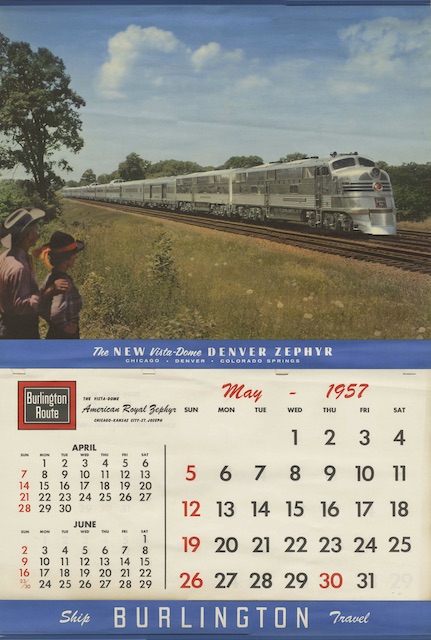
Credit: Burlington

1957

Little Rock

Little Rock is located in Arkansas, United States, and in 1957, it was a flashpoint for the Civil Rights Movement. It centred around nine African American students who were integrated into Little Rock Central High School. These students become known as The Little Rock Nine.

Through a ruling from the Supreme Court that declared that the laws that established segregated schools were unconstitutional, and the backing of the NAACP (National Association for the Advancement of Colored People), the nine students were enrolled at Little Rock Central High School.

The school was racially segregated, so black students attending an all-white school did not go down well for everybody. Among several protests against the integration, Orval Faubus, the Governor of Arkansas, deployed the Arkansas National Guard to support the protesters, as well as to block the students from entering the school.

If you remember from the 1952 blog, Dwight D. Eisenhower was the President of the United States of America, and this situation annoyed him. His response was to issue an executive order, which federalised the Arkansas National Guard. He ordered them to support the integration and along with the 101st Airborne Division, escorted and protected the students while at school. This drama was named The Little Rock Crisis.

As a non-American, it’s difficult to quantify a modern example of the Little Rock Crisis. My only answer is to point out the legacy that it brought to the public school system in the United States, by guiding the way in the desegregation of public schools.

The Little Rock Nine being escorted by the National Guard to Little Rock Central High School, Arkansas, 1957. Credit: Everett Collection

Pasternak

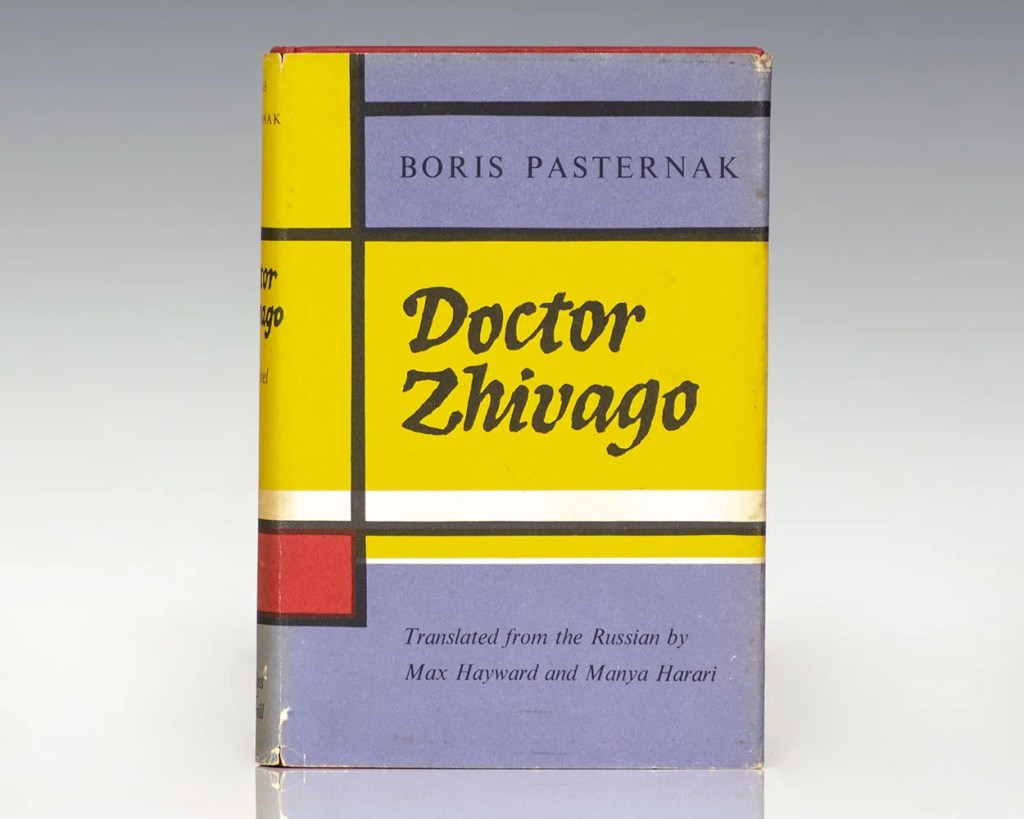
Boris Pasternak was a Russian poet, composer, literary translator, and novelist. He was born in Moscow, which was then part of the Russian Empire before it was transformed into the Soviet Union. He is included on this list because he wrote a small and uncomplicated book that you may have heard of: Doctor Zhivago.

Pasternak gave typed manuscripts to foreigners in 1956, knowing they wouldn’t be published in the USSR. The manuscripts were then smuggled to Milan, Italy. Doctor Zhivago was released in 1957, and I’m going to do an awful job at explaining this, but the novel focuses on wars, separation of families, love, and characters. So many characters, with just as many names.

The 1958 Nobel Prize for Literature was awarded to Pasternak for Doctor Zhivago, and it remains a masterpiece and beloved the world over for its themes. Over the years, the book has sold millions of copies and has been adapted for television, theatre, and film, with special mention to 1965’s Doctor Zhivago, where it was nominated for 10 Academy Awards and won five.

Doctor Zhivago. London: Collins & Harvill, 1958. Credit: Raptis Rare Books

Mickey Mantle

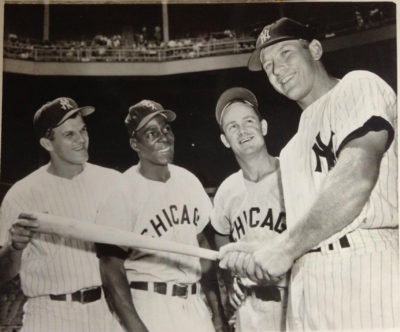
We haven’t discussed baseball for some years now, but this entry will change that. Mickey Mantle was a professional baseball player who played primarily as a centre fielder for the New York Yankees, between 1951–1968.

Mantle earned many different baseball awards, championships, and trophies, but that’s not why he’s on the list. In 1957, Mantle made The Major League Baseball (MLB) All-Stars team. For those of you not up with the play, the All-Stars are players made up from teams in the American League and National League.

This fixture became an annual event on the MLB calendar. Now what made Mantle’s inclusion in the 1957 game special was that it was the sixth year in a row that Mantle had made the All-Stars team.

For a contemporary equivalent, you could go with Mike Trout, but the All-Stars also covered Major League Soccer (MLS-Football), National Basketball Association (NBA), National Football League (NFL), and National Hockey League (NHL), so you could take your pick from them as well.

Bill Skowron, Minnie Minoso, Nellie Fox, and Mickey Mantle at the 1957 All-Star game. Credit: Unknown

Kerouac 

This is quite rare, but we have a second book entry. On the Road was written by Jack Kerouac, and was released in September 1957. Kerouac based this book on his travels with his friends across the United States, and in some circles, it’s considered a memoir.

The book highlights the Counterculture generation, like the Beat movement, and was controversial with the characters’ carefree lifestyle, drugs, and travelling, along with the music. On the Road has sold over 4 million copies worldwide, with ongoing sales of around 100,000 copies annually. 

On the Road has gone on to influence and inspire many different entertainment creators like Hunter S. Thompson, David Bowie, Matty Healy, Jerry Garcia, and Van Morrison, but also Jim Morrison and Bob Dylan.

Front cover for the first edition of On the Road by Jack Kerouac. Credit: The Viking Press

Sputnik 

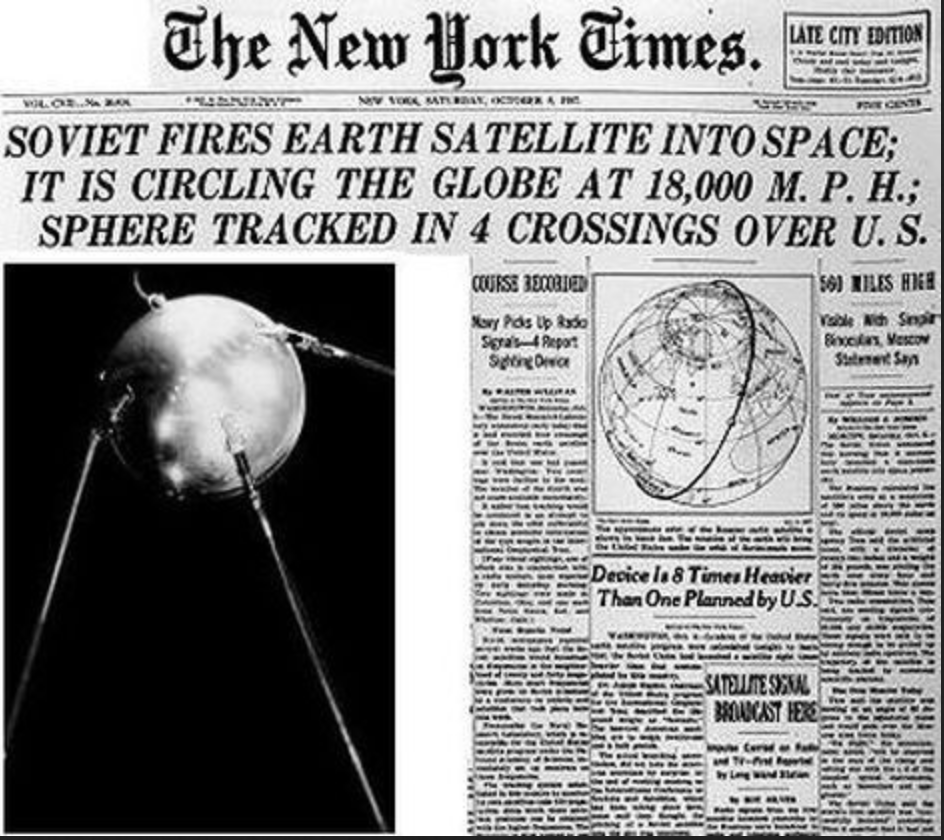
I wasn’t born in the 50s, so I can’t imagine the fear and tension that came with Sputnik. Launched on 4th October 1957 by the Soviet Union, Sputnik 1 was the world’s first artificial satellite. It was only 58 cm in diameter, and it carried a low-power radio transmitter that broadcasted a beeping noise at regular intervals, which could be heard by radio listeners around the world.

It achieved an Earth orbit with an apogee (farthest point from Earth) of 940 km and a perigee (nearest point) of 230 km, along with circling the planet every 96 minutes. The satellite remained in orbit until 4th January 1958, when it fell back and burned in Earth’s atmosphere. It had travelled 70 million km around the planet before deorbiting. 

Known simply as Sputnik, this 83.6 kg device caused anxiety throughout the West, which marked the beginning of the space age between the United States and the Soviet Union. 

The legacy of Sputnik can be seen in various spacecraft and satellites launched by the USSR that bear its name, as well as in the thousands of satellites launched by other countries and companies. Just consider where NASA, ESA, SpaceX, Blue Origin, and Virgin Galactic would be today without the influence of Sputnik.

On Oct. 4, 1957, the Space Age began as the Soviet Union launched Sputnik 1, the first artificial satellite, into orbit. Credit: The New York Times

Chou En-Lai

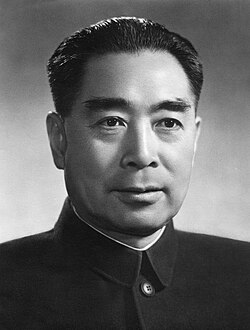
Chou En-Lai, also known as Zhou Enlai, served as the first Premier of the People’s Republic of China from its establishment in 1949 until he died in 1976. He was also the country’s foreign minister, a position he held from 1949 to 1958, during which he travelled extensively.

In 1950, he signed a treaty that committed China and the Soviet Union to co-operate. Furthermore, he played a crucial role in facilitating Richard Nixon’s historic meeting with Mao Zedong in China in 1972.

In modern times, you could go in two different ways, either as a foreign minister or an intermediary. For the foreign minister angle, you could just promote your foreign minister, however, the intermediary is a lot easier. Think of Henry Kissinger and President Jimmy Carter for the Middle East, Alexander Haig for Argentina and the United Kingdom, and recently, Emmanuel Macron for Ukraine and Russia.

Zhou Enlai (Chou En-Lai), Premier of China. Official portrait, 1950s. Credit: anonymous, Public domain, via Wikimedia Commons

Bridge on the River Kwai 

The Bridge on the River Kwai was a war film based on a book of the same name. Released in 1957, the film tells the story of Allied prisoners of war in Japanese-occupied Thailand, who are forced to build a bridge over the Kwai River, linking Thailand to Burma (Myanmar) for the Japanese, via a railway.

The film went on to earn US$30.6 million, against its US$2.8 million budget. It found universal acclaim, winning seven Oscars at the 1958 Academy Awards, three Golden Globes, and four British Academy Film Awards. The Bridge on the River Kwai has been described as not only the greatest war film ever made, but also one of the greatest films ever made.

I’ve been lucky enough to have seen it, and it’s phenomenal. Seriously, it’s one of those times when you should believe the hype about a film, it’s that good. Some modern films that swept the Academy Awards include Titanic (1997), The Lord of the Rings: The Return of the King (2003), and La La Land (2016).

So for 1957, we covered an American desegregated high school, a Russian author, a baseball player, an American author, a Soviet satellite, the Chinese Premier, and a film. We’ve been working hard on this, so 1958 will be less chaotic. Maybe.

So that’s it for another week in this ridiculous project. Cool. Thanks again for reading, following, and subscribing to Some Geek Told Me. I have accounts on Twitter and Mastodon, where I try to sound clever, so follow me if that floats your boat.

Please remember to walk your dog, read a banned book, and enjoy your 90-day pause on Trump’s tariffs. I’ll see you next week, where I’m going to discuss some news that is equally part exciting and scary. Take care and Slava Ukraini!


Who wants a trade war with penguins?

I’m going to start with an apology. Today’s blog post was supposed to be about We Didn’t Start the Fire’s 1957 historical references; as I spoke about this last week. Now, I’m very sorry to let the fans of this project down, because as I was writing the blog, something extraordinary happened, and I simply couldn’t ignore it.

So in my infinite wisdom, I decided to put a pin in the 1957’s historical references, and actually discuss a trade war. Due to our interconnected world, trade serves as a vital link among us. Surprisingly, it seems that the President of the United States is beginning a trade war with penguins, elephant seals, and seabirds.

Let’s analyse this carefully to determine its truthfulness, or if it is simply the mainstream media attempting to humiliate a 78-year-old convicted felon.

On 2nd April 2025 (local time), President Trump unveiled his hotly anticipated new tariff scheme, which was dubbed Liberation Day. Again, as you know, he declared a trade war against various countries and territories around the world, including my own.

I don’t have enough time to discuss how unusual it is that Russia, Belarus, and North Korea were omitted from the tariff list. My time is too valuable for that, as well as addressing the fact that these tariffs aren’t truly tariffs. Instead, they are based on a flawed formula meant to reflect the trade deficit between the United States and countries or territories.

No, I won’t mention those two things at all. I won’t even talk about how global markets are melting down, with at the time of writing, US$6.6 trillion was been wiped away. I would never stoop that low to discuss and mock those important matters.

And you can forget about me ever mentioning that the White House is now reframing the tariffs as sanctions. Nope, not by me, or on my account. There’s no way I would ever discuss that.

However, there is one tiny thing I would like to discuss. When the former McDonald’s employee and casino bankrupter revealed his list of countries and territories that he wanted to punish for not buying enough US-made items and goods, he included a rather strange entry: The Heard and McDonald Islands.


Credit: White House

The Heard and McDonald Islands are some of the most isolated places on the planet. They lie in the Southern Indian Ocean, about 3,850 km from Australia, where the islands are an Australian external territory. It’s roughly the same latitude as Madagascar, about two-thirds of the way from Antarctica and Madagascar.

The islands’ total land area is only 372 km2, with a coastline stretching 101.9 km. The Heard and McDonald Islands are home to two volcanoes and hundreds of thousands of fauna, such as penguins, elephant seals and seabirds.

But one of the strangest things about the Heard and McDonald Islands is the human population, which is zero. Yes, that’s correct, not a single person lives there. They are uninhabited by humans.

According to the data revealed by the White House, the Heard and McDonald Islands have a trade deficit of 10%, which has resulted in the world’s most famous 78-year-old convicted felon, slapping a 10% tariff on the islands.

Putting aside the suicidal nature of the financial and economic illiteracy of the tariffs, we have a problem. If we are to believe the White House’s data and figures, and why would we not, it means the Heard and McDonald Islands have a trade deficit with the United States.

From the United States perspective, the Heard and McDonald Islands are exporting more goods and services to the United States than they are importing from the United States, hence the trade deficit. But here’s the problem: if the Heard and McDonald Islands are uninhabited by humans, then who or what the fuck is trading with the Americans?

I hope you’re sitting down because the answer is penguins, elephants seals, and seabirds. I like to stay informed about world events, but I’ll be honest, I had no idea that a collection of penguins, elephants seals, and seabirds, living on islands near Antarctica, had not only mastered the ability to understand human language, finance, and commerce, but also have the means to conduct trade with humans. I feel really stupid and ignorant for not knowing this.

I have so many questions about this:

  • Do the different species of animals trade separately or collectively?
  • What do they trade? Is it eggs, feathers, shit, or something else?
  • If it’s shit, is penguin shit more valuable the elephant seal shit?
  • Do the penguins, elephant seals, and seabirds get along with each other, or are there different factions working against each other, whether it’s politically or financially?
  • How likely is a civil war to break out on the Heard and McDonald Islands, over the tariffs?
  • How do they communicate with the humans?
  • What do the penguins, elephant seals, and seabirds import from the United States?
  • Who are the American importers, and how are they surviving with the 10% tariff slapped on by the Heard and McDonald Islands?
  • What is the currency of the Heard and McDonald Islands?
  • Are Australian penguins, elephant seals, and seabirds, really taking jobs away from American humans, or American fauna?
  • Is this not the greatest example of evolutionary biology ever discovered?
  • How is this not the biggest news story in the history of the world; animals trading with humans?
  • Has anybody spoken to Sir David Attenborough about this? What are his thoughts?
  • Do the Heard and McDonald Islands only trade with the United States?
  • By starting a trade war with the Heard and McDonald Islands, does the White House hope to bring back more American jobs?
  • Does Elon Musk wish to export Teslas to the Heard and McDonald Islands?

The questions are endless because I’m just stunned at this revelation. This startling information is hard to understand and comprehend since it must be true and accurate. Otherwise, the US government would look like a group of people who wouldn’t be able to organise a party at a brewery. This would be one of the biggest displays of incompetence the US government have committed since Signalgate.

I mean, Trump, armed with his stable intellect, and his posse of loyal henchmen, could never make a mistake, right? Because that would be bigly. Nah, I bet every single penguin, elephant seal, and seabird on the Heard and McDonald Islands is woke.

And this ladies and gentlemen, is the world we live in. Welcome.

That’s another blog post for another week. Thanks once again for reading, following, and subscribing to Some Geek Told Me.

That’s three political blog posts in a row, so that’s enough for now. I’m going to finish We Didn’t Start the Fire: 1957, so we can discuss history, music, people, and politics…damn.

Please don’t forget to walk your dog, read a banned book, tell Sir David Attenborough about tariffs on the Heard and McDonald Islands, and I’ll see you next week to continue We Didn’t Start the Fire.

Seriously, can someone please talk to Sir David Attenborough? His response would be amazing.