
I know the last We Didn’t Start the Fire was released in December 2024, and you might have thought it was over. But just like Rambo, it’s never truly over. One day, this project will be finished—if I ever manage to write faster. However, that day is not today. So, without further ado, Some Geek Told Me proudly presents one of my least well-conceived ideas: discussing the historical references in We Didn’t Start the Fire.
For any unlucky readers who have missed the previous entries, the list is here:
We Didn’t Start the Fire: The Beginning
We Didn’t Start the Fire: 1948-1949.
We Didn’t Start the Fire: 1950
We Didn’t Start the Fire: 1951
We Didn’t Start the Fire: 1952
We Didn’t Start the Fire: 1953
We Didn’t Start the Fire: 1954
We Didn’t Start the Fire: 1955
We are well and truly committed to this insane project because this blog post is the ninth entry, which is tragic and hilarious, in equal measure. So, just like the eight previous entries, strap yourself in, because we are going back in time, to 1956 to be precise. Let’s go!

1956
Bardot
Our first historical reference is about the French actress, singer, and model, Brigitte Bardot. Bardot started acting in 1952, but in 1956, she starred in four movies; Naughty Girl, Plucking the Daisy, The Bride Is Much Too Beautiful, and And God Created Woman.
These films put the world’s spotlight on Bardot, which made her one of the first women to be given the name, sex kitten, which describes a woman who exhibits sexual aggression.
Bardot quickly became a global icon for sexual revolution, with And God Created Woman becoming the highest-grossing foreign film ever released in the United States at the time, earning $4 million. Bardot went on to a have a successful career in entertainment, and retired from the industry in 1973.
She also became involved with animal rights, setting up The Brigitte Bardot Foundation in 1986, for animal protection.
Some contemporary examples, although similar, but different, could be famous female actresses and animal rights activists like Alicia Silverstone or Evanna Lynch.

Budapest
In 1956, the Hungarian People’s Republic was controlled and influenced by policies from the Soviet Union. Economic decline and political repression were slowly eating away at the country, so on 23rd October, university students and other citizens, began to protest in the capital city of Budapest. What happened next was known as the Hungarian Revolution of 1956, or the Hungarian Uprising.
They were against the Soviet Union’s policies and its influence on Hungary, and demanding Hungarian independence. The students clashed with the ÁVH (State Protection Authority), which was a special police group. These protests started a revolution across the country, but the Soviet Union started to push back.
On 4th November, Soviet tanks rolled into Budapest to end the uprising, which led to some infamous and iconic images, and by 11th November, the uprising was crushed. Soviet forces had brutally cracked down on the protests with over 30,000 troops and over 1,000 tanks.
The human cost of the failed revolution was 2,500-3,000 Hungarian citizens were killed, 13,000 were wounded, and 200,000 fled the country in exile. 26,000 people were arrested, with 22,000 sentenced and imprisoned, and 13,000 were interned. 229 people were executed. The Soviets suffered 722 killed and 1,540 wounded.
The revolution was famous around the world, not just for the brave actions of the students and citizens, but also for the awful and bloody response from the Soviet Union.
Some modern examples of revolutions and brutal crackdowns from oppressive governments include the Second Intifada with Palestine and Israel (2000-2005), the Arab Spring (2010-2012), the Tulip Revolution (2005), the Hong Kong protests (2019-2020), along with civil wars involving Syria, Libya, Yemen, and Sudan.
Though to be fair, I think the best/worst example would be the 1989 Tiananmen Square protests and massacre.

Alabama
Alabama refers to three events in 1956, with the first being the Montgomery bus boycott, in Montgomery, Alabama, United States. This was during the American Civil Rights movement, with the boycott centred on social and political protests, campaigning against racial segregation on the local public bus network.
The campaign lasted from 5th December 1955-20th December 1956, and it brought national and international attention to the cause, with the now famous Rosa Parks, an African-American woman, refusing to surrender her seat to a white person on a bus. This action led to her arrest.
The Montgomery bus boycott was a key moment in the civil rights movement, because the Montgomery Bus Line mandated that African-Americans were not to be employed as drivers, but were also forced to ride in the back of the bus, and were often ordered to give up their seats to white people. 75% of the bus system’s riders were African-Americans.
Reports detailed that many African-American passengers were assaulted on the buses, short-changed, treated poorly by the drivers, and sometimes were left stranded, even after paying their fare. The boycott led to the 1956 Supreme Court decision Browder v. Gayle, which ruled that Alabama’s segregation laws for buses were unconstitutional. Martin Luther King, Jr., the MIA’s (Montgomery Improvement Association) president, became a major civil rights leader because of the boycott.
The second event was on 10th April 1956. Tensions were running high, with some white men attacking Nat King Cole during a performance in Birmingham, Alabama.
The third event involved Autherine Lucy, who became the first African-American student to enrol at the University of Alabama. There were many riots protesting Lucy’s attendance at the university, but despite them, she continued to attend. Three days later, the university suspended her “for her own safety,” prompting the university’s president to resign in protest.

Khrushchev
Nikita Khrushchev was the First Secretary of the Communist Party of the Soviet Union, which effectively meant he was the leader of the Soviet Union, from 1953 to 1964. Now if you cast your mind back to the 1953 blog post, you’ll remember that Joseph Stalin, the positive and uplifting Soviet Union leader, had died after 30 years in power, then Georgy Malenkov took his place. He only governed for 186 days, before Khrushchev had him removed.
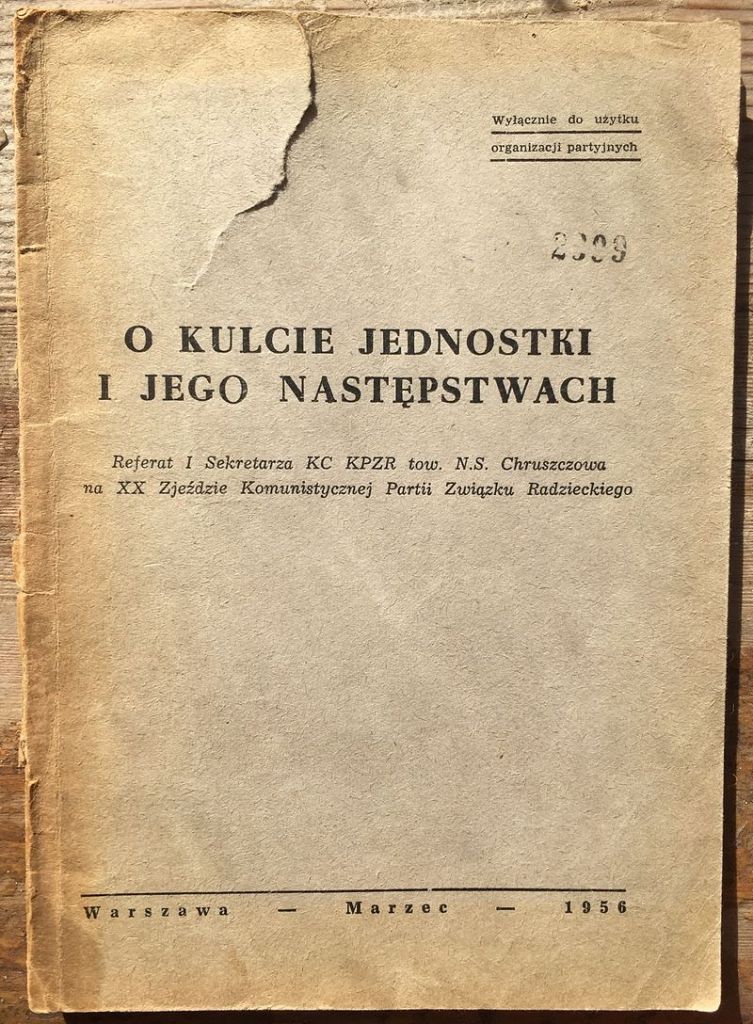
On 25th February 1956, at the closed session of the 20th Congress of the Communist Party of the Soviet Union, Khrushchev gave a speech and report officially called, On the Cult of Personality and Its Consequences. Unofficially, it became known as the Secret Speech. It was the speech that shook the world.
In this speech, Khrushchev did something unthinkable at the time; he started trash-talking Stalin. Even though Stalin had been dead for nearly three years, the Soviet Union had been altered, changed, influenced, and controlled by Stalin’s policies, over the course of decades.
Khrushchev was highly critical of Stalin and the way his followers still worshipped him. He also talked about the negative impacts of the purges, along with spitting out accusations and defamations towards the government.
Khrushchev wanted to introduce some reforms to the nation, which helped to kickstart the Soviet space programme, ease censorship policies, and have more open negotiations and discussions with Western leaders. In saying that, Khrushchev was in power when the Soviet Union went into Hungary to crush the uprising.
I can’t fully emphasise how important Khrushchev’s Secret Speech was, not just for the Soviet Union to move forward, but also to openly criticise the cult of Stalin and the damage Stalin had done to the country.
Drawing a contemporary comparison to the Secret Speech is challenging, as there have been numerous speeches delivered by leaders to their governments over the years, both public and private. With this in mind, I encourage you to make your own comparisons. A part of me believes that there may not be an equivalent to the Secret Speech, given its monumental impact—perhaps it is unparalleled.
Princess Grace
Grace Patricia Kelly was an American stage and screen actress, who gained international fame. She won an Academy Award, three Golden Globes and starred in classic movies like High Noon (1952), Dial M for Murder (1954), Rear Window (1954), and To Catch a Thief (1955), in addition to many television appearances.
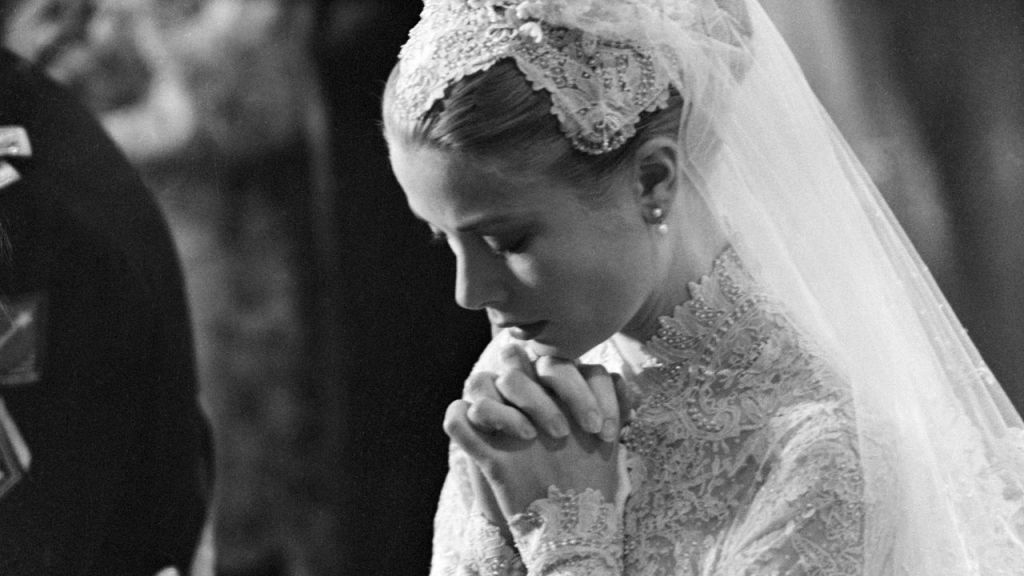
While Kelly was at the Cannes Film Festival in 1955, with the world at her feet, she was invited to a photo session by Prince Rainier III of Monaco, at the Prince’s Palace of Monaco. From there, Kelly and Rainer started dating, and after a year, they were married, with two ceremonies occurring on the 18th April and 19th April 1956.
Kelly is on the list for two reasons; she retired from acting at age 26 years to marry Rainer, with High Society (1956) being her final film. The second reason was that by marrying Prince Rainier III, Kelly got a name upgrade, becoming the Princess of Monaco, though the public called her Grace of Monaco, or simply, Princess Grace.
A modern example of Grace Kelly would be (Rachel) Meghan Markle, the American actress. She married Prince Harry, Duke of Sussex, of the British Royal family, on 19th May 2018. With this marriage, she became the Duchess of Sussex.
Peyton Place
This is the first and only book for 1956’s list. Peyton Place was written by Grace Metalious and was released in 1956. Peyton Place deals with a lot of issues, including abortion, adultery, lust, murder, incest and premarital sex, which were subjects that were quite taboo in 1956.
60,000 copies of the book were sold within the first ten days of release, and it remained for 59 weeks on The New York Times best seller list. The subject matter of the book divided many people, with some banning the book; or at least trying to ban it, because of the “shocking and disgusting” themes of the book. Other people were amazed at the material, and loved reading about the sex lives of people, living in a small New Hampshire town.
The book was a best-seller and helped to usher in the sexual liberation movement, along with Metalious’ other works in the franchise. For a 21st century equivalent, maybe Fifty Shades of Grey, Fifty Shades Darker, and Fifty Shades Freed, by E. L. James, known as The Fifty Shades Trilogy.

Trouble in the Suez
There is so much to this entry, I’ll try and cram it all in. The Suez Canal is a 193 km-long waterway, located in Egypt. It links the Mediterranean Sea to the Red Sea, and by definition, Africa to Asia, and Europe to Asia. It is one of the busiest waterways in the world, with an average of 56 vessels traveling the canal per day. Construction on the Suez Canal started in 1859, and 10 years later in 1869, it was completed and opened.
I could be oversimplifying this, but the Suez Crisis, as it was called, started on 29th October 1956. At the time, the canal was operated by Egypt, with the backing of the United Kingdom and France. After the 1952 Egyptian revolution, our old friend, Gamal Abdel Nasser Hussein, from the 1953 blog post, was in power in 1956.
Basically, Egypt was flirting with the Soviet Union, so the United Kingdom and the United States got jealous of this, and removed their funding for the Aswan Dam. Nasser decided to play the game as well, and nationalised the canal on 26 July 1956, from the British and French company that controlled it.
He then transferred it to the Suez Canal Authority and closed the Straits of Tiran to all Israeli ships, because of the ill will of the 1948 Arab–Israeli War, also known as the First Arab–Israeli War.
This was as popular as employing zombies as babysitters. The international community, namely the United Kingdom, France, and Israel invaded Egypt to take control of the Suez Canal. This become known as Second Arab–Israeli War, and lasted from 29th October to 7th November 1956. It didn’t last for long, but the damage was significant. At the end of the fighting, Egypt was still in control of the Suez Canal.
Pressure applied by the United States, the Soviet Union, and the United Nations, along with Egypt’s war effort, forced the three countries to retreat. The war strengthened Nasser’s position in the Arab world, but it also humiliated the British and French invasions.
Their roles as the world’s superpowers had ended, with the United States and the Soviet Union, having emerged as the two prominent superpowers in the world.
The Suez Crisis resulted in 3,200 deaths, with 177 of those deaths on the Israeli side. The crisis also left around 5,500 people wounded and around 6,000 fighters taken hostage.
The legacy of the Suez Crisis is still being felt in 2025, which is covered by two current events. The first is about the Gaza Strip. At the time, Gaza was controlled by Egypt, after the First Arab–Israeli War.
During the invasion of Egypt, Israel gained control of the Gaza Strip and Egypt’s Sinai Peninsula. Israeli forces held a four-month-long occupation of the region, before withdrawing, but not before winning freedom of navigation through the Straits of Tiran.
Years later, Israel recaptured and occupied the Gaza Strip and has never left. The Israeli military occupation of Gaza in 2025, is still relevant as it was with the wars in 1973, 1967 and 1956.
The second event is the escalating crisis concerning the Panama Canal. The United States government is demanding that the canal be handed over to them to ensure that the Panama Canal Authority is not influenced by China or other foreign countries and companies.
Will this be a repeat of the Suez Crisis, or can common sense and negotiation prevail? With the current US president, who the hell knows?

So for 1956, we covered a French actress, a failed revolution, a bus boycott, a speech, an American actress, a book, and a 10-day war. The more things change, the more they stay the same. 1957’s historical references are just as crazy as 1956, but that’s for next month.
And that’s it for another week. Thanks again for reading, following, and subscribing to Some Geek Told Me. I’m still lurking about on Twitter and Mastodon, so drop in to say hello.
Please remember to walk your dog, read a banned book, Slava Ukraini, and just like last time, go and tell a Nazi to fuck off. I’ll see you next week because I’m doing the Captain America: Brave New World: Movie preview. The preview should be terrible. Awesome.
 SOME GEEK TOLD ME
You must be logged in to post a comment.