
Because of various reasons, I got distracted last month, which to be fair, was the constant statement throughout my school reports. This distraction meant we didn’t have a We Didn’t Start the Fire blog post, which will soon be fixed. I’m not sure if Billy Joel would approve.
Just like an ejection seat in a helicopter, my We Didn’t Start the Fire references are a bad idea. Nevertheless, it’s back for another month. Previous chapters in this ongoing mess include:
- We Didn’t Start the Fire: The Beginning
- We Didn’t Start the Fire: 1948-1949.
- We Didn’t Start the Fire: 1950
- We Didn’t Start the Fire: 1951
- We Didn’t Start the Fire: 1952
- We Didn’t Start the Fire: 1953
If you’ve been keeping score, we looked at 1953 last time, so we’re moving on to 1954. So, strap yourself in because it’s going to be a bumpy ride! And away we go!

1954
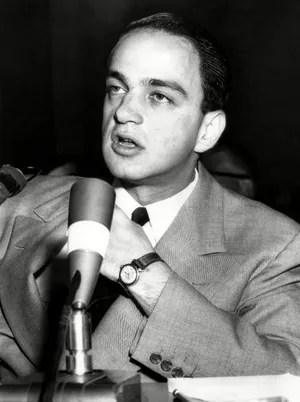
Roy Cohn:
We’re going to kick 1954’s references off with Roy Cohn, who was an American prosecutor and lawyer. To me, Cohn is famous for a few odd things. Hopefully you remember Joseph McCarthy, the communist-hunting senator from the 1950 list. It may not come as a surprise, but not only did Cohn and McCarthy know each other, Cohn worked as chief counsel for McCarthy in the 1954 Army–McCarthy hearings.
The hearings were a political embarrassment for McCarthy and his anti-communism policies, so after the hearings had finished, Cohn fell on his sword and resigned from McCarthy’s staff. This caused a minor scandal across the country, which led Cohn to work as an attorney in New York City.
Do you remember the Rosenbergs (Julius and Ethel Rosenberg) from the 1951 list? Take three guesses to name one of the prosecutors involved in their case. That’s right, it was Cohn.
For a modern context, I previously referred to Joseph McCarthy as everybody’s favourite convicted felony and ex-president, Donald Trump. So, if Trump is McCarthy, then Cohn would be Michael Cohen; if you follow my logic.
Juan Perón:
Juan Perón served as President of Argentina from 1946 to 1955 and then again from 1973 to 1974. He is a significant figure in the history of Argentina and Latin America, with a complex legacy. His policies, known as Peronism, evolved, and he eventually became a dictator. Additionally, he provided refuge to wanted Nazi war criminals, contributing to the ongoing crisis.
During his second term in 1954, Perón was becoming less popular, while Argentina faced economic problems like high inflation, huge debt, and a decrease in productivity. Perón was also having trouble with the Roman Catholic Church. He pushed for the decriminalisation of divorce and prostitution; deported two Catholic priests; promoted a constitutional amendment to separate State and Church; publicly accused bishops and priests of sabotaging his government; and suppressed religious education in schools. He was a busy guy.
Perón was finally deposed in a coup d’état in 1955, mainly because of the bombing of Plaza de Mayo by Argentine military aircraft, which killed over 300 people.
A modern equivalent is somewhat difficult because sadly, we have many choices to select from, like Alexander Lukashenko, Bashar al-Assad, Kim Jong Un, Slobodan Milošević, Vladimir Putin, Augusto Pinochet, Pol Pot, Francisco Franco, Teodoro Obiang Nguema Mbasogo, Muammar Gaddafi, or Idi Amin. Take your pick, because they all suck.

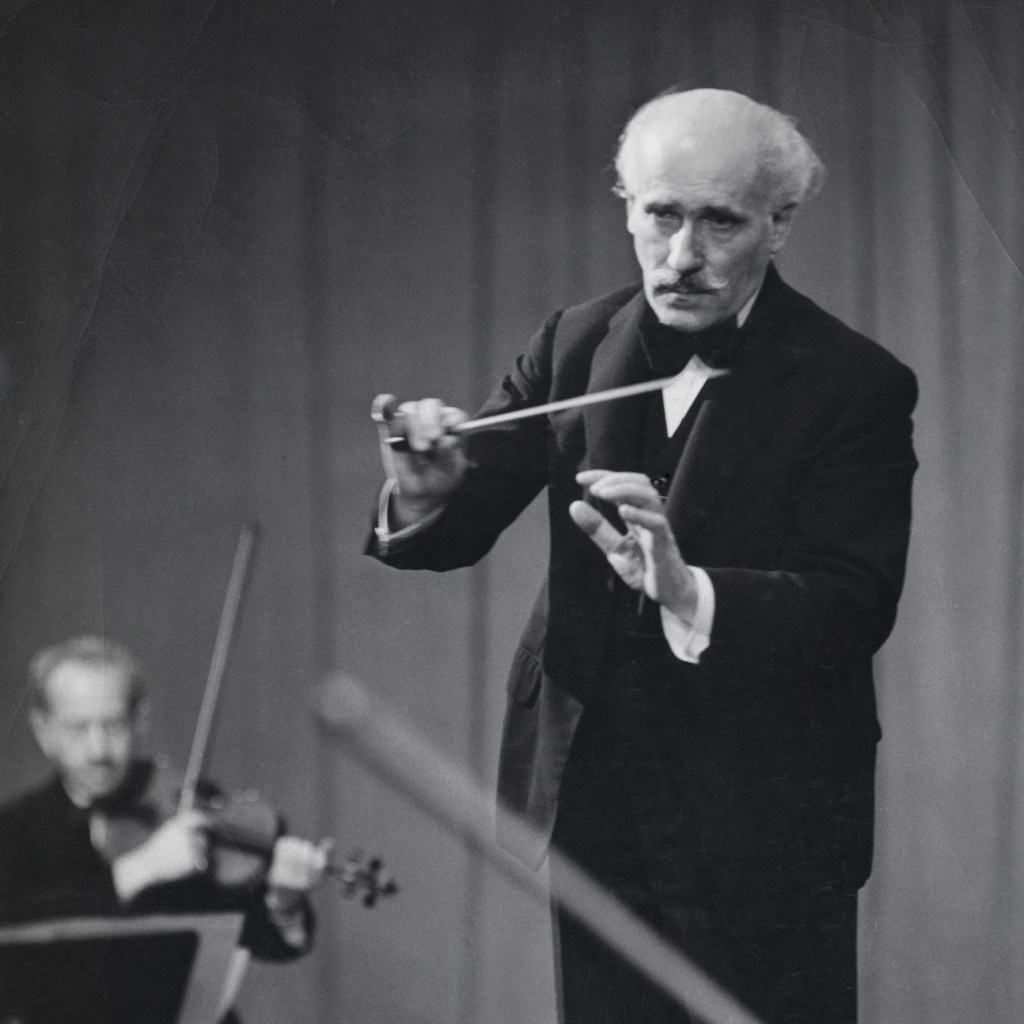
Arturo Toscanini:
The beloved Arturo Toscanini was one of the most famous conductors on the planet. After years of working around the world, Toscanini moved to the United States. He worked with several symphony orchestras before securing a position with the NBC Symphony Orchestra, which was a radio orchestra.
This job lasted from 1937 to 1954 when Toscanini stepped down from the position of conductor and retired at 87 years old. That was his last live public performance.
For a modern conductor, I don’t want to start a fight about which conductor is the best in the world. This is outside of my lane, but some examples could be Sir Simon Rattle, Marin Alsop, Gustavo Dudamel, Seiji Ozawa, Nathalie Stutzmann, Sir Neville Marriner, Daniel Barenboim, Sir Antonio Pappano, Susanna Mälkki, Carlos Kleiber, or maybe Bernard Haitink.
Dacron:
This is the first non-human entry on the list, and it is very useful. In 1954, Polyethylene terephthalate, also known as PET, PETE, and Dacron, was released to the public. Dacron is an artificial fibre that changed the way people live and interact with the world.
It’s recyclable plastic number 1 and was mainly trademarked as a synthetic polyester fabric, but it expanded to all facets of modern life. The demand for this product is insane. The annual production of PET was 56 million tons in 2016, with 30% being made up of bottle production worldwide.
I would give you a modern version, but Dacron is still being used today.

Dien Bien Phu falls:
We are continuing with another non-human entry because this one is a city or rather a battle. Dien Bien Phu, or Điện Biên Phủ, is a city located in Vietnam. Back in 1946, Vietnam was known as French Indochina, and it was supported and controlled by…wait for it…the French.
This resulted in the First Indochina War, with the French fighting the Viet Minh, aka the Democratic Republic of Vietnam, the newly minted nation.
In 1954, the French Far East Expeditionary Corps fought the Viet Minh, at the French encampment in Dien Bien Phu, between 13th March and 7th May. History remembers this as the Battle of Dien Bien Phu. The size of the armies, along with the casualties, vary to different records, but whatever the case, the Viet Minh claimed victory.
This was a humiliating defeat for the French, as it was the decisive battle of the war. The legacy of this battle resulted in the creation of North Vietnam (the Democratic Republic of Vietnam) and South Vietnam (the Republic of Vietnam). Eventually, the Second Indochina War started a year later, though it’s known by another name; The Vietnam War.

Rock Around the Clock:
One, two, three o’clock, four o’clock, rock
Five, six, seven o’clock, eight o’clock, rock
Nine, ten, eleven o’clock, twelve o’clock, rock
We’re gonna rock around the clock tonight
Dubbed as the first rock-and-roll song, Rock Around the Clock was a smash hit. Released in May 1954 by Bill Haley & His Comets, Rock Around the Clock only lasted 2:08 minutes, but it changed music history.
The single sold 25 million copies and became the unofficial anthem for the growing rebellious youth around the world, and brought this developing sound of music to mainstream audiences.
It defined a generation, much like Michael Jackson’s “Billie Jean”, Nirvana’s “Smells Like Teen Spirit”, and Lady Gaga’s “Poker Face.”
So for 1954, we covered a prosecutor, a dictator, a conductor, an artificial fabric, a battle, and a song. This was a strange and mixed list, but we will have seven entries for 1955, so I need to start planning for next month. I mean, maybe the writing will get better.
And that’s it for another week. Thanks again for reading, following, and subscribing to Some Geek Told Me. Please remember to walk your dog, read a banned book, and if you’re a US citizen, please vote to send a certain 78-year-old into retirement. Take care and I’ll see you next week.
 SOME GEEK TOLD ME
You must be logged in to post a comment.