
That’s right, ladies and gentlemen, one of the world’s worst ideas is back for another month. No, it’s not Some Geek Told Me’s The Tour of the Solar System. That hurt by the way. It’s Some Geek Told Me‘s We Didn’t Start the Fire’s historical references.
If you missed the previous entries of this colossal mistake, they include:
- We Didn’t Start the Fire: The Beginning
- We Didn’t Start the Fire: 1948-1949.
- We Didn’t Start the Fire: 1950
- We Didn’t Start the Fire: 1951
- We Didn’t Start the Fire: 1952
I’ve been behind with writing the 1953 references to Billy Joel’s song, because the weather here has been terrible, and I’ve been trying to stay dry and warm in winter, so I’m fighting a losing battle.
Anyway, without any more time wasting; because that’s a striker’s or centre forward’s job, let’s dissect the We Didn’t Start the Fire’s historical references for 1953.
Can’t wait.

1953
Joseph Stalin:
This entry on the list is not one of the most well-liked people who have ever lived. Born Joseph Vissarionovich Stalin, though known to the world as Stalin, was the brutal ruler of the Soviet Union from 1924-1953.
Stalin is a contentious figure in world history. He helped bring about the end of Adolf Hitler and the Third Reich, with the Soviet Union accounting for between 20-27 million people killed during the Second World War, the greatest death toll from any country. The bulk of these deaths came from fighting Nazi Germany.
However, before the war started, Stalin signed a non-aggression pact known as the Molotov–Ribbentrop Pact with Hitler. The pact was a plan for Nazi Germany and the Soviet Union to carve up Europe for themselves. And just like every villain team-up ever, there was betrayal when Nazi Germany invaded the Soviet Union in 1941, breaking the pact.
Viewed and regarded in the same shitty category as Hitler, Stalin seemed to look at Hitler’s crimes against humanity and said, “Hold my vodka.”
Through his leadership and regime known as Stalinism, some of Stalin’s crimes include, but not all: creating the Gulag system; the Great Famine; Collectivization, Dekulakization and Special Settlements; the Great Purge; Order No. 227; punishing Soviet prisoners of war; and refusing to punish Soviet soldiers’ war crimes.
Stalin’s direct actions like imprisonment and executions, but also his negligence, paranoia, and incompetency, caused the deaths of between 7-20 million Soviet citizens. When he died on 5th March 1953, people worldwide celebrated, after he was in power for 29 years.

Malenkov:
After Stalin died, there was a power vacuum that many people were trying to fill. The (un)lucky winner of that contest was Georgy Malenkov. Things did not go easily for Malenkov, because only after one week as leader, he was forced to give up control of the Communist Party of the Soviet Union.
After some time, Malenkov and Nikita Khrushchev, the party’s First Secretary, entered a power struggle over the leadership of the Soviet Union. History tells us that Malenkov lost and was removed from power, with Khrushchev becoming the new leader. Malenkov lasted only 186 days in power.
A modern equivalent would be Ex-British Prime Minister, Liz Truss, who only lasted 50 days as leader and failed to outlast a lettuce.

Nasser:
Nasser refers to Gamal Abdel Nasser Hussein, otherwise known as Gamal Abdel Nasser. Nasser was an Egyptian army officer, who along with Mohamed Naguib, led the 1952 Egyptian revolution, against the United Kingdom, and deposed the monarch, King Farouk I.
In 1953, Egypt was declared a republic, with Naguib becoming Egypt’s first president. Eventually, Nasser placed Naguib under house arrest and became the de facto leader of Egypt, until his election in 1956. He served as Egypt’s second president until he died in 1970.
In contemporary times, we only need to look at Venezuela’s Nicolás Maduro, Hungary’s Viktor Orbán, Cuba’s Raúl Castro, or Eritrea’s Isaias Afwerki.

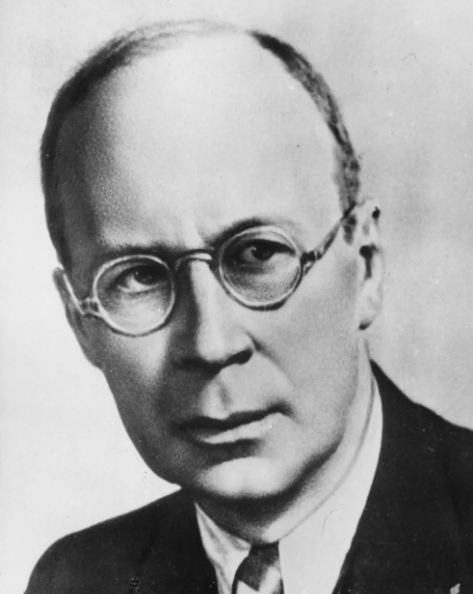
Prokofiev:
On 5th March 1953, (the same day Stalin died) Russian composer Sergei Prokofiev died at the age of 61. He had composed seven operas, seven symphonies, eight ballets, five piano concertos, two violin concertos, a cello concerto, a symphony concerto for cello and orchestra, and nine completed piano sonatas.
Some of his most beloved works were The Love for Three Oranges, the suite Lieutenant Kijé, the ballet Romeo and Juliet, and the eternal favourite, Peter and the Wolf.
For a modern composer, well, I don’t want to start a fight with anybody. If you want to choose someone for yourself, be my guest because we are blessed to live in a world full of amazing composers, and to choose one over another seems criminal, at least to me.
However, my wife added that John Williams is the cat’s pyjamas.
Rockefeller:
Winthrop and Barbara Rockefeller were married on 14th February 1948. Winthrop was part of the wealthy and famous Rockefeller dynasty, being John D. Rockefeller’s grandson, and John D. Rockefeller Jr.’s son. Not to be outdone, Barbara was also a successful Hollywood actress. Barbara gave birth to their son, Winthrop Paul “Win” Rockefeller, on 17th September 1948.
Fast forward to two years later, the happy couple were estranged. By 1953, divorce proceedings had started, with both parties haggling over a settlement. This was a very publicised celebrity divorce and was a constant story in the news cycle. By 1954, they had finally divorced, with Barbara receiving a $5.5 million settlement, which was a record for the time.
Three of the biggest publicised celebrity divorces in recent times would be Brad Pitt and Angelina Jolie; Ye (Kanye West) and Kim Kardashian; and Johnny Depp and Amber Heard. There are others, but come on, I need to sleep.

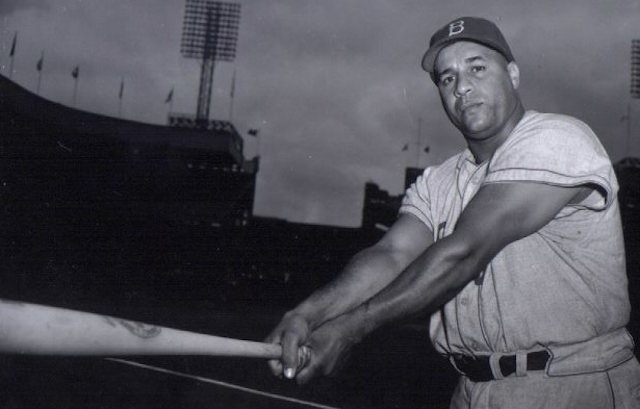
Campanella:
Making the 1953 list is our first and only sportsperson, Roy Campanella. Campanella was a baseball player, who mainly played as a catcher. He started his Major League Baseball career in 1948, when he played for the Brooklyn Dodgers, until his early retirement in 1957 from a car accident.
In 1953, Campanella won the National League’s Most Valuable Player Award for the second time, after winning it in 1951, and for a third time in 1955. Campanella won the World Series in 1955 and was also inducted into the Baseball Hall of Fame in 1969.
Selecting a contemporary equivalent is difficult for me because even though I follow baseball to a certain extent, I don’t know it well enough to choose a player. I’m a rugby, cricket, football, and rugby league supporter, so baseball is not really in my wheelhouse. However, any followers and subscribers of New Zealand’s 5th least favourite website, who are also baseball fans, please let me know your opinions on the matter.
Communist Bloc:
You may recall that during the 1950s, the Cold War had started, and 1953 was a flashpoint for Europe. “The Communist Bloc” refers to the Eastern Bloc, or the Soviet Bloc; which was a term given to the countries that were Communist states.
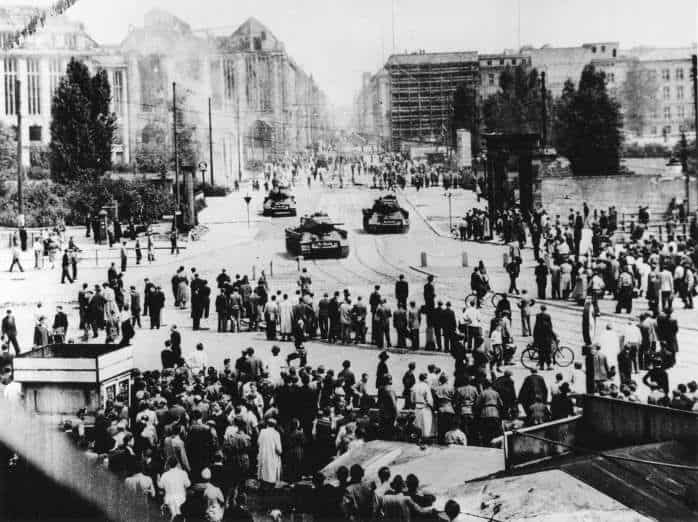
In the case of the song, we are looking at the 1953 East German uprising. This happened when construction workers rose in protest against government demands to increase productivity. The protests soon spread across East Germany, with people starting to demand better living standards and resisting the Sovietization way of life in East Germany.
At the height of the protests, one million people were on the streets, demanding more from the ruling government and the Socialist Unity Party. The main protest lasted only about two days before The Kasernierte Volkspolizei (a militarised police force) and Soviet forces rolled in and violently crushed the protests with tank support.
This was only three months after Stalin’s death, so the government wanted to stop the protests as quickly as possible. At least 125 people were killed during the crackdown.
A modern example of the 1953 East German Uprising; even though it’s not that modern, would be the 1989 Tiananmen Square protests and massacre.
So for 1953, we covered a dictator’s death and his successor’s removal, an Egyptian political icon, a composer’s death, a celebrity divorce, a baseball player, and a failed uprising. 1953 was busy, but wait until we discuss 1954! Wow!
So, that’s it for another week. Thanks again for reading, following, and subscribing to Some Geek Told Me. Please remember to walk your dog, read a banned book, watch the Paralympics Games1 and I’ll see you next week, when we check in on the Coalition of Chaos.
1 Seriously, go and watch the Paralympics Games. They deserve all the attention and support.
 SOME GEEK TOLD ME
You must be logged in to post a comment.