
We are deep into winter at the moment, so what better way to bring some light into the world than to revisit events from 72 years ago, inspired by a 35-year-old song? Yes, it’s that time again for Some Geek Told Me to take a look at We Didn’t Start the Fire.
Previous entries on this terrible series have been:
- We Didn’t Start the Fire: The Beginning
- We Didn’t Start the Fire: 1948-1949.
- We Didn’t Start the Fire: 1950
- We Didn’t Start the Fire: 1951
Surprisingly, Beetroot Awareness Aotearoa issued no statement about last month’s post, concerning 1951. Maybe they were too busy being knee-deep in beetroot to notice; though honestly, that sounds like a nightmare to me.
Before we start, 1952 is another special year for me, because that’s when my mother was born. So, without further fanfare, let’s give the non-ticket-paying audience what they want, and dive into We Didn’t Start the Fire’s historic references for 1952.
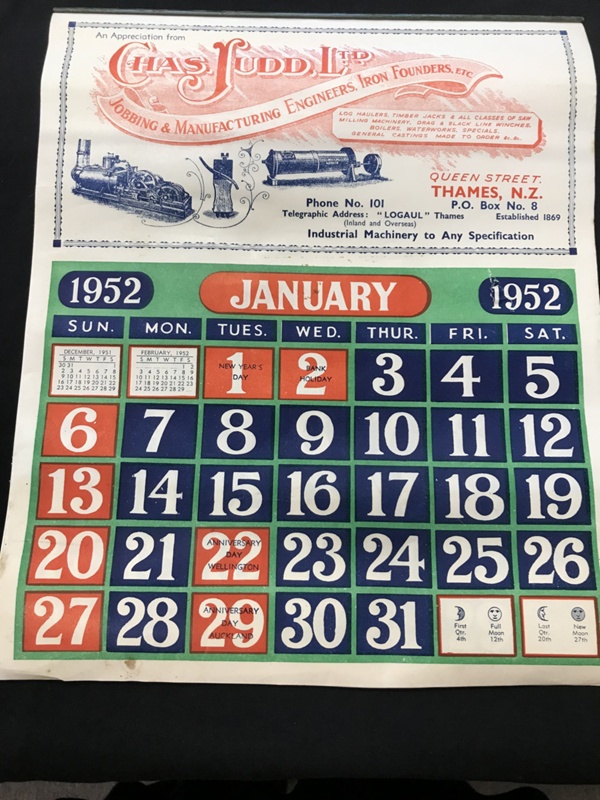
1952
Eisenhower:
Dwight D. Eisenhower was the Supreme Commander of the Allied Expeditionary Force, during the Second World War, but that’s not why he’s on the list. In 1952, Eisenhower ran as the Republican nominee in the US Presidential election, against Illinois Governor Adlai Stevenson II.
In a landslide victory, Eisenhower won the presidency with 442 electoral votes to 89, becoming the 34th President of the United States of America. Some other recent landslide victories include Ronald Reagan, who won in 1980 with 489 electoral votes, and in 1984 with 525 electoral votes, as well as George H. W. Bush in 1988 with 426 electoral votes.

Vaccine:
This particular case highlights the incredible potential of humanity. Polio is a highly contagious infectious disease that can cause paralysis and even death, especially in children worldwide. In the 20th century, polio killed millions of people each year and became one of the most feared diseases.
A polio vaccine had been in development for several years, but it wasn’t until virologist and biomedical scientist, Jonas Salk and a team of researchers, developed the first effective one in 1952. By the end of the decade, the Salk vaccine had reached about 90 countries.
The legacy of Salk’s vaccine is that it has helped to eliminate polio from the majority of the world, saving millions of lives each year. Unlike smallpox, polio is not eradicated yet, but both IPV and OPV vaccines are helping to achieve that goal.

England’s got a new Queen:
Some of the references in We Didn’t Start the Fire need some explanation and context. Others, like our next one, don’t.
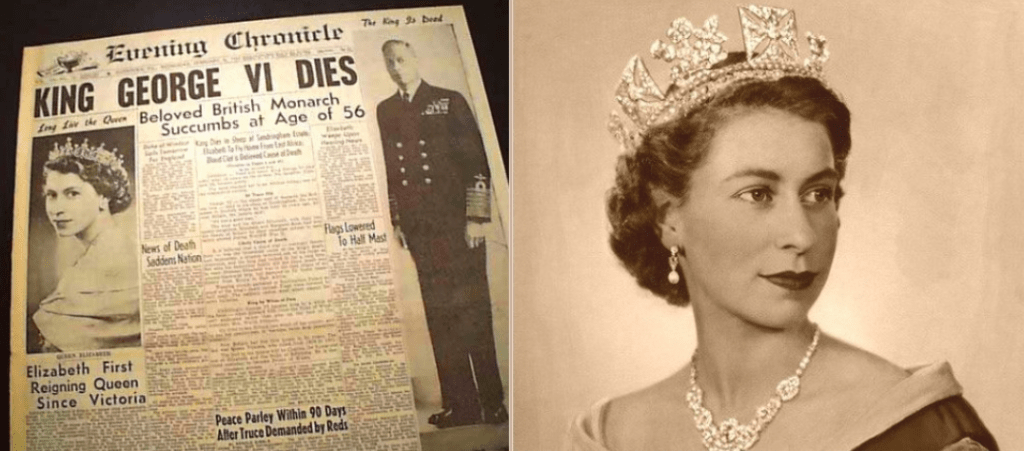
England’s got a new Queen, is exactly what you think it’s about. On 6th February 1952, 56-year-old King George VI of the United Kingdom and the Dominions of the British Commonwealth died, leaving his 25-year-old daughter, Elizabeth as the monarch. Although Elizabeth was coronated in 1953, she became Queen Elizabeth II when her father died.
The obvious equivalent for this was when on 8th September 2022, Queen Elizabeth II died at 96 years old, having reigned for 70 years. Her son, Charles, Prince of Wales, became King Charles III, with his coronation in 2023.
Marciano:
Rocco Francis Marchegiano, otherwise known as Rocky Marciano, was a professional boxer in the heavyweight division. On 23rd September 1952, Marciano fought a title match against World Heavyweight Champion, Jersey Joe Walcott. Marciano knocked Walcott out, to become the new heavyweight champion of the world.
Marciano went on to hold the title from 1952 until 1956 when he retired from boxing at 32 years old. Marciano had 49 fights, with 49 wins, and 43 by knockouts; which included six title defence fights. He remains the only heavyweight champion to finish his career undefeated. Marciano died in a plane crash in 1969.
For modern times, there is a collection of boxers that we could compare to Marciano, but ultimately I won’t. I mean, why would you?
Liberace:
One of the great American TV entertainers was born Władziu Valentino Liberace, though he became known as just Liberace. He was a pianist, singer, actor and showman. In 1952, he was given a 15-minute network television programme, called The Liberace Show. The show displayed his many different abilities, and it quickly grew in popularity, along with Liberace.
The show ran from 1952-1969 and was made famous for the costumes, productions, performances, and Liberace’s flamboyance. The legacy of The Liberace Show was the promotion of musical variety shows, but also the creation an international cultural icon.
Santayana goodbye:
On 26th September 1952, Jorge Agustín Nicolás Ruiz de Santayana y Borrás, died aged 88. George Santayana, as he became known in English, was a famous essayist, novelist, philosopher, and poet. In academic circles, Santayana was a pillar of 20th-century thinking and coined the immortal phrase:
“Those who cannot remember the past are condemned to repeat it.”
Santayana was beloved around the world for his work and helped usher in a new understanding of the human condition. For a modern equivalent, I’m going out on a limb, but I would name Carl Sagan, but to each their own.

So for 1952, we covered a US President, the polio vaccine, a British queen, a boxer, a music variety show, and a philosopher. That’s not bad at all, so I’ll be covering 1953 next time if you didn’t guess.
So, that’s it for another week. Thanks again for reading, following, and subscribing to Some Geek Told Me. Please remember to walk your dog, read a banned book, pat a goose, and I’ll see you next week. Look after yourself until I return.
 SOME GEEK TOLD ME
You must be logged in to post a comment.