
When it comes to making terrible ideas, this blog has had some crackers over the last few years. However, the concept of talking about the historical references from a song that came out in 1989; after multiple people have already done it, ranks quite high on that list.
My previous entries in this terrible endeavour include:
Beetroot Awareness Aotearoa seem to have a bee in the bonnet about this, because their press release about my We Didn’t Start the Fire: 1950 blog is downright mean.
“This human skid mark has done another We Didn’t Start the Fire, now there’s four of them! One was too many. We wonder what idiotic new idea, he’ll think of next. Listing how many people have puked on his $5 shoes, maybe? How about listing the number of times the All Blacks have won the World Cup? No, we have it; he will name the colours of the rainbow because nobody has done that before! This moron should be kept away from spoons because he’ll cut himself. What a joke.”
Is it my imagination, or do you think a Springboks supporter may have helped in drafting this release?
Haters are going to hate, I suppose. And with that, let’s check out the We Didn’t Start the Fire’s historic references for 1951.

1951
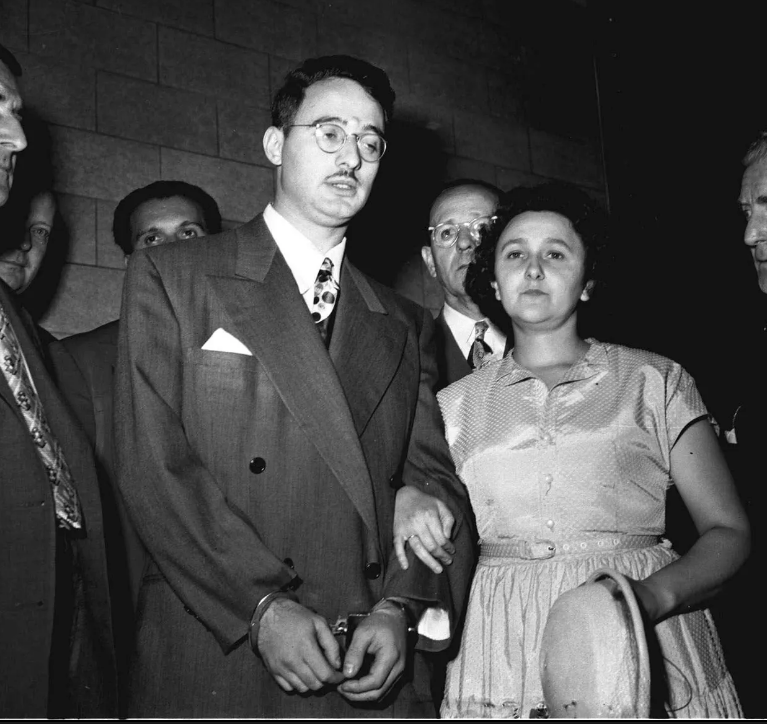
Rosenbergs:
Julius and Ethel Rosenberg were a married couple, who were both born in Manhattan, New York. Being married or born in Manhattan does not automatically qualify you for this list, though. At this time, the Cold War had been established, and the Rosenbergs were part of that drama.
In 1950, Julius and Ethel were arrested and convicted in 1951 for espionage. They were spying for the Soviet Union by providing top-secret information about American technology, especially nuclear secrets. In 1953, both Julius and Ethel were executed by electrocution, at Sing Sing Prison.
The Rosenbergs are also infamous for being the first American civilians executed for espionage. Even though they’re not a 2024 equivalent for the Rosenbergs, I feel Aldrich Ames and Robert Hanssen would be the closest.
H-bomb:
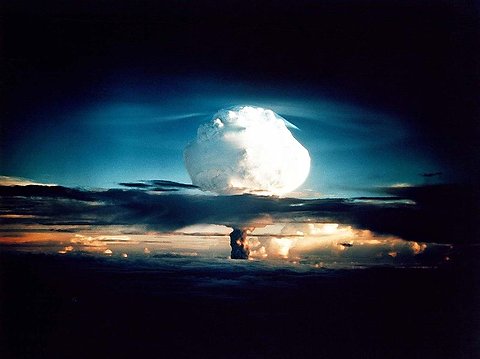
This is an odd one to discuss because it isn’t about a person, place, or event, but rather an object; a very destructive object. No, I’m not talking about Hellboy’s right hand, but rather the H-bomb.
This weapon has been given various monikers over the last 70 years, such as H-bomb, thermonuclear weapon, fusion weapon, or the most well-known, the hydrogen bomb.
In 1951, during the Cold War, the United States focused on developing the next generation of nuclear weapons. The goal was to combine atomic fission and nuclear fusion to create a more powerful nuclear explosion that could release more energy than a primary nuclear weapon. The first hydrogen bomb test took place in the Marshall Islands in 1952.
As a result, the design of the hydrogen bomb has had a lasting impact, with most of the world’s nuclear warheads being based on its design.
Sugar Ray:
Born Walker Smith Jr., Sugar Ray Robinson was a professional boxer, who fought across the Lightweight, Welterweight, Middleweight, and Light heavyweight divisions, becoming world champion six times (1 x welterweight and 5 x middleweight).
Robinson is in the song for his fight against Jake LaMotta, for the World Middleweight title in 1951. This was the sixth time the two men had fought, and the fight has been named the “St. Valentine’s Day Massacre” over Robinson’s combinations that beat the world champion, LaMotta to a bloody pulp.
In modern times, this is quite awkward. It could go either two ways; the first could be rematches between the same two boxers like Muhammad Ali vs. Joe Frazier, Erik Morales vs. Marco Antonio Barrera, Pongsaklek Wonjongkam vs. Daisuke Naito, or Manny Pacquiao vs. Juan Manuel Marquez.
As for the second way, it could be because a particular boxer went on to become an icon and legend in their weight division. For that answer, the choice is yours.
Panmunjom:
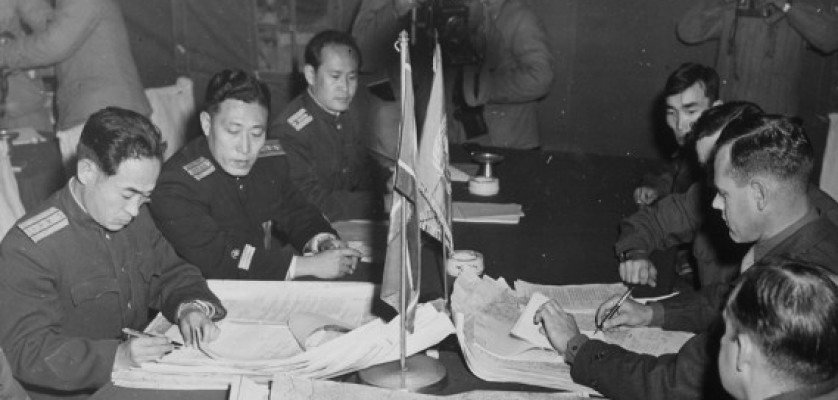
Do you remember how I mentioned that I’ll be discussing the Korean War again, from last’s month 1950 blog? Well, here we are. Panmunjom is a former village that’s near the Demilitarized Zone (DMZ), along the North Korean and South Korean border. The Joint Security Area (JSA) is also referred to as Panmunjom, and vice versa.
Panmunjom makes this list because, during the Korean War in 1951, North Korean and Chinese officials first met United Nations forces at Panmunjom for truce talks.
In 2005, I was lucky enough to visit Panmunjom, and I made a badly written blog about it. The legacy of Panmunjom is that it still provides a point of contact and meetings for the leaders of North Korea, South Korea, and others.
Brando:
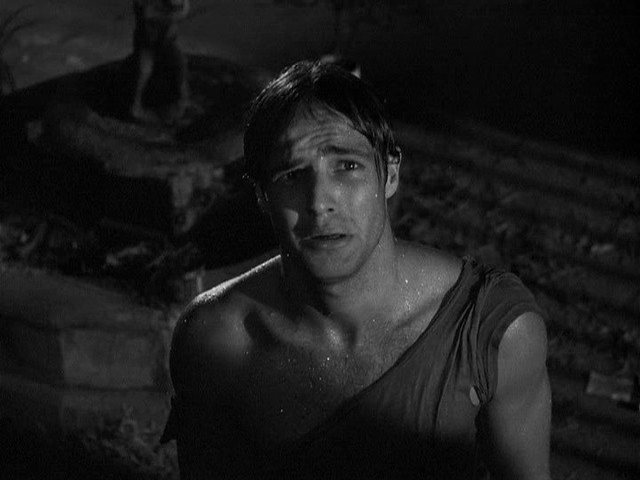
Brando refers to the Godfather himself, Marlon Brando, the great actor and activist. Brando starred in the 1951 film, A Streetcar Named Desire, as the lead male role, Stanley Kowalski. In certain circles, people say that Brando’s performance of Stanley was the best of his long career, which resulted in him being nominated for Best Actor at the 1952 Oscars.
The problem was that Brando didn’t win the award, instead, it went to Humphrey Bogart’s role as Charlie Allnut in The African Queen. This snub, as it’s been referred to, has been recorded as one of the biggest in the history of the Academy Awards.
A modern equivalent for a person being snubbed for acting at the Oscars can be somewhat subjective. However, in the spirit of the blog, maybe Margot Robbie (Barbie), Glenn Close (The Wife), Jim Carrey (The Truman Show), Amy Adams (Arrival), or Pam Grier (Jackie Brown).
The King and I:
We’re back with another Rodgers and Hammerstein production, in the form of The King and I. The musical was based on Margaret Landon’s 1944 novel, Anna and the King of Siam, and also inspired the 1956 film.
The King and I first opened on Broadway in 1951, and it was a commercial and critical success, playing 1,246 performances. It also won five Tony Awards in 1952, including Best Musical. From there, the musical has been revived over the years, with the latest in 2015 (Broadway) and 2018 (West End). It remains a beloved story around the world.

The Catcher in the Rye:
For the first time in We Didn’t Start the Fire, a book has been mentioned. As you would expect, The Catcher in the Rye, was released in 1951, and it was written by J. D. Salinger. If you haven’t heard of the novel, then you may have heard of its protagonist, the teenager Holden Caulfield.
The novel makes the list because of the various themes it contains, like belonging, connection, sex, identity, loss, depression, innocence, and a whole lot of angst; which were unexplored topics for teenagers in early 1950s literature. The character of Holden Caulfield has become a symbol of rebellion and, you guessed it, teenage angst. Like I said before, this book has a whole lot of angst.
The Catcher in the Rye has sold more than 65 million copies, and remains a solid-selling book, even in 2024. This controversial novel has also been banned several times in various places around the world in the 20th century, which is sadly becoming a growing trend in the 21st century.
An unwanted caveat for the novel is that in 1980, a 25-year-old Mark David Chapman, shot and killed John Lennon, outside his apartment in New York. Chapman had developed an obsession with The Catcher in the Rye; among other things, and especially with Holden Caulfield, and tried to emulate his misadventures.

So for 1951, we covered two spies, the hydrogen bomb, a boxer, a Korean village, an actor, a musical, and a novel. A useless piece of information is that 1951 holds a special connection to me, because it’s the year my father was born.
Next month, I’ll look at 1952, and if I feel motivated enough, 1953 as well, but I don’t like the odds of that. I think it’s 34-1. Did I mention that I suddenly like the number 34?
Anyway, that’s it for another week. If you’re enjoying my We Didn’t Start the Fire project, or maybe you think I’m wasting my time, please let me know.
Thanks again for reading, following, and subscribing to Some Geek Told Me. Don’t forget to walk your dog, read a banned book, watch the T20 World Cricket Cup, and I’ll see you next week, where I’m going to be petty and mean. You’ll love it.
 SOME GEEK TOLD ME
You must be logged in to post a comment.